
梦哥-禁止做空
474 Posts

梦哥-禁止做空
Report
Block User
Open Trade

U Holder
High-Frequency Trader
5.5 Years
10 Following
44 Followers
77 Liked
Posts
Portfolio
·
--
Verified
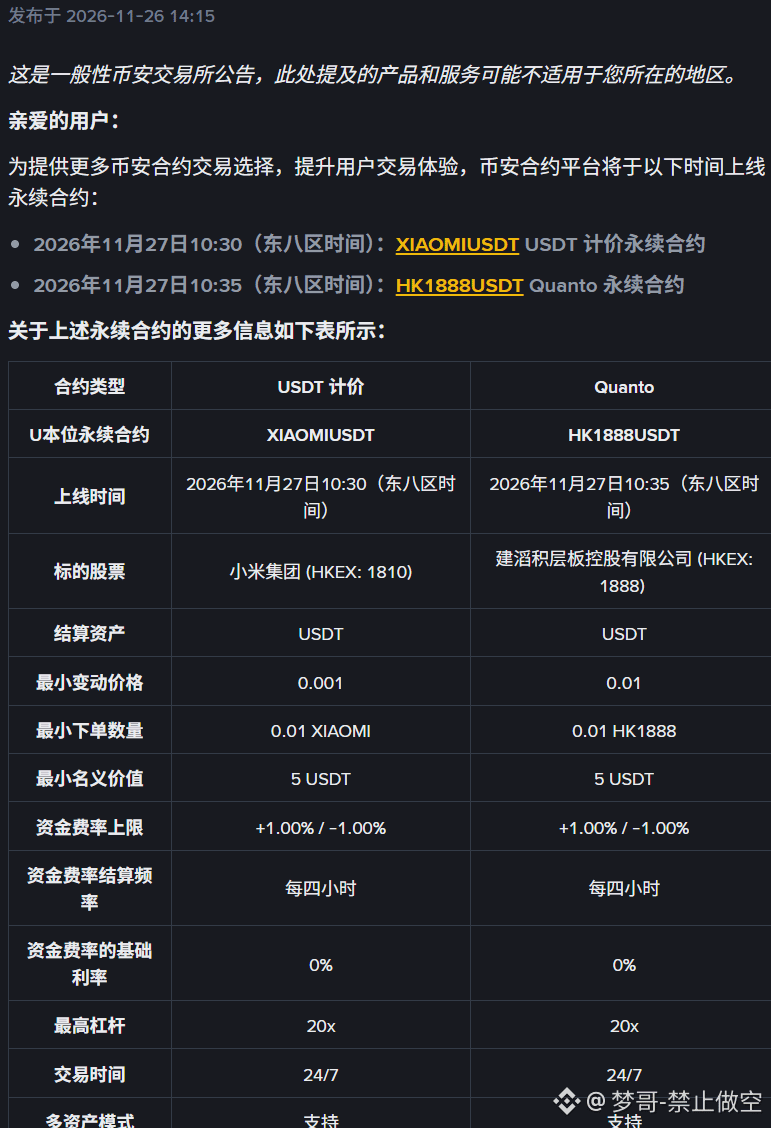
U.S. stock markets are closed today for Thanksgiving, and on Friday they’ll be open for just 3.5 hours. Binance TradFi perpetual contracts will remain tradable as usual over these two days. The listing announcement, “Binance Futures to List Multiple USDT-Margined TradFi Perpetual Contracts,” has been published. Binance’s official Chinese account also shared some popular trading pairs: Xiaomi XIAOMIUSDT and Kingboard Laminates HK1888USDT, the latter being a Quanto contract.
Before trading, review these points from the announcement. First, a Quanto contract’s underlying asset is priced in one currency, while margin and profit and loss are settled in another. It differs from a standard contract, so don’t trade it as if it were one. Second, leverage goes up to 20x, and you can place an order with as little as 5 USDT. The entry threshold is low, but leverage magnifies price movements. Third, funding fees are settled every 4 hours, so don’t compare them directly with contracts that settle every 8 hours.
Liquidity, spreads, and pricing during the market closure differ from those during regular trading hours. Check the order book depth before placing an order. The announcement also includes dividend adjustments for SKHYNIXUSDT and SKHYUSDT. If you plan to trade either of these, open the announcement and read the details first.
#TradFi永续 #美股休市 #币安合约
1
1.9k
·
--
1Password disclosed an internal security incident. On November 19, an employee’s company GitHub account was compromised, exposing the company’s internal source code and affecting CI/CD access. The information confirmed to have been exposed includes some users’ names, login email addresses, and user IDs; account creation and most recent login times; users’ public keys and some authentication protocol parameters; and tokens in some account invitation and recovery links. The company says users’ vaults and Secret Keys were not affected, but it still hasn’t disclosed how many people were impacted.
My take is that the vaults weren’t accessed, so passwords themselves aren’t much of a concern. The trouble comes next. Scammers now have a verified list of email addresses belonging to people who use 1Password, so I’d expect impersonation emails about “account recovery” and “invitations” to start showing up. Don’t click links in these emails; open the app directly to check. The leak also included tokens in invitation and recovery links, which could make these emails look even more convincing, so be extra careful.
CZ posted two hours ago, advising 1Password users to change all their passwords, saying it’s a hassle but necessary. I think it can’t hurt to change passwords for key accounts like exchange accounts and email, then check your 2FA as well.
#1Password #密码安全 #账户安全

1
136
·
--
U.S.-listed crypto-related stocks opened broadly lower. Strategy (MSTR) fell nearly 8% at the open, with PANews reporting an intraday decline of 7.67%; Circle fell more than 7%, and Coinbase (COIN) fell 5.71%.
MicroStrategy’s market cap is now lower than the value of the 850,000 $BTC it holds. Last week, less than one-fifth of the money Strategy raised by selling shares went toward buying crypto; most of it was used to buy back its own preferred shares, STRC.
When a company’s market cap is lower than the value of the crypto it holds, it means the market is valuing the company at a discount rather than a premium. I also find it hard to understand why it would keep selling shares while trading at a discount. Going forward, I’ll be watching two things: how much of the money Strategy raises from share sales goes toward buying crypto, and whether it continues buying back STRC. These two figures say more about where its focus lies than a day’s share price movement.
#Strategy #微策略 #BTC

1
440
·
--
Today's Fear & Greed Index is 13, indicating extreme fear, compared with 11 yesterday. But on Binance Futures, 72.6% of the $BTC retail accounts are long, with a long/short ratio of 2.65; the long/short ratio for top traders' positions is 1.91. $SOL is even more skewed: 79.1% of retail accounts are long, with a long/short ratio of 3.79, while the top-trader ratio is 2.17. The funding rate is 0.0100% every 8 hours, and open interest has increased by 2.3% over the past 24 hours. (The long/short ratio is the number of long accounts divided by the number of short accounts; the funding rate is the current rate, not an annualized one.)
The sentiment index says fear, yet almost everyone actually placing trades is going long. The two don't line up. My take is that retail traders in this cycle may say they're scared, but their actions still lean bullish—a pretty honest tell. SOL is the most skewed of these: its retail long/short ratio of 3.79 is far above the top-trader figure of 2.17, and open interest is still climbing, which suggests new positions are piling in on the same side. Top traders are also bullish, just not as one-sided as retail traders.
This suggests that longs are very crowded in the futures market. Next, we can watch whether $SOL 's long/short ratio continues to widen, and whether the funding rate and open interest keep rising together. When longs are crowded, a reversal can trigger a large move as long positions are closed out en masse.
#恐惧贪婪指数 #BTC #SOL

1
383
·
--
Binance said in a post that it is closely coordinating with the U.S. Department of Justice and industry partners assisting with the freezing of affected assets. It will fully cooperate throughout the asset forfeiture proceedings, with the goal of facilitating the return of affected funds as soon as possible. The FBI announced the same day that, together with the Department of Justice and other agencies, it had filed to forfeit more than $1.1 billion in related crypto assets. Through joint efforts by the public and private sectors, more than $2.9 billion has now been frozen.
Given how much was frozen in such a short time, Yi He's team and the partners who stepped in really did act quickly. That's worth recognizing, and thanks to the partners who helped. For those affected, there are two figures to keep straight: $2.9 billion has been frozen, and forfeiture has been sought for $1.1 billion. After assets are frozen, they still have to go through forfeiture proceedings. When and how the money will be returned remains to be seen in future announcements.
One more point: it's still safer to keep large sums on major exchanges. When something goes wrong, only platforms capable of coordinating a rapid response can be relied on.
1
59
·
--
U.S. spot Bitcoin ETFs have seen net outflows for 5 consecutive trading days, totaling $1.858 billion. According to Farside data, on the latest day, 11-23, they saw another $60.4 million in outflows. $BTC is currently around 60465, and the Fear & Greed Index is at 11, in the extreme fear zone.
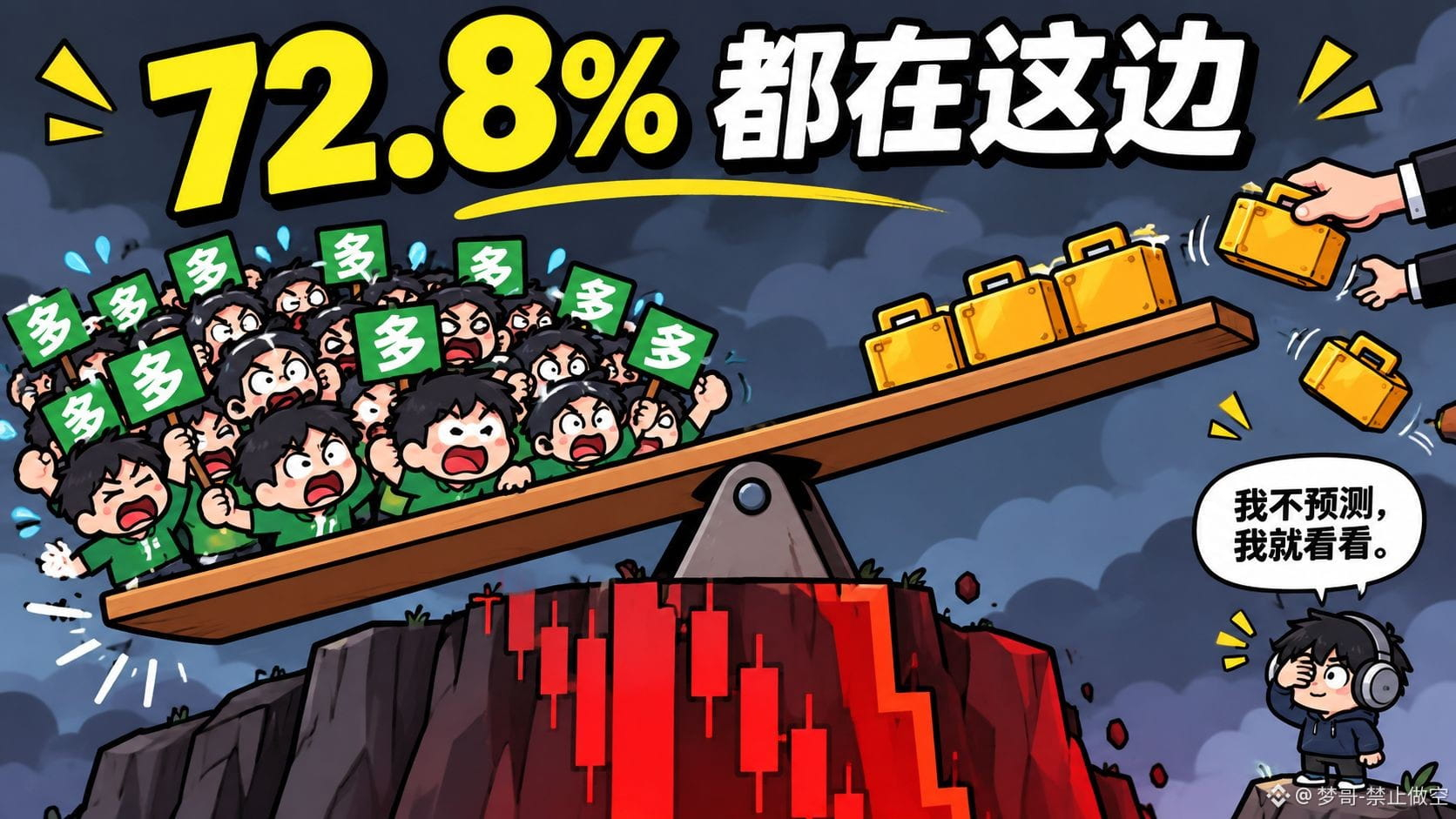
At the same time, looking at BTC perpetual futures on Binance: the retail long/short ratio is 2.67, meaning 72.8% of accounts are going long. The long/short ratio for large traders' positions is 1.66, also tilted bullish, just not as much as retail traders.
My take is that these two sets of data look pretty contradictory side by side. Money is continuously flowing out of ETFs, while retail traders in the futures market are adding to their long positions. The two sides are taking opposite views, so one of them must be wrong. I'm not predicting a direction, but for ordinary users, the risk here is very tangible: if ETF outflows continue while long positions remain this crowded, then if prices fall further, forced-liquidation pressure will be concentrated on the long side. Next, I'll be watching two things: first, whether ETF outflows slow down, and second, whether the retail long/short ratio falls as prices decline. If these two numbers don't change, it means the market's disagreement has yet to be resolved by price action.
#比特币ETF #BTC
1
87
·
--
Bloomberg reports that Nvidia’s board has reinstated Jensen Huang as president, CEO, and a board member. For now, this is only Bloomberg’s account; the materials contain no official announcement from Nvidia.
For ordinary investors, the most troublesome thing about this kind of news is how quickly it can reverse. A report comes out, the market moves first, and the announcement follows later. In between, it’s easy to get whipsawed. When I look at this, I watch three things: first, how $NVDA trades premarket—whether the market buys the news. Price action is more honest than a headline. Second, whether the board issues an official announcement. A report from Bloomberg alone shouldn’t be treated as the final word. Third, whether the independent investigation mentioned earlier has reached a conclusion. The materials don’t say a word about that, so until the investigation is explained, something is still missing from the news about his reinstatement.
When news reverses quickly, I usually wait for an official announcement before drawing conclusions. What comes out first is often only part of the story. The risks here are the single source and the lack of an investigation conclusion. Price action is only a reference, not a directional signal.
#英伟达 #黄仁勋 #NVDA
1
1
125
·
--
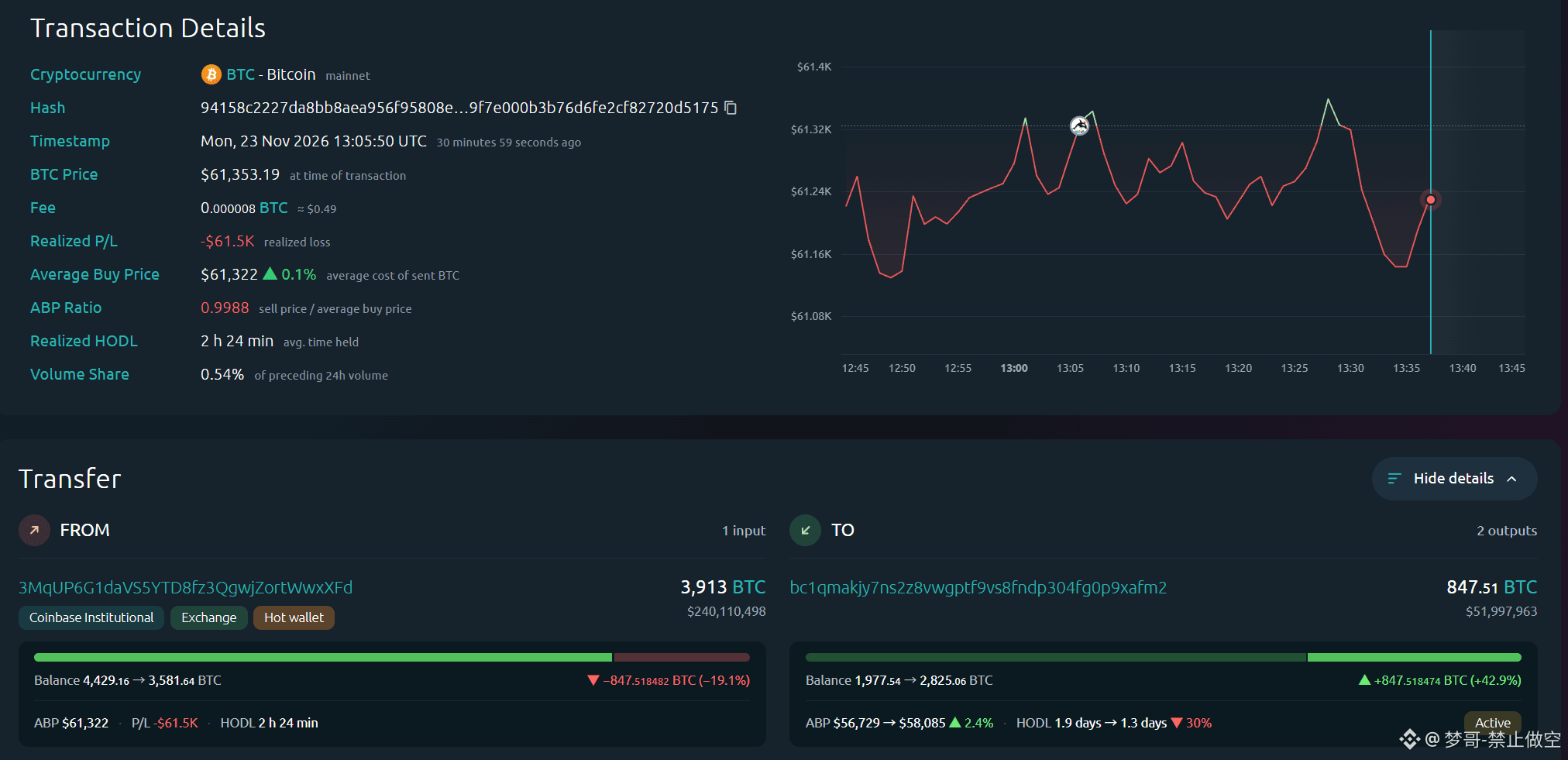
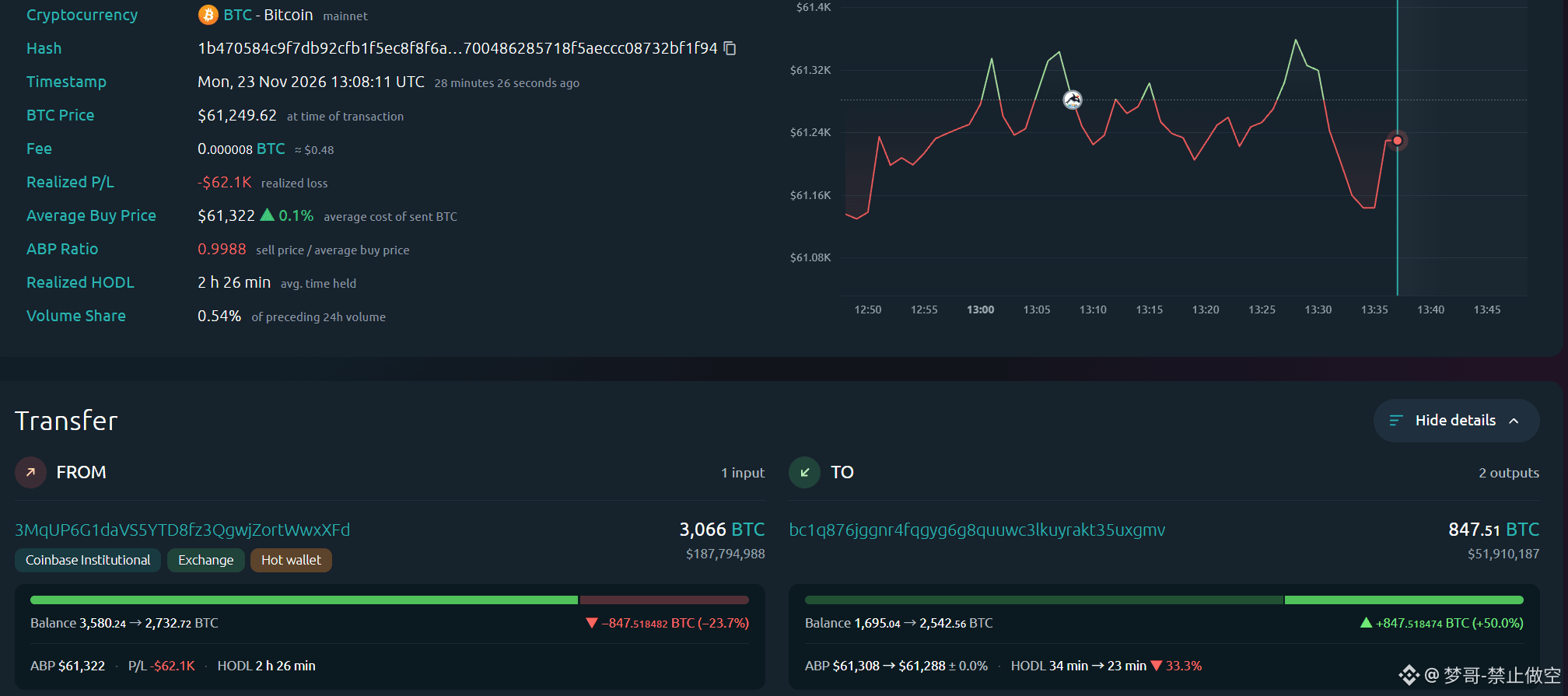
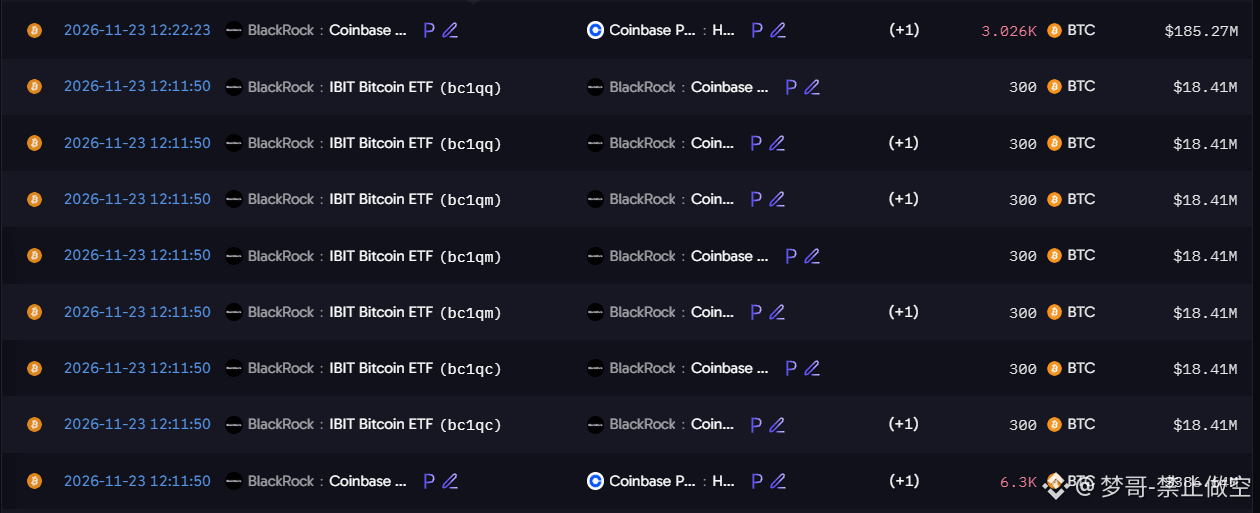
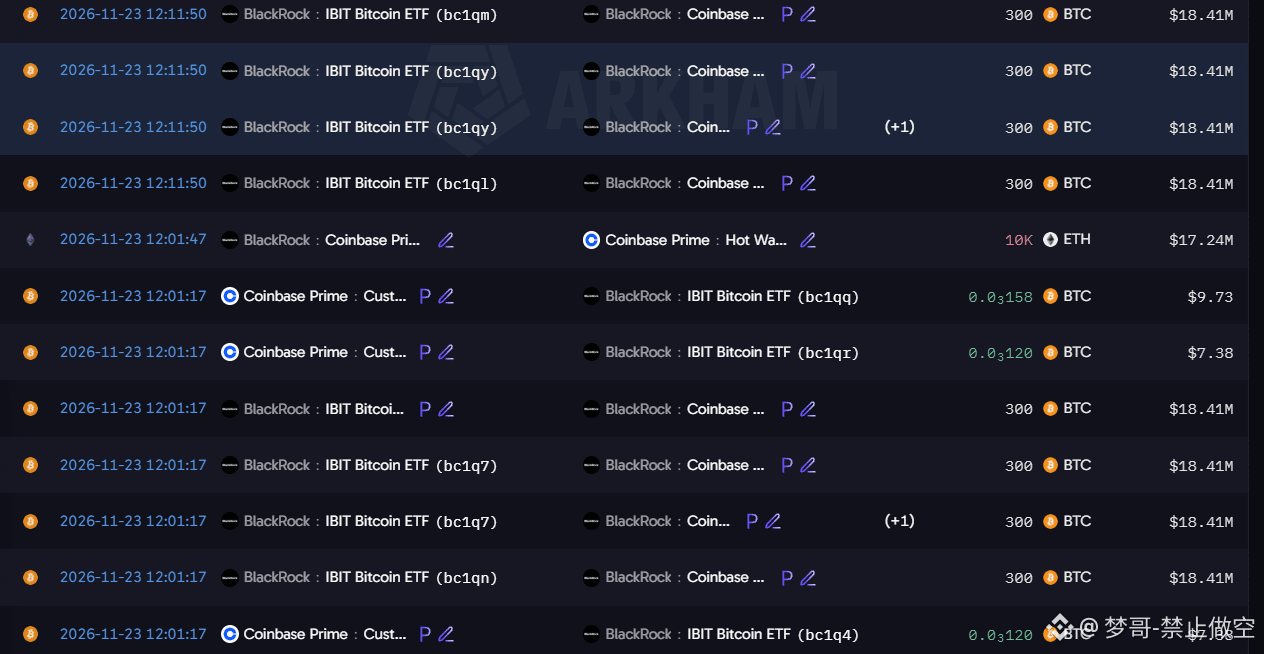
Whale Alert detected that 85,500 $ETH (about $147 million) was transferred from an unknown wallet to Binance 52 minutes ago. Earlier, 1,123 $BTC (about $69.16 million) was also transferred from an unknown wallet to Binance 4 hours ago. The combined amount of the two transfers is substantial, and they happened close together. Neither sender is identified.
My take is that moving funds to an exchange doesn’t necessarily mean they’re going to be sold. Transfers like these could also be for collateral or to rebalance holdings across platforms. You can’t tell from a single transaction alone. But $147 million worth of ETH is a sizable amount, so it’s worth paying attention to—not something to dismiss as an ordinary transfer.
I’ll be watching two things next: whether these coins are moved again after arriving, and whether Binance’s ETH and BTC order books show signs of concentrated selling. If the coins just sit in the addresses and the order books don’t change, there’s no need to interpret this as selling pressure. On-chain data can show where the coins went, but not what the other party intends to do, so let’s not jump to conclusions.
#ETH #BTC #链上数据
1
274
·
--
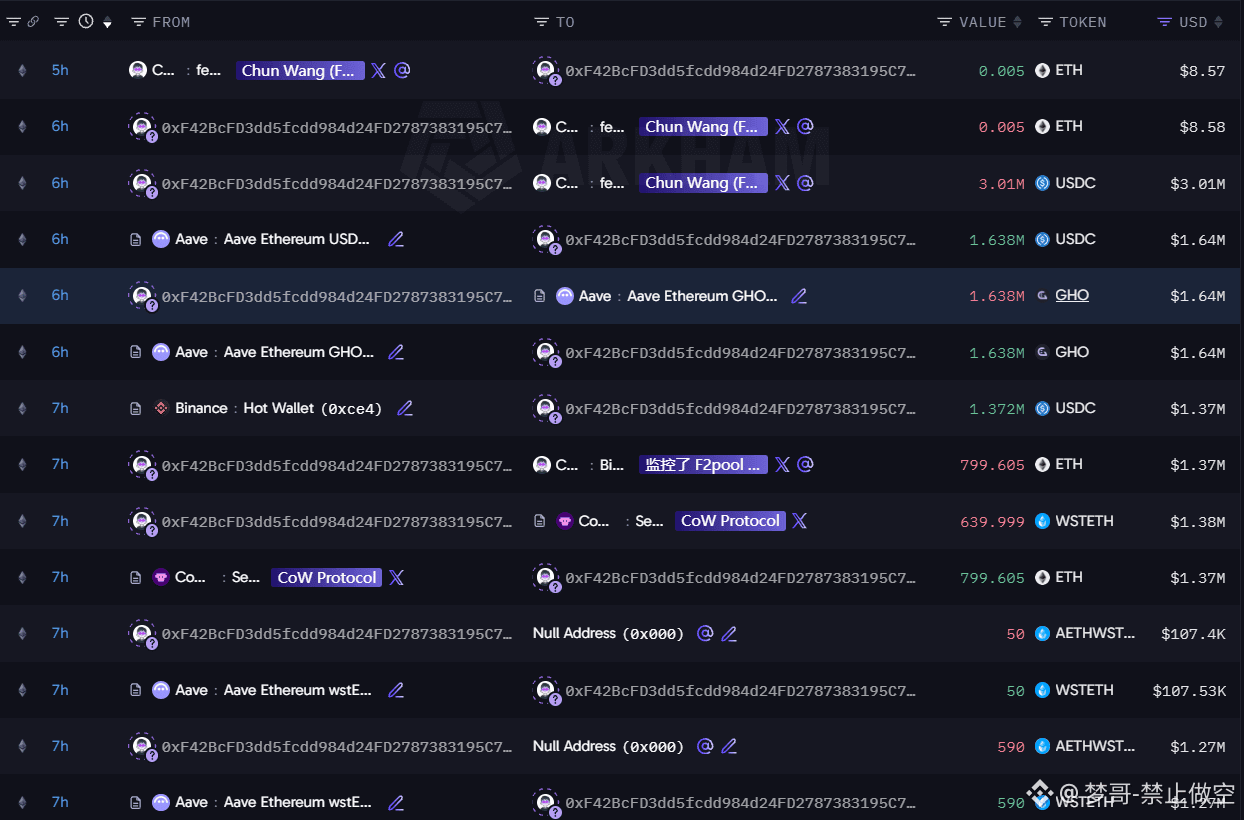
F2Pool co-founder Wang Chun previously bought 7,185 ETH at an average price of $1,634 when ETH fell to around $1,600. After ETH rebounded, he began selling steadily: on-chain analyst Ember tracked cumulative sales of 5,685 ETH over the past day or so, worth about $9.65 million at an average price of $1,698. The latest transaction was 1,799 ETH, worth about $3.07 million, sold just two hours ago. By this count, nearly 80% of the ETH has already been sold.
Looking at the two average prices together, he bought at $1,634 and sold at $1,698, pocketing the difference. He didn't hold out for a higher price; as soon as the price rebounded, he started selling in batches—and has kept selling. By now, most of it is gone.
My take is that big investors act decisively: they buy when prices fall and sell once prices rebound to their target, without getting caught up in market talk about conviction. When tracking moves like these, it's more useful to look at the prices at which they trade and how much they sell at a time, rather than treating a single transaction as a prediction of where the market is headed. This address still has the remaining 20%, and it will be worth watching on-chain updates to see whether it continues selling.
#ETH Wang Chun #On-chain monitoring
2
1.1k
·
--
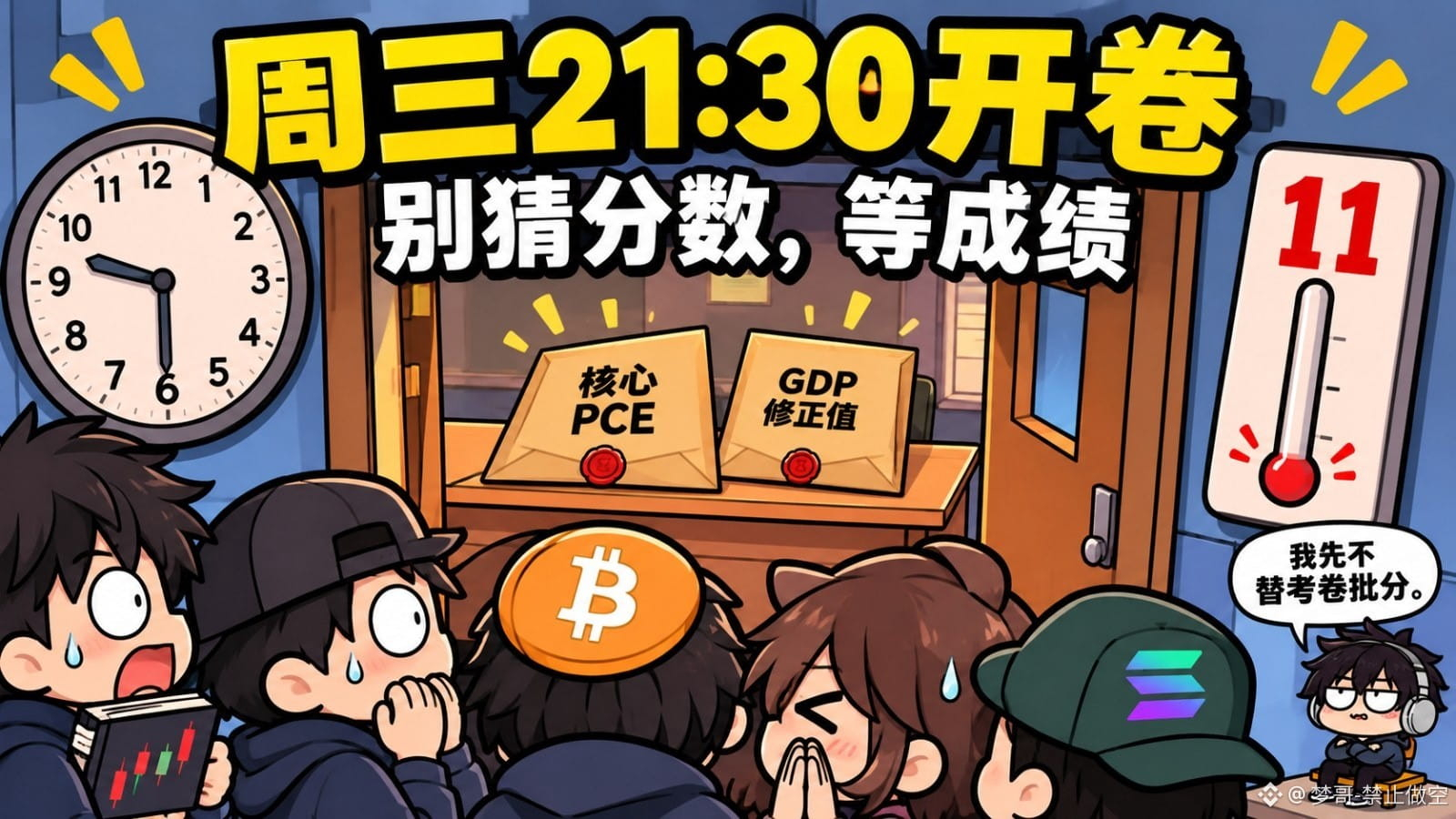
This Wednesday (November 25) at 21:30 Beijing time, the U.S. core PCE month-over-month rate and revised GDP quarter-over-quarter rate will be released at the same time. The expected core PCE rate is 0.3%, compared with a previous reading of 0.3%. The expected revised GDP rate is 3.5%, compared with a previous reading of 3.4%.
Before these two figures come out, the market has already been on edge for a while. The MSCI global index has fallen for seven consecutive trading days, and the Fear & Greed Index is at 11, down from 12 yesterday, remaining in the extreme fear zone. U.S. Treasury Secretary Bessent said this sell-off was driven by factors including comments from the Federal Reserve and the midterm elections.
My view is that nobody should pretend to know the outcome before the figures are released. Both are routine data releases due on schedule, and the forecasts and previous readings are already there. I’ll look only at the actual figures and how they compare with expectations, rather than jumping to conclusions in advance. The fear index is already so low that its day-to-day change is just one point, showing how tense sentiment is. The market’s reaction when the data comes out could be bigger than the figures themselves—that’s what matters most to watch tonight.
#核心PCE #GDP修正值 #恐惧贪婪指数
MSCIUS-0.19%
39
·
--
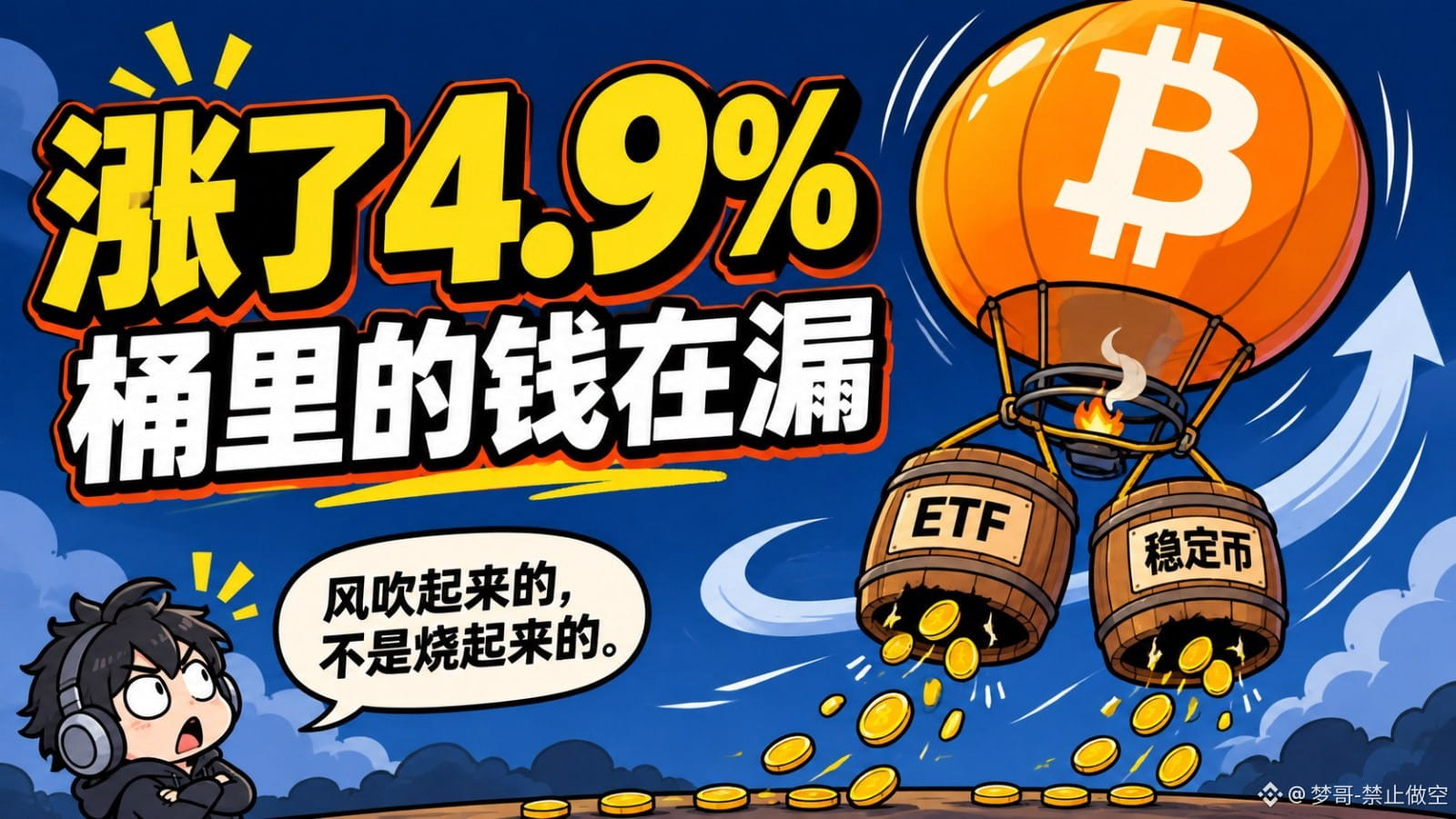
Farside data shows that U.S. spot Bitcoin ETFs recorded net outflows for four consecutive trading days through November 20, with $125 million flowing out that day and a total of $1.245 billion over the past five trading days. $BTC rose 4.9% today to 60,784. ETF data is based on U.S. trading days, so it does not cover the same day as today’s price increase; keep that in mind when comparing them.
Money in the over-the-counter market is also dwindling. Compared with seven days ago, DefiLlama shows USDT at $174.521 billion, down $660 million; $USDC at $68.715 billion, down $579 million. BlockBeats, citing DefiLlama data, also noted that the total stablecoin market cap is $284.215 billion, a new low for the year and $30.177 billion below its May 17 peak.
My take is that ETFs are seeing outflows, while stablecoins outside the market are also contracting. So far, this rally shows no sign of fresh money entering the spot market. That’s why, rather than focusing on how much prices rose today, I’m more interested in when ETF flows turn from outflows to inflows. Until that turning point appears, I won’t take this rally as a sign that money is coming back. This is purely my personal opinion and should not be treated as a trading signal.
#比特币ETF #稳定币
1
57
·
--
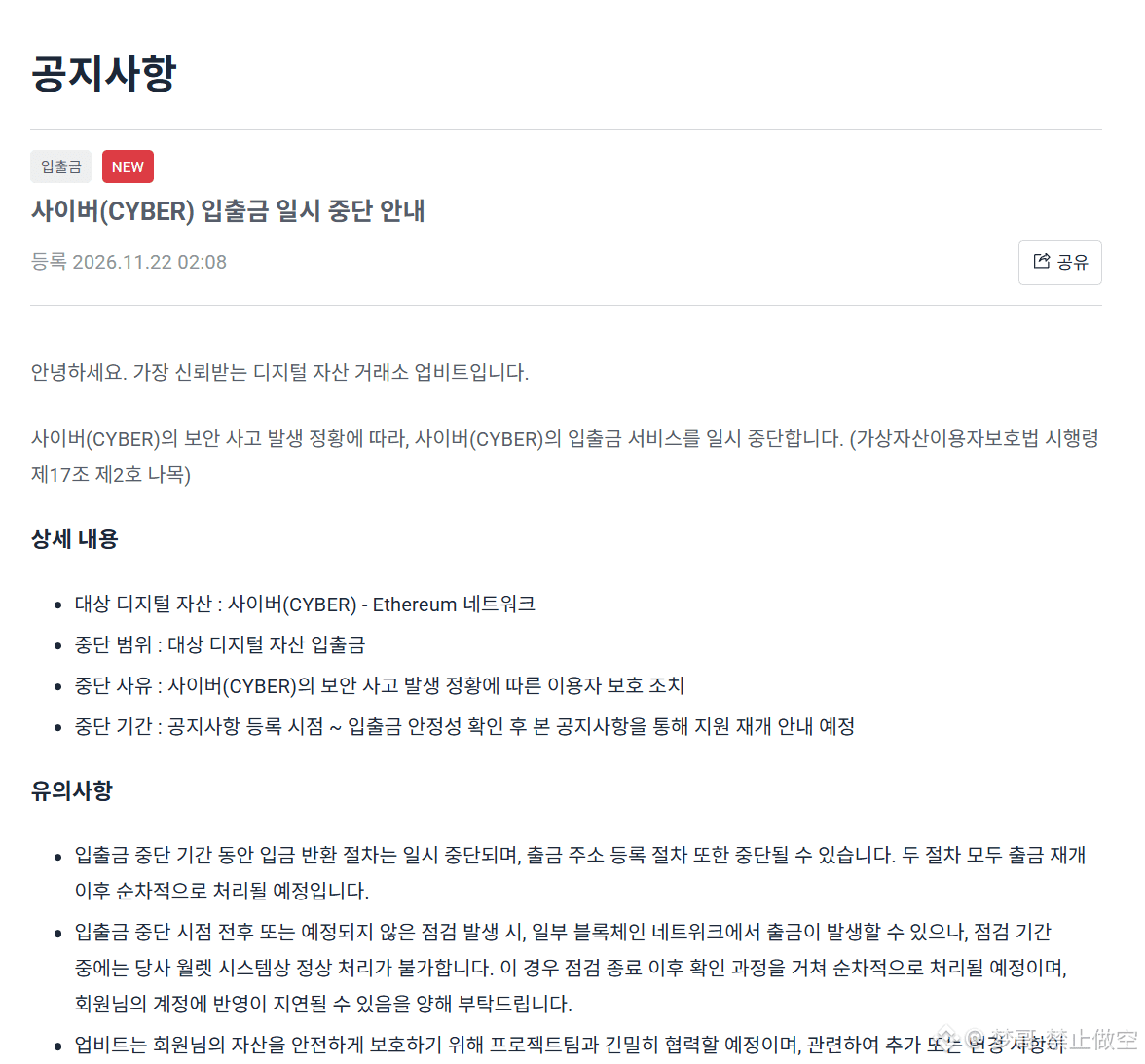
Upbit and Bithumb have both suspended deposits and withdrawals of $CYBER . Based on the times I saw when I posted, Upbit announced its suspension about 11 hours ago, and Bithumb about 10 hours ago. In addition to the suspension notices, both exchanges also issued a CYBER caution notice. The Cyber project team said it is investigating an abnormal token minting incident, but neither the amount minted nor how it was minted was mentioned in the exchange announcements or media reports.
For people holding CYBER, the most immediate impact is that they temporarily cannot deposit or withdraw the coin on either platform.
My view is that the amount and method of the abnormal minting have not yet been disclosed, so any claims about the cause are pure speculation for now. I’ll wait and see two things: first, the results of the project team’s investigation; and second, when Upbit and Bithumb announce that deposits and withdrawals have resumed.
#CYBER #韩所暂停充提

1
458
·
--
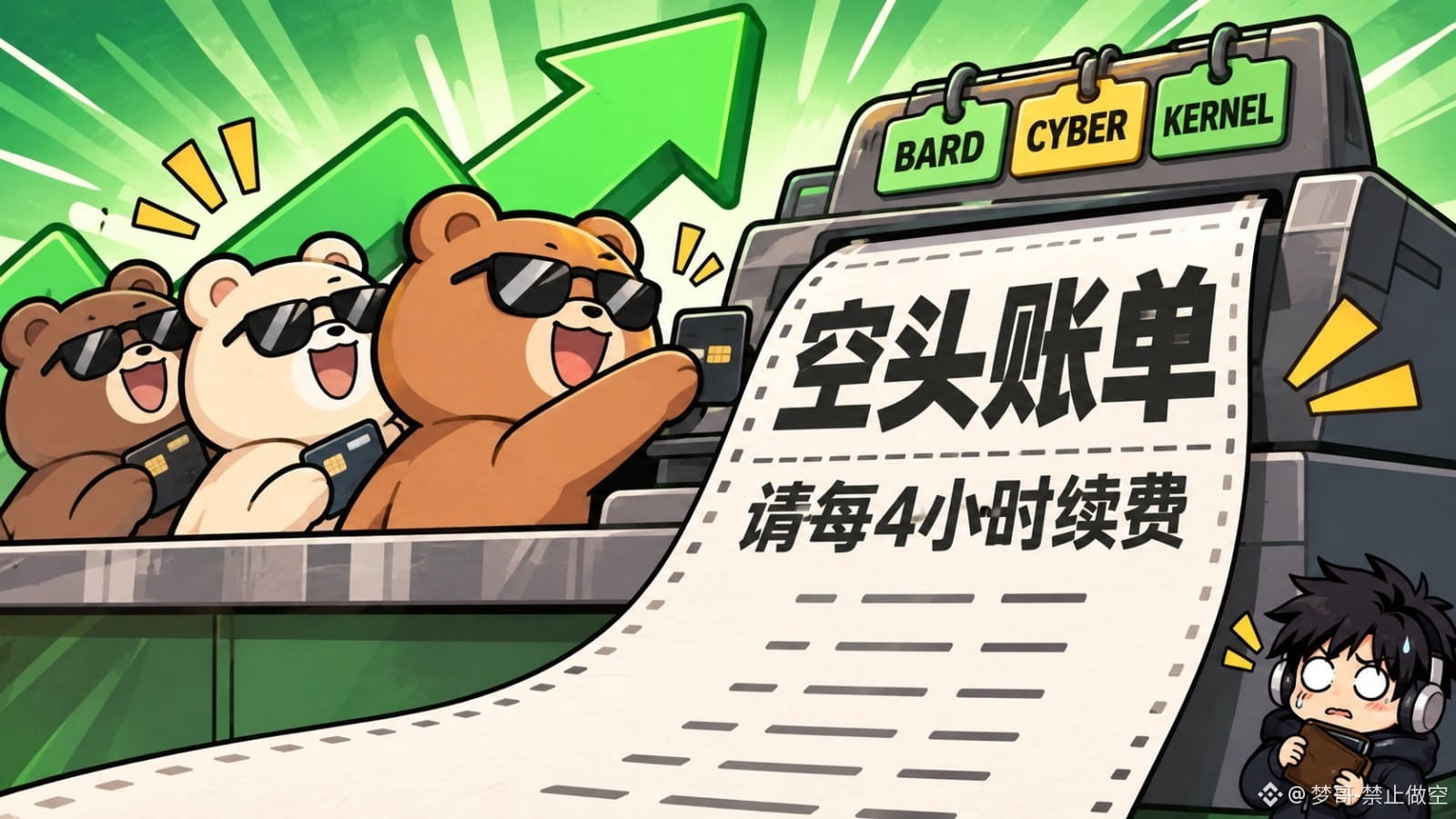
BARD, CYBER, and KERNEL are appearing on both Binance’s top gainers list and its list of lowest funding rates. In the futures data, BARD has a funding rate of -1.75%, settling every 4 hours, and a 24-hour price change of +6.4%; CYBER is at -1.12%, settling every 4 hours, with a 24-hour change of +11.5%; KERNEL is at -0.39%, settling every 1 hour, with a 24-hour change of +15.1%. Prices are rising while funding rates are this negative—the contrast is striking.
My take is that when negative funding rates come with rising prices, the key thing to watch is whether crowded shorts will continue to get squeezed out. The more negative the funding rate, the more crowded the short side is, and even a small push up in price can trigger a short squeeze. This kind of market isn’t handing free money to people chasing longs; it’s more like sending the shorts a bill. Regular users shouldn’t just chase the top gainers or use high leverage. First, watch whether funding rates on these assets are converging and whether prices can hold; waiting for the direction to become clearer is more important.
Which are you watching more closely: funding rates converging first, or prices pulling back first?
#资金费率 #空头挤压 #BARD
1
589
·
--
Anthropic closed at 97 on its first day of trading and fell to 92 after hours. The biggest short seller got it right this time, making a total of $10 million. They covered $30 million worth of short positions after the close, with $67 million still remaining. On the same day, the S&P 500 fell 2%, the $100 billion IPO drained liquidity, and $BTC dropped to 61350.
My take is that after the $100 billion IPO drained liquidity that same day, the secondary market came under pressure first, and $BTC plunged straight to 61350. The IPO made fortunes for some, while buyers in the secondary market footed the bill. That contrast is more worth watching than any single price. Next, watch to see whether $BTC can hold around 61350. Ordinary investors should avoid chasing prices or using high leverage; waiting for the direction to become clearer before acting is the safer move.
Are you more focused on the price movement after Anthropic's first-day close, or on whether $BTC can find support around 61350?
#AnthropicIPO #BTC #流动性

179
·
--
On-chain records show that Pump.fun transferred 33,390 $SOL to Kraken again today, 2 hours ago, worth about $2.43 million at the time; just 5 days ago, it had transferred 64,666 $SOL , worth about $5.19 million. From early 2024 to now, Pump.fun has sold a total of $SOL 5.726 million tokens, worth about $901 million, at an average price of about $157.3.
Meanwhile, a major BTC miner transferred 483 $BTC to Binance 9 hours ago, worth about $30.66 million. These coins came from mining pools such as Ant Pool, F2Pool, and Spider Pool, and they have been transferred there to sell every few days.
My view is that Pump.fun’s selling frequency has shortened from about once every half month in the past to just 5 days since the last sale this time. This change in pace is more worth watching than the size of any single transfer; when the price of $SOL weakens, its outflows actually speed up. The miner is also transferring coins to Binance in batches. Both sides’ activity is happening around the same time, so I’ll be watching closely to see whether this frequency continues. For ordinary users, a single on-chain transfer shouldn’t be taken as a direct indicator of market direction. The key is to watch the frequency going forward: whether Pump.fun continues transferring to Kraken every few days, and whether the miner keeps transferring to Binance every few days. Don’t chase a single post with high leverage; wait for the direction to become clearer before acting.
How many days will it be until Pump.fun transfers to Kraken again?
#SOL #BTC #Pumpfun
1
285
·
--
Recently, ZachXBT publicly alleged that Gate had frozen around $3 million in assets belonging to Chinese users. The incident reportedly began when Indian police mistakenly identified the address of a cross-chain bridge as an account involved in a pig-butchering scam, triggering a mistaken freeze.
Binance founder CZ once explained that when law enforcement agencies issue freezing orders, they often do not know how much money is in the account and cannot accurately distinguish between illicit funds related to a case and legitimate funds. The process is to impose a freeze first, then conduct a more detailed review and determine the nature of the funds later. This approach poses a serious risk to individual users. If they face this kind of heavy-handed enforcement without a rigorous adjudication process, retail investors can be left with no clear way to seek redress. For users with substantial assets, choosing a major exchange with better liquidity and a more mature framework for managing compliance and legal risks is a necessary way to reduce these kinds of uncontrollable risks.
I also keep all my large holdings on Binance. As the world's largest exchange, Binance also has the largest, most comprehensive, and most transparent reserves.
If your assets were frozen on a non-mainstream platform for a similar reason, would you choose to take legal action or apply pressure through public opinion?
#Gate #加密资产安全 #交易所

1
1
96
·
--
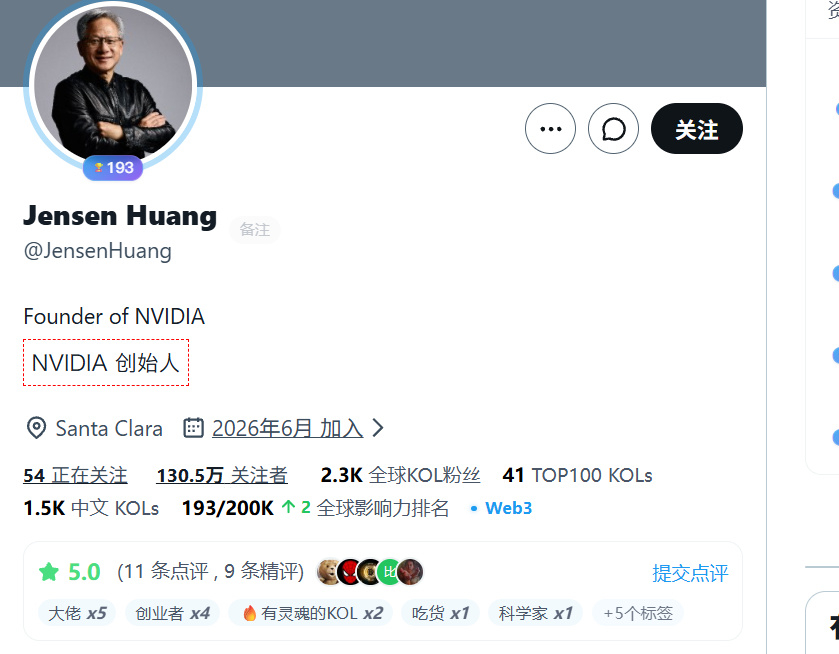
What CNBC heard from people in the know is that Nvidia’s board never even considered bringing Huang back as CEO. Right now, they’re focused solely on investigating him. Even a petition signed by 180,000 people won’t help; headhunters have already taken on the assignment. His verified organization badge on X has also been removed, and his bio was shortened from “Nvidia CEO and Founder” to just “Founder.” The link to his profile page is gone too. In the months before he left, billions’ worth of $NVDA shares were first transferred to his children.
Things aren’t peaceful inside the company either. Employees have demonstrated on campus and demanded Huang’s return, with a senior director leading the effort behind the scenes. When word got to the board, the message was: reinstate him, or brace for a talent exodus. Employees are preparing to take to the streets, the board is focused on investigating him, and headhunters haven’t stopped recruiting. All three things are moving forward at the same time.
My take is that this story is nowhere near a resolution. Next, we’ll have to see whether the board’s investigation yields any public updates, and whether the headhunting and employee demands continue to clash. Don’t treat this kind of corporate governance news as a reason to chase the stock, and don’t use high leverage. Wait until the direction becomes clearer. Which will produce a public result first: the board’s investigation or the headhunters’ recruiting?
#英伟达 #NVDA #黄仁勋
1
1
214
·
--
Visa recently expanded its stablecoin settlement network by partnering with Anchorage to officially integrate USDPT, the stablecoin issued by Western Union, into the VisaNet settlement system.
My personal view is that traditional payment institutions are moving much faster than many people in the industry expected to stake out territory in compliant cross-border payments. Western Union, a traditional remittance giant, is officially moving on-chain to directly address the pain points of wire transfers, which can take days and carry hefty fees, by using stablecoin settlement to reduce costs and boost efficiency. Choosing a compliant custodian like Anchorage for the underlying infrastructure also shows that VisaNet is being transformed from a traditional, single-card-network system into an underlying protocol capable of supporting multi-currency clearing and settlement.
Now that traditional giants are bringing stablecoin settlement to everyday remittance channels, how much room do you think will be left for old-fashioned cross-border bank wires?
#稳定币 #跨境支付

1
76
·
--
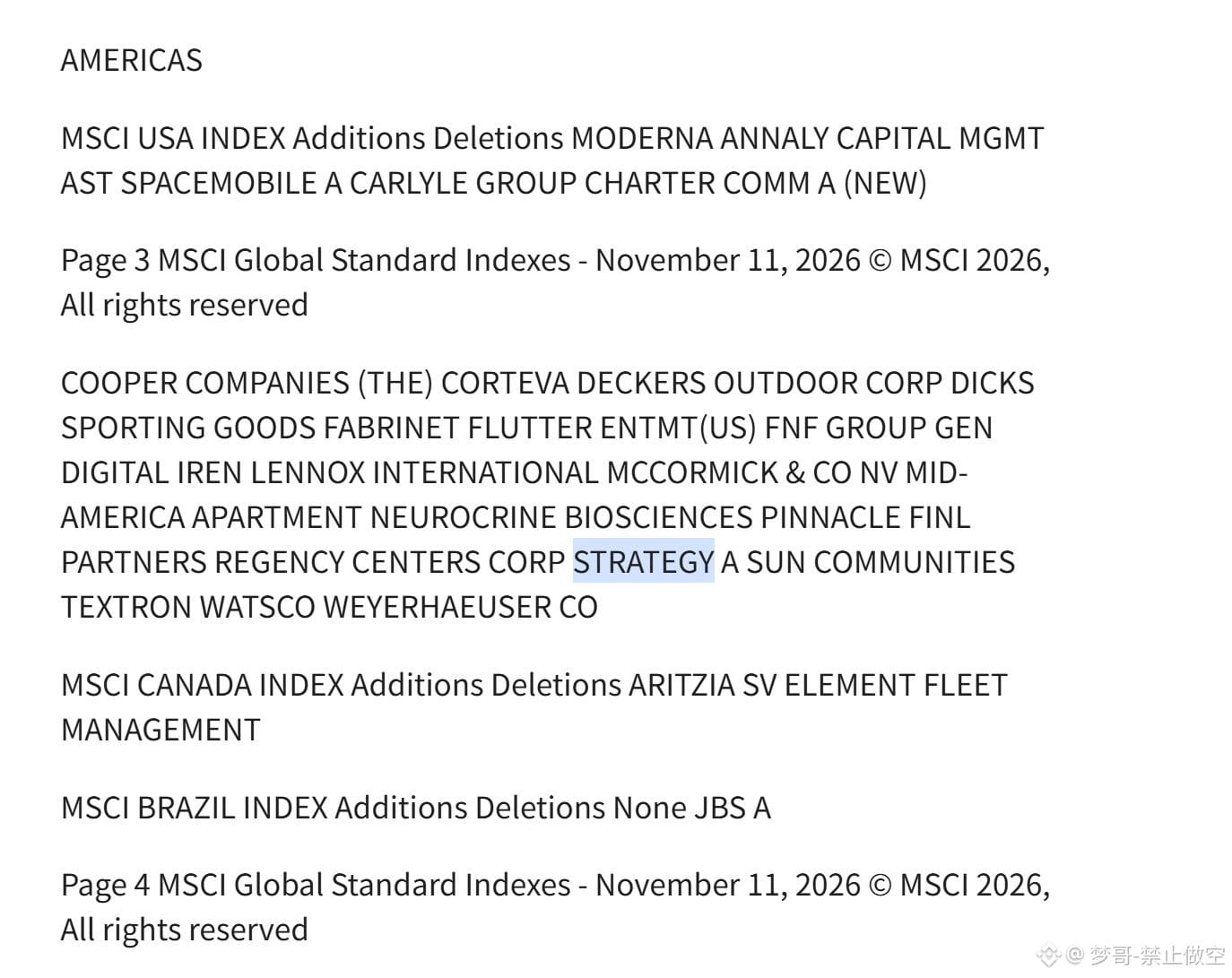
MSCI has confirmed that it will officially remove MicroStrategy $MSTR from its indexes at the end of this month. A textbook example of a company that has long relied on issuing debt to buy $BTC , MicroStrategy has kept going with a premium-driven strategy that amounts to stepping on one foot with the other. Now passive index funds have directly pulled the plug on that playbook.
My view is that this will have a direct impact on MicroStrategy and on companies that go on to imitate its strategy. Once the index removal takes effect, passive funds tracking MSCI will be required to sell their holdings during the rebalancing period, putting the market under a concentrated wave of selling pressure. The model of treating crypto purchases funded by debt issuance as an ATM and relying on continual financing to drive up the premium is unlikely to work under the strict passive-investment framework of traditional finance.
Once the selling from this wave of passive rebalancing at the end of the month has been fully absorbed, do you think listed companies that rely on debt-funded crypto purchases to sustain a high premium will still be able to maintain their valuations?
#Strategy和Metaplanet遭MSCI指数剔除 #BTC
205
·
--
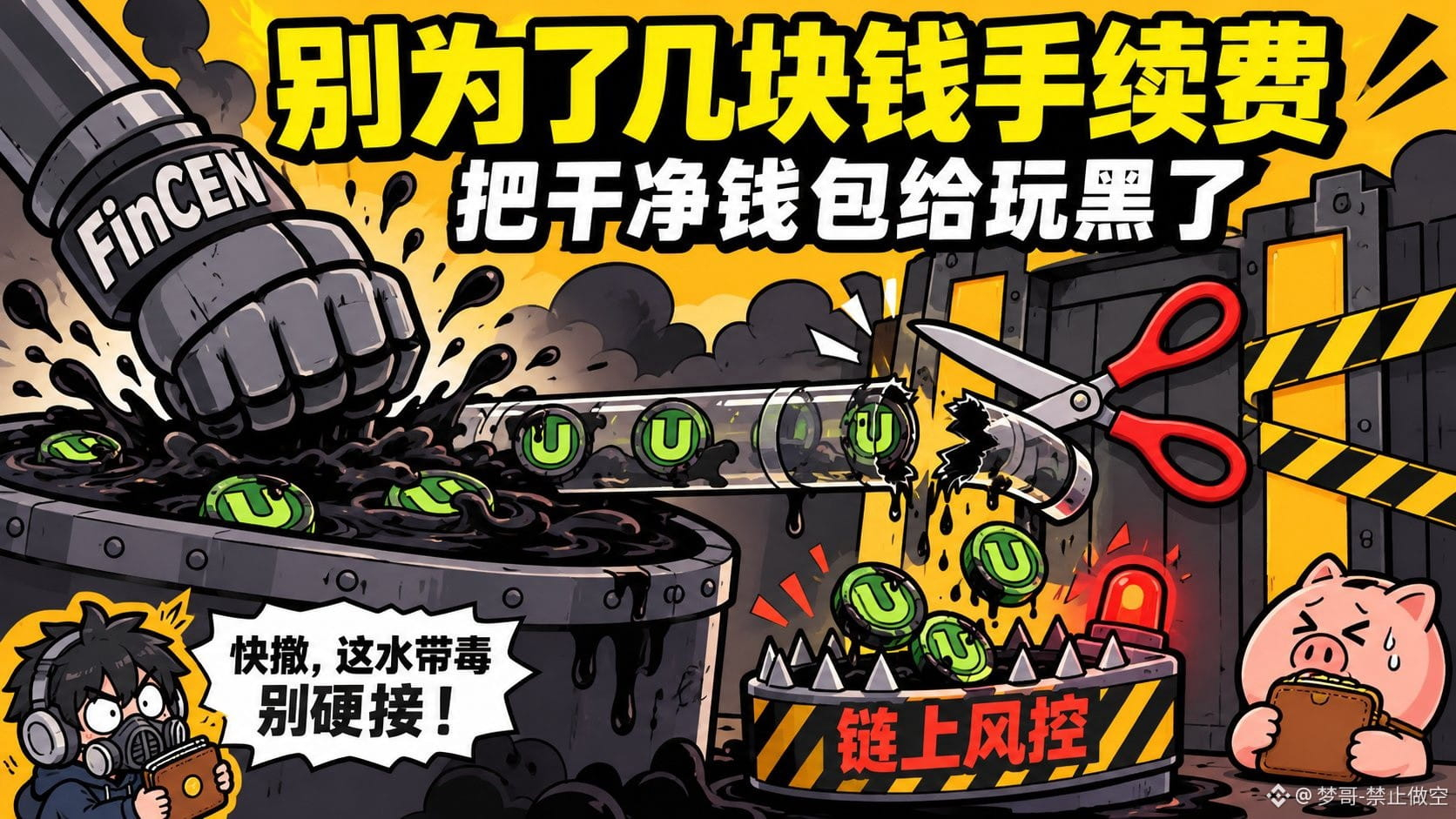
The U.S. Financial Crimes Enforcement Network (FinCEN) has officially designated MEXC as a “primary money laundering concern.” In response to this regulatory designation, Binance moved very quickly and has now completely cut off deposit and withdrawal channels linked to MEXC.
This has a very direct impact on ordinary users. My view is that if you still have funds on the platform, your top priority should be to withdraw them as soon as possible. Every U flowing out of the platform now could very well be flagged or blocked directly by the on-chain risk-control systems of major institutions. Don’t risk using your main wallet or an address on a compliant platform just to save a few dollars in fees. If an address gets tainted by an on-chain flag and you run into risk-control rules, the costs of dealing with subsequent freezes and investigations could be very high.
When withdrawing funds from other platforms, do you have a separate transitional wallet set up for isolation?
#MEXC #FinCEN #安全风控
1
165
Log in to explore more content
Join global crypto users on Binance Square
⚡️ Get latest and useful information about crypto.
💬 Trusted by the world’s largest crypto exchange.
👍 Discover real insights from verified creators.
Email / Phone number
Trending Topics
CanMarketsReboundAfterThanksgiving?
188,122 views
1,948 Discussing
Rate-Hike Bets Linger as US Markets Head Into Thanksgiving Closure
Binance News
·7 Likes
·5.6k views
CouldSpaceX’sOrbitalDataCentersBoostAIChipDemand?
92,374 views
1,171 Discussing
SouthKoreaProposesMandatoryDigitalAssetTransactionDisclosure
4,696 views
105 Discussing