
FOLLOW AND LIKE BACK TOGETHER GROW
507 Posts
FOLLOW AND LIKE BACK TOGETHER GROW
Report
Block User
932 Following
449 Followers
3.2K+ Liked
Posts
All
Quotes
SIGN and the role of the "trust layer" in the process of expanding blockchain applicationsI believe that blockchain only truly realizes its value when it not only records transparent transactions but also supports processes related to data and rights in a reliable manner. In many cases, the difficulty does not lie in the core technology but in how to ensure that information is clearly verified and the distribution results can be accepted by the community. This is the reason @SignOfficial that caught my attention.
SIGN and the role of the "trust layer" in the process of expanding blockchain applications
I believe that blockchain only truly realizes its value when it not only records transparent transactions but also supports processes related to data and rights in a reliable manner. In many cases, the difficulty does not lie in the core technology but in how to ensure that information is clearly verified and the distribution results can be accepted by the community. This is the reason @SignOfficial that caught my attention.
6
27
202
In my opinion, @SignOfficial is worth observing because the project focuses on the ability to connect data verification and the value distribution process. This is a less noticed part but is very necessary if we want on-chain ecosystems to operate more efficiently and transparently. I'm also monitoring further about $SIGN . #SignDigitalSovereignInfra
In my opinion, @SignOfficial is worth observing because the project focuses on the ability to connect data verification and the value distribution process. This is a less noticed part but is very necessary if we want on-chain ecosystems to operate more efficiently and transparently. I'm also monitoring further about $SIGN . #SignDigitalSovereignInfra
3
27
97
SIGN and the challenge of turning digital rights into a more transparent process in Web3In my opinion, when talking about Web3, many people often mention digital assets, communities, or the speed of ecosystem expansion. However, there is another layer of issues that is also very important, which is how digital rights are defined, reconciled, and distributed so that users can understand clearly and verify. If this aspect is not done well, even a program that attracts a large number of participants can leave a feeling of lack of clarity. This is why I am interested in @SignOfficial
SIGN and the challenge of turning digital rights into a more transparent process in Web3
In my opinion, when talking about Web3, many people often mention digital assets, communities, or the speed of ecosystem expansion. However, there is another layer of issues that is also very important, which is how digital rights are defined, reconciled, and distributed so that users can understand clearly and verify. If this aspect is not done well, even a program that attracts a large number of participants can leave a feeling of lack of clarity. This is why I am interested in @SignOfficial
1
26
54
I find @SignOfficial noteworthy because the project is addressing a very practical part of Web3: turning digital rights and related information into things that can be clearly compared. If this infrastructure layer develops well, $SIGN can support many ecosystems operating more tightly. #SignDigitalSovereignInfra
I find @SignOfficial noteworthy because the project is addressing a very practical part of Web3: turning digital rights and related information into things that can be clearly compared. If this infrastructure layer develops well, $SIGN can support many ecosystems operating more tightly. #SignDigitalSovereignInfra
1
21
29
SIGN and the role of digital standards in the maturity of Web3I believe that for an ecosystem to develop sustainably, it must sooner or later rely on common standards, rather than just on growth rates or market attention. In Web3, this is even more evident as many activities involve user data, participation conditions, and the token distribution process. Without a clear approach to verify information and organize value allocation steps, the system will struggle to achieve a sufficiently high level of trust. This is why I am interested in @SignOfficial
SIGN and the role of digital standards in the maturity of Web3
I believe that for an ecosystem to develop sustainably, it must sooner or later rely on common standards, rather than just on growth rates or market attention. In Web3, this is even more evident as many activities involve user data, participation conditions, and the token distribution process. Without a clear approach to verify information and organize value allocation steps, the system will struggle to achieve a sufficiently high level of trust. This is why I am interested in @SignOfficial
2
23
61
In my opinion, a noteworthy point regarding @SignOfficial is its ability to support Web3 development in a more organized manner. When information is clearly verified and tokens are distributed through a transparent process, the ecosystem will be much more sustainable. This is why I continue to monitor $SIGN . #SignDigitalSovereignInfra
In my opinion, a noteworthy point regarding @SignOfficial is its ability to support Web3 development in a more organized manner. When information is clearly verified and tokens are distributed through a transparent process, the ecosystem will be much more sustainable. This is why I continue to monitor $SIGN . #SignDigitalSovereignInfra
1
20
20
SIGN and the ability to create a transparent operational platform for digital ecosystemsIn my opinion, when a blockchain ecosystem begins to expand in terms of the number of users and interaction programs, the important issue is no longer just the speed or popularity of the token. What truly determines the quality of operation is how the system processes data, verifies information, and distributes value to the community. This is why I pay attention to @SignOfficial , as the project is addressing that foundational aspect.
SIGN and the ability to create a transparent operational platform for digital ecosystems
In my opinion, when a blockchain ecosystem begins to expand in terms of the number of users and interaction programs, the important issue is no longer just the speed or popularity of the token. What truly determines the quality of operation is how the system processes data, verifies information, and distributes value to the community. This is why I pay attention to @SignOfficial , as the project is addressing that foundational aspect.
2
29
34
My positive rating for @SignOfficial is that the project does not chase after the surface but focuses on the operational structure behind. With blockchain, verifying information and reasonable token distribution are two factors that help the ecosystem develop more sustainably. I think $SIGN is a project worth observing further. #SignDigitalSovereignInfra
My positive rating for @SignOfficial is that the project does not chase after the surface but focuses on the operational structure behind. With blockchain, verifying information and reasonable token distribution are two factors that help the ecosystem develop more sustainably. I think $SIGN is a project worth observing further. #SignDigitalSovereignInfra
2
28
30
SIGN and the problem of reducing "trust friction" in on-chain systemsI believe that one of the biggest barriers to the expansion of Web3 is "trust friction." Users may be willing to participate in a project or a community campaign, but if the data is hard to verify, the conditions are unclear, or the token distribution is lacking transparency, trust will quickly diminish. This is why I pay attention to @SignOfficial , as the project is addressing the right infrastructure layer that can help alleviate this issue.
SIGN and the problem of reducing "trust friction" in on-chain systems
I believe that one of the biggest barriers to the expansion of Web3 is "trust friction." Users may be willing to participate in a project or a community campaign, but if the data is hard to verify, the conditions are unclear, or the token distribution is lacking transparency, trust will quickly diminish. This is why I pay attention to @SignOfficial , as the project is addressing the right infrastructure layer that can help alleviate this issue.
1
33
58
In my opinion, the key point to note at @SignOfficial is the project focusing on the quality of the process rather than just the final results. Better information verification and clearer token distribution will help make on-chain activities more professional. This is why I am interested in $SIGN . #SignDigitalSovereignInfra
In my opinion, the key point to note at @SignOfficial is the project focusing on the quality of the process rather than just the final results. Better information verification and clearer token distribution will help make on-chain activities more professional. This is why I am interested in $SIGN . #SignDigitalSovereignInfra
2
29
56
Article
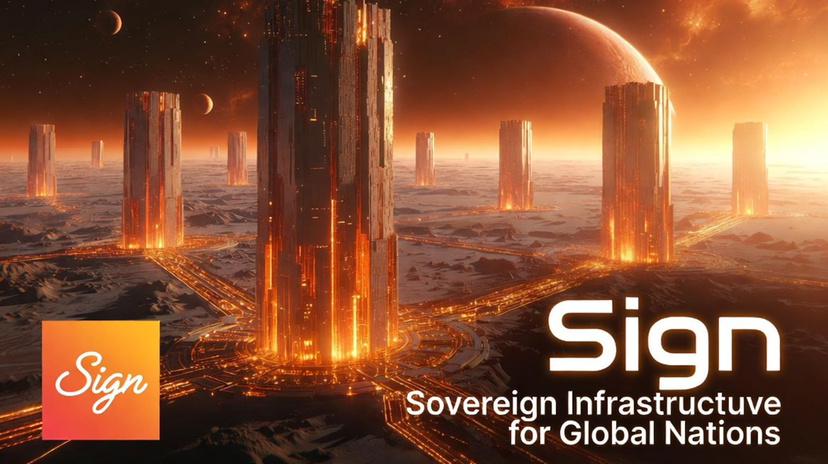
SIGN and the significance of building infrastructure before scaling Web3In my opinion, an ecosystem can only sustainably scale when the infrastructure is built solidly first. In Web3, many projects grow rapidly thanks to the community, but as the scale increases, issues regarding information verification, data validation, and token distribution start to become apparent. Without a suitable foundation to handle these processes, the growth rate can sometimes add pressure to the project itself. This is why I pay attention to @SignOfficial .
SIGN and the significance of building infrastructure before scaling Web3
In my opinion, an ecosystem can only sustainably scale when the infrastructure is built solidly first. In Web3, many projects grow rapidly thanks to the community, but as the scale increases, issues regarding information verification, data validation, and token distribution start to become apparent. Without a suitable foundation to handle these processes, the growth rate can sometimes add pressure to the project itself. This is why I pay attention to @SignOfficial .
5
32
105
I see @SignOfficial as a project building a "reliable infrastructure" for the blockchain. When data is well validated and the token distribution has a clear process, projects will be easier to scale while maintaining transparency. That is why I pay attention to $SIGN . #SignDigitalSovereignInfra
{spot}(SIGNUSDT)
I see @SignOfficial as a project building a "reliable infrastructure" for the blockchain. When data is well validated and the token distribution has a clear process, projects will be easier to scale while maintaining transparency. That is why I pay attention to $SIGN . #SignDigitalSovereignInfra
5
30
54
SIGN and the need to build verifiable digital processes in Web3When observing the development of blockchain, I realize a quite clear point: the ecosystem can scale quickly, but without verifiable processes, it is very difficult to maintain operational quality over time. Many current on-chain activities depend on input data, participation conditions, and reward distribution methods. If these factors are not clear enough, the community's experience will be affected. This is why I am interested in @SignOfficial
SIGN and the need to build verifiable digital processes in Web3
When observing the development of blockchain, I realize a quite clear point: the ecosystem can scale quickly, but without verifiable processes, it is very difficult to maintain operational quality over time. Many current on-chain activities depend on input data, participation conditions, and reward distribution methods. If these factors are not clear enough, the community's experience will be affected. This is why I am interested in @SignOfficial
2
31
31
In my opinion, the value of @SignOfficial lies in its ability to support digital systems operating more transparently. Verifying information and organizing token distribution are two important steps that are often overlooked. If this part is handled well, $SIGN can play a useful role in the long-term development of Web3. #SignDigitalSovereignInfra
In my opinion, the value of @SignOfficial lies in its ability to support digital systems operating more transparently. Verifying information and organizing token distribution are two important steps that are often overlooked. If this part is handled well, $SIGN can play a useful role in the long-term development of Web3. #SignDigitalSovereignInfra
2
33
47
Article
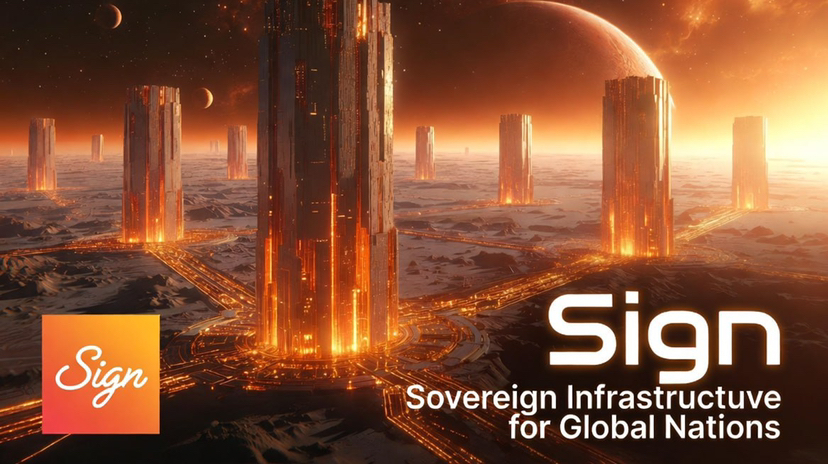
What standards can SIGN create for token distribution systems?In my opinion, one of the easily noticeable weaknesses of many activities in crypto is that the token distribution process has not really been standardized. Many programs can attract a large number of participants, but when delving into how to determine eligible individuals, how to reconcile data, and how to announce results, there are still quite a few gaps in transparency. This is the reason @SignOfficial has become the project I want to follow more closely.
What standards can SIGN create for token distribution systems?
In my opinion, one of the easily noticeable weaknesses of many activities in crypto is that the token distribution process has not really been standardized. Many programs can attract a large number of participants, but when delving into how to determine eligible individuals, how to reconcile data, and how to announce results, there are still quite a few gaps in transparency. This is the reason @SignOfficial has become the project I want to follow more closely.
3
32
108
What caught my attention about @SignOfficial is how the project focuses on authenticity rather than just talking about growth. If Web3 wants to expand sustainably, information verification systems and token distribution need to be built better, and that's why I'm keeping an eye on $SIGN . #SignDigitalSovereignInfra
{spot}(SIGNUSDT)
What caught my attention about @SignOfficial is how the project focuses on authenticity rather than just talking about growth. If Web3 wants to expand sustainably, information verification systems and token distribution need to be built better, and that's why I'm keeping an eye on $SIGN . #SignDigitalSovereignInfra
1
29
67
Article
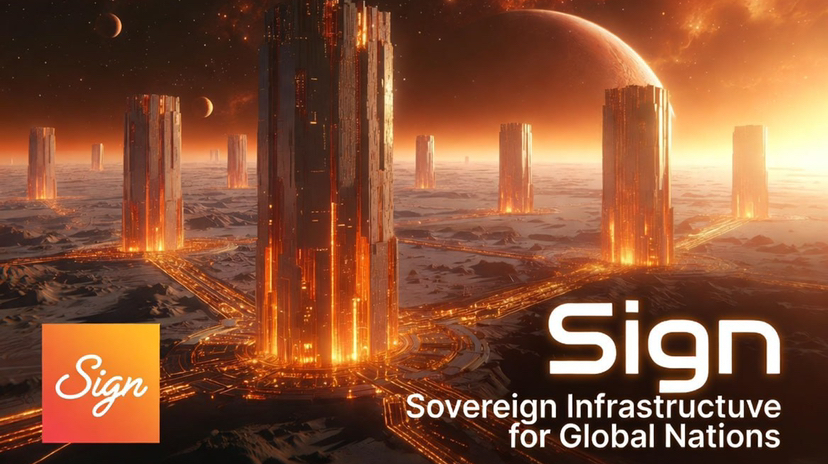
SIGN and the role of backend infrastructure in the development of Web3I believe that many true values of Web3 are not found in what is immediately visible on the surface, but in the operational infrastructure layers behind. Users often pay attention to tokens, transactions, or community campaigns, but for everything to run smoothly, a sufficiently good system is needed to handle verification information and distribute value clearly. That is why @SignOfficial makes me interested.
From my perspective, Sign is tackling a backend problem that is very important. As the number of projects and participants increases, data verification is no longer an optional choice but a prerequisite to maintain trust. Similarly, token distribution is not just an action of transferring assets, but also a process that requires transparency criteria and verifiability. Without the supporting infrastructure layer, many on-chain activities will struggle to achieve the necessary fairness.
SIGN and the role of backend infrastructure in the development of Web3
I believe that many true values of Web3 are not found in what is immediately visible on the surface, but in the operational infrastructure layers behind. Users often pay attention to tokens, transactions, or community campaigns, but for everything to run smoothly, a sufficiently good system is needed to handle verification information and distribute value clearly. That is why @SignOfficial makes me interested.
From my perspective, Sign is tackling a backend problem that is very important. As the number of projects and participants increases, data verification is no longer an optional choice but a prerequisite to maintain trust. Similarly, token distribution is not just an action of transferring assets, but also a process that requires transparency criteria and verifiability. Without the supporting infrastructure layer, many on-chain activities will struggle to achieve the necessary fairness.
From my perspective, Sign is tackling a backend problem that is very important. As the number of projects and participants increases, data verification is no longer an optional choice but a prerequisite to maintain trust. Similarly, token distribution is not just an action of transferring assets, but also a process that requires transparency criteria and verifiability. Without the supporting infrastructure layer, many on-chain activities will struggle to achieve the necessary fairness.
1
39
99
I find @SignOfficial noteworthy in that the project not only talks about the token but is building a platform to support authentication and distribution flows in Web3. As these processes become clearer, both the project and the community benefit from higher transparency. $SIGN #SignDigitalSovereignInfra
I find @SignOfficial noteworthy in that the project not only talks about the token but is building a platform to support authentication and distribution flows in Web3. As these processes become clearer, both the project and the community benefit from higher transparency. $SIGN #SignDigitalSovereignInfra
2
38
47

Article
Midnight Network is addressing an increasingly clear demand in blockchainIn my opinion, the noteworthy point in @MidnightNetwork is that the project is directly addressing an increasingly clear demand in the blockchain market: users want to leverage the benefits of decentralized technology but do not want all information related to them to be exposed more than necessary. This is not a simple problem, as blockchain is fundamentally built on the principles of verification and transparency. Midnight Network chooses to approach this with ZK technology to create an infrastructure where verification can still take place, but users' sensitive data has an additional layer of appropriate protection.
Midnight Network is addressing an increasingly clear demand in blockchain
In my opinion, the noteworthy point in @MidnightNetwork is that the project is directly addressing an increasingly clear demand in the blockchain market: users want to leverage the benefits of decentralized technology but do not want all information related to them to be exposed more than necessary. This is not a simple problem, as blockchain is fundamentally built on the principles of verification and transparency. Midnight Network chooses to approach this with ZK technology to create an infrastructure where verification can still take place, but users' sensitive data has an additional layer of appropriate protection.
1
37
37
I evaluate @MidnightNetwork in the project not only pursuing new technology but also focusing on how users can maintain more control over their data. In the context of blockchain becoming increasingly widespread, this direction helps $NIGHT have a fairly clear development story. #night
I evaluate @MidnightNetwork in the project not only pursuing new technology but also focusing on how users can maintain more control over their data. In the context of blockchain becoming increasingly widespread, this direction helps $NIGHT have a fairly clear development story. #night
29
29
Log in to explore more content
Join global crypto users on Binance Square
⚡️ Get latest and useful information about crypto.
💬 Trusted by the world’s largest crypto exchange.
👍 Discover real insights from verified creators.
Email / Phone number
Trending Topics
NEARRisesNearly80%InAWeek
9,999 views
529 Discussing
#nearrisesnearly80%inaweek
🚨 NEAR RALLIES NEARLY 80% IN ONE WEEK
NEAR Protocol’s native token has delivered a major weekly move, gaining roughly 78% over the past seven days and trading around $4.29 on September 21, according to reported CoinGecko data.
📊 WHAT’S DRIVING THE ATTENTION?
• NEAR climbed from roughly $2.20 to above $4.20 within about a week
• NEAR Intents cumulative volume is approaching $30B
• Recent activity around confidential perpetual-futures trading has added another major narrative around the ecosystem
• NEAR’s weekly performance has significantly outpaced the broader crypto market, which gained around 6% over the same period
🔎 WHY IT MATTERS
The rally puts renewed focus on NEAR’s cross-chain liquidity infrastructure, Intents ecosystem and privacy-focused trading developments.
But after such a rapid move, volatility and profit-taking are also important risks to watch. A strong weekly gain does not guarantee that momentum will continue.
📌 WATCH NEXT
Traders may be watching whether NEAR can maintain the recent breakout and whether network activity continues to support the market narrative.
NEAR’s price move is strong — but the next test is whether ecosystem activity can keep pace with the speculation.
$MUBARAK $PHA $NIL
顾清妍
·1 Likes
·1.5k views
MultiversXPlansHardForkRecovery
10,788 views
432 Discussing
CircleLaunchesInstitutionalBTCBackedBorrowing
12,667 views
574 Discussing