Binance Square
RUpali1
12.3k Posts

RUpali1

Square Verified+
1.5K+ Following
40.8K+ Followers
19.5K+ Liked
Posts
PINNED
·
--
Bullish
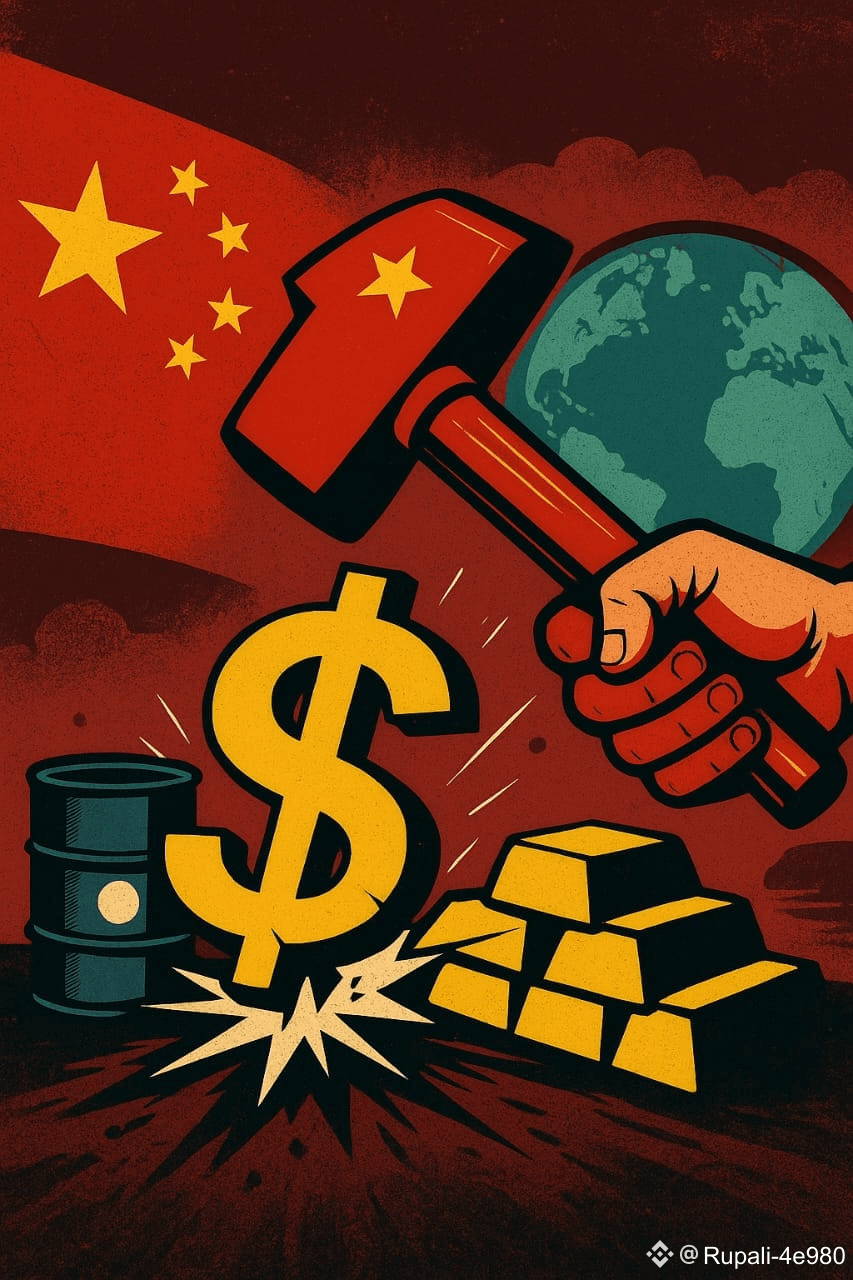
China Just Fired the First Shot – Dollar Era Cracks ⚡ While everyone’s glued to $BTC charts, China just flipped the money game. 🌍💰 For decades, the U.S. dollar ruled global trade. Oil, metals, energy — all in greenbacks. 💵 But this week? Beijing pulled a power move — settling huge commodity deals in yuan with Russia, Saudi, and Brazil. 🔥 Translation: “Skip the dollar, we’ll run our own system.” 🚨 Why it matters: If more nations switch to yuan, demand for dollars drops. That means weaker Fed power, weaker sanctions, and a new global liquidity boss. The Petrodollar? Slowly turning into the Petroyuan. 🐉💥 📊 Market vibes: 🥇 Gold ripping past $4,100 💎 Bitcoin pumping 💵 DXY sliding 🧠 Big picture: Dollar won’t vanish tomorrow, but the monopoly is broken. By 2030, the trade map could look unrecognizable. 😂 Final Take: Welcome to the multi-currency era — USD ain’t the only main character anymore. 🎬💣 #DeDollarization #china #bitcoin
China Just Fired the First Shot – Dollar Era Cracks ⚡

While everyone’s glued to $BTC charts, China just flipped the money game. 🌍💰

For decades, the U.S. dollar ruled global trade. Oil, metals, energy — all in greenbacks. 💵 But this week? Beijing pulled a power move — settling huge commodity deals in yuan with Russia, Saudi, and Brazil.

🔥 Translation: “Skip the dollar, we’ll run our own system.”

🚨 Why it matters: If more nations switch to yuan, demand for dollars drops. That means weaker Fed power, weaker sanctions, and a new global liquidity boss. The Petrodollar? Slowly turning into the Petroyuan. 🐉💥

📊 Market vibes:

🥇 Gold ripping past $4,100

💎 Bitcoin pumping

💵 DXY sliding

🧠 Big picture: Dollar won’t vanish tomorrow, but the monopoly is broken. By 2030, the trade map could look unrecognizable.

😂 Final Take: Welcome to the multi-currency era — USD ain’t the only main character anymore. 🎬💣

#DeDollarization #china #bitcoin
PINNED
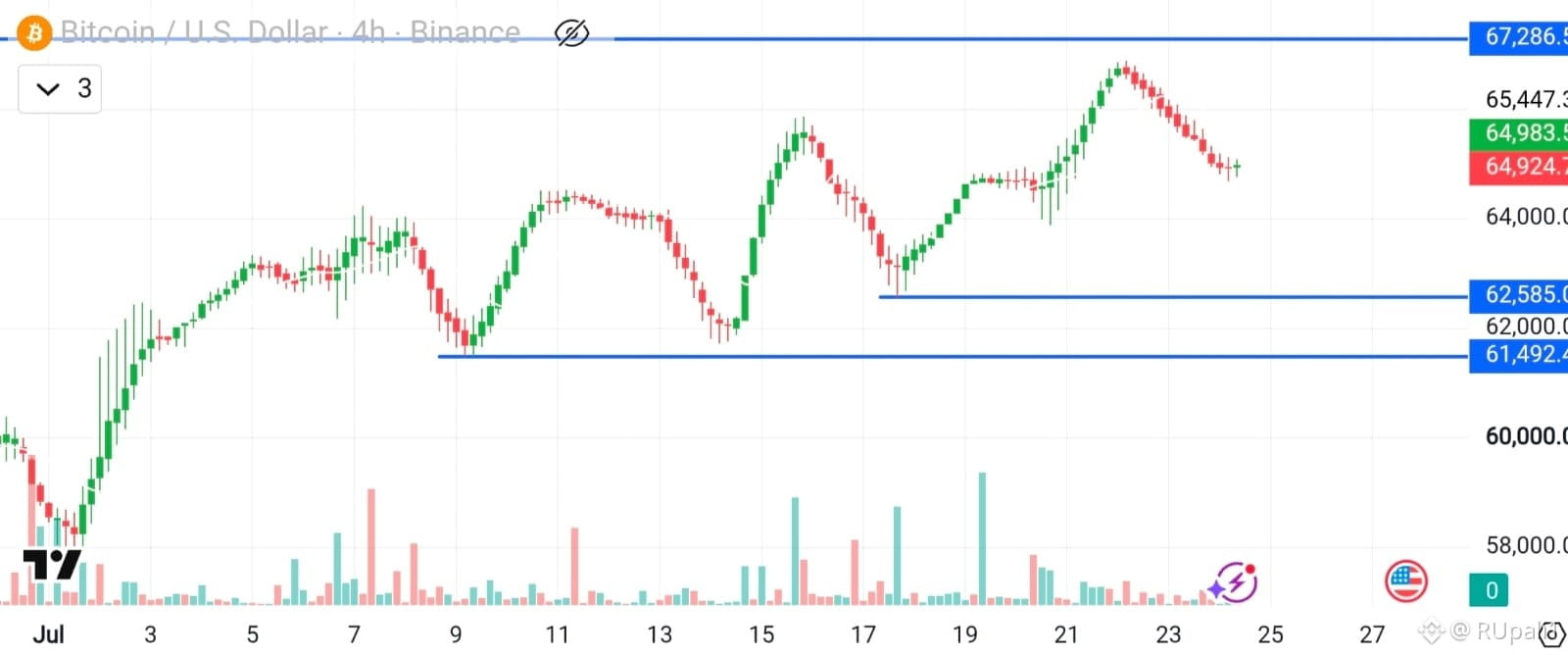
CPI Cools, Crypto Reacts One inflation report changes the mood faster than I expected. June's US CPI comes in lower than forecasts, reducing expectations of more Fed rate hikes. Almost immediately, Bitcoin pushes above $63,000 and risk appetite returns. The move doesn't stop with price. More than $100 million in crypto short positions get liquidated within about an hour, with BTC and ETH seeing the biggest impact. That squeeze removes some bearish pressure and helps the market build stronger support. My focus now isn't today's rally. It's whether future inflation data and the upcoming Fed meeting keep supporting this shift, or whether the market starts rebuilding aggressive short positions again.
CPI Cools, Crypto Reacts

One inflation report changes the mood faster than I expected. June's US CPI comes in lower than forecasts, reducing expectations of more Fed rate hikes. Almost immediately, Bitcoin pushes above $63,000 and risk appetite returns.

The move doesn't stop with price. More than $100 million in crypto short positions get liquidated within about an hour, with BTC and ETH seeing the biggest impact. That squeeze removes some bearish pressure and helps the market build stronger support.

My focus now isn't today's rally. It's whether future inflation data and the upcoming Fed meeting keep supporting this shift, or whether the market starts rebuilding aggressive short positions again.
🎙️ Crypto market trend exchange; answering questions for newcomers ✅坚持 community building 🦅 spreading the concept of freedom! maintain ecological balance!
avatar
End
03 h 24 m 02 s
14.1k
36
92
🎙️ Chatting and Making Friends, 🌹🌹🌹
avatar
End
04 h 01 m 39 s
6.4k
20
22
🎙️ Maintain ecological balance and build Binance Plaza
avatar
End
04 h 25 m 57 s
14.3k
24
68
🎙️ Build Binance Square, Hold BNB|Saturday, Will Today Be a Special Weekend? Let's Chat
avatar
End
06 h 00 m 00 s
19k
40
44
welcome everyone 🥰😍🥰
瓦舒_VASHU⁰⁵
·
--
[Ended] 🎙️ good morning everyone 🔆
258 listens
go
go
YASHX31_加密 143
·
--
🎁 Red Packet Alert! 🎁
Grab your chance to receive BNB rewards and join the excitement. $BNB continues to power one of the largest blockchain ecosystems, offering utility across trading, staking, payments, and Web3 applications. Don't miss the opportunity to stack more BNB through Red Packet events!
Bullish on $BNB's long-term growth and ecosystem expansion. Are you collecting your BNB today?
#BNB #Binance #RedPacket #Crypto #BNBChain
welcome everyone 😁😁
welcome everyone 😁😁
瓦舒_VASHU⁰⁵
·
--
[Ended] 🎙️ good morning everyone 🔆
258 listens
🎙️ welcome 🥰
avatar
End
04 h 05 m 38 s
1.2k
OPGUSDT
Market/Long
3
0
·
--
Bullish
#opg $OPG The Hidden Cost of Making AI Wait Most discussions about AI infrastructure focus on faster models or more computing power. Much less attention goes to the time machines spend waiting after the work is already finished. Verification creates trust, but it does not always need to delay execution. As AI workloads grow, reducing unnecessary waiting can become just as valuable as adding more hardware. OpenGradient separates those responsibilities. Inference nodes execute requests immediately, while proofs are verified and settled asynchronously by the network. That changes more than latency. It changes how infrastructure behaves. Execution continues while the trust layer verifies what already happened, allowing computing resources to spend a larger share of their time processing requests instead of waiting for settlement. The economic impact is easy to overlook. Expanding AI capacity usually means investing in more hardware, which becomes increasingly expensive as demand grows. Improving hardware utilization is often a cheaper way to increase effective capacity. Async proof settlement does not create additional compute. It helps existing infrastructure spend more of its available time doing useful work while still preserving an auditable record of every inference. Of course, delayed verification is not the right fit for every workload. Applications that require immediate finality may still prefer synchronous confirmation. The advantage only exists when execution speed, verification, and trust remain balanced under sustained demand. AI has spent years competing on larger models and faster chips. The next infrastructure race may depend just as much on how efficiently networks use the computing capacity they already have. Source: OpenGradient Consensus Documentation, On-Chain Inference Documentation & Inference Facilitator GitHub. Not financial advise. DYOR. @OpenGradient
#opg $OPG
The Hidden Cost of Making AI Wait

Most discussions about AI infrastructure focus on faster models or more computing power. Much less attention goes to the time machines spend waiting after the work is already finished. Verification creates trust, but it does not always need to delay execution. As AI workloads grow, reducing unnecessary waiting can become just as valuable as adding more hardware.

OpenGradient separates those responsibilities. Inference nodes execute requests immediately, while proofs are verified and settled asynchronously by the network. That changes more than latency. It changes how infrastructure behaves. Execution continues while the trust layer verifies what already happened, allowing computing resources to spend a larger share of their time processing requests instead of waiting for settlement.

The economic impact is easy to overlook. Expanding AI capacity usually means investing in more hardware, which becomes increasingly expensive as demand grows. Improving hardware utilization is often a cheaper way to increase effective capacity. Async proof settlement does not create additional compute. It helps existing infrastructure spend more of its available time doing useful work while still preserving an auditable record of every inference.

Of course, delayed verification is not the right fit for every workload. Applications that require immediate finality may still prefer synchronous confirmation. The advantage only exists when execution speed, verification, and trust remain balanced under sustained demand.

AI has spent years competing on larger models and faster chips. The next infrastructure race may depend just as much on how efficiently networks use the computing capacity they already have.

Source: OpenGradient Consensus Documentation, On-Chain Inference Documentation & Inference Facilitator GitHub. Not financial advise. DYOR. @OpenGradient
#opg $OPG OpenGradient Could Create AI Container Ports I keep coming back to OpenGradient because it feels less like another AI project and more like an attempt to standardize how AI moves between builders and applications. The models matter, but I spend more time thinking about everything around them. That part of AI still feels fragmented. Container ports never changed the cargo. They changed how cargo moved. Shared standards replaced custom processes, making trade easier to scale because fewer companies had to solve the same logistics problem again. OpenGradient feels like it is solving a similar problem. The Python SDK gives builders a familiar workflow, standardized inference APIs reduce custom integrations, and verifiable inference creates a shared trust layer. The Model Hub extends the same idea by giving models a common place to be published and used. None of those features make AI smarter. To me, they make AI easier to move. I read $OPG through that same idea. Every verified inference settles in OPG, so if more builders keep choosing the same workflow, more network activity naturally settles through the token. The value of OPG depends on whether builders keep returning to that shared path. OpenGradient may never become AI's common standard. Builders still have other options. I keep wondering whether AI's biggest infrastructure shift comes from another model, or from the moment moving AI becomes as standardized as moving a shipping container. Source: OpenGradient Official Docs & GitHub, June 2026. Not financial advice. DYOR. @OpenGradient
#opg $OPG
OpenGradient Could Create AI Container Ports

I keep coming back to OpenGradient because it feels less like another AI project and more like an attempt to standardize how AI moves between builders and applications. The models matter, but I spend more time thinking about everything around them. That part of AI still feels fragmented.

Container ports never changed the cargo. They changed how cargo moved. Shared standards replaced custom processes, making trade easier to scale because fewer companies had to solve the same logistics problem again.

OpenGradient feels like it is solving a similar problem. The Python SDK gives builders a familiar workflow, standardized inference APIs reduce custom integrations, and verifiable inference creates a shared trust layer. The Model Hub extends the same idea by giving models a common place to be published and used. None of those features make AI smarter. To me, they make AI easier to move.

I read $OPG through that same idea. Every verified inference settles in OPG, so if more builders keep choosing the same workflow, more network activity naturally settles through the token. The value of OPG depends on whether builders keep returning to that shared path.

OpenGradient may never become AI's common standard. Builders still have other options. I keep wondering whether AI's biggest infrastructure shift comes from another model, or from the moment moving AI becomes as standardized as moving a shipping container.

Source: OpenGradient Official Docs & GitHub, June 2026. Not financial advice. DYOR. @OpenGradient
#opg $OPG What If The Internet Rewards Answers Instead Of Content? For most of the internet's history, the rule was simple. If you wanted an answer, someone had to publish content first. That's why we ended up with billions of pages, videos, threads, and tutorials. The answer already existed somewhere. We just had to find it. I spent part of the weekend comparing AI infrastructure projects to understand what actually separates them. Reading OpenGradient's documentation changed my perspective. It didn't feel like the network was trying to produce more content. It felt like it was exploring a different idea: what if verified answers become more valuable than simply publishing information first? If an answer can be generated, verified, and delivered on demand, the internet's old workflow starts to look different. That also changes where value is created. Articles earn attention when people click on them. Inference networks earn value when people use them. Builders don't just publish models and hope they're discovered. Models that keep solving real requests continue generating verified inferences settled in $OPG, making repeated utility a stronger signal than visibility alone. Content doesn't disappear. Knowledge still has to exist before AI can reason with it. But the relationship changes. Content becomes the foundation, while verified inference becomes the service people interact with every day. I finished reading the docs thinking less about AI models and more about the internet itself. We've spent decades rewarding the people who publish first. If networks like OpenGradient gain real adoption, the next competitive advantage may not be creating more content. It may be delivering the most trustworthy answer exactly when someone needs it. NFA. DYOR. @OpenGradient
#opg $OPG
What If The Internet Rewards Answers Instead Of Content?

For most of the internet's history, the rule was simple. If you wanted an answer, someone had to publish content first. That's why we ended up with billions of pages, videos, threads, and tutorials. The answer already existed somewhere. We just had to find it.

I spent part of the weekend comparing AI infrastructure projects to understand what actually separates them. Reading OpenGradient's documentation changed my perspective. It didn't feel like the network was trying to produce more content. It felt like it was exploring a different idea: what if verified answers become more valuable than simply publishing information first? If an answer can be generated, verified, and delivered on demand, the internet's old workflow starts to look different.

That also changes where value is created. Articles earn attention when people click on them. Inference networks earn value when people use them. Builders don't just publish models and hope they're discovered. Models that keep solving real requests continue generating verified inferences settled in $OPG , making repeated utility a stronger signal than visibility alone.

Content doesn't disappear. Knowledge still has to exist before AI can reason with it. But the relationship changes. Content becomes the foundation, while verified inference becomes the service people interact with every day.

I finished reading the docs thinking less about AI models and more about the internet itself. We've spent decades rewarding the people who publish first. If networks like OpenGradient gain real adoption, the next competitive advantage may not be creating more content. It may be delivering the most trustworthy answer exactly when someone needs it.

NFA. DYOR. @OpenGradient
#opg $OPG What If Companies Could Remember? The longer a company exists, the more of its knowledge quietly stops living in documents and starts living in people. That's usually the knowledge that takes the longest to build and the least time to lose. I was browsing OpenGradient's documentation to understand MemSync, expecting another memory feature. Instead, I kept thinking about employee turnover. Most organisations don't struggle because information disappears. They struggle because the reasoning behind old decisions quietly leaves with the people who made them. Think about a product team that spent months figuring out why a particular feature kept failing. If the engineers who solved it leave two years later, the final documentation might still exist, but the small lessons, trade-offs, and reasoning behind those decisions often leave with them. My first thought wasn't about storing more data. It was about preserving the reasoning behind it. If organisational context can survive team changes, companies may spend less time reconstructing old thinking and more time building on top of it. That also changes how experience is valued. Today, organisations often treat experience as something people carry with them. OpenGradient points toward a model where at least part of that experience can remain inside the organisation instead of walking out the door. The conversation becomes less about replacing employees and more about preserving institutional memory. Whether businesses adopt that approach widely is impossible to know today. But if AI becomes part of everyday work, the companies that learn fastest may simply be the ones that forget the least. Source: OpenGradient Docs, June 2026. Not financial advice. DYOR. @OpenGradient #OP #bitcoin
#opg $OPG
What If Companies Could Remember?

The longer a company exists, the more of its knowledge quietly stops living in documents and starts living in people. That's usually the knowledge that takes the longest to build and the least time to lose.

I was browsing OpenGradient's documentation to understand MemSync, expecting another memory feature. Instead, I kept thinking about employee turnover. Most organisations don't struggle because information disappears. They struggle because the reasoning behind old decisions quietly leaves with the people who made them.

Think about a product team that spent months figuring out why a particular feature kept failing. If the engineers who solved it leave two years later, the final documentation might still exist, but the small lessons, trade-offs, and reasoning behind those decisions often leave with them.

My first thought wasn't about storing more data. It was about preserving the reasoning behind it. If organisational context can survive team changes, companies may spend less time reconstructing old thinking and more time building on top of it.

That also changes how experience is valued. Today, organisations often treat experience as something people carry with them. OpenGradient points toward a model where at least part of that experience can remain inside the organisation instead of walking out the door. The conversation becomes less about replacing employees and more about preserving institutional memory.

Whether businesses adopt that approach widely is impossible to know today. But if AI becomes part of everyday work, the companies that learn fastest may simply be the ones that forget the least.

Source: OpenGradient Docs, June 2026. Not financial advice. DYOR. @OpenGradient #OP #bitcoin
#opg $OPG Every AI Ecosystem Eventually Needs Rules It Can't Ignore One thing surprised me while I was digging through OpenGradient's docs. I went in expecting to spend most of my time reading about AI models. Instead, I kept stopping at the protocol rules. That wasn't what I expected, but the more I read, the more I felt those rules might outlast whatever model happens to be popular today. One detail stayed with me. Before an inference node can start serving requests, it has to register its code measurement (PCR hash) in OpenGradient's on-chain TEERegistry. That probably won't make the headline, but I think it's a bigger deal than another benchmark chart. The network isn't just taking someone's word for it. It has a way to check that the approved code is actually what's running. Then I found something else. The AI response comes back first, but the proof isn't treated as final until 2/3 of validators agree and record it. I actually like that trade-off. You don't have to sit there waiting for every verification step, but the network still has a clear way of deciding what counts as valid. That feels very different from simply trusting an API because it says everything worked. The part I keep coming back to isn't the AI itself. Models will change. Compute will get cheaper. New techniques will replace old ones. The rules underneath are the part everyone ends up relying on. If developers, validators, and users all know those rules before they build, the network has a much better chance of growing without people constantly second-guessing how it works. Still early. Maybe AI ecosystems never end up competing on trust. But if they do, I wouldn't be surprised if people stop asking which model is the smartest and start asking which network's rules they trust the most. Source: OpenGradient SDK, Architecture Documentation, June 2026. Not financial advice. DYOR. @OpenGradient #OPG #USDT。
#opg $OPG
Every AI Ecosystem Eventually Needs Rules It Can't Ignore

One thing surprised me while I was digging through OpenGradient's docs. I went in expecting to spend most of my time reading about AI models. Instead, I kept stopping at the protocol rules. That wasn't what I expected, but the more I read, the more I felt those rules might outlast whatever model happens to be popular today.

One detail stayed with me. Before an inference node can start serving requests, it has to register its code measurement (PCR hash) in OpenGradient's on-chain TEERegistry. That probably won't make the headline, but I think it's a bigger deal than another benchmark chart. The network isn't just taking someone's word for it. It has a way to check that the approved code is actually what's running.

Then I found something else. The AI response comes back first, but the proof isn't treated as final until 2/3 of validators agree and record it. I actually like that trade-off. You don't have to sit there waiting for every verification step, but the network still has a clear way of deciding what counts as valid. That feels very different from simply trusting an API because it says everything worked.

The part I keep coming back to isn't the AI itself. Models will change. Compute will get cheaper. New techniques will replace old ones. The rules underneath are the part everyone ends up relying on. If developers, validators, and users all know those rules before they build, the network has a much better chance of growing without people constantly second-guessing how it works.

Still early.

Maybe AI ecosystems never end up competing on trust. But if they do, I wouldn't be surprised if people stop asking which model is the smartest and start asking which network's rules they trust the most.

Source: OpenGradient SDK, Architecture Documentation, June 2026. Not financial advice. DYOR. @OpenGradient #OPG #USDT。
#opg $OPG Why More On-Chain Data Hasn't Made Crypto Smarter One idea keeps coming up in crypto: if everything is on-chain, better decisions should naturally follow. I don't think that's completely wrong. I just think it's missing something. I've compared the same governance proposal across dashboards before and still ended up with more questions than answers. The data was public. The meaning wasn't. That's the hidden risk. More data doesn't automatically create better judgment. It often creates more competing narratives. Two people can look at the same wallet flows or validator activity and argue for completely different conclusions. Transparency tells us what happened. It doesn't always tell us why it matters. That's why OpenGradient caught my attention. The network has already processed more than 2 million verifiable AI inferences, but the interesting part isn't the number. It's that inference can run inside a Trusted Execution Environment TEE, where hardware attestation proves the approved code actually ran before the result is recorded. Instead of asking people to trust an AI answer, the network tries to make the execution itself verifiable. That changes the question for me. If AI is going to help explain governance, on-chain activity, or protocol decisions, then accountability may become more valuable than simply generating another answer. Verified reasoning won't guarantee the conclusion is right, but it gives everyone the same evidence for how that conclusion was produced. Still early. But if crypto already has transparency, is the next missing layer more data—or a way to verify the reasoning built on top of it? Source: OpenGradient Documentation & Network Statistics, June 2026. Not financial advice. DYOR. @OpenGradient
#opg $OPG
Why More On-Chain Data Hasn't Made Crypto Smarter

One idea keeps coming up in crypto: if everything is on-chain, better decisions should naturally follow. I don't think that's completely wrong. I just think it's missing something. I've compared the same governance proposal across dashboards before and still ended up with more questions than answers. The data was public. The meaning wasn't.

That's the hidden risk. More data doesn't automatically create better judgment. It often creates more competing narratives. Two people can look at the same wallet flows or validator activity and argue for completely different conclusions. Transparency tells us what happened. It doesn't always tell us why it matters.

That's why OpenGradient caught my attention. The network has already processed more than 2 million verifiable AI inferences, but the interesting part isn't the number. It's that inference can run inside a Trusted Execution Environment TEE, where hardware attestation proves the approved code actually ran before the result is recorded. Instead of asking people to trust an AI answer, the network tries to make the execution itself verifiable.

That changes the question for me. If AI is going to help explain governance, on-chain activity, or protocol decisions, then accountability may become more valuable than simply generating another answer. Verified reasoning won't guarantee the conclusion is right, but it gives everyone the same evidence for how that conclusion was produced.

Still early.

But if crypto already has transparency, is the next missing layer more data—or a way to verify the reasoning built on top of it?

Source: OpenGradient Documentation & Network Statistics, June 2026. Not financial advice. DYOR. @OpenGradient
·
--
Bullish
#opg $OPG Most Companies Rent AI. What If That's A Mistake? One assumption I keep seeing in AI is that the companies with the best models will eventually win. I'm not sure that's the right question. Most discussions focus on model performance, benchmarks, and capabilities. But companies rarely become valuable just because they use good tools. A company can switch tools. What usually lasts longer is ownership. That's why I think many people are looking at the wrong metric. The more important question may not be who builds the best model. It may be who owns the most useful collection of models. The hidden problem is that most businesses still treat AI like a subscription. Every time they need intelligence, they pay someone else for access. The output helps the business, but the asset stays on someone else's balance sheet. If that trend continues, the bigger divide might not be between good models and bad models. It might be between the companies that own intelligence and the companies that rent it. That's where OpenGradient starts getting interesting. The network already hosts thousands of models and has processed millions of verifiable inferences. What catches my attention isn't just model access. It's the possibility that models start behaving more like reusable digital assets that can be discovered, deployed, and used repeatedly across the network. That's also where $OPG fits into the picture. If models become productive assets, the network still needs a way to pay for inference, verify execution, and coordinate activity between model owners and users. Without that layer, ownership becomes difficult to scale. I'm not saying every company becomes the next Berkshire Hathaway. But if AI becomes an asset class rather than just a service, will the most valuable companies be the ones building models—or the ones quietly accumulating them? Not financial advice. DYOR. @OpenGradient
#opg $OPG
Most Companies Rent AI. What If That's A Mistake?

One assumption I keep seeing in AI is that the companies with the best models will eventually win.

I'm not sure that's the right question.

Most discussions focus on model performance, benchmarks, and capabilities. But companies rarely become valuable just because they use good tools. A company can switch tools. What usually lasts longer is ownership.

That's why I think many people are looking at the wrong metric. The more important question may not be who builds the best model. It may be who owns the most useful collection of models.

The hidden problem is that most businesses still treat AI like a subscription. Every time they need intelligence, they pay someone else for access. The output helps the business, but the asset stays on someone else's balance sheet.

If that trend continues, the bigger divide might not be between good models and bad models. It might be between the companies that own intelligence and the companies that rent it.

That's where OpenGradient starts getting interesting. The network already hosts thousands of models and has processed millions of verifiable inferences. What catches my attention isn't just model access. It's the possibility that models start behaving more like reusable digital assets that can be discovered, deployed, and used repeatedly across the network.

That's also where $OPG fits into the picture. If models become productive assets, the network still needs a way to pay for inference, verify execution, and coordinate activity between model owners and users. Without that layer, ownership becomes difficult to scale.

I'm not saying every company becomes the next Berkshire Hathaway.

But if AI becomes an asset class rather than just a service, will the most valuable companies be the ones building models—or the ones quietly accumulating them?

Not financial advice. DYOR. @OpenGradient
#opg $OPG OpenGradient Could Make Attrition Warfare Obsolete For AI A lot of us hear the same story whenever AI comes up. More chips. More compute. Bigger clusters. Bigger budgets. After a while it starts feeling like the only way to compete is to spend more than the next guy. I spent some time digging through OpenGradient's distributed inference docs this week, and one thing keeps bothering me. Most AI systems assume intelligence has to come from massive amounts of compute sitting in a handful of places. If you want better models, the usual answer is simple: build something bigger. The thing that keeps pulling me back to OpenGradient is that it doesn't start with that assumption. Through distributed inference, people can bring their own compute and help run workloads across the network. Instead of trying to gather every resource in one place, the network tries to make use of resources that are already sitting idle in many different places. That's where the attrition warfare comparison starts making sense to me. In a war of attrition, the side with deeper resources tries to outlast everyone else. But if intelligence can be produced by coordinating compute from many different places, the question starts changing. It becomes less about who owns the biggest pile of resources and more about who can make better use of what's already available. That doesn't suddenly remove the advantage of scale. Maybe none of this works. But it does make me wonder if we're measuring the wrong thing. Maybe the biggest edge in AI isn't having more resources. Maybe it's leaving less of them unused. That's also why $OPG feels connected to the idea. Distributed systems only work when enough participants keep contributing resources. If the goal is to make better use of idle compute, the coordination layer becomes just as important as the compute itself. The strange thing is that OpenGradient isn't really asking how to build a bigger pile of compute. It's asking whether the pile we already have is being wasted. NFA.DYOR. @OpenGradient
#opg $OPG
OpenGradient Could Make Attrition Warfare Obsolete For AI

A lot of us hear the same story whenever AI comes up. More chips. More compute. Bigger clusters. Bigger budgets. After a while it starts feeling like the only way to compete is to spend more than the next guy.

I spent some time digging through OpenGradient's distributed inference docs this week, and one thing keeps bothering me. Most AI systems assume intelligence has to come from massive amounts of compute sitting in a handful of places. If you want better models, the usual answer is simple: build something bigger.

The thing that keeps pulling me back to OpenGradient is that it doesn't start with that assumption. Through distributed inference, people can bring their own compute and help run workloads across the network. Instead of trying to gather every resource in one place, the network tries to make use of resources that are already sitting idle in many different places.

That's where the attrition warfare comparison starts making sense to me. In a war of attrition, the side with deeper resources tries to outlast everyone else. But if intelligence can be produced by coordinating compute from many different places, the question starts changing. It becomes less about who owns the biggest pile of resources and more about who can make better use of what's already available.

That doesn't suddenly remove the advantage of scale. Maybe none of this works. But it does make me wonder if we're measuring the wrong thing. Maybe the biggest edge in AI isn't having more resources. Maybe it's leaving less of them unused.

That's also why $OPG feels connected to the idea. Distributed systems only work when enough participants keep contributing resources. If the goal is to make better use of idle compute, the coordination layer becomes just as important as the compute itself.

The strange thing is that OpenGradient isn't really asking how to build a bigger pile of compute.

It's asking whether the pile we already have is being wasted.

NFA.DYOR. @OpenGradient
Verified
#opg $OPG OpenGradient May Create The First Intelligence Trade Route The more I read about OpenGradient, the more I keep thinking about trade routes. At first, the comparison sounds strange. Then it starts making sense. The Silk Road existed because goods needed to move. The internet became valuable because information could move instantly. Lately, I've been wondering if AI creates a new version of the same thing: intelligence. Most people focus on models because that's the part we see. We ask a question and get an answer. But every answer depends on something happening before it reaches us. Computation has to happen somewhere. Intelligence has to be generated before it can be delivered. OpenGradient keeps pulling me toward that layer. Instead of relying on a single provider, the network uses distributed inference. Intelligence can be generated across different participants rather than coming from one place. Trade routes became valuable because they connected supply with demand. The more I look at OpenGradient, the more it feels like it's trying to do something similar for intelligence itself. I ended up thinking about trust next. Trade routes only work when people trust what they're receiving. If intelligence is generated across multiple participants, how do you know the computation happened correctly? OpenGradient focuses on making outputs verifiable through technologies like TEEs and cryptographic proofs. The same thought keeps bringing me back to $OPG. Every trade route depends on infrastructure that allows value to move between participants. If inference, verification, and economic activity continue flowing through the network, the infrastructure doesn't just support the route. It becomes part of the route itself. Maybe none of this happens. The internet moves information. I keep wondering what happens when intelligence starts moving the same way. NFA. DYOR. @OpenGradient
#opg $OPG
OpenGradient May Create The First Intelligence Trade Route

The more I read about OpenGradient, the more I keep thinking about trade routes. At first, the comparison sounds strange. Then it starts making sense. The Silk Road existed because goods needed to move. The internet became valuable because information could move instantly. Lately, I've been wondering if AI creates a new version of the same thing: intelligence.

Most people focus on models because that's the part we see. We ask a question and get an answer. But every answer depends on something happening before it reaches us. Computation has to happen somewhere. Intelligence has to be generated before it can be delivered.

OpenGradient keeps pulling me toward that layer. Instead of relying on a single provider, the network uses distributed inference. Intelligence can be generated across different participants rather than coming from one place. Trade routes became valuable because they connected supply with demand. The more I look at OpenGradient, the more it feels like it's trying to do something similar for intelligence itself.

I ended up thinking about trust next. Trade routes only work when people trust what they're receiving. If intelligence is generated across multiple participants, how do you know the computation happened correctly? OpenGradient focuses on making outputs verifiable through technologies like TEEs and cryptographic proofs.

The same thought keeps bringing me back to $OPG . Every trade route depends on infrastructure that allows value to move between participants. If inference, verification, and economic activity continue flowing through the network, the infrastructure doesn't just support the route. It becomes part of the route itself.

Maybe none of this happens.

The internet moves information.

I keep wondering what happens when intelligence starts moving the same way.

NFA. DYOR.
@OpenGradient
·
--
Bullish
Verified
#opg $OPG OpenGradient Might Change How Humans Make Decisions Most AI discussions focus on work. I keep finding myself thinking about something smaller: choices. A few years ago people memorized phone numbers. Today most of us don't. GPS handles navigation. Algorithms decide what appears in our feeds. The pattern is familiar. When a tool becomes useful enough, we stop doing part of the work ourselves. That's one reason I keep coming back to OpenGradient. The project isn't just building models. It's exploring Digital Twins, persistent memory through MemSync, and AI systems that retain context across interactions. The more capable these systems become, the easier it becomes to rely on them for recommendations, judgments, and everyday decisions. I went back through the ecosystem this week and found myself wondering about something else. What happens when the most convenient answer is always available? Psychologists already use the term "cognitive offloading" to describe how people shift mental tasks to external tools. We already do it with calculators, search engines, and navigation apps. AI may simply push the trend further. The interesting part is that convenience compounds. A Digital Twin that remembers preferences, understands habits, and keeps context across time doesn't just answer questions. It gradually becomes easier to consult than to start every decision from scratch. That's where OpenGradient starts feeling different to me. The combination of persistent memory, context, and continuity isn't just about better answers. It's about reducing the effort required to make decisions in the first place. That's one reason I look at $OPG differently. Decision-making creates activity. The more people rely on Digital Twins for recommendations, judgments, and daily choices, the more interactions flow through the ecosystem supporting those relationships. Maybe none of this happens. But I don't think the biggest AI shift is whether machines do more work. I think it's whether humans slowly stop making as many decisions themselves. NFA. DYOR. @OpenGradient
#opg $OPG OpenGradient Might Change How Humans Make Decisions

Most AI discussions focus on work. I keep finding myself thinking about something smaller: choices.

A few years ago people memorized phone numbers. Today most of us don't. GPS handles navigation. Algorithms decide what appears in our feeds. The pattern is familiar. When a tool becomes useful enough, we stop doing part of the work ourselves.

That's one reason I keep coming back to OpenGradient. The project isn't just building models. It's exploring Digital Twins, persistent memory through MemSync, and AI systems that retain context across interactions. The more capable these systems become, the easier it becomes to rely on them for recommendations, judgments, and everyday decisions.

I went back through the ecosystem this week and found myself wondering about something else. What happens when the most convenient answer is always available? Psychologists already use the term "cognitive offloading" to describe how people shift mental tasks to external tools. We already do it with calculators, search engines, and navigation apps. AI may simply push the trend further.

The interesting part is that convenience compounds. A Digital Twin that remembers preferences, understands habits, and keeps context across time doesn't just answer questions. It gradually becomes easier to consult than to start every decision from scratch. That's where OpenGradient starts feeling different to me. The combination of persistent memory, context, and continuity isn't just about better answers. It's about reducing the effort required to make decisions in the first place.

That's one reason I look at $OPG differently. Decision-making creates activity. The more people rely on Digital Twins for recommendations, judgments, and daily choices, the more interactions flow through the ecosystem supporting those relationships.

Maybe none of this happens.

But I don't think the biggest AI shift is whether machines do more work.

I think it's whether humans slowly stop making as many decisions themselves.

NFA. DYOR.
@OpenGradient
Log in to explore more content
Join global crypto users on Binance Square
⚡️ Get latest and useful information about crypto.
💬 Trusted by the world’s largest crypto exchange.
👍 Discover real insights from verified creators.
Email / Phone number
Sitemap
Cookie Preferences
Platform T&Cs