
Runmax
1.9k Posts

Runmax
 Square Verified+
Report
Block User
疯狂的meme交易者 | Web3内容创作者
687 Following
44.6K+ Followers
24.3K+ Liked
Posts
All
Quotes
Videos
Live
·
--
Go quickly open your Binance card coupons and see if there’s any surprise. I’ve got nothing at all—empty, empty—nothing 🙂↔️ #Bnb 🤣
Go quickly open your Binance card coupons and see if there’s any surprise. I’ve got nothing at all—empty, empty—nothing 🙂↔️ #Bnb 🤣


3
2
1.5k
·
--
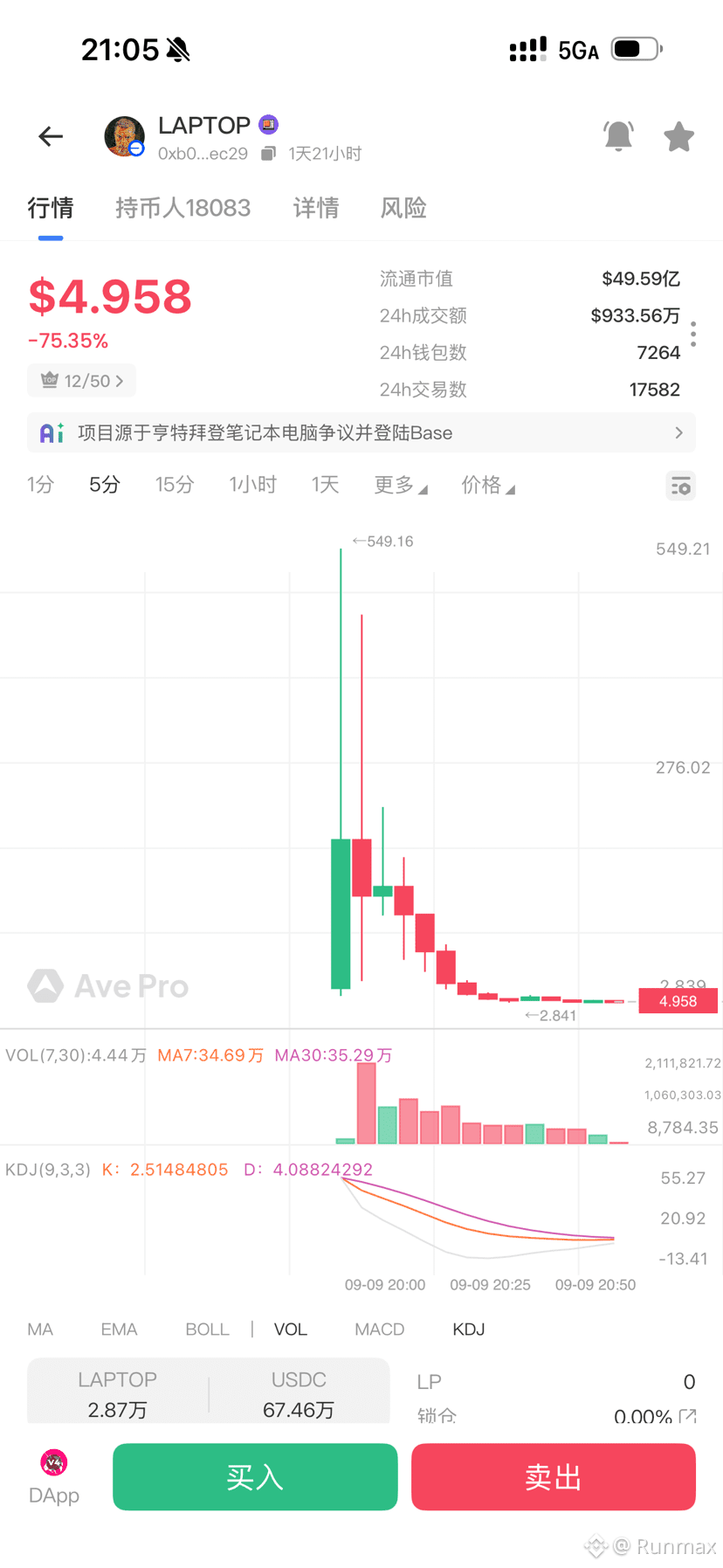
Is there a LAPTOP for going on board? How are you guys, brothers #BTC走势分析
Is there a LAPTOP for going on board? How are you guys, brothers #BTC走势分析
1
2
643


·
--
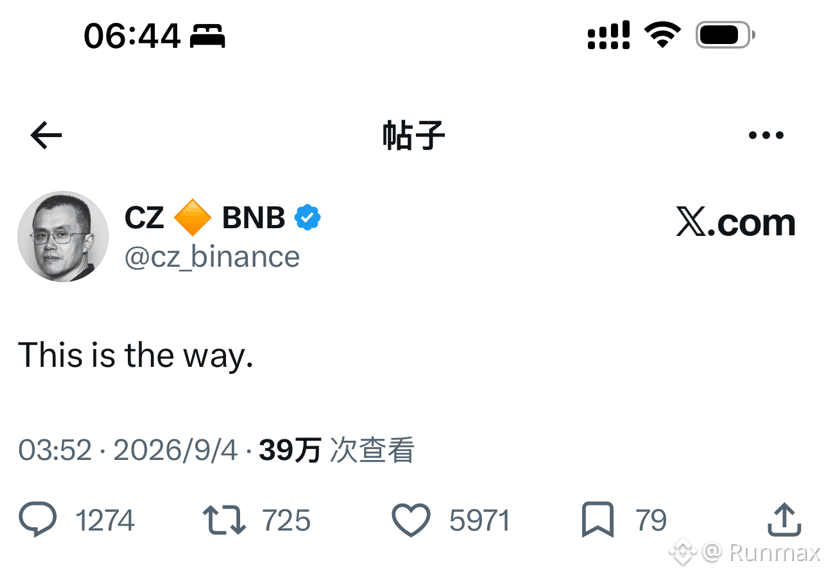
Family members, the MEME SZN has already arrived. Seize the opportunity and grab a big bite—$BNB
{future}(BNBUSDT)
#meme
Family members, the MEME SZN has already arrived. Seize the opportunity and grab a big bite—$BNB
#meme
#meme
2
610
·
--
This circle goes back and forth, and it’s just the stories of these same few people—truly精彩—those people who like to show off 😂
This circle goes back and forth, and it’s just the stories of these same few people—truly精彩—those people who like to show off 😂

1
352
·
--
The crypto circle is indeed a fascinating place. It doesn’t rely on social connections or have background barriers, but it strongly tests one’s personal accumulation: you need to keep investing in deep learning and develop the ability to spot opportunities and seize them.
Over the course of a year, several chances for a comeback will emerge here. As long as you hold your ground at the table and抓住 one or two major trends, that’s enough to achieve a turnaround.
The “Binance prince” — a nickname commonly used inside the circle — @A_AFeng , in 2022 was still only hoping to make $300 per month. By 2026, they’ve already built a nine-figure net worth. What it relies on is the wave of “shitcoin dog” market cycles in 2024–2025 combined with leveraged futures trading, which brought in wealth that would be difficult for ordinary people to achieve for decades. $BNB
{future}(BNBUSDT)
The crypto circle is indeed a fascinating place. It doesn’t rely on social connections or have background barriers, but it strongly tests one’s personal accumulation: you need to keep investing in deep learning and develop the ability to spot opportunities and seize them.
Over the course of a year, several chances for a comeback will emerge here. As long as you hold your ground at the table and抓住 one or two major trends, that’s enough to achieve a turnaround.
The “Binance prince” — a nickname commonly used inside the circle — @EnHEng嗯哼-Ai , in 2022 was still only hoping to make $300 per month. By 2026, they’ve already built a nine-figure net worth. What it relies on is the wave of “shitcoin dog” market cycles in 2024–2025 combined with leveraged futures trading, which brought in wealth that would be difficult for ordinary people to achieve for decades. $BNB
Over the course of a year, several chances for a comeback will emerge here. As long as you hold your ground at the table and抓住 one or two major trends, that’s enough to achieve a turnaround.
The “Binance prince” — a nickname commonly used inside the circle — @EnHEng嗯哼-Ai , in 2022 was still only hoping to make $300 per month. By 2026, they’ve already built a nine-figure net worth. What it relies on is the wave of “shitcoin dog” market cycles in 2024–2025 combined with leveraged futures trading, which brought in wealth that would be difficult for ordinary people to achieve for decades. $BNB

3
1
883
·
--
Will stocks related to tomorrow’s robots drop below the line?
Watching robot movement makes it feel like it’s still a long way from becoming part of everyday life.
#比特币创2023年3月来最强周涨幅 $BTC
{future}(BTCUSDT)
Will stocks related to tomorrow’s robots drop below the line?
Watching robot movement makes it feel like it’s still a long way from becoming part of everyday life.
#比特币创2023年3月来最强周涨幅 $BTC
Watching robot movement makes it feel like it’s still a long way from becoming part of everyday life.
#比特币创2023年3月来最强周涨幅 $BTC

1
729

·
--
🎙️ During the USD1 to share 170 million WLFI tokens special live stream, we’ll guide you through the latest activities announced on the Binance Square—join us to decode it together, welcome!

End
05 h 59 m 59 s
16.2k
58
58
·
--
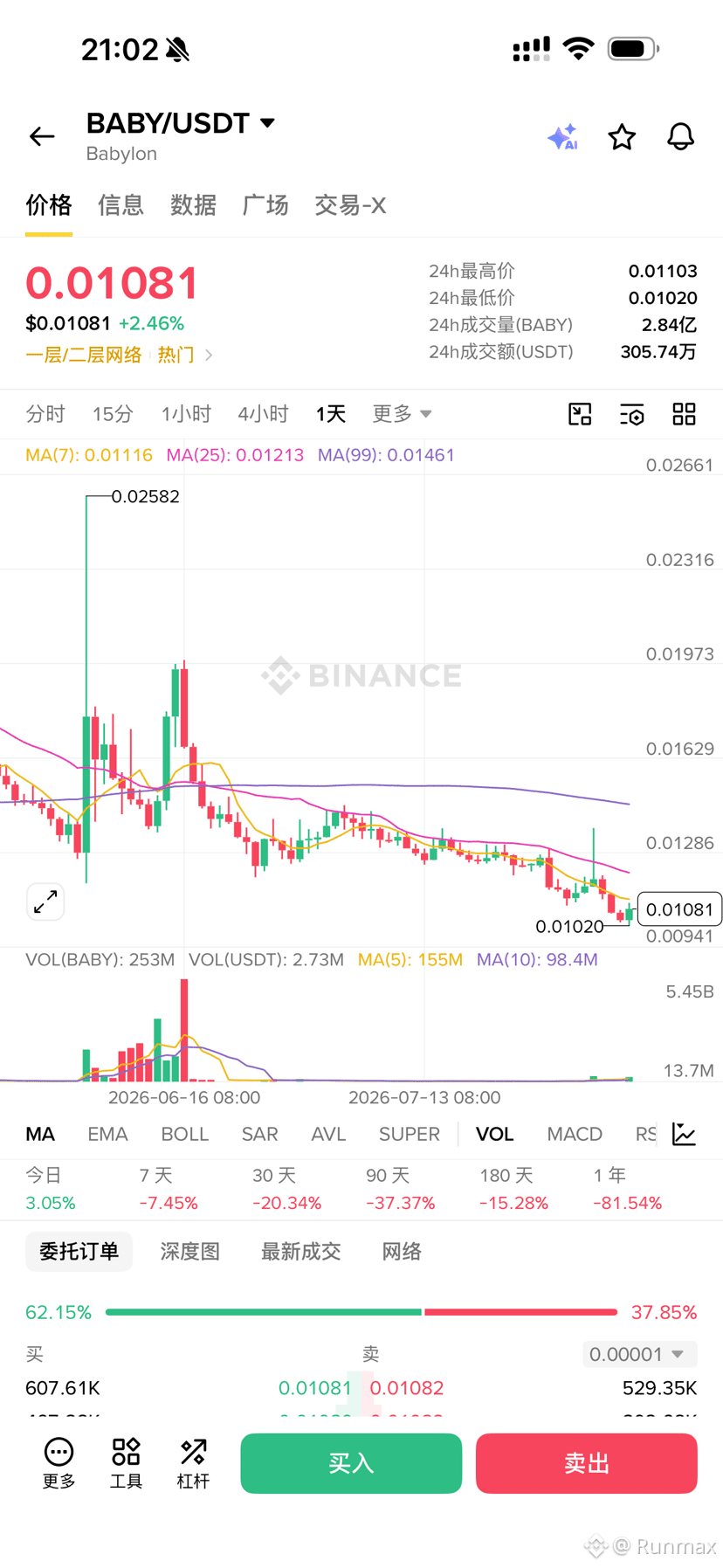
Friends, #bnb TBV can’t be judged by technology alone—you need to look at who’s using it and how they’re using it.
@babylonlabs_io This year, three things were rolled out in quick succession: an integration with Ledger for hardware signing—enabling up to 80,000 Ledger users to directly authorize vault transactions on-device; a partnership with GoMining to activate up to 1,000 BTC (about $75 million)—holders can earn mining rewards as long as they don’t give up custody; and an Aave v4 integration proposal has entered community discussion, with Aave founder Stani Kulechov publicly endorsing it.
What I care about most is the Aegis partnership—building a fixed-rate lending product on top of TBV + Aave v4, expected to launch in Q4. Institutional players fear interest-rate volatility the most; fixed rates are exactly what pave the way for large-scale capital to move in.
No matter how flashy the tech is, the end goal is to see real use cases running. TBV is moving from “concept” to “product.”
#baby $BABY
{future}(BABYUSDT)
Friends, #bnb TBV can’t be judged by technology alone—you need to look at who’s using it and how they’re using it.
@BabylonLabs_io This year, three things were rolled out in quick succession: an integration with Ledger for hardware signing—enabling up to 80,000 Ledger users to directly authorize vault transactions on-device; a partnership with GoMining to activate up to 1,000 BTC (about $75 million)—holders can earn mining rewards as long as they don’t give up custody; and an Aave v4 integration proposal has entered community discussion, with Aave founder Stani Kulechov publicly endorsing it.
What I care about most is the Aegis partnership—building a fixed-rate lending product on top of TBV + Aave v4, expected to launch in Q4. Institutional players fear interest-rate volatility the most; fixed rates are exactly what pave the way for large-scale capital to move in.
No matter how flashy the tech is, the end goal is to see real use cases running. TBV is moving from “concept” to “product.”
#baby $BABY
@BabylonLabs_io This year, three things were rolled out in quick succession: an integration with Ledger for hardware signing—enabling up to 80,000 Ledger users to directly authorize vault transactions on-device; a partnership with GoMining to activate up to 1,000 BTC (about $75 million)—holders can earn mining rewards as long as they don’t give up custody; and an Aave v4 integration proposal has entered community discussion, with Aave founder Stani Kulechov publicly endorsing it.
What I care about most is the Aegis partnership—building a fixed-rate lending product on top of TBV + Aave v4, expected to launch in Q4. Institutional players fear interest-rate volatility the most; fixed rates are exactly what pave the way for large-scale capital to move in.
No matter how flashy the tech is, the end goal is to see real use cases running. TBV is moving from “concept” to “product.”
#baby $BABY
1
2
224
·
--
Fellow family members, what if there’s no traffic?
Bitcoin doesn’t lack liquidity; what it lacks is collateral tools that make institutions feel safe to use.
TBV for @babylonlabs_io is now filling this missing piece. BTC is not bridged or wrapped—it's locked in Taproot UTXOs on the Bitcoin mainnet. The latest development is a partnership with Aegis: based on TBV + Aave v4, they’re launching a fixed-rate lending product, expected to go live in Q4. Institutions fear interest-rate volatility the most—fixed rates are precisely what pave the way for large-scale capital to enter.
Releasing the product isn’t the endpoint; real users and protocol revenue are the true test.
#baby $BABY #btc #bnb $BNB
{future}(BNBUSDT)
{future}(BABYUSDT)
Fellow family members, what if there’s no traffic?
Bitcoin doesn’t lack liquidity; what it lacks is collateral tools that make institutions feel safe to use.
TBV for @BabylonLabs_io is now filling this missing piece. BTC is not bridged or wrapped—it's locked in Taproot UTXOs on the Bitcoin mainnet. The latest development is a partnership with Aegis: based on TBV + Aave v4, they’re launching a fixed-rate lending product, expected to go live in Q4. Institutions fear interest-rate volatility the most—fixed rates are precisely what pave the way for large-scale capital to enter.
Releasing the product isn’t the endpoint; real users and protocol revenue are the true test.
#baby $BABY #btc #bnb $BNB
Bitcoin doesn’t lack liquidity; what it lacks is collateral tools that make institutions feel safe to use.
TBV for @BabylonLabs_io is now filling this missing piece. BTC is not bridged or wrapped—it's locked in Taproot UTXOs on the Bitcoin mainnet. The latest development is a partnership with Aegis: based on TBV + Aave v4, they’re launching a fixed-rate lending product, expected to go live in Q4. Institutions fear interest-rate volatility the most—fixed rates are precisely what pave the way for large-scale capital to enter.
Releasing the product isn’t the endpoint; real users and protocol revenue are the true test.
#baby $BABY #btc #bnb $BNB
391
·
--
Talk about BTCFi, everyone keeps focusing on returns. But what I care about most is this: if Bitcoin doesn’t move, how do we prove it’s still there?
TBV for @babylonlabs_io provides the answer. BTC is locked in Taproot UTXOs on the Bitcoin chain, and its asset state is verified by the outside network using ZK cryptographic proofs. Cryptographic proofs replace the cross-chain bridge—trust shifts from “people” to “code.”
Technically, TBV is based on BitVM3, combining Taproot pre-signing paths, BitVM verification, and SP1 proofs. That means you can build your own node to bypass all third parties to redeem independently. This mechanism is already live: the testnet is scheduled to go live at the end of May 2026; the Aave v4 integration proposal is already in community discussion; and Aegis fixed-rate lending products are expected to launch in Q4.
In the past, BTC entering DeFi relied on “technical appropriation”—wrapping it into other assets. TBV relies on “asset proof”—BTC stays put, and it proves that it’s moving.
#baby $BABY #bnb $BNB
{future}(BNBUSDT)
Talk about BTCFi, everyone keeps focusing on returns. But what I care about most is this: if Bitcoin doesn’t move, how do we prove it’s still there?
TBV for @BabylonLabs_io provides the answer. BTC is locked in Taproot UTXOs on the Bitcoin chain, and its asset state is verified by the outside network using ZK cryptographic proofs. Cryptographic proofs replace the cross-chain bridge—trust shifts from “people” to “code.”
Technically, TBV is based on BitVM3, combining Taproot pre-signing paths, BitVM verification, and SP1 proofs. That means you can build your own node to bypass all third parties to redeem independently. This mechanism is already live: the testnet is scheduled to go live at the end of May 2026; the Aave v4 integration proposal is already in community discussion; and Aegis fixed-rate lending products are expected to launch in Q4.
In the past, BTC entering DeFi relied on “technical appropriation”—wrapping it into other assets. TBV relies on “asset proof”—BTC stays put, and it proves that it’s moving.
#baby $BABY #bnb $BNB
TBV for @BabylonLabs_io provides the answer. BTC is locked in Taproot UTXOs on the Bitcoin chain, and its asset state is verified by the outside network using ZK cryptographic proofs. Cryptographic proofs replace the cross-chain bridge—trust shifts from “people” to “code.”
Technically, TBV is based on BitVM3, combining Taproot pre-signing paths, BitVM verification, and SP1 proofs. That means you can build your own node to bypass all third parties to redeem independently. This mechanism is already live: the testnet is scheduled to go live at the end of May 2026; the Aave v4 integration proposal is already in community discussion; and Aegis fixed-rate lending products are expected to launch in Q4.
In the past, BTC entering DeFi relied on “technical appropriation”—wrapping it into other assets. TBV relies on “asset proof”—BTC stays put, and it proves that it’s moving.
#baby $BABY #bnb $BNB
300
·
--
Family members, over the years of holding Bitcoin, my biggest problem has been: if you want BTC to generate yield, you have to hand it over to someone else.
Cross-chain bridges get hacked for billions of dollars now and then, and WBTC needs to trust a centralized custodian. Bitcoin holders’ dilemma is always the same—if you want it to be safe, don’t move it; if you want yield, you have to hand over the private key.
After reading the TBV whitepaper of @babylonlabs_io , I felt the approach was right. BTC never leaves the Bitcoin mainnet; it is locked in Taproot scripts that are co-signed by me. Each vault corresponds to an independent UTXO—no shared liquidity pool, and no one can move the funds or re-stake them. During redemption, zero-knowledge proofs verify the corresponding events on Ethereum directly within the Bitcoin script.
I believe the most crucial breakthrough of this mechanism is not that the technology is flashy, but that it transfers trust from “people” to “cryptographic proofs.” Collateralization, liquidation, and redemption are all executed by pre-signed transactions and script rules, leaving no room for human intervention. The testnet has been running for a long time, and in October 2025 it even used real BTC on the Ethereum mainnet to complete a lending experiment.
Bitcoin can finally participate in DeFi without leaving the main chain and without giving up private keys. This is what BTCFi should look like.
#baby $BABY #Bnb
{future}(BABYUSDT)
Regarding the following statements about Babylon TBV, which one is correct?
Family members, over the years of holding Bitcoin, my biggest problem has been: if you want BTC to generate yield, you have to hand it over to someone else.
Cross-chain bridges get hacked for billions of dollars now and then, and WBTC needs to trust a centralized custodian. Bitcoin holders’ dilemma is always the same—if you want it to be safe, don’t move it; if you want yield, you have to hand over the private key.
After reading the TBV whitepaper of @BabylonLabs_io , I felt the approach was right. BTC never leaves the Bitcoin mainnet; it is locked in Taproot scripts that are co-signed by me. Each vault corresponds to an independent UTXO—no shared liquidity pool, and no one can move the funds or re-stake them. During redemption, zero-knowledge proofs verify the corresponding events on Ethereum directly within the Bitcoin script.
I believe the most crucial breakthrough of this mechanism is not that the technology is flashy, but that it transfers trust from “people” to “cryptographic proofs.” Collateralization, liquidation, and redemption are all executed by pre-signed transactions and script rules, leaving no room for human intervention. The testnet has been running for a long time, and in October 2025 it even used real BTC on the Ethereum mainnet to complete a lending experiment.
Bitcoin can finally participate in DeFi without leaving the main chain and without giving up private keys. This is what BTCFi should look like.
#baby $BABY #Bnb
Regarding the following statements about Babylon TBV, which one is correct?
Cross-chain bridges get hacked for billions of dollars now and then, and WBTC needs to trust a centralized custodian. Bitcoin holders’ dilemma is always the same—if you want it to be safe, don’t move it; if you want yield, you have to hand over the private key.
After reading the TBV whitepaper of @BabylonLabs_io , I felt the approach was right. BTC never leaves the Bitcoin mainnet; it is locked in Taproot scripts that are co-signed by me. Each vault corresponds to an independent UTXO—no shared liquidity pool, and no one can move the funds or re-stake them. During redemption, zero-knowledge proofs verify the corresponding events on Ethereum directly within the Bitcoin script.
I believe the most crucial breakthrough of this mechanism is not that the technology is flashy, but that it transfers trust from “people” to “cryptographic proofs.” Collateralization, liquidation, and redemption are all executed by pre-signed transactions and script rules, leaving no room for human intervention. The testnet has been running for a long time, and in October 2025 it even used real BTC on the Ethereum mainnet to complete a lending experiment.
Bitcoin can finally participate in DeFi without leaving the main chain and without giving up private keys. This is what BTCFi should look like.
#baby $BABY #Bnb
Regarding the following statements about Babylon TBV, which one is correct?
A. BTC需跨链到以太坊才能借贷
33%
B. BTC存入共享资金池混合管理
0%
C. 用户可自建节点独立赎回,无需第三方
67%
D. 依赖中心化托管方确保安全
0%
3 votes • Voting closed
2
1
538
·
--
Bitcoin is the largest asset in the crypto market, but so far less than 1% of BTC has been used in DeFi. Behind this figure lies a long-standing, seemingly unsolvable dilemma: to have BTC participate in on-chain finance, it must be bridged across chains, wrapped, or entrusted to custodians. Because Bitcoin’s scripting language lacks a covenant mechanism, the industry has long believed that a “minimally trustless Bitcoin bridge” is cryptographically impossible.
The white paper “A Bitcoin-Charged Crypto Economy with Trustless Vaults,” released by Babylon in August 2025, offers a different path—not building a bridge, but changing the approach: BTC doesn’t leave the Bitcoin mainnet; instead, cryptography is used to drive on-chain behavior.
Specifically, each vault is a Taproot UTXO. All valid spending paths are pre-signed when the vault is created by the depositor and the protocol participants. During redemption, a zero-knowledge proof is verified within Bitcoin script of the corresponding event on Ethereum. Cross-chain state changes are validated through the BABE cryptographic mechanism, without trusting any intermediaries.
The real breakthrough isn’t a single technical innovation—it’s the first time Bitcoin holders can “prove they have assets” without having to “hand the assets over.” Trust shifts from “people” to “cryptographic proofs.” Depositors can run their own Vault Provider nodes and bypass all third parties to complete redemption independently. This is what “decentralization” truly means—not that trust is unnecessary, but that trust is optional and removable.
I believe TBV’s greatest value isn’t what it can do today, but that it establishes a paradigm of “native BTC collateral.” In the past, BTC entering DeFi relied on “technical repurposing”—wrapping BTC into another asset and then using it. TBV relies on “asset proof”—BTC stays put, while the proof moves. In May 2026, @babylonlabs_io published the SCRIPT framework, decomposing native BTC collateral into six categories of risks: sovereignty, clear rules, prohibition of re-use, asset isolation, permissionlessness, and transparency. These six risk categories, in essence, are establishing a credit assessment system for native BTC collateral.
#baby $BABY
{future}(BABYUSDT)
Regarding the following statements about Babylon Trustless Bitcoin Vaults, which one is correct?
Bitcoin is the largest asset in the crypto market, but so far less than 1% of BTC has been used in DeFi. Behind this figure lies a long-standing, seemingly unsolvable dilemma: to have BTC participate in on-chain finance, it must be bridged across chains, wrapped, or entrusted to custodians. Because Bitcoin’s scripting language lacks a covenant mechanism, the industry has long believed that a “minimally trustless Bitcoin bridge” is cryptographically impossible.
The white paper “A Bitcoin-Charged Crypto Economy with Trustless Vaults,” released by Babylon in August 2025, offers a different path—not building a bridge, but changing the approach: BTC doesn’t leave the Bitcoin mainnet; instead, cryptography is used to drive on-chain behavior.
Specifically, each vault is a Taproot UTXO. All valid spending paths are pre-signed when the vault is created by the depositor and the protocol participants. During redemption, a zero-knowledge proof is verified within Bitcoin script of the corresponding event on Ethereum. Cross-chain state changes are validated through the BABE cryptographic mechanism, without trusting any intermediaries.
The real breakthrough isn’t a single technical innovation—it’s the first time Bitcoin holders can “prove they have assets” without having to “hand the assets over.” Trust shifts from “people” to “cryptographic proofs.” Depositors can run their own Vault Provider nodes and bypass all third parties to complete redemption independently. This is what “decentralization” truly means—not that trust is unnecessary, but that trust is optional and removable.
I believe TBV’s greatest value isn’t what it can do today, but that it establishes a paradigm of “native BTC collateral.” In the past, BTC entering DeFi relied on “technical repurposing”—wrapping BTC into another asset and then using it. TBV relies on “asset proof”—BTC stays put, while the proof moves. In May 2026, @BabylonLabs_io published the SCRIPT framework, decomposing native BTC collateral into six categories of risks: sovereignty, clear rules, prohibition of re-use, asset isolation, permissionlessness, and transparency. These six risk categories, in essence, are establishing a credit assessment system for native BTC collateral.
#baby $BABY
Regarding the following statements about Babylon Trustless Bitcoin Vaults, which one is correct?
The white paper “A Bitcoin-Charged Crypto Economy with Trustless Vaults,” released by Babylon in August 2025, offers a different path—not building a bridge, but changing the approach: BTC doesn’t leave the Bitcoin mainnet; instead, cryptography is used to drive on-chain behavior.
Specifically, each vault is a Taproot UTXO. All valid spending paths are pre-signed when the vault is created by the depositor and the protocol participants. During redemption, a zero-knowledge proof is verified within Bitcoin script of the corresponding event on Ethereum. Cross-chain state changes are validated through the BABE cryptographic mechanism, without trusting any intermediaries.
The real breakthrough isn’t a single technical innovation—it’s the first time Bitcoin holders can “prove they have assets” without having to “hand the assets over.” Trust shifts from “people” to “cryptographic proofs.” Depositors can run their own Vault Provider nodes and bypass all third parties to complete redemption independently. This is what “decentralization” truly means—not that trust is unnecessary, but that trust is optional and removable.
I believe TBV’s greatest value isn’t what it can do today, but that it establishes a paradigm of “native BTC collateral.” In the past, BTC entering DeFi relied on “technical repurposing”—wrapping BTC into another asset and then using it. TBV relies on “asset proof”—BTC stays put, while the proof moves. In May 2026, @BabylonLabs_io published the SCRIPT framework, decomposing native BTC collateral into six categories of risks: sovereignty, clear rules, prohibition of re-use, asset isolation, permissionlessness, and transparency. These six risk categories, in essence, are establishing a credit assessment system for native BTC collateral.
#baby $BABY
Regarding the following statements about Babylon Trustless Bitcoin Vaults, which one is correct?
A. TBV要求用户将BTC跨链转移到以太坊上才能作为抵押品
0%
B. TBV的BTC存放在一个共享资金池,所有用户资产混一起
0%
C. TBV的赎回需零知识证明在比特币脚本内验以太坊对应事件
0%
D. TBV依赖中心化托管方来保管用户的BTC资产
0%
0 votes • Voting closed
1
232
·
--
Verified
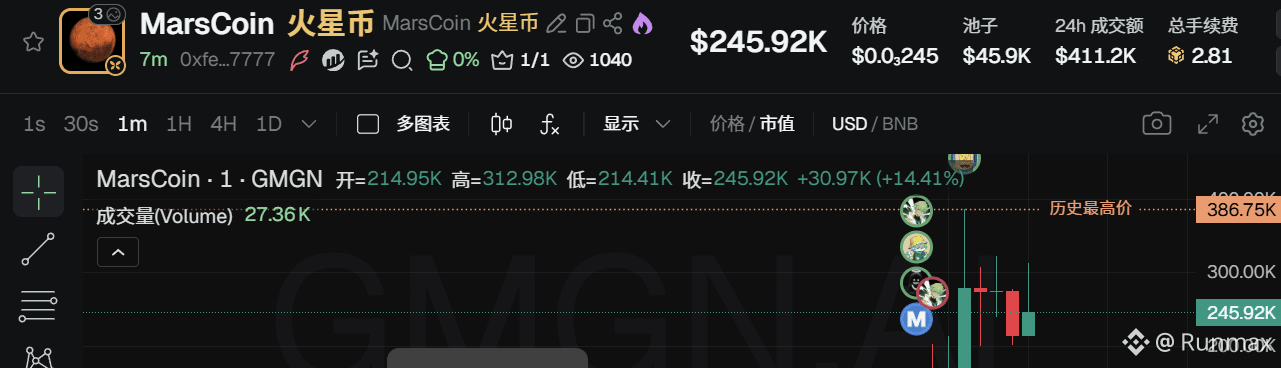
Making money really does depend on fate; I saw it when the market cap was $MarsCoin 20 million, didn’t get on board, and slapped my thigh in regret.
The dilemma for Bitcoin holders has always been this: if you want security, you have to hodl and do nothing; if you want returns, you have to bridge or wrap, handing over your private key.
The TBV of @babylonlabs_io offers a middle ground. BTC does not leave the mainnet; it is locked in a Taproot script and interacts with DeFi through ZK cryptographic proofs. In my view, the biggest breakthrough of this mechanism is not technical showmanship, but shifting trust from “people” to “code” — collateral, liquidation, and redemption are all automatically executed by preset conditions, with no room for human intervention.
The testnet parameters are very clear: the single Vault limit is 0.4 BTC, and liquidation is triggered when the health factor falls below 1. The rules are transparent, and execution is irreversible. Bitcoin can finally earn yield without leaving your hands.
#baby $BABY
{future}(BABYUSDT)
Making money really does depend on fate; I saw it when the market cap was $MarsCoin 20 million, didn’t get on board, and slapped my thigh in regret.
The dilemma for Bitcoin holders has always been this: if you want security, you have to hodl and do nothing; if you want returns, you have to bridge or wrap, handing over your private key.
The TBV of @BabylonLabs_io offers a middle ground. BTC does not leave the mainnet; it is locked in a Taproot script and interacts with DeFi through ZK cryptographic proofs. In my view, the biggest breakthrough of this mechanism is not technical showmanship, but shifting trust from “people” to “code” — collateral, liquidation, and redemption are all automatically executed by preset conditions, with no room for human intervention.
The testnet parameters are very clear: the single Vault limit is 0.4 BTC, and liquidation is triggered when the health factor falls below 1. The rules are transparent, and execution is irreversible. Bitcoin can finally earn yield without leaving your hands.
#baby $BABY
The dilemma for Bitcoin holders has always been this: if you want security, you have to hodl and do nothing; if you want returns, you have to bridge or wrap, handing over your private key.
The TBV of @BabylonLabs_io offers a middle ground. BTC does not leave the mainnet; it is locked in a Taproot script and interacts with DeFi through ZK cryptographic proofs. In my view, the biggest breakthrough of this mechanism is not technical showmanship, but shifting trust from “people” to “code” — collateral, liquidation, and redemption are all automatically executed by preset conditions, with no room for human intervention.
The testnet parameters are very clear: the single Vault limit is 0.4 BTC, and liquidation is triggered when the health factor falls below 1. The rules are transparent, and execution is irreversible. Bitcoin can finally earn yield without leaving your hands.
#baby $BABY
1
832
·
--
Verified
No traffic. Today I’ll tell everyone how to get a traffic password.#bnb
Let me introduce a supermodel: Wei Jing, Global Supermodel Competition Macau champion, from Shenzhen, standing at 177 cm.
Alright, back to the main point: the competitive logic of BTCFi is undergoing a fundamental shift. In the past, everyone competed on who offered the highest interest rates. Now, what truly matters is who can provide a precise pricing risk solution for native BTC.
What most moved me about the TBV of @babylonlabs_io isn’t the outcome of “lending out stablecoins,” but the way the rules—ownership allocation, liquidation conditions, and bad-debt responsibility—are written into the native BTC collateral layer. Collateral capacity determines whether native BTC can securely enter more on-chain financial scenarios—today it can be integrated with Aave v4, and in the future it can support more protocols as well. At present, proposals for the Aave v4 integration are being advanced in the community, and Babylon has already processed deposits of over 100,000 BTC.
The real barrier isn’t getting BTC to move—it’s enabling even non-moving BTC to be accurately priced. TBV is answering that question.
#baby $BABY
{future}(BABYUSDT)
No traffic. Today I’ll tell everyone how to get a traffic password.#bnb
Let me introduce a supermodel: Wei Jing, Global Supermodel Competition Macau champion, from Shenzhen, standing at 177 cm.
Alright, back to the main point: the competitive logic of BTCFi is undergoing a fundamental shift. In the past, everyone competed on who offered the highest interest rates. Now, what truly matters is who can provide a precise pricing risk solution for native BTC.
What most moved me about the TBV of @BabylonLabs_io isn’t the outcome of “lending out stablecoins,” but the way the rules—ownership allocation, liquidation conditions, and bad-debt responsibility—are written into the native BTC collateral layer. Collateral capacity determines whether native BTC can securely enter more on-chain financial scenarios—today it can be integrated with Aave v4, and in the future it can support more protocols as well. At present, proposals for the Aave v4 integration are being advanced in the community, and Babylon has already processed deposits of over 100,000 BTC.
The real barrier isn’t getting BTC to move—it’s enabling even non-moving BTC to be accurately priced. TBV is answering that question.
#baby $BABY
Let me introduce a supermodel: Wei Jing, Global Supermodel Competition Macau champion, from Shenzhen, standing at 177 cm.
Alright, back to the main point: the competitive logic of BTCFi is undergoing a fundamental shift. In the past, everyone competed on who offered the highest interest rates. Now, what truly matters is who can provide a precise pricing risk solution for native BTC.
What most moved me about the TBV of @BabylonLabs_io isn’t the outcome of “lending out stablecoins,” but the way the rules—ownership allocation, liquidation conditions, and bad-debt responsibility—are written into the native BTC collateral layer. Collateral capacity determines whether native BTC can securely enter more on-chain financial scenarios—today it can be integrated with Aave v4, and in the future it can support more protocols as well. At present, proposals for the Aave v4 integration are being advanced in the community, and Babylon has already processed deposits of over 100,000 BTC.
The real barrier isn’t getting BTC to move—it’s enabling even non-moving BTC to be accurately priced. TBV is answering that question.
#baby $BABY


3
2
2k
·
--
Verified
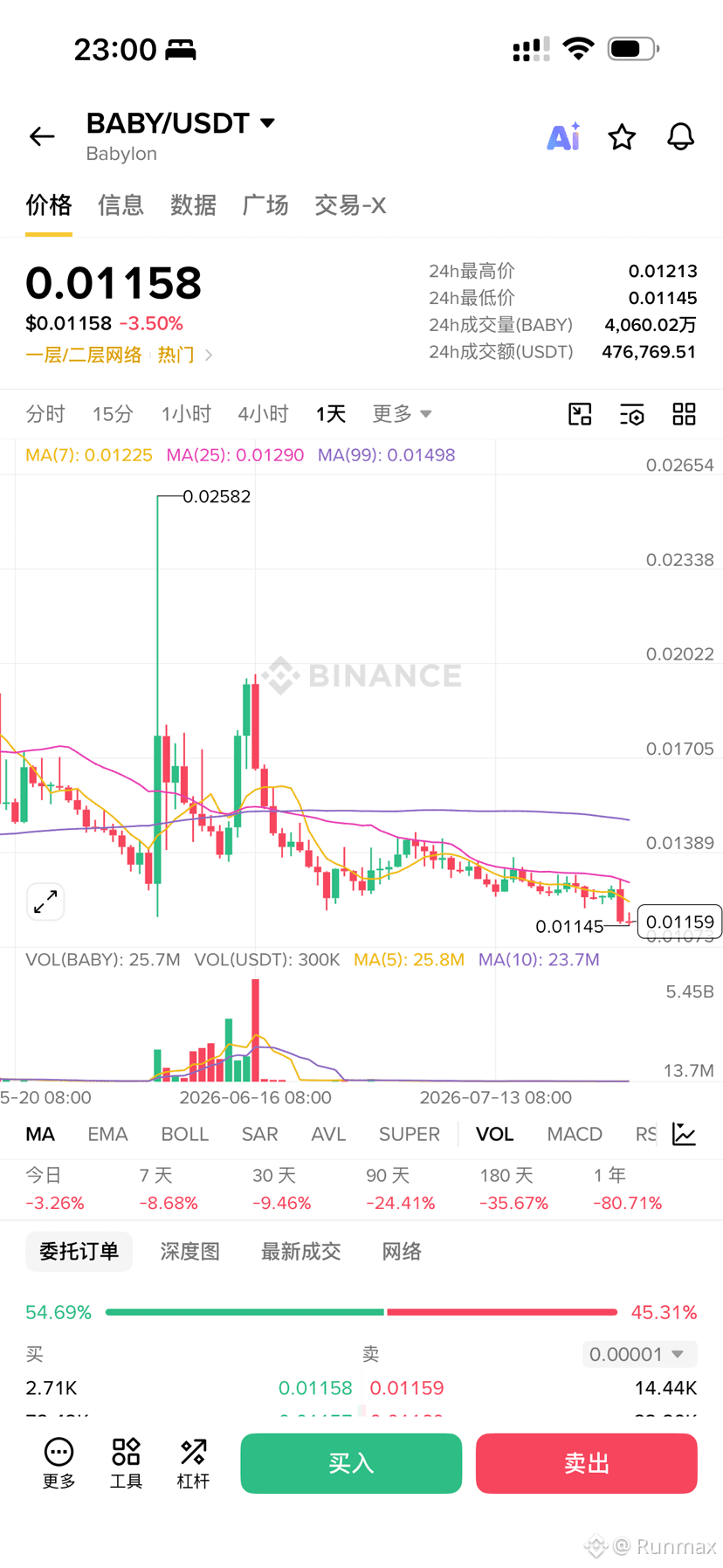
Brothers, what should we do when we’ve been losing every day lately? When will we finally win once? #bnb
Bitcoin has long been in a “sleep” state in the DeFi space—right now, only about 1% of BTC is used for on-chain financial activities. The root cause is that existing cross-chain bridges and wrapping solutions require users to give up their private keys or trust third-party custodians; in history, there have been multiple major hack incidents involving tens of billions of dollars.
Trustless Bitcoin Vaults by @babylonlabs_io offers a completely different approach: BTC never leaves the Bitcoin mainnet throughout the entire process. It is locked in a Taproot script jointly signed by the depositors. When redeeming, a zero-knowledge proof is verified directly within the Bitcoin script against the corresponding event on Ethereum. Trust shifts from “people” to “cryptographic proofs.” Each vault corresponds to an independent UTXO— it does not enter a shared liquidity pool, and it cannot be moved, nor can it be re-staked.
So far, more than 56,000 BTC have been activated through the Babylon ecosystem. Bitcoin can finally participate in lending and earning interest while maintaining self-custody.
#baby $BABY
{future}(BTCUSDT)
Brothers, what should we do when we’ve been losing every day lately? When will we finally win once? #bnb
Bitcoin has long been in a “sleep” state in the DeFi space—right now, only about 1% of BTC is used for on-chain financial activities. The root cause is that existing cross-chain bridges and wrapping solutions require users to give up their private keys or trust third-party custodians; in history, there have been multiple major hack incidents involving tens of billions of dollars.
Trustless Bitcoin Vaults by @BabylonLabs_io offers a completely different approach: BTC never leaves the Bitcoin mainnet throughout the entire process. It is locked in a Taproot script jointly signed by the depositors. When redeeming, a zero-knowledge proof is verified directly within the Bitcoin script against the corresponding event on Ethereum. Trust shifts from “people” to “cryptographic proofs.” Each vault corresponds to an independent UTXO— it does not enter a shared liquidity pool, and it cannot be moved, nor can it be re-staked.
So far, more than 56,000 BTC have been activated through the Babylon ecosystem. Bitcoin can finally participate in lending and earning interest while maintaining self-custody.
#baby $BABY
Bitcoin has long been in a “sleep” state in the DeFi space—right now, only about 1% of BTC is used for on-chain financial activities. The root cause is that existing cross-chain bridges and wrapping solutions require users to give up their private keys or trust third-party custodians; in history, there have been multiple major hack incidents involving tens of billions of dollars.
Trustless Bitcoin Vaults by @BabylonLabs_io offers a completely different approach: BTC never leaves the Bitcoin mainnet throughout the entire process. It is locked in a Taproot script jointly signed by the depositors. When redeeming, a zero-knowledge proof is verified directly within the Bitcoin script against the corresponding event on Ethereum. Trust shifts from “people” to “cryptographic proofs.” Each vault corresponds to an independent UTXO— it does not enter a shared liquidity pool, and it cannot be moved, nor can it be re-staked.
So far, more than 56,000 BTC have been activated through the Babylon ecosystem. Bitcoin can finally participate in lending and earning interest while maintaining self-custody.
#baby $BABY
4
2
736
·
--
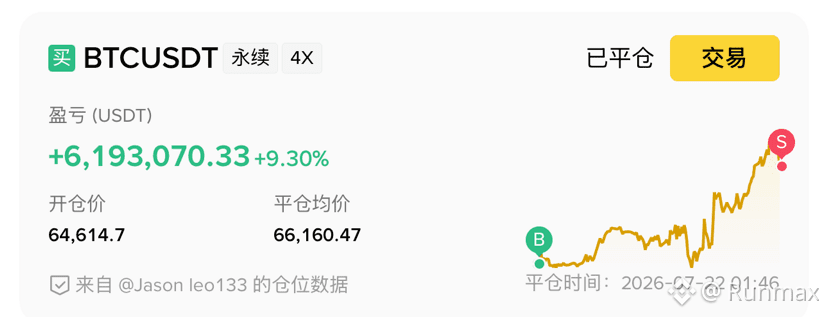
Fam, is this a live trading account or a test one? People earn hundreds of millions of US dollars at the drop of a hat—it’s so enviable.
Alright, I’m not jealous. I’ll just do my own grind as a “cow-and-horse.” Let me introduce the advantages of @babylonlabs_io . According to Babylon’s official whitepaper, “A Bitcoin-Charged Crypto Economy with Trustless Vaults,” and its technical documentation, TBV’s core advantages are reflected in the following three aspects:
1. Truly trustless, non-custodial design
Existing BTC cross-chain solutions rely on centralized custodians or multisig bridging, and there have been multiple billion-dollar-scale hacker attacks in the past. TBV is completely different—BTC always remains locked in the Taproot script on the Bitcoin chain. Every valid spend is pre-signed by the depositor and protocol participants when the vault is created. Depositors do not need to trust any third party. Even the depositor can run its own Vault Provider node, bypassing all third-party participants to independently complete operations such as redemption and challenging fraudulent claims.
2. Native self-custody of Bitcoin
TBV enables BTC holders to participate in DeFi without giving up control of their assets. BTC is neither bridged nor wrapped nor custodial. Each vault is an independent UTXO, with funds isolated from one another—no one can move or re-stake them. During redemption, zero-knowledge proofs are verified directly within the Bitcoin script for the corresponding events on Ethereum, without needing a Bitcoin fork.
3. Ecosystem deployment and capital backing
So far, more than 56,853 BTC (about $5.64 billion) have been activated through the Babylon ecosystem. TBV has been integrated with Aave v4 and completed hardware signing collaboration with Ledger. The project was founded by Stanford professor David Tse and received a $15 million strategic investment from a16z crypto.
#baby $BABY
{future}(BABYUSDT)
Fam, is this a live trading account or a test one? People earn hundreds of millions of US dollars at the drop of a hat—it’s so enviable.
Alright, I’m not jealous. I’ll just do my own grind as a “cow-and-horse.” Let me introduce the advantages of @BabylonLabs_io . According to Babylon’s official whitepaper, “A Bitcoin-Charged Crypto Economy with Trustless Vaults,” and its technical documentation, TBV’s core advantages are reflected in the following three aspects:
1. Truly trustless, non-custodial design
Existing BTC cross-chain solutions rely on centralized custodians or multisig bridging, and there have been multiple billion-dollar-scale hacker attacks in the past. TBV is completely different—BTC always remains locked in the Taproot script on the Bitcoin chain. Every valid spend is pre-signed by the depositor and protocol participants when the vault is created. Depositors do not need to trust any third party. Even the depositor can run its own Vault Provider node, bypassing all third-party participants to independently complete operations such as redemption and challenging fraudulent claims.
2. Native self-custody of Bitcoin
TBV enables BTC holders to participate in DeFi without giving up control of their assets. BTC is neither bridged nor wrapped nor custodial. Each vault is an independent UTXO, with funds isolated from one another—no one can move or re-stake them. During redemption, zero-knowledge proofs are verified directly within the Bitcoin script for the corresponding events on Ethereum, without needing a Bitcoin fork.
3. Ecosystem deployment and capital backing
So far, more than 56,853 BTC (about $5.64 billion) have been activated through the Babylon ecosystem. TBV has been integrated with Aave v4 and completed hardware signing collaboration with Ledger. The project was founded by Stanford professor David Tse and received a $15 million strategic investment from a16z crypto.
#baby $BABY
Alright, I’m not jealous. I’ll just do my own grind as a “cow-and-horse.” Let me introduce the advantages of @BabylonLabs_io . According to Babylon’s official whitepaper, “A Bitcoin-Charged Crypto Economy with Trustless Vaults,” and its technical documentation, TBV’s core advantages are reflected in the following three aspects:
1. Truly trustless, non-custodial design
Existing BTC cross-chain solutions rely on centralized custodians or multisig bridging, and there have been multiple billion-dollar-scale hacker attacks in the past. TBV is completely different—BTC always remains locked in the Taproot script on the Bitcoin chain. Every valid spend is pre-signed by the depositor and protocol participants when the vault is created. Depositors do not need to trust any third party. Even the depositor can run its own Vault Provider node, bypassing all third-party participants to independently complete operations such as redemption and challenging fraudulent claims.
2. Native self-custody of Bitcoin
TBV enables BTC holders to participate in DeFi without giving up control of their assets. BTC is neither bridged nor wrapped nor custodial. Each vault is an independent UTXO, with funds isolated from one another—no one can move or re-stake them. During redemption, zero-knowledge proofs are verified directly within the Bitcoin script for the corresponding events on Ethereum, without needing a Bitcoin fork.
3. Ecosystem deployment and capital backing
So far, more than 56,853 BTC (about $5.64 billion) have been activated through the Babylon ecosystem. TBV has been integrated with Aave v4 and completed hardware signing collaboration with Ledger. The project was founded by Stanford professor David Tse and received a $15 million strategic investment from a16z crypto.
#baby $BABY
3
2
255
·
--
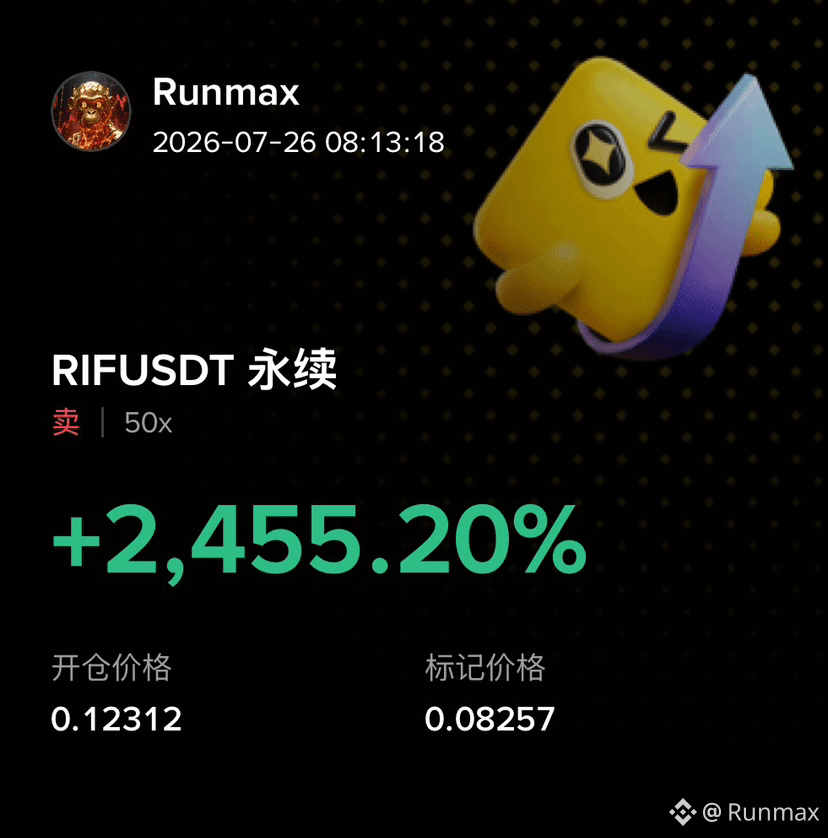
Brothers, we’ve just eaten again—2455%—and after consuming 24X, it fully satisfies.
Now let’s talk about something else: Bitcoin’s participation in DeFi has long been below 1%—it’s not that people don’t want to use it, but that they don’t dare. Bridging carries the risk of being hacked, wrapping requires handing over private keys, and centralized custody is completely against the original spirit of holding crypto.
@babylonlabs_io ’s Trustless Bitcoin Vaults completely change this situation. BTC always stays on the Bitcoin blockchain, locked via Taproot scripts. Smart contracts on the DeFi chain can only trigger fund transfers under predefined conditions, and cannot directly move the assets. The deposit time has been reduced to about 3 hours, and on-chain fees are more than three times lower.
TBV has already completed a hardware-signature integration with Ledger. Users can clearly verify each vault transaction on their devices. The proposal to integrate with Aave v4 is now in the community discussion stage. And in cooperation with GoMining, plans are underway to activate up to 1,000 BTC. Bitcoin shouldn’t sleep forever. TBV is redefining BTC’s role in DeFi through technology.
#baby $BABY
{future}(BTCUSDT)
Brothers, we’ve just eaten again—2455%—and after consuming 24X, it fully satisfies.
Now let’s talk about something else: Bitcoin’s participation in DeFi has long been below 1%—it’s not that people don’t want to use it, but that they don’t dare. Bridging carries the risk of being hacked, wrapping requires handing over private keys, and centralized custody is completely against the original spirit of holding crypto.
@BabylonLabs_io ’s Trustless Bitcoin Vaults completely change this situation. BTC always stays on the Bitcoin blockchain, locked via Taproot scripts. Smart contracts on the DeFi chain can only trigger fund transfers under predefined conditions, and cannot directly move the assets. The deposit time has been reduced to about 3 hours, and on-chain fees are more than three times lower.
TBV has already completed a hardware-signature integration with Ledger. Users can clearly verify each vault transaction on their devices. The proposal to integrate with Aave v4 is now in the community discussion stage. And in cooperation with GoMining, plans are underway to activate up to 1,000 BTC. Bitcoin shouldn’t sleep forever. TBV is redefining BTC’s role in DeFi through technology.
#baby $BABY
Now let’s talk about something else: Bitcoin’s participation in DeFi has long been below 1%—it’s not that people don’t want to use it, but that they don’t dare. Bridging carries the risk of being hacked, wrapping requires handing over private keys, and centralized custody is completely against the original spirit of holding crypto.
@BabylonLabs_io ’s Trustless Bitcoin Vaults completely change this situation. BTC always stays on the Bitcoin blockchain, locked via Taproot scripts. Smart contracts on the DeFi chain can only trigger fund transfers under predefined conditions, and cannot directly move the assets. The deposit time has been reduced to about 3 hours, and on-chain fees are more than three times lower.
TBV has already completed a hardware-signature integration with Ledger. Users can clearly verify each vault transaction on their devices. The proposal to integrate with Aave v4 is now in the community discussion stage. And in cooperation with GoMining, plans are underway to activate up to 1,000 BTC. Bitcoin shouldn’t sleep forever. TBV is redefining BTC’s role in DeFi through technology.
#baby $BABY
1
192
Log in to explore more content
Join global crypto users on Binance Square
⚡️ Get latest and useful information about crypto.
💬 Trusted by the world’s largest crypto exchange.
👍 Discover real insights from verified creators.
Email / Phone number
Trending Topics
StellarActivatesProtocol28At211TPS
2,346 views
85 Discussing
#stellaractivatesprotocol28at211tps
@StellarOrg validators are scheduled to vote on Protocol 28
Sept 16.
CAP-83 speeds up ledger close.
CAP-85 and CAP-86 are contract maintenance: atomic fleet upgrades, cleaner data migrations.
We aggregate
$XLM
swaps on Stellar, so we read these closely.@StellarOrg validators are scheduled to vote on Protocol 28
Sept 16.
CAP-83 speeds up ledger close.
CAP-85 and CAP-86 are contract maintenance: atomic fleet upgrades, cleaner data migrations.
We aggregate
xlm swaps on Stellar, so we read these closely.
$DRIFT
$AVA
Crypto Futrures Afridi
·1 Likes
·308 views
SECGrantsInnovationExemptionForTokenizedStocks
2,348 views
108 Discussing
XRPGains3%AsRippleAddsMPPSupport
1,328 views
80 Discussing