
比特币少爷
3k Posts

比特币少爷
金融行业从业者,喜欢投资加密行业,生活不易,且行且珍惜。
Open Trade
Occasional Trader
6.1 Years
330 Following
537 Followers
1.3K+ Liked
Posts
Portfolio
All
Quotes
Videos

$FOGO
On Saturday, it paused its network. About 15 hours earlier, the $Fogo Foundation said the attacker had obtained 400 million $FOGO tokens, which at the time were worth about $3 million. The pause was issued within an hour before the announcement at 12:29 p.m. Eastern Time from $Fogo, with the aim of preventing affected assets from moving further while validators upgraded the network. The project did not provide a restart time or detailed information on the restriction measures.
In a Friday 9:13 p.m. Eastern Time announcement, the foundation said an unidentified actor had breached the organization and sent the 400 million tokens to a “malicious actor,” and that exchanges, law enforcement, and forensic experts had been notified. The 400 million tokens represented 4% of $FOGO ’s 10 billion token genesis supply, and exceeded 10% of its current circulating supply. DefiLlama showed that at the time, the $FOGO price was close to 0.0075, or about $3 million in value. Bitget paused $FOGO deposits and withdrawals about an hour before $Fogo’s first public disclosure due to wallet maintenance, and KuCoin later announced a similar pause.
$Fogo launched its mainnet in January after a $7 million round of Binance token sales, valuing the project at $350 million. The project positions itself as a high-speed Layer 1, targeting 40 millisecond block times and reducing exposure to MEV.
On Saturday, it paused its network. About 15 hours earlier, the $Fogo Foundation said the attacker had obtained 400 million $FOGO tokens, which at the time were worth about $3 million. The pause was issued within an hour before the announcement at 12:29 p.m. Eastern Time from $Fogo, with the aim of preventing affected assets from moving further while validators upgraded the network. The project did not provide a restart time or detailed information on the restriction measures.
In a Friday 9:13 p.m. Eastern Time announcement, the foundation said an unidentified actor had breached the organization and sent the 400 million tokens to a “malicious actor,” and that exchanges, law enforcement, and forensic experts had been notified. The 400 million tokens represented 4% of $FOGO ’s 10 billion token genesis supply, and exceeded 10% of its current circulating supply. DefiLlama showed that at the time, the $FOGO price was close to 0.0075, or about $3 million in value. Bitget paused $FOGO deposits and withdrawals about an hour before $Fogo’s first public disclosure due to wallet maintenance, and KuCoin later announced a similar pause.
$Fogo launched its mainnet in January after a $7 million round of Binance token sales, valuing the project at $350 million. The project positions itself as a high-speed Layer 1, targeting 40 millisecond block times and reducing exposure to MEV.
See translation
国际刑警组织报告称,在一次针对加密投资诈骗、网络恋爱诈骗和洗钱的跨22国行动中,58人被捕,263名嫌疑人被确认,缴获了267万美金。代号为“杰克尔四号(Operation Jackal IV)”的行动从2025年11月持续到2026年6月,为期八个月,重点针对西非有组织犯罪集团(包括Black Axe)所使用的金融体系。来自六大洲的22个国家的执法部门参与了此次行动。
南非的突袭导致39人被捕,警方缴获了267万美金,冻结了257个银行账户并收集了证据。阿根廷当局逮捕了17人,并确认与一个“按需犯罪服务”(Crime-as-a-Service)网络有关的196人。国际刑警组织还报告称罗马尼亚有11人被捕,涉及一家被指控窃取并洗钱约1.43亿欧元的呼叫中心,但未澄清这些人数是否计入了报道中的总体数字。Tomonobu Kaya说:“通过追踪跨境的非法资金流动,我们正在打击有组织犯罪的生命线。
南非的突袭导致39人被捕,警方缴获了267万美金,冻结了257个银行账户并收集了证据。阿根廷当局逮捕了17人,并确认与一个“按需犯罪服务”(Crime-as-a-Service)网络有关的196人。国际刑警组织还报告称罗马尼亚有11人被捕,涉及一家被指控窃取并洗钱约1.43亿欧元的呼叫中心,但未澄清这些人数是否计入了报道中的总体数字。Tomonobu Kaya说:“通过追踪跨境的非法资金流动,我们正在打击有组织犯罪的生命线。
See translation
区块链技术公司 Starkware 表示,8 月 26 日一笔采用研究员 Avihu Levy 抗量子比特币(QSB)方案的交易在比特币主网完成挖矿,无需软分叉、硬分叉或修改共识规则。该交易消耗 1 万枚聪,并通过 MARA Foundation 的 Slipstream 服务完成处理,因格式非标准,通常无法在比特币公共内存池中传播。
测试耗时数小时 GPU 计算,成本约 150 至 200 美元。QSB 采用基于哈希函数的抗量子支出条件,并通过签名试挖降低量子攻击风险,但仍需用户主动迁移资金,无法保护公钥已暴露的资产。Starkware CEO Eli Ben-Sasson 仍支持通过软分叉推出协议级方案。(Bitcoin.com News)
测试耗时数小时 GPU 计算,成本约 150 至 200 美元。QSB 采用基于哈希函数的抗量子支出条件,并通过签名试挖降低量子攻击风险,但仍需用户主动迁移资金,无法保护公钥已暴露的资产。Starkware CEO Eli Ben-Sasson 仍支持通过软分叉推出协议级方案。(Bitcoin.com News)
Polygon Labs issued an emergency notice stating that after the Austin and Kyoto hard forks were activated, Polygon PoS nodes that are still running older versions of Bor or Heimdall have fallen out of consensus and need to upgrade their clients to catch up with the network.
Austin was activated at mainnet block 91,949,700; nodes must run Bor v2.10.0 or higher. Kyoto was activated at block height 51,533,000; nodes must run Heimdall v0.11.0 or higher.
Austin fixed two categories of Bor resource exhaustion risks: L1-to-L2 bridge state synchronization events were not included in the Gas limit, which could slow down block processing; the TxDependency field lacks a size limit, which could cause peer nodes to crash.
$POL
Austin was activated at mainnet block 91,949,700; nodes must run Bor v2.10.0 or higher. Kyoto was activated at block height 51,533,000; nodes must run Heimdall v0.11.0 or higher.
Austin fixed two categories of Bor resource exhaustion risks: L1-to-L2 bridge state synchronization events were not included in the Gas limit, which could slow down block processing; the TxDependency field lacks a size limit, which could cause peer nodes to crash.
$POL
Jiang Zhuoer wrote that on Friday, Bitcoin spot ETF net outflows amounted to $202 million, ending a streak of nine consecutive days of net inflows. Meanwhile, Ethereum spot ETFs remain strong, with continued net inflows of $102 million. He believes that after this round of sharp gains, the market has a large number of bearish trapped positions and profit-taking sell orders from the bottom. Whether prices can hold at high levels depends on whether there is enough buy-side capital to absorb supply, and ETF flows and the Coinbase premium are key indicators to watch in assessing capital follow-through.
Jiang Zhuoer added that Fed Chair Waller’s relatively hawkish remarks have a major impact on the market, causing key Friday ETF data to turn negative and further weakening the weekend outlook. Currently $BTC
is facing its first test since the rally began; a drop early in the morning may signal the start of a broader downtrend. He has sold 50% of his $ETH spot holdings during the decline and will continue to monitor weekend price action.
Jiang Zhuoer added that Fed Chair Waller’s relatively hawkish remarks have a major impact on the market, causing key Friday ETF data to turn negative and further weakening the weekend outlook. Currently $BTC
is facing its first test since the rally began; a drop early in the morning may signal the start of a broader downtrend. He has sold 50% of his $ETH spot holdings during the decline and will continue to monitor weekend price action.
See translation
稳定币发行商Circle已在Plasma链上原生部署$USDC和EURC,并上线跨链转账协议(CCTP)和Bridge Kit,为这条专注于稳定币的Layer 1提供原生美元和欧元稳定币及跨链转移功能。
CCTP通过在源链上销毁$USDC、获取Circle签名证明并在目标链上铸造等量$USDC实现跨链转移,无需创建封装$USDC或依赖流动性池。Circle称符合条件的机构可通过Plasma访问法币出入金通道,开发者可集成$USDC和EURC至应用。$USDC现已原生支持37条区块链,EURC原生支持8条链,CCTP覆盖28条链。
$XPL
CCTP通过在源链上销毁$USDC、获取Circle签名证明并在目标链上铸造等量$USDC实现跨链转移,无需创建封装$USDC或依赖流动性池。Circle称符合条件的机构可通过Plasma访问法币出入金通道,开发者可集成$USDC和EURC至应用。$USDC现已原生支持37条区块链,EURC原生支持8条链,CCTP覆盖28条链。
$XPL
See translation
预言机提供商RedStone报告显示,Stellar链上代币化RWA资产7月突破30亿美元,较1月的7.85亿美元显著增长,而DeFi总锁仓量仅为2.13亿美元。借贷协议Blend持有1.27亿美元,接受RWA作为抵押品的池仅略超200万美元,显示RWA发行已跑在链上可用性之前。
增长主要由四款产品驱动:Amundi和Spiko隔夜互换基金(7.13亿美元)、Spiko T-Bill基金(5.36亿美元)、Ondo USDY(超5.33亿美元)及VuMe Bond 2030(5亿美元)。
$XLM
增长主要由四款产品驱动:Amundi和Spiko隔夜互换基金(7.13亿美元)、Spiko T-Bill基金(5.36亿美元)、Ondo USDY(超5.33亿美元)及VuMe Bond 2030(5亿美元)。
$XLM
Over $64 million flowed into Blokyz NFT sales within 24 hours, but the company refunded most of the funds, keeping less than $600,000. Blokyz is a Web3 collectibles company that makes physical resin statues. It launched a set of 10,000 Original Blokyz on Ethereum, and reserved 7,500 NFTs for a public raffle, priced at 0.03 $ETH (about $75) each. Each wallet could enter an unlimited number of times. Entries that did not win would receive refunds. Even if there were already enough entries, the raffle remained open for 24 hours.
By the end, 22,443 wallets submitted 853,964 entries, promising a total of 25,618.92 $ETH
(about $64.4 million)—with an average of 114 entries per potentially claimable NFT. Only 7,500 winning entries could be settled. At 0.03 $ETH each, Blokyz could only retain 225 $ETH (about $566,000), meaning most of the funds were temporarily queued for refunds. The current trading price of tokens held by winners is roughly five times the mint price, and it appears that most winners already held the tokens.
Based on the retained funds, this is far below top minting projects like Yuga Labs (about $410 million). But based on the queued refund amount, it could set a record; however, public rankings do not track this metric. The overall NFT market is still relatively small (about $2 billion, versus $1.6 trillion for Bitcoin), so this weekend’s spike is not necessarily a bullish signal for the market overall. So far, 22,000 people have received refunds—will they spend again?
By the end, 22,443 wallets submitted 853,964 entries, promising a total of 25,618.92 $ETH
(about $64.4 million)—with an average of 114 entries per potentially claimable NFT. Only 7,500 winning entries could be settled. At 0.03 $ETH each, Blokyz could only retain 225 $ETH (about $566,000), meaning most of the funds were temporarily queued for refunds. The current trading price of tokens held by winners is roughly five times the mint price, and it appears that most winners already held the tokens.
Based on the retained funds, this is far below top minting projects like Yuga Labs (about $410 million). But based on the queued refund amount, it could set a record; however, public rankings do not track this metric. The overall NFT market is still relatively small (about $2 billion, versus $1.6 trillion for Bitcoin), so this weekend’s spike is not necessarily a bullish signal for the market overall. So far, 22,000 people have received refunds—will they spend again?
See translation
8 月 29 日,JackYi 表示,正如预期,市场出现了小幅回调;如果继续回调到 75,500 美元附近,将是很好的新机会,其继续看好小幅回调后的上涨。
他称,投资和交易是最难的事,自己在 2015 年比特币低位时进入加密行业挖矿,后来成功投资量子链等项目,赶上 2017 年牛市,但这更多是运气成分,当时曾误以为是能力。
此后其投资了数百个项目,其中大部分失败,少部分成功。随着投资机会减少,他开始努力学习交易。
$BTC
他称,投资和交易是最难的事,自己在 2015 年比特币低位时进入加密行业挖矿,后来成功投资量子链等项目,赶上 2017 年牛市,但这更多是运气成分,当时曾误以为是能力。
此后其投资了数百个项目,其中大部分失败,少部分成功。随着投资机会减少,他开始努力学习交易。
$BTC
See translation
昨日(美东时间 8 月 28 日)以太坊现货 ETF 总净流入 1.02 亿美元。昨日单日净流入最多的以太坊现货 ETF 为贝莱德(Blackrock)ETF ETHA,单日净流入为 8379.15 万美元,目前 ETHA 历史总净流入达 127.37 亿美元。其次为贝莱德(Blackrock)Staked $ETH ETF ETHB,单日净流入为 4264.41 万美元,目前 ETHB 历史总净流入达 6.94 亿美元。
昨日单日净流出最多的以太坊现货 ETF 为富达(Fidelity)ETF FETH,单日净流出为 2425.73 万美元,目前 FETH 历史总净流入达 22.72 亿美元。截至发稿前,以太坊现货 ETF 总资产净值为 152.33 亿美元,ETF 净资产比率(市值较以太坊总市值占比)达 5.2%,历史累计净流入已达 129.75 亿美元。
昨日单日净流出最多的以太坊现货 ETF 为富达(Fidelity)ETF FETH,单日净流出为 2425.73 万美元,目前 FETH 历史总净流入达 22.72 亿美元。截至发稿前,以太坊现货 ETF 总资产净值为 152.33 亿美元,ETF 净资产比率(市值较以太坊总市值占比)达 5.2%,历史累计净流入已达 129.75 亿美元。
See translation
6 个自 2011 年至 2014 年后便未再活跃的比特币钱包,于 8 月 16 日至 26 日期间合计转出 553.59 枚 $BTC,价值约 4000 万美元。其中 5 个钱包的资金流向无已知交易所关联的地址,仅 1 个钱包向德国加密托管及交易服务商 Boerse Stuttgart Digital 转入 40 枚 $BTC。
Galaxy Research 数据显示,休眠比特币链上移动量在今年第二季度降至 2022 年以来最低水平,预计 2026 年全年移动量不足去年的一半。Galaxy 研究主管 Alex Thorn 表示,目前并未发现其接触的鲸鱼客户因量子计算风险选择出售比特币,但部分机构投资者确实因此暂缓买入。(CoinDesk)
[Odaily]
Galaxy Research 数据显示,休眠比特币链上移动量在今年第二季度降至 2022 年以来最低水平,预计 2026 年全年移动量不足去年的一半。Galaxy 研究主管 Alex Thorn 表示,目前并未发现其接触的鲸鱼客户因量子计算风险选择出售比特币,但部分机构投资者确实因此暂缓买入。(CoinDesk)
[Odaily]
Cardone Capital posted on X on August 28 that Grant Cardone said the company has added approximately 1,200 bitcoins and about 2,000 multi-family residential units to its real-estate-backed bitcoin strategy. He said the $5.3 billion company is "increasing its commitment" to its multi-family and bitcoin model. Cardone did not disclose the purchase price of the bitcoin, the execution dates, or which funds received the bitcoin.
The company uses rental cash flows from income-producing apartments to continue buying bitcoin via a dollar-cost-averaging approach. Some selected private placement vehicles can allocate 15% to 50% of capital to digital currencies; investors receive an equity interest in the vehicle, while a third-party custodian is responsible for asset custody and trade execution. Cardone’s goal is to hold a total of 10,000 bitcoins across 10 funds. He previously reported holding about 1,000 bitcoins in January, including 282 bitcoins (about $18 million) purchased earlier and 130 bitcoins (about $9.7 million).
The company uses rental cash flows from income-producing apartments to continue buying bitcoin via a dollar-cost-averaging approach. Some selected private placement vehicles can allocate 15% to 50% of capital to digital currencies; investors receive an equity interest in the vehicle, while a third-party custodian is responsible for asset custody and trade execution. Cardone’s goal is to hold a total of 10,000 bitcoins across 10 funds. He previously reported holding about 1,000 bitcoins in January, including 282 bitcoins (about $18 million) purchased earlier and 130 bitcoins (about $9.7 million).
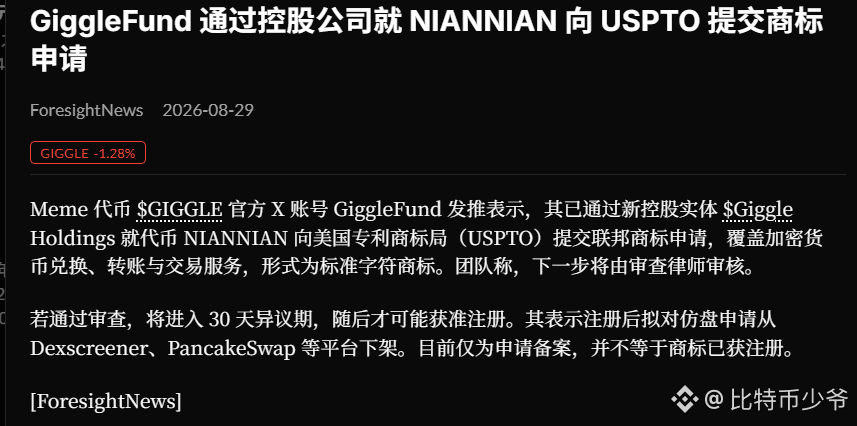
$HOOD Wang Xiaoqi: Robinhood Chain is one of the few incremental markets in the crypto space right now, and there are certain opportunities with on-chain market leaders
Yesterday (Aug 28, US Eastern Time), spot Ethereum ETFs saw net inflows of $102 million. The spot Ethereum ETF with the highest single-day net inflows was BlackRock’s ETF ETHA, with single-day net inflows of $83.7915 million. Currently, ETHA’s cumulative historical net inflows total $12.737 billion. Second was BlackRock’s Staked $ETH
ETF ETHB, with single-day net inflows of $42.6441 million. Currently, ETHB’s cumulative historical net inflows total $694 million.
ETF ETHB, with single-day net inflows of $42.6441 million. Currently, ETHB’s cumulative historical net inflows total $694 million.
See translation
昨日(美东时间 8 月 28 日)比特币现货 ETF 总净流出 2.02 亿美元。
昨日单日净流入最多的比特币现货 ETF 为 摩根士丹利 ETF MSBT,单日净流入为 933.85 万美元,目前 MSBT 历史总净流入达 4.90 亿美元。
昨日单日净流出最多的比特币现货 ETF 为 Ark Invest 和 21Shares 的 ETF ARKB,单日净流出为 1.15 亿美元,目前 ARKB 历史总净流入达 13.19 亿美元。
截至发稿前,比特币现货 ETF 总资产净值为 975.93 亿美元,ETF 净资产比率(市值较比特币总市值占比)达 6.28%,历史累计净流入已达 546.31 亿美元。
昨日单日净流入最多的比特币现货 ETF 为 摩根士丹利 ETF MSBT,单日净流入为 933.85 万美元,目前 MSBT 历史总净流入达 4.90 亿美元。
昨日单日净流出最多的比特币现货 ETF 为 Ark Invest 和 21Shares 的 ETF ARKB,单日净流出为 1.15 亿美元,目前 ARKB 历史总净流入达 13.19 亿美元。
截至发稿前,比特币现货 ETF 总资产净值为 975.93 亿美元,ETF 净资产比率(市值较比特币总市值占比)达 6.28%,历史累计净流入已达 546.31 亿美元。
Log in to explore more content