
RISKK TAKER
566 Posts

RISKK TAKER
Report
Block User
RISK TAKER, Technical Analyst, Trader, My post NFA
Open Trade
Occasional Trader
7.6 Months
6 Following
32 Followers
803 Liked
Posts
Portfolio
All
Quotes
Videos
·
--
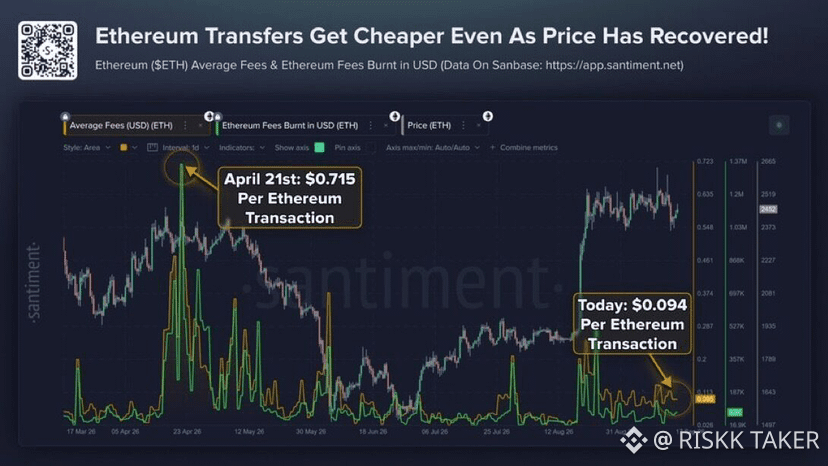
$ETH Ethereum transaction fees have reportedly plunged 87% from April’s $0.72 peak to around $0.095, even as ETH continues trading at significantly higher levels.
That’s an interesting shift for the network. Lower fees mean using Ethereum has become considerably cheaper, reducing one of the biggest complaints users had during periods of heavy congestion.
The catch is that lower fees also mean less fee revenue being generated by the network. Current data shows Ethereum’s average transaction fee remains far below the levels seen during previous periods of congestion.
{future}(ETHUSDT)
$ETH Ethereum transaction fees have reportedly plunged 87% from April’s $0.72 peak to around $0.095, even as ETH continues trading at significantly higher levels.
That’s an interesting shift for the network. Lower fees mean using Ethereum has become considerably cheaper, reducing one of the biggest complaints users had during periods of heavy congestion.
The catch is that lower fees also mean less fee revenue being generated by the network. Current data shows Ethereum’s average transaction fee remains far below the levels seen during previous periods of congestion.
That’s an interesting shift for the network. Lower fees mean using Ethereum has become considerably cheaper, reducing one of the biggest complaints users had during periods of heavy congestion.
The catch is that lower fees also mean less fee revenue being generated by the network. Current data shows Ethereum’s average transaction fee remains far below the levels seen during previous periods of congestion.
1
29
·
--
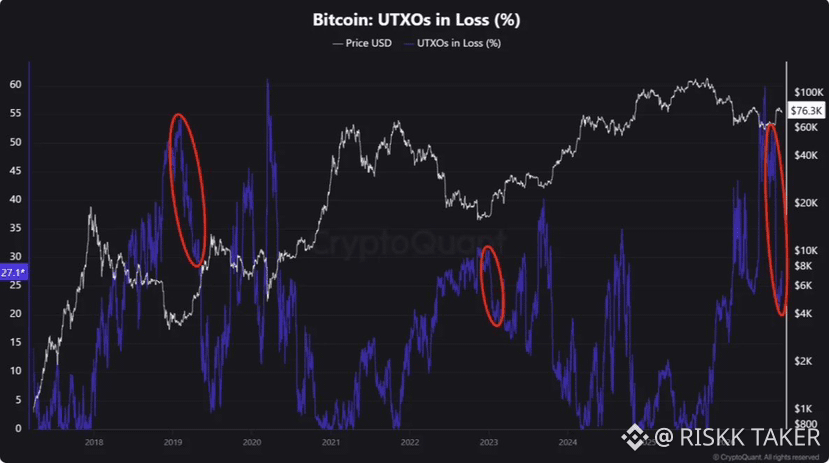
Fewer Bitcoin holders are now sitting on unrealized losses, with the share of BTC UTXOs in loss falling from nearly 60% to around 27%, according to CryptoQuant contributor Crypto Dan.
That matters because widespread underwater holders are often associated with heavier selling pressure and weaker market conditions. As more holders move back into profit, that pressure can gradually ease.
CryptoQuant says the improvement makes a return to a full bear-market phase increasingly unlikely, although it does not eliminate the risk of another correction.
Bitcoin still has to deal with resistance around $79.8K, while roughly $71.3K is being watched as an important cost-basis support level.
Fewer holders are underwater. Now BTC needs to hold the structure.
#btcAnalysis #btc70k $BTC
{future}(BTCUSDT)
Fewer Bitcoin holders are now sitting on unrealized losses, with the share of BTC UTXOs in loss falling from nearly 60% to around 27%, according to CryptoQuant contributor Crypto Dan.
That matters because widespread underwater holders are often associated with heavier selling pressure and weaker market conditions. As more holders move back into profit, that pressure can gradually ease.
CryptoQuant says the improvement makes a return to a full bear-market phase increasingly unlikely, although it does not eliminate the risk of another correction.
Bitcoin still has to deal with resistance around $79.8K, while roughly $71.3K is being watched as an important cost-basis support level.
Fewer holders are underwater. Now BTC needs to hold the structure.
#btcAnalysis #btc70k $BTC
That matters because widespread underwater holders are often associated with heavier selling pressure and weaker market conditions. As more holders move back into profit, that pressure can gradually ease.
CryptoQuant says the improvement makes a return to a full bear-market phase increasingly unlikely, although it does not eliminate the risk of another correction.
Bitcoin still has to deal with resistance around $79.8K, while roughly $71.3K is being watched as an important cost-basis support level.
Fewer holders are underwater. Now BTC needs to hold the structure.
#btcAnalysis #btc70k $BTC
1
51
·
--
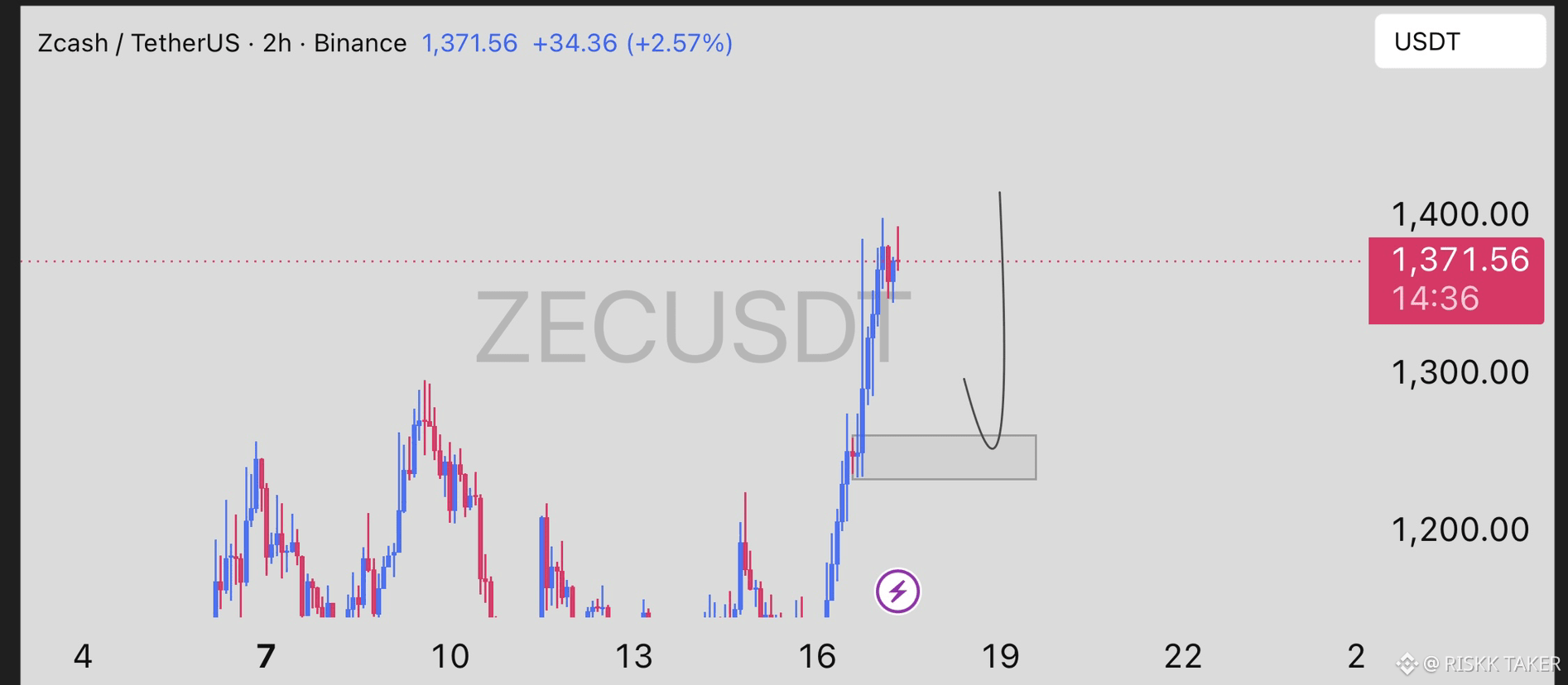
$ZEC wilo be hitting more highs soon!
From my projection, ZEC will retrace a little before pumping back up
{future}(ZECUSDT)
$ZEC wilo be hitting more highs soon!
From my projection, ZEC will retrace a little before pumping back up
From my projection, ZEC will retrace a little before pumping back up
1
243
·
--
The Moscow Exchange is set to launch perpetual futures linked to BTC, ETH, SOL, XRP and TRX on September 22, giving qualified investors regulated access to crypto price exposure.
The contracts will be cash settled in Russian rubles, meaning traders won’t receive the underlying cryptocurrencies.
This expands Moscow Exchange’s existing crypto derivatives market, which has already recorded more than 72,000 qualified investors and over 600 billion rubles in trading volume.
Russia is bringing more of the crypto derivatives market onto its regulated exchange infrastructure.
The Moscow Exchange is set to launch perpetual futures linked to BTC, ETH, SOL, XRP and TRX on September 22, giving qualified investors regulated access to crypto price exposure.
The contracts will be cash settled in Russian rubles, meaning traders won’t receive the underlying cryptocurrencies.
This expands Moscow Exchange’s existing crypto derivatives market, which has already recorded more than 72,000 qualified investors and over 600 billion rubles in trading volume.
Russia is bringing more of the crypto derivatives market onto its regulated exchange infrastructure.
The contracts will be cash settled in Russian rubles, meaning traders won’t receive the underlying cryptocurrencies.
This expands Moscow Exchange’s existing crypto derivatives market, which has already recorded more than 72,000 qualified investors and over 600 billion rubles in trading volume.
Russia is bringing more of the crypto derivatives market onto its regulated exchange infrastructure.
1
65
·
--
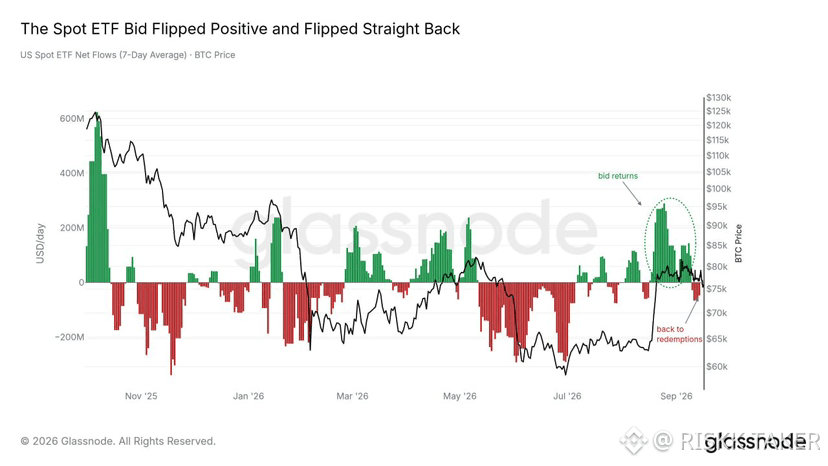
📊 BITCOIN ETF DEMAND IS STARTING TO COOL
After a period of steady inflows, U.S. spot Bitcoin ETFs have returned to net redemptions, raising questions about whether institutional demand is losing momentum.
ETF buying was one of the factors helping Bitcoin absorb selling pressure during the recent dip, so a shift toward outflows is worth watching.
The important part now is persistence. A few sessions of redemptions don’t necessarily change the broader trend, but continued outflows alongside weaker spot demand could put additional pressure on BTC.
On the other hand, a quick return to positive flows would suggest institutional buyers are stepping back in.
📊 BITCOIN ETF DEMAND IS STARTING TO COOL
After a period of steady inflows, U.S. spot Bitcoin ETFs have returned to net redemptions, raising questions about whether institutional demand is losing momentum.
ETF buying was one of the factors helping Bitcoin absorb selling pressure during the recent dip, so a shift toward outflows is worth watching.
The important part now is persistence. A few sessions of redemptions don’t necessarily change the broader trend, but continued outflows alongside weaker spot demand could put additional pressure on BTC.
On the other hand, a quick return to positive flows would suggest institutional buyers are stepping back in.
After a period of steady inflows, U.S. spot Bitcoin ETFs have returned to net redemptions, raising questions about whether institutional demand is losing momentum.
ETF buying was one of the factors helping Bitcoin absorb selling pressure during the recent dip, so a shift toward outflows is worth watching.
The important part now is persistence. A few sessions of redemptions don’t necessarily change the broader trend, but continued outflows alongside weaker spot demand could put additional pressure on BTC.
On the other hand, a quick return to positive flows would suggest institutional buyers are stepping back in.
1
1
·
--
Hyundai is preparing to scale its stablecoin payment model on Avalanche after successfully completing a real world proof of concept earlier this year.
The initial test moved $20,000 in USDT between Hyundai Motor’s U.S. and Mexican subsidiaries, with the full transfer and verification completed in about seven minutes, compared with several hours through traditional banking rails.
Now the focus is moving beyond a single test. Hyundai’s next phase is designed to explore stablecoin based transfers across additional markets and currencies, with Circle and Visa also involved in the broader payment experiments.
This is the part worth watching: a major multinational is testing stablecoins for actual corporate treasury movement, not just a blockchain demonstration.
If Hyundai can scale this across its global operations, stablecoins could become a serious alternative for corporate cross border payments. $AVAX
{future}(AVAXUSDT)
Hyundai is preparing to scale its stablecoin payment model on Avalanche after successfully completing a real world proof of concept earlier this year.
The initial test moved $20,000 in USDT between Hyundai Motor’s U.S. and Mexican subsidiaries, with the full transfer and verification completed in about seven minutes, compared with several hours through traditional banking rails.
Now the focus is moving beyond a single test. Hyundai’s next phase is designed to explore stablecoin based transfers across additional markets and currencies, with Circle and Visa also involved in the broader payment experiments.
This is the part worth watching: a major multinational is testing stablecoins for actual corporate treasury movement, not just a blockchain demonstration.
If Hyundai can scale this across its global operations, stablecoins could become a serious alternative for corporate cross border payments. $AVAX
The initial test moved $20,000 in USDT between Hyundai Motor’s U.S. and Mexican subsidiaries, with the full transfer and verification completed in about seven minutes, compared with several hours through traditional banking rails.
Now the focus is moving beyond a single test. Hyundai’s next phase is designed to explore stablecoin based transfers across additional markets and currencies, with Circle and Visa also involved in the broader payment experiments.
This is the part worth watching: a major multinational is testing stablecoins for actual corporate treasury movement, not just a blockchain demonstration.
If Hyundai can scale this across its global operations, stablecoins could become a serious alternative for corporate cross border payments. $AVAX


1
48
·
--
#AAVE is planning to launch a dedicated RWA lending market on Avalanche, allowing institutions to use tokenized real-world assets as collateral to borrow stablecoins.
The idea is simple but important: institutions could access onchain liquidity without having to sell their tokenized assets.
The proposed market would be built around Aave V4’s new RWA Hub architecture, keeping the risk parameters of tokenized assets separate from Aave’s core lending markets. The proposal is still subject to Aave DAO approval.
RWAs are moving from being simply tokenized to actually being used as collateral for credit.
$AAVE
{future}(AAVEUSDT)
$AVAX
{future}(AVAXUSDT)
#AAVE is planning to launch a dedicated RWA lending market on Avalanche, allowing institutions to use tokenized real-world assets as collateral to borrow stablecoins.
The idea is simple but important: institutions could access onchain liquidity without having to sell their tokenized assets.
The proposed market would be built around Aave V4’s new RWA Hub architecture, keeping the risk parameters of tokenized assets separate from Aave’s core lending markets. The proposal is still subject to Aave DAO approval.
RWAs are moving from being simply tokenized to actually being used as collateral for credit.
$AAVE
$AVAX
The idea is simple but important: institutions could access onchain liquidity without having to sell their tokenized assets.
The proposed market would be built around Aave V4’s new RWA Hub architecture, keeping the risk parameters of tokenized assets separate from Aave’s core lending markets. The proposal is still subject to Aave DAO approval.
RWAs are moving from being simply tokenized to actually being used as collateral for credit.
$AAVE
$AVAX


1
2
·
--
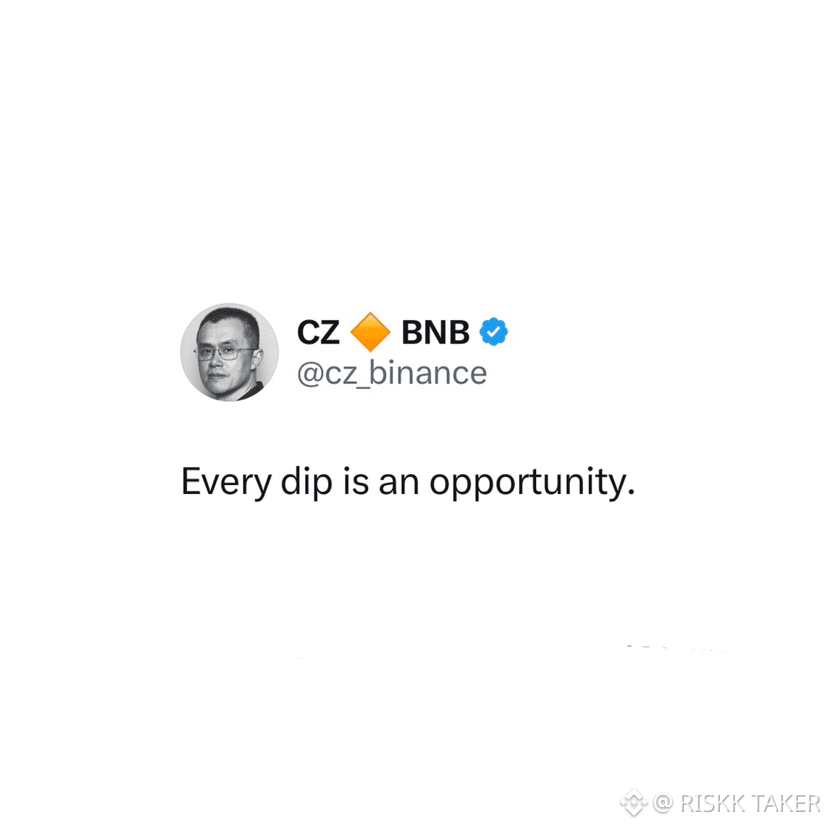
🔥 CZ: “EVERY DIP IS AN OPPORTUNITY.”
CZ has once again shared his view on market pullbacks, saying that “every dip is an opportunity”.
The comment comes as crypto markets face another bout of volatility, with Bitcoin and major altcoins under pressure.
CZ didn’t name a specific asset or price level, so the statement is more about his general approach to market dips than a direct call to buy.
The market is bleeding. CZ sees opportunity.
🔥 CZ: “EVERY DIP IS AN OPPORTUNITY.”
CZ has once again shared his view on market pullbacks, saying that “every dip is an opportunity”.
The comment comes as crypto markets face another bout of volatility, with Bitcoin and major altcoins under pressure.
CZ didn’t name a specific asset or price level, so the statement is more about his general approach to market dips than a direct call to buy.
The market is bleeding. CZ sees opportunity.
CZ has once again shared his view on market pullbacks, saying that “every dip is an opportunity”.
The comment comes as crypto markets face another bout of volatility, with Bitcoin and major altcoins under pressure.
CZ didn’t name a specific asset or price level, so the statement is more about his general approach to market dips than a direct call to buy.
The market is bleeding. CZ sees opportunity.
1
6
·
--
Circle’s Arc blockchain has officially launched its mainnet, with USDC serving as the native gas token and more than 190 institutional and ecosystem builders involved.
The launch gives Circle its own blockchain infrastructure designed around stablecoin powered financial activity, rather than simply issuing USDC across existing networks.
The institutional focus is what makes this interesting. Circle announced its founding validator cohort and major integrations ahead of the launch, positioning Arc around payments, trading, capital markets and other financial applications.
Circle isn’t just building a stablecoin anymore. It’s building infrastructure around the dollar onchain. $SOL
{future}(SOLUSDT)
Circle’s Arc blockchain has officially launched its mainnet, with USDC serving as the native gas token and more than 190 institutional and ecosystem builders involved.
The launch gives Circle its own blockchain infrastructure designed around stablecoin powered financial activity, rather than simply issuing USDC across existing networks.
The institutional focus is what makes this interesting. Circle announced its founding validator cohort and major integrations ahead of the launch, positioning Arc around payments, trading, capital markets and other financial applications.
Circle isn’t just building a stablecoin anymore. It’s building infrastructure around the dollar onchain. $SOL
The launch gives Circle its own blockchain infrastructure designed around stablecoin powered financial activity, rather than simply issuing USDC across existing networks.
The institutional focus is what makes this interesting. Circle announced its founding validator cohort and major integrations ahead of the launch, positioning Arc around payments, trading, capital markets and other financial applications.
Circle isn’t just building a stablecoin anymore. It’s building infrastructure around the dollar onchain. $SOL

1
3
·
--
Kraken parent Payward is in talks to bring selected Hyperliquid perpetual futures to U.S. clients, with the rollout still subject to regulatory approval.
The move would give U.S. traders access to Hyperliquid-linked perpetual markets through a regulated U.S. structure, potentially bringing one of crypto’s biggest derivatives ecosystems closer to the American market.
It’s another sign that perpetual futures are moving deeper into regulated U.S. markets after Kraken already launched crypto perps for eligible U.S. clients earlier this year.
Hyperliquid liquidity meets U.S. regulated access. This could be a big shift for crypto derivatives.
$HYPE
{future}(HYPEUSDT)
Kraken parent Payward is in talks to bring selected Hyperliquid perpetual futures to U.S. clients, with the rollout still subject to regulatory approval.
The move would give U.S. traders access to Hyperliquid-linked perpetual markets through a regulated U.S. structure, potentially bringing one of crypto’s biggest derivatives ecosystems closer to the American market.
It’s another sign that perpetual futures are moving deeper into regulated U.S. markets after Kraken already launched crypto perps for eligible U.S. clients earlier this year.
Hyperliquid liquidity meets U.S. regulated access. This could be a big shift for crypto derivatives.
$HYPE
The move would give U.S. traders access to Hyperliquid-linked perpetual markets through a regulated U.S. structure, potentially bringing one of crypto’s biggest derivatives ecosystems closer to the American market.
It’s another sign that perpetual futures are moving deeper into regulated U.S. markets after Kraken already launched crypto perps for eligible U.S. clients earlier this year.
Hyperliquid liquidity meets U.S. regulated access. This could be a big shift for crypto derivatives.
$HYPE


1
64
·
--
Justin Sun has launched a mathematics prize with an interesting twist: it rewards not only people who solve difficult problems, but also those who can turn mathematical proofs into formats that machines can verify.
That second part is becoming increasingly relevant as mathematics intersects with AI and formal verification.
A proof that looks convincing to a human still needs to be translated into a precise structure that software can check step by step. Making that process easier could help connect traditional mathematical research with systems that can automatically verify reasoning.
The prize therefore targets two different parts of the same problem: finding the solution and making the proof machine verifiable.
It’s an interesting direction at a time when AI systems are increasingly being used for mathematical reasoning, but verification remains just as important as generating an answer. $TRX
{future}(TRXUSDT)
$SOL
{future}(SOLUSDT)
Justin Sun has launched a mathematics prize with an interesting twist: it rewards not only people who solve difficult problems, but also those who can turn mathematical proofs into formats that machines can verify.
That second part is becoming increasingly relevant as mathematics intersects with AI and formal verification.
A proof that looks convincing to a human still needs to be translated into a precise structure that software can check step by step. Making that process easier could help connect traditional mathematical research with systems that can automatically verify reasoning.
The prize therefore targets two different parts of the same problem: finding the solution and making the proof machine verifiable.
It’s an interesting direction at a time when AI systems are increasingly being used for mathematical reasoning, but verification remains just as important as generating an answer. $TRX
$SOL
That second part is becoming increasingly relevant as mathematics intersects with AI and formal verification.
A proof that looks convincing to a human still needs to be translated into a precise structure that software can check step by step. Making that process easier could help connect traditional mathematical research with systems that can automatically verify reasoning.
The prize therefore targets two different parts of the same problem: finding the solution and making the proof machine verifiable.
It’s an interesting direction at a time when AI systems are increasingly being used for mathematical reasoning, but verification remains just as important as generating an answer. $TRX
$SOL

1
30
·
--
Deutsche Bank plans to launch a digital asset custody service in Europe this year, targeting institutional and corporate clients.
The service is expected to initially support Bitcoin, Ethereum and selected stablecoins, allowing clients to store and transfer digital assets while Deutsche Bank manages the wallets and private keys on their behalf. The launch remains subject to regulatory approval.
This is another major step toward crypto becoming part of traditional financial infrastructure.
One of Europe’s biggest banks is preparing to hold crypto for its institutional clients. The line between traditional finance and digital assets keeps getting thinner.
$LSK
{future}(LSKUSDT)
$ZEC
{future}(ZECUSDT)
Deutsche Bank plans to launch a digital asset custody service in Europe this year, targeting institutional and corporate clients.
The service is expected to initially support Bitcoin, Ethereum and selected stablecoins, allowing clients to store and transfer digital assets while Deutsche Bank manages the wallets and private keys on their behalf. The launch remains subject to regulatory approval.
This is another major step toward crypto becoming part of traditional financial infrastructure.
One of Europe’s biggest banks is preparing to hold crypto for its institutional clients. The line between traditional finance and digital assets keeps getting thinner.
$LSK
$ZEC
The service is expected to initially support Bitcoin, Ethereum and selected stablecoins, allowing clients to store and transfer digital assets while Deutsche Bank manages the wallets and private keys on their behalf. The launch remains subject to regulatory approval.
This is another major step toward crypto becoming part of traditional financial infrastructure.
One of Europe’s biggest banks is preparing to hold crypto for its institutional clients. The line between traditional finance and digital assets keeps getting thinner.
$LSK
$ZEC

1
41
·
--
Bitcoin miner MARA Holdings has purchased 1,292 BTC worth roughly $98.6 million through FalconX, according to onchain monitoring by Lookonchain. The purchase works out to about $76,347 per BTC.
The timing stands out. Bitcoin is trading around the mid $70K range after the recent sell off, meaning MARA is choosing to add nearly $100M in BTC while the market is under pressure.
MARA had previously sold a significant amount of its Bitcoin holdings earlier this year, making this renewed accumulation particularly notable.
$ARB
{future}(ARBUSDT)
$ZEC
{future}(ZECUSDT)
Bitcoin miner MARA Holdings has purchased 1,292 BTC worth roughly $98.6 million through FalconX, according to onchain monitoring by Lookonchain. The purchase works out to about $76,347 per BTC.
The timing stands out. Bitcoin is trading around the mid $70K range after the recent sell off, meaning MARA is choosing to add nearly $100M in BTC while the market is under pressure.
MARA had previously sold a significant amount of its Bitcoin holdings earlier this year, making this renewed accumulation particularly notable.
$ARB
$ZEC
The timing stands out. Bitcoin is trading around the mid $70K range after the recent sell off, meaning MARA is choosing to add nearly $100M in BTC while the market is under pressure.
MARA had previously sold a significant amount of its Bitcoin holdings earlier this year, making this renewed accumulation particularly notable.
$ARB
$ZEC


1
59
·
--
Zcash holders have voted to cut the network’s block time from 75 seconds to just 25 seconds, while keeping its existing Bitcoin style halving schedule.
The change would make blocks arrive three times faster, potentially improving transaction confirmation times and making the network more responsive without changing the underlying monetary issuance model.
Keeping the halving schedule is also significant. Zcash will continue following its predetermined supply-emission reductions rather than introducing a new inflation model alongside the faster block production.
The vote shows the community is looking to improve network performance while preserving one of Zcash’s core monetary principles.
Faster blocks, same halving schedule. Zcash is upgrading the network without rewriting its monetary playbook. $BTC
{spot}(BTCUSDT)
$ZEC
{future}(ZECUSDT)
Zcash holders have voted to cut the network’s block time from 75 seconds to just 25 seconds, while keeping its existing Bitcoin style halving schedule.
The change would make blocks arrive three times faster, potentially improving transaction confirmation times and making the network more responsive without changing the underlying monetary issuance model.
Keeping the halving schedule is also significant. Zcash will continue following its predetermined supply-emission reductions rather than introducing a new inflation model alongside the faster block production.
The vote shows the community is looking to improve network performance while preserving one of Zcash’s core monetary principles.
Faster blocks, same halving schedule. Zcash is upgrading the network without rewriting its monetary playbook. $BTC
$ZEC
The change would make blocks arrive three times faster, potentially improving transaction confirmation times and making the network more responsive without changing the underlying monetary issuance model.
Keeping the halving schedule is also significant. Zcash will continue following its predetermined supply-emission reductions rather than introducing a new inflation model alongside the faster block production.
The vote shows the community is looking to improve network performance while preserving one of Zcash’s core monetary principles.
Faster blocks, same halving schedule. Zcash is upgrading the network without rewriting its monetary playbook. $BTC
$ZEC
1
65
·
--
THE CLARITY ACT HAS FAILED... WHATS HAPPENING TO THE CRYPTO MARKET NEXT?
$ARB $SOL
THE CLARITY ACT HAS FAILED... WHATS HAPPENING TO THE CRYPTO MARKET NEXT?
$ARB $SOL
$ARB $SOL
BEAR MARKET CONTINUES
30%
BTC IS NEVER GOING HIGH AGAIN
13%
WE DON’T NEED CLARITY ACT
20%
BULL MARKET CONTINUE
37%
40 votes • Voting closed
2
919
·
--
Standard Chartered has reportedly raised its long term outlook for Arbitrum’s ARB, with a target of $10 by the end of 2030.
At current prices around $0.13, that would represent roughly a 70x increase. The forecast is particularly striking because ARB has fallen dramatically from its previous highs, despite Arbitrum continuing to process significant activity across its Layer-2 ecosystem.
The bullish case is largely tied to Arbitrum capturing more value from the growing onchain economy, including tokenized real-world assets and activity across Arbitrum Orbit chains. Recent data also shows substantial RWA inflows and growing ecosystem revenue.
But a $10 ARB would require a massive change in valuation. With a fixed total supply of 10 billion tokens, that price would imply roughly $100 billion fully diluted valuation. $BTC $ARB
{future}(ARBUSDT)
Standard Chartered has reportedly raised its long term outlook for Arbitrum’s ARB, with a target of $10 by the end of 2030.
At current prices around $0.13, that would represent roughly a 70x increase. The forecast is particularly striking because ARB has fallen dramatically from its previous highs, despite Arbitrum continuing to process significant activity across its Layer-2 ecosystem.
The bullish case is largely tied to Arbitrum capturing more value from the growing onchain economy, including tokenized real-world assets and activity across Arbitrum Orbit chains. Recent data also shows substantial RWA inflows and growing ecosystem revenue.
But a $10 ARB would require a massive change in valuation. With a fixed total supply of 10 billion tokens, that price would imply roughly $100 billion fully diluted valuation. $BTC $ARB
At current prices around $0.13, that would represent roughly a 70x increase. The forecast is particularly striking because ARB has fallen dramatically from its previous highs, despite Arbitrum continuing to process significant activity across its Layer-2 ecosystem.
The bullish case is largely tied to Arbitrum capturing more value from the growing onchain economy, including tokenized real-world assets and activity across Arbitrum Orbit chains. Recent data also shows substantial RWA inflows and growing ecosystem revenue.
But a $10 ARB would require a massive change in valuation. With a fixed total supply of 10 billion tokens, that price would imply roughly $100 billion fully diluted valuation. $BTC $ARB


1
2
·
--
President Trump and the White House are pushing lawmakers to advance the CLARITY Act, as the Senate prepares for a pivotal procedural vote today.
The bill needs 60 votes to move forward, and that is far from guaranteed. Last-minute negotiations have focused heavily on ethics provisions involving government officials and crypto, alongside concerns from lawmakers and the banking industry.
If the vote succeeds, the legislation would move closer to establishing a clearer U.S. framework for digital assets and defining the roles of regulators such as the SEC and CFTC.
For crypto markets, this is a major regulatory catalyst. Passage would reduce one of the industry’s biggest uncertainties, potentially making the U.S. more attractive for crypto companies and institutional capital.
But if the bill fails to clear the procedural hurdle, the market could see another wave of uncertainty.
President Trump and the White House are pushing lawmakers to advance the CLARITY Act, as the Senate prepares for a pivotal procedural vote today.
The bill needs 60 votes to move forward, and that is far from guaranteed. Last-minute negotiations have focused heavily on ethics provisions involving government officials and crypto, alongside concerns from lawmakers and the banking industry.
If the vote succeeds, the legislation would move closer to establishing a clearer U.S. framework for digital assets and defining the roles of regulators such as the SEC and CFTC.
For crypto markets, this is a major regulatory catalyst. Passage would reduce one of the industry’s biggest uncertainties, potentially making the U.S. more attractive for crypto companies and institutional capital.
But if the bill fails to clear the procedural hurdle, the market could see another wave of uncertainty.
The bill needs 60 votes to move forward, and that is far from guaranteed. Last-minute negotiations have focused heavily on ethics provisions involving government officials and crypto, alongside concerns from lawmakers and the banking industry.
If the vote succeeds, the legislation would move closer to establishing a clearer U.S. framework for digital assets and defining the roles of regulators such as the SEC and CFTC.
For crypto markets, this is a major regulatory catalyst. Passage would reduce one of the industry’s biggest uncertainties, potentially making the U.S. more attractive for crypto companies and institutional capital.
But if the bill fails to clear the procedural hurdle, the market could see another wave of uncertainty.


1
30
·
--
Grayscale’s new Digital Assets Next Gen model portfolio is heavily weighted toward Ethereum and XRP, with ETH accounting for 42.34% and XRP making up 26.11% of the allocation. Solana takes another 21.09%.
What stands out is that this portfolio doesn’t include Bitcoin. Instead, Grayscale is giving much larger exposure to assets it views as part of the next generation of the digital-asset market.
ETH, XRP and SOL together make up nearly 90% of the portfolio, meaning the strategy is heavily concentrated around three major networks rather than spreading exposure evenly across the market.
For ETH and XRP, that weighting is notable because Grayscale is packaging these allocations specifically for financial advisors, potentially making it easier for traditional investors to gain diversified crypto exposure through existing investment platforms.
42% $ETH . 26% $XRP . 21% $SOL .
Grayscale is clearly making a statement about where it sees the next wave of crypto growth coming from.
{future}(SOLUSDT)
{future}(XRPUSDT)
{future}(ETHUSDT)
Grayscale’s new Digital Assets Next Gen model portfolio is heavily weighted toward Ethereum and XRP, with ETH accounting for 42.34% and XRP making up 26.11% of the allocation. Solana takes another 21.09%.
What stands out is that this portfolio doesn’t include Bitcoin. Instead, Grayscale is giving much larger exposure to assets it views as part of the next generation of the digital-asset market.
ETH, XRP and SOL together make up nearly 90% of the portfolio, meaning the strategy is heavily concentrated around three major networks rather than spreading exposure evenly across the market.
For ETH and XRP, that weighting is notable because Grayscale is packaging these allocations specifically for financial advisors, potentially making it easier for traditional investors to gain diversified crypto exposure through existing investment platforms.
42% $ETH . 26% $XRP . 21% $SOL .
Grayscale is clearly making a statement about where it sees the next wave of crypto growth coming from.
What stands out is that this portfolio doesn’t include Bitcoin. Instead, Grayscale is giving much larger exposure to assets it views as part of the next generation of the digital-asset market.
ETH, XRP and SOL together make up nearly 90% of the portfolio, meaning the strategy is heavily concentrated around three major networks rather than spreading exposure evenly across the market.
For ETH and XRP, that weighting is notable because Grayscale is packaging these allocations specifically for financial advisors, potentially making it easier for traditional investors to gain diversified crypto exposure through existing investment platforms.
42% $ETH . 26% $XRP . 21% $SOL .
Grayscale is clearly making a statement about where it sees the next wave of crypto growth coming from.
1
127
·
--
Circle’s USDC has surpassed $100 trillion in lifetime onchain transaction volume, highlighting just how much activity the stablecoin has processed since launching in 2018.
The pace has accelerated dramatically this year. Circle reported $14.8 trillion in USDC onchain transaction volume during Q2 alone, up 151% year over year.
But there’s an important detail behind the $100T headline. Transaction volume doesn’t mean $100 trillion of fresh capital entered USDC. A significant portion of stablecoin activity comes from DeFi trading, liquidity movements, arbitrage and other transactions where the same dollars can move repeatedly.
Even with that distinction, the scale is difficult to ignore. USDC has increasingly become a core liquidity layer across crypto markets, and the rapid growth in usage shows how deeply stablecoins are becoming embedded in onchain finance.
$100T in lifetime volume is a huge milestone. $SOL
{future}(SOLUSDT)
Circle’s USDC has surpassed $100 trillion in lifetime onchain transaction volume, highlighting just how much activity the stablecoin has processed since launching in 2018.
The pace has accelerated dramatically this year. Circle reported $14.8 trillion in USDC onchain transaction volume during Q2 alone, up 151% year over year.
But there’s an important detail behind the $100T headline. Transaction volume doesn’t mean $100 trillion of fresh capital entered USDC. A significant portion of stablecoin activity comes from DeFi trading, liquidity movements, arbitrage and other transactions where the same dollars can move repeatedly.
Even with that distinction, the scale is difficult to ignore. USDC has increasingly become a core liquidity layer across crypto markets, and the rapid growth in usage shows how deeply stablecoins are becoming embedded in onchain finance.
$100T in lifetime volume is a huge milestone. $SOL
The pace has accelerated dramatically this year. Circle reported $14.8 trillion in USDC onchain transaction volume during Q2 alone, up 151% year over year.
But there’s an important detail behind the $100T headline. Transaction volume doesn’t mean $100 trillion of fresh capital entered USDC. A significant portion of stablecoin activity comes from DeFi trading, liquidity movements, arbitrage and other transactions where the same dollars can move repeatedly.
Even with that distinction, the scale is difficult to ignore. USDC has increasingly become a core liquidity layer across crypto markets, and the rapid growth in usage shows how deeply stablecoins are becoming embedded in onchain finance.
$100T in lifetime volume is a huge milestone. $SOL

1
41
·
--
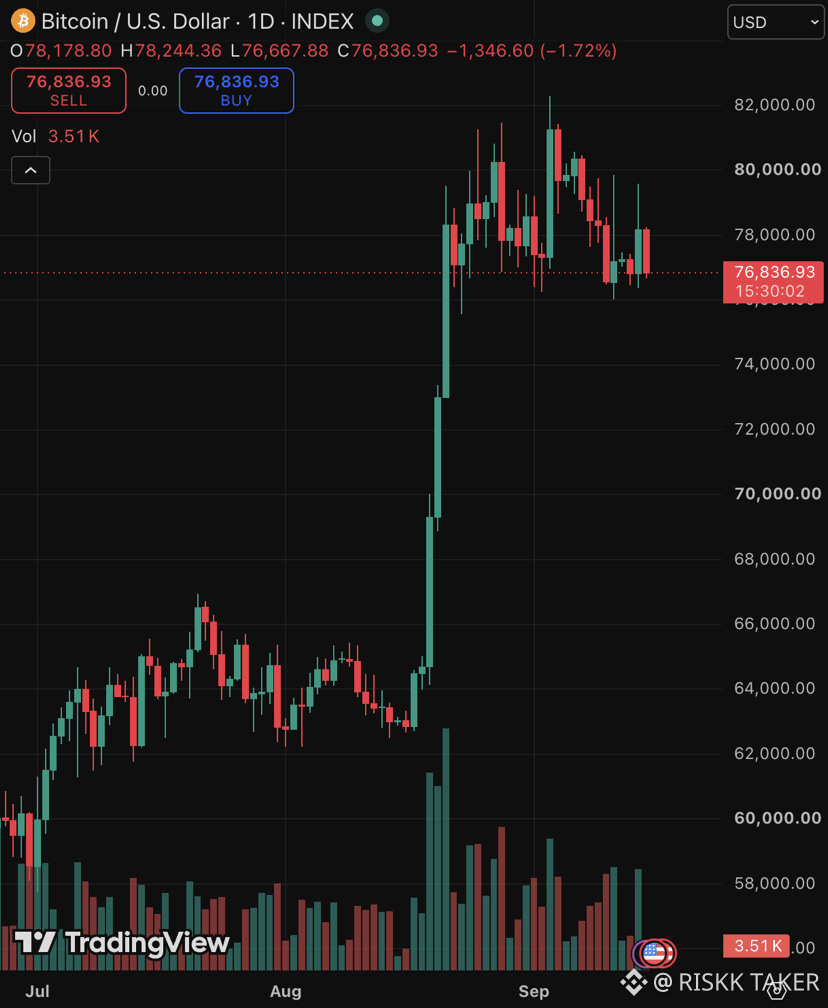
Bitcoin slipping below the $77,000 level has triggered another wave of forced selling, with reports showing around $95.34M in crypto long positions liquidated over the past 12 hours.
The move highlights how much leverage is still sitting in the market. When BTC drops through key support, overleveraged longs can be automatically closed, adding further selling pressure and accelerating the decline.
The $77K area has been an important level for BTC recently. Bitcoin has repeatedly found buyers around this zone, so losing it could put the $75K region back on traders’ radar. Current derivatives data also shows significant liquidation exposure building below $75K.
That doesn’t automatically mean the broader recovery is over. A sharp liquidation flush can clear excessive leverage and give buyers a chance to rebuild positions.
$95M+ in longs gone. Now the key is whether BTC reclaims $77K or starts searching for lower support.
Bitcoin slipping below the $77,000 level has triggered another wave of forced selling, with reports showing around $95.34M in crypto long positions liquidated over the past 12 hours.
The move highlights how much leverage is still sitting in the market. When BTC drops through key support, overleveraged longs can be automatically closed, adding further selling pressure and accelerating the decline.
The $77K area has been an important level for BTC recently. Bitcoin has repeatedly found buyers around this zone, so losing it could put the $75K region back on traders’ radar. Current derivatives data also shows significant liquidation exposure building below $75K.
That doesn’t automatically mean the broader recovery is over. A sharp liquidation flush can clear excessive leverage and give buyers a chance to rebuild positions.
$95M+ in longs gone. Now the key is whether BTC reclaims $77K or starts searching for lower support.
The move highlights how much leverage is still sitting in the market. When BTC drops through key support, overleveraged longs can be automatically closed, adding further selling pressure and accelerating the decline.
The $77K area has been an important level for BTC recently. Bitcoin has repeatedly found buyers around this zone, so losing it could put the $75K region back on traders’ radar. Current derivatives data also shows significant liquidation exposure building below $75K.
That doesn’t automatically mean the broader recovery is over. A sharp liquidation flush can clear excessive leverage and give buyers a chance to rebuild positions.
$95M+ in longs gone. Now the key is whether BTC reclaims $77K or starts searching for lower support.
1
52
Log in to explore more content
Join global crypto users on Binance Square
⚡️ Get latest and useful information about crypto.
💬 Trusted by the world’s largest crypto exchange.
👍 Discover real insights from verified creators.
Email / Phone number