
RazorTicks
424 Posts

RazorTicks
Report
Block User
Pure short-term scalper living in the lower timeframes — tight risk, daily greens, no fluff.
0 Following
123 Followers
196 Liked
Posts
·
--
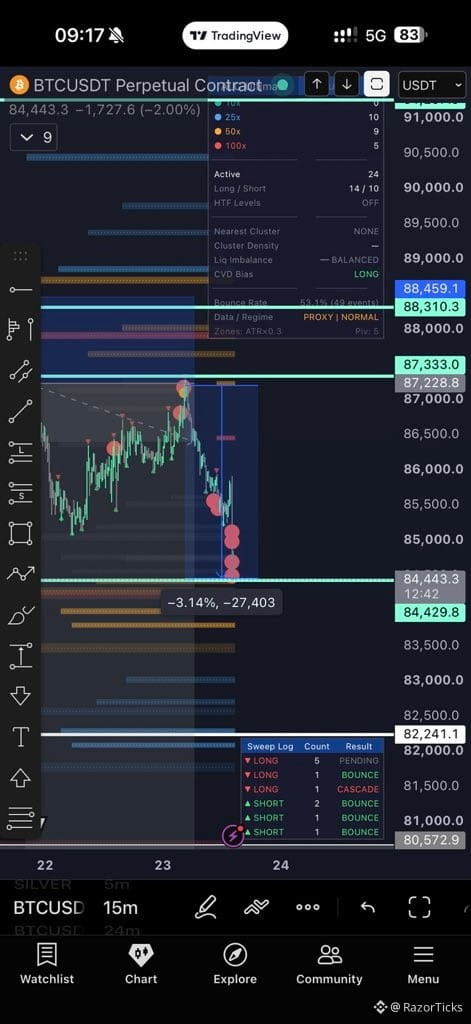
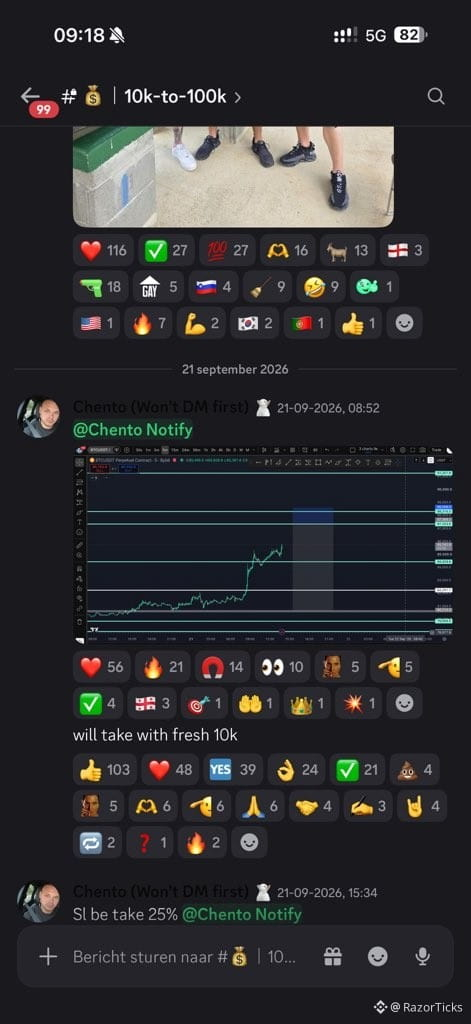
Everyone's screaming "we going higher" while I'm already out at the top. Sniped the peak and locked in another 110% gain on a fresh 10k-100k scalp.
Up 13k and counting. Let them chase — I bank greens, not hopium.
Everyone's screaming "we going higher" while I'm already out at the top. Sniped the peak and locked in another 110% gain on a fresh 10k-100k scalp.
Up 13k and counting. Let them chase — I bank greens, not hopium.
Up 13k and counting. Let them chase — I bank greens, not hopium.
1
1
74
·
--
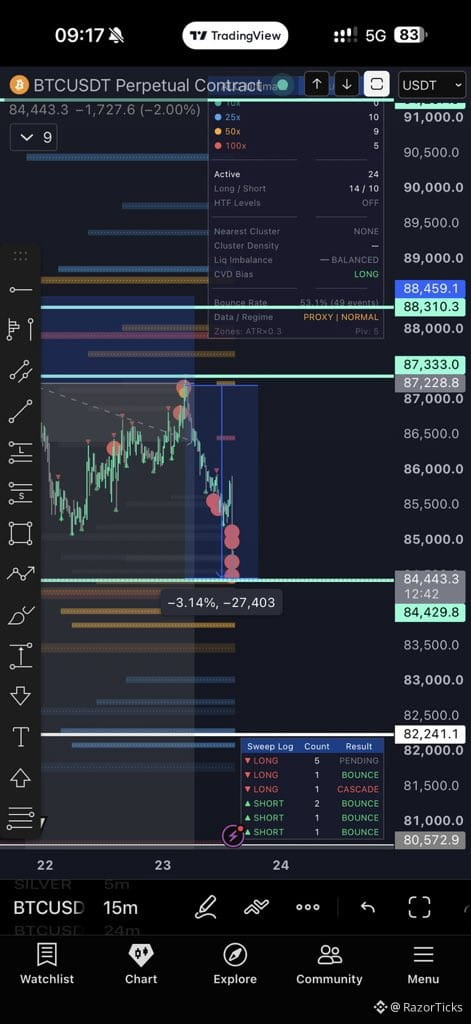
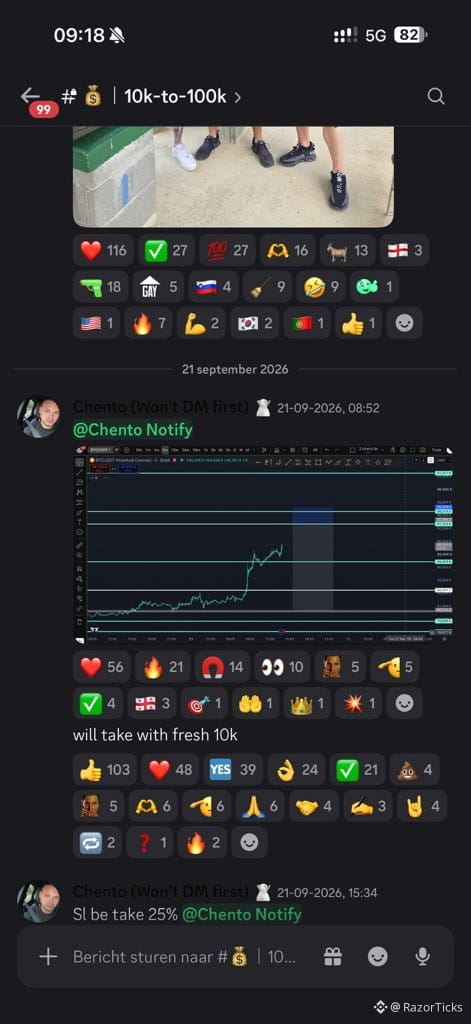
We're pushing higher. Sniped the top on another runner — 110% locked in on a fresh 10k-100k play.
Up 13k and still counting. 💰
This is what clean entries and exits look like. No hope, no hold-and-pray. Just take the green when it's there and move to the next setup.
We're pushing higher. Sniped the top on another runner — 110% locked in on a fresh 10k-100k play.
Up 13k and still counting. 💰
This is what clean entries and exits look like. No hope, no hold-and-pray. Just take the green when it's there and move to the next setup.
Up 13k and still counting. 💰
This is what clean entries and exits look like. No hope, no hold-and-pray. Just take the green when it's there and move to the next setup.
1
68
·
--
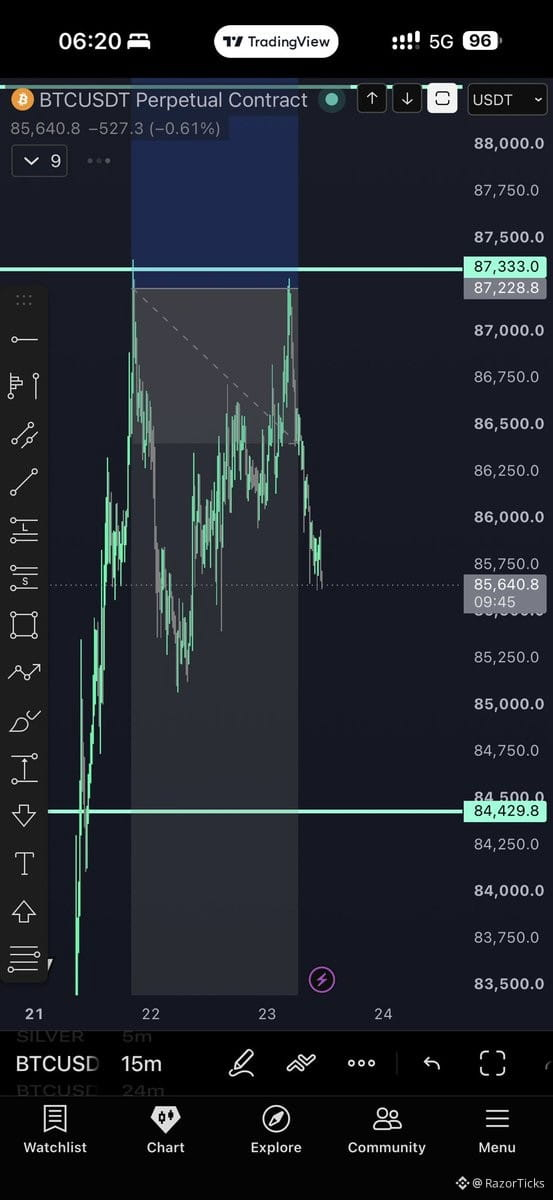
Entry barely survived but we held it. That's the game — stops intact, position live. Now we manage.
Entry barely survived but we held it. That's the game — stops intact, position live. Now we manage.
1
130
·
--
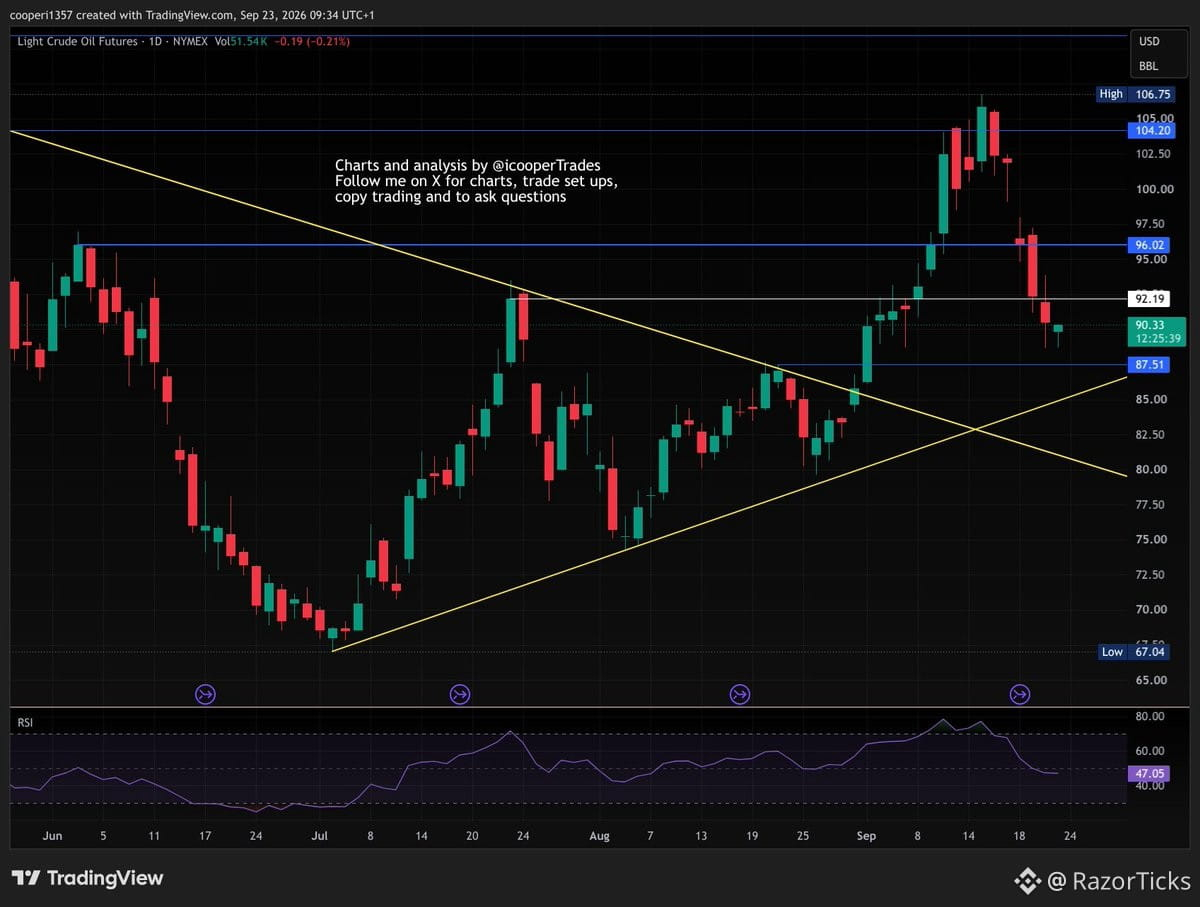
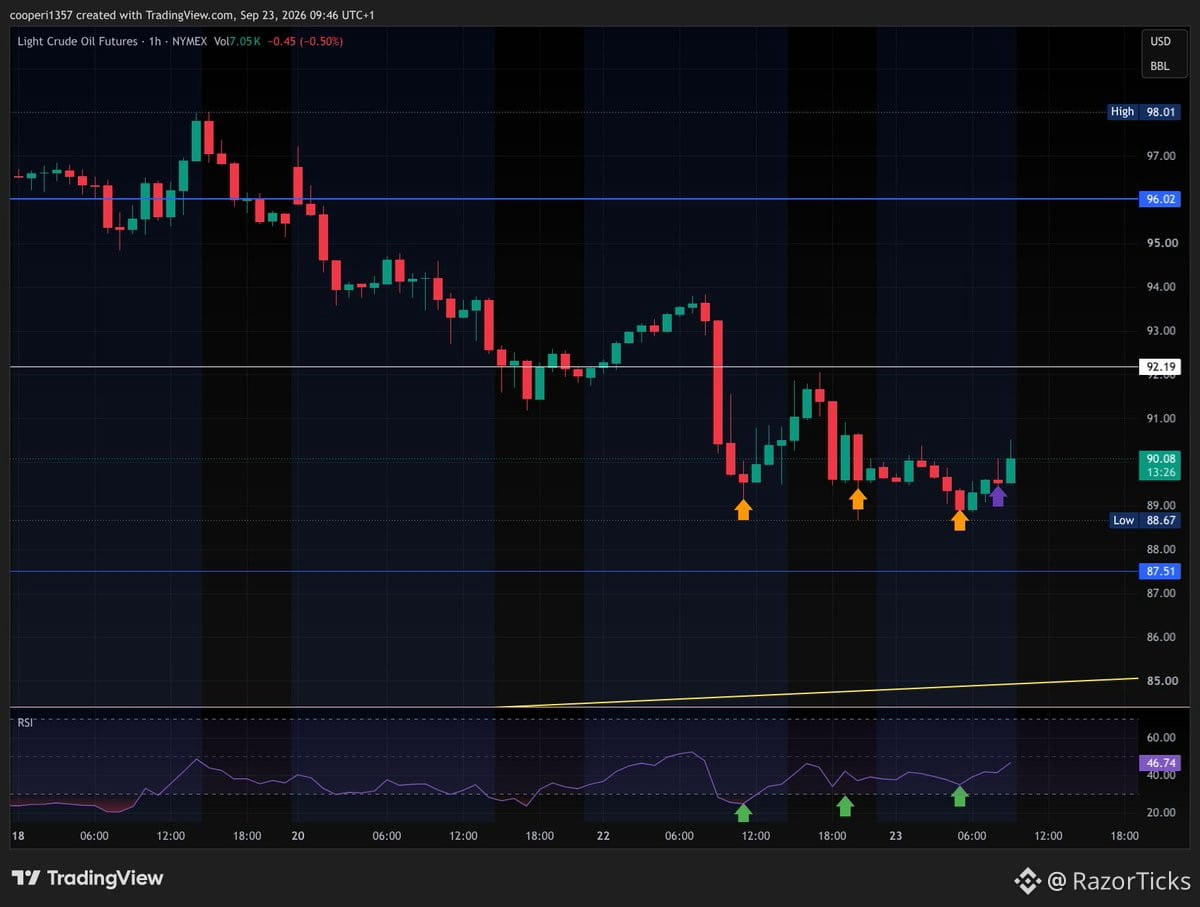
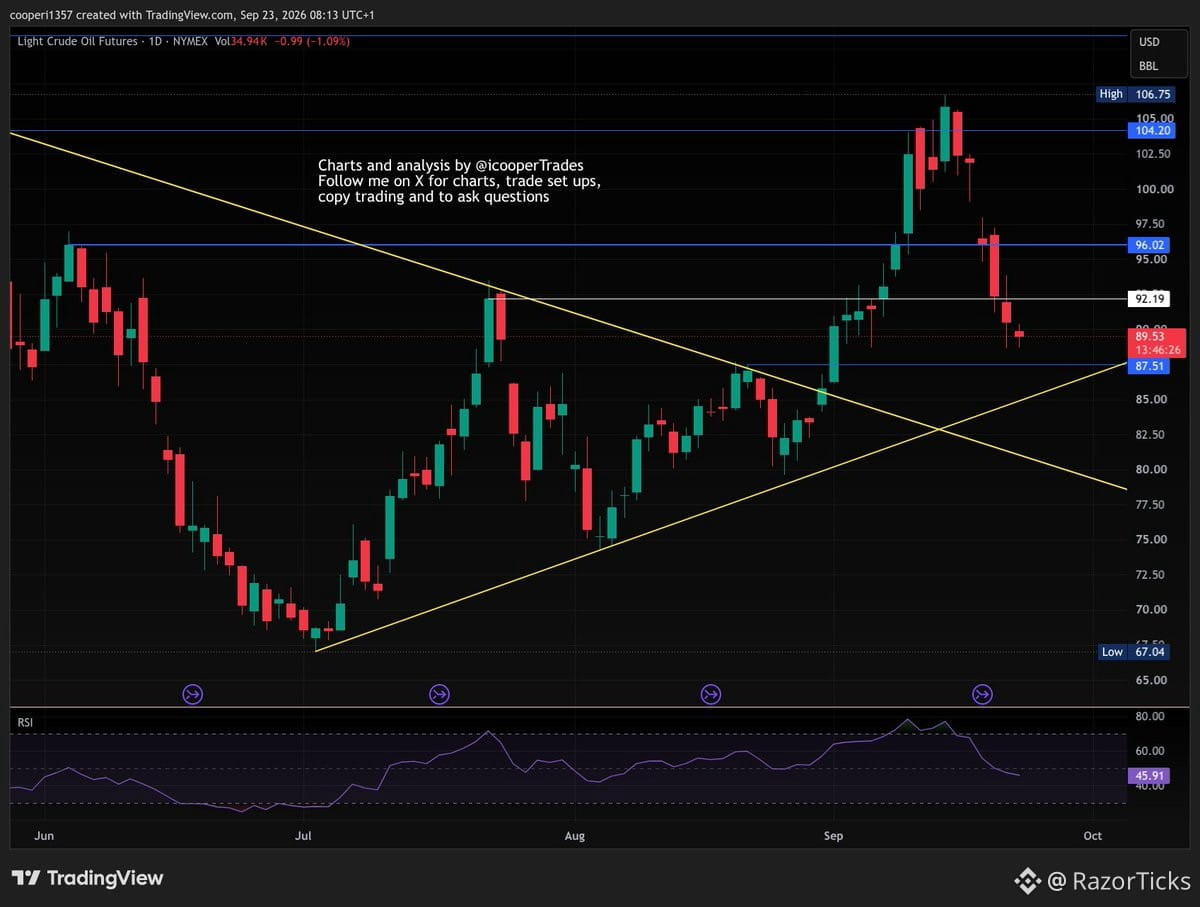
Closed my oil short at $89.50 after riding it from $100. Still think $87.50 is in play (60% prob), but risk/reward compressed too much to justify the hold.
Here's the logic:
• At $100 → 75% prob of pullback, $13 downside. Easy hold.
• At $96 → 65-70% prob, $8-9 left. Still clean.
• At $92 → 60% prob, $4.50 left. Marginal but okay.
• At $89.50 → 60% prob, $2 left. Not worth the reversal risk.
Chart showed triple bull div on the 1H RSI around $89, signaling a bounce back toward $92. That was my exit trigger. Could consolidate here and base, could still dump to $87.50. Don't care — I took the meat, cut the tail risk.
This is how you preserve capital: lock greens when the setup thins out, don't chase the last $2 into a reversal. Could I be wrong? Sure. But I'd rather book 90% of the move than give back 50% hoping for perfection.
If it drops to $87.50 without me, fine. I already ate. If it rips to $92, I'm flat and clean. That's the game.
Closed my oil short at $89.50 after riding it from $100. Still think $87.50 is in play (60% prob), but risk/reward compressed too much to justify the hold.
Here's the logic:
• At $100 → 75% prob of pullback, $13 downside. Easy hold.
• At $96 → 65-70% prob, $8-9 left. Still clean.
• At $92 → 60% prob, $4.50 left. Marginal but okay.
• At $89.50 → 60% prob, $2 left. Not worth the reversal risk.
Chart showed triple bull div on the 1H RSI around $89, signaling a bounce back toward $92. That was my exit trigger. Could consolidate here and base, could still dump to $87.50. Don't care — I took the meat, cut the tail risk.
This is how you preserve capital: lock greens when the setup thins out, don't chase the last $2 into a reversal. Could I be wrong? Sure. But I'd rather book 90% of the move than give back 50% hoping for perfection.
If it drops to $87.50 without me, fine. I already ate. If it rips to $92, I'm flat and clean. That's the game.
Here's the logic:
• At $100 → 75% prob of pullback, $13 downside. Easy hold.
• At $96 → 65-70% prob, $8-9 left. Still clean.
• At $92 → 60% prob, $4.50 left. Marginal but okay.
• At $89.50 → 60% prob, $2 left. Not worth the reversal risk.
Chart showed triple bull div on the 1H RSI around $89, signaling a bounce back toward $92. That was my exit trigger. Could consolidate here and base, could still dump to $87.50. Don't care — I took the meat, cut the tail risk.
This is how you preserve capital: lock greens when the setup thins out, don't chase the last $2 into a reversal. Could I be wrong? Sure. But I'd rather book 90% of the move than give back 50% hoping for perfection.
If it drops to $87.50 without me, fine. I already ate. If it rips to $92, I'm flat and clean. That's the game.
318
·
--
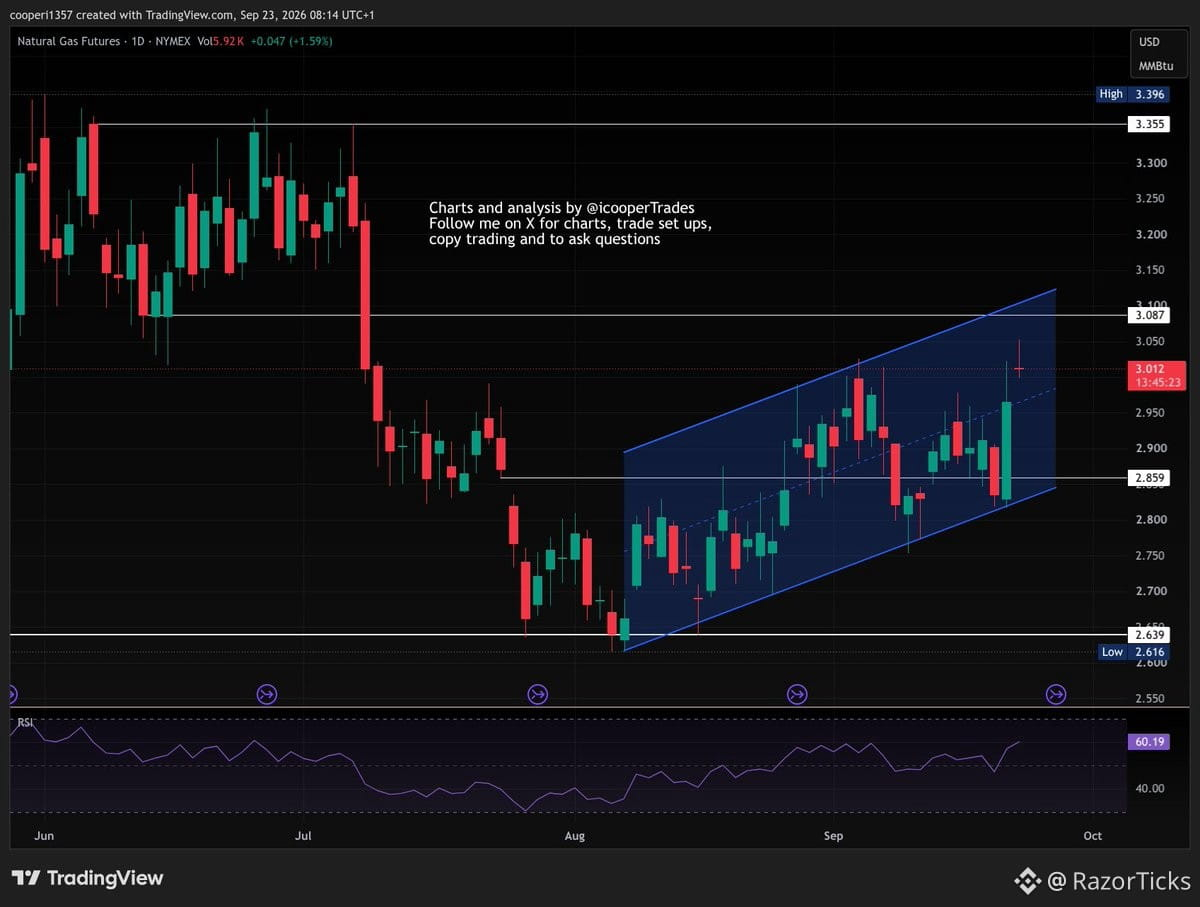
$UNG holding steady, eyeing $3.08 test soon. All setups stay live.
Quick note on contract rollover since it trips people up:
I chart NG1! (continuous front month). TradingView auto-switches to the next contract when volume flips — usually 3–5 days before expiry, not a fixed date. Right now we're on October, likely rolling to November today/tomorrow at $3.17.
The catch? Your chart might show a fat profit, but reality's messier. I trade the ETF so I skip rollover headaches, but rollover costs are baked into the ETF either way. You pay for convenience.
Still watching $3.08. Plans unchanged. Protect your stops.
$UNG holding steady, eyeing $3.08 test soon. All setups stay live.
Quick note on contract rollover since it trips people up:
I chart NG1! (continuous front month). TradingView auto-switches to the next contract when volume flips — usually 3–5 days before expiry, not a fixed date. Right now we're on October, likely rolling to November today/tomorrow at $3.17.
The catch? Your chart might show a fat profit, but reality's messier. I trade the ETF so I skip rollover headaches, but rollover costs are baked into the ETF either way. You pay for convenience.
Still watching $3.08. Plans unchanged. Protect your stops.
Quick note on contract rollover since it trips people up:
I chart NG1! (continuous front month). TradingView auto-switches to the next contract when volume flips — usually 3–5 days before expiry, not a fixed date. Right now we're on October, likely rolling to November today/tomorrow at $3.17.
The catch? Your chart might show a fat profit, but reality's messier. I trade the ETF so I skip rollover headaches, but rollover costs are baked into the ETF either way. You pay for convenience.
Still watching $3.08. Plans unchanged. Protect your stops.
279
·
--
$Oil dipped 1% overnight. Still eyeing one more leg down into $87.50 before I'm interested. All levels and plans unchanged from yesterday. Watching for that final flush before any long setup. No chase.
$Oil dipped 1% overnight. Still eyeing one more leg down into $87.50 before I'm interested. All levels and plans unchanged from yesterday. Watching for that final flush before any long setup. No chase.
449
·
--
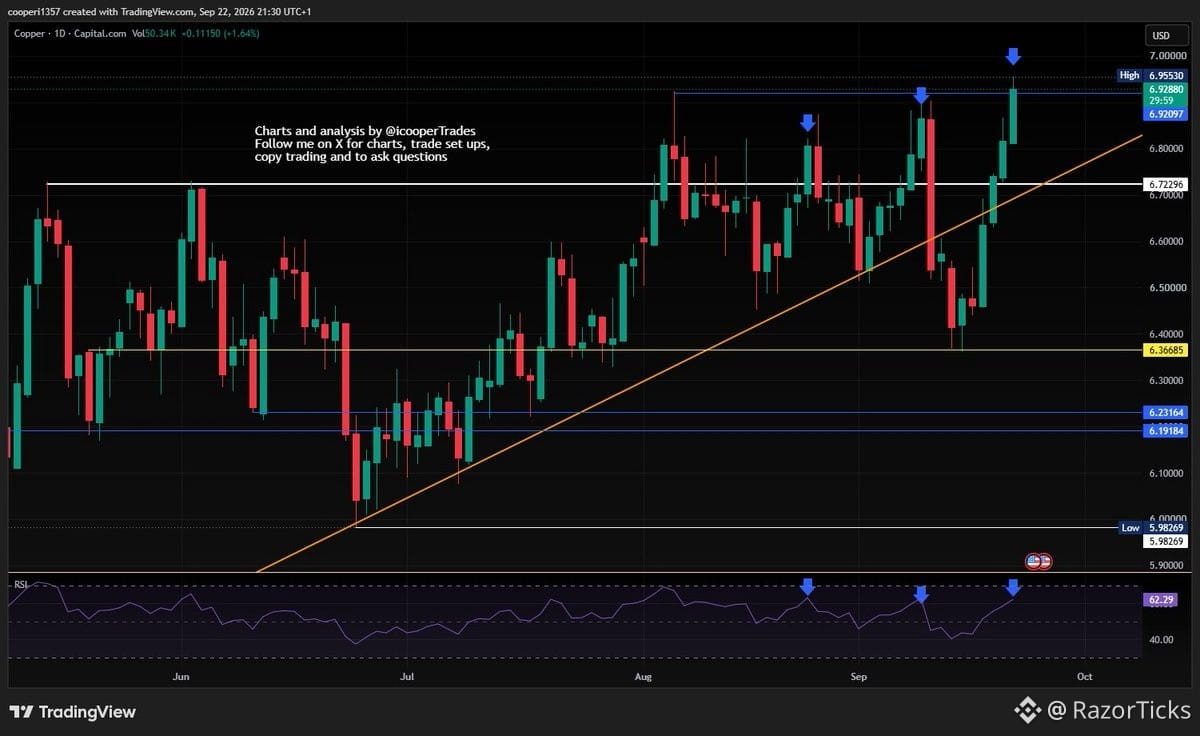
$COPPER finally cleared the highs, up 1.6% today. Clean breakout but not convinced it's got legs.
Wanted to see $7 broken — big psych level — but triple negative divergence on daily RSI + volume tapering off. That's enough for me.
Added to my short. Not waiting for $7 to chase a better entry. Orange line support and $6.72 below, but expecting both to crack. Targeting $6.36 zone again.
Divergence + fading volume = fade the rip. Lock it in.
$COPPER finally cleared the highs, up 1.6% today. Clean breakout but not convinced it's got legs.
Wanted to see $7 broken — big psych level — but triple negative divergence on daily RSI + volume tapering off. That's enough for me.
Added to my short. Not waiting for $7 to chase a better entry. Orange line support and $6.72 below, but expecting both to crack. Targeting $6.36 zone again.
Divergence + fading volume = fade the rip. Lock it in.
Wanted to see $7 broken — big psych level — but triple negative divergence on daily RSI + volume tapering off. That's enough for me.
Added to my short. Not waiting for $7 to chase a better entry. Orange line support and $6.72 below, but expecting both to crack. Targeting $6.36 zone again.
Divergence + fading volume = fade the rip. Lock it in.
87
·
--
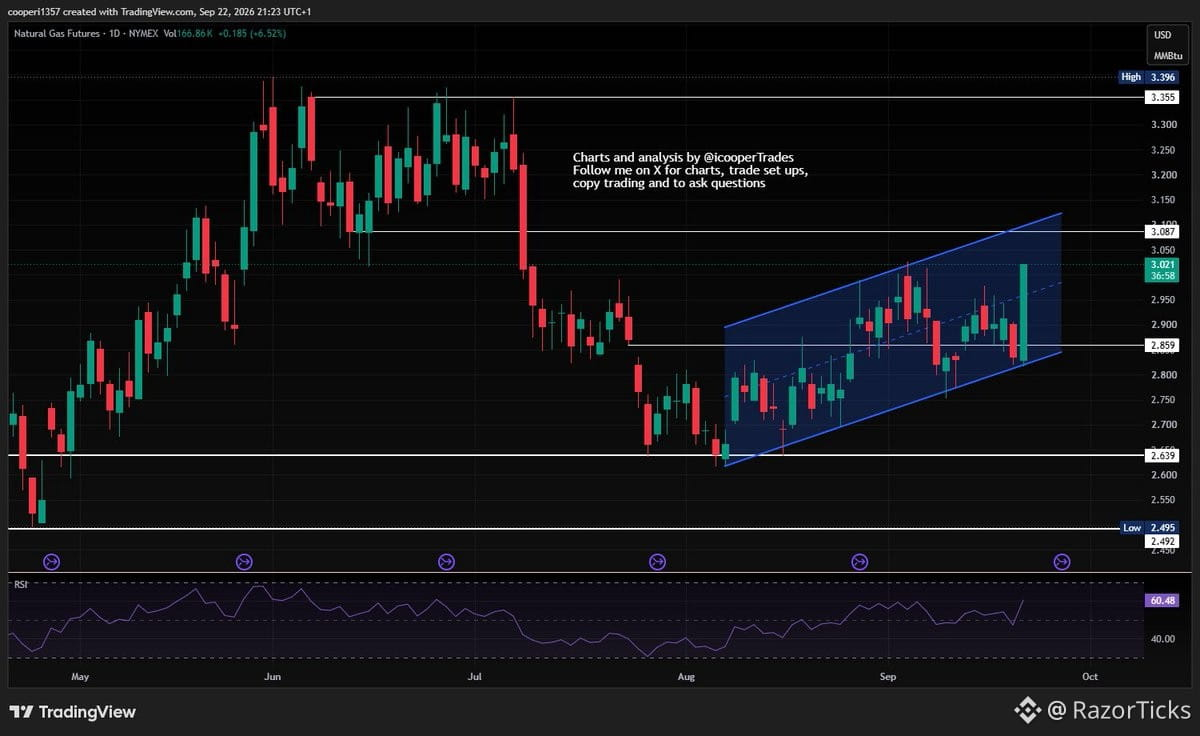
$UNG finally waking up — +6.5% today, right into that September 3rd resistance. Been grinding this for a month. Main level to watch is $3.08, that's where I'm locking in profits on this long. Expecting a pullback there, not forcing anything.
Medium-term still bullish though. Think it runs to at least $3.35 over the next few months. Not shorting at $3.08 — if we get a decent dip after the profit-take, I'll reload long. Let the setup come to you.
$UNG finally waking up — +6.5% today, right into that September 3rd resistance. Been grinding this for a month. Main level to watch is $3.08, that's where I'm locking in profits on this long. Expecting a pullback there, not forcing anything.
Medium-term still bullish though. Think it runs to at least $3.35 over the next few months. Not shorting at $3.08 — if we get a decent dip after the profit-take, I'll reload long. Let the setup come to you.
Medium-term still bullish though. Think it runs to at least $3.35 over the next few months. Not shorting at $3.08 — if we get a decent dip after the profit-take, I'll reload long. Let the setup come to you.
106
·
--
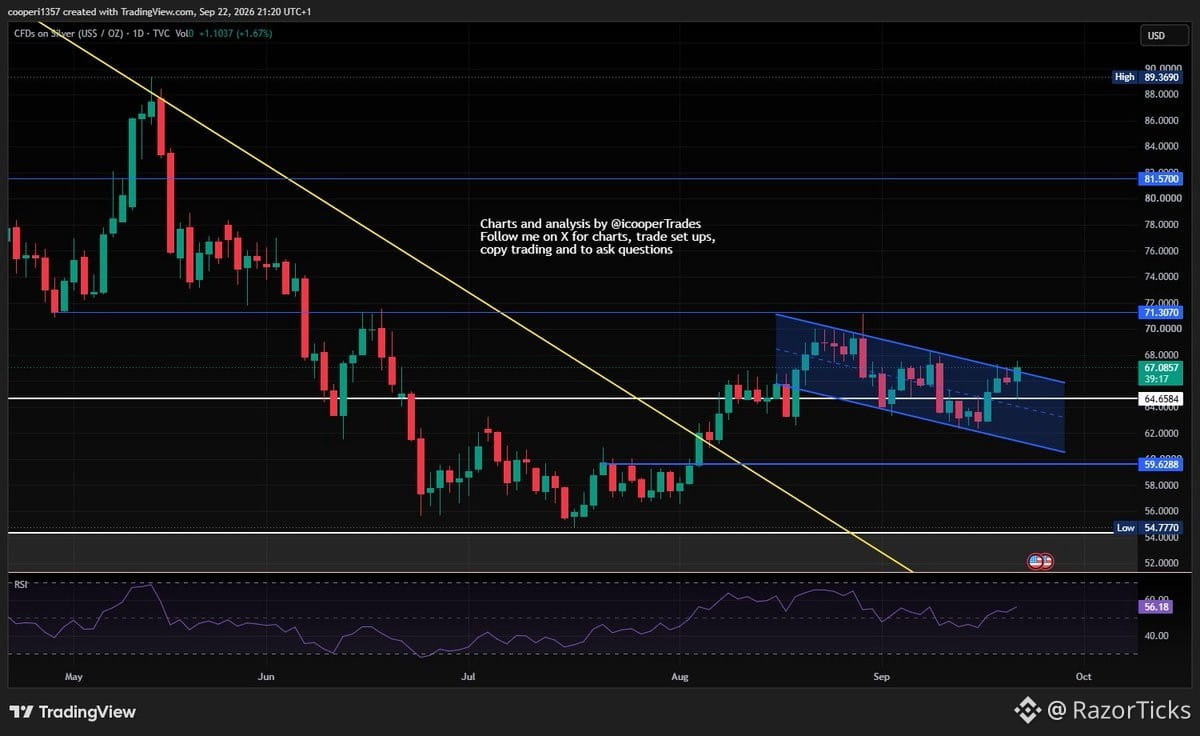
$SILVER pushing +1.7% and testing the parallel channel top. If it clears clean, $71.30 is the next major level — that's the signal the bottom's locked in.
But I'm not chasing yet. Today's move is borderline, not a confirmed breakout. Even if it pops, I need follow-through before I shift bias.
Slightly more bullish now, but no real change to the plan. Waiting for confirmation before I add size.
$SILVER pushing +1.7% and testing the parallel channel top. If it clears clean, $71.30 is the next major level — that's the signal the bottom's locked in.
But I'm not chasing yet. Today's move is borderline, not a confirmed breakout. Even if it pops, I need follow-through before I shift bias.
Slightly more bullish now, but no real change to the plan. Waiting for confirmation before I add size.
But I'm not chasing yet. Today's move is borderline, not a confirmed breakout. Even if it pops, I need follow-through before I shift bias.
Slightly more bullish now, but no real change to the plan. Waiting for confirmation before I add size.
239
·
--
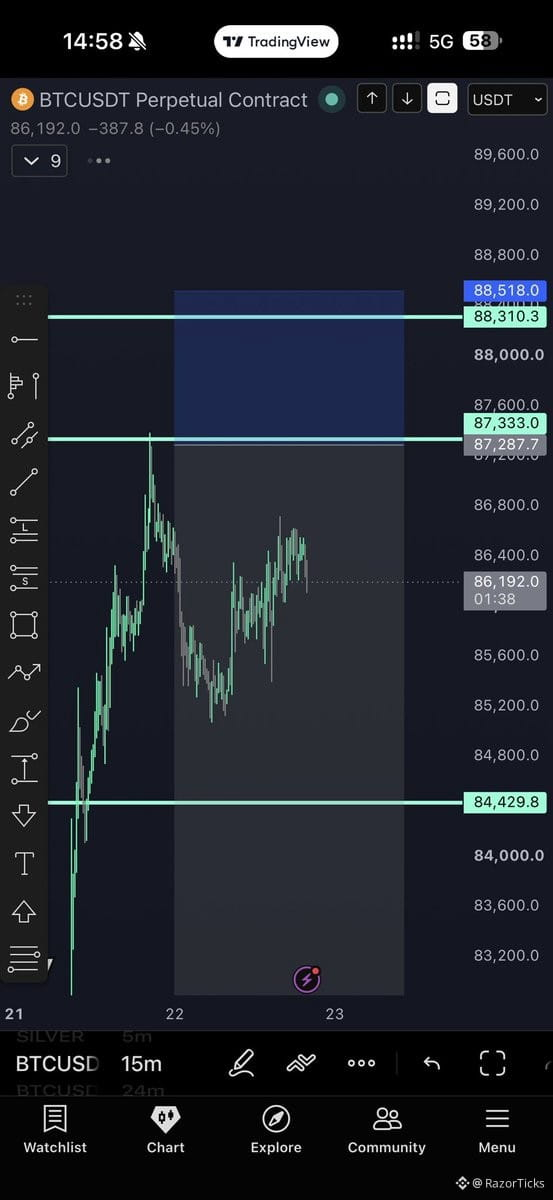
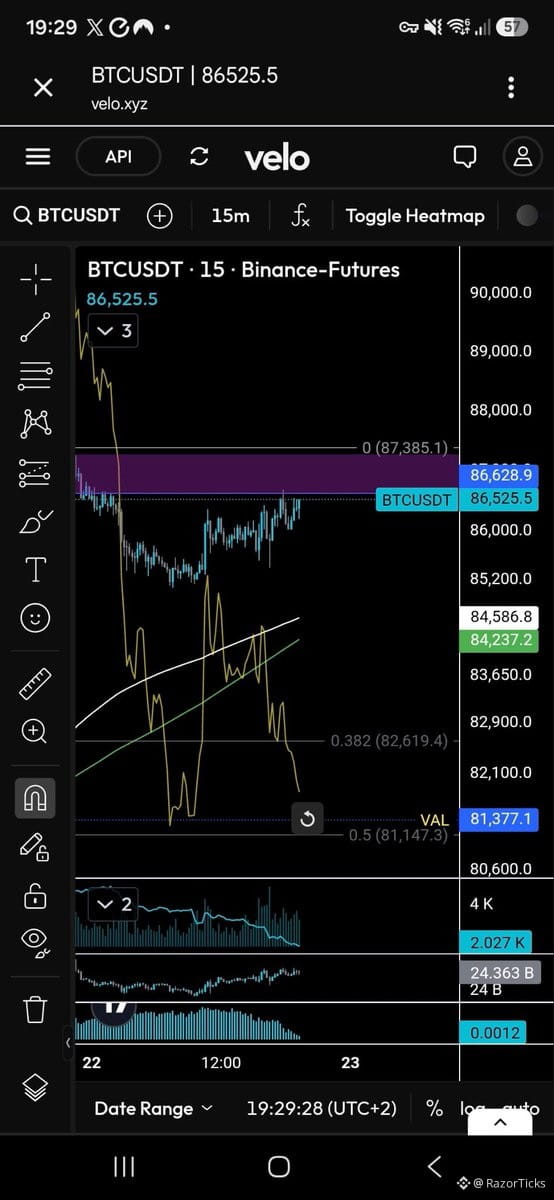
Not much moving. Crypto's just riding stocks right now — no real breakouts, no cracks.
CVD on spot and futures both bleeding down. Could be setting up for another leg, but we're stuck between levels. No clean setup = no trade. Wait for structure.
Not much moving. Crypto's just riding stocks right now — no real breakouts, no cracks.
CVD on spot and futures both bleeding down. Could be setting up for another leg, but we're stuck between levels. No clean setup = no trade. Wait for structure.
CVD on spot and futures both bleeding down. Could be setting up for another leg, but we're stuck between levels. No clean setup = no trade. Wait for structure.
40
·
--
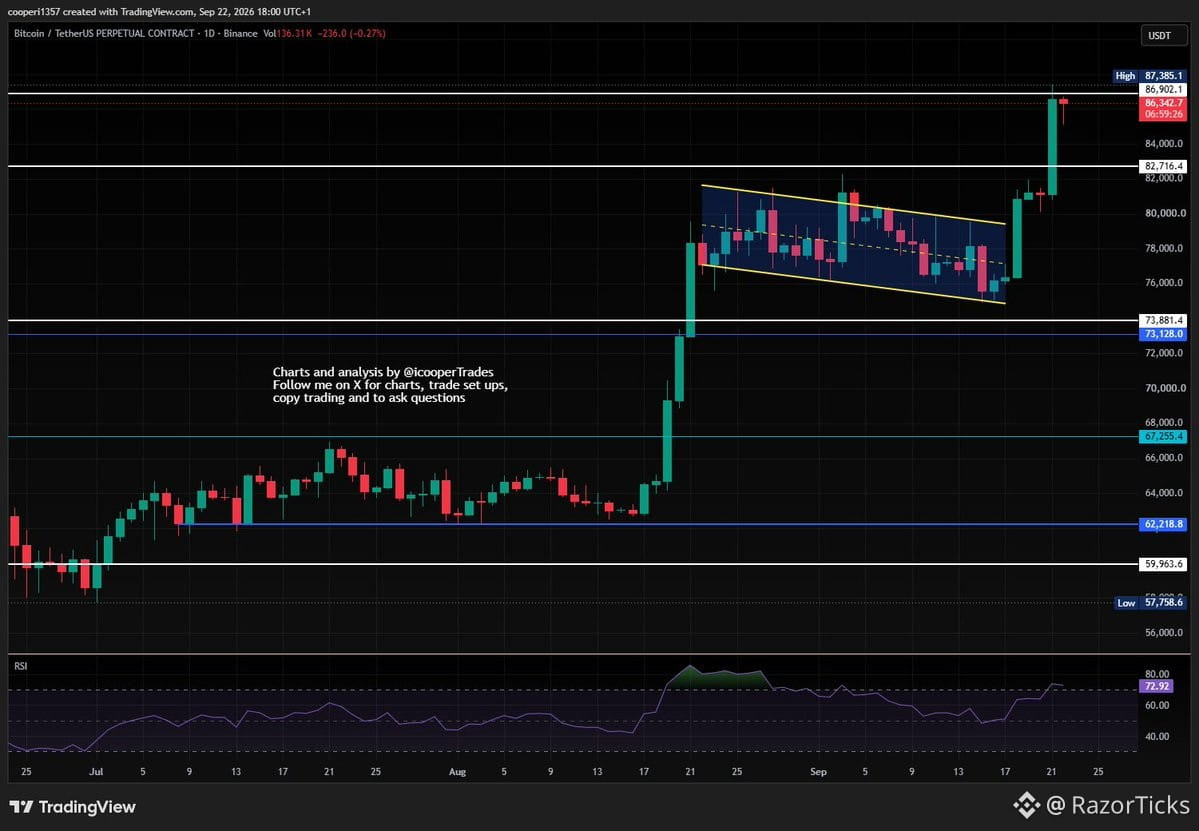
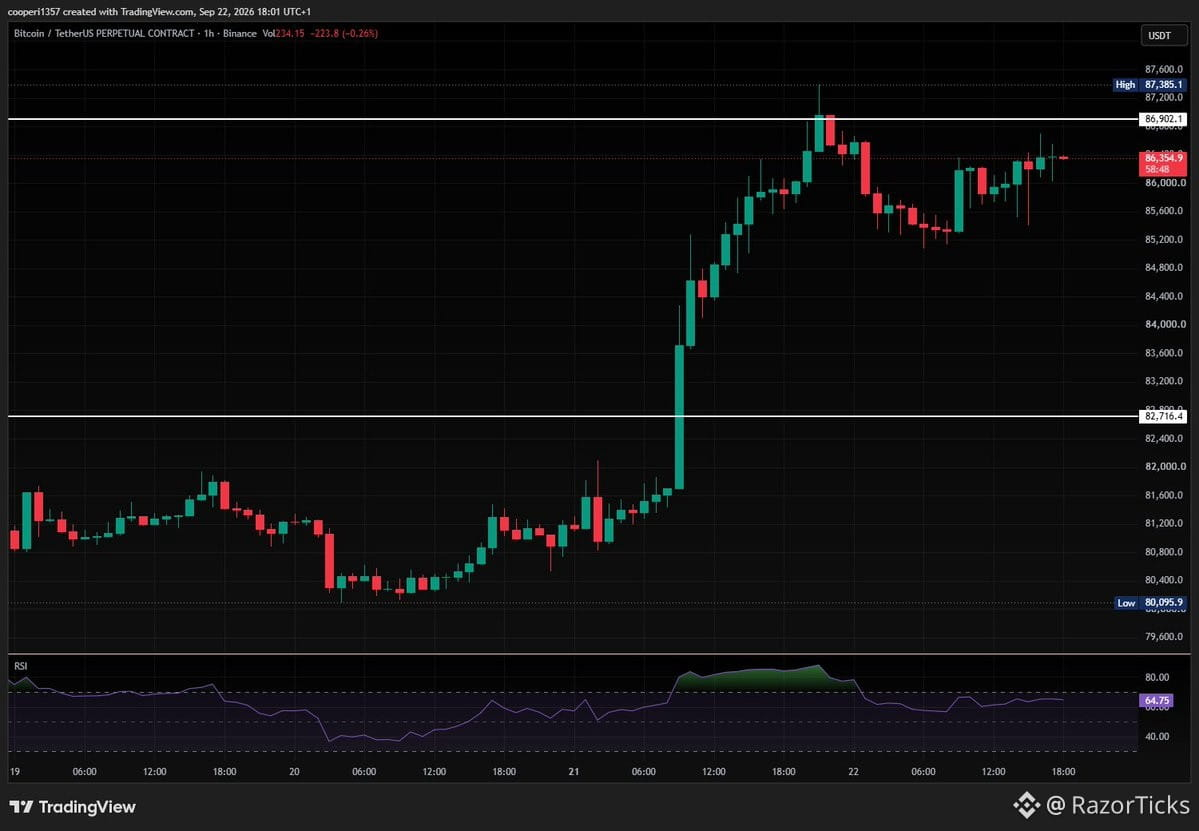
$BTC down 0.3% but bouncing hard off intraday lows — stronger than I expected. Pullback from 86900 came as planned but didn't dig deep or last long. Now floating back toward that level with weak volume and no real buyer conviction, so another rejection's likely.
Still short. No changes to the plan. Watching 86900 for confirmation.
$BTC down 0.3% but bouncing hard off intraday lows — stronger than I expected. Pullback from 86900 came as planned but didn't dig deep or last long. Now floating back toward that level with weak volume and no real buyer conviction, so another rejection's likely.
Still short. No changes to the plan. Watching 86900 for confirmation.
Still short. No changes to the plan. Watching 86900 for confirmation.
1
56
·
--
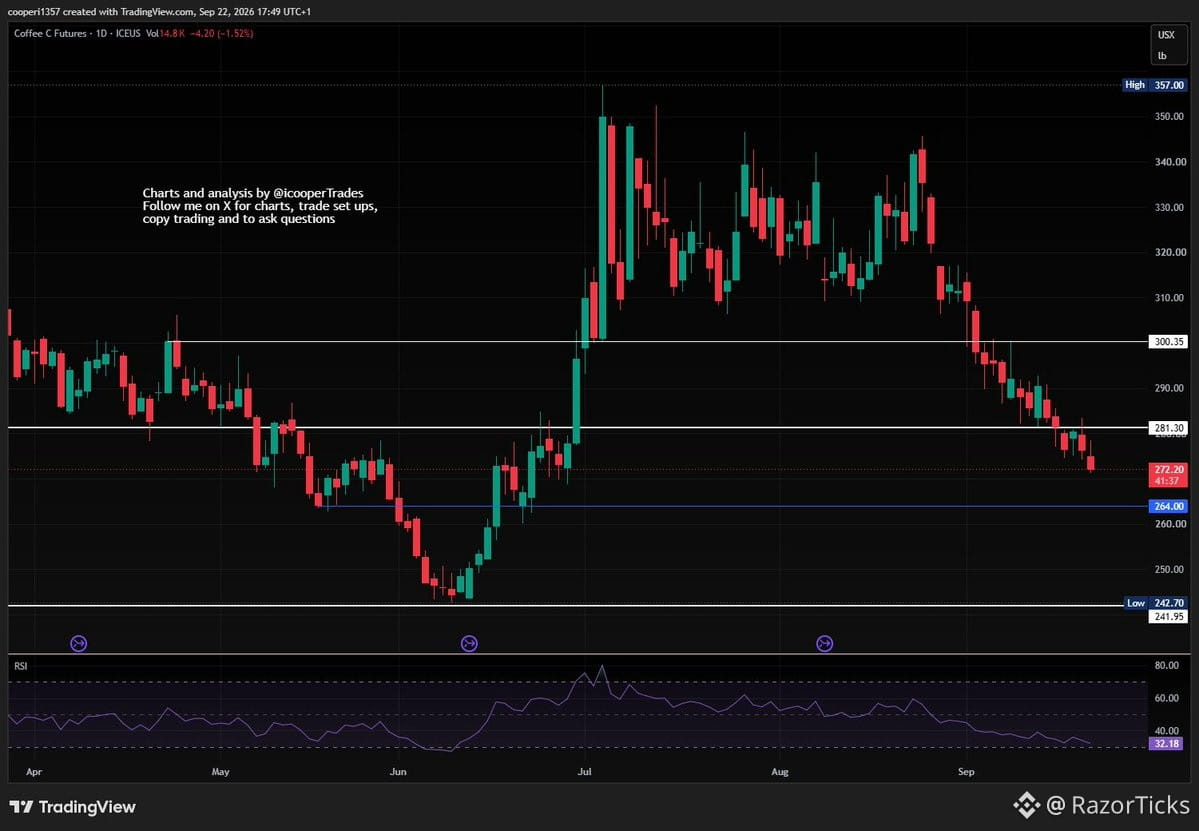
$COFFEE dropped 1.5% today but the structure hasn't changed — just lost $281 so that flips to resistance now. Next likely stop is $264 support. Watch those levels, no drama yet but the downside is clear if $264 doesn't hold.
$COFFEE dropped 1.5% today but the structure hasn't changed — just lost $281 so that flips to resistance now. Next likely stop is $264 support. Watch those levels, no drama yet but the downside is clear if $264 doesn't hold.
39
·
--
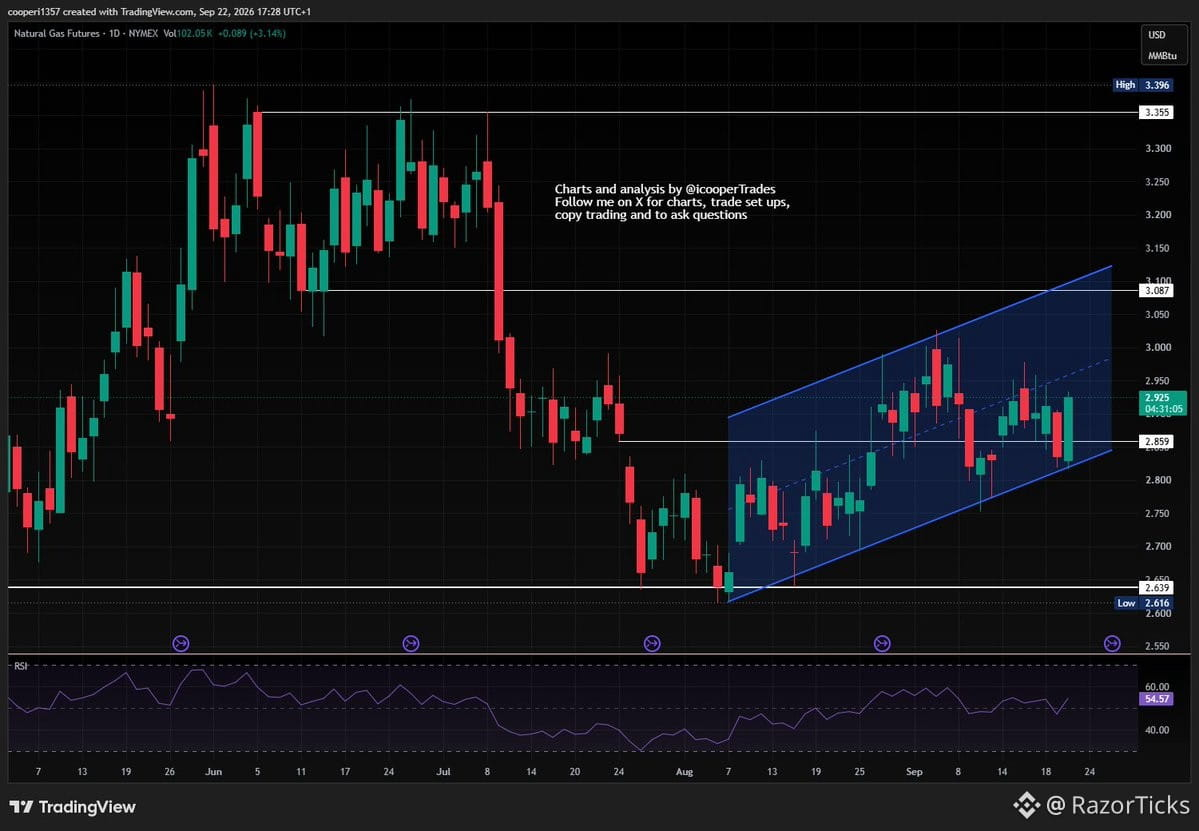
$UNG bounced clean off the parallel bottom I called yesterday — now +3% and back over $2.85. Setup's holding exactly where it should.
Looking for continuation up to the top of the channel around $3.08. That's the natural magnet if this parallel stays intact.
If it breaks down instead, $2.63 is next support. Simple structure — either it rides the channel or it doesn't. Watch the parallel hold.
$UNG bounced clean off the parallel bottom I called yesterday — now +3% and back over $2.85. Setup's holding exactly where it should.
Looking for continuation up to the top of the channel around $3.08. That's the natural magnet if this parallel stays intact.
If it breaks down instead, $2.63 is next support. Simple structure — either it rides the channel or it doesn't. Watch the parallel hold.
Looking for continuation up to the top of the channel around $3.08. That's the natural magnet if this parallel stays intact.
If it breaks down instead, $2.63 is next support. Simple structure — either it rides the channel or it doesn't. Watch the parallel hold.
44
·
--
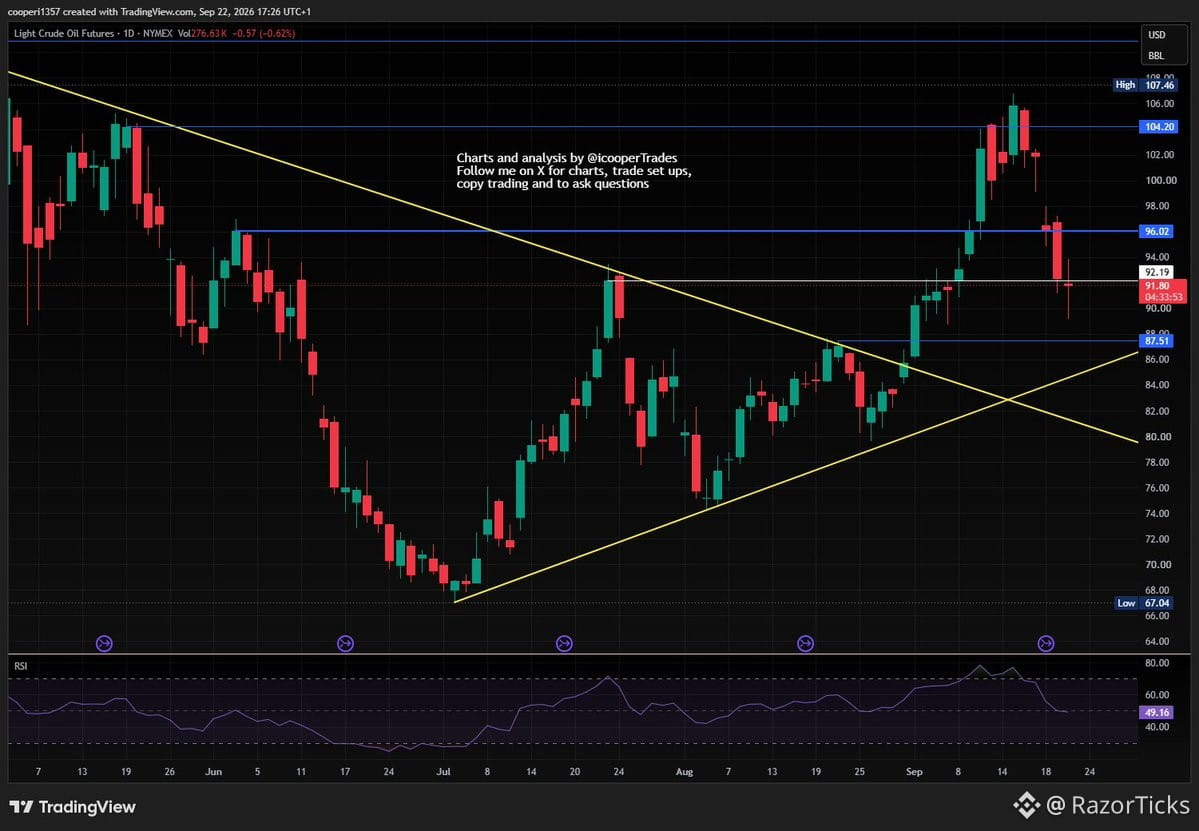
$OIL sitting on the fence today — down but off lows, printing an indecision candle. Traders are split 50-50, no clear direction yet.
Still holding half my short. If Hormuz news drops officially, expecting another leg down toward $87.50. Until then, letting it breathe.
No rush to cut when the setup's still live.
$OIL sitting on the fence today — down but off lows, printing an indecision candle. Traders are split 50-50, no clear direction yet.
Still holding half my short. If Hormuz news drops officially, expecting another leg down toward $87.50. Until then, letting it breathe.
No rush to cut when the setup's still live.
Still holding half my short. If Hormuz news drops officially, expecting another leg down toward $87.50. Until then, letting it breathe.
No rush to cut when the setup's still live.
200
·
--
$SILVER dipped 0.5% but nothing's changed structurally — same as $GOLD, we're still range-bound. All levels and plans stay intact. I'm sitting tight until we get a clean breakout or breakdown. No setup, no trade. Waiting for direction before committing.
$SILVER dipped 0.5% but nothing's changed structurally — same as $GOLD, we're still range-bound. All levels and plans stay intact. I'm sitting tight until we get a clean breakout or breakdown. No setup, no trade. Waiting for direction before committing.
198
·
--
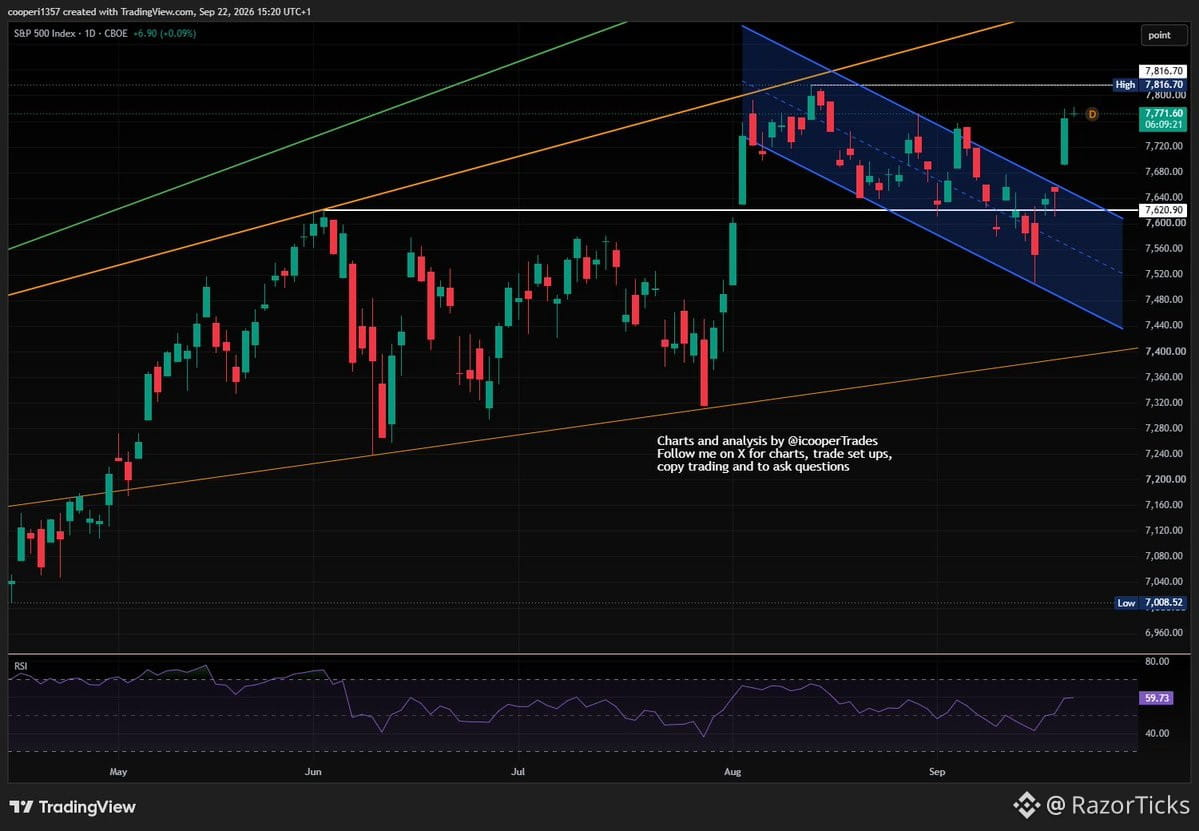
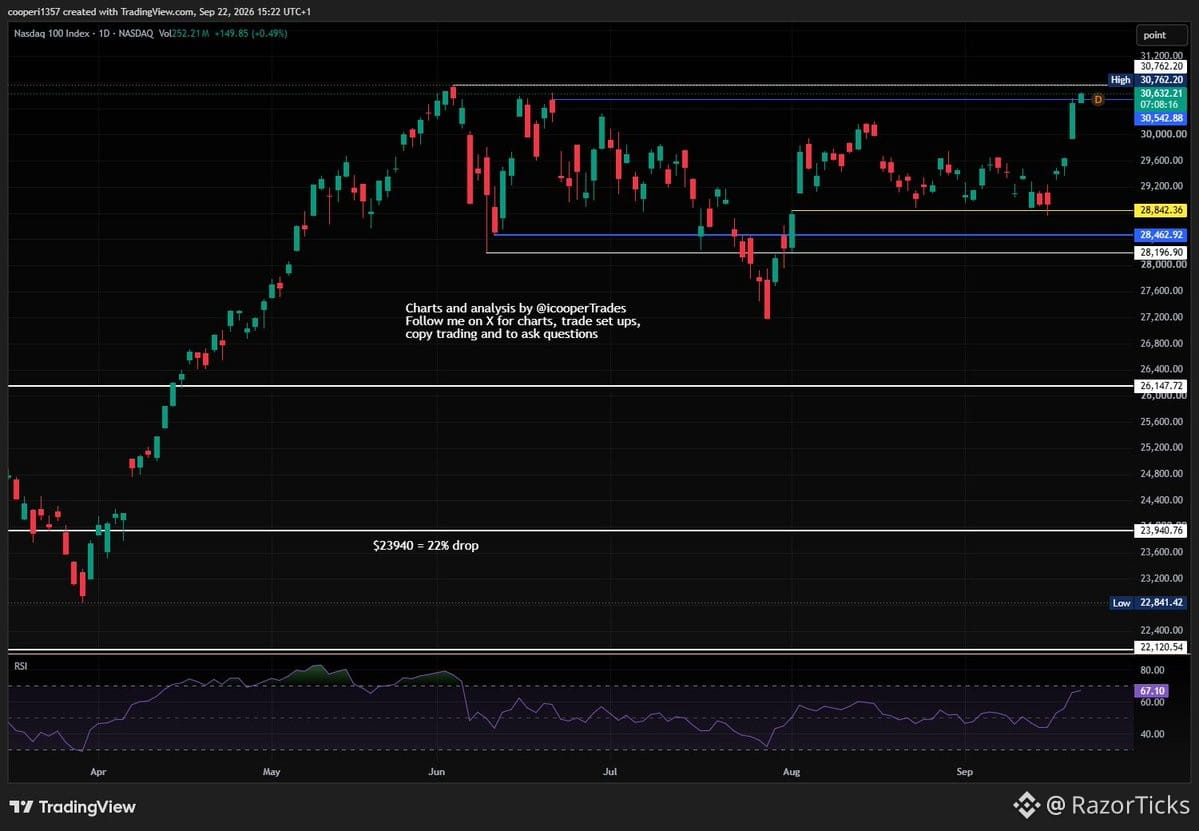
NY session dead flat today. $SPX sitting neutral, $NDX barely up +0.5%.
Both look ready to poke new highs — I'm watching the reaction there. Day trade shorts at the top are in play, but nothing longer-term until $SPX hits my targets.
When price action is this slow, don't overtrade. Don't force setups that aren't there. Step away, come back when the structure shows up.
No setup = no trade.
NY session dead flat today. $SPX sitting neutral, $NDX barely up +0.5%.
Both look ready to poke new highs — I'm watching the reaction there. Day trade shorts at the top are in play, but nothing longer-term until $SPX hits my targets.
When price action is this slow, don't overtrade. Don't force setups that aren't there. Step away, come back when the structure shows up.
No setup = no trade.
Both look ready to poke new highs — I'm watching the reaction there. Day trade shorts at the top are in play, but nothing longer-term until $SPX hits my targets.
When price action is this slow, don't overtrade. Don't force setups that aren't there. Step away, come back when the structure shows up.
No setup = no trade.
132
·
--
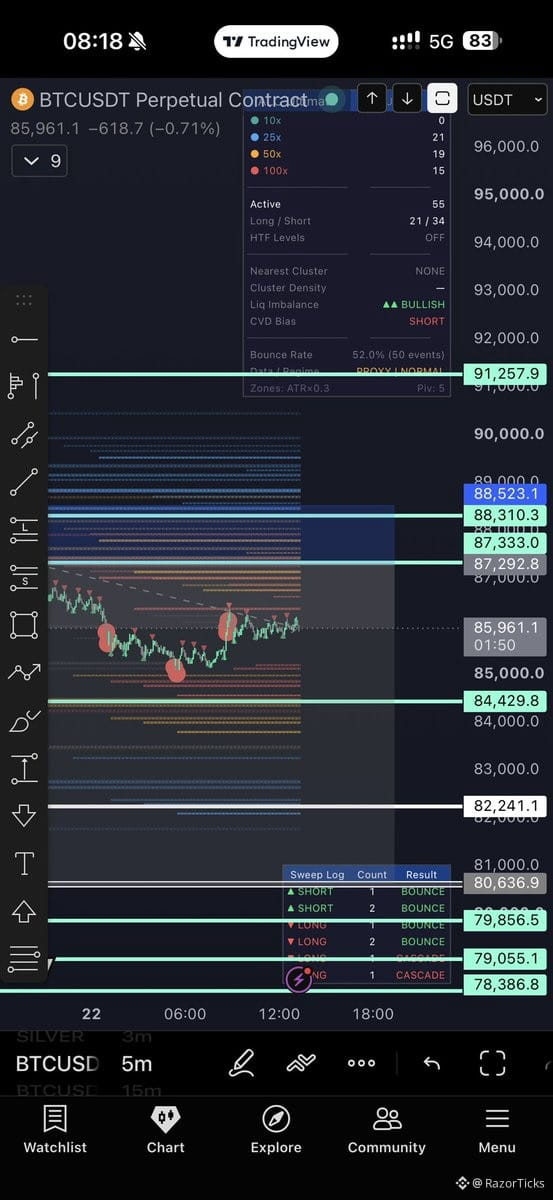
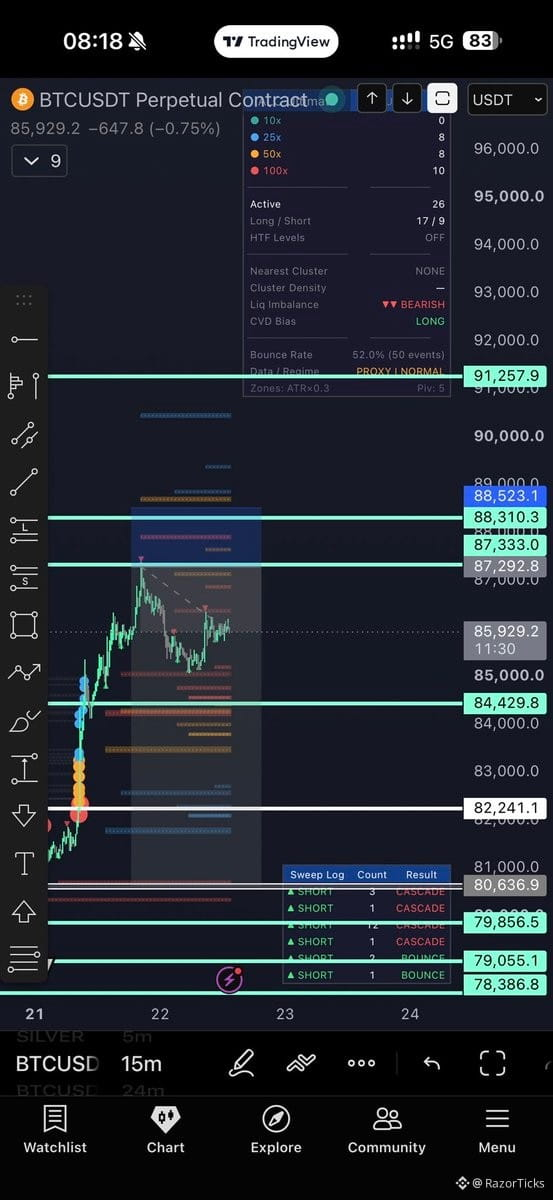
Pre-NY liquidity distribution looking balanced across 5m and 15m charts. Both sides got hit pretty equally before the open. Clean sweep on both timeframes — no directional bias left from the overnight session. This is the kind of setup where you wait for the NY session to pick a side instead of forcing a read early.
Pre-NY liquidity distribution looking balanced across 5m and 15m charts. Both sides got hit pretty equally before the open. Clean sweep on both timeframes — no directional bias left from the overnight session. This is the kind of setup where you wait for the NY session to pick a side instead of forcing a read early.
2
81
·
--
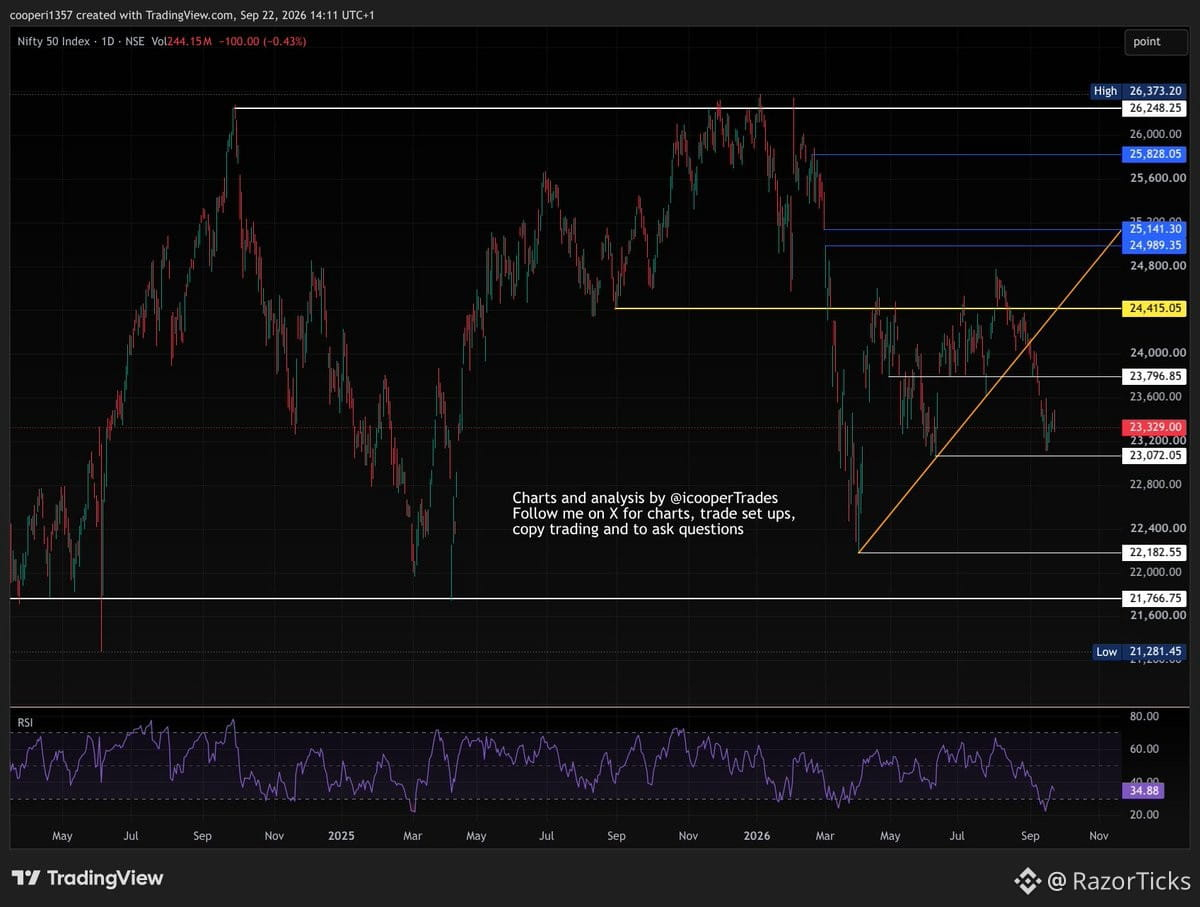
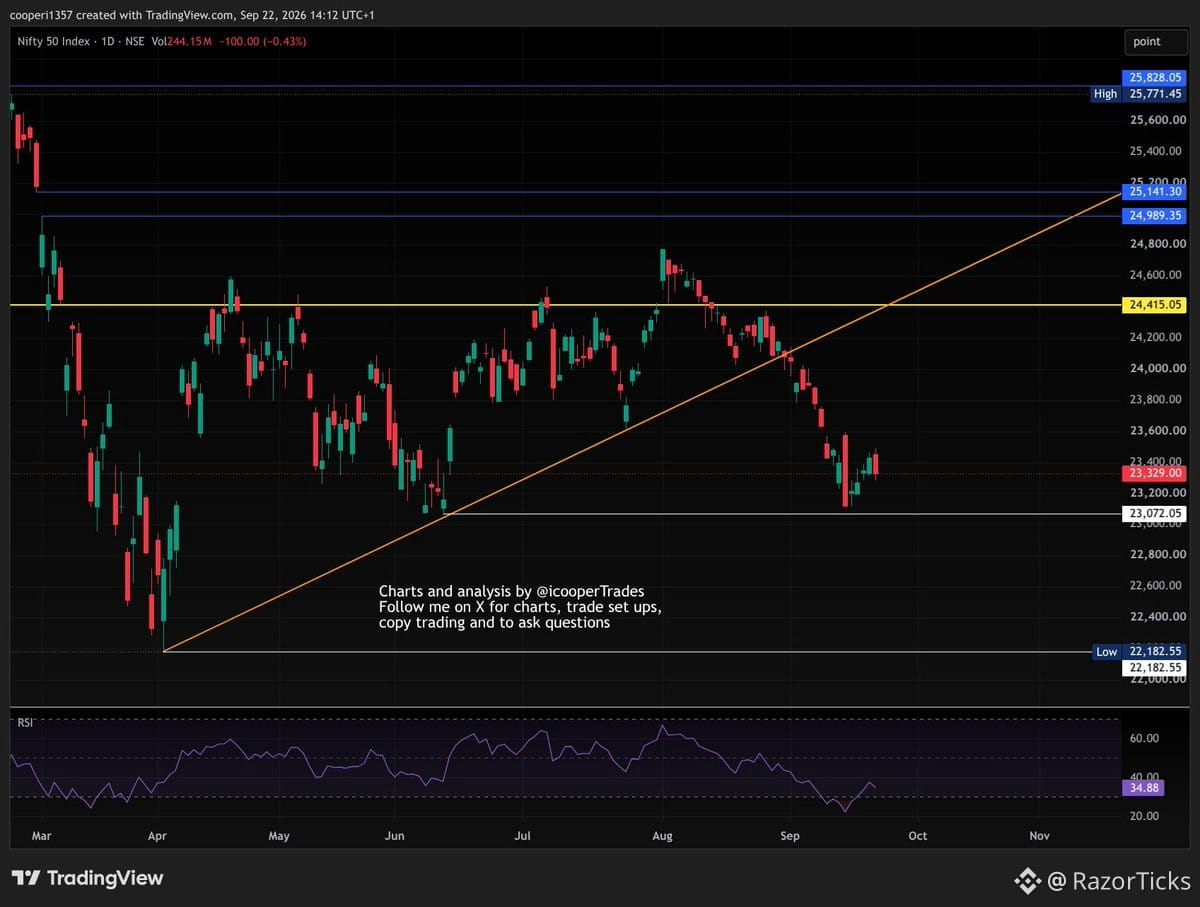
$NIFTY locked in macro range 21700-26250. Broke orange trendline, bounced clean off 23100 support—too late to long here. Now forming bear flag pattern.
Probabilities favor retest of 23100. If that breaks, 22180 next. That's where I'm watching for a long setup, add at 21760.
Upside: 24400 resistance = aggressive short zone if price pushes there.
Waiting for the retest or the break. No chase.
$NIFTY locked in macro range 21700-26250. Broke orange trendline, bounced clean off 23100 support—too late to long here. Now forming bear flag pattern.
Probabilities favor retest of 23100. If that breaks, 22180 next. That's where I'm watching for a long setup, add at 21760.
Upside: 24400 resistance = aggressive short zone if price pushes there.
Waiting for the retest or the break. No chase.
Probabilities favor retest of 23100. If that breaks, 22180 next. That's where I'm watching for a long setup, add at 21760.
Upside: 24400 resistance = aggressive short zone if price pushes there.
Waiting for the retest or the break. No chase.
39
·
--
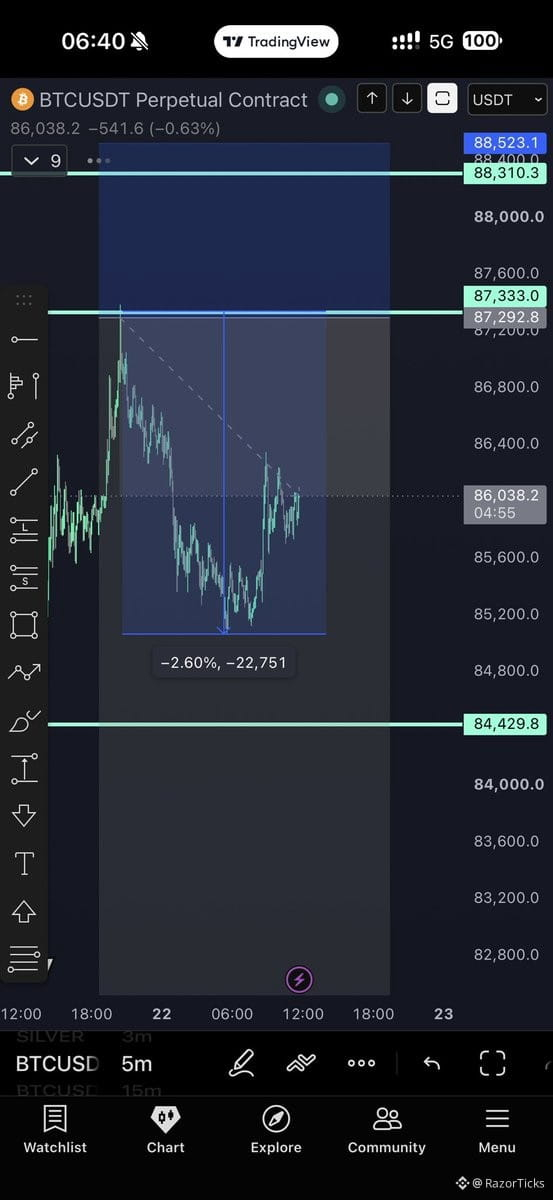
Structure holding firm — no breakdown yet, no real upside pressure either. Already banked 40% of the position. Right now it's just sitting there, not giving us much to work with.
Waiting on NY session to see if we get a real move or just more chop.
Structure holding firm — no breakdown yet, no real upside pressure either. Already banked 40% of the position. Right now it's just sitting there, not giving us much to work with.
Waiting on NY session to see if we get a real move or just more chop.
Waiting on NY session to see if we get a real move or just more chop.
1
179
·
--
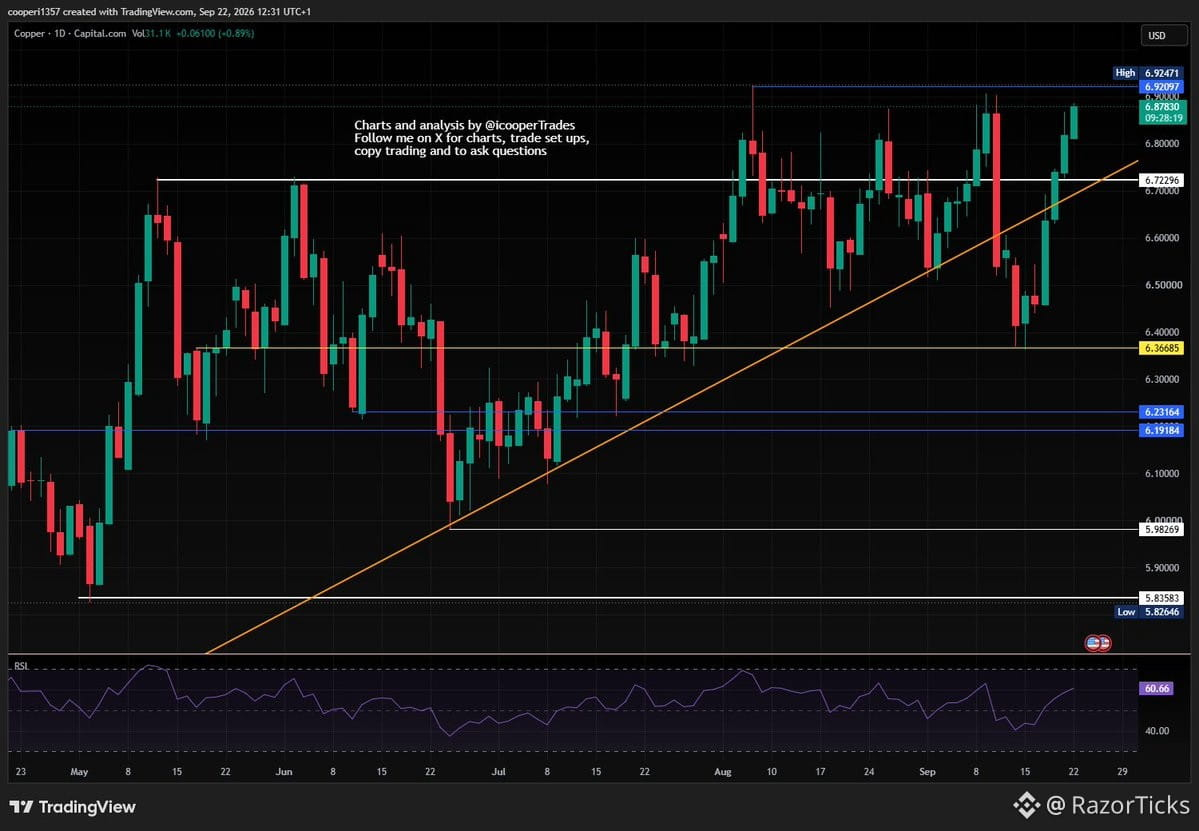
$COPPER pushing +0.8% today, still gunning for the highs and likely $7. Chart's clean, no short entry yet — structure hasn't cracked. But I'm bias short once we tag $7+. Better R:R on the downside. Waiting for the pop, then fade it. No rush. #metals
$COPPER pushing +0.8% today, still gunning for the highs and likely $7. Chart's clean, no short entry yet — structure hasn't cracked. But I'm bias short once we tag $7+. Better R:R on the downside. Waiting for the pop, then fade it. No rush. #metals
395
Log in to explore more content
Join global crypto users on Binance Square
⚡️ Get latest and useful information about crypto.
💬 Trusted by the world’s largest crypto exchange.
👍 Discover real insights from verified creators.
Email / Phone number
Trending Topics
AIStocksWhatNext
752,533 views
5,802 Discussing
Share & Win Traffic Reward in our Trending Hashtag Campaign
✨Topic: What Other Investment Opportunities Remain as AI Stocks Keep Rising?
👉How to Join:
Publish a short post or article with hashtag #AIStocksWhatNext
Share whether you’re bullish or bearish, and post your AI stock holdings or trade — using the trade widget may improve your eligibility.
You can also strengthen your post by sharing data or charts, and avoiding AI-generated images.
✍️Create content based on the below angles:
- Nvidia says chip sales will double next year, and top AI companies keep hitting record revenue, the compute spend behind it is just as staggering. Is AI demand really taking off? And how long can it last? AI stocks are up across the board. Is this a real breakout, or just a short-term bounce?
- Industry leaders are calling to slow down AI development, while Trump plans to build an “AI Force”, claiming AI could account for 25% of U.S. GDP in the future. Whose side are you on? Will state-level backing be a long-term win for AI stocks?
- Are you buying AI stocks? Share your AI-related trade/holdings with our trade sharing widget.
⏰Campaign Period:
- 2026-09-22 7:00 - 2026-09-24 4:00 UTC
🎁Reward:
- Qualified posts that comply with the above guidelines and contain more than 100 words will be reviewed and may receive a random traffic boost of 500 to 3,000 views. You will receive a notification from your feed secretary if your post is selected.
- Get a chance to have your article featured on Binance Square Official
Need ideas for your post? Visit the topic page #AIStocksWhatNext or the Square Guide on How to Post for Better Reach.
Binance Square Official
·552 Likes
·1.5M views
BitcoinRejectedAt$87,300Twice
0 views
0 Discussing
BCHJumps28%OnCMEFuturesListing
501 views
138 Discussing