

Qun Notes
29 Posts

Qun Notes
Report
Block User
热爱理财、记录投资心得生活感悟,长期定投:SPY、QQQ、SMH、BTC。
9 Following
46 Followers
35 Liked
Posts
All
Videos
PINNED
·
--
China's ordinary people’s way out:
If you can actually listen, you can avoid five years of detours.
Less debt, more systematic investing: S&P 500, Nasdaq, BTC.
A mortgage is for the bank; working overtime is for your boss.
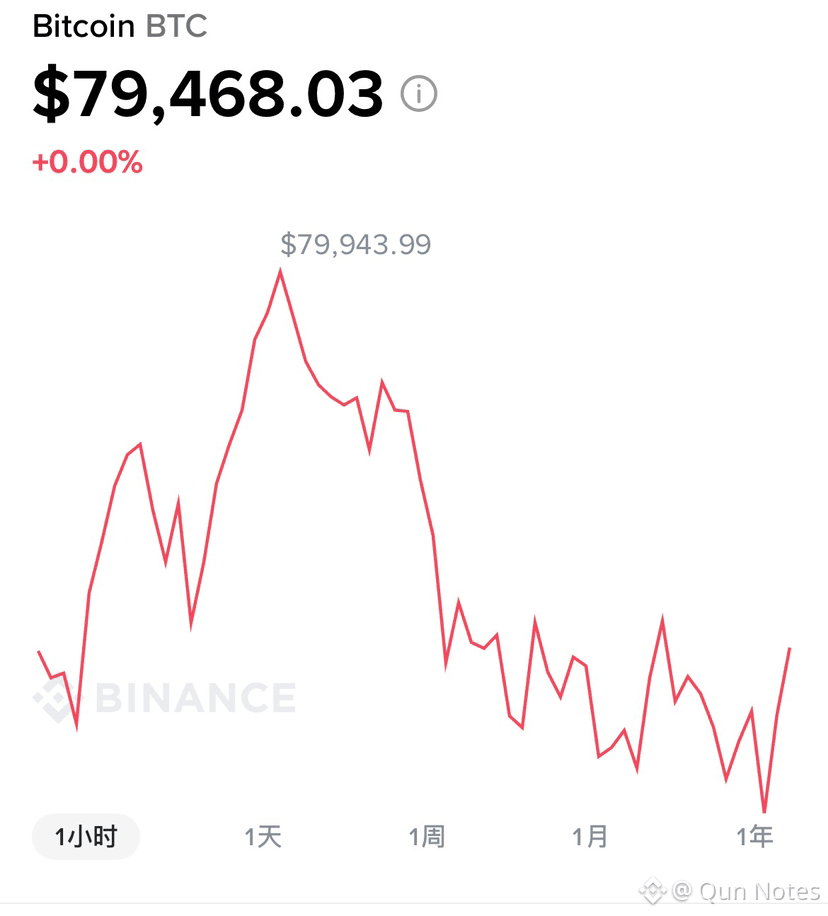
S&P 500, Nasdaq, and BTC are the ones for you. #BTC
China's ordinary people’s way out:
If you can actually listen, you can avoid five years of detours.
Less debt, more systematic investing: S&P 500, Nasdaq, BTC.
A mortgage is for the bank; working overtime is for your boss.
S&P 500, Nasdaq, and BTC are the ones for you. #BTC
If you can actually listen, you can avoid five years of detours.
Less debt, more systematic investing: S&P 500, Nasdaq, BTC.
A mortgage is for the bank; working overtime is for your boss.
S&P 500, Nasdaq, and BTC are the ones for you. #BTC
248
·
--
Tianya A11 big shot has dropped another bombshell!
《After 2027, you should live like this》#BTC
Tianya A11 big shot has dropped another bombshell!
《After 2027, you should live like this》#BTC
《After 2027, you should live like this》#BTC


194
·
--
There really aren’t that many U.S. stocks that are truly suitable for ordinary investors to hold for ten years or more.
These are the categories I’m focusing on right now:
Core holdings:
VOO/SPY (S&P 500)
QQQM (Nasdaq 100, with growth potential)
Satellite holdings:
VGT or SMH
Individual companies:
Apple, Google, Nvidia, SPCX
The principle is simple:
Core holdings help you “stay in the game for the long haul”; satellite holdings help you “capture a little more upside when the market rises.” I never put too much of my portfolio into individual stocks. #SPY
117
·
--
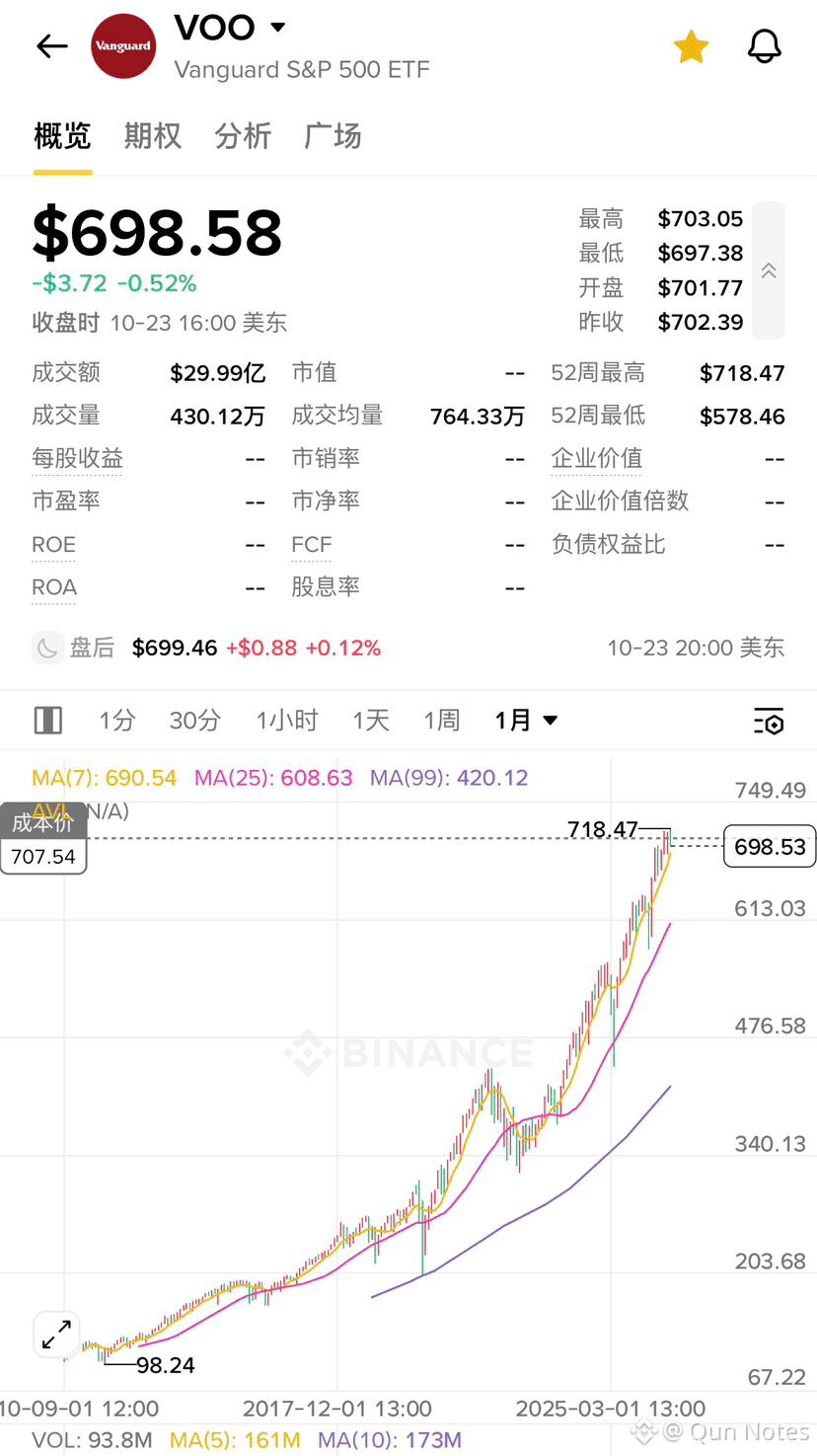
The S&P 500 has outperformed over 90% of institutional and retail investors. So why do most people still buy individual stocks? (Myself included.) #VOO
The S&P 500 has outperformed over 90% of institutional and retail investors. So why do most people still buy individual stocks? (Myself included.) #VOO
VOOETF+0.05%
205
·
--
Long-term U.S. stock allocation: three options:
Balanced with a stock tilt: 70% VOO + 20% QQQM + 10% SGOV
Aggressive growth: 50% VOO + 30% QQQM + 20% VGT
Tech-focused: 50% QQQM + 30% VGT + 20% SMH
My ideal portfolio: 50% VOO + 20% QQQM 20% SMH 10% BTC
#BTC
Long-term U.S. stock allocation: three options:
Balanced with a stock tilt: 70% VOO + 20% QQQM + 10% SGOV
Aggressive growth: 50% VOO + 30% QQQM + 20% VGT
Tech-focused: 50% QQQM + 30% VGT + 20% SMH
My ideal portfolio: 50% VOO + 20% QQQM 20% SMH 10% BTC
#BTC
Balanced with a stock tilt: 70% VOO + 20% QQQM + 10% SGOV
Aggressive growth: 50% VOO + 30% QQQM + 20% VGT
Tech-focused: 50% QQQM + 30% VGT + 20% SMH
My ideal portfolio: 50% VOO + 20% QQQM 20% SMH 10% BTC
#BTC
146
·
--
I've tried telling my friends not to buy a house,
but to invest in the S&P 500, Nasdaq, and Bitcoin,
to live with fewer wants and hold off on splurging,
to save up their first pot of gold—but nobody listens. #BTC
I've tried telling my friends not to buy a house,
but to invest in the S&P 500, Nasdaq, and Bitcoin,
to live with fewer wants and hold off on splurging,
to save up their first pot of gold—but nobody listens. #BTC
but to invest in the S&P 500, Nasdaq, and Bitcoin,
to live with fewer wants and hold off on splurging,
to save up their first pot of gold—but nobody listens. #BTC
67
·
--
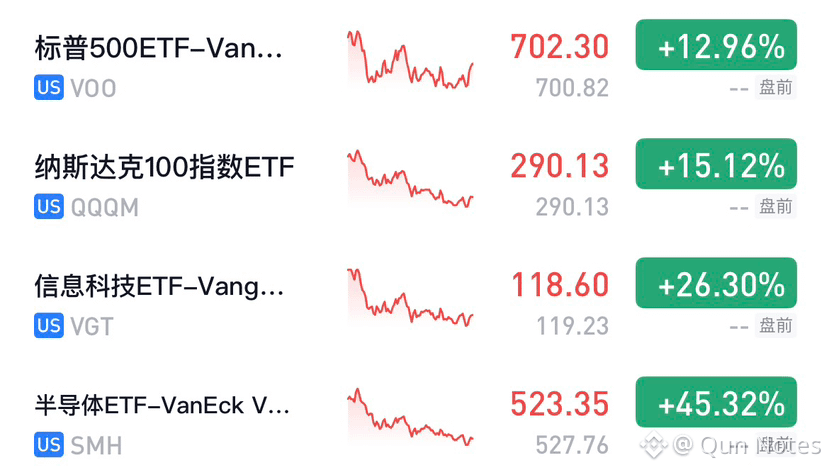
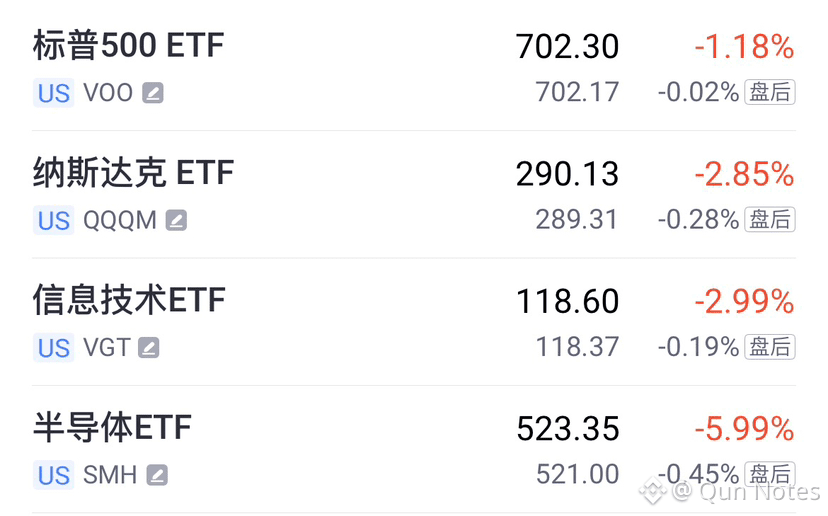
Despite last night's sharp drop, year-to-date returns are still very strong. #Spy
Despite last night's sharp drop, year-to-date returns are still very strong. #Spy
97
·
--
Warren Buffett teaches you how to invest well. #Spy
Warren Buffett teaches you how to invest well. #Spy
93
·
--
446
·
--
Yesterday, this Binance account placed orders for VOO and QQQM. #SPY
Yesterday, this Binance account placed orders for VOO and QQQM. #SPY
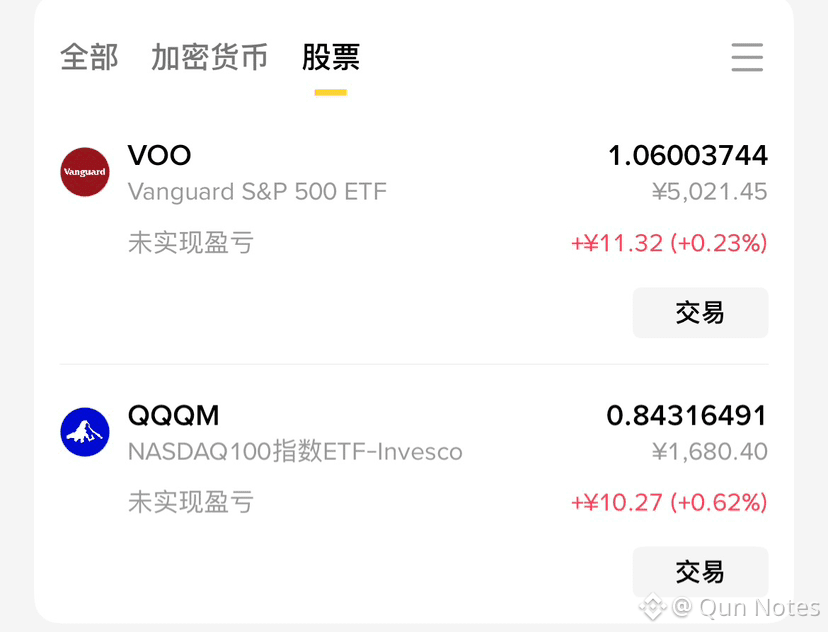
VOOETF+0.05%
QQQMETF+0.06%
707
·
--
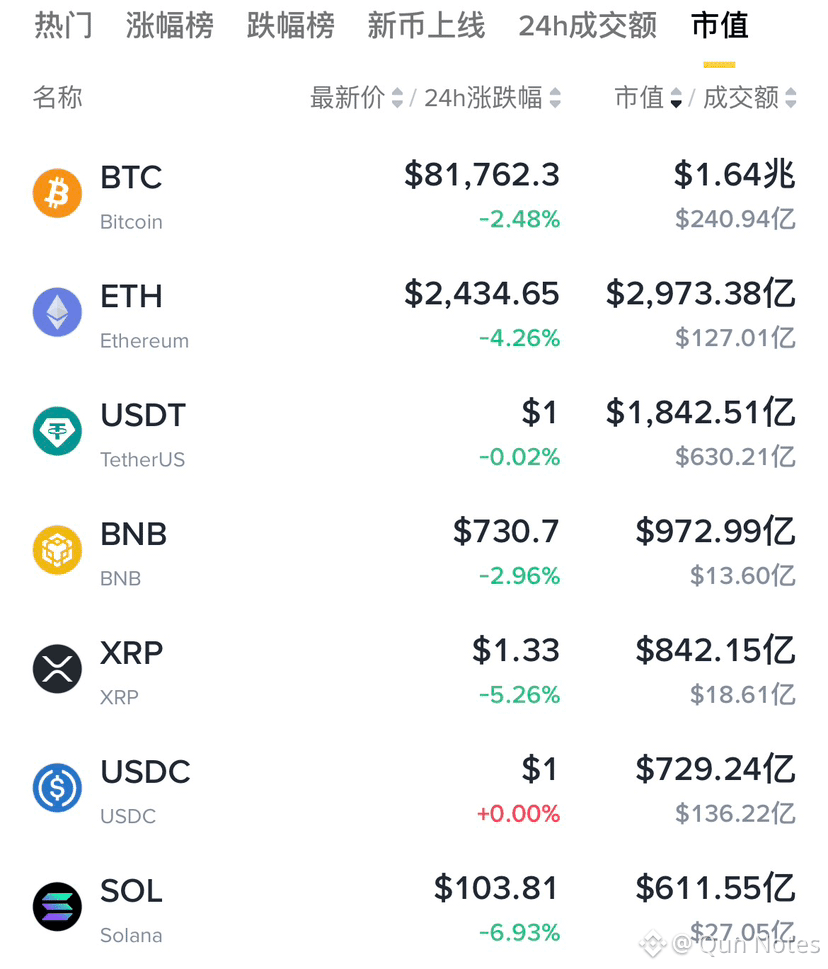
What happened today? Why did it drop so much? #BTC
What happened today? Why did it drop so much? #BTC
241
·
--
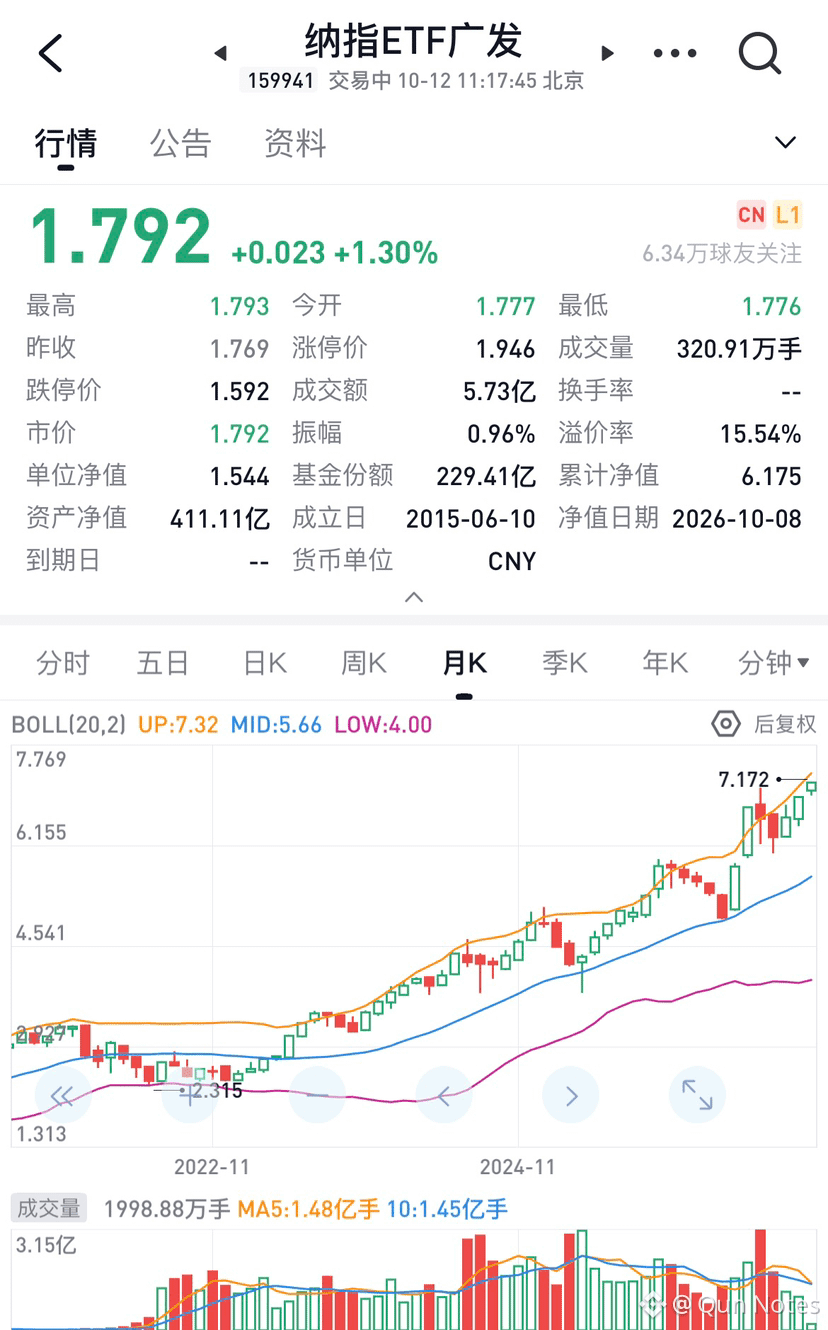
It’s really hard to make regular investments in the Nasdaq-listed fund—the premium is already around 15%. The fund available over the counter has investment limits, so it’s tough for ordinary people to get exposure to good assets.#美股超话
It’s really hard to make regular investments in the Nasdaq-listed fund—the premium is already around 15%. The fund available over the counter has investment limits, so it’s tough for ordinary people to get exposure to good assets.#美股超话
116
·
--
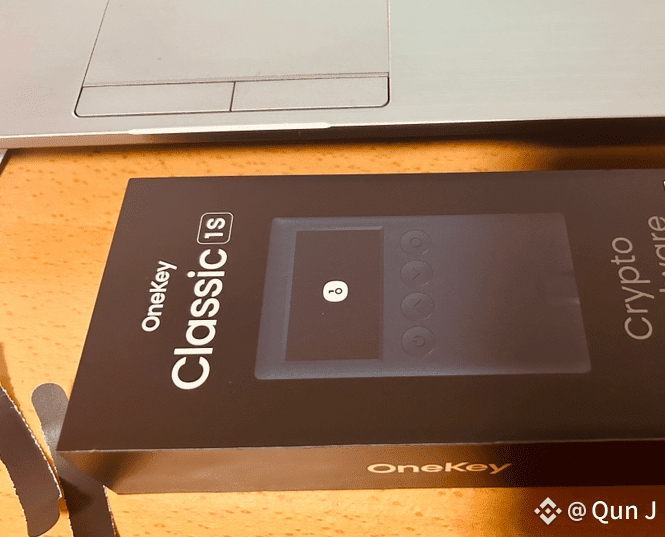
After seeing news about hardware wallets being stolen, it seems that storing coins in a hardware wallet isn't safe either. Would keeping coins on an exchange be safer?#BTC
After seeing news about hardware wallets being stolen, it seems that storing coins in a hardware wallet isn't safe either. Would keeping coins on an exchange be safer?#BTC
93
·
--
I’ve been thinking about this lately:
If I start accumulating value coins now, aiming to get through the cycle and wait for the next bull market, what should I choose to be safe?
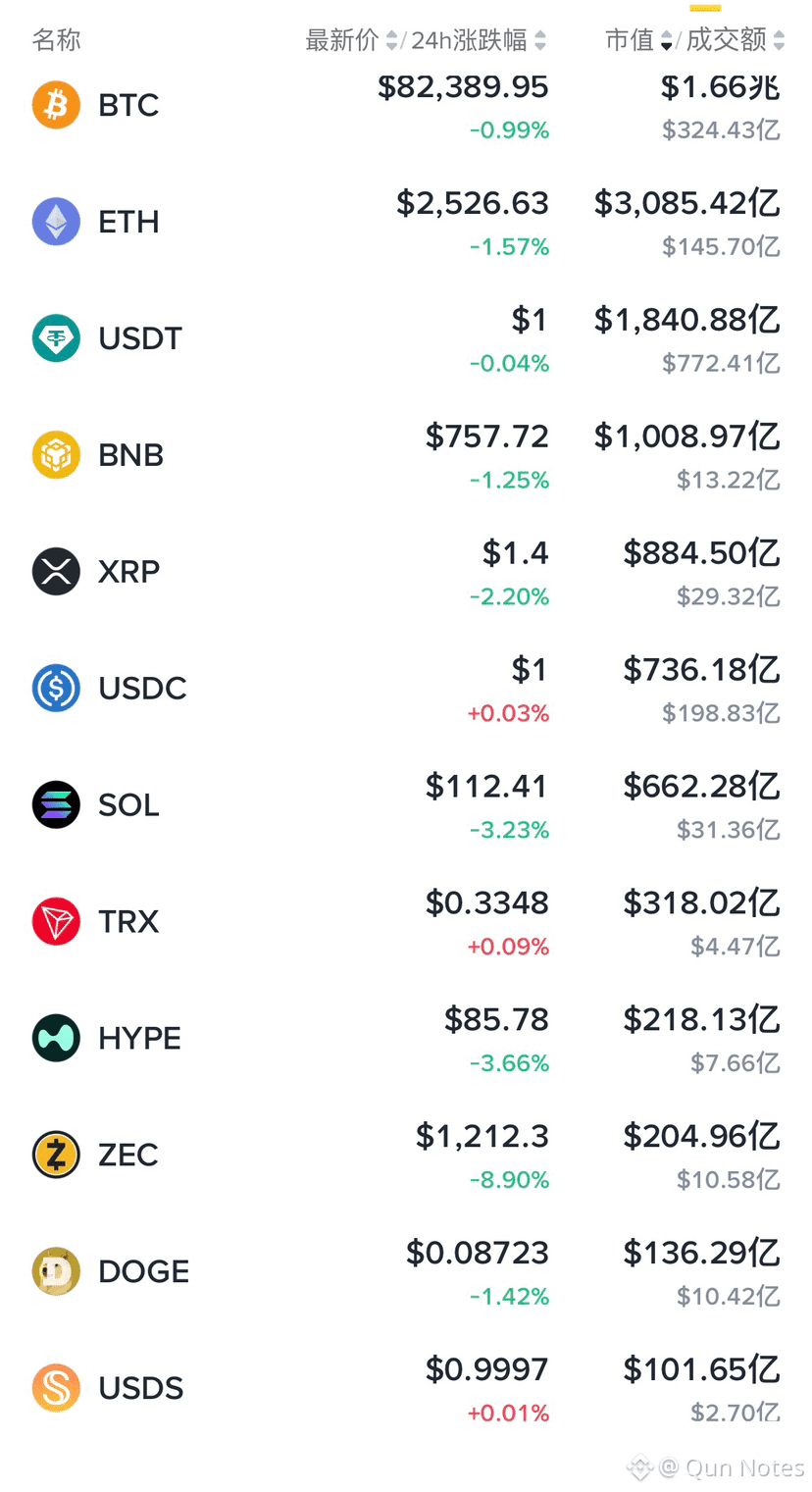
After reviewing the top 50 tokens by market cap again, I found that there are very few projects that truly have a healthy token supply structure.
Excluding stablecoins, the ones I think are worth paying close attention to long term are mainly:
BTC, ETH, and BNB.
BTC’s strength is that its supply can’t be arbitrarily changed—its scarcity is the strongest.
ETH’s strength lies in its massive ecosystem and network effects.
BNB is somewhat special—real utility demand + continuous token burns.
BNB reduces its circulating supply through Auto-Burn. Some of the Gas fees on BNB Chain are also burned. Meanwhile, trading fees, Launchpool, on-chain Gas, and ecosystem applications keep generating demand, forming:
Ecosystem growth → increased usage → increased demand → continuous burns
That’s what I find most interesting about BNB.
On the other hand, many so-called “value coins” still have issues like inflation (minting), unlock schedules, or early investor allocations being released.
Deflation doesn’t necessarily mean price will rise, but for a project whose ecosystem keeps growing while its token supply keeps shrinking, at least long-term holders won’t always have to foot the bill for additional issuance and unlocks.
So, if you ask me to pick long-term “value coins” from the top 20 by market cap, I’d currently lean more toward:
BTC > ETH > BNB.
Together, they represent: scarcity, ecosystem value, and a business closed loop.#btc
467
·
--
I've been going back and forth on this: should I adjust my DCA plan to BTC 70%, ETH 20%, and BNB 10%? #比特币跌破8.4万美元
I've been going back and forth on this: should I adjust my DCA plan to BTC 70%, ETH 20%, and BNB 10%? #比特币跌破8.4万美元

81
·
--
Bitcoin will have a rough time in the second half of next year, with a pullback, and then continue to strengthen. It will perform very well in 2031. (2026-09-24)
Bitcoin will have a rough time in the second half of next year, with a pullback, and then continue to strengthen. It will perform very well in 2031. (2026-09-24)
1
150
·
--
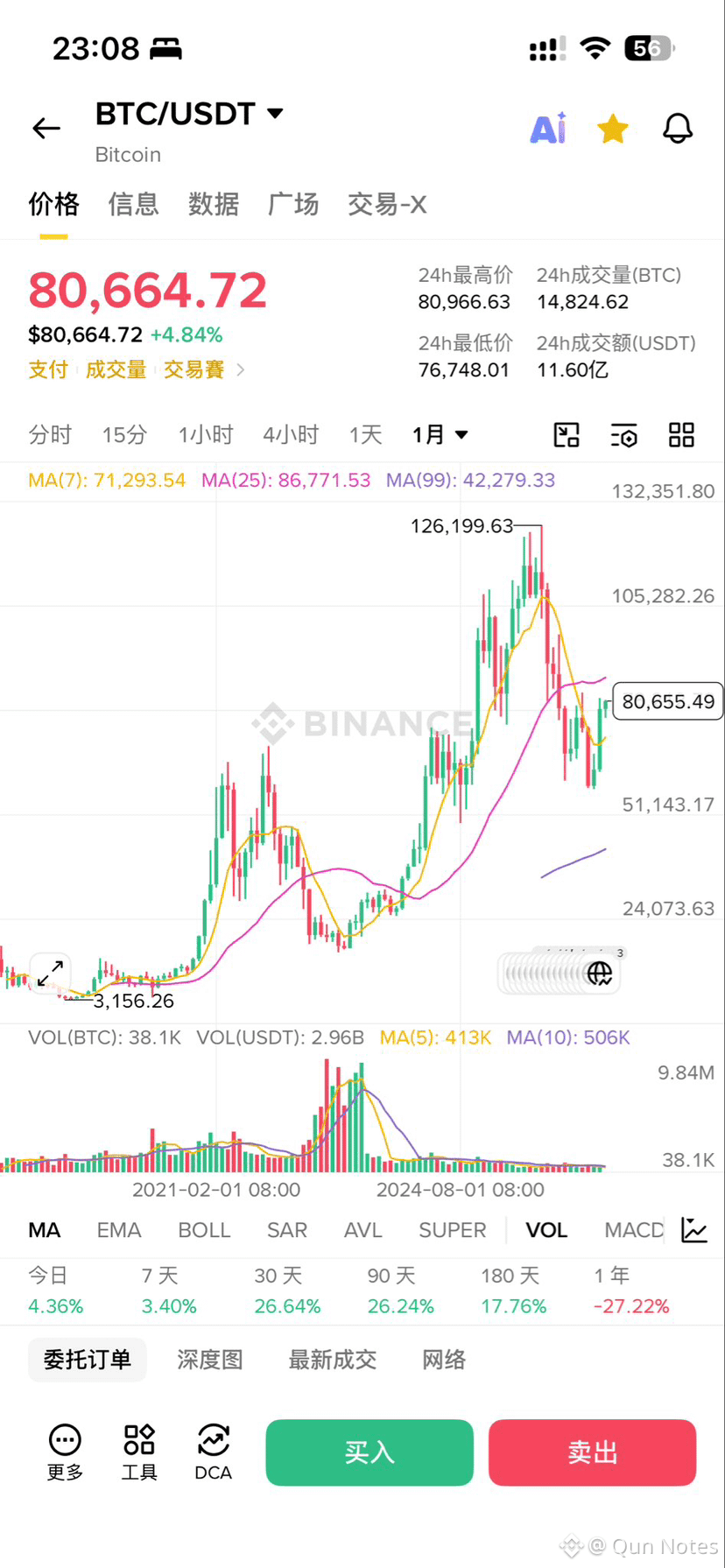
2026.07.14 Sold all virtual currencies, starting fresh today with BTC recurring investment. (2026.09.03)
2026.07.14 Sold all virtual currencies, starting fresh today with BTC recurring investment. (2026.09.03)
170
·
--
A while ago, I listened to various bloggers' explanations and invested in Dogecoin and Ethereum. This time, during the big drop, I cleared everything. Sticking to dollar-cost averaging Bitcoin is the right direction; investments should be kept as simple as possible. #比特币
A while ago, I listened to various bloggers' explanations and invested in Dogecoin and Ethereum. This time, during the big drop, I cleared everything. Sticking to dollar-cost averaging Bitcoin is the right direction; investments should be kept as simple as possible. #比特币
1
354
Log in to explore more content
Join global crypto users on Binance Square
⚡️ Get latest and useful information about crypto.
💬 Trusted by the world’s largest crypto exchange.
👍 Discover real insights from verified creators.
Email / Phone number