Corporate BTC Adoption: Bullish Narrative — or the Expansion of the Collateral Loop?
📊 I don’t view corporates buying BTC as inherently bullish or bearish. I see it as a shift in risk structure. When companies put BTC on their balance sheets, crypto stops being “outside the system.” It becomes embedded into traditional financial logic. And once it sits inside that system, BTC is subject to the same leverage, collateralization, and rehypothecation dynamics as any other asset. A case where a Digital Asset Treasury posts heavy losses while a single token like PURR shows gains highlights something simple: not every “crypto treasury strategy” is built on disciplined risk management. Many corporates enter the space believing that holding digital assets is enough. But when the cycle turns, the balance sheet starts reflecting real volatility. That’s when the “store of value” narrative meets accounting reality. ⚠️ What caught my attention even more is a company like Trump Media using 2,000 BTC as collateral. The moment BTC becomes collateral, it’s no longer just a reserve asset. It becomes a node in a credit chain. And once it enters that chain, rehypothecation risk enters the equation. I call this “Collateral Loop Expansion” — when the same asset is reused across multiple layers of financial obligations. In that environment, BTC price doesn’t just reflect spot supply and demand. It reflects stress levels within corporate balance sheets. If price drops sharply, margin pressure won’t be isolated to retail traders. It can spill into corporate treasuries. When an asset functions both as reserve and collateral, its volatility can trigger cascading effects beyond pure crypto markets. 💡 Core insight: corporate adoption doesn’t just bring legitimacy. It imports the risk structure of traditional finance. Most people interpret companies holding BTC as a long-term bullish signal. I don’t disagree. But alongside that, a latent layer of leverage is quietly building. Once an asset is placed on a balance sheet and used as collateral, it operates under credit-system logic — where liquidity can evaporate faster than expected. 📉 In favorable conditions, using BTC as collateral can amplify returns and expand operations. In stressed conditions, that same structure can amplify sell pressure. Financial history shows the problem is rarely the asset itself. It’s how the asset is financed and refinanced. The real question isn’t “Which company is buying more BTC?” The real question is: How is BTC being used inside their financial system? When you analyze corporate exposure through a credit-structure lens instead of accumulation headlines, your risk assessment shifts entirely. Adoption always introduces new structural risk layers. And markets usually only recognize those layers once the cycle has already turned. If leverage is the catalyst of the upside cycle, it will also be the amplifier of the downside. Which side of that equation are you pricing in?
Architectural Compression: The Phase the Market Hasn’t Properly Priced In for Ethereum
📊 When I look at Ethereum’s recent roadmap, I don’t see a series of isolated upgrades. I see architectural restructuring — where the core mechanics of the network are being rewritten layer by layer. ETH price can chop sideways. Narratives can rotate between ETF flows and staking yield. But underneath the surface, the structure is evolving. And when the mechanism changes, market behavior eventually adapts. 🔍 Take EIP-8141 and Account Abstraction. Most people frame this as UX improvement. I see it as a shift in power dynamics. When accounts are no longer constrained by rigid private key logic and fixed gas mechanics, Ethereum reduces friction at the entry point of the ecosystem. This isn’t a short-term catalyst. But it changes the long-term demand structure. ⚠️ Every step closer to abstraction also means more complexity at the base layer. That’s a structural risk few talk about. The more flexible the system becomes, the tighter the security and decentralization design must be to avoid silent centralization. ePBS isn’t just about MEV optimization. Separating proposer and builder is a rebalancing of power in block production. If you only look at the surface-level “performance improvement,” you’ll miss the decentralization game happening underneath. ⏳ I call this phase: Architectural Compression. Ethereum isn’t scaling by bloating. It’s compressing and reorganizing functional layers: – PeerDAS preparing the data availability layer for higher throughput – ZK-EVM improving compatibility and security across L2 – ePBS redesigning consensus incentives None of this is built for short-term narrative pumps. It’s built to ensure the system can handle larger scale without breaking internally. 💡 Core insight: Ethereum competes on architectural sustainability — not raw speed. While many chains maximize TPS to capture fast user growth, Ethereum optimizes mechanisms before optimizing throughput. That often means slower price cycles. But when expansion comes, it tends to sit on stronger foundations. Markets overprice what grows fast. They underprice what builds slow and durable. 🧠 As AI integrates deeper into on-chain activity, this becomes even clearer. Autonomous agents don’t just need speed. They need verifiable environments, security guarantees, and long-term scalability. Account Abstraction turns wallets into programmable logic layers — aligned with a world where bots and humans interact natively on-chain. This isn’t an “AI pumps ETH” narrative. It’s a shift in the type of demand Ethereum can serve in the future. 📈 Markets often lag structural change. Price may front-run narrative. But architecture front-runs price. Large capital and high-scale applications only commit when infrastructure maturity is credible. If you evaluate purely through price action, you risk missing deep value accumulation happening underneath. After multiple cycles, one thing is clear: The market doesn’t reward noise. It rewards preparation. Quiet build phases are often mistaken for lack of catalyst. In reality, they’re the foundation of the next one. If I had to ask the most important question right now, it wouldn’t be “How high can ETH go?” It would be: Is the current architecture capable of carrying the next cycle? Once you start analyzing markets through mechanisms instead of candles, your entire framework for risk and opportunity shifts. If architecture is the foundation of the cycle, are you pricing the foundation — or just trading the surface?
Stablecoins Are Moving — Is Liquidity About to Make a Play?
📊 I always say this: if you want to understand crypto, don’t just stare at BTC price — watch what stablecoins are doing. When USDT keeps flowing into OKX, and USDT rotates from Aave over to HTX, that’s not random noise. Stablecoins are ammunition. And when ammo gets moved to the frontline, liquidity usually isn’t far from making a move. Capital sitting off-market is neutral. Capital sitting on exchanges is intent. USDT flowing onto exchanges typically signals one of two things: spot accumulation or derivatives positioning. Given the recent volatility, I lean toward capital preparing to deploy rather than retreating. Stablecoins in cold wallets don’t move markets. Stablecoins on exchanges can flip the switch instantly. Liquidity structure shifts before price reacts — not after. ⚠️ But stablecoins aren’t just liquidity — they’re control. When Tether freezes $4.2B USDT, I don’t treat it as a dry legal headline. I treat it as a reminder: centralized stablecoins can be intervened in at any time. That’s a structural layer of risk many people conveniently ignore when they talk about “decentralization.” USDC gives me a different lens. Continuous mint and burn cycles reflect capital moving in and out with relative flexibility. Minting often signals fresh demand or new capital entering the ecosystem. Burning suggests capital flowing back toward traditional banking rails. When both processes scale up simultaneously, it tells me one thing: crypto is more intertwined with traditional finance than ever. 💡 The key insight? Stablecoins are both liquidity fuel and regulatory leverage. Whoever controls stablecoin rails controls part of the market’s heartbeat. USDT flowing onto exchanges feels like latent buy-side pressure building — but billions being frozen reminds me that legal and policy risk is always hovering overhead. Liquidity can be injected fast. It can also be locked just as fast. I don’t think the market collapses over a single freeze event. But as regulatory pressure builds, stablecoins become strategic infrastructure — for exchanges and for regulators alike. The treasury mechanics of major issuers are starting to resemble a “mini central bank” inside the crypto ecosystem. 🔥 When I see stablecoins moving onto exchanges while sentiment is still skeptical, I don’t rush to go bearish. Liquidity often moves before the narrative catches up. But I also don’t forget that the centralized power behind stablecoins can rewrite the rules at any moment. 👇 If stablecoins are the fuel of this market, then who’s holding the valve — and will they open it wider or tighten it in the next cycle?
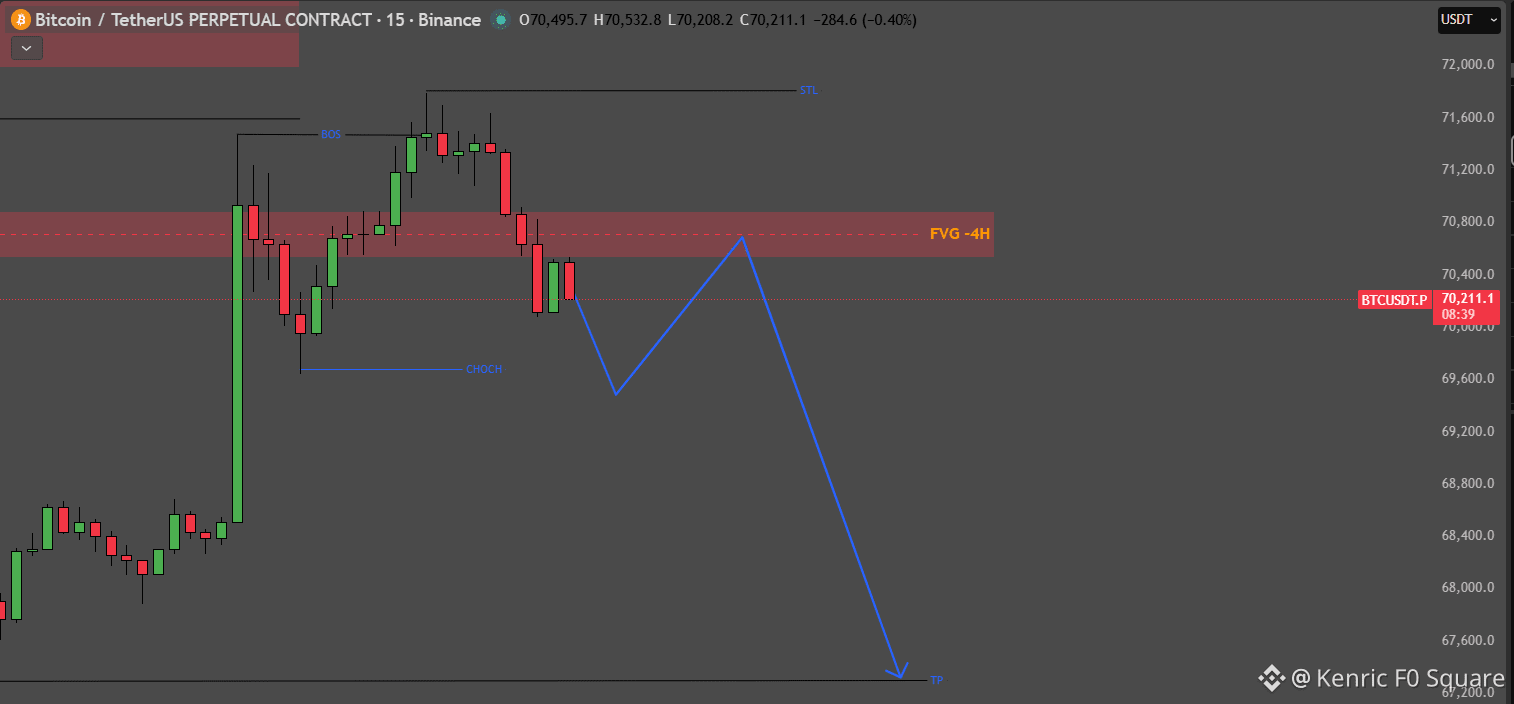
Crypto doesn’t collapse because of a single headline. It collapses because the structure was fragile long before the news hit. After 10/10, I’m watching the S&P 500 push to fresh all-time highs 📊 Meanwhile, TOTAL and altcoins are slowly bleeding out. BTC can’t find real follow-through, and spot demand feels thinner by the week. A healthy market moves in sync. Strength should be broad. Not this kind of divergence ⚠️ When equities are printing ATHs but crypto can’t catch a bid, that’s a quiet risk-off signal building under the surface. Liquidity is selective. Capital is rotating — and crypto isn’t the priority. Did you notice this divergence before the February flush?
ETFs Are Still Pulling In Capital Amid the Panic — What Is the Market Really Signaling?
📊 While retail is panicking over headlines and red candles, I’m seeing a very different picture behind the scenes. Big money doesn’t react emotionally — they reposition with intent. When 30,000 ETH gets pulled from Coinbase Institutional while ETFs are still printing strong net inflows, I don’t see coincidence. I see strategy. Retail sells because price is down. Institutions buy when structure hasn’t actually broken. BlackRock adding more BTC isn’t about catching tomorrow’s pump — it’s about pricing risk on a timeframe way beyond intraday traders. When volatility spikes, retail sees danger. Institutions see a discount. ⚠️ What really stands out to me is the divergence between ETF flows and exchange behavior. Yes, there’s BTC moving into Coinbase Institutional. But at the same time, we’re seeing sizable withdrawals from custody wallets. That looks more like internal restructuring than panic distribution. If this were true systemic panic, we’d see heavy ETF outflows or stablecoins leaving the market aggressively. The data isn’t showing that. Put the pieces together and the picture gets clearer. Retail is triggered by short-term volatility and negative narratives, while institutions quietly absorb liquidity below. This absorption doesn’t create vertical green candles — but it gradually reduces sell pressure over time. 💡 The key insight for me: divergences like this rarely last long. If institutions keep accumulating while retail keeps distributing out of fear, circulating supply tightens. Once sell-side liquidity thins out, it doesn’t take a massive catalyst to spark a strong move. I’m not focused on how red today’s candle is. I’m focused on who owns the coins after each shakeout. 🔥 I’m not calling for an immediate reversal. But when ETFs are still attracting capital and large wallets continue to accumulate into negative sentiment, it’s hard for me to lean toward a prolonged breakdown scenario. Sustainable rallies usually start in disbelief — not in euphoria. 👇 If supply keeps getting absorbed at these levels, how many will be forced to buy back higher on the next expansion? #CryptoAnalysis #ETF $ETH $BTC
Market không sập vì Israel. Nó sập vì đã mong manh sẵn.
📊 I don’t think the Israel strike “caused” the market to dump. I think the market was already fragile — the headline was just the excuse. Look at the structure beforehand: open interest kept climbing while price moved sideways, funding stayed consistently positive, and confidence was quietly creeping back in. That’s the most dangerous setup — thick layers of leverage building without strong enough spot demand underneath to absorb a shock. When volatility gets compressed for too long, the market only needs a catalyst to release that energy. A geopolitical event shows up at the perfect moment, and to me it simply flipped the liquidation switch. If it wasn’t Israel, it would’ve been another headline triggering the exact same reaction — because the weakness was already baked into the structure. ⚠️ When the news broke, price didn’t instantly nuke. It slid gradually, repeatedly testing nearby support levels. Once a key level cracked, the liquidation engine kicked in and longs were wiped in waves. Funding compressed fast, futures basis evaporated, and OI dropped sharply within hours. What stood out most to me was this: OI fell faster than spot. That tells me this was primarily a leverage flush — not broad-based panic selling. Spot flows didn’t show signs of systemic fear. Exchange inflows increased, but nowhere near the extremes we’ve seen in true structural breakdowns before. Long-term holders barely reacted. As long as mid-term conviction isn’t broken, I struggle to call this the start of a deep downtrend. 💡 The key insight? The market created its own fragility through leverage before the event ever happened. Geopolitics just exposed it. If this were the beginning of a prolonged bearish cycle, I’d expect aggressive stablecoin outflows, sustained spot sell pressure over multiple days, and OI rebuilding heavily skewed toward shorts. Right now, what I see is a short-term structural shock and a rebalancing process. At this stage, I’m watching two things very closely: – Does OI recover too quickly? – Does funding flip back aggressively positive within 24–48 hours? If leverage piles back in too fast, odds are high we get another flush to punish fresh FOMO. On the flip side, if OI rebuilds slowly, funding stays neutral, and price forms a stable range, that usually sets the foundation for the next leg. 🔥 I’m not chasing longs right after a flush — but I’m also not panicking like the entire structure just collapsed. Markets often need a shock to reset before continuation. This time, I lean more toward a reset than a systemic breakdown. 👇 So what do you think — the start of a prolonged risk-off regime, or just a leverage cleanup before the market chooses a clearer direction? The answer won’t be in the initial headline. It’ll be in how structure rebuilds over the next few days.
The hard truth: 80% of people trade $BNB but do not understand it
Most people only look at the price $BNB to surf the waves. But few ask themselves: what really keeps this token in position through many cycles? Binance is not just an exchange. It is a place that concentrates large liquidity, diverse products, and real cash flow. Campaigns like #CreatorpadVN implemented by @Binance_vietnam show that they are still expanding the community instead of just chasing short-term waves. The question I want to raise:
In crypto, profit is important but risk management is even more important. When using Binance, I always enable 2FA, whitelist withdrawal addresses, and allocate capital wisely instead of going all-in. This is how I survive long-term in the market. Follow @Binance_vietnam for updates on security guidelines and important announcements.
I am looking for the owner of this wallet regarding a mistaken transfer. Please contact me at support@zama.org. This is not a scam, I just need your help.