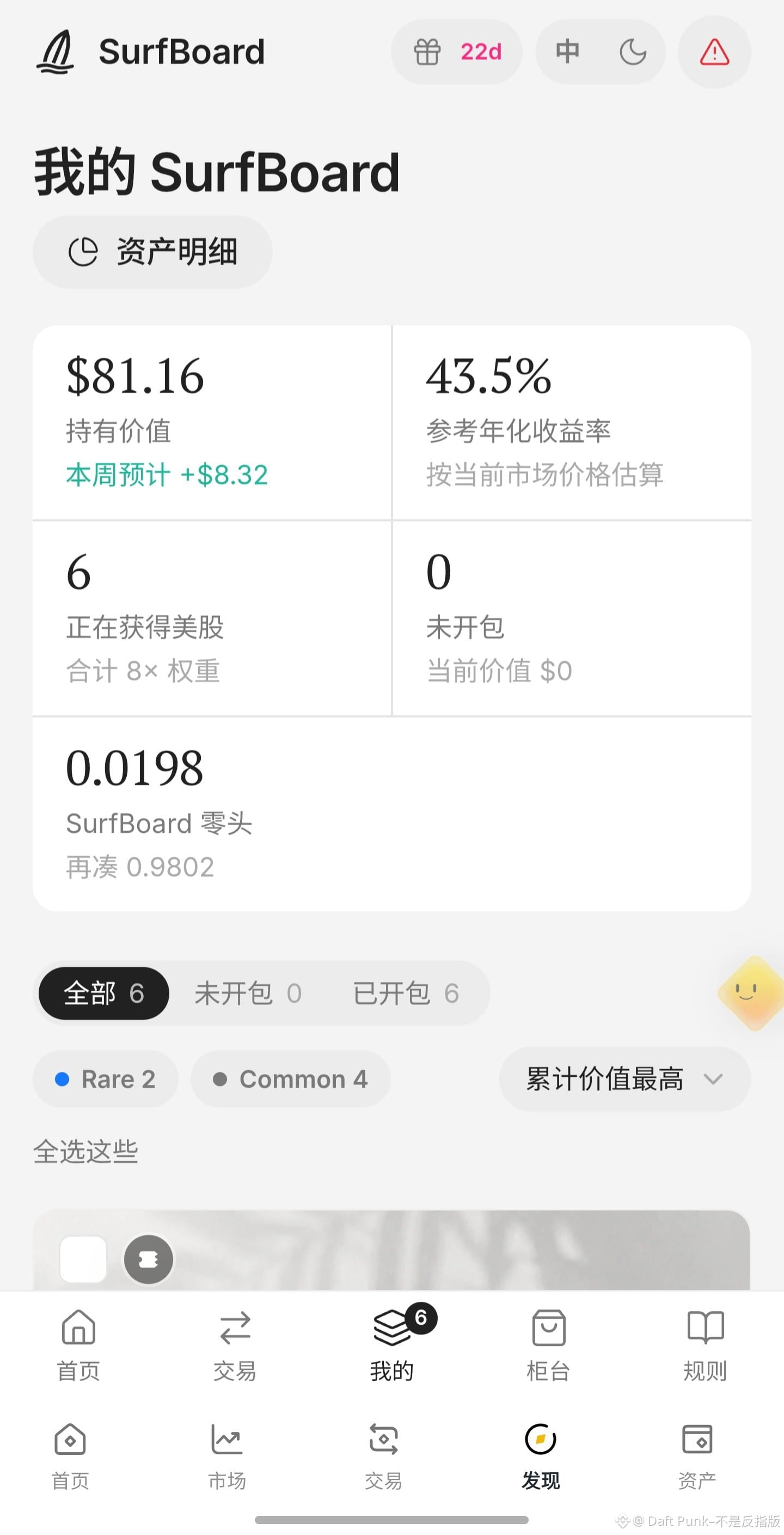
Brothers, I heard that industry veterans are once again using streaming to wash other people's top drafts. They boast about collaborations with this one and that one, but in the end, it turns out they are collaborating with Doubao to wash other people's drafts. The scores they flaunt were all washed out. Are you Blue Moon, so capable of washing? This is not named here, guess for yourself on the leaderboard 😂
The creative environment of the square is roughly like this: we ordinary creators are just providing material for the streaming players. I've heard you're still trying to create something original; don't be ridiculous, just wash up and go to sleep. Plagiarism is the only way out for the square; the originals have already starved. Streaming players get over ten thousand views in ten minutes, and if you don't stream, I wouldn't have noticed how outrageous it is. You don't even change the title, haha.
Staring at the account balance that has plummeted to a disfigured state, I have also had the thought of directly blacklisting XPL, after all, a nearly 90% drawdown is a form of psychological bullying for any holder. But as someone who habitually looks for logic in code, when the emotions recede, I instead see the true value that has been misjudged by the market. We have been shouting about Mass Adoption in Web3 for too long, but the reality is extremely fragmented: if you want to transfer some USDT to a friend outside the circle, you first have to teach him how to buy ETH or SOL for Gas fees. This inhumane barrier has directly kept 99% of new users out. So when I reassess @Plasma , that Paymaster mechanism really struck me; it allows you to transfer stablecoins without needing to hold the native token at all. This smooth 'Zero Gas' experience truly has a shadow of Alipay or WeChat Pay. Compared to those competing public chains that are still competing on TPS while ignoring interactive experience, this is the fundamental logic that the payment track should have. Money is the smartest; it never looks at the hype but only at safety. I went to dig up on-chain data, and the SyrupUSDT lending pool on Maple Finance surprisingly has a steady TVL of 1.1 billion dollars. Such an amount of institutional funds is a very honest vote. Institutions dare to place this huge sum here, primarily because it regularly anchors its status to the Bitcoin network design. This architecture leveraging BTC's security is much more substantial than many PoS chains that purely rely on their own consensus. Another point that is easy to overlook is that the Rain cards cover 150 million merchants and Oobit connects to the Visa network; these are solid payment implementations, not airy PPTs floating in the sky. Of course, I must also objectively critique the current problems. The degree of centralization in the current validator network is still very high, and the traces of team control are obvious. This is always the Damocles sword hanging over our heads. Moreover, the lack of ecological applications is an undeniable fact. Aside from transfers and lending, I find it challenging to locate an interesting DApp to interact with, and this ecological barrenness limits the efficiency of capital flow. But in today's market, where even the white papers are lazily written, projects that can genuinely address 'payment pain points' and have a huge TVL backing may deserve a bit more patience and time from me in this extremely pessimistic price range. #plasma $XPL
When the Narrative of Parallel EVM Recedes: My Real Experience Running a Full Node on Plasma Chain for a Week and Cold Thoughts on Reth Architecture
Staring at the constantly jumping block height on the screen, watching the Reth client throughput logs flow like a waterfall in the terminal on the left, this is probably the moment that has brought me the most inner peace this week. Outside, the market is in turmoil, everyone is chasing the expectations of Monad's launch and Berachain's liquidity mining, as if not participating in those games with triple-digit APY would make you abandoned by this industry. Yet, at this time, I chose to tinker for a week on this so-called 'old concept reboot' @Plasma chain, not only for that potential node reward but also to figure out whether there are other paths to take in 2026 when we talk about high-performance L1, besides stacking hardware and modifying consensus.
Don't be fooled by computing power leasing anymore, @Vanarchain this native 'brain' architecture is a bit interesting. This round of AI competition is heating up, but the more I look, the more I feel something is wrong. The screen is full of DePIN talking about computing power leasing, which is just a decentralized AWS landlord, right? This simple physical stacking is a far cry from truly native Web3 intelligence. Recently, I went to review Vanar's white paper and GitHub, initially with a critical mindset, and found that these people have quite unique ideas. They didn't compete on TPS or computing power distribution, but focused on a pain point that many public chains haven't figured out: the cost of 'memory' and 'reasoning' for on-chain AI. We in technology know that Ethereum, as a state machine, is essentially forgetful. If you want AI Agents to run on-chain, simply uploading the model is useless; where will the massive contextual data generated during the reasoning process be stored? Storing it on Arweave is too slow, and storing it on-chain incurs exorbitant gas fees. The Neutron architecture developed by Vanar amused me; isn't this just installing a hippocampus on the blockchain? By using TensorRT for reasoning optimization, complex semantic data is compressed into on-chain readable Seeds, which means Agents are no longer 'fools' who compute from scratch with every interaction, but possess low-cost continuous memory capabilities. This leaves projects still relying on cross-chain bridges to connect to GPT-4 far behind; the former allows the blockchain to learn to think, while the latter is at best just making a long-distance call to AI. To be honest, the ecosystem experience is still quite early; after going around DApps, it feels a bit 'desolate', and the interface interactions still have bugs. Yesterday, that swap was just spinning around for a long time, but this underlying logical closed loop makes me feel very solid. Compared to those projects that look flashy on PPT but essentially just sell nodes, Vanar is clearly laying the most challenging 'computing infrastructure'. If DeFi can really evolve into an AI-driven dynamic risk control model in the future, or if on-chain game NPCs can have self-awareness, then the foundation must be on chains that can natively handle high-concurrency reasoning, rather than those outdated ones that compromise performance to accommodate EVM. For those of us doing research, we shouldn't just focus on short-term K-line fluctuations; we need to see whether the code base is stacking blocks or building engines. #vanar $VANRY
When AI Runs on the 'Dirt Road' of Blockchain: A Harsh Experimental Note on Vanar, Computational Costs, and So-called 'Nativenes'
Staring at the time in the lower right corner of the screen, it's three thirty in the morning. This kind of schedule has long been the norm for those of us who have been struggling in this circle, especially when you try to run a truly functional on-chain Agent logic. The feeling of frustration often comes stronger than the feeling of sleepiness. In the past month, I've almost gone through all the project documents on the market that claim to be 'AI public chains.' It feels like looking for load-bearing walls in a bunch of finely decorated model houses; the surface is glamorous, full of narratives and concepts, but when you dig in, it’s all just bubbles. The so-called AI narratives of most projects are nothing more than just putting an API interface on traditional EVM chains, or creating a useless computing power leasing market. This spliced architecture is, in my opinion, an insult to decentralized intelligence. I don’t want to name names, but it’s quite laughable to see those projects with market values in the tens of billions still using two-year-old sidechain logic to tell AI stories.
Staring at the current decline of XPL, if there is no fluctuation in my heart, that would be a lie. After all, real money has shrunk by nearly 90% after being invested, anyone would be angry. But since I've decided to do research in this circle, I can't just let my emotions dictate my actions. I forced myself to close the K-line chart and looked through the recent GitHub commits and on-chain data of @Plasma , and I actually saw something different. We keep shouting about large-scale applications of Web3, but the biggest roadblock is not the insufficient TPS, but rather the inhumanly high threshold. Just think about it, to transfer a few stablecoins, you first have to buy ETH or SOL for Gas, this logic seems absurd to outsiders. The Paymaster mechanism at the bottom of Plasma has been the most user-friendly that I've tested recently, natively supporting stablecoin payments for Gas. This 'zero friction' experience feels like a legitimate payment system, slightly more in tune with product logic compared to those public chains that simply pile up throughput. This brings us to the differences from competitors. Although the L2s on the market are cheap, the interaction logic is still fragmented. Plasma is not only fully EVM compatible but also has a Bitcoin network anchoring, periodically inscribing the state on the BTC chain. This move is quite clever; in this uncertain market, leveraging Bitcoin's security for endorsement is much stronger than just shouting consensus. I also dug a bit into the data on Maple, and the TVL of the SyrupUSDT lending pool surprisingly remained at $1.1 billion. This data is somewhat shocking; institutional funds are not fools. The fact that they dare to accumulate at this level indicates that Smart Money has confidence in its liquidity and security. This kind of real monetary vote is more reliable than tweets. Of course, as a rigorous researcher, I also have to pour some cold water. The current validator nodes are still too centralized in the hands of the team, and the degree of decentralization is visibly low, which is always a risk. Moreover, besides payments and lending, the ecosystem is indeed barren; finding an interesting Dapp is quite difficult. But perhaps this is the source of both profit and loss. The market is currently extremely pessimistic, and everyone is just fixated on the price and cursing, while overlooking solid landing data like Rain cards and Oobit connecting to the Visa network. I'm wondering, if the payment track can really take off, should we choose those still telling stories, or those that have already paved the way to offline? #plasma $XPL
The Brute Force Regression of Payment Primitives: A Reverse Examination of Plasma Architecture, Reth Clients, and Deterministic Endgames under Rollup Monopoly
In an era where Layer 2 scaling solutions, or Rollups, practically dominate the Ethereum ecosystem's discourse, I revisited the @Plasma white paper and the latest technical documentation. This felt somewhat like discovering a heavily modified, high-displacement naturally aspirated gasoline car in an unassuming garage amidst a sea of electric scooters—both incongruous and possessing a captivating, mechanically brutal aesthetic. I've seen many discussions about Plasma's price or its seemingly intimidating unlocking scheme, but as someone who enjoys nitpicking the damn details of on-chain interactions, I'd like to share my genuine impressions from the past few days tinkering with the testnet and early mainnet environments. Especially when you shift your focus away from grand narratives and actually run its nodes, send a few transactions, and even compare it to the currently hyped "high-performance chains," many interesting details gradually emerge.
[From Behavioral Entropy to Execution Models: Why is DBTI the MBTI of the AI Trading Era?]
The crypto market is essentially a high-dimensional 'game sandbox.' The root cause of retail losses is often attributed to information asymmetry, but from the perspective of behavioral finance, the more core factor is the long-term mismatch between trading behavior and underlying personality structure. Impatient individuals are forced into long positions, while slow individuals blindly engage in high frequency trading—this execution-level 'rejection reaction' leads to the discipline breakdown for most people. 1. DBTI: The evolution from 'subjective questionnaires' to 'Inverse Reinforcement Learning (IRL)' Unlike traditional psychological testing, Calculus Finance (https://x.com/CalculusFinance) promotes the DBTI (Decentralized Trading Personality System) using a non-invasive data mining model:
To be honest, after looking at so many L1 public chains claiming to be AI, most are still playing that kind of brutal logic of 'putting an elephant in a fridge', forcibly attaching model interfaces to the chain and daring to call it intelligent. Recently, I deeply experienced the V23 protocol of @Vanarchain , and this architecture is indeed interesting. It is not like those competitors that only know how to stack TPS; for example, Solana is fast, but when facing the needs of AI Agents that require continuous state memory and complex reasoning, the underlying logic still seems a bit 'forgetful'. What attracts me most about Vanar is its Neutron layer in the five-layer stack, which directly integrates semantic memory and persistent context into the infrastructure, rather than having to 'borrow intelligence' through cross-chain bridges like many second-layer solutions. However, in actual interactions, I also discovered some frustrating details. For instance, the current node response occasionally experiences data retrieval delays under extreme high-frequency trading, which still needs to be refined for scenarios focusing on PayFi and real-time reasoning. Compared to those neighboring projects that frequently hype partnerships with NVIDIA while not even grasping CUDA acceleration, Vanar's actions after joining the Inception program seem much more restrained, even to the point of being a bit frustrating. Its current token capture logic has also changed; it is no longer simply about Gas consumption, but more like a ticket for subscribing to AI services. This paradigm shift is indeed more hardcore than merely hyping computing power tokenization. If it can make the integration with Google Cloud more seamless in the future, avoiding the cumbersome management of private keys, then this 'intelligent infrastructure' can truly realize the value transition from Web2 to Web3. Of course, it is still too early to say that it can completely overturn traditional public chains, as ecosystem construction cannot be built solely on technical architecture. Whether it can withstand the next wave of AI traffic explosion still depends on its real performance on the Vanguard test network and whether it can handle the pressure. #vanar $VANRY
Stop fantasizing about TPS: I saw the memory and soul that AI Agents truly need in Vanar's code
In the past few weeks, the market has been so restless that it's hard to focus on coding. The screen is filled with financing news about 'AI + Crypto' and even projects that haven't finished writing their white papers. I almost got swayed by this sentiment, wondering if just any chain, wrapped in an LLM shell, could take off. Until yesterday morning, to validate an idea for a cross-chain Agent, I forced myself to sift through several so-called AI public chain documents, ultimately stopping in front of the architecture diagram of Vanar. To be honest, I initially approached it with a critical mindset; after all, I've seen many projects in this space that repackage Web2 concepts and dare to call it a 'revolution.' But when I really delved into the underlying logic of @Vanarchain and especially saw how it handles data (Neutron) and inference validation (Kaion), half of my arrogance as a developer was shattered. The current public chain market has fallen into an extremely boring vicious cycle, with everyone frantically competing over TPS, measuring how many transactions can be processed per second, as if increasing throughput would allow AI to run on the blockchain. But this is completely a logical fallacy.
I don't really like using terms like 'guaranteed profit' or 'must rise'. But I will look at three things: Is it a formal website, is it a top mine, and is it pre-invested by professional institutions? miniARTX officially launched today, placing Fuyuan Zhou's work 'Coral Realm' $CRL at the top mine; The artist hasn't graduated yet, and the gallery is already scrambling; the work has an expected growth of 4-5 times, plus a 14 times mechanism. Li Heidi's approach of 'starting high-end, no low-price trial period' thrives on this structure. As for the rest, I actually don't need to say much. Tonight $CRL starts subscription, don't miss it #Ultiland $ARTX
Ignore K-line noise, a cold reflection and distinction of the Plasma payment narrative The current atmosphere in the market is indeed restless, everyone is rushing towards AI and MEME with their eyes bloodshot. Looking back at the XPL that has dropped nearly 90% in my account, it's false if I don't have some waves in my heart. But I love to get into the nitty-gritty; the less people shout out recommendations, the more I need to flip through the white papers. To be honest, while many Layer 2s are still fiddling with 'left foot stepping on right foot' point systems, the Paymaster mechanism of @Plasma is indeed one of the few practical things. Have you tried transferring U to friends outside the circle? You still have to let them get some ETH for Gas first, which is simply inhumane, while the smoothness of using stablecoins to offset fees with XPL makes me feel that Web3 payments have a bit of that Alipay flavor. In this regard, even the leading L2s like Optimism or Arbitrum still fall short in user experience; the thresholds remain. Looking at on-chain data, the TVL of Maple Finance's lending pool has quietly climbed to 1.1 billion USD, which is most likely institutional funds sitting inside earning interest. After all, the Rain cards and Oobit that connect to the Visa network cover over a hundred million merchants. This solid payment scenario is much more convincing than those air governance tokens. But I am not blindly praising; the project's hard injuries are also glaringly obvious, with validator nodes highly centralized. To put it bluntly, it’s not much different from a centralized server now, and its security relies entirely on periodically anchoring that bit of endorsement from the BTC network. The ecosystem is even more desolate; aside from one or two DeFi protocols, there's not even a solid dog coin to play with. Basically, it’s hopeless to create something remarkable on this chain. But on the other hand, since the EU's EUROP compliant stablecoin has been integrated, it shows that the project team has no intention of following the traffic plate route; they are betting on the future of compliant payments. In this noisy market, I feel that instead of high-positioning those ethereal stories, it’s better to ambush in the corners that no one cares about, this infrastructure that is genuinely tackling the 'transfer difficulty' pain point. There are risks, but the logic is sound. #plasma $XPL
The Endgame of Payment Chains: Reassessing the Cold Value of Proprietary Architectures Amidst the Carnage of Universal L2s
Staring at the few Layer 2 network transaction records that had to be interacted with to claim airdrops on the screen, I suddenly felt an unprecedented sense of fatigue. This fatigue did not stem from the fluctuations in Gas fees, but from a deep-seated technological nihilism. The current cryptocurrency world is too crowded; every few days a new chain claims to have solved the impossible triangle, when in reality it is merely copying and pasting Geth code and changing a parameter. It feels like watching a group of clones in different colored vests fighting each other in the same crowded room, until I refocus my attention back on @Plasma or rather XPL, and this aesthetic fatigue from technology is slightly alleviated. I am not advocating that this project is perfect; on the contrary, its myriad headaches, whether from the economic model or the early ecological barrenness, have made me want to liquidate several times. However, every time I actually conduct a transaction and delve into the response speed of the underlying Reth client, I find myself pulled back by its almost industrial-grade cold beauty. This conflicted mentality has permeated my holding period over the past three months and has led me to rethink what kind of infrastructure can survive in the upcoming mass adoption.
Reject false prosperity and discuss why most so-called AI public chains can't even run an Agent. These past few days I've been staring blankly at the market, and the screen is filled with AI concept coins flying around, but to be honest, there are very few projects that can truly engrave 'intelligence' into the underlying layer. I went through the technical documentation of @Vanarchain again, and the more I looked, the more I felt that the current market is full of information asymmetry. Everyone is competing on TPS, as if all it takes is speed for AI to take off on the chain, which is simply the biggest misconception. Imagine deploying a complex Agent on an L1 known for high throughput; just the gas fees for state storage and context calls could bankrupt you, not to mention the virtual machine that isn't optimized for non-deterministic computations, it would be a disaster. Vanar gives me a completely different feeling; it’s not a patchwork that forcibly installs an engine on a cart, but rather is addressing the problems of 'computation' and 'memory' from the very beginning. Especially that Neutron layer, I even feel it’s sexier than the main chain itself. It addresses a core pain point: on-chain data is usually 'dead' and lacks semantics, while Neutron allows contracts to understand the logic behind the data. This is completely different from those 'fake AI projects' that can only run models off-chain and store a hash on-chain. I see that most competitors are still working on simple oracle price feeds or simply riding the wave of Nvidia's popularity, while Vanar is creating a natively on-chain reasoning environment. Another interesting point is that if you do the math, you'll find that Vanar's economic model is extremely friendly to high-frequency AI interactions. For developers, what we want is not false TPS of hundreds of thousands per second, but an execution environment that can support reasoning, store memory, and be compliant. Many people dismiss the narrative of zero carbon, but in the context of the explosive energy consumption of large model training, this is actually the entry ticket for many Web2 giants. Don't be swayed by the noise in the market; when the tide recedes, you still have to see who is truly wearing pants. Only the infrastructure that can genuinely support the machine economy deserves the next round of major surges. #vanar $VANRY
Bidding Farewell to Illusions: In the Architecture of Vanar, I Finally Smelled the Industrial Flavor That Web3 Should Have
At this moment, staring at the constantly fluctuating Gas fees on the screen and the logs of several AI Agent errors, I fell into a deep fatigue. This fatigue is not due to staying up late, but stems from a sense of cognitive dissonance in technology. Over the past week, I have been like a paranoid trying to deploy even the most basic on-chain automation logic on Ethereum's Layer 2 and Solana, but the result has been a mess. The public chains that claim to be 'AI-driven' still run on the old logic tailored for DeFi beneath their fancy websites and whitepapers. Just as I was about to shut down and go to sleep, admitting that the so-called AI narrative in this industry is just another capital bubble, I inexplicably opened the developer documentation of @Vanarchain . Upon seeing it, my previously troubled nerves were surprisingly awakened by some long-lost, engineer-like intuition. I don't intend to tell you any stories of hundredfold coins; I just want to talk about why Vanar gives me a sense of authenticity that transcends low-level interests in this noisy market, and how it has firmly slapped the faces of those so-called high-performance public chains.
Everyone is shouting about the trillion-dollar narrative of RWA, but no one talks about the awkwardness of institutions 'running naked'. Recently, when reviewing the RWA track, I found an interesting phenomenon: the market is focused on BlackRock's actions but overlooks the most fatal logical flaws of the infrastructure. The current public chain environment is simply a hell for traditional financial institutions; either they run naked like Ethereum, with all trading strategies and positions exposed on-chain, or they create a permissioned chain that acts like a local area network. Over the past few days, I delved into the technical whitepaper of @Dusk and realized that these people have a rather tricky entry point—they are not simply putting assets on-chain, but are solving the seemingly contradictory deadlock of wanting to be compliant without being exposed. Unlike projects like Ondo or Centrifuge that tinker at the application layer, Dusk is directly cutting into the Layer 1 protocol layer. I specifically ran their Piecrust virtual machine code; to be honest, the entry barrier is a bit high, but the logic is indeed stunning. Their Citadel protocol turns KYC into a non-interactive zero-knowledge proof, which is like entering a bar without having to slam my ID on the table for everyone to see my address, just needing to present a mathematical proof of 'being an adult'. This kind of natively supported privacy compliance is on a completely different level of security compared to those external privacy mixers on Ethereum. However, to be fair, while the technology is sexy, the actual experience still has friction. When interacting on the testnet, I clearly felt that locally generating zero-knowledge proofs still has hardware computational requirements, and occasionally, there are delays in proof generation, which is a significant challenge for high-frequency trading market makers. Moreover, the current independent Layer 1 architecture of Dusk presents a major problem of how to solve cross-chain asset interoperability with other ecosystems; it could easily turn into a technologically impressive island. But conversely, if this RegDeFi model can really work, the sense of security it provides to institutions is something the current EVM-based public chains cannot offer. After all, for those old money folks on Wall Street, they care more about whether their trading bottom line will be live-streamed across the network due to compliance audits than about the cost of gas. The idea of embedding regulatory logic into the underlying code is likely the correct answer for the second half of RWA. #dusk $DUSK
Who is Swimming Naked, Who is Building Ships: Setting Aside Price Noise, Reconstructing My Understanding of Dusk's Technical Moat
In the past few days, staring at the constantly fluctuating candlestick chart on the screen, I felt an unusual calmness inside. This calmness comes from a nearly obsessive intuition: we are at a bizarre turning point in the history of cryptocurrency. The narrative of this bull market is extremely fragmented; on one side, MEME coins are creating daily myths of wealth on Solana, while on the other side, VC coins are trapping retail investors in high valuations and low circulation, leaving them in despair. This sense of fragmentation forced me to re-examine the infrastructures that genuinely attempt to address industry pain points. When I shifted my focus away from the noisy L2 tracks and revisited Dusk Network's recent code submissions on GitHub, a long-lost excitement surged within me. This feeling was akin to the first time I understood the principles of Ethereum smart contracts, realizing that some fundamental aspects are being changed. Dusk is not the kind of project that shouts out recommendations; even its marketing on Twitter seems somewhat awkward. Yet, it is this awkwardness that reveals the shadow of an engineering culture. In the RWA (Real World Assets) track, which has been overhyped, the vast majority of projects are merely putting simple assets on-chain, essentially creating an SPV and issuing a token. However, @Dusk is doing something much deeper; they are trying to construct a Layer 1 that meets compliance requirements while protecting user privacy using zero-knowledge proofs. This may sound like greedy desire for both, but after carefully studying the architecture of the Piecrust virtual machine, I realized they might actually have achieved it.