


冷冷i
Open Trade

NIL Holder
Occasional Trader
2.3 Years
217 Following
20.1K+ Followers
1.6K+ Liked
Posts
Portfolio
All
Quotes
Videos
Live


Skiff cc
·
--
A promising direction in privacy computing: Covenants @Nillion .
It aims to do more than just hide data. It enables encrypted instructions to execute only when specific conditions are met, making verifiable conditional triggers possible while protecting privacy and reducing reliance on a single trusted third party.
The first version, DUSK, is an important starting point for this direction. It focuses on exploring fundamental execution mechanisms, a decentralized node network, and developer tools around Ethereum L1, laying the groundwork for future applications. Its core value lies in bringing privacy protection together with conditional execution, allowing developers to build applications around different rules without having to tackle complex cryptographic problems from scratch.
That’s why I think DUSK is worth paying attention to not just for its technology, but also for the new possibilities it opens up for on-chain applications. For example, when transaction intent doesn’t have to be revealed too early and order execution can follow predefined conditions, users may be able to find a better balance between transparency and privacy.
In the future, whether it’s sealed orders in DeFi, private auctions, or AI Agents automatically executing on-chain strategies, all may need this kind of infrastructure.
Make rules verifiable, protect privacy, and enable more flexible execution. If Covenants can continue to improve its technology and developer ecosystem, Nillion may have the opportunity to provide more valuable foundational capabilities for the next generation of on-chain privacy applications.
I just bought 30U worth of NIL tokens. I hope they bring me a pleasant surprise. Could the price reach 1U soon?
#nil $NIL @Nillion

Skiff cc
·
--
Binance Square connects us all from around the world
Let's grow together through shared experiences. May good luck always be with us
“AI-generated, fictional story”
@币安广场
Let's grow together through shared experiences. May good luck always be with us
“AI-generated, fictional story”
@币安广场
Skiff cc
·
--
The real bottleneck to scaling AI Agent adoption isn’t model capability—it’s the trust boundary.
I’ve always felt that simply emphasizing “full autonomy” can easily scare off both users and service providers, slowing real adoption instead. Many projects focus their narrative on “what Agents can do on their own.” It sounds impressive, but when it comes to making decisions, people actually care about three other things:
- Whether losses can be contained if permissions get out of control
- Whether responsibility can be clearly assigned when something goes wrong
- Whether settlement can be completed reliably
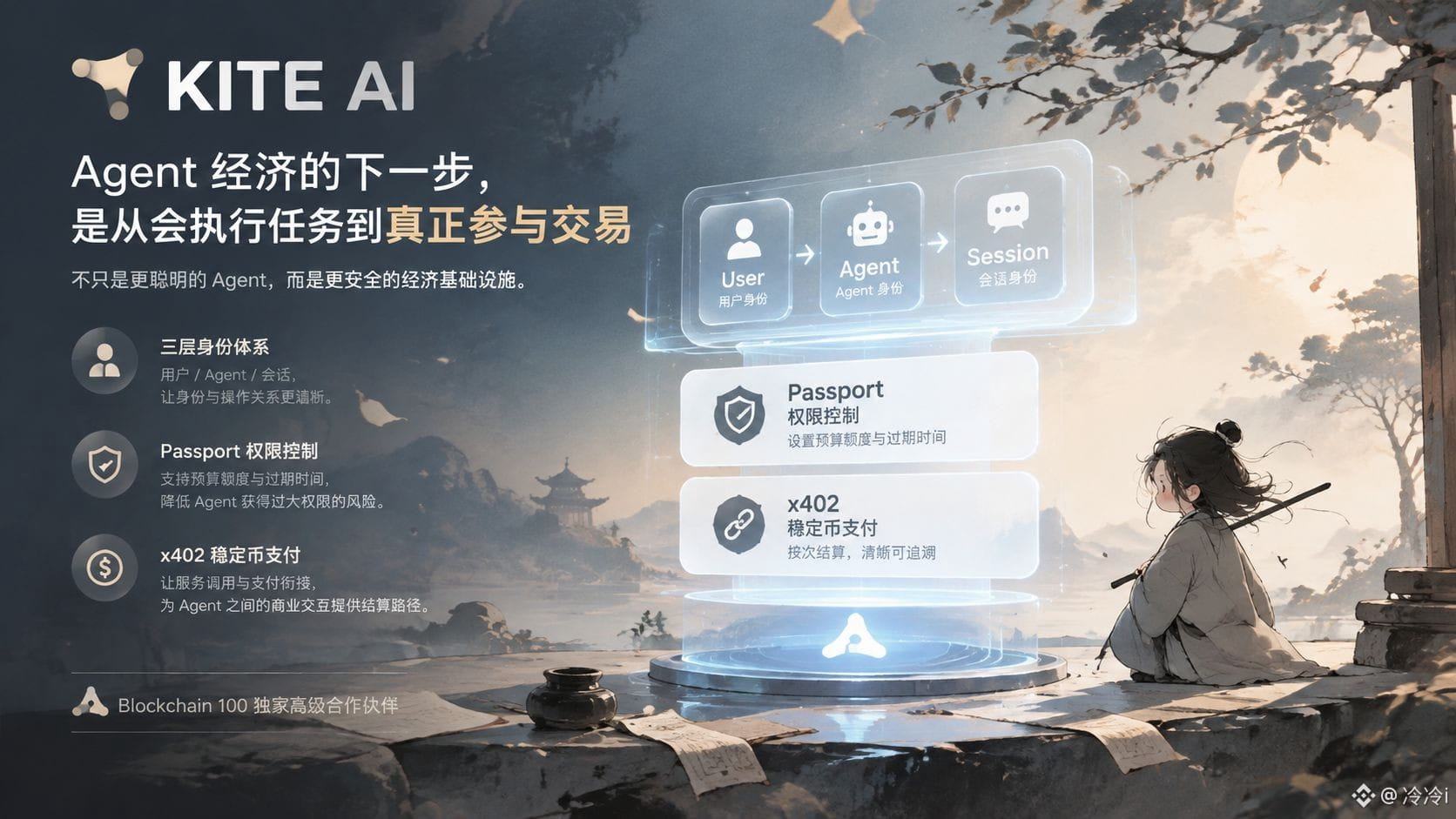
@KITE AI 中文 Kite turns these three things into configurable infrastructure:
- A three-layer identity structure: user → Agent → session
- Configurable spending limits and expiration times in Passport
- Per-transaction stablecoin payments via x402
Rather than handing the Agent the wallet keys, it gives it a payment credential with limits that can be audited and revoked. This design is more like giving an Agent a credit card with a set spending limit than handing over an entire bank account.
In my view, the most valuable aspect of this design is that it makes worst-case scenarios quantifiable.
Users are willing to allocate a budget to an Agent because the maximum loss per day or per transaction is clear, making it easier to accept psychologically. Service providers are willing to take on work because the payment path is clear and traceable, reducing the chance of disputes.
Only when identity, spending limits, and settlement are all in place can Agents move beyond demos and truly enter the economic cycle. Otherwise, people may say they’re bullish on the Agent economy, but still hesitate when it’s time to pay.
Most market discussions are still about what Agents can do, while Kite focuses more on how to use Agents safely.
Personally, I lean toward the latter approach. Many projects like to tell grand stories, but infrastructure rarely draws as much attention as a sweeping narrative. Yet it determines whether this field can move from concept to real transactions at scale.
As Blockchain100’s exclusive premium partner, Kite has chosen to prioritize controllable identity and stablecoin settlement. That choice itself shows that it is assessing the real barriers to adoption, rather than just telling the stories that are easiest to spread. If the Agent economy is truly going to take off, this more pragmatic infrastructure may matter more than a few more demos of fully autonomous Agents.
#KiteBBW $KITE @GoKiteAI


Log in to explore more content