
白鲨观点_VN
545 Posts
白鲨观点_VN
298 Following
3.0K+ Followers
208 Liked
Posts
All
Quotes
Live
PINNED

PINNED
·
--
🎙️ Crypto market updates & discussion; beginner Q&A ✅ Co-build the Binance Plaza 🦅 Spread the ideals of free exchange! Maintain ecological balance!

End
03 h 12 m 00 s
9.8k
64
·
--
🎙️ When you reach a level where you’re no longer anxious about 50 points, then you’re in the beginner stage, bnb

End
02 h 06 m 51 s
4.4k
13

正乾商学--四条2
·
--
Are you really suited to make a living by trading?
Part Six
⑥ Finally, ask yourself one more question
Do you really spend a lot of time every day learning and analyzing?
Many people ask me:
“Why don’t I have results even after trading for a year?”
But if you dig in carefully:
How many hours do you actually spend learning every day?
Do you do a review afterward?
Do you keep a trading log?
Do you track your win rate, profit-to-loss ratio, and maximum drawdown?
Do you analyze what kinds of market conditions you are most likely to make mistakes in?
In the end, you’ll find that:
In fact, many people don’t really do it.
So some people say:
“I’m not good at trading, so trading isn’t for me.”
I think that conclusion was reached too quickly.
You should first ask yourself:
Have I really built a trading environment that suits me?
Have I really found a trading approach that fits my personality?
Have I really put in enough time to learn?
Have I systematically verified my method?
If these questions still haven’t been resolved,
then it’s time to say:
“Trading isn’t working.”
Actually, it’s still too early.
Finally, what I want to say is:
Many people understand “successful trading” as:
Finding a magical indicator.
But in reality, truly long-term, stable trading is more like a complete system:
your income structure
+your lifestyle
+your trading
+your personality
+a trading style that suits you
+knowledge
+risk management
+mental resilience
As long as any one of these elements has been a problem for a long time,
it may eventually show up in your trading results.
So before asking:
“Can I get rich by trading?”
first ask yourself:
“Is my current life really already prepared for me to become a trader?”
This may be far more important than learning another indicator.
If you’re interested in trading, feel free to leave a comment in the comment section or join the chat room to exchange ideas and learn together and grow together!
#Paradigm披露持有ZEC #Paradigm披露持有ZEC
Part Six
⑥ Finally, ask yourself one more question
Do you really spend a lot of time every day learning and analyzing?
Many people ask me:
“Why don’t I have results even after trading for a year?”
But if you dig in carefully:
How many hours do you actually spend learning every day?
Do you do a review afterward?
Do you keep a trading log?
Do you track your win rate, profit-to-loss ratio, and maximum drawdown?
Do you analyze what kinds of market conditions you are most likely to make mistakes in?
In the end, you’ll find that:
In fact, many people don’t really do it.
So some people say:
“I’m not good at trading, so trading isn’t for me.”
I think that conclusion was reached too quickly.
You should first ask yourself:
Have I really built a trading environment that suits me?
Have I really found a trading approach that fits my personality?
Have I really put in enough time to learn?
Have I systematically verified my method?
If these questions still haven’t been resolved,
then it’s time to say:
“Trading isn’t working.”
Actually, it’s still too early.
Finally, what I want to say is:
Many people understand “successful trading” as:
Finding a magical indicator.
But in reality, truly long-term, stable trading is more like a complete system:
your income structure
+your lifestyle
+your trading
+your personality
+a trading style that suits you
+knowledge
+risk management
+mental resilience
As long as any one of these elements has been a problem for a long time,
it may eventually show up in your trading results.
So before asking:
“Can I get rich by trading?”
first ask yourself:
“Is my current life really already prepared for me to become a trader?”
This may be far more important than learning another indicator.
If you’re interested in trading, feel free to leave a comment in the comment section or join the chat room to exchange ideas and learn together and grow together!
#Paradigm披露持有ZEC #Paradigm披露持有ZEC


周周1688
·
--
🇨🇳 Today|September 17 Crypto Market Brief
🔥 FOMC delivered results, and the market shifted from “waiting for answers” to “digesting the answers”
The Federal Reserve raised rates for the first time in three years by 25 basis points, bringing the federal funds rate to 3.75%–4.00%.
BTC briefly fell to around $75.3K, then regained and moved back above $76K.
📉 ETFs: about $746M outflow over two days
On September 15, spot BTC ETF net outflows were about $450M; on September 16, there was another outflow of about $296M.
Together, the two-day total is nearly $746M—one of the largest consecutive outflow streaks recently.
But this looks more like a concentrated reaction to blocked CLARITY momentum and the FOMC outcome, not simply a sign of long-term capital leaving.
🏛 US Regulation: the Senate and House head in different directions
The CLARITY Act did not receive the 60 votes needed to advance in the Senate.
Meanwhile, two related bills passed in the House committee:
American Reserve Modernization Act: 28–21
Digital Asset Tax Certainty Act: 38–5
Market-structure legislation is temporarily stalled, but BTC reserves and the digital asset tax framework are still moving forward.
⚡ Circle Arc Mainnet officially goes live
Circle launched an L1 Arc that uses USDC as gas, targeting sub-second finality.
Institutions including BlackRock, Visa, Mastercard, DTCC, and ICE participate in validating nodes, while 100+ apps and institutional projects enter the ecosystem in parallel.
🟢 ZEC becomes today’s standout mover
Zcash rose as much as about 18%–23%.
The NU7 upgrade will reduce target block time from 75 seconds to 25 seconds while keeping the existing halving mechanism.
📊 Market Snapshot
BTC ≈ $76.4K
ETH ≈ $2.44K
SOL ≈ $100
BNB ≈ $710+
XRP ≈ $1.29
🎯 Today’s key is not “whether rates will be raised,” but “what happens after the hike.”
The 25bp increase is already in the books.
Now the market is really watching the Dot Plot, the inflation path, and whether the remaining time through 2026 will still see tightening.
BTC is still looking for direction within the $75K–$80K range.
#1688家族family #蓝朋友1688 #CryptoWatchMay2024 #EthereumEFT #FOMC
🔥 FOMC delivered results, and the market shifted from “waiting for answers” to “digesting the answers”
The Federal Reserve raised rates for the first time in three years by 25 basis points, bringing the federal funds rate to 3.75%–4.00%.
BTC briefly fell to around $75.3K, then regained and moved back above $76K.
📉 ETFs: about $746M outflow over two days
On September 15, spot BTC ETF net outflows were about $450M; on September 16, there was another outflow of about $296M.
Together, the two-day total is nearly $746M—one of the largest consecutive outflow streaks recently.
But this looks more like a concentrated reaction to blocked CLARITY momentum and the FOMC outcome, not simply a sign of long-term capital leaving.
🏛 US Regulation: the Senate and House head in different directions
The CLARITY Act did not receive the 60 votes needed to advance in the Senate.
Meanwhile, two related bills passed in the House committee:
American Reserve Modernization Act: 28–21
Digital Asset Tax Certainty Act: 38–5
Market-structure legislation is temporarily stalled, but BTC reserves and the digital asset tax framework are still moving forward.
⚡ Circle Arc Mainnet officially goes live
Circle launched an L1 Arc that uses USDC as gas, targeting sub-second finality.
Institutions including BlackRock, Visa, Mastercard, DTCC, and ICE participate in validating nodes, while 100+ apps and institutional projects enter the ecosystem in parallel.
🟢 ZEC becomes today’s standout mover
Zcash rose as much as about 18%–23%.
The NU7 upgrade will reduce target block time from 75 seconds to 25 seconds while keeping the existing halving mechanism.
📊 Market Snapshot
BTC ≈ $76.4K
ETH ≈ $2.44K
SOL ≈ $100
BNB ≈ $710+
XRP ≈ $1.29
🎯 Today’s key is not “whether rates will be raised,” but “what happens after the hike.”
The 25bp increase is already in the books.
Now the market is really watching the Dot Plot, the inflation path, and whether the remaining time through 2026 will still see tightening.
BTC is still looking for direction within the $75K–$80K range.
#1688家族family #蓝朋友1688 #CryptoWatchMay2024 #EthereumEFT #FOMC


橙子Joyce
·
--
BullishWill the Federal Reserve raise rates as expected this week? Wall Street is debating: will it end the U.S. stock bull market?
After an unexpectedly strong U.S. CPI report came out last Friday, traders generally expect the Federal Reserve to begin raising rates at this week’s policy meeting—marking the first rate hike in more than three years.
Historically, previous rounds of rate hikes have offered a reference point for today’s market. Based on past experience (though history of course can’t guarantee the future), U.S. stocks may first weaken, then rebound.
Among the six tightening cycles since 1994, during the first four months after the rate-hike cycle began, the S&P 500’s average return was negative.
This suggests that once the “rate-hike shoe” drops, U.S. stocks may look lackluster through the beginning of next year.
As of the close last Friday, the benchmark U.S. equity index, the S&P 500, is up nearly 12% year to date. Strong corporate earnings and a fairly resilient economy have provided solid support for bulls in the stock market.
If you extend the time horizon, the S&P 500’s performance tends to improve gradually: in the 12 months after the start of a rate-hiking cycle, the index’s average return is close to 7%, with a median return of about 11%. (Using median-based statistics helps remove distortions from extreme outliers—for example, the index surged more than 40% after hikes began in March 1997.)
If the Federal Reserve implements a rate hike this Wednesday, it will be the first hike since July 2023—when the Fed raised rates to a range of 5.25% to 5.50%.
Currently, the federal funds rate in the U.S. is at 3.50% to 3.75%. According to the CME Group’s FedWatch tool, futures traders currently assign an 86% probability to a 25-basis-point hike this week.
One positive factor for the market is that mega-scale cloud service providers are still driving growth in excess returns through large-scale AI spending. The S&P 500 component stocks’ forecast for earnings growth in 2027 is expected to reach double digits. If the outlook for AI spending remains unchanged, it may be enough to offset any cooling in optimistic sentiment caused by the rate hikes.
Another bright spot for equities is that although inflation remains sticky, it appears to be slowing. The inflation rate has fallen from a May peak of 4.2%. This should allow the Federal Reserve to take a more gradual approach, and the data shows that the pace of rate hikes is crucial for stock performance—slower pacing gives investors more time to absorb policy changes!
$BZ
$CL
Energy
After an unexpectedly strong U.S. CPI report came out last Friday, traders generally expect the Federal Reserve to begin raising rates at this week’s policy meeting—marking the first rate hike in more than three years.
Historically, previous rounds of rate hikes have offered a reference point for today’s market. Based on past experience (though history of course can’t guarantee the future), U.S. stocks may first weaken, then rebound.
Among the six tightening cycles since 1994, during the first four months after the rate-hike cycle began, the S&P 500’s average return was negative.
This suggests that once the “rate-hike shoe” drops, U.S. stocks may look lackluster through the beginning of next year.
As of the close last Friday, the benchmark U.S. equity index, the S&P 500, is up nearly 12% year to date. Strong corporate earnings and a fairly resilient economy have provided solid support for bulls in the stock market.
If you extend the time horizon, the S&P 500’s performance tends to improve gradually: in the 12 months after the start of a rate-hiking cycle, the index’s average return is close to 7%, with a median return of about 11%. (Using median-based statistics helps remove distortions from extreme outliers—for example, the index surged more than 40% after hikes began in March 1997.)
If the Federal Reserve implements a rate hike this Wednesday, it will be the first hike since July 2023—when the Fed raised rates to a range of 5.25% to 5.50%.
Currently, the federal funds rate in the U.S. is at 3.50% to 3.75%. According to the CME Group’s FedWatch tool, futures traders currently assign an 86% probability to a 25-basis-point hike this week.
One positive factor for the market is that mega-scale cloud service providers are still driving growth in excess returns through large-scale AI spending. The S&P 500 component stocks’ forecast for earnings growth in 2027 is expected to reach double digits. If the outlook for AI spending remains unchanged, it may be enough to offset any cooling in optimistic sentiment caused by the rate hikes.
Another bright spot for equities is that although inflation remains sticky, it appears to be slowing. The inflation rate has fallen from a May peak of 4.2%. This should allow the Federal Reserve to take a more gradual approach, and the data shows that the pace of rate hikes is crucial for stock performance—slower pacing gives investors more time to absorb policy changes!
$BZ
$CL
Energy

奕泽YIZZE
·
--
🧧🔥 In the tide of the digital age, steadfast belief is the key to moving forward. Follow LUCIC exclusive card dividend updates—don’t blindly follow, don’t chase trends. Amid the interweaving of technological change and market shifts, stay confident in quality assets. Let’s explore together the possibilities ahead and seize today’s long-term opportunities.
Please follow, like, and share!
Please follow, like, and share!


奋斗Hustle-1688
·
--
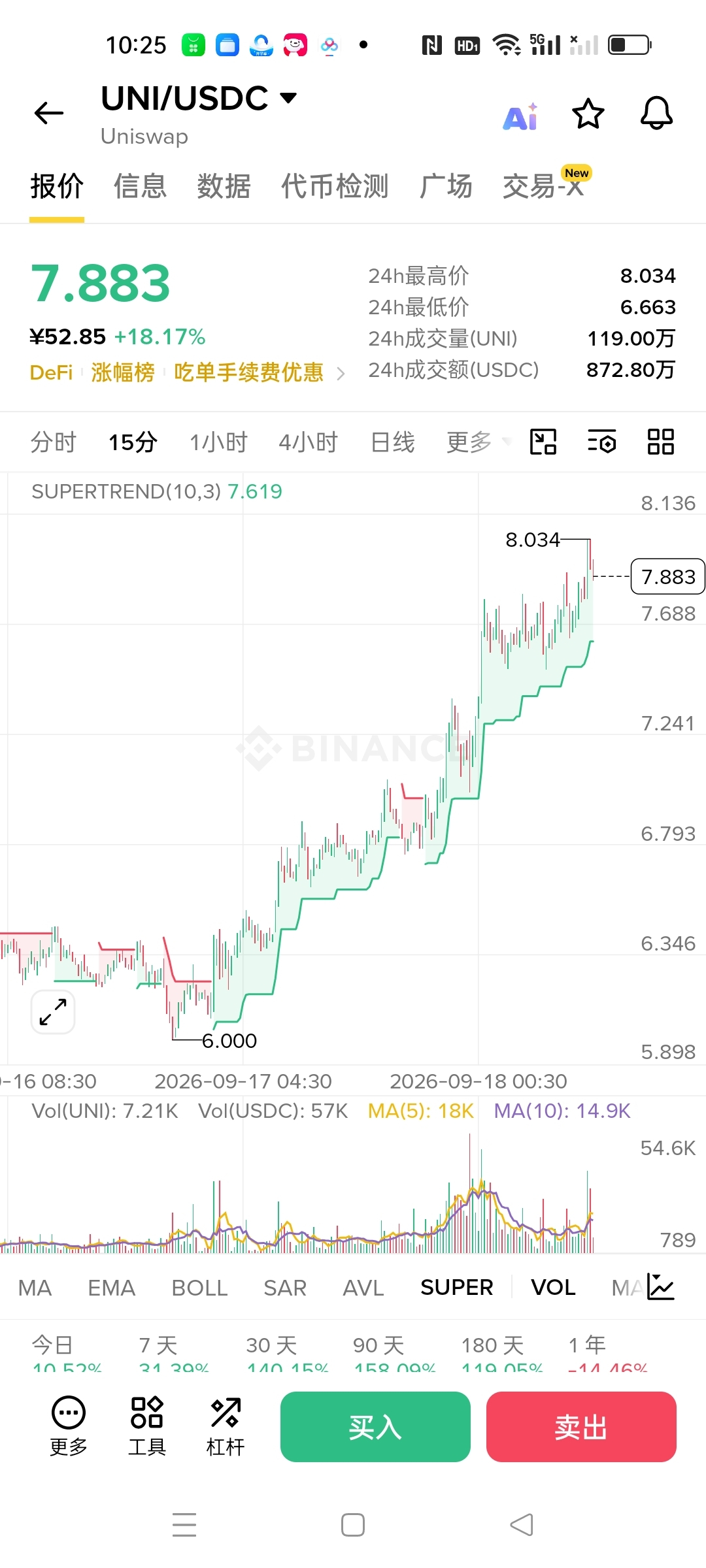
$UNI I’m going to hold it tight and never let go

阿婧1688
·
--
Mutual care and concern 😀, destiny brings us together across a thousand miles 😍. Knowing each other is fate.


北辰1688
·
--
BearishZEC has already surged by almost 8%, yet the shorts still haven’t surrendered.
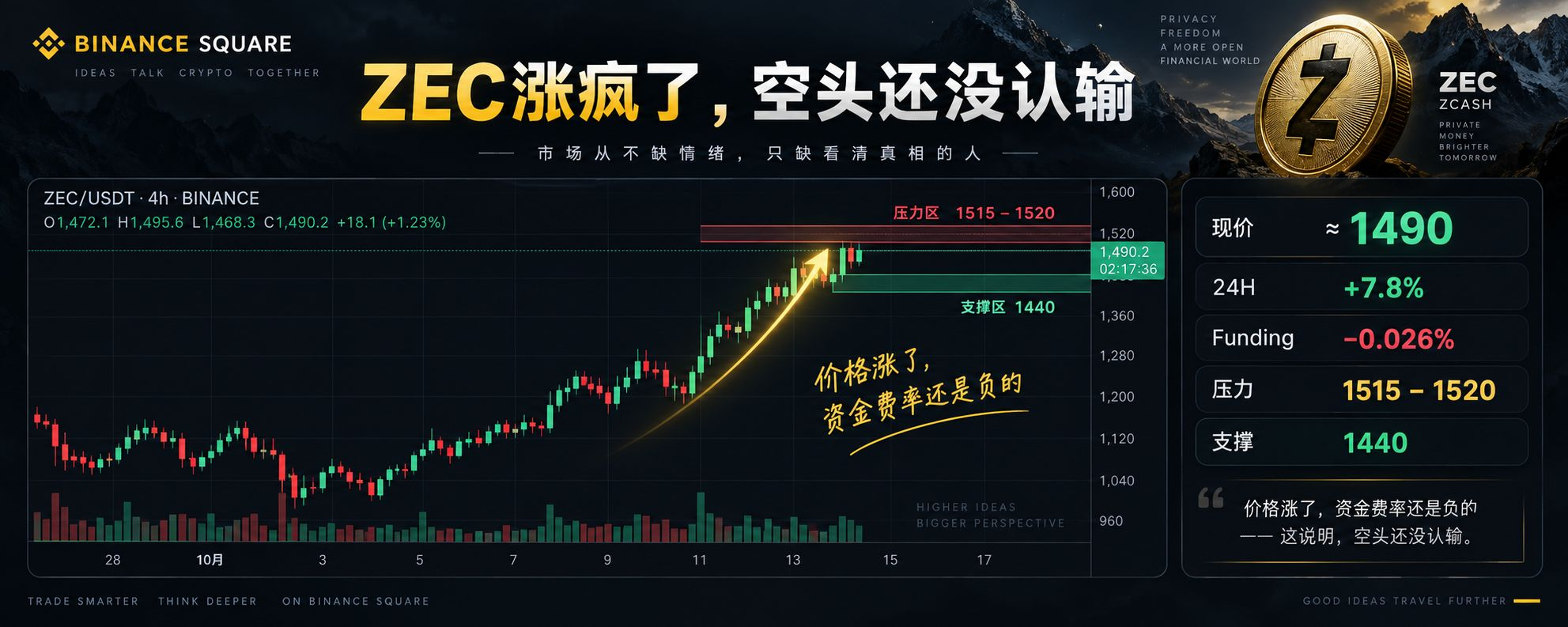
$ZEC is now around **1490**; the 24-hour increase is about **7.8%**, and the high has already touched **1516**.
But here’s what’s interesting—
The perpetual funding rate is still around **-0.026%**.
As price moves upward, the funding rate remains in negative territory, which suggests there are still plenty of traders shorting against the trend.
Also, in this move on the 4-hour timeframe—from around 1360 straight up to above 1480—the OI hasn’t jumped significantly in parallel. I’m more inclined to think this rally includes clear short covering, not just leveraged long positions pushing it higher.
Only if 1515–1520 can truly hold, there’s a chance to keep squeezing shorts further;
if it drops back toward around 1440, then the strength of this run will likely be discounted.
The most interesting question now isn’t whether “ZEC has finished rising,” but:
Do you think it will break through 1520 first, or pull back to 1440 first? $ZEC
$ZEC is now around **1490**; the 24-hour increase is about **7.8%**, and the high has already touched **1516**.
But here’s what’s interesting—
The perpetual funding rate is still around **-0.026%**.
As price moves upward, the funding rate remains in negative territory, which suggests there are still plenty of traders shorting against the trend.
Also, in this move on the 4-hour timeframe—from around 1360 straight up to above 1480—the OI hasn’t jumped significantly in parallel. I’m more inclined to think this rally includes clear short covering, not just leveraged long positions pushing it higher.
Only if 1515–1520 can truly hold, there’s a chance to keep squeezing shorts further;
if it drops back toward around 1440, then the strength of this run will likely be discounted.
The most interesting question now isn’t whether “ZEC has finished rising,” but:
Do you think it will break through 1520 first, or pull back to 1440 first? $ZEC

生蚝哥Oyster
·
--
BullishSEC makes major move to implement the “Innovation Exemption”! US officially opens compliant tokenized stock on-chain trading
After the Senate vote on the CLARITY Act stalled and legislative progress was blocked, the US SEC took the initiative to step in. SEC Chair Paul Atkins officially announced the innovation exemption policy, rolling out a groundbreaking regulatory framework within existing statutory authority—formally paving the way for compliant tokenized stock on-chain trading, and accelerating the transition of the US traditional capital markets into the on-chain digital era.
The exemption is granted under compliant authorization of the Securities Exchange Act. It establishes two categories of temporary, conditional regulatory exemptions, precisely removing compliance barriers for on-chain securities trading:
1. Exemption for venues for tokenized securities (TSV) that lowers the traditional “exchange” definition threshold
2. Exemption for compliant liquidity providers that relaxes constraints on the traditional “broker-dealer” qualification
At the same time, the SEC clearly sets the bottom line: federal securities law provisions against fraud and manipulation apply in full, with zero exceptions for on-chain trading—leaving no room for regulatory arbitrage.
Strict investor protection entry requirements (core regulatory guardrails)
✅ All trading platforms must be US-based entities and strictly comply with OFAC sanctions requirements
✅ Implement a permission-based entry system; only eligible, compliant participants may trade
✅ Fully prohibit synthetic assets; only support tokenization of real underlying assets (US stocks)
✅ Tokenized stocks must correspond to real equity; holders fully retain traditional shareholder rights, including dividends and voting
✅ Issuers of the stock retain ultimate veto power and may independently prevent their own securities from being listed for on-chain trading
SEC’s official positioning: transitional pilots to pave the way for long-term regulation
Atkins emphasized that this exemption is not a permanent codification of rules, but rather a phased innovation pilot.
Through this round of market practice and an open solicitation of industry input, the SEC will continue to monitor the development of on-chain securities markets. In the future, it will roll out long-term, standardized, and digital-era-appropriate formal regulatory legislation.
Key takeaway
With congressional legislation stalled and a regulatory vacuum, the SEC directly breaks the deadlock administratively.
The US has officially unlocked lawful, compliant, and regulated tokenized stock on-chain trading. Traditional US stocks and blockchain are now thoroughly connected—an unprecedented breakthrough in the US crypto compliance roadmap.
After the Senate vote on the CLARITY Act stalled and legislative progress was blocked, the US SEC took the initiative to step in. SEC Chair Paul Atkins officially announced the innovation exemption policy, rolling out a groundbreaking regulatory framework within existing statutory authority—formally paving the way for compliant tokenized stock on-chain trading, and accelerating the transition of the US traditional capital markets into the on-chain digital era.
The exemption is granted under compliant authorization of the Securities Exchange Act. It establishes two categories of temporary, conditional regulatory exemptions, precisely removing compliance barriers for on-chain securities trading:
1. Exemption for venues for tokenized securities (TSV) that lowers the traditional “exchange” definition threshold
2. Exemption for compliant liquidity providers that relaxes constraints on the traditional “broker-dealer” qualification
At the same time, the SEC clearly sets the bottom line: federal securities law provisions against fraud and manipulation apply in full, with zero exceptions for on-chain trading—leaving no room for regulatory arbitrage.
Strict investor protection entry requirements (core regulatory guardrails)
✅ All trading platforms must be US-based entities and strictly comply with OFAC sanctions requirements
✅ Implement a permission-based entry system; only eligible, compliant participants may trade
✅ Fully prohibit synthetic assets; only support tokenization of real underlying assets (US stocks)
✅ Tokenized stocks must correspond to real equity; holders fully retain traditional shareholder rights, including dividends and voting
✅ Issuers of the stock retain ultimate veto power and may independently prevent their own securities from being listed for on-chain trading
SEC’s official positioning: transitional pilots to pave the way for long-term regulation
Atkins emphasized that this exemption is not a permanent codification of rules, but rather a phased innovation pilot.
Through this round of market practice and an open solicitation of industry input, the SEC will continue to monitor the development of on-chain securities markets. In the future, it will roll out long-term, standardized, and digital-era-appropriate formal regulatory legislation.
Key takeaway
With congressional legislation stalled and a regulatory vacuum, the SEC directly breaks the deadlock administratively.
The US has officially unlocked lawful, compliant, and regulated tokenized stock on-chain trading. Traditional US stocks and blockchain are now thoroughly connected—an unprecedented breakthrough in the US crypto compliance roadmap.


慢就是快Mike
·
--
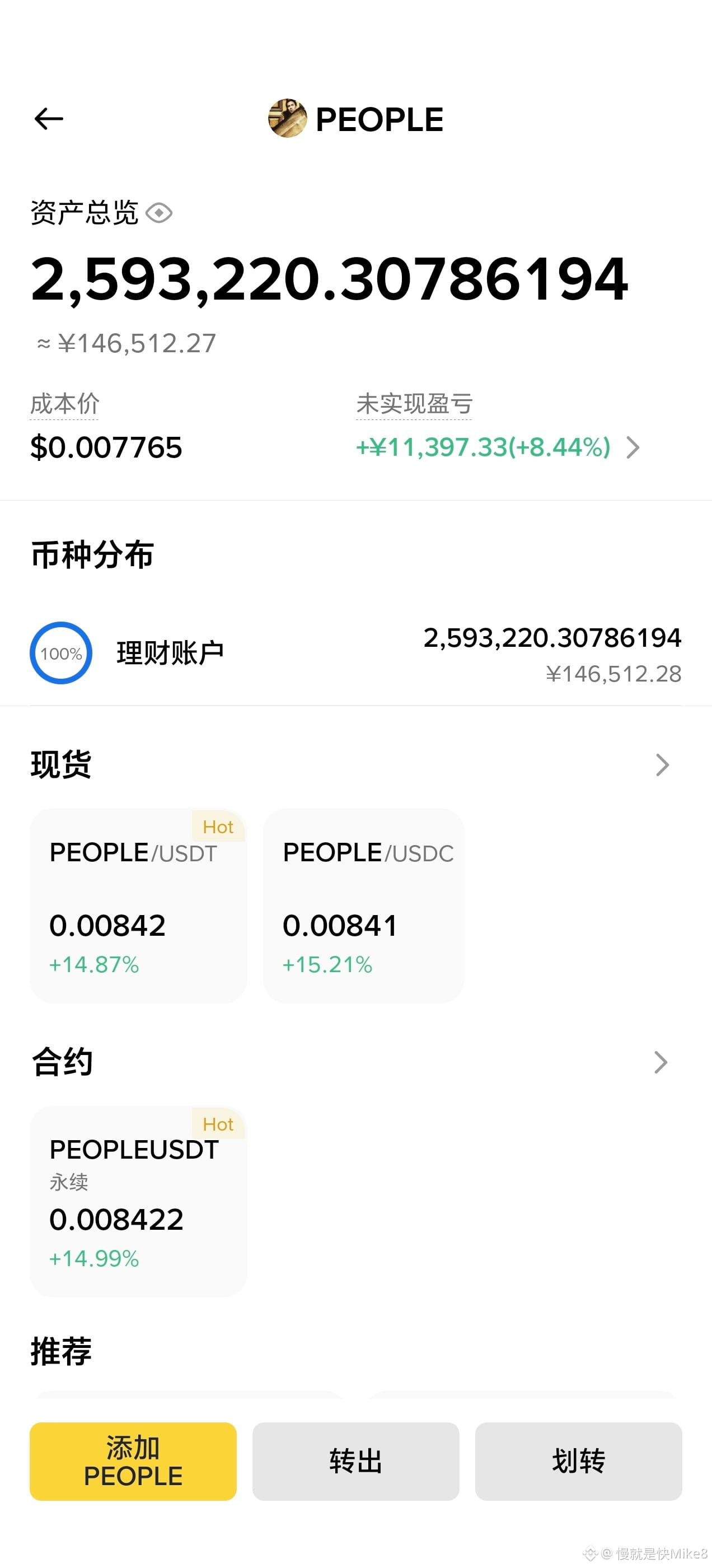
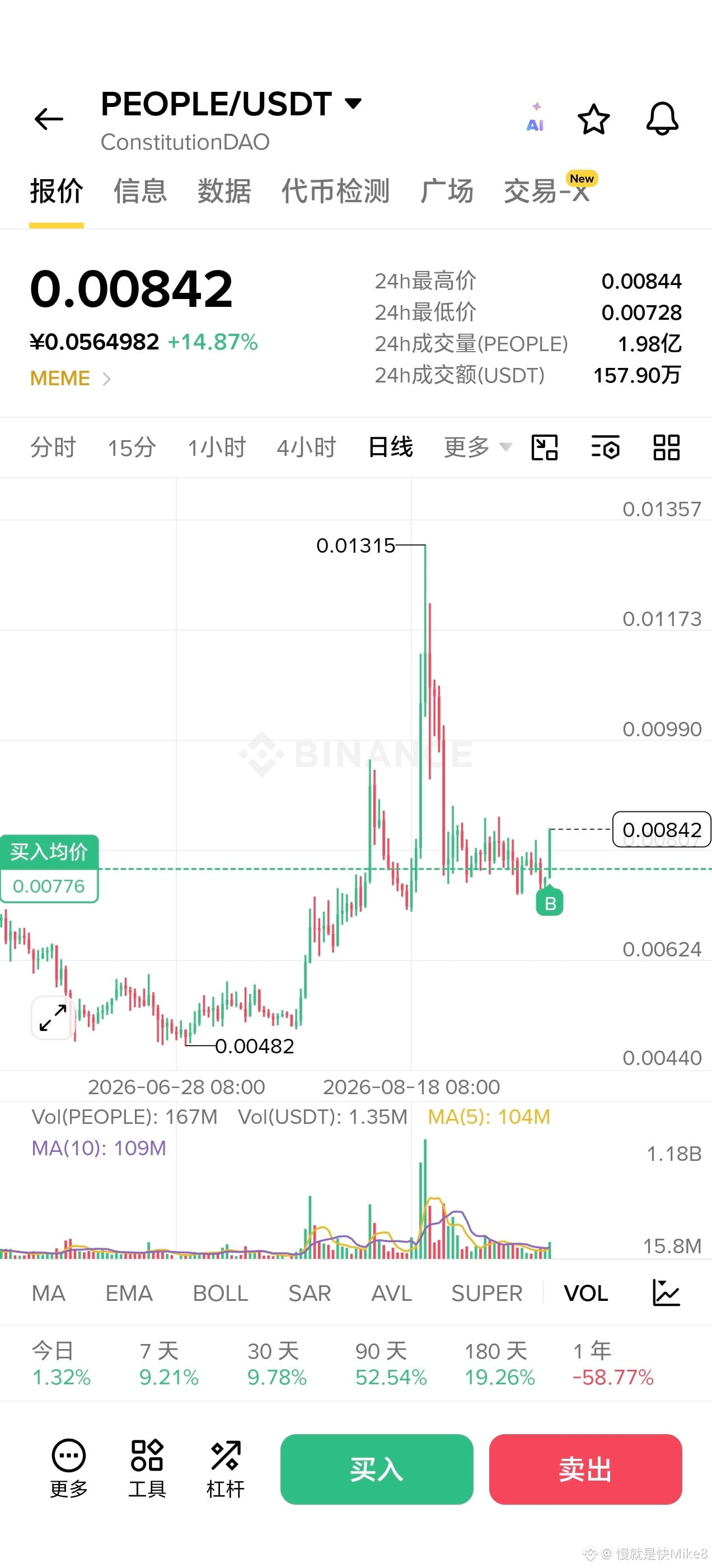
$PEOPLE Every year during the U.S. presidential election, this coin will have market action. “By the people, for the people” — you can stake a position in advance!


·
--
🎙️ Build the Binance Square, DCA BNB|On Friday, the bill vote and the rate-hike news are in the spotlight. BTC is also bouncing around around 76,400. Will this weekend be a bit special? Let’s talk~

End
05 h 05 m 55 s
9.5k
50
白鲨观点_VN
·
--
One evening, Minh sent me a photo. It was an old sheet of paper with the following note written on it: “If the price drops to this level, no matter how optimistic you are, you must sell.”
I asked: “How long have you kept it?”
“Five years.”
Five years later, he himself had to use that rule again. At that moment, he had a large profit. The market started to shake, but he still said, “In the long run, I still believe.”
I asked: “So why did you write this rule five years ago?”
He went silent, then smiled: “Because back then I didn’t have any money in the market. Without a position, I was very rational.”
That’s right. Before entering a trade, everyone finds it easy to set rules. But once real money is on the table, greed and fear often make us change our decisions.
In the end, Minh sold exactly according to the rule. A few days later, the market dropped sharply.
He only said: “I don’t know whether the price will go up or down. I just know that I must follow the principles I set for myself.”
In trading, sometimes what protects you isn’t the ability to predict the market, but the rules written down before emotions show up.
#45NgayTuDoTaiChinh $BTC
#baisha
I asked: “How long have you kept it?”
“Five years.”
Five years later, he himself had to use that rule again. At that moment, he had a large profit. The market started to shake, but he still said, “In the long run, I still believe.”
I asked: “So why did you write this rule five years ago?”
He went silent, then smiled: “Because back then I didn’t have any money in the market. Without a position, I was very rational.”
That’s right. Before entering a trade, everyone finds it easy to set rules. But once real money is on the table, greed and fear often make us change our decisions.
In the end, Minh sold exactly according to the rule. A few days later, the market dropped sharply.
He only said: “I don’t know whether the price will go up or down. I just know that I must follow the principles I set for myself.”
In trading, sometimes what protects you isn’t the ability to predict the market, but the rules written down before emotions show up.
#45NgayTuDoTaiChinh $BTC
#baisha

白鲨观点_VN
·
--
US President Donald Trump: "The employment data released is absolutely wonderful, exceeding all expectations (except my own)!"
#TheoDõiFOMC $BTC
#TheoDõiFOMC $BTC

白鲨观点VN
·
--
One evening, Lý Dương asked me:
“Mr. Bai, what does it take to be considered a good trader? Is it all about making a lot of money?”
I smiled: “Maybe not for sure.”
At the beginning, Lý Dương only had a few tens of thousands of dollars. He traded very carefully—if he made a profit, he felt happy; if he lost, he would look for the reasons. But when his account grew to a few hundred thousand dollars, everything gradually changed.
He traded more, with larger volumes. The profit of 5k—something that once made him happy—now felt too small. Losing 10k no longer led him to analyze; he only wanted to quickly make it back.
One day, he said: “Earlier, I traded to make money. Now I trade like I’m trying to prove that I’m right.”
I fell silent.
After that, Lý Dương started reducing the frequency and volume of his trades, pulling back some profits and spending more time on his life.
A few months later, he said: “I’m not making money as fast as before, but I sleep better.”
I thought, that’s the real maturity of a trader. Making money is a skill. Not letting money and emotions control you—that’s real class.
“Mr. Bai, what does it take to be considered a good trader? Is it all about making a lot of money?”
I smiled: “Maybe not for sure.”
At the beginning, Lý Dương only had a few tens of thousands of dollars. He traded very carefully—if he made a profit, he felt happy; if he lost, he would look for the reasons. But when his account grew to a few hundred thousand dollars, everything gradually changed.
He traded more, with larger volumes. The profit of 5k—something that once made him happy—now felt too small. Losing 10k no longer led him to analyze; he only wanted to quickly make it back.
One day, he said: “Earlier, I traded to make money. Now I trade like I’m trying to prove that I’m right.”
I fell silent.
After that, Lý Dương started reducing the frequency and volume of his trades, pulling back some profits and spending more time on his life.
A few months later, he said: “I’m not making money as fast as before, but I sleep better.”
I thought, that’s the real maturity of a trader. Making money is a skill. Not letting money and emotions control you—that’s real class.

Log in to explore more content