

Songod15
221 Posts

Songod15
Report
Block User
Web3 explorer 🚀 DeFi | AI x Blockchain | Onchain opportunities Stacking knowledge. Stacking assets.
Occasional Trader
3.8 Years
24 Following
32 Followers
156 Liked
Posts
All
Quotes
·
--
Beyond Blind Trust: Mira’s Decentralized Blueprint for AI AccountabilityOne of the hidden challenges behind artificial intelligence is not just model capability, but the reliability of the information those models produce. Even advanced systems can generate outputs that appear confident while containing incorrect assumptions or incomplete reasoning. When AI begins interacting with financial systems or autonomous infrastructure, these inaccuracies can have real consequences.
@mira_network is building a decentralized protocol that introduces a verification layer for AI-generated information. Instead of accepting responses from a single model as final, the system restructures outputs into smaller claims that can be independently evaluated. These claims are then reviewed by distributed validators within the network, allowing consensus to determine whether the information is reliable.
The incentive system powered by $MIRA plays a key role in maintaining the integrity of this process. Validators are rewarded for accurate verification and discouraged from submitting dishonest or low quality evaluations. This creates a self reinforcing environment where correctness becomes economically valuable.
By combining decentralized validation with economic incentives, Mira creates a framework where AI outputs are no longer blindly trusted. Instead, they pass through a verification process designed to reduce hallucinations, limit bias, and strengthen reliability.
As artificial intelligence continues expanding into automation, finance, and governance systems, the need for trusted verification layers will grow. #Mira represents an important step toward ensuring that intelligent systems can operate with both capability and accountability.
Beyond Blind Trust: Mira’s Decentralized Blueprint for AI Accountability
One of the hidden challenges behind artificial intelligence is not just model capability, but the reliability of the information those models produce. Even advanced systems can generate outputs that appear confident while containing incorrect assumptions or incomplete reasoning. When AI begins interacting with financial systems or autonomous infrastructure, these inaccuracies can have real consequences.
@Mira - Trust Layer of AI is building a decentralized protocol that introduces a verification layer for AI-generated information. Instead of accepting responses from a single model as final, the system restructures outputs into smaller claims that can be independently evaluated. These claims are then reviewed by distributed validators within the network, allowing consensus to determine whether the information is reliable.
The incentive system powered by $MIRA plays a key role in maintaining the integrity of this process. Validators are rewarded for accurate verification and discouraged from submitting dishonest or low quality evaluations. This creates a self reinforcing environment where correctness becomes economically valuable.
By combining decentralized validation with economic incentives, Mira creates a framework where AI outputs are no longer blindly trusted. Instead, they pass through a verification process designed to reduce hallucinations, limit bias, and strengthen reliability.
As artificial intelligence continues expanding into automation, finance, and governance systems, the need for trusted verification layers will grow. #Mira represents an important step toward ensuring that intelligent systems can operate with both capability and accountability.
@Mira - Trust Layer of AI is building a decentralized protocol that introduces a verification layer for AI-generated information. Instead of accepting responses from a single model as final, the system restructures outputs into smaller claims that can be independently evaluated. These claims are then reviewed by distributed validators within the network, allowing consensus to determine whether the information is reliable.
The incentive system powered by $MIRA plays a key role in maintaining the integrity of this process. Validators are rewarded for accurate verification and discouraged from submitting dishonest or low quality evaluations. This creates a self reinforcing environment where correctness becomes economically valuable.
By combining decentralized validation with economic incentives, Mira creates a framework where AI outputs are no longer blindly trusted. Instead, they pass through a verification process designed to reduce hallucinations, limit bias, and strengthen reliability.
As artificial intelligence continues expanding into automation, finance, and governance systems, the need for trusted verification layers will grow. #Mira represents an important step toward ensuring that intelligent systems can operate with both capability and accountability.
17
·
--
Data quality is one of the biggest limitations of modern AI systems. @mira_network tackles this by introducing a decentralized verification layer where AI generated information is reviewed and validated before being relied upon. Through incentives powered by $MIRA , the network encourages accurate validation and discourages unreliable outputs. #Mira
Data quality is one of the biggest limitations of modern AI systems. @Mira - Trust Layer of AI tackles this by introducing a decentralized verification layer where AI generated information is reviewed and validated before being relied upon. Through incentives powered by $MIRA , the network encourages accurate validation and discourages unreliable outputs. #Mira
15
·
--
🤖 Beyond the Hype: Why $ROBO is the Backbone of the New Robot EconomyThe robotics industry is hitting a wall. Why? Because most development happens in "Siloed Fleets." Big tech companies own the hardware, the software, and the data creating closed loops that slow down global innovation.
@FabricFND is flipping the script. They aren't just building a "crypto project"; they are building the infrastructure for a decentralized machine economy.
🔑 The Value Proposition: What makes $ROBO different?
Most AI tokens focus on digital agents. $ROBO focuses on the physical world. It solves the three biggest hurdles for autonomous machines:
* OnChain Identity (Passport for Robots): For a robot to work in a warehouse or a city, it needs a verifiable identity. Fabric provides an onchain registry so we know exactly what a robot is and who is responsible for it.
* Autonomous Payments: Unlike humans, robots can't open bank accounts. $ROBO allows machines to pay for their own charging, maintenance, and compute power without human intervention.
* Verifiable Computing: Through "Proof of Robotic Work," every action a machine takes is recorded and validated. This ensures safety and trust in human-machine collaboration.
📈 Token Utility & Ecosystem Growth
Robo isn’t just for speculation; it’s the operational fuel of the network:
* Network Fees: Every identity verification and task coordination is settled in $ROBO.
* Staking for Coordination: Contributors stake tokens to help deploy and manage robot fleets, gaining priority access to network tasks.
* Deflationary Pressure: A portion of protocol revenue is used for ROBO buybacks, aligning the token's value with the growth of the robot workforce.
🚀 The Big Picture
We are moving from a world where robots are "tools" to a world where they are "autonomous economic actors." By decentralizing the tech stack, Fabric allows any researcher or developer to contribute to a universal robotic operating system.
The Future is Collaborative. The Future is On-Chain.#Robo
🤖 Beyond the Hype: Why $ROBO is the Backbone of the New Robot Economy
The robotics industry is hitting a wall. Why? Because most development happens in "Siloed Fleets." Big tech companies own the hardware, the software, and the data creating closed loops that slow down global innovation.
@Fabric Foundation is flipping the script. They aren't just building a "crypto project"; they are building the infrastructure for a decentralized machine economy.
🔑 The Value Proposition: What makes $ROBO different?
Most AI tokens focus on digital agents. $ROBO focuses on the physical world. It solves the three biggest hurdles for autonomous machines:
* OnChain Identity (Passport for Robots): For a robot to work in a warehouse or a city, it needs a verifiable identity. Fabric provides an onchain registry so we know exactly what a robot is and who is responsible for it.
* Autonomous Payments: Unlike humans, robots can't open bank accounts. $ROBO allows machines to pay for their own charging, maintenance, and compute power without human intervention.
* Verifiable Computing: Through "Proof of Robotic Work," every action a machine takes is recorded and validated. This ensures safety and trust in human-machine collaboration.
📈 Token Utility & Ecosystem Growth
Robo isn’t just for speculation; it’s the operational fuel of the network:
* Network Fees: Every identity verification and task coordination is settled in $ROBO .
* Staking for Coordination: Contributors stake tokens to help deploy and manage robot fleets, gaining priority access to network tasks.
* Deflationary Pressure: A portion of protocol revenue is used for ROBO buybacks, aligning the token's value with the growth of the robot workforce.
🚀 The Big Picture
We are moving from a world where robots are "tools" to a world where they are "autonomous economic actors." By decentralizing the tech stack, Fabric allows any researcher or developer to contribute to a universal robotic operating system.
The Future is Collaborative. The Future is On-Chain.#Robo
@Fabric Foundation is flipping the script. They aren't just building a "crypto project"; they are building the infrastructure for a decentralized machine economy.
🔑 The Value Proposition: What makes $ROBO different?
Most AI tokens focus on digital agents. $ROBO focuses on the physical world. It solves the three biggest hurdles for autonomous machines:
* OnChain Identity (Passport for Robots): For a robot to work in a warehouse or a city, it needs a verifiable identity. Fabric provides an onchain registry so we know exactly what a robot is and who is responsible for it.
* Autonomous Payments: Unlike humans, robots can't open bank accounts. $ROBO allows machines to pay for their own charging, maintenance, and compute power without human intervention.
* Verifiable Computing: Through "Proof of Robotic Work," every action a machine takes is recorded and validated. This ensures safety and trust in human-machine collaboration.
📈 Token Utility & Ecosystem Growth
Robo isn’t just for speculation; it’s the operational fuel of the network:
* Network Fees: Every identity verification and task coordination is settled in $ROBO .
* Staking for Coordination: Contributors stake tokens to help deploy and manage robot fleets, gaining priority access to network tasks.
* Deflationary Pressure: A portion of protocol revenue is used for ROBO buybacks, aligning the token's value with the growth of the robot workforce.
🚀 The Big Picture
We are moving from a world where robots are "tools" to a world where they are "autonomous economic actors." By decentralizing the tech stack, Fabric allows any researcher or developer to contribute to a universal robotic operating system.
The Future is Collaborative. The Future is On-Chain.#Robo
34
·
--
Innovation in robotics accelerates when systems are modular. @FabricFND supports this idea by creating open infrastructure where developers can contribute different layers of robotics intelligence and computation. $ROBO helps coordinate this collaborative ecosystem, making it easier for builders to improve and evolve general purpose robots together. #ROBO
Innovation in robotics accelerates when systems are modular. @Fabric Foundation supports this idea by creating open infrastructure where developers can contribute different layers of robotics intelligence and computation. $ROBO helps coordinate this collaborative ecosystem, making it easier for builders to improve and evolve general purpose robots together. #ROBO
42
·
--
The Invisible Hand: Why Governance is the New "OS" for RoboticsAs we move from industrial arms in factories to autonomous robots in our streets and homes, we are hitting a massive realization: Intelligence isn't enough. A robot can be "smart" enough to navigate a warehouse, but is it "trusted" enough to handle high stakes logistics or human centric services?
The missing link isn't better hardware it’s Governance. The Trust Gap in Autonomous Machines
Right now, most robotic decision making happens in a "black box." We see the action, but we can't always verify the logic or the regulatory compliance behind it. If robotics is going to scale globally, we need a way to ensure these systems operate within transparent, verifiable rules.
This is where @FabricFND is carving out a critical niche. They aren’t just building better robots; they are building the infrastructure of accountability.
How Fabric $ROBO Solves the Coordination Problem
Instead of focusing solely on how fast a robot moves, Fabric focuses on how its computation and data are coordinated.
* Verifiable Computation: Every decision a machine makes can be validated against a public ledger.
* Regulatory Logic: Fabric allows for "rules of the road" to be baked into the coordination layer, ensuring machines stay within predefined standards.
* Decentralized Coordination: By using a distributed network, the foundation removes single points of failure, making the entire ecosystem more resilient.
The Role of ROBO
The ROBO token sits at the center of this ecosystem. It’s the engine that aligns contributors those providing the data, computation, and governance logic to maintain this open infrastructure. It’s about creating a world where machine activity isn't just "efficient," but transparent and accountable.
The Bottom Line
The next decade of robotics won't be defined by who has the fastest motors, but by who has the most trusted coordination. Transparent infrastructure is the only way to scale human machine collaboration at a global level.
#ROBO
The Invisible Hand: Why Governance is the New "OS" for Robotics
As we move from industrial arms in factories to autonomous robots in our streets and homes, we are hitting a massive realization: Intelligence isn't enough. A robot can be "smart" enough to navigate a warehouse, but is it "trusted" enough to handle high stakes logistics or human centric services?
The missing link isn't better hardware it’s Governance. The Trust Gap in Autonomous Machines
Right now, most robotic decision making happens in a "black box." We see the action, but we can't always verify the logic or the regulatory compliance behind it. If robotics is going to scale globally, we need a way to ensure these systems operate within transparent, verifiable rules.
This is where @Fabric Foundation is carving out a critical niche. They aren’t just building better robots; they are building the infrastructure of accountability.
How Fabric $ROBO Solves the Coordination Problem
Instead of focusing solely on how fast a robot moves, Fabric focuses on how its computation and data are coordinated.
* Verifiable Computation: Every decision a machine makes can be validated against a public ledger.
* Regulatory Logic: Fabric allows for "rules of the road" to be baked into the coordination layer, ensuring machines stay within predefined standards.
* Decentralized Coordination: By using a distributed network, the foundation removes single points of failure, making the entire ecosystem more resilient.
The Role of ROBO
The ROBO token sits at the center of this ecosystem. It’s the engine that aligns contributors those providing the data, computation, and governance logic to maintain this open infrastructure. It’s about creating a world where machine activity isn't just "efficient," but transparent and accountable.
The Bottom Line
The next decade of robotics won't be defined by who has the fastest motors, but by who has the most trusted coordination. Transparent infrastructure is the only way to scale human machine collaboration at a global level.
#ROBO
The missing link isn't better hardware it’s Governance. The Trust Gap in Autonomous Machines
Right now, most robotic decision making happens in a "black box." We see the action, but we can't always verify the logic or the regulatory compliance behind it. If robotics is going to scale globally, we need a way to ensure these systems operate within transparent, verifiable rules.
This is where @Fabric Foundation is carving out a critical niche. They aren’t just building better robots; they are building the infrastructure of accountability.
How Fabric $ROBO Solves the Coordination Problem
Instead of focusing solely on how fast a robot moves, Fabric focuses on how its computation and data are coordinated.
* Verifiable Computation: Every decision a machine makes can be validated against a public ledger.
* Regulatory Logic: Fabric allows for "rules of the road" to be baked into the coordination layer, ensuring machines stay within predefined standards.
* Decentralized Coordination: By using a distributed network, the foundation removes single points of failure, making the entire ecosystem more resilient.
The Role of ROBO
The ROBO token sits at the center of this ecosystem. It’s the engine that aligns contributors those providing the data, computation, and governance logic to maintain this open infrastructure. It’s about creating a world where machine activity isn't just "efficient," but transparent and accountable.
The Bottom Line
The next decade of robotics won't be defined by who has the fastest motors, but by who has the most trusted coordination. Transparent infrastructure is the only way to scale human machine collaboration at a global level.
#ROBO
35
·
--
As robots gain more autonomy, governance becomes critical. Who verifies their actions? Who ensures accountability? @FabricFND is building infrastructure where robotic computation can be validated through a public ledger. $ROBO connects contributors to this open framework, helping create transparent rules for human machine collaboration. #ROBO
As robots gain more autonomy, governance becomes critical. Who verifies their actions? Who ensures accountability? @Fabric Foundation is building infrastructure where robotic computation can be validated through a public ledger. $ROBO connects contributors to this open framework, helping create transparent rules for human machine collaboration. #ROBO
1
40
·
--
Beyond the Bot: Why $MIRA is the Infrastructure Layer for "Agentic" TrustThe transition from AI as a chatbot to AI as an on-chain agent is already happening. We’ve seen the growth of autonomous traders and research bots, but there’s a massive roadblock: confidence isn’t correctness.
An AI can explain a complex DeFi strategy with absolute certainty and still be 100% wrong. In a high stakes environment where agents make financial decisions, a "hallucination" isn't just a quirk it’s a vulnerability.
The Solution: A Decentralized "Fact Checker"
This is where @mira_network changes the game. Instead of just accepting what a single model says, Mira treats AI output like a series of Atomic Claims. 1. Deconstruction: The system breaks a response into smaller, verifiable statements.
2. Distributed Consensus: Independent validators across the network must verify these claims.
3. Economic Alignment: Powered by $MIRA , the protocol ensures that "truth" has a financial value. Validators are rewarded for accuracy and penalized for negligence.
Why This Matters for Web3
We are moving toward an Agent Economy. For AI to manage liquidity, govern protocols, or execute trades autonomously, we need a "Truth Layer" that exists outside the model itself.
Mira isn't just about making AI smarter it’s about making it accountable. By separating the generation of data from the verification of data, we finally get an infrastructure that can support truly trustless intelligence.
As we look toward a future of general purpose robotics and autonomous coordination, verification frameworks like #Mira are no longer optionalthey are the foundation.
Beyond the Bot: Why $MIRA is the Infrastructure Layer for "Agentic" Trust
The transition from AI as a chatbot to AI as an on-chain agent is already happening. We’ve seen the growth of autonomous traders and research bots, but there’s a massive roadblock: confidence isn’t correctness.
An AI can explain a complex DeFi strategy with absolute certainty and still be 100% wrong. In a high stakes environment where agents make financial decisions, a "hallucination" isn't just a quirk it’s a vulnerability.
The Solution: A Decentralized "Fact Checker"
This is where @Mira - Trust Layer of AI changes the game. Instead of just accepting what a single model says, Mira treats AI output like a series of Atomic Claims. 1. Deconstruction: The system breaks a response into smaller, verifiable statements.
2. Distributed Consensus: Independent validators across the network must verify these claims.
3. Economic Alignment: Powered by $MIRA , the protocol ensures that "truth" has a financial value. Validators are rewarded for accuracy and penalized for negligence.
Why This Matters for Web3
We are moving toward an Agent Economy. For AI to manage liquidity, govern protocols, or execute trades autonomously, we need a "Truth Layer" that exists outside the model itself.
Mira isn't just about making AI smarter it’s about making it accountable. By separating the generation of data from the verification of data, we finally get an infrastructure that can support truly trustless intelligence.
As we look toward a future of general purpose robotics and autonomous coordination, verification frameworks like #Mira are no longer optionalthey are the foundation.
An AI can explain a complex DeFi strategy with absolute certainty and still be 100% wrong. In a high stakes environment where agents make financial decisions, a "hallucination" isn't just a quirk it’s a vulnerability.
The Solution: A Decentralized "Fact Checker"
This is where @Mira - Trust Layer of AI changes the game. Instead of just accepting what a single model says, Mira treats AI output like a series of Atomic Claims. 1. Deconstruction: The system breaks a response into smaller, verifiable statements.
2. Distributed Consensus: Independent validators across the network must verify these claims.
3. Economic Alignment: Powered by $MIRA , the protocol ensures that "truth" has a financial value. Validators are rewarded for accuracy and penalized for negligence.
Why This Matters for Web3
We are moving toward an Agent Economy. For AI to manage liquidity, govern protocols, or execute trades autonomously, we need a "Truth Layer" that exists outside the model itself.
Mira isn't just about making AI smarter it’s about making it accountable. By separating the generation of data from the verification of data, we finally get an infrastructure that can support truly trustless intelligence.
As we look toward a future of general purpose robotics and autonomous coordination, verification frameworks like #Mira are no longer optionalthey are the foundation.
32
·
--
AI models often provide confident answers even when they are wrong, creating a major reliability challenge for autonomous systems. @mira_network introduces a decentralized verification process where multiple AI validators review outputs before they are trusted. With incentives powered by $MIRA , accuracy becomes economically enforced rather than assumed. #Mira
AI models often provide confident answers even when they are wrong, creating a major reliability challenge for autonomous systems. @Mira - Trust Layer of AI introduces a decentralized verification process where multiple AI validators review outputs before they are trusted. With incentives powered by $MIRA , accuracy becomes economically enforced rather than assumed. #Mira
12
·
--
AI tools are everywhere, but builders still struggle with one problem: trust. @mira_network introduces a verification layer where AI outputs are independently validated before they can be relied on in decentralized applications. With $MIRA coordinating incentives, developers gain a framework for building AI-powered systems that prioritize accuracy over assumptions. #Mira
AI tools are everywhere, but builders still struggle with one problem: trust. @Mira - Trust Layer of AI introduces a verification layer where AI outputs are independently validated before they can be relied on in decentralized applications. With $MIRA coordinating incentives, developers gain a framework for building AI-powered systems that prioritize accuracy over assumptions. #Mira
1
9
·
--
Why We Can’t Trust AI with Web3 Yet And How Mira Network Fixes ItArtificial intelligence is no longer just a "cool tool"; it is becoming the backbone of Web3 development. From AI agents managing complex liquidity to bots executing governance votes, the potential is massive. But we hit a wall when it comes to trust. In a financial or decentralized system, a "hallucination" isn't just a funny mistake it’s a critical failure.
The Trust Gap in Decentralized AI
Currently, developers have to blindly trust AI outputs. This is where @mira_network steps in with a muchneeded infrastructure layer. Instead of treating an AI response as the final word, Mira implements a decentralized verification process.
Here is how it works:
* Claim Breakdown: AI outputs are split into granular, verifiable claims.
* Distributed Validation: A network of independent nodes reviews these claims.
* Economic Alignment: Using $MIRA , the protocol ensures validators are incentivized for accuracy. If they verify correctly, they earn rewards; if they are dishonest, they face economic consequences.
Trust-Minimized Intelligence
For those of us building in this space, this unlocks "trust minimized intelligence." We no longer have to rely on a single, opaque model. Instead, we can reference independently verified data before a smart contract ever executes an action.
As the intersection of AI and Blockchain grows, verification layers like this will move from "optional" to "essential." The goal isn't just to make AI smarter it’s to make it reliable enough to operate autonomously in our digital economy.#Mira
Why We Can’t Trust AI with Web3 Yet And How Mira Network Fixes It
Artificial intelligence is no longer just a "cool tool"; it is becoming the backbone of Web3 development. From AI agents managing complex liquidity to bots executing governance votes, the potential is massive. But we hit a wall when it comes to trust. In a financial or decentralized system, a "hallucination" isn't just a funny mistake it’s a critical failure.
The Trust Gap in Decentralized AI
Currently, developers have to blindly trust AI outputs. This is where @Mira - Trust Layer of AI steps in with a muchneeded infrastructure layer. Instead of treating an AI response as the final word, Mira implements a decentralized verification process.
Here is how it works:
* Claim Breakdown: AI outputs are split into granular, verifiable claims.
* Distributed Validation: A network of independent nodes reviews these claims.
* Economic Alignment: Using $MIRA , the protocol ensures validators are incentivized for accuracy. If they verify correctly, they earn rewards; if they are dishonest, they face economic consequences.
Trust-Minimized Intelligence
For those of us building in this space, this unlocks "trust minimized intelligence." We no longer have to rely on a single, opaque model. Instead, we can reference independently verified data before a smart contract ever executes an action.
As the intersection of AI and Blockchain grows, verification layers like this will move from "optional" to "essential." The goal isn't just to make AI smarter it’s to make it reliable enough to operate autonomously in our digital economy.#Mira
The Trust Gap in Decentralized AI
Currently, developers have to blindly trust AI outputs. This is where @Mira - Trust Layer of AI steps in with a muchneeded infrastructure layer. Instead of treating an AI response as the final word, Mira implements a decentralized verification process.
Here is how it works:
* Claim Breakdown: AI outputs are split into granular, verifiable claims.
* Distributed Validation: A network of independent nodes reviews these claims.
* Economic Alignment: Using $MIRA , the protocol ensures validators are incentivized for accuracy. If they verify correctly, they earn rewards; if they are dishonest, they face economic consequences.
Trust-Minimized Intelligence
For those of us building in this space, this unlocks "trust minimized intelligence." We no longer have to rely on a single, opaque model. Instead, we can reference independently verified data before a smart contract ever executes an action.
As the intersection of AI and Blockchain grows, verification layers like this will move from "optional" to "essential." The goal isn't just to make AI smarter it’s to make it reliable enough to operate autonomously in our digital economy.#Mira
1
7
·
--
Breaking Down Robot Silos: The Fabric Foundation Approach to Scalable AIThe robotics industry is at a fascinating crossroads. We've moved beyond purely industrial arms in cages and are seeing robots enter dynamic human environments, from hospital hallways to warehouses. But beneath the impressive hardware demonstrations lies a significant, often overlooked challenge: data fragmentation. Robots are brilliant at learning within their specific sandboxes, but that knowledge rarely escapes, hindering the creation of general purpose embodied AI. @FabricFND is aiming to solve this with a novel infrastructure layer that prioritizes transparent coordination and verifiable computing.
The Data Island Problem
Imagine a service robot learning to navigate a busy cafe. It learns how to maneuver around chairs, avoid spilt liquids, and interpret the subtle social cues of humans in its environment. Every interaction, sensor reading, and subsequent action is rich data. Unfortunately, in the current landscape, this data usually stays locked within the manufacturer's proprietary system. Another robot from a different company in a different cafe is learning similar lessons from scratch.
This fragmentation isn't just inefficient; it's a bottleneck for innovation. Progress in AI often correlates directly with the quality and quantity of data. By keeping data in isolated silos, the robotics industry is essentially preventing itself from achieving a critical mass of diverse information needed to train truly robust, generalizable robotic models.
The Fabric Foundation Vision: A Shared Knowledge Layer
Fabric Foundation isn't trying to build better robots; they are building better infrastructure for robotics data. Their approach centers on moving from disconnected experimentation toward structured collaboration.
The core idea is to create a transparent network where robotic data and computation can be coordinated and, crucially, validated. Instead of opaque, internal learning systems, contributions from diverse participants can be scrutinized and organized through the principle of verifiable computing.
Verifiable computing is critical here. If robots are to share knowledge, there must be absolute trust in the data being shared. A system must be able to verify exactly how decisions are made, how information is processed, and the provenance of the data involved. Without this verification, introducing third party data could degrade, rather than improve, a robot's performance. Fabric’s infrastructure aims to provide this layer of trust.
The Role of $ROBO
A robust, decentralized data network needs incentives to encourage participation. This is where $ROBO enters the picture. Within the Fabric ecosystem, $ROBO serves as a mechanism to align contributors who help expand the network’s capabilities. By participating in data contribution, validation, or computational tasks, users can be rewarded, creating a self sustaining ecosystem built on verified, open data.
The Path to Global Robotics Scaling
As robotics transitions toward general purpose capabilities the ability for a single robot to learn and execute a wide variety of tasks in diverse environments access to reliable data becomes non negotiable.
For robotics to scale globally and reliably, the backend data infrastructure must move beyond closed systems. It must be open, accountable, and verifiable. Fabric Foundation is building the groundwork for this new paradigm, shifting the focus from individual robotic breakthroughs to a collective, decentralized system that advances the entire field. The future of robotics may not be about who builds the smartest robot, but about who builds the most robust, open foundation for all robots to learn together.#ROBO
Breaking Down Robot Silos: The Fabric Foundation Approach to Scalable AI
The robotics industry is at a fascinating crossroads. We've moved beyond purely industrial arms in cages and are seeing robots enter dynamic human environments, from hospital hallways to warehouses. But beneath the impressive hardware demonstrations lies a significant, often overlooked challenge: data fragmentation. Robots are brilliant at learning within their specific sandboxes, but that knowledge rarely escapes, hindering the creation of general purpose embodied AI. @Fabric Foundation is aiming to solve this with a novel infrastructure layer that prioritizes transparent coordination and verifiable computing.
The Data Island Problem
Imagine a service robot learning to navigate a busy cafe. It learns how to maneuver around chairs, avoid spilt liquids, and interpret the subtle social cues of humans in its environment. Every interaction, sensor reading, and subsequent action is rich data. Unfortunately, in the current landscape, this data usually stays locked within the manufacturer's proprietary system. Another robot from a different company in a different cafe is learning similar lessons from scratch.
This fragmentation isn't just inefficient; it's a bottleneck for innovation. Progress in AI often correlates directly with the quality and quantity of data. By keeping data in isolated silos, the robotics industry is essentially preventing itself from achieving a critical mass of diverse information needed to train truly robust, generalizable robotic models.
The Fabric Foundation Vision: A Shared Knowledge Layer
Fabric Foundation isn't trying to build better robots; they are building better infrastructure for robotics data. Their approach centers on moving from disconnected experimentation toward structured collaboration.
The core idea is to create a transparent network where robotic data and computation can be coordinated and, crucially, validated. Instead of opaque, internal learning systems, contributions from diverse participants can be scrutinized and organized through the principle of verifiable computing.
Verifiable computing is critical here. If robots are to share knowledge, there must be absolute trust in the data being shared. A system must be able to verify exactly how decisions are made, how information is processed, and the provenance of the data involved. Without this verification, introducing third party data could degrade, rather than improve, a robot's performance. Fabric’s infrastructure aims to provide this layer of trust.
The Role of $ROBO
A robust, decentralized data network needs incentives to encourage participation. This is where $ROBO enters the picture. Within the Fabric ecosystem, $ROBO serves as a mechanism to align contributors who help expand the network’s capabilities. By participating in data contribution, validation, or computational tasks, users can be rewarded, creating a self sustaining ecosystem built on verified, open data.
The Path to Global Robotics Scaling
As robotics transitions toward general purpose capabilities the ability for a single robot to learn and execute a wide variety of tasks in diverse environments access to reliable data becomes non negotiable.
For robotics to scale globally and reliably, the backend data infrastructure must move beyond closed systems. It must be open, accountable, and verifiable. Fabric Foundation is building the groundwork for this new paradigm, shifting the focus from individual robotic breakthroughs to a collective, decentralized system that advances the entire field. The future of robotics may not be about who builds the smartest robot, but about who builds the most robust, open foundation for all robots to learn together.#ROBO
The Data Island Problem
Imagine a service robot learning to navigate a busy cafe. It learns how to maneuver around chairs, avoid spilt liquids, and interpret the subtle social cues of humans in its environment. Every interaction, sensor reading, and subsequent action is rich data. Unfortunately, in the current landscape, this data usually stays locked within the manufacturer's proprietary system. Another robot from a different company in a different cafe is learning similar lessons from scratch.
This fragmentation isn't just inefficient; it's a bottleneck for innovation. Progress in AI often correlates directly with the quality and quantity of data. By keeping data in isolated silos, the robotics industry is essentially preventing itself from achieving a critical mass of diverse information needed to train truly robust, generalizable robotic models.
The Fabric Foundation Vision: A Shared Knowledge Layer
Fabric Foundation isn't trying to build better robots; they are building better infrastructure for robotics data. Their approach centers on moving from disconnected experimentation toward structured collaboration.
The core idea is to create a transparent network where robotic data and computation can be coordinated and, crucially, validated. Instead of opaque, internal learning systems, contributions from diverse participants can be scrutinized and organized through the principle of verifiable computing.
Verifiable computing is critical here. If robots are to share knowledge, there must be absolute trust in the data being shared. A system must be able to verify exactly how decisions are made, how information is processed, and the provenance of the data involved. Without this verification, introducing third party data could degrade, rather than improve, a robot's performance. Fabric’s infrastructure aims to provide this layer of trust.
The Role of $ROBO
A robust, decentralized data network needs incentives to encourage participation. This is where $ROBO enters the picture. Within the Fabric ecosystem, $ROBO serves as a mechanism to align contributors who help expand the network’s capabilities. By participating in data contribution, validation, or computational tasks, users can be rewarded, creating a self sustaining ecosystem built on verified, open data.
The Path to Global Robotics Scaling
As robotics transitions toward general purpose capabilities the ability for a single robot to learn and execute a wide variety of tasks in diverse environments access to reliable data becomes non negotiable.
For robotics to scale globally and reliably, the backend data infrastructure must move beyond closed systems. It must be open, accountable, and verifiable. Fabric Foundation is building the groundwork for this new paradigm, shifting the focus from individual robotic breakthroughs to a collective, decentralized system that advances the entire field. The future of robotics may not be about who builds the smartest robot, but about who builds the most robust, open foundation for all robots to learn together.#ROBO
2
25
·
--
Robots improve through data, but fragmented datasets slow progress. @FabricFND is creating infrastructure where robotic data and computation can be coordinated and verified across a public network. $ROBO supports this open environment, enabling contributors to help build a scalable knowledge layer for general-purpose robotics. #ROBO
Robots improve through data, but fragmented datasets slow progress. @Fabric Foundation is creating infrastructure where robotic data and computation can be coordinated and verified across a public network. $ROBO supports this open environment, enabling contributors to help build a scalable knowledge layer for general-purpose robotics. #ROBO
31
·
--
The Programmable Trust Layer: Why Robotics Needs the Fabric FoundationThe next phase of the robotics revolution won't be defined by more sophisticated hardware or faster processors. It will be defined by coordination.
We are rapidly approaching a reality where autonomous systems from warehouse humanoids to delivery drones no longer operate in silos. Instead, they will exist in a shared environment, negotiating tasks, exchanging sensor data, and triggering cross platform actions. This shift introduces a fundamental problem: How do machines trust other machines?
In a human world, trust is built on reputation, legal contracts, and shared social norms. In a machine native economy, these "soft" mechanisms are insufficient. To scale, robots need a hard, verifiable infrastructure that ensures every interaction is auditable, every contribution is measurable, and every action is accountable. This is the structural void being filled by the @FabricFND and its ROBO ecosystem.
The Challenge of Isolated Autonomy
Currently, most robotic systems are "black boxes." Their decision making processes are opaque, and their operational logs are stored in private, vendor controlled silos. This creates three major friction points:
* Identity Bottleneck: Robots cannot hold passports or bank accounts. Without a verifiable digital identity, they cannot safely "sign" a task or receive payment for services.
* Opacity of Intent: When two robots from different manufacturers need to coordinate (e.g., a cargo drone handing a package to a last mile delivery bot), there is no neutral ground to verify that the exchange was successful.
* Accountability Gaps: If an autonomous system makes an error in a shared space, resolving the dispute requires a trusted, immutable timeline not just a proprietary log file.
Fabric Foundation: The Infrastructure of Accountable Autonomy
Fabric Foundation is building the "architectural rails" for the robot economy. Rather than building the robots themselves, Fabric provides the decentralized coordination layer that allows diverse hardware to work together safely.
1. Verifiable Machine Identity
Every agent within the Fabric network is assigned a unique, on-chain identity. This isn't just a serial number; it’s a cryptographic root that allows the robot to own its data, hold its own wallet, and enter into smart contracts. This transforms a machine from a piece of property into a first-class economic actor.
2. Programmable Trust & Coordination
Through the use of verifiable computing, Fabric ensures that robotic computation can be validated by the network. Instead of "blind execution," a robot's proposed action can be checked against a public coordination layer. This ensures that the machine is operating within the specific parameters set by its human owners or the governing protocol.
3. The ROBO Economic Engine
The $ROBO O token is the utility and governance asset that powers this entire ecosystem. It serves three critical functions:
* Settlement: Robots use ROBO to pay for network services, data exchange, and charging/maintenance.
* Staking & Bonds: Operators stake ROBO as a "performance bond." If a robot fails to perform its tasks or acts maliciously, this economic stake is at risk, creating a powerful incentive for reliability.
* Governance: The community uses ROBO to vote on network policies, safety standards, and operational fees, ensuring that human machine alignment is a collective effort.
From Experimental to Essential
Autonomy without structure is a liability. It creates risks that range from minor logistical errors to systemic safety failures. However, structured autonomy where every action is anchored in a verifiable ledger creates the foundation for scalable innovation.
As we move into 2026, the focus is shifting from what a single robot can do to what a network of robots can achieve. By building a neutral trust layer, Fabric Foundation is ensuring that the machine economy is not only intelligent but also transparent and accountable.
The robotics future won't just be about better machines; it will be about the programmable trust that lets them work together.#ROBO
The Programmable Trust Layer: Why Robotics Needs the Fabric Foundation
The next phase of the robotics revolution won't be defined by more sophisticated hardware or faster processors. It will be defined by coordination.
We are rapidly approaching a reality where autonomous systems from warehouse humanoids to delivery drones no longer operate in silos. Instead, they will exist in a shared environment, negotiating tasks, exchanging sensor data, and triggering cross platform actions. This shift introduces a fundamental problem: How do machines trust other machines?
In a human world, trust is built on reputation, legal contracts, and shared social norms. In a machine native economy, these "soft" mechanisms are insufficient. To scale, robots need a hard, verifiable infrastructure that ensures every interaction is auditable, every contribution is measurable, and every action is accountable. This is the structural void being filled by the @Fabric Foundation and its ROBO ecosystem.
The Challenge of Isolated Autonomy
Currently, most robotic systems are "black boxes." Their decision making processes are opaque, and their operational logs are stored in private, vendor controlled silos. This creates three major friction points:
* Identity Bottleneck: Robots cannot hold passports or bank accounts. Without a verifiable digital identity, they cannot safely "sign" a task or receive payment for services.
* Opacity of Intent: When two robots from different manufacturers need to coordinate (e.g., a cargo drone handing a package to a last mile delivery bot), there is no neutral ground to verify that the exchange was successful.
* Accountability Gaps: If an autonomous system makes an error in a shared space, resolving the dispute requires a trusted, immutable timeline not just a proprietary log file.
Fabric Foundation: The Infrastructure of Accountable Autonomy
Fabric Foundation is building the "architectural rails" for the robot economy. Rather than building the robots themselves, Fabric provides the decentralized coordination layer that allows diverse hardware to work together safely.
1. Verifiable Machine Identity
Every agent within the Fabric network is assigned a unique, on-chain identity. This isn't just a serial number; it’s a cryptographic root that allows the robot to own its data, hold its own wallet, and enter into smart contracts. This transforms a machine from a piece of property into a first-class economic actor.
2. Programmable Trust & Coordination
Through the use of verifiable computing, Fabric ensures that robotic computation can be validated by the network. Instead of "blind execution," a robot's proposed action can be checked against a public coordination layer. This ensures that the machine is operating within the specific parameters set by its human owners or the governing protocol.
3. The ROBO Economic Engine
The $ROBO O token is the utility and governance asset that powers this entire ecosystem. It serves three critical functions:
* Settlement: Robots use ROBO to pay for network services, data exchange, and charging/maintenance.
* Staking & Bonds: Operators stake ROBO as a "performance bond." If a robot fails to perform its tasks or acts maliciously, this economic stake is at risk, creating a powerful incentive for reliability.
* Governance: The community uses ROBO to vote on network policies, safety standards, and operational fees, ensuring that human machine alignment is a collective effort.
From Experimental to Essential
Autonomy without structure is a liability. It creates risks that range from minor logistical errors to systemic safety failures. However, structured autonomy where every action is anchored in a verifiable ledger creates the foundation for scalable innovation.
As we move into 2026, the focus is shifting from what a single robot can do to what a network of robots can achieve. By building a neutral trust layer, Fabric Foundation is ensuring that the machine economy is not only intelligent but also transparent and accountable.
The robotics future won't just be about better machines; it will be about the programmable trust that lets them work together.#ROBO
We are rapidly approaching a reality where autonomous systems from warehouse humanoids to delivery drones no longer operate in silos. Instead, they will exist in a shared environment, negotiating tasks, exchanging sensor data, and triggering cross platform actions. This shift introduces a fundamental problem: How do machines trust other machines?
In a human world, trust is built on reputation, legal contracts, and shared social norms. In a machine native economy, these "soft" mechanisms are insufficient. To scale, robots need a hard, verifiable infrastructure that ensures every interaction is auditable, every contribution is measurable, and every action is accountable. This is the structural void being filled by the @Fabric Foundation and its ROBO ecosystem.
The Challenge of Isolated Autonomy
Currently, most robotic systems are "black boxes." Their decision making processes are opaque, and their operational logs are stored in private, vendor controlled silos. This creates three major friction points:
* Identity Bottleneck: Robots cannot hold passports or bank accounts. Without a verifiable digital identity, they cannot safely "sign" a task or receive payment for services.
* Opacity of Intent: When two robots from different manufacturers need to coordinate (e.g., a cargo drone handing a package to a last mile delivery bot), there is no neutral ground to verify that the exchange was successful.
* Accountability Gaps: If an autonomous system makes an error in a shared space, resolving the dispute requires a trusted, immutable timeline not just a proprietary log file.
Fabric Foundation: The Infrastructure of Accountable Autonomy
Fabric Foundation is building the "architectural rails" for the robot economy. Rather than building the robots themselves, Fabric provides the decentralized coordination layer that allows diverse hardware to work together safely.
1. Verifiable Machine Identity
Every agent within the Fabric network is assigned a unique, on-chain identity. This isn't just a serial number; it’s a cryptographic root that allows the robot to own its data, hold its own wallet, and enter into smart contracts. This transforms a machine from a piece of property into a first-class economic actor.
2. Programmable Trust & Coordination
Through the use of verifiable computing, Fabric ensures that robotic computation can be validated by the network. Instead of "blind execution," a robot's proposed action can be checked against a public coordination layer. This ensures that the machine is operating within the specific parameters set by its human owners or the governing protocol.
3. The ROBO Economic Engine
The $ROBO O token is the utility and governance asset that powers this entire ecosystem. It serves three critical functions:
* Settlement: Robots use ROBO to pay for network services, data exchange, and charging/maintenance.
* Staking & Bonds: Operators stake ROBO as a "performance bond." If a robot fails to perform its tasks or acts maliciously, this economic stake is at risk, creating a powerful incentive for reliability.
* Governance: The community uses ROBO to vote on network policies, safety standards, and operational fees, ensuring that human machine alignment is a collective effort.
From Experimental to Essential
Autonomy without structure is a liability. It creates risks that range from minor logistical errors to systemic safety failures. However, structured autonomy where every action is anchored in a verifiable ledger creates the foundation for scalable innovation.
As we move into 2026, the focus is shifting from what a single robot can do to what a network of robots can achieve. By building a neutral trust layer, Fabric Foundation is ensuring that the machine economy is not only intelligent but also transparent and accountable.
The robotics future won't just be about better machines; it will be about the programmable trust that lets them work together.#ROBO
1
72
·
--
Robots won’t just follow commands they’ll interact with other machines. That future needs coordination logic. @FabricFND is building infrastructure where agent to agent computation can be verified on a public ledger. $ROBO supports participation in this emerging machine economy. Autonomous systems need accountable rails. #ROBO
Robots won’t just follow commands they’ll interact with other machines. That future needs coordination logic. @Fabric Foundation is building infrastructure where agent to agent computation can be verified on a public ledger. $ROBO supports participation in this emerging machine economy. Autonomous systems need accountable rails. #ROBO
2
30
·
--
Reinforcing the Machine: Why On-Chain AI Requires Decentralized VerificationThe promise of autonomous AI agents interacting with blockchain infrastructure is undeniable. We envision a future where AI handles complex DeFi strategies, manages decentralized governance, and automates intricate on-chain operations with a speed and efficiency far beyond human capabilities. Yet, this very potential introduces a profound new risk: automated error at scale.
When an AI agent is empowered to execute trades, reallocate capital, or trigger smart contracts, the concept of a "hallucination" a false or erroneous output is no longer a minor inconvenience. In an on-chain environment, it's a structural vulnerability. A single flawed decision, executed instantly across thousands of interactions, can lead to cascading failures, systemic risk, and irreversible financial loss. We aren't just trusting AI with information; we are trusting it with economic finality.
This is the critical challenge that Mira (@mira_network ) is designed to solve.
Mira isn't trying to build a better LLM, or fight the uphill battle of eliminating hallucinations at the model level. It recognizes that perfect accuracy from any single AI is an unattainable goal. Instead, Mira is pioneering an infrastructure first solution: building a neutral trust layer and decentralized verification protocol tailored for onchain AI.
The Problem: The Single Point of Failure in Agentic AI
The current model for autonomous agents is often linear. An agent perceives data, uses its internal model to make a decision, and then executes that decision onchain. This creates a critical single point of failure. If the model hallucinates or provides a flawed instruction, that instruction is carried out with no backstop.
This risk is compounded by the speed and scale of automated systems. A faulty trade recommendation doesn't just impact one user; it can be broadcast and executed by countless agents, leading to rapid asset depletion, market distortion, or the draining of liquidity pools.
The Mira Solution: Verification Over Trust
Mira reimagines how onchain AI should function by introducing a distributed, game theoretically secured verification process.
Instead of allowing a single, monolithic model output to dictate an outcome, Mira’s protocol breaks down an AI response into distinct, verifiable components. These components are then distributed across a network of independent validators. These validators are responsible for assessing the accuracy of their respective components, leading to a coordinated consensus on the overall validity of the AI’s proposed action.
This "Defense in Depth" approach creates multiple check points:
* Deconstruction: The AI's plan or output is broken down.
* Distributed Assessment: Multiple independent actors verify individual segments.
* Consensus: The final decision is based on the collective agreement of the validator network, not a single source.
The Economic Layer: Aligning Incentives for Truth
What transforms Mira's verification from a theoretical process into a hardened, reliable mechanism is its economic layer, powered by the $MIRA token.
A decentralized verification network is only as strong as its participants. Mira aligns the incentives of these validators through stake and reward mechanics.
* Honest Validation: Validators who consistently provide accurate and verifiable assessments are rewarded in $mira tokens. This creates a powerful financial incentive for truth and diligence.
* Negligent or Dishonest Participation: Validators who attempt to subvert the process, collaborate maliciously, or consistently provide incorrect assessments face economic consequences. This "measurable cost" creates a strong disincentive for bad actors.
This economic layer transforms verification from a "soft confidence metric" into a robust, economically secured guarantee. Trust is not a matter of hope or reputation; it is engineered into the very fabric of the protocol's game theory.
The Vision: From Experimental Execution to Economically Secured Autonomy
What makes Mira’s approach so innovative is its pragmatic, infrastructure first design. It doesn’t matter which AI model is used, or how "smart" it claims to be. The underlying technology will always be prone to some degree of error. By building the trust layer around the model, Mira creates a universal verification standard that can adapt and scale alongside the rapid advancements in the AI landscape.
As DeFi, DAO governance, and digital automation become increasingly reliant on intelligent agents, a solution like Mira is not just beneficial; it’s a prerequisite for the mature and safe adoption of these technologies.
The move from experimental, unverified AI execution to a framework that is economically secured and fundamentally trustworthy is the next great leap for autonomous intelligence. Mira is leading this transition, building the critical foundation that allows us to trust the machine.#mira
Reinforcing the Machine: Why On-Chain AI Requires Decentralized Verification
The promise of autonomous AI agents interacting with blockchain infrastructure is undeniable. We envision a future where AI handles complex DeFi strategies, manages decentralized governance, and automates intricate on-chain operations with a speed and efficiency far beyond human capabilities. Yet, this very potential introduces a profound new risk: automated error at scale.
When an AI agent is empowered to execute trades, reallocate capital, or trigger smart contracts, the concept of a "hallucination" a false or erroneous output is no longer a minor inconvenience. In an on-chain environment, it's a structural vulnerability. A single flawed decision, executed instantly across thousands of interactions, can lead to cascading failures, systemic risk, and irreversible financial loss. We aren't just trusting AI with information; we are trusting it with economic finality.
This is the critical challenge that Mira (@Mira - Trust Layer of AI ) is designed to solve.
Mira isn't trying to build a better LLM, or fight the uphill battle of eliminating hallucinations at the model level. It recognizes that perfect accuracy from any single AI is an unattainable goal. Instead, Mira is pioneering an infrastructure first solution: building a neutral trust layer and decentralized verification protocol tailored for onchain AI.
The Problem: The Single Point of Failure in Agentic AI
The current model for autonomous agents is often linear. An agent perceives data, uses its internal model to make a decision, and then executes that decision onchain. This creates a critical single point of failure. If the model hallucinates or provides a flawed instruction, that instruction is carried out with no backstop.
This risk is compounded by the speed and scale of automated systems. A faulty trade recommendation doesn't just impact one user; it can be broadcast and executed by countless agents, leading to rapid asset depletion, market distortion, or the draining of liquidity pools.
The Mira Solution: Verification Over Trust
Mira reimagines how onchain AI should function by introducing a distributed, game theoretically secured verification process.
Instead of allowing a single, monolithic model output to dictate an outcome, Mira’s protocol breaks down an AI response into distinct, verifiable components. These components are then distributed across a network of independent validators. These validators are responsible for assessing the accuracy of their respective components, leading to a coordinated consensus on the overall validity of the AI’s proposed action.
This "Defense in Depth" approach creates multiple check points:
* Deconstruction: The AI's plan or output is broken down.
* Distributed Assessment: Multiple independent actors verify individual segments.
* Consensus: The final decision is based on the collective agreement of the validator network, not a single source.
The Economic Layer: Aligning Incentives for Truth
What transforms Mira's verification from a theoretical process into a hardened, reliable mechanism is its economic layer, powered by the $MIRA token.
A decentralized verification network is only as strong as its participants. Mira aligns the incentives of these validators through stake and reward mechanics.
* Honest Validation: Validators who consistently provide accurate and verifiable assessments are rewarded in $mira tokens. This creates a powerful financial incentive for truth and diligence.
* Negligent or Dishonest Participation: Validators who attempt to subvert the process, collaborate maliciously, or consistently provide incorrect assessments face economic consequences. This "measurable cost" creates a strong disincentive for bad actors.
This economic layer transforms verification from a "soft confidence metric" into a robust, economically secured guarantee. Trust is not a matter of hope or reputation; it is engineered into the very fabric of the protocol's game theory.
The Vision: From Experimental Execution to Economically Secured Autonomy
What makes Mira’s approach so innovative is its pragmatic, infrastructure first design. It doesn’t matter which AI model is used, or how "smart" it claims to be. The underlying technology will always be prone to some degree of error. By building the trust layer around the model, Mira creates a universal verification standard that can adapt and scale alongside the rapid advancements in the AI landscape.
As DeFi, DAO governance, and digital automation become increasingly reliant on intelligent agents, a solution like Mira is not just beneficial; it’s a prerequisite for the mature and safe adoption of these technologies.
The move from experimental, unverified AI execution to a framework that is economically secured and fundamentally trustworthy is the next great leap for autonomous intelligence. Mira is leading this transition, building the critical foundation that allows us to trust the machine.#mira
When an AI agent is empowered to execute trades, reallocate capital, or trigger smart contracts, the concept of a "hallucination" a false or erroneous output is no longer a minor inconvenience. In an on-chain environment, it's a structural vulnerability. A single flawed decision, executed instantly across thousands of interactions, can lead to cascading failures, systemic risk, and irreversible financial loss. We aren't just trusting AI with information; we are trusting it with economic finality.
This is the critical challenge that Mira (@Mira - Trust Layer of AI ) is designed to solve.
Mira isn't trying to build a better LLM, or fight the uphill battle of eliminating hallucinations at the model level. It recognizes that perfect accuracy from any single AI is an unattainable goal. Instead, Mira is pioneering an infrastructure first solution: building a neutral trust layer and decentralized verification protocol tailored for onchain AI.
The Problem: The Single Point of Failure in Agentic AI
The current model for autonomous agents is often linear. An agent perceives data, uses its internal model to make a decision, and then executes that decision onchain. This creates a critical single point of failure. If the model hallucinates or provides a flawed instruction, that instruction is carried out with no backstop.
This risk is compounded by the speed and scale of automated systems. A faulty trade recommendation doesn't just impact one user; it can be broadcast and executed by countless agents, leading to rapid asset depletion, market distortion, or the draining of liquidity pools.
The Mira Solution: Verification Over Trust
Mira reimagines how onchain AI should function by introducing a distributed, game theoretically secured verification process.
Instead of allowing a single, monolithic model output to dictate an outcome, Mira’s protocol breaks down an AI response into distinct, verifiable components. These components are then distributed across a network of independent validators. These validators are responsible for assessing the accuracy of their respective components, leading to a coordinated consensus on the overall validity of the AI’s proposed action.
This "Defense in Depth" approach creates multiple check points:
* Deconstruction: The AI's plan or output is broken down.
* Distributed Assessment: Multiple independent actors verify individual segments.
* Consensus: The final decision is based on the collective agreement of the validator network, not a single source.
The Economic Layer: Aligning Incentives for Truth
What transforms Mira's verification from a theoretical process into a hardened, reliable mechanism is its economic layer, powered by the $MIRA token.
A decentralized verification network is only as strong as its participants. Mira aligns the incentives of these validators through stake and reward mechanics.
* Honest Validation: Validators who consistently provide accurate and verifiable assessments are rewarded in $mira tokens. This creates a powerful financial incentive for truth and diligence.
* Negligent or Dishonest Participation: Validators who attempt to subvert the process, collaborate maliciously, or consistently provide incorrect assessments face economic consequences. This "measurable cost" creates a strong disincentive for bad actors.
This economic layer transforms verification from a "soft confidence metric" into a robust, economically secured guarantee. Trust is not a matter of hope or reputation; it is engineered into the very fabric of the protocol's game theory.
The Vision: From Experimental Execution to Economically Secured Autonomy
What makes Mira’s approach so innovative is its pragmatic, infrastructure first design. It doesn’t matter which AI model is used, or how "smart" it claims to be. The underlying technology will always be prone to some degree of error. By building the trust layer around the model, Mira creates a universal verification standard that can adapt and scale alongside the rapid advancements in the AI landscape.
As DeFi, DAO governance, and digital automation become increasingly reliant on intelligent agents, a solution like Mira is not just beneficial; it’s a prerequisite for the mature and safe adoption of these technologies.
The move from experimental, unverified AI execution to a framework that is economically secured and fundamentally trustworthy is the next great leap for autonomous intelligence. Mira is leading this transition, building the critical foundation that allows us to trust the machine.#mira
1
26
·
--
As AI agents begin interacting directly with DeFi protocols, execution risk increases. @mira_network introduces a verification layer that audits AI outputs before they trigger onchain actions. By distributing validation across independent models and securing incentives with $MIRA , the protocol reduces costly errors at the infrastructure level. #Mira
As AI agents begin interacting directly with DeFi protocols, execution risk increases. @Mira - Trust Layer of AI introduces a verification layer that audits AI outputs before they trigger onchain actions. By distributing validation across independent models and securing incentives with $MIRA , the protocol reduces costly errors at the infrastructure level. #Mira
2
16
·
--
It’s solving a real trust problem in Web3.
It’s solving a real trust problem in Web3.

DEARAH_WEB3
·
--
Building a Trust Layer for AI with Mira
Artificial intelligence has unlocked incredible possibilities, but it also introduces new challenges. One of the biggest concerns today is whether we can truly trust the information generated by AI systems. Even advanced models sometimes produce answers that sound convincing but are incorrect.
This challenge highlights the need for a verification layer for AI, and that is exactly what @Mira - Trust Layer of AI aims to build. Mira focuses on creating infrastructure that checks and validates AI-generated outputs, helping users confirm the reliability of the information they receive.
By integrating decentralized technologies, Mira creates a system where verification can happen transparently and efficiently. This approach not only improves trust in AI but also supports the development of more responsible and dependable AI applications across Web3.
The $MIRA token helps power the ecosystem and encourages contributors who help maintain the verification network. As AI becomes more integrated into everyday tools and platforms, projects like Mira will play a crucial role in ensuring the technology remains both powerful and trustworthy.
Reliable AI is the next step in the evolution of technology and Mira is working to make that vision a reality.
#Mira
This challenge highlights the need for a verification layer for AI, and that is exactly what @Mira - Trust Layer of AI aims to build. Mira focuses on creating infrastructure that checks and validates AI-generated outputs, helping users confirm the reliability of the information they receive.
By integrating decentralized technologies, Mira creates a system where verification can happen transparently and efficiently. This approach not only improves trust in AI but also supports the development of more responsible and dependable AI applications across Web3.
The $MIRA token helps power the ecosystem and encourages contributors who help maintain the verification network. As AI becomes more integrated into everyday tools and platforms, projects like Mira will play a crucial role in ensuring the technology remains both powerful and trustworthy.
Reliable AI is the next step in the evolution of technology and Mira is working to make that vision a reality.
#Mira
6
·
--
Innovation done right.
Innovation done right.

Crypto Baaaz
·
--
How Fabric Foundation is Building a Robot Friendly Network
The @Fabric Foundation is creating a network where robots can safely interact with humans and perform useful tasks. In this system, robots will have digital identities and wallets to manage their payments, which helps them work efficiently and transparently on the network.
People can join by staking tokens to help coordinate robot activity. This allows contributors to participate in starting up robot operations, assigning tasks, and ensuring the network runs smoothly. Everyone’s involvement is rewarded fairly, which encourages participation and growth.
Developers and businesses can also become part of the ecosystem by acquiring tokens to build applications and connect with the robot network. This helps expand the system while supporting a safe and open environment for autonomous machines.
The goal of Fabric is to make a network where robots and humans can collaborate openly. By joining, contributing, and building on the network, participants help the system grow and ensure it benefits everyone. Rewards are given for verified work, completing tasks, contributing data, or providing computational support, creating a balanced ecosystem for all.
This approach ensures that as robots become more capable, humans have the infrastructure to guide them responsibly, keeping the network fair, open, and useful for the long term. Fabric Foundation’s mission is to make sure that the robot economy grows in a way that benefits all participants, while keeping development safe and transparent.
$ROBO #ROBO
People can join by staking tokens to help coordinate robot activity. This allows contributors to participate in starting up robot operations, assigning tasks, and ensuring the network runs smoothly. Everyone’s involvement is rewarded fairly, which encourages participation and growth.
Developers and businesses can also become part of the ecosystem by acquiring tokens to build applications and connect with the robot network. This helps expand the system while supporting a safe and open environment for autonomous machines.
The goal of Fabric is to make a network where robots and humans can collaborate openly. By joining, contributing, and building on the network, participants help the system grow and ensure it benefits everyone. Rewards are given for verified work, completing tasks, contributing data, or providing computational support, creating a balanced ecosystem for all.
This approach ensures that as robots become more capable, humans have the infrastructure to guide them responsibly, keeping the network fair, open, and useful for the long term. Fabric Foundation’s mission is to make sure that the robot economy grows in a way that benefits all participants, while keeping development safe and transparent.
$ROBO #ROBO

2
·
--
Love this approach on robotics
robo is thoroughly a game changer
Love this approach on robotics
robo is thoroughly a game changer
robo is thoroughly a game changer
Crypto Baaaz
·
--
Robots will need ROBO to pay fees and work on the network.
By staking #ROBO , anyone can help coordinate robots and earn rewards.
Developers also join by buying ROBO to build apps and support the network.
Everyone’s participation makes Fabric better
@Fabric Foundation $ROBO
By staking #ROBO , anyone can help coordinate robots and earn rewards.
Developers also join by buying ROBO to build apps and support the network.
Everyone’s participation makes Fabric better
@Fabric Foundation $ROBO
4
80
·
--
Solid roadmap ahead.
Solid roadmap ahead.

Crypto Laraib
·
--
Exploring how robotics can grow in a responsible way is important.
@Fabric Foundation is building an open network where general purpose robots can be developed and governed transparently.
With verifiable computing and a public ledger, it focuses on trust, coordination, and safety. A strong foundation for human robot collaboration. #ROBO
$ROBO
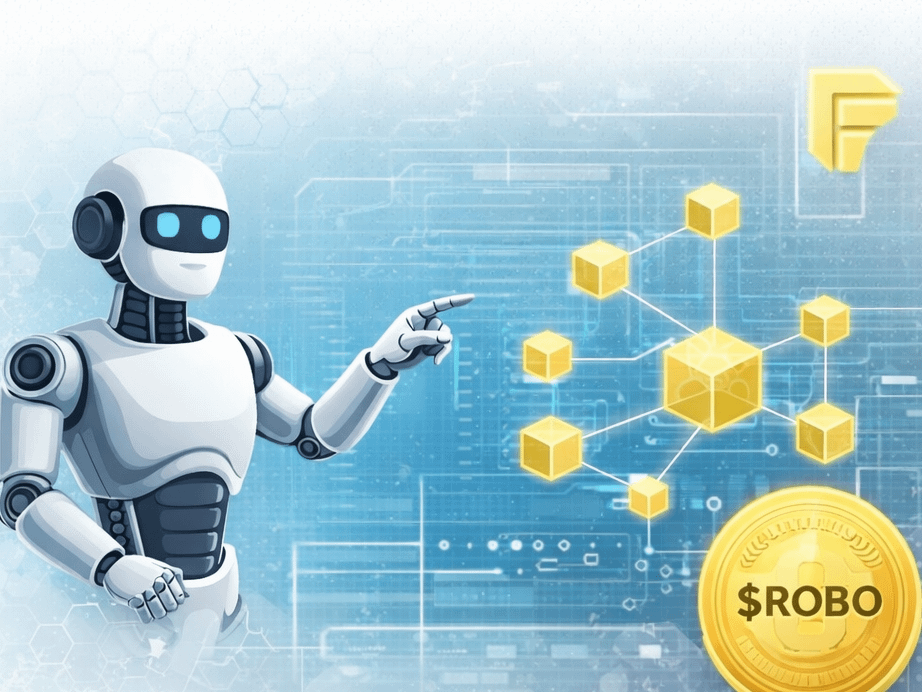
@Fabric Foundation is building an open network where general purpose robots can be developed and governed transparently.
With verifiable computing and a public ledger, it focuses on trust, coordination, and safety. A strong foundation for human robot collaboration. #ROBO
$ROBO
1
3
Log in to explore more content
Join global crypto users on Binance Square
⚡️ Get latest and useful information about crypto.
💬 Trusted by the world’s largest crypto exchange.
👍 Discover real insights from verified creators.
Email / Phone number
Trending Topics
MetaMaskExitsLidoValidatorsAfterSecurityIncident
34,911 views
656 Discussing
🚨 METAMASK JUST STARTED EXITING ETH VALIDATORS AFTER A SECURITY INCIDENT.
MetaMask says an ongoing security incident hit part of its infrastructure, forcing it to proactively exit affected validators from its non-custodial staking operations. The company says it has found no immediate threat to MetaMask wallets so far.
The key detail?
These validators are tied to Lido staking, and the exit process may temporarily remove ETH from staking while the investigation continues. Lido-related reports say the full exit, withdrawal and re-entry cycle could take up to roughly 45 days.
That means the market should separate two things:
Wallet users are not currently being told they’re at immediate risk.
But validator infrastructure clearly was serious enough to trigger an emergency exit.
And when one of Ethereum’s biggest wallet brands starts pulling validators as a precaution, traders pay attention.
Security incidents don’t need stolen funds to become market-moving.
Sometimes the reaction itself is the signal. 👀
$ETH $LDO
#metamaskexitslidovalidatorsaftersecurityincident
KimHotbae
·1 Likes
·2.6k views
MicronBeatsEarningsLiftsGuidance
24,271 views
540 Discussing
CFTCSubmitsTwoEventContractRulesToWhiteHouse
18,321 views
480 Discussing