
解夫BTC
552 Posts

解夫BTC
Report
Block User
独立交易员|BTC / 美股 / 黄金白银
看流动性、风险偏好、关键位置和失效点📈
Frequent Trader
2.7 Years
62 Following
855 Followers
731 Liked
Posts
All
Quotes
Live
·
--
Bearish
$BULLA #Trading Notes
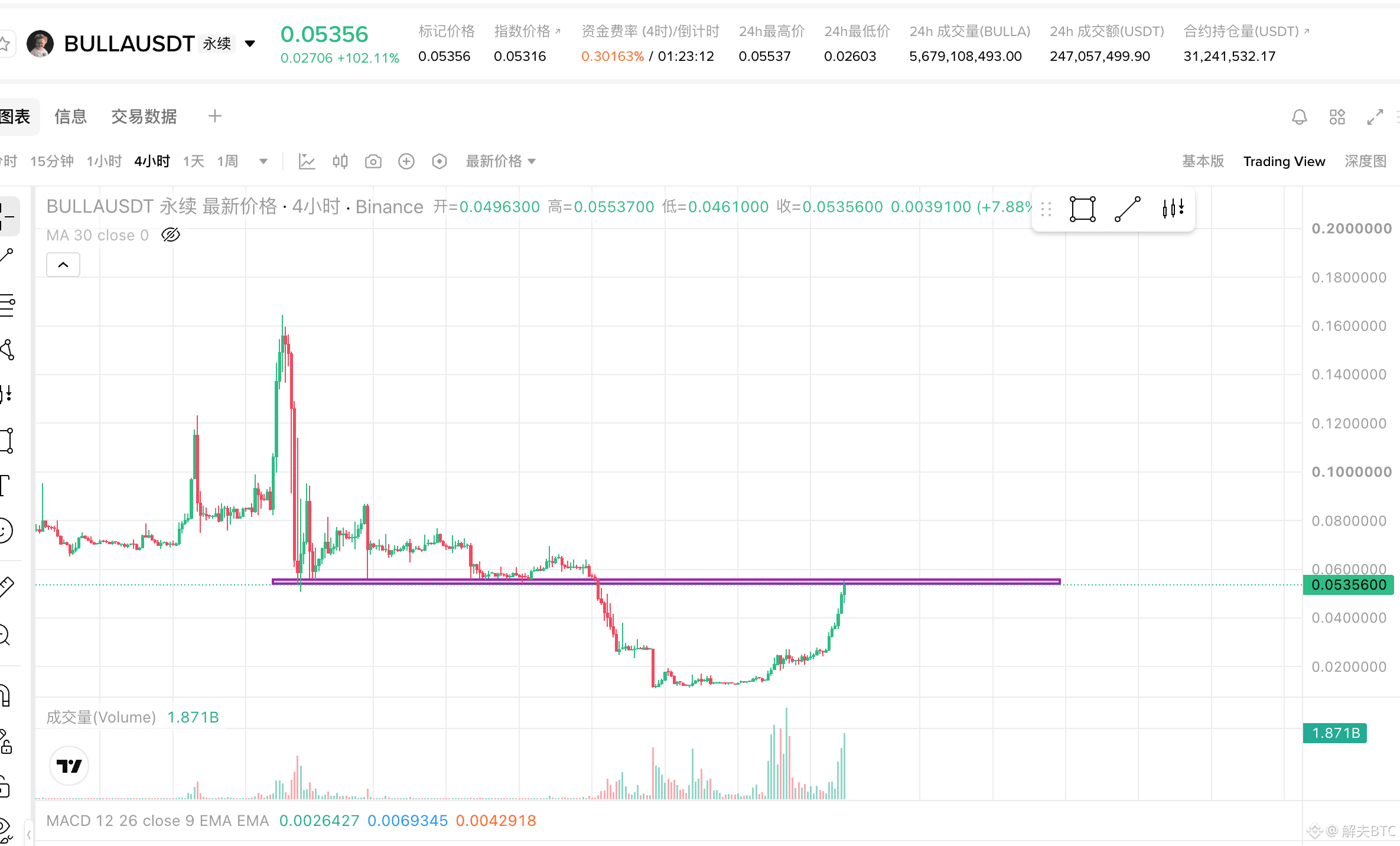
BULLA has doubled in the past 24 hours and is now trading around 0.0539. I’m leaning bearish, but I won’t try to call a top here just yet.
Looking at the 4-hour structure, the purple zone marked on the chart at 0.054–0.056 is the key area to watch. At the end of October, the price first dropped to this zone and formed a short-term low. In early November, it bounced off this level several times, holding until it finally broke below on November 13. Only then did the downside fully open up, sending the price crashing to around 0.011.
After a sharp, twofold rally, the price has now returned to 0.054–0.055, right back to the former support-turned-resistance zone. Meanwhile, the 4-hour funding rate has surged to +0.30%. Short-term wicks around a key level are normal and don’t change my view of the major resistance zone. And because the price has just surged more than 100% on high volume (24-hour trading volume above 240 million USDT), placing a short right at the lower edge of resistance could easily get stopped out by an upward liquidity sweep.
For me, the most reasonable short entry requires confirmation from price action: first, let the price break upward to take out the momentum buyers and stop-losses above 0.056. If it then quickly falls back below the purple zone, I’d enter short in the direction of the move, with a much clearer stop-loss level. Conversely, if the price breaks above 0.056 and then holds steady and consolidates above it without falling back, this bearish setup is invalidated, and I’ll abandon the short trade.
539
·
--
I came across a post:
“If you got 8,000 a month,
were always the only person in the office,
and had no one to talk to, how long could you stick it out?”
Lots of people in the comments were debating whether they could handle it,
but I just laughed when I read it.
Isn’t that just everyday life for someone who watches the markets full-time?
Every day, staring at the screen, scrolling through candlestick charts and breaking news.
The only difference is that office workers reliably get 8,000 a month,
while traders sometimes have to pay trading fees and stop-losses out of their own pocket.
Still, spend long enough at it and your social skills really do start to atrophy.
A few times, I’ve gone downstairs to buy a coffee,
only to realize it was the first thing I’d said out loud all day.$BTC
{future}(BTCUSDT)
I came across a post:
“If you got 8,000 a month,
were always the only person in the office,
and had no one to talk to, how long could you stick it out?”
Lots of people in the comments were debating whether they could handle it,
but I just laughed when I read it.
Isn’t that just everyday life for someone who watches the markets full-time?
Every day, staring at the screen, scrolling through candlestick charts and breaking news.
The only difference is that office workers reliably get 8,000 a month,
while traders sometimes have to pay trading fees and stop-losses out of their own pocket.
Still, spend long enough at it and your social skills really do start to atrophy.
A few times, I’ve gone downstairs to buy a coffee,
only to realize it was the first thing I’d said out loud all day.$BTC
124
·
--
$BTC #SecurityReminder
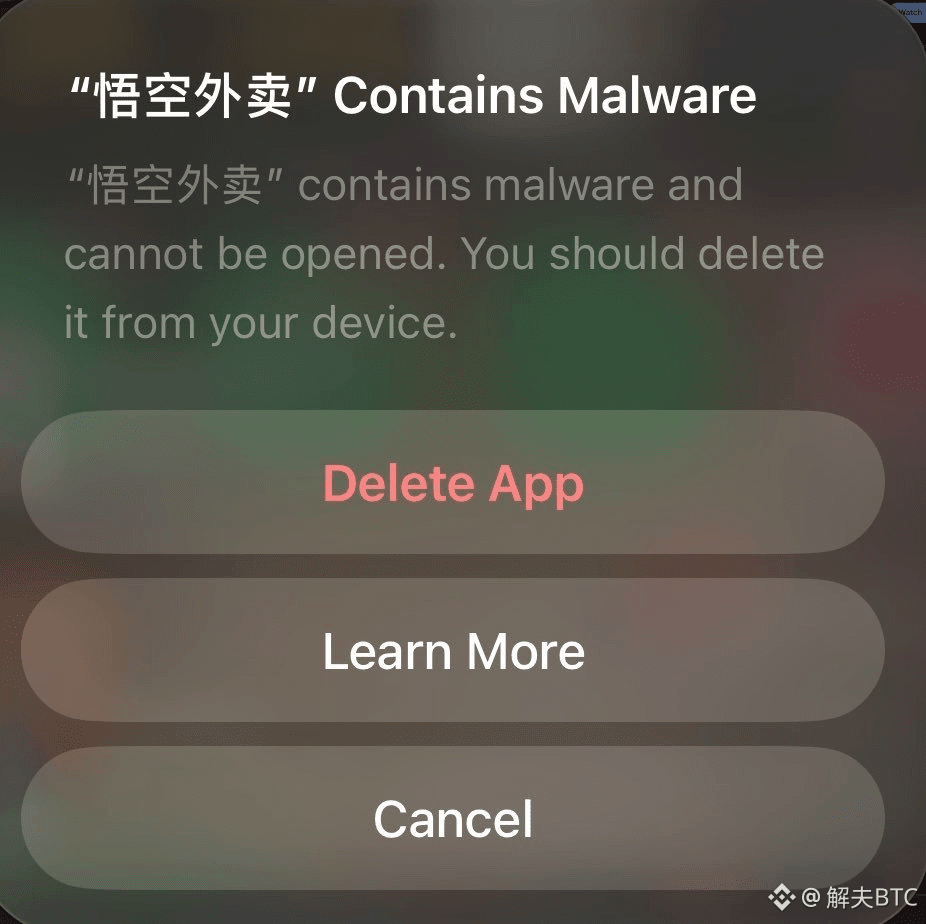
I just saw an alert about a malicious iOS app shared by CZ, reminding everyone in crypto to take a moment to check their phone’s photo permissions.
Apple has just flagged a food delivery app called wukong as malware on iOS. It looks like a normal food-ordering app, but once it gets access to your photo library, it uses OCR in the background to scan through your photos, specifically looking for screenshots of seed phrases and wallet private keys.
Stealing crypto doesn’t always mean tricking you into clicking a phishing link. Plenty of risks are hidden in the “All Photos” permission granted to everyday utility or lifestyle apps we install without thinking. I’ve always written my seed phrase on paper and never keep wallet screenshots in my phone’s photo library, WeChat Favorites, or Notes. When installing third-party apps for everyday use, I only grant access to “Selected Photos” to keep potential risks out of my photo library.
I recommend taking a moment to check photo permissions for the apps you use regularly and delete any old screenshots. For peace of mind, it’s better to delete them sooner rather than later.
562
·
--
Bullish
$BTC $SKHYNIX $NVDA #TradFi
Reviewing the market tonight, I saw a few TradFi announcements Binance posted today. Taken together, the signals are pretty clear:
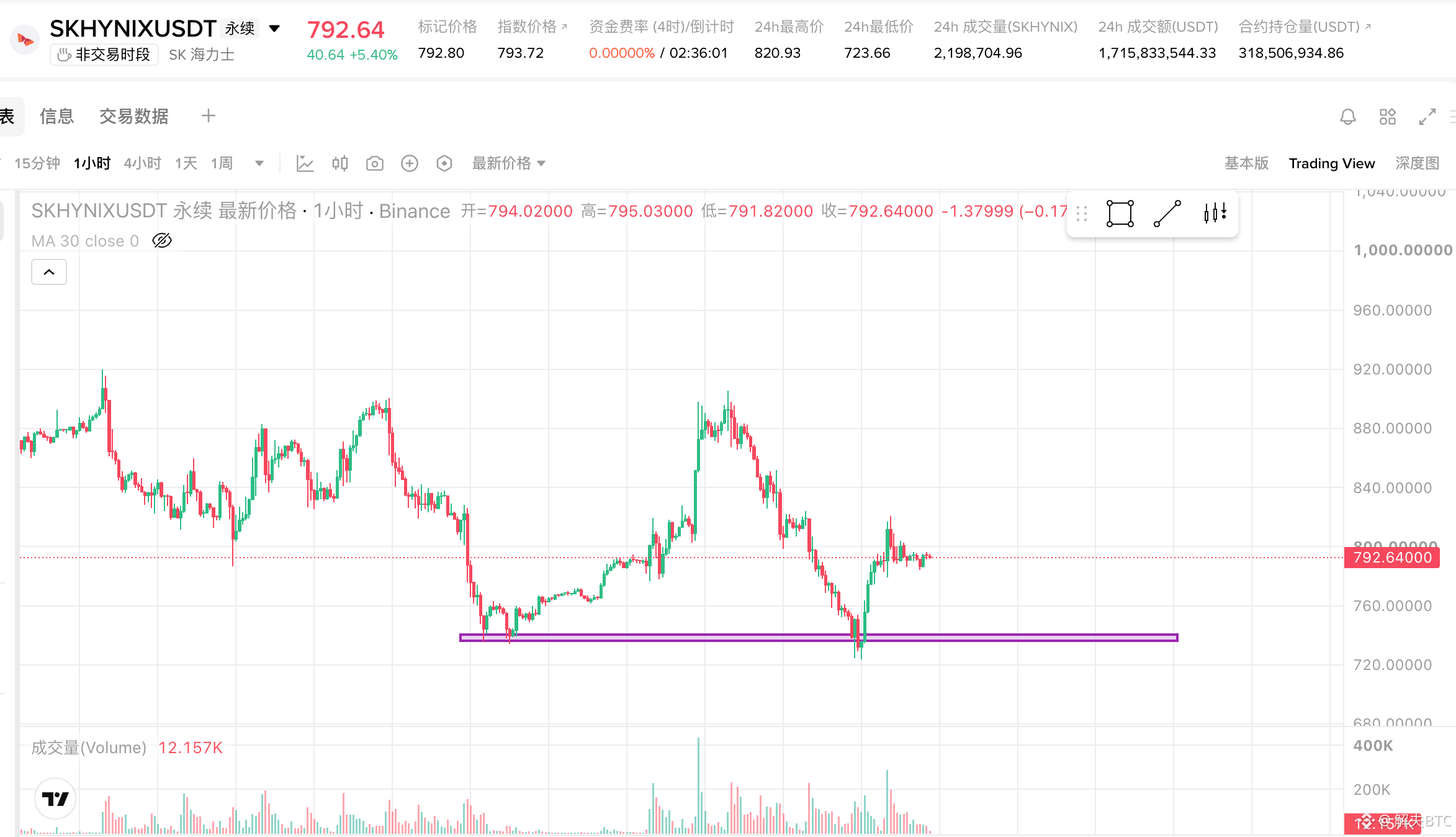
At 17:00, Binance launched cross-platform VIP tier matching. Show proof of your assets or trading volume over the past 30 days on another exchange or with a traditional brokerage, and you can move up a VIP tier on Binance for free for 60 days. Then, 45 minutes earlier, it had posted a dividend adjustment reminder for SK Hynix (SKHYNIXUSDT / SKHYUSDT): tomorrow (11-27) is the ex-dividend date, at 08:00 Korea time (07:00 Beijing time), with a dividend of 20,000 won per share. Tonight, SKHYNIXUSDT is already up more than 5.6%, trading near 792.9, while SKHYUSDT is up more than 6% to 111.67.
The key point is that the announcement explicitly says, “Dividend adjustments are not subject to the standard funding rate limits.” If you’re used to watching only the 8-hour funding rate cap on crypto perpetuals, be sure to check the ex-dividend calendar before holding stock perpetuals through an ex-dividend night.
With U.S. stocks closed tonight, you can also see just how wild thin holiday trading can get: NVDAUSDT, which was knocked down to 148.1 in the afternoon, bounced straight back to 151.2 tonight (+2.67%); BTC, meanwhile, is moving sideways on low volume between 60,500 and 60,900 (currently at 60,808). For a real directional move, we’ll have to wait until overseas markets reopen tomorrow.
When you trade stock perpetuals, do you make a point of avoiding ex-dividend nights? 👇
263
·
--
Verified
$BTC $SKHYNIX #TradFi
I just saw Binance post two TradFi-related announcements within an hour, and the signal is pretty clear when you put them together:
First, at 17:00, it launched cross-platform matching for VIP tiers. If you can provide proof of your assets or trading volume over the past 30 days on another exchange or with a traditional broker, you can upgrade to the next VIP level on Binance for free for 60 days. They’re clearly looking to attract active investors from traditional securities markets.
Second, at 16:15, it issued a dividend adjustment notice for SK Hynix (SKHYNIXUSDT / SKHYUSDT): the stock goes ex-dividend tomorrow (11-27) at 08:00 Korea time (07:00 Beijing time), with a dividend of 20,000 won per share. Today, SKHYNIXUSDT rose nearly 4% to around 791.14, while SKHYUSDT gained over 4.3% to 111.58.
The key point is that the announcement explicitly says this dividend adjustment is not subject to the standard funding rate limits. If you’re used to trading crypto perpetuals and only watch the 8-hour funding rate caps, remember to check ex-dividend dates when holding TradFi perpetuals on US, Korean, or Hong Kong stocks overnight, so you don’t get caught by an unexpected adjustment.
$BTC has edged back to around 60,800. With the US market closed for Thanksgiving, the broader market is still waiting for overseas liquidity to pick up the baton tomorrow.
When you trade stock perpetuals, do you make a point of avoiding overnight positions on ex-dividend dates? 👇
753
·
--
Bullish
Partly True
$NVDA $BTC #USStocksClosed
US stocks are closed for Thanksgiving tonight, but US stock perpetuals on Binance are still trading.
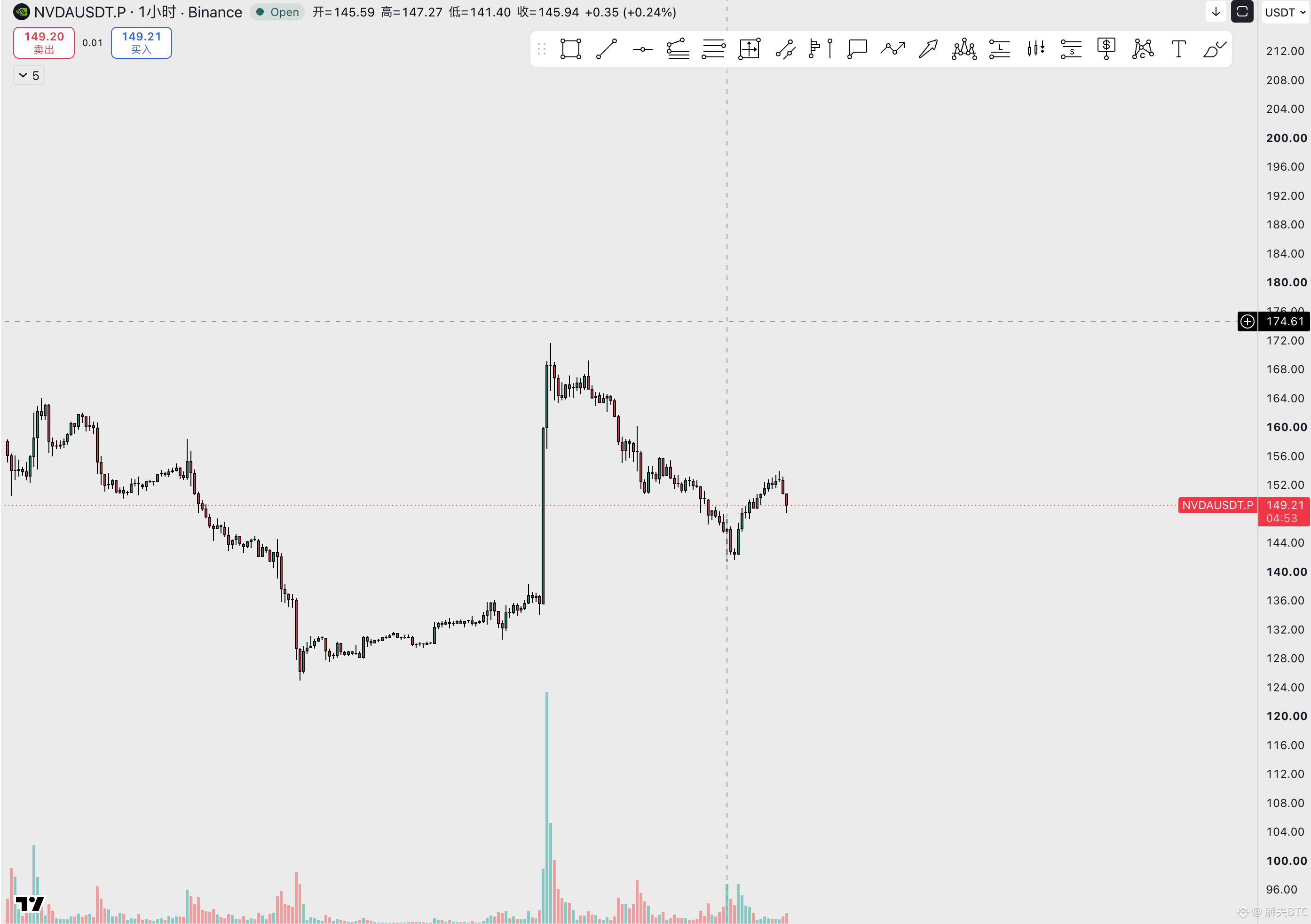
After reports at 13:01 that Nvidia had paused shipments to Southeast Asia, NVDAUSDT 1H plunged from 153.91 to 148.10 (a swing of nearly 3.8%), with $134 million in trading volume over two hours. Meanwhile, at 14:15, Binance announced it would list 20x TradFi perpetual contracts, including Xiaomi (1810.HK), tomorrow morning at 10:30 (UTC 02:30).
Two details to keep in mind from a trading perspective:
1. During US and Hong Kong market closures, there is no spot market-maker depth, so breaking news can easily trigger long wicks and sharp spikes;
2. NVDAUSDT funding is currently negative (-0.0518%), as is SOXLUSDT (-0.0841%). Beware of a reverse short squeeze when US stocks open for a half-day tomorrow evening.
$BTC touched 61,622 in the morning session before coming under pressure and falling back to around 60,460. With traditional buyers absent over the holiday, watch the 60,400–59,800 area for support.
During the market closure, would you rather stay flat and wait, or trade swings in 24h TradFi perpetuals?
3.7k
·
--
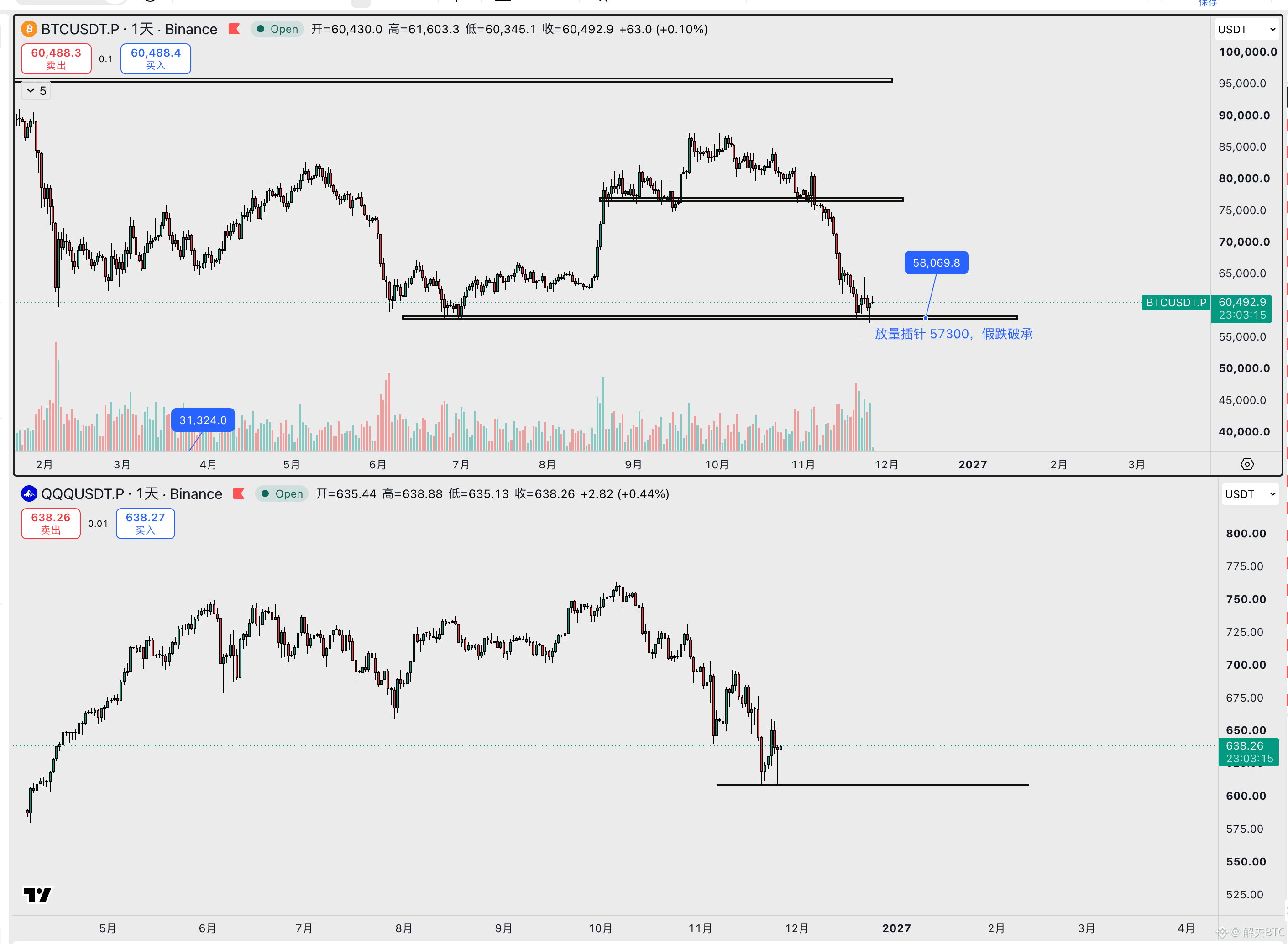
Last night, U.S. stocks led the way in a “Thanksgiving deep V.” Was that a false breakdown marking the bottom, or simply a chance to reduce positions on the rebound?
This morning, everyone saw $SOXL bounce from an intraday low of 24.6 to 32, $NVDA recover from 141.1 to 149.3, and $BTC climb from 57,300 to around 60,500. Sentiment recovered in an instant.
Looking only at last night’s actual price and volume—not guessing at sentiment:
1. There was real buying support
QQQ’s trading volume surged nearly 40% last night, while SOXL traded 527 million shares over the day. Binance BTC spot daily trading volume hit 1.6 billion U yesterday, up from just 1.19 billion U the day before. Buyers really did step in and absorb the panic selling when prices broke below the previous lows.
2. But overall, the S&P was still seeing contracting volume. And with U.S. markets closed today for Thanksgiving and Friday being a half-day, light trading can easily amplify short-term swings. One lower wick isn’t enough to confirm an immediate reversal.
My criteria are clear. I’m sticking to just two scenarios:
✅ Bullish confirmation: If the next pullback comes on clearly lower volume, BTC holds above 58,800–59,300 without making a new low, and U.S. stocks hold the lower half of last night’s big bullish candle after the holiday (QQQ stays above 620), then I’ll look for the uptrend to continue.
❌ Structure invalidated: If the rebound lacks strength, or price falls back below last night’s low (around BTC 57,300) on rising volume, that would show this move was just short covering after stop-losses were triggered. I’d rather stay flat and wait for the next setup than gamble on a rebound.
Trading isn’t about betting on whether you bought the exact low last night; it’s about understanding whether the supply overhang has cleared. What do you make of last night’s false breakdown?
#BTC
682
·
--
Bullish
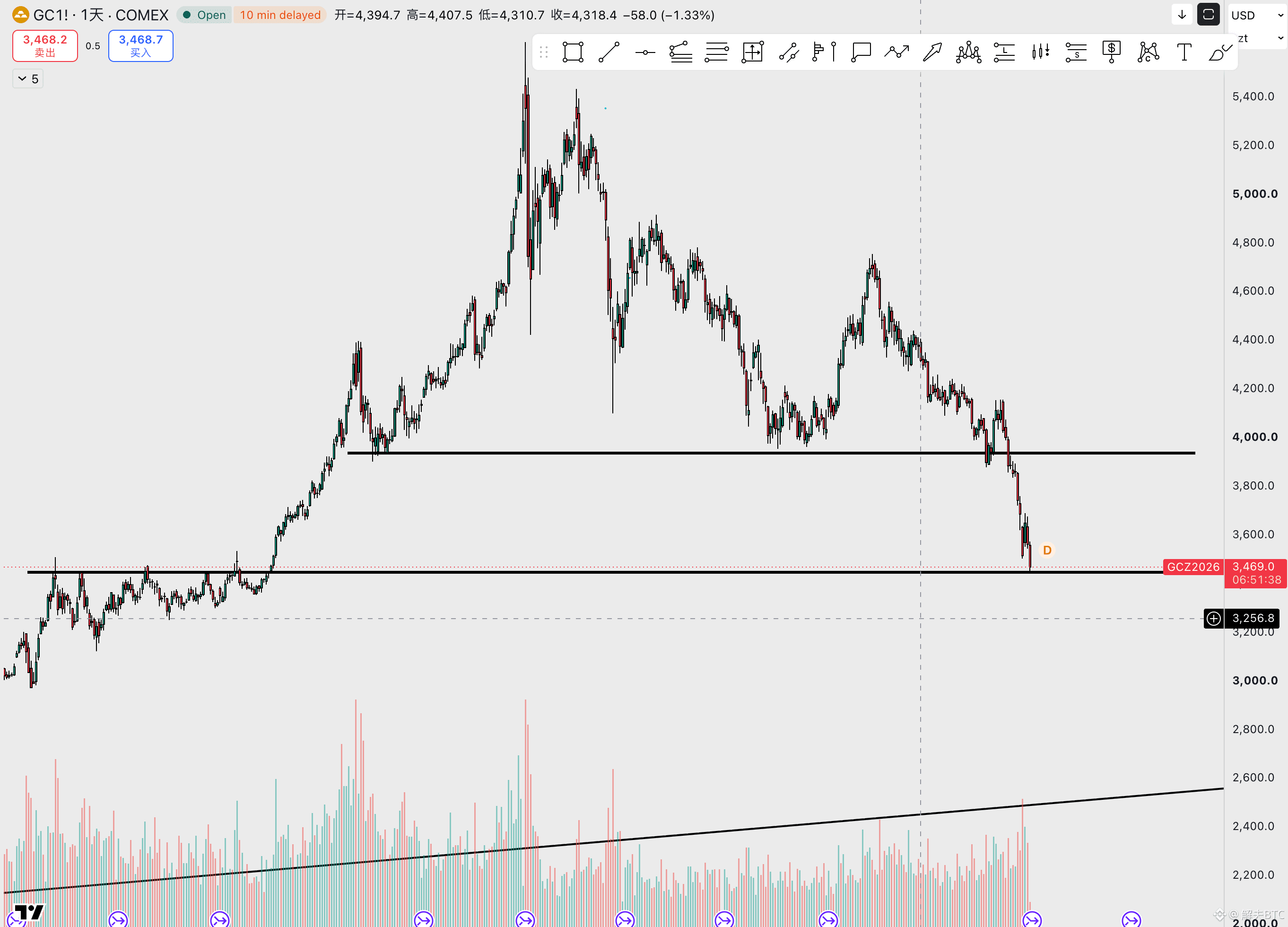
$XAU Gold looks like it may have bottomed out too, right? It should be reasonably safe to start buying gold now.
{future}(XAUUSDT)
$XAU Gold looks like it may have bottomed out too, right? It should be reasonably safe to start buying gold now.
9
1
7.5k
·
--
Verified
#特朗普拟重启关税攻势,比特币和美股再度走弱 Trump’s new Section 301 tariff proposal just landed. Why is the market reacting more calmly than it did last night?
The USTR has just officially announced its Section 301 tariff plan targeting 14 economies (an additional +20% for China and +15% for the EU; Mexico and Norway, two of the 16 economies in the original investigation, are not included for now).
Yesterday, when rumors were flying everywhere, everyone panicked. Now that the cards are on the table, let’s look at two objective details:
- The implementation timeline is a long way off: the proposal is still going through the consultation and hearing process (hearings at the end of January), and it won’t take effect until January 2027 at the earliest. Essentially, it’s still a bargaining chip;
- The market’s actual response: $BTC is still hovering above 58,000, and ETH is around 1,630. Neither has followed the U.S. stock market’s panic by plunging to new lows.
I’m still focused on the price action when trading: don’t chase shorts halfway down over a policy that won’t take effect for more than a year. As long as the previous low of 55,130 doesn’t break on heavy volume, I’ll stick with the plan of watching for a second test on declining volume. If it breaks down, I’ll admit I was wrong.
Now that this round of tariff news is out, do you think the worst is over, or will things continue to escalate tomorrow?
$BTC $ETH #感恩节交易周开启,市场能否迎来修复性反弹?
1
4.3k
·
--
Verified
Bad news hits! Has the U.S. 🇺🇸 gone crazy?!
The U.S. proposes new tariffs on 14 trading partners👇
China: 20% (rising to 40% if the trade truce is violated)
Vietnam: May rise to 35%
India: Up to 25%
South Korea: Up to 25%
Taiwan: Up to 25%
Indonesia: Up to 25%
Malaysia: Up to 25%
Thailand: Up to 25%
Cambodia: Up to 25%
European Union: Up to 20%
Japan: Up to 20%
Switzerland: Up to 20%
Singapore: Up to 20%
Bangladesh: Up to 20%
Brazil: 10% on finished aircraft
Mexico: No new tariffs
Norway: No new tariffs

1
5
13.5k
·
--
Partly True
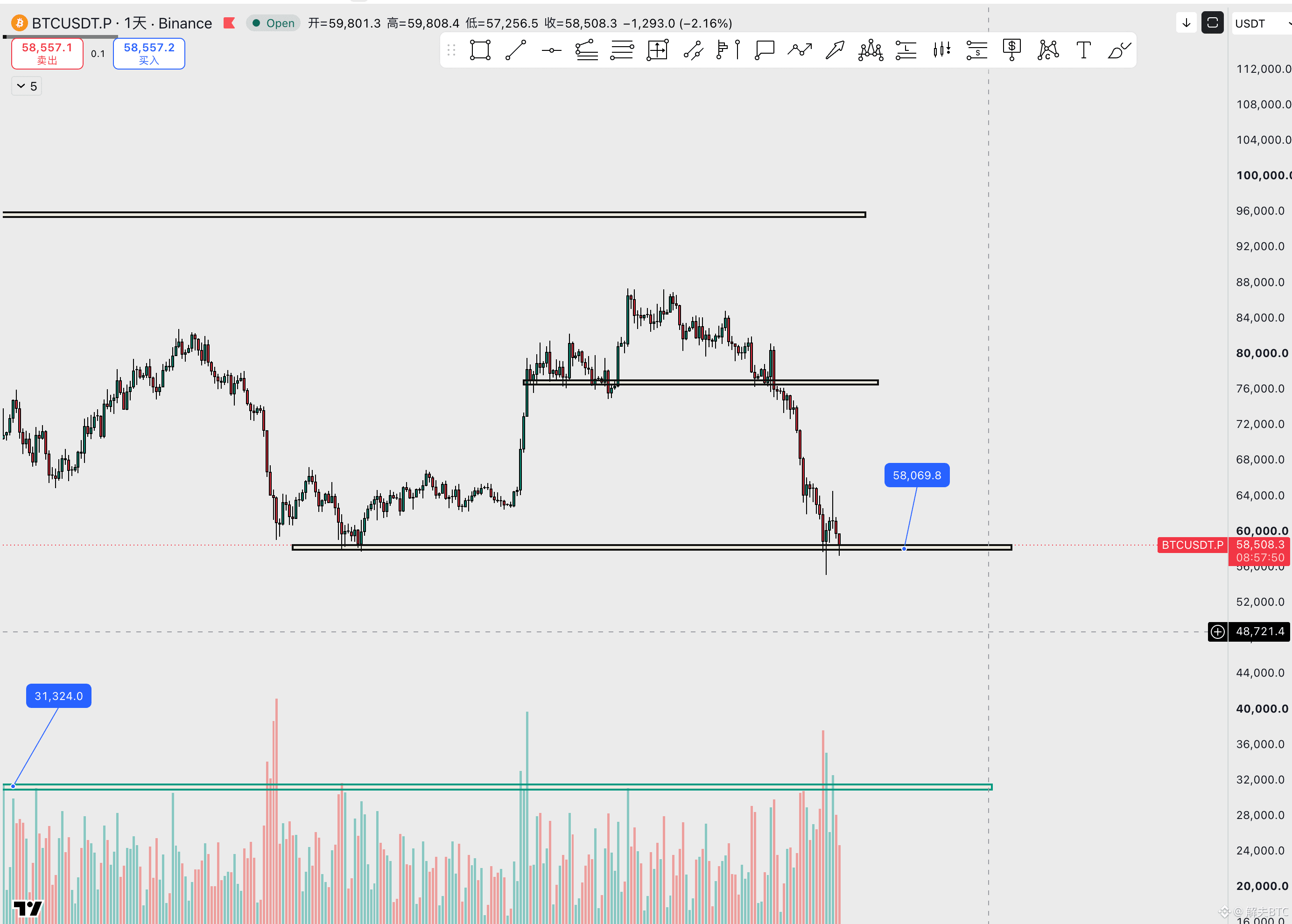
$BTC Core PCE came in at 3.3%, higher than expected. U.S. stocks plunged tonight—why did Bitcoin hold up instead?
U.S. stocks came under heavy selling pressure right from the open tonight: the Nasdaq QQQ fell more than 5%, and $NVDA plunged nearly 12% in a single day. During the day, I was watching $SOXL on the Square; once heavy volume broke through the 30 support level, triggering my invalidation line, it fell all the way to around 25 tonight (a drop of more than 22%).
By comparison, $BTC dipped to a low of 57,300 tonight before recovering to around 58,250. For now, it’s holding up better than U.S. AI-computing stocks, and it hasn’t tested the November 21 low of 55,130 on heavy volume.
U.S. markets will be closed all day tomorrow, Thursday, for Thanksgiving. Liquidity in crypto order books will thin from late tonight through tomorrow. My trading plan is clear:
- Confirmation to watch for: If price later holds above 55,130 on declining volume, or tests lower and then reclaims the level on strong volume, I’ll consider following the move from the right-hand side of the chart.
- Invalidation boundary: I won’t go heavily into a falling knife just because it’s holding up in the short term. If it breaks below 55,130 on heavy volume and can’t reclaim it, the stabilization thesis is invalidated, and I’ll continue to sit on the sidelines.
With this divergence between U.S. stocks and crypto tonight, will you stay flat and watch before the holiday closure, or place orders lower down and wait to catch a wick?
$BTC $NVDA $SOXL #感恩节交易周开启,市场能否迎来修复性反弹?
{future}(BTCUSDT)
$BTC Core PCE came in at 3.3%, higher than expected. U.S. stocks plunged tonight—why did Bitcoin hold up instead?
U.S. stocks came under heavy selling pressure right from the open tonight: the Nasdaq QQQ fell more than 5%, and $NVDA plunged nearly 12% in a single day. During the day, I was watching $SOXL on the Square; once heavy volume broke through the 30 support level, triggering my invalidation line, it fell all the way to around 25 tonight (a drop of more than 22%).
By comparison, $BTC dipped to a low of 57,300 tonight before recovering to around 58,250. For now, it’s holding up better than U.S. AI-computing stocks, and it hasn’t tested the November 21 low of 55,130 on heavy volume.
U.S. markets will be closed all day tomorrow, Thursday, for Thanksgiving. Liquidity in crypto order books will thin from late tonight through tomorrow. My trading plan is clear:
- Confirmation to watch for: If price later holds above 55,130 on declining volume, or tests lower and then reclaims the level on strong volume, I’ll consider following the move from the right-hand side of the chart.
- Invalidation boundary: I won’t go heavily into a falling knife just because it’s holding up in the short term. If it breaks below 55,130 on heavy volume and can’t reclaim it, the stabilization thesis is invalidated, and I’ll continue to sit on the sidelines.
With this divergence between U.S. stocks and crypto tonight, will you stay flat and watch before the holiday closure, or place orders lower down and wait to catch a wick?
$BTC $NVDA $SOXL #感恩节交易周开启,市场能否迎来修复性反弹?
1
1.6k
·
--
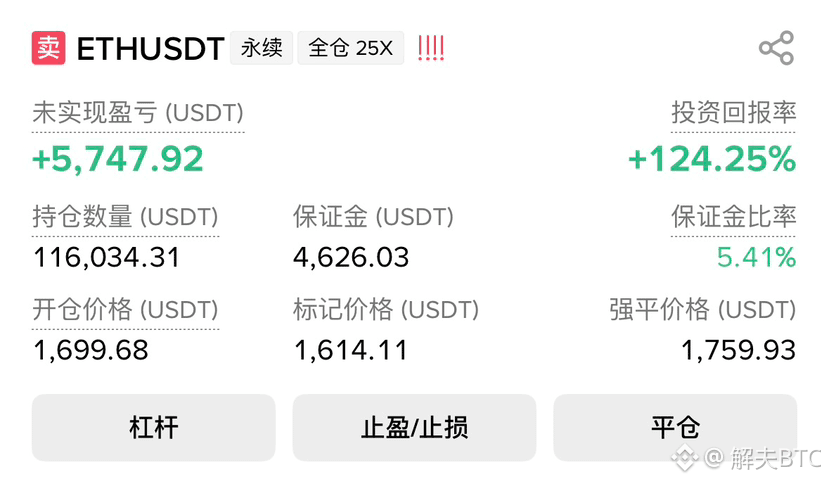
$ETH My gold position is about to be liquidated! Can someone save gold? I didn't buy much Ethereum; can someone save gold?
{future}(ETHUSDT)
$ETH My gold position is about to be liquidated! Can someone save gold? I didn't buy much Ethereum; can someone save gold?
4k
·
--
Anthropic’s stock broke below its IPO price less than a week after going public, and crypto exchanges rushed to roll out short-selling tools overnight.
Just a few days ago, people were hyping it as the biggest AI IPO in history. Then seven co-founders cashed out nearly $2 billion, and the stock promptly fell below its offering price.
Last night, Jensen Huang’s return finally gave the market a moment to catch its breath. But tonight, Nasdaq’s QQQ is down another 3.0% in premarket trading ($638.12 to $618.74).
Even more surreal is the speed of crypto: Bybit just launched ANDDUSDT, which is essentially a “2x short Anthropic ETF,” with up to 25x leverage and the ability to go short anytime, 24/7.
U.S. stocks are still falling in premarket trading, while crypto has already rolled out a 25x, around-the-clock short-selling weapon. Welcome to the cross-market casino.
Do you think this thing is a cash machine for bears, or squeeze fuel waiting to catch bulls off guard? 👇$ANTHROPIC
#美股休市 #Anthropic #crypto
365
·
--
The asset I’m holding is down 30%. Is it actually cheaper now, or has it fundamentally gone bad?
Over the past couple of days, storage stocks have been cut in half, semiconductors have given back their gains, and altcoins have fallen across the board.
Almost everyone around me is wrestling with the same question: should I add to my position to lower my average cost?
The most expensive lesson I ever learned was seeing something down 30% and thinking, “What a bargain,”
only to go through the whole textbook process of losing big money:
Down 30%: think it’s a steal, add to the position
↓
Down 50%: can’t bear to cut losses, keep adding
↓
The position gets heavier and heavier, and logic turns into faith
↓
Finally, the losses become unbearable, and I sell right at the true liquidity bottom
A low price is never a reason to buy. A buy signal is when it stops falling and recovers.
I’ve written the three questions I always ask myself before adding to a position in the first comment. How far does something have to fall before you usually step in? 👇$BTC
#US stocks #BTC #交易复盘
161
·
--
Verified
A reminder to check the calendar: U.S. stock markets are closed all day tomorrow, Thursday, for Thanksgiving, and close early on Friday.
That makes tonight the busiest night before the holiday. At 9:30 p.m. Beijing time, core PCE, the revised GDP estimate, and the early release of initial jobless claims all come out at once. The U.S. market opens at 10:30 p.m., giving institutions their last full rebalancing window before the long holiday break.
I usually keep my hands especially steady in a pre-holiday market like this. In the first few minutes after the 9:30 data comes out, volatility can spike and the market can whipsaw. Later in the night, when holiday-bound funds pull out of U.S. markets, liquidity in crypto order books will thin noticeably. Even a slightly large order could trigger sharp wicks in both directions and sweep leveraged stop-losses.
My plan tonight is simple: I won’t try to guess the direction or take a heavy position before the data comes out. If a clear setup emerges, I’ll wait for the wicks to sweep liquidity and for the price to move back inside key levels before looking for confirmation. If no signal appears, I’ll sit back, watch, and enjoy the holiday. $BTC
{future}(BTCUSDT)
For tonight’s 9:30 data release, are you planning to keep a light position and buy the dip, or stay on the sidelines and wait for now?
$BTC $ETH #感恩节 #交易计划
A reminder to check the calendar: U.S. stock markets are closed all day tomorrow, Thursday, for Thanksgiving, and close early on Friday.
That makes tonight the busiest night before the holiday. At 9:30 p.m. Beijing time, core PCE, the revised GDP estimate, and the early release of initial jobless claims all come out at once. The U.S. market opens at 10:30 p.m., giving institutions their last full rebalancing window before the long holiday break.
I usually keep my hands especially steady in a pre-holiday market like this. In the first few minutes after the 9:30 data comes out, volatility can spike and the market can whipsaw. Later in the night, when holiday-bound funds pull out of U.S. markets, liquidity in crypto order books will thin noticeably. Even a slightly large order could trigger sharp wicks in both directions and sweep leveraged stop-losses.
My plan tonight is simple: I won’t try to guess the direction or take a heavy position before the data comes out. If a clear setup emerges, I’ll wait for the wicks to sweep liquidity and for the price to move back inside key levels before looking for confirmation. If no signal appears, I’ll sit back, watch, and enjoy the holiday. $BTC
For tonight’s 9:30 data release, are you planning to keep a light position and buy the dip, or stay on the sidelines and wait for now?
$BTC $ETH #感恩节 #交易计划
1
5
4k
·
--
Bullish
Partly True
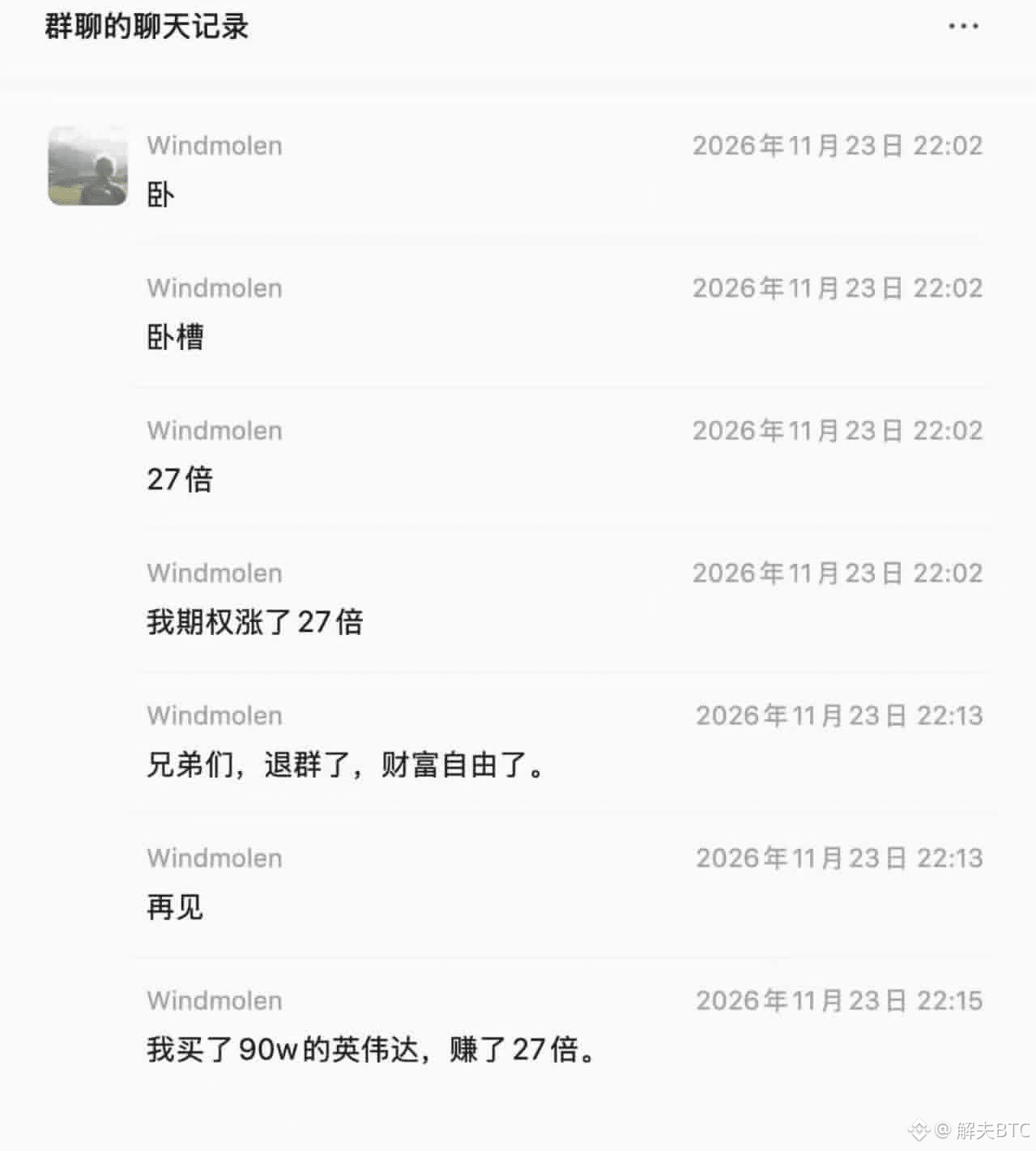
This guy bought 900,000 worth of Nvidia options, and thanks to Jensen Huang's comeback, they shot up 27-fold. In just a few days, 900,000 turned into 25 million.
How did he do it?
He bought call options expiring this week, with strike prices between 145 and 155—far above the price when he bought them.
Both factors were essential: expiration this week and a huge rally up to the strike price.
If the contracts had expired in mid-December, he might have made only a few times his money. If they had expired on November 20, the 900,000 premium would have gone straight to zero.
Getting the direction right isn't enough. The expiration date also has to be just right: too early and you get nothing; too late and the returns fade.
Just one weekend's difference can mean a world of difference. It really takes a bit of luck on top of everything else. Hope Xiefu's family can have this kind of good luck too! $NVDA
{future}(NVDAUSDT)
This guy bought 900,000 worth of Nvidia options, and thanks to Jensen Huang's comeback, they shot up 27-fold. In just a few days, 900,000 turned into 25 million.
How did he do it?
He bought call options expiring this week, with strike prices between 145 and 155—far above the price when he bought them.
Both factors were essential: expiration this week and a huge rally up to the strike price.
If the contracts had expired in mid-December, he might have made only a few times his money. If they had expired on November 20, the 900,000 premium would have gone straight to zero.
Getting the direction right isn't enough. The expiration date also has to be just right: too early and you get nothing; too late and the returns fade.
Just one weekend's difference can mean a world of difference. It really takes a bit of luck on top of everything else. Hope Xiefu's family can have this kind of good luck too! $NVDA
1
3.7k
·
--
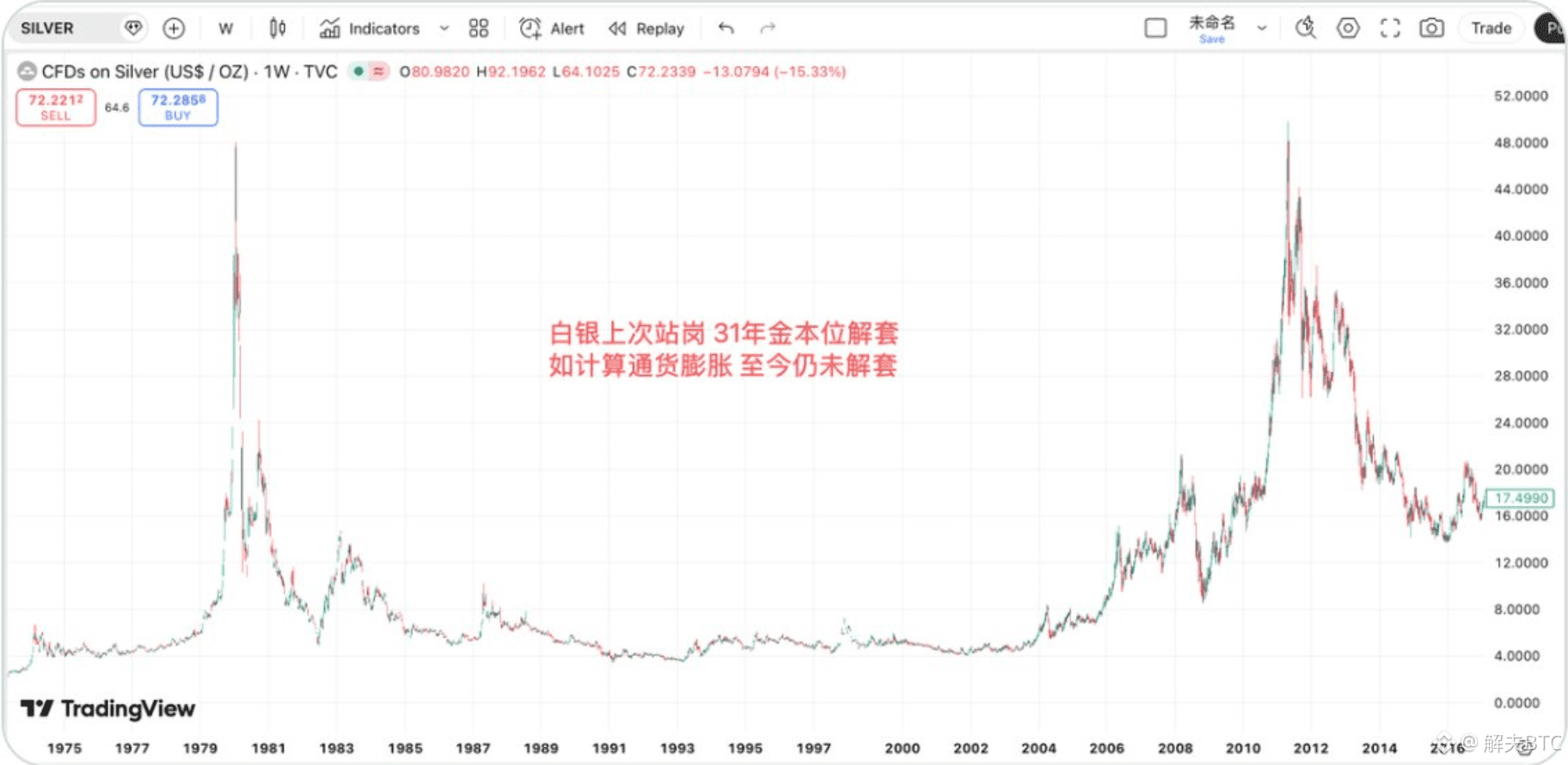
$XAG How long will those who bought silver be left holding the bag this time?
$XAG How long will those who bought silver be left holding the bag this time?
3.3k
·
--
Bullish
Verified
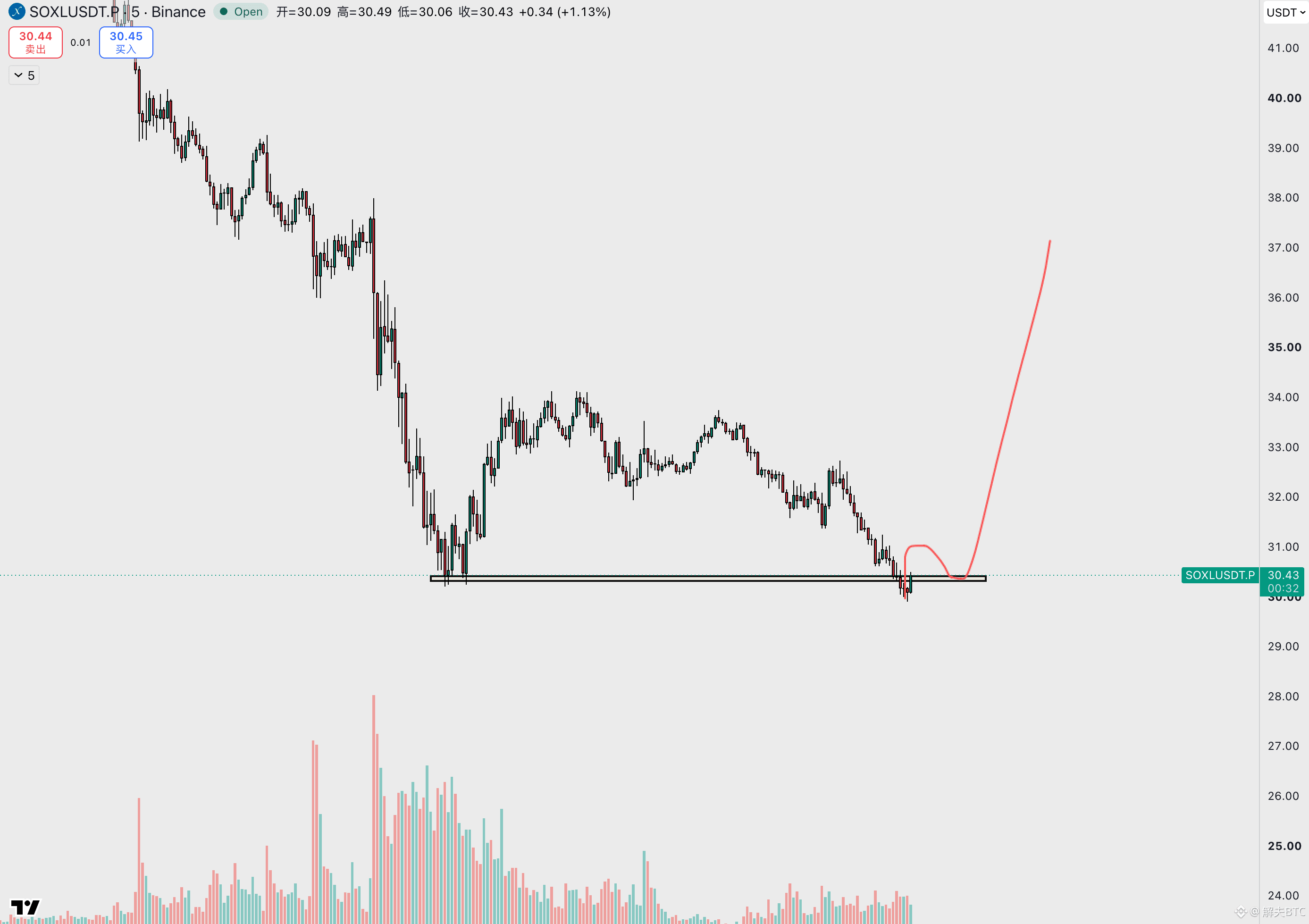
I watched Binance’s $SOXL perpetual 15-minute chart for a while, and it just reached a fairly typical structural level.
This move has fallen all the way from the highs to around 30. The latest candle just pierced and swept the previous low support area around 30.20 on the left, and is now trying to rebound (current price: 30.34).
Based on my own trading habits, I wouldn’t jump in to catch a falling knife right after it sweeps below the low. I need to see whether it can genuinely recover:
I’m mainly watching for two confirmations next. First, can this rebound get firmly back above the 30.20–30.30 support zone and establish a false-breakdown structure? Second, after moving up, can it hold above the new low on a pullback and form a secondary-timeframe N-shaped recovery? Only then would I have a basis to act. The first level I’ll watch above is around 32.20.
Conversely, if it breaks decisively below the low it just swept (below 30.00) on increased volume and fails to recover, that would show there isn’t enough support here and the downtrend remains weak. This trade thesis would be invalidated, and I’d continue to stay flat and watch. It’s fine to have a directional bias, but you must first be clear about what would prove you wrong.
$SOXL $NVDA #PriceAction
4
1
4.5k
·
--
That story has been making the rounds everywhere these past couple of days: a young guy in the U.S. bet $19,000 on Nvidia zero-day options last Friday, and by Monday it had turned into $400,000—a 20x return.
Screenshots like that make everyone’s heart race when they scroll past them. But last night I took a quick look at some of the hottest computing-power and storage stocks from the start of the year. For example, $MU has nearly halved from its peak in the middle of last year, and plenty of companies that missed earnings expectations got slashed in a single day.
The longer you trade, the clearer things get: the most expensive lesson in the market is often using other people’s “get-rich-quick lottery ticket” screenshots to cover up the risk in your own losing positions. Someone wins the lottery every day, but those who survive two bull-and-bear cycles never do it by going all-in on one bet. They do it by actually having the nerve to cut their position when it hits their stop-loss.
That said, do you know many people who’ve made serious money from zero-day options or 100x leverage—and actually managed to walk away with it? 👇
#BTC #美股 #交易心理
813
·
--
Last night’s U.S. stock market action was pretty interesting: $DELL reported earnings far above expectations, but shares rose just 2% after hours; Nvidia gave back nearly 6% in a single day; and even Anthropic, the biggest IPO in history, fell below its IPO price less than five days after listing.
When markets are usually doing well, an earnings beat like this would send a stock soaring in no time. Now, even good news can’t make the slightest splash. That shows investors aren’t willing to chase prices higher—they’re using good news as a chance to cash out and find liquidity.
U.S. October PCE data is due tonight, and risk aversion is picking up again ahead of the release. Honestly, during a phase like this, when macro expectations keep swinging back and forth, all the talk about “fundamental upside” is pointless. When good news can’t lift prices, I just watch to see whether key levels hold. If they don’t, I’d rather sit on the sidelines and watch.
After last night’s spike and pullback, have you reduced your positions in U.S. stocks or Binance U.S. stock contracts? 👇
#U.S.Stocks #NVDA #交易笔记
1
1
416
Log in to explore more content
Join global crypto users on Binance Square
⚡️ Get latest and useful information about crypto.
💬 Trusted by the world’s largest crypto exchange.
👍 Discover real insights from verified creators.
Email / Phone number
Trending Topics
CanMarketsReboundAfterThanksgiving?
130,164 views
1,602 Discussing
Rate-Hike Bets Linger as US Markets Head Into Thanksgiving Closure
Binance News
·5 Likes
·4k views
CouldSpaceX’sOrbitalDataCentersBoostAIChipDemand?
61,534 views
983 Discussing
SouthKoreaProposesMandatoryDigitalAssetTransactionDisclosure
1,340 views
43 Discussing