

奇点重构
76 Posts

奇点重构
Report
Block User
十年交易路,跌倒过无数次,亏损到盈利 写一点点感悟,给同路人一点点指引。坚定的技术分析交易者,很少看基本面,相信一切走在盘面上。只跟随不预测。
14 Following
33 Followers
34 Liked
Posts
All
Quotes
·
--
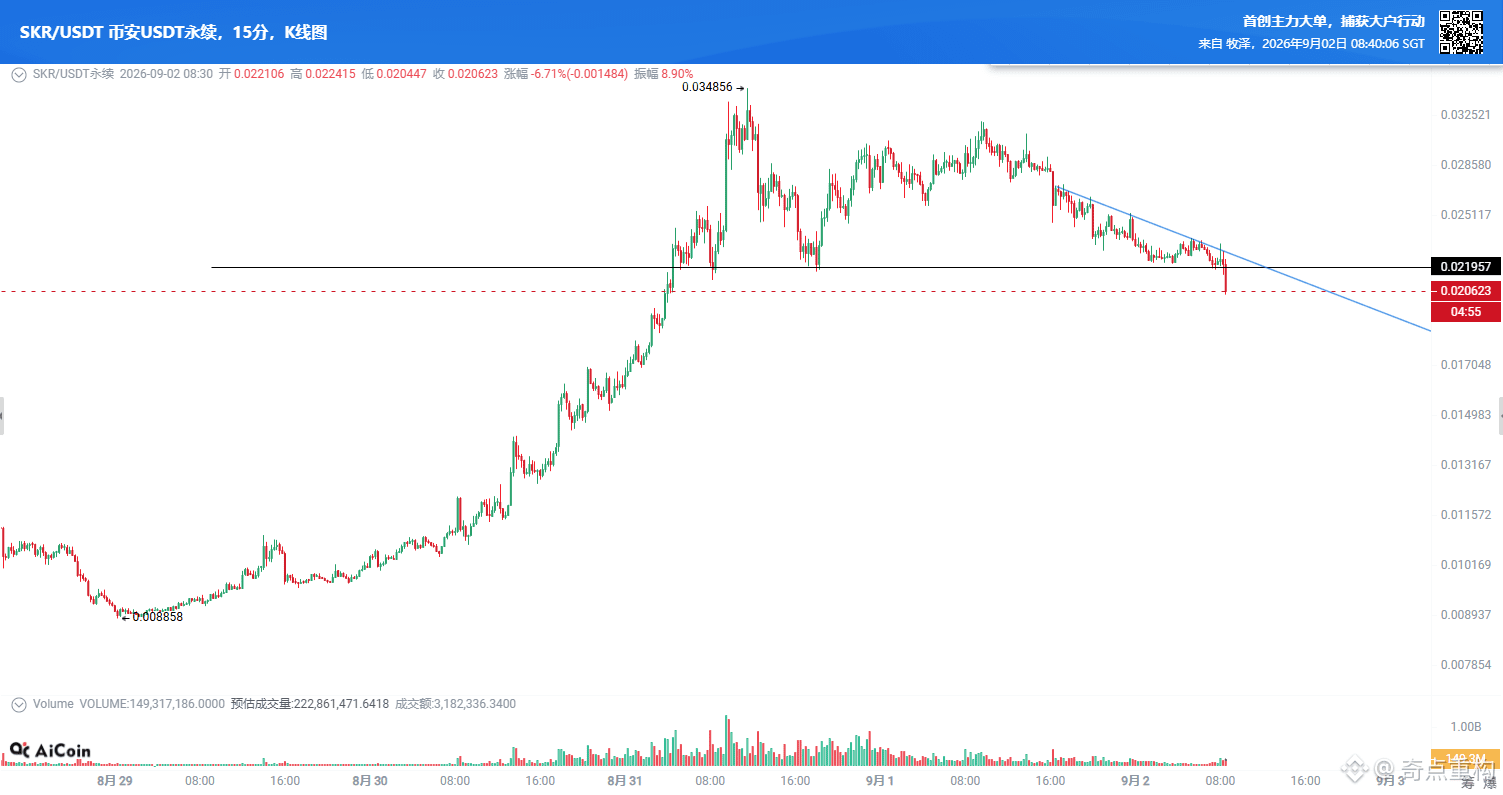
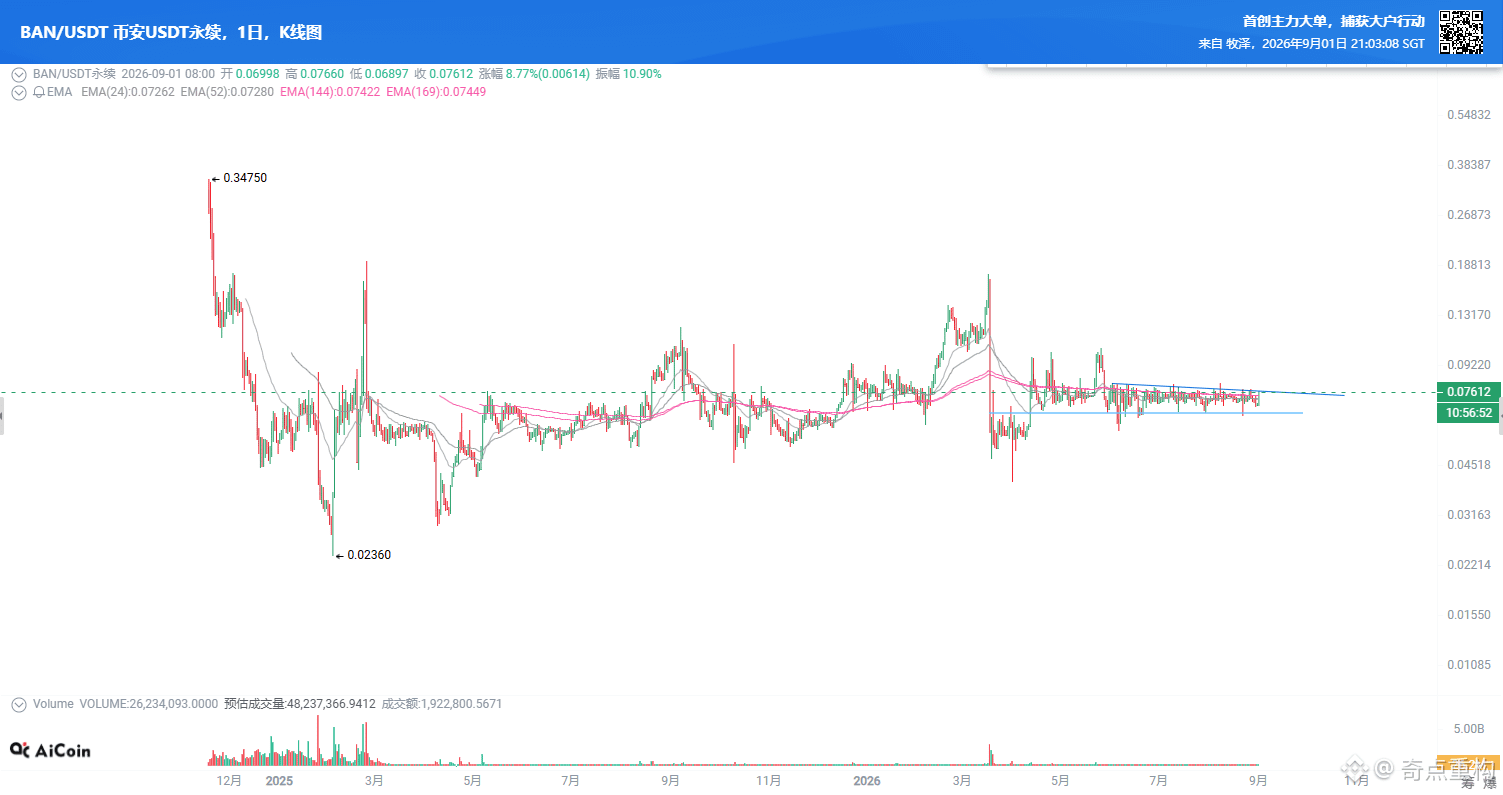
#BAN If this were to rise, wouldn't it go to the sky?!
{future}(BANUSDT)
#BAN If this were to rise, wouldn't it go to the sky?!
3
1
544
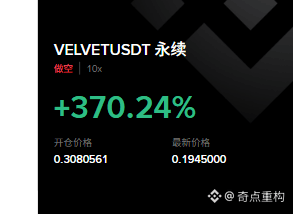
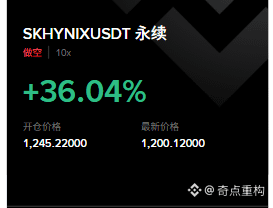
·
--
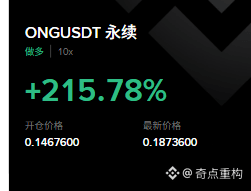
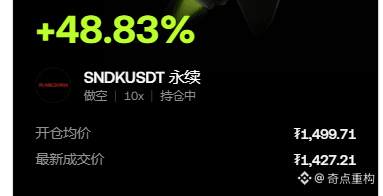
#STORJ/USDT will skyrocket before it is taken down
{future}(STORJUSDT)
#STORJ/USDT will skyrocket before it is taken down
99
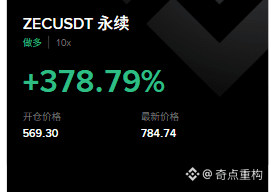
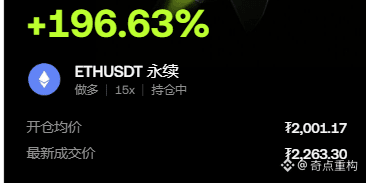
·
--
#BTWUSDT⚡️ velocity to short long term
{future}(BTWUSDT)
#BTWUSDT⚡️ velocity to short long term
142
·
--
#BTWUSDT⚡️ Find a place and go long and short? to short the long line
#BTWUSDT⚡️ Find a place and go long and short? to short the long line
104
·
--
Not bad work done on-chain
Not bad work done on-chain

链上_小敖丙
·
--
🌙✨ Exclusive Qixi Festival benefits are here!
The Ao Bing Community · Qixi Giveaway is officially underway~
From this post, we will draw 10 fan spots. Each winner gets a cash reward of 5–10U!
Participating is super easy:
❤️ Like
🔄 Repost
💬 Comment
One-click triple action—hop on effortlessly!
You must follow me first to participate.
📅 Draw will be at 8:00 PM on August 19
After you win, I’ll DM you!
In the Ao Bing Community, meet beauty and good luck
💕
Come join now—generous rewards are waiting for you!
#七夕 #敖丙社区 #抽奖活动
The Ao Bing Community · Qixi Giveaway is officially underway~
From this post, we will draw 10 fan spots. Each winner gets a cash reward of 5–10U!
Participating is super easy:
❤️ Like
🔄 Repost
💬 Comment
One-click triple action—hop on effortlessly!
You must follow me first to participate.
📅 Draw will be at 8:00 PM on August 19
After you win, I’ll DM you!
In the Ao Bing Community, meet beauty and good luck
💕
Come join now—generous rewards are waiting for you!
#七夕 #敖丙社区 #抽奖活动

8
·
--
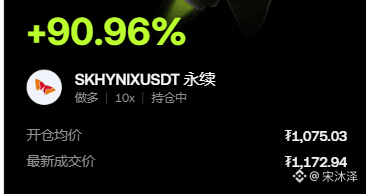
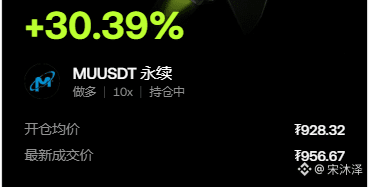
#交易训练 Want the trading curve to stop lurching up and down and instead rise steadily, laying the groundwork for an exponential surge in the later stages of trading. One solution is to “slowly simmer” your way into a small win—bit by bit.
For example, set yourself a clear position-holding rule.
Use a single 9 EMA as your exit reference line. As long as the price keeps moving upward along that 9 EMA, trail your stop-loss underneath it. The only reason to exit is when the closing price of a candlestick falls below the 9 EMA. Before that, no matter how things move in the middle, you must hold.
We always invent various reasons for exiting ourselves. Most people sell too early—it’s really fear doing the job of finding excuses for you. But the market, from start to finish, only says one thing: this trade hasn’t finished yet. The 9 EMA is what determines whether the trend is still intact.
So where should you place the protective stop-loss at the beginning?
There’s also a general principle: in an uptrend, price will form a sequence of higher lows. Your stop-loss cannot be placed right below the most recent low in front of you. Instead, place it below the previous higher low. Leave a bit of room for the price to oscillate around key levels, so you don’t get taken out by a single needle-like spike—and end up missing a whole stretch afterward.
Once you have a solution, you need to bring it into live trading and execute it. You will definitely make mistakes along the way—go back and forth a few times, and only after several days in a row you follow the new rule correctly can you truly accumulate another small win.
At the moment, this small win may not look impressive. But if you stack them one after another, and gather them together, that’s momentum. And the later you go, the easier it gets. At the beginning, you may need to grind for many days to secure one small win. But later, with the same effort, you can take several good wins in a row.
An account curve is built day by day like this—it doesn’t rely on a single moment of sudden realization. Reposted—it's better.
#交易训练 Want the trading curve to stop lurching up and down and instead rise steadily, laying the groundwork for an exponential surge in the later stages of trading. One solution is to “slowly simmer” your way into a small win—bit by bit.
For example, set yourself a clear position-holding rule.
Use a single 9 EMA as your exit reference line. As long as the price keeps moving upward along that 9 EMA, trail your stop-loss underneath it. The only reason to exit is when the closing price of a candlestick falls below the 9 EMA. Before that, no matter how things move in the middle, you must hold.
We always invent various reasons for exiting ourselves. Most people sell too early—it’s really fear doing the job of finding excuses for you. But the market, from start to finish, only says one thing: this trade hasn’t finished yet. The 9 EMA is what determines whether the trend is still intact.
So where should you place the protective stop-loss at the beginning?
There’s also a general principle: in an uptrend, price will form a sequence of higher lows. Your stop-loss cannot be placed right below the most recent low in front of you. Instead, place it below the previous higher low. Leave a bit of room for the price to oscillate around key levels, so you don’t get taken out by a single needle-like spike—and end up missing a whole stretch afterward.
Once you have a solution, you need to bring it into live trading and execute it. You will definitely make mistakes along the way—go back and forth a few times, and only after several days in a row you follow the new rule correctly can you truly accumulate another small win.
At the moment, this small win may not look impressive. But if you stack them one after another, and gather them together, that’s momentum. And the later you go, the easier it gets. At the beginning, you may need to grind for many days to secure one small win. But later, with the same effort, you can take several good wins in a row.
An account curve is built day by day like this—it doesn’t rely on a single moment of sudden realization. Reposted—it's better.
For example, set yourself a clear position-holding rule.
Use a single 9 EMA as your exit reference line. As long as the price keeps moving upward along that 9 EMA, trail your stop-loss underneath it. The only reason to exit is when the closing price of a candlestick falls below the 9 EMA. Before that, no matter how things move in the middle, you must hold.
We always invent various reasons for exiting ourselves. Most people sell too early—it’s really fear doing the job of finding excuses for you. But the market, from start to finish, only says one thing: this trade hasn’t finished yet. The 9 EMA is what determines whether the trend is still intact.
So where should you place the protective stop-loss at the beginning?
There’s also a general principle: in an uptrend, price will form a sequence of higher lows. Your stop-loss cannot be placed right below the most recent low in front of you. Instead, place it below the previous higher low. Leave a bit of room for the price to oscillate around key levels, so you don’t get taken out by a single needle-like spike—and end up missing a whole stretch afterward.
Once you have a solution, you need to bring it into live trading and execute it. You will definitely make mistakes along the way—go back and forth a few times, and only after several days in a row you follow the new rule correctly can you truly accumulate another small win.
At the moment, this small win may not look impressive. But if you stack them one after another, and gather them together, that’s momentum. And the later you go, the easier it gets. At the beginning, you may need to grind for many days to secure one small win. But later, with the same effort, you can take several good wins in a row.
An account curve is built day by day like this—it doesn’t rely on a single moment of sudden realization. Reposted—it's better.
59
·
--
Bullish
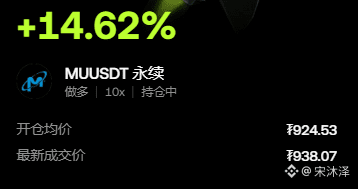
Not taking a loss on this trade—this one is a long-term hold
{future}(MUUSDT)
Not taking a loss on this trade—this one is a long-term hold
140
·
--
Bullish
#美光 Storage has fallen so much. Micron is too weak to do it. SanDisk's early gains were too large. Now is a good time to buy Micron
{future}(MUUSDT)
#美光 Storage has fallen so much. Micron is too weak to do it. SanDisk's early gains were too large. Now is a good time to buy Micron
137
Log in to explore more content
Join global crypto users on Binance Square
⚡️ Get latest and useful information about crypto.
💬 Trusted by the world’s largest crypto exchange.
👍 Discover real insights from verified creators.
Email / Phone number
Trending Topics
CircleMints500MUSDCOnSolana
78,043 views
1,792 Discussing
#circlemints500musdconsolana
🚨 $500M USDC MINTED ON SOLANA! 💵🔥
Circle Treasury just minted 500M USDC on Solana, pushing total global supply to $75.2B! 📈✨
💡 Quick Reality Check:
🔹 Minting = Fresh Inventory Creation (Not instant buying power!🛒
🔹 Real Trigger = Capital Deployment into DeFi, Exchanges & Pools! 🌐🚀
🎯 Coins to Watch:
⚡ $SOL — Network activity is booming, and fresh liquidity continues to drive ecosystem growth!
💎 $RARE — A high-volatility altcoin that reacts fast to fresh market liquidity and sentiment!🪐
💥 Are you accumulating now or waiting for full capital deployment? Drop your thoughts below! 👇✨
#CircleMints500MUSDCOnSolana
#PolymarketBankFailureBetsDrawFDICConcern
#BlackRockBuildsTokenizedPortfoliosForOndo
#BitwiseFilesToListNEARETFOnNYSEArca
Hifza Rubab
·4 Likes
·4.4k views
PolymarketBankFailureBetsDrawFDICConcern
84,072 views
1,672 Discussing
BlackRockBuildsTokenizedPortfoliosForOndo
74,548 views
1,186 Discussing