
丰浪Bit
138 Posts

丰浪Bit
Report
Block User
15 Following
41 Followers
45 Liked
Posts
All
Quotes
·
--
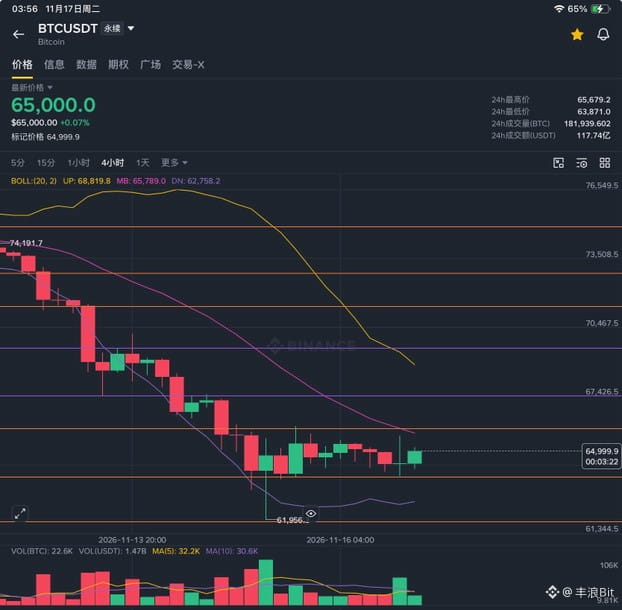
#BTC BTC has stabilized and is currently consolidating after a sharp drop. Go long around 62,000–64,000 and short around 67,500–69,500. Be bold with shorts and use smaller positions for longs.
#BTC BTC has stabilized and is currently consolidating after a sharp drop. Go long around 62,000–64,000 and short around 67,500–69,500. Be bold with shorts and use smaller positions for longs.
1
217
·
--
Bearish
#btc Closed the long position at breakeven for now; the rebound wasn't as strong as expected. The broader downtrend isn't over yet. I'll wait and see after the U.S. stock market opens tonight.
#btc Closed the long position at breakeven for now; the rebound wasn't as strong as expected. The broader downtrend isn't over yet. I'll wait and see after the U.S. stock market opens tonight.
2
262
·
--
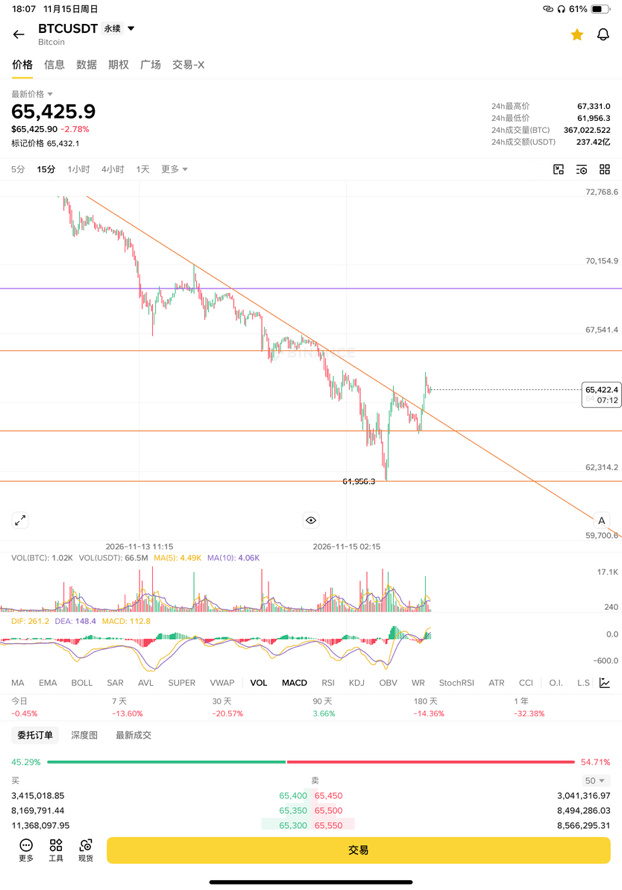
#BTC has broken above the descending trendline, with higher highs and higher lows. The rebound is a bit strong, so I’ve closed the short opened at 70,000. If it rebounds to 67,000–6,920, I’ll check the volume before shorting again. For now, you can take a small position to ride the rebound, with a stop-loss at 63,800 or 61,900.
#BTC has broken above the descending trendline, with higher highs and higher lows. The rebound is a bit strong, so I’ve closed the short opened at 70,000. If it rebounds to 67,000–6,920, I’ll check the volume before shorting again. For now, you can take a small position to ride the rebound, with a stop-loss at 63,800 or 61,900.
211
·
--
Bearish
#btc $BTC
{future}(BTCUSDT)
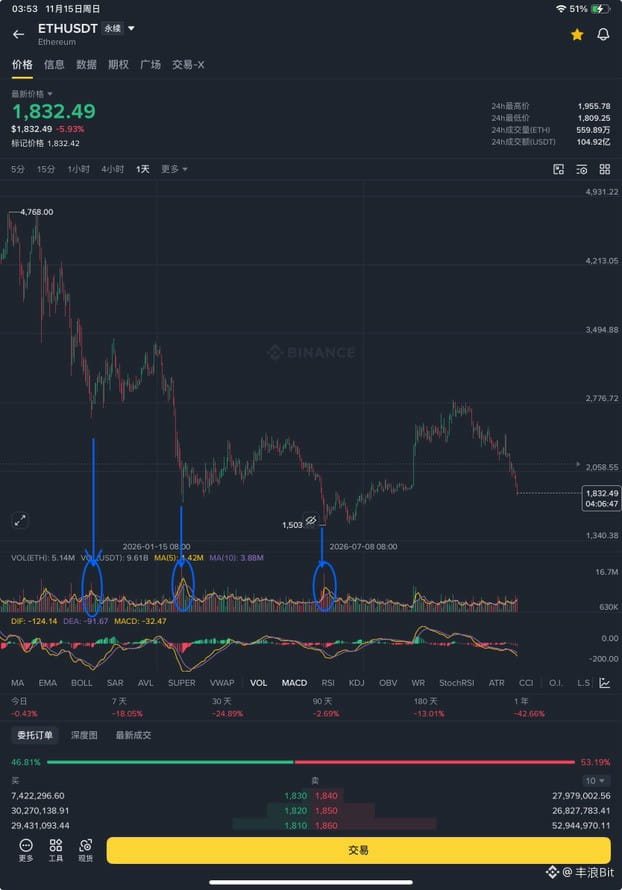
When will it stop falling? Where is the support? Looking at the previous pattern: a huge volume spike, then short covering.
#btc $BTC
When will it stop falling? Where is the support? Looking at the previous pattern: a huge volume spike, then short covering.
When will it stop falling? Where is the support? Looking at the previous pattern: a huge volume spike, then short covering.
595
·
--
Bearish
See translation
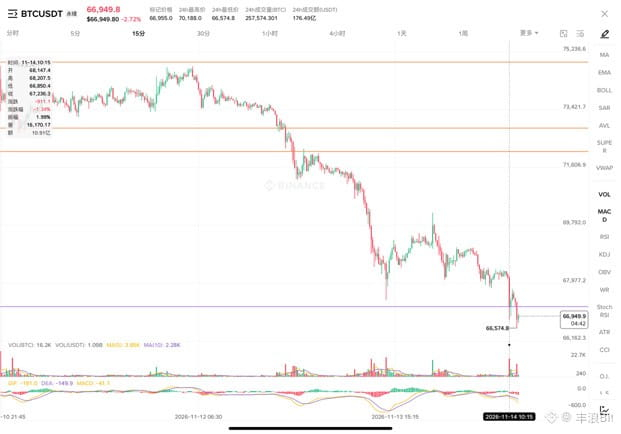
#btc 才哪到哪,别信什么到底抄底,量能上还没跌够,比如15分钟出现18亿以左右跌不动才有机会是底,现在空单继续拿稳,反弹继续加仓空
#btc 才哪到哪,别信什么到底抄底,量能上还没跌够,比如15分钟出现18亿以左右跌不动才有机会是底,现在空单继续拿稳,反弹继续加仓空
238
·
--
Bearish
#BTC It'll go down just as smoothly as it went up before. Hold the short position; there's no rush to close it.$BTC
#BTC It'll go down just as smoothly as it went up before. Hold the short position; there's no rush to close it.$BTC
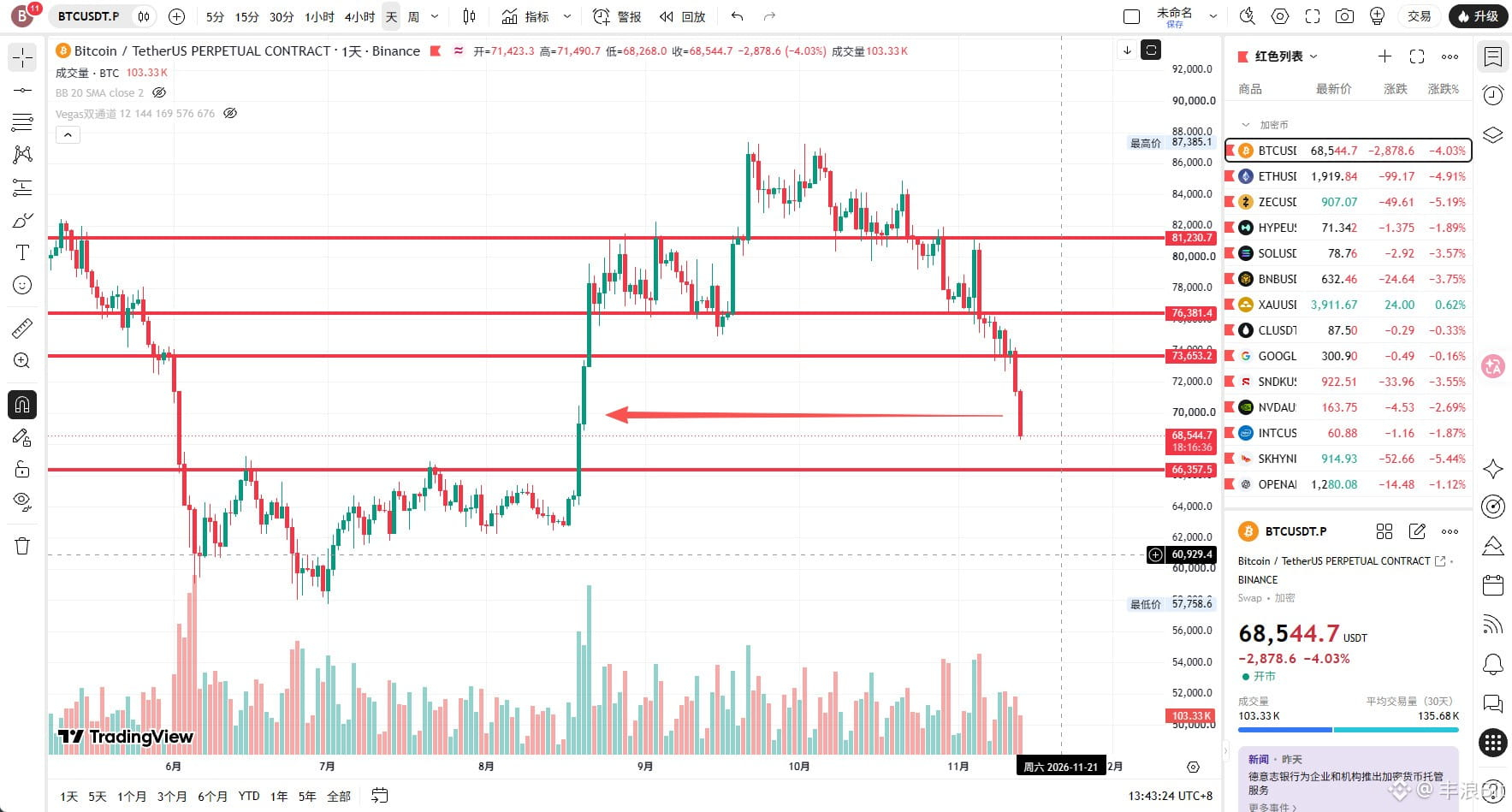
392
·
--
#ETH Better late than never. Woke up and was stunned 😁—let’s see if it can make it to 2030.
#ETH Better late than never. Woke up and was stunned 😁—let’s see if it can make it to 2030.
255
·
--
Bearish
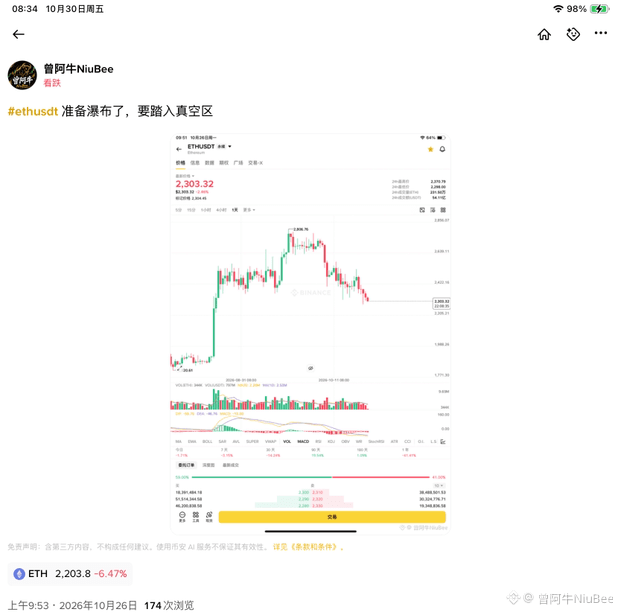
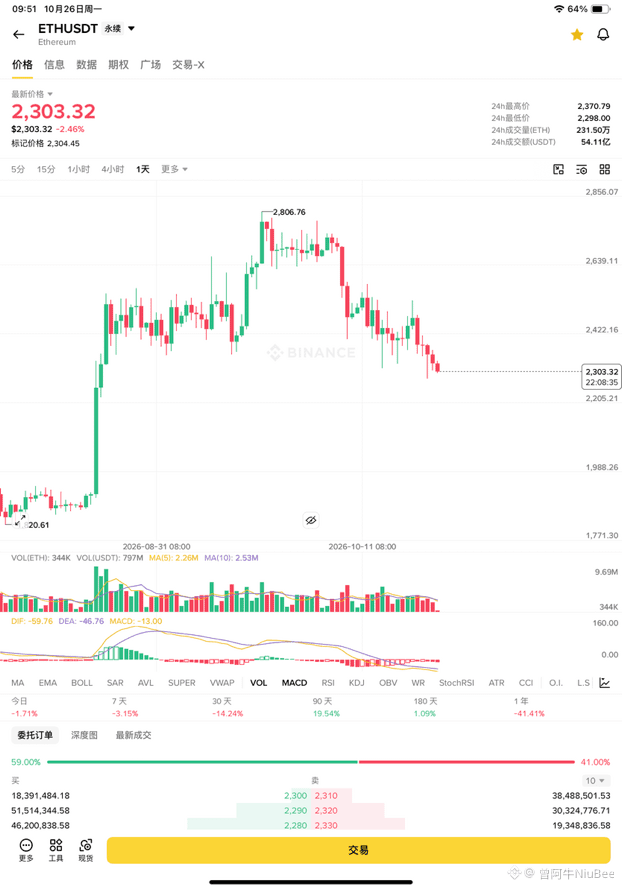
#ethusdt is getting ready for the waterfall and is about to enter the vacuum zone.
#ethusdt is getting ready for the waterfall and is about to enter the vacuum zone.
1
174
·
--
#币安神算子 Compete for a share of the 1,000,000 USDC prize pool with your skills—check in and post daily to join the action!
Binance Square community, here’s a major event currently underway: “Binance Pick.” The total prize pool can reach up to 1,000,000 USDC. It’s simple: complete tasks to earn points → use points to make predictions → climb the leaderboard and share the rewards. Whether you’re a trading pro or a beginner, there’s a prize pool for you to join.
Binance Square community, here’s a major event currently underway: “Binance Pick.” The total prize pool can reach up to 1,000,000 USDC. It’s simple: complete tasks to earn points → use points to make predictions → climb the leaderboard and share the rewards. Whether you’re a trading pro or a beginner, there’s a prize pool for you to join.

66
·
--
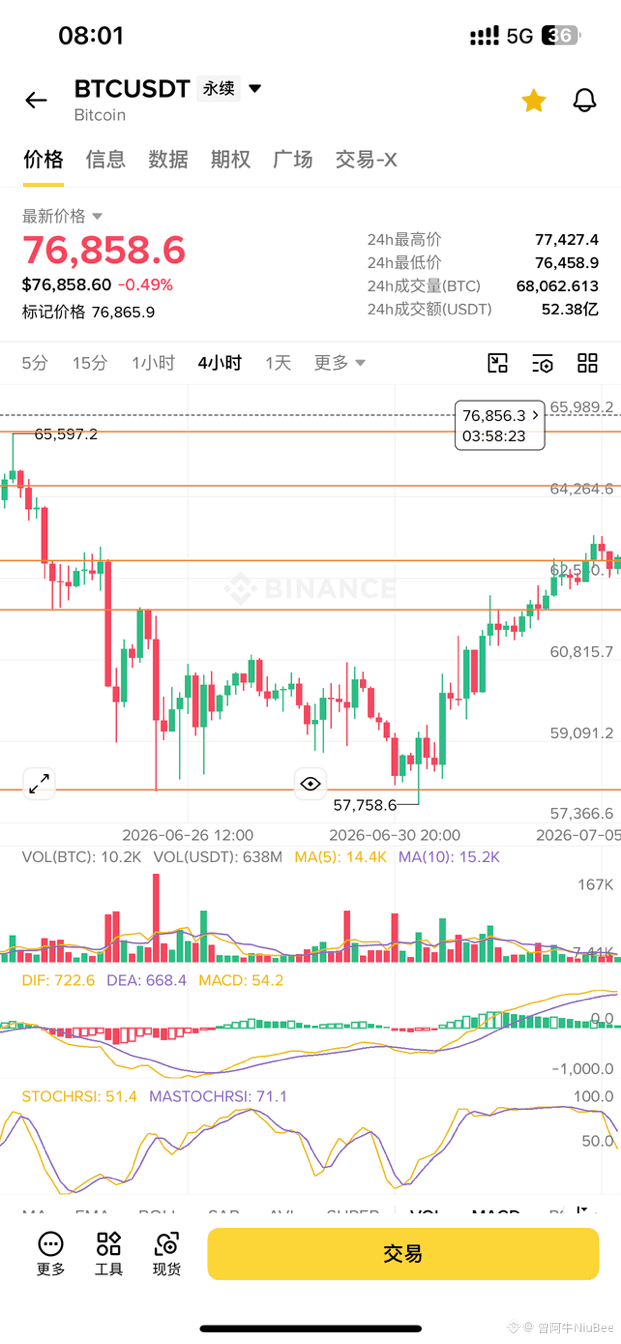
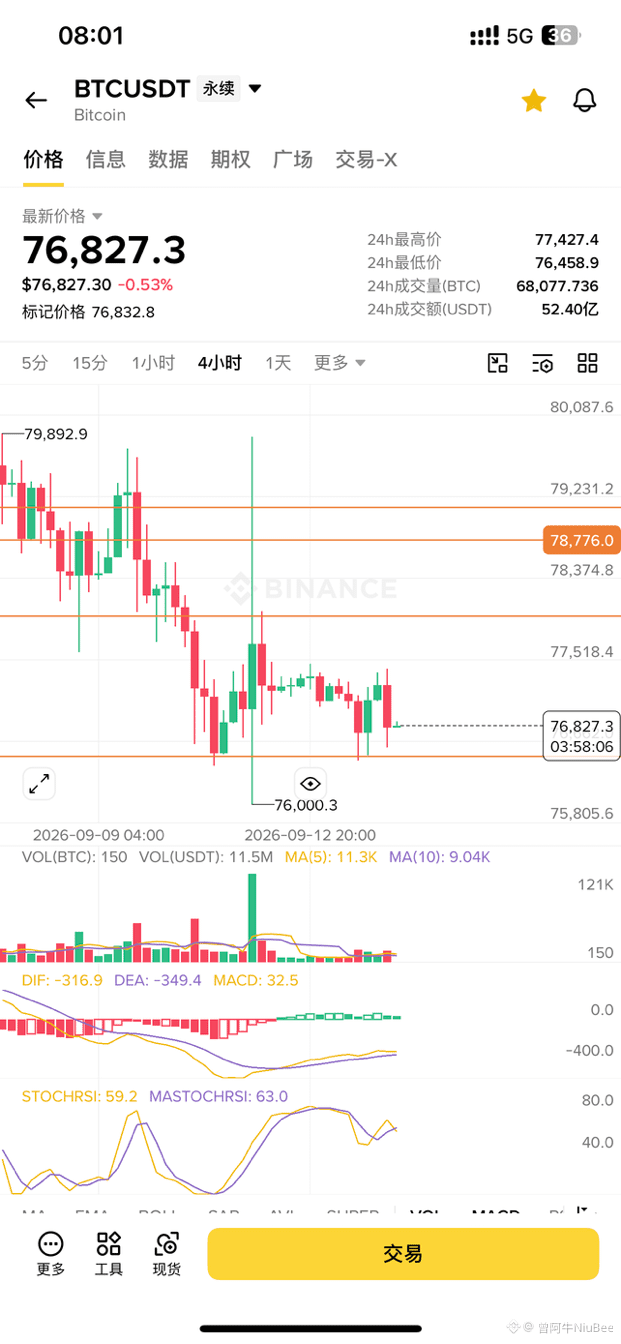
#btc The operations of capital are all similar. Can it, like on July 1, break below the previous low and then recover?
Wait patiently for BTC to break below 75800 for a long opportunity
#btc The operations of capital are all similar. Can it, like on July 1, break below the previous low and then recover?
Wait patiently for BTC to break below 75800 for a long opportunity
Wait patiently for BTC to break below 75800 for a long opportunity
140
·
--
Bullish
2026.07.19 #BTC / ETH / BNB / SOL Intraday Market Analysis
For BTC today, I’ll first view it as trading with a slight bullish bias in a range.
As long as the pullback doesn’t break 64270 - 64690, the structure remains intact and we can continue to look higher.
For the upside first target 64780 - 65030; if it can’t break through, don’t chase.
If it truly turns stronger, the volume must keep up with this move.
--------------------
BTC
Direction: Range with a slight bullish bias
Key Resistance: 64780 - 65030
Key Support: 64270 - 64690
Plan:
For BTC, I’ll first check whether 64270 - 64690 can be held.
If it holds, then we can look at upside space; if it’s lost, it means the rhythm has changed.
If 64780 - 65030 can’t be broken, there’s no need to chase aggressively.
ETH: I’m still watching BTC’s “face” (i.e., reacting to BTC direction). If ETH can’t reclaim 1852, then the bounce should first be treated as a corrective move.
BNB: It’s not the weakest, but don’t get overexcited on its own. If 571 - 576 can’t be broken, there’s no need to rush.
SOL: The pace is faster. If 74.8 - 75.8 can’t be held, it’s easy for it to keep shaking out; until it reaches the level, keep it empty (no position).
--------------------
Today’s main focus is on BTC’s 64270 - 64690. If it doesn’t reach this zone, I won’t rush to take action.
300
·
--
Bearish
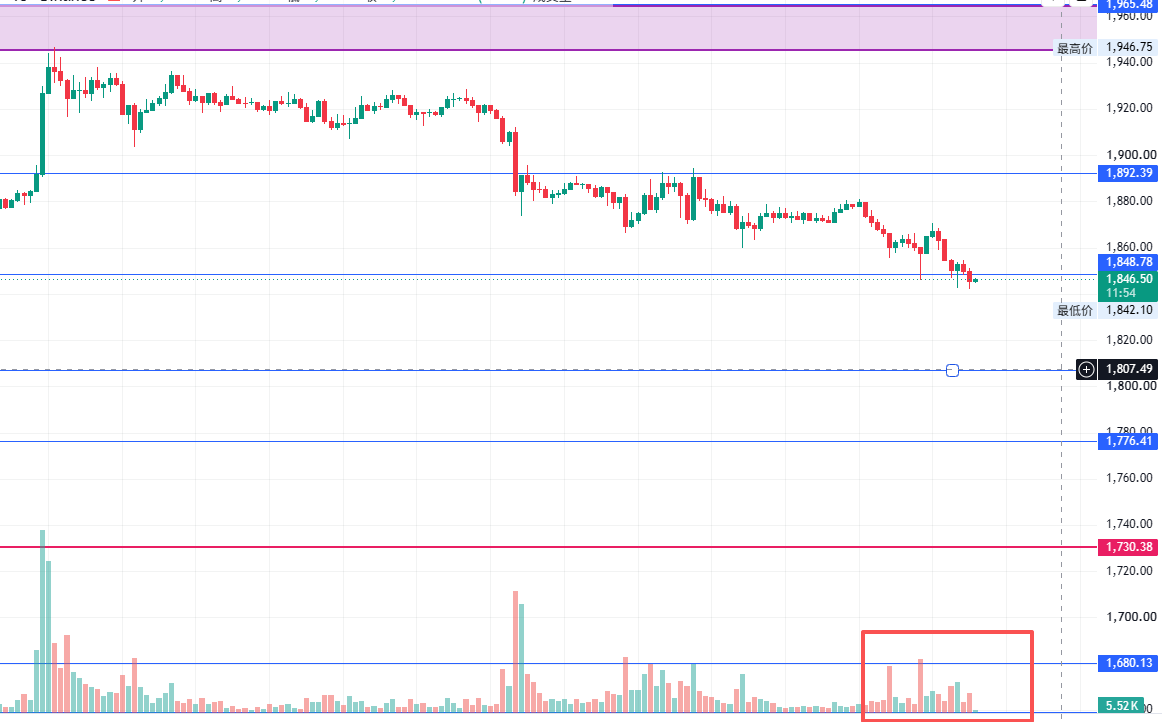
#ETH broke the level, going short immediately!
The volume at 1850 is too weak—big plunge right away$
{future}(ETHUSDT)
#ETH broke the level, going short immediately!
The volume at 1850 is too weak—big plunge right away$
The volume at 1850 is too weak—big plunge right away$
224
·
--
Bearish
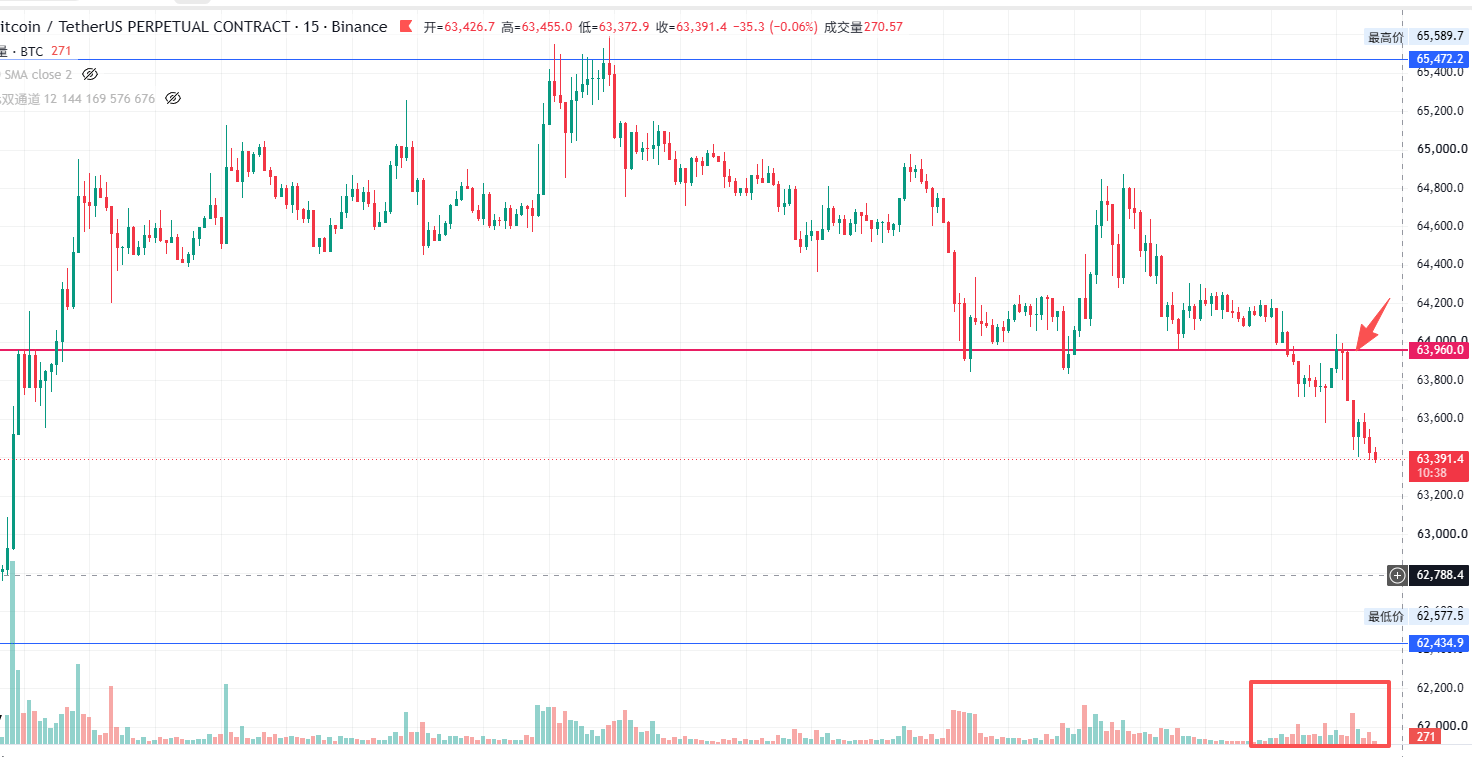
#btc has broken through the level, but the pullback can’t go back up! Short it now!
{future}(BTCUSDT)
#btc has broken through the level, but the pullback can’t go back up! Short it now!
183
·
--
Bullish
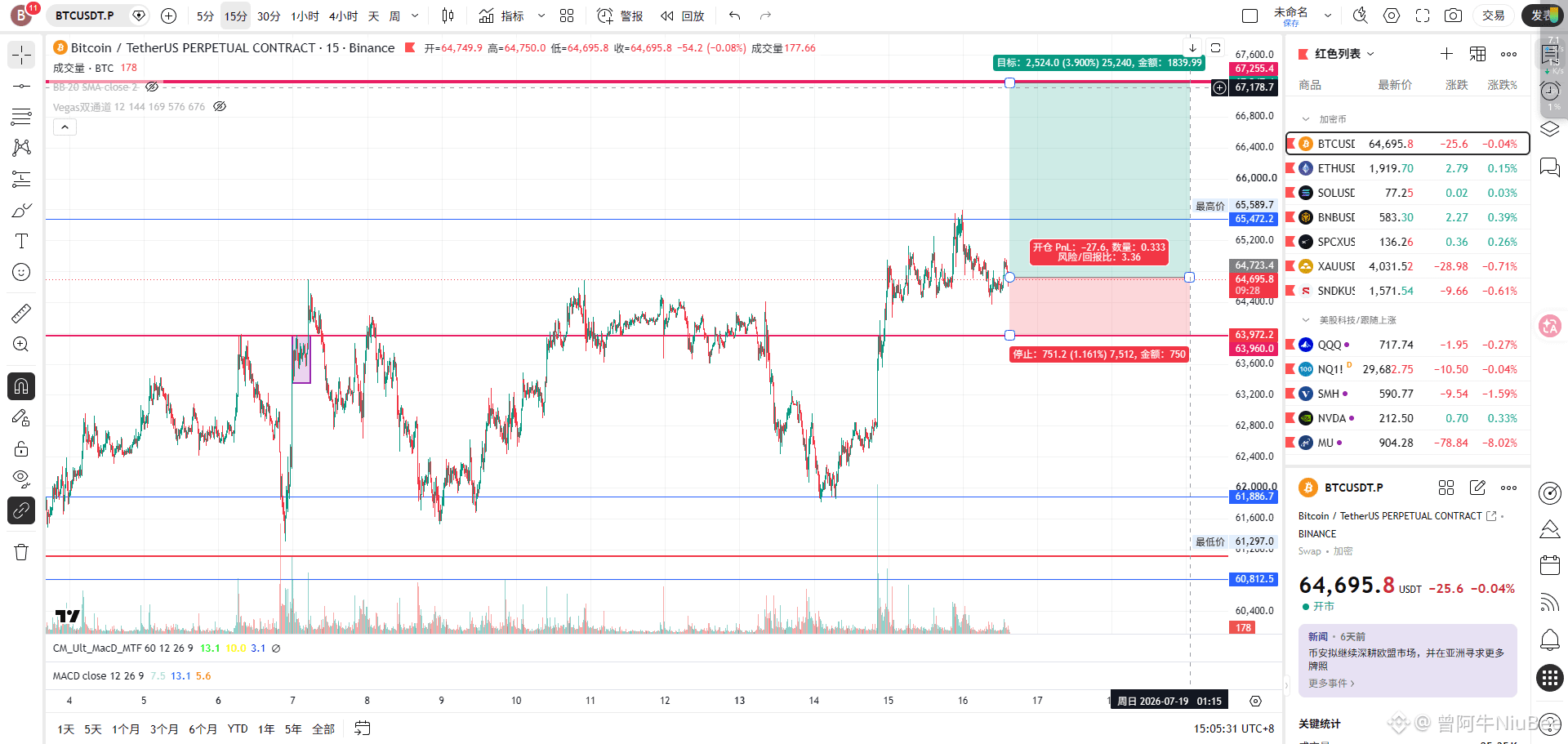
#btc current good entry position, go long 64600
Target 67000, stop loss 63900
If it pulls back to 61800 later, you can continue to go long
#btc current good entry position, go long 64600
Target 67000, stop loss 63900
If it pulls back to 61800 later, you can continue to go long
Target 67000, stop loss 63900
If it pulls back to 61800 later, you can continue to go long
1
176
·
--
#grvt # The most expensive thing in a trading account might not be the fees
It may be those margins that just sit there, doing nothing.
Anyone who trades should have encountered this: when the market hasn’t come, the funds sit in the account waiting; when the market really does come, you have to move money around everywhere and top up margin. The money looks like it’s in your hands, but most of the time it isn’t actually working.
So this time, when looking at GRVT, what I care about most is its unified balance design. Eligible funds can continue to generate yield, and when you need to trade, they can also be called as margin—without having to completely split “earning yield” and “making trades” into two separate accounts.
It sounds seamless, but what really matters is whether, under extreme market conditions, the funds can be pulled back in time—and whether the source of yield is transparent enough.
Whether $GRVT has long-term value isn’t something to hype right away. At the very least, the problem it addresses is a real one traders face every day: how to keep funds from sitting idle for too long.
@grvt_io $GRVT #grvt
57
·
--
“AI automated trading” — the first reaction isn’t excitement. It’s to first wonder whether it could get out of control.This market loves talking about automation so much.
Automatically watch the market, automatically run strategies, automatically rebalance, automatically execute.
It sounds so comfortable—like you don’t have to watch the market, and the machine will make money on its own.
But when it comes to trading, what you fear most isn’t being slow.
What I fear most is making a mistake and not stopping.
When people make a mistake, they will stop and think about it to some extent.
It feels awful when you overdo it. If the market is off, you hesitate. If you keep making mistakes in a row, you pause.
AI Agents are different. It has no emotions and won’t reflect.
As long as permissions are granted and the conditions are triggered, it may keep executing.
“AI automated trading” — the first reaction isn’t excitement. It’s to first wonder whether it could get out of control.
This market loves talking about automation so much.
Automatically watch the market, automatically run strategies, automatically rebalance, automatically execute.
It sounds so comfortable—like you don’t have to watch the market, and the machine will make money on its own.
But when it comes to trading, what you fear most isn’t being slow.
What I fear most is making a mistake and not stopping.
When people make a mistake, they will stop and think about it to some extent.
It feels awful when you overdo it. If the market is off, you hesitate. If you keep making mistakes in a row, you pause.
AI Agents are different. It has no emotions and won’t reflect.
As long as permissions are granted and the conditions are triggered, it may keep executing.
4
1
74
·
--
#newt $NEWT
To be honest, what’s most appealing about AI automated trading is that it’s convenient—and what’s most frightening about it is also that it’s convenient.
If a person places the wrong order, at least they’ll pause and doubt themselves.
An AI Agent, if it has permissions and keeps executing end to end, if the parameters are wrong, the path is wrong, or the market conditions change, it might still keep running.
So when looking at Newton Protocol, I don’t just look to see whether it’s an AI hot topic.
What’s truly worth watching in the Newton Mainnet Beta is whether it can make authorization, rules, and pre-execution checks work together.
The focus of $NEWT isn’t just automation—it’s whether there are boundaries once AI actually starts moving money.
@NewtonProtocol
83
·
--
I’m more concerned about how the system handles things when AI fails.
Nowadays, many AI projects talk about capability.
Analyzing.
Executing.
Automatically running strategies.
Saving users time.
Of course those are important, but I’m more concerned with another question:
When it fails, how will the system handle it?
Because errors in trading are all too normal.
Markets change, data gets delayed, strategies become invalid, parameters can be written wrong, and the on-chain environment won’t keep cooperating with you forever.
If an AI Agent only looks smart when the wind is at its back, then it’s not very meaningful.
What’s truly hard is fighting the headwind.
When the strategy is wrong, can it stop?
When permissions are exceeded, can it be blocked?
Can it recognize exceptional paths?
Before execution, are there rules that scan again?
So on this @NewtonProtocol track, what I’m looking at isn’t “AI is here again.”
The truly valuable part of Newton Protocol and Newton Mainnet Beta—the part worth unpacking—is that it aims to turn the authorization and checks before AI auto-execution into a set of rule-based workflow.
This doesn’t sound as exciting.
But I think it’s very practical.
Whether $NEWT can move beyond the initial activity hype also depends on whether there’s real demand for this direction.
If, in the future, on-chain strategies, AI Agents, and automated trading become more common, then how failures are handled may be more important than just whether it runs fast.
When the wind is favorable, everyone looks like a pro.
Whether, when things go wrong, you can still be stopped by rules—that’s the real thing.
@NewtonProtocol $NEWT #Newt
23
·
--
If AI is really going to go on-chain, the first lesson isn’t about making money.
It’s about following the rules.
When many people talk about AI Agents, they immediately think about returns.
Automated trading, automated rebalancing, automated arbitrage—sounds exciting.
But on-chain isn’t a game test server.
Once you give it permissions and it broadcasts trades, the money involved is real money.
It’s not like getting a question wrong or generating an image incorrectly.
That’s why when I look at @NewtonProtocol now, I focus more on the deeper, lower-layer things in the Newton Mainnet Beta.
How authorization should be done.
How to pass the rules.
How to check before executing.
What the Agent can do, and what it can’t.
It’s not about waiting for it to finish running and then doing a retrospective—it's about tightening the boundaries before it even makes a move.
This kind of topic may not be ideal for telling a story.
And it may not be instantly thrilling to look at.
But when AI Agents start connecting wallets, strategies, and DeFi protocols, this might be the most important layer.
If Newton Protocol can get this whole workflow running smoothly, the discussion around $NEWT won’t just be an AI trend.
As on-chain automation keeps moving forward, the security problems will be impossible to bypass.
Everyone wants AI that can make money.
But before you let it touch funds, first check whether it will follow the rules.
@NewtonProtocol $NEWT #Newt
108
·
--
Whenever I see the words “fully automatic making money,” I instinctively wrinkle my brow.
It’s not that automation is useless.
It’s just that in trading, anything that sounds too easy usually won’t be easy in the end.
Back then, many strategies looked great in backtests.
Once they went live and started running, everything showed up: slippage, latency, liquidity, trading fees, abnormal prices—all of it.
What’s even more troublesome is that if an AI Agent connects a wallet, it doesn’t just give you advice—it will actually carry out the actions.
That’s not “chat” anymore.
That’s moving money.
So when it comes to something like the Newton Protocol, I don’t think you can look at it only through an AI lens.
The real focus should be on several very old-school questions:
Are there boundaries for permissions?
Are there checks before execution?
Are the rules hard-coded into the process?
If something goes wrong, can it stop?
If Newton Mainnet Beta can surface and test these things in a real environment, it would be more useful than listening to a hundred AI narratives.
@NewtonProtocol I’ll watch this direction for a while.
$NEWT is the same—I’m not rushing to conclusions.
What’s truly worth watching isn’t whether it has short-term hype, but whether the market will start to need this kind of underlying “rules for AI to execute” layer.
Whether AI can make money—let’s not talk about that yet.
At the very least, don’t let it be especially diligent and lose money for you when it’s wrong.
@NewtonProtocol $NEWT #Newt
9
Log in to explore more content
Join global crypto users on Binance Square
⚡️ Get latest and useful information about crypto.
💬 Trusted by the world’s largest crypto exchange.
👍 Discover real insights from verified creators.
Email / Phone number
Trending Topics
AnthropicToDebutAfter$83IPOPricing
15,333 views
185 Discussing
Stock Futures Hold Near Flat as Anthropic Prices IPO at $83 Ahead of Debut
Binance News
·8 Likes
·7.8k views
BTCRemainsUnderPressureAfterHawkishFOMCMinutes
57,463 views
1,481 Discussing
NvidiaBoardReportedlySplitOverHuang’sReturn
19,065 views
737 Discussing