

宁凡
3.1k Posts

宁凡
Report
Block User
18年入圈,全靠机遇风口 盘感玩现货和合约 web3自媒体 | Twitter: 宁凡
186 Following
27.1K+ Followers
21.0K+ Liked
Posts
All
Quotes
Live
·
--
Verified
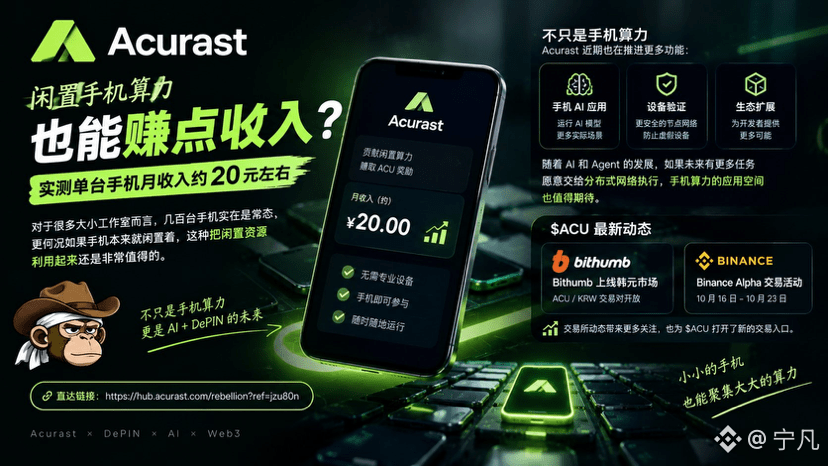
Earn income from your idle phone’s computing power. In my hands-on test of @Acurast, a single, ordinary phone earned around 20 yuan a month, so it seems you’ll need to scale up.
For many small and large studios, having hundreds of phones is perfectly normal. And if the phones are already sitting idle, putting those unused resources to work is definitely worthwhile.
Acurast isn’t just focused on phone computing power, either. It’s also been working on mobile AI applications, device verification, and other features. As AI and agents develop, if more tasks are entrusted to decentralized networks in the future, the potential uses for phone computing power are worth watching.
There’s also been some recent news about $ACU: Bithumb has opened KRW trading, and Binance Alpha has launched a trading campaign. These developments could bring the project even more market attention.
Earn income from your idle phone’s computing power. In my hands-on test of @Acurast, a single, ordinary phone earned around 20 yuan a month, so it seems you’ll need to scale up.
For many small and large studios, having hundreds of phones is perfectly normal. And if the phones are already sitting idle, putting those unused resources to work is definitely worthwhile.
Acurast isn’t just focused on phone computing power, either. It’s also been working on mobile AI applications, device verification, and other features. As AI and agents develop, if more tasks are entrusted to decentralized networks in the future, the potential uses for phone computing power are worth watching.
There’s also been some recent news about $ACU: Bithumb has opened KRW trading, and Binance Alpha has launched a trading campaign. These developments could bring the project even more market attention.
For many small and large studios, having hundreds of phones is perfectly normal. And if the phones are already sitting idle, putting those unused resources to work is definitely worthwhile.
Acurast isn’t just focused on phone computing power, either. It’s also been working on mobile AI applications, device verification, and other features. As AI and agents develop, if more tasks are entrusted to decentralized networks in the future, the potential uses for phone computing power are worth watching.
There’s also been some recent news about $ACU: Bithumb has opened KRW trading, and Binance Alpha has launched a trading campaign. These developments could bring the project even more market attention.
1
87
·
--
There are so many projects in the crypto market, and so many narratives that I’ve lost count. How you go about shilling a narrative really doesn’t matter that much—getting something up and running and having people willing to keep paying for it are two completely different things.
The most fundamental questions are whether developers will keep using it and whether the network can generate stable demand for computing power. The same goes for @Acurast, which I’ve been talking about all along. It’s pretty damn stupid to get involved in a project and not talk about it.
$ACU has been listed on Bithumb’s KRW market, and Binance Alpha is also running a trading competition. These are great catalysts.
But the question is how to turn these into long-term positives. Events can certainly bring in trading volume, but that doesn’t mean buying pressure will continue after they end.
As the number of AI Agents grows, demand for computing resources will keep increasing. I still hope Acurast can truly bring together the computing power of people’s phones and keep users coming back. If it can, $ACU has a chance to move from a project narrative to real-world demand.
There are so many projects in the crypto market, and so many narratives that I’ve lost count. How you go about shilling a narrative really doesn’t matter that much—getting something up and running and having people willing to keep paying for it are two completely different things.
The most fundamental questions are whether developers will keep using it and whether the network can generate stable demand for computing power. The same goes for @Acurast, which I’ve been talking about all along. It’s pretty damn stupid to get involved in a project and not talk about it.
$ACU has been listed on Bithumb’s KRW market, and Binance Alpha is also running a trading competition. These are great catalysts.
But the question is how to turn these into long-term positives. Events can certainly bring in trading volume, but that doesn’t mean buying pressure will continue after they end.
As the number of AI Agents grows, demand for computing resources will keep increasing. I still hope Acurast can truly bring together the computing power of people’s phones and keep users coming back. If it can, $ACU has a chance to move from a project narrative to real-world demand.
The most fundamental questions are whether developers will keep using it and whether the network can generate stable demand for computing power. The same goes for @Acurast, which I’ve been talking about all along. It’s pretty damn stupid to get involved in a project and not talk about it.
$ACU has been listed on Bithumb’s KRW market, and Binance Alpha is also running a trading competition. These are great catalysts.
But the question is how to turn these into long-term positives. Events can certainly bring in trading volume, but that doesn’t mean buying pressure will continue after they end.
As the number of AI Agents grows, demand for computing resources will keep increasing. I still hope Acurast can truly bring together the computing power of people’s phones and keep users coming back. If it can, $ACU has a chance to move from a project narrative to real-world demand.
1
77
·
--
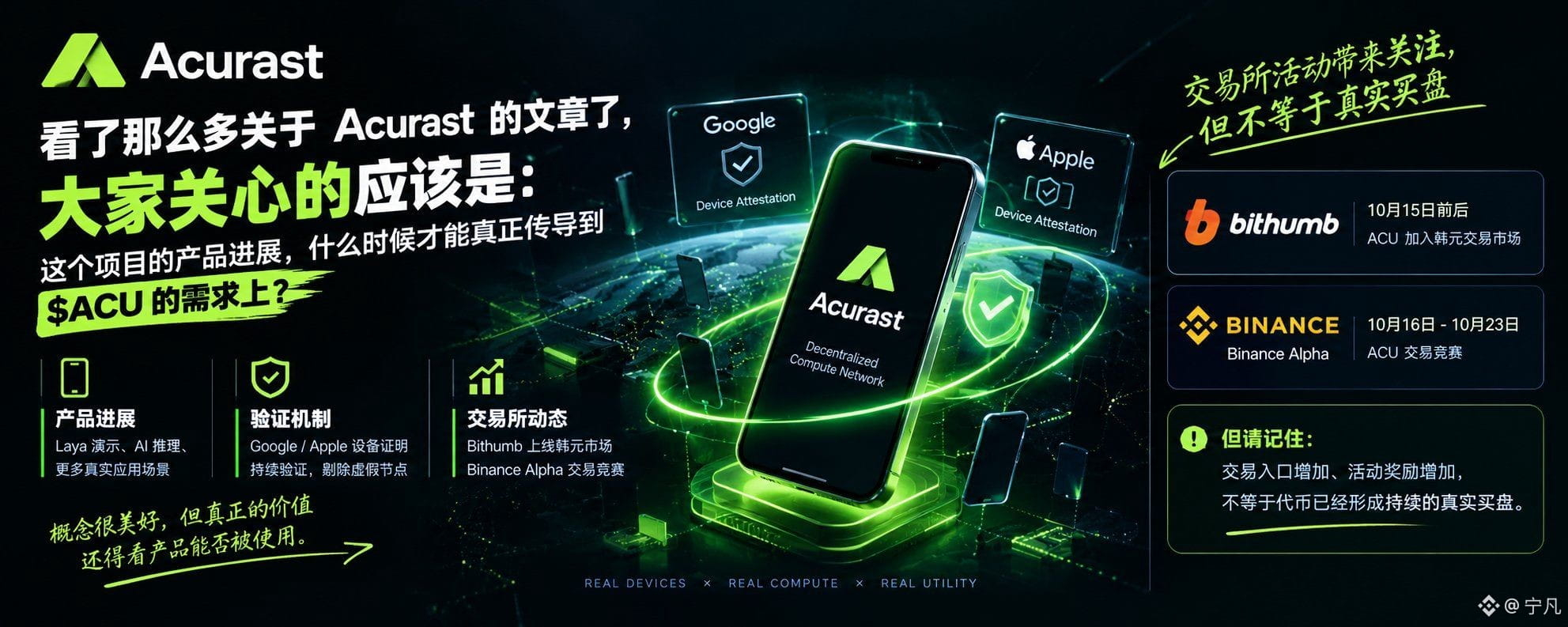
After reading so many articles about @Acurast, what people really care about is probably the project’s product progress—and when that will actually translate into demand for $ACU.
For me, turning a concept into a product people can actually experience is far more meaningful than repeating the same narrative over and over.
Last week, the team updated the Processor verification mechanism again. One of the biggest risks in decentralized computing is that there may appear to be many nodes, while in reality some are simulated devices, sending fake heartbeats, or running in unreliable environments.
Acurast introduced continuous verification based on Google and Apple device attestation mechanisms. It also explained that devices with revoked attestations will be removed from the pool of nodes available for computing and will no longer be eligible to receive deployment tasks or rewards.
This kind of infrastructure work may not directly drive the token price, but it affects whether developers feel confident putting real workloads on the network.
Around October 15, market reports indicated that Bithumb would add ACU to its KRW trading market. On October 16, Binance Alpha also kicked off an ACU trading competition, running from October 16 to 23.
These two developments will certainly help boost short-term market attention, but I want to make one thing clear: more trading venues and campaign rewards do not mean the token has developed sustained, organic buying demand.
After reading so many articles about @Acurast, what people really care about is probably the project’s product progress—and when that will actually translate into demand for $ACU.
For me, turning a concept into a product people can actually experience is far more meaningful than repeating the same narrative over and over.
Last week, the team updated the Processor verification mechanism again. One of the biggest risks in decentralized computing is that there may appear to be many nodes, while in reality some are simulated devices, sending fake heartbeats, or running in unreliable environments.
Acurast introduced continuous verification based on Google and Apple device attestation mechanisms. It also explained that devices with revoked attestations will be removed from the pool of nodes available for computing and will no longer be eligible to receive deployment tasks or rewards.
This kind of infrastructure work may not directly drive the token price, but it affects whether developers feel confident putting real workloads on the network.
Around October 15, market reports indicated that Bithumb would add ACU to its KRW trading market. On October 16, Binance Alpha also kicked off an ACU trading competition, running from October 16 to 23.
These two developments will certainly help boost short-term market attention, but I want to make one thing clear: more trading venues and campaign rewards do not mean the token has developed sustained, organic buying demand.
For me, turning a concept into a product people can actually experience is far more meaningful than repeating the same narrative over and over.
Last week, the team updated the Processor verification mechanism again. One of the biggest risks in decentralized computing is that there may appear to be many nodes, while in reality some are simulated devices, sending fake heartbeats, or running in unreliable environments.
Acurast introduced continuous verification based on Google and Apple device attestation mechanisms. It also explained that devices with revoked attestations will be removed from the pool of nodes available for computing and will no longer be eligible to receive deployment tasks or rewards.
This kind of infrastructure work may not directly drive the token price, but it affects whether developers feel confident putting real workloads on the network.
Around October 15, market reports indicated that Bithumb would add ACU to its KRW trading market. On October 16, Binance Alpha also kicked off an ACU trading competition, running from October 16 to 23.
These two developments will certainly help boost short-term market attention, but I want to make one thing clear: more trading venues and campaign rewards do not mean the token has developed sustained, organic buying demand.
2
91
·
--
Last time, I posted about how @Acurast uses resource-constrained phones. I took a look at Laya in October, and Acurast had launched nine interactive demos—quite a detailed tutorial.
The official demos send requests to call models running on Android phones in the Acurast network. On the fastest device, a single short decision takes about 0.2 seconds.
Try it here: https://laya.acurast.com
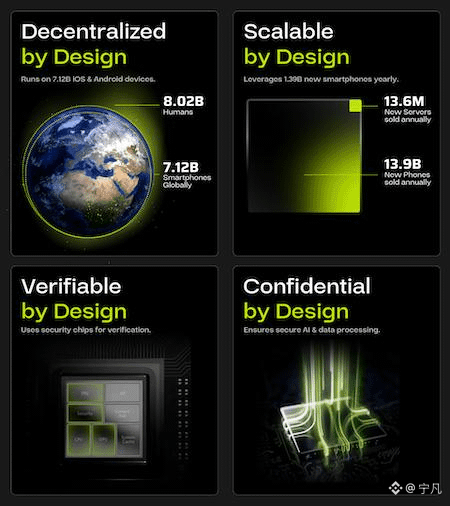
Acurast then went on to explain its Processor Attestation mechanism. It verifies devices using Google Key Attestation on Android and Apple App Attest on iPhone, and continually checks for revoked attestation keys.
This suggests that nodes can’t rely on sheer numbers alone; device verification and ongoing security checks are also essential. The long-term value of DePIN ultimately comes down to supply and demand, and real product usage.
AI needs computing power, and agents need backends that run continuously. When sensitive data and on-chain assets are involved, execution also needs stronger security guarantees. Acurast is trying to address some of these challenges with distributed mobile computing, hardware-based trusted execution environments, and verifiable execution.
Its potential applications go beyond model inference to include REST APIs, scheduled tasks, agent backends, and confidential AI services.
The team also introduced a way to use Deploy Agent on Base with USDC. It’s a route worth exploring, but supporting a particular workload is one thing; having large-scale paid demand is another.
Last time, I posted about how @Acurast uses resource-constrained phones. I took a look at Laya in October, and Acurast had launched nine interactive demos—quite a detailed tutorial.
The official demos send requests to call models running on Android phones in the Acurast network. On the fastest device, a single short decision takes about 0.2 seconds.
Try it here: https://laya.acurast.com
Acurast then went on to explain its Processor Attestation mechanism. It verifies devices using Google Key Attestation on Android and Apple App Attest on iPhone, and continually checks for revoked attestation keys.
This suggests that nodes can’t rely on sheer numbers alone; device verification and ongoing security checks are also essential. The long-term value of DePIN ultimately comes down to supply and demand, and real product usage.
AI needs computing power, and agents need backends that run continuously. When sensitive data and on-chain assets are involved, execution also needs stronger security guarantees. Acurast is trying to address some of these challenges with distributed mobile computing, hardware-based trusted execution environments, and verifiable execution.
Its potential applications go beyond model inference to include REST APIs, scheduled tasks, agent backends, and confidential AI services.
The team also introduced a way to use Deploy Agent on Base with USDC. It’s a route worth exploring, but supporting a particular workload is one thing; having large-scale paid demand is another.
The official demos send requests to call models running on Android phones in the Acurast network. On the fastest device, a single short decision takes about 0.2 seconds.
Try it here: https://laya.acurast.com
Acurast then went on to explain its Processor Attestation mechanism. It verifies devices using Google Key Attestation on Android and Apple App Attest on iPhone, and continually checks for revoked attestation keys.
This suggests that nodes can’t rely on sheer numbers alone; device verification and ongoing security checks are also essential. The long-term value of DePIN ultimately comes down to supply and demand, and real product usage.
AI needs computing power, and agents need backends that run continuously. When sensitive data and on-chain assets are involved, execution also needs stronger security guarantees. Acurast is trying to address some of these challenges with distributed mobile computing, hardware-based trusted execution environments, and verifiable execution.
Its potential applications go beyond model inference to include REST APIs, scheduled tasks, agent backends, and confidential AI services.
The team also introduced a way to use Deploy Agent on Base with USDC. It’s a route worth exploring, but supporting a particular workload is one thing; having large-scale paid demand is another.
2
92
·
--
I've been looking into PolyFlow lately, and I feel there are aspects worth studying—it’s not just another “encrypted payments product.”
The real problem it’s trying to solve is quite realistic: stablecoin payments are becoming more and more common, but the data, credit, and liquidity generated by payments are often still siloed from each other.
PolyFlow’s approach is to further turn payments into a set of on-chain financial infrastructure.
For example, PID is responsible for unified payment identity, PLP for liquidity, and then connects settlement, cross-border payments, and other financial scenarios downstream.
What I care about most is this: if, in the future, stablecoins truly become part of global payments, then what may be genuinely valuable won’t be the words “payments” themselves, but the large stream of real funds and user behavior created by payments—and whether that can be further transformed into usable financial assets and credit.
That’s also why I think PolyFlow is worth continuing to watch.
@Square-Creator-cf6856467 #polyflow
I've been looking into PolyFlow lately, and I feel there are aspects worth studying—it’s not just another “encrypted payments product.”
The real problem it’s trying to solve is quite realistic: stablecoin payments are becoming more and more common, but the data, credit, and liquidity generated by payments are often still siloed from each other.
PolyFlow’s approach is to further turn payments into a set of on-chain financial infrastructure.
For example, PID is responsible for unified payment identity, PLP for liquidity, and then connects settlement, cross-border payments, and other financial scenarios downstream.
What I care about most is this: if, in the future, stablecoins truly become part of global payments, then what may be genuinely valuable won’t be the words “payments” themselves, but the large stream of real funds and user behavior created by payments—and whether that can be further transformed into usable financial assets and credit.
That’s also why I think PolyFlow is worth continuing to watch.
@polyflow_PayFi #polyflow
The real problem it’s trying to solve is quite realistic: stablecoin payments are becoming more and more common, but the data, credit, and liquidity generated by payments are often still siloed from each other.
PolyFlow’s approach is to further turn payments into a set of on-chain financial infrastructure.
For example, PID is responsible for unified payment identity, PLP for liquidity, and then connects settlement, cross-border payments, and other financial scenarios downstream.
What I care about most is this: if, in the future, stablecoins truly become part of global payments, then what may be genuinely valuable won’t be the words “payments” themselves, but the large stream of real funds and user behavior created by payments—and whether that can be further transformed into usable financial assets and credit.
That’s also why I think PolyFlow is worth continuing to watch.
@polyflow_PayFi #polyflow

274
·
--
Verified
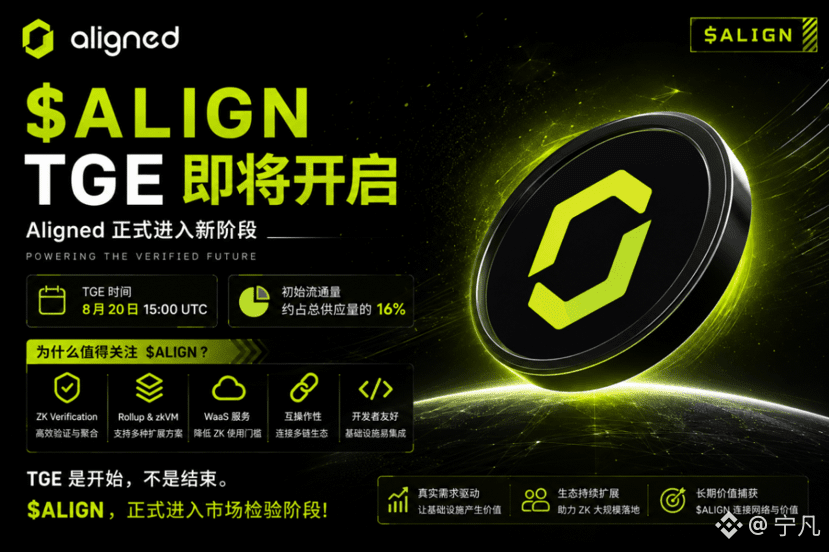
After these past few days, $ALIGN’s TGE is finally about to go live.
Actually, I’ve been following the Aligned project for a while. In the early days, it was more focused on an Ethereum ZK verification layer—back then, it was mainly technical and product-oriented.
The official team has already announced that $ALIGN will launch on August 20 at 15:00 UTC, with the initial circulating supply at about 16% of the total supply.
The difference from other projects is still quite clear: after the TGE, they didn’t immediately dump a large amount of tokens into the market. This point is crucial.
After the TGE, what really matters is:
Product usage → Network demand → token utility → $ALIGN’s value capture
Especially now that the ZK track is no longer in the phase of just telling stories—projects that truly have a product, developers, and real usage scenarios are more likely to be repriced by the market.
I’m really curious whether, after $ALIGN goes live, the ecosystem data and real usage can continue to trend upward.
TGE is the beginning, not the end.
After these past few days, $ALIGN’s TGE is finally about to go live.
Actually, I’ve been following the Aligned project for a while. In the early days, it was more focused on an Ethereum ZK verification layer—back then, it was mainly technical and product-oriented.
The official team has already announced that $ALIGN will launch on August 20 at 15:00 UTC, with the initial circulating supply at about 16% of the total supply.
The difference from other projects is still quite clear: after the TGE, they didn’t immediately dump a large amount of tokens into the market. This point is crucial.
After the TGE, what really matters is:
Product usage → Network demand → token utility → $ALIGN’s value capture
Especially now that the ZK track is no longer in the phase of just telling stories—projects that truly have a product, developers, and real usage scenarios are more likely to be repriced by the market.
I’m really curious whether, after $ALIGN goes live, the ecosystem data and real usage can continue to trend upward.
TGE is the beginning, not the end.
Actually, I’ve been following the Aligned project for a while. In the early days, it was more focused on an Ethereum ZK verification layer—back then, it was mainly technical and product-oriented.
The official team has already announced that $ALIGN will launch on August 20 at 15:00 UTC, with the initial circulating supply at about 16% of the total supply.
The difference from other projects is still quite clear: after the TGE, they didn’t immediately dump a large amount of tokens into the market. This point is crucial.
After the TGE, what really matters is:
Product usage → Network demand → token utility → $ALIGN’s value capture
Especially now that the ZK track is no longer in the phase of just telling stories—projects that truly have a product, developers, and real usage scenarios are more likely to be repriced by the market.
I’m really curious whether, after $ALIGN goes live, the ecosystem data and real usage can continue to trend upward.
TGE is the beginning, not the end.
44
11
197
·
--
Let me start with a question: what do you think is the most important thing for the next phase of RWA?
This week I saw Securitize’s first set of financial results after its listing. The performance isn’t great, but one piece of data is quite interesting: the on-chain assets it manages are now approaching $5 billion.
This suggests that RWA has started to move into the “real money” stage.
But I increasingly feel that the real difficulty in RWA isn’t simply tokenizing stocks or bonds.
Once the tokens are on-chain, the hard parts come next: who can buy them, how transfers work, how identities are verified, how trades are settled, and how institutions’ holdings data is protected.
That’s also why I’ve been paying more attention to @Dusk_Foundation lately.
Dusk isn’t just doing straightforward tokenization. It aims to put issuance, onboarding, trading, privacy, and settlement into a single set of underlying infrastructure.
So far, it has real-world data from its partnership with the Dutch regulated exchange NPEX: NPEX has raised more than €217 million cumulatively, has over 20,000 active investors, and has completed more than 100 funded projects.
And it’s not just stuck at the conceptual level: DuskEVM supports Solidity and EVM tooling, DuskVM supports Rust/WASM; Citadel handles identity and selective disclosure, while Dusk Trade is responsible for turning all of that into real product workflows for investors to buy and sell assets.
The point I like most can be summed up in one sentence: in the future, RWA may not be about who issued how many tokens, but about who can bring an entire financial market onto the chain.
That’s also why I think Dusk is worth continuing to watch.
@Dusk_Foundation $DUSK #dusk
{future}(DUSKUSDT)
Let me start with a question: what do you think is the most important thing for the next phase of RWA?
This week I saw Securitize’s first set of financial results after its listing. The performance isn’t great, but one piece of data is quite interesting: the on-chain assets it manages are now approaching $5 billion.
This suggests that RWA has started to move into the “real money” stage.
But I increasingly feel that the real difficulty in RWA isn’t simply tokenizing stocks or bonds.
Once the tokens are on-chain, the hard parts come next: who can buy them, how transfers work, how identities are verified, how trades are settled, and how institutions’ holdings data is protected.
That’s also why I’ve been paying more attention to @Dusk lately.
Dusk isn’t just doing straightforward tokenization. It aims to put issuance, onboarding, trading, privacy, and settlement into a single set of underlying infrastructure.
So far, it has real-world data from its partnership with the Dutch regulated exchange NPEX: NPEX has raised more than €217 million cumulatively, has over 20,000 active investors, and has completed more than 100 funded projects.
And it’s not just stuck at the conceptual level: DuskEVM supports Solidity and EVM tooling, DuskVM supports Rust/WASM; Citadel handles identity and selective disclosure, while Dusk Trade is responsible for turning all of that into real product workflows for investors to buy and sell assets.
The point I like most can be summed up in one sentence: in the future, RWA may not be about who issued how many tokens, but about who can bring an entire financial market onto the chain.
That’s also why I think Dusk is worth continuing to watch.
@Dusk $DUSK #dusk
This week I saw Securitize’s first set of financial results after its listing. The performance isn’t great, but one piece of data is quite interesting: the on-chain assets it manages are now approaching $5 billion.
This suggests that RWA has started to move into the “real money” stage.
But I increasingly feel that the real difficulty in RWA isn’t simply tokenizing stocks or bonds.
Once the tokens are on-chain, the hard parts come next: who can buy them, how transfers work, how identities are verified, how trades are settled, and how institutions’ holdings data is protected.
That’s also why I’ve been paying more attention to @Dusk lately.
Dusk isn’t just doing straightforward tokenization. It aims to put issuance, onboarding, trading, privacy, and settlement into a single set of underlying infrastructure.
So far, it has real-world data from its partnership with the Dutch regulated exchange NPEX: NPEX has raised more than €217 million cumulatively, has over 20,000 active investors, and has completed more than 100 funded projects.
And it’s not just stuck at the conceptual level: DuskEVM supports Solidity and EVM tooling, DuskVM supports Rust/WASM; Citadel handles identity and selective disclosure, while Dusk Trade is responsible for turning all of that into real product workflows for investors to buy and sell assets.
The point I like most can be summed up in one sentence: in the future, RWA may not be about who issued how many tokens, but about who can bring an entire financial market onto the chain.
That’s also why I think Dusk is worth continuing to watch.
@Dusk $DUSK #dusk

资产规模
50%
交易流动性
0%
合规 + 隐私 + 结算基础设施
50%
2 votes • Voting closed
1
1
305
·
--
There’s a change worth paying attention to recently: the tokenized stocks space is slowly shifting from a “concept” to a real, tangible on-chain market.
In the past few days, data has shown that Bitget’s tokenized stock product has seen its daily active trading users grow 18-fold compared to the initial launch period, and the related asset size is already approaching $114 million.
The same is true on Robinhood Chain. After the mainnet went live in July, tokenized stocks have already directly entered the on-chain trading ecosystem.
So lately, I’ve been increasingly focused on one question: once stocks are on-chain, besides buying and selling, what else can you do?
That connects nicely with the roadmap of @termmax . TermMax has already brought fixed-rate, fixed-term lending to Robinhood Chain—allowing users to use tokenized stocks like QQQ, SPY, and NVDA as collateral to borrow USDG.
In plain terms: before, stocks were just something you held and waited for the price to go up.
Going forward, there may be more and more ways to play on-chain: you can trade, you can use assets as collateral, you can borrow money, and you can even keep generating returns. This is what I think is truly interesting about RWA.
Putting assets on-chain is only the first step—the real main event is making these assets start working.
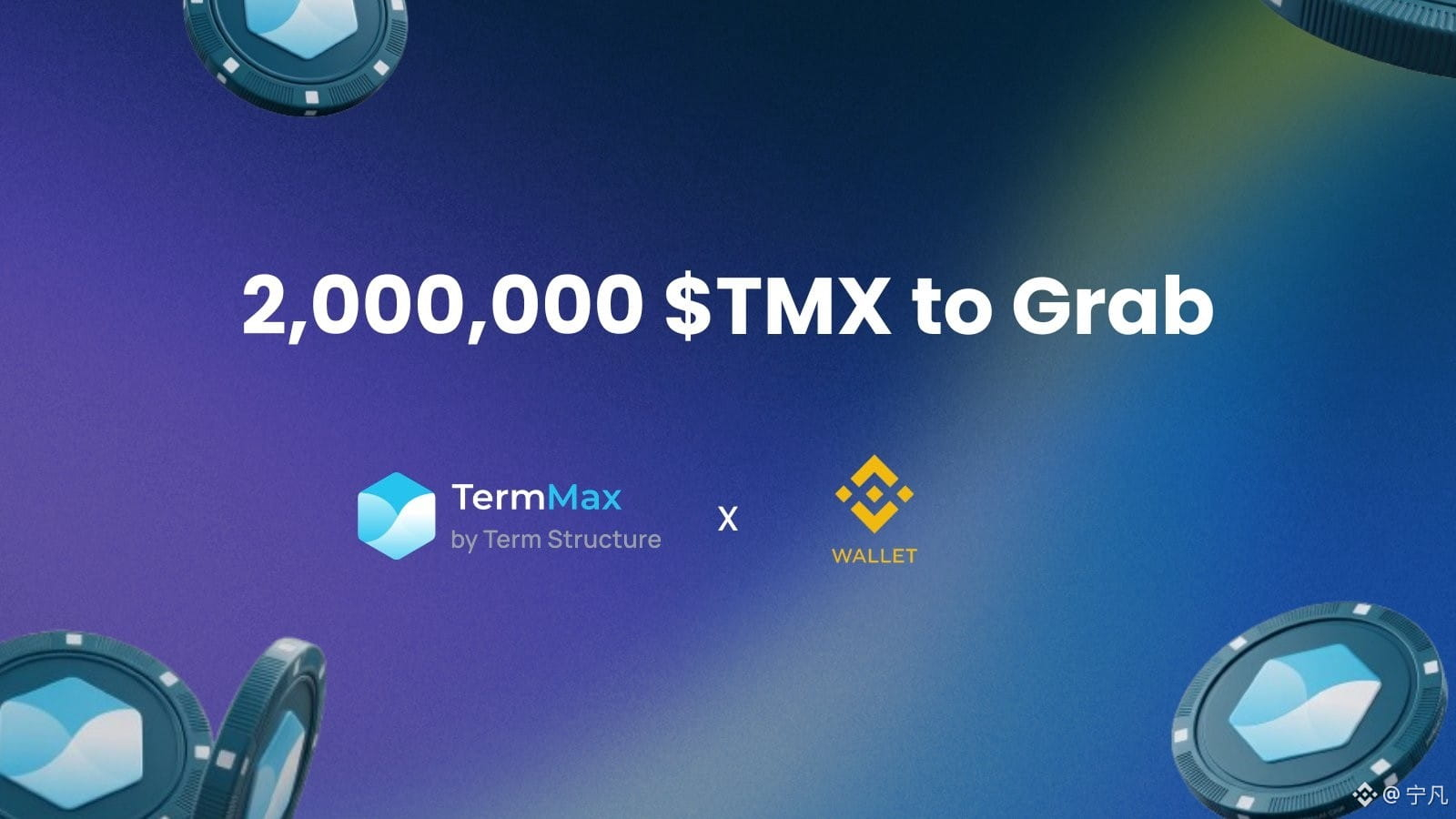
Also, now $TMX has confirmed its TGE on August 25, and it feels like TermMax’s push is really entering a more critical phase.
If you’re working on TermMax recently, you can keep watching—things should become more and more interesting from here.
#termmax @termmax
There’s a change worth paying attention to recently: the tokenized stocks space is slowly shifting from a “concept” to a real, tangible on-chain market.
In the past few days, data has shown that Bitget’s tokenized stock product has seen its daily active trading users grow 18-fold compared to the initial launch period, and the related asset size is already approaching $114 million.
The same is true on Robinhood Chain. After the mainnet went live in July, tokenized stocks have already directly entered the on-chain trading ecosystem.
So lately, I’ve been increasingly focused on one question: once stocks are on-chain, besides buying and selling, what else can you do?
That connects nicely with the roadmap of @TermMax . TermMax has already brought fixed-rate, fixed-term lending to Robinhood Chain—allowing users to use tokenized stocks like QQQ, SPY, and NVDA as collateral to borrow USDG.
In plain terms: before, stocks were just something you held and waited for the price to go up.
Going forward, there may be more and more ways to play on-chain: you can trade, you can use assets as collateral, you can borrow money, and you can even keep generating returns. This is what I think is truly interesting about RWA.
Putting assets on-chain is only the first step—the real main event is making these assets start working.
Also, now $TMX has confirmed its TGE on August 25, and it feels like TermMax’s push is really entering a more critical phase.
If you’re working on TermMax recently, you can keep watching—things should become more and more interesting from here.
#termmax @TermMax
In the past few days, data has shown that Bitget’s tokenized stock product has seen its daily active trading users grow 18-fold compared to the initial launch period, and the related asset size is already approaching $114 million.
The same is true on Robinhood Chain. After the mainnet went live in July, tokenized stocks have already directly entered the on-chain trading ecosystem.
So lately, I’ve been increasingly focused on one question: once stocks are on-chain, besides buying and selling, what else can you do?
That connects nicely with the roadmap of @TermMax . TermMax has already brought fixed-rate, fixed-term lending to Robinhood Chain—allowing users to use tokenized stocks like QQQ, SPY, and NVDA as collateral to borrow USDG.
In plain terms: before, stocks were just something you held and waited for the price to go up.
Going forward, there may be more and more ways to play on-chain: you can trade, you can use assets as collateral, you can borrow money, and you can even keep generating returns. This is what I think is truly interesting about RWA.
Putting assets on-chain is only the first step—the real main event is making these assets start working.
Also, now $TMX has confirmed its TGE on August 25, and it feels like TermMax’s push is really entering a more critical phase.
If you’re working on TermMax recently, you can keep watching—things should become more and more interesting from here.
#termmax @TermMax
2
319
·
--
Bullish
Verified
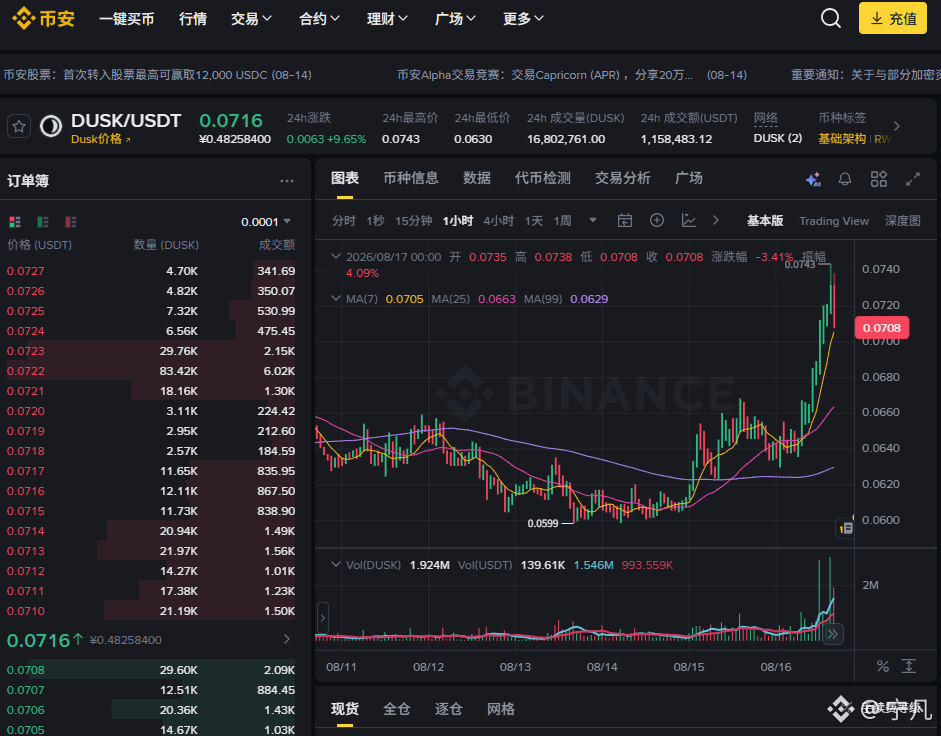
$DUSK Everyone should be pretty familiar with it. Today it surged up by 12 percentage points. Last year, I always felt this project had real strength.
This time, it’s also back on the creator task. Last year, many creators already got to benefit from it. If you’re interested, you can go participate—this reward should be pretty good as well, and the top 300 will be able to claim the rewards.
Then I’ll briefly talk about the progress of @Dusk_Foundation recently, especially its exploration in privacy and compliance.
As institutions and real-world assets gradually move toward being put on-chain, privacy infrastructure is becoming increasingly important.
Dusk isn’t just trying to push a public-chain narrative—it’s attempting to combine privacy, compliance, and on-chain financial use cases all together. I think this direction is worth continued observation.
@Dusk_Foundation #dusk $DUSK
{future}(DUSKUSDT)
$DUSK Everyone should be pretty familiar with it. Today it surged up by 12 percentage points. Last year, I always felt this project had real strength.
This time, it’s also back on the creator task. Last year, many creators already got to benefit from it. If you’re interested, you can go participate—this reward should be pretty good as well, and the top 300 will be able to claim the rewards.
Then I’ll briefly talk about the progress of @Dusk recently, especially its exploration in privacy and compliance.
As institutions and real-world assets gradually move toward being put on-chain, privacy infrastructure is becoming increasingly important.
Dusk isn’t just trying to push a public-chain narrative—it’s attempting to combine privacy, compliance, and on-chain financial use cases all together. I think this direction is worth continued observation.
@Dusk #dusk $DUSK
This time, it’s also back on the creator task. Last year, many creators already got to benefit from it. If you’re interested, you can go participate—this reward should be pretty good as well, and the top 300 will be able to claim the rewards.
Then I’ll briefly talk about the progress of @Dusk recently, especially its exploration in privacy and compliance.
As institutions and real-world assets gradually move toward being put on-chain, privacy infrastructure is becoming increasingly important.
Dusk isn’t just trying to push a public-chain narrative—it’s attempting to combine privacy, compliance, and on-chain financial use cases all together. I think this direction is worth continued observation.
@Dusk #dusk $DUSK
5
6
532
·
--
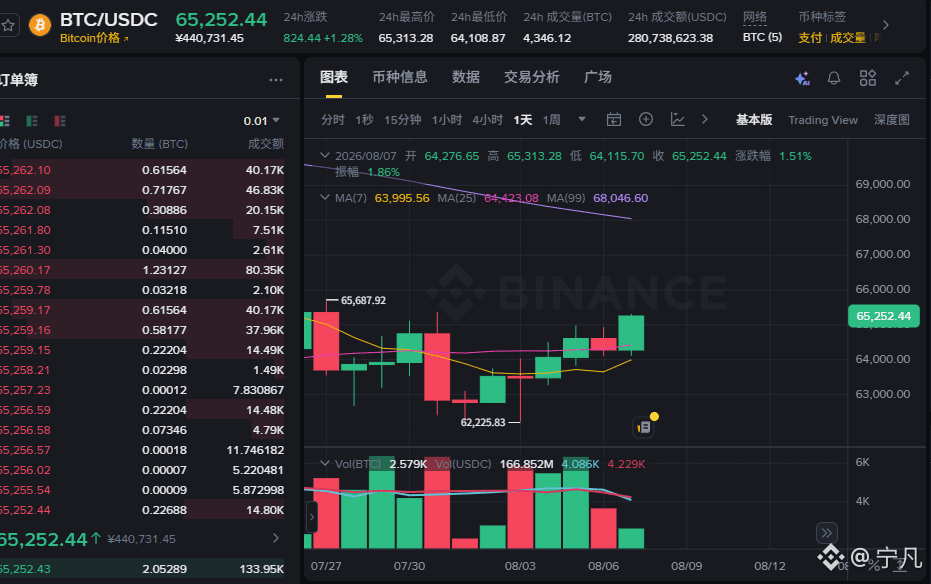
$BTC is back—it's already over 65000, brothers!
$BTC is back—it's already over 65000, brothers!
2
1
511
·
--
The recent market trend actually shows that market sentiment has not been fully restored yet.
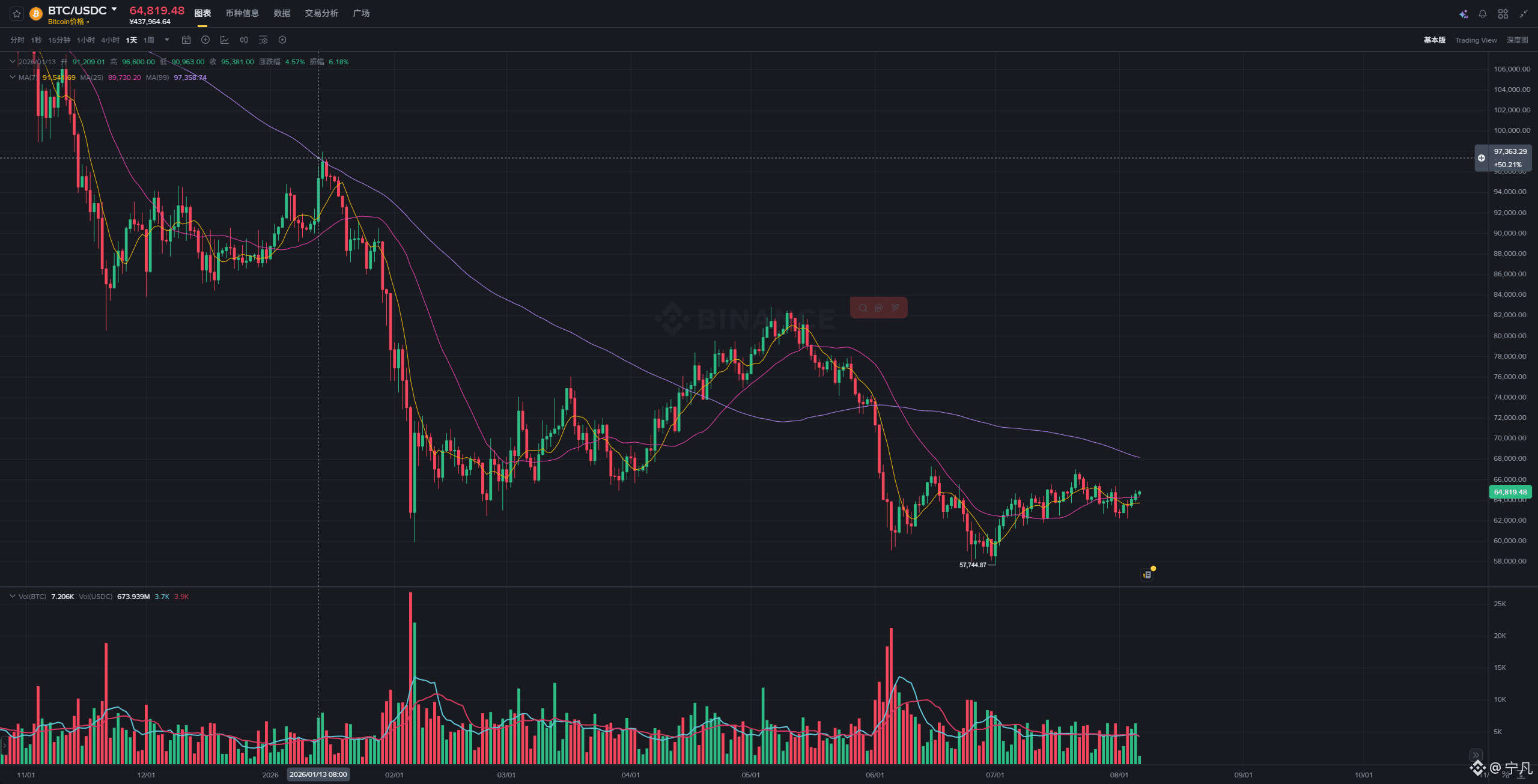
BTC has been repeatedly moving within the $63,000–$65,000 range. It is nearly 50% off its previous high, and many short-term funds are already losing patience. Panic sentiment still exists in the market.
But this is also the stage in the cycle that is easiest to overlook. Lack of liquidity, increased wait-and-see sentiment, and ongoing choppy price action—repeatedly testing or even retesting the lows—are all normal phenomena in the recent period.
So don’t dismiss the entire cycle just because prices are falling. And don’t blindly go all-in on a bottom just because you think, “it has dropped enough.” A truly mature trader doesn’t look at just one or two days of price movement—they focuses on being prepared in the face of uncertainty.
Control your position size, maintain cash flow, keep learning, and pay attention to market signals.
A bull market never starts when everyone is optimistic.
It often quietly brews when things are the most painful—when people are most doubtful and when there is the least noise.
What you need to do now is not to anxiously wait for a sudden surge, but to make sure that when the next opportunity appears, you have enough capital and the ability to catch it.
The market will reward long-term believers.
Stay patient. Stay disciplined.
For the next cycle, we’re ready to set off again.
#BTC #bitcoin $BTC
{future}(BTCUSDT)
The recent market trend actually shows that market sentiment has not been fully restored yet.
BTC has been repeatedly moving within the $63,000–$65,000 range. It is nearly 50% off its previous high, and many short-term funds are already losing patience. Panic sentiment still exists in the market.
But this is also the stage in the cycle that is easiest to overlook. Lack of liquidity, increased wait-and-see sentiment, and ongoing choppy price action—repeatedly testing or even retesting the lows—are all normal phenomena in the recent period.
So don’t dismiss the entire cycle just because prices are falling. And don’t blindly go all-in on a bottom just because you think, “it has dropped enough.” A truly mature trader doesn’t look at just one or two days of price movement—they focuses on being prepared in the face of uncertainty.
Control your position size, maintain cash flow, keep learning, and pay attention to market signals.
A bull market never starts when everyone is optimistic.
It often quietly brews when things are the most painful—when people are most doubtful and when there is the least noise.
What you need to do now is not to anxiously wait for a sudden surge, but to make sure that when the next opportunity appears, you have enough capital and the ability to catch it.
The market will reward long-term believers.
Stay patient. Stay disciplined.
For the next cycle, we’re ready to set off again.
#BTC #bitcoin $BTC
BTC has been repeatedly moving within the $63,000–$65,000 range. It is nearly 50% off its previous high, and many short-term funds are already losing patience. Panic sentiment still exists in the market.
But this is also the stage in the cycle that is easiest to overlook. Lack of liquidity, increased wait-and-see sentiment, and ongoing choppy price action—repeatedly testing or even retesting the lows—are all normal phenomena in the recent period.
So don’t dismiss the entire cycle just because prices are falling. And don’t blindly go all-in on a bottom just because you think, “it has dropped enough.” A truly mature trader doesn’t look at just one or two days of price movement—they focuses on being prepared in the face of uncertainty.
Control your position size, maintain cash flow, keep learning, and pay attention to market signals.
A bull market never starts when everyone is optimistic.
It often quietly brews when things are the most painful—when people are most doubtful and when there is the least noise.
What you need to do now is not to anxiously wait for a sudden surge, but to make sure that when the next opportunity appears, you have enough capital and the ability to catch it.
The market will reward long-term believers.
Stay patient. Stay disciplined.
For the next cycle, we’re ready to set off again.
#BTC #bitcoin $BTC
2
379
·
--
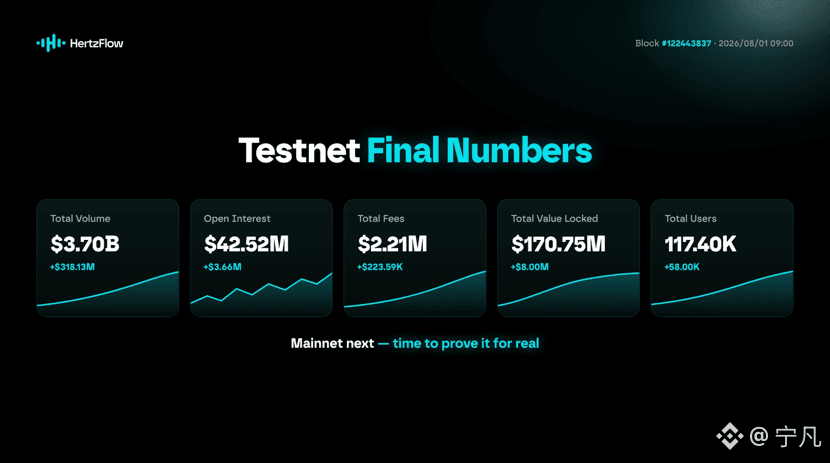
Yesterday, the data shown by @Hertzflow_xyz really shocked me. I always thought it couldn’t be that much...
Sure enough, perpetual futures shouldn’t only belong to Crypto. From BTC, ETH, to all kinds of altcoins, perps have already become one of the most important trading tools in the Crypto market.
With the World Leverage Engine proposed by HertzFlow, it expands a mature trading model like perpetual futures into multiple areas—making it more suitable for traders in other tracks. And it also happens to coincide perfectly with the current whirlwind of activities across various CEXs.
The testnet is almost over now, and the mainnet is about to launch. If you haven’t tried it yet, be sure to go for it—whether there will be rewards afterward and what they might be is still unclear~
Yesterday, the data shown by @Hertzflow_xyz really shocked me. I always thought it couldn’t be that much...
Sure enough, perpetual futures shouldn’t only belong to Crypto. From BTC, ETH, to all kinds of altcoins, perps have already become one of the most important trading tools in the Crypto market.
With the World Leverage Engine proposed by HertzFlow, it expands a mature trading model like perpetual futures into multiple areas—making it more suitable for traders in other tracks. And it also happens to coincide perfectly with the current whirlwind of activities across various CEXs.
The testnet is almost over now, and the mainnet is about to launch. If you haven’t tried it yet, be sure to go for it—whether there will be rewards afterward and what they might be is still unclear~
Sure enough, perpetual futures shouldn’t only belong to Crypto. From BTC, ETH, to all kinds of altcoins, perps have already become one of the most important trading tools in the Crypto market.
With the World Leverage Engine proposed by HertzFlow, it expands a mature trading model like perpetual futures into multiple areas—making it more suitable for traders in other tracks. And it also happens to coincide perfectly with the current whirlwind of activities across various CEXs.
The testnet is almost over now, and the mainnet is about to launch. If you haven’t tried it yet, be sure to go for it—whether there will be rewards afterward and what they might be is still unclear~
306
·
--
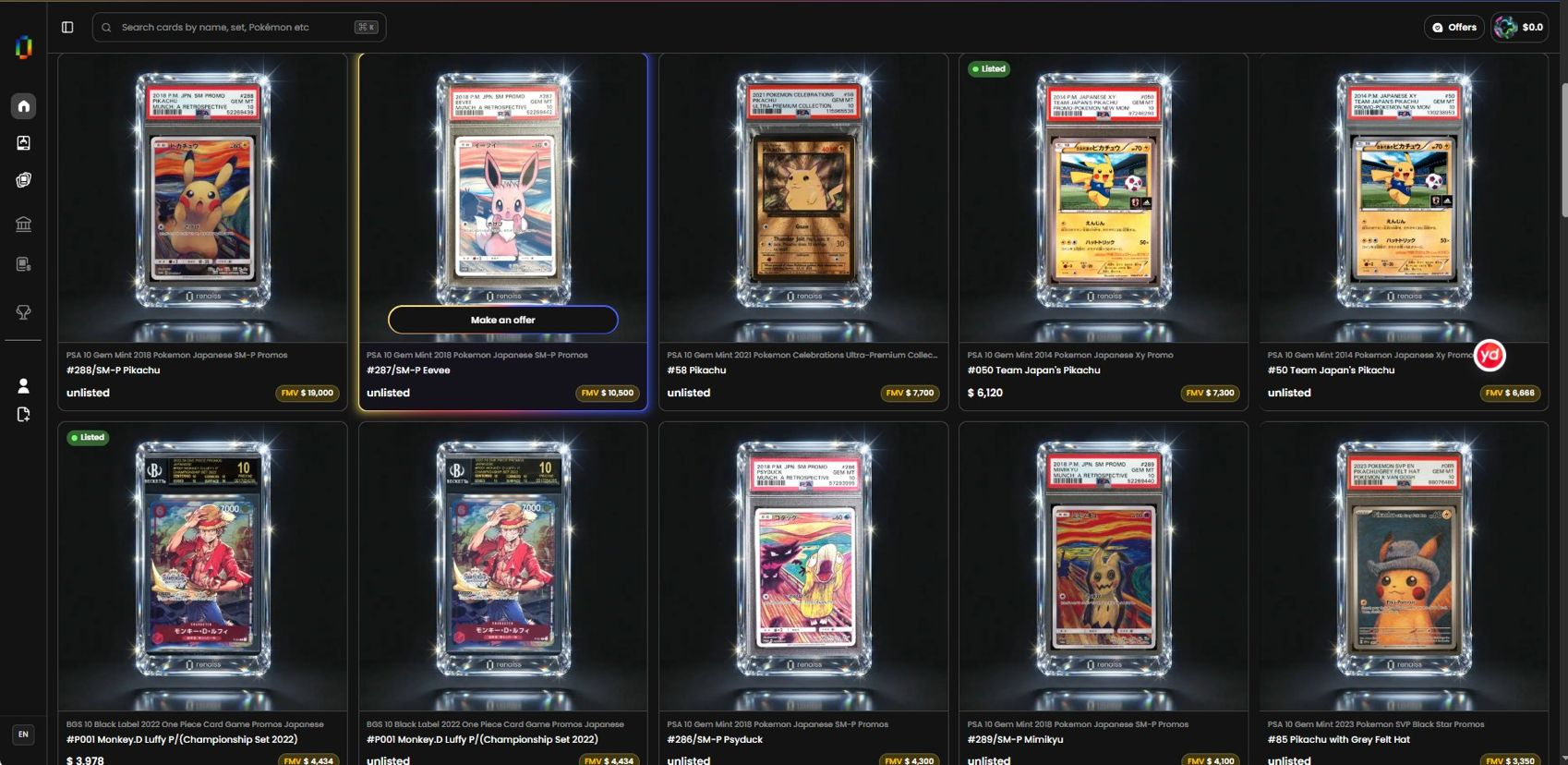
The @renaissxyz post from a while back can be redeemed starting yesterday. The access threshold has now been officially removed—no SBT required. If you participated earlier, remember to go check it out.
This is an RWA collectibles platform. The difference from things like memes is that in the real world there are corresponding collectibles with physical counterparts. It’s actually a bit similar to the domestic digital collectibles (数藏) from around 2021.
What’s interesting is that they’ve added a Redeem feature. What does this mean? You can redeem the real-world collectibles and get the real items. This is something I really haven’t seen much before.
In addition, in their product design, Renaiss has also included Pack Access: building more interactive experiences around collectibles. I haven’t seen this yet, so I’m really looking forward to what comes next~
The @renaissxyz post from a while back can be redeemed starting yesterday. The access threshold has now been officially removed—no SBT required. If you participated earlier, remember to go check it out.
This is an RWA collectibles platform. The difference from things like memes is that in the real world there are corresponding collectibles with physical counterparts. It’s actually a bit similar to the domestic digital collectibles (数藏) from around 2021.
What’s interesting is that they’ve added a Redeem feature. What does this mean? You can redeem the real-world collectibles and get the real items. This is something I really haven’t seen much before.
In addition, in their product design, Renaiss has also included Pack Access: building more interactive experiences around collectibles. I haven’t seen this yet, so I’m really looking forward to what comes next~
This is an RWA collectibles platform. The difference from things like memes is that in the real world there are corresponding collectibles with physical counterparts. It’s actually a bit similar to the domestic digital collectibles (数藏) from around 2021.
What’s interesting is that they’ve added a Redeem feature. What does this mean? You can redeem the real-world collectibles and get the real items. This is something I really haven’t seen much before.
In addition, in their product design, Renaiss has also included Pack Access: building more interactive experiences around collectibles. I haven’t seen this yet, so I’m really looking forward to what comes next~
1
310
·
--
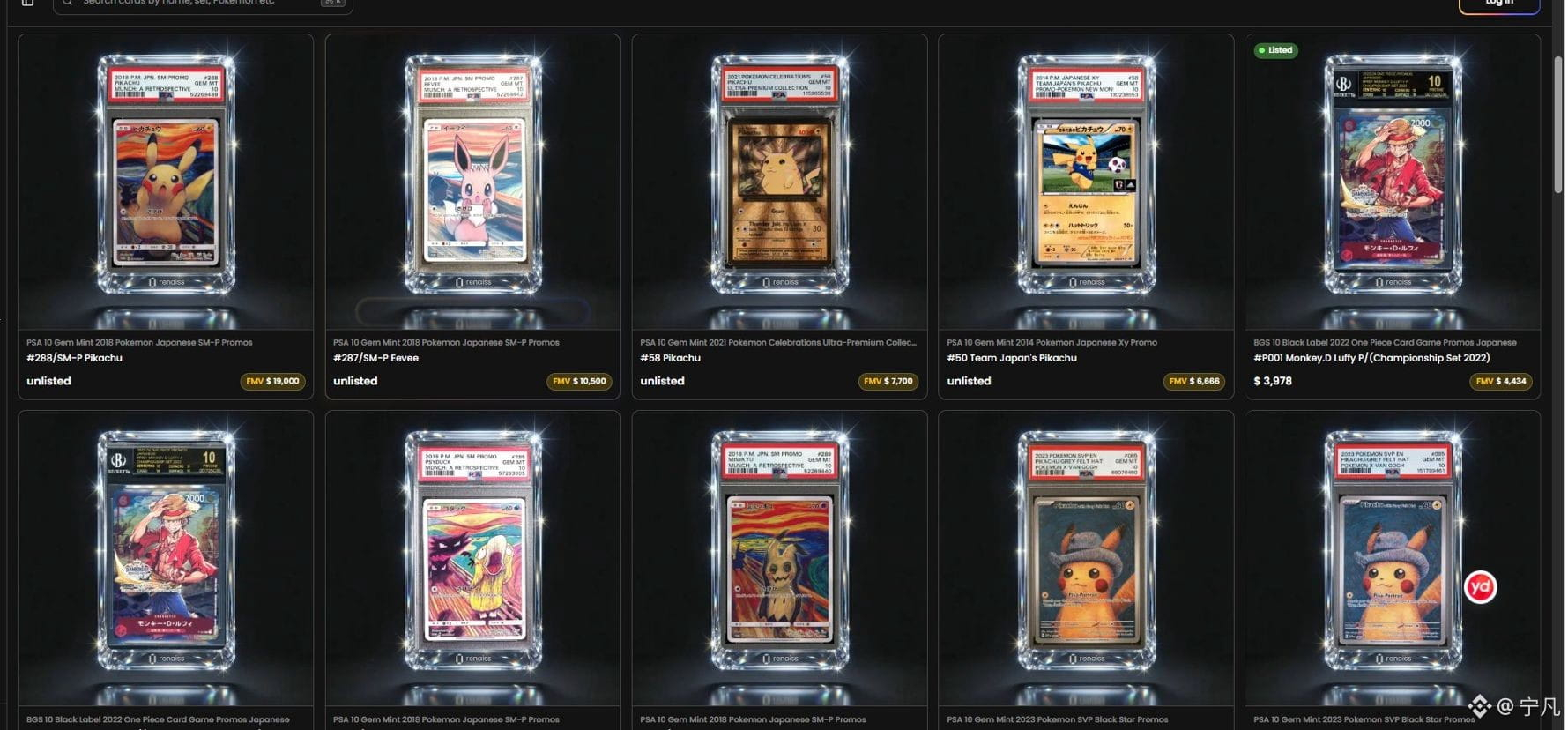
This thing, the market—click into Renaiss, and it’s all my childhood. Star player cards, Pokémon cards, TCG, collectibles, art pieces.
Over the past few years, what we’ve been playing with in crypto has gotten increasingly abstract. The meme that launched last year still sticks in my mind.
But Renaiss hasn’t positioned itself as a fully fledged collectibles trading platform. Built on BNB Chain, the Renaiss Protocol aims to convert real-world collectibles into verifiable, vault-backed on-chain assets. Overall, it still depends on institutions.
So far, it has completed a first round of $1.5 million in funding, led by YZi Labs, and the hackathon has also shown it’s starting to build a developer ecosystem.
Recently, the official team also opened applications for an Alpha test. If you’re interested, don’t forget to check it out~
#Renaiss
This thing, the market—click into Renaiss, and it’s all my childhood. Star player cards, Pokémon cards, TCG, collectibles, art pieces.
Over the past few years, what we’ve been playing with in crypto has gotten increasingly abstract. The meme that launched last year still sticks in my mind.
But Renaiss hasn’t positioned itself as a fully fledged collectibles trading platform. Built on BNB Chain, the Renaiss Protocol aims to convert real-world collectibles into verifiable, vault-backed on-chain assets. Overall, it still depends on institutions.
So far, it has completed a first round of $1.5 million in funding, led by YZi Labs, and the hackathon has also shown it’s starting to build a developer ecosystem.
Recently, the official team also opened applications for an Alpha test. If you’re interested, don’t forget to check it out~
#Renaiss
Over the past few years, what we’ve been playing with in crypto has gotten increasingly abstract. The meme that launched last year still sticks in my mind.
But Renaiss hasn’t positioned itself as a fully fledged collectibles trading platform. Built on BNB Chain, the Renaiss Protocol aims to convert real-world collectibles into verifiable, vault-backed on-chain assets. Overall, it still depends on institutions.
So far, it has completed a first round of $1.5 million in funding, led by YZi Labs, and the hackathon has also shown it’s starting to build a developer ecosystem.
Recently, the official team also opened applications for an Alpha test. If you’re interested, don’t forget to check it out~
#Renaiss
1
222
·
--
Verified
Oil prices have been fluctuating recently, and many are focusing on inventory data and OPEC+ statements for short-term trades, while overlooking the biggest uncertainty – tariff policies. The root of this round of oil price confusion is essentially a covert battle for pricing power.
The recent tariff signals from Trump hang over the oil market like a sword: increased tariffs will directly raise import costs and suppress global trade activity, theoretically dampening crude oil demand; however, the tariff battle itself has made the supply chain more fragile, potentially pushing up regional premiums. At this point, just looking at EIA inventory or drilling counts isn't enough; the true short-term direction of oil prices is now determined by press releases from Washington and Brussels.
For traders, this means two things. First, crude oil volatility might expand further, and the upper and lower bounds of the trading range could be unexpectedly breached by policy changes. Second, the intertwining of geopolitical premiums and tariff premiums will widen the spread between Brent and WTI again, reviving the logic of cross-market arbitrage. Don't just focus on absolute prices; the signals hidden in the spreads are often more honest than a one-sided direction. #在币安广场聊传统金融
Oil prices have been fluctuating recently, and many are focusing on inventory data and OPEC+ statements for short-term trades, while overlooking the biggest uncertainty – tariff policies. The root of this round of oil price confusion is essentially a covert battle for pricing power.
The recent tariff signals from Trump hang over the oil market like a sword: increased tariffs will directly raise import costs and suppress global trade activity, theoretically dampening crude oil demand; however, the tariff battle itself has made the supply chain more fragile, potentially pushing up regional premiums. At this point, just looking at EIA inventory or drilling counts isn't enough; the true short-term direction of oil prices is now determined by press releases from Washington and Brussels.
For traders, this means two things. First, crude oil volatility might expand further, and the upper and lower bounds of the trading range could be unexpectedly breached by policy changes. Second, the intertwining of geopolitical premiums and tariff premiums will widen the spread between Brent and WTI again, reviving the logic of cross-market arbitrage. Don't just focus on absolute prices; the signals hidden in the spreads are often more honest than a one-sided direction. #在币安广场聊传统金融
The recent tariff signals from Trump hang over the oil market like a sword: increased tariffs will directly raise import costs and suppress global trade activity, theoretically dampening crude oil demand; however, the tariff battle itself has made the supply chain more fragile, potentially pushing up regional premiums. At this point, just looking at EIA inventory or drilling counts isn't enough; the true short-term direction of oil prices is now determined by press releases from Washington and Brussels.
For traders, this means two things. First, crude oil volatility might expand further, and the upper and lower bounds of the trading range could be unexpectedly breached by policy changes. Second, the intertwining of geopolitical premiums and tariff premiums will widen the spread between Brent and WTI again, reviving the logic of cross-market arbitrage. Don't just focus on absolute prices; the signals hidden in the spreads are often more honest than a one-sided direction. #在币安广场聊传统金融
2
1
684
·
--
The market is validating buy orders, and PROVE just skyrocketed by 105% thanks to an overlooked signal. I've been keeping an eye on a news piece: the PROVE token blasted up 105% on May 21, and it’s not due to traditional good news, but rather because Succinct dropped an AI-driven formal verification solution that blew up in the community. The market logic has shifted—cryptographic verification capabilities are becoming a core variable driving asset pricing.
This has made me reassess @Openledger . Market sentiment has clearly signaled: whoever can provide AI behavior with ‘judicial verification’ will secure the foundational pricing power in the next cycle.
I want to discuss a fresh angle—within the Datanets market of OpenLedger, the act of verification itself is being tokenized. What does this mean? In OpenLedger's economic model, verification nodes aren't just security auditors but independent economic participants. When they perform a reasoning task, the result needs to be verified; the quality of datasets needs auditing; even the accuracy rate of contributors' data labeling requires ongoing assessment. With each verification action completed, validators can earn profits from the economic loop of $OPEN tokens.
In other words, the act of verification is no longer a consumptive 'cost center' but has transformed into an economic node that can generate stable cash flow. This is a complete departure from traditional AI models—previously, verification was just a byproduct in the R&D process, but in OpenLedger's ecosystem, it is a primary economic activity.
What’s even more intriguing to me is the composability. Our collaboration with Theoriq is already running smoothly: agents generate strategies and decision logic, and OpenLedger anchors all actions on-chain—everything from reasoning logic to trade execution is auditable and accountable, making AI agents in DeFi no longer a black-box gamble. Other projects' verification networks can easily plug into this, utilizing OpenLedger's verification supply.
I believe that verification will evolve from a foundational function into an exchangeable asset. The market has already proven the trend with PROVE's surge—investing money in the verification track isn't just developers; it's the entire market casting a premium vote for 'trustworthy AI'.
#OpenLedger
The market is validating buy orders, and PROVE just skyrocketed by 105% thanks to an overlooked signal. I've been keeping an eye on a news piece: the PROVE token blasted up 105% on May 21, and it’s not due to traditional good news, but rather because Succinct dropped an AI-driven formal verification solution that blew up in the community. The market logic has shifted—cryptographic verification capabilities are becoming a core variable driving asset pricing.
This has made me reassess @OpenLedger . Market sentiment has clearly signaled: whoever can provide AI behavior with ‘judicial verification’ will secure the foundational pricing power in the next cycle.
I want to discuss a fresh angle—within the Datanets market of OpenLedger, the act of verification itself is being tokenized. What does this mean? In OpenLedger's economic model, verification nodes aren't just security auditors but independent economic participants. When they perform a reasoning task, the result needs to be verified; the quality of datasets needs auditing; even the accuracy rate of contributors' data labeling requires ongoing assessment. With each verification action completed, validators can earn profits from the economic loop of $OPEN tokens.
In other words, the act of verification is no longer a consumptive 'cost center' but has transformed into an economic node that can generate stable cash flow. This is a complete departure from traditional AI models—previously, verification was just a byproduct in the R&D process, but in OpenLedger's ecosystem, it is a primary economic activity.
What’s even more intriguing to me is the composability. Our collaboration with Theoriq is already running smoothly: agents generate strategies and decision logic, and OpenLedger anchors all actions on-chain—everything from reasoning logic to trade execution is auditable and accountable, making AI agents in DeFi no longer a black-box gamble. Other projects' verification networks can easily plug into this, utilizing OpenLedger's verification supply.
I believe that verification will evolve from a foundational function into an exchangeable asset. The market has already proven the trend with PROVE's surge—investing money in the verification track isn't just developers; it's the entire market casting a premium vote for 'trustworthy AI'.
#OpenLedger
This has made me reassess @OpenLedger . Market sentiment has clearly signaled: whoever can provide AI behavior with ‘judicial verification’ will secure the foundational pricing power in the next cycle.
I want to discuss a fresh angle—within the Datanets market of OpenLedger, the act of verification itself is being tokenized. What does this mean? In OpenLedger's economic model, verification nodes aren't just security auditors but independent economic participants. When they perform a reasoning task, the result needs to be verified; the quality of datasets needs auditing; even the accuracy rate of contributors' data labeling requires ongoing assessment. With each verification action completed, validators can earn profits from the economic loop of $OPEN tokens.
In other words, the act of verification is no longer a consumptive 'cost center' but has transformed into an economic node that can generate stable cash flow. This is a complete departure from traditional AI models—previously, verification was just a byproduct in the R&D process, but in OpenLedger's ecosystem, it is a primary economic activity.
What’s even more intriguing to me is the composability. Our collaboration with Theoriq is already running smoothly: agents generate strategies and decision logic, and OpenLedger anchors all actions on-chain—everything from reasoning logic to trade execution is auditable and accountable, making AI agents in DeFi no longer a black-box gamble. Other projects' verification networks can easily plug into this, utilizing OpenLedger's verification supply.
I believe that verification will evolve from a foundational function into an exchangeable asset. The market has already proven the trend with PROVE's surge—investing money in the verification track isn't just developers; it's the entire market casting a premium vote for 'trustworthy AI'.
#OpenLedger

1
366
·
--

Article
AI agents breached by 'social engineering'? The real issue isn't AI, it's the lack of a solid on-chain 'security band-aid.'Hey everyone, I'm Ning Fan.
Lately, FanFan's been losing sleep again. On the morning of May 20, 2026, an AI trading platform called Bankr got hit, and 14 user wallets went down, losing over $440,000. Security expert Yu Xian personally analyzed it, stating this wasn't a private key leak or a smart contract exploit, but a social engineering attack targeting the 'trust layer between automated agents.' In plain terms—attackers didn't bother cracking the code; they just went for the trust layer.
The Bankr incident isn't even the first of its kind this year. On May 11, SIGMA's trading bot was revealed to have a vulnerability, allowing attackers to siphon off over $200,000 from traders' wallets. Looking back further, Keyrock's report showed that AI agents handled $73 million in crypto payments between 2025 and 2026, but the security gaps still haven't been patched up.
AI agents breached by 'social engineering'? The real issue isn't AI, it's the lack of a solid on-chain 'security band-aid.'
Hey everyone, I'm Ning Fan.
Lately, FanFan's been losing sleep again. On the morning of May 20, 2026, an AI trading platform called Bankr got hit, and 14 user wallets went down, losing over $440,000. Security expert Yu Xian personally analyzed it, stating this wasn't a private key leak or a smart contract exploit, but a social engineering attack targeting the 'trust layer between automated agents.' In plain terms—attackers didn't bother cracking the code; they just went for the trust layer.
The Bankr incident isn't even the first of its kind this year. On May 11, SIGMA's trading bot was revealed to have a vulnerability, allowing attackers to siphon off over $200,000 from traders' wallets. Looking back further, Keyrock's report showed that AI agents handled $73 million in crypto payments between 2025 and 2026, but the security gaps still haven't been patched up.
Lately, FanFan's been losing sleep again. On the morning of May 20, 2026, an AI trading platform called Bankr got hit, and 14 user wallets went down, losing over $440,000. Security expert Yu Xian personally analyzed it, stating this wasn't a private key leak or a smart contract exploit, but a social engineering attack targeting the 'trust layer between automated agents.' In plain terms—attackers didn't bother cracking the code; they just went for the trust layer.
The Bankr incident isn't even the first of its kind this year. On May 11, SIGMA's trading bot was revealed to have a vulnerability, allowing attackers to siphon off over $200,000 from traders' wallets. Looking back further, Keyrock's report showed that AI agents handled $73 million in crypto payments between 2025 and 2026, but the security gaps still haven't been patched up.
1
158
·
--
Today, I stumbled upon something pretty interesting—recently, that Slonks NFT on Solana just skyrocketed! The floor price of that AI-generated pixel elephant shot up from below 0.01 ETH to 0.25 ETH, a whopping 60x increase in just 6 days. At first glance, it seemed like nothing, but I noticed a detail: some folks, in a rush to grab Slonks, didn't have enough SOL, so they had to cross-chain bridge their ETH from Ethereum to Solana to swap for SOL, then switch wallets to mint. After all that, gas fees burned three times, and they waited nearly ten minutes; by the time they secured their mint, their costs had more than doubled. This is just the daily grind of on-chain trading—multi-chain dispersion, wallet switching, cross-chain bridging, and all that jazz, juggling a bunch of assets just to make a play.
And what @GeniusOfficial is doing, I think the most impressive part isn’t the privacy or the aggregation, but the experience. I dug into Genius's architecture, and the unified trading interface basically strips away the multi-chain hassle—you don’t need to know which chain you’re trading on, and you don’t have to mess with any bridging, wrapping, or unwrapping; you just operate on a single interface while over ten public chains are abstracted into one execution layer. Even more insane is the non-signature trading; with Turnkey integration, it skips the pop-up confirmation for every transaction, making high-frequency trading seamless without repeated authorizations. Honestly, this made me wonder: why have CEXs survived till today? Isn’t it because they’re fast, don’t require switching, and don’t need signatures? Genius has brought that to the blockchain.
Right now, the creator event at Binance Square hosted by @GeniusOfficial is still ongoing, with a prize pool of 100,000 $GENIUS, ending June 8th. Finally, someone has broken through that window of on-chain trading experience. #genius $GENIUS
{future}(GENIUSUSDT)
Today, I stumbled upon something pretty interesting—recently, that Slonks NFT on Solana just skyrocketed! The floor price of that AI-generated pixel elephant shot up from below 0.01 ETH to 0.25 ETH, a whopping 60x increase in just 6 days. At first glance, it seemed like nothing, but I noticed a detail: some folks, in a rush to grab Slonks, didn't have enough SOL, so they had to cross-chain bridge their ETH from Ethereum to Solana to swap for SOL, then switch wallets to mint. After all that, gas fees burned three times, and they waited nearly ten minutes; by the time they secured their mint, their costs had more than doubled. This is just the daily grind of on-chain trading—multi-chain dispersion, wallet switching, cross-chain bridging, and all that jazz, juggling a bunch of assets just to make a play.
And what @GeniusOfficial is doing, I think the most impressive part isn’t the privacy or the aggregation, but the experience. I dug into Genius's architecture, and the unified trading interface basically strips away the multi-chain hassle—you don’t need to know which chain you’re trading on, and you don’t have to mess with any bridging, wrapping, or unwrapping; you just operate on a single interface while over ten public chains are abstracted into one execution layer. Even more insane is the non-signature trading; with Turnkey integration, it skips the pop-up confirmation for every transaction, making high-frequency trading seamless without repeated authorizations. Honestly, this made me wonder: why have CEXs survived till today? Isn’t it because they’re fast, don’t require switching, and don’t need signatures? Genius has brought that to the blockchain.
Right now, the creator event at Binance Square hosted by @GeniusOfficial is still ongoing, with a prize pool of 100,000 $GENIUS , ending June 8th. Finally, someone has broken through that window of on-chain trading experience. #genius $GENIUS
And what @GeniusOfficial is doing, I think the most impressive part isn’t the privacy or the aggregation, but the experience. I dug into Genius's architecture, and the unified trading interface basically strips away the multi-chain hassle—you don’t need to know which chain you’re trading on, and you don’t have to mess with any bridging, wrapping, or unwrapping; you just operate on a single interface while over ten public chains are abstracted into one execution layer. Even more insane is the non-signature trading; with Turnkey integration, it skips the pop-up confirmation for every transaction, making high-frequency trading seamless without repeated authorizations. Honestly, this made me wonder: why have CEXs survived till today? Isn’t it because they’re fast, don’t require switching, and don’t need signatures? Genius has brought that to the blockchain.
Right now, the creator event at Binance Square hosted by @GeniusOfficial is still ongoing, with a prize pool of 100,000 $GENIUS , ending June 8th. Finally, someone has broken through that window of on-chain trading experience. #genius $GENIUS

2
1
1.5k
·
--
Gold prices are pulling back, and the market is blaming it on the dollar's rebound. But the deeper reason is actually a repricing of interest rate expectations. Before, the market was too optimistic, jumping the gun on rate cuts both in timing and scale. Now, just a little data showing resilience has forced a bit of that rally to unwind.
In my view, this isn’t a ‘bull market topping,’ it’s a ‘revision of expectations.’ As long as the Fed's next move is still a rate cut rather than a hike, even if it’s delayed, the ceiling on real interest rates is there, and the medium to long-term logic for gold remains intact. Historically, during the turbulent phase from the end of rate hikes to the beginning of rate cuts, gold prices tend to grind lower before suddenly accelerating.
This current pullback is washing out over-leveraged speculators, leaving behind stronger long-term capital. So don’t get spooked by daily fluctuations of a few bucks; what you should really focus on are the bond yield curve and central bank gold purchases— as long as these two core logics hold up, every deep squat in gold could be a buildup of strength.
#在币安广场聊传统金融
Gold prices are pulling back, and the market is blaming it on the dollar's rebound. But the deeper reason is actually a repricing of interest rate expectations. Before, the market was too optimistic, jumping the gun on rate cuts both in timing and scale. Now, just a little data showing resilience has forced a bit of that rally to unwind.
In my view, this isn’t a ‘bull market topping,’ it’s a ‘revision of expectations.’ As long as the Fed's next move is still a rate cut rather than a hike, even if it’s delayed, the ceiling on real interest rates is there, and the medium to long-term logic for gold remains intact. Historically, during the turbulent phase from the end of rate hikes to the beginning of rate cuts, gold prices tend to grind lower before suddenly accelerating.
This current pullback is washing out over-leveraged speculators, leaving behind stronger long-term capital. So don’t get spooked by daily fluctuations of a few bucks; what you should really focus on are the bond yield curve and central bank gold purchases— as long as these two core logics hold up, every deep squat in gold could be a buildup of strength.
#在币安广场聊传统金融
In my view, this isn’t a ‘bull market topping,’ it’s a ‘revision of expectations.’ As long as the Fed's next move is still a rate cut rather than a hike, even if it’s delayed, the ceiling on real interest rates is there, and the medium to long-term logic for gold remains intact. Historically, during the turbulent phase from the end of rate hikes to the beginning of rate cuts, gold prices tend to grind lower before suddenly accelerating.
This current pullback is washing out over-leveraged speculators, leaving behind stronger long-term capital. So don’t get spooked by daily fluctuations of a few bucks; what you should really focus on are the bond yield curve and central bank gold purchases— as long as these two core logics hold up, every deep squat in gold could be a buildup of strength.
#在币安广场聊传统金融
2
1
436
·
--

Article
AI is committing crimes on its own—can OpenLedger's 'crypto evidence chain' save the day?Hey everyone, I'm Ningfan.
The crypto scene is going wild right now—Google's threat intelligence team just dropped a bombshell: in May 2026, they detected an AI-developed zero-day exploit for the first time. Hackers are leveraging AI models to autonomously dig for vulnerabilities and create malicious code, gearing up for a massive cyber invasion. Just two months ago, in April 2026, Vercel faced a terrifying incident: the attackers didn't just breach Vercel's own systems; they first compromised a third-party AI tool used by an employee, then navigated into Google Workspace, ultimately reaching internal systems and sensitive data.
AI is committing crimes on its own—can OpenLedger's 'crypto evidence chain' save the day?
Hey everyone, I'm Ningfan.
The crypto scene is going wild right now—Google's threat intelligence team just dropped a bombshell: in May 2026, they detected an AI-developed zero-day exploit for the first time. Hackers are leveraging AI models to autonomously dig for vulnerabilities and create malicious code, gearing up for a massive cyber invasion. Just two months ago, in April 2026, Vercel faced a terrifying incident: the attackers didn't just breach Vercel's own systems; they first compromised a third-party AI tool used by an employee, then navigated into Google Workspace, ultimately reaching internal systems and sensitive data.
The crypto scene is going wild right now—Google's threat intelligence team just dropped a bombshell: in May 2026, they detected an AI-developed zero-day exploit for the first time. Hackers are leveraging AI models to autonomously dig for vulnerabilities and create malicious code, gearing up for a massive cyber invasion. Just two months ago, in April 2026, Vercel faced a terrifying incident: the attackers didn't just breach Vercel's own systems; they first compromised a third-party AI tool used by an employee, then navigated into Google Workspace, ultimately reaching internal systems and sensitive data.
1
3
316
Log in to explore more content
Join global crypto users on Binance Square
⚡️ Get latest and useful information about crypto.
💬 Trusted by the world’s largest crypto exchange.
👍 Discover real insights from verified creators.
Email / Phone number