

Mêraj Nêzami
10.8k Posts

Mêraj Nêzami
 Square Verified+
Report
Block User
Dreams come true only when hard work becomes a habit. — Hard work is the key to success. X @cryptorewardzon
Open Trade
Frequent Trader
4.5 Years
569 Following
37.2K+ Followers
26.4K+ Liked
Posts
Portfolio
All
Quotes
Videos
Live
·
--
Why Dusk Could Become Infrastructure for Regulated On-Chain Finance
The more I explore Dusk, the more I think its interesting part isn’t another token or another blockchain trying to attract attention. It’s the problem it is choosing to solve.
Traditional financial markets have a strange requirement: institutions want the efficiency of blockchain, but they can’t simply expose every trade, client detail, or financial strategy to the entire world.
Dusk is designed around that tension. Its architecture combines privacy-focused transactions through Phoenix, transparent account-based transactions through Moonlight, and confidential financial smart contracts through Zedger. On top of that, its consensus and network design aim to support fast, reliable settlement.
What stands out to me is the incentive structure. Institutions don’t need maximum transparency; they need the right transparency. Regulators need access to relevant information, while market participants need protection from unnecessary exposure.
That creates a different kind of blockchain design. Instead of asking everyone to operate under the same level of visibility, Dusk tries to make privacy and compliance coexist within the same financial environment.
I find that more interesting than the usual “blockchain replaces finance” narrative. Real adoption may not come from removing existing financial rules. It may come from building infrastructure that can actually work within them.
If regulated assets increasingly move on-chain, the important question may not be whether blockchain can handle finance, but whether it can handle financial privacy, compliance, and settlement at the same time.
That’s where Dusk’s long-term thesis becomes worth watching.
#dusk $DUSK @Dusk_Foundation
Why Dusk Could Become Infrastructure for Regulated On-Chain Finance
The more I explore Dusk, the more I think its interesting part isn’t another token or another blockchain trying to attract attention. It’s the problem it is choosing to solve.
Traditional financial markets have a strange requirement: institutions want the efficiency of blockchain, but they can’t simply expose every trade, client detail, or financial strategy to the entire world.
Dusk is designed around that tension. Its architecture combines privacy-focused transactions through Phoenix, transparent account-based transactions through Moonlight, and confidential financial smart contracts through Zedger. On top of that, its consensus and network design aim to support fast, reliable settlement.
What stands out to me is the incentive structure. Institutions don’t need maximum transparency; they need the right transparency. Regulators need access to relevant information, while market participants need protection from unnecessary exposure.
That creates a different kind of blockchain design. Instead of asking everyone to operate under the same level of visibility, Dusk tries to make privacy and compliance coexist within the same financial environment.
I find that more interesting than the usual “blockchain replaces finance” narrative. Real adoption may not come from removing existing financial rules. It may come from building infrastructure that can actually work within them.
If regulated assets increasingly move on-chain, the important question may not be whether blockchain can handle finance, but whether it can handle financial privacy, compliance, and settlement at the same time.
That’s where Dusk’s long-term thesis becomes worth watching.
#dusk $DUSK @Dusk
The more I explore Dusk, the more I think its interesting part isn’t another token or another blockchain trying to attract attention. It’s the problem it is choosing to solve.
Traditional financial markets have a strange requirement: institutions want the efficiency of blockchain, but they can’t simply expose every trade, client detail, or financial strategy to the entire world.
Dusk is designed around that tension. Its architecture combines privacy-focused transactions through Phoenix, transparent account-based transactions through Moonlight, and confidential financial smart contracts through Zedger. On top of that, its consensus and network design aim to support fast, reliable settlement.
What stands out to me is the incentive structure. Institutions don’t need maximum transparency; they need the right transparency. Regulators need access to relevant information, while market participants need protection from unnecessary exposure.
That creates a different kind of blockchain design. Instead of asking everyone to operate under the same level of visibility, Dusk tries to make privacy and compliance coexist within the same financial environment.
I find that more interesting than the usual “blockchain replaces finance” narrative. Real adoption may not come from removing existing financial rules. It may come from building infrastructure that can actually work within them.
If regulated assets increasingly move on-chain, the important question may not be whether blockchain can handle finance, but whether it can handle financial privacy, compliance, and settlement at the same time.
That’s where Dusk’s long-term thesis becomes worth watching.
#dusk $DUSK @Dusk
4
5
353
·
--
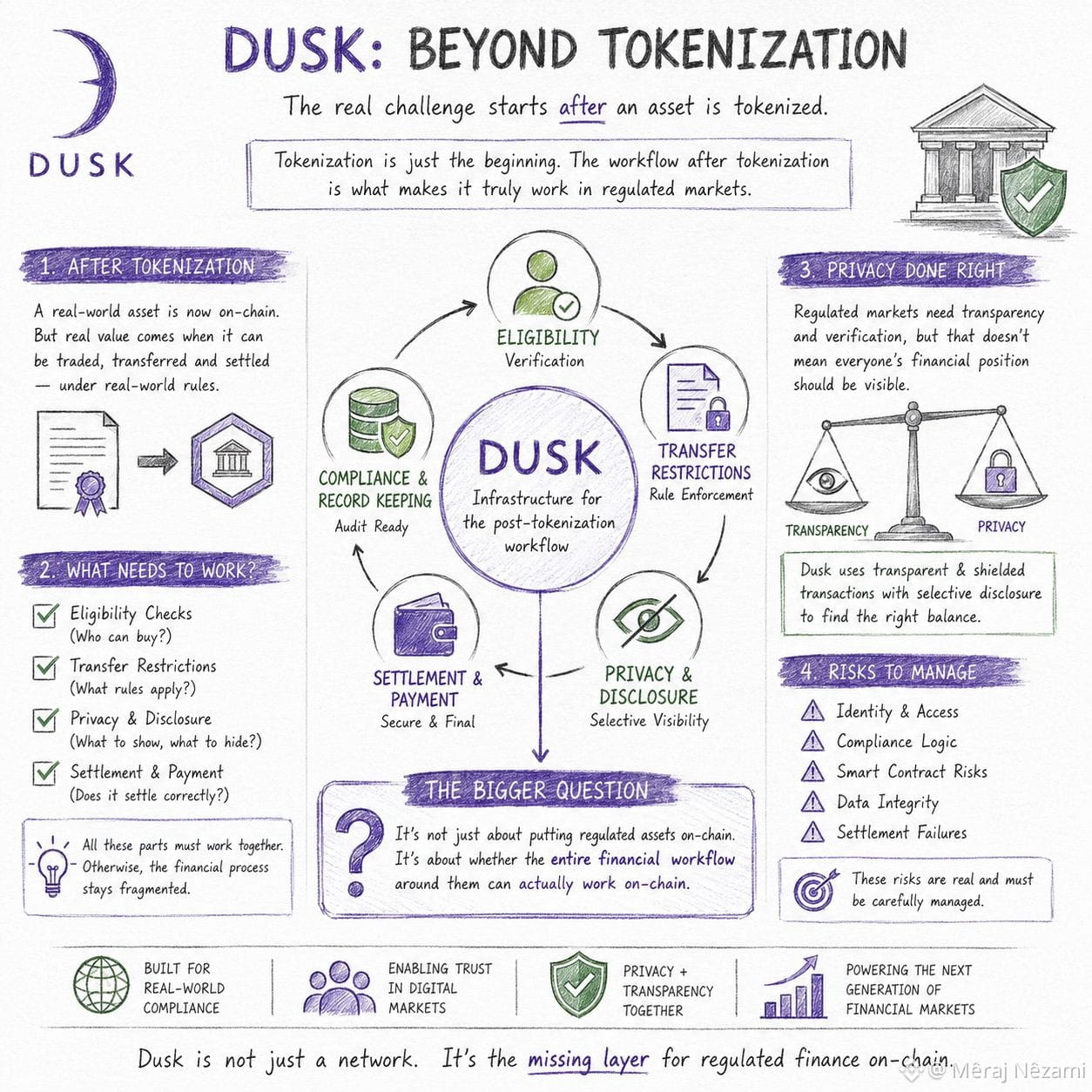
The more I looked into Dusk, the more I realized that tokenization itself might not be the biggest problem.
Putting a real-world asset on-chain sounds like the exciting part. But what happens when someone actually wants to trade that asset?
That is where things get complicated.
If it is a regulated security the buyer may need to meet certain requirements. The transfer has to follow specific rules. Some information needs to be visible, while other details should remain private. And once ownership changes the payment and settlement still need to happen correctly.
This made me look at Dusk from a different angle.
Instead of seeing it simply as a network for tokenized securities, I started thinking about it as infrastructure for the workflow that comes after tokenization.
Eligibility, transfer restrictions, privacy, disclosure and settlement all need to work together. Otherwise, you can have a perfectly tokenized asset while the financial process around it remains fragmented across different systems.
The privacy approach is particularly interesting to me. Regulated markets need verification and transparency, but that doesn't mean everyone's financial position should be visible. Dusk's combination of transparent and shielded transactions with selective disclosure tries to find that middle ground.
Of course, there are still risks around identity, compliance logic, smart contracts, data and settlement.
So for me, the bigger Dusk question isn't whether regulated assets can be put on-chain.
It's whether the entire financial workflow around them can actually work on-chain.
Es topic se related infographic image bana do background colour white pepar style
{future}(TRUMPUSDT)
{future}(POLUSDT)
#dusk $DUSK @Dusk_Foundation
@Dusk_Foundation
#USThreeMajorIndexesPostWeeklyLosses #USDollarFallsToThreeMonthLow #GrayscaleFilesFifthZECETFAmendment
The more I looked into Dusk, the more I realized that tokenization itself might not be the biggest problem.
Putting a real-world asset on-chain sounds like the exciting part. But what happens when someone actually wants to trade that asset?
That is where things get complicated.
If it is a regulated security the buyer may need to meet certain requirements. The transfer has to follow specific rules. Some information needs to be visible, while other details should remain private. And once ownership changes the payment and settlement still need to happen correctly.
This made me look at Dusk from a different angle.
Instead of seeing it simply as a network for tokenized securities, I started thinking about it as infrastructure for the workflow that comes after tokenization.
Eligibility, transfer restrictions, privacy, disclosure and settlement all need to work together. Otherwise, you can have a perfectly tokenized asset while the financial process around it remains fragmented across different systems.
The privacy approach is particularly interesting to me. Regulated markets need verification and transparency, but that doesn't mean everyone's financial position should be visible. Dusk's combination of transparent and shielded transactions with selective disclosure tries to find that middle ground.
Of course, there are still risks around identity, compliance logic, smart contracts, data and settlement.
So for me, the bigger Dusk question isn't whether regulated assets can be put on-chain.
It's whether the entire financial workflow around them can actually work on-chain.
Es topic se related infographic image bana do background colour white pepar style
#dusk $DUSK @Dusk
@Dusk
#USThreeMajorIndexesPostWeeklyLosses #USDollarFallsToThreeMonthLow #GrayscaleFilesFifthZECETFAmendment
Putting a real-world asset on-chain sounds like the exciting part. But what happens when someone actually wants to trade that asset?
That is where things get complicated.
If it is a regulated security the buyer may need to meet certain requirements. The transfer has to follow specific rules. Some information needs to be visible, while other details should remain private. And once ownership changes the payment and settlement still need to happen correctly.
This made me look at Dusk from a different angle.
Instead of seeing it simply as a network for tokenized securities, I started thinking about it as infrastructure for the workflow that comes after tokenization.
Eligibility, transfer restrictions, privacy, disclosure and settlement all need to work together. Otherwise, you can have a perfectly tokenized asset while the financial process around it remains fragmented across different systems.
The privacy approach is particularly interesting to me. Regulated markets need verification and transparency, but that doesn't mean everyone's financial position should be visible. Dusk's combination of transparent and shielded transactions with selective disclosure tries to find that middle ground.
Of course, there are still risks around identity, compliance logic, smart contracts, data and settlement.
So for me, the bigger Dusk question isn't whether regulated assets can be put on-chain.
It's whether the entire financial workflow around them can actually work on-chain.
Es topic se related infographic image bana do background colour white pepar style
#dusk $DUSK @Dusk
@Dusk
#USThreeMajorIndexesPostWeeklyLosses #USDollarFallsToThreeMonthLow #GrayscaleFilesFifthZECETFAmendment
7
7
210
·
--
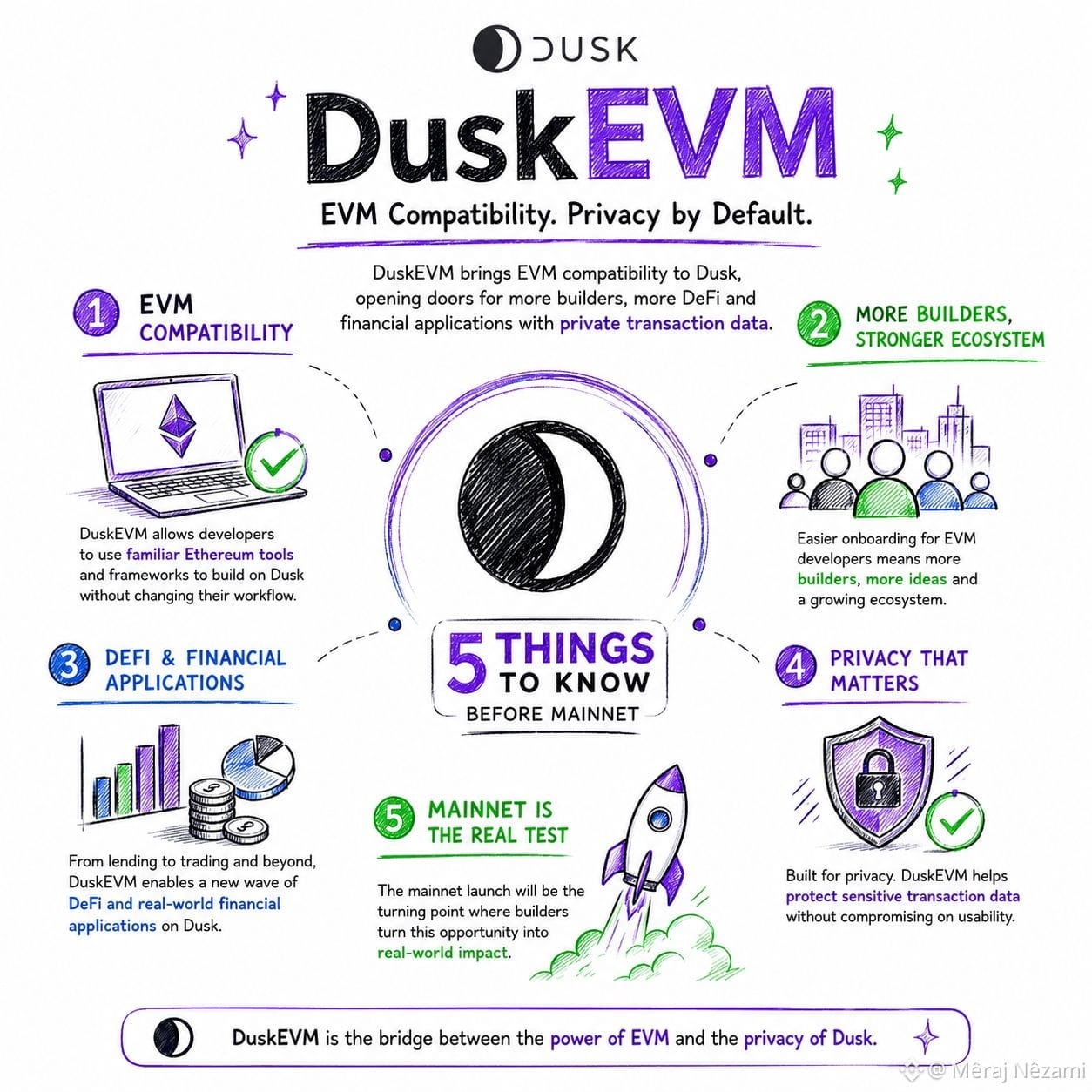
I recently came across Dusk’s update about DuskEVM and what caught my attention wasn’t just the EVM compatibility. It’s what this could unlock for the ecosystem.
By making it easier for EVM developers to build on Dusk the network could attract more builders without forcing them to completely change the way they work. That matters because a strong ecosystem needs both developers and useful applications.
What makes DuskEVM more interesting is the focus on financial applications where transaction privacy can actually matter. DeFi is growing, but not every financial action needs to be visible to everyone.
For me, DuskEVM feels like a bridge between familiar EVM development and Dusk’s privacy focused approach.
The real test will come after mainnet, when builders start turning this opportunity into real applications.
#dusk $DUSK @Dusk_Foundation
{future}(HEMIUSDT)
{future}(ONGUSDT)
$PEOPLE $ENA
I recently came across Dusk’s update about DuskEVM and what caught my attention wasn’t just the EVM compatibility. It’s what this could unlock for the ecosystem.
By making it easier for EVM developers to build on Dusk the network could attract more builders without forcing them to completely change the way they work. That matters because a strong ecosystem needs both developers and useful applications.
What makes DuskEVM more interesting is the focus on financial applications where transaction privacy can actually matter. DeFi is growing, but not every financial action needs to be visible to everyone.
For me, DuskEVM feels like a bridge between familiar EVM development and Dusk’s privacy focused approach.
The real test will come after mainnet, when builders start turning this opportunity into real applications.
#dusk $DUSK @Dusk
$PEOPLE $ENA
By making it easier for EVM developers to build on Dusk the network could attract more builders without forcing them to completely change the way they work. That matters because a strong ecosystem needs both developers and useful applications.
What makes DuskEVM more interesting is the focus on financial applications where transaction privacy can actually matter. DeFi is growing, but not every financial action needs to be visible to everyone.
For me, DuskEVM feels like a bridge between familiar EVM development and Dusk’s privacy focused approach.
The real test will come after mainnet, when builders start turning this opportunity into real applications.
#dusk $DUSK @Dusk
$PEOPLE $ENA
9
11
219
·
--
I used to think a blockchain’s real strength was tested when everything was working normally.
But the more I learn about network design, the more I feel the difficult moments matter even more.
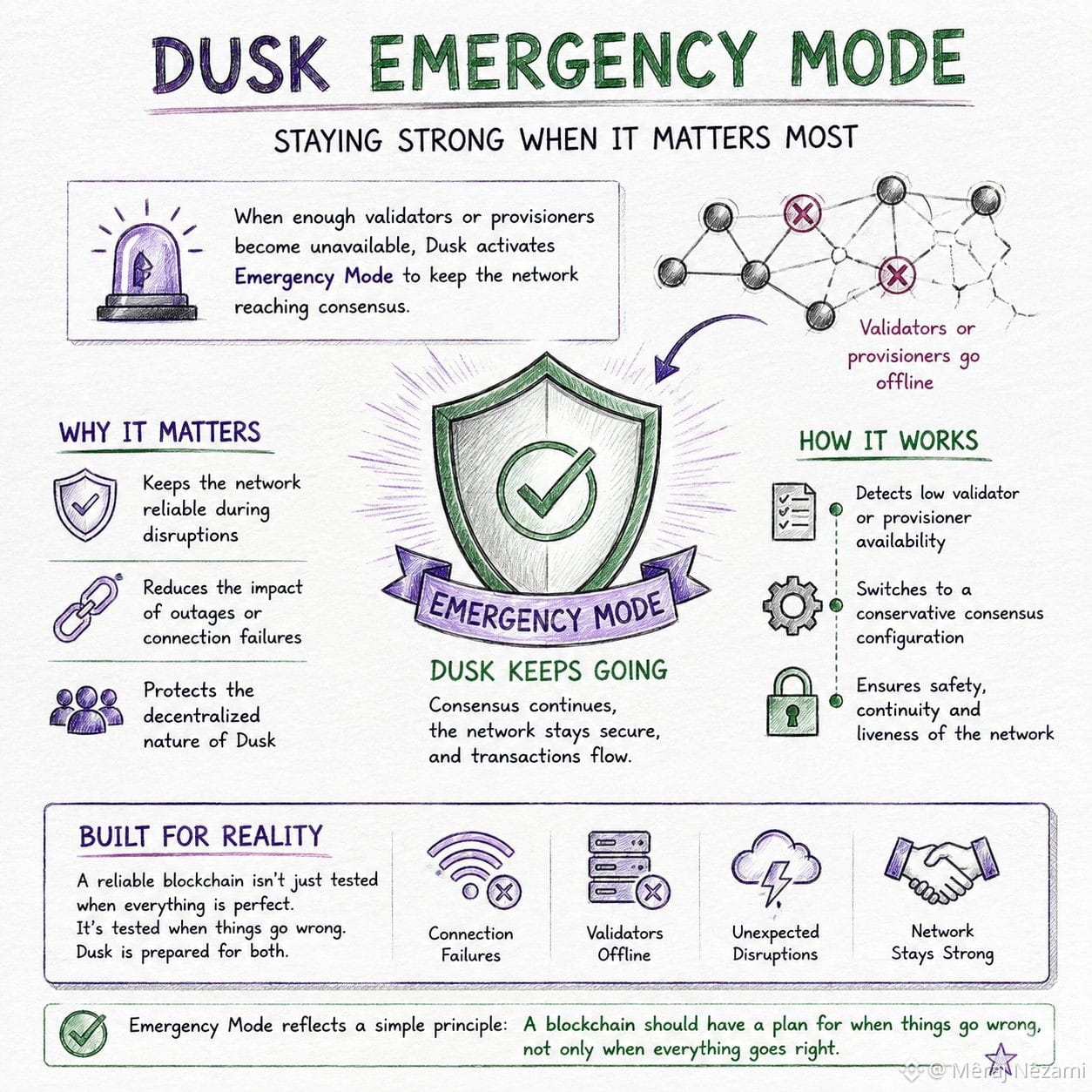
Dusk has an interesting idea for those situations: Emergency Mode.
If enough validators or provisioners become unavailable, the network doesn’t simply keep operating as if nothing happened.
Emergency Mode is designed to help Dusk continue reaching consensus when normal participation is disrupted.
What I find interesting is the thinking behind it.
A reliable network shouldn’t depend on perfect conditions.
Validators can go offline, connections can fail and unexpected problems can happen.
For me, that makes Emergency Mode more than just a technical feature.
It reflects a simple principle: a blockchain should have a plan for when things go wrong not only when everything goes right.
Es topic se related infographic image bana do background colour white pepar style
#dusk $DUSK @Dusk_Foundation
{future}(AVAAIUSDT)
{future}(ACEUSDT)
{future}(ONGUSDT)
I used to think a blockchain’s real strength was tested when everything was working normally.
But the more I learn about network design, the more I feel the difficult moments matter even more.
Dusk has an interesting idea for those situations: Emergency Mode.
If enough validators or provisioners become unavailable, the network doesn’t simply keep operating as if nothing happened.
Emergency Mode is designed to help Dusk continue reaching consensus when normal participation is disrupted.
What I find interesting is the thinking behind it.
A reliable network shouldn’t depend on perfect conditions.
Validators can go offline, connections can fail and unexpected problems can happen.
For me, that makes Emergency Mode more than just a technical feature.
It reflects a simple principle: a blockchain should have a plan for when things go wrong not only when everything goes right.
Es topic se related infographic image bana do background colour white pepar style
#dusk $DUSK @Dusk
But the more I learn about network design, the more I feel the difficult moments matter even more.
Dusk has an interesting idea for those situations: Emergency Mode.
If enough validators or provisioners become unavailable, the network doesn’t simply keep operating as if nothing happened.
Emergency Mode is designed to help Dusk continue reaching consensus when normal participation is disrupted.
What I find interesting is the thinking behind it.
A reliable network shouldn’t depend on perfect conditions.
Validators can go offline, connections can fail and unexpected problems can happen.
For me, that makes Emergency Mode more than just a technical feature.
It reflects a simple principle: a blockchain should have a plan for when things go wrong not only when everything goes right.
Es topic se related infographic image bana do background colour white pepar style
#dusk $DUSK @Dusk
2
2
236
·
--
One thing I’ve started noticing while exploring blockchain projects is that the same technology can make very different choices depending on who it is built for.
Ethereum has built its reputation around open, transparent activity. That transparency is powerful, but for financial institutions, showing every transaction publicly can create uncomfortable questions around strategies, counterparties, and sensitive data.
Dusk takes a different direction. Its design puts more focus on financial privacy while still considering the compliance requirements of regulated markets. Phoenix supports confidential transactions, while Moonlight provides a transparent model.
To me, this isn’t really about choosing which blockchain is “better.” It’s about understanding what different users actually need.
Poll: Which approach fits regulated finance better?
🔹 Ethereum-style transparency
🔹 Dusk-style privacy
🔹 A balance of both
🔹 Not sure yet
{future}(MUBARAKUSDT)
{future}(HEMIUSDT)
#dusk $DUSK @Dusk_Foundation
One thing I’ve started noticing while exploring blockchain projects is that the same technology can make very different choices depending on who it is built for.
Ethereum has built its reputation around open, transparent activity. That transparency is powerful, but for financial institutions, showing every transaction publicly can create uncomfortable questions around strategies, counterparties, and sensitive data.
Dusk takes a different direction. Its design puts more focus on financial privacy while still considering the compliance requirements of regulated markets. Phoenix supports confidential transactions, while Moonlight provides a transparent model.
To me, this isn’t really about choosing which blockchain is “better.” It’s about understanding what different users actually need.
Poll: Which approach fits regulated finance better?
🔹 Ethereum-style transparency
🔹 Dusk-style privacy
🔹 A balance of both
🔹 Not sure yet
#dusk $DUSK @Dusk
Ethereum has built its reputation around open, transparent activity. That transparency is powerful, but for financial institutions, showing every transaction publicly can create uncomfortable questions around strategies, counterparties, and sensitive data.
Dusk takes a different direction. Its design puts more focus on financial privacy while still considering the compliance requirements of regulated markets. Phoenix supports confidential transactions, while Moonlight provides a transparent model.
To me, this isn’t really about choosing which blockchain is “better.” It’s about understanding what different users actually need.
Poll: Which approach fits regulated finance better?
🔹 Ethereum-style transparency
🔹 Dusk-style privacy
🔹 A balance of both
🔹 Not sure yet
#dusk $DUSK @Dusk
🔹Ethereum-style transparency
50%
🔹 Dusk-style privacy
50%
🔹 A balance of both
0%
🔹 Not sure yet
0%
2 votes • Voting closed
15
10
196
·
--
Congratulations Dear Binance User! 🎉
$BTW USDT is showing an impressive move, currently around $0.56 with strong momentum. 📈🔥 After touching a high near $0.6175, the chart is still holding above key levels. Congratulations to everyone who caught this move! Stay alert, manage your risk, and trade smart. 🚀
{future}(BTWUSDT)
Congratulations Dear Binance User! 🎉
$BTW USDT is showing an impressive move, currently around $0.56 with strong momentum. 📈🔥 After touching a high near $0.6175, the chart is still holding above key levels. Congratulations to everyone who caught this move! Stay alert, manage your risk, and trade smart. 🚀
$BTW USDT is showing an impressive move, currently around $0.56 with strong momentum. 📈🔥 After touching a high near $0.6175, the chart is still holding above key levels. Congratulations to everyone who caught this move! Stay alert, manage your risk, and trade smart. 🚀

2
208
·
--
When I first came across Zedger, I thought smart contracts were mainly about automation. But the more I looked into Dusk, the more I realized that financial markets need something more.
Imagine a security or financial agreement running through a smart contract, while sensitive details remain confidential. That’s where Zedger becomes interesting to me. It is designed around financial instruments where privacy, compliance, and automated execution need to work together.
For me, the bigger question isn’t whether confidential smart contracts are useful. It’s whether financial institutions would actually trust them enough to move real-world assets on-chain.
Poll: What matters most for institutional adoption?
🔹 Privacy
🔹 Regulatory compliance
🔹 Security
🔹 Fast settlement
What would you choose?
{future}(ACEUSDT)
{future}(ALPINEUSDT)
#dusk $DUSK @Dusk_Foundation
When I first came across Zedger, I thought smart contracts were mainly about automation. But the more I looked into Dusk, the more I realized that financial markets need something more.
Imagine a security or financial agreement running through a smart contract, while sensitive details remain confidential. That’s where Zedger becomes interesting to me. It is designed around financial instruments where privacy, compliance, and automated execution need to work together.
For me, the bigger question isn’t whether confidential smart contracts are useful. It’s whether financial institutions would actually trust them enough to move real-world assets on-chain.
Poll: What matters most for institutional adoption?
🔹 Privacy
🔹 Regulatory compliance
🔹 Security
🔹 Fast settlement
What would you choose?
#dusk $DUSK @Dusk
Imagine a security or financial agreement running through a smart contract, while sensitive details remain confidential. That’s where Zedger becomes interesting to me. It is designed around financial instruments where privacy, compliance, and automated execution need to work together.
For me, the bigger question isn’t whether confidential smart contracts are useful. It’s whether financial institutions would actually trust them enough to move real-world assets on-chain.
Poll: What matters most for institutional adoption?
🔹 Privacy
🔹 Regulatory compliance
🔹 Security
🔹 Fast settlement
What would you choose?
#dusk $DUSK @Dusk
🔹 Privacy
66%
🔹 Regulatory compliance
17%
🔹 Security
17%
🔹 Fast settlement
0%
6 votes • Voting closed
16
15
1.5k
·
--
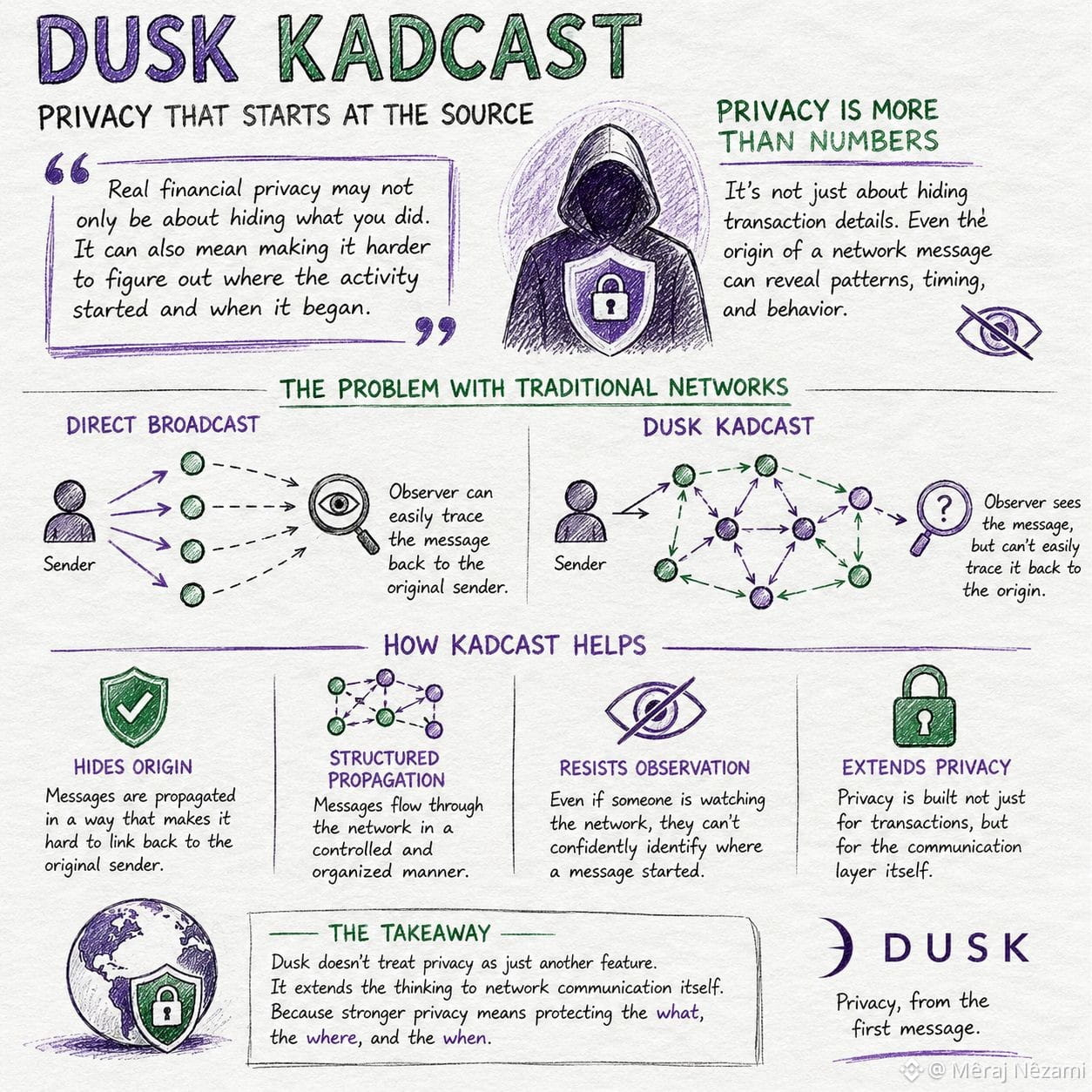
When I started looking at Dusk more closely I realized that privacy isn’t just about hiding transaction details.
I had never really thought about how much information can be revealed simply by knowing where a network message came from.That’s what made Dusk’s Kadcast approach interesting to me.
Messages are propagated through the network in a structured way, making it harder for an observer to directly trace everything back to the original sender.
For me, this is what makes the idea different. Dusk doesn’t treat privacy as just another feature. It extends that thinking to network communication itself.Because real financial privacy may not only be about hiding what you did. It can also mean making it harder to figure out where the activity started and when it began.
#dusk $DUSK @Dusk_Foundation
{future}(TUTUSDT)
{future}(GPSUSDT)
When I started looking at Dusk more closely I realized that privacy isn’t just about hiding transaction details.
I had never really thought about how much information can be revealed simply by knowing where a network message came from.That’s what made Dusk’s Kadcast approach interesting to me.
Messages are propagated through the network in a structured way, making it harder for an observer to directly trace everything back to the original sender.
For me, this is what makes the idea different. Dusk doesn’t treat privacy as just another feature. It extends that thinking to network communication itself.Because real financial privacy may not only be about hiding what you did. It can also mean making it harder to figure out where the activity started and when it began.
#dusk $DUSK @Dusk
I had never really thought about how much information can be revealed simply by knowing where a network message came from.That’s what made Dusk’s Kadcast approach interesting to me.
Messages are propagated through the network in a structured way, making it harder for an observer to directly trace everything back to the original sender.
For me, this is what makes the idea different. Dusk doesn’t treat privacy as just another feature. It extends that thinking to network communication itself.Because real financial privacy may not only be about hiding what you did. It can also mean making it harder to figure out where the activity started and when it began.
#dusk $DUSK @Dusk
24
22
432
·
--
When I meet a best friend, trust usually comes from repeated actions, not one promise. That thought came back while I was looking deeper into Dusk’s Succinct Attestation consensus.
What I found interesting is how Dusk separates agreement into stages. First, a provisioner proposes a block. Then a randomly selected committee checks it, and another committee ratifies the result. Votes are combined through aggregated signatures, helping the network reach agreement without everyone having to do everything themselves.
The design creates an interesting incentive: participants are not simply trusting one validator. They are relying on multiple independent checks before accepting a block.
For me, the bigger takeaway is that Dusk treats consensus less like a race and more like a structured decision-making process.
#dusk $DUSK @Dusk_Foundation
{future}(DUSKUSDT)
Will DUSK BE ABLE TO CROSS 0.10 WITHEN 24 HOURS?
When I meet a best friend, trust usually comes from repeated actions, not one promise. That thought came back while I was looking deeper into Dusk’s Succinct Attestation consensus.
What I found interesting is how Dusk separates agreement into stages. First, a provisioner proposes a block. Then a randomly selected committee checks it, and another committee ratifies the result. Votes are combined through aggregated signatures, helping the network reach agreement without everyone having to do everything themselves.
The design creates an interesting incentive: participants are not simply trusting one validator. They are relying on multiple independent checks before accepting a block.
For me, the bigger takeaway is that Dusk treats consensus less like a race and more like a structured decision-making process.
#dusk $DUSK @Dusk
Will DUSK BE ABLE TO CROSS 0.10 WITHEN 24 HOURS?
What I found interesting is how Dusk separates agreement into stages. First, a provisioner proposes a block. Then a randomly selected committee checks it, and another committee ratifies the result. Votes are combined through aggregated signatures, helping the network reach agreement without everyone having to do everything themselves.
The design creates an interesting incentive: participants are not simply trusting one validator. They are relying on multiple independent checks before accepting a block.
For me, the bigger takeaway is that Dusk treats consensus less like a race and more like a structured decision-making process.
#dusk $DUSK @Dusk
Will DUSK BE ABLE TO CROSS 0.10 WITHEN 24 HOURS?
Yes ✋
100%
No 👎
0%
2 votes • Voting closed
14
12
234
·
--
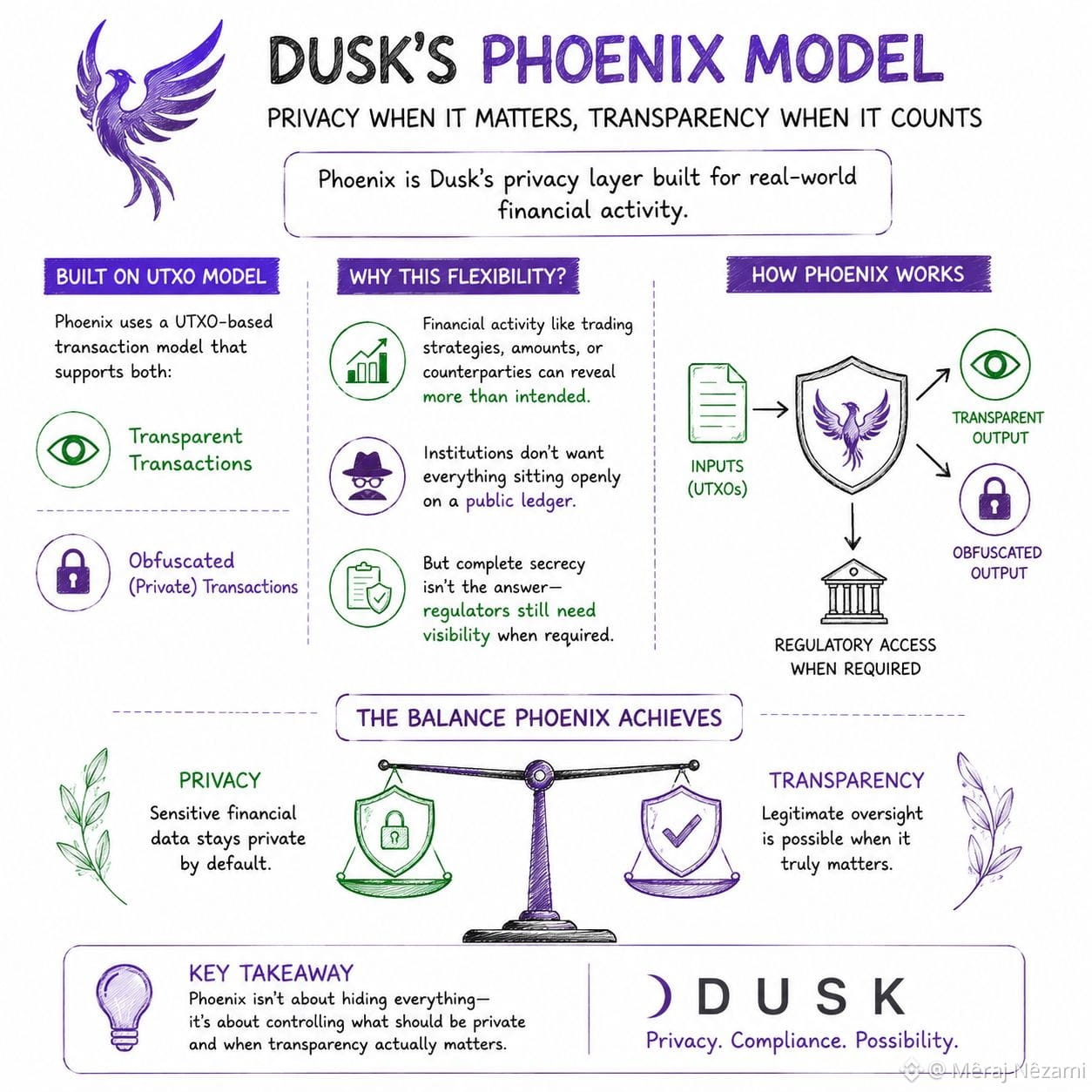
While scrolling through X, I kept seeing people mention Dusk’s Phoenix model. At first, I assumed it was just another privacy feature. Then I looked a little closer, and the design made more sense.
Phoenix uses a UTXO-based transaction model that can support both transparent and obfuscated transactions. What caught my attention is the reason behind that flexibility. Financial activity isn’t always something institutions want sitting openly on a public ledger. Trading strategies, transaction amounts, or counterparties can reveal more than intended.
But complete secrecy creates another problem: regulators still need a way to verify activity when required.
That balance is what makes Phoenix interesting to me. Privacy here isn’t about hiding everything; it’s about deciding what should remain private and when transparency actually matters.
@Dusk_Foundation
#dusk $DUSK
{future}(DUSKUSDT)
While scrolling through X, I kept seeing people mention Dusk’s Phoenix model. At first, I assumed it was just another privacy feature. Then I looked a little closer, and the design made more sense.
Phoenix uses a UTXO-based transaction model that can support both transparent and obfuscated transactions. What caught my attention is the reason behind that flexibility. Financial activity isn’t always something institutions want sitting openly on a public ledger. Trading strategies, transaction amounts, or counterparties can reveal more than intended.
But complete secrecy creates another problem: regulators still need a way to verify activity when required.
That balance is what makes Phoenix interesting to me. Privacy here isn’t about hiding everything; it’s about deciding what should remain private and when transparency actually matters.
@Dusk
#dusk $DUSK
Phoenix uses a UTXO-based transaction model that can support both transparent and obfuscated transactions. What caught my attention is the reason behind that flexibility. Financial activity isn’t always something institutions want sitting openly on a public ledger. Trading strategies, transaction amounts, or counterparties can reveal more than intended.
But complete secrecy creates another problem: regulators still need a way to verify activity when required.
That balance is what makes Phoenix interesting to me. Privacy here isn’t about hiding everything; it’s about deciding what should remain private and when transparency actually matters.
@Dusk
#dusk $DUSK
18
10
168
·
--
🎉 Congratulations to all $HEMI holders! 🚀🔥
$HEMI USDT is showing a strong +33.36% move! 📈💚
A big congratulations to everyone who has been holding HEMI and believing in the project. 🥳👏
If you’re looking to trade it, you can—but please trade carefully. ⚠️
👉 Keep leverage low and manageable
👉 Follow proper risk management
👉 Always use a Stop Loss
👉 Don’t risk your entire capital on one trade
👉 Avoid FOMO and emotional entries
In crypto, protecting your capital is just as important as making profits. 💯
🚀 Trade smart, stay safe, and congratulations once again to all $HEMI holders! ❤️🔥
🎉 Congratulations to all $HEMI holders! 🚀🔥
$HEMI USDT is showing a strong +33.36% move! 📈💚
A big congratulations to everyone who has been holding HEMI and believing in the project. 🥳👏
If you’re looking to trade it, you can—but please trade carefully. ⚠️
👉 Keep leverage low and manageable
👉 Follow proper risk management
👉 Always use a Stop Loss
👉 Don’t risk your entire capital on one trade
👉 Avoid FOMO and emotional entries
In crypto, protecting your capital is just as important as making profits. 💯
🚀 Trade smart, stay safe, and congratulations once again to all $HEMI holders! ❤️🔥
$HEMI USDT is showing a strong +33.36% move! 📈💚
A big congratulations to everyone who has been holding HEMI and believing in the project. 🥳👏
If you’re looking to trade it, you can—but please trade carefully. ⚠️
👉 Keep leverage low and manageable
👉 Follow proper risk management
👉 Always use a Stop Loss
👉 Don’t risk your entire capital on one trade
👉 Avoid FOMO and emotional entries
In crypto, protecting your capital is just as important as making profits. 💯
🚀 Trade smart, stay safe, and congratulations once again to all $HEMI holders! ❤️🔥

1
171
·
--
Dusk’s Biggest Mission: Balancing Privacy and Compliance
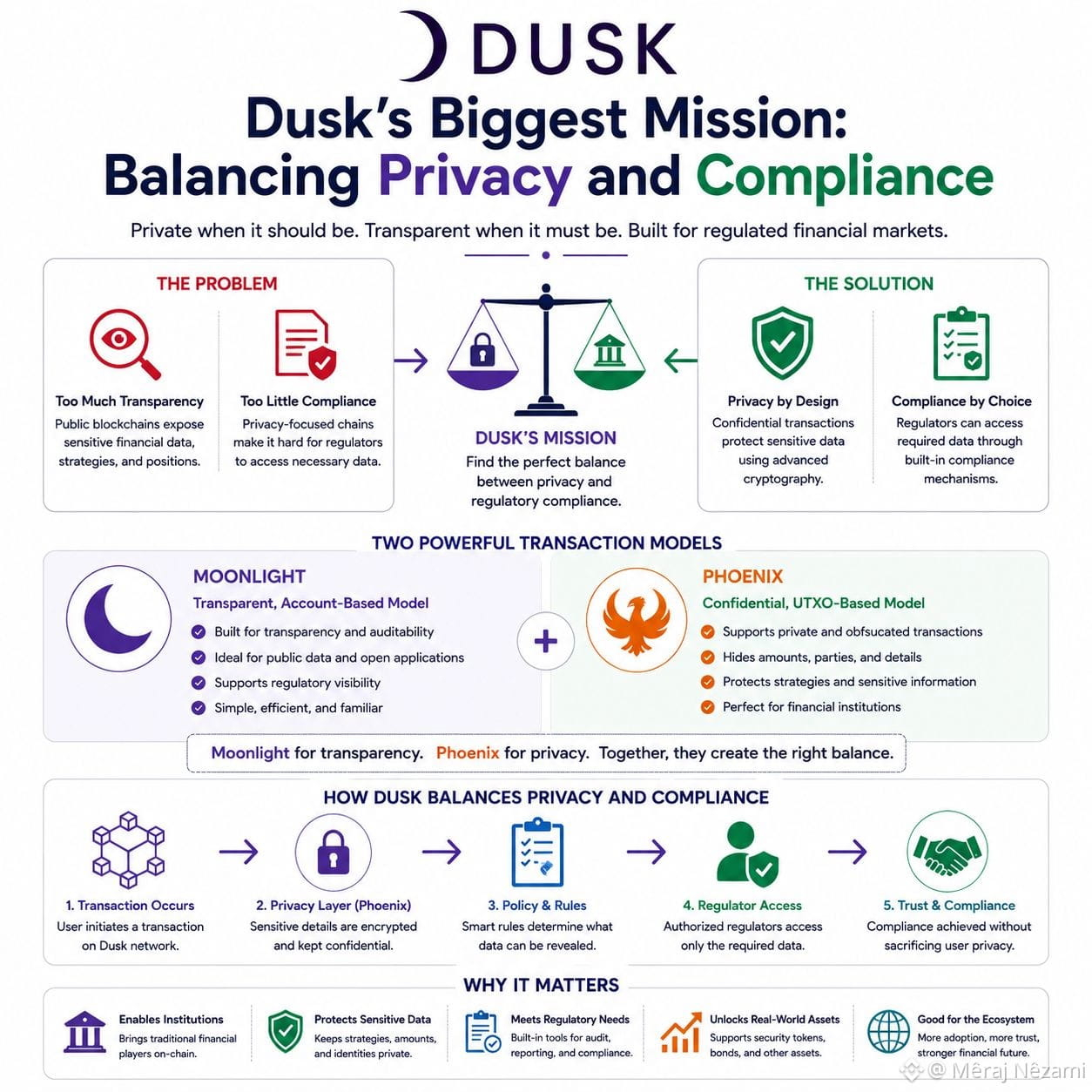
I once looked at a financial transaction on a public blockchain and realized how uncomfortable that level of transparency could be for a real business. Every movement can become part of a permanent public record.
That’s where Dusk’s approach becomes interesting. Financial institutions need privacy to protect clients, strategies, and sensitive deals, but they also need accountability when regulators come knocking. Dusk tries to design around both realities.
Phoenix allows confidential transactions, while Moonlight offers a more transparent account-based model. The important part is the trade-off: privacy shouldn’t mean creating a black box, and compliance shouldn’t mean exposing everything.
To me, Dusk is really testing a deeper question: can financial privacy and regulatory trust coexist on the same network?
@Dusk_Foundation
#dusk $DUSK
Dusk’s Biggest Mission: Balancing Privacy and Compliance
I once looked at a financial transaction on a public blockchain and realized how uncomfortable that level of transparency could be for a real business. Every movement can become part of a permanent public record.
That’s where Dusk’s approach becomes interesting. Financial institutions need privacy to protect clients, strategies, and sensitive deals, but they also need accountability when regulators come knocking. Dusk tries to design around both realities.
Phoenix allows confidential transactions, while Moonlight offers a more transparent account-based model. The important part is the trade-off: privacy shouldn’t mean creating a black box, and compliance shouldn’t mean exposing everything.
To me, Dusk is really testing a deeper question: can financial privacy and regulatory trust coexist on the same network?
@Dusk
#dusk $DUSK
I once looked at a financial transaction on a public blockchain and realized how uncomfortable that level of transparency could be for a real business. Every movement can become part of a permanent public record.
That’s where Dusk’s approach becomes interesting. Financial institutions need privacy to protect clients, strategies, and sensitive deals, but they also need accountability when regulators come knocking. Dusk tries to design around both realities.
Phoenix allows confidential transactions, while Moonlight offers a more transparent account-based model. The important part is the trade-off: privacy shouldn’t mean creating a black box, and compliance shouldn’t mean exposing everything.
To me, Dusk is really testing a deeper question: can financial privacy and regulatory trust coexist on the same network?
@Dusk
#dusk $DUSK
14
13
192
·
--
Dusk: The Blockchain Built for Regulated Financial Markets
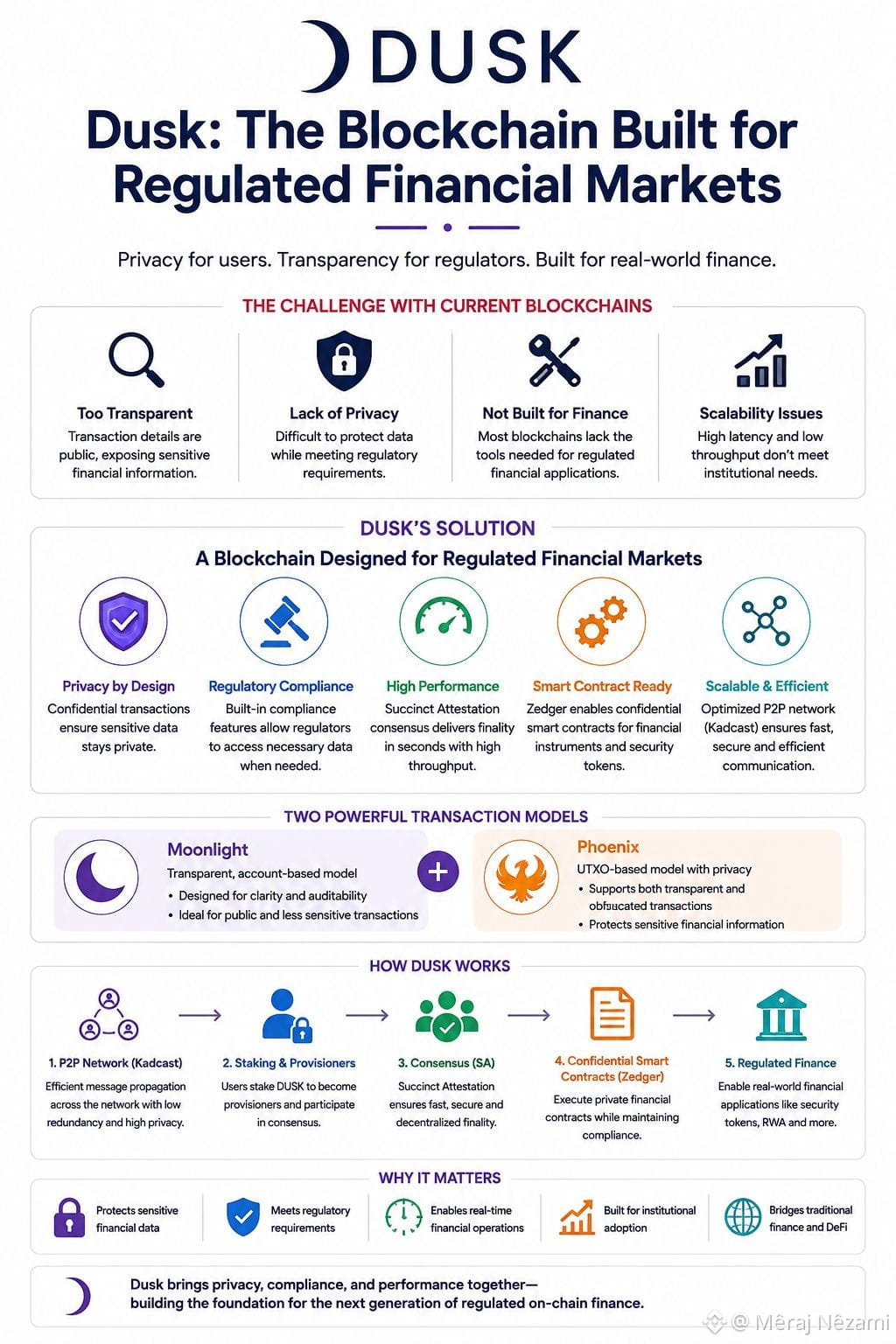
I used to think financial privacy meant simply hiding transaction details. The more I looked at regulated markets, the more I realized it’s a balancing act: institutions need confidentiality, but regulators still need visibility.
That’s where Dusk caught my attention. Its design tries to separate public transparency from the information that genuinely needs to remain private. Phoenix supports confidential transactions, while Moonlight provides a more transparent account-based model. Zedger goes further toward financial contracts where privacy and compliance have to coexist.
The interesting part isn’t just the technology. It’s the incentive structure. Institutions are unlikely to move on-chain if every trade exposes their strategy. But regulators can’t accept a black box either.
Dusk sits in that uncomfortable middle ground. The real question is whether markets can trust a system designed around both privacy and accountability.
@Dusk_Foundation
#dusk $DUSK
Dusk: The Blockchain Built for Regulated Financial Markets
I used to think financial privacy meant simply hiding transaction details. The more I looked at regulated markets, the more I realized it’s a balancing act: institutions need confidentiality, but regulators still need visibility.
That’s where Dusk caught my attention. Its design tries to separate public transparency from the information that genuinely needs to remain private. Phoenix supports confidential transactions, while Moonlight provides a more transparent account-based model. Zedger goes further toward financial contracts where privacy and compliance have to coexist.
The interesting part isn’t just the technology. It’s the incentive structure. Institutions are unlikely to move on-chain if every trade exposes their strategy. But regulators can’t accept a black box either.
Dusk sits in that uncomfortable middle ground. The real question is whether markets can trust a system designed around both privacy and accountability.
@Dusk
#dusk $DUSK
I used to think financial privacy meant simply hiding transaction details. The more I looked at regulated markets, the more I realized it’s a balancing act: institutions need confidentiality, but regulators still need visibility.
That’s where Dusk caught my attention. Its design tries to separate public transparency from the information that genuinely needs to remain private. Phoenix supports confidential transactions, while Moonlight provides a more transparent account-based model. Zedger goes further toward financial contracts where privacy and compliance have to coexist.
The interesting part isn’t just the technology. It’s the incentive structure. Institutions are unlikely to move on-chain if every trade exposes their strategy. But regulators can’t accept a black box either.
Dusk sits in that uncomfortable middle ground. The real question is whether markets can trust a system designed around both privacy and accountability.
@Dusk
#dusk $DUSK
5
6
131
·
--
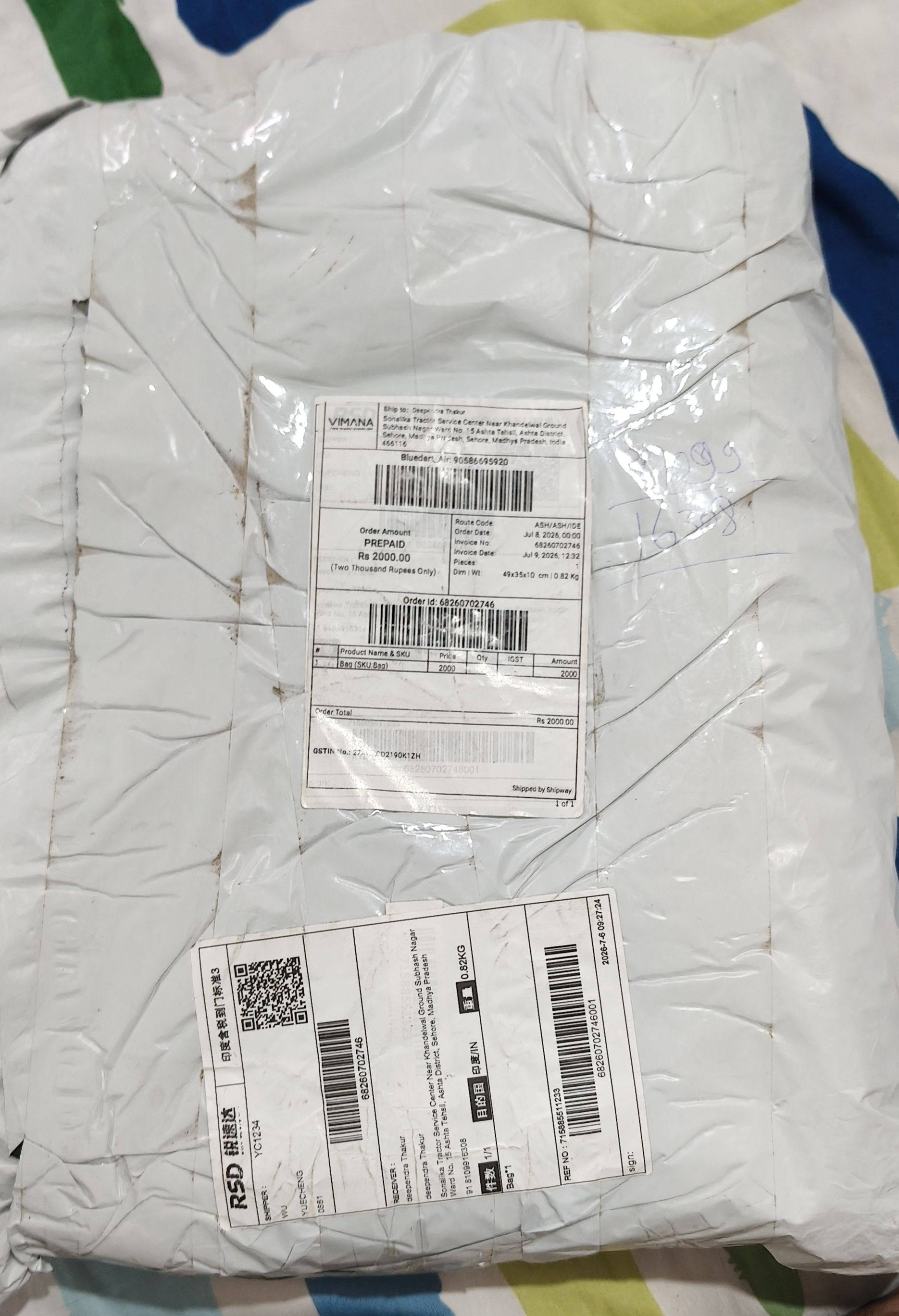
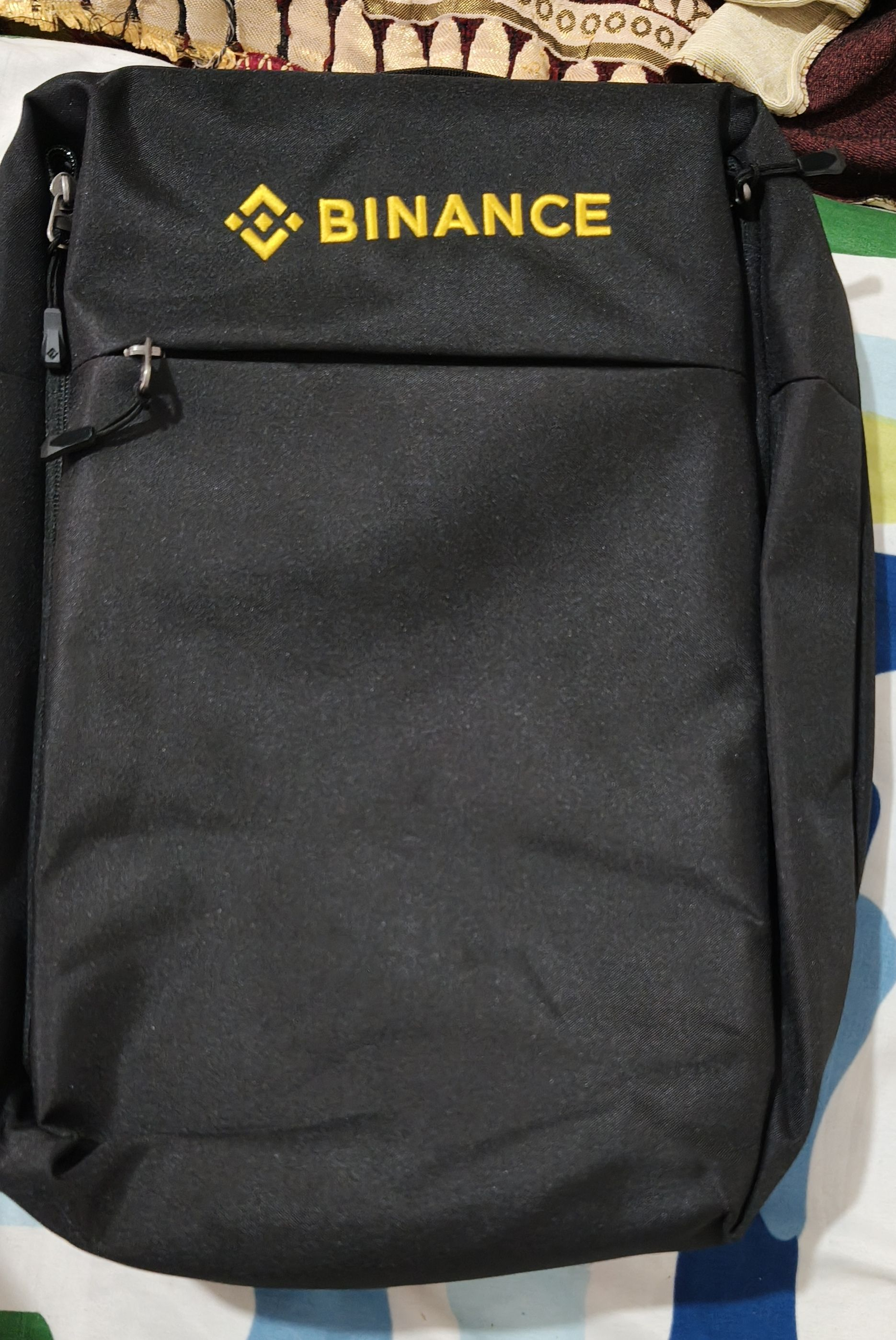
Congratulations Dt_Singh Bhai, you received gifts from Binance,
Congratulations Dt_Singh Bhai, you received gifts from Binance,
DT_Singh
·
--
I received gifts this morning thanks binance
@CZ @Binance Square Official
@CZ @Binance Square Official

73
·
--
🇯🇵 Japan Services PMI June Update 📊
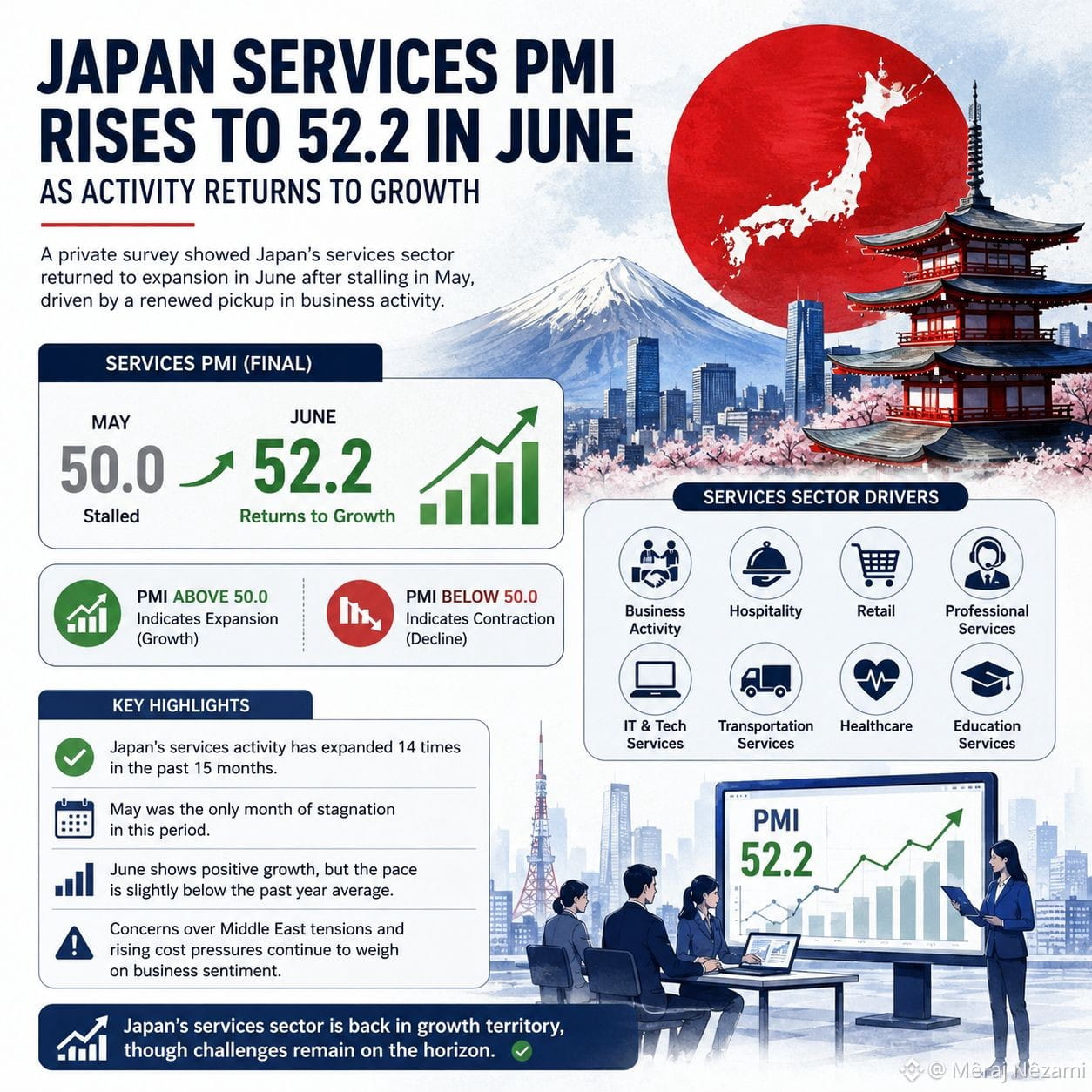
📈 In June, Japan’s Services PMI rose to 52.2, up from May’s 50.0. This means Japan’s services sector has returned to a growth mode. 🚀
📅 According to a private survey released on Friday, after growth stalled in May, business activity increased again in June. However, 🌍 due to Middle East tensions and 💸 rising costs (cost pressures), business confidence remains somewhat weak.
✅ A PMI above 50 indicates expansion (growth), while 📉 a reading below 50 indicates contraction (decline).
📊 Over the past 15 months, Japan’s services sector has been in growth 14 times. Growth paused only in May. June’s growth was positive 👍, but its pace was said to be slightly slower than the average over the past year. 📉
$STAR $MAGMA $ALLO
🇯🇵 Japan Services PMI June Update 📊
📈 In June, Japan’s Services PMI rose to 52.2, up from May’s 50.0. This means Japan’s services sector has returned to a growth mode. 🚀
📅 According to a private survey released on Friday, after growth stalled in May, business activity increased again in June. However, 🌍 due to Middle East tensions and 💸 rising costs (cost pressures), business confidence remains somewhat weak.
✅ A PMI above 50 indicates expansion (growth), while 📉 a reading below 50 indicates contraction (decline).
📊 Over the past 15 months, Japan’s services sector has been in growth 14 times. Growth paused only in May. June’s growth was positive 👍, but its pace was said to be slightly slower than the average over the past year. 📉
$STAR $MAGMA $ALLO
📈 In June, Japan’s Services PMI rose to 52.2, up from May’s 50.0. This means Japan’s services sector has returned to a growth mode. 🚀
📅 According to a private survey released on Friday, after growth stalled in May, business activity increased again in June. However, 🌍 due to Middle East tensions and 💸 rising costs (cost pressures), business confidence remains somewhat weak.
✅ A PMI above 50 indicates expansion (growth), while 📉 a reading below 50 indicates contraction (decline).
📊 Over the past 15 months, Japan’s services sector has been in growth 14 times. Growth paused only in May. June’s growth was positive 👍, but its pace was said to be slightly slower than the average over the past year. 📉
$STAR $MAGMA $ALLO
3
12
202
·
--
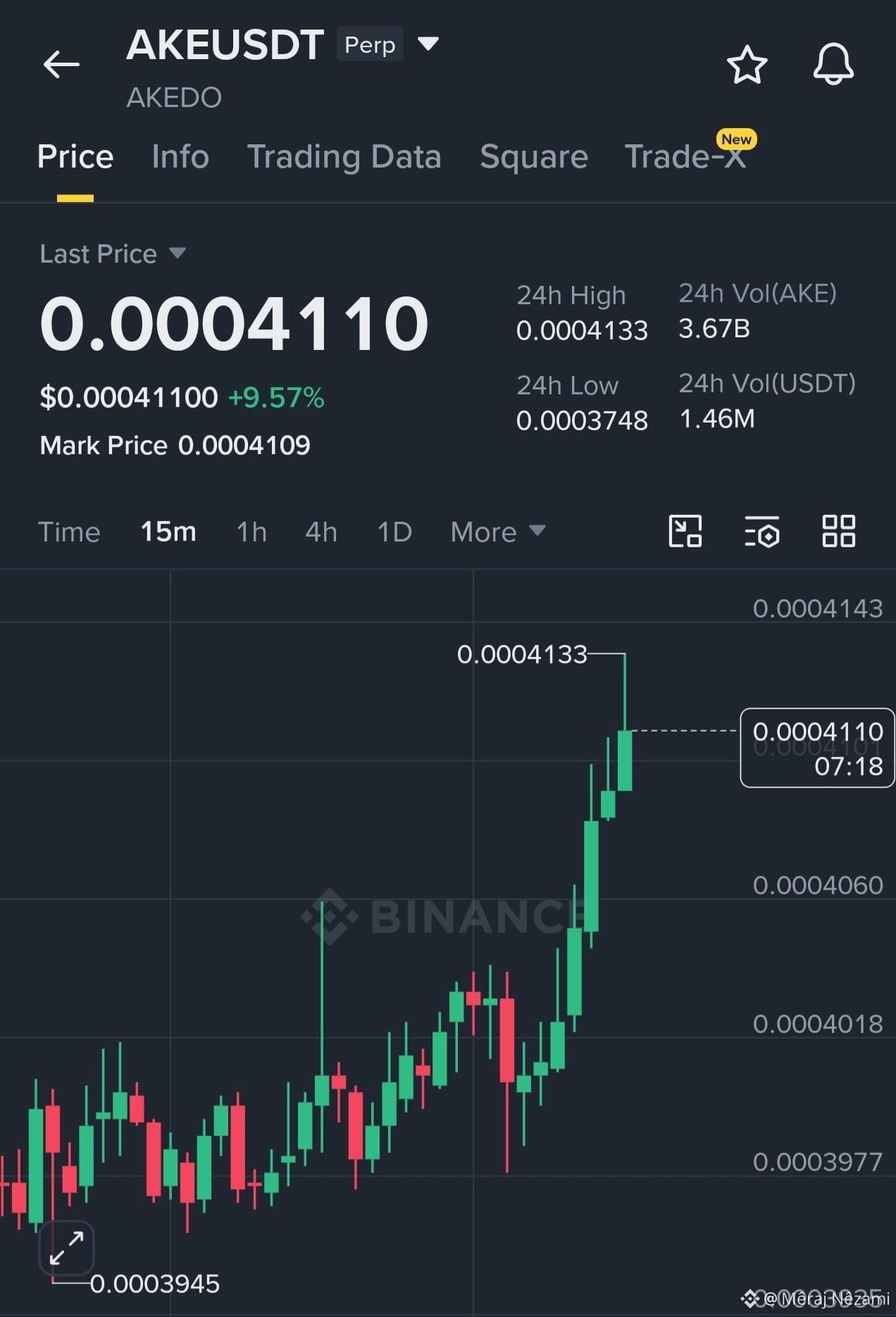
$AKE USDT – LONG SIGNAL
Strong bullish breakout with rising volume, buyers remain dominant, momentum favors further upside above recent resistance levels.
Entry Price: 0.0004090 – 0.0004115
Take Profit:
TP1: 0.0004180
TP2: 0.0004250
TP3: 0.0004330
Stop Loss: 0.0003990
Leverage: 5–10X
Risk: Wait for a candle close above the breakout zone before entering to reduce false breakout risk.
{future}(AKEUSDT)
$AKE USDT – LONG SIGNAL
Strong bullish breakout with rising volume, buyers remain dominant, momentum favors further upside above recent resistance levels.
Entry Price: 0.0004090 – 0.0004115
Take Profit:
TP1: 0.0004180
TP2: 0.0004250
TP3: 0.0004330
Stop Loss: 0.0003990
Leverage: 5–10X
Risk: Wait for a candle close above the breakout zone before entering to reduce false breakout risk.
Strong bullish breakout with rising volume, buyers remain dominant, momentum favors further upside above recent resistance levels.
Entry Price: 0.0004090 – 0.0004115
Take Profit:
TP1: 0.0004180
TP2: 0.0004250
TP3: 0.0004330
Stop Loss: 0.0003990
Leverage: 5–10X
Risk: Wait for a candle close above the breakout zone before entering to reduce false breakout risk.
7
276
·
--
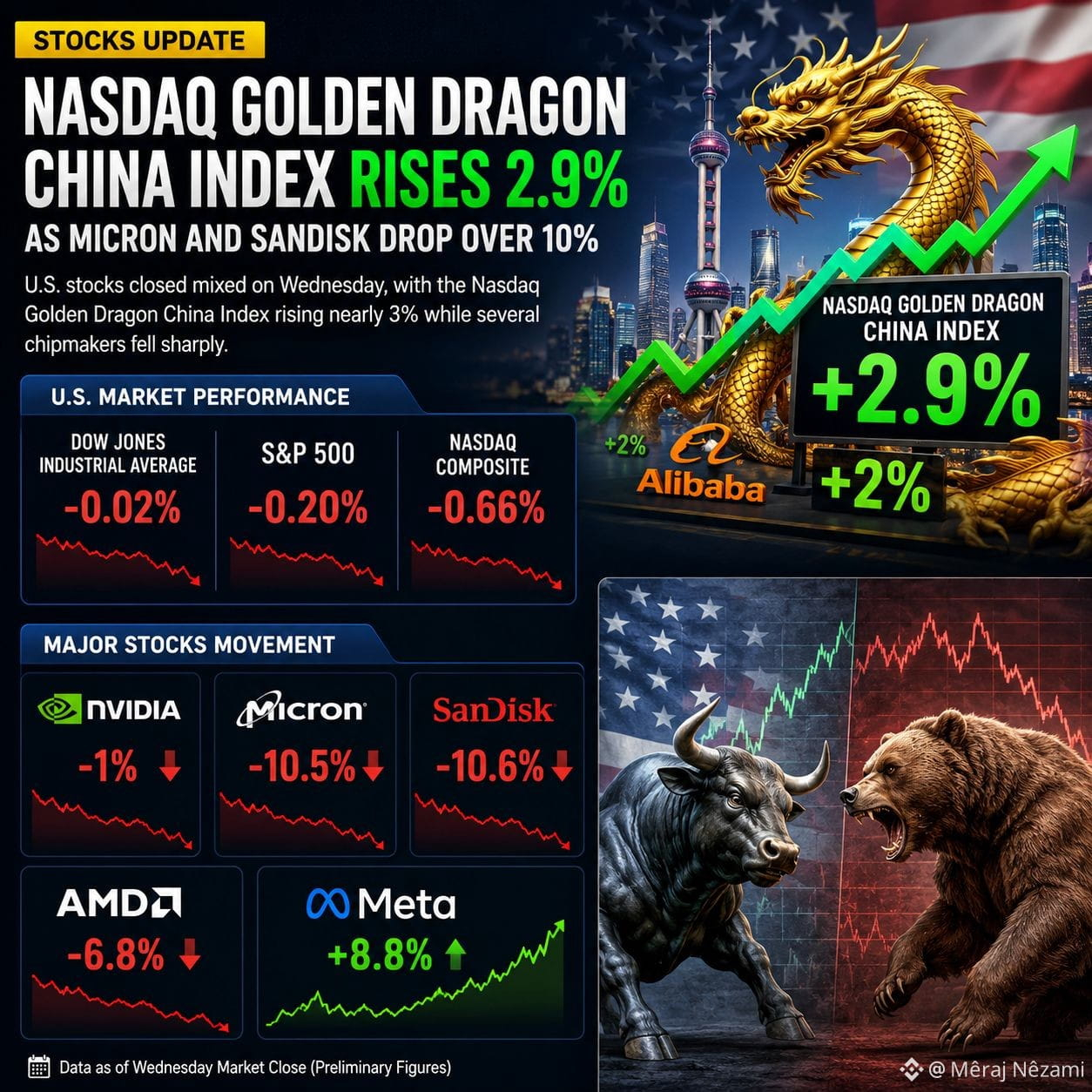
🇺🇸 On Wednesday, the U.S. stock market saw mixed trading. 📊
The Nasdaq Golden Dragon China Index surged 2.9%, while many large chip stocks saw steep declines. 📉
📉 Market Performance: 🔹 Dow Jones: down 0.02% 🔹 S&P 500: down 0.20% 🔹 Nasdaq Composite: down 0.66%
💻 Major Stocks: 🔻 Nvidia: down 1% 🔻 Micron Technology: down 10.5% 🔻 SanDisk: down 10.6% 🔻 AMD: down 6.8% 🚀 Meta: up 8.8% 🟢 Alibaba: up 2%
🇺🇸 On Wednesday, the U.S. stock market saw mixed trading. 📊
The Nasdaq Golden Dragon China Index surged 2.9%, while many large chip stocks saw steep declines. 📉
📉 Market Performance: 🔹 Dow Jones: down 0.02% 🔹 S&P 500: down 0.20% 🔹 Nasdaq Composite: down 0.66%
💻 Major Stocks: 🔻 Nvidia: down 1% 🔻 Micron Technology: down 10.5% 🔻 SanDisk: down 10.6% 🔻 AMD: down 6.8% 🚀 Meta: up 8.8% 🟢 Alibaba: up 2%
The Nasdaq Golden Dragon China Index surged 2.9%, while many large chip stocks saw steep declines. 📉
📉 Market Performance: 🔹 Dow Jones: down 0.02% 🔹 S&P 500: down 0.20% 🔹 Nasdaq Composite: down 0.66%
💻 Major Stocks: 🔻 Nvidia: down 1% 🔻 Micron Technology: down 10.5% 🔻 SanDisk: down 10.6% 🔻 AMD: down 6.8% 🚀 Meta: up 8.8% 🟢 Alibaba: up 2%
3
190
·
--
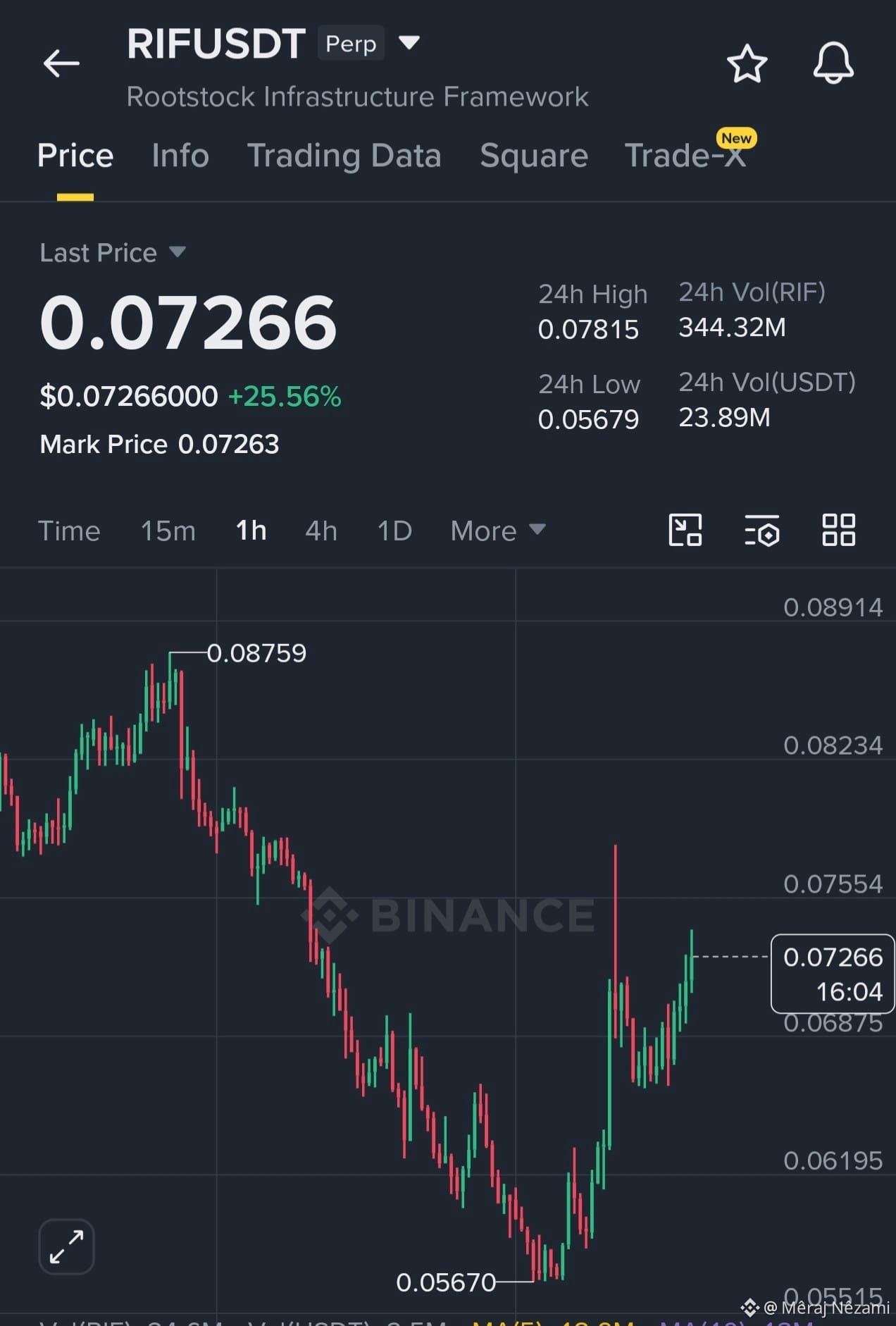
🚀 $RIF USDT/USDT – LONG SIGNAL 🟢
📝 15-Word Analysis:
Strong bullish momentum with rising volume; breakout continuation likely if buyers defend current support levels successfully.
📍 Entry Price: 0.07250 – 0.07300
🎯 Take Profit: 0.07550 | 0.07800 | 0.08150
🛑 Stop Loss: 0.06950
⚠️ Trade with proper risk management. Use 5–10× leverage only if it matches your strategy.
🚀 $RIF USDT/USDT – LONG SIGNAL 🟢
📝 15-Word Analysis:
Strong bullish momentum with rising volume; breakout continuation likely if buyers defend current support levels successfully.
📍 Entry Price: 0.07250 – 0.07300
🎯 Take Profit: 0.07550 | 0.07800 | 0.08150
🛑 Stop Loss: 0.06950
⚠️ Trade with proper risk management. Use 5–10× leverage only if it matches your strategy.
📝 15-Word Analysis:
Strong bullish momentum with rising volume; breakout continuation likely if buyers defend current support levels successfully.
📍 Entry Price: 0.07250 – 0.07300
🎯 Take Profit: 0.07550 | 0.07800 | 0.08150
🛑 Stop Loss: 0.06950
⚠️ Trade with proper risk management. Use 5–10× leverage only if it matches your strategy.
1
168
·
--
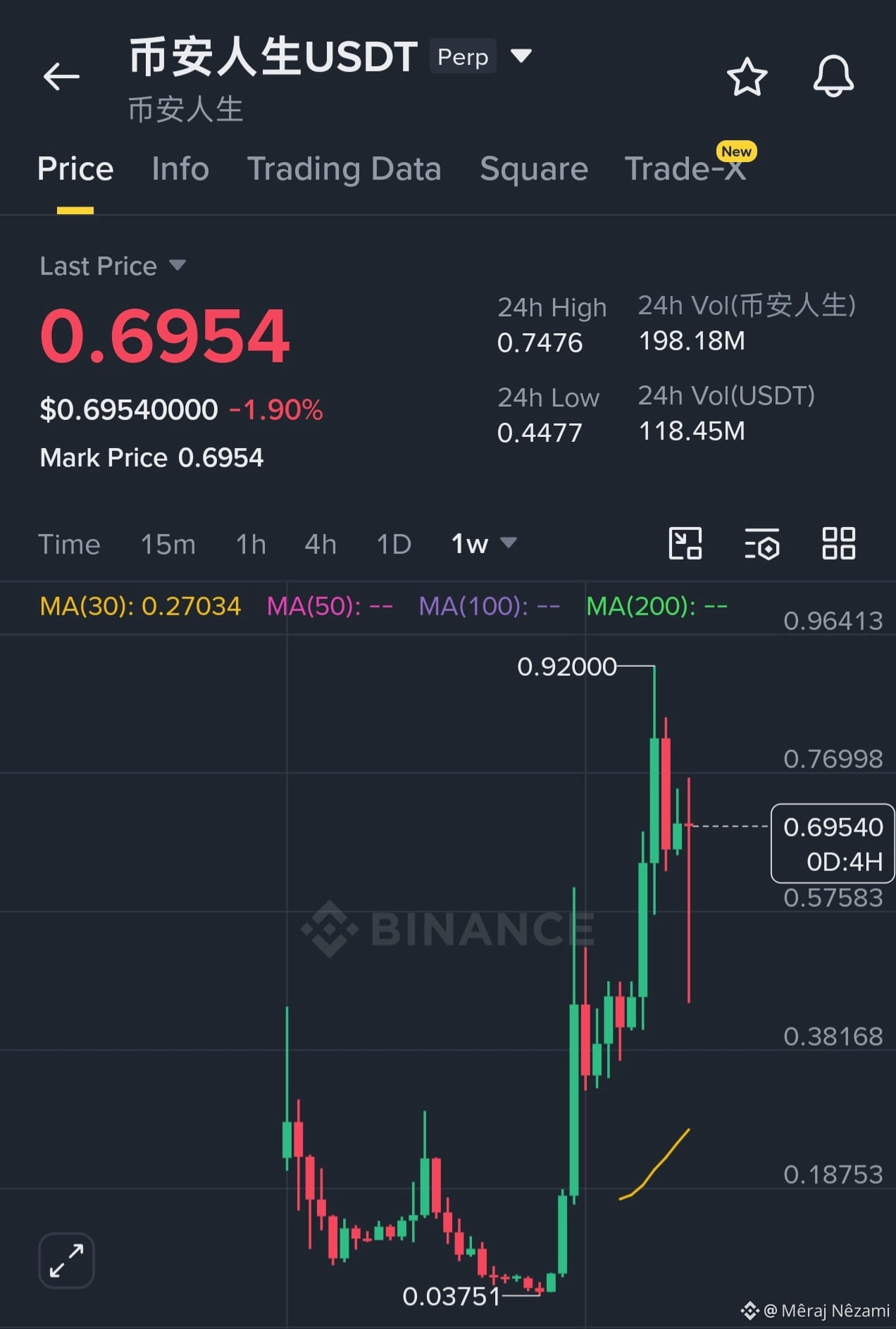
guy's long$币安人生 now
Entry: $0.68 - $0.71 | TP: $0.80 / $0.90 / $1.00 | SL: $0.60
Disclaimer 👉 DYOR
guy's long$币安人生 now
Entry: $0.68 - $0.71 | TP: $0.80 / $0.90 / $1.00 | SL: $0.60
Disclaimer 👉 DYOR
Entry: $0.68 - $0.71 | TP: $0.80 / $0.90 / $1.00 | SL: $0.60
Disclaimer 👉 DYOR
242
Log in to explore more content
Join global crypto users on Binance Square
⚡️ Get latest and useful information about crypto.
💬 Trusted by the world’s largest crypto exchange.
👍 Discover real insights from verified creators.
Email / Phone number