Binance Square

ParvezMayar

image
Verified Creator
Open Trade
Frequent Trader
2.2 Years
Crypto enthusiast | Exploring, sharing, and earning | Let’s grow together!🤝 | X @Next_GemHunter
265 Following
36.8K+ Followers
66.2K+ Liked
5.9K+ Shared
All Content
Portfolio
PINNED
--
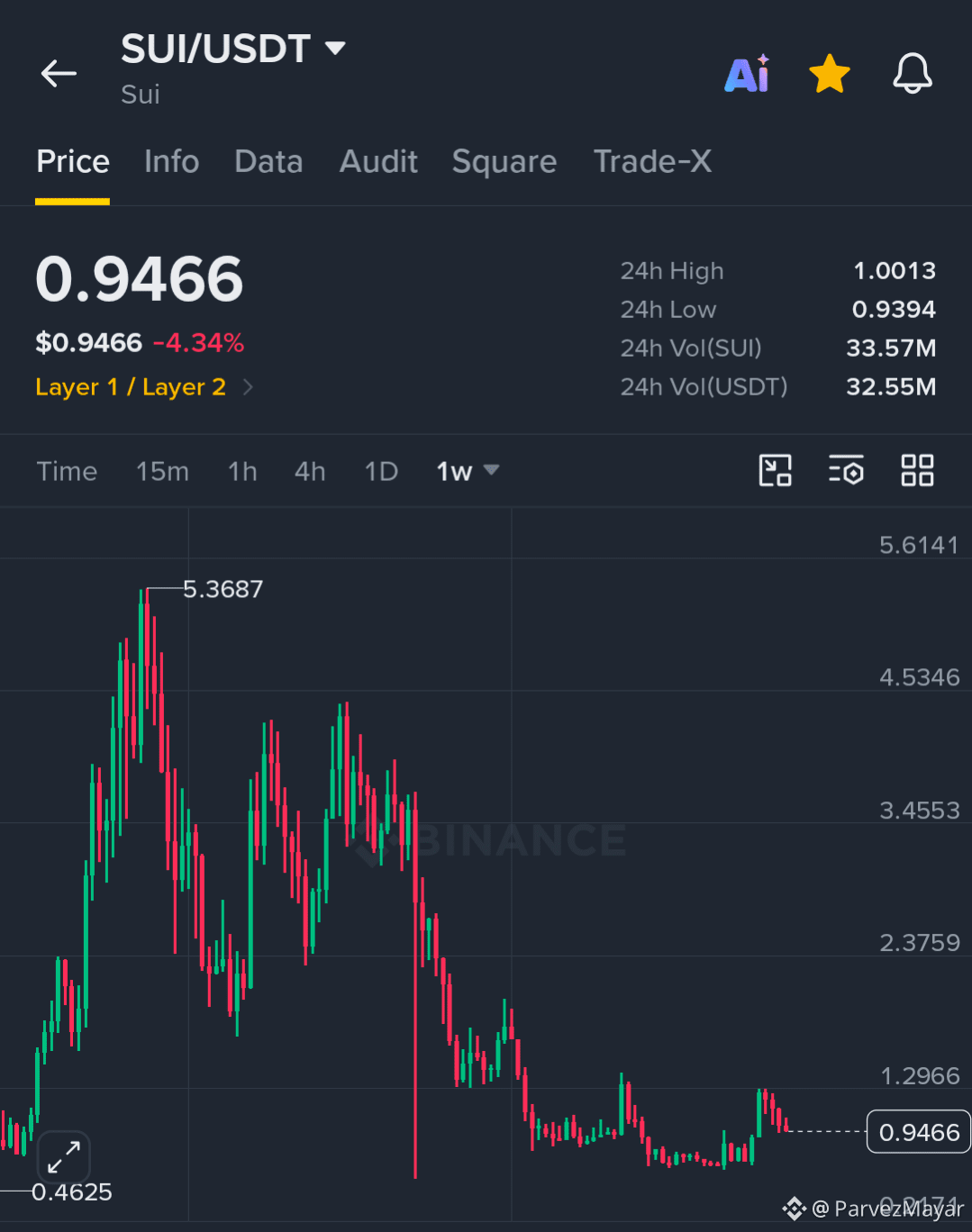
Honestly… I kind of feel bad for $SUI right now. It really doesn’t deserve to be sitting under $2 with the ecosystem and utility it has. But one thing I’m sure about, $SUI won’t stay below $2 for long. 💪🏻 If someone’s looking for a solid long-term hold, something you buy and forget for a while… $SUI makes a lot of sense.
Honestly… I kind of feel bad for $SUI right now. It really doesn’t deserve to be sitting under $2 with the ecosystem and utility it has.

But one thing I’m sure about, $SUI won’t stay below $2 for long. 💪🏻

If someone’s looking for a solid long-term hold, something you buy and forget for a while… $SUI makes a lot of sense.
PINNED
Dear #followers 💛, yeah… the market’s taking some heavy hits today. $BTC around $91k, $ETH under $3k, #SOL dipping below $130, it feels rough, I know. But take a breath with me for a second. 🤗 Every time the chart looks like this, people panic fast… and then later say, “Wait, why was I scared?” The last big drawdown looked just as messy, and still, long-term wallets quietly stacked hundreds of thousands of $BTC while everyone else was stressing. So is today uncomfortable? Of course. Is it the kind of pressure we’ve seen before? Absolutely. 🤝 And back then, the people who stayed calm ended up thanking themselves. No hype here, just a reminder, the screen looks bad, but the market underneath isn’t broken. Zoom out a little. Relax your shoulders. Breathe. We’re still here. We keep moving. 💞 #BTC90kBreakingPoint #MarketPullback
Dear #followers 💛,
yeah… the market’s taking some heavy hits today. $BTC around $91k, $ETH under $3k, #SOL dipping below $130, it feels rough, I know.

But take a breath with me for a second. 🤗

Every time the chart looks like this, people panic fast… and then later say, “Wait, why was I scared?” The last big drawdown looked just as messy, and still, long-term wallets quietly stacked hundreds of thousands of $BTC while everyone else was stressing.

So is today uncomfortable? Of course.
Is it the kind of pressure we’ve seen before? Absolutely.

🤝 And back then, the people who stayed calm ended up thanking themselves.

No hype here, just a reminder, the screen looks bad, but the market underneath isn’t broken. Zoom out a little. Relax your shoulders. Breathe.

We’re still here.
We keep moving. 💞

#BTC90kBreakingPoint #MarketPullback
B
SOL/USDT
Price
130.32
$ZEN had a strong run from the $8.7 zone and it’s holding that breakout structure really well. Even after touching $10.69, buyers are still defending the mid-range without giving back much of the move. Buy Zone: $10.15 – $10.28 TP1: $10.65 TP2: $10.95 TP3: $11.30 SL: $9.88 {future}(ZENUSDT) If $ZEN keeps steady above $10.10–$10.20, this momentum can easily continue toward the recent high again.
$ZEN had a strong run from the $8.7 zone and it’s holding that breakout structure really well. Even after touching $10.69, buyers are still defending the mid-range without giving back much of the move.

Buy Zone: $10.15 – $10.28
TP1: $10.65
TP2: $10.95
TP3: $11.30
SL: $9.88


If $ZEN keeps steady above $10.10–$10.20, this momentum can easily continue toward the recent high again.
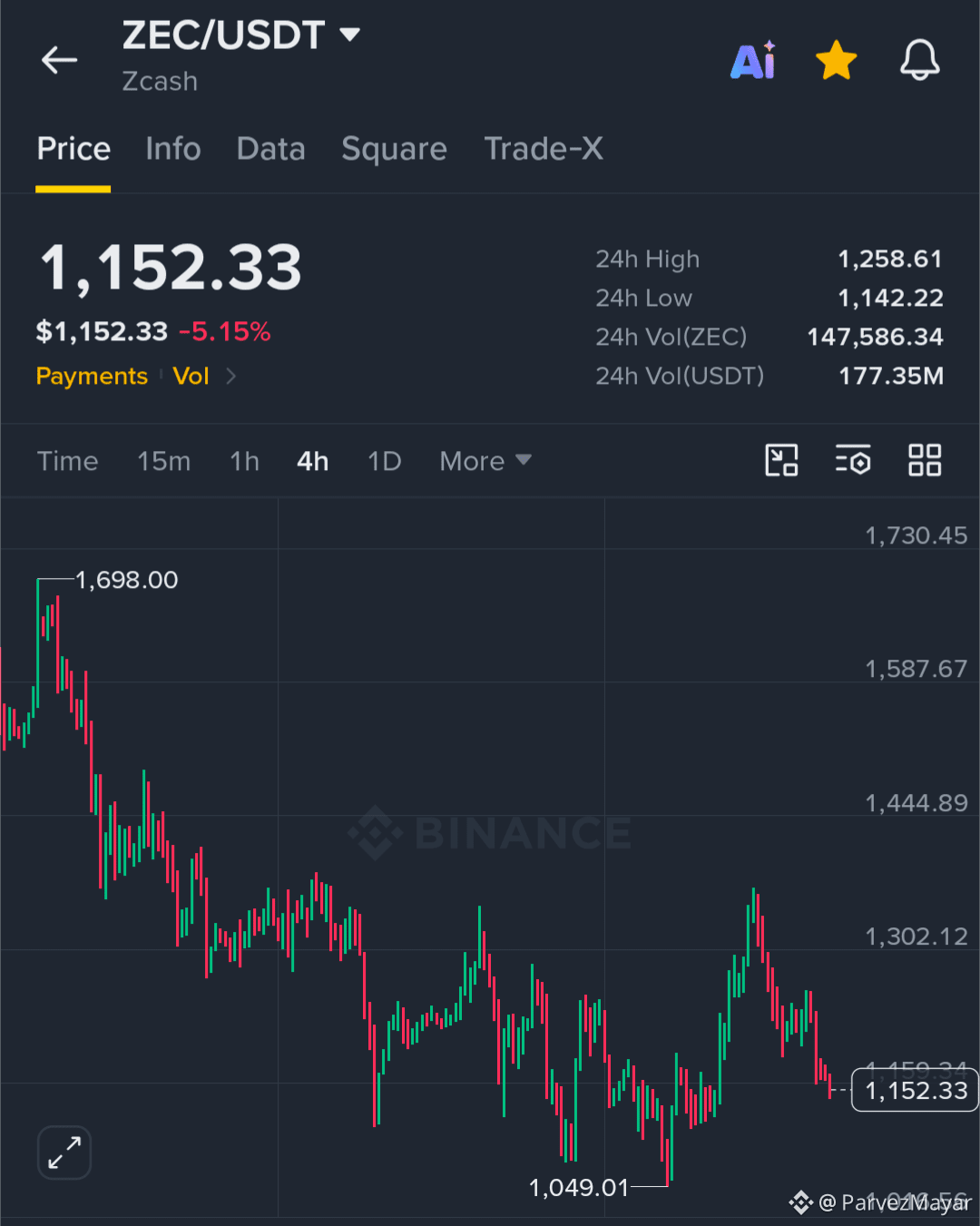
Jokes apart but which coin do you think can do something like this? 😂 $ZEC , $TAO or $DASH ?
Jokes apart but which coin do you think can do something like this? 😂

$ZEC , $TAO or $DASH ?
ParvezMayar
--
I had a dream…

The Dream 🥲
$SOL back to $140 💪🏻 $BTC back to $93k 💥 $BNB back to $900 💛
$SOL back to $140 💪🏻
$BTC back to $93k 💥
$BNB back to $900 💛
SOLUSDT
Opening Long
Unrealized PNL
+148.00%
🚨 Not every ETF filing screenshot is real, even big KOLs get caught slipping sometimes. CZ just confirmed the viral “BlackRock Staked $ASTER ETF” document was completely fake and photoshopped. And honestly, this is why you always double-check filings on the actual SEC database before reacting. Hype screenshots fly fast, especially when the market is jumpy. Aster doesn’t need fake paperwork to pump, real fundamentals and real demand do the job just fine. Stay sharp out there. Fake documents move faster than real news in crypto. 🤝
🚨 Not every ETF filing screenshot is real, even big KOLs get caught slipping sometimes.
CZ just confirmed the viral “BlackRock Staked $ASTER ETF” document was completely fake and photoshopped.

And honestly, this is why you always double-check filings on the actual SEC database before reacting.
Hype screenshots fly fast, especially when the market is jumpy.

Aster doesn’t need fake paperwork to pump, real fundamentals and real demand do the job just fine.

Stay sharp out there. Fake documents move faster than real news in crypto. 🤝
Yesss.. $SUI is very much undervalued at this point... But You won't realize now, when #SUI reaches a new Highs 💪🏻 That's when you guys regret and think, you could have easily accumulated more, when the absolute bottom chance was there 🫡 That's why i always say "BUY THE DIPS" 🤝 BUY coins like SUI , $SOL and $BNB 💛
Yesss.. $SUI is very much undervalued at this point... But You won't realize now, when #SUI reaches a new Highs 💪🏻

That's when you guys regret and think, you could have easily accumulated more, when the absolute bottom chance was there 🫡

That's why i always say "BUY THE DIPS" 🤝
BUY coins like SUI , $SOL and $BNB 💛
image
SUI
Cumulative PNL
+16.00%
Dear #followers 💛 $FHE looking strong again, that bounce off the $0.027 area turned into a clean breakout. It’s taking a breather now, but still holding up pretty well. If buyers keep showing up, a push toward the $0.056–0.058 zone isn’t far-fetched at all.
Dear #followers 💛

$FHE looking strong again, that bounce off the $0.027 area turned into a clean breakout.
It’s taking a breather now, but still holding up pretty well.

If buyers keep showing up, a push toward the $0.056–0.058 zone isn’t far-fetched at all.
$LUNA is once again moving nicely after that madness and pullback 👀 But i already shared some info about $LUNA that it's all just short term BURN + some other narrative shifts, nothing fundamentally changed and these moves often end up with drastic sharp dumps ... Stay safe buddies 💛
$LUNA is once again moving nicely after that madness and pullback 👀

But i already shared some info about $LUNA that it's all just short term BURN + some other narrative shifts, nothing fundamentally changed and these moves often end up with drastic sharp dumps ... Stay safe buddies 💛
$LUNA is once again moving nicely after that madness and pullback 👀 But i already shared some info about $LUNA that it's all just short term BURN + some other narrative shifts, nothing fundamentally changed and these moves often end up with drastic sharp dumps ... Stay safe buddies 💛
$LUNA is once again moving nicely after that madness and pullback 👀

But i already shared some info about $LUNA that it's all just short term BURN + some other narrative shifts, nothing fundamentally changed and these moves often end up with drastic sharp dumps ... Stay safe buddies 💛
The Liquidity Superhighway: Injective’s Cross-Chain Mesh for Global MarketsInjective has never felt like a general-purpose chain that accidentally picked up DeFi. It behaves more like a finance-optimized Layer 1 that happens to be programmable, a capital-efficient L1 where the job is simple and brutal, move liquidity, markets, and assets across ecosystems without making anyone fight the rails. If you look at @Injective architecture and engineering behind the system... It's still the same stack, a Cosmos SDK chain running Tendermint-based consensus, sub-second finality, ultra-low fees, and a modular blockchain architecture tuned for trading workloads. But once you add EVM capabilities, IBC interoperability, and on-chain orderbook infrastructure, Injective stops looking like another chain and starts to resemble cross-chain finance infrastructure that happens to expose a VM. By 2025 you can see that play out on-chain. Injective L1 has turned into a liquidity superhighway for Ethereum, Solana, and the wider Cosmos Interchain, a single programmable trading surface where assets move in from different universes and end up sharing the same execution engine. When Chains Stop Being Islands Most base layers still behave like separate jurisdictions. Ethereum has rollups and L2s stacked on top of it, Solana runs its own high-speed DEXs, Cosmos zones handle their own order flow. Each ecosystem has its own token standards, smart-contract runtime, fee markets, and mempool behavior. Traders feel the seams every time they cross between them. Injective steps into that gap as a cross-chain settlement and routing layer. Using IBC interoperability, Ethereum bridge connectivity, and Solana to Injective asset pipes, it pulls assets in from IBC zones, from Ethereum mainnet and rollups, and from other high-performance environments. Those positions don’t just fall into isolated pools; they hit a universal liquidity router and an interoperable orderbook system baked into the Injective Protocol. At that point Injective becomes a cross-ecosystem liquidity hub rather than a single-ecosystem chain. Cross-chain order flow from different networks converges on a deterministic execution engine and a low-latency mempool built for trading workloads. Interchain stablecoin settlement, Ethereum to Injective liquidity channels, and Cosmos-native stablecoin routes all feed into the same high-performance runtime. Markets begin to trade as if everything lives on one venue, even though the assets originate from completely different execution environments. You notice it most when markets get busy. Spreads stay tighter than you’d expect for a niche chain, slippage holds up even as volumes rise, and the path that capital takes looks more like “Solana → Injective → Ethereum” than “Solana → centralized exchange → back out again.” That invisibility is the point. EVM Arrives in a Place Built for Trading The EVM launch on Injective didn’t change the chain’s personality, it made it more obvious. Instead of asking developers to drop Solidity and adopt a new mental model, Injective added a native EVM settlement engine to a Cosmos-native chain that already had IBC, on-chain orderbooks, and interchain routing. Solidity-native support, seamless Ethereum code deployment, an EVM block explorer, and an EVM dApp migration toolkit mean Ethereum teams can bring contracts over without rewriting their stack just to get access to different liquidity. Underneath, those contracts run inside a MultiVM architecture, WASM + EVM dual execution, wired into a unified VM environment and MultiVM consensus alignment. You end up with an EVM-ready liquidity environment that keeps Injective’s character, sub-second EVM finality, EVM gas compression versus mainnet, and a trading-focused EVM runtime layered on top of a chain optimized for order placement, cancellation, and high-frequency DeFi activity. For developers, that MultiVM developer stack means one deployment can touch Ethereum logic, Cosmos interop, and cross-ecosystem liquidity at the same time. For quant teams, it creates a quant development stack, programmatic trading deployment, real-time trade simulation tools, GraphQL-style analytics, and backtest-to-deployment pipelines that sit close to a state-minimized architecture. It feels less like an EVM-compatible badge, more like rollup-grade tooling running directly on a finance chain. Orderbooks Where the Bridges Land Bridging narratives usually stop once a token appears on the other side. #Injective doesn’t. It pairs cross-chain settlement with market microstructure that lives on-chain. The Injective blockchain was designed around on-chain orderbook infrastructure, decentralized perpetuals, perpetual futures markets, and composable derivatives. You get orderbook-based DEXs, decentralized spot markets, and options infrastructure on a trading-first blockchain that tries to be MEV-resistant at the chain level. Low-latency mempool design and deterministic order execution matter when liquidity arrives from multiple ecosystems and still needs to behave like a single book. Once cross-ecosystem assets hit Injective, they have options. They can sit in AMM pools, yes, but they can also be listed on orderbooks, used inside synthetic asset protocols, looped into DEX liquidity routing, or wired into high-speed liquidity engines that support composable trading protocols. The same token can back a decentralized perpetual, live in a spot market, and supply collateral to a quant-friendly infrastructure without fragmenting depth across different chains. That’s where the finance-optimized Layer 1 story stops being branding. Injective behaves like a trading-focused L1 primitive with decentralized execution venues, cross-margin trading rails, liquidity-demand-based execution, and a runtime tuned for markets rather than generic contract execution. A chain where markets behave like markets, not like a side product of blockspace. Tokenized Flow Needs Real Rails The more DeFi leans into real-world assets in 2025, the less forgiving the infrastructure becomes. Tokenized stocks, tokenized gold, tokenized FX markets, and Digital Asset Treasuries don’t move like meme coins. They mirror real-world price feeds, sit inside institutional asset wrappers, and often back structured products or on-chain ETF components. Those positions need more than speed. They need RWA collateral rails, asset-backed smart contracts, and a compliance-aware token issuance stack that can actually link on-chain RWAs to off-chain legal structures, custodians, and reporting. They also need predictable fees and deterministic finality. You don’t want a tokenized bond or equity leg tied up in a gas auction. Injective’s liquidity-centric architecture fits this kind of work. On-chain RWAs bridged in can be traded through orderbooks, used in synthetics infrastructure, or aggregated into programmable RWA exposure products that behave like on-chain portfolio tokens. Real-world price feeds plug into a deterministic execution enginex interchain settlement pushes proceeds or collateral back across IBC or into Ethereum portfolios when portfolios need to rebalance. When you see talk of tokenized Nvidia, tokenized FX baskets, or on-chain macro assets, the interesting part isn’t the ticker, it’s the rails. A universal liquidity router and unified settlement engine are what make those assets feel tradeable instead of ornamental. 2025 and the Shift From “Alt” to Infrastructure The backdrop this year matters. Capital is moving more freely across chains. Institutions are testing on-chain exposure in small but serious ways. DeFi protocols are shifting from yield games toward actual cash flow and balance-sheet assets. In that setting, a DeFi-native core chain that offers cross-ecosystem liquidity, ultra-low fees, and a modular Layer-1 design starts to look less like a side bet and more like market infrastructure. Cross-chain settlement stops being a curiosity and turns into how serious venues keep depth concentrated while users and assets live everywhere else. Injective’s mix, high-throughput Layer 1 design, Cosmos Interchain communication, Ethereum bridge connectivity, and a Solana–EVM–Cosmos liquidity mesh—pushes it into a clear category, an institutional-grade alternative to siloed execution. It doesn’t try to out-brand Ethereum or out-TPS Solana. It tries to be the place where cross-chain order flow and global RWA liquidity actually settle. Traders notice in simple ways. They talk less about new narrative and more about whether spreads hold during volatility, whether finality is predictable, whether execution risk stays low when flows spike. If those answers keep coming back positive, labels don’t matter much. How Different Desks Sit on the Same Rails On top of that base, each type of user sees a different surface. A trader sees a chain where positions can be routed between Ethereum, Solana, and Cosmos assets without feeling like they’ve left their venue. Decentralized perpetuals, derivatives, and spot markets share a common execution fabric. Cross-chain exposure turns from a pitch slide into something you can actually run in production. A builder sees a developer-friendly Layer 1 with Cosmos SDK modules, a native EVM environment, IBC interoperability, and a pluggable infrastructure stack: oracles, bridge providers, analytics dashboards, trading automation partners, and quant infrastructure teams. Ship a trading-focused dApp once, tap cross-ecosystem liquidity from day one, and avoid rebooting depth every time you want to add a new chain. An issuer of tokenized assets or RWAs sees treasury-grade infrastructure and capital-market integration paths. Institutional node operators, custody partners, broker-dealer style rails, stablecoin bridges, and asset onboarding partners can sit on a base that already understands market microstructure instead of bolting markets onto a generic VM. Injective doesn’t try to be the story. It builds the rails that volume travels through, a liquidity superhighway instead of another isolated city. In a cycle where blockchains keep stacking new features onto fragile foundations, that approach feels almost boring, deterministic execution, cross-ecosystem liquidity, and a trading-first runtime. For traders, quants, and institutions who care more about fills than slogans, that’s usually the only story that matters. $INJ @Injective #Injective

The Liquidity Superhighway: Injective’s Cross-Chain Mesh for Global Markets

Injective has never felt like a general-purpose chain that accidentally picked up DeFi. It behaves more like a finance-optimized Layer 1 that happens to be programmable, a capital-efficient L1 where the job is simple and brutal, move liquidity, markets, and assets across ecosystems without making anyone fight the rails.
If you look at @Injective architecture and engineering behind the system...
It's still the same stack, a Cosmos SDK chain running Tendermint-based consensus, sub-second finality, ultra-low fees, and a modular blockchain architecture tuned for trading workloads. But once you add EVM capabilities, IBC interoperability, and on-chain orderbook infrastructure, Injective stops looking like another chain and starts to resemble cross-chain finance infrastructure that happens to expose a VM.
By 2025 you can see that play out on-chain. Injective L1 has turned into a liquidity superhighway for Ethereum, Solana, and the wider Cosmos Interchain, a single programmable trading surface where assets move in from different universes and end up sharing the same execution engine.
When Chains Stop Being Islands
Most base layers still behave like separate jurisdictions. Ethereum has rollups and L2s stacked on top of it, Solana runs its own high-speed DEXs, Cosmos zones handle their own order flow. Each ecosystem has its own token standards, smart-contract runtime, fee markets, and mempool behavior. Traders feel the seams every time they cross between them.
Injective steps into that gap as a cross-chain settlement and routing layer. Using IBC interoperability, Ethereum bridge connectivity, and Solana to Injective asset pipes, it pulls assets in from IBC zones, from Ethereum mainnet and rollups, and from other high-performance environments. Those positions don’t just fall into isolated pools; they hit a universal liquidity router and an interoperable orderbook system baked into the Injective Protocol.
At that point Injective becomes a cross-ecosystem liquidity hub rather than a single-ecosystem chain. Cross-chain order flow from different networks converges on a deterministic execution engine and a low-latency mempool built for trading workloads. Interchain stablecoin settlement, Ethereum to Injective liquidity channels, and Cosmos-native stablecoin routes all feed into the same high-performance runtime. Markets begin to trade as if everything lives on one venue, even though the assets originate from completely different execution environments.
You notice it most when markets get busy. Spreads stay tighter than you’d expect for a niche chain, slippage holds up even as volumes rise, and the path that capital takes looks more like “Solana → Injective → Ethereum” than “Solana → centralized exchange → back out again.” That invisibility is the point.
EVM Arrives in a Place Built for Trading
The EVM launch on Injective didn’t change the chain’s personality, it made it more obvious.
Instead of asking developers to drop Solidity and adopt a new mental model, Injective added a native EVM settlement engine to a Cosmos-native chain that already had IBC, on-chain orderbooks, and interchain routing. Solidity-native support, seamless Ethereum code deployment, an EVM block explorer, and an EVM dApp migration toolkit mean Ethereum teams can bring contracts over without rewriting their stack just to get access to different liquidity.
Underneath, those contracts run inside a MultiVM architecture, WASM + EVM dual execution, wired into a unified VM environment and MultiVM consensus alignment. You end up with an EVM-ready liquidity environment that keeps Injective’s character, sub-second EVM finality, EVM gas compression versus mainnet, and a trading-focused EVM runtime layered on top of a chain optimized for order placement, cancellation, and high-frequency DeFi activity.
For developers, that MultiVM developer stack means one deployment can touch Ethereum logic, Cosmos interop, and cross-ecosystem liquidity at the same time. For quant teams, it creates a quant development stack, programmatic trading deployment, real-time trade simulation tools, GraphQL-style analytics, and backtest-to-deployment pipelines that sit close to a state-minimized architecture.
It feels less like an EVM-compatible badge, more like rollup-grade tooling running directly on a finance chain.
Orderbooks Where the Bridges Land
Bridging narratives usually stop once a token appears on the other side. #Injective doesn’t. It pairs cross-chain settlement with market microstructure that lives on-chain.
The Injective blockchain was designed around on-chain orderbook infrastructure, decentralized perpetuals, perpetual futures markets, and composable derivatives. You get orderbook-based DEXs, decentralized spot markets, and options infrastructure on a trading-first blockchain that tries to be MEV-resistant at the chain level. Low-latency mempool design and deterministic order execution matter when liquidity arrives from multiple ecosystems and still needs to behave like a single book.
Once cross-ecosystem assets hit Injective, they have options. They can sit in AMM pools, yes, but they can also be listed on orderbooks, used inside synthetic asset protocols, looped into DEX liquidity routing, or wired into high-speed liquidity engines that support composable trading protocols. The same token can back a decentralized perpetual, live in a spot market, and supply collateral to a quant-friendly infrastructure without fragmenting depth across different chains.
That’s where the finance-optimized Layer 1 story stops being branding. Injective behaves like a trading-focused L1 primitive with decentralized execution venues, cross-margin trading rails, liquidity-demand-based execution, and a runtime tuned for markets rather than generic contract execution.
A chain where markets behave like markets, not like a side product of blockspace.
Tokenized Flow Needs Real Rails
The more DeFi leans into real-world assets in 2025, the less forgiving the infrastructure becomes. Tokenized stocks, tokenized gold, tokenized FX markets, and Digital Asset Treasuries don’t move like meme coins. They mirror real-world price feeds, sit inside institutional asset wrappers, and often back structured products or on-chain ETF components.
Those positions need more than speed. They need RWA collateral rails, asset-backed smart contracts, and a compliance-aware token issuance stack that can actually link on-chain RWAs to off-chain legal structures, custodians, and reporting. They also need predictable fees and deterministic finality. You don’t want a tokenized bond or equity leg tied up in a gas auction.
Injective’s liquidity-centric architecture fits this kind of work. On-chain RWAs bridged in can be traded through orderbooks, used in synthetics infrastructure, or aggregated into programmable RWA exposure products that behave like on-chain portfolio tokens. Real-world price feeds plug into a deterministic execution enginex interchain settlement pushes proceeds or collateral back across IBC or into Ethereum portfolios when portfolios need to rebalance.
When you see talk of tokenized Nvidia, tokenized FX baskets, or on-chain macro assets, the interesting part isn’t the ticker, it’s the rails. A universal liquidity router and unified settlement engine are what make those assets feel tradeable instead of ornamental.
2025 and the Shift From “Alt” to Infrastructure
The backdrop this year matters. Capital is moving more freely across chains. Institutions are testing on-chain exposure in small but serious ways. DeFi protocols are shifting from yield games toward actual cash flow and balance-sheet assets.
In that setting, a DeFi-native core chain that offers cross-ecosystem liquidity, ultra-low fees, and a modular Layer-1 design starts to look less like a side bet and more like market infrastructure. Cross-chain settlement stops being a curiosity and turns into how serious venues keep depth concentrated while users and assets live everywhere else.
Injective’s mix, high-throughput Layer 1 design, Cosmos Interchain communication, Ethereum bridge connectivity, and a Solana–EVM–Cosmos liquidity mesh—pushes it into a clear category, an institutional-grade alternative to siloed execution. It doesn’t try to out-brand Ethereum or out-TPS Solana. It tries to be the place where cross-chain order flow and global RWA liquidity actually settle.
Traders notice in simple ways. They talk less about new narrative and more about whether spreads hold during volatility, whether finality is predictable, whether execution risk stays low when flows spike. If those answers keep coming back positive, labels don’t matter much.
How Different Desks Sit on the Same Rails
On top of that base, each type of user sees a different surface.
A trader sees a chain where positions can be routed between Ethereum, Solana, and Cosmos assets without feeling like they’ve left their venue. Decentralized perpetuals, derivatives, and spot markets share a common execution fabric. Cross-chain exposure turns from a pitch slide into something you can actually run in production.
A builder sees a developer-friendly Layer 1 with Cosmos SDK modules, a native EVM environment, IBC interoperability, and a pluggable infrastructure stack: oracles, bridge providers, analytics dashboards, trading automation partners, and quant infrastructure teams. Ship a trading-focused dApp once, tap cross-ecosystem liquidity from day one, and avoid rebooting depth every time you want to add a new chain.
An issuer of tokenized assets or RWAs sees treasury-grade infrastructure and capital-market integration paths. Institutional node operators, custody partners, broker-dealer style rails, stablecoin bridges, and asset onboarding partners can sit on a base that already understands market microstructure instead of bolting markets onto a generic VM.
Injective doesn’t try to be the story. It builds the rails that volume travels through, a liquidity superhighway instead of another isolated city.
In a cycle where blockchains keep stacking new features onto fragile foundations, that approach feels almost boring, deterministic execution, cross-ecosystem liquidity, and a trading-first runtime. For traders, quants, and institutions who care more about fills than slogans, that’s usually the only story that matters. $INJ @Injective #Injective
Aah the house? We will buy, when the next bull run hits 😁 $ZEC , $SOL , $BNB
Aah the house?

We will buy, when the next bull run hits 😁

$ZEC , $SOL , $BNB
$POWER has been climbing nonstop since that 0.158 bounce, just steady higher highs all the way into this 0.30 zone. If POWER keeps holding above 0.288, this trend still has room to squeeze out another push.
The Web3 Gaming Supply Chain: How YGG Connects Developers, Guilds, Players, and Token MarketsYou can stare at a Web3 game for weeks and still miss how it’s wired under the hood. The gameplay loop is just the surface. Underneath sits a supply chain that looks nothing like Web2 gaming, token distribution, NFT liquidity, staking routes, SubDAO coordination, yield paths, player demand, treasury flows, plus the developer pipelines pushing updates into all of it. Yield Guild Games doesn’t own that whole stack, but it comes uncomfortably close to being the connector between most of the moving parts. Most people see YGG as the guild. Developers treat it as demand infrastructure. Token markets see it as distribution logic. Players mostly just want something that doesn’t blow up after one patch. That mix is why the model keeps holding. A lot of this starts where you’d expect, with the people building the worlds. A studio ships a game, writes the token design, decides how emissions behave, sets up the NFT economy, and drops everything onto a chain. On paper, that’s a launch. In practice, it’s just step one. Without organized players, liquidity, exposure, and a working incentive loop, the thing stalls. That’s usually where @YieldGuildGames slips in as infrastructure. When a new game goes live, YGG is often the group soaking up early assets, stress-testing the reward structure, and deciding whether the economics are strong enough to bother routing players into it. Nothing mystical there. Mostly pattern recognition and a decent memory for broken loops. If a game’s token emissions are clearly unsustainable, YGG sees it quickly. If NFTs in that world have weak liquidity or messy provenance, it shows up when the guild tries to rotate them through SubDAO vaults and can’t do it efficiently. If reward sinks aren’t absorbing enough supply, the price feed betrays it long before a blog post does. Developers feel this feedback because YGG is one of the few entities large enough to stress test a game economy before the wider crowd arrives. On the other side of this pipeline sit Launchpads. Most Web3 games don’t throw tokens straight into open markets. They go through Launchpads, early supporter allocations, or staged distribution rounds. Yield Guild Games acts as a signal layer here. When the guild commits to a launch, the market reads it as a sign that the game’s loop can keep players and that its NFTs won’t be illiquid junk by day three. Launchpads lean on that demand. Players tend to follow that signal. Developers suddenly have live users instead of a theoretical “community” in a deck. So the supply chain starts to look something like this: developers to Launchpad to YGG to SubDAOs to players to token markets and back to developers. On a good week, anyway. Some weeks the arrows bend, stall, or skip a step, but the rough map holds. SubDAOs make that messy middle work. They’re not fan clubs; they’re small strategy desks wrapped in community. One SubDAO might specialize in high-yield farming from land tiles. Another leans into avatar-based reward loops. A third focuses on rapid-turnover items with fast emission decay. The guild-level treasury talks to them through shared vaults and collateral buckets, and each SubDAO pushes its activity back into YGG’s broader economy. This is the part most casual observers miss. SubDAOs don’t exist just to play games. They allocate capital, probe token supply dynamics, manage game-NFT exposure, provide liquidity into early markets, and effectively act as a distribution network for gameplay demand. If a game has a decent loop but zero initial traction, a single SubDAO can route hundreds of players into it in a week. If a game starts collapsing, they unwind positions, close strategies, and send resources back to the treasury instead of riding it all the way down. It’s not glamorous, it’s just moving resources where they still make sense. On the player side, the same supply chain feels much more straightforward. Players see shared NFT ownership via delegation. They see predictable reward loops instead of random solo grinding. They see SubDAO funnels that let them enter worlds without buying rare assets upfront. And they see yield surfaces that reflect market reality more than pure luck. The nice part is simple, players don’t need to own every NFT to be part of the action. The guild carries the heavy assets; players carry the gameplay. That trade-off feels surprisingly fair when you’re on the ground. Token markets sit in this structure by default, even if no one says it out loud. When YGG enters a new game, liquidity has a habit of showing up. When SubDAOs rotate out of a title, token markets feel it as reduced buy pressure and thinner volumes. When Launchpads send allocations to #YGGPlay , they’re effectively distributing to thousands of routed players spread across regions and strategies instead of a handful of whales. That’s a kind of controlled distribution, not in the manipulative sense, more in the this won’t explode in 24 hours sense that keeps early markets from snapping. Because SubDAOs report performance back to the treasury, token markets get a sort of indirect economic telemetry. If a game token keeps delivering stable yield under emission pressure, SubDAO allocation doesn’t flinch. If sinks stop absorbing supply, you’ll see rotation long before a chart looks catastrophic. A Lot of players won’t sit and model it, but they feel the effect, the supply chain tends to move a step ahead of the visible dump. Put together, the whole stack makes YGG feel like connective tissue for Web3 gaming. Not a monopoly. Not a gatekeeper. More like the piece that lets each part of the ecosystem speak roughly the same economic language. Developers design loops. Launchpads handle initial token distribution. SubDAOs coordinate structured demand. Players run the actual game economies. Token markets price the loop and feed signals back through all of it. None of those parts work well in isolation. What keeps it glued together is shared ownership. Guild-owned NFTs distributed through delegated access. Game-token exposure managed through SubDAO vaults instead of random wallets. Launchpad allocations tied to genuine gameplay demand rather than pure speculative churn. Players rewarded for actual participation, not just mindless point farming. That shared ownership model stops the supply chain from tearing itself apart every cycle. When a game breaks, assets don’t vanish, they rotate somewhere else or get unwound with some discipline. When a token economy tightens, SubDAOs rebalance into saner positions. When a new world looks promising, demand can flow in without needing to manufacture fake hype first. If you trace the system end to end, it turns out fairly simple once you strip away the jargon. Yield Guild Games isn’t just a guild. It isn’t a hype megaphone. It isn’t a Launchpad farm looking for short-term exits. It behaves more like a supply chain operator connecting developers, players, capital, and token markets, giving each group a reasonably predictable path to the next one in line. Easy to miss when you only look at a single game. Much harder to unsee once you’ve watched a few of these loops run from launch to rotation. $YGG @YieldGuildGames

The Web3 Gaming Supply Chain: How YGG Connects Developers, Guilds, Players, and Token Markets

You can stare at a Web3 game for weeks and still miss how it’s wired under the hood. The gameplay loop is just the surface. Underneath sits a supply chain that looks nothing like Web2 gaming, token distribution, NFT liquidity, staking routes, SubDAO coordination, yield paths, player demand, treasury flows, plus the developer pipelines pushing updates into all of it. Yield Guild Games doesn’t own that whole stack, but it comes uncomfortably close to being the connector between most of the moving parts.
Most people see YGG as the guild.
Developers treat it as demand infrastructure.
Token markets see it as distribution logic.
Players mostly just want something that doesn’t blow up after one patch.
That mix is why the model keeps holding.
A lot of this starts where you’d expect, with the people building the worlds.
A studio ships a game, writes the token design, decides how emissions behave, sets up the NFT economy, and drops everything onto a chain. On paper, that’s a launch. In practice, it’s just step one. Without organized players, liquidity, exposure, and a working incentive loop, the thing stalls. That’s usually where @Yield Guild Games slips in as infrastructure. When a new game goes live, YGG is often the group soaking up early assets, stress-testing the reward structure, and deciding whether the economics are strong enough to bother routing players into it.
Nothing mystical there. Mostly pattern recognition and a decent memory for broken loops.
If a game’s token emissions are clearly unsustainable, YGG sees it quickly. If NFTs in that world have weak liquidity or messy provenance, it shows up when the guild tries to rotate them through SubDAO vaults and can’t do it efficiently. If reward sinks aren’t absorbing enough supply, the price feed betrays it long before a blog post does. Developers feel this feedback because YGG is one of the few entities large enough to stress test a game economy before the wider crowd arrives.
On the other side of this pipeline sit Launchpads.
Most Web3 games don’t throw tokens straight into open markets. They go through Launchpads, early supporter allocations, or staged distribution rounds. Yield Guild Games acts as a signal layer here. When the guild commits to a launch, the market reads it as a sign that the game’s loop can keep players and that its NFTs won’t be illiquid junk by day three. Launchpads lean on that demand. Players tend to follow that signal. Developers suddenly have live users instead of a theoretical “community” in a deck.
So the supply chain starts to look something like this:
developers to Launchpad to YGG to SubDAOs to players to token markets and back to developers.
On a good week, anyway. Some weeks the arrows bend, stall, or skip a step, but the rough map holds.
SubDAOs make that messy middle work.
They’re not fan clubs; they’re small strategy desks wrapped in community. One SubDAO might specialize in high-yield farming from land tiles. Another leans into avatar-based reward loops. A third focuses on rapid-turnover items with fast emission decay. The guild-level treasury talks to them through shared vaults and collateral buckets, and each SubDAO pushes its activity back into YGG’s broader economy.
This is the part most casual observers miss.
SubDAOs don’t exist just to play games. They allocate capital, probe token supply dynamics, manage game-NFT exposure, provide liquidity into early markets, and effectively act as a distribution network for gameplay demand. If a game has a decent loop but zero initial traction, a single SubDAO can route hundreds of players into it in a week. If a game starts collapsing, they unwind positions, close strategies, and send resources back to the treasury instead of riding it all the way down.
It’s not glamorous, it’s just moving resources where they still make sense.
On the player side, the same supply chain feels much more straightforward.
Players see shared NFT ownership via delegation. They see predictable reward loops instead of random solo grinding. They see SubDAO funnels that let them enter worlds without buying rare assets upfront. And they see yield surfaces that reflect market reality more than pure luck.
The nice part is simple, players don’t need to own every NFT to be part of the action.
The guild carries the heavy assets; players carry the gameplay.
That trade-off feels surprisingly fair when you’re on the ground.
Token markets sit in this structure by default, even if no one says it out loud.
When YGG enters a new game, liquidity has a habit of showing up. When SubDAOs rotate out of a title, token markets feel it as reduced buy pressure and thinner volumes. When Launchpads send allocations to #YGGPlay , they’re effectively distributing to thousands of routed players spread across regions and strategies instead of a handful of whales. That’s a kind of controlled distribution, not in the manipulative sense, more in the this won’t explode in 24 hours sense that keeps early markets from snapping.
Because SubDAOs report performance back to the treasury, token markets get a sort of indirect economic telemetry.
If a game token keeps delivering stable yield under emission pressure, SubDAO allocation doesn’t flinch.
If sinks stop absorbing supply, you’ll see rotation long before a chart looks catastrophic.
A Lot of players won’t sit and model it, but they feel the effect, the supply chain tends to move a step ahead of the visible dump.
Put together, the whole stack makes YGG feel like connective tissue for Web3 gaming.
Not a monopoly. Not a gatekeeper. More like the piece that lets each part of the ecosystem speak roughly the same economic language. Developers design loops. Launchpads handle initial token distribution. SubDAOs coordinate structured demand. Players run the actual game economies. Token markets price the loop and feed signals back through all of it.
None of those parts work well in isolation.
What keeps it glued together is shared ownership.
Guild-owned NFTs distributed through delegated access.
Game-token exposure managed through SubDAO vaults instead of random wallets.
Launchpad allocations tied to genuine gameplay demand rather than pure speculative churn.
Players rewarded for actual participation, not just mindless point farming.
That shared ownership model stops the supply chain from tearing itself apart every cycle.
When a game breaks, assets don’t vanish, they rotate somewhere else or get unwound with some discipline. When a token economy tightens, SubDAOs rebalance into saner positions. When a new world looks promising, demand can flow in without needing to manufacture fake hype first.
If you trace the system end to end, it turns out fairly simple once you strip away the jargon.
Yield Guild Games isn’t just a guild.
It isn’t a hype megaphone.
It isn’t a Launchpad farm looking for short-term exits.
It behaves more like a supply chain operator connecting developers, players, capital, and token markets, giving each group a reasonably predictable path to the next one in line.
Easy to miss when you only look at a single game.
Much harder to unsee once you’ve watched a few of these loops run from launch to rotation. $YGG @Yield Guild Games
Guys... The giant TRIO is once again showing moves together...💪🏻 1: $ZEC up by 18% above $400 after a healthy correction 💛 2: $DASH 13% gains but back into the $50 zone 🤝 3: $DCR 12% gains but waking up nicely 💛
Guys... The giant TRIO is once again showing moves together...💪🏻

1: $ZEC up by 18% above $400 after a healthy correction 💛

2: $DASH 13% gains but back into the $50 zone 🤝

3: $DCR 12% gains but waking up nicely 💛
The Dual Engine Moment: How Injective Turned EVM and WASM Into One Finance MachinePeople talk about MultiVM like it’s a feature toggle. It really isn’t. The way Injective built it, it feels more like an admission that markets need different tools but the same engine. A bunch of chains stack new execution paths on top of decisions they made years ago. Injective didn’t carry that baggage, so when you see EVM and WASM sitting inside one predictable execution layer, the design feels intentional. Almost blunt. You can tell this wasn’t built for hobby workloads, it’s built for traders, for quant desks, for anything that moves with real timing pressure instead of weekend traffic. The funny part is that the moment you deploy something small, a settlement hook, a basic swap path, the chain just… behaves. Sub-second finality. No random mempool twitch. Liquidity routing that doesn’t lose tempo. Solidity works without the usual here’s the weird part. That quiet predictability is what gets people. Not everyone notices it upfront. Some devs shrug until they push a contract through load. Then the difference lands. The EVM environment doesn’t feel cramped the way it does on Ethereum or on rollups when block times stretch. It has room. The migration toolkit is plain, maybe even boring, but it removes half the friction people assume is inevitable. Deploy once. No siloed liquidity. No half-EVM compromise. And because everything sits on a low-latency settlement layer, the Solidity workflow feels more like building on a finance rail than on a general-purpose chain. WASM folds into it without ceremony. Cosmos SDK modules, IBC routing, Injective’s orderbook infrastructure, all of that runs on the same deterministic runtime instead of living in a parallel world. Think two languages, one engine. Not two engines pretending to coordinate timing. Markets care about timing more than architecture diagrams, and Injective’s execution flow hits that nerve. Fast block propagation wipes out the jitter that usually freezes high-frequency strategies. Deterministic execution means quant models don’t misbehave across blocks. I’ve seen devs test this quietly; the reactions are always the same, Huh. That didn’t wobble. Some teams only notice the difference when they push stress tests. Others feel it when an RWA feed updates during volatility. Different angles, same conclusion: MultiVM gives each group a way in without forcing them to relearn DeFi. Derivatives teams lean on the orderbook rails the chain exposes. RWA issuers see real-world price feeds stay synced instead of drifting. Quant desks care about the mempool staying calm during spikes, and Injective’s does. It’s less theatrical, more steady. Cross-chain behavior adds another layer. @Injective sits in the middle of Ethereum ↔ Solana ↔ Cosmos routing without looking like three systems taped together. IBC pipes move WASM assets cleanly. Ethereum connectivity pushes EVM flows into familiar patterns. Solana brings stablecoin mobility. And MultiVM stitches all of it into one liquidity surface instead of spreading it across isolated buckets. Anyway, this is the part people feel before they articulate it. RWAs behave differently here on Injective the layer-1 built for finance. Tokenized stocks, FX mirrors, synthetic baskets, structured vaults, none of them tolerate latency problems. WASM handles issuance logic. EVM handles exposure mechanics. The deterministic engine keeps both sides in sync so you don’t get that async drift that ruins basket products. Some issuers test this privately first because they don’t believe the runtime will hold under pressure. It does. The developer experience has that same quiet competence. Zero-gas contract execution isn’t glamorous, but it changes prototyping in a very real way. Real-time simulation tools actually behave. Subgraphs don’t fall out of sync between VMs. The MultiVM developer stack stays predictable. It’s not perfect, no chain is, but it’s closer to what Ethereum devs assumed Ethereum would eventually become. Interoperability, ironically, is the least flashy part. It’s the route orderflow takes across IBC, across Ethereum channels, across Solana pipes, and it doesn’t choke. Cross-chain settlement isn’t a magic trick. It’s just consistent. And consistency matters more than bells and whistles. Injective leans into modular design, but not the marketing flavor. More like, you get customizable execution modules, quant-oriented runtime tweaks, and orderbook primitives wired into the L1 itself. A general-purpose chain pretending to be a finance chain always feels patched. Injective feels like the opposite, a finance chain that happens to be modular. You see it when liquidity moves. Stablecoins route like they’ve been doing this for years. Cross-chain flow doesn’t hiccup. EVM and WASM contracts tap the same liquidity pool without sync delays. Traders notice these things long before anyone writes an article about it. This is why the MultiVM shift ends up being a hinge rather than a headline. Solidity teams keep their mental model. Cosmos developers keep theirs. DeFi protocols get predictable timing. RWA issuers get stability during macro volatility. Quant desks get a settlement layer that doesn’t require apology. WASM and EVM sharing one engine didn’t make Injective louder. It made it sharper. And in a market where execution decides spreads, liquidation timing, and how fast real-world assets move, sharp tends to win. #Injective $INJ

The Dual Engine Moment: How Injective Turned EVM and WASM Into One Finance Machine

People talk about MultiVM like it’s a feature toggle.
It really isn’t. The way Injective built it, it feels more like an admission that markets need different tools but the same engine.
A bunch of chains stack new execution paths on top of decisions they made years ago. Injective didn’t carry that baggage, so when you see EVM and WASM sitting inside one predictable execution layer, the design feels intentional. Almost blunt. You can tell this wasn’t built for hobby workloads, it’s built for traders, for quant desks, for anything that moves with real timing pressure instead of weekend traffic.
The funny part is that the moment you deploy something small, a settlement hook, a basic swap path, the chain just… behaves. Sub-second finality. No random mempool twitch. Liquidity routing that doesn’t lose tempo. Solidity works without the usual here’s the weird part. That quiet predictability is what gets people.
Not everyone notices it upfront.
Some devs shrug until they push a contract through load.
Then the difference lands.
The EVM environment doesn’t feel cramped the way it does on Ethereum or on rollups when block times stretch. It has room. The migration toolkit is plain, maybe even boring, but it removes half the friction people assume is inevitable. Deploy once. No siloed liquidity. No half-EVM compromise. And because everything sits on a low-latency settlement layer, the Solidity workflow feels more like building on a finance rail than on a general-purpose chain.
WASM folds into it without ceremony. Cosmos SDK modules, IBC routing, Injective’s orderbook infrastructure, all of that runs on the same deterministic runtime instead of living in a parallel world. Think two languages, one engine. Not two engines pretending to coordinate timing.
Markets care about timing more than architecture diagrams, and Injective’s execution flow hits that nerve. Fast block propagation wipes out the jitter that usually freezes high-frequency strategies. Deterministic execution means quant models don’t misbehave across blocks. I’ve seen devs test this quietly; the reactions are always the same, Huh. That didn’t wobble.
Some teams only notice the difference when they push stress tests.
Others feel it when an RWA feed updates during volatility.
Different angles, same conclusion: MultiVM gives each group a way in without forcing them to relearn DeFi. Derivatives teams lean on the orderbook rails the chain exposes. RWA issuers see real-world price feeds stay synced instead of drifting. Quant desks care about the mempool staying calm during spikes, and Injective’s does. It’s less theatrical, more steady.
Cross-chain behavior adds another layer. @Injective sits in the middle of Ethereum ↔ Solana ↔ Cosmos routing without looking like three systems taped together. IBC pipes move WASM assets cleanly. Ethereum connectivity pushes EVM flows into familiar patterns. Solana brings stablecoin mobility. And MultiVM stitches all of it into one liquidity surface instead of spreading it across isolated buckets.
Anyway, this is the part people feel before they articulate it.
RWAs behave differently here on Injective the layer-1 built for finance. Tokenized stocks, FX mirrors, synthetic baskets, structured vaults, none of them tolerate latency problems. WASM handles issuance logic. EVM handles exposure mechanics. The deterministic engine keeps both sides in sync so you don’t get that async drift that ruins basket products. Some issuers test this privately first because they don’t believe the runtime will hold under pressure. It does.
The developer experience has that same quiet competence. Zero-gas contract execution isn’t glamorous, but it changes prototyping in a very real way. Real-time simulation tools actually behave. Subgraphs don’t fall out of sync between VMs. The MultiVM developer stack stays predictable. It’s not perfect, no chain is, but it’s closer to what Ethereum devs assumed Ethereum would eventually become.
Interoperability, ironically, is the least flashy part. It’s the route orderflow takes across IBC, across Ethereum channels, across Solana pipes, and it doesn’t choke. Cross-chain settlement isn’t a magic trick. It’s just consistent. And consistency matters more than bells and whistles.
Injective leans into modular design, but not the marketing flavor. More like, you get customizable execution modules, quant-oriented runtime tweaks, and orderbook primitives wired into the L1 itself. A general-purpose chain pretending to be a finance chain always feels patched. Injective feels like the opposite, a finance chain that happens to be modular.
You see it when liquidity moves. Stablecoins route like they’ve been doing this for years. Cross-chain flow doesn’t hiccup. EVM and WASM contracts tap the same liquidity pool without sync delays. Traders notice these things long before anyone writes an article about it.
This is why the MultiVM shift ends up being a hinge rather than a headline. Solidity teams keep their mental model. Cosmos developers keep theirs. DeFi protocols get predictable timing. RWA issuers get stability during macro volatility. Quant desks get a settlement layer that doesn’t require apology.
WASM and EVM sharing one engine didn’t make Injective louder.
It made it sharper.
And in a market where execution decides spreads, liquidation timing, and how fast real-world assets move, sharp tends to win. #Injective $INJ
Lorenzo’s Multi-Layer Engine: Blending Quant, Futures, and Volatility Into One Tokenized FundThere’s a moment with Lorenzo Protocol where the architecture stops looking like another DeFi vault system and starts feeling like something closer to a quant desk stitched into smart contracts. You notice it when you trace how capital moves inside an OTF, the On-Chain Traded Fund, and realize nothing in the system relies on a single strategy or a single source of yield. It’s a stack, a layered engine, where quant models, futures exposure, volatility harvesting, and hedged yield techniques sit next to each other without tripping over themselves. Most protocols don’t even attempt that kind of multi-strategy blend. @LorenzoProtocol makes it feel matter-of-fact. You can see the shape of it if you slow down and follow the routing. To understand why it works, you start with the idea Lorenzo Protocol leans on, strategy as a modular component. In traditional finance, strategies compete for allocation. Here, they coexist under a programmatic mandate. One OTF might include a trend-following sleeve, a delta-hedged yield strategy, a structured payoff vault, and a volatility harvesting model, all inside a single tokenized fund structure with NAV-linked supply and real-time state proofs. The engine doesn’t ask the investor to choose a lane. It just allocates across them through a routing system that adapts block by block instead of waiting for a committee. The first layer is usually the quant sleeve. Not quant in the brochure sense, actual rules-driven exposure: momentum signals, mean-reversion triggers, or multi-asset quant routing pipelines that pick up on relative strength shifts. This is where the multi-layer strategy engine shows its discipline. A quant sleeve inside Lorenzo isn’t just a model, it’s a contract-bound rule set with execution windows, slippage limits, position size constraints, and state proofs. If the trend-following component detects continuation, it rotates exposure forward. If the signal breaks, the position unwinds automatically. No drift. No interpretation. Just rules doing their job. Sitting beside that is what Lorenzo calls the on-chain futures sleeve. It’s not running leverage the way centralized desks do, but it uses structured payoff vaults and derivatives-style exposure primitives to mimic the payoff curves that futures strategies offer. A managed-futures sleeve inside an OTF might adjust weight based on momentum shifts, volatility regimes, or tactical models, but the adjustments don’t come from someone’s hunch. They trigger from programmatic fund controllers reacting to transparent inputs. It’s easy to miss on first read, but the futures-style logic inside Lorenzo isn’t advisory, it’s binding. Then comes the part DeFi tends to mishandle: volatility. Most protocols treat volatility like something to avoid or dampen. Lorenzo treats it as a yield source. The volatility harvesting sleeve is designed to absorb short-term noise and turn it into structured payoff. Sometimes it’s option-like exposure. Sometimes it’s delta-hedged yield. Sometimes it’s volatility-weighted allocation bands that push or pull exposure depending on how the underlying asset behaves. What makes it work is that this sleeve doesn’t live alone, it sits next to quant and futures, acting as a counterweight when markets shift. Look close enough, and the capital flow between these sleeves tells the story. Lorenzo doesn’t let strategies fight for dominance. The protocol uses risk-aware capital routing, allocation caps, drawdown controls, and diversification safeguards to keep the system from tipping too far into one idea. If the volatility sleeve hits a drawdown threshold, allocation shifts toward the quant basket. If the quant sleeve loses signal confidence, capital flows into the structured payoff unit. If futures-style exposure turns too directional, the delta-hedged leg shrinks. None of it depends on emotion. None of it depends on interpretation. That’s the quiet advantage, a system that behaves consistently even when markets don’t. All of this becomes visible to the investor because OTFs expose everything on-chain: position data, backing proofs, allocation distribution, NAV movement, and sleeve-level behavior. You aren’t asking how the fund is performing; you’re watching the logic unfold in real time. That transparency kills the fog that usually follows multi-strategy funds in TradFi. Here, you know precisely what each sleeve is doing, where the capital sits, and which mandate boundaries are shaping behavior. It’s the opposite of a sealed box. The structure works because each sleeve inside the OTF is built as a composable fund component. Quant exposure is a component. Futures exposure is a component. Volatility harvesting is a component. Hedged yield strategies are components. Lorenzo’s architecture lets these pieces snap together inside a hybrid structure where simple vaults handle narrow exposures and composed vaults handle multi-strategy blends. That’s why an OTF feels like a single token on the outside while running an entire portfolio inside. Take a step back and you see how different this is from DeFi’s old yield aggregator era. Aggregators chased APR in isolated pools. Lorenzo optimizes for strategy integrity, risk-adjusted behavior, and on-chain Sharpe ratio optimization. Aggregators reacted to incentives. Lorenzo Protocol reacts to its own encoded mandate, the rules that define where capital can flow, how risk is managed, and how allocation must adapt under stress. And yet, the part that surprises people is how quietly the engine moves. The system is fast because it doesn’t wait on humans. When volatility spikes, the protocol doesn’t call a meeting. It adjusts exposure based on the embedded parameters. When quant signals weaken, allocations rotate. When futures-style exposure becomes too concentrated, the drawdown rules kick in. Nothing feels dramatic, the engine moves in small, continuous steps, recalculating allocation with every block. The performance dynamics become clearer once you focus on how NAV is tracked. Traditional multi-strategy funds mark NAV once or twice a day. Lorenzo recalculates continuously. Every sleeve contributes to the real-time NAV using on-chain asset pricing, collateral positions, and strategy marks. When the trend-following sleeve catches momentum, NAV reflects it immediately. When the volatility sleeve hedges risk, NAV captures that protection right away. And because OTF supply adjusts through permissionless mint/burn mechanics, pricing stays honest without anyone smoothing the numbers. Push the OTF into broader DeFi and the picture opens up even more. Because it’s an ERC-20 fund token, an OTF can slot into lending markets, liquidity pools, structured indices, or whatever new primitive emerges next quarter. A multi-strategy portfolio stops being something you read about in a factsheet, it becomes something you can borrow against, supply as liquidity, or build on top of. Lorenzo doesn’t treat funds as static products. It treats them as on-chain financial primitives. Spend enough time with the multi-layer strategy engine and it stops feeling experimental. It starts looking like the natural shape of a fund when nothing slows it down. TradFi multi-strategy funds hide logic behind paperwork. Lorenzo exposes its logic block by block. It replaces discretionary decision-making with rules. It replaces opacity with transparent backing proofs. #LorenzoProtocol replaces lag with continuous rebalancing. The investor still holds a fund token, but everything underneath it is automated in a way traditional markets never quite achieved. What Lorenzo is building is a fund engine that behaves like a living system: quant, futures, volatility, and hedged yield acting as interlocking parts instead of competing silos. It’s a multi-strategy fund running at chain speed, inside a single token, without giving up control or clarity. And that’s the thing people miss, the OTF isn’t one strategy. It’s all of them running together, governed by rules, blended by math, and visible right down to the last state update. Not performance theater. Just a system doing what it was coded to do. $BANK #lorenzoprotocol @LorenzoProtocol

Lorenzo’s Multi-Layer Engine: Blending Quant, Futures, and Volatility Into One Tokenized Fund

There’s a moment with Lorenzo Protocol where the architecture stops looking like another DeFi vault system and starts feeling like something closer to a quant desk stitched into smart contracts. You notice it when you trace how capital moves inside an OTF, the On-Chain Traded Fund, and realize nothing in the system relies on a single strategy or a single source of yield. It’s a stack, a layered engine, where quant models, futures exposure, volatility harvesting, and hedged yield techniques sit next to each other without tripping over themselves. Most protocols don’t even attempt that kind of multi-strategy blend. @Lorenzo Protocol makes it feel matter-of-fact.
You can see the shape of it if you slow down and follow the routing.
To understand why it works, you start with the idea Lorenzo Protocol leans on, strategy as a modular component. In traditional finance, strategies compete for allocation. Here, they coexist under a programmatic mandate. One OTF might include a trend-following sleeve, a delta-hedged yield strategy, a structured payoff vault, and a volatility harvesting model, all inside a single tokenized fund structure with NAV-linked supply and real-time state proofs. The engine doesn’t ask the investor to choose a lane. It just allocates across them through a routing system that adapts block by block instead of waiting for a committee.
The first layer is usually the quant sleeve. Not quant in the brochure sense, actual rules-driven exposure: momentum signals, mean-reversion triggers, or multi-asset quant routing pipelines that pick up on relative strength shifts. This is where the multi-layer strategy engine shows its discipline. A quant sleeve inside Lorenzo isn’t just a model, it’s a contract-bound rule set with execution windows, slippage limits, position size constraints, and state proofs. If the trend-following component detects continuation, it rotates exposure forward. If the signal breaks, the position unwinds automatically. No drift. No interpretation.
Just rules doing their job.
Sitting beside that is what Lorenzo calls the on-chain futures sleeve. It’s not running leverage the way centralized desks do, but it uses structured payoff vaults and derivatives-style exposure primitives to mimic the payoff curves that futures strategies offer. A managed-futures sleeve inside an OTF might adjust weight based on momentum shifts, volatility regimes, or tactical models, but the adjustments don’t come from someone’s hunch. They trigger from programmatic fund controllers reacting to transparent inputs. It’s easy to miss on first read, but the futures-style logic inside Lorenzo isn’t advisory, it’s binding.
Then comes the part DeFi tends to mishandle: volatility. Most protocols treat volatility like something to avoid or dampen. Lorenzo treats it as a yield source. The volatility harvesting sleeve is designed to absorb short-term noise and turn it into structured payoff. Sometimes it’s option-like exposure. Sometimes it’s delta-hedged yield. Sometimes it’s volatility-weighted allocation bands that push or pull exposure depending on how the underlying asset behaves. What makes it work is that this sleeve doesn’t live alone, it sits next to quant and futures, acting as a counterweight when markets shift.
Look close enough, and the capital flow between these sleeves tells the story. Lorenzo doesn’t let strategies fight for dominance. The protocol uses risk-aware capital routing, allocation caps, drawdown controls, and diversification safeguards to keep the system from tipping too far into one idea. If the volatility sleeve hits a drawdown threshold, allocation shifts toward the quant basket. If the quant sleeve loses signal confidence, capital flows into the structured payoff unit. If futures-style exposure turns too directional, the delta-hedged leg shrinks. None of it depends on emotion. None of it depends on interpretation.
That’s the quiet advantage, a system that behaves consistently even when markets don’t.
All of this becomes visible to the investor because OTFs expose everything on-chain: position data, backing proofs, allocation distribution, NAV movement, and sleeve-level behavior. You aren’t asking how the fund is performing; you’re watching the logic unfold in real time. That transparency kills the fog that usually follows multi-strategy funds in TradFi. Here, you know precisely what each sleeve is doing, where the capital sits, and which mandate boundaries are shaping behavior. It’s the opposite of a sealed box.
The structure works because each sleeve inside the OTF is built as a composable fund component. Quant exposure is a component. Futures exposure is a component. Volatility harvesting is a component. Hedged yield strategies are components. Lorenzo’s architecture lets these pieces snap together inside a hybrid structure where simple vaults handle narrow exposures and composed vaults handle multi-strategy blends. That’s why an OTF feels like a single token on the outside while running an entire portfolio inside.
Take a step back and you see how different this is from DeFi’s old yield aggregator era. Aggregators chased APR in isolated pools. Lorenzo optimizes for strategy integrity, risk-adjusted behavior, and on-chain Sharpe ratio optimization. Aggregators reacted to incentives. Lorenzo Protocol reacts to its own encoded mandate, the rules that define where capital can flow, how risk is managed, and how allocation must adapt under stress.
And yet, the part that surprises people is how quietly the engine moves.
The system is fast because it doesn’t wait on humans. When volatility spikes, the protocol doesn’t call a meeting. It adjusts exposure based on the embedded parameters. When quant signals weaken, allocations rotate. When futures-style exposure becomes too concentrated, the drawdown rules kick in. Nothing feels dramatic, the engine moves in small, continuous steps, recalculating allocation with every block.
The performance dynamics become clearer once you focus on how NAV is tracked. Traditional multi-strategy funds mark NAV once or twice a day. Lorenzo recalculates continuously. Every sleeve contributes to the real-time NAV using on-chain asset pricing, collateral positions, and strategy marks. When the trend-following sleeve catches momentum, NAV reflects it immediately. When the volatility sleeve hedges risk, NAV captures that protection right away. And because OTF supply adjusts through permissionless mint/burn mechanics, pricing stays honest without anyone smoothing the numbers.
Push the OTF into broader DeFi and the picture opens up even more. Because it’s an ERC-20 fund token, an OTF can slot into lending markets, liquidity pools, structured indices, or whatever new primitive emerges next quarter. A multi-strategy portfolio stops being something you read about in a factsheet, it becomes something you can borrow against, supply as liquidity, or build on top of. Lorenzo doesn’t treat funds as static products. It treats them as on-chain financial primitives.
Spend enough time with the multi-layer strategy engine and it stops feeling experimental. It starts looking like the natural shape of a fund when nothing slows it down. TradFi multi-strategy funds hide logic behind paperwork. Lorenzo exposes its logic block by block. It replaces discretionary decision-making with rules. It replaces opacity with transparent backing proofs. #LorenzoProtocol replaces lag with continuous rebalancing. The investor still holds a fund token, but everything underneath it is automated in a way traditional markets never quite achieved.
What Lorenzo is building is a fund engine that behaves like a living system: quant, futures, volatility, and hedged yield acting as interlocking parts instead of competing silos. It’s a multi-strategy fund running at chain speed, inside a single token, without giving up control or clarity.
And that’s the thing people miss, the OTF isn’t one strategy. It’s all of them running together, governed by rules, blended by math, and visible right down to the last state update. Not performance theater. Just a system doing what it was coded to do. $BANK
#lorenzoprotocol @Lorenzo Protocol
Guys… if you slept through the last massive $ZEC run, don’t pretend you didn’t feel that regret. 🫡 This is the same setup againz ZEC creeping back into the $400 zone, shaking out the hesitant ones, loading up the confident ones. Every time $ZEC flips this range, it doesn’t “trend”… it runs. You’ve seen it. You know how this coin moves when it wakes up. If you missed the last wave, at least don’t miss the one forming right in front of you. 🤝
Guys… if you slept through the last massive $ZEC run, don’t pretend you didn’t feel that regret. 🫡

This is the same setup againz ZEC creeping back into the $400 zone, shaking out the hesitant ones, loading up the confident ones.

Every time $ZEC flips this range, it doesn’t “trend”… it runs.
You’ve
seen it. You know how this coin moves when it wakes up.

If you missed the last wave, at least don’t miss the one forming right in front of you. 🤝
What do you think? why $BTC is better than GOLD?
The Chain Built for Markets: How Injective Became the Finance-Optimized L1Anyone can tell when a chain wasn’t designed for markets. Latency flares. Order flow stutters. Gas jumps at the wrong moment. That entire rhythm disappears on Injective because the architecture starts from a different assumption: markets move fast, and blockchains need to move faster. Injectdidn’t try to become a general-purpose Layer 1. @Injective went the other way and built a finance-optimized L1 where execution, settlement, and liquidity routing behave like tools, not obstacles. The chain runs a deterministic execution engine, a low-latency mempool, sub-second finality, and a modular blockchain architecture tuned for high-frequency DeFi. Nothing ornamental. Just infrastructure that behaves like it understands velocity. A lot of chains actually don’t think this way, you can feel the difference once real volume hits the surface. Look long enough and the shape of the thing becomes obvious. Injective doesn’t chase user counts; it chases clean execution. Traders pick up on that immediately. Asset issuers do too. And once institutions notice the same consistency, a chain built for markets starts turning into a liquidity hub almost by gravity. Markets go where they aren’t slowed down. That’s usually the quiet signal that a chain is doing something right. The MultiVM system explains a lot of it. Injective didn’t bolt on EVM support to tick a compatibility box. It runs a native EVM environment beside its WASM engine, and the two sit inside the same finance-first MultiVM architecture. Solidity-native support lives next to the WASM execution layer, both feeding into the same deterministic runtime. Contracts ship without contortions. Strategy vaults and tokenization modules plug straight into the execution surface. That pairing feels practical, not decorative, the kind of design that makes sense when you’re building for on-chain markets instead of generic apps. Developers notice these small details first because they’re the ones who hit the friction points. EVM-ready liquidity moves through this setup without friction. Ethereum teams port code without rewriting the whole logic tree. High-frequency systems find timing they can rely on. Market makers get the execution guarantees they expect. The zero-gas contract execution inside the EVM runtime isn’t fanfarez it’s just the reality that trading workloads collapse if fees behave like weather patterns. Developers don’t want to babysit gas. They want to deploy and move. And honestly, that simplicity is half the appeal. Liquidity doesn’t stop at the VM boundary either. Interoperability sits deeper in Injective’s design. IBC interoperability moves assets across Cosmos chains with speed that feels closer to messaging than bridging. Ethereum bridge connectivity drops ERC-20 flows into Injective’s orderbook layer without the usual drag. And Solana routing integration pulls high-speed assets into a deterministic execution environment instead of a congestible one. It forms more of a liquidity lattice than a single chain orbit. Watch routing behavior during real flow, the efficiency shows quickly. RWAs slip naturally into this model. Tokenized stocks, on-chain gold, FX wrappers, asset-backed smart contracts, they don’t need slogans, they need predictable execution and real-world price feeds that don’t lag. Injective’s structure lets RWA collateral rails act like proper financial primitives. A token representing Nvidia or a treasury-backed synthetic product needs precise block timing and immediate settlement. Slow finality breaks the illusion. Injective holds that line because the chain wasn’t calibrated around games or social tokens. It was calibrated around markets. It’s not flashy, but it’s the only setup RWAs can actually rely on. Institutions saw the same pattern. Corporate balance-sheet exposure to $INJ didn’t arrive because of trend cycles. It came because a chain with institutional-grade custody, compliance-aware token frameworks, and a regulated-access mindset can support treasury-grade infrastructure. Open-market treasury purchases, like the Pineapple accumulation, made sense once institutions recognized a capital-efficient L1 with stable staking yields and a governance model that doesn’t wobble under stress. INJ works as collateral and staking input because the chain holds its pace when conditions heat up. Most institutional desks aren’t sentimental, they go where the infrastructure stays predictable. The staking layer is usually overlooked, but it carries the weight of the whole execution surface. High-speed liquidity engines and on-chain derivatives infrastructure only matter if validators behave predictably. Injective’s staking design keeps that rhythm steady. $INJ staking supports institutional yield participation and still maintains a low-latency settlement layer. And because the architecture is modular, upgrades to execution modules or trading-oriented VM optimizations don’t shake the economics underneath. Not everything is polished, but the fundamentals hold. And for most participants, that’s enough. Pull back a bit and the positioning becomes clearer. It’s a Cosmos-native chain with EVM compatibility. An interoperable Layer 1 with fast block propagation. A decentralized exchange layer with predictable throughput. A cross-ecosystem liquidity hub that can carry global RWA liquidity and stable asset rails. Most chains manage one or two of these identities. Injective manages all of them without the contradictions you’d expect. #Injective doesn’t try to be everything, it just happens to handle more than most. Developers feel that environment immediately. The MultiVM developer stack blends Solidity-native support, Cosmos SDK flexibility, and a quant development stack into one surface. Market-structure-friendly runtime behavior lets quants run real-time simulations instead of guesswork. Execution-level customization lets teams tweak modules without breaking the chain. GraphQL analytics and indexers give visibility without duct-taped tooling. Programmatic trading deployment becomes routine, not acrobatic. It’s the rare chain where the developer surface isn’t an afterthought. Modularity isn’t an optional upgrade here. Injective treats it as core infrastructure. Composable multi-chain portfolios move across Ethereum to Injective liquidity channels. Solana to Injective asset pipes push in high-speed flow. The interoperable orderbook layer sits at the center, grounding everything. The chain carries execution-heavy workloads without turning brittle, which is rarer than people admit. Many of the chains talk about modularity. Injective actually behaves like it needs it. Comparisons with other L1s usually miss the point. Solana has speed, Ethereum has security, BNB Chain has cost, Sui has clean execution. Injective isn’t trying to beat any of them at their own strengths. It’s a trading-focused blockchain. A finance-first execution model. A capital-efficient L1. The kind of chain where RWA liquidity doesn’t just move around; it settles. Where institutional-grade custody meets quant-friendly deterministic execution. And that combination matters more than raw TPS numbers. Developer-friendly Layer 1 is a phrase every chain uses, but Injective feels like it was built for the people who construct markets, not weekend experiments. The unified settlement engine, modular execution layers, cross-chain order flow, asset onboarding partners, trading automation networks, they make the chain behave more like a global exchange backbone than the usual blockchain palette. Some chains optimize for acquiring users. Injective optimizes for acquiring liquidity. You see it in how assets route. You notice it in the speed at which strategies come alive. You feel it when real-world price feeds settle cleanly instead of rolling around. It’s a finance-optimized L1 that treats markets as first-class citizens. And in 2025, when liquidity wants speed, predictability, and institutional rails, it keeps landing here. #Injective @Injective

The Chain Built for Markets: How Injective Became the Finance-Optimized L1

Anyone can tell when a chain wasn’t designed for markets. Latency flares. Order flow stutters. Gas jumps at the wrong moment. That entire rhythm disappears on Injective because the architecture starts from a different assumption: markets move fast, and blockchains need to move faster.
Injectdidn’t try to become a general-purpose Layer 1. @Injective went the other way and built a finance-optimized L1 where execution, settlement, and liquidity routing behave like tools, not obstacles. The chain runs a deterministic execution engine, a low-latency mempool, sub-second finality, and a modular blockchain architecture tuned for high-frequency DeFi. Nothing ornamental. Just infrastructure that behaves like it understands velocity.
A lot of chains actually don’t think this way, you can feel the difference once real volume hits the surface.
Look long enough and the shape of the thing becomes obvious. Injective doesn’t chase user counts; it chases clean execution. Traders pick up on that immediately. Asset issuers do too. And once institutions notice the same consistency, a chain built for markets starts turning into a liquidity hub almost by gravity. Markets go where they aren’t slowed down.
That’s usually the quiet signal that a chain is doing something right.
The MultiVM system explains a lot of it. Injective didn’t bolt on EVM support to tick a compatibility box. It runs a native EVM environment beside its WASM engine, and the two sit inside the same finance-first MultiVM architecture. Solidity-native support lives next to the WASM execution layer, both feeding into the same deterministic runtime. Contracts ship without contortions. Strategy vaults and tokenization modules plug straight into the execution surface. That pairing feels practical, not decorative, the kind of design that makes sense when you’re building for on-chain markets instead of generic apps.
Developers notice these small details first because they’re the ones who hit the friction points.
EVM-ready liquidity moves through this setup without friction. Ethereum teams port code without rewriting the whole logic tree. High-frequency systems find timing they can rely on. Market makers get the execution guarantees they expect. The zero-gas contract execution inside the EVM runtime isn’t fanfarez it’s just the reality that trading workloads collapse if fees behave like weather patterns. Developers don’t want to babysit gas. They want to deploy and move.
And honestly, that simplicity is half the appeal.
Liquidity doesn’t stop at the VM boundary either. Interoperability sits deeper in Injective’s design. IBC interoperability moves assets across Cosmos chains with speed that feels closer to messaging than bridging. Ethereum bridge connectivity drops ERC-20 flows into Injective’s orderbook layer without the usual drag. And Solana routing integration pulls high-speed assets into a deterministic execution environment instead of a congestible one. It forms more of a liquidity lattice than a single chain orbit.
Watch routing behavior during real flow, the efficiency shows quickly.
RWAs slip naturally into this model. Tokenized stocks, on-chain gold, FX wrappers, asset-backed smart contracts, they don’t need slogans, they need predictable execution and real-world price feeds that don’t lag. Injective’s structure lets RWA collateral rails act like proper financial primitives. A token representing Nvidia or a treasury-backed synthetic product needs precise block timing and immediate settlement. Slow finality breaks the illusion. Injective holds that line because the chain wasn’t calibrated around games or social tokens. It was calibrated around markets.
It’s not flashy, but it’s the only setup RWAs can actually rely on.
Institutions saw the same pattern. Corporate balance-sheet exposure to $INJ didn’t arrive because of trend cycles. It came because a chain with institutional-grade custody, compliance-aware token frameworks, and a regulated-access mindset can support treasury-grade infrastructure. Open-market treasury purchases, like the Pineapple accumulation, made sense once institutions recognized a capital-efficient L1 with stable staking yields and a governance model that doesn’t wobble under stress. INJ works as collateral and staking input because the chain holds its pace when conditions heat up.
Most institutional desks aren’t sentimental, they go where the infrastructure stays predictable.
The staking layer is usually overlooked, but it carries the weight of the whole execution surface. High-speed liquidity engines and on-chain derivatives infrastructure only matter if validators behave predictably. Injective’s staking design keeps that rhythm steady. $INJ staking supports institutional yield participation and still maintains a low-latency settlement layer. And because the architecture is modular, upgrades to execution modules or trading-oriented VM optimizations don’t shake the economics underneath. Not everything is polished, but the fundamentals hold.
And for most participants, that’s enough.
Pull back a bit and the positioning becomes clearer. It’s a Cosmos-native chain with EVM compatibility. An interoperable Layer 1 with fast block propagation. A decentralized exchange layer with predictable throughput. A cross-ecosystem liquidity hub that can carry global RWA liquidity and stable asset rails. Most chains manage one or two of these identities. Injective manages all of them without the contradictions you’d expect.
#Injective doesn’t try to be everything, it just happens to handle more than most.
Developers feel that environment immediately. The MultiVM developer stack blends Solidity-native support, Cosmos SDK flexibility, and a quant development stack into one surface. Market-structure-friendly runtime behavior lets quants run real-time simulations instead of guesswork. Execution-level customization lets teams tweak modules without breaking the chain. GraphQL analytics and indexers give visibility without duct-taped tooling. Programmatic trading deployment becomes routine, not acrobatic.
It’s the rare chain where the developer surface isn’t an afterthought.
Modularity isn’t an optional upgrade here. Injective treats it as core infrastructure. Composable multi-chain portfolios move across Ethereum to Injective liquidity channels. Solana to Injective asset pipes push in high-speed flow. The interoperable orderbook layer sits at the center, grounding everything. The chain carries execution-heavy workloads without turning brittle, which is rarer than people admit.
Many of the chains talk about modularity. Injective actually behaves like it needs it.
Comparisons with other L1s usually miss the point. Solana has speed, Ethereum has security, BNB Chain has cost, Sui has clean execution. Injective isn’t trying to beat any of them at their own strengths. It’s a trading-focused blockchain. A finance-first execution model. A capital-efficient L1. The kind of chain where RWA liquidity doesn’t just move around; it settles. Where institutional-grade custody meets quant-friendly deterministic execution. And that combination matters more than raw TPS numbers.
Developer-friendly Layer 1 is a phrase every chain uses, but Injective feels like it was built for the people who construct markets, not weekend experiments. The unified settlement engine, modular execution layers, cross-chain order flow, asset onboarding partners, trading automation networks, they make the chain behave more like a global exchange backbone than the usual blockchain palette.
Some chains optimize for acquiring users. Injective optimizes for acquiring liquidity. You see it in how assets route. You notice it in the speed at which strategies come alive. You feel it when real-world price feeds settle cleanly instead of rolling around. It’s a finance-optimized L1 that treats markets as first-class citizens. And in 2025, when liquidity wants speed, predictability, and institutional rails, it keeps landing here. #Injective @Injective
Login to explore more contents
Explore the latest crypto news
⚡️ Be a part of the latests discussions in crypto
💬 Interact with your favorite creators
👍 Enjoy content that interests you
Email / Phone number

Latest News

--
View More

Trending Articles

TradingShot
View More
Sitemap
Cookie Preferences
Platform T&Cs