

Nafis_NT
498 Posts

Nafis_NT
🚀 Pro Crypto Analyst 🔥 Daily Market Insights & Signals 📊 BTC • ETH • Altcoins • DeFi • Spot & Futures 🎯 Smart Entry & Exit | Risk Managed Trading💡📈
Occasional Trader
1.7 Years
512 Following
1.2K+ Followers
1.7K+ Liked
Posts
All
Quotes
Live
PINNED

Crypto_Infinity Live
·
--
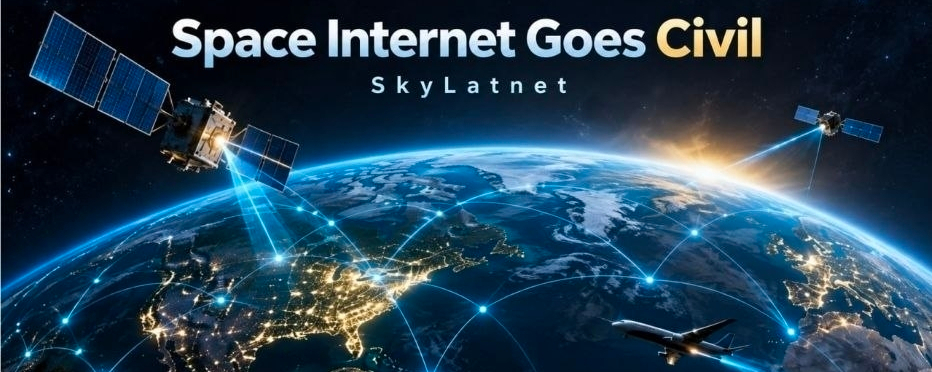
Satellite Comms Go Mainstream, SkyLatnet Bets on Space Internet 2.0
This angle is actually super practical. Aviation is one of the most obvious civilian use cases for satellite comms, and the demand is dead simple. Flying long-haul used to mean being offline by default. But as satellite connectivity improves, planes are going from comms dead zones to always-online mobile terminals.
Extend this logic further, and shipping, cross-border logistics, remote-area comms, energy infrastructure, agricultural IoT, disaster relief, and enterprise backup networks could all become similar demand scenarios. What SkyLatnet really wants to connect is exactly these scattered real-world communication needs.
KYNT Value Ultimately Comes Back to Real Network Usage
For a DePIN project, what I care about most isn't how many stories the token tells — it's whether the token actually has a shot at plugging into a real business loop.
KYNT powers payments, node incentives, staking, and governance in the SkyLatnet system. When enterprises and devs tap into bandwidth, node access, data transmission, gateway services, and APIs, they settle up in KYNT. Node and resource providers earn rewards based on uptime, coverage, bandwidth contribution, and service quality.
Meanwhile, SkyLatnet also designed Proof of Coverage, Proof of Bandwidth, and Proof of Uptime. Through multi-source verification, reputation scoring, staking constraints, and slashing mechanisms, it validates real service capability. This logic matters because DePIN ultimately can't just answer "how many nodes are there" — it also has to answer "are these nodes actually providing real service."
KYNT has a total supply of 10 billion tokens. Node rewards make up 30%, ecosystem incentives 20% — meaning half the supply is earmarked for long-term network and ecosystem growth. Team, advisors, and early backers are subject to lockups and linear vesting on different schedules.
From Terrestrial Internet to Space Internet 2.0
The more I think about it, the more I feel the biggest change in satellite comms won't be some sudden tech breakthrough — it's that its boundaries of use keep expanding into the consumer market.
It used to be a national strategic resource. Now it's moving into aircraft, ships, logistics, energy, IoT, and everyday comms. As LEO satellites, ground gateways, edge devices, and terminals keep multiplying, the new infrastructure market built around these resources could end up far bigger than anything we see today.
And what SkyLatnet wants to do is plant itself right at that intersection ahead of time: on one side, satellite comms going mainstream at scale, and on the other, DePIN moving from digital resources like compute and storage toward real physical infrastructure.
Sure, it's still early days. Satellite resource integration, node growth, aviation internet pilots, enterprise client demand, and regulatory requirements across different regions all need long-term validation. The project docs themselves clearly list risks across tech, market, regulation, and supply chain.
But that doesn't stop me from keeping an eye on it.
What really excites me isn't just KYNT or a short-term market story — it's the industry trend behind it:
Satellite comms are moving from niche professional use cases to broad civilian infrastructure.
If satellites, aircraft, ground stations, edge devices, and enterprise networks really do enter a more open resource collaboration system in the future, then the boundaries of DePIN will be redefined too.
Next, what I really want to see is SkyLatnet's testnet, real node count, aviation internet pilot progress, and enterprise-level demand.
The story's already big enough.
What really determines value in the next phase is whether it can actually connect this network — stretching from the ground all the way to the sky — step by step.
#KYNT #DePIN #SpaceInternet #Web3 #BinanceSquare
Extend this logic further, and shipping, cross-border logistics, remote-area comms, energy infrastructure, agricultural IoT, disaster relief, and enterprise backup networks could all become similar demand scenarios. What SkyLatnet really wants to connect is exactly these scattered real-world communication needs.
KYNT Value Ultimately Comes Back to Real Network Usage
For a DePIN project, what I care about most isn't how many stories the token tells — it's whether the token actually has a shot at plugging into a real business loop.
KYNT powers payments, node incentives, staking, and governance in the SkyLatnet system. When enterprises and devs tap into bandwidth, node access, data transmission, gateway services, and APIs, they settle up in KYNT. Node and resource providers earn rewards based on uptime, coverage, bandwidth contribution, and service quality.
Meanwhile, SkyLatnet also designed Proof of Coverage, Proof of Bandwidth, and Proof of Uptime. Through multi-source verification, reputation scoring, staking constraints, and slashing mechanisms, it validates real service capability. This logic matters because DePIN ultimately can't just answer "how many nodes are there" — it also has to answer "are these nodes actually providing real service."
KYNT has a total supply of 10 billion tokens. Node rewards make up 30%, ecosystem incentives 20% — meaning half the supply is earmarked for long-term network and ecosystem growth. Team, advisors, and early backers are subject to lockups and linear vesting on different schedules.
From Terrestrial Internet to Space Internet 2.0
The more I think about it, the more I feel the biggest change in satellite comms won't be some sudden tech breakthrough — it's that its boundaries of use keep expanding into the consumer market.
It used to be a national strategic resource. Now it's moving into aircraft, ships, logistics, energy, IoT, and everyday comms. As LEO satellites, ground gateways, edge devices, and terminals keep multiplying, the new infrastructure market built around these resources could end up far bigger than anything we see today.
And what SkyLatnet wants to do is plant itself right at that intersection ahead of time: on one side, satellite comms going mainstream at scale, and on the other, DePIN moving from digital resources like compute and storage toward real physical infrastructure.
Sure, it's still early days. Satellite resource integration, node growth, aviation internet pilots, enterprise client demand, and regulatory requirements across different regions all need long-term validation. The project docs themselves clearly list risks across tech, market, regulation, and supply chain.
But that doesn't stop me from keeping an eye on it.
What really excites me isn't just KYNT or a short-term market story — it's the industry trend behind it:
Satellite comms are moving from niche professional use cases to broad civilian infrastructure.
If satellites, aircraft, ground stations, edge devices, and enterprise networks really do enter a more open resource collaboration system in the future, then the boundaries of DePIN will be redefined too.
Next, what I really want to see is SkyLatnet's testnet, real node count, aviation internet pilot progress, and enterprise-level demand.
The story's already big enough.
What really determines value in the next phase is whether it can actually connect this network — stretching from the ground all the way to the sky — step by step.
#KYNT #DePIN #SpaceInternet #Web3 #BinanceSquare

Crypto Planet Live
·
--
Opsyite: When AI Learns to Play Cards, and Players Become the Scriptwriters of a Universe
Guys, let’s talk about something pretty cool.
You’ve played card games before, right? Hearthstone, Magic, Yu-Gi-Oh! Well, we all know the fun of pulling cards, building decks, and going head-to-head. But have you ever thought about this —
What if the Boss in the game could learn your playstyle, then become your mirror image and challenge other players?
What if every card was not just a set of stats, but had AI dynamically tuning it in the background, automatically generating skill variants based on your win rate and usage habits?
What if I told you that a map, a storyline, or a Boss design you created could be officially adopted, and continue to generate rewards for you afterward?
That is Opsyite.
▎First, let’s talk about the bigger picture: gaming is changing, and fast
According to Newzoo, the global gaming market exceeded USD 184 billion in 2024, with more than 3.2 billion users worldwide. Gaming is no longer just a “content product.” It is a social space, an economic system, and a virtual world.
But the real shift is happening in two directions:
First, Web3 gaming is moving from “financialization 1.0” to “playability 2.0.” Over the past few years, most blockchain games attracted users through asset speculation, but lacked gameplay depth. Players came and left quickly. Grand View Research predicts that the blockchain gaming market will grow from USD 13 billion in 2024 to USD 300 billion by 2030. But to truly capture this market, projects must solve the problem of being fun.
Second, AI is evolving from an “assistive tool” into a “content engine.” MarketsandMarkets predicts that from 2023 to 2028, the gaming AI market will grow at a compound annual growth rate of more than 30%, expanding from USD 2 billion to nearly USD 15 billion. AI turns games from “static products” into dynamic systems that can evolve in personalized ways.
And Opsyite sits right at the intersection of AI × Web3 × cards.
▎It is not just a “blockchain game”but an AI-driven card metaverse
Opsyite is not a traditional card game with an NFT skin placed on top.
It is a Web3-based, deeply AI-driven trading card game (TCG) metaverse.
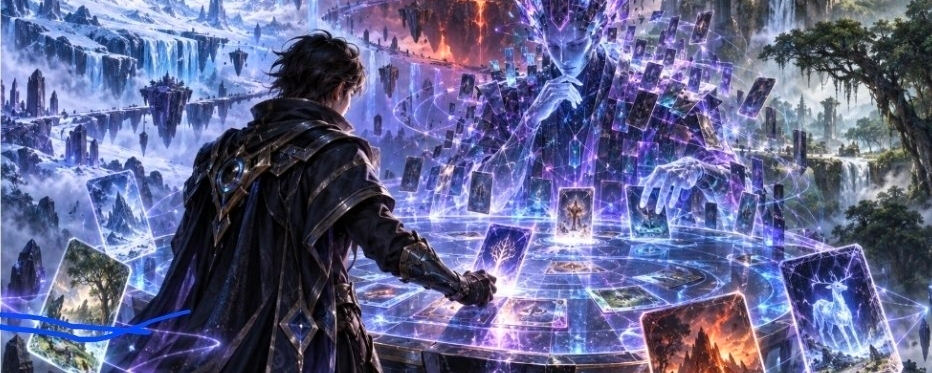
You play as an “Arcane Master,” traveling across multiple dimensions, like the Everfrost Tundra, the Molten Heart, Ancient Ruins, and the Mistwood Forest, collecting “Primal Cards” and influencing the direction of the universe through strategic battles.
But the real focus is not simply “playing cards.”
The focus is this: the world changes because of the actions of you and other players.
If most players concentrate on battling in the “Molten Heart,” then the storyline of that dimension automatically advances, the Boss evolves, and the map expands. Other dimensions enter a “suppressed” state, with resources, storylines, and strategies all changing accordingly.
You are not just playing a game. You are participating in a world that continues to evolve.
▎AI is not just a “smart NPC” here; it is the engine of the entire game
Opsyite’s AI system includes several designs that made me think, “Okay, this is actually something.”
Mirror AI Opponents: The system records your battle actions, deck combinations, and skill-release logic to train a “Mirror AI.” You can upload your own behavior model and let other players challenge your AI avatar. If you win, the owner of the mirror can also receive behavior-based revenue sharing.
What does this mean? It means the better you play, the stronger your AI avatar becomes. The more other players want to challenge it, the more you can earn even while you are offline.
Adaptive Boss Evolution: Bosses can imitate the deck strategies of the most active players and combine them into advanced AI lineups. Each week, the system generates new “Rift Challenge Maps” based on server-wide data. You never know whose playstyle next week’s Boss will learn before coming after you.
AI Dynamic Balancing: The skills of high-tier cards are automatically balanced or turned into variants by AI based on usage frequency, win rate, and map distribution. There is no fixed meta forever — the environment moves on its own.
▎Creator economy: you are not just a player; you are a world-builder
This is the part of Opsyite that excites me the most.
In traditional games, players create mods, maps, and guides out of passion, while the platform captures the revenue.
Opsyite says: no, you should earn from it.
It includes a built-in AI editor. You do not need to know programming. You can create map dungeons, story branches, and quest modules using natural language. Once completed, you can upload them to the platform. When other players experience your content, you earn revenue sharing.
If your content is officially adopted and enters the main storyline, limited-time events, or even the AI training system? Continuous earnings + governance rights + honor NFTs.
If the map you designed is played repeatedly, the system records usage frequency and automatically settles rewards.
If the skill or card module you created enters the blind box system, you receive a share every time it is drawn.
In Opsyite, you can be an Arcane Master, but you can also be a builder, narrator, trainer, or even someone who determines the future direction of the story.
▎Technical foundation: off-chain execution + on-chain verification, balancing performance and cost
The old problems of blockchain games are familiar: slow, expensive, and laggy.
Opsyite’s solution is to deploy on a high-throughput, low-gas, EVM-compatible Layer 2. High-frequency operations use a hybrid architecture of “off-chain execution + on-chain verification,” with final results recorded on-chain through Merkle Tree or ZK mechanisms.
The user experience is not compromised, and security is not sacrificed.
All high-rarity cards, skill modules, map dungeons, and story modules are confirmed as NFTs, supporting authorization, leasing, revenue sharing, and derivative creation.
▎Roadmap: four stages, from core gameplay to an open universe
Stage One: Complete the worldbuilding, core gameplay, card system, and blind box mechanism design; build basic maps; deploy the internal AI battle simulation framework; and launch a small-scale closed test.
Stage Two: Develop core PvE dungeons and Mirror AI battles (PvM); release Creator Editor V1; open access for map, story, and skill creation; introduce map tickets and content rights confirmation.
Stage Three: Enable AI content recommendation and assisted creation systems; upgrade the Mirror AI learning model; achieve personalized tactical fitting and PvM leagues; integrate the creator achievement system and automated on-chain revenue sharing.
Stage Four: Launch the map interoperability protocol; support external projects connecting to the Opsyite editor ecosystem; introduce an on-chain content cross-authorization system; launch the “Story Incubation Platform”; promote a mainline evolution mechanism co-created by AI and players; and ultimately establish a fully on-chain governance structure.
▎Team: gaming veterans + AI engineers + blockchain builders
Opsyite’s core members come from multiple fields, including game development, AI engineering, blockchain technology, and interactive narrative design. The founder previously worked on core gameplay and numerical frameworks at strategy and card game studios. The technical director has experience in smart contracts and on-chain performance optimization. The AI lead has worked on NPC behavior trees and reinforcement learning battle models. The creative director has more than ten years of experience in interactive narrative design.
This is not a project imagined on a whim by a few programmers. It is something being seriously built by a team that understands games, AI, and blockchain.
▎My honest take
Opsyite is still in its early stage. Its roadmap is divided into four phases, moving from core gameplay construction to the creator editor, then to AI recommendation systems and cross-project interoperability protocols.
Can it succeed? No one knows. But the direction it is heading in makes sense.
You’ve played card games before, right? Hearthstone, Magic, Yu-Gi-Oh! Well, we all know the fun of pulling cards, building decks, and going head-to-head. But have you ever thought about this —
What if the Boss in the game could learn your playstyle, then become your mirror image and challenge other players?
What if every card was not just a set of stats, but had AI dynamically tuning it in the background, automatically generating skill variants based on your win rate and usage habits?
What if I told you that a map, a storyline, or a Boss design you created could be officially adopted, and continue to generate rewards for you afterward?
That is Opsyite.
▎First, let’s talk about the bigger picture: gaming is changing, and fast
According to Newzoo, the global gaming market exceeded USD 184 billion in 2024, with more than 3.2 billion users worldwide. Gaming is no longer just a “content product.” It is a social space, an economic system, and a virtual world.
But the real shift is happening in two directions:
First, Web3 gaming is moving from “financialization 1.0” to “playability 2.0.” Over the past few years, most blockchain games attracted users through asset speculation, but lacked gameplay depth. Players came and left quickly. Grand View Research predicts that the blockchain gaming market will grow from USD 13 billion in 2024 to USD 300 billion by 2030. But to truly capture this market, projects must solve the problem of being fun.
Second, AI is evolving from an “assistive tool” into a “content engine.” MarketsandMarkets predicts that from 2023 to 2028, the gaming AI market will grow at a compound annual growth rate of more than 30%, expanding from USD 2 billion to nearly USD 15 billion. AI turns games from “static products” into dynamic systems that can evolve in personalized ways.
And Opsyite sits right at the intersection of AI × Web3 × cards.
▎It is not just a “blockchain game”but an AI-driven card metaverse
Opsyite is not a traditional card game with an NFT skin placed on top.
It is a Web3-based, deeply AI-driven trading card game (TCG) metaverse.
You play as an “Arcane Master,” traveling across multiple dimensions, like the Everfrost Tundra, the Molten Heart, Ancient Ruins, and the Mistwood Forest, collecting “Primal Cards” and influencing the direction of the universe through strategic battles.
But the real focus is not simply “playing cards.”
The focus is this: the world changes because of the actions of you and other players.
If most players concentrate on battling in the “Molten Heart,” then the storyline of that dimension automatically advances, the Boss evolves, and the map expands. Other dimensions enter a “suppressed” state, with resources, storylines, and strategies all changing accordingly.
You are not just playing a game. You are participating in a world that continues to evolve.
▎AI is not just a “smart NPC” here; it is the engine of the entire game
Opsyite’s AI system includes several designs that made me think, “Okay, this is actually something.”
Mirror AI Opponents: The system records your battle actions, deck combinations, and skill-release logic to train a “Mirror AI.” You can upload your own behavior model and let other players challenge your AI avatar. If you win, the owner of the mirror can also receive behavior-based revenue sharing.
What does this mean? It means the better you play, the stronger your AI avatar becomes. The more other players want to challenge it, the more you can earn even while you are offline.
Adaptive Boss Evolution: Bosses can imitate the deck strategies of the most active players and combine them into advanced AI lineups. Each week, the system generates new “Rift Challenge Maps” based on server-wide data. You never know whose playstyle next week’s Boss will learn before coming after you.
AI Dynamic Balancing: The skills of high-tier cards are automatically balanced or turned into variants by AI based on usage frequency, win rate, and map distribution. There is no fixed meta forever — the environment moves on its own.
▎Creator economy: you are not just a player; you are a world-builder
This is the part of Opsyite that excites me the most.
In traditional games, players create mods, maps, and guides out of passion, while the platform captures the revenue.
Opsyite says: no, you should earn from it.
It includes a built-in AI editor. You do not need to know programming. You can create map dungeons, story branches, and quest modules using natural language. Once completed, you can upload them to the platform. When other players experience your content, you earn revenue sharing.
If your content is officially adopted and enters the main storyline, limited-time events, or even the AI training system? Continuous earnings + governance rights + honor NFTs.
If the map you designed is played repeatedly, the system records usage frequency and automatically settles rewards.
If the skill or card module you created enters the blind box system, you receive a share every time it is drawn.
In Opsyite, you can be an Arcane Master, but you can also be a builder, narrator, trainer, or even someone who determines the future direction of the story.
▎Technical foundation: off-chain execution + on-chain verification, balancing performance and cost
The old problems of blockchain games are familiar: slow, expensive, and laggy.
Opsyite’s solution is to deploy on a high-throughput, low-gas, EVM-compatible Layer 2. High-frequency operations use a hybrid architecture of “off-chain execution + on-chain verification,” with final results recorded on-chain through Merkle Tree or ZK mechanisms.
The user experience is not compromised, and security is not sacrificed.
All high-rarity cards, skill modules, map dungeons, and story modules are confirmed as NFTs, supporting authorization, leasing, revenue sharing, and derivative creation.
▎Roadmap: four stages, from core gameplay to an open universe
Stage One: Complete the worldbuilding, core gameplay, card system, and blind box mechanism design; build basic maps; deploy the internal AI battle simulation framework; and launch a small-scale closed test.
Stage Two: Develop core PvE dungeons and Mirror AI battles (PvM); release Creator Editor V1; open access for map, story, and skill creation; introduce map tickets and content rights confirmation.
Stage Three: Enable AI content recommendation and assisted creation systems; upgrade the Mirror AI learning model; achieve personalized tactical fitting and PvM leagues; integrate the creator achievement system and automated on-chain revenue sharing.
Stage Four: Launch the map interoperability protocol; support external projects connecting to the Opsyite editor ecosystem; introduce an on-chain content cross-authorization system; launch the “Story Incubation Platform”; promote a mainline evolution mechanism co-created by AI and players; and ultimately establish a fully on-chain governance structure.
▎Team: gaming veterans + AI engineers + blockchain builders
Opsyite’s core members come from multiple fields, including game development, AI engineering, blockchain technology, and interactive narrative design. The founder previously worked on core gameplay and numerical frameworks at strategy and card game studios. The technical director has experience in smart contracts and on-chain performance optimization. The AI lead has worked on NPC behavior trees and reinforcement learning battle models. The creative director has more than ten years of experience in interactive narrative design.
This is not a project imagined on a whim by a few programmers. It is something being seriously built by a team that understands games, AI, and blockchain.
▎My honest take
Opsyite is still in its early stage. Its roadmap is divided into four phases, moving from core gameplay construction to the creator editor, then to AI recommendation systems and cross-project interoperability protocols.
Can it succeed? No one knows. But the direction it is heading in makes sense.

Nexus Live
·
--
Project Deep Dive: Why SagaVolt Might Be the Next Big Opportunity in Energy RWAs
Lately, I’ve started focusing quite a bit on SagaVolt, and the reason is pretty straightforward: the projects that actually make me want to spend time researching these days aren't driven by pure hype, trending narratives, or short-term clout.
They are the infrastructure projects capable of truly embedding Web3 tech into real-world industries—and creating long-term, sustainable demand.
SagaVolt feels like a prime candidate in that direction.
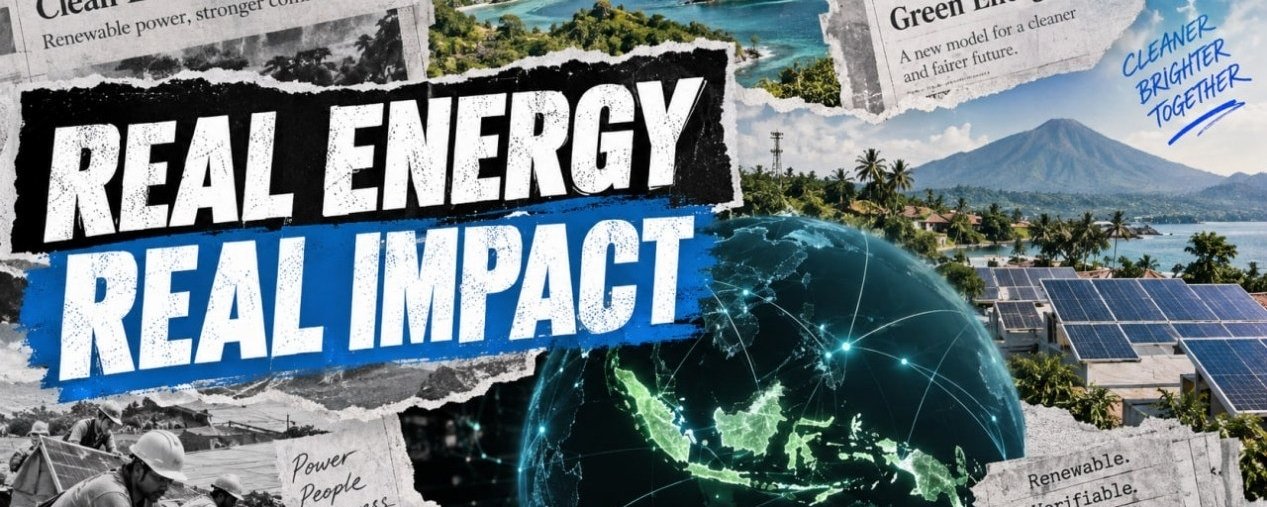
Its wedge into the market is the distributed green energy sector in Indonesia.
When a lot of people see the word "energy," their first reaction might be that it feels pretty disconnected from Crypto.
But look at it from another angle: this might actually be one of the most imaginative, high-potential use cases for RWAs moving forward.
Indonesia consists of thousands of islands, meaning its energy supply naturally leans distributed.
Industrial parks, community microgrids, fishing ports, cold chains, mining sites, and remote areas all have a very real, non-negotiable demand for stable power.
At the same time, renewable energy sources like solar, micro-hydro, biomass, and wind are widely scattered across different regions.
The catch?
If you want these energy resources to scale into a real market, there's a whole stack of underlying infrastructure issues to fix first:
How do you measure power output in a tamper-proof way?
How do you prove its green attributes?
How do participants settle payments?
How do long-term Power Purchase Agreements (PPAs) get standardized?
How can data be verified while preserving privacy?
What makes SagaVolt stand out is that it isn't just tackling a single isolated step.
It's building an end-to-end network spanning metering, proof generation, settlement, assetization, clearing, and governance.
The project designed PoG—or the Proof-of-Green mechanism—combining ZK (zero-knowledge proofs), TEE (Trusted Execution Environments), device identities, and on-chain verification so that energy data isn't just recorded, but crucial to point out, verifiable.
From an investor's perspective, I think this point is huge.
The RWAs that actually bring value in the future won't just be tokenized versions of real-world assets.
The winners will be the ones that solve the hardest problem before assets ever hit the chain: the authenticity problem.
You can turn a contract into an NFT or wrap an asset into a Token, but if the underlying data can't be verified, your RWA is ultimately just financial packaging.
SagaVolt builds trust from the ground up starting at the hardware and metering layer, then scales up to eKWh, PPA-NFTs, RECs, and carbon assets.
That logical chain is rock solid.
Another point I really value is that SagaVolt doesn't stop at energy data—it actively tries to unlock "energy assetization."
For instance, eKWh can serve as an on-chain power accounting unit, PPA-NFTs can hold long-term power purchase agreements, while RECs and carbon assets can enter independent green asset markets.
If real devices and real-world energy use cases continue onboarding in the future, it won't just generate a single product, but a full-fledged ecosystem of on-chain assets and cash flows revolving around energy.
And that’s what sets SagaVolt apart from pure narrative plays.
Its growth thesis can theoretically stem from real business expansion:
More devices.
More metering data.
Higher energy transaction volume.
More PPAs.
Higher oracle call frequency.
Expanding data services.
All of which convert into organic demand for the network.
Now let’s talk about SAVLT.
When I personally analyze a Token, the main thing I care about is:
Is this Token genuinely a vital component of the network's operation?
SagaVolt’s design here is crystal clear.
SAVLT plays an active role in Gas fees, validator staking, restaking, oracle collateral, settlement collateral, insurance pools, governance, and ecosystem incentives—it’s far from just a governance voting chip.
Validation nodes need SAVLT, metering witnesses need to stake, oracle nodes need to participate in staking, while hardware and data contributors get rewarded in ecosystem incentives.
Once this flywheel starts spinning, Token demand becomes directly tied to real network activity.
Even more interesting is the upside of SagaVolt’s data market layer.
Energy networks naturally generate massive amounts of daily data spanning pricing, equipment metrics, weather, carbon emissions, power consumption, and supply.
SagaVolt designed a Decentralized Energy Oracle along with a Data DAO, aiming to turn raw data into authorized, subscribable, revenue-generating data products.
In short, it’s not just an energy settlement network—it could gradually evolve into a full-scale energy data infrastructure.
Taking an investor's view, what makes SagaVolt worth watching isn't just a buzzword.
It hits multiple long-term macro trends simultaneously:
RWAs, Green Energy, DePIN, Decentralized Data, ZK Privacy, and Real-World Asset Digitalization.
Plus, it isn't targeting already mature Western energy markets, but rather region-specific environments like Indonesia that organically demand distributed energy, island-tailored solutions, and infrastructure upgrades.
If it successfully scales from individual microgrids, industrial zones, cold chains, ports, and power devices into a unified regional energy web, SagaVolt's upside could go way beyond just a typical "energy concept" token.
Right now, I view it as:
Gradually transforming real-world "electricity" into an on-chain digital asset that can be verified, settled, traded, and financed.
The projects truly worth tracking long-term aren't always the best storytellers—they're the ones getting real-world industries that previously had zero on-chain demand to actually start using the blockchain.
SagaVolt is actively building that bridge.
That’s why I’m keeping a close eye on the SagaVolt and SAVLT ecosystem moving forward.
The above content represents personal research and observations only and does not constitute financial or investment advice.
They are the infrastructure projects capable of truly embedding Web3 tech into real-world industries—and creating long-term, sustainable demand.
SagaVolt feels like a prime candidate in that direction.
Its wedge into the market is the distributed green energy sector in Indonesia.
When a lot of people see the word "energy," their first reaction might be that it feels pretty disconnected from Crypto.
But look at it from another angle: this might actually be one of the most imaginative, high-potential use cases for RWAs moving forward.
Indonesia consists of thousands of islands, meaning its energy supply naturally leans distributed.
Industrial parks, community microgrids, fishing ports, cold chains, mining sites, and remote areas all have a very real, non-negotiable demand for stable power.
At the same time, renewable energy sources like solar, micro-hydro, biomass, and wind are widely scattered across different regions.
The catch?
If you want these energy resources to scale into a real market, there's a whole stack of underlying infrastructure issues to fix first:
How do you measure power output in a tamper-proof way?
How do you prove its green attributes?
How do participants settle payments?
How do long-term Power Purchase Agreements (PPAs) get standardized?
How can data be verified while preserving privacy?
What makes SagaVolt stand out is that it isn't just tackling a single isolated step.
It's building an end-to-end network spanning metering, proof generation, settlement, assetization, clearing, and governance.
The project designed PoG—or the Proof-of-Green mechanism—combining ZK (zero-knowledge proofs), TEE (Trusted Execution Environments), device identities, and on-chain verification so that energy data isn't just recorded, but crucial to point out, verifiable.
From an investor's perspective, I think this point is huge.
The RWAs that actually bring value in the future won't just be tokenized versions of real-world assets.
The winners will be the ones that solve the hardest problem before assets ever hit the chain: the authenticity problem.
You can turn a contract into an NFT or wrap an asset into a Token, but if the underlying data can't be verified, your RWA is ultimately just financial packaging.
SagaVolt builds trust from the ground up starting at the hardware and metering layer, then scales up to eKWh, PPA-NFTs, RECs, and carbon assets.
That logical chain is rock solid.
Another point I really value is that SagaVolt doesn't stop at energy data—it actively tries to unlock "energy assetization."
For instance, eKWh can serve as an on-chain power accounting unit, PPA-NFTs can hold long-term power purchase agreements, while RECs and carbon assets can enter independent green asset markets.
If real devices and real-world energy use cases continue onboarding in the future, it won't just generate a single product, but a full-fledged ecosystem of on-chain assets and cash flows revolving around energy.
And that’s what sets SagaVolt apart from pure narrative plays.
Its growth thesis can theoretically stem from real business expansion:
More devices.
More metering data.
Higher energy transaction volume.
More PPAs.
Higher oracle call frequency.
Expanding data services.
All of which convert into organic demand for the network.
Now let’s talk about SAVLT.
When I personally analyze a Token, the main thing I care about is:
Is this Token genuinely a vital component of the network's operation?
SagaVolt’s design here is crystal clear.
SAVLT plays an active role in Gas fees, validator staking, restaking, oracle collateral, settlement collateral, insurance pools, governance, and ecosystem incentives—it’s far from just a governance voting chip.
Validation nodes need SAVLT, metering witnesses need to stake, oracle nodes need to participate in staking, while hardware and data contributors get rewarded in ecosystem incentives.
Once this flywheel starts spinning, Token demand becomes directly tied to real network activity.
Even more interesting is the upside of SagaVolt’s data market layer.
Energy networks naturally generate massive amounts of daily data spanning pricing, equipment metrics, weather, carbon emissions, power consumption, and supply.
SagaVolt designed a Decentralized Energy Oracle along with a Data DAO, aiming to turn raw data into authorized, subscribable, revenue-generating data products.
In short, it’s not just an energy settlement network—it could gradually evolve into a full-scale energy data infrastructure.
Taking an investor's view, what makes SagaVolt worth watching isn't just a buzzword.
It hits multiple long-term macro trends simultaneously:
RWAs, Green Energy, DePIN, Decentralized Data, ZK Privacy, and Real-World Asset Digitalization.
Plus, it isn't targeting already mature Western energy markets, but rather region-specific environments like Indonesia that organically demand distributed energy, island-tailored solutions, and infrastructure upgrades.
If it successfully scales from individual microgrids, industrial zones, cold chains, ports, and power devices into a unified regional energy web, SagaVolt's upside could go way beyond just a typical "energy concept" token.
Right now, I view it as:
Gradually transforming real-world "electricity" into an on-chain digital asset that can be verified, settled, traded, and financed.
The projects truly worth tracking long-term aren't always the best storytellers—they're the ones getting real-world industries that previously had zero on-chain demand to actually start using the blockchain.
SagaVolt is actively building that bridge.
That’s why I’m keeping a close eye on the SagaVolt and SAVLT ecosystem moving forward.
The above content represents personal research and observations only and does not constitute financial or investment advice.

Log in to explore more content