

虾仁_
3.9k Posts

虾仁_
Report
Block User
无人扶我凌云志,我自关注至山巅,超级返佣:XR8888

BTC Holder
Frequent Trader
2.2 Years
37.3K+ Following
4.5K+ Followers
3.3K+ Liked
Posts
All
Quotes
Videos
Live
PINNED
·
--
With shrimp chat rooms in hand, there's no worry about shorting coins, big money steadily enters the pocket!
With shrimp chat rooms in hand, there's no worry about shorting coins, big money steadily enters the pocket!


7
1
18
608
PINNED
·
--
$BTC
{spot}(BTCUSDT)
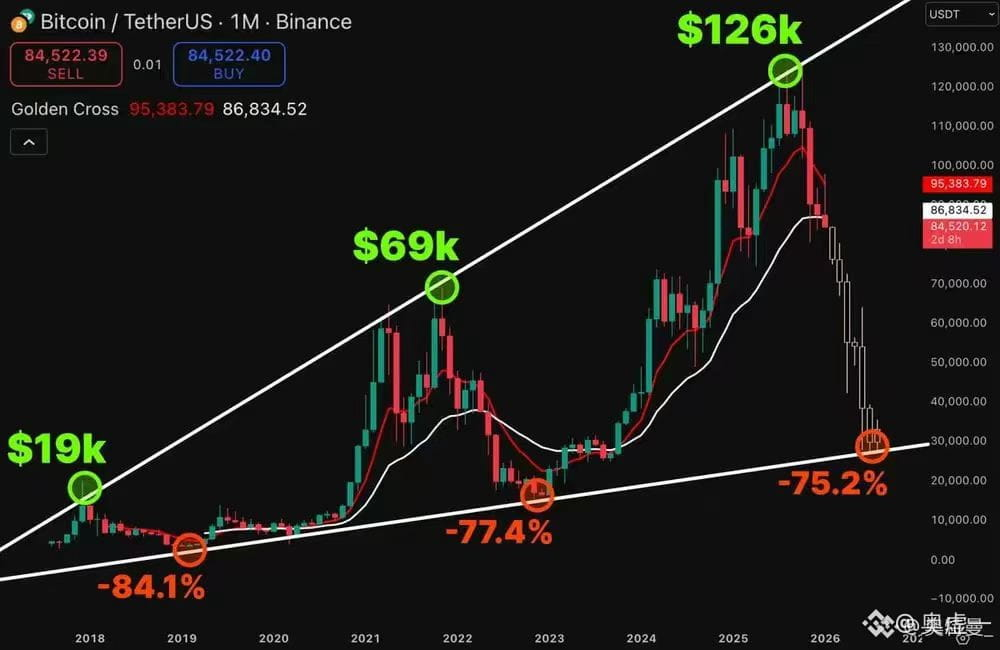
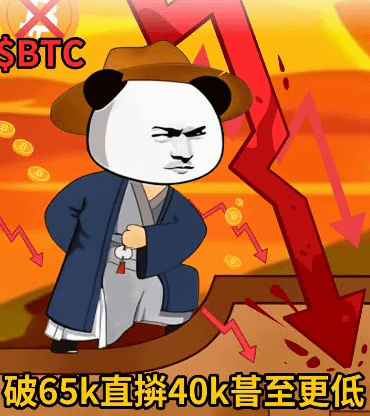
Next, empty!! Breaking 65k straight to 40k or even lower!!!
Large holders are selling in batches, funding rates turn negative, short positions profit from subsidies + principal double kill, a pullback will lead to a one-sided waterfall. Breaking 65k straight to 40k or even lower, the next wave of a big drop is coming.
💥💥💥👇👇👇
$BTC
Next, empty!! Breaking 65k straight to 40k or even lower!!!
Large holders are selling in batches, funding rates turn negative, short positions profit from subsidies + principal double kill, a pullback will lead to a one-sided waterfall. Breaking 65k straight to 40k or even lower, the next wave of a big drop is coming.
💥💥💥👇👇👇
Next, empty!! Breaking 65k straight to 40k or even lower!!!
Large holders are selling in batches, funding rates turn negative, short positions profit from subsidies + principal double kill, a pullback will lead to a one-sided waterfall. Breaking 65k straight to 40k or even lower, the next wave of a big drop is coming.
💥💥💥👇👇👇
1
29
388
·
--
#绿色的泡泡 #muskgk #Follow us for a reply
Global stablecoin payment infrastructure provider WasabiCard has announced that it will host a thematic event, “Stablecoin & Payments: Funds Flow,” in Singapore on October 6, 2026. The event will be held at Raffles Singapore and will take the form of an invite-only tea gathering and a themed forum, bringing together industry participants across stablecoin issuers, card payment infrastructure, institutional-grade real-world assets, digital asset services, payment security, and technology.
Stablecoins are becoming an important foundation for global capital flows. The accelerated connection between on-chain settlement and real-world payments is also changing how enterprises manage funds, conduct cross-border business, and reach users worldwide. Centered on the theme of “funds flow,” this event will discuss on-chain capital markets and real-world stablecoin applications, focusing on the collaborative relationships among digital assets, traditional financial networks, and global business scenarios.
The discussions will focus on two key industry storylines. The first centers on capital markets on-chain, covering tokenized assets, on-chain liquidity, market structure, institutional participation, and global settlement systems. The second centers on large-scale stablecoin applications, discussing the product capabilities, partnership mechanisms, and compliance foundations needed for scenarios such as cross-border payments, merchant acquiring, global card issuing, enterprise treasury management, and everyday payments.
Vidit Agrawal, Vice President of Partnerships and Business Development for Circle in the Asia-Pacific region, will take part in the event and exchange views with industry representatives from the payments, digital assets, and fintech sectors on the stablecoin ecosystem and real-world payment applications. WasabiCard has previously been listed
as a member of the Circle Alliance Program.
This event will further bring together stablecoin ecosystem builders, payment infrastructure service providers, and participants from enterprise application domains, fostering industry exchanges across different parts of the value chain.
The currently announced speakers also include Komil Desai, Head of Crypto Partnerships at Visa (USA), Lotus Technology CFO Dr. Daxue Wang, Nium EVP APAC Yogesh Sangle, Plume Co-founder Shukyee Ma, Safeheron General Manager for South Asia Yifan Zhang, WIDTH Co-Founder & CEO Chye Kit, Mirae Asset’s Head of Digital Asset Strategy Kelly Sohn, and AWS representative David Sung. The complete lineup of guests and related event information will be announced progressively through WasabiCard’s official channels.
“Stablecoin payments are entering a phase of large-scale adoption. The industry needs to discuss assets, settlement, payment networks, and real commercial needs within the same context.” said Ray Yang, Co-founder and CEO of WasabiCard. “We hope to bring together practitioners from different fields through Funds Flow to form viewpoints that help with product deployment and industry collaboration. We also welcome industry peers visiting Singapore during TOKEN2049 to join the event and connect with us on-site.”
As the event organizer, WasabiCard will combine hands-on practices in global card issuing, global payments, and embedded payments to bring a payment-infrastructure perspective to on-chain capital markets and real-world stablecoin applications. The company hopes to establish an ongoing industry dialogue through this event and explore more scalable ways to connect stablecoin funds, global payment networks, and real-world commerce.
Event details
Event name: Stablecoin & Payments: Funds Flow
Date: October 6, 2026
Venue: Raffles Singapore, 1 Beach Road, Singapore 189673
Organizer: WasabiCard
Event link:
https://luma.com/gj0iv2kk
About WasabiCard
WasabiCard
is a global payments infrastructure platform that provides card issuing, global payments, and cross-border payment capabilities for enterprises, fintech companies, and internet-native businesses through stablecoin-driven financial infrastructure. The platform supports global card issuing, multi-currency settlement, stablecoin funding (top-ups), and embedded payments capabilities, designed for modern global commerce scenarios. WasabiCard serves a wide range of payment use cases, including ad traffic and lead generation, AI tools and SaaS subscriptions, global payroll disbursements, treasury/financial management, and digital finance applications.
Follow WasabiCard on the official
X
and
LinkedIn
for the latest product updates, partnership progress, and industry insights into the future of stablecoin payments.
#绿色的泡泡 #muskgk #Follow us for a reply
Global stablecoin payment infrastructure provider WasabiCard has announced that it will host a thematic event, “Stablecoin & Payments: Funds Flow,” in Singapore on October 6, 2026. The event will be held at Raffles Singapore and will take the form of an invite-only tea gathering and a themed forum, bringing together industry participants across stablecoin issuers, card payment infrastructure, institutional-grade real-world assets, digital asset services, payment security, and technology.
Stablecoins are becoming an important foundation for global capital flows. The accelerated connection between on-chain settlement and real-world payments is also changing how enterprises manage funds, conduct cross-border business, and reach users worldwide. Centered on the theme of “funds flow,” this event will discuss on-chain capital markets and real-world stablecoin applications, focusing on the collaborative relationships among digital assets, traditional financial networks, and global business scenarios.
The discussions will focus on two key industry storylines. The first centers on capital markets on-chain, covering tokenized assets, on-chain liquidity, market structure, institutional participation, and global settlement systems. The second centers on large-scale stablecoin applications, discussing the product capabilities, partnership mechanisms, and compliance foundations needed for scenarios such as cross-border payments, merchant acquiring, global card issuing, enterprise treasury management, and everyday payments.
Vidit Agrawal, Vice President of Partnerships and Business Development for Circle in the Asia-Pacific region, will take part in the event and exchange views with industry representatives from the payments, digital assets, and fintech sectors on the stablecoin ecosystem and real-world payment applications. WasabiCard has previously been listed
as a member of the Circle Alliance Program.
This event will further bring together stablecoin ecosystem builders, payment infrastructure service providers, and participants from enterprise application domains, fostering industry exchanges across different parts of the value chain.
The currently announced speakers also include Komil Desai, Head of Crypto Partnerships at Visa (USA), Lotus Technology CFO Dr. Daxue Wang, Nium EVP APAC Yogesh Sangle, Plume Co-founder Shukyee Ma, Safeheron General Manager for South Asia Yifan Zhang, WIDTH Co-Founder & CEO Chye Kit, Mirae Asset’s Head of Digital Asset Strategy Kelly Sohn, and AWS representative David Sung. The complete lineup of guests and related event information will be announced progressively through WasabiCard’s official channels.
“Stablecoin payments are entering a phase of large-scale adoption. The industry needs to discuss assets, settlement, payment networks, and real commercial needs within the same context.” said Ray Yang, Co-founder and CEO of WasabiCard. “We hope to bring together practitioners from different fields through Funds Flow to form viewpoints that help with product deployment and industry collaboration. We also welcome industry peers visiting Singapore during TOKEN2049 to join the event and connect with us on-site.”
As the event organizer, WasabiCard will combine hands-on practices in global card issuing, global payments, and embedded payments to bring a payment-infrastructure perspective to on-chain capital markets and real-world stablecoin applications. The company hopes to establish an ongoing industry dialogue through this event and explore more scalable ways to connect stablecoin funds, global payment networks, and real-world commerce.
Event details
Event name: Stablecoin & Payments: Funds Flow
Date: October 6, 2026
Venue: Raffles Singapore, 1 Beach Road, Singapore 189673
Organizer: WasabiCard
Event link:
https://luma.com/gj0iv2kk
About WasabiCard
WasabiCard
is a global payments infrastructure platform that provides card issuing, global payments, and cross-border payment capabilities for enterprises, fintech companies, and internet-native businesses through stablecoin-driven financial infrastructure. The platform supports global card issuing, multi-currency settlement, stablecoin funding (top-ups), and embedded payments capabilities, designed for modern global commerce scenarios. WasabiCard serves a wide range of payment use cases, including ad traffic and lead generation, AI tools and SaaS subscriptions, global payroll disbursements, treasury/financial management, and digital finance applications.
Follow WasabiCard on the official
X
and
LinkedIn
for the latest product updates, partnership progress, and industry insights into the future of stablecoin payments.
Global stablecoin payment infrastructure provider WasabiCard has announced that it will host a thematic event, “Stablecoin & Payments: Funds Flow,” in Singapore on October 6, 2026. The event will be held at Raffles Singapore and will take the form of an invite-only tea gathering and a themed forum, bringing together industry participants across stablecoin issuers, card payment infrastructure, institutional-grade real-world assets, digital asset services, payment security, and technology.
Stablecoins are becoming an important foundation for global capital flows. The accelerated connection between on-chain settlement and real-world payments is also changing how enterprises manage funds, conduct cross-border business, and reach users worldwide. Centered on the theme of “funds flow,” this event will discuss on-chain capital markets and real-world stablecoin applications, focusing on the collaborative relationships among digital assets, traditional financial networks, and global business scenarios.
The discussions will focus on two key industry storylines. The first centers on capital markets on-chain, covering tokenized assets, on-chain liquidity, market structure, institutional participation, and global settlement systems. The second centers on large-scale stablecoin applications, discussing the product capabilities, partnership mechanisms, and compliance foundations needed for scenarios such as cross-border payments, merchant acquiring, global card issuing, enterprise treasury management, and everyday payments.
Vidit Agrawal, Vice President of Partnerships and Business Development for Circle in the Asia-Pacific region, will take part in the event and exchange views with industry representatives from the payments, digital assets, and fintech sectors on the stablecoin ecosystem and real-world payment applications. WasabiCard has previously been listed
as a member of the Circle Alliance Program.
This event will further bring together stablecoin ecosystem builders, payment infrastructure service providers, and participants from enterprise application domains, fostering industry exchanges across different parts of the value chain.
The currently announced speakers also include Komil Desai, Head of Crypto Partnerships at Visa (USA), Lotus Technology CFO Dr. Daxue Wang, Nium EVP APAC Yogesh Sangle, Plume Co-founder Shukyee Ma, Safeheron General Manager for South Asia Yifan Zhang, WIDTH Co-Founder & CEO Chye Kit, Mirae Asset’s Head of Digital Asset Strategy Kelly Sohn, and AWS representative David Sung. The complete lineup of guests and related event information will be announced progressively through WasabiCard’s official channels.
“Stablecoin payments are entering a phase of large-scale adoption. The industry needs to discuss assets, settlement, payment networks, and real commercial needs within the same context.” said Ray Yang, Co-founder and CEO of WasabiCard. “We hope to bring together practitioners from different fields through Funds Flow to form viewpoints that help with product deployment and industry collaboration. We also welcome industry peers visiting Singapore during TOKEN2049 to join the event and connect with us on-site.”
As the event organizer, WasabiCard will combine hands-on practices in global card issuing, global payments, and embedded payments to bring a payment-infrastructure perspective to on-chain capital markets and real-world stablecoin applications. The company hopes to establish an ongoing industry dialogue through this event and explore more scalable ways to connect stablecoin funds, global payment networks, and real-world commerce.
Event details
Event name: Stablecoin & Payments: Funds Flow
Date: October 6, 2026
Venue: Raffles Singapore, 1 Beach Road, Singapore 189673
Organizer: WasabiCard
Event link:
https://luma.com/gj0iv2kk
About WasabiCard
WasabiCard
is a global payments infrastructure platform that provides card issuing, global payments, and cross-border payment capabilities for enterprises, fintech companies, and internet-native businesses through stablecoin-driven financial infrastructure. The platform supports global card issuing, multi-currency settlement, stablecoin funding (top-ups), and embedded payments capabilities, designed for modern global commerce scenarios. WasabiCard serves a wide range of payment use cases, including ad traffic and lead generation, AI tools and SaaS subscriptions, global payroll disbursements, treasury/financial management, and digital finance applications.
Follow WasabiCard on the official
X
and
for the latest product updates, partnership progress, and industry insights into the future of stablecoin payments.
1
99
·
--
#绿色的泡泡 #muskgk #Follow me back
Written by: Xiao Bing
On September 24, Ondo Finance launched "Ondo Intelligent Portfolios," with three portfolio tokens going live at the same time: BLKHIon (high yield), BLKDIGon (multi-asset growth), and BLKGRWon (high growth).
Behind each token is an investment portfolio strategy customized by BlackRock for Ondo. Holding one token is equivalent to holding a basket of asset exposures managed by professional allocation logic. The portfolio weights, rebalancing, and fee mechanics are executed by smart contracts, and the positions and holding ratios are visible on-chain in real time.
In the announcement, Lisa O'Connor, Global Head of Model Portfolio Solutions at BlackRock, said: “Tokenization creates a new way to deliver portfolio strategies through digital infrastructure. Diversified portfolio strategies can be integrated into tokenized investment products, allowing eligible investors to access diversified allocation through a single tool.”
Ondo’s代理 CEO Ian De Bode put it more directly: “A portfolio like this has never existed on-chain before.”
The ONDO token jumped on the news, rising by about 22% over 24 hours.
How is this different from buying an ETF?
On the surface, holding BLKHIon feels similar to holding a high-yield ETF: one code, a basket of assets, professional management. But the underlying differences are structural.
ETFs trade during exchange hours, settle on a T+1 basis. Redemptions require authorized participants, and holdings disclosures are published with delays of quarterly or monthly cadence.
Ondo’s portfolio tokens can be transferred 24/7, settle instantly on-chain, and minting and redemptions are directly available to investors. Holdings and weights can be checked on-chain in real time.
More importantly, the difference lies in composability. Once you buy an ETF, it just sits in your brokerage account—you have limited options.
After you buy a portfolio token, you can send it into lending protocols as collateral, go long or short on perpetual contract platforms, or combine it with other on-chain assets to form more complex strategies.
In one sentence: An ETF is a closed product; a portfolio token is an open building block.
Ondo’s upgrade path
This launch marks Ondo’s leap from an “asset issuer” to an “on-chain asset management platform.”
Step one was OUSG and USDY, moving a single U.S. Treasury exposure on-chain so that on-chain users can capture Treasury yield.
Step two was Ondo Global Markets, tokenizing hundreds of U.S. stocks and ETFs and building an on-chain securities issuance and trading platform. TVL exceeds $1.5 billion, covering 30 markets in the EU. It obtained an SEC license through the acquisition of Oasis Pro.
Step three—today’s Intelligent Portfolios—is no longer tokenizing asset-by-asset. Instead, it packages professional asset allocation strategies into a tradable, composable native on-chain product.
BlackRock’s involvement not only provides professional endorsement at the strategy level, but also sends a signal to Ondo’s distribution platform: the world’s largest asset manager believes this channel is worth customizing content for.
Each step is doing the same thing: lowering the barrier to entry for professional investment tools.
Treasury yields move from institutional privilege to an on-chain public good; tokenized stocks move from brokerage accounts to wallet assets; and now, portfolio strategies move from a private banker’s meeting room to tokens that anyone can mint.
Why does this matter?
The crypto industry has talked for years about “bringing Wall Street on-chain.” Most of the time, that means issuing a tokenized Treasury product, or turning a stock into an ERC-20.
What Ondo is doing today is different.
It’s moving the logic of asset management on-chain—not simply tokenizing a single asset. Allocation strategies, rebalancing rules, and fee structures are all encoded into smart contracts. As a company managing over $10 trillion in assets globally, BlackRock’s willingness to customize strategies for an on-chain platform is, in itself, a trust vote from traditional finance in on-chain infrastructure.
When a retail investor can use a single minting transaction on-chain to gain diversified portfolio exposure at a BlackRock level—while also retaining the freedom to bring that position into lending, derivatives, and other DeFi scenarios—this is no longer just a “tokenization” story. It’s on-chain finance starting to provide what traditional finance can’t.
ETFs took thirty years to change the asset management industry. The starting point for on-chain portfolio tokens is right here, today.
#绿色的泡泡 #muskgk #Follow me back
Written by: Xiao Bing
On September 24, Ondo Finance launched "Ondo Intelligent Portfolios," with three portfolio tokens going live at the same time: BLKHIon (high yield), BLKDIGon (multi-asset growth), and BLKGRWon (high growth).
Behind each token is an investment portfolio strategy customized by BlackRock for Ondo. Holding one token is equivalent to holding a basket of asset exposures managed by professional allocation logic. The portfolio weights, rebalancing, and fee mechanics are executed by smart contracts, and the positions and holding ratios are visible on-chain in real time.
In the announcement, Lisa O'Connor, Global Head of Model Portfolio Solutions at BlackRock, said: “Tokenization creates a new way to deliver portfolio strategies through digital infrastructure. Diversified portfolio strategies can be integrated into tokenized investment products, allowing eligible investors to access diversified allocation through a single tool.”
Ondo’s代理 CEO Ian De Bode put it more directly: “A portfolio like this has never existed on-chain before.”
The ONDO token jumped on the news, rising by about 22% over 24 hours.
How is this different from buying an ETF?
On the surface, holding BLKHIon feels similar to holding a high-yield ETF: one code, a basket of assets, professional management. But the underlying differences are structural.
ETFs trade during exchange hours, settle on a T+1 basis. Redemptions require authorized participants, and holdings disclosures are published with delays of quarterly or monthly cadence.
Ondo’s portfolio tokens can be transferred 24/7, settle instantly on-chain, and minting and redemptions are directly available to investors. Holdings and weights can be checked on-chain in real time.
More importantly, the difference lies in composability. Once you buy an ETF, it just sits in your brokerage account—you have limited options.
After you buy a portfolio token, you can send it into lending protocols as collateral, go long or short on perpetual contract platforms, or combine it with other on-chain assets to form more complex strategies.
In one sentence: An ETF is a closed product; a portfolio token is an open building block.
Ondo’s upgrade path
This launch marks Ondo’s leap from an “asset issuer” to an “on-chain asset management platform.”
Step one was OUSG and USDY, moving a single U.S. Treasury exposure on-chain so that on-chain users can capture Treasury yield.
Step two was Ondo Global Markets, tokenizing hundreds of U.S. stocks and ETFs and building an on-chain securities issuance and trading platform. TVL exceeds $1.5 billion, covering 30 markets in the EU. It obtained an SEC license through the acquisition of Oasis Pro.
Step three—today’s Intelligent Portfolios—is no longer tokenizing asset-by-asset. Instead, it packages professional asset allocation strategies into a tradable, composable native on-chain product.
BlackRock’s involvement not only provides professional endorsement at the strategy level, but also sends a signal to Ondo’s distribution platform: the world’s largest asset manager believes this channel is worth customizing content for.
Each step is doing the same thing: lowering the barrier to entry for professional investment tools.
Treasury yields move from institutional privilege to an on-chain public good; tokenized stocks move from brokerage accounts to wallet assets; and now, portfolio strategies move from a private banker’s meeting room to tokens that anyone can mint.
Why does this matter?
The crypto industry has talked for years about “bringing Wall Street on-chain.” Most of the time, that means issuing a tokenized Treasury product, or turning a stock into an ERC-20.
What Ondo is doing today is different.
It’s moving the logic of asset management on-chain—not simply tokenizing a single asset. Allocation strategies, rebalancing rules, and fee structures are all encoded into smart contracts. As a company managing over $10 trillion in assets globally, BlackRock’s willingness to customize strategies for an on-chain platform is, in itself, a trust vote from traditional finance in on-chain infrastructure.
When a retail investor can use a single minting transaction on-chain to gain diversified portfolio exposure at a BlackRock level—while also retaining the freedom to bring that position into lending, derivatives, and other DeFi scenarios—this is no longer just a “tokenization” story. It’s on-chain finance starting to provide what traditional finance can’t.
ETFs took thirty years to change the asset management industry. The starting point for on-chain portfolio tokens is right here, today.
Written by: Xiao Bing
On September 24, Ondo Finance launched "Ondo Intelligent Portfolios," with three portfolio tokens going live at the same time: BLKHIon (high yield), BLKDIGon (multi-asset growth), and BLKGRWon (high growth).
Behind each token is an investment portfolio strategy customized by BlackRock for Ondo. Holding one token is equivalent to holding a basket of asset exposures managed by professional allocation logic. The portfolio weights, rebalancing, and fee mechanics are executed by smart contracts, and the positions and holding ratios are visible on-chain in real time.
In the announcement, Lisa O'Connor, Global Head of Model Portfolio Solutions at BlackRock, said: “Tokenization creates a new way to deliver portfolio strategies through digital infrastructure. Diversified portfolio strategies can be integrated into tokenized investment products, allowing eligible investors to access diversified allocation through a single tool.”
Ondo’s代理 CEO Ian De Bode put it more directly: “A portfolio like this has never existed on-chain before.”
The ONDO token jumped on the news, rising by about 22% over 24 hours.
How is this different from buying an ETF?
On the surface, holding BLKHIon feels similar to holding a high-yield ETF: one code, a basket of assets, professional management. But the underlying differences are structural.
ETFs trade during exchange hours, settle on a T+1 basis. Redemptions require authorized participants, and holdings disclosures are published with delays of quarterly or monthly cadence.
Ondo’s portfolio tokens can be transferred 24/7, settle instantly on-chain, and minting and redemptions are directly available to investors. Holdings and weights can be checked on-chain in real time.
More importantly, the difference lies in composability. Once you buy an ETF, it just sits in your brokerage account—you have limited options.
After you buy a portfolio token, you can send it into lending protocols as collateral, go long or short on perpetual contract platforms, or combine it with other on-chain assets to form more complex strategies.
In one sentence: An ETF is a closed product; a portfolio token is an open building block.
Ondo’s upgrade path
This launch marks Ondo’s leap from an “asset issuer” to an “on-chain asset management platform.”
Step one was OUSG and USDY, moving a single U.S. Treasury exposure on-chain so that on-chain users can capture Treasury yield.
Step two was Ondo Global Markets, tokenizing hundreds of U.S. stocks and ETFs and building an on-chain securities issuance and trading platform. TVL exceeds $1.5 billion, covering 30 markets in the EU. It obtained an SEC license through the acquisition of Oasis Pro.
Step three—today’s Intelligent Portfolios—is no longer tokenizing asset-by-asset. Instead, it packages professional asset allocation strategies into a tradable, composable native on-chain product.
BlackRock’s involvement not only provides professional endorsement at the strategy level, but also sends a signal to Ondo’s distribution platform: the world’s largest asset manager believes this channel is worth customizing content for.
Each step is doing the same thing: lowering the barrier to entry for professional investment tools.
Treasury yields move from institutional privilege to an on-chain public good; tokenized stocks move from brokerage accounts to wallet assets; and now, portfolio strategies move from a private banker’s meeting room to tokens that anyone can mint.
Why does this matter?
The crypto industry has talked for years about “bringing Wall Street on-chain.” Most of the time, that means issuing a tokenized Treasury product, or turning a stock into an ERC-20.
What Ondo is doing today is different.
It’s moving the logic of asset management on-chain—not simply tokenizing a single asset. Allocation strategies, rebalancing rules, and fee structures are all encoded into smart contracts. As a company managing over $10 trillion in assets globally, BlackRock’s willingness to customize strategies for an on-chain platform is, in itself, a trust vote from traditional finance in on-chain infrastructure.
When a retail investor can use a single minting transaction on-chain to gain diversified portfolio exposure at a BlackRock level—while also retaining the freedom to bring that position into lending, derivatives, and other DeFi scenarios—this is no longer just a “tokenization” story. It’s on-chain finance starting to provide what traditional finance can’t.
ETFs took thirty years to change the asset management industry. The starting point for on-chain portfolio tokens is right here, today.
162
·
--
#绿色的泡泡 #muskgk #Follow me and I will reply
Written by: Rita
The semiconductor industry’s total addressable market (TAM) is expected to reach $3.2 trillion by 2030. In a U.S. semiconductor industry report published by Bank of America on September 14, 2026, the bank raised its forecast for the semiconductor industry’s total addressable market from $2.7 trillion to $3.2 trillion for 2023 to 2030. The compound annual growth rate (CAGR) for 2026 to 2030 was also increased from 14% to 18%. Memory chips and data centers are the key drivers, while a recovery in the automotive and industrial sectors provides additional support. The industry took 50 years to reach $1 trillion in sales; today, the potential market is expected to double from $1.7 trillion within four years.
Bank of America analyst Vivek Arya noted in the report that the AI industry is shifting from pursuing investment returns to tackling structural constraints such as chip availability and power supply. Memory chip shortages and price increases remain key growth factors. Even as concerns about a slowdown in AI infrastructure investment have intensified, there are no signs of slowing in customer orders, long-term agreements, capacity commitments, or semiconductor product pricing.
Semiconductor TAM doubles in four years
Bank of America expects 2026 semiconductor sales to grow 113% year over year, and core semiconductors to grow 30% year over year. Memory chips are performing even stronger, with sales growing by about 327% year over year. DRAM is up 328% year over year, and NAND is up 341% year over year. Compute and storage businesses are growing by more than 50% year over year, and server demand remains strong.
By end market, wireless communications sales are down 8% year over year due to weak smartphone shipments. Automotive is up 12%, industrial is up 32%, consumer electronics is down 7%, and wired communications is up 29%. Memory sales are expected to reach $93.7 billion in 2026, and core semiconductors are expected to reach $73.9 billion.
WFE raised to $270 billion
Bank of America raised its forecast for 2026 semiconductor wafer fabrication equipment spending to $156 billion, up 33% year over year. The 2027 forecast was raised to $210 billion, up 34%. The 2028 forecast was raised to $272 billion, up 30%. DRAM is the primary growth driver; the 2027 forecast was raised 21% to $52 billion, and the 2028 forecast was raised to $81 billion. The 2027 NAND forecast was raised 19% to $20.5 billion.
Bank of America forecasts that new-cycle capital expenditures from 2025 to 2030 will total $360 billion, with a CAGR of 25%. DRAM capex is $114 billion, NAND capex is $30 billion, and foundry and logic chips are $215 billion. China’s wafer-fab equipment spending in 2026 is expected to be $45 billion, accounting for 29% of the global total; by 2030, the share is expected to fall to about 20%.
Leasing prices confirm strong demand
The spot lease price for Nvidia B200 GPUs is currently about $5.72 per hour and has risen steadily over the past two months, only about 10% below the March peak of $6.10. The A100 leasing price is about $1.60 per hour, and H100 is about $2.65 per hour. Bank of America said that leasing prices staying at high levels indicate strong demand across a broad range of customers, with no sign of a slowdown.
Bank of America believes 2027 will be a year of full orders and sufficient contracts for all compute, networking, and memory suppliers. The market is expected to remain tight in 2028, benefiting from increasing demand for CPU and XPU integration as well as optical expansion technologies. Multiple ASIC and GPU vendors are also accelerating the development of AI accelerator businesses.
Valuation is attractive
The semiconductor index is up 67% year to date, but the forward P/E is 18x, below the S&P 500’s 19x. Earnings per share are up 139% year over year, with the growth rate about 7 times that of the broader market. Bank of America has taken a cautious stance ahead of the end of midterm elections and easing macro concerns. The index has recently pulled back by about 17% as investors reassessed the durability of AI.
Bank of America expects compute chips, networking chips, and analog chips to show stronger resilience. If market momentum recovers, Micron, Lam Research, Applied Materials, and Intel may lead the rally. Bank of America’s price targets are: $620 for AMD, $500 for NXP (NXP Semiconductors), $650 for Applied Materials, $145 for Intel, $385 for Lam Research, $365 for Monolithic Power Systems (MPS), $1,550 for Micron, and $350 for Nvidia.
Risks include memory average selling price declines exceeding expectations, intensified competition from new Chinese entrants, market share being taken by large competitors, and soft demand in end markets such as data centers and smartphones—these are the main downside risks. Upside risks include technological breakthroughs, increased flash market share, and NAND upgrades.
Semiconductor TAM doubles in four years, and capex at wafer fabs is raised in parallel. Bank of America believes demand driven by AI has not peaked.
Disclaimer
This article is a整理 and interpretation by ChaoXiang Research of third-party brokerage research reports (Bank of America, dated September 14, 2026), compiled based on public market information. The ratings, price targets, earnings forecasts, and related judgments cited in the text are solely the views of the brokerage’s analysts and represent only the position of the institution to which the analysts belong. They do not represent ChaoXiang Research’s viewpoints and do not constitute any investment advice.
There are risks in the market; decisions should be made independently. This article should not be used as the basis for buying or selling any securities.
#绿色的泡泡 #muskgk #Follow me and I will reply
Written by: Rita
The semiconductor industry’s total addressable market (TAM) is expected to reach $3.2 trillion by 2030. In a U.S. semiconductor industry report published by Bank of America on September 14, 2026, the bank raised its forecast for the semiconductor industry’s total addressable market from $2.7 trillion to $3.2 trillion for 2023 to 2030. The compound annual growth rate (CAGR) for 2026 to 2030 was also increased from 14% to 18%. Memory chips and data centers are the key drivers, while a recovery in the automotive and industrial sectors provides additional support. The industry took 50 years to reach $1 trillion in sales; today, the potential market is expected to double from $1.7 trillion within four years.
Bank of America analyst Vivek Arya noted in the report that the AI industry is shifting from pursuing investment returns to tackling structural constraints such as chip availability and power supply. Memory chip shortages and price increases remain key growth factors. Even as concerns about a slowdown in AI infrastructure investment have intensified, there are no signs of slowing in customer orders, long-term agreements, capacity commitments, or semiconductor product pricing.
Semiconductor TAM doubles in four years
Bank of America expects 2026 semiconductor sales to grow 113% year over year, and core semiconductors to grow 30% year over year. Memory chips are performing even stronger, with sales growing by about 327% year over year. DRAM is up 328% year over year, and NAND is up 341% year over year. Compute and storage businesses are growing by more than 50% year over year, and server demand remains strong.
By end market, wireless communications sales are down 8% year over year due to weak smartphone shipments. Automotive is up 12%, industrial is up 32%, consumer electronics is down 7%, and wired communications is up 29%. Memory sales are expected to reach $93.7 billion in 2026, and core semiconductors are expected to reach $73.9 billion.
WFE raised to $270 billion
Bank of America raised its forecast for 2026 semiconductor wafer fabrication equipment spending to $156 billion, up 33% year over year. The 2027 forecast was raised to $210 billion, up 34%. The 2028 forecast was raised to $272 billion, up 30%. DRAM is the primary growth driver; the 2027 forecast was raised 21% to $52 billion, and the 2028 forecast was raised to $81 billion. The 2027 NAND forecast was raised 19% to $20.5 billion.
Bank of America forecasts that new-cycle capital expenditures from 2025 to 2030 will total $360 billion, with a CAGR of 25%. DRAM capex is $114 billion, NAND capex is $30 billion, and foundry and logic chips are $215 billion. China’s wafer-fab equipment spending in 2026 is expected to be $45 billion, accounting for 29% of the global total; by 2030, the share is expected to fall to about 20%.
Leasing prices confirm strong demand
The spot lease price for Nvidia B200 GPUs is currently about $5.72 per hour and has risen steadily over the past two months, only about 10% below the March peak of $6.10. The A100 leasing price is about $1.60 per hour, and H100 is about $2.65 per hour. Bank of America said that leasing prices staying at high levels indicate strong demand across a broad range of customers, with no sign of a slowdown.
Bank of America believes 2027 will be a year of full orders and sufficient contracts for all compute, networking, and memory suppliers. The market is expected to remain tight in 2028, benefiting from increasing demand for CPU and XPU integration as well as optical expansion technologies. Multiple ASIC and GPU vendors are also accelerating the development of AI accelerator businesses.
Valuation is attractive
The semiconductor index is up 67% year to date, but the forward P/E is 18x, below the S&P 500’s 19x. Earnings per share are up 139% year over year, with the growth rate about 7 times that of the broader market. Bank of America has taken a cautious stance ahead of the end of midterm elections and easing macro concerns. The index has recently pulled back by about 17% as investors reassessed the durability of AI.
Bank of America expects compute chips, networking chips, and analog chips to show stronger resilience. If market momentum recovers, Micron, Lam Research, Applied Materials, and Intel may lead the rally. Bank of America’s price targets are: $620 for AMD, $500 for NXP (NXP Semiconductors), $650 for Applied Materials, $145 for Intel, $385 for Lam Research, $365 for Monolithic Power Systems (MPS), $1,550 for Micron, and $350 for Nvidia.
Risks include memory average selling price declines exceeding expectations, intensified competition from new Chinese entrants, market share being taken by large competitors, and soft demand in end markets such as data centers and smartphones—these are the main downside risks. Upside risks include technological breakthroughs, increased flash market share, and NAND upgrades.
Semiconductor TAM doubles in four years, and capex at wafer fabs is raised in parallel. Bank of America believes demand driven by AI has not peaked.
Disclaimer
This article is a整理 and interpretation by ChaoXiang Research of third-party brokerage research reports (Bank of America, dated September 14, 2026), compiled based on public market information. The ratings, price targets, earnings forecasts, and related judgments cited in the text are solely the views of the brokerage’s analysts and represent only the position of the institution to which the analysts belong. They do not represent ChaoXiang Research’s viewpoints and do not constitute any investment advice.
There are risks in the market; decisions should be made independently. This article should not be used as the basis for buying or selling any securities.
Written by: Rita
The semiconductor industry’s total addressable market (TAM) is expected to reach $3.2 trillion by 2030. In a U.S. semiconductor industry report published by Bank of America on September 14, 2026, the bank raised its forecast for the semiconductor industry’s total addressable market from $2.7 trillion to $3.2 trillion for 2023 to 2030. The compound annual growth rate (CAGR) for 2026 to 2030 was also increased from 14% to 18%. Memory chips and data centers are the key drivers, while a recovery in the automotive and industrial sectors provides additional support. The industry took 50 years to reach $1 trillion in sales; today, the potential market is expected to double from $1.7 trillion within four years.
Bank of America analyst Vivek Arya noted in the report that the AI industry is shifting from pursuing investment returns to tackling structural constraints such as chip availability and power supply. Memory chip shortages and price increases remain key growth factors. Even as concerns about a slowdown in AI infrastructure investment have intensified, there are no signs of slowing in customer orders, long-term agreements, capacity commitments, or semiconductor product pricing.
Semiconductor TAM doubles in four years
Bank of America expects 2026 semiconductor sales to grow 113% year over year, and core semiconductors to grow 30% year over year. Memory chips are performing even stronger, with sales growing by about 327% year over year. DRAM is up 328% year over year, and NAND is up 341% year over year. Compute and storage businesses are growing by more than 50% year over year, and server demand remains strong.
By end market, wireless communications sales are down 8% year over year due to weak smartphone shipments. Automotive is up 12%, industrial is up 32%, consumer electronics is down 7%, and wired communications is up 29%. Memory sales are expected to reach $93.7 billion in 2026, and core semiconductors are expected to reach $73.9 billion.
WFE raised to $270 billion
Bank of America raised its forecast for 2026 semiconductor wafer fabrication equipment spending to $156 billion, up 33% year over year. The 2027 forecast was raised to $210 billion, up 34%. The 2028 forecast was raised to $272 billion, up 30%. DRAM is the primary growth driver; the 2027 forecast was raised 21% to $52 billion, and the 2028 forecast was raised to $81 billion. The 2027 NAND forecast was raised 19% to $20.5 billion.
Bank of America forecasts that new-cycle capital expenditures from 2025 to 2030 will total $360 billion, with a CAGR of 25%. DRAM capex is $114 billion, NAND capex is $30 billion, and foundry and logic chips are $215 billion. China’s wafer-fab equipment spending in 2026 is expected to be $45 billion, accounting for 29% of the global total; by 2030, the share is expected to fall to about 20%.
Leasing prices confirm strong demand
The spot lease price for Nvidia B200 GPUs is currently about $5.72 per hour and has risen steadily over the past two months, only about 10% below the March peak of $6.10. The A100 leasing price is about $1.60 per hour, and H100 is about $2.65 per hour. Bank of America said that leasing prices staying at high levels indicate strong demand across a broad range of customers, with no sign of a slowdown.
Bank of America believes 2027 will be a year of full orders and sufficient contracts for all compute, networking, and memory suppliers. The market is expected to remain tight in 2028, benefiting from increasing demand for CPU and XPU integration as well as optical expansion technologies. Multiple ASIC and GPU vendors are also accelerating the development of AI accelerator businesses.
Valuation is attractive
The semiconductor index is up 67% year to date, but the forward P/E is 18x, below the S&P 500’s 19x. Earnings per share are up 139% year over year, with the growth rate about 7 times that of the broader market. Bank of America has taken a cautious stance ahead of the end of midterm elections and easing macro concerns. The index has recently pulled back by about 17% as investors reassessed the durability of AI.
Bank of America expects compute chips, networking chips, and analog chips to show stronger resilience. If market momentum recovers, Micron, Lam Research, Applied Materials, and Intel may lead the rally. Bank of America’s price targets are: $620 for AMD, $500 for NXP (NXP Semiconductors), $650 for Applied Materials, $145 for Intel, $385 for Lam Research, $365 for Monolithic Power Systems (MPS), $1,550 for Micron, and $350 for Nvidia.
Risks include memory average selling price declines exceeding expectations, intensified competition from new Chinese entrants, market share being taken by large competitors, and soft demand in end markets such as data centers and smartphones—these are the main downside risks. Upside risks include technological breakthroughs, increased flash market share, and NAND upgrades.
Semiconductor TAM doubles in four years, and capex at wafer fabs is raised in parallel. Bank of America believes demand driven by AI has not peaked.
Disclaimer
This article is a整理 and interpretation by ChaoXiang Research of third-party brokerage research reports (Bank of America, dated September 14, 2026), compiled based on public market information. The ratings, price targets, earnings forecasts, and related judgments cited in the text are solely the views of the brokerage’s analysts and represent only the position of the institution to which the analysts belong. They do not represent ChaoXiang Research’s viewpoints and do not constitute any investment advice.
There are risks in the market; decisions should be made independently. This article should not be used as the basis for buying or selling any securities.
1
175
·
--
#绿色的泡泡 #muskgk #Follow me and I will reply
Written by: Rita
The capital inflows into Bitcoin ETPs are becoming increasingly concentrated, while overall capital continues to flow out. This contrast is defining the current capital flow landscape of the crypto ETP market.
On September 8, JPMorgan published a report on capital flows in the crypto asset market. It showed that on September 4 (Friday), U.S. spot Bitcoin ETPs recorded net outflows of $175 million, Ethereum ETPs recorded net inflows of $9 million, and Solana ETPs recorded net outflows of $5 million. For the week (as of September 4), the three major categories combined saw net outflows of $1.126 billion, slightly slowing compared with the prior two weeks.
Bitcoin fell 2.1% on the day, Ethereum fell in tandem by 2.1%, and Solana fell by about 3%. The direction of capital flows essentially tracked price performance, but the concentration of inflows far exceeded market expectations.
Inflow concentration in BlackRock and Fidelity
Bitcoin ETP inflows show extremely high concentration. BlackRock’s IBIT saw $118 million in daily inflows, while Fidelity’s FBTC saw $57 million in inflows; together, they totaled $175 million. Other spot Bitcoin ETP products tracked by JPMorgan had no net inflows on the day.
Grayscale’s GBTC had zero inflows on the day, and its assets under management have shrunk significantly from historical peaks. Products such as ARKB, BITB, and HODL also saw no新增 capital. This concentration is not the first time it has appeared, but it stands out especially against the backdrop of overall outflows.
Fee differentials are an important reason for the concentration. The fees for IBIT and FBTC are both 0.25%, while Grayscale’s GBTC fee is as high as 1.50%, six times the first two. Long-term holders shifting from high-fee to low-fee products becomes more pronounced during phases of capital outflows.
Total assets under management for Bitcoin ETPs were $101.25 billion after Friday’s close. The day’s nominal trading volume was $2.945 billion, roughly in line with the average daily volume of $3.229 billion since the products launched in January 2024. Since trading volume did not expand, it suggests that capital movement comes more from allocation/rebalancing rather than short-term trading, which has limited impact.
Hedging within Ethereum ETP flows
Ethereum ETP flows show a different structure. BlackRock’s ETHA had net inflows of $58 million on the day, while Fidelity’s FETH had net outflows of $48 million; together, they nearly fully offset each other. Other products had zero inflows, so Ethereum ETPs combined recorded net inflows of only $9 million.
Total assets under management for Ethereum ETPs were $14.54 billion, and daily trading volume was $806 million, slightly below the average daily $949 million since the products launched in July 2024. Ethereum’s price fell 2.1% during Friday’s trading, and was basically flat when the report was released.
Grayscale’s ETHE continued the capital outflow trend, with cumulative net outflows exceeding $5 billion. Grayscale’s mini Ethereum trust (ETH) maintained zero inflows. The standoff between products from BlackRock and Fidelity suggests investors are divided on Ethereum allocations; a sustained trend of inflows or outflows has not yet formed.
Solana ETP sees net outflows
Solana ETP recorded net outflows of $5 million on the day. Bitwise’s BSOL saw outflows of about $3 million, and Fidelity’s FSOL saw outflows of $2 million, making them the only two contributors on the day. Solana ETP total assets under management were $1.351 billion, and daily trading volume was $64 million, higher than the average daily $48 million since the products launched in October 2025.
Solana’s price fell by about 3% on the day, and trading volume expanded alongside the price decline, indicating that some investors chose to trim positions when prices weakened. Compared with other categories, Solana ETP has a smaller market size, so capital movements of a single product affect overall flows more directly.
A slowdown signal for weekly outflows
For the week (as of September 4), U.S. spot Bitcoin, Ethereum, and Solana ETPs combined recorded net outflows of $1.126 billion. While this figure slowed compared with the previous two weeks, it still marked the third consecutive week of net outflows.
In its report, JPMorgan noted that on September 7 (Monday), U.S. stock markets were closed for Labor Day, and there were no capital flow data for that day. The capital flow data after trading resumed on September 8 will be a key observation point for whether the outflow trend continues.
Looking at a longer time frame, cumulative net inflows for Bitcoin ETPs were about $58.2 billion, cumulative net inflows for Ethereum ETPs were about $12.6 billion, and cumulative net inflows for Solana ETPs were about $1.4 billion. Despite recent persistent outflows, cumulative net inflow remains positive, suggesting that most early allocation capital has not yet been withdrawn.
Capital flow direction reflects allocation timing
The September 4 capital flow data reveals the core characteristics of the current crypto ETP market: top issuers吸orbed nearly all newly added capital, while other products were marginalized. This concentration is visible in both Bitcoin and Ethereum ETPs.
Weekly outflows of $1.126 billion slowed compared with the previous two weeks, but the trend has not yet reversed. In the absence of clear catalysts, capital flows for crypto ETPs may continue to follow a pattern of “top-heavy concentration with overall outflows.”
Worth watching is whether, once outflows slow to a certain degree, top products will show a signal of turning to net inflows first. If inflows from BlackRock and Fidelity can keep scaling up enough to offset outflows from products such as Grayscale, only then could the direction of overall capital flows reverse.
Disclaimer
This article is a compilation and interpretation of a research report from Chao Xiang Research based on a third-party broker’s research report (JPMorgan, September 8, 2026), combined with publicly available market information. The ratings, target prices, earnings forecasts, and related judgments quoted in the text are all the views of that broker’s analysts and only represent the position of the institution they belong to; they do not represent Chao Xiang Research’s views and do not constitute any investment advice.
There are risks in the market; decisions must be made independently. This article should not be used as a basis for buying or selling any securities.
#绿色的泡泡 #muskgk #Follow me and I will reply
Written by: Rita
The capital inflows into Bitcoin ETPs are becoming increasingly concentrated, while overall capital continues to flow out. This contrast is defining the current capital flow landscape of the crypto ETP market.
On September 8, JPMorgan published a report on capital flows in the crypto asset market. It showed that on September 4 (Friday), U.S. spot Bitcoin ETPs recorded net outflows of $175 million, Ethereum ETPs recorded net inflows of $9 million, and Solana ETPs recorded net outflows of $5 million. For the week (as of September 4), the three major categories combined saw net outflows of $1.126 billion, slightly slowing compared with the prior two weeks.
Bitcoin fell 2.1% on the day, Ethereum fell in tandem by 2.1%, and Solana fell by about 3%. The direction of capital flows essentially tracked price performance, but the concentration of inflows far exceeded market expectations.
Inflow concentration in BlackRock and Fidelity
Bitcoin ETP inflows show extremely high concentration. BlackRock’s IBIT saw $118 million in daily inflows, while Fidelity’s FBTC saw $57 million in inflows; together, they totaled $175 million. Other spot Bitcoin ETP products tracked by JPMorgan had no net inflows on the day.
Grayscale’s GBTC had zero inflows on the day, and its assets under management have shrunk significantly from historical peaks. Products such as ARKB, BITB, and HODL also saw no新增 capital. This concentration is not the first time it has appeared, but it stands out especially against the backdrop of overall outflows.
Fee differentials are an important reason for the concentration. The fees for IBIT and FBTC are both 0.25%, while Grayscale’s GBTC fee is as high as 1.50%, six times the first two. Long-term holders shifting from high-fee to low-fee products becomes more pronounced during phases of capital outflows.
Total assets under management for Bitcoin ETPs were $101.25 billion after Friday’s close. The day’s nominal trading volume was $2.945 billion, roughly in line with the average daily volume of $3.229 billion since the products launched in January 2024. Since trading volume did not expand, it suggests that capital movement comes more from allocation/rebalancing rather than short-term trading, which has limited impact.
Hedging within Ethereum ETP flows
Ethereum ETP flows show a different structure. BlackRock’s ETHA had net inflows of $58 million on the day, while Fidelity’s FETH had net outflows of $48 million; together, they nearly fully offset each other. Other products had zero inflows, so Ethereum ETPs combined recorded net inflows of only $9 million.
Total assets under management for Ethereum ETPs were $14.54 billion, and daily trading volume was $806 million, slightly below the average daily $949 million since the products launched in July 2024. Ethereum’s price fell 2.1% during Friday’s trading, and was basically flat when the report was released.
Grayscale’s ETHE continued the capital outflow trend, with cumulative net outflows exceeding $5 billion. Grayscale’s mini Ethereum trust (ETH) maintained zero inflows. The standoff between products from BlackRock and Fidelity suggests investors are divided on Ethereum allocations; a sustained trend of inflows or outflows has not yet formed.
Solana ETP sees net outflows
Solana ETP recorded net outflows of $5 million on the day. Bitwise’s BSOL saw outflows of about $3 million, and Fidelity’s FSOL saw outflows of $2 million, making them the only two contributors on the day. Solana ETP total assets under management were $1.351 billion, and daily trading volume was $64 million, higher than the average daily $48 million since the products launched in October 2025.
Solana’s price fell by about 3% on the day, and trading volume expanded alongside the price decline, indicating that some investors chose to trim positions when prices weakened. Compared with other categories, Solana ETP has a smaller market size, so capital movements of a single product affect overall flows more directly.
A slowdown signal for weekly outflows
For the week (as of September 4), U.S. spot Bitcoin, Ethereum, and Solana ETPs combined recorded net outflows of $1.126 billion. While this figure slowed compared with the previous two weeks, it still marked the third consecutive week of net outflows.
In its report, JPMorgan noted that on September 7 (Monday), U.S. stock markets were closed for Labor Day, and there were no capital flow data for that day. The capital flow data after trading resumed on September 8 will be a key observation point for whether the outflow trend continues.
Looking at a longer time frame, cumulative net inflows for Bitcoin ETPs were about $58.2 billion, cumulative net inflows for Ethereum ETPs were about $12.6 billion, and cumulative net inflows for Solana ETPs were about $1.4 billion. Despite recent persistent outflows, cumulative net inflow remains positive, suggesting that most early allocation capital has not yet been withdrawn.
Capital flow direction reflects allocation timing
The September 4 capital flow data reveals the core characteristics of the current crypto ETP market: top issuers吸orbed nearly all newly added capital, while other products were marginalized. This concentration is visible in both Bitcoin and Ethereum ETPs.
Weekly outflows of $1.126 billion slowed compared with the previous two weeks, but the trend has not yet reversed. In the absence of clear catalysts, capital flows for crypto ETPs may continue to follow a pattern of “top-heavy concentration with overall outflows.”
Worth watching is whether, once outflows slow to a certain degree, top products will show a signal of turning to net inflows first. If inflows from BlackRock and Fidelity can keep scaling up enough to offset outflows from products such as Grayscale, only then could the direction of overall capital flows reverse.
Disclaimer
This article is a compilation and interpretation of a research report from Chao Xiang Research based on a third-party broker’s research report (JPMorgan, September 8, 2026), combined with publicly available market information. The ratings, target prices, earnings forecasts, and related judgments quoted in the text are all the views of that broker’s analysts and only represent the position of the institution they belong to; they do not represent Chao Xiang Research’s views and do not constitute any investment advice.
There are risks in the market; decisions must be made independently. This article should not be used as a basis for buying or selling any securities.
Written by: Rita
The capital inflows into Bitcoin ETPs are becoming increasingly concentrated, while overall capital continues to flow out. This contrast is defining the current capital flow landscape of the crypto ETP market.
On September 8, JPMorgan published a report on capital flows in the crypto asset market. It showed that on September 4 (Friday), U.S. spot Bitcoin ETPs recorded net outflows of $175 million, Ethereum ETPs recorded net inflows of $9 million, and Solana ETPs recorded net outflows of $5 million. For the week (as of September 4), the three major categories combined saw net outflows of $1.126 billion, slightly slowing compared with the prior two weeks.
Bitcoin fell 2.1% on the day, Ethereum fell in tandem by 2.1%, and Solana fell by about 3%. The direction of capital flows essentially tracked price performance, but the concentration of inflows far exceeded market expectations.
Inflow concentration in BlackRock and Fidelity
Bitcoin ETP inflows show extremely high concentration. BlackRock’s IBIT saw $118 million in daily inflows, while Fidelity’s FBTC saw $57 million in inflows; together, they totaled $175 million. Other spot Bitcoin ETP products tracked by JPMorgan had no net inflows on the day.
Grayscale’s GBTC had zero inflows on the day, and its assets under management have shrunk significantly from historical peaks. Products such as ARKB, BITB, and HODL also saw no新增 capital. This concentration is not the first time it has appeared, but it stands out especially against the backdrop of overall outflows.
Fee differentials are an important reason for the concentration. The fees for IBIT and FBTC are both 0.25%, while Grayscale’s GBTC fee is as high as 1.50%, six times the first two. Long-term holders shifting from high-fee to low-fee products becomes more pronounced during phases of capital outflows.
Total assets under management for Bitcoin ETPs were $101.25 billion after Friday’s close. The day’s nominal trading volume was $2.945 billion, roughly in line with the average daily volume of $3.229 billion since the products launched in January 2024. Since trading volume did not expand, it suggests that capital movement comes more from allocation/rebalancing rather than short-term trading, which has limited impact.
Hedging within Ethereum ETP flows
Ethereum ETP flows show a different structure. BlackRock’s ETHA had net inflows of $58 million on the day, while Fidelity’s FETH had net outflows of $48 million; together, they nearly fully offset each other. Other products had zero inflows, so Ethereum ETPs combined recorded net inflows of only $9 million.
Total assets under management for Ethereum ETPs were $14.54 billion, and daily trading volume was $806 million, slightly below the average daily $949 million since the products launched in July 2024. Ethereum’s price fell 2.1% during Friday’s trading, and was basically flat when the report was released.
Grayscale’s ETHE continued the capital outflow trend, with cumulative net outflows exceeding $5 billion. Grayscale’s mini Ethereum trust (ETH) maintained zero inflows. The standoff between products from BlackRock and Fidelity suggests investors are divided on Ethereum allocations; a sustained trend of inflows or outflows has not yet formed.
Solana ETP sees net outflows
Solana ETP recorded net outflows of $5 million on the day. Bitwise’s BSOL saw outflows of about $3 million, and Fidelity’s FSOL saw outflows of $2 million, making them the only two contributors on the day. Solana ETP total assets under management were $1.351 billion, and daily trading volume was $64 million, higher than the average daily $48 million since the products launched in October 2025.
Solana’s price fell by about 3% on the day, and trading volume expanded alongside the price decline, indicating that some investors chose to trim positions when prices weakened. Compared with other categories, Solana ETP has a smaller market size, so capital movements of a single product affect overall flows more directly.
A slowdown signal for weekly outflows
For the week (as of September 4), U.S. spot Bitcoin, Ethereum, and Solana ETPs combined recorded net outflows of $1.126 billion. While this figure slowed compared with the previous two weeks, it still marked the third consecutive week of net outflows.
In its report, JPMorgan noted that on September 7 (Monday), U.S. stock markets were closed for Labor Day, and there were no capital flow data for that day. The capital flow data after trading resumed on September 8 will be a key observation point for whether the outflow trend continues.
Looking at a longer time frame, cumulative net inflows for Bitcoin ETPs were about $58.2 billion, cumulative net inflows for Ethereum ETPs were about $12.6 billion, and cumulative net inflows for Solana ETPs were about $1.4 billion. Despite recent persistent outflows, cumulative net inflow remains positive, suggesting that most early allocation capital has not yet been withdrawn.
Capital flow direction reflects allocation timing
The September 4 capital flow data reveals the core characteristics of the current crypto ETP market: top issuers吸orbed nearly all newly added capital, while other products were marginalized. This concentration is visible in both Bitcoin and Ethereum ETPs.
Weekly outflows of $1.126 billion slowed compared with the previous two weeks, but the trend has not yet reversed. In the absence of clear catalysts, capital flows for crypto ETPs may continue to follow a pattern of “top-heavy concentration with overall outflows.”
Worth watching is whether, once outflows slow to a certain degree, top products will show a signal of turning to net inflows first. If inflows from BlackRock and Fidelity can keep scaling up enough to offset outflows from products such as Grayscale, only then could the direction of overall capital flows reverse.
Disclaimer
This article is a compilation and interpretation of a research report from Chao Xiang Research based on a third-party broker’s research report (JPMorgan, September 8, 2026), combined with publicly available market information. The ratings, target prices, earnings forecasts, and related judgments quoted in the text are all the views of that broker’s analysts and only represent the position of the institution they belong to; they do not represent Chao Xiang Research’s views and do not constitute any investment advice.
There are risks in the market; decisions must be made independently. This article should not be used as a basis for buying or selling any securities.
114
·
--
#绿色的泡泡 #muskgk #Follow me—I'll reply
Written by: Rita
At the Communacopia conference, SanDisk revealed that long-term agreements (NBM) have covered 50% of planned shipment volumes for FY27 and 67% for FY28. Even under a pessimistic scenario of declining NAND prices, the floor prices in these agreements can still support gross margins of about 80%. In a meeting-points report published by Goldman Sachs on September 9, the firm maintained a Buy rating and a 12-month target price of $2,200, implying 26.6% upside versus the current share price of $1,738.
Goldman Sachs believes SanDisk’s core logic is shifting from cyclical competition to structural upgrades. The NAND market is moving from short-term spot pricing to long-term agreements, with data-center demand becoming the main driver. Growth on the supply side is constrained, while demand continues to expand, driven by AI inference. With its joint-venture platform with Kioxia and low capital intensity, SanDisk has stronger earnings visibility in this cycle.
NBM locks in an 80% gross margin
SanDisk’s management explained the financial components of NBM in detail at the conference. The floor-price terms are the key: they ensure that in extreme scenarios where NAND prices fall sharply, the gross margin of most of the company’s business can still be maintained at roughly the 80% level. This protective mechanism changes SanDisk’s earnings structure, making it no longer fully exposed to drastic fluctuations in spot prices.
In terms of coverage, NBM covers 50% of FY27 planned shipment volumes, rising to 67% in FY28. Goldman Sachs believes this coverage implies significantly improved revenue visibility for SanDisk over the next two years. Management’s confidence in long-term financial targets is built on the certainty created by these agreements.
Supply constrained; China’s capacity absorbs itself
SanDisk’s view on the NAND supply side is cautious. Management believes that foreseeable future NAND supply growth will remain sluggish, while the adoption of AI inference is driving continued demand increases. This supply-demand dynamic provides price support.
Regarding capacity expansion by Chinese competitors, SanDisk believes that its incremental supply will be largely absorbed by local markets, limiting the impact on the global market. Goldman Sachs also noted in its report that YMTC’s roadmap iterations are a potential risk, but that its impact is currently considered controllable.
HBF opens up long-term upside
SanDisk management is optimistic about the long-term prospects for HBF and KV Cache. HBF is seen as a potential solution to the AI “memory wall” problem; its higher density can meet both AI compute’s demands for memory bandwidth and capacity. KV Cache is crucial for AI inference. Management previously described it as a key component of the AI data-center memory TAM.
Citing management’s calculations, Goldman Sachs estimates that by 2032, KV Cache will account for about 35% of the 1.2 ZB AI data-center memory TAM. This figure suggests SanDisk has far more long-term growth potential in AI storage than traditional NAND.
Low capital intensity supports bit growth
SanDisk and Kioxia’s joint-venture agreement has been extended to 2034. Management emphasized that this arrangement—combining IP ownership with R&D investment—gives the joint venture efficient manufacturing capabilities, and that the share of bit growth is not proportional to capital expenditures. SanDisk’s capital intensity is about 5%, far below the industry average.
Management also said that through the BiCS platform, the company can see the technical path for the next several years, which can support further bit growth under the same low capital intensity. Goldman Sachs believes this cost advantage is a key differentiating factor that sets SanDisk apart from its peers.
Share repurchases lead capital returns
SanDisk reiterated that stock buybacks are the main way to return excess capital to shareholders. The company has already executed approximately $4.5 billion in repurchases. Management is open to the introduction of dividends in the future, but at this stage buybacks remain the core tool.
Goldman Sachs’ target price of $2,200 is based on a 20x P/E multiple applied to normalized earnings per share of $110. With the current share price at $1,738, this implies 26.6% upside. Goldman Sachs believes that the valuation is supported by, together: the earnings stability brought by NBM, the industry landscape with constrained supply, and low capital intensity.
Downside risks include: the long-term structural change in NAND pricing not materializing; YMTC continuing to iterate its technology roadmap; and SanDisk failing to gain share in the eSSD market.
Disclaimer
This article is a compilation and interpretation by ChaoXiang Research of a third-party brokerage research report (Goldman Sachs, September 9, 2026), combined with publicly available market information. The ratings, target prices, earnings forecasts, and related judgments cited in the text are solely the views of that brokerage’s analysts and only represent the position of its affiliated institution. They do not represent ChaoXiang Research’s views and do not constitute any investment advice.
Market has risks; decisions should be made independently. This article should not be used as a basis to buy or sell any securities.
#绿色的泡泡 #muskgk #Follow me—I'll reply
Written by: Rita
At the Communacopia conference, SanDisk revealed that long-term agreements (NBM) have covered 50% of planned shipment volumes for FY27 and 67% for FY28. Even under a pessimistic scenario of declining NAND prices, the floor prices in these agreements can still support gross margins of about 80%. In a meeting-points report published by Goldman Sachs on September 9, the firm maintained a Buy rating and a 12-month target price of $2,200, implying 26.6% upside versus the current share price of $1,738.
Goldman Sachs believes SanDisk’s core logic is shifting from cyclical competition to structural upgrades. The NAND market is moving from short-term spot pricing to long-term agreements, with data-center demand becoming the main driver. Growth on the supply side is constrained, while demand continues to expand, driven by AI inference. With its joint-venture platform with Kioxia and low capital intensity, SanDisk has stronger earnings visibility in this cycle.
NBM locks in an 80% gross margin
SanDisk’s management explained the financial components of NBM in detail at the conference. The floor-price terms are the key: they ensure that in extreme scenarios where NAND prices fall sharply, the gross margin of most of the company’s business can still be maintained at roughly the 80% level. This protective mechanism changes SanDisk’s earnings structure, making it no longer fully exposed to drastic fluctuations in spot prices.
In terms of coverage, NBM covers 50% of FY27 planned shipment volumes, rising to 67% in FY28. Goldman Sachs believes this coverage implies significantly improved revenue visibility for SanDisk over the next two years. Management’s confidence in long-term financial targets is built on the certainty created by these agreements.
Supply constrained; China’s capacity absorbs itself
SanDisk’s view on the NAND supply side is cautious. Management believes that foreseeable future NAND supply growth will remain sluggish, while the adoption of AI inference is driving continued demand increases. This supply-demand dynamic provides price support.
Regarding capacity expansion by Chinese competitors, SanDisk believes that its incremental supply will be largely absorbed by local markets, limiting the impact on the global market. Goldman Sachs also noted in its report that YMTC’s roadmap iterations are a potential risk, but that its impact is currently considered controllable.
HBF opens up long-term upside
SanDisk management is optimistic about the long-term prospects for HBF and KV Cache. HBF is seen as a potential solution to the AI “memory wall” problem; its higher density can meet both AI compute’s demands for memory bandwidth and capacity. KV Cache is crucial for AI inference. Management previously described it as a key component of the AI data-center memory TAM.
Citing management’s calculations, Goldman Sachs estimates that by 2032, KV Cache will account for about 35% of the 1.2 ZB AI data-center memory TAM. This figure suggests SanDisk has far more long-term growth potential in AI storage than traditional NAND.
Low capital intensity supports bit growth
SanDisk and Kioxia’s joint-venture agreement has been extended to 2034. Management emphasized that this arrangement—combining IP ownership with R&D investment—gives the joint venture efficient manufacturing capabilities, and that the share of bit growth is not proportional to capital expenditures. SanDisk’s capital intensity is about 5%, far below the industry average.
Management also said that through the BiCS platform, the company can see the technical path for the next several years, which can support further bit growth under the same low capital intensity. Goldman Sachs believes this cost advantage is a key differentiating factor that sets SanDisk apart from its peers.
Share repurchases lead capital returns
SanDisk reiterated that stock buybacks are the main way to return excess capital to shareholders. The company has already executed approximately $4.5 billion in repurchases. Management is open to the introduction of dividends in the future, but at this stage buybacks remain the core tool.
Goldman Sachs’ target price of $2,200 is based on a 20x P/E multiple applied to normalized earnings per share of $110. With the current share price at $1,738, this implies 26.6% upside. Goldman Sachs believes that the valuation is supported by, together: the earnings stability brought by NBM, the industry landscape with constrained supply, and low capital intensity.
Downside risks include: the long-term structural change in NAND pricing not materializing; YMTC continuing to iterate its technology roadmap; and SanDisk failing to gain share in the eSSD market.
Disclaimer
This article is a compilation and interpretation by ChaoXiang Research of a third-party brokerage research report (Goldman Sachs, September 9, 2026), combined with publicly available market information. The ratings, target prices, earnings forecasts, and related judgments cited in the text are solely the views of that brokerage’s analysts and only represent the position of its affiliated institution. They do not represent ChaoXiang Research’s views and do not constitute any investment advice.
Market has risks; decisions should be made independently. This article should not be used as a basis to buy or sell any securities.
Written by: Rita
At the Communacopia conference, SanDisk revealed that long-term agreements (NBM) have covered 50% of planned shipment volumes for FY27 and 67% for FY28. Even under a pessimistic scenario of declining NAND prices, the floor prices in these agreements can still support gross margins of about 80%. In a meeting-points report published by Goldman Sachs on September 9, the firm maintained a Buy rating and a 12-month target price of $2,200, implying 26.6% upside versus the current share price of $1,738.
Goldman Sachs believes SanDisk’s core logic is shifting from cyclical competition to structural upgrades. The NAND market is moving from short-term spot pricing to long-term agreements, with data-center demand becoming the main driver. Growth on the supply side is constrained, while demand continues to expand, driven by AI inference. With its joint-venture platform with Kioxia and low capital intensity, SanDisk has stronger earnings visibility in this cycle.
NBM locks in an 80% gross margin
SanDisk’s management explained the financial components of NBM in detail at the conference. The floor-price terms are the key: they ensure that in extreme scenarios where NAND prices fall sharply, the gross margin of most of the company’s business can still be maintained at roughly the 80% level. This protective mechanism changes SanDisk’s earnings structure, making it no longer fully exposed to drastic fluctuations in spot prices.
In terms of coverage, NBM covers 50% of FY27 planned shipment volumes, rising to 67% in FY28. Goldman Sachs believes this coverage implies significantly improved revenue visibility for SanDisk over the next two years. Management’s confidence in long-term financial targets is built on the certainty created by these agreements.
Supply constrained; China’s capacity absorbs itself
SanDisk’s view on the NAND supply side is cautious. Management believes that foreseeable future NAND supply growth will remain sluggish, while the adoption of AI inference is driving continued demand increases. This supply-demand dynamic provides price support.
Regarding capacity expansion by Chinese competitors, SanDisk believes that its incremental supply will be largely absorbed by local markets, limiting the impact on the global market. Goldman Sachs also noted in its report that YMTC’s roadmap iterations are a potential risk, but that its impact is currently considered controllable.
HBF opens up long-term upside
SanDisk management is optimistic about the long-term prospects for HBF and KV Cache. HBF is seen as a potential solution to the AI “memory wall” problem; its higher density can meet both AI compute’s demands for memory bandwidth and capacity. KV Cache is crucial for AI inference. Management previously described it as a key component of the AI data-center memory TAM.
Citing management’s calculations, Goldman Sachs estimates that by 2032, KV Cache will account for about 35% of the 1.2 ZB AI data-center memory TAM. This figure suggests SanDisk has far more long-term growth potential in AI storage than traditional NAND.
Low capital intensity supports bit growth
SanDisk and Kioxia’s joint-venture agreement has been extended to 2034. Management emphasized that this arrangement—combining IP ownership with R&D investment—gives the joint venture efficient manufacturing capabilities, and that the share of bit growth is not proportional to capital expenditures. SanDisk’s capital intensity is about 5%, far below the industry average.
Management also said that through the BiCS platform, the company can see the technical path for the next several years, which can support further bit growth under the same low capital intensity. Goldman Sachs believes this cost advantage is a key differentiating factor that sets SanDisk apart from its peers.
Share repurchases lead capital returns
SanDisk reiterated that stock buybacks are the main way to return excess capital to shareholders. The company has already executed approximately $4.5 billion in repurchases. Management is open to the introduction of dividends in the future, but at this stage buybacks remain the core tool.
Goldman Sachs’ target price of $2,200 is based on a 20x P/E multiple applied to normalized earnings per share of $110. With the current share price at $1,738, this implies 26.6% upside. Goldman Sachs believes that the valuation is supported by, together: the earnings stability brought by NBM, the industry landscape with constrained supply, and low capital intensity.
Downside risks include: the long-term structural change in NAND pricing not materializing; YMTC continuing to iterate its technology roadmap; and SanDisk failing to gain share in the eSSD market.
Disclaimer
This article is a compilation and interpretation by ChaoXiang Research of a third-party brokerage research report (Goldman Sachs, September 9, 2026), combined with publicly available market information. The ratings, target prices, earnings forecasts, and related judgments cited in the text are solely the views of that brokerage’s analysts and only represent the position of its affiliated institution. They do not represent ChaoXiang Research’s views and do not constitute any investment advice.
Market has risks; decisions should be made independently. This article should not be used as a basis to buy or sell any securities.
213
·
--
Written by: Rita
Global semiconductor sales increased 131% year over year in July, but fell 9.5% month over month, slightly less than the historical average decline of 8.5%. On September 8, Bernstein released a WSTS-tracked report, noting that memory remains the core engine of growth, up 452% year over year. With this performance, memory contributed approximately $355 billion in incremental industry revenue year-to-date, driving industry growth of 111% since the beginning of the year. Excluding memory, sales still recorded a 35% year-over-year increase.
The rise in memory prices explains nearly 70% of the industry’s 111% growth this year. In the month-over-month data for July, most product categories outperformed typical seasonal patterns, but regional performance diverged clearly: China fell 28% month over month, while the Americas declined only 0.4%.
Memory contributed nearly 70% of the incremental increase; non-memory still rose 35%
In July, total semiconductor sales grew 131% year over year, staying at a high level following June’s 144%. Memory, with a 452% year-over-year increase, continued to lead growth. As of July, memory had contributed roughly $355 billion in added industry revenue, accounting for nearly 70% of the industry’s 111% growth since the start of the year. Even the memory price factor alone supported most of the industry’s rise.
Excluding memory, industry sales grew 35% year over year, and demand for non-memory products also remained healthy. Looking at 3-month rolling data, industry sales increased 30.4%, far above the historical average of 5.5%. Within that, rolling memory growth was 48.3%, while non-memory also reached 10.8%.
All product categories outperformed seasonality on a month-over-month basis
Total July sales fell 9.5% month over month, slightly below the historical average of 8.5%. However, performance across most product categories generally exceeded seasonal expectations.
Discrete devices declined 5.9% month over month, better than the seasonal average decline of 10.2%. Standard analog increased 8.6% month over month, better than the 2.7% gain/decline of the seasonal norm. Logic devices increased 2.2% month over month, outperforming the seasonal decline of 0.9%. MCU fell 1.5%, better than the seasonal decline of 9.1%. DSP grew 6.8%, outperforming the seasonal decline of 5.1%. DRAM fell 17.5%, better than the seasonal decline of 25.7%. NAND fell 14.7%, better than the seasonal decline of 28.8%.
MPU declined 8.2% month over month, below the seasonal average of a 5.7% decline—one of the few categories that underperformed the historical trend. Optoelectronics, sensors, and application-specific analog products were broadly in line with the historical average.
Regional performance diverged clearly; China fell 28% month over month
On a year-over-year basis, sales grew across all regions. The Americas rose 172.6% year over year, Europe 89.8%, Japan 58.4%, China 97.5%, and other Asia-Pacific regions 140.3%.
On a month-over-month basis, regional performance diverged sharply. The Americas fell only 0.4%, Japan increased 1.6%, Europe fell 4.4%, other Asia-Pacific regions fell 4.7%, and China fell 28.0%. Excluding memory, month-over-month changes were: the Americas +13.3%, Europe -5.9%, Japan +0.2%, China -5.9%, and other Asia-Pacific regions -0.9%. China’s sharp drop was mainly driven by volatility in memory prices.
Shipments were flat; ASP was supported by memory prices
In July, total shipments were essentially flat month over month (-0.3%), while average selling prices fell 9.3% month over month. On a year-over-year basis, shipments grew 16.3%, while average selling price increased 98.8%. Memory prices remained the main driver of the sharp year-over-year rise in ASP.
Shipment performance varied by category. Month over month, shipments increased for discrete devices, optoelectronics, and DSP, while shipments declined for sensors, standard analog, logic, MPU, MCU, DRAM, and NAND. Using 3-month rolling calculations, total shipments grew 10.2%, with increases across all categories.
Memory ASP rose noticeably month over month: DRAM price per bit increased 6.5%, while NAND increased 9.5%. This contrasts with month-over-month shipment declines of more than 20% for memory, indicating that price factors for memory still dominate industry growth.
Automotive and computer terminals outperformed seasonality
ASIC sales increased 0.5% month over month, outperforming the seasonal decline of 2.5% versus the historical average. Among terminal markets, computers and peripherals increased 2.8% month over month, better than the seasonal decline of 3.0%; the automotive segment fell 0.5%, better than the seasonal decline of 5.3%; and multifunction and other applications fell 3.6%, better than the seasonal decline of 5.6%.
Consumer electronics fell 8.2%, worse than the seasonal decline of 6.0%; wireless communications fell 6.1%, worse than the seasonal decline of 0.1%; and wired communications grew 1.2%, worse than the seasonal growth of 3.9%. The resilience of automotive and industrial segments, along with the above-expectations performance in the computer sector, reflects structural support from AI-related demand for the semiconductor terminal market.
Bernstein’s data shows that in July, the semiconductor industry exhibited price-driven growth and structural differentiation. The rise in memory prices was the core driver of total growth. Meanwhile, healthy growth in the non-memory segment suggests that the industry’s fundamentals have not become overly concentrated in a single product category. In terms of regional differentiation, the Chinese market saw a sharp month-over-month decline; however, given the special nature of memory price volatility, this pattern is not yet sufficient to change the industry’s overall positive outlook.
Disclaimer
This article is compiled and interpreted based on the third-party brokerage research report (Bernstein, September 8, 2026) provided by ChaoXiang Research, together with information from the public market. The ratings, target prices, earnings forecasts, and related judgments cited in the article are solely the views of the brokerage’s analysts and represent only the position of their institution. They do not represent the views of ChaoXiang Research, nor do they constitute any investment advice.
There are risks in the market; decisions must be made independently. This article should not be used as a basis for buying or selling any securities.
Written by: Rita
Global semiconductor sales increased 131% year over year in July, but fell 9.5% month over month, slightly less than the historical average decline of 8.5%. On September 8, Bernstein released a WSTS-tracked report, noting that memory remains the core engine of growth, up 452% year over year. With this performance, memory contributed approximately $355 billion in incremental industry revenue year-to-date, driving industry growth of 111% since the beginning of the year. Excluding memory, sales still recorded a 35% year-over-year increase.
The rise in memory prices explains nearly 70% of the industry’s 111% growth this year. In the month-over-month data for July, most product categories outperformed typical seasonal patterns, but regional performance diverged clearly: China fell 28% month over month, while the Americas declined only 0.4%.
Memory contributed nearly 70% of the incremental increase; non-memory still rose 35%
In July, total semiconductor sales grew 131% year over year, staying at a high level following June’s 144%. Memory, with a 452% year-over-year increase, continued to lead growth. As of July, memory had contributed roughly $355 billion in added industry revenue, accounting for nearly 70% of the industry’s 111% growth since the start of the year. Even the memory price factor alone supported most of the industry’s rise.
Excluding memory, industry sales grew 35% year over year, and demand for non-memory products also remained healthy. Looking at 3-month rolling data, industry sales increased 30.4%, far above the historical average of 5.5%. Within that, rolling memory growth was 48.3%, while non-memory also reached 10.8%.
All product categories outperformed seasonality on a month-over-month basis
Total July sales fell 9.5% month over month, slightly below the historical average of 8.5%. However, performance across most product categories generally exceeded seasonal expectations.
Discrete devices declined 5.9% month over month, better than the seasonal average decline of 10.2%. Standard analog increased 8.6% month over month, better than the 2.7% gain/decline of the seasonal norm. Logic devices increased 2.2% month over month, outperforming the seasonal decline of 0.9%. MCU fell 1.5%, better than the seasonal decline of 9.1%. DSP grew 6.8%, outperforming the seasonal decline of 5.1%. DRAM fell 17.5%, better than the seasonal decline of 25.7%. NAND fell 14.7%, better than the seasonal decline of 28.8%.
MPU declined 8.2% month over month, below the seasonal average of a 5.7% decline—one of the few categories that underperformed the historical trend. Optoelectronics, sensors, and application-specific analog products were broadly in line with the historical average.
Regional performance diverged clearly; China fell 28% month over month
On a year-over-year basis, sales grew across all regions. The Americas rose 172.6% year over year, Europe 89.8%, Japan 58.4%, China 97.5%, and other Asia-Pacific regions 140.3%.
On a month-over-month basis, regional performance diverged sharply. The Americas fell only 0.4%, Japan increased 1.6%, Europe fell 4.4%, other Asia-Pacific regions fell 4.7%, and China fell 28.0%. Excluding memory, month-over-month changes were: the Americas +13.3%, Europe -5.9%, Japan +0.2%, China -5.9%, and other Asia-Pacific regions -0.9%. China’s sharp drop was mainly driven by volatility in memory prices.
Shipments were flat; ASP was supported by memory prices
In July, total shipments were essentially flat month over month (-0.3%), while average selling prices fell 9.3% month over month. On a year-over-year basis, shipments grew 16.3%, while average selling price increased 98.8%. Memory prices remained the main driver of the sharp year-over-year rise in ASP.
Shipment performance varied by category. Month over month, shipments increased for discrete devices, optoelectronics, and DSP, while shipments declined for sensors, standard analog, logic, MPU, MCU, DRAM, and NAND. Using 3-month rolling calculations, total shipments grew 10.2%, with increases across all categories.
Memory ASP rose noticeably month over month: DRAM price per bit increased 6.5%, while NAND increased 9.5%. This contrasts with month-over-month shipment declines of more than 20% for memory, indicating that price factors for memory still dominate industry growth.
Automotive and computer terminals outperformed seasonality
ASIC sales increased 0.5% month over month, outperforming the seasonal decline of 2.5% versus the historical average. Among terminal markets, computers and peripherals increased 2.8% month over month, better than the seasonal decline of 3.0%; the automotive segment fell 0.5%, better than the seasonal decline of 5.3%; and multifunction and other applications fell 3.6%, better than the seasonal decline of 5.6%.
Consumer electronics fell 8.2%, worse than the seasonal decline of 6.0%; wireless communications fell 6.1%, worse than the seasonal decline of 0.1%; and wired communications grew 1.2%, worse than the seasonal growth of 3.9%. The resilience of automotive and industrial segments, along with the above-expectations performance in the computer sector, reflects structural support from AI-related demand for the semiconductor terminal market.
Bernstein’s data shows that in July, the semiconductor industry exhibited price-driven growth and structural differentiation. The rise in memory prices was the core driver of total growth. Meanwhile, healthy growth in the non-memory segment suggests that the industry’s fundamentals have not become overly concentrated in a single product category. In terms of regional differentiation, the Chinese market saw a sharp month-over-month decline; however, given the special nature of memory price volatility, this pattern is not yet sufficient to change the industry’s overall positive outlook.
Disclaimer
This article is compiled and interpreted based on the third-party brokerage research report (Bernstein, September 8, 2026) provided by ChaoXiang Research, together with information from the public market. The ratings, target prices, earnings forecasts, and related judgments cited in the article are solely the views of the brokerage’s analysts and represent only the position of their institution. They do not represent the views of ChaoXiang Research, nor do they constitute any investment advice.
There are risks in the market; decisions must be made independently. This article should not be used as a basis for buying or selling any securities.
Global semiconductor sales increased 131% year over year in July, but fell 9.5% month over month, slightly less than the historical average decline of 8.5%. On September 8, Bernstein released a WSTS-tracked report, noting that memory remains the core engine of growth, up 452% year over year. With this performance, memory contributed approximately $355 billion in incremental industry revenue year-to-date, driving industry growth of 111% since the beginning of the year. Excluding memory, sales still recorded a 35% year-over-year increase.
The rise in memory prices explains nearly 70% of the industry’s 111% growth this year. In the month-over-month data for July, most product categories outperformed typical seasonal patterns, but regional performance diverged clearly: China fell 28% month over month, while the Americas declined only 0.4%.
Memory contributed nearly 70% of the incremental increase; non-memory still rose 35%
In July, total semiconductor sales grew 131% year over year, staying at a high level following June’s 144%. Memory, with a 452% year-over-year increase, continued to lead growth. As of July, memory had contributed roughly $355 billion in added industry revenue, accounting for nearly 70% of the industry’s 111% growth since the start of the year. Even the memory price factor alone supported most of the industry’s rise.
Excluding memory, industry sales grew 35% year over year, and demand for non-memory products also remained healthy. Looking at 3-month rolling data, industry sales increased 30.4%, far above the historical average of 5.5%. Within that, rolling memory growth was 48.3%, while non-memory also reached 10.8%.
All product categories outperformed seasonality on a month-over-month basis
Total July sales fell 9.5% month over month, slightly below the historical average of 8.5%. However, performance across most product categories generally exceeded seasonal expectations.
Discrete devices declined 5.9% month over month, better than the seasonal average decline of 10.2%. Standard analog increased 8.6% month over month, better than the 2.7% gain/decline of the seasonal norm. Logic devices increased 2.2% month over month, outperforming the seasonal decline of 0.9%. MCU fell 1.5%, better than the seasonal decline of 9.1%. DSP grew 6.8%, outperforming the seasonal decline of 5.1%. DRAM fell 17.5%, better than the seasonal decline of 25.7%. NAND fell 14.7%, better than the seasonal decline of 28.8%.
MPU declined 8.2% month over month, below the seasonal average of a 5.7% decline—one of the few categories that underperformed the historical trend. Optoelectronics, sensors, and application-specific analog products were broadly in line with the historical average.
Regional performance diverged clearly; China fell 28% month over month
On a year-over-year basis, sales grew across all regions. The Americas rose 172.6% year over year, Europe 89.8%, Japan 58.4%, China 97.5%, and other Asia-Pacific regions 140.3%.
On a month-over-month basis, regional performance diverged sharply. The Americas fell only 0.4%, Japan increased 1.6%, Europe fell 4.4%, other Asia-Pacific regions fell 4.7%, and China fell 28.0%. Excluding memory, month-over-month changes were: the Americas +13.3%, Europe -5.9%, Japan +0.2%, China -5.9%, and other Asia-Pacific regions -0.9%. China’s sharp drop was mainly driven by volatility in memory prices.
Shipments were flat; ASP was supported by memory prices
In July, total shipments were essentially flat month over month (-0.3%), while average selling prices fell 9.3% month over month. On a year-over-year basis, shipments grew 16.3%, while average selling price increased 98.8%. Memory prices remained the main driver of the sharp year-over-year rise in ASP.
Shipment performance varied by category. Month over month, shipments increased for discrete devices, optoelectronics, and DSP, while shipments declined for sensors, standard analog, logic, MPU, MCU, DRAM, and NAND. Using 3-month rolling calculations, total shipments grew 10.2%, with increases across all categories.
Memory ASP rose noticeably month over month: DRAM price per bit increased 6.5%, while NAND increased 9.5%. This contrasts with month-over-month shipment declines of more than 20% for memory, indicating that price factors for memory still dominate industry growth.
Automotive and computer terminals outperformed seasonality
ASIC sales increased 0.5% month over month, outperforming the seasonal decline of 2.5% versus the historical average. Among terminal markets, computers and peripherals increased 2.8% month over month, better than the seasonal decline of 3.0%; the automotive segment fell 0.5%, better than the seasonal decline of 5.3%; and multifunction and other applications fell 3.6%, better than the seasonal decline of 5.6%.
Consumer electronics fell 8.2%, worse than the seasonal decline of 6.0%; wireless communications fell 6.1%, worse than the seasonal decline of 0.1%; and wired communications grew 1.2%, worse than the seasonal growth of 3.9%. The resilience of automotive and industrial segments, along with the above-expectations performance in the computer sector, reflects structural support from AI-related demand for the semiconductor terminal market.
Bernstein’s data shows that in July, the semiconductor industry exhibited price-driven growth and structural differentiation. The rise in memory prices was the core driver of total growth. Meanwhile, healthy growth in the non-memory segment suggests that the industry’s fundamentals have not become overly concentrated in a single product category. In terms of regional differentiation, the Chinese market saw a sharp month-over-month decline; however, given the special nature of memory price volatility, this pattern is not yet sufficient to change the industry’s overall positive outlook.
Disclaimer
This article is compiled and interpreted based on the third-party brokerage research report (Bernstein, September 8, 2026) provided by ChaoXiang Research, together with information from the public market. The ratings, target prices, earnings forecasts, and related judgments cited in the article are solely the views of the brokerage’s analysts and represent only the position of their institution. They do not represent the views of ChaoXiang Research, nor do they constitute any investment advice.
There are risks in the market; decisions must be made independently. This article should not be used as a basis for buying or selling any securities.
1
112
·
--
#虾仁 #关注我必回关 #Latest news: On June 18, according to Laprovence, French police arrested four suspects in Marseille and the surrounding areas. This case involves an attempted kidnapping-style robbery targeting crypto assets. The incident occurred around 3 AM on June 13, 2026, when suspects broke into a residential area in the 13th district of Marseille, attempting to seize crypto-related assets by holding two women hostage. A family was awakened by the noise and immediately called the police, prompting the suspects to flee the scene, leaving only vehicle license clues behind.
Reports indicate that such crypto kidnapping crimes are on the rise in France, with around 70 cases of kidnapping or extortion involving crypto assets recorded since 2026. The police state that these cases typically target crypto asset holders and their family members, demonstrating highly targeted and violent characteristics.
#虾仁 #关注我必回关 #Latest news: On June 18, according to Laprovence, French police arrested four suspects in Marseille and the surrounding areas. This case involves an attempted kidnapping-style robbery targeting crypto assets. The incident occurred around 3 AM on June 13, 2026, when suspects broke into a residential area in the 13th district of Marseille, attempting to seize crypto-related assets by holding two women hostage. A family was awakened by the noise and immediately called the police, prompting the suspects to flee the scene, leaving only vehicle license clues behind.
Reports indicate that such crypto kidnapping crimes are on the rise in France, with around 70 cases of kidnapping or extortion involving crypto assets recorded since 2026. The police state that these cases typically target crypto asset holders and their family members, demonstrating highly targeted and violent characteristics.
Reports indicate that such crypto kidnapping crimes are on the rise in France, with around 70 cases of kidnapping or extortion involving crypto assets recorded since 2026. The police state that these cases typically target crypto asset holders and their family members, demonstrating highly targeted and violent characteristics.
1
163
·
--
#虾仁 #关注我必回关 #Latest news, on June 18, CryptoQuant analyst Axel Adler Jr. posted that the Fed is keeping the federal funds rate steady at 3.50%-3.75%, but the dot plot is giving off hawkish signals, which is weakening support for risk assets. As a result, Bitcoin dipped about 4% from around $66,400, breaking below $64,000, and there hasn't been a noticeable buy-the-dip moment yet; gold quickly rebounded above $4,300 after a pullback. He believes this divergence reflects a cooling in market risk appetite, with funds leaning more towards defensive assets.
#虾仁 #关注我必回关 #Latest news, on June 18, CryptoQuant analyst Axel Adler Jr. posted that the Fed is keeping the federal funds rate steady at 3.50%-3.75%, but the dot plot is giving off hawkish signals, which is weakening support for risk assets. As a result, Bitcoin dipped about 4% from around $66,400, breaking below $64,000, and there hasn't been a noticeable buy-the-dip moment yet; gold quickly rebounded above $4,300 after a pullback. He believes this divergence reflects a cooling in market risk appetite, with funds leaning more towards defensive assets.
102
·
--
#虾仁 #关注我必回关 #Latest news, on June 18, according to Hyperinsight monitoring, the "largest SPCX short" whale on Hyperliquid has been continuously replenishing their SPCX short position in the past hour. Currently, this address is shorting 145,500 SPCX with 3x leverage, with a position value of about $27.7 million, and an unrealized profit of $1.4 million, representing a return of approximately 14.4%.\nIt is reported that this address established a large short position when the SPCX price was above $200 yesterday, peaking at a position size of $30 million. Today, SPCX has continued to decline, dipping to around $190 at one point; during this time, the whale took some profits, then increased their short position again, using part of the realized gains to roll over the position. The current average entry price has dropped to $200.2.
#虾仁 #关注我必回关 #Latest news, on June 18, according to Hyperinsight monitoring, the "largest SPCX short" whale on Hyperliquid has been continuously replenishing their SPCX short position in the past hour. Currently, this address is shorting 145,500 SPCX with 3x leverage, with a position value of about $27.7 million, and an unrealized profit of $1.4 million, representing a return of approximately 14.4%.\nIt is reported that this address established a large short position when the SPCX price was above $200 yesterday, peaking at a position size of $30 million. Today, SPCX has continued to decline, dipping to around $190 at one point; during this time, the whale took some profits, then increased their short position again, using part of the realized gains to roll over the position. The current average entry price has dropped to $200.2.
32
·
--
#虾仁 #关注我必回关 #Latest news, on June 18, Strategy's floating rate perpetual preferred stock STRC closed at $89 on June 17, significantly below its $100 target stable price, marking the lowest non-adjusted close since its launch in 2025. The current effective dividend yield is approximately 12.9%, originally designed to maintain trading close to $100 through monthly rate adjustments.
Due to STRC consistently trading below par, Strategy has paused its mechanism for raising funds through stock issuance to buy Bitcoin when above par. Reports indicate that Strategy sold 32 Bitcoins in May to cover STRC distributions, marking the company's first BTC sale since it began accumulating Bitcoin.
#虾仁 #关注我必回关 #Latest news, on June 18, Strategy's floating rate perpetual preferred stock STRC closed at $89 on June 17, significantly below its $100 target stable price, marking the lowest non-adjusted close since its launch in 2025. The current effective dividend yield is approximately 12.9%, originally designed to maintain trading close to $100 through monthly rate adjustments.
Due to STRC consistently trading below par, Strategy has paused its mechanism for raising funds through stock issuance to buy Bitcoin when above par. Reports indicate that Strategy sold 32 Bitcoins in May to cover STRC distributions, marking the company's first BTC sale since it began accumulating Bitcoin.
Due to STRC consistently trading below par, Strategy has paused its mechanism for raising funds through stock issuance to buy Bitcoin when above par. Reports indicate that Strategy sold 32 Bitcoins in May to cover STRC distributions, marking the company's first BTC sale since it began accumulating Bitcoin.
219
·
--
#虾仁 #关注我必回关 #Latest news, on June 18th, according to on-chain analyst Onchain Lens (@OnchainLens), due to a sudden market drop, 'Big Bro' (@machibigbrother) was forced to close most of his 25x leveraged ETH long position and faced partial liquidation in the process.
Currently, he still holds a 5x leveraged long position of 2,900 ETH, with unrealized losses exceeding $35 million, bringing his total losses to over $79.87 million.
#虾仁 #关注我必回关 #Latest news, on June 18th, according to on-chain analyst Onchain Lens (@OnchainLens), due to a sudden market drop, 'Big Bro' (@machibigbrother) was forced to close most of his 25x leveraged ETH long position and faced partial liquidation in the process.
Currently, he still holds a 5x leveraged long position of 2,900 ETH, with unrealized losses exceeding $35 million, bringing his total losses to over $79.87 million.
Currently, he still holds a 5x leveraged long position of 2,900 ETH, with unrealized losses exceeding $35 million, bringing his total losses to over $79.87 million.
36
·
--
#虾仁 #关注我必回关 #Latest news, on June 18, according to CoinMarketCap data, the top 100 crypto tokens are performing as follows:
Top five gainers:
Aster (ASTER) up 16.96%, currently priced at $0.7706;
SPX6900 (SPX) up 15.13%, currently priced at $0.4472;
Ethena (ENA) up 9.45%, currently priced at $0.09291;
Venice Token (VVV) up 9.26%, currently priced at $16.53;
Uniswap (UNI) up 8.62%, currently priced at $3.30.
Top five losers:
Audiera (BEAT) down 35.47%, currently priced at $1.81;
SKYAI (SKYAI) down 17.87%, currently priced at $0.3555;
DeXe (DEXE) down 16.69%, currently priced at $15.55;
Humanity (H) down 14.60%, currently priced at $0.2146;
Jito (JTO) down 7.69%, currently priced at $0.7413.
#虾仁 #关注我必回关 #Latest news, on June 18, according to CoinMarketCap data, the top 100 crypto tokens are performing as follows:
Top five gainers:
Aster (ASTER) up 16.96%, currently priced at $0.7706;
SPX6900 (SPX) up 15.13%, currently priced at $0.4472;
Ethena (ENA) up 9.45%, currently priced at $0.09291;
Venice Token (VVV) up 9.26%, currently priced at $16.53;
Uniswap (UNI) up 8.62%, currently priced at $3.30.
Top five losers:
Audiera (BEAT) down 35.47%, currently priced at $1.81;
SKYAI (SKYAI) down 17.87%, currently priced at $0.3555;
DeXe (DEXE) down 16.69%, currently priced at $15.55;
Humanity (H) down 14.60%, currently priced at $0.2146;
Jito (JTO) down 7.69%, currently priced at $0.7413.
Top five gainers:
Aster (ASTER) up 16.96%, currently priced at $0.7706;
SPX6900 (SPX) up 15.13%, currently priced at $0.4472;
Ethena (ENA) up 9.45%, currently priced at $0.09291;
Venice Token (VVV) up 9.26%, currently priced at $16.53;
Uniswap (UNI) up 8.62%, currently priced at $3.30.
Top five losers:
Audiera (BEAT) down 35.47%, currently priced at $1.81;
SKYAI (SKYAI) down 17.87%, currently priced at $0.3555;
DeXe (DEXE) down 16.69%, currently priced at $15.55;
Humanity (H) down 14.60%, currently priced at $0.2146;
Jito (JTO) down 7.69%, currently priced at $0.7413.
909
·
--
#虾仁 #关注我必回关 #Breaking news, on June 17th, digital ad startup EarnOS has announced the successful closing of a $6 million Pre-A funding round, led by 1kx, with participation from Coinbase Ventures, Circle Ventures, and Social Graph Ventures. Meanwhile, the company's app, ero, has wrapped up its testing phase and is now rolling out in the US, Canada, Australia, and the UK.
According to reports, ero aims to help brands verify genuine user traffic, cut down on ad waste caused by bots and AI-generated content, and reward 'real digital behavior.' EarnOS also stated that it has secured a four-year, $12.5 million non-dilutive strategic investment from Verona (formerly XION) to support the app's global operations in verification, user onboarding, and reward distribution.
#虾仁 #关注我必回关 #Breaking news, on June 17th, digital ad startup EarnOS has announced the successful closing of a $6 million Pre-A funding round, led by 1kx, with participation from Coinbase Ventures, Circle Ventures, and Social Graph Ventures. Meanwhile, the company's app, ero, has wrapped up its testing phase and is now rolling out in the US, Canada, Australia, and the UK.
According to reports, ero aims to help brands verify genuine user traffic, cut down on ad waste caused by bots and AI-generated content, and reward 'real digital behavior.' EarnOS also stated that it has secured a four-year, $12.5 million non-dilutive strategic investment from Verona (formerly XION) to support the app's global operations in verification, user onboarding, and reward distribution.
According to reports, ero aims to help brands verify genuine user traffic, cut down on ad waste caused by bots and AI-generated content, and reward 'real digital behavior.' EarnOS also stated that it has secured a four-year, $12.5 million non-dilutive strategic investment from Verona (formerly XION) to support the app's global operations in verification, user onboarding, and reward distribution.
56
·
--
#虾仁 #关注我必回关 #Latest News: On June 17, according to on-chain analyst Yu Jin (@EmberCN), approximately 15 minutes ago, the government address of the Kingdom of Bhutan transferred 533.2 BTC to Binance, valued at around $34.52 million. Since June of last year, this address has seemingly shorted about 10,451 BTC over the course of a year, cashing out approximately $979 million, with an average sell price of around $93,738. Currently, they still hold about 1,750 BTC, valued at approximately $11.3 million.
#虾仁 #关注我必回关 #Latest News: On June 17, according to on-chain analyst Yu Jin (@EmberCN), approximately 15 minutes ago, the government address of the Kingdom of Bhutan transferred 533.2 BTC to Binance, valued at around $34.52 million. Since June of last year, this address has seemingly shorted about 10,451 BTC over the course of a year, cashing out approximately $979 million, with an average sell price of around $93,738. Currently, they still hold about 1,750 BTC, valued at approximately $11.3 million.
236
Log in to explore more content
Join global crypto users on Binance Square
⚡️ Get latest and useful information about crypto.
💬 Trusted by the world’s largest crypto exchange.
👍 Discover real insights from verified creators.
Email / Phone number