
Mubatech
187 Posts

Mubatech
Report
Block User
Digital creater | spot trader | campaigns hunter 😊
Open Trade
High-Frequency Trader
8 Months
508 Following
1.7K+ Followers
196 Liked
Posts
Portfolio
All
Quotes
Live
PINNED
·
--
Article
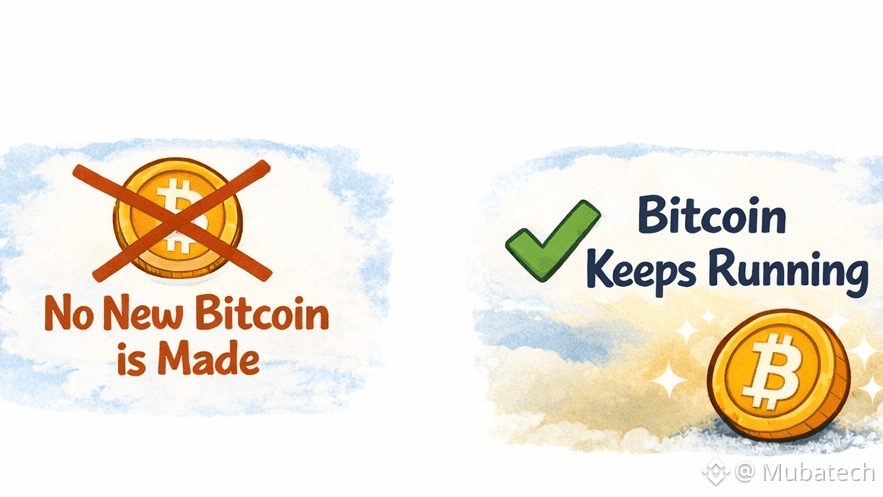
What Happen After all BitCoin is Mined🤔---
What Happens After All 21 Million Bitcoins Are Mined
Bitcoin’s total supply is capped at 21 million coins. This fixed limit is a core part of the protocol and is expected to be reached around the year 2140. While this milestone marks the end of new bitcoin issuance, it does not mean the network stops functioning.
I will guide you step by step stay with me ✊
---
1. No New Bitcoins Will Be Created
Bitcoin’s issuance follows a predictable schedule. Approximately every four years, the block reward (new BTC awarded to miners) is reduced by half through an event known as the “halving.” Eventually, this reward will reach zero. Once that happens:
- No new bitcoins will enter circulation
- The total supply will be permanently capped at 21 million BTC
- Inflation within the Bitcoin network effectively end.
What Happen After all BitCoin is Mined🤔
---
What Happens After All 21 Million Bitcoins Are Mined
Bitcoin’s total supply is capped at 21 million coins. This fixed limit is a core part of the protocol and is expected to be reached around the year 2140. While this milestone marks the end of new bitcoin issuance, it does not mean the network stops functioning.
I will guide you step by step stay with me ✊
---
1. No New Bitcoins Will Be Created
Bitcoin’s issuance follows a predictable schedule. Approximately every four years, the block reward (new BTC awarded to miners) is reduced by half through an event known as the “halving.” Eventually, this reward will reach zero. Once that happens:
- No new bitcoins will enter circulation
- The total supply will be permanently capped at 21 million BTC
- Inflation within the Bitcoin network effectively end.
What Happens After All 21 Million Bitcoins Are Mined
Bitcoin’s total supply is capped at 21 million coins. This fixed limit is a core part of the protocol and is expected to be reached around the year 2140. While this milestone marks the end of new bitcoin issuance, it does not mean the network stops functioning.
I will guide you step by step stay with me ✊
---
1. No New Bitcoins Will Be Created
Bitcoin’s issuance follows a predictable schedule. Approximately every four years, the block reward (new BTC awarded to miners) is reduced by half through an event known as the “halving.” Eventually, this reward will reach zero. Once that happens:
- No new bitcoins will enter circulation
- The total supply will be permanently capped at 21 million BTC
- Inflation within the Bitcoin network effectively end.
2
9
115
·
--
Bullish
$KAT
{spot}(KATUSDT)
New campaghn is live on binance trading competition which joining time is ending soon so now fast go and join the katana coin campaign
Note: join campaghin nd must maitan the leader board rank .
$KAT
New campaghn is live on binance trading competition which joining time is ending soon so now fast go and join the katana coin campaign
Note: join campaghin nd must maitan the leader board rank .
New campaghn is live on binance trading competition which joining time is ending soon so now fast go and join the katana coin campaign
Note: join campaghin nd must maitan the leader board rank .
1
100
·
--
Article
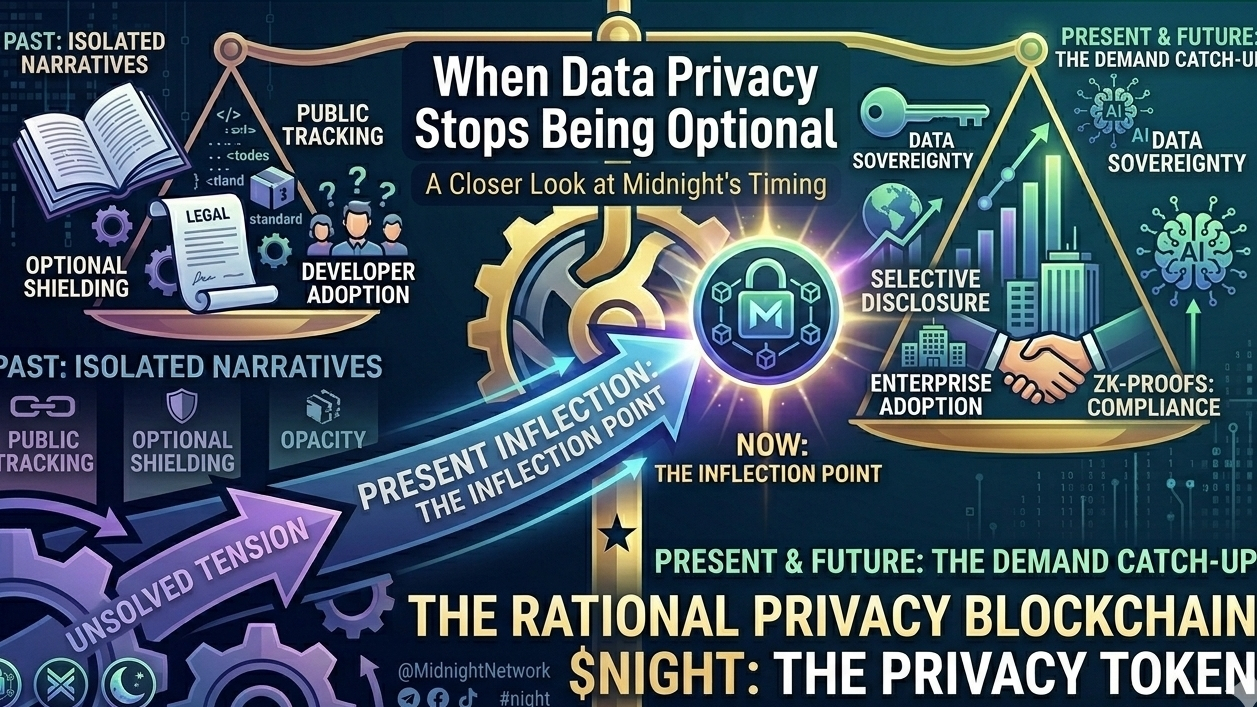
When Data Privacy Stops Being Optional: A Closer Look at Midnight’s TimingFor years, crypto has moved from one narrative to another — DeFi, NFTs, scaling — each gaining traction when technology and real-world demand finally aligned. What’s becoming clearer now is that data privacy may be approaching a similar turning point, not as a niche concern, but as a structural necessity.
Part of this shift comes from scale. With billions of people online, the amount of personal data being generated — and quietly collected — has reached levels that are difficult to ignore. Entire industries have formed around aggregating and selling this data, often without meaningful user awareness. At the same time, regulators across regions are beginning to respond, turning privacy into not just a technical issue, but a political and economic priority.
This broader context makes the conversation around blockchain privacy more relevant — and also more complicated.
The Limits of Existing Privacy Models
One of the uncomfortable truths in crypto is that most public blockchains were never designed for privacy. Transactions may not directly reveal identities, but patterns can often be traced with enough data and the right tools. This has led to the rise of analytics firms that specialize in mapping on-chain behavior, effectively reducing anonymity over time.
Earlier attempts to solve this introduced fully private systems or optional shielding. While these approaches pushed the technology forward, they also introduced a new problem: complete opacity. For institutions, enterprises, and regulated environments, operating in a system where nothing can be verified becomes a barrier rather than a feature.
This creates a persistent tension. Privacy is necessary, but so is accountability. Until recently, most solutions leaned heavily toward one side.
Midnight’s Approach to Selective Disclosure
What caught my attention with @MidnightNetwork is the attempt to approach this problem from a different angle. Instead of treating privacy and compliance as opposing forces, the design leans toward selective disclosure — the ability to prove specific facts without revealing the underlying data.
In practical terms, this could mean verifying eligibility, identity attributes, or financial conditions without exposing sensitive details. The underlying mechanism relies on zero-knowledge proofs, but the application here feels more aligned with data ownership than just scaling efficiency.
This distinction matters. Many projects have explored ZK technology, but often in the context of throughput and cost reduction. Midnight’s positioning suggests a focus on how individuals and organizations interact with data itself — who controls it, what is revealed, and under what conditions.
The network, powered by $NIGHT, is designed to support these privacy-preserving interactions while maintaining a structure that can still align with regulatory expectations. That balance, if achieved, would place it in a relatively unique position within the broader ecosystem.
Why Timing Matters More Than Ever
What makes this development particularly interesting is not just the technology, but the timing. Conversations around digital identity, AI data usage, and regulatory oversight are accelerating simultaneously. Enterprises exploring blockchain are increasingly concerned about exposing sensitive business data on transparent ledgers.
In that sense, the demand is starting to catch up with the capabilities being developed.
Midnight appears to sit at the intersection of several emerging trends: privacy regulation, enterprise adoption of blockchain, and the growing importance of data sovereignty. These are not short-term narratives, but longer-term structural shifts that could define the next phase of the industry.
Balancing Opportunity and Uncertainty
That said, it’s still early. Building scalable privacy infrastructure is not trivial. Zero-knowledge systems come with computational challenges, and integrating them into real-world applications requires both technical maturity and developer adoption. There is also the broader uncertainty around how regulators will treat privacy-focused blockchain solutions as they evolve.
At the same time, the potential market for data privacy infrastructure is substantial, and still largely underserved within crypto.
Whether $NIGHT ultimately becomes central to this narrative will depend on execution more than positioning. But the broader trend is difficult to ignore. Data privacy is no longer a side conversation — it is becoming a foundational question for how digital systems operate.
And for a space that has often prioritized transparency above all else, learning how to integrate privacy without losing trust may be one of its most important challenges going forward.
#midnight #night
When Data Privacy Stops Being Optional: A Closer Look at Midnight’s Timing
For years, crypto has moved from one narrative to another — DeFi, NFTs, scaling — each gaining traction when technology and real-world demand finally aligned. What’s becoming clearer now is that data privacy may be approaching a similar turning point, not as a niche concern, but as a structural necessity.
Part of this shift comes from scale. With billions of people online, the amount of personal data being generated — and quietly collected — has reached levels that are difficult to ignore. Entire industries have formed around aggregating and selling this data, often without meaningful user awareness. At the same time, regulators across regions are beginning to respond, turning privacy into not just a technical issue, but a political and economic priority.
This broader context makes the conversation around blockchain privacy more relevant — and also more complicated.
The Limits of Existing Privacy Models
One of the uncomfortable truths in crypto is that most public blockchains were never designed for privacy. Transactions may not directly reveal identities, but patterns can often be traced with enough data and the right tools. This has led to the rise of analytics firms that specialize in mapping on-chain behavior, effectively reducing anonymity over time.
Earlier attempts to solve this introduced fully private systems or optional shielding. While these approaches pushed the technology forward, they also introduced a new problem: complete opacity. For institutions, enterprises, and regulated environments, operating in a system where nothing can be verified becomes a barrier rather than a feature.
This creates a persistent tension. Privacy is necessary, but so is accountability. Until recently, most solutions leaned heavily toward one side.
Midnight’s Approach to Selective Disclosure
What caught my attention with @MidnightNetwork is the attempt to approach this problem from a different angle. Instead of treating privacy and compliance as opposing forces, the design leans toward selective disclosure — the ability to prove specific facts without revealing the underlying data.
In practical terms, this could mean verifying eligibility, identity attributes, or financial conditions without exposing sensitive details. The underlying mechanism relies on zero-knowledge proofs, but the application here feels more aligned with data ownership than just scaling efficiency.
This distinction matters. Many projects have explored ZK technology, but often in the context of throughput and cost reduction. Midnight’s positioning suggests a focus on how individuals and organizations interact with data itself — who controls it, what is revealed, and under what conditions.
The network, powered by $NIGHT , is designed to support these privacy-preserving interactions while maintaining a structure that can still align with regulatory expectations. That balance, if achieved, would place it in a relatively unique position within the broader ecosystem.
Why Timing Matters More Than Ever
What makes this development particularly interesting is not just the technology, but the timing. Conversations around digital identity, AI data usage, and regulatory oversight are accelerating simultaneously. Enterprises exploring blockchain are increasingly concerned about exposing sensitive business data on transparent ledgers.
In that sense, the demand is starting to catch up with the capabilities being developed.
Midnight appears to sit at the intersection of several emerging trends: privacy regulation, enterprise adoption of blockchain, and the growing importance of data sovereignty. These are not short-term narratives, but longer-term structural shifts that could define the next phase of the industry.
Balancing Opportunity and Uncertainty
That said, it’s still early. Building scalable privacy infrastructure is not trivial. Zero-knowledge systems come with computational challenges, and integrating them into real-world applications requires both technical maturity and developer adoption. There is also the broader uncertainty around how regulators will treat privacy-focused blockchain solutions as they evolve.
At the same time, the potential market for data privacy infrastructure is substantial, and still largely underserved within crypto.
Whether $NIGHT ultimately becomes central to this narrative will depend on execution more than positioning. But the broader trend is difficult to ignore. Data privacy is no longer a side conversation — it is becoming a foundational question for how digital systems operate.
And for a space that has often prioritized transparency above all else, learning how to integrate privacy without losing trust may be one of its most important challenges going forward.
#midnight #night
Part of this shift comes from scale. With billions of people online, the amount of personal data being generated — and quietly collected — has reached levels that are difficult to ignore. Entire industries have formed around aggregating and selling this data, often without meaningful user awareness. At the same time, regulators across regions are beginning to respond, turning privacy into not just a technical issue, but a political and economic priority.
This broader context makes the conversation around blockchain privacy more relevant — and also more complicated.
The Limits of Existing Privacy Models
One of the uncomfortable truths in crypto is that most public blockchains were never designed for privacy. Transactions may not directly reveal identities, but patterns can often be traced with enough data and the right tools. This has led to the rise of analytics firms that specialize in mapping on-chain behavior, effectively reducing anonymity over time.
Earlier attempts to solve this introduced fully private systems or optional shielding. While these approaches pushed the technology forward, they also introduced a new problem: complete opacity. For institutions, enterprises, and regulated environments, operating in a system where nothing can be verified becomes a barrier rather than a feature.
This creates a persistent tension. Privacy is necessary, but so is accountability. Until recently, most solutions leaned heavily toward one side.
Midnight’s Approach to Selective Disclosure
What caught my attention with @MidnightNetwork is the attempt to approach this problem from a different angle. Instead of treating privacy and compliance as opposing forces, the design leans toward selective disclosure — the ability to prove specific facts without revealing the underlying data.
In practical terms, this could mean verifying eligibility, identity attributes, or financial conditions without exposing sensitive details. The underlying mechanism relies on zero-knowledge proofs, but the application here feels more aligned with data ownership than just scaling efficiency.
This distinction matters. Many projects have explored ZK technology, but often in the context of throughput and cost reduction. Midnight’s positioning suggests a focus on how individuals and organizations interact with data itself — who controls it, what is revealed, and under what conditions.
The network, powered by $NIGHT , is designed to support these privacy-preserving interactions while maintaining a structure that can still align with regulatory expectations. That balance, if achieved, would place it in a relatively unique position within the broader ecosystem.
Why Timing Matters More Than Ever
What makes this development particularly interesting is not just the technology, but the timing. Conversations around digital identity, AI data usage, and regulatory oversight are accelerating simultaneously. Enterprises exploring blockchain are increasingly concerned about exposing sensitive business data on transparent ledgers.
In that sense, the demand is starting to catch up with the capabilities being developed.
Midnight appears to sit at the intersection of several emerging trends: privacy regulation, enterprise adoption of blockchain, and the growing importance of data sovereignty. These are not short-term narratives, but longer-term structural shifts that could define the next phase of the industry.
Balancing Opportunity and Uncertainty
That said, it’s still early. Building scalable privacy infrastructure is not trivial. Zero-knowledge systems come with computational challenges, and integrating them into real-world applications requires both technical maturity and developer adoption. There is also the broader uncertainty around how regulators will treat privacy-focused blockchain solutions as they evolve.
At the same time, the potential market for data privacy infrastructure is substantial, and still largely underserved within crypto.
Whether $NIGHT ultimately becomes central to this narrative will depend on execution more than positioning. But the broader trend is difficult to ignore. Data privacy is no longer a side conversation — it is becoming a foundational question for how digital systems operate.
And for a space that has often prioritized transparency above all else, learning how to integrate privacy without losing trust may be one of its most important challenges going forward.
#midnight #night
1
42
·
--
Article
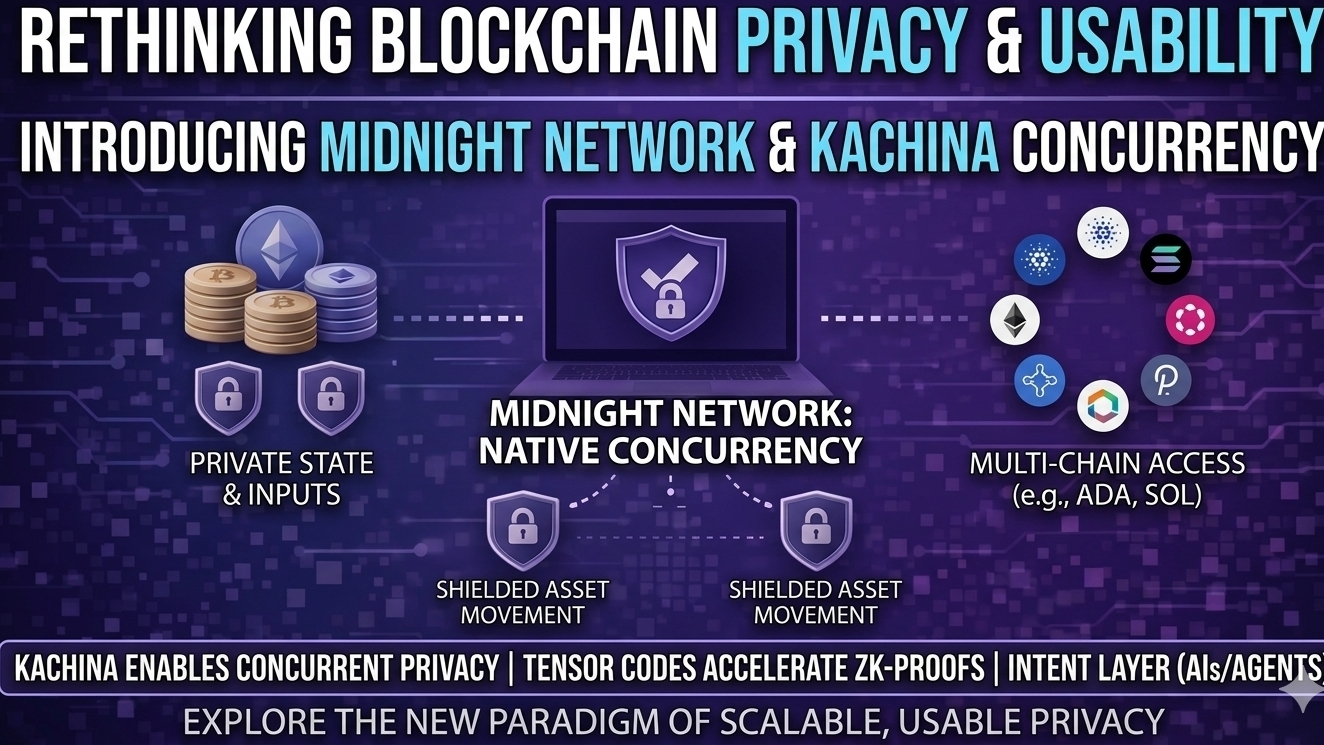
Rethinking Privacy and Usability in Blockchain SystemsOne of the persistent challenges in blockchain design is balancing privacy with usability. On one side, users and developers want systems where sensitive data, identities, and business logic remain confidential. On the other, they expect responsive applications that support multiple participants interacting in real time. Historically, achieving both at once has proven difficult.
Most privacy-focused systems tend to work well in isolated scenarios. However, once multiple users begin interacting with the same application state, problems emerge. Either the system sacrifices privacy by exposing more data than intended, or it slows down due to the complexity of coordinating hidden information. This trade-off has limited the practical adoption of private smart contracts in real-world applications.
Concurrency and the Kachina Approach
Concurrency is a fundamental requirement for modern applications. Whether it is financial platforms, supply chain systems, or digital identity frameworks, multiple users need to act on shared data simultaneously. In public blockchains, this is relatively straightforward because all state is visible. In private systems, however, maintaining confidentiality while allowing concurrent interactions becomes significantly more complex.
Midnight Network approaches this problem through a concept known as Kachina. Instead of restricting user interactions or enforcing rigid transaction ordering, Kachina introduces a structured method for handling concurrent private transactions. This allows multiple participants to interact with the same contract logic without exposing underlying data.
The importance of this approach becomes clear when considering real-world use cases. Auctions, collaborative workflows, and financial agreements all depend on multiple actors operating at the same time. Without effective concurrency, private smart contracts remain limited in scope. With it, they begin to resemble practical infrastructure capable of supporting real applications.
Architecture Designed for Privacy at Scale
Beyond concurrency, Midnight’s architecture reflects a broader attempt to rethink how private computation is handled. The execution environment operates as a localized private layer where contract logic is processed away from public visibility. This separation allows sensitive operations to occur securely before interacting with the wider network.
The networking layer, referred to as Nightstream, is designed to maintain low-latency communication between nodes while preserving confidentiality. This is particularly important because privacy systems often struggle with performance. By focusing on efficient communication, Midnight aims to ensure that privacy does not come at the cost of usability.
Another notable aspect is the use of Tensor Codes for zero-knowledge proof generation. These structures are aligned with GPU hardware, which has seen rapid advancement due to artificial intelligence workloads. As GPU capabilities improve, the cost and speed of generating proofs also improve. This alignment with existing hardware trends suggests a practical approach to scaling privacy technologies over time.
Consensus and the Evolution of Proof Systems
Midnight introduces a hybrid consensus mechanism known as Minotaur. By combining elements of proof-of-work and proof-of-stake, the network is able to draw security from multiple sources rather than relying on a single model. This blended approach reflects an attempt to balance security, efficiency, and adaptability.
In addition, the network incorporates a technique called Folding to optimize zero-knowledge proofs. As computations grow larger, the associated proofs can become difficult to manage. Folding reduces this complexity, making verification more efficient and enabling the system to handle more demanding workloads.
These optimizations may appear technical, but they are essential for scaling privacy beyond experimental environments. Without them, the gap between theoretical capability and real-world performance would remain significant.
The Shift Toward Intent-Based Systems
Perhaps the most forward-looking idea within Midnight is the concept of a Universal Intention Layer. Traditional smart contracts require developers to define every step of execution in detail. This procedural approach can be limiting, especially as applications grow more complex.
Midnight proposes a model where users define their intent, and the network determines how to execute it privately across systems. This abstraction could simplify development while enabling more flexible interactions between different networks and services.
The implications become even more interesting when considering the role of autonomous agents. As AI systems increasingly participate in digital economies, they will require infrastructure that can coordinate actions securely and privately. Midnight’s combination of decentralized identities, zero-knowledge proofs, and private computation begins to outline a framework for such interactions.
In a space where many projects focus on incremental improvements, Midnight appears to be addressing deeper structural challenges. Its approach suggests that the future of blockchain may depend not only on scalability or speed, but on how effectively systems can integrate privacy into complex, multi-user environments.
#night @MidnightNetwork
$NIGHT
Rethinking Privacy and Usability in Blockchain Systems
One of the persistent challenges in blockchain design is balancing privacy with usability. On one side, users and developers want systems where sensitive data, identities, and business logic remain confidential. On the other, they expect responsive applications that support multiple participants interacting in real time. Historically, achieving both at once has proven difficult.
Most privacy-focused systems tend to work well in isolated scenarios. However, once multiple users begin interacting with the same application state, problems emerge. Either the system sacrifices privacy by exposing more data than intended, or it slows down due to the complexity of coordinating hidden information. This trade-off has limited the practical adoption of private smart contracts in real-world applications.
Concurrency and the Kachina Approach
Concurrency is a fundamental requirement for modern applications. Whether it is financial platforms, supply chain systems, or digital identity frameworks, multiple users need to act on shared data simultaneously. In public blockchains, this is relatively straightforward because all state is visible. In private systems, however, maintaining confidentiality while allowing concurrent interactions becomes significantly more complex.
Midnight Network approaches this problem through a concept known as Kachina. Instead of restricting user interactions or enforcing rigid transaction ordering, Kachina introduces a structured method for handling concurrent private transactions. This allows multiple participants to interact with the same contract logic without exposing underlying data.
The importance of this approach becomes clear when considering real-world use cases. Auctions, collaborative workflows, and financial agreements all depend on multiple actors operating at the same time. Without effective concurrency, private smart contracts remain limited in scope. With it, they begin to resemble practical infrastructure capable of supporting real applications.
Architecture Designed for Privacy at Scale
Beyond concurrency, Midnight’s architecture reflects a broader attempt to rethink how private computation is handled. The execution environment operates as a localized private layer where contract logic is processed away from public visibility. This separation allows sensitive operations to occur securely before interacting with the wider network.
The networking layer, referred to as Nightstream, is designed to maintain low-latency communication between nodes while preserving confidentiality. This is particularly important because privacy systems often struggle with performance. By focusing on efficient communication, Midnight aims to ensure that privacy does not come at the cost of usability.
Another notable aspect is the use of Tensor Codes for zero-knowledge proof generation. These structures are aligned with GPU hardware, which has seen rapid advancement due to artificial intelligence workloads. As GPU capabilities improve, the cost and speed of generating proofs also improve. This alignment with existing hardware trends suggests a practical approach to scaling privacy technologies over time.
Consensus and the Evolution of Proof Systems
Midnight introduces a hybrid consensus mechanism known as Minotaur. By combining elements of proof-of-work and proof-of-stake, the network is able to draw security from multiple sources rather than relying on a single model. This blended approach reflects an attempt to balance security, efficiency, and adaptability.
In addition, the network incorporates a technique called Folding to optimize zero-knowledge proofs. As computations grow larger, the associated proofs can become difficult to manage. Folding reduces this complexity, making verification more efficient and enabling the system to handle more demanding workloads.
These optimizations may appear technical, but they are essential for scaling privacy beyond experimental environments. Without them, the gap between theoretical capability and real-world performance would remain significant.
The Shift Toward Intent-Based Systems
Perhaps the most forward-looking idea within Midnight is the concept of a Universal Intention Layer. Traditional smart contracts require developers to define every step of execution in detail. This procedural approach can be limiting, especially as applications grow more complex.
Midnight proposes a model where users define their intent, and the network determines how to execute it privately across systems. This abstraction could simplify development while enabling more flexible interactions between different networks and services.
The implications become even more interesting when considering the role of autonomous agents. As AI systems increasingly participate in digital economies, they will require infrastructure that can coordinate actions securely and privately. Midnight’s combination of decentralized identities, zero-knowledge proofs, and private computation begins to outline a framework for such interactions.
In a space where many projects focus on incremental improvements, Midnight appears to be addressing deeper structural challenges. Its approach suggests that the future of blockchain may depend not only on scalability or speed, but on how effectively systems can integrate privacy into complex, multi-user environments.
#night @MidnightNetwork
$NIGHT
Most privacy-focused systems tend to work well in isolated scenarios. However, once multiple users begin interacting with the same application state, problems emerge. Either the system sacrifices privacy by exposing more data than intended, or it slows down due to the complexity of coordinating hidden information. This trade-off has limited the practical adoption of private smart contracts in real-world applications.
Concurrency and the Kachina Approach
Concurrency is a fundamental requirement for modern applications. Whether it is financial platforms, supply chain systems, or digital identity frameworks, multiple users need to act on shared data simultaneously. In public blockchains, this is relatively straightforward because all state is visible. In private systems, however, maintaining confidentiality while allowing concurrent interactions becomes significantly more complex.
Midnight Network approaches this problem through a concept known as Kachina. Instead of restricting user interactions or enforcing rigid transaction ordering, Kachina introduces a structured method for handling concurrent private transactions. This allows multiple participants to interact with the same contract logic without exposing underlying data.
The importance of this approach becomes clear when considering real-world use cases. Auctions, collaborative workflows, and financial agreements all depend on multiple actors operating at the same time. Without effective concurrency, private smart contracts remain limited in scope. With it, they begin to resemble practical infrastructure capable of supporting real applications.
Architecture Designed for Privacy at Scale
Beyond concurrency, Midnight’s architecture reflects a broader attempt to rethink how private computation is handled. The execution environment operates as a localized private layer where contract logic is processed away from public visibility. This separation allows sensitive operations to occur securely before interacting with the wider network.
The networking layer, referred to as Nightstream, is designed to maintain low-latency communication between nodes while preserving confidentiality. This is particularly important because privacy systems often struggle with performance. By focusing on efficient communication, Midnight aims to ensure that privacy does not come at the cost of usability.
Another notable aspect is the use of Tensor Codes for zero-knowledge proof generation. These structures are aligned with GPU hardware, which has seen rapid advancement due to artificial intelligence workloads. As GPU capabilities improve, the cost and speed of generating proofs also improve. This alignment with existing hardware trends suggests a practical approach to scaling privacy technologies over time.
Consensus and the Evolution of Proof Systems
Midnight introduces a hybrid consensus mechanism known as Minotaur. By combining elements of proof-of-work and proof-of-stake, the network is able to draw security from multiple sources rather than relying on a single model. This blended approach reflects an attempt to balance security, efficiency, and adaptability.
In addition, the network incorporates a technique called Folding to optimize zero-knowledge proofs. As computations grow larger, the associated proofs can become difficult to manage. Folding reduces this complexity, making verification more efficient and enabling the system to handle more demanding workloads.
These optimizations may appear technical, but they are essential for scaling privacy beyond experimental environments. Without them, the gap between theoretical capability and real-world performance would remain significant.
The Shift Toward Intent-Based Systems
Perhaps the most forward-looking idea within Midnight is the concept of a Universal Intention Layer. Traditional smart contracts require developers to define every step of execution in detail. This procedural approach can be limiting, especially as applications grow more complex.
Midnight proposes a model where users define their intent, and the network determines how to execute it privately across systems. This abstraction could simplify development while enabling more flexible interactions between different networks and services.
The implications become even more interesting when considering the role of autonomous agents. As AI systems increasingly participate in digital economies, they will require infrastructure that can coordinate actions securely and privately. Midnight’s combination of decentralized identities, zero-knowledge proofs, and private computation begins to outline a framework for such interactions.
In a space where many projects focus on incremental improvements, Midnight appears to be addressing deeper structural challenges. Its approach suggests that the future of blockchain may depend not only on scalability or speed, but on how effectively systems can integrate privacy into complex, multi-user environments.
#night @MidnightNetwork
$NIGHT
2
2
17
·
--
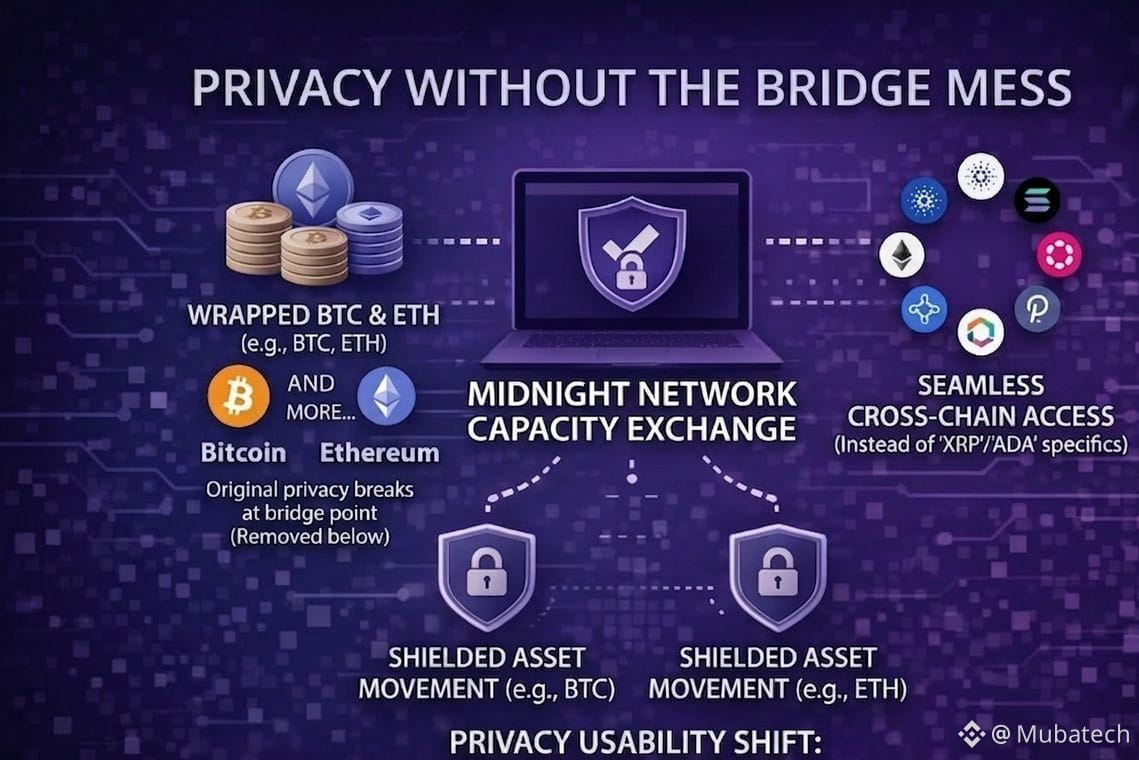
𝐏𝐫𝐢𝐯𝐚𝐜𝐲 𝐖𝐢𝐭𝐡𝐨𝐮𝐭 𝐭𝐡𝐞 𝐁𝐫𝐢𝐝𝐠𝐞 𝐌𝐞𝐬𝐬
In crypto, privacy often breaks when assets move across chains. That complexity usually pushes users away.
With MidnightNetwork, the idea feels different. Capacity Exchange allows assets like BTC or ETH to move as shielded transactions, without relying on messy bridges.
Built on a structured model similar to EUTXO, it simplifies how privacy works at the user level.
Maybe the real shift isn’t technical — it’s making privacy usable.
#night $NIGHT @MidnightNetwork
𝐏𝐫𝐢𝐯𝐚𝐜𝐲 𝐖𝐢𝐭𝐡𝐨𝐮𝐭 𝐭𝐡𝐞 𝐁𝐫𝐢𝐝𝐠𝐞 𝐌𝐞𝐬𝐬
In crypto, privacy often breaks when assets move across chains. That complexity usually pushes users away.
With MidnightNetwork, the idea feels different. Capacity Exchange allows assets like BTC or ETH to move as shielded transactions, without relying on messy bridges.
Built on a structured model similar to EUTXO, it simplifies how privacy works at the user level.
Maybe the real shift isn’t technical — it’s making privacy usable.
#night $NIGHT @MidnightNetwork
In crypto, privacy often breaks when assets move across chains. That complexity usually pushes users away.
With MidnightNetwork, the idea feels different. Capacity Exchange allows assets like BTC or ETH to move as shielded transactions, without relying on messy bridges.
Built on a structured model similar to EUTXO, it simplifies how privacy works at the user level.
Maybe the real shift isn’t technical — it’s making privacy usable.
#night $NIGHT @MidnightNetwork
2
6
46
·
--
Article
When Privacy Becomes Visible: Inside the Living Experiment of Midnight CityIn crypto, many ideas sound compelling in theory. Privacy, zero-knowledge systems, and selective disclosure are discussed often, but for most people these concepts remain abstract. The real challenge has always been making these ideas visible — showing how they behave in a living system rather than just describing them in technical papers.
That’s one reason the concept of Midnight City stands out.
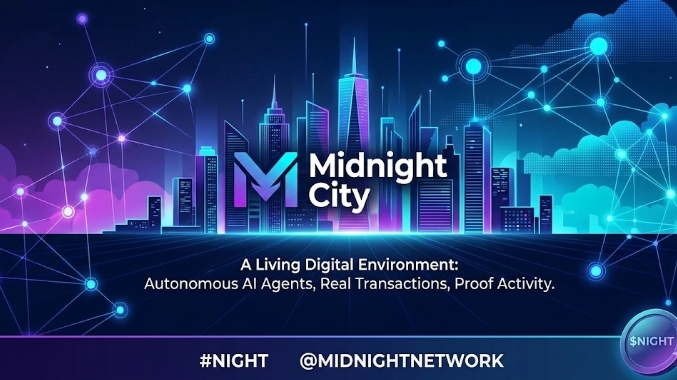
Instead of presenting privacy infrastructure as a static explanation, @MidnightNetwork is experimenting with something more interactive. Midnight City is described as a living digital environment populated by autonomous AI agents. These agents don’t just exist for demonstration — they generate transactions, interact with one another, and produce real proof activity on the Midnight network.
What makes this interesting is the way it turns a complex idea into something observable. Rather than asking people to imagine how rational privacy might function, Midnight City lets visitors explore it. Users can move through different districts, inspect transactions taking place in the system, and even toggle disclosure views to see how information can remain private while still allowing necessary verification.
In many ways, it feels less like a simulation and more like a window into how privacy-preserving networks might operate once they become active ecosystems. Transactions happen, proofs are generated, and activity unfolds in real time. The environment becomes a kind of sandbox where the mechanics of the network can be observed rather than simply explained.
Of course, experiments like this also highlight the broader challenge facing privacy-focused infrastructure. Building the technology is one step, but helping people understand and trust it is another. Tools that make complex systems visible may end up being just as important as the underlying cryptography itself.
Whether Midnight City ultimately becomes a core part of the ecosystem or simply an educational experiment, it reflects an interesting direction for the industry. Instead of asking users to blindly trust privacy systems, projects may increasingly focus on making them transparent in their own unique way.
For those curious about how this idea is evolving, it’s worth keeping an eye on @MidnightNetwork and the ongoing development around $NIGHT .
#NİGHT
When Privacy Becomes Visible: Inside the Living Experiment of Midnight City
In crypto, many ideas sound compelling in theory. Privacy, zero-knowledge systems, and selective disclosure are discussed often, but for most people these concepts remain abstract. The real challenge has always been making these ideas visible — showing how they behave in a living system rather than just describing them in technical papers.
That’s one reason the concept of Midnight City stands out.
Instead of presenting privacy infrastructure as a static explanation, @MidnightNetwork is experimenting with something more interactive. Midnight City is described as a living digital environment populated by autonomous AI agents. These agents don’t just exist for demonstration — they generate transactions, interact with one another, and produce real proof activity on the Midnight network.
What makes this interesting is the way it turns a complex idea into something observable. Rather than asking people to imagine how rational privacy might function, Midnight City lets visitors explore it. Users can move through different districts, inspect transactions taking place in the system, and even toggle disclosure views to see how information can remain private while still allowing necessary verification.
In many ways, it feels less like a simulation and more like a window into how privacy-preserving networks might operate once they become active ecosystems. Transactions happen, proofs are generated, and activity unfolds in real time. The environment becomes a kind of sandbox where the mechanics of the network can be observed rather than simply explained.
Of course, experiments like this also highlight the broader challenge facing privacy-focused infrastructure. Building the technology is one step, but helping people understand and trust it is another. Tools that make complex systems visible may end up being just as important as the underlying cryptography itself.
Whether Midnight City ultimately becomes a core part of the ecosystem or simply an educational experiment, it reflects an interesting direction for the industry. Instead of asking users to blindly trust privacy systems, projects may increasingly focus on making them transparent in their own unique way.
For those curious about how this idea is evolving, it’s worth keeping an eye on @MidnightNetwork and the ongoing development around $NIGHT .
#NİGHT
That’s one reason the concept of Midnight City stands out.
Instead of presenting privacy infrastructure as a static explanation, @MidnightNetwork is experimenting with something more interactive. Midnight City is described as a living digital environment populated by autonomous AI agents. These agents don’t just exist for demonstration — they generate transactions, interact with one another, and produce real proof activity on the Midnight network.
What makes this interesting is the way it turns a complex idea into something observable. Rather than asking people to imagine how rational privacy might function, Midnight City lets visitors explore it. Users can move through different districts, inspect transactions taking place in the system, and even toggle disclosure views to see how information can remain private while still allowing necessary verification.
In many ways, it feels less like a simulation and more like a window into how privacy-preserving networks might operate once they become active ecosystems. Transactions happen, proofs are generated, and activity unfolds in real time. The environment becomes a kind of sandbox where the mechanics of the network can be observed rather than simply explained.
Of course, experiments like this also highlight the broader challenge facing privacy-focused infrastructure. Building the technology is one step, but helping people understand and trust it is another. Tools that make complex systems visible may end up being just as important as the underlying cryptography itself.
Whether Midnight City ultimately becomes a core part of the ecosystem or simply an educational experiment, it reflects an interesting direction for the industry. Instead of asking users to blindly trust privacy systems, projects may increasingly focus on making them transparent in their own unique way.
For those curious about how this idea is evolving, it’s worth keeping an eye on @MidnightNetwork and the ongoing development around $NIGHT .
#NİGHT
2
4
33
·
--
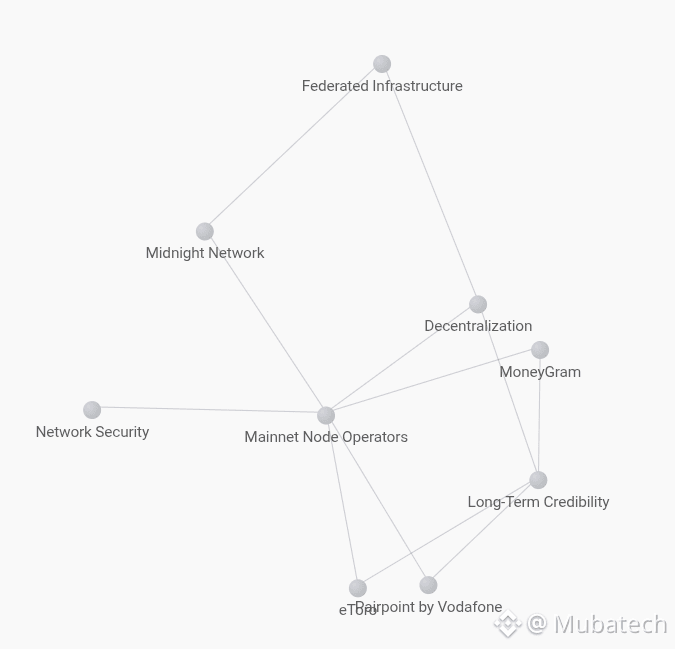
#night $NIGHT As crypto networks mature, the conversation often shifts from experimentation to infrastructure. Who secures the network, and how decentralized that responsibility becomes, can shape long-term credibility.
That’s why the latest update from @MidnightNetwork is notable. With Pairpoint by Vodafone, eToro, and MoneyGram joining as mainnet node operators, the network’s federated infrastructure begins to reflect a broader institutional footprint.
#night $NIGHT As crypto networks mature, the conversation often shifts from experimentation to infrastructure. Who secures the network, and how decentralized that responsibility becomes, can shape long-term credibility.
That’s why the latest update from @MidnightNetwork is notable. With Pairpoint by Vodafone, eToro, and MoneyGram joining as mainnet node operators, the network’s federated infrastructure begins to reflect a broader institutional footprint.
That’s why the latest update from @MidnightNetwork is notable. With Pairpoint by Vodafone, eToro, and MoneyGram joining as mainnet node operators, the network’s federated infrastructure begins to reflect a broader institutional footprint.
5
49
·
--
🎙️ Newcomer’s first stop: Experience sharing!
Daily from 9 AM to 12 PM,
End
04 h 08 m 13 s
5.5k
48
30
·
--
In crypto, it’s easy to talk about privacy in theory. What’s harder is showing how it actually works in a live environment. That’s why the idea behind Midnight City caught my attention.
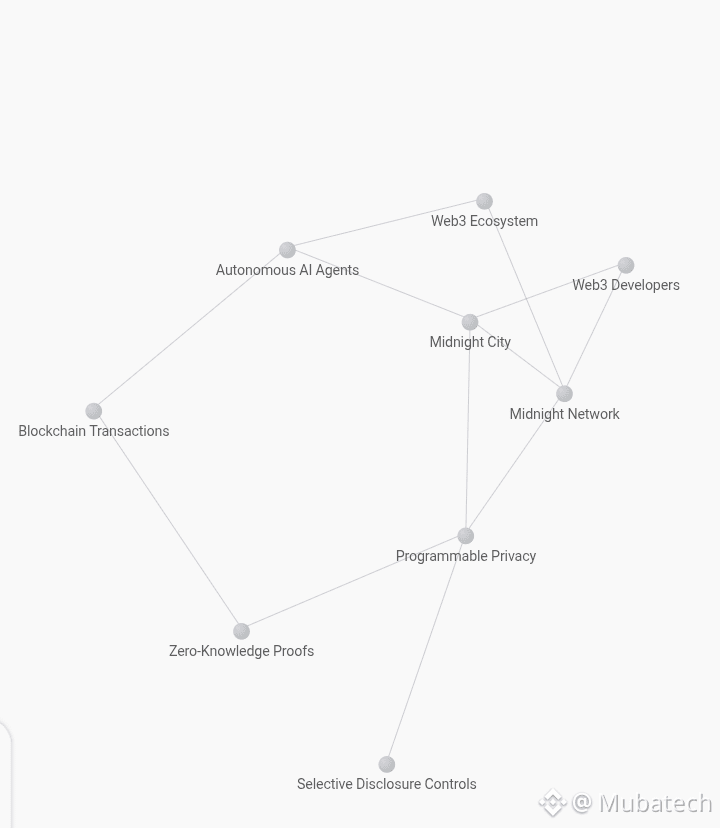
Inside this digital city, autonomous AI agents interact, create transactions, and generate real proof activity on the network. It turns abstract privacy concepts into something observable and interactive.
Curious how this unfolds? It’s worth exploring what @MidnightNetwork is experimenting with here.
[https://www.binance.com/en/square/profile/midnightnetwork](https://www.binance.com/en/square/profile/midnightnetwork)
$NIGHT #night
In crypto, it’s easy to talk about privacy in theory. What’s harder is showing how it actually works in a live environment. That’s why the idea behind Midnight City caught my attention.
Inside this digital city, autonomous AI agents interact, create transactions, and generate real proof activity on the network. It turns abstract privacy concepts into something observable and interactive.
Curious how this unfolds? It’s worth exploring what @MidnightNetwork is experimenting with here.
https://www.binance.com/en/square/profile/midnightnetwork
$NIGHT #night
Inside this digital city, autonomous AI agents interact, create transactions, and generate real proof activity on the network. It turns abstract privacy concepts into something observable and interactive.
Curious how this unfolds? It’s worth exploring what @MidnightNetwork is experimenting with here.
https://www.binance.com/en/square/profile/midnightnetwork
$NIGHT #night
2
35
·
--
CLAIM YOUR A2Z PACKET:
[https://app.binance.com/uni-qr/E9z3ioYM?utm_medium=web_share_copy ](https://app.binance.com/uni-qr/E9z3ioYM?utm_medium=web_share_copy )
Question for the gamers: Which game in the Arena-Z ecosystem is your favorite right now? LOK Chronicle or LOK Hunters? Let’s talk below! 👇$A2Z
{spot}(A2ZUSDT)
#A2Z #ArenaZ #Web3Gaming #GameFi #BinanceSquare #LOKA
CLAIM YOUR A2Z PACKET:
https://app.binance.com/uni-qr/E9z3ioYM?utm_medium=web_share_copy
Question for the gamers: Which game in the Arena-Z ecosystem is your favorite right now? LOK Chronicle or LOK Hunters? Let’s talk below! 👇$A2Z
#A2Z #ArenaZ #Web3Gaming #GameFi #BinanceSquare #LOKA
https://app.binance.com/uni-qr/E9z3ioYM?utm_medium=web_share_copy
Question for the gamers: Which game in the Arena-Z ecosystem is your favorite right now? LOK Chronicle or LOK Hunters? Let’s talk below! 👇$A2Z
#A2Z #ArenaZ #Web3Gaming #GameFi #BinanceSquare #LOKA
1
8
·
--
$ZAMA
{spot}(ZAMAUSDT)
Discover Zama – The Future of Private AI! 🚀
Unlock AI power without sacrificing data privacy. Zama’s cutting‑edge homomorphic encryption lets you run machine learning models on encrypted data—meaning your information stays secure, confidential, and compliant.
$ZAMA
Discover Zama – The Future of Private AI! 🚀
Unlock AI power without sacrificing data privacy. Zama’s cutting‑edge homomorphic encryption lets you run machine learning models on encrypted data—meaning your information stays secure, confidential, and compliant.
Discover Zama – The Future of Private AI! 🚀
Unlock AI power without sacrificing data privacy. Zama’s cutting‑edge homomorphic encryption lets you run machine learning models on encrypted data—meaning your information stays secure, confidential, and compliant.
1
125
·
--
$SENT
{spot}(SENTUSDT)
I think sent is pump so trade sent coin
$SENT
I think sent is pump so trade sent coin
I think sent is pump so trade sent coin
1
63
·
--
February Red Packet is Live || get free $OG
{spot}(OGUSDT)
tokens 🎁
👉 click here
Simple participation, small but real rewards.
Share to unlock more Red Packets 🔁
[https://app.binance.com/uni-qr/R4k1R9L1?utm_medium=web_share_copy](https://app.binance.com/uni-qr/R4k1R9L1?utm_medium=web_share_copy)
#BinanceRedPacketGiveaway
February Red Packet is Live || get free $OG
tokens 🎁
👉 click here
Simple participation, small but real rewards.
Share to unlock more Red Packets 🔁
https://app.binance.com/uni-qr/R4k1R9L1?utm_medium=web_share_copy
#BinanceRedPacketGiveaway
tokens 🎁
👉 click here
Simple participation, small but real rewards.
Share to unlock more Red Packets 🔁
https://app.binance.com/uni-qr/R4k1R9L1?utm_medium=web_share_copy
#BinanceRedPacketGiveaway

1
19
·
--
🎙️ Welcome to Live #26 the HumanChain (class 1) Binance, Perpetual Futures
End
05 h 59 m 59 s
4.1k
10
0
·
--
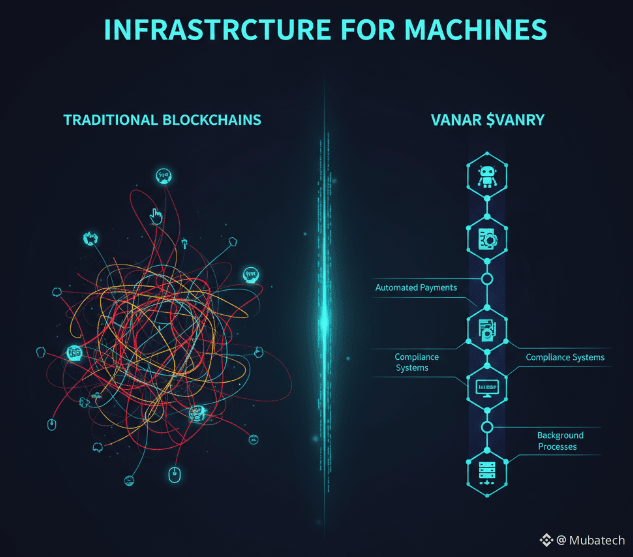
#vanar $VANRY Vanar makes more sense when you stop thinking of blockchains as tools for people and start seeing them as infrastructure for machines.
The next wave of adoption won’t come from users clicking buttons. It will come from AI agents, automated payments, compliance systems, and background processes moving value silently. For machines, reliability matters more than hype — and that’s where @Vanar stands apart.
Predictable systems scale. Excitement doesn’t.
#Vanar $VANRY
#vanar $VANRY Vanar makes more sense when you stop thinking of blockchains as tools for people and start seeing them as infrastructure for machines.
The next wave of adoption won’t come from users clicking buttons. It will come from AI agents, automated payments, compliance systems, and background processes moving value silently. For machines, reliability matters more than hype — and that’s where @Vanar stands apart.
Predictable systems scale. Excitement doesn’t.
#Vanar $VANRY
The next wave of adoption won’t come from users clicking buttons. It will come from AI agents, automated payments, compliance systems, and background processes moving value silently. For machines, reliability matters more than hype — and that’s where @Vanar stands apart.
Predictable systems scale. Excitement doesn’t.
#Vanar $VANRY
1
19
·
--
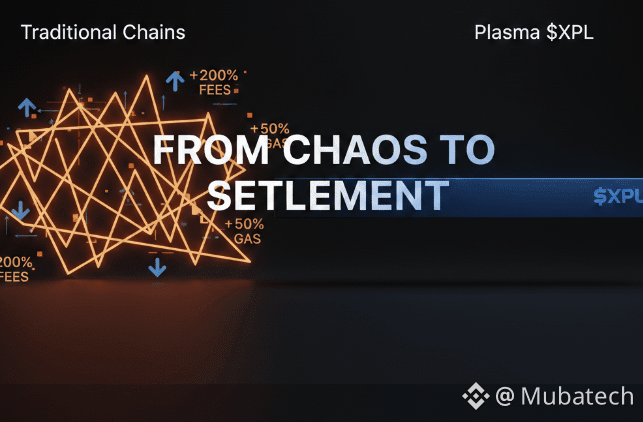
#plasma $XPL Most blockchains are obsessed with speed and activity. Plasma takes a different path.
In the real world, money spends most of its time sitting still — in payroll, treasuries, and settlements. Plasma is built for that reality. No surprise fees, no settlement anxiety, no noise. Just clear balances, instant finality, and accounting that actually makes sense.
This isn’t hype-driven crypto. It’s financial infrastructure designed to last.
#plasma @Plasma $XPL
{spot}(XPLUSDT)
#plasma $XPL Most blockchains are obsessed with speed and activity. Plasma takes a different path.
In the real world, money spends most of its time sitting still — in payroll, treasuries, and settlements. Plasma is built for that reality. No surprise fees, no settlement anxiety, no noise. Just clear balances, instant finality, and accounting that actually makes sense.
This isn’t hype-driven crypto. It’s financial infrastructure designed to last.
#plasma @Plasma $XPL
In the real world, money spends most of its time sitting still — in payroll, treasuries, and settlements. Plasma is built for that reality. No surprise fees, no settlement anxiety, no noise. Just clear balances, instant finality, and accounting that actually makes sense.
This isn’t hype-driven crypto. It’s financial infrastructure designed to last.
#plasma @Plasma $XPL
22
·
--
Article
Not Faster, Not Louder — Just Reliable: The Plasma Design PhilosophyMost blockchain research is obsessed with movement. Faster transactions, higher throughput, more activity per second. That makes sense on the surface—but it also misses something important. When you start thinking about Plasma, the more interesting question isn’t how fast money moves, but why most money doesn’t move at all.
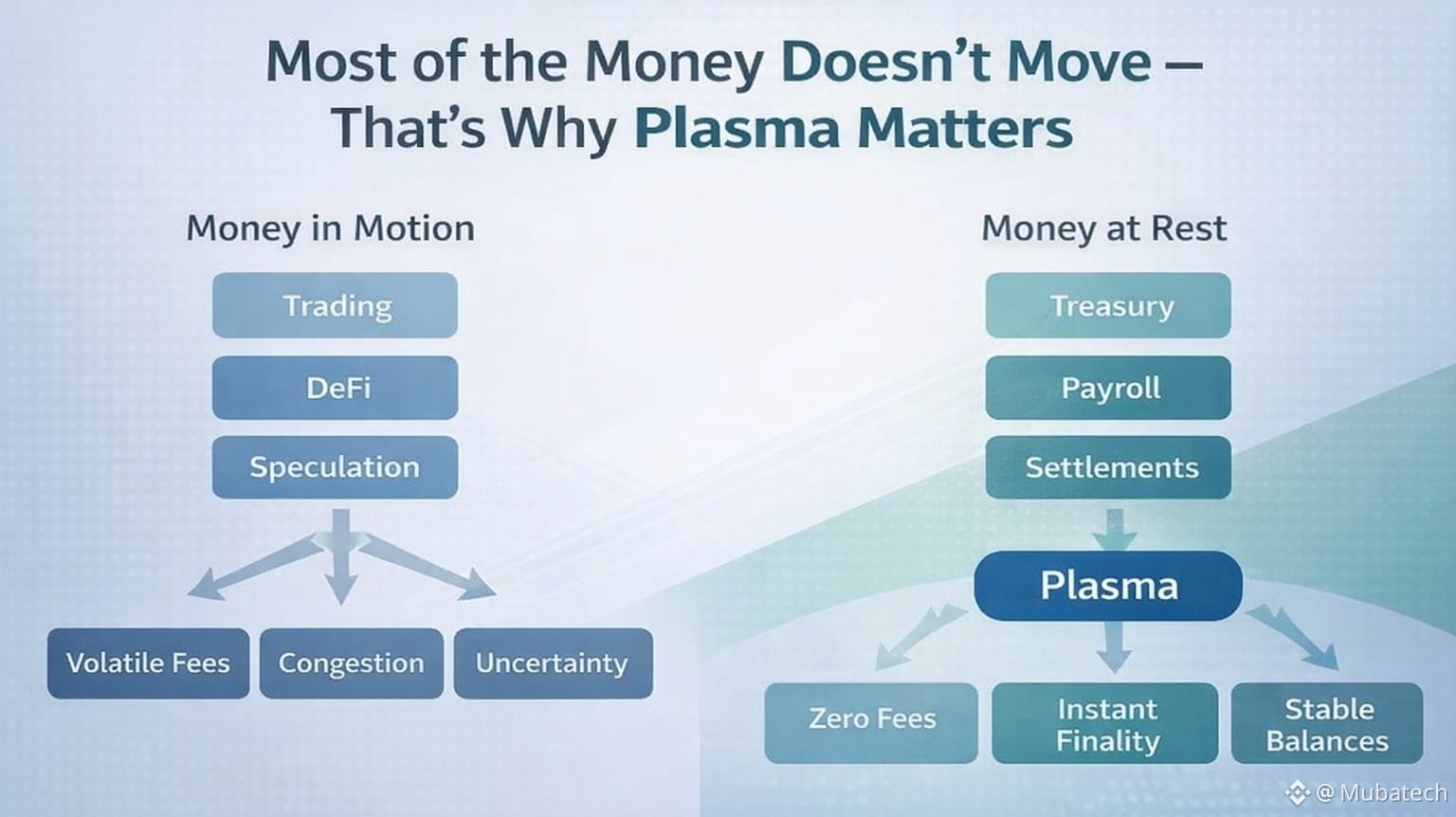
In the real financial world, the majority of money spends most of its time sitting still. It lives in company treasuries, payroll accounts, settlement reserves, merchant balances, and long-term savings. Traditional banks, payment rails, and accounting systems are built around this reality. Stability, predictability, and reliability matter more than constant motion.
That’s where Plasma stands out. Instead of optimizing only for speed and activity, it focuses on the quieter side of finance—the periods when money is parked, waiting, and accounted for. Very few crypto networks design for this kind of “financial stillness,” even though it’s how real economies actually function. Plasma does, and that shift in perspective changes what blockchain infrastructure can realistically support.
Sometimes a single design choice is enough to change how everything works.
Most blockchains are built on the assumption that every user is a trader. Fees move up and down, congestion comes and goes, and transaction finality is often based on probability. That setup works for speculation, but it breaks down for finance teams. In real financial environments, “probably final” isn’t good enough. They need certainty.
Plasma takes a different starting point. Instead of treating users like traders chasing the next move, it treats them like people managing a balance sheet. The goal isn’t to create excitement or volatility. It’s to make money feel boring again—in a good way. Predictable costs, reliable settlement, and something you can confidently explain to an auditor without hand-waving.
Another overlooked shift is how Plasma separates economic activity from economic risk. On most chains, the more a network is used, the riskier it becomes. Fees rise, congestion increases, and settlement uncertainty grows. Usage itself distorts costs. Plasma removes that link. With zero-fee stablecoin transfers, activity doesn’t change the economics.
Finality matters too. PlasmaBFT means that once a transaction is confirmed, it’s done. No waiting. No reorg worries. No probability calculations. Just final settlement. That kind of certainty is rare in crypto, but it’s exactly what real financial systems depend on.
For businesses, this stuff actually matters a lot. Imagine a payroll system telling employees that salaries cost more this week because the network was congested. Or an accounting team trying to explain to regulators why settlement fees keep changing every month. In the real world, that just doesn’t work. Plasma is interesting because it avoids copying traditional finance’s weaknesses while still keeping the benefits—without becoming centralized.
Another angle people don’t talk about enough is Plasma acting as a neutral accounting layer between blockchains. Instead of every chain fighting to host everything, Plasma becomes a stable backbone. Other chains can plug into it. Assets might live elsewhere, but balances and settlements stay clear and readable on Plasma. That’s closer to how clearinghouses work in traditional finance, not how smart-contract platforms usually behave.
What Plasma does with security is also different. It doesn’t try to invent trust from scratch. Instead, it borrows trust by anchoring itself to Bitcoin. Bitcoin isn’t fast or flexible, but it’s widely trusted. Plasma uses that trust as a base, while keeping everyday activity efficient and mostly invisible in the background. Separating trust from execution like this is rare in crypto, and honestly, very powerful.
Privacy is another misunderstood part. This isn’t about hiding bad behavior. It’s about reducing unnecessary noise. Finance teams don’t want every internal transfer, salary payment, or vendor invoice broadcast publicly. Plasma makes confidentiality the default, while still allowing verification when needed. That aligns with real compliance needs instead of fighting against them.
There’s also something subtle but important: Plasma reduces mental effort. Most blockchains force users to constantly think about gas fees, confirmation times, bridges, and liquidity issues. Plasma removes these decisions entirely. When systems stop demanding attention, people adopt them naturally. Trust grows when things just work without needing to be watched.
Because of that, Plasma follows a different adoption path. It doesn’t grow through hype or incentives. It grows quietly, through integrations. One treasury connects, then another. A single payroll setup leads to continuous usage. Growth may look slower, but it sticks. This isn’t community hype—it’s infrastructure adoption.
Even decentralization is treated differently. Plasma doesn’t try to decentralize every app. It decentralizes financial truth. Balances, settlements, and records remain neutral and verifiable, while applications stay flexible. It’s similar to the internet itself: shared protocols at the base, freedom at the top.
Resilience might be the most overlooked feature. Plasma isn’t built to depend on high activity or constant excitement. It’s designed to stay valuable even when things are quiet. That makes it strong during market downturns. When speculation fades, Plasma keeps running because speculation was never the goal.
In many ways, Plasma feels like crypto growing up. It accepts that value doesn’t always come from flashy growth metrics. Sometimes value comes from trust, silence, and reliability. That mindset feels uncomfortable in a market obsessed with narratives—but it’s exactly what financial systems need.
Plasma isn’t trying to replace banks overnight. It quietly removes friction instead. Fees fade away. Finality becomes absolute. Accounting gets simpler. Over time, expectations change. Once people experience money that simply works, everything else starts to feel broken.
That’s why Plasma can’t really be compared to fast L1s or DeFi ecosystems. It sits in a different category. It’s not an app platform or just a scaling solution. Financial infrastructure needs to be predictable, explainable, and built to last decades.
And that might be the most radical idea in crypto.
#Plasma @Plasma
$XPL
{spot}(XPLUSDT)
Not Faster, Not Louder — Just Reliable: The Plasma Design Philosophy
Most blockchain research is obsessed with movement. Faster transactions, higher throughput, more activity per second. That makes sense on the surface—but it also misses something important. When you start thinking about Plasma, the more interesting question isn’t how fast money moves, but why most money doesn’t move at all.
In the real financial world, the majority of money spends most of its time sitting still. It lives in company treasuries, payroll accounts, settlement reserves, merchant balances, and long-term savings. Traditional banks, payment rails, and accounting systems are built around this reality. Stability, predictability, and reliability matter more than constant motion.
That’s where Plasma stands out. Instead of optimizing only for speed and activity, it focuses on the quieter side of finance—the periods when money is parked, waiting, and accounted for. Very few crypto networks design for this kind of “financial stillness,” even though it’s how real economies actually function. Plasma does, and that shift in perspective changes what blockchain infrastructure can realistically support.
Sometimes a single design choice is enough to change how everything works.
Most blockchains are built on the assumption that every user is a trader. Fees move up and down, congestion comes and goes, and transaction finality is often based on probability. That setup works for speculation, but it breaks down for finance teams. In real financial environments, “probably final” isn’t good enough. They need certainty.
Plasma takes a different starting point. Instead of treating users like traders chasing the next move, it treats them like people managing a balance sheet. The goal isn’t to create excitement or volatility. It’s to make money feel boring again—in a good way. Predictable costs, reliable settlement, and something you can confidently explain to an auditor without hand-waving.
Another overlooked shift is how Plasma separates economic activity from economic risk. On most chains, the more a network is used, the riskier it becomes. Fees rise, congestion increases, and settlement uncertainty grows. Usage itself distorts costs. Plasma removes that link. With zero-fee stablecoin transfers, activity doesn’t change the economics.
Finality matters too. PlasmaBFT means that once a transaction is confirmed, it’s done. No waiting. No reorg worries. No probability calculations. Just final settlement. That kind of certainty is rare in crypto, but it’s exactly what real financial systems depend on.
For businesses, this stuff actually matters a lot. Imagine a payroll system telling employees that salaries cost more this week because the network was congested. Or an accounting team trying to explain to regulators why settlement fees keep changing every month. In the real world, that just doesn’t work. Plasma is interesting because it avoids copying traditional finance’s weaknesses while still keeping the benefits—without becoming centralized.
Another angle people don’t talk about enough is Plasma acting as a neutral accounting layer between blockchains. Instead of every chain fighting to host everything, Plasma becomes a stable backbone. Other chains can plug into it. Assets might live elsewhere, but balances and settlements stay clear and readable on Plasma. That’s closer to how clearinghouses work in traditional finance, not how smart-contract platforms usually behave.
What Plasma does with security is also different. It doesn’t try to invent trust from scratch. Instead, it borrows trust by anchoring itself to Bitcoin. Bitcoin isn’t fast or flexible, but it’s widely trusted. Plasma uses that trust as a base, while keeping everyday activity efficient and mostly invisible in the background. Separating trust from execution like this is rare in crypto, and honestly, very powerful.
Privacy is another misunderstood part. This isn’t about hiding bad behavior. It’s about reducing unnecessary noise. Finance teams don’t want every internal transfer, salary payment, or vendor invoice broadcast publicly. Plasma makes confidentiality the default, while still allowing verification when needed. That aligns with real compliance needs instead of fighting against them.
There’s also something subtle but important: Plasma reduces mental effort. Most blockchains force users to constantly think about gas fees, confirmation times, bridges, and liquidity issues. Plasma removes these decisions entirely. When systems stop demanding attention, people adopt them naturally. Trust grows when things just work without needing to be watched.
Because of that, Plasma follows a different adoption path. It doesn’t grow through hype or incentives. It grows quietly, through integrations. One treasury connects, then another. A single payroll setup leads to continuous usage. Growth may look slower, but it sticks. This isn’t community hype—it’s infrastructure adoption.
Even decentralization is treated differently. Plasma doesn’t try to decentralize every app. It decentralizes financial truth. Balances, settlements, and records remain neutral and verifiable, while applications stay flexible. It’s similar to the internet itself: shared protocols at the base, freedom at the top.
Resilience might be the most overlooked feature. Plasma isn’t built to depend on high activity or constant excitement. It’s designed to stay valuable even when things are quiet. That makes it strong during market downturns. When speculation fades, Plasma keeps running because speculation was never the goal.
In many ways, Plasma feels like crypto growing up. It accepts that value doesn’t always come from flashy growth metrics. Sometimes value comes from trust, silence, and reliability. That mindset feels uncomfortable in a market obsessed with narratives—but it’s exactly what financial systems need.
Plasma isn’t trying to replace banks overnight. It quietly removes friction instead. Fees fade away. Finality becomes absolute. Accounting gets simpler. Over time, expectations change. Once people experience money that simply works, everything else starts to feel broken.
That’s why Plasma can’t really be compared to fast L1s or DeFi ecosystems. It sits in a different category. It’s not an app platform or just a scaling solution. Financial infrastructure needs to be predictable, explainable, and built to last decades.
And that might be the most radical idea in crypto.
#Plasma @Plasma
$XPL
In the real financial world, the majority of money spends most of its time sitting still. It lives in company treasuries, payroll accounts, settlement reserves, merchant balances, and long-term savings. Traditional banks, payment rails, and accounting systems are built around this reality. Stability, predictability, and reliability matter more than constant motion.
That’s where Plasma stands out. Instead of optimizing only for speed and activity, it focuses on the quieter side of finance—the periods when money is parked, waiting, and accounted for. Very few crypto networks design for this kind of “financial stillness,” even though it’s how real economies actually function. Plasma does, and that shift in perspective changes what blockchain infrastructure can realistically support.
Sometimes a single design choice is enough to change how everything works.
Most blockchains are built on the assumption that every user is a trader. Fees move up and down, congestion comes and goes, and transaction finality is often based on probability. That setup works for speculation, but it breaks down for finance teams. In real financial environments, “probably final” isn’t good enough. They need certainty.
Plasma takes a different starting point. Instead of treating users like traders chasing the next move, it treats them like people managing a balance sheet. The goal isn’t to create excitement or volatility. It’s to make money feel boring again—in a good way. Predictable costs, reliable settlement, and something you can confidently explain to an auditor without hand-waving.
Another overlooked shift is how Plasma separates economic activity from economic risk. On most chains, the more a network is used, the riskier it becomes. Fees rise, congestion increases, and settlement uncertainty grows. Usage itself distorts costs. Plasma removes that link. With zero-fee stablecoin transfers, activity doesn’t change the economics.
Finality matters too. PlasmaBFT means that once a transaction is confirmed, it’s done. No waiting. No reorg worries. No probability calculations. Just final settlement. That kind of certainty is rare in crypto, but it’s exactly what real financial systems depend on.
For businesses, this stuff actually matters a lot. Imagine a payroll system telling employees that salaries cost more this week because the network was congested. Or an accounting team trying to explain to regulators why settlement fees keep changing every month. In the real world, that just doesn’t work. Plasma is interesting because it avoids copying traditional finance’s weaknesses while still keeping the benefits—without becoming centralized.
Another angle people don’t talk about enough is Plasma acting as a neutral accounting layer between blockchains. Instead of every chain fighting to host everything, Plasma becomes a stable backbone. Other chains can plug into it. Assets might live elsewhere, but balances and settlements stay clear and readable on Plasma. That’s closer to how clearinghouses work in traditional finance, not how smart-contract platforms usually behave.
What Plasma does with security is also different. It doesn’t try to invent trust from scratch. Instead, it borrows trust by anchoring itself to Bitcoin. Bitcoin isn’t fast or flexible, but it’s widely trusted. Plasma uses that trust as a base, while keeping everyday activity efficient and mostly invisible in the background. Separating trust from execution like this is rare in crypto, and honestly, very powerful.
Privacy is another misunderstood part. This isn’t about hiding bad behavior. It’s about reducing unnecessary noise. Finance teams don’t want every internal transfer, salary payment, or vendor invoice broadcast publicly. Plasma makes confidentiality the default, while still allowing verification when needed. That aligns with real compliance needs instead of fighting against them.
There’s also something subtle but important: Plasma reduces mental effort. Most blockchains force users to constantly think about gas fees, confirmation times, bridges, and liquidity issues. Plasma removes these decisions entirely. When systems stop demanding attention, people adopt them naturally. Trust grows when things just work without needing to be watched.
Because of that, Plasma follows a different adoption path. It doesn’t grow through hype or incentives. It grows quietly, through integrations. One treasury connects, then another. A single payroll setup leads to continuous usage. Growth may look slower, but it sticks. This isn’t community hype—it’s infrastructure adoption.
Even decentralization is treated differently. Plasma doesn’t try to decentralize every app. It decentralizes financial truth. Balances, settlements, and records remain neutral and verifiable, while applications stay flexible. It’s similar to the internet itself: shared protocols at the base, freedom at the top.
Resilience might be the most overlooked feature. Plasma isn’t built to depend on high activity or constant excitement. It’s designed to stay valuable even when things are quiet. That makes it strong during market downturns. When speculation fades, Plasma keeps running because speculation was never the goal.
In many ways, Plasma feels like crypto growing up. It accepts that value doesn’t always come from flashy growth metrics. Sometimes value comes from trust, silence, and reliability. That mindset feels uncomfortable in a market obsessed with narratives—but it’s exactly what financial systems need.
Plasma isn’t trying to replace banks overnight. It quietly removes friction instead. Fees fade away. Finality becomes absolute. Accounting gets simpler. Over time, expectations change. Once people experience money that simply works, everything else starts to feel broken.
That’s why Plasma can’t really be compared to fast L1s or DeFi ecosystems. It sits in a different category. It’s not an app platform or just a scaling solution. Financial infrastructure needs to be predictable, explainable, and built to last decades.
And that might be the most radical idea in crypto.
#Plasma @Plasma
$XPL
1
2
31
·
--
#plasma $XPL Binance is more than an exchange—it’s a financial lifeline. 🏦⚡
Plasma has partnered with Binance Earn to launch the first-ever fully on-chain USD₮ yield product! 🚀
🌍 280M Users now have a direct bridge to Plasma’s secure rails.
💰 100,000,000 $XPL in incentives for early birds!
🛡️ Institutional Security: Audited & transparent.
Don't just hold your USD₮. Make it work on the world’s most advanced stablecoin infrastructure. 📈
@Plasma
#plasma $XPL Binance is more than an exchange—it’s a financial lifeline. 🏦⚡
Plasma has partnered with Binance Earn to launch the first-ever fully on-chain USD₮ yield product! 🚀
🌍 280M Users now have a direct bridge to Plasma’s secure rails.
💰 100,000,000 $XPL in incentives for early birds!
🛡️ Institutional Security: Audited & transparent.
Don't just hold your USD₮. Make it work on the world’s most advanced stablecoin infrastructure. 📈
@Plasma
Plasma has partnered with Binance Earn to launch the first-ever fully on-chain USD₮ yield product! 🚀
🌍 280M Users now have a direct bridge to Plasma’s secure rails.
💰 100,000,000 $XPL in incentives for early birds!
🛡️ Institutional Security: Audited & transparent.
Don't just hold your USD₮. Make it work on the world’s most advanced stablecoin infrastructure. 📈
@Plasma
2
26
Log in to explore more content
Join global crypto users on Binance Square
⚡️ Get latest and useful information about crypto.
💬 Trusted by the world’s largest crypto exchange.
👍 Discover real insights from verified creators.
Email / Phone number
Trending Topics
USStocksCloseLowerAmazonSuedByFTC
110 views
26 Discussing
#USStocksCloseLowerAmazonSuedByFTC *
Here’s a polished version of your headline:
**🚨 #USStocksCloseLower #AmazonSuedByFTC**
U.S. stocks closed lower as investors weighed renewed inflation and interest-rate concerns. Meanwhile, the **FTC and more than 20 U.S. states sued Amazon**, alleging the company secretly inflated advertising costs by manipulating its ad-auction system. Amazon rejected the allegations. ([Reuters][1])
**🔥 Short viral caption:**
🚨 **Wall Street Slips as Amazon Faces Major FTC Lawsuit!** 📉⚖️
U.S. stocks ended lower while Amazon came under fresh regulatory pressure over alleged ad-price manipulation. $AMZNB
shares fell about 3% during trading. ([Reuters][1])
#USStocks #Amazon #AMZN #StockMarket #WallStreet #Nasdaq #SP500 #DowJones #BreakingNews #MarketNews #Investing #Finance #TechStocks
[1]:$AMZN
$AMZNon
Arsalan Official
·1 Likes
·13 views
NvidiaToInvest$3.5BInMediaTek
172 views
18 Discussing
USFundsAlcoaGalliumPlantInAustralia
1,399 views
86 Discussing