Binance Square
MosleyMogul
47 Posts

MosleyMogul

CVC产投转型Crypto新兵阿甘🔸正尝试摸索出一套基于军事战争/战役/战术思想框架下的K线攻守与兵粮调配之道《KLineWar》🔸记录从0开始赚够3000万美金就收手的日子🔸我喜欢看书/看电影/写东西/撸铁/社交🔸最爱哲学,其次是经济学、政治学和历史🔸Twitter/X:@MosleyMogul
High-Frequency Trader
5.3 Years
31 Following
11 Followers
33 Liked
Posts
·
--
Article
Small Amount of Money Ventures into U.S. Stocks — Don’t Bet Your Life Savings on Whatever You HearRecently, on many social media platforms, in private messages, some small-amount “brave adventurers” have told me their stories of striking out on adventures. I listened with my head buzzing, but it also—during my watching of the markets—brought me some fun and writing inspiration… If you only have $100, $500, or even $5,000, and someone very seriously tells you that long-term investing can earn you a return of a few percent per year, you’ll probably not be able to take it in. It’s not because you don’t understand compound interest; it’s because that small return is too far from your real-life situation.

Small Amount of Money Ventures into U.S. Stocks — Don’t Bet Your Life Savings on Whatever You Hear

Recently, on many social media platforms, in private messages, some small-amount “brave adventurers” have told me their stories of striking out on adventures. I listened with my head buzzing, but it also—during my watching of the markets—brought me some fun and writing inspiration…
If you only have $100, $500, or even $5,000, and someone very seriously tells you that long-term investing can earn you a return of a few percent per year, you’ll probably not be able to take it in.
It’s not because you don’t understand compound interest; it’s because that small return is too far from your real-life situation.
·
--
Bullish
There aren’t many projects worth a long-term investment for me $ZAMA is one of them
There aren’t many projects worth a long-term investment for me
$ZAMA is one of them
Article
A huge loss saved me, and the streak of profits almost ruined meFor the full original version, please follow the X account@Mosley In the evening, I earned back all of the 90% profit I’d lost last time. This sentence sounds a lot like a battle report—almost like a medal some traders deliberately display on social media, as if the moment the account turns green again, everything that happened a few days ago can be erased with a single stroke. But what I truly feel today isn’t excitement. It’s fear after the fact. I stared at the account for a long time, watching that number finally return to where it was before, and suddenly a very complicated feeling rose in my mind. It feels like I’ve won something back.

A huge loss saved me, and the streak of profits almost ruined me

For the full original version, please follow the X account@MosleyMogul
In the evening, I earned back all of the 90% profit I’d lost last time.
This sentence sounds a lot like a battle report—almost like a medal some traders deliberately display on social media, as if the moment the account turns green again, everything that happened a few days ago can be erased with a single stroke.
But what I truly feel today isn’t excitement.
It’s fear after the fact.
I stared at the account for a long time, watching that number finally return to where it was before, and suddenly a very complicated feeling rose in my mind.
It feels like I’ve won something back.
Article
After I got liquidated, I finally knew who the real mastermind wasThe full original version—please follow the X account @Mosley It’s now 2 a.m. I had already gone to sleep. But I lay in bed and kept turning over for a long time; in my mind it was still those candlestick charts—the prices that never got executed—the take-profit and stop-loss levels I’d revised again and again—and that liquidation line that yanked me awake from my dream so violently. So I got up again. Tonight, when I write the article, I won’t look for accompanying images. Everyone just make do and watch. Anyway, I don’t really have the mood to design a decent, presentable cover right now. People have already been beaten black and blue by the market—what kind of images are we even supposed to use?

After I got liquidated, I finally knew who the real mastermind was

The full original version—please follow the X account @MosleyMogul
It’s now 2 a.m. I had already gone to sleep.
But I lay in bed and kept turning over for a long time; in my mind it was still those candlestick charts—the prices that never got executed—the take-profit and stop-loss levels I’d revised again and again—and that liquidation line that yanked me awake from my dream so violently.
So I got up again.
Tonight, when I write the article, I won’t look for accompanying images. Everyone just make do and watch. Anyway, I don’t really have the mood to design a decent, presentable cover right now.
People have already been beaten black and blue by the market—what kind of images are we even supposed to use?
Article
Gritty Trading ThoughtsFor the full article, please follow account X: @MosleMogul Once the money sits across the table, the pretty words become cheap. How many books have you read? Can you explain macro, liquidity, narrative, and technical analysis fluently? In reality, the market doesn’t care. The market doesn’t listen to speeches; it only asks a few unpleasant questions: Where did you buy? Why did you buy? What will you do if you’re wrong? How much can you dare to bet? When will you admit defeat? I’ve found that once the issue comes down to money, knowledge is no longer knowledge. It turns into position size, profit and loss, the hesitation when you’re staring at the screen at 3 a.m., and when your floating loss widens—whether you exit according to discipline, or fabricate a grand logic and keep waiting for fate to overturn in your mistake.

Gritty Trading Thoughts

For the full article, please follow account X: @MosleMogul
Once the money sits across the table, the pretty words become cheap.
How many books have you read? Can you explain macro, liquidity, narrative, and technical analysis fluently? In reality, the market doesn’t care. The market doesn’t listen to speeches; it only asks a few unpleasant questions: Where did you buy? Why did you buy? What will you do if you’re wrong? How much can you dare to bet? When will you admit defeat?
I’ve found that once the issue comes down to money, knowledge is no longer knowledge. It turns into position size, profit and loss, the hesitation when you’re staring at the screen at 3 a.m., and when your floating loss widens—whether you exit according to discipline, or fabricate a grand logic and keep waiting for fate to overturn in your mistake.
·
--
Bullish
Storage chips explode collectively! SK Hynix $SKHY / Micron $MUB / Kioxia $ADR all surge Temasek increases its stake in SK Hynix, the stock jumps 7.7%, with institutional funds moving in with real money Kioxia ADR +7.8%, SanDisk +8%, Western Digital +6.6%, Seagate +7.6%, Micron +7% Philadelphia Semiconductor Index +3.3%. Memory is the strongest theme of the day, outpacing other sectors The price-hike cycle combined with the AI compute demand surge keeps strengthening the memory reversal thesis We talked about optical communications yesterday—it blew up. Today it’s memory’s turn. The AI hardware rally rotates. A-share memory supply chain (兆易、澜起、佰维, etc.) will likely follow higher tomorrow, but before chasing gains, check whether there are tangible orders—don’t focus only on sentiment #存储
Storage chips explode collectively! SK Hynix $SKHY / Micron $MUB / Kioxia $ADR all surge

Temasek increases its stake in SK Hynix, the stock jumps 7.7%, with institutional funds moving in with real money

Kioxia ADR +7.8%, SanDisk +8%, Western Digital +6.6%, Seagate +7.6%, Micron +7%

Philadelphia Semiconductor Index +3.3%. Memory is the strongest theme of the day, outpacing other sectors

The price-hike cycle combined with the AI compute demand surge keeps strengthening the memory reversal thesis

We talked about optical communications yesterday—it blew up. Today it’s memory’s turn. The AI hardware rally rotates. A-share memory supply chain (兆易、澜起、佰维, etc.) will likely follow higher tomorrow, but before chasing gains, check whether there are tangible orders—don’t focus only on sentiment

#存储
The most intuitive feeling of watching the Animal Kingdom is this: when they hunt, they show extreme restraint and calm. If they don’t have the chance, they won’t strike. And when the opportunity comes, they don’t hesitate for even a second. With the stock market now so convenient to trade, and news flying everywhere, frequent buying and selling is the root cause of losses. Many people understand a lot of principles, but unfortunately, your mind and awareness can’t be controlled. The stock market is absolutely an excellent place to cultivate. It’s better than monasteries or Daoist temples. Only those who can face the temptation of money and still remain unmoved in their true nature are the ones who are truly practicing. Give yourself extra lessons—there will always be opportunities in the market. Profit-to-loss ratio > win rate.
The most intuitive feeling of watching the Animal Kingdom is this: when they hunt, they show extreme restraint and calm. If they don’t have the chance, they won’t strike. And when the opportunity comes, they don’t hesitate for even a second.

With the stock market now so convenient to trade, and news flying everywhere, frequent buying and selling is the root cause of losses. Many people understand a lot of principles, but unfortunately, your mind and awareness can’t be controlled.

The stock market is absolutely an excellent place to cultivate. It’s better than monasteries or Daoist temples.

Only those who can face the temptation of money and still remain unmoved in their true nature are the ones who are truly practicing. Give yourself extra lessons—there will always be opportunities in the market.

Profit-to-loss ratio > win rate.
Haste makes waste; when you see small gains, big things won’t get done. Occasionally making a few quick bucks on the short term is “seeing small gains”; obsessively chasing a few points of short-term fluctuation and eagerly taking frequent profits is “haste.” These petty little victories dull your cognition, keeping you trapped in short-term cleverness for a long time, unable to grasp the trading principles of the big trend—ultimately making it hard to accomplish “big things,” namely long-term, stable profitability. So, these crumbs of profit make people stop moving forward, while only the wake-up call of liquidation can truly drive it home. Attain enlightenment. #交易心理学 #交易训练
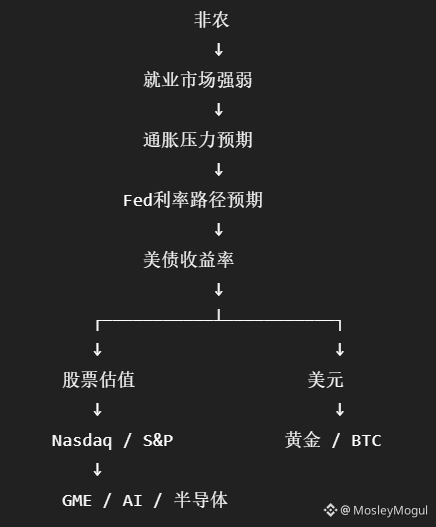
Haste makes waste; when you see small gains, big things won’t get done.

Occasionally making a few quick bucks on the short term is “seeing small gains”; obsessively chasing a few points of short-term fluctuation and eagerly taking frequent profits is “haste.”

These petty little victories dull your cognition, keeping you trapped in short-term cleverness for a long time, unable to grasp the trading principles of the big trend—ultimately making it hard to accomplish “big things,” namely long-term, stable profitability.

So, these crumbs of profit make people stop moving forward, while only the wake-up call of liquidation can truly drive it home.

Attain enlightenment.

#交易心理学 #交易训练
·
--
Bullish
Bad news is good news” or “Bad news is bad news
$TUT I’m already safe with the money in hand, but this dealer has some level, so I still want to watch the show. Predicting at around 3 a.m., starting at about 0.22, there will be a big waterfall.
$TUT I’m already safe with the money in hand, but this dealer has some level, so I still want to watch the show.
Predicting at around 3 a.m., starting at about 0.22, there will be a big waterfall.
CRS 2.0 is here—can crypto no longer be hidden in the market? First, the conclusion: don’t interpret CRS 2.0 as a “global automatic cold-wallet checker.” CRS was originally a mechanism for exchanging financial account information, while CRS 2.0 further extends coverage to e-money, digital financial products, and some crypto assets indirectly held through funds, derivatives, and related arrangements. For measures truly aimed at exchanges, custodial platforms, and crypto-asset service providers, it’s mostly CARF. In the future, platforms may need to identify your tax residency and report information related to buying/selling, exchanges, transfers, and so on. Having a self-custody wallet by itself doesn’t automatically mean you’ll be reported—but if there’s a clear money path between your wallet and exchanges, banks, or fiat on/off-ramp accounts, then on-chain addresses and real-world identities may be linked. So, a wallet having no name doesn’t mean the money leaves no trace. There is currently no single globally unified implementation timeline. How DeFi, DEXs, cross-chain bridges, and self-custody wallets handle this will also depend on the final legislation in each jurisdiction. What the crypto industry should really do isn’t panic moving coins, “splitting wallets,” or random cross-chain transfers. Instead, save transaction records, clarify the source of funds, and confirm your tax residency status. CRS 2.0 may not be the end of crypto—but the era of “if you transfer to a cold wallet, no one will know” may be coming to an end. #CRS2 #CARF #加密货币 #web3空投
CRS 2.0 is here—can crypto no longer be hidden in the market?

First, the conclusion: don’t interpret CRS 2.0 as a “global automatic cold-wallet checker.”

CRS was originally a mechanism for exchanging financial account information, while CRS 2.0 further extends coverage to e-money, digital financial products, and some crypto assets indirectly held through funds, derivatives, and related arrangements.

For measures truly aimed at exchanges, custodial platforms, and crypto-asset service providers, it’s mostly CARF.

In the future, platforms may need to identify your tax residency and report information related to buying/selling, exchanges, transfers, and so on.

Having a self-custody wallet by itself doesn’t automatically mean you’ll be reported—but if there’s a clear money path between your wallet and exchanges, banks, or fiat on/off-ramp accounts, then on-chain addresses and real-world identities may be linked.

So, a wallet having no name doesn’t mean the money leaves no trace.

There is currently no single globally unified implementation timeline. How DeFi, DEXs, cross-chain bridges, and self-custody wallets handle this will also depend on the final legislation in each jurisdiction.

What the crypto industry should really do isn’t panic moving coins, “splitting wallets,” or random cross-chain transfers. Instead, save transaction records, clarify the source of funds, and confirm your tax residency status.

CRS 2.0 may not be the end of crypto—but the era of “if you transfer to a cold wallet, no one will know” may be coming to an end.

#CRS2 #CARF #加密货币 #web3空投
What groups do you join when trading U.S. stocks and when trading crypto? Are there any normal-level communities you can recommend?

Article
Wealth is always buried in bear marketsWhen the market is at its quietest, wealth is often closest to the ground. On the screen there’s no green, gushing growth; no endless profit screenshots being刷屏 in the group; no one excitedly discussing the next hundred-bagger opportunity. The projects everyone used to have on everyone’s lips suddenly aren’t mentioned anymore. The logic that used to be reposted endlessly suddenly becomes a punchline. Those who once swore—earnestly, firmly—that they would hold long term also begin quietly deleting their posts, as if they’d never said any of it. Prices are falling, the story is collapsing, and confidence is like seawater after the tide recedes—leaving the shore inch by inch.

Wealth is always buried in bear markets

When the market is at its quietest, wealth is often closest to the ground.
On the screen there’s no green, gushing growth; no endless profit screenshots being刷屏 in the group; no one excitedly discussing the next hundred-bagger opportunity. The projects everyone used to have on everyone’s lips suddenly aren’t mentioned anymore. The logic that used to be reposted endlessly suddenly becomes a punchline. Those who once swore—earnestly, firmly—that they would hold long term also begin quietly deleting their posts, as if they’d never said any of it.
Prices are falling, the story is collapsing, and confidence is like seawater after the tide recedes—leaving the shore inch by inch.
Article
When the Black Sea is hit, global food supplies start to rise in price: who reacts first—crude oil, gold, US stocks, or BTC?Brothers, don’t rush to stare at the K-line first—let’s see whether the ships can still depart normally. On August 3, a Turkish cargo ship was attacked by a drone in the Black Sea. After that, attacks on ships along the Black Sea coast, ports, and energy facilities continued to increase. Ukraine said that in July alone, there were multiple attacks on ports and shipping infrastructure, and that agricultural exports passing through the Odessa port accounted for about 90% of its related exports. What does that mean? The Black Sea isn’t a normal sea; it’s more like a “logistics lifeline” for the global market. Food, crude oil, energy, and various bulk commodities all rely on this supply route to be shipped outward.

When the Black Sea is hit, global food supplies start to rise in price: who reacts first—crude oil, gold, US stocks, or BTC?

Brothers, don’t rush to stare at the K-line first—let’s see whether the ships can still depart normally.
On August 3, a Turkish cargo ship was attacked by a drone in the Black Sea. After that, attacks on ships along the Black Sea coast, ports, and energy facilities continued to increase. Ukraine said that in July alone, there were multiple attacks on ports and shipping infrastructure, and that agricultural exports passing through the Odessa port accounted for about 90% of its related exports.
What does that mean?
The Black Sea isn’t a normal sea; it’s more like a “logistics lifeline” for the global market. Food, crude oil, energy, and various bulk commodities all rely on this supply route to be shipped outward.
Article
The place where retail investors love to buy the dip—why is it often the place where the main force most likes to unload inventory?The most dangerous place in the market is often not the top, but a spot that looks exactly like a bottom. After the price drops a lot, the group starts spamming “it can’t drop any further”; then a long lower shadow appears, and everyone immediately yells “the main force is defending the price.” After another wave of rebound, the bargain hunters begin celebrating together: “See? I told you this is the bottom.” Then, the price turns direction again downward. Only then do retail investors realize that what they bought into might not be the bottom—it's a temporary handoff zone set up by the big funds. Why do large funds like to sell from this kind of position? Because the liquidity here is the thickest.

The place where retail investors love to buy the dip—why is it often the place where the main force most likes to unload inventory?

The most dangerous place in the market is often not the top, but a spot that looks exactly like a bottom.
After the price drops a lot, the group starts spamming “it can’t drop any further”; then a long lower shadow appears, and everyone immediately yells “the main force is defending the price.” After another wave of rebound, the bargain hunters begin celebrating together: “See? I told you this is the bottom.”
Then, the price turns direction again downward.
Only then do retail investors realize that what they bought into might not be the bottom—it's a temporary handoff zone set up by the big funds.
Why do large funds like to sell from this kind of position?
Because the liquidity here is the thickest.
Article
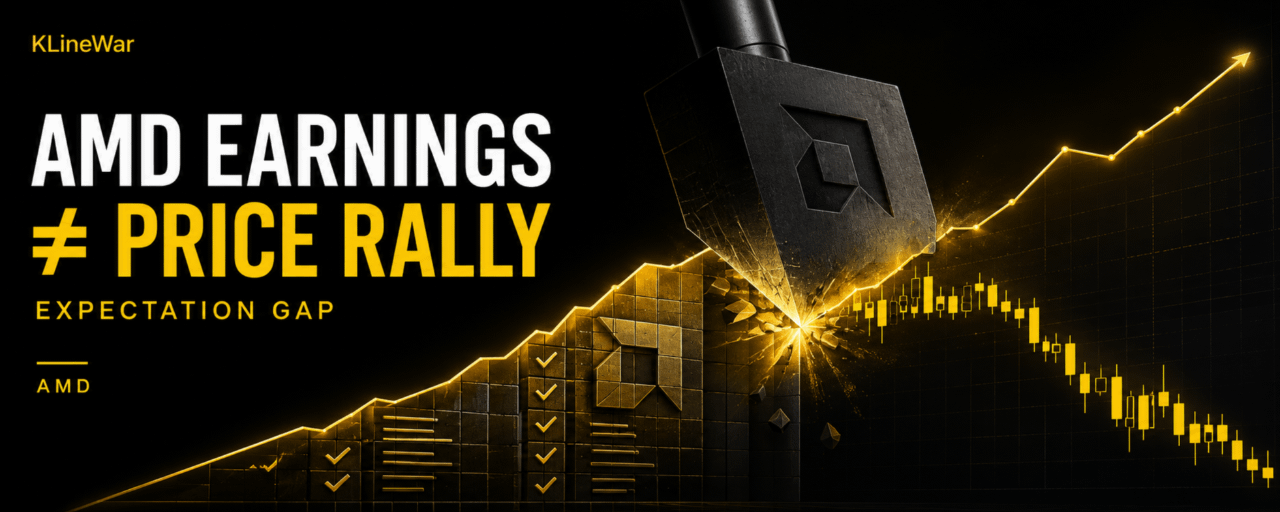
AMD’s earnings report is so strong—why was the stock price still brought down?Last night, AMD turned in a performance that looked quite strong: in Q2, revenue was $11.54 billion, up 50% year over year; adjusted earnings per share were $1.66; and the Q3 revenue outlook was about $13 billion, beating market expectations across the board. What happened then? After-hours saw a single big bearish candle—shares fell by nearly 8% straight away. Many people were stunned on the spot: revenue hit a new high, AI demand is still there, and the guidance also looks good—so why was the stock instead pushed down? The market hasn’t gone crazy; only those who look at the financial statements on the surface are acting insane. Stock prices are never as simple as “good performance means it goes up, bad performance means it goes down.”

AMD’s earnings report is so strong—why was the stock price still brought down?

Last night, AMD turned in a performance that looked quite strong: in Q2, revenue was $11.54 billion, up 50% year over year; adjusted earnings per share were $1.66; and the Q3 revenue outlook was about $13 billion, beating market expectations across the board.
What happened then?
After-hours saw a single big bearish candle—shares fell by nearly 8% straight away.
Many people were stunned on the spot: revenue hit a new high, AI demand is still there, and the guidance also looks good—so why was the stock instead pushed down?
The market hasn’t gone crazy; only those who look at the financial statements on the surface are acting insane.
Stock prices are never as simple as “good performance means it goes up, bad performance means it goes down.”
·
--
Bearish
I’m researching a model of a chain ambush method—specifically targeting knockoffs; test subject 1, No. $BLESS

Article
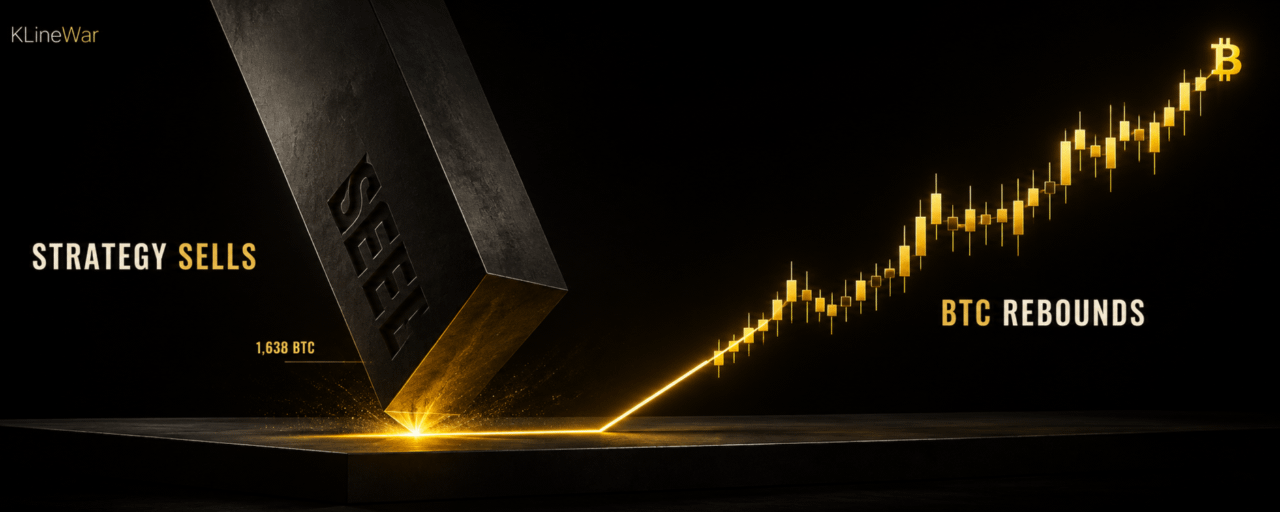
Strategy Sold 1,638 BTC—Yet the Market ReboundedThe most interesting part of this isn’t how much Strategy sold—it’s that after it sold, the market didn’t drop according to many people’s scripts. On August 3, Strategy disclosed that between July 27 and August 2, the company sold 1,638 bitcoins$BTC at an average price of about $63,957, for a total amount of about $104.7 million. At the same time, the company still held 842,138 BTC, with an overall cost basis average of about $75,419. When many people see “Strategy selling BTC,” their first reaction is: Does Saylor not believe in it anymore? Is Bitcoin done for? Don’t rush to prepare a coffin for someone else, bro.

Strategy Sold 1,638 BTC—Yet the Market Rebounded

The most interesting part of this isn’t how much Strategy sold—it’s that after it sold, the market didn’t drop according to many people’s scripts.
On August 3, Strategy disclosed that between July 27 and August 2, the company sold 1,638 bitcoins$BTC at an average price of about $63,957, for a total amount of about $104.7 million. At the same time, the company still held 842,138 BTC, with an overall cost basis average of about $75,419.
When many people see “Strategy selling BTC,” their first reaction is: Does Saylor not believe in it anymore? Is Bitcoin done for?
Don’t rush to prepare a coffin for someone else, bro.
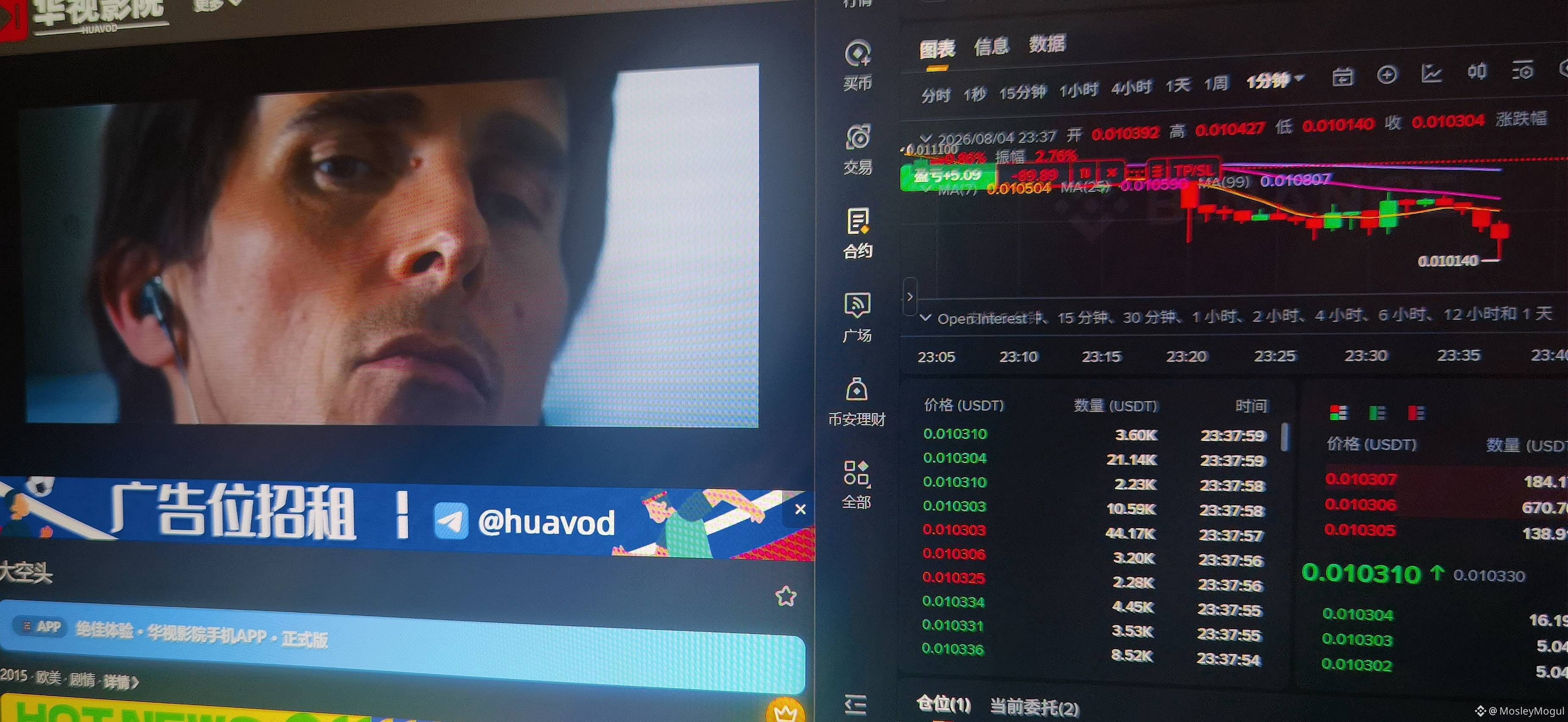
Watching <《The Big Short》> short $HOME , and also added a meal.
Log in to explore more content
Join global crypto users on Binance Square
⚡️ Get latest and useful information about crypto.
💬 Trusted by the world’s largest crypto exchange.
👍 Discover real insights from verified creators.
Email / Phone number
Sitemap
Cookie Preferences
Platform T&Cs