

Fox夕
4.5k Posts

Fox夕
 Square Verified+
Report
Block User
X : @REV_09
High-Frequency Trader
6.6 Years
232 Following
62.4K+ Followers
49.6K+ Liked
Posts
All
Quotes
Live
PINNED
·
--
Gm ☕
“Crypto is unique. It can make you rich overnight, but it can also make you broke in 5 minutes, and then you still feel confident writing ‘I’m holding for the long term’ even though you just met the coin yesterday 😂.” #movr $MOVR
{future}(MOVRUSDT)
Gm ☕
“Crypto is unique. It can make you rich overnight, but it can also make you broke in 5 minutes, and then you still feel confident writing ‘I’m holding for the long term’ even though you just met the coin yesterday 😂.” #movr $MOVR
“Crypto is unique. It can make you rich overnight, but it can also make you broke in 5 minutes, and then you still feel confident writing ‘I’m holding for the long term’ even though you just met the coin yesterday 😂.” #movr $MOVR

baskom pagi
From Fox夕
49
6
51
647

·
--
Partly True
Article
MOVR Surges After Base Migration Closes, Even as Binance Keeps Moonriver on WatchMoonriver has finished a long-awaited technical chapter, but the market story around MOVR is still split between a completed migration and unresolved exchange risk. On 30 September 2026 at 12:00 UTC, Moonriver Network closed the late-claim window for the 1:1 token move from the Kusama parachain to Coinbase’s Base network, after the public bridge itself had already shut on 31 July. That deadline ends the period of procedural uncertainty: valid claims filed before the cutoff are to be processed, and the project has presented the date as the practical close of the migration rather than another extension. Completing the transfer is a neutral-to-constructive milestone because it removes a major source of operational ambiguity, yet it does not by itself create demand. What matters next is whether liquidity, applications, and everyday utility can actually take root on Base.
Tradingview
That constructive close sits against a heavier overhang from Binance. On 12 August 2026, after a periodic review, the exchange added MOVR to its Monitoring Tag list alongside four other tokens, a designation used for assets that show elevated volatility, thinner liquidity, or weaker development and compliance signals. The tag is not an immediate delisting, but it does mean closer scrutiny and a real possibility of removal later if the project fails to meet listing standards. The announcement knocked MOVR about 21 percent lower at the time and continues to weigh on sentiment, because large-exchange liquidity is difficult to replace. For the token to shed that stigma, Moonriver will need sustained activity, clearer communication, and evidence that the Base-era network is more than a completed bridge.
Treeofalpha
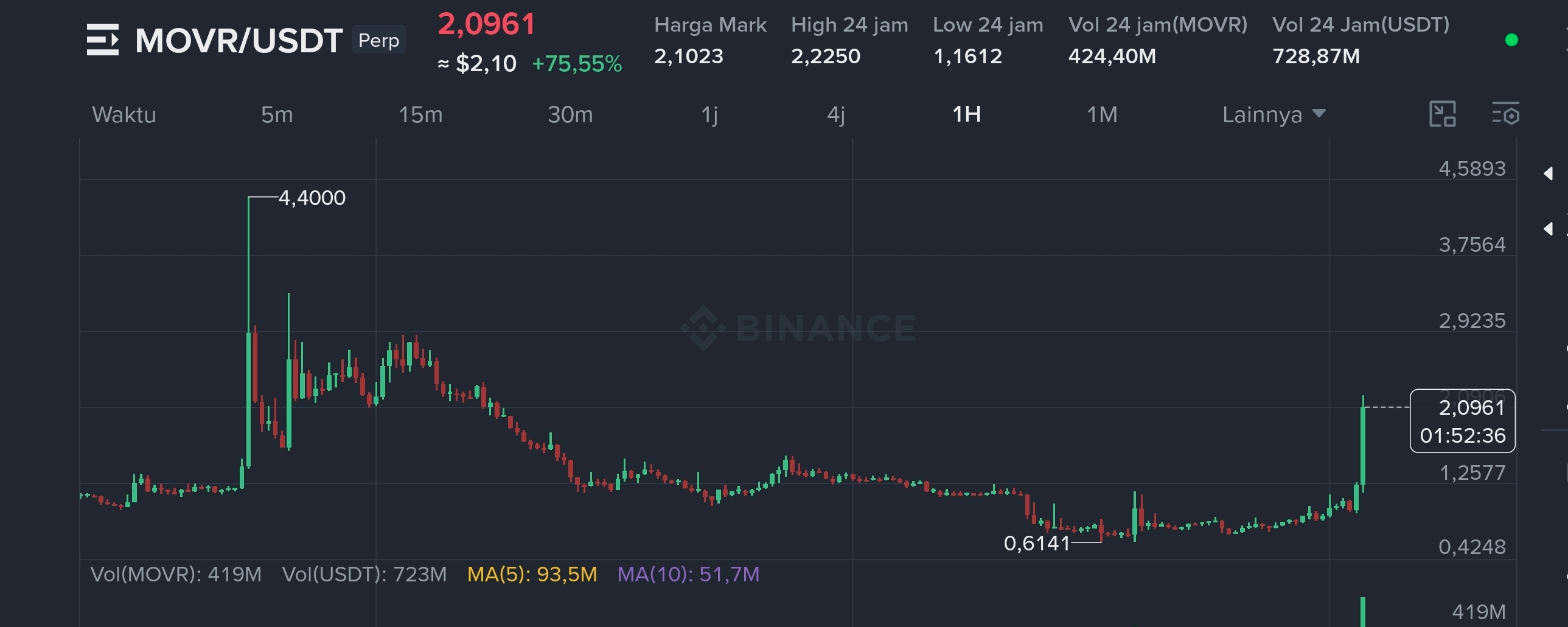
Price action on the deadline day captured both the relief and the fragility of that setup. As the late-claim window expired on 30 September, MOVR jumped more than 50 percent in twenty-four hours to around $1.45, with trading volume exploding by more than 1,000 percent. Charts showed the token breaking out of a descending channel and pressing toward nearby resistance near $1.54, a move that lined up with the migration finish and with short-term bullish momentum. At the same time, an RSI reading around 76 signaled that the rally was already stretched, a condition that often precedes a pause or a pullback. In that light, the $1.07 support zone remains the level that would call the breakout into question if price gave it back. The surge therefore reads as event-driven strength rather than proof that the new Base chapter has already been priced as a durable success.
Coingabbar
Taken together, MOVR now sits between a completed 1:1 migration that has cleared a major technical bottleneck and a Binance watchlist that still threatens liquidity if development on Base disappoints. The open question is whether real usage on Coinbase’s network can grow fast enough to justify the breakout, quiet the exchange’s concerns, and keep the post-migration rally from fading. #movr $MOVR
{future}(MOVRUSDT)
MOVR Surges After Base Migration Closes, Even as Binance Keeps Moonriver on Watch
Moonriver has finished a long-awaited technical chapter, but the market story around MOVR is still split between a completed migration and unresolved exchange risk. On 30 September 2026 at 12:00 UTC, Moonriver Network closed the late-claim window for the 1:1 token move from the Kusama parachain to Coinbase’s Base network, after the public bridge itself had already shut on 31 July. That deadline ends the period of procedural uncertainty: valid claims filed before the cutoff are to be processed, and the project has presented the date as the practical close of the migration rather than another extension. Completing the transfer is a neutral-to-constructive milestone because it removes a major source of operational ambiguity, yet it does not by itself create demand. What matters next is whether liquidity, applications, and everyday utility can actually take root on Base.
Tradingview
That constructive close sits against a heavier overhang from Binance. On 12 August 2026, after a periodic review, the exchange added MOVR to its Monitoring Tag list alongside four other tokens, a designation used for assets that show elevated volatility, thinner liquidity, or weaker development and compliance signals. The tag is not an immediate delisting, but it does mean closer scrutiny and a real possibility of removal later if the project fails to meet listing standards. The announcement knocked MOVR about 21 percent lower at the time and continues to weigh on sentiment, because large-exchange liquidity is difficult to replace. For the token to shed that stigma, Moonriver will need sustained activity, clearer communication, and evidence that the Base-era network is more than a completed bridge.
Treeofalpha
Price action on the deadline day captured both the relief and the fragility of that setup. As the late-claim window expired on 30 September, MOVR jumped more than 50 percent in twenty-four hours to around $1.45, with trading volume exploding by more than 1,000 percent. Charts showed the token breaking out of a descending channel and pressing toward nearby resistance near $1.54, a move that lined up with the migration finish and with short-term bullish momentum. At the same time, an RSI reading around 76 signaled that the rally was already stretched, a condition that often precedes a pause or a pullback. In that light, the $1.07 support zone remains the level that would call the breakout into question if price gave it back. The surge therefore reads as event-driven strength rather than proof that the new Base chapter has already been priced as a durable success.
Coingabbar
Taken together, MOVR now sits between a completed 1:1 migration that has cleared a major technical bottleneck and a Binance watchlist that still threatens liquidity if development on Base disappoints. The open question is whether real usage on Coinbase’s network can grow fast enough to justify the breakout, quiet the exchange’s concerns, and keep the post-migration rally from fading. #movr $MOVR
Tradingview
That constructive close sits against a heavier overhang from Binance. On 12 August 2026, after a periodic review, the exchange added MOVR to its Monitoring Tag list alongside four other tokens, a designation used for assets that show elevated volatility, thinner liquidity, or weaker development and compliance signals. The tag is not an immediate delisting, but it does mean closer scrutiny and a real possibility of removal later if the project fails to meet listing standards. The announcement knocked MOVR about 21 percent lower at the time and continues to weigh on sentiment, because large-exchange liquidity is difficult to replace. For the token to shed that stigma, Moonriver will need sustained activity, clearer communication, and evidence that the Base-era network is more than a completed bridge.
Treeofalpha
Price action on the deadline day captured both the relief and the fragility of that setup. As the late-claim window expired on 30 September, MOVR jumped more than 50 percent in twenty-four hours to around $1.45, with trading volume exploding by more than 1,000 percent. Charts showed the token breaking out of a descending channel and pressing toward nearby resistance near $1.54, a move that lined up with the migration finish and with short-term bullish momentum. At the same time, an RSI reading around 76 signaled that the rally was already stretched, a condition that often precedes a pause or a pullback. In that light, the $1.07 support zone remains the level that would call the breakout into question if price gave it back. The surge therefore reads as event-driven strength rather than proof that the new Base chapter has already been priced as a durable success.
Coingabbar
Taken together, MOVR now sits between a completed 1:1 migration that has cleared a major technical bottleneck and a Binance watchlist that still threatens liquidity if development on Base disappoints. The open question is whether real usage on Coinbase’s network can grow fast enough to justify the breakout, quiet the exchange’s concerns, and keep the post-migration rally from fading. #movr $MOVR
2
1
3
1k

·
--

774
58
945
·
--
Verified
Article
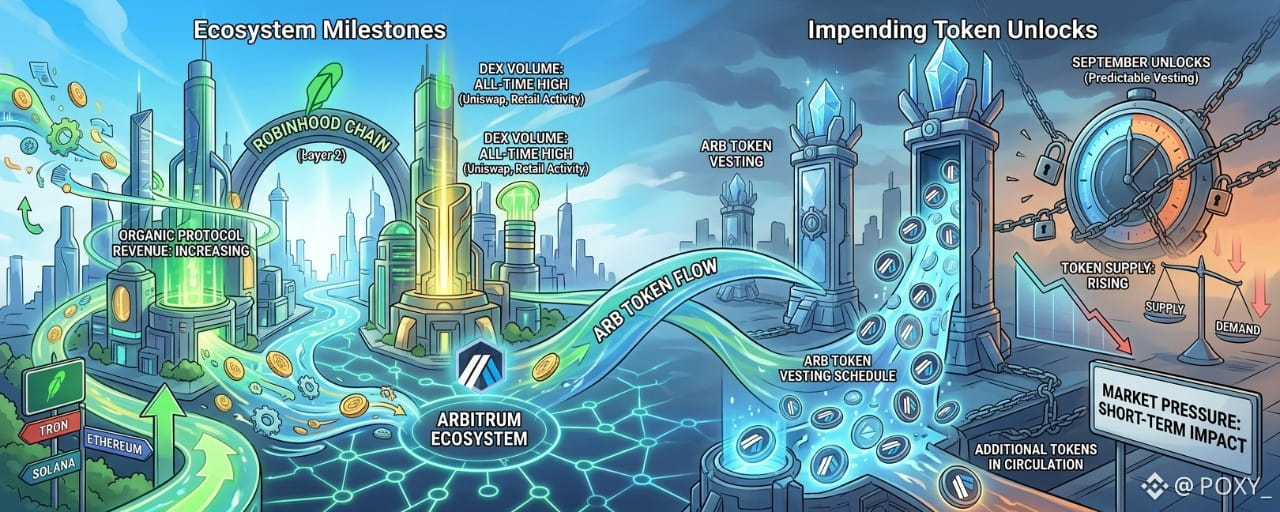
Ecosystem Milestones Amid Impending Token UnlocksThe Arbitrum ecosystem is currently capturing significant attention in the crypto space, driven by strong technical milestones on one hand and upcoming market mechanics on the other. As adoption of its underlying technology surges, the ecosystem is simultaneously preparing for an increase in circulating token supply.
A major driver behind this momentum is the Robinhood Chain, a Layer 2 network powered by Arbitrum's Orbit technology. The chain recently rose to the top of the crypto landscape by generating the highest organic protocol revenue over a single day, surpassing established networks such as Tron, Ethereum, and Solana. This achievement delivers a direct benefit to Arbitrum, as a portion of these gas fee revenues flows back into the Arbitrum Expansion Program. This highlights the strong commercial viability of Arbitrum's infrastructure and solidifies its position as a leading scaling solution.
In tandem with revenue growth, trading activity on the Robinhood Chain reached an all-time high in daily decentralized exchange volume. Driven largely by Uniswap protocol integrations and a resurgence in retail speculation, this surge reflects renewed network utility and user engagement. High transaction volumes naturally foster a positive feedback loop, drawing more developers and liquidity into the broader ecosystem.
Conversely, the market is bracing for an upcoming token unlock event, which will release a substantial portion of ARB tokens into circulation. Distributed between the core team, advisors, and early investors as part of a standard four-year vesting schedule, this temporary jump in available supply could introduce short-term selling pressure. Nevertheless, because this event follows a predictable, long-term release model, market participants generally view it as a routine mechanical adjustment rather than a structural surprise.
Ultimately, Arbitrum stands at an intriguing juncture where robust operational health collides with short-term supply expansion. The key question moving forward is whether the rapid growth and revenue generation across its ecosystem will be enough to absorb the market pressure from the increased token supply. #Arbitrium $ARB
{future}(ARBUSDT)
{spot}(ARBUSDT)
Ecosystem Milestones Amid Impending Token Unlocks
The Arbitrum ecosystem is currently capturing significant attention in the crypto space, driven by strong technical milestones on one hand and upcoming market mechanics on the other. As adoption of its underlying technology surges, the ecosystem is simultaneously preparing for an increase in circulating token supply.
A major driver behind this momentum is the Robinhood Chain, a Layer 2 network powered by Arbitrum's Orbit technology. The chain recently rose to the top of the crypto landscape by generating the highest organic protocol revenue over a single day, surpassing established networks such as Tron, Ethereum, and Solana. This achievement delivers a direct benefit to Arbitrum, as a portion of these gas fee revenues flows back into the Arbitrum Expansion Program. This highlights the strong commercial viability of Arbitrum's infrastructure and solidifies its position as a leading scaling solution.
In tandem with revenue growth, trading activity on the Robinhood Chain reached an all-time high in daily decentralized exchange volume. Driven largely by Uniswap protocol integrations and a resurgence in retail speculation, this surge reflects renewed network utility and user engagement. High transaction volumes naturally foster a positive feedback loop, drawing more developers and liquidity into the broader ecosystem.
Conversely, the market is bracing for an upcoming token unlock event, which will release a substantial portion of ARB tokens into circulation. Distributed between the core team, advisors, and early investors as part of a standard four-year vesting schedule, this temporary jump in available supply could introduce short-term selling pressure. Nevertheless, because this event follows a predictable, long-term release model, market participants generally view it as a routine mechanical adjustment rather than a structural surprise.
Ultimately, Arbitrum stands at an intriguing juncture where robust operational health collides with short-term supply expansion. The key question moving forward is whether the rapid growth and revenue generation across its ecosystem will be enough to absorb the market pressure from the increased token supply. #Arbitrium $ARB
A major driver behind this momentum is the Robinhood Chain, a Layer 2 network powered by Arbitrum's Orbit technology. The chain recently rose to the top of the crypto landscape by generating the highest organic protocol revenue over a single day, surpassing established networks such as Tron, Ethereum, and Solana. This achievement delivers a direct benefit to Arbitrum, as a portion of these gas fee revenues flows back into the Arbitrum Expansion Program. This highlights the strong commercial viability of Arbitrum's infrastructure and solidifies its position as a leading scaling solution.
In tandem with revenue growth, trading activity on the Robinhood Chain reached an all-time high in daily decentralized exchange volume. Driven largely by Uniswap protocol integrations and a resurgence in retail speculation, this surge reflects renewed network utility and user engagement. High transaction volumes naturally foster a positive feedback loop, drawing more developers and liquidity into the broader ecosystem.
Conversely, the market is bracing for an upcoming token unlock event, which will release a substantial portion of ARB tokens into circulation. Distributed between the core team, advisors, and early investors as part of a standard four-year vesting schedule, this temporary jump in available supply could introduce short-term selling pressure. Nevertheless, because this event follows a predictable, long-term release model, market participants generally view it as a routine mechanical adjustment rather than a structural surprise.
Ultimately, Arbitrum stands at an intriguing juncture where robust operational health collides with short-term supply expansion. The key question moving forward is whether the rapid growth and revenue generation across its ecosystem will be enough to absorb the market pressure from the increased token supply. #Arbitrium $ARB
3
788
·
--

Article
Navigating Uniswap's Growth Amidst Technical CrossroadsThe current trajectory of Uniswap presents a compelling tug-of-war between robust underlying economic fundamentals and technical resistance in the open market. Discussions surrounding the token continue to intensify as market participants weigh strong protocol performance against cautious chart patterns and regulatory developments.
A primary pillar supporting Uniswap’s momentum stems from its formidable network activity. Surging revenue from the latest protocol iteration underscores its dominant position in decentralized trading. This fundamental strength is complemented by circulating rumors regarding a potential settlement between Uniswap Labs and financial regulators. Achieving regulatory clarity would strip away a major layer of uncertainty, allowing the protocol's expanding fee generation, which continues to rise, to directly highlight its intrinsic economic value.
Simultaneously, large-scale accumulation patterns point toward a decisive shift in market behavior. Following a prolonged period where prices pushed down, transaction volume from major holders has risen sharply. These large investors have been actively buying even during minor price drops, signaling growing confidence among institutional-grade players regarding a broader market recovery.
From a technical lens, recent price action broke above a long-standing downward trendline, setting the stage for a potential breakout toward higher levels. Momentum indicators have shifted upward, bolstered by community enthusiasm around the fee-switch mechanism, which could introduce deflationary dynamics, and strategic expansions such as integration with Robinhood Chain.
However, a tone of cautious optimism remains necessary. Composite technical metrics hint at a short-term divergence where price action has temporarily outpaced technical indicators that previously fell, raising flags about overly crowded long positions near key resistance levels. Whether Uniswap can sustain a daily close above its immediate resistance threshold will determine if the rally can push further up toward higher targets or if a temporary pause is on the horizon. #UNI $UNI
{spot}(UNIUSDT)
{future}(UNIUSDT)
Navigating Uniswap's Growth Amidst Technical Crossroads
The current trajectory of Uniswap presents a compelling tug-of-war between robust underlying economic fundamentals and technical resistance in the open market. Discussions surrounding the token continue to intensify as market participants weigh strong protocol performance against cautious chart patterns and regulatory developments.
A primary pillar supporting Uniswap’s momentum stems from its formidable network activity. Surging revenue from the latest protocol iteration underscores its dominant position in decentralized trading. This fundamental strength is complemented by circulating rumors regarding a potential settlement between Uniswap Labs and financial regulators. Achieving regulatory clarity would strip away a major layer of uncertainty, allowing the protocol's expanding fee generation, which continues to rise, to directly highlight its intrinsic economic value.
Simultaneously, large-scale accumulation patterns point toward a decisive shift in market behavior. Following a prolonged period where prices pushed down, transaction volume from major holders has risen sharply. These large investors have been actively buying even during minor price drops, signaling growing confidence among institutional-grade players regarding a broader market recovery.
From a technical lens, recent price action broke above a long-standing downward trendline, setting the stage for a potential breakout toward higher levels. Momentum indicators have shifted upward, bolstered by community enthusiasm around the fee-switch mechanism, which could introduce deflationary dynamics, and strategic expansions such as integration with Robinhood Chain.
However, a tone of cautious optimism remains necessary. Composite technical metrics hint at a short-term divergence where price action has temporarily outpaced technical indicators that previously fell, raising flags about overly crowded long positions near key resistance levels. Whether Uniswap can sustain a daily close above its immediate resistance threshold will determine if the rally can push further up toward higher targets or if a temporary pause is on the horizon. #UNI $UNI
A primary pillar supporting Uniswap’s momentum stems from its formidable network activity. Surging revenue from the latest protocol iteration underscores its dominant position in decentralized trading. This fundamental strength is complemented by circulating rumors regarding a potential settlement between Uniswap Labs and financial regulators. Achieving regulatory clarity would strip away a major layer of uncertainty, allowing the protocol's expanding fee generation, which continues to rise, to directly highlight its intrinsic economic value.
Simultaneously, large-scale accumulation patterns point toward a decisive shift in market behavior. Following a prolonged period where prices pushed down, transaction volume from major holders has risen sharply. These large investors have been actively buying even during minor price drops, signaling growing confidence among institutional-grade players regarding a broader market recovery.
From a technical lens, recent price action broke above a long-standing downward trendline, setting the stage for a potential breakout toward higher levels. Momentum indicators have shifted upward, bolstered by community enthusiasm around the fee-switch mechanism, which could introduce deflationary dynamics, and strategic expansions such as integration with Robinhood Chain.
However, a tone of cautious optimism remains necessary. Composite technical metrics hint at a short-term divergence where price action has temporarily outpaced technical indicators that previously fell, raising flags about overly crowded long positions near key resistance levels. Whether Uniswap can sustain a daily close above its immediate resistance threshold will determine if the rally can push further up toward higher targets or if a temporary pause is on the horizon. #UNI $UNI
3
476
·
--
Article
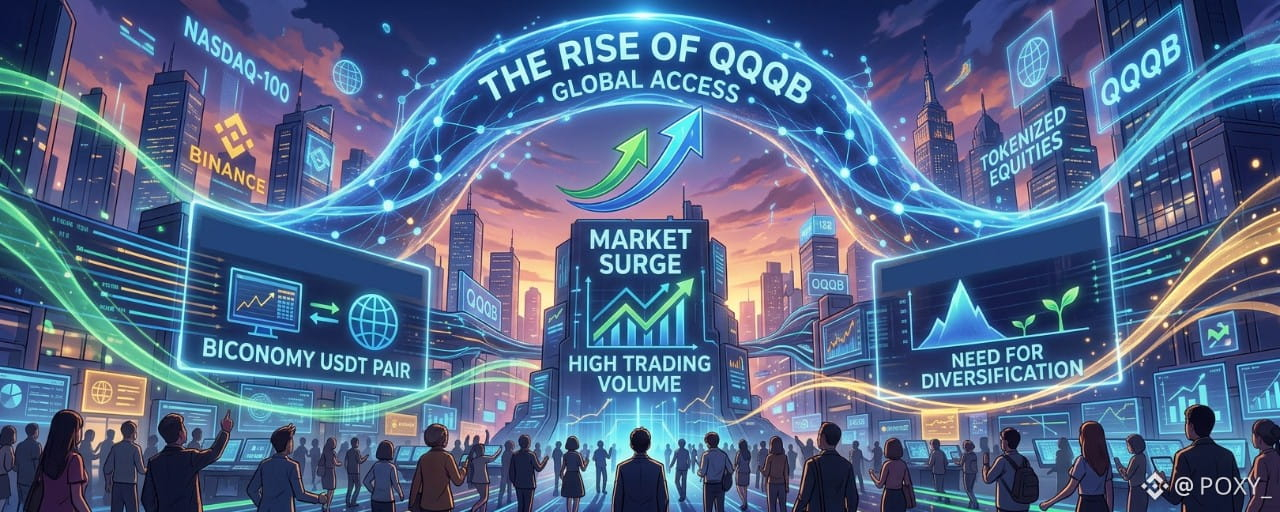
QQQB’s Ascent and the Evolving Landscape of Tokenized EquitiesThe crypto-backed investment space is witnessing significant momentum driven by the rise of QQQB. Tracking the Nasdaq-100 index, the token has expanded its global reach after securing a fresh spot trading pair with USDT on the Biconomy exchange, providing market participants with broader access and liquidity beyond established platforms like Binance and PancakeSwap.
Concurrently, Binance has further strengthened its foothold in the tokenized equity market. Trading activity across blockchain-based stocks experienced a sharp upward surge, with QQQB accounting for the overwhelming majority of total volume. This substantial rise was partially fueled by temporary zero-fee trading promotions, underscoring the token's role as a primary catalyst for market activity.
However, this heavy reliance on a single asset presents a dual narrative. While the surge confirms strong market demand and product fit for QQQB, the concentrated growth highlights the broader tokenized equity market's vulnerability, signaling the need for greater asset diversification to ensure long-term stability. #QQQB $QQQB
{spot}(QQQBUSDT)
QQQB’s Ascent and the Evolving Landscape of Tokenized Equities
The crypto-backed investment space is witnessing significant momentum driven by the rise of QQQB. Tracking the Nasdaq-100 index, the token has expanded its global reach after securing a fresh spot trading pair with USDT on the Biconomy exchange, providing market participants with broader access and liquidity beyond established platforms like Binance and PancakeSwap.
Concurrently, Binance has further strengthened its foothold in the tokenized equity market. Trading activity across blockchain-based stocks experienced a sharp upward surge, with QQQB accounting for the overwhelming majority of total volume. This substantial rise was partially fueled by temporary zero-fee trading promotions, underscoring the token's role as a primary catalyst for market activity.
However, this heavy reliance on a single asset presents a dual narrative. While the surge confirms strong market demand and product fit for QQQB, the concentrated growth highlights the broader tokenized equity market's vulnerability, signaling the need for greater asset diversification to ensure long-term stability. #QQQB $QQQB
Concurrently, Binance has further strengthened its foothold in the tokenized equity market. Trading activity across blockchain-based stocks experienced a sharp upward surge, with QQQB accounting for the overwhelming majority of total volume. This substantial rise was partially fueled by temporary zero-fee trading promotions, underscoring the token's role as a primary catalyst for market activity.
However, this heavy reliance on a single asset presents a dual narrative. While the surge confirms strong market demand and product fit for QQQB, the concentrated growth highlights the broader tokenized equity market's vulnerability, signaling the need for greater asset diversification to ensure long-term stability. #QQQB $QQQB
3
372
·
--

Eggtartcake_
·
--
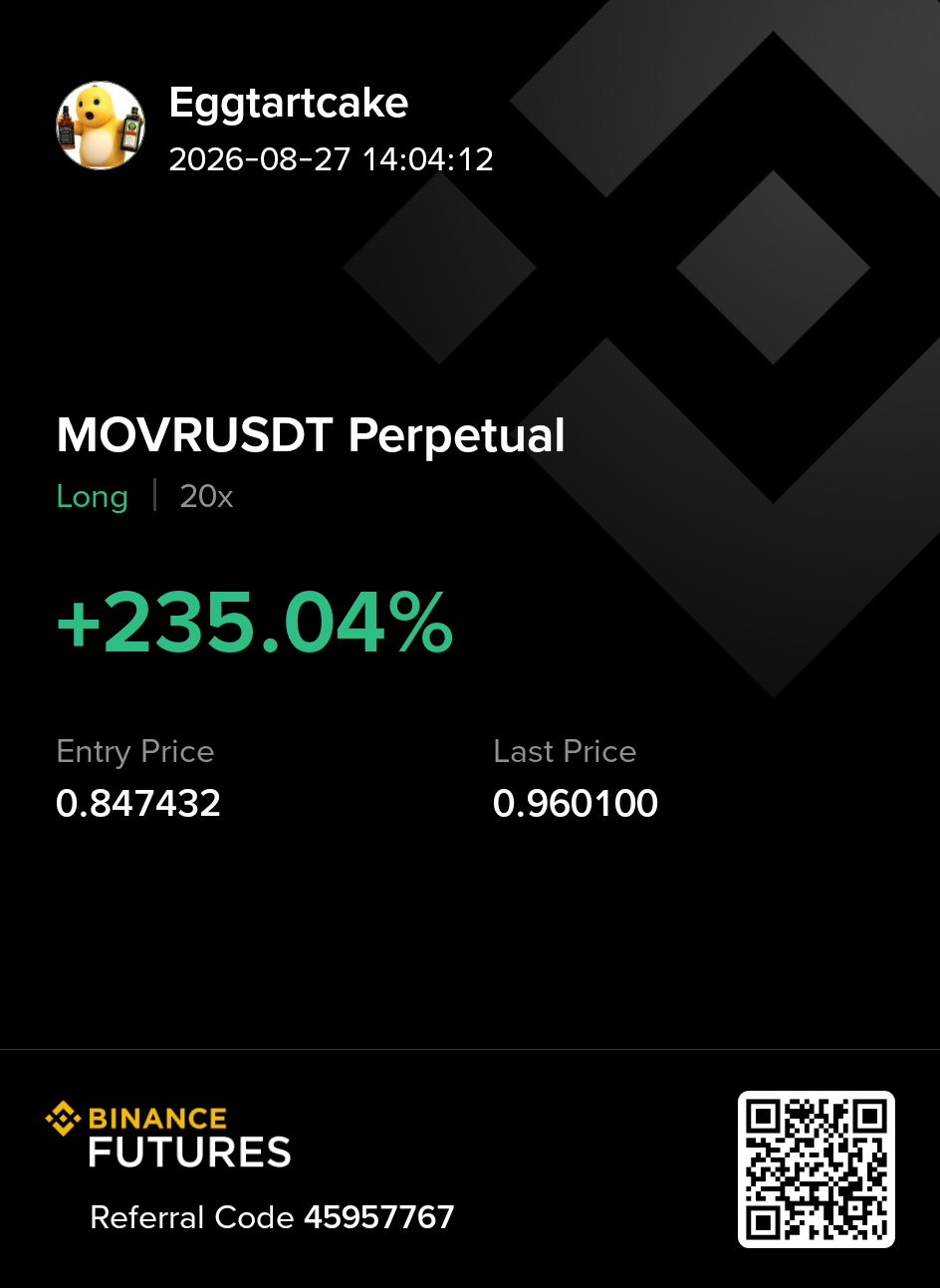
trust the process even when its slow🚀🚀🚀🔥🔥
$MOVR
I'm still here😁😁
$MOVR
I'm still here😁😁
2
1.1k
Log in to explore more content
Join global crypto users on Binance Square
⚡️ Get latest and useful information about crypto.
💬 Trusted by the world’s largest crypto exchange.
👍 Discover real insights from verified creators.
Email / Phone number
Trending Topics
US10YearYieldNears5.3%
1,585 views
77 Discussing
#US10YearYieldNears5.3%
📊 BOND YIELDS AT MULTI-YEAR HIGHS!
The US 10-year Treasury yield approaching 5.3% is creating a major talking point across global financial markets. Rising yields reflect changing expectations around inflation, economic growth, and government borrowing.
🌍 What makes this situation particularly interesting is the impact on crypto sentiment. Higher bond yields may reduce demand for riskier assets, while persistent institutional interest could provide some support to crypto markets.
₿ The real question is: Can Bitcoin maintain its strength while traditional financial markets face rising borrowing costs?
💡 Sometimes, the biggest market signals come from outside the crypto market.
#Bitcoin #CryptoMarket #US10YearYield #TreasuryYields #BTC $BTC
PALASH5
·0 Likes
·957 views
BitcoinETFsTake$6.34BillionInQ3
210 views
14 Discussing
KoreaProposesTokenizingStocksAndBonds
23,842 views
348 Discussing