
Mimo币驰
298 Posts

Mimo币驰
Report
Block User
Predict华语大使
推特:@yongliu75303908 I 22年入圈,见证整个圈子的兴衰,也拿过奇迹,也回过原点。目前是一个撸毛的KOL,专注项目分享和热点信息分析,兼职土狗、主流代币行情分析。主要以分享为主!
Open Trade
Frequent Trader
3.4 Years
222 Following
13.7K+ Followers
3.2K+ Liked
Posts
Portfolio
All
Quotes
Videos
Live
PINNED
·
--
Verified
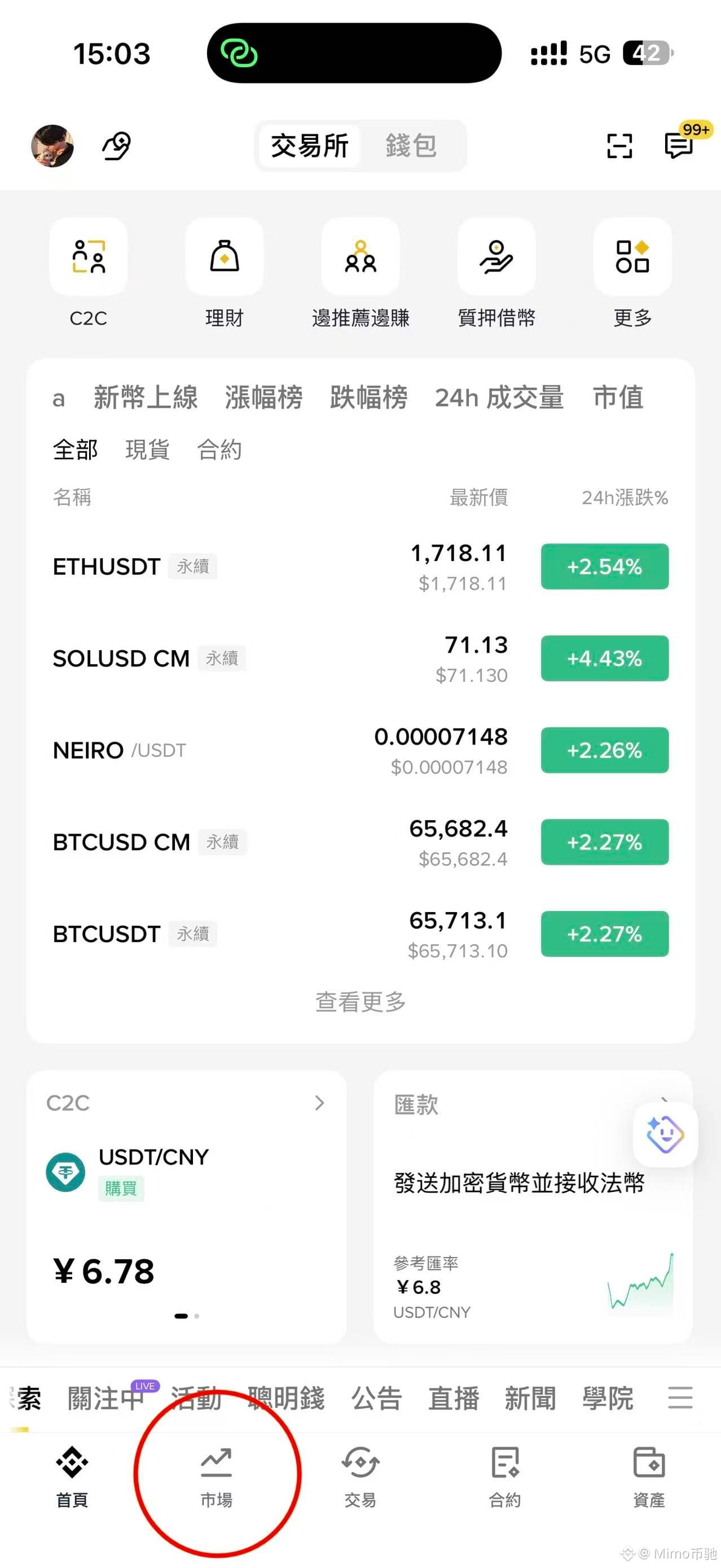
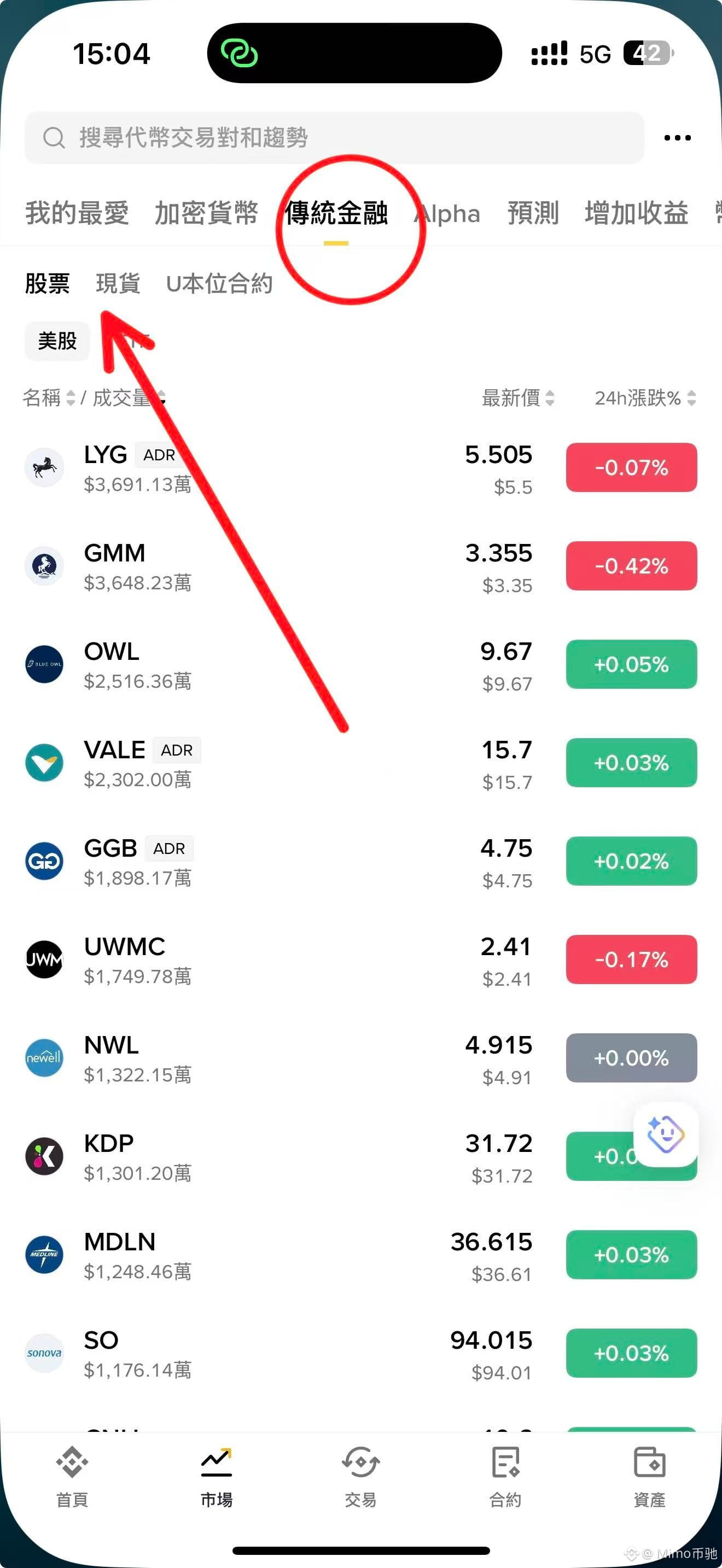
Binance has launched US stocks; did you really buy the right ones?
You can now buy US stocks on Binance, but many folks are confused about what they're actually buying.
Though they all go by "US stocks," there are actually three completely different products on Binance —
Pre-IPO perpetual contracts ($SPCX, $OPENAI, $ANTHROPIC) — Your funds stay on Binance, and you're buying contracts, not actual equity. The price tracks company valuations, and if the company issues more shares, the contract dips — it’s not that your asset shrinks, but the reference price changes.
Ondo tokenized stocks ($NFLXon, $JPMon, etc.) — Ondo Finance uses your funds to purchase real US stocks and then issues on-chain tokens as proof. There’s real asset backing, but you hold tokens, not stocks; if Ondo hits a snag, the tokens could go to zero.
Binance Stocks (the in-app stock section) — This is the closest to real US stocks. Orders are routed through Nest Trading to Alpaca Securities (a licensed broker by the US SEC/FINRA), executed on NYSE/Nasdaq, and you’re the beneficial owner, eligible for dividends. It also offers bStocks on-chain versions, allowing for 24/7 trading and self-custody.
Risk Control:
Pre-IPO contracts → purely synthetic, no assets, highest risk
Ondo RWA → backed by real assets, reliant on intermediaries
Binance Stocks → closest to real US stocks, assets held with Alpaca
Same platform, three products, completely different risk structures.
Make sure you know which entry point you’re clicking on before buying.
#bStocks officially launched
Binance has launched US stocks; did you really buy the right ones?
You can now buy US stocks on Binance, but many folks are confused about what they're actually buying.
Though they all go by "US stocks," there are actually three completely different products on Binance —
Pre-IPO perpetual contracts ($SPCX, $OPENAI, $ANTHROPIC) — Your funds stay on Binance, and you're buying contracts, not actual equity. The price tracks company valuations, and if the company issues more shares, the contract dips — it’s not that your asset shrinks, but the reference price changes.
Ondo tokenized stocks ($NFLXon, $JPMon, etc.) — Ondo Finance uses your funds to purchase real US stocks and then issues on-chain tokens as proof. There’s real asset backing, but you hold tokens, not stocks; if Ondo hits a snag, the tokens could go to zero.
Binance Stocks (the in-app stock section) — This is the closest to real US stocks. Orders are routed through Nest Trading to Alpaca Securities (a licensed broker by the US SEC/FINRA), executed on NYSE/Nasdaq, and you’re the beneficial owner, eligible for dividends. It also offers bStocks on-chain versions, allowing for 24/7 trading and self-custody.
Risk Control:
Pre-IPO contracts → purely synthetic, no assets, highest risk
Ondo RWA → backed by real assets, reliant on intermediaries
Binance Stocks → closest to real US stocks, assets held with Alpaca
Same platform, three products, completely different risk structures.
Make sure you know which entry point you’re clicking on before buying.
#bStocks officially launched
You can now buy US stocks on Binance, but many folks are confused about what they're actually buying.
Though they all go by "US stocks," there are actually three completely different products on Binance —
Pre-IPO perpetual contracts ($SPCX, $OPENAI, $ANTHROPIC) — Your funds stay on Binance, and you're buying contracts, not actual equity. The price tracks company valuations, and if the company issues more shares, the contract dips — it’s not that your asset shrinks, but the reference price changes.
Ondo tokenized stocks ($NFLXon, $JPMon, etc.) — Ondo Finance uses your funds to purchase real US stocks and then issues on-chain tokens as proof. There’s real asset backing, but you hold tokens, not stocks; if Ondo hits a snag, the tokens could go to zero.
Binance Stocks (the in-app stock section) — This is the closest to real US stocks. Orders are routed through Nest Trading to Alpaca Securities (a licensed broker by the US SEC/FINRA), executed on NYSE/Nasdaq, and you’re the beneficial owner, eligible for dividends. It also offers bStocks on-chain versions, allowing for 24/7 trading and self-custody.
Risk Control:
Pre-IPO contracts → purely synthetic, no assets, highest risk
Ondo RWA → backed by real assets, reliant on intermediaries
Binance Stocks → closest to real US stocks, assets held with Alpaca
Same platform, three products, completely different risk structures.
Make sure you know which entry point you’re clicking on before buying.
#bStocks officially launched
31
7
79
46.7k
·
--
Predict to give you money to play, and you don’t even play?
This time it’s different
It’s not asking you to top up—it’s giving you money.
For 100 people, each starts with 100 USDT. See who can earn the most over 14 days.
No adding to the position—only use the 100 U provided by the official.
The only thing you can rely on is your judgment.
The prizes are straightforward:
1st place: 1000 U,
2nd place: 800 U,
3rd place: 500 U,
4th–10th places: 200 U each
Even if you don’t win, this 100 U is still yours to use as principal after it’s used up.
There’s one tough rule: you must trade every day + post your trading performance once on X or Binance Square.
If you miss updates continuously for more than the allowed protection times, you’ll be eliminated immediately.
This effectively turns your “private play” into a “public competition”—every step of your actions will be watched.
In prediction markets, position sizing is an opinion. This time, it’s making those opinions public and comparing who can truly turn judgment into money.
Registration closes on September 16. There are 100 spots—apply early if you want to go.
How much do you think you can turn 100 U into in 14 days?
Predict to give you money to play, and you don’t even play?
This time it’s different
It’s not asking you to top up—it’s giving you money.
For 100 people, each starts with 100 USDT. See who can earn the most over 14 days.
No adding to the position—only use the 100 U provided by the official.
The only thing you can rely on is your judgment.
The prizes are straightforward:
1st place: 1000 U,
2nd place: 800 U,
3rd place: 500 U,
4th–10th places: 200 U each
Even if you don’t win, this 100 U is still yours to use as principal after it’s used up.
There’s one tough rule: you must trade every day + post your trading performance once on X or Binance Square.
If you miss updates continuously for more than the allowed protection times, you’ll be eliminated immediately.
This effectively turns your “private play” into a “public competition”—every step of your actions will be watched.
In prediction markets, position sizing is an opinion. This time, it’s making those opinions public and comparing who can truly turn judgment into money.
Registration closes on September 16. There are 100 spots—apply early if you want to go.
How much do you think you can turn 100 U into in 14 days?
This time it’s different
It’s not asking you to top up—it’s giving you money.
For 100 people, each starts with 100 USDT. See who can earn the most over 14 days.
No adding to the position—only use the 100 U provided by the official.
The only thing you can rely on is your judgment.
The prizes are straightforward:
1st place: 1000 U,
2nd place: 800 U,
3rd place: 500 U,
4th–10th places: 200 U each
Even if you don’t win, this 100 U is still yours to use as principal after it’s used up.
There’s one tough rule: you must trade every day + post your trading performance once on X or Binance Square.
If you miss updates continuously for more than the allowed protection times, you’ll be eliminated immediately.
This effectively turns your “private play” into a “public competition”—every step of your actions will be watched.
In prediction markets, position sizing is an opinion. This time, it’s making those opinions public and comparing who can truly turn judgment into money.
Registration closes on September 16. There are 100 spots—apply early if you want to go.
How much do you think you can turn 100 U into in 14 days?

1
539
·
--
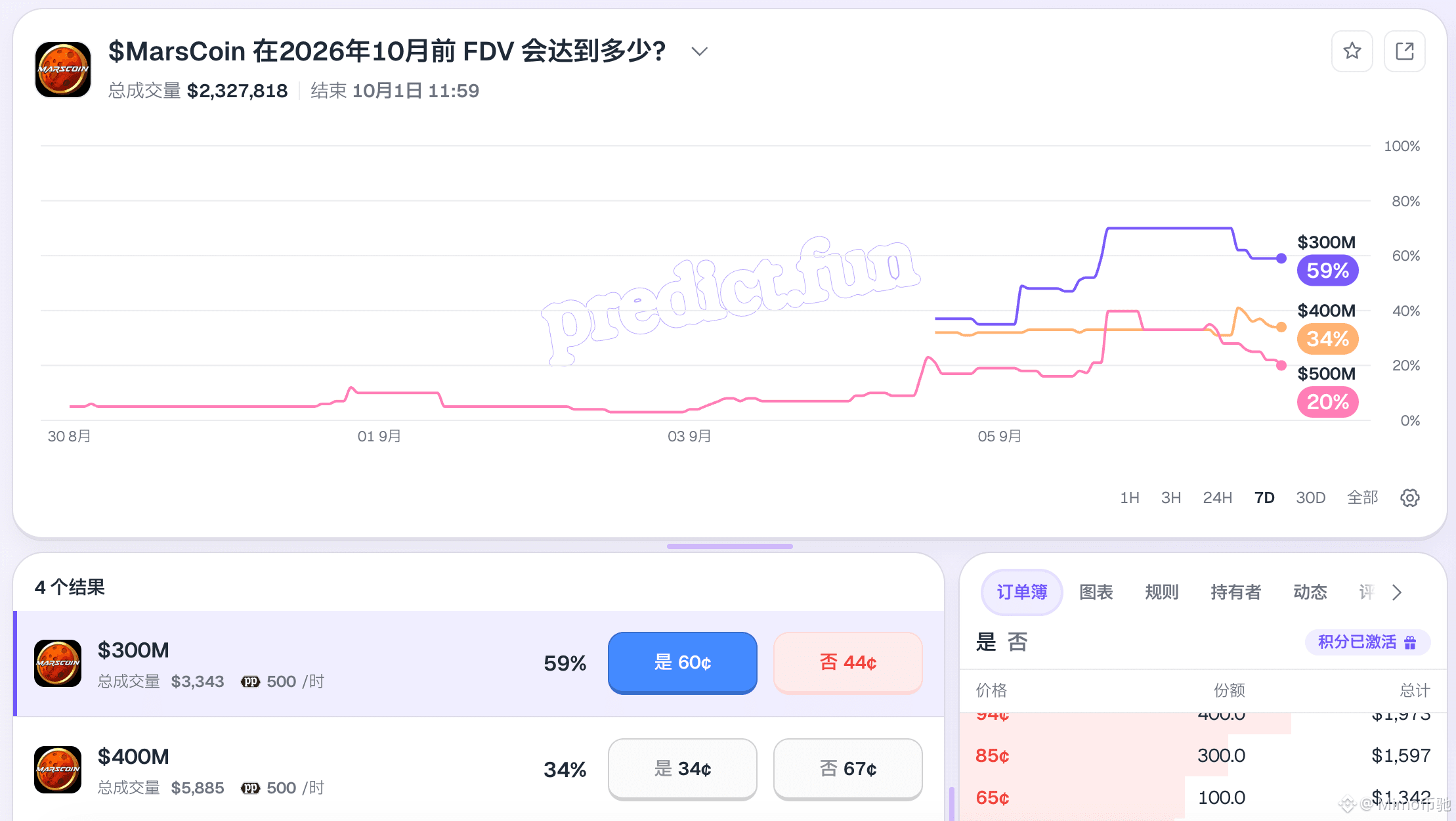
$MARSCOIN The FDV is now a little over 200 million, but on Predict people are already betting whether it can reach 1 billion.
What makes this coin interesting has never been the fundamentals, but how high the narrative can stack.
It started as a Mars meme, then got listed on Binance Alpha,
then CZ publicly ranked its wallet as the number one "most likely to buy" probability,
and then holding it could also earn tokenized SpaceX stock.
Layer after layer, every narrative upgrade brings in another wave of people.
The current pricing on Predict is:
300 million: 59%, more than half think it can get there, only 50% away from the current price
400 million: 34%, one-third are betting on a double
500 million: 20%, a minority are betting on continued hype
1 billion: 8%, purely betting on conviction
Total volume is 2.3 million U, with settlement on October 1.
Buying the coin and buying the prediction market are two different plays.
Buying the coin means betting it will keep going up; buying the prediction means pricing where it can go. The odds are different, and so is the risk structure.
But underneath, it is the same question:
How far can this narrative still go?
$MARSCOIN The FDV is now a little over 200 million, but on Predict people are already betting whether it can reach 1 billion.
What makes this coin interesting has never been the fundamentals, but how high the narrative can stack.
It started as a Mars meme, then got listed on Binance Alpha,
then CZ publicly ranked its wallet as the number one "most likely to buy" probability,
and then holding it could also earn tokenized SpaceX stock.
Layer after layer, every narrative upgrade brings in another wave of people.
The current pricing on Predict is:
300 million: 59%, more than half think it can get there, only 50% away from the current price
400 million: 34%, one-third are betting on a double
500 million: 20%, a minority are betting on continued hype
1 billion: 8%, purely betting on conviction
Total volume is 2.3 million U, with settlement on October 1.
Buying the coin and buying the prediction market are two different plays.
Buying the coin means betting it will keep going up; buying the prediction means pricing where it can go. The odds are different, and so is the risk structure.
But underneath, it is the same question:
How far can this narrative still go?
What makes this coin interesting has never been the fundamentals, but how high the narrative can stack.
It started as a Mars meme, then got listed on Binance Alpha,
then CZ publicly ranked its wallet as the number one "most likely to buy" probability,
and then holding it could also earn tokenized SpaceX stock.
Layer after layer, every narrative upgrade brings in another wave of people.
The current pricing on Predict is:
300 million: 59%, more than half think it can get there, only 50% away from the current price
400 million: 34%, one-third are betting on a double
500 million: 20%, a minority are betting on continued hype
1 billion: 8%, purely betting on conviction
Total volume is 2.3 million U, with settlement on October 1.
Buying the coin and buying the prediction market are two different plays.
Buying the coin means betting it will keep going up; buying the prediction means pricing where it can go. The odds are different, and so is the risk structure.
But underneath, it is the same question:
How far can this narrative still go?
1
1
3.1k
·
--
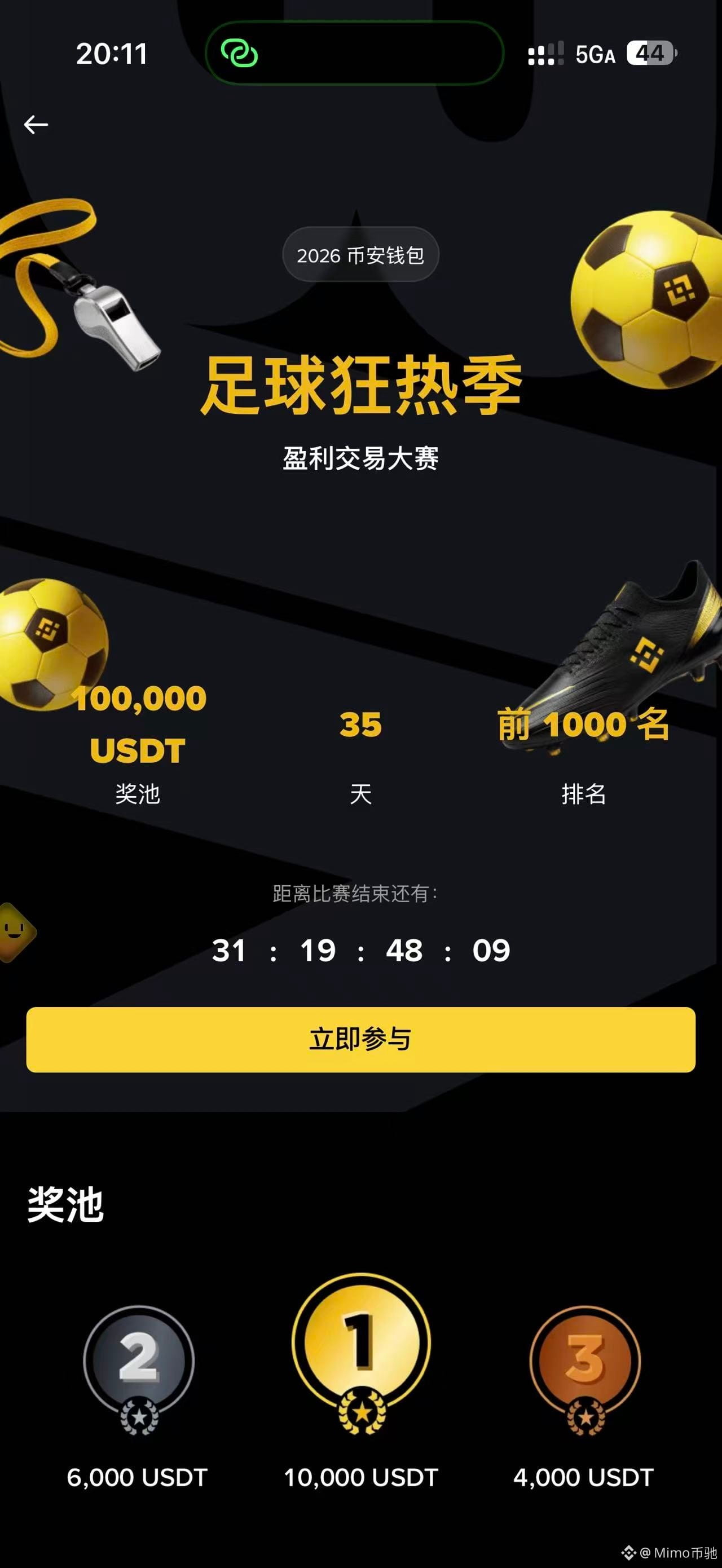
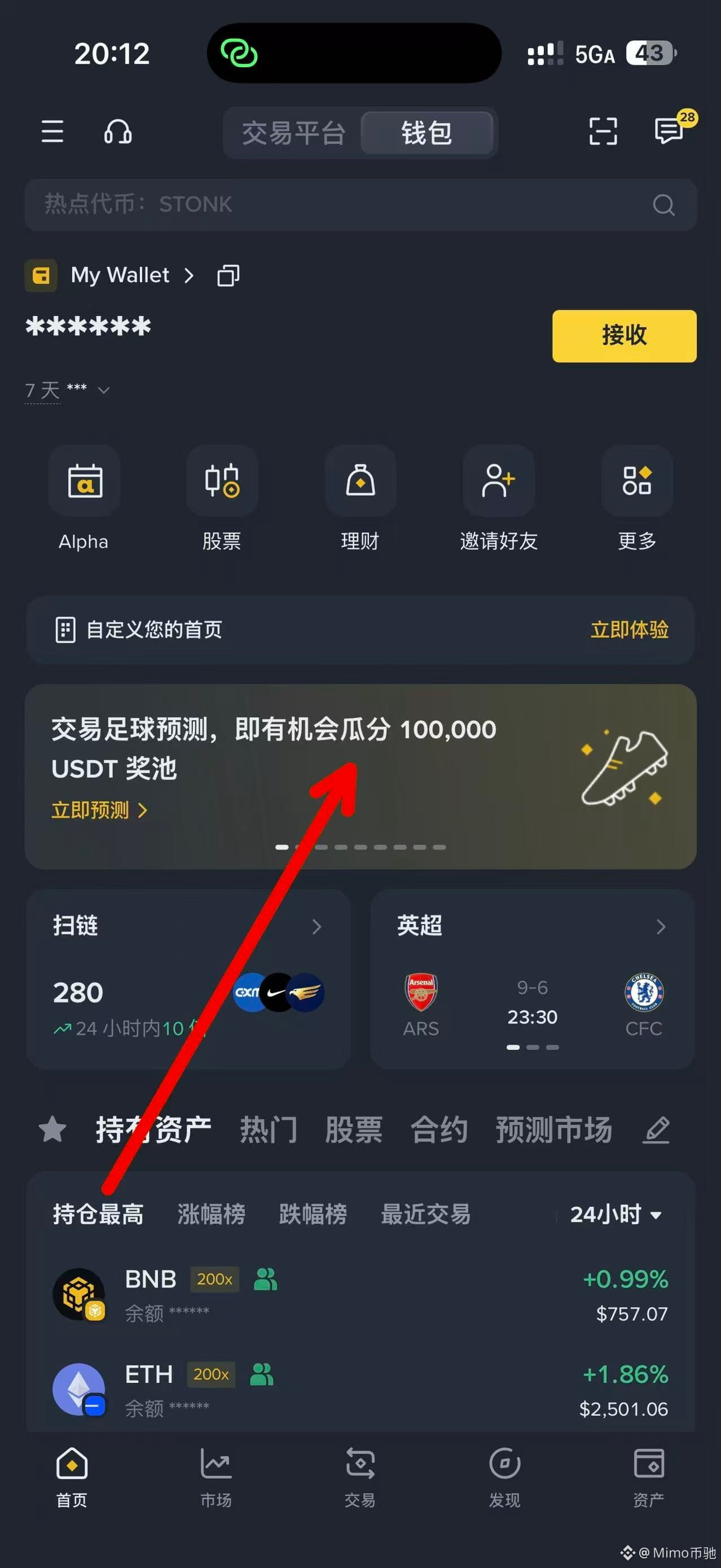
Binance Wallet’s "Football Fever Season" profit trading competition is now live.
Prize pool: 100,000 USDT. The top 1,000 all get a share, and first place takes 10,000 U directly.
The odds for Manchester City vs Coventry have just opened — Coventry have just been promoted to the first division, and they’re heading to the Etihad for an away match. There’s plenty to bet on with this game.
There’s a window of opportunity right now: the event has just launched, participation is still low, and making just a few cents in positive profit on the leaderboard can put you near the top.
Once the event heats up, competition will only get tougher.
Most people end up losing. As long as you can make a positive profit, the odds of ranking in the top 1,000 are pretty good.
How to participate:
Binance App → Wallet home page event banner → Football Fever Season → Join now → Place an order under the Football tab
Remember: you must use a keyless wallet, complete registration before entering the event, and make sure you don’t choose the wrong section when placing an order.
Binance Wallet’s "Football Fever Season" profit trading competition is now live.
Prize pool: 100,000 USDT. The top 1,000 all get a share, and first place takes 10,000 U directly.
The odds for Manchester City vs Coventry have just opened — Coventry have just been promoted to the first division, and they’re heading to the Etihad for an away match. There’s plenty to bet on with this game.
There’s a window of opportunity right now: the event has just launched, participation is still low, and making just a few cents in positive profit on the leaderboard can put you near the top.
Once the event heats up, competition will only get tougher.
Most people end up losing. As long as you can make a positive profit, the odds of ranking in the top 1,000 are pretty good.
How to participate:
Binance App → Wallet home page event banner → Football Fever Season → Join now → Place an order under the Football tab
Remember: you must use a keyless wallet, complete registration before entering the event, and make sure you don’t choose the wrong section when placing an order.
Prize pool: 100,000 USDT. The top 1,000 all get a share, and first place takes 10,000 U directly.
The odds for Manchester City vs Coventry have just opened — Coventry have just been promoted to the first division, and they’re heading to the Etihad for an away match. There’s plenty to bet on with this game.
There’s a window of opportunity right now: the event has just launched, participation is still low, and making just a few cents in positive profit on the leaderboard can put you near the top.
Once the event heats up, competition will only get tougher.
Most people end up losing. As long as you can make a positive profit, the odds of ranking in the top 1,000 are pretty good.
How to participate:
Binance App → Wallet home page event banner → Football Fever Season → Join now → Place an order under the Football tab
Remember: you must use a keyless wallet, complete registration before entering the event, and make sure you don’t choose the wrong section when placing an order.
298
·
--
Partly True
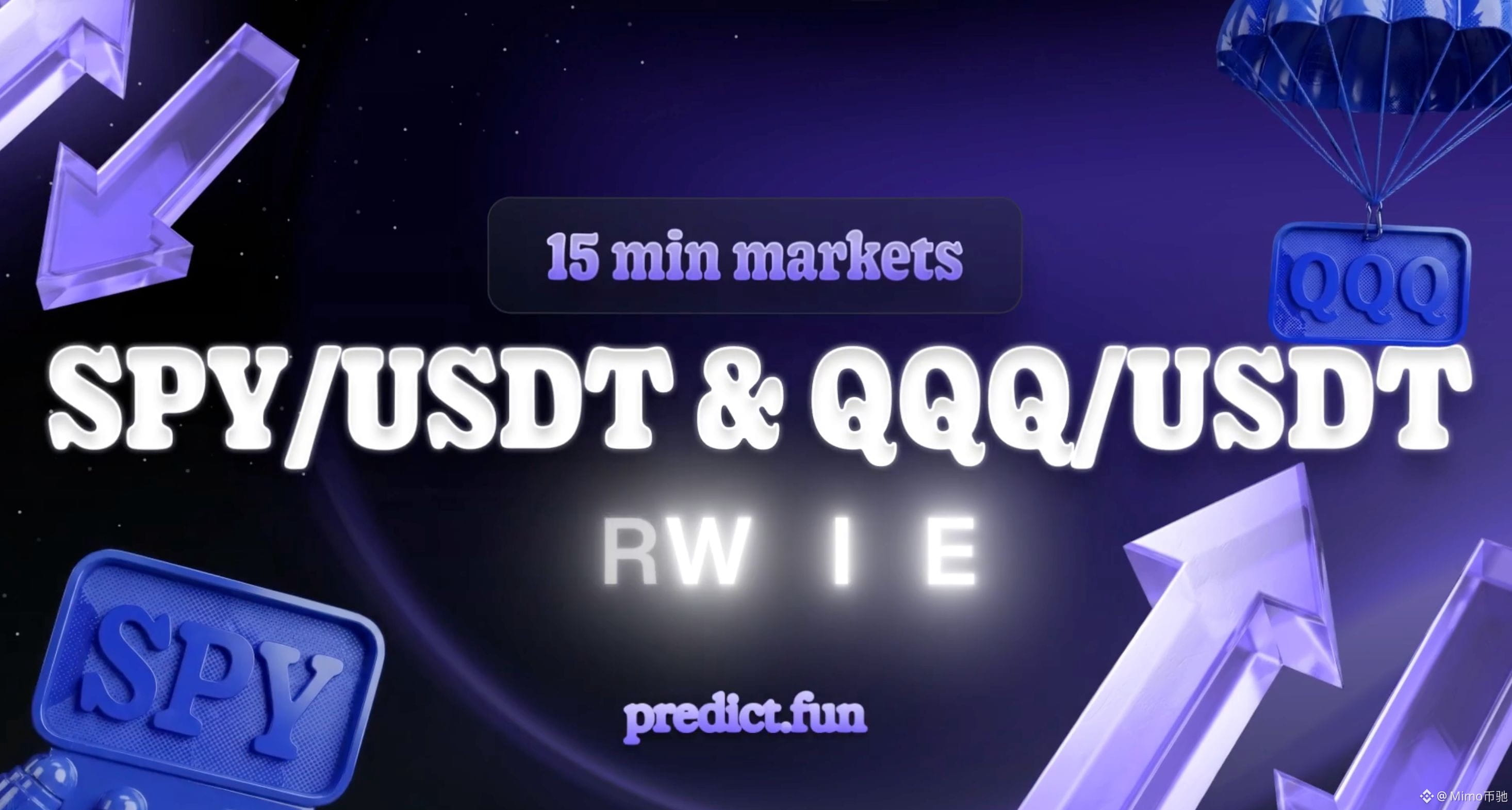
Predict has turned US stocks into a 15-minute up/down trading board.
S&P 500 (SPY) and Nasdaq 100 (QQQ) are now directly tradable.
In the entire prediction market space, there isn’t a second one that has made US stocks at this level of granularity.
This isn’t just random new listings.
Previously, the 5-minute and 15-minute boards for $BTC accounted for more than half of the platform’s trading volume—users have already validated this high-frequency battle-style玩法.
Now, the same logic has been brought over to US stock indexes, and the board is immediately opened up by a whole chunk.
What’s even more interesting is the timing: crypto users are moving into stocks, and stock users are also moving onto-chain.
The sentiments and capital on both sides are converging, and an order book setup like SPY/QQQ is stuck right in the middle—people who understand US stocks have an edge in judgment, while people who are used to operating on-chain have an advantage in tools.
More underlying assets will be added going forward.
A 15-minute settlement cycle—if you want to play short-term cycles, you can go check the board now.
Predict has turned US stocks into a 15-minute up/down trading board.
S&P 500 (SPY) and Nasdaq 100 (QQQ) are now directly tradable.
In the entire prediction market space, there isn’t a second one that has made US stocks at this level of granularity.
This isn’t just random new listings.
Previously, the 5-minute and 15-minute boards for $BTC accounted for more than half of the platform’s trading volume—users have already validated this high-frequency battle-style玩法.
Now, the same logic has been brought over to US stock indexes, and the board is immediately opened up by a whole chunk.
What’s even more interesting is the timing: crypto users are moving into stocks, and stock users are also moving onto-chain.
The sentiments and capital on both sides are converging, and an order book setup like SPY/QQQ is stuck right in the middle—people who understand US stocks have an edge in judgment, while people who are used to operating on-chain have an advantage in tools.
More underlying assets will be added going forward.
A 15-minute settlement cycle—if you want to play short-term cycles, you can go check the board now.
S&P 500 (SPY) and Nasdaq 100 (QQQ) are now directly tradable.
In the entire prediction market space, there isn’t a second one that has made US stocks at this level of granularity.
This isn’t just random new listings.
Previously, the 5-minute and 15-minute boards for $BTC accounted for more than half of the platform’s trading volume—users have already validated this high-frequency battle-style玩法.
Now, the same logic has been brought over to US stock indexes, and the board is immediately opened up by a whole chunk.
What’s even more interesting is the timing: crypto users are moving into stocks, and stock users are also moving onto-chain.
The sentiments and capital on both sides are converging, and an order book setup like SPY/QQQ is stuck right in the middle—people who understand US stocks have an edge in judgment, while people who are used to operating on-chain have an advantage in tools.
More underlying assets will be added going forward.
A 15-minute settlement cycle—if you want to play short-term cycles, you can go check the board now.
574
·
--
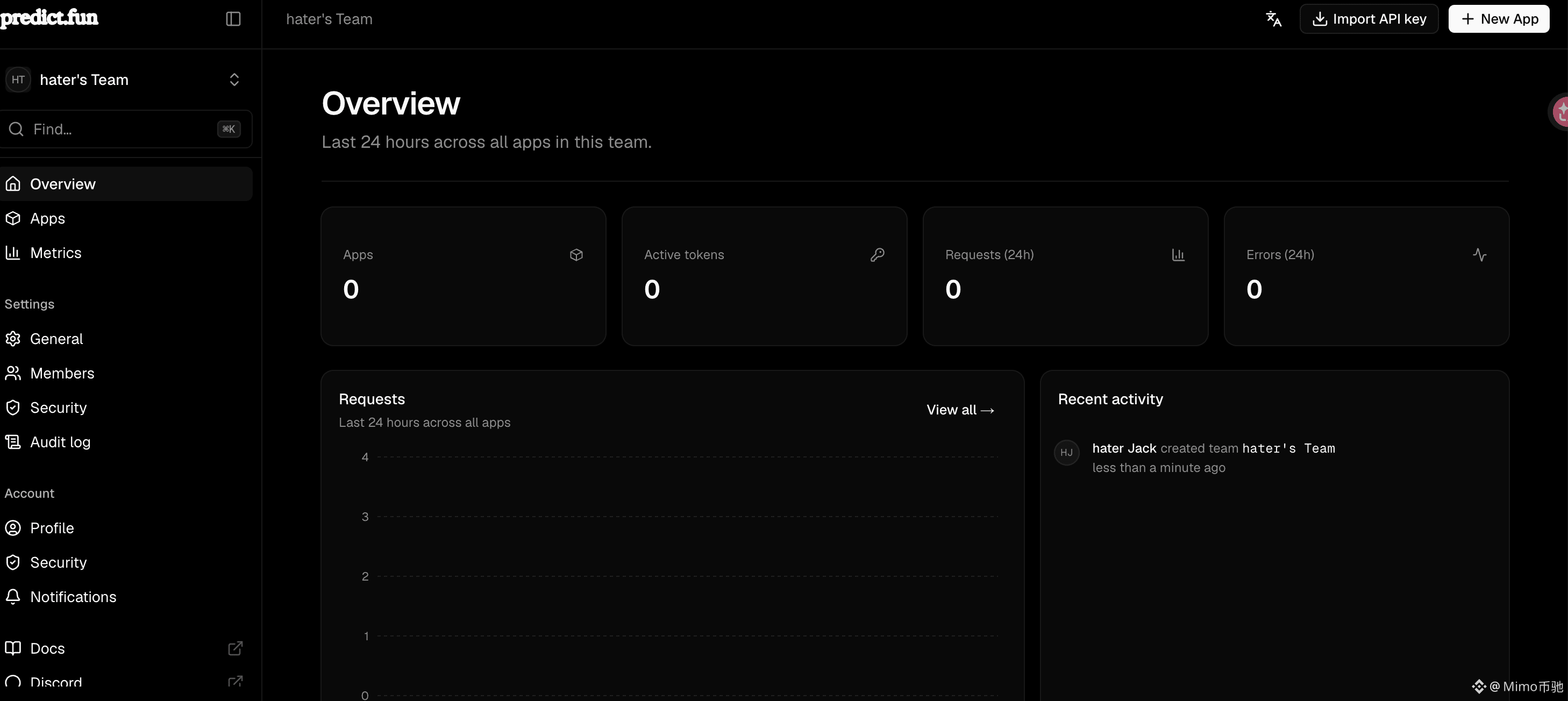
Predict 悄悄上线了开发者面板。
In the screenshot you can see: create an app, generate keys, check usage, view rate limits—everything is self-serve. No need to contact official support, no need to wait for approvals; you can go straight into the back office to operate.
This matters more than it looks.
If the prediction market is going to truly grow, you can’t rely on just placing orders via the website.
You need someone to build order-posting tools, someone to handle data aggregation, someone to build strategy API integrations—these things don’t fall from the sky; developers build them.
Previously, accessing the API required an approval process. Now it’s self-serve, and the barrier drops by a whole level.
The Builder Program has also been running continuously. People with development skills who join now are among the earliest cohorts.
For ordinary users, the significance of this update is: later on, more and more third-party tools will appear—better order-posting interfaces, more intuitive dashboards, and more worry-free strategy bots. These are the products of a developer ecosystem that keeps getting thicker.
“Ecosystem” may be a tired word, but the logic is real: if people build tools, the platform can develop real moat.
If you have development ability, go take a look now.
Predict 悄悄上线了开发者面板。
In the screenshot you can see: create an app, generate keys, check usage, view rate limits—everything is self-serve. No need to contact official support, no need to wait for approvals; you can go straight into the back office to operate.
This matters more than it looks.
If the prediction market is going to truly grow, you can’t rely on just placing orders via the website.
You need someone to build order-posting tools, someone to handle data aggregation, someone to build strategy API integrations—these things don’t fall from the sky; developers build them.
Previously, accessing the API required an approval process. Now it’s self-serve, and the barrier drops by a whole level.
The Builder Program has also been running continuously. People with development skills who join now are among the earliest cohorts.
For ordinary users, the significance of this update is: later on, more and more third-party tools will appear—better order-posting interfaces, more intuitive dashboards, and more worry-free strategy bots. These are the products of a developer ecosystem that keeps getting thicker.
“Ecosystem” may be a tired word, but the logic is real: if people build tools, the platform can develop real moat.
If you have development ability, go take a look now.
In the screenshot you can see: create an app, generate keys, check usage, view rate limits—everything is self-serve. No need to contact official support, no need to wait for approvals; you can go straight into the back office to operate.
This matters more than it looks.
If the prediction market is going to truly grow, you can’t rely on just placing orders via the website.
You need someone to build order-posting tools, someone to handle data aggregation, someone to build strategy API integrations—these things don’t fall from the sky; developers build them.
Previously, accessing the API required an approval process. Now it’s self-serve, and the barrier drops by a whole level.
The Builder Program has also been running continuously. People with development skills who join now are among the earliest cohorts.
For ordinary users, the significance of this update is: later on, more and more third-party tools will appear—better order-posting interfaces, more intuitive dashboards, and more worry-free strategy bots. These are the products of a developer ecosystem that keeps getting thicker.
“Ecosystem” may be a tired word, but the logic is real: if people build tools, the platform can develop real moat.
If you have development ability, go take a look now.
401
·
--
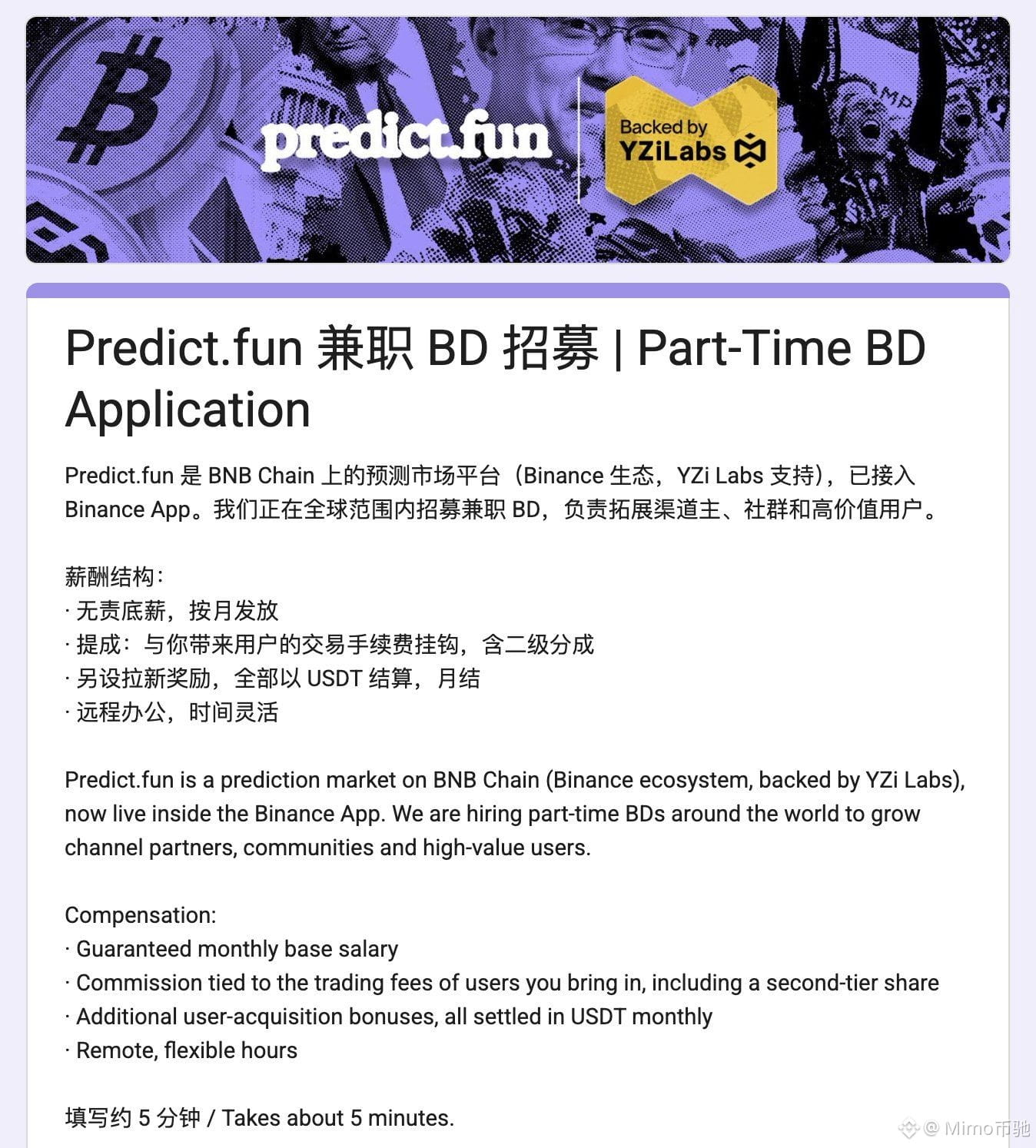
Predict starts recruiting part-time BD, and in less than a day we received over 200 applications.
In a bear market, most projects are cutting staff, but this one is hiring instead—showing that the platform truly has something to expand.
The job itself isn’t complicated: help the platform broaden its channels, attract real users, and drive trading volume. It’s results-oriented—base salary + commission + bonuses, with no rigid limits on headcount. If you can make it work, you’ll earn.
But I think there’s something even more worth highlighting.
For people who want to get into the crypto space but have average education or limited industry experience, this kind of role is actually a very realistic entry point.
It’s not that the pay is extremely high; it’s that during the process, you’ll learn the product inside and out. You’ll also build your own circle and network along the way.
These things don’t belong to Predict—they belong to you. You can take them with you to the next project.
Over 200 applications already tells us the competition is real. There will be pre-screening and interviews afterward—if you want to try, apply early.
@predictdotfun
Predict starts recruiting part-time BD, and in less than a day we received over 200 applications.
In a bear market, most projects are cutting staff, but this one is hiring instead—showing that the platform truly has something to expand.
The job itself isn’t complicated: help the platform broaden its channels, attract real users, and drive trading volume. It’s results-oriented—base salary + commission + bonuses, with no rigid limits on headcount. If you can make it work, you’ll earn.
But I think there’s something even more worth highlighting.
For people who want to get into the crypto space but have average education or limited industry experience, this kind of role is actually a very realistic entry point.
It’s not that the pay is extremely high; it’s that during the process, you’ll learn the product inside and out. You’ll also build your own circle and network along the way.
These things don’t belong to Predict—they belong to you. You can take them with you to the next project.
Over 200 applications already tells us the competition is real. There will be pre-screening and interviews afterward—if you want to try, apply early.
@predictdotfun
In a bear market, most projects are cutting staff, but this one is hiring instead—showing that the platform truly has something to expand.
The job itself isn’t complicated: help the platform broaden its channels, attract real users, and drive trading volume. It’s results-oriented—base salary + commission + bonuses, with no rigid limits on headcount. If you can make it work, you’ll earn.
But I think there’s something even more worth highlighting.
For people who want to get into the crypto space but have average education or limited industry experience, this kind of role is actually a very realistic entry point.
It’s not that the pay is extremely high; it’s that during the process, you’ll learn the product inside and out. You’ll also build your own circle and network along the way.
These things don’t belong to Predict—they belong to you. You can take them with you to the next project.
Over 200 applications already tells us the competition is real. There will be pre-screening and interviews afterward—if you want to try, apply early.
@predictdotfun
1
335
·
--
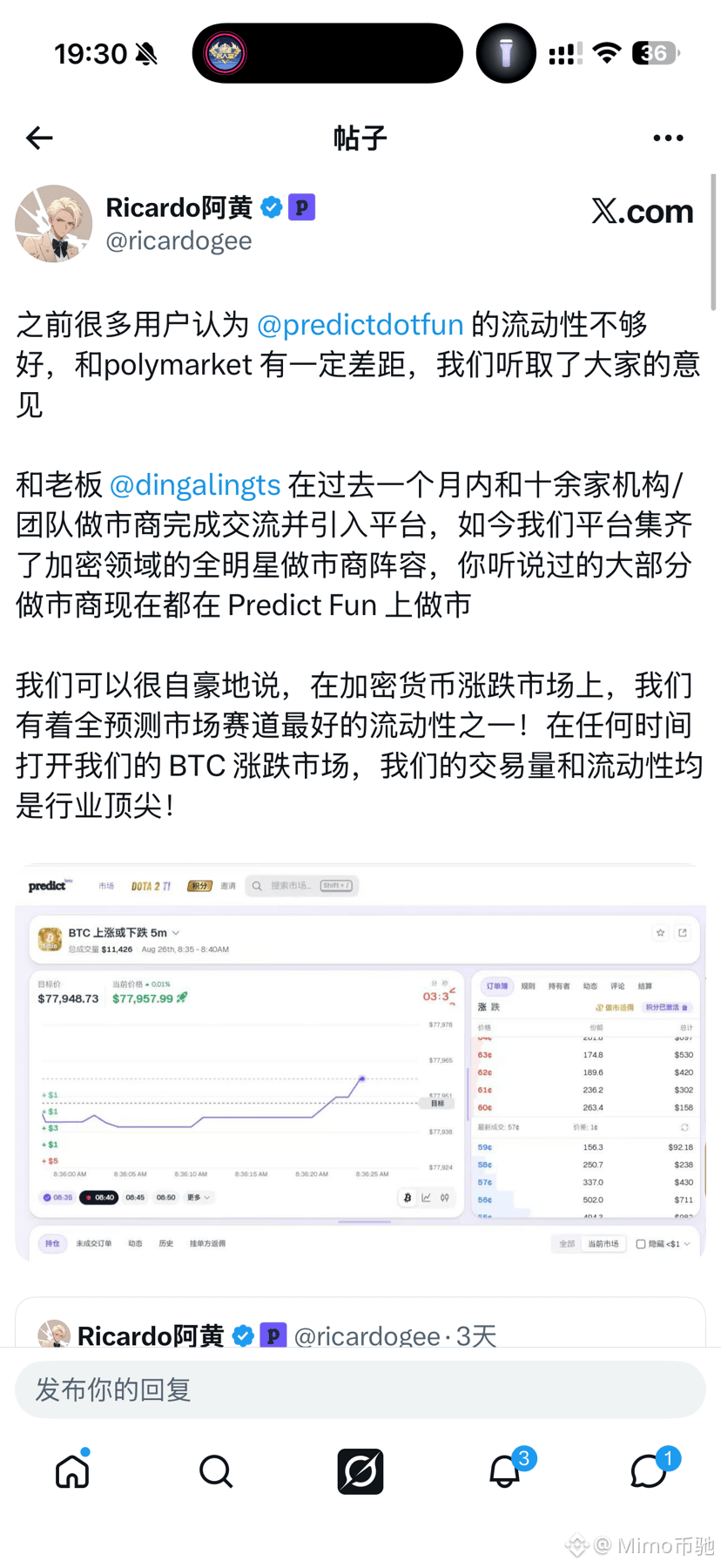
Before, many people criticized that Predict’s liquidity is worse than Polymarket. This isn’t a smear—it’s just a fact.
This thread from Ahuang is a positive response—over the past month, he talked to a dozen-plus institutions market makers, and most of the major names in the crypto space are there.
Why does this matter?
The most direct user experience in prediction markets isn’t the UI or the event prize pool—it comes down to three things:
When you want to enter, are there enough counterparty orders?
When you want to exit, will you get eaten by slippage?
And whether the odds/price actually reflect the market’s consensus.
If these three aren’t done well, users try a few times and don’t come back.
My own recent experience has been very obvious—when I open the $BTC up/down market, it’s no longer “let’s see if there’s volume first before deciding whether to place an order.”
With the order book there, with volume there, and the bid-ask spread pushed down to 1¢—this is what a market that people can seriously trade should look like.
Of course, thicker BTC books don’t mean the whole site is automatically great; esports, sports, and long-tail events are still a different story in terms of depth.
But the direction is right.
Liquidity isn’t marketing language—it’s whether users are willing to put their next real chunk of money into the market.
This road is only just starting to look like it’s going somewhere.
Before, many people criticized that Predict’s liquidity is worse than Polymarket. This isn’t a smear—it’s just a fact.
This thread from Ahuang is a positive response—over the past month, he talked to a dozen-plus institutions market makers, and most of the major names in the crypto space are there.
Why does this matter?
The most direct user experience in prediction markets isn’t the UI or the event prize pool—it comes down to three things:
When you want to enter, are there enough counterparty orders?
When you want to exit, will you get eaten by slippage?
And whether the odds/price actually reflect the market’s consensus.
If these three aren’t done well, users try a few times and don’t come back.
My own recent experience has been very obvious—when I open the $BTC up/down market, it’s no longer “let’s see if there’s volume first before deciding whether to place an order.”
With the order book there, with volume there, and the bid-ask spread pushed down to 1¢—this is what a market that people can seriously trade should look like.
Of course, thicker BTC books don’t mean the whole site is automatically great; esports, sports, and long-tail events are still a different story in terms of depth.
But the direction is right.
Liquidity isn’t marketing language—it’s whether users are willing to put their next real chunk of money into the market.
This road is only just starting to look like it’s going somewhere.
This thread from Ahuang is a positive response—over the past month, he talked to a dozen-plus institutions market makers, and most of the major names in the crypto space are there.
Why does this matter?
The most direct user experience in prediction markets isn’t the UI or the event prize pool—it comes down to three things:
When you want to enter, are there enough counterparty orders?
When you want to exit, will you get eaten by slippage?
And whether the odds/price actually reflect the market’s consensus.
If these three aren’t done well, users try a few times and don’t come back.
My own recent experience has been very obvious—when I open the $BTC up/down market, it’s no longer “let’s see if there’s volume first before deciding whether to place an order.”
With the order book there, with volume there, and the bid-ask spread pushed down to 1¢—this is what a market that people can seriously trade should look like.
Of course, thicker BTC books don’t mean the whole site is automatically great; esports, sports, and long-tail events are still a different story in terms of depth.
But the direction is right.
Liquidity isn’t marketing language—it’s whether users are willing to put their next real chunk of money into the market.
This road is only just starting to look like it’s going somewhere.
435
·
--
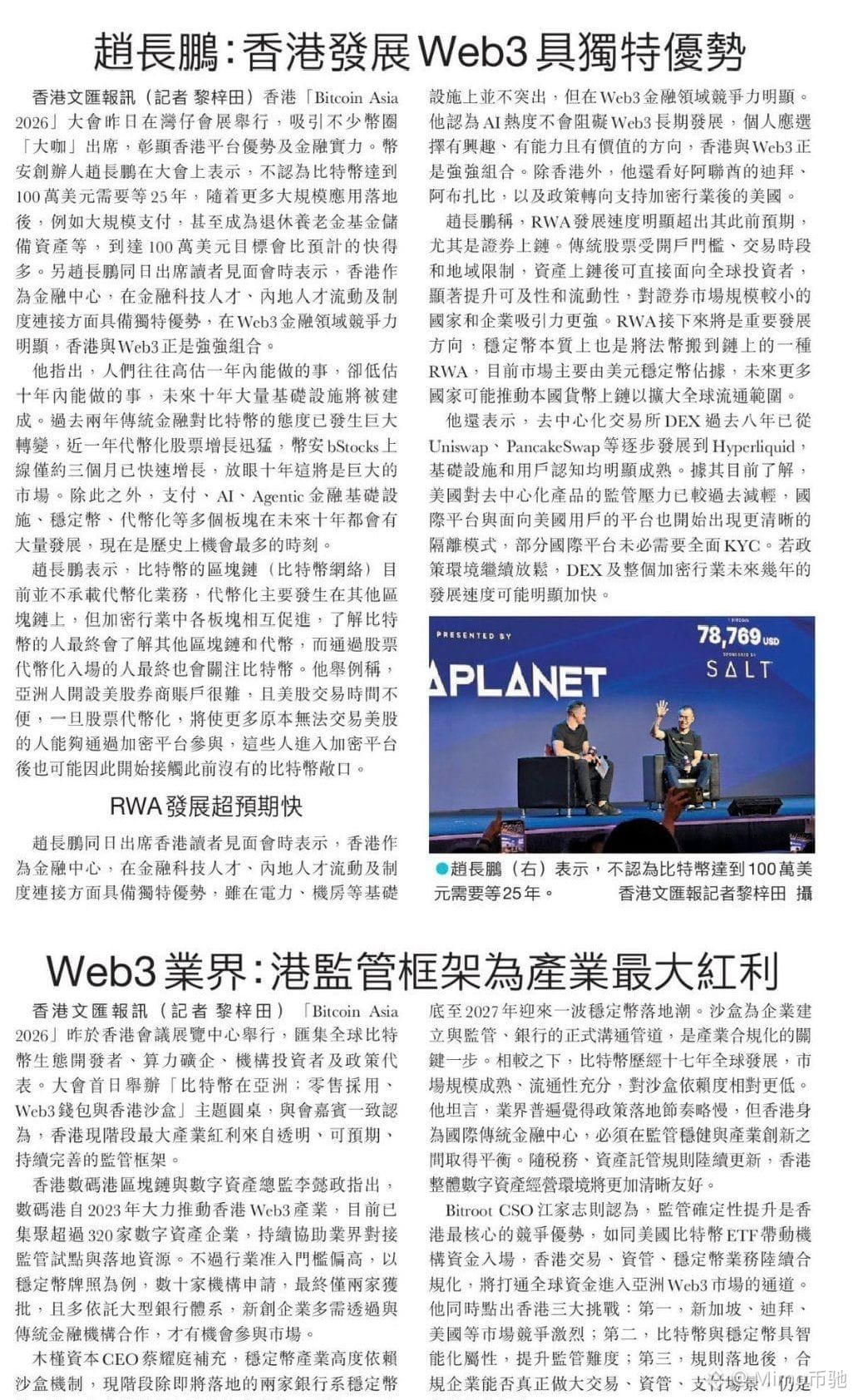
$BTC reaching $1 million will happen far faster than everyone expects.
Not “it might reach”—but “it will reach faster than you think.”
But more worth discussing than the number itself is the logic behind what he said.
In the next decade, the best window for development is here for payments, AI, stablecoins, RWA, and tokenization of stocks—these foundational infrastructures.
People always overestimate what can be done in one year, but underestimate what can be done in ten.
On Binance bStocks, growth accelerated rapidly within just three months—that’s only the beginning.
CZ also specifically called out Hong Kong—plainly put: the financial advantages accumulated over decades there—capital, regulation, talent, liquidity, and global connectivity—if they’re gradually moved onto the chain, could enable a huge catch-up and even leap ahead. But the prerequisite is: don’t keep hesitating.
In summary, there’s only one judgment:
In the next ten years, more and more assets and financial infrastructure will migrate onto the chain.
This isn’t a prediction—it’s already happening.
$BTC reaching $1 million will happen far faster than everyone expects.
Not “it might reach”—but “it will reach faster than you think.”
But more worth discussing than the number itself is the logic behind what he said.
In the next decade, the best window for development is here for payments, AI, stablecoins, RWA, and tokenization of stocks—these foundational infrastructures.
People always overestimate what can be done in one year, but underestimate what can be done in ten.
On Binance bStocks, growth accelerated rapidly within just three months—that’s only the beginning.
CZ also specifically called out Hong Kong—plainly put: the financial advantages accumulated over decades there—capital, regulation, talent, liquidity, and global connectivity—if they’re gradually moved onto the chain, could enable a huge catch-up and even leap ahead. But the prerequisite is: don’t keep hesitating.
In summary, there’s only one judgment:
In the next ten years, more and more assets and financial infrastructure will migrate onto the chain.
This isn’t a prediction—it’s already happening.
Not “it might reach”—but “it will reach faster than you think.”
But more worth discussing than the number itself is the logic behind what he said.
In the next decade, the best window for development is here for payments, AI, stablecoins, RWA, and tokenization of stocks—these foundational infrastructures.
People always overestimate what can be done in one year, but underestimate what can be done in ten.
On Binance bStocks, growth accelerated rapidly within just three months—that’s only the beginning.
CZ also specifically called out Hong Kong—plainly put: the financial advantages accumulated over decades there—capital, regulation, talent, liquidity, and global connectivity—if they’re gradually moved onto the chain, could enable a huge catch-up and even leap ahead. But the prerequisite is: don’t keep hesitating.
In summary, there’s only one judgment:
In the next ten years, more and more assets and financial infrastructure will migrate onto the chain.
This isn’t a prediction—it’s already happening.
1
1
339
·
--
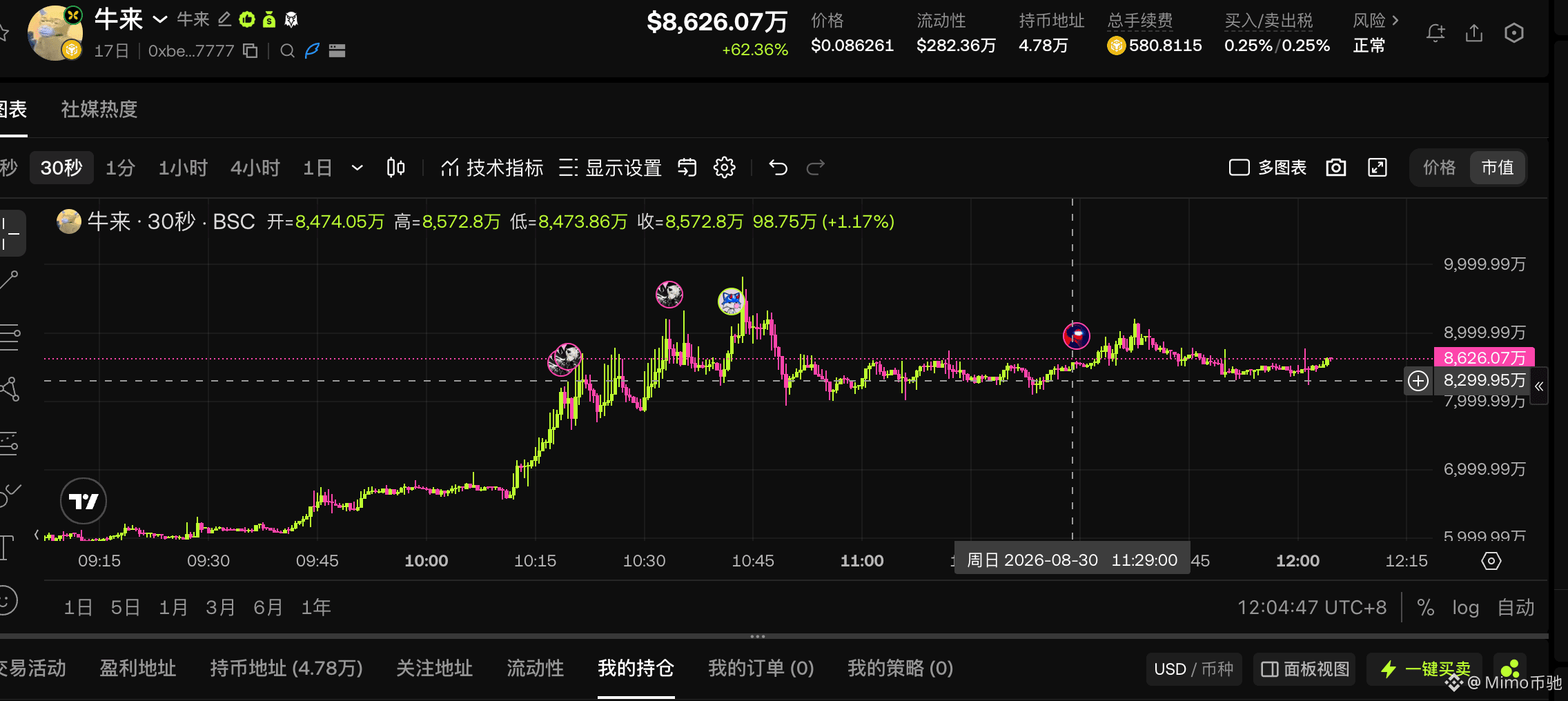
A movie whose box office started from 7,000 tickets and then got memed into popularity—now its coin is listed on the chain with a market cap of 86 million.
Today it surged 62% in a single day. The number of token-holding addresses is nearly 50,000, and the liquidity is 2.8 million—this isn’t some small-time stunt; there are genuinely people buying.
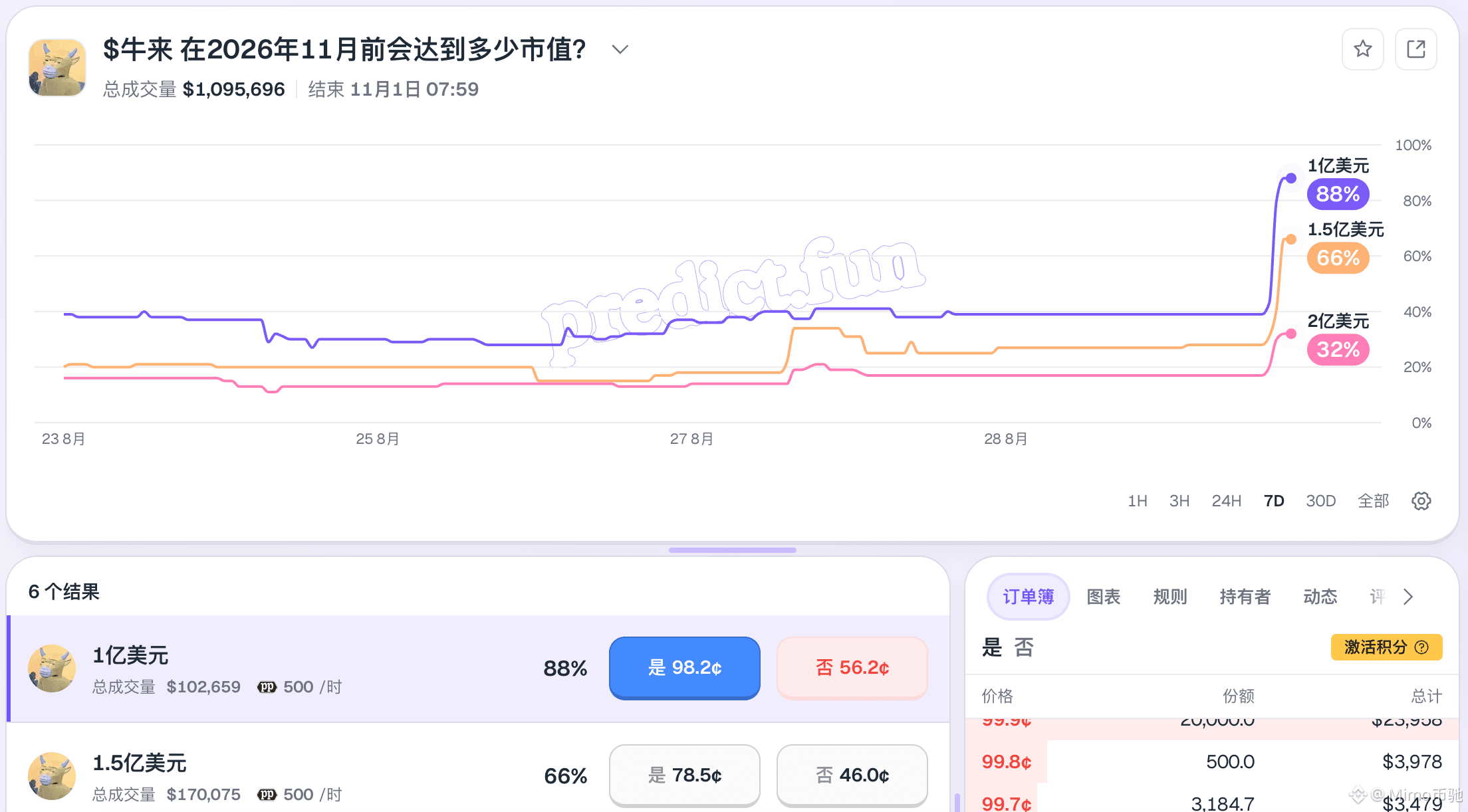
The pricing on Predict is even more straightforward:
$100 million: 88%, basically a lock
$150 million: 66%, more than half believe it can reach that
$200 million: 32%, one-third are betting on a continued push
$100 million is just a step away. The market almost assumes it can get there—the real betting is on the higher tier after that.
The logic behind this coin has never been fundamentals; it’s emotion resonance. The film lives on through awkwardness and fan-made remixes, and the coin gets pumped by the same kind of community sentiment.
With the two stacked together, it goes beyond simply watching from the sidelines.
The straight line in the 7D chart says everything: the probability curve ramps up vertically right after the 28th.
Whether it continues to push higher or burns out here—already, the order book is pricing it in early.
A movie whose box office started from 7,000 tickets and then got memed into popularity—now its coin is listed on the chain with a market cap of 86 million.
Today it surged 62% in a single day. The number of token-holding addresses is nearly 50,000, and the liquidity is 2.8 million—this isn’t some small-time stunt; there are genuinely people buying.
The pricing on Predict is even more straightforward:
$100 million: 88%, basically a lock
$150 million: 66%, more than half believe it can reach that
$200 million: 32%, one-third are betting on a continued push
$100 million is just a step away. The market almost assumes it can get there—the real betting is on the higher tier after that.
The logic behind this coin has never been fundamentals; it’s emotion resonance. The film lives on through awkwardness and fan-made remixes, and the coin gets pumped by the same kind of community sentiment.
With the two stacked together, it goes beyond simply watching from the sidelines.
The straight line in the 7D chart says everything: the probability curve ramps up vertically right after the 28th.
Whether it continues to push higher or burns out here—already, the order book is pricing it in early.
Today it surged 62% in a single day. The number of token-holding addresses is nearly 50,000, and the liquidity is 2.8 million—this isn’t some small-time stunt; there are genuinely people buying.
The pricing on Predict is even more straightforward:
$100 million: 88%, basically a lock
$150 million: 66%, more than half believe it can reach that
$200 million: 32%, one-third are betting on a continued push
$100 million is just a step away. The market almost assumes it can get there—the real betting is on the higher tier after that.
The logic behind this coin has never been fundamentals; it’s emotion resonance. The film lives on through awkwardness and fan-made remixes, and the coin gets pumped by the same kind of community sentiment.
With the two stacked together, it goes beyond simply watching from the sidelines.
The straight line in the 7D chart says everything: the probability curve ramps up vertically right after the 28th.
Whether it continues to push higher or burns out here—already, the order book is pricing it in early.
3
2
2.1k
·
--
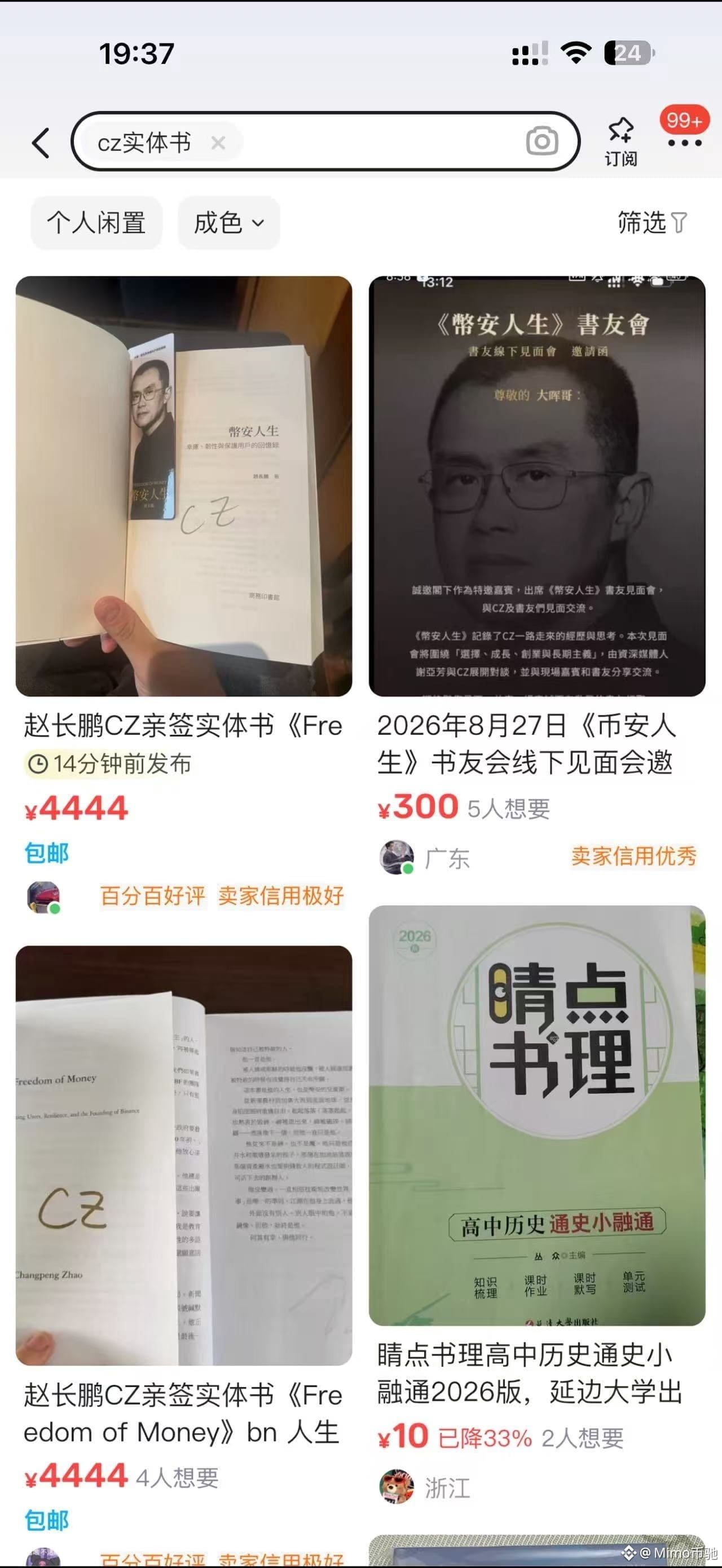
On Xianyu, CZ’s signed copy of *Binance Life* has already been bid up to 4444 RMB per book!
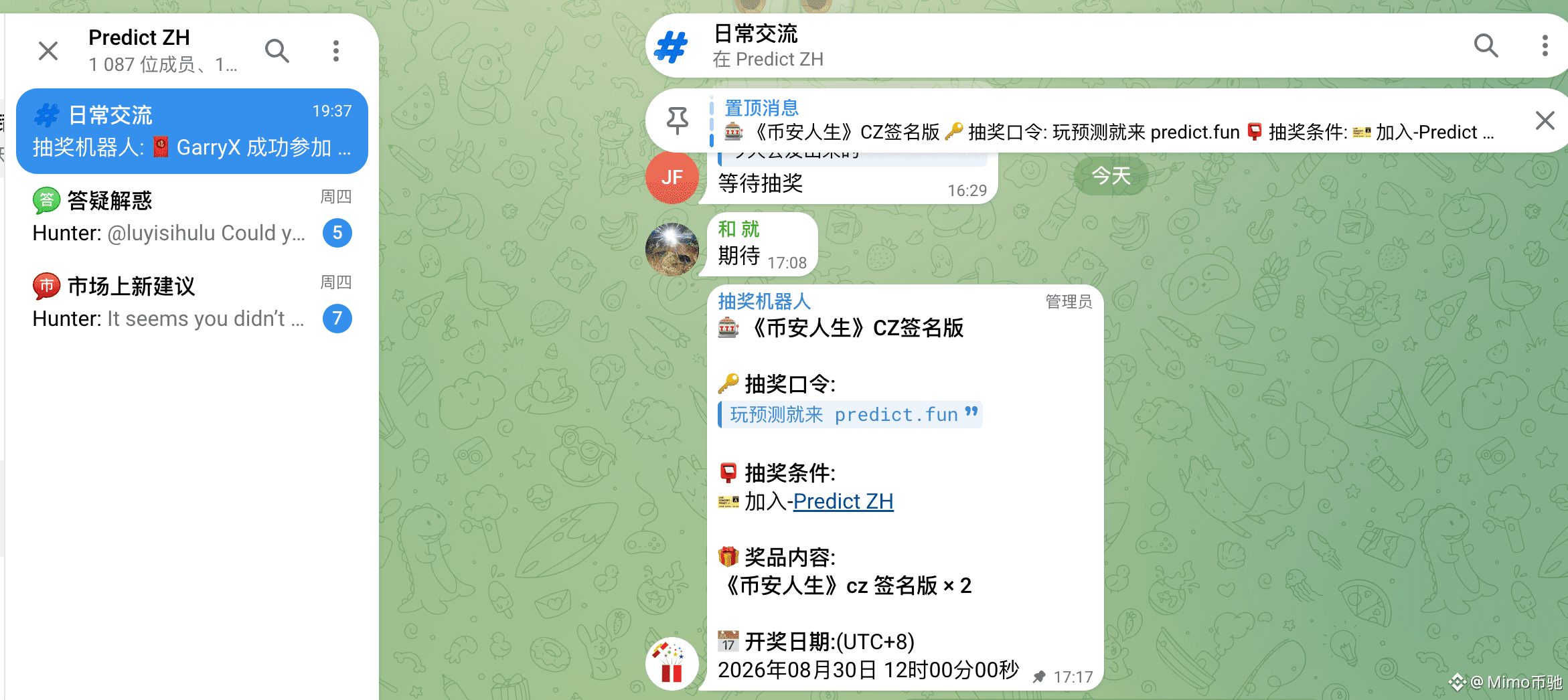
Predict’s official community is now offering a free draw.
Not the regular edition—this is the CZ handwritten signed version, limited quantity, and the authentic copy can’t be bought in the market.
To participate, there’s only one step: join the Predict ZH official community, send the passphrase, and you’re done.
This is your last chance—drawing at 12:00 UTC+8 on August 30, ending tomorrow at noon.
There aren’t many people in the community right now; when you join, you’re competing with only a few.
The entrance is in the chat room!
On Xianyu, CZ’s signed copy of *Binance Life* has already been bid up to 4444 RMB per book!
Predict’s official community is now offering a free draw.
Not the regular edition—this is the CZ handwritten signed version, limited quantity, and the authentic copy can’t be bought in the market.
To participate, there’s only one step: join the Predict ZH official community, send the passphrase, and you’re done.
This is your last chance—drawing at 12:00 UTC+8 on August 30, ending tomorrow at noon.
There aren’t many people in the community right now; when you join, you’re competing with only a few.
The entrance is in the chat room!
Predict’s official community is now offering a free draw.
Not the regular edition—this is the CZ handwritten signed version, limited quantity, and the authentic copy can’t be bought in the market.
To participate, there’s only one step: join the Predict ZH official community, send the passphrase, and you’re done.
This is your last chance—drawing at 12:00 UTC+8 on August 30, ending tomorrow at noon.
There aren’t many people in the community right now; when you join, you’re competing with only a few.
The entrance is in the chat room!
1
493
·
--
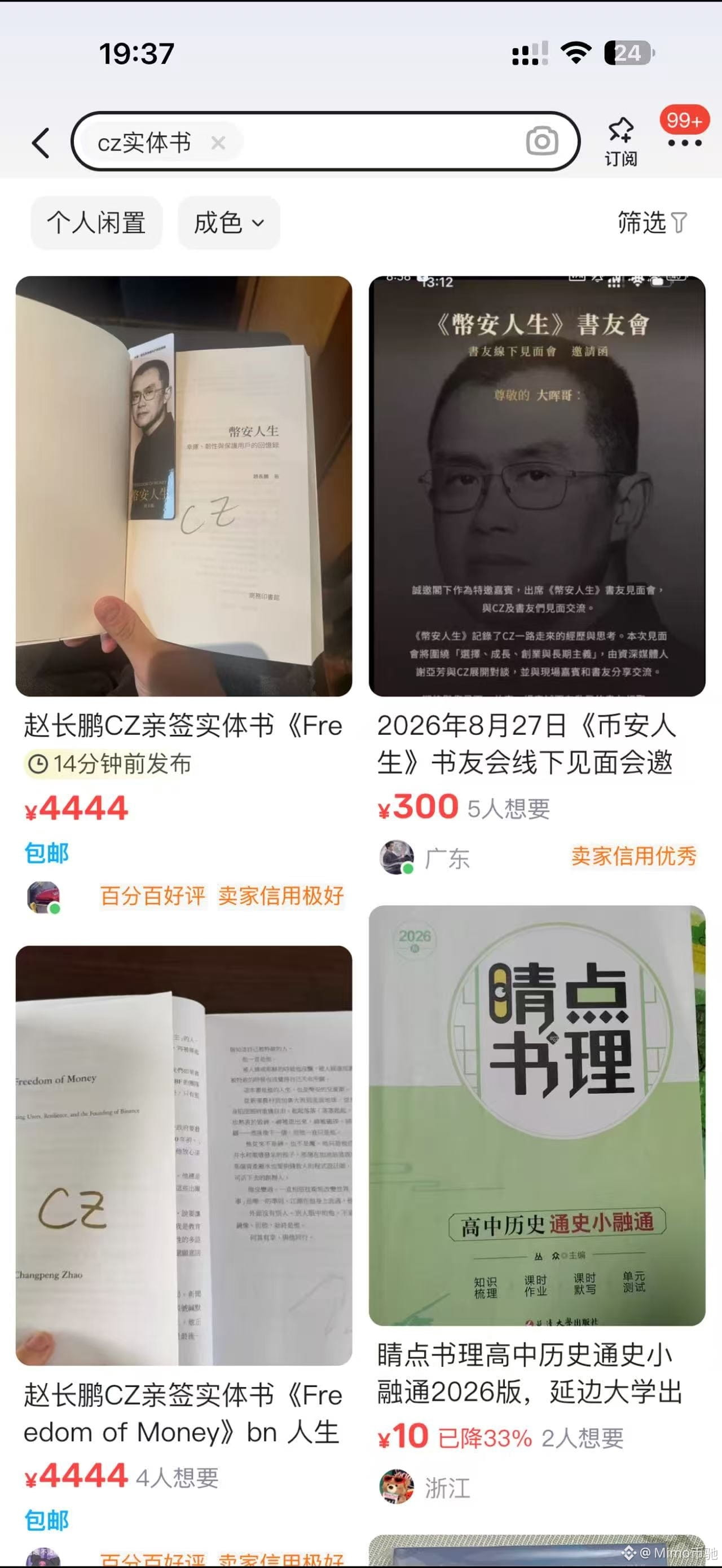
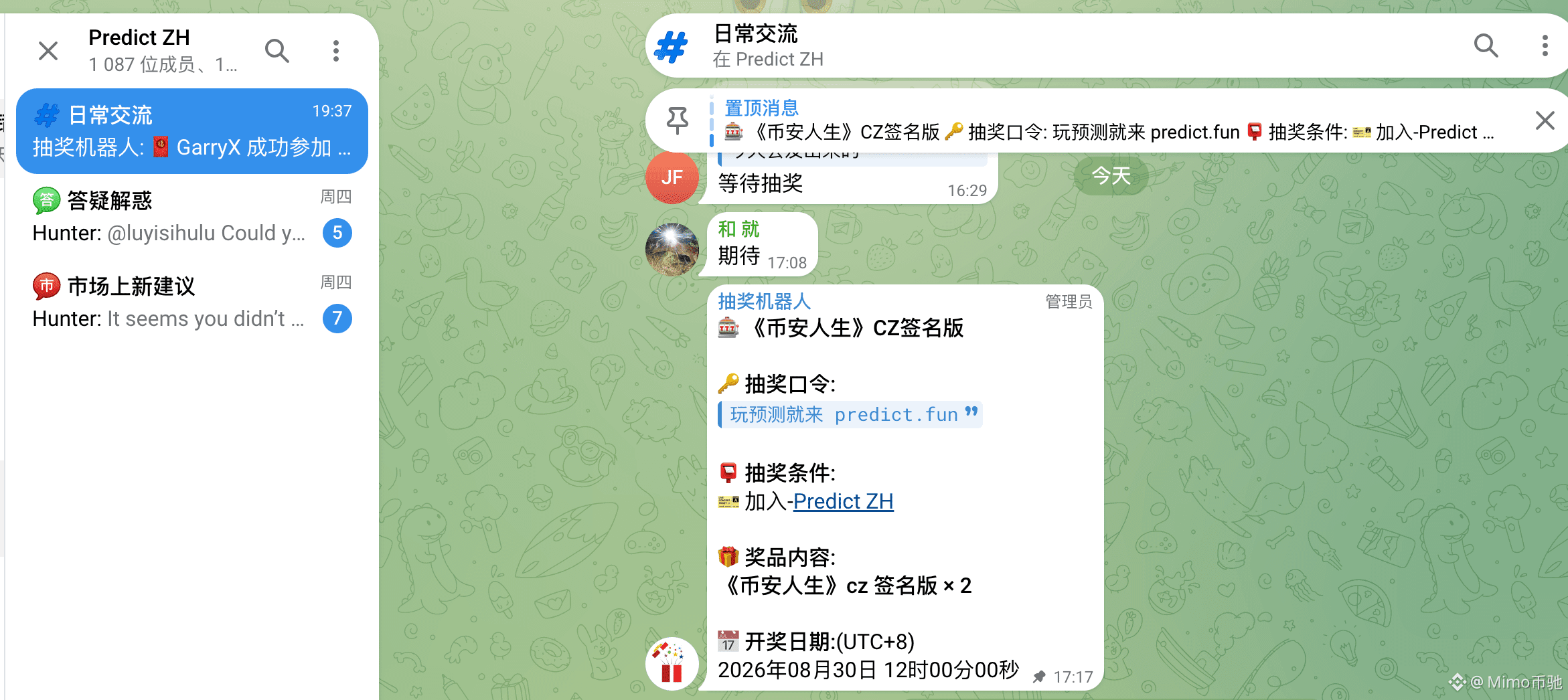
Xianyu has a signed copy of "Binance Life" for 4444!\n\nNow you can enter a free giveaway in the Predict official group!\n\nNot the regular version\n\nIt’s the CZ personally signed version. The pirated copies being sold on Xianyu are everywhere.\n\nHow to participate is extremely simple:\n\nJoin the Predict ZH official Telegram group,\n\nSend the keyword “玩预测就来 predict.fun”, and you can enter the raffle.\n\nDraw time: August 30 at 12:00 UTC+8 — that’s tomorrow at noon.\n\nThere aren’t many participants in the group right now, so your chance of winning is higher than you think.\n\nEntry link is in the comments section.
Xianyu has a signed copy of "Binance Life" for 4444!\n\nNow you can enter a free giveaway in the Predict official group!\n\nNot the regular version\n\nIt’s the CZ personally signed version. The pirated copies being sold on Xianyu are everywhere.\n\nHow to participate is extremely simple:\n\nJoin the Predict ZH official Telegram group,\n\nSend the keyword “玩预测就来 predict.fun”, and you can enter the raffle.\n\nDraw time: August 30 at 12:00 UTC+8 — that’s tomorrow at noon.\n\nThere aren’t many participants in the group right now, so your chance of winning is higher than you think.\n\nEntry link is in the comments section.
3
358
·
--
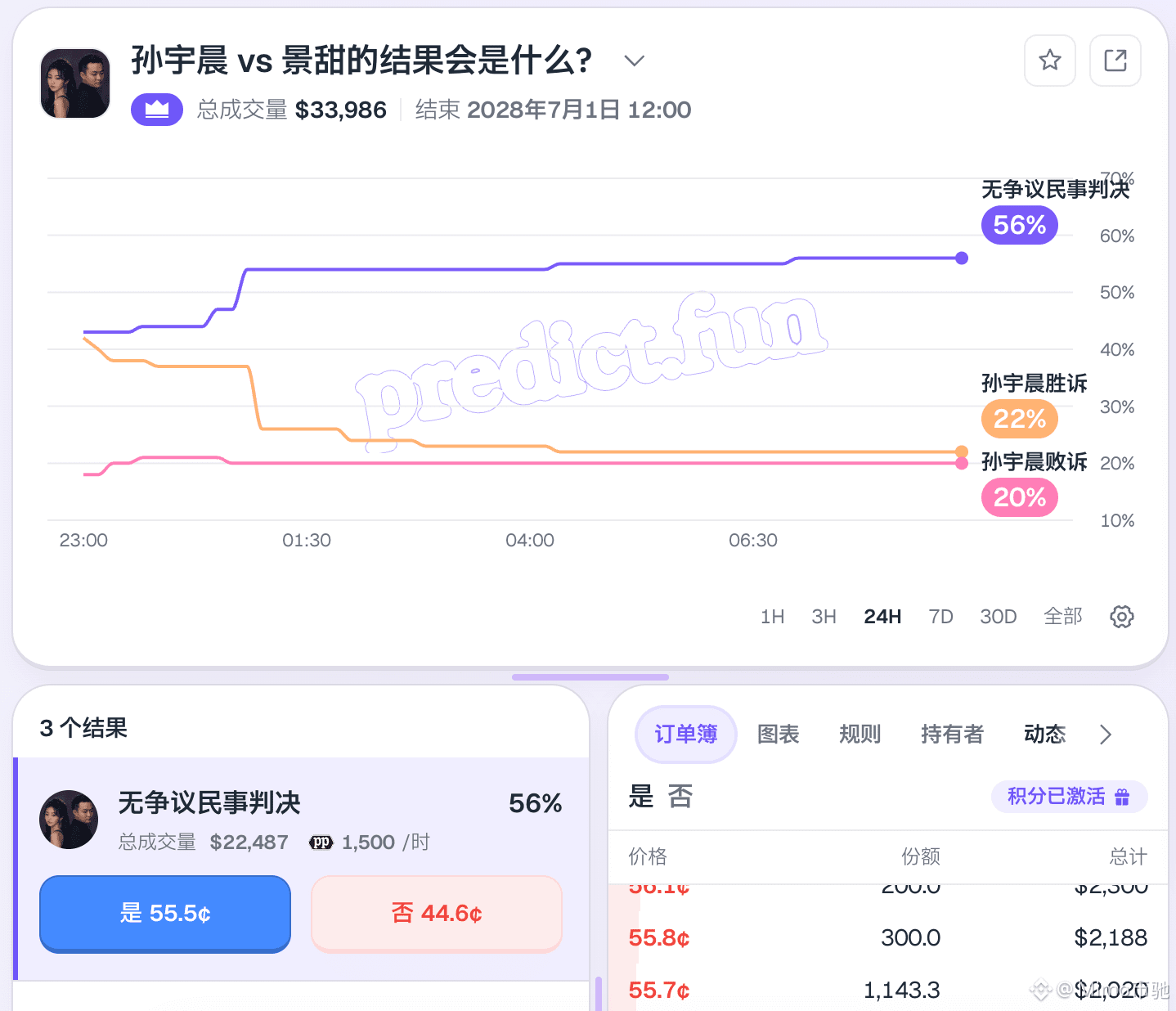
Sun Yuchen pursues the return of a 30 million yuan betrothal gift, suing Jing Tian.
The story only broke as news last night, and Predict is already launching the corresponding market today—officials say the rule design took a full day, just to reduce settlement disputes.
Now more than 30,000 U has already poured in. The market pricing is:
No-dispute civil judgment: 56%—more than half of people believe this will end peacefully in the end
Sun Yuchen wins: 22%
Sun Yuchen loses: 20%
The probabilities of winning and losing are almost the same, suggesting that the people here also don’t know who will come out on top in this lawsuit.
The case is still stuck in the jurisdiction objection stage, and substantive hearings haven’t even started. The settlement timeline is set for 2028—this is a two-year-long market.
30 million yuan betrothal gift. The most controversial man in the crypto circle. A long, drawn-out legal battle.
Which outcome do you think it will end up with?
Sun Yuchen pursues the return of a 30 million yuan betrothal gift, suing Jing Tian.
The story only broke as news last night, and Predict is already launching the corresponding market today—officials say the rule design took a full day, just to reduce settlement disputes.
Now more than 30,000 U has already poured in. The market pricing is:
No-dispute civil judgment: 56%—more than half of people believe this will end peacefully in the end
Sun Yuchen wins: 22%
Sun Yuchen loses: 20%
The probabilities of winning and losing are almost the same, suggesting that the people here also don’t know who will come out on top in this lawsuit.
The case is still stuck in the jurisdiction objection stage, and substantive hearings haven’t even started. The settlement timeline is set for 2028—this is a two-year-long market.
30 million yuan betrothal gift. The most controversial man in the crypto circle. A long, drawn-out legal battle.
Which outcome do you think it will end up with?
The story only broke as news last night, and Predict is already launching the corresponding market today—officials say the rule design took a full day, just to reduce settlement disputes.
Now more than 30,000 U has already poured in. The market pricing is:
No-dispute civil judgment: 56%—more than half of people believe this will end peacefully in the end
Sun Yuchen wins: 22%
Sun Yuchen loses: 20%
The probabilities of winning and losing are almost the same, suggesting that the people here also don’t know who will come out on top in this lawsuit.
The case is still stuck in the jurisdiction objection stage, and substantive hearings haven’t even started. The settlement timeline is set for 2028—this is a two-year-long market.
30 million yuan betrothal gift. The most controversial man in the crypto circle. A long, drawn-out legal battle.
Which outcome do you think it will end up with?

4
2.3k
·
--
Partly True
StandX has been getting more and more activity lately.
On Discord, people have started tracking role groups—save up and then raffle, one wave after another. The whole community is guessing whether the TGE is coming soon.
The MOD says they didn’t receive any notifications, but you know what they say—this kind of move should feel familiar, right?
The market has just started to warm up over the past few days, and this timing is pretty good. The community also has expectations—it's much better than during a bear market.
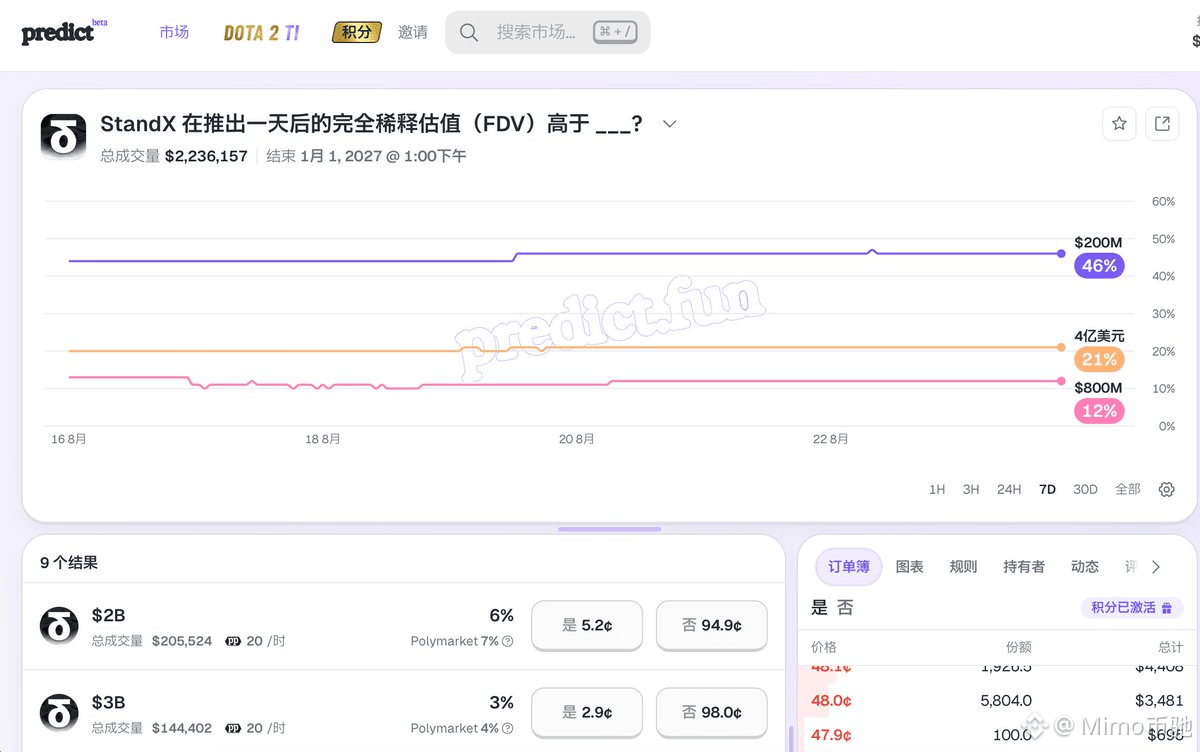
On Predict, people are already placing bets—after StandX launches for one day, how high can the FDV reach?
A trading volume of 2.2 million U shows this isn’t a dead-end order book; there’s real money inside.
The market’s current pricing is fairly conservative:
200 million: 46%,
400 million: 21%,
800 million: 12%,
and beyond that, the probability drops off a cliff.
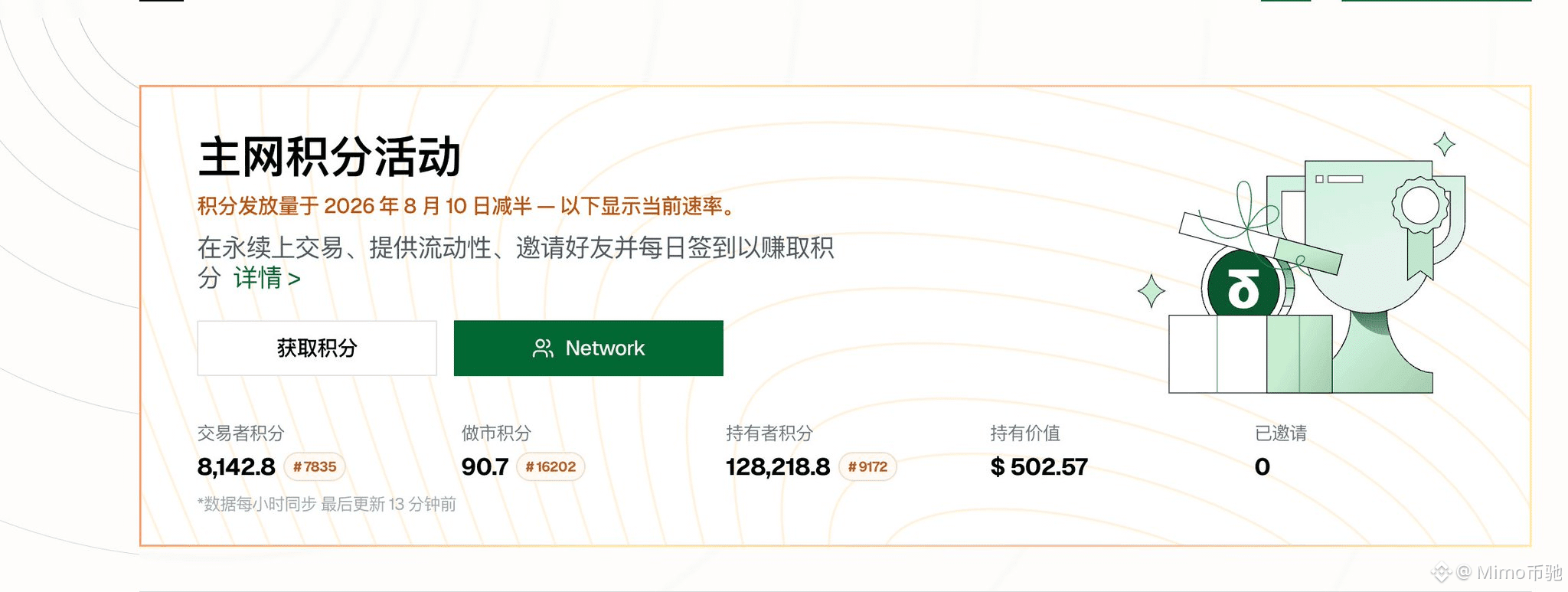
Pre-market LBank points are hovering around 0.44U, but there’s a catch—the total points issued aren’t public. That doesn’t mean it’s a token, either. How much “fake” there is at this price nobody can say for sure.
I’ve got tens of thousands of points. In the group, someone says the points are so many they’re like fun beans.
If 0.44U is real, then that would be a whole different story.
StandX has been getting more and more activity lately.
On Discord, people have started tracking role groups—save up and then raffle, one wave after another. The whole community is guessing whether the TGE is coming soon.
The MOD says they didn’t receive any notifications, but you know what they say—this kind of move should feel familiar, right?
The market has just started to warm up over the past few days, and this timing is pretty good. The community also has expectations—it's much better than during a bear market.
On Predict, people are already placing bets—after StandX launches for one day, how high can the FDV reach?
A trading volume of 2.2 million U shows this isn’t a dead-end order book; there’s real money inside.
The market’s current pricing is fairly conservative:
200 million: 46%,
400 million: 21%,
800 million: 12%,
and beyond that, the probability drops off a cliff.
Pre-market LBank points are hovering around 0.44U, but there’s a catch—the total points issued aren’t public. That doesn’t mean it’s a token, either. How much “fake” there is at this price nobody can say for sure.
I’ve got tens of thousands of points. In the group, someone says the points are so many they’re like fun beans.
If 0.44U is real, then that would be a whole different story.
On Discord, people have started tracking role groups—save up and then raffle, one wave after another. The whole community is guessing whether the TGE is coming soon.
The MOD says they didn’t receive any notifications, but you know what they say—this kind of move should feel familiar, right?
The market has just started to warm up over the past few days, and this timing is pretty good. The community also has expectations—it's much better than during a bear market.
On Predict, people are already placing bets—after StandX launches for one day, how high can the FDV reach?
A trading volume of 2.2 million U shows this isn’t a dead-end order book; there’s real money inside.
The market’s current pricing is fairly conservative:
200 million: 46%,
400 million: 21%,
800 million: 12%,
and beyond that, the probability drops off a cliff.
Pre-market LBank points are hovering around 0.44U, but there’s a catch—the total points issued aren’t public. That doesn’t mean it’s a token, either. How much “fake” there is at this price nobody can say for sure.
I’ve got tens of thousands of points. In the group, someone says the points are so many they’re like fun beans.
If 0.44U is real, then that would be a whole different story.
4
421
·
--
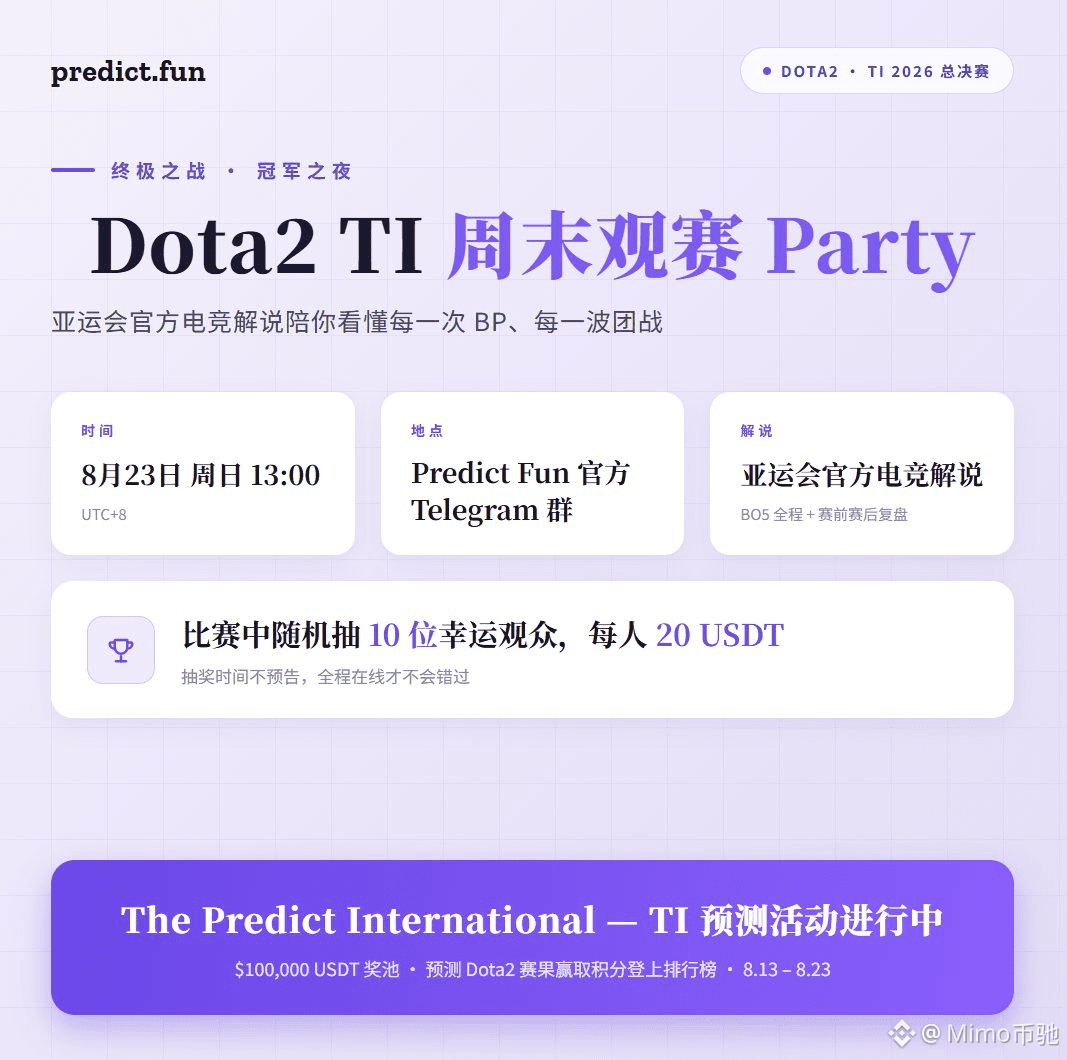
TI Finals are here—today is Championship Night.
Official Asian Games esports commentary. This afternoon at 1:00 PM, we’ll watch the action with you end-to-end in the official Predict.fun Telegram group.
BO5 format: pre-match analysis and post-match breakdown. We’ll explain every draft (BP) and every team fight in full detail.
Watch the match and earn a little on the side: we’ll randomly select 10 viewers during the stream—20 USDT each.
No advance notice for the giveaway—stay online all the way so you don’t miss out.
Plus, like, comment, and share to participate in splitting an additional 5 sets of 10 USDT.
The TI prediction event is also still running: a $100,000 USDT prize pool—today is the last day.
📅 8/23 (Sun) 13:00 UTC+8 📍 Link is in the comments
TI Finals are here—today is Championship Night.
Official Asian Games esports commentary. This afternoon at 1:00 PM, we’ll watch the action with you end-to-end in the official Predict.fun Telegram group.
BO5 format: pre-match analysis and post-match breakdown. We’ll explain every draft (BP) and every team fight in full detail.
Watch the match and earn a little on the side: we’ll randomly select 10 viewers during the stream—20 USDT each.
No advance notice for the giveaway—stay online all the way so you don’t miss out.
Plus, like, comment, and share to participate in splitting an additional 5 sets of 10 USDT.
The TI prediction event is also still running: a $100,000 USDT prize pool—today is the last day.
📅 8/23 (Sun) 13:00 UTC+8 📍 Link is in the comments
Official Asian Games esports commentary. This afternoon at 1:00 PM, we’ll watch the action with you end-to-end in the official Predict.fun Telegram group.
BO5 format: pre-match analysis and post-match breakdown. We’ll explain every draft (BP) and every team fight in full detail.
Watch the match and earn a little on the side: we’ll randomly select 10 viewers during the stream—20 USDT each.
No advance notice for the giveaway—stay online all the way so you don’t miss out.
Plus, like, comment, and share to participate in splitting an additional 5 sets of 10 USDT.
The TI prediction event is also still running: a $100,000 USDT prize pool—today is the last day.
📅 8/23 (Sun) 13:00 UTC+8 📍 Link is in the comments
448
·
--
predict,it’s increasingly starting to look like a dedicated prediction market for the Asia-Pacific region.
We’ve done in-depth research into user needs in the Asia-Pacific region.
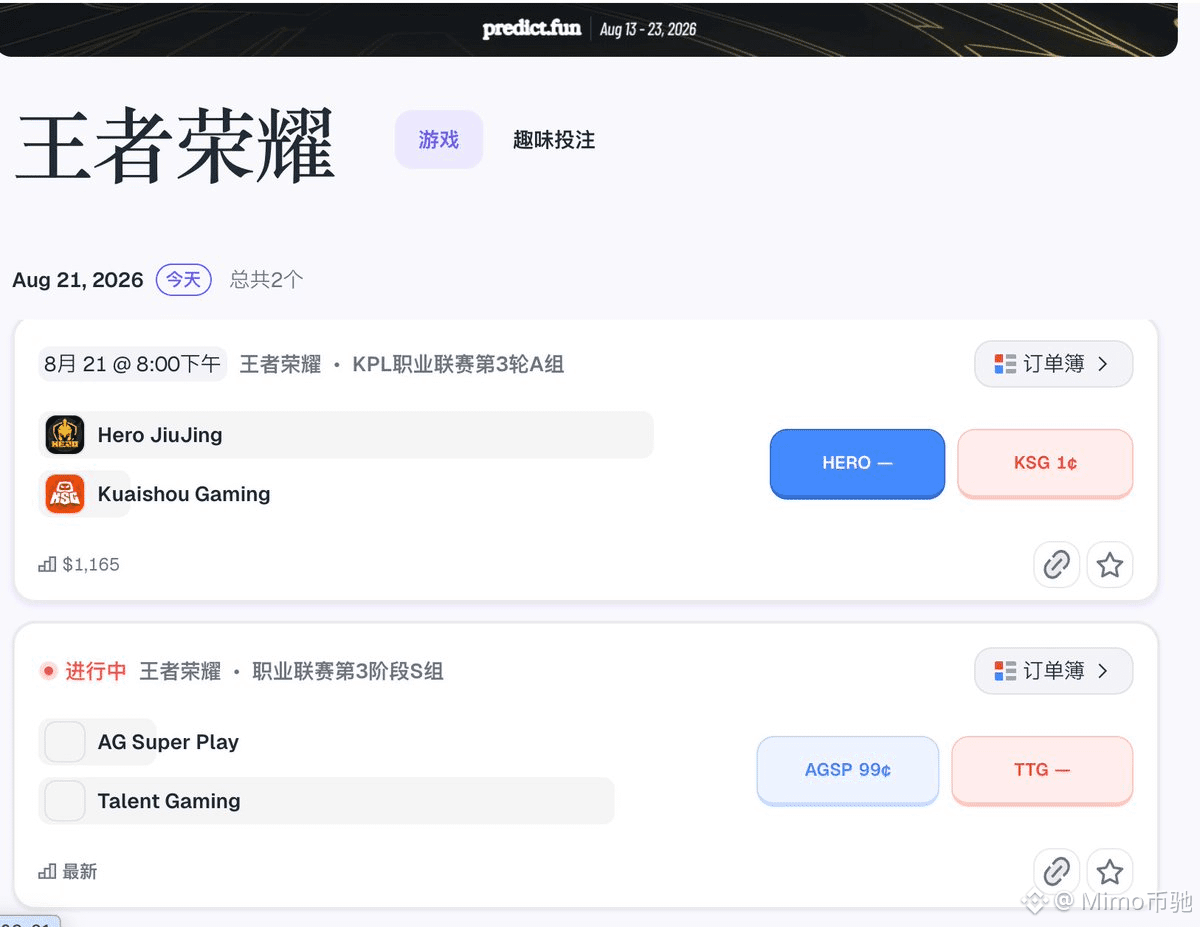
The prediction market for the King of Glory professional league is now live.
Where are all the King of Glory players?
This game has such a massive user base—on mobile, the volume directly dwarfs most PC games.
We’re currently in the third round of the regular season (through 8.23),
followed immediately by the playoffs (8.27-9.6),
and then the Summer Series finals (9.12).
The betting board is already up—if you’re a true King of Glory fan, you can go take a look.
In esports, Predict is covering more and more of it.
predict,it’s increasingly starting to look like a dedicated prediction market for the Asia-Pacific region.
We’ve done in-depth research into user needs in the Asia-Pacific region.
The prediction market for the King of Glory professional league is now live.
Where are all the King of Glory players?
This game has such a massive user base—on mobile, the volume directly dwarfs most PC games.
We’re currently in the third round of the regular season (through 8.23),
followed immediately by the playoffs (8.27-9.6),
and then the Summer Series finals (9.12).
The betting board is already up—if you’re a true King of Glory fan, you can go take a look.
In esports, Predict is covering more and more of it.
We’ve done in-depth research into user needs in the Asia-Pacific region.
The prediction market for the King of Glory professional league is now live.
Where are all the King of Glory players?
This game has such a massive user base—on mobile, the volume directly dwarfs most PC games.
We’re currently in the third round of the regular season (through 8.23),
followed immediately by the playoffs (8.27-9.6),
and then the Summer Series finals (9.12).
The betting board is already up—if you’re a true King of Glory fan, you can go take a look.
In esports, Predict is covering more and more of it.
1
1
368
·
--
Yushu Technology was officially listed today.
The issue price is 150.80 yuan per share, corresponding to a total market cap of about 61 billion.
Results at the open: it surged more than 500% straight away, and the market cap briefly shot past 400 billion.
If you get one lot (one winning bid) in the IPO, your paper gains could be as high as nearly 500,000 yuan.
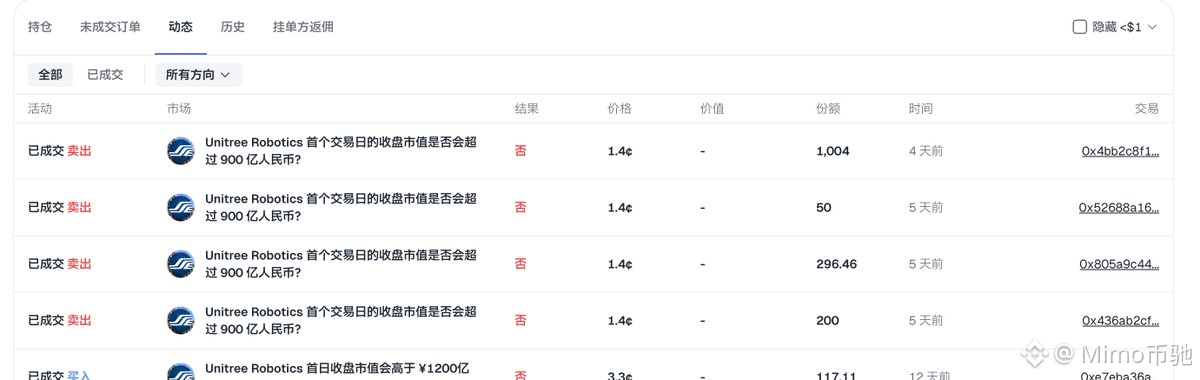
Regarding the IPO market-cap forecast on Predict that I mentioned earlier, the market’s main point of contention was still in the range of 200–250 billion, implying a rise of roughly 230%–310%.
Now it’s already several times higher, and sentiment is clearly being lifted by the tech-stock hype following the listing of Longxin Technology.
The official side has already added even higher options, adding more than 300 billion on top of the original basis.
This order-book option has been added several times already, but I never expected the market’s pricing to be this aggressive.
This round of losses is extremely thorough. Since I don’t play A-shares, this one has nothing to do with me.
Also, on Predict, my prediction was essentially betting on a low-probability event.
I thought 90–120 billion was reasonable, but I didn’t expect the market to be this FOMO.
And back then, a market cap of 400 billion also had single-digit odds.
It was too high, so I didn’t place a bet—because it was basically a paradox.
If you bet on a low price, it’s impossible to buy it at a high price.
And honestly, that’s on me for being stupid. Several stock players called me and said that the IPO “gray market” price had already been received at 500 per share (in the A-shares pre-open).
At the time I didn’t feel anything—I should have gone to place the next guaranteed bid.
Betting on a 400 billion market cap means you could profit tens of times even at the open!
Yushu Technology was officially listed today.
The issue price is 150.80 yuan per share, corresponding to a total market cap of about 61 billion.
Results at the open: it surged more than 500% straight away, and the market cap briefly shot past 400 billion.
If you get one lot (one winning bid) in the IPO, your paper gains could be as high as nearly 500,000 yuan.
Regarding the IPO market-cap forecast on Predict that I mentioned earlier, the market’s main point of contention was still in the range of 200–250 billion, implying a rise of roughly 230%–310%.
Now it’s already several times higher, and sentiment is clearly being lifted by the tech-stock hype following the listing of Longxin Technology.
The official side has already added even higher options, adding more than 300 billion on top of the original basis.
This order-book option has been added several times already, but I never expected the market’s pricing to be this aggressive.
This round of losses is extremely thorough. Since I don’t play A-shares, this one has nothing to do with me.
Also, on Predict, my prediction was essentially betting on a low-probability event.
I thought 90–120 billion was reasonable, but I didn’t expect the market to be this FOMO.
And back then, a market cap of 400 billion also had single-digit odds.
It was too high, so I didn’t place a bet—because it was basically a paradox.
If you bet on a low price, it’s impossible to buy it at a high price.
And honestly, that’s on me for being stupid. Several stock players called me and said that the IPO “gray market” price had already been received at 500 per share (in the A-shares pre-open).
At the time I didn’t feel anything—I should have gone to place the next guaranteed bid.
Betting on a 400 billion market cap means you could profit tens of times even at the open!
The issue price is 150.80 yuan per share, corresponding to a total market cap of about 61 billion.
Results at the open: it surged more than 500% straight away, and the market cap briefly shot past 400 billion.
If you get one lot (one winning bid) in the IPO, your paper gains could be as high as nearly 500,000 yuan.
Regarding the IPO market-cap forecast on Predict that I mentioned earlier, the market’s main point of contention was still in the range of 200–250 billion, implying a rise of roughly 230%–310%.
Now it’s already several times higher, and sentiment is clearly being lifted by the tech-stock hype following the listing of Longxin Technology.
The official side has already added even higher options, adding more than 300 billion on top of the original basis.
This order-book option has been added several times already, but I never expected the market’s pricing to be this aggressive.
This round of losses is extremely thorough. Since I don’t play A-shares, this one has nothing to do with me.
Also, on Predict, my prediction was essentially betting on a low-probability event.
I thought 90–120 billion was reasonable, but I didn’t expect the market to be this FOMO.
And back then, a market cap of 400 billion also had single-digit odds.
It was too high, so I didn’t place a bet—because it was basically a paradox.
If you bet on a low price, it’s impossible to buy it at a high price.
And honestly, that’s on me for being stupid. Several stock players called me and said that the IPO “gray market” price had already been received at 500 per share (in the A-shares pre-open).
At the time I didn’t feel anything—I should have gone to place the next guaranteed bid.
Betting on a 400 billion market cap means you could profit tens of times even at the open!
421
·
--
New market on Predict is live!
How far can the box office of the movie 《Niu Lai (Here Comes the Ox)》 and the meme coin 《Niu Lai》 really go?
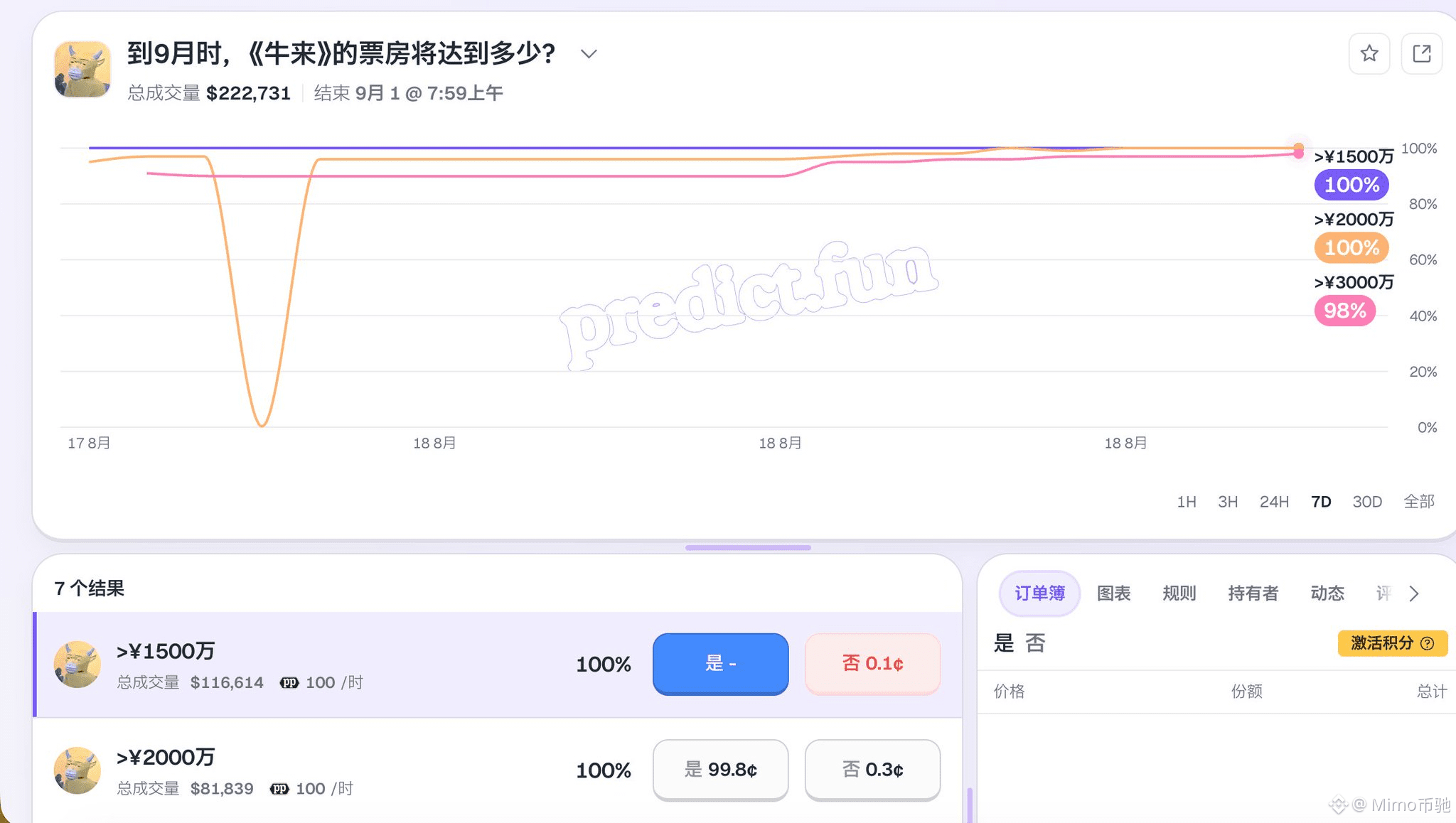
The director and his mother hand-built it for 5 years, but in the first week after release, the box office was only 7,000 RMB.
Then, by leaning on the whole internet meme frenzy and remixes, it has already broken 10 million. Even institutions have started predicting it could reach 100 million.
It’s awkward to the extreme and rough to the extreme—yet that’s exactly why people are willing to watch and show support.
To some extent, it’s a counterstatement to those polished, money-churning assembly-line movies.
It’s very similar to the logic behind meme coins.
After the last round, when everyone was slashed to pieces by all kinds of VC coins and fake narratives, people are now more willing to play community-native, emotion-driven things.
Movies are community sentiment at the culture level; meme coins are community sentiment at the crypto level. The two happen to resonate perfectly.
The two characters “Niu Lai” also conveniently carry a little hopeful fantasy for people who trade stocks and trade coins, making the emotion easier to amplify.
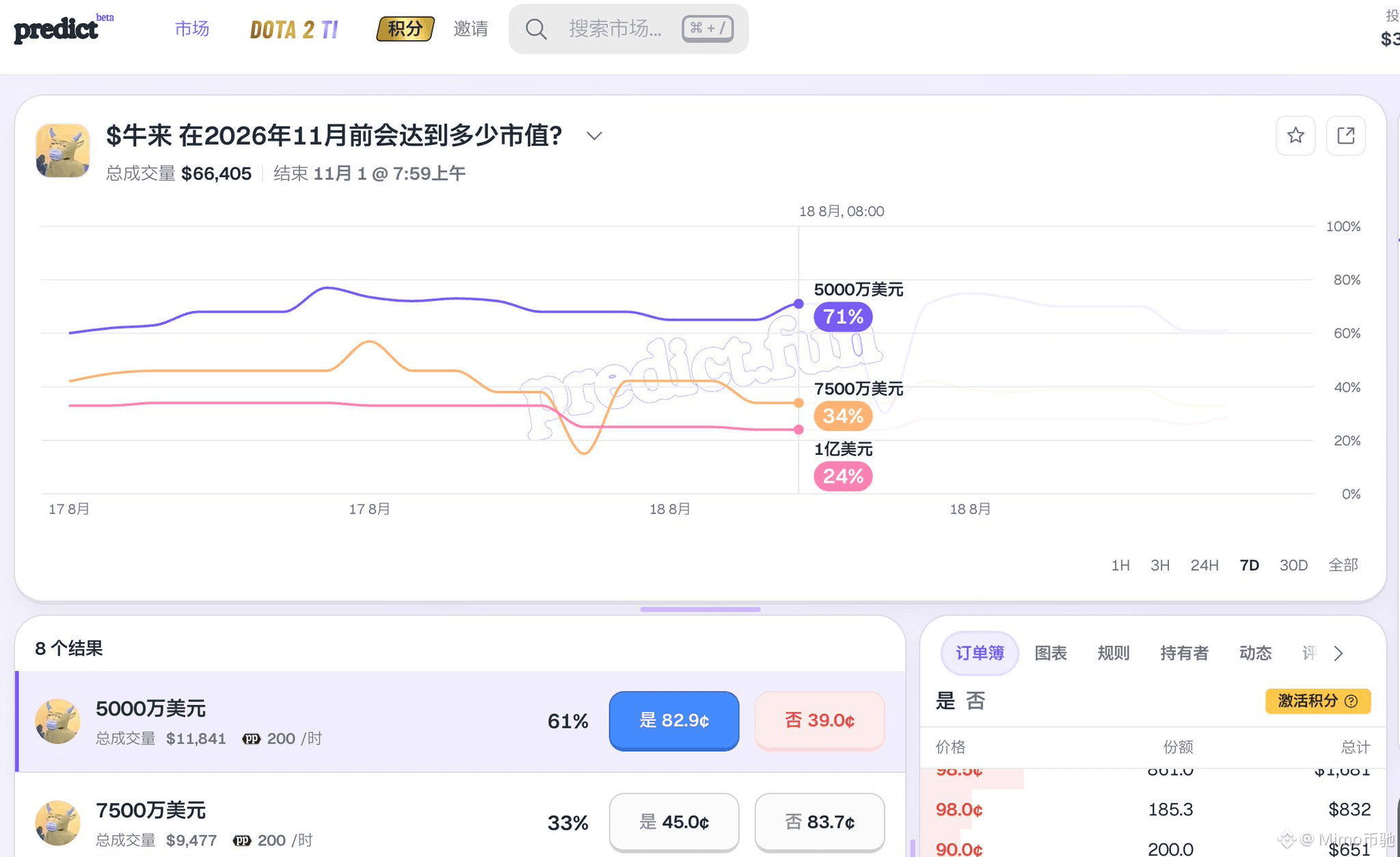
Predict turns both of these events into tradable markets—so we can conveniently observe how far this community celebration can go.
The movie box-office market and the meme coin market cap market are already open. If you have any viewpoints, you can go take a look.
New market on Predict is live!
How far can the box office of the movie 《Niu Lai (Here Comes the Ox)》 and the meme coin 《Niu Lai》 really go?
The director and his mother hand-built it for 5 years, but in the first week after release, the box office was only 7,000 RMB.
Then, by leaning on the whole internet meme frenzy and remixes, it has already broken 10 million. Even institutions have started predicting it could reach 100 million.
It’s awkward to the extreme and rough to the extreme—yet that’s exactly why people are willing to watch and show support.
To some extent, it’s a counterstatement to those polished, money-churning assembly-line movies.
It’s very similar to the logic behind meme coins.
After the last round, when everyone was slashed to pieces by all kinds of VC coins and fake narratives, people are now more willing to play community-native, emotion-driven things.
Movies are community sentiment at the culture level; meme coins are community sentiment at the crypto level. The two happen to resonate perfectly.
The two characters “Niu Lai” also conveniently carry a little hopeful fantasy for people who trade stocks and trade coins, making the emotion easier to amplify.
Predict turns both of these events into tradable markets—so we can conveniently observe how far this community celebration can go.
The movie box-office market and the meme coin market cap market are already open. If you have any viewpoints, you can go take a look.
How far can the box office of the movie 《Niu Lai (Here Comes the Ox)》 and the meme coin 《Niu Lai》 really go?
The director and his mother hand-built it for 5 years, but in the first week after release, the box office was only 7,000 RMB.
Then, by leaning on the whole internet meme frenzy and remixes, it has already broken 10 million. Even institutions have started predicting it could reach 100 million.
It’s awkward to the extreme and rough to the extreme—yet that’s exactly why people are willing to watch and show support.
To some extent, it’s a counterstatement to those polished, money-churning assembly-line movies.
It’s very similar to the logic behind meme coins.
After the last round, when everyone was slashed to pieces by all kinds of VC coins and fake narratives, people are now more willing to play community-native, emotion-driven things.
Movies are community sentiment at the culture level; meme coins are community sentiment at the crypto level. The two happen to resonate perfectly.
The two characters “Niu Lai” also conveniently carry a little hopeful fantasy for people who trade stocks and trade coins, making the emotion easier to amplify.
Predict turns both of these events into tradable markets—so we can conveniently observe how far this community celebration can go.
The movie box-office market and the meme coin market cap market are already open. If you have any viewpoints, you can go take a look.
3
5
2.4k
·
--
The top five European leagues are about to kick off!
Predict may be rolling out a new event!
The Premier League, La Liga, Serie A, Bundesliga, and Ligue 1—one after another, with almost no gaps from now until the end of the year.
The World Cup-style gameplay: prize money + PP points—it’s already been proven through a full round.
If the top five leagues also launch a similar activity, it won’t be a one-time opportunity; it’ll be something you can keep participating in throughout the entire season.
For people who have been doing line/odds work long-term, this timing is worth setting up early: Predict’s fee advantage is already strong in the top prediction markets, and when you add points on top, the cost is a notch lower than other platforms.
Seasoned players coming from other prediction platforms should go try the depth of the odds/markets—officials are also actively trying to attract this group of users.
The top five league seasons are just starting now, so entering at this point isn’t late.
The top five European leagues are about to kick off!
Predict may be rolling out a new event!
The Premier League, La Liga, Serie A, Bundesliga, and Ligue 1—one after another, with almost no gaps from now until the end of the year.
The World Cup-style gameplay: prize money + PP points—it’s already been proven through a full round.
If the top five leagues also launch a similar activity, it won’t be a one-time opportunity; it’ll be something you can keep participating in throughout the entire season.
For people who have been doing line/odds work long-term, this timing is worth setting up early: Predict’s fee advantage is already strong in the top prediction markets, and when you add points on top, the cost is a notch lower than other platforms.
Seasoned players coming from other prediction platforms should go try the depth of the odds/markets—officials are also actively trying to attract this group of users.
The top five league seasons are just starting now, so entering at this point isn’t late.
Predict may be rolling out a new event!
The Premier League, La Liga, Serie A, Bundesliga, and Ligue 1—one after another, with almost no gaps from now until the end of the year.
The World Cup-style gameplay: prize money + PP points—it’s already been proven through a full round.
If the top five leagues also launch a similar activity, it won’t be a one-time opportunity; it’ll be something you can keep participating in throughout the entire season.
For people who have been doing line/odds work long-term, this timing is worth setting up early: Predict’s fee advantage is already strong in the top prediction markets, and when you add points on top, the cost is a notch lower than other platforms.
Seasoned players coming from other prediction platforms should go try the depth of the odds/markets—officials are also actively trying to attract this group of users.
The top five league seasons are just starting now, so entering at this point isn’t late.

3
584
·
--
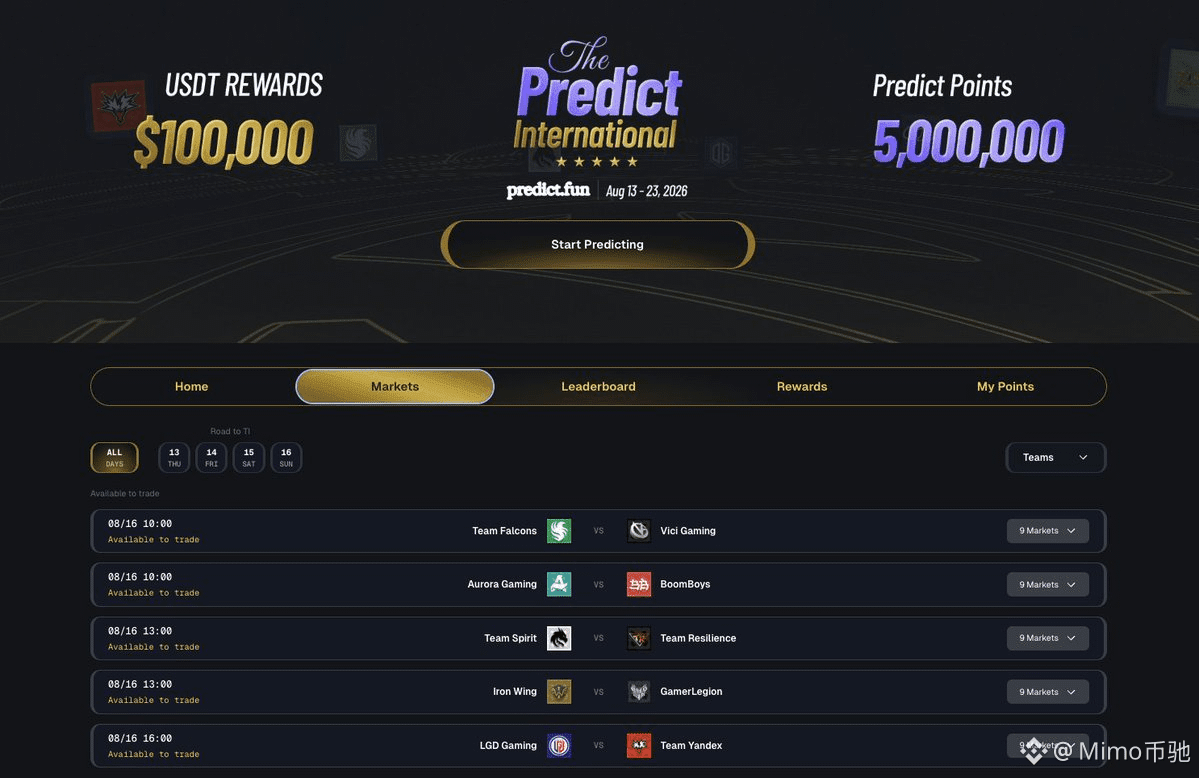
The knockout stage is underway—the pace is way faster than the group stage.
Every match is a do-or-die situation: lose and you’re going home. That’s the kind of game that makes betting exciting.
The Predict International event is still ongoing: a $100,000 USDT + 5,000,000 PP prize pool, with spots for the top 1,000 participants.
Lock in at least 20 shares. If your prediction is correct, points are awarded automatically, and your积分 are updated in real time on the leaderboard.
There are more betting markets in the knockout stage than in the group stage—if you understand teams, now’s a great time to get in.
Go straight to the event page—don’t wait until the final to remember.
Which team are you betting on to make it all the way to the end?
The knockout stage is underway—the pace is way faster than the group stage.
Every match is a do-or-die situation: lose and you’re going home. That’s the kind of game that makes betting exciting.
The Predict International event is still ongoing: a $100,000 USDT + 5,000,000 PP prize pool, with spots for the top 1,000 participants.
Lock in at least 20 shares. If your prediction is correct, points are awarded automatically, and your积分 are updated in real time on the leaderboard.
There are more betting markets in the knockout stage than in the group stage—if you understand teams, now’s a great time to get in.
Go straight to the event page—don’t wait until the final to remember.
Which team are you betting on to make it all the way to the end?
Every match is a do-or-die situation: lose and you’re going home. That’s the kind of game that makes betting exciting.
The Predict International event is still ongoing: a $100,000 USDT + 5,000,000 PP prize pool, with spots for the top 1,000 participants.
Lock in at least 20 shares. If your prediction is correct, points are awarded automatically, and your积分 are updated in real time on the leaderboard.
There are more betting markets in the knockout stage than in the group stage—if you understand teams, now’s a great time to get in.
Go straight to the event page—don’t wait until the final to remember.
Which team are you betting on to make it all the way to the end?
1
1
546
Log in to explore more content
Join global crypto users on Binance Square
⚡️ Get latest and useful information about crypto.
💬 Trusted by the world’s largest crypto exchange.
👍 Discover real insights from verified creators.
Email / Phone number
Trending Topics
BitcoinCrosses$78000
242 views
42 Discussing
$BTC urgent Update 🚨 Big Opportunity ‼️Get Ready for Short 📉
BTC is bouncing as expected .Now you can scale your entry upto 78000 because this bounce can extend upto 78,000 ..
Stop-loss: 79,200
Targets 🎯
TP1: 77,150
TP2: 76,450
TP3: 75,750
TP4: 75,000
$SOL and $ETH will follow Bitcoin..And then dump as predicted 🔥
Always DYOR and never invest all in one trade
short here 👇
#SECReceivesGrayscaleLitecoinTrustETFFiling #ClarityActFacesProceduralVoteSept15 #US10YearTreasuryYieldNears5%
Panda Traders
·13 Likes
·5.8k views
USMemoryChipStocksFallPreMarket
0 views
0 Discussing
AnthropicCEOCallsForAISlowdown
136,669 views
2,300 Discussing