

Mek
1k Posts

Mek
Report
Block User
Trader Institutional, Entrepreneuer & Analyst since 2018 · Binance KOL & BNBChain Martian. Building at Web3 and Sovereign Infrastructure.
High-Frequency Trader
5.4 Years
47 Following
2.9K+ Followers
1.9K+ Liked
Posts
All
Quotes
Videos
Live
·
--
Tesla and Meta reported Q3. The question is the same: is spending on AI turning into margin, or just burning cash?
$TSLA delivered 486,532 vehicles, above consensus of 461,974. Revenue came in at US$ 28.05 billion, basically flat year over year. Gross margin rose to 19.6% (+160 bps YoY and well above the 16.8% in Q2). Operating income fell 56% YoY to US$ 718 million, with AI and Optimus opex growing faster than gross profit.
Storage came in at 13.7 GWh, below the expected ~15.9 GWh. Free cash flow was positive at US$ 1.53 billion (versus expectations of a steep cash burn). 2026 capex was guided to around US$ 20 billion.
$META revenue of US$ 64.6 billion (+26% YoY). A one-time legal charge of US$ 9.89 billion reduced operating income by 37%. Capex of US$ 34.9 billion exceeded operating cash flow of US$ 32.8 billion and drove FCF to roughly negative US$ 2.1 billion. 2026 capex guidance was set at US$ 135–145 billion.
The core businesses of both are holding up. Investment in AI still does not show clear returns in Tesla’s operating margin or Meta’s free cash flow. The market is not pricing the spending. It is pricing evidence of returns.
This is not investment advice.
#EarningsSeason #TSLA #META
{future}(TSLAUSDT)
{future}(METAUSDT)
Tesla and Meta reported Q3. The question is the same: is spending on AI turning into margin, or just burning cash?
$TSLA delivered 486,532 vehicles, above consensus of 461,974. Revenue came in at US$ 28.05 billion, basically flat year over year. Gross margin rose to 19.6% (+160 bps YoY and well above the 16.8% in Q2). Operating income fell 56% YoY to US$ 718 million, with AI and Optimus opex growing faster than gross profit.
Storage came in at 13.7 GWh, below the expected ~15.9 GWh. Free cash flow was positive at US$ 1.53 billion (versus expectations of a steep cash burn). 2026 capex was guided to around US$ 20 billion.
$META revenue of US$ 64.6 billion (+26% YoY). A one-time legal charge of US$ 9.89 billion reduced operating income by 37%. Capex of US$ 34.9 billion exceeded operating cash flow of US$ 32.8 billion and drove FCF to roughly negative US$ 2.1 billion. 2026 capex guidance was set at US$ 135–145 billion.
The core businesses of both are holding up. Investment in AI still does not show clear returns in Tesla’s operating margin or Meta’s free cash flow. The market is not pricing the spending. It is pricing evidence of returns.
This is not investment advice.
#EarningsSeason #TSLA #META
$TSLA delivered 486,532 vehicles, above consensus of 461,974. Revenue came in at US$ 28.05 billion, basically flat year over year. Gross margin rose to 19.6% (+160 bps YoY and well above the 16.8% in Q2). Operating income fell 56% YoY to US$ 718 million, with AI and Optimus opex growing faster than gross profit.
Storage came in at 13.7 GWh, below the expected ~15.9 GWh. Free cash flow was positive at US$ 1.53 billion (versus expectations of a steep cash burn). 2026 capex was guided to around US$ 20 billion.
$META revenue of US$ 64.6 billion (+26% YoY). A one-time legal charge of US$ 9.89 billion reduced operating income by 37%. Capex of US$ 34.9 billion exceeded operating cash flow of US$ 32.8 billion and drove FCF to roughly negative US$ 2.1 billion. 2026 capex guidance was set at US$ 135–145 billion.
The core businesses of both are holding up. Investment in AI still does not show clear returns in Tesla’s operating margin or Meta’s free cash flow. The market is not pricing the spending. It is pricing evidence of returns.
This is not investment advice.
#EarningsSeason #TSLA #META
75
·
--
Verified
Brazil already taxes like a rich country.
They just forgot to send along rich-country incomes.
And the way it collects taxes makes the bill worse.
In consumption taxes alone, Brazil collects more, as a share of GDP, than France, the United Kingdom, and Germany.
It's the tax built into the price of gasoline, the electricity bill, and your cell phone. The rate is the same for someone who earns R$ 2 thousand and someone who earns R$ 200 thousand.
On average across the OECD, the largest share comes from income.
Here, it comes from the price of what you buy.
Brazil already taxes like a rich country.
They just forgot to send along rich-country incomes.
And the way it collects taxes makes the bill worse.
In consumption taxes alone, Brazil collects more, as a share of GDP, than France, the United Kingdom, and Germany.
It's the tax built into the price of gasoline, the electricity bill, and your cell phone. The rate is the same for someone who earns R$ 2 thousand and someone who earns R$ 200 thousand.
On average across the OECD, the largest share comes from income.
Here, it comes from the price of what you buy.
They just forgot to send along rich-country incomes.
And the way it collects taxes makes the bill worse.
In consumption taxes alone, Brazil collects more, as a share of GDP, than France, the United Kingdom, and Germany.
It's the tax built into the price of gasoline, the electricity bill, and your cell phone. The rate is the same for someone who earns R$ 2 thousand and someone who earns R$ 200 thousand.
On average across the OECD, the largest share comes from income.
Here, it comes from the price of what you buy.
3
6
1.8k
·
--
The average acquisition price via ETFs is starting to become an important metric among on-chain levels.
This average price, currently positioned at US$ 81.500, has established the floor for this corrective move.
Curiously, it was the top of the previous local move.
ETF flows will become increasingly important in on-chain tracking.
If we mark this area as support for spot buying, demand should outweigh supply.
The average acquisition price via ETFs is starting to become an important metric among on-chain levels.
This average price, currently positioned at US$ 81.500, has established the floor for this corrective move.
Curiously, it was the top of the previous local move.
ETF flows will become increasingly important in on-chain tracking.
If we mark this area as support for spot buying, demand should outweigh supply.
This average price, currently positioned at US$ 81.500, has established the floor for this corrective move.
Curiously, it was the top of the previous local move.
ETF flows will become increasingly important in on-chain tracking.
If we mark this area as support for spot buying, demand should outweigh supply.
1
100
·
--
Big players are buying BTC 👀
Spot buying dominance rose to its highest level since September 21 in the order book microstructure.
A typical breakout bar, although I still think it needs to hold above $84k.
Yesterday, I thought the likelihood of bears getting liquidated was the dominant scenario.
Today, nearly $200 MILLION in crypto short positions were liquidated.
Unsure about the context? Take a look at the previous analysis. The move may not be over.
Big players are buying BTC 👀
Spot buying dominance rose to its highest level since September 21 in the order book microstructure.
A typical breakout bar, although I still think it needs to hold above $84k.
Yesterday, I thought the likelihood of bears getting liquidated was the dominant scenario.
Today, nearly $200 MILLION in crypto short positions were liquidated.
Unsure about the context? Take a look at the previous analysis. The move may not be over.
Spot buying dominance rose to its highest level since September 21 in the order book microstructure.
A typical breakout bar, although I still think it needs to hold above $84k.
Yesterday, I thought the likelihood of bears getting liquidated was the dominant scenario.
Today, nearly $200 MILLION in crypto short positions were liquidated.
Unsure about the context? Take a look at the previous analysis. The move may not be over.
Mek
·
--
THE BITCOIN VOLATILITY RECIPE 📊
Prices falling while open interest rises in the perpetual futures market is a typical pattern during volatility shocks and liquidity grabs.
It’s quite likely that liquidity zones will become more active over the next few days, signaling price magnet regions.
In my livestream later today, I’ll show you where these liquidation zones are.
Traders positioned here should keep a closer eye on their positions and avoid running low on collateral.
If Funding keeps falling, the chances of the price starting to liquidate bears should rise significantly.
And I hope you haven’t waited too long if that happens.
Prices falling while open interest rises in the perpetual futures market is a typical pattern during volatility shocks and liquidity grabs.
It’s quite likely that liquidity zones will become more active over the next few days, signaling price magnet regions.
In my livestream later today, I’ll show you where these liquidation zones are.
Traders positioned here should keep a closer eye on their positions and avoid running low on collateral.
If Funding keeps falling, the chances of the price starting to liquidate bears should rise significantly.
And I hope you haven’t waited too long if that happens.
1
153
·
--
U.S. HOME SALES AT HISTORIC LOW.🚨
The NAR’s index of signed contracts fell again in September, dropping below even the depths of the 2008 crisis.
Take a look at the chart. The housing market has been weak since 2022, when interest rates started rising.
The 30-year mortgage rate is back at its highest level in nearly three years.
Those with cheap mortgages aren’t selling, and those who want to buy can’t afford the payments.
Against this backdrop, the market will start to realize that the FED doesn’t have much room to raise interest rates.
Either it accepts high inflation, or something breaks. Which will it be?
U.S. HOME SALES AT HISTORIC LOW.🚨
The NAR’s index of signed contracts fell again in September, dropping below even the depths of the 2008 crisis.
Take a look at the chart. The housing market has been weak since 2022, when interest rates started rising.
The 30-year mortgage rate is back at its highest level in nearly three years.
Those with cheap mortgages aren’t selling, and those who want to buy can’t afford the payments.
Against this backdrop, the market will start to realize that the FED doesn’t have much room to raise interest rates.
Either it accepts high inflation, or something breaks. Which will it be?
The NAR’s index of signed contracts fell again in September, dropping below even the depths of the 2008 crisis.
Take a look at the chart. The housing market has been weak since 2022, when interest rates started rising.
The 30-year mortgage rate is back at its highest level in nearly three years.
Those with cheap mortgages aren’t selling, and those who want to buy can’t afford the payments.
Against this backdrop, the market will start to realize that the FED doesn’t have much room to raise interest rates.
Either it accepts high inflation, or something breaks. Which will it be?
1
247
·
--
Have a great day, everyone. I'm counting on your vote below so we can win. It takes less than 30 seconds 🤝
[Vote aqui 🏆](https://www.binance.com/pt/square/profile/mek_)
Have a great day, everyone. I'm counting on your vote below so we can win. It takes less than 30 seconds 🤝
Vote aqui 🏆
Vote aqui 🏆
1
21
·
--
Bullish
Verified
BlackRock’s Bitcoin ETF recorded its BIGGEST buying volume of 2026.
And it wasn’t just yesterday. Since May, IBIT has seen net inflows, while all the other Bitcoin ETFs combined have sold.
What’s interesting is that the money isn’t leaving Bitcoin.
It’s changing hands and ending up with the world’s largest asset manager.
The last time inflows surged like this, in August, the price rose nearly 20% in the following weeks.
Will the pattern repeat? $BTC
BlackRock’s Bitcoin ETF recorded its BIGGEST buying volume of 2026.
And it wasn’t just yesterday. Since May, IBIT has seen net inflows, while all the other Bitcoin ETFs combined have sold.
What’s interesting is that the money isn’t leaving Bitcoin.
It’s changing hands and ending up with the world’s largest asset manager.
The last time inflows surged like this, in August, the price rose nearly 20% in the following weeks.
Will the pattern repeat? $BTC
And it wasn’t just yesterday. Since May, IBIT has seen net inflows, while all the other Bitcoin ETFs combined have sold.
What’s interesting is that the money isn’t leaving Bitcoin.
It’s changing hands and ending up with the world’s largest asset manager.
The last time inflows surged like this, in August, the price rose nearly 20% in the following weeks.
Will the pattern repeat? $BTC
BTC+0.78%
IBITETF+0.47%
1
511
·
--
Bullish
Verified
$NIL Covenants: the first real answer to a structural flaw in on-chain markets
Every conditional order published on-chain exposes intent before execution. That is an information leak, and it has a cost.
Nillion's Covenants address it directly:
• Instructions sealed until their condition is met
• Nodes decrypt only when a live data feed confirms the trigger
• No keeper, no discretionary party deciding whether to act
• Settlement on Ethereum L1, with permissionless nodes staking NIL
Dusk, the first phase of the 7-era Encrypted Markets roadmap, is the foundation: cryptography, node network and developer tooling.
My read is structural, not speculative. Privacy-native execution is infrastructure, and infrastructure is judged by adoption, not by price action. Early-stage networks carry execution and adoption risk, so I am sizing accordingly.
Position shared below. Not financial advice. @nillionnetwork #NIL
$NIL Covenants: the first real answer to a structural flaw in on-chain markets
Every conditional order published on-chain exposes intent before execution. That is an information leak, and it has a cost.
Nillion's Covenants address it directly:
• Instructions sealed until their condition is met
• Nodes decrypt only when a live data feed confirms the trigger
• No keeper, no discretionary party deciding whether to act
• Settlement on Ethereum L1, with permissionless nodes staking NIL
Dusk, the first phase of the 7-era Encrypted Markets roadmap, is the foundation: cryptography, node network and developer tooling.
My read is structural, not speculative. Privacy-native execution is infrastructure, and infrastructure is judged by adoption, not by price action. Early-stage networks carry execution and adoption risk, so I am sizing accordingly.
Position shared below. Not financial advice. @Nillion #NIL
Every conditional order published on-chain exposes intent before execution. That is an information leak, and it has a cost.
Nillion's Covenants address it directly:
• Instructions sealed until their condition is met
• Nodes decrypt only when a live data feed confirms the trigger
• No keeper, no discretionary party deciding whether to act
• Settlement on Ethereum L1, with permissionless nodes staking NIL
Dusk, the first phase of the 7-era Encrypted Markets roadmap, is the foundation: cryptography, node network and developer tooling.
My read is structural, not speculative. Privacy-native execution is infrastructure, and infrastructure is judged by adoption, not by price action. Early-stage networks carry execution and adoption risk, so I am sizing accordingly.
Position shared below. Not financial advice. @Nillion #NIL
1
197
·
--
THE BITCOIN VOLATILITY RECIPE 📊
Prices falling while open interest rises in the perpetual futures market is a typical pattern during volatility shocks and liquidity grabs.
It’s quite likely that liquidity zones will become more active over the next few days, signaling price magnet regions.
In my livestream later today, I’ll show you where these liquidation zones are.
Traders positioned here should keep a closer eye on their positions and avoid running low on collateral.
If Funding keeps falling, the chances of the price starting to liquidate bears should rise significantly.
And I hope you haven’t waited too long if that happens.
THE BITCOIN VOLATILITY RECIPE 📊
Prices falling while open interest rises in the perpetual futures market is a typical pattern during volatility shocks and liquidity grabs.
It’s quite likely that liquidity zones will become more active over the next few days, signaling price magnet regions.
In my livestream later today, I’ll show you where these liquidation zones are.
Traders positioned here should keep a closer eye on their positions and avoid running low on collateral.
If Funding keeps falling, the chances of the price starting to liquidate bears should rise significantly.
And I hope you haven’t waited too long if that happens.
Prices falling while open interest rises in the perpetual futures market is a typical pattern during volatility shocks and liquidity grabs.
It’s quite likely that liquidity zones will become more active over the next few days, signaling price magnet regions.
In my livestream later today, I’ll show you where these liquidation zones are.
Traders positioned here should keep a closer eye on their positions and avoid running low on collateral.
If Funding keeps falling, the chances of the price starting to liquidate bears should rise significantly.
And I hope you haven’t waited too long if that happens.
Mek
·
--
FUTURES LIQUIDITY BECOMES A DRIVER FOR BITCOIN 📈
After a period of spot dominance in microstructural price action, the order book’s liquidation pattern is likely to make BTC follow liquidity grabs in the short term.
Today, the price is squeezed between three ranges.
Above, there’s a smaller concentration near $84.5K and the densest area on the map, around $87–88K, which has remained intact since the beginning of the month.
Below, there’s the range just under $80K, which the price has already touched at a low of $79.7K, but hasn’t completely cleared.
These areas may become clearer over the next 3–5 days, and the price may pursue the closure of these orders.
In this case, the upper ranges may have the greatest density and act as a magnet.
After a period of spot dominance in microstructural price action, the order book’s liquidation pattern is likely to make BTC follow liquidity grabs in the short term.
Today, the price is squeezed between three ranges.
Above, there’s a smaller concentration near $84.5K and the densest area on the map, around $87–88K, which has remained intact since the beginning of the month.
Below, there’s the range just under $80K, which the price has already touched at a low of $79.7K, but hasn’t completely cleared.
These areas may become clearer over the next 3–5 days, and the price may pursue the closure of these orders.
In this case, the upper ranges may have the greatest density and act as a magnet.
1
1
120
·
--
JPMORGAN put BITCOIN ahead of stocks and gold for the first time.
The bank’s asset management arm included BTC in its annual report on expected returns over the next 10 to 15 years, now in its 31st edition.
The projection is 10% a year, ABOVE U.S. stocks, real estate funds, and gold.
The same bank whose CEO once called bitcoin a fraud is now predicting it will be the BEST ASSET of the NEXT DECADE.
And honestly, 10% is VERY conservative.
Over the past 10 years, bitcoin has returned nearly 63% a year.
Wall Street has already decided it needs protection from fiat money. What about you—have you started accumulating scarce assets?
JPMORGAN put BITCOIN ahead of stocks and gold for the first time.
The bank’s asset management arm included BTC in its annual report on expected returns over the next 10 to 15 years, now in its 31st edition.
The projection is 10% a year, ABOVE U.S. stocks, real estate funds, and gold.
The same bank whose CEO once called bitcoin a fraud is now predicting it will be the BEST ASSET of the NEXT DECADE.
And honestly, 10% is VERY conservative.
Over the past 10 years, bitcoin has returned nearly 63% a year.
Wall Street has already decided it needs protection from fiat money. What about you—have you started accumulating scarce assets?
The bank’s asset management arm included BTC in its annual report on expected returns over the next 10 to 15 years, now in its 31st edition.
The projection is 10% a year, ABOVE U.S. stocks, real estate funds, and gold.
The same bank whose CEO once called bitcoin a fraud is now predicting it will be the BEST ASSET of the NEXT DECADE.
And honestly, 10% is VERY conservative.
Over the past 10 years, bitcoin has returned nearly 63% a year.
Wall Street has already decided it needs protection from fiat money. What about you—have you started accumulating scarce assets?
1
141
·
--
Article
I Asked an AI to Audit My BTC Thesis. Here Is What Held UpSix prompts, one thesis written before I started, and a verification table. Tested in the Binance app on October 16, 2026.
I did not ask Binance AI for a price prediction.
I asked it to audit mine.
My BTC read was already public on Binance Square before I opened the assistant. Then I asked Binance AI to read BTC independently, challenge my thesis, check derivatives, rank the macro drivers and show its sources.
Three findings:
What held up. Its levels matched my map. Its 30 day range of $75.1K to $87.4K sits on my swing low and swing high. Its description of a two sided deleveraging is consistent with the Coinglass liquidation data.What it challenged. It pushed back on my wording that liquidity pools act as support and resistance. Fair point.What it could not do. No live order book depth, no 24 hour open interest change, no dated macro quotes, and no chart upload at the time I tested.
Verdict: a fast and transparent second opinion. Not a data terminal.
The Premise
Most AI content in crypto is a feature tour. It teaches you nothing.
I wanted a harder question. Can Binance AI see something that a trader with a fully formed view might have missed?
So I used a rule I apply to analysts. Write the view first. Then test it. If you open the tool first, it anchors you.
On October 15, a day before this test, I published my liquidity map on Binance Square. Dense liquidation bands near $87K to $88K above price, and near $74K to $75K below.
Methodology
Feature tested. The Binance AI assistant, which answers open questions with AI generated analysis inside the app.
Platform. Binance mobile app. At the time of testing, Binance AI was not available on web or desktop.
Input. I tried to upload my TradingView and Coinglass screenshots. There was no image upload option, so I typed my thesis instead.
Baseline tools. TradingView for structure. Coinglass for liquidations and the heatmap.
Six prompts, in this order:
A. Give me your read on BTC right now: trend, key levels, and what is driving price today.B. Here is my read: [my thesis]. Where do you agree, where do you disagree, and what am I missing?C. What do Open Interest, funding, and the order book say about positioning and nearby liquidity?D. Which macro events and institutional flows matter most for BTC this week, and why?E. Which data sources and timestamps did you use for that answer?F. What was the 24h change in open interest and funding, and does it fit a short squeeze?
Verification. I checked what I could against my own screenshots. What I could not check, I say so.
My Pre-Registered Read
This is the thesis exactly as I typed it into the assistant:
BTC is at $82,000 after capturing liquidity yesterday below $80,000, following a period of nearly a month without dipping below that level.Today, a more pronounced liquidity capture occurred above. In the last 24h, a bit more than $180M was liquidated in short positions, totaling $335M when combining long positions.Yesterday's capture closed the gap of many open stops, in a long squeeze movement. Now the largest open liquidity ranges are above $87,500 and at $75,000.These regions should be the main supports and resistances, as new liquidity zones are expected to emerge amid these capture movements.
On the daily chart, I measured the retracement from the $87,365 swing high to the $75,100 swing low. The 0.618 level sits at $79,785. That is where the sweep happened.
The Baseline Read
Prompt A. No thesis, no hints.
Binance AI put BTC near $82,430 and called the short term picture neutral to soft. Price was just below the 7 day average ($82.59K) and the 25 day average ($83.87K). MACD was bearish after a death cross 17 daily bars earlier. RSI(6) read 45.5. SuperTrend stayed positive near $79.66K. Volume was about 0.63x its 7 day average, and large order flow showed a net outflow.
Its conclusion: a modest rebound inside a range, not a breakout.
My read was about liquidity mechanics. Its read was about indicators and participation. Different lenses. Same range. Same support area near $80K.
Then I compared the maps:
Its 7 day low near $79.8K sits on my 0.618 retracement at $79,785.Its 30 day range of $75.1K to $87.4K sits on my swing low and high, $75,100 and $87,365.Its $82.6K zone sits near my 0.382 at $82,680.Its $84.35K zone sits near my 0.236 at $84,471.
It used moving averages and SuperTrend. I used swing structure. Both arrived at the same map.
The Thesis Audit
Prompt B. This is where I wanted the pushback.
Where it agreed. The sweep below $80K mattered. The 7 day low was about $79.8K and price reclaimed $80K afterward. It also agreed that $87.5K and $75K are meaningful outer magnets, because they align with the 30 day high and low.
Where it qualified. Three points:
Liquidation zones are not automatic support or resistance. They attract price. What actually holds or rejects price is acceptance, spot volume and positioning.The recovery was only partly resolved. Price was still below the 7 and 25 day averages, and the daily MACD was still bearish.The squeeze may be turning into fresh long exposure. 61.8% of accounts were long, top traders were 59.6% long by position value, funding was positive and open interest was rising.
What it added. A price versus open interest matrix:
Rising price with rising OI points to new leveraged longs.Rising price with falling OI is more consistent with short covering.Falling price with rising OI suggests fresh shorts.Falling price with falling OI suggests deleveraging near exhaustion.
Its synthesis: a broad range from $75K to $87.5K, with a tighter actionable structure from $79.8K to $84.35K.
My reaction. The first point was the sharpest. In my public posts I call these zones magnets. In the prompt, I wrote support and resistance. Those are different claims. A magnet pulls price. A level holds it. The assistant caught the looser wording. That is exactly what I wanted from a second opinion.
What the data says. The assistant never cited liquidation data. It described a two sided deleveraging from price structure and positioning. Coinglass supports that description. Over 24 hours, $151.69M of longs and $183.98M of shorts were liquidated, $335.67M in total across 80,879 traders. In the last hour, $37.12M of the $40.65M liquidated were shorts, about 91%.
One caveat. That panel covers the whole crypto market, not only BTC. The largest single order was ETHUSDT.
Derivatives and Liquidity
Prompts C and F.
On prompt C, Binance AI reported open interest up 1.08% in the last hour, funding at +0.0068% with the next rate at +0.0032%, and a net long tilt in account ratios. Its read: mildly crowded long, not extreme.
Then came the line that matters most for anyone who trades liquidity:
I don't have a live depth snapshot in this feed, so I can't claim exact resting bid and ask walls.
I respect that. It did not invent an order book. But it also means the liquidity map it gave me came from price structure, not from the book and not from a heatmap.
My heatmap shows the difference. Dense bands near $87.5K to $88K and $74K to $75K. And a dense band near $80K to $80.5K that built from late September until price wicked into it on October 15.
On prompt F, I asked directly for the 24 hour change in open interest. The assistant said its data feed does not provide it, so it could not state a verified figure. Its read: a rebound that may have started with short covering, now joined by fresh leveraged participation.
That fits the liquidation data. The last hour was driven by shorts. But without the 24 hour OI change, the full squeeze sequence cannot be confirmed from inside the tool.
I would rather have an honest "I don't have this" than a confident guess.
Macro and Institutional Flows
Prompt D.
Binance AI ranked four drivers: US rates and the dollar, spot Bitcoin ETF flows, futures positioning, and the cross asset risk tone across equities, credit, gold and oil. It listed the next FOMC decision for October 27 to 28 and gave three scenarios for what would change its read.
It also cited ETF flows from public trackers: a $261.4M net outflow on October 14 and a $5.06M net inflow on October 15.
TradingView's ETF overview shows IBIT at $65.63B in AUM, FBTC at $14.5B, GBTC at $10.3B, the Grayscale mini fund at $5.16B and BITB at $3.05B. All five were slightly negative on the session, and relative volume sat between 0.22 and 0.41 when I captured it.
That does not confirm the daily flow figures. This tab shows AUM and relative volume, not net flows. Treat the two flow numbers as the assistant's reported figures from public trackers, which the assistant itself said were not verified against issuer data.
My assessment. Good framework. Thin data. And one miss.
The assistant asked whether the recent easing in Treasury yields and the dollar would persist. It did not give a dated quote for either. It also did not mention CPI or PPI. Both surprised to the upside this week. CPI printed 3.7% year on year against 3.6% expected (BLS, October 14). PPI printed 6.3% year on year against 5.3% expected (BLS, October 15). I covered both on Binance Square.
For a question about this week's macro drivers, those two prints are the main event.
The Source Audit
Prompt E.
I asked what data sources and timestamps it used. The assistant listed:
The Federal Reserve calendar, accessed October 16.US Treasury yield curve data as context, with no intraday yield quoted.Public Bitcoin ETF flow trackers, for the October 14 and 15 figures.Binance BTCUSDT derivatives data, queried during the response.
Then it listed what it did not have: no timestamped quote for the dollar index, equities, credit spreads, gold or oil, and no verification of the ETF figures against issuer publications.
This is the habit I want from any research tool. It names what it used, what it did not use, and where the data is secondhand.
One note. It did not volunteer this. I had to ask.
Verification Table
BTC support, 7 day low near $79.8K
Check: TradingView daily, 0.618 retracement at $79,785.Result: Matched.
30 day range, $75.1K to $87.4K
Check: TradingView swing points $75,099.56 and $87,365.47. Binance perp heatmap high $87,385.1 and low $74,909.4.Result: Matched, within about $200 across venues.
Overhead zones, $82.6K and $84.35K
Check: 0.382 at $82,680 and 0.236 at $84,471.Result: Close, within about $120.
Two sided deleveraging
Check: Coinglass 24h, $151.69M longs and $183.98M shorts.Result: Consistent. The assistant inferred it and did not cite liquidation data.
Outer liquidity at $87.5K and $75K
Check: Heatmap bands near $87.5K to $88K and $74K to $75K.Result: Matched. The assistant reached these through range extremes, not through a heatmap.
Funding, 1 hour OI change, long share of accounts
Check: Not independently captured in this test.Result: Unverified. Reported by the assistant from Binance derivatives data.
24 hour open interest change
Result: Not provided by the assistant.
ETF net flows, October 14 and 15
Check: TradingView overview shows AUM and relative volume, not flows.Result: Unverified. The assistant flagged them as tracker figures.
Recent easing in yields and the dollar
Check: No dated quote provided. CPI and PPI both surprised higher this week.Result: Unverified. Treat with caution.
Scorecard
My assessment, on this test only.
Relevance: 4 out of 5. It stayed on BTC and on my question.Accuracy on what I could check: 4 out of 5. Levels and liquidation framing matched.Depth: 3 out of 5. No order book depth, no 24 hour OI, thin macro numbers.Time saved: 4 out of 5. A structured second opinion across structure, derivatives and macro without opening five tabs.Transparency: 4 out of 5. Sources and gaps disclosed. Not volunteered.
What Worked, What Did Not
What worked
It disagreed with me, specifically and usefully.Its levels converged with an independent method.It admitted gaps instead of filling them.Every answer carried a clear disclaimer.
What did not
No chart or image input at the time of testing.No live order book depth or liquidation heatmap.No 24 hour open interest change.The macro answer had no dated quotes and skipped the week's CPI and PPI.The baselines for daily change differed. Prompt A reported about +1.4% against a $81,304 open. Later answers reported +0.1% to +0.18% since 00:00 UTC. One label would remove the confusion.
Product Feedback
Image upload for charts and heatmaps. The comparison I wanted needs it.Order book depth and liquidation data inside the derivatives answer.The 24 hour OI change next to the hourly figure.A fixed timestamp and baseline on every number.Inline sources on the first answer, not only when asked.Dated macro quotes and the week's economic calendar, including CPI and PPI.Web and desktop availability. Serious analysis happens on a large screen.
Where Binance AI Fits in a Trader's Workflow
Think of it as a second analyst who reads fast, speaks plainly and admits what he has not seen.
It is not a terminal. It does not replace TradingView, Coinglass or your own judgment.
Before a session, it is a cheap way to find the hole in your thesis. As a source of truth, it is a risk.
Price goes where the orders are, not where the narrative is. Today Binance AI shows you structure and positioning. The order book and the heatmap are the missing pieces.
Try It Yourself
Open the Binance app on mobile and find Binance AI.Write your own read first. Save it with a timestamp.Ask for an independent read of the same asset.Paste your thesis. Ask where it agrees, where it disagrees and what you are missing.Ask about derivatives and the macro drivers.Ask for sources and timestamps.Check three numbers on your own tools.
Use the six prompts from the Methodology section.
Try it yourself. Write your read first. Then ask Binance AI to challenge it. Tell me what it caught that you missed.
Official Binance AI guide:
[https://www.binance.com/en/blog/ecosystem/5585027824672566322](https://www.binance.com/en/blog/ecosystem/5585027824672566322)
Availability depends on your region. Binance AI provides information and context. It does not replace your own research or judgment. Nothing in this article is investment advice or a trade recommendation.
@Binance
I Asked an AI to Audit My BTC Thesis. Here Is What Held Up
Six prompts, one thesis written before I started, and a verification table. Tested in the Binance app on October 16, 2026.
I did not ask Binance AI for a price prediction.
I asked it to audit mine.
My BTC read was already public on Binance Square before I opened the assistant. Then I asked Binance AI to read BTC independently, challenge my thesis, check derivatives, rank the macro drivers and show its sources.
Three findings:
What held up. Its levels matched my map. Its 30 day range of $75.1K to $87.4K sits on my swing low and swing high. Its description of a two sided deleveraging is consistent with the Coinglass liquidation data.What it challenged. It pushed back on my wording that liquidity pools act as support and resistance. Fair point.What it could not do. No live order book depth, no 24 hour open interest change, no dated macro quotes, and no chart upload at the time I tested.
Verdict: a fast and transparent second opinion. Not a data terminal.
The Premise
Most AI content in crypto is a feature tour. It teaches you nothing.
I wanted a harder question. Can Binance AI see something that a trader with a fully formed view might have missed?
So I used a rule I apply to analysts. Write the view first. Then test it. If you open the tool first, it anchors you.
On October 15, a day before this test, I published my liquidity map on Binance Square. Dense liquidation bands near $87K to $88K above price, and near $74K to $75K below.
Methodology
Feature tested. The Binance AI assistant, which answers open questions with AI generated analysis inside the app.
Platform. Binance mobile app. At the time of testing, Binance AI was not available on web or desktop.
Input. I tried to upload my TradingView and Coinglass screenshots. There was no image upload option, so I typed my thesis instead.
Baseline tools. TradingView for structure. Coinglass for liquidations and the heatmap.
Six prompts, in this order:
A. Give me your read on BTC right now: trend, key levels, and what is driving price today.B. Here is my read: [my thesis]. Where do you agree, where do you disagree, and what am I missing?C. What do Open Interest, funding, and the order book say about positioning and nearby liquidity?D. Which macro events and institutional flows matter most for BTC this week, and why?E. Which data sources and timestamps did you use for that answer?F. What was the 24h change in open interest and funding, and does it fit a short squeeze?
Verification. I checked what I could against my own screenshots. What I could not check, I say so.
My Pre-Registered Read
This is the thesis exactly as I typed it into the assistant:
BTC is at $82,000 after capturing liquidity yesterday below $80,000, following a period of nearly a month without dipping below that level.Today, a more pronounced liquidity capture occurred above. In the last 24h, a bit more than $180M was liquidated in short positions, totaling $335M when combining long positions.Yesterday's capture closed the gap of many open stops, in a long squeeze movement. Now the largest open liquidity ranges are above $87,500 and at $75,000.These regions should be the main supports and resistances, as new liquidity zones are expected to emerge amid these capture movements.
On the daily chart, I measured the retracement from the $87,365 swing high to the $75,100 swing low. The 0.618 level sits at $79,785. That is where the sweep happened.
The Baseline Read
Prompt A. No thesis, no hints.
Binance AI put BTC near $82,430 and called the short term picture neutral to soft. Price was just below the 7 day average ($82.59K) and the 25 day average ($83.87K). MACD was bearish after a death cross 17 daily bars earlier. RSI(6) read 45.5. SuperTrend stayed positive near $79.66K. Volume was about 0.63x its 7 day average, and large order flow showed a net outflow.
Its conclusion: a modest rebound inside a range, not a breakout.
My read was about liquidity mechanics. Its read was about indicators and participation. Different lenses. Same range. Same support area near $80K.
Then I compared the maps:
Its 7 day low near $79.8K sits on my 0.618 retracement at $79,785.Its 30 day range of $75.1K to $87.4K sits on my swing low and high, $75,100 and $87,365.Its $82.6K zone sits near my 0.382 at $82,680.Its $84.35K zone sits near my 0.236 at $84,471.
It used moving averages and SuperTrend. I used swing structure. Both arrived at the same map.
The Thesis Audit
Prompt B. This is where I wanted the pushback.
Where it agreed. The sweep below $80K mattered. The 7 day low was about $79.8K and price reclaimed $80K afterward. It also agreed that $87.5K and $75K are meaningful outer magnets, because they align with the 30 day high and low.
Where it qualified. Three points:
Liquidation zones are not automatic support or resistance. They attract price. What actually holds or rejects price is acceptance, spot volume and positioning.The recovery was only partly resolved. Price was still below the 7 and 25 day averages, and the daily MACD was still bearish.The squeeze may be turning into fresh long exposure. 61.8% of accounts were long, top traders were 59.6% long by position value, funding was positive and open interest was rising.
What it added. A price versus open interest matrix:
Rising price with rising OI points to new leveraged longs.Rising price with falling OI is more consistent with short covering.Falling price with rising OI suggests fresh shorts.Falling price with falling OI suggests deleveraging near exhaustion.
Its synthesis: a broad range from $75K to $87.5K, with a tighter actionable structure from $79.8K to $84.35K.
My reaction. The first point was the sharpest. In my public posts I call these zones magnets. In the prompt, I wrote support and resistance. Those are different claims. A magnet pulls price. A level holds it. The assistant caught the looser wording. That is exactly what I wanted from a second opinion.
What the data says. The assistant never cited liquidation data. It described a two sided deleveraging from price structure and positioning. Coinglass supports that description. Over 24 hours, $151.69M of longs and $183.98M of shorts were liquidated, $335.67M in total across 80,879 traders. In the last hour, $37.12M of the $40.65M liquidated were shorts, about 91%.
One caveat. That panel covers the whole crypto market, not only BTC. The largest single order was ETHUSDT.
Derivatives and Liquidity
Prompts C and F.
On prompt C, Binance AI reported open interest up 1.08% in the last hour, funding at +0.0068% with the next rate at +0.0032%, and a net long tilt in account ratios. Its read: mildly crowded long, not extreme.
Then came the line that matters most for anyone who trades liquidity:
I don't have a live depth snapshot in this feed, so I can't claim exact resting bid and ask walls.
I respect that. It did not invent an order book. But it also means the liquidity map it gave me came from price structure, not from the book and not from a heatmap.
My heatmap shows the difference. Dense bands near $87.5K to $88K and $74K to $75K. And a dense band near $80K to $80.5K that built from late September until price wicked into it on October 15.
On prompt F, I asked directly for the 24 hour change in open interest. The assistant said its data feed does not provide it, so it could not state a verified figure. Its read: a rebound that may have started with short covering, now joined by fresh leveraged participation.
That fits the liquidation data. The last hour was driven by shorts. But without the 24 hour OI change, the full squeeze sequence cannot be confirmed from inside the tool.
I would rather have an honest "I don't have this" than a confident guess.
Macro and Institutional Flows
Prompt D.
Binance AI ranked four drivers: US rates and the dollar, spot Bitcoin ETF flows, futures positioning, and the cross asset risk tone across equities, credit, gold and oil. It listed the next FOMC decision for October 27 to 28 and gave three scenarios for what would change its read.
It also cited ETF flows from public trackers: a $261.4M net outflow on October 14 and a $5.06M net inflow on October 15.
TradingView's ETF overview shows IBIT at $65.63B in AUM, FBTC at $14.5B, GBTC at $10.3B, the Grayscale mini fund at $5.16B and BITB at $3.05B. All five were slightly negative on the session, and relative volume sat between 0.22 and 0.41 when I captured it.
That does not confirm the daily flow figures. This tab shows AUM and relative volume, not net flows. Treat the two flow numbers as the assistant's reported figures from public trackers, which the assistant itself said were not verified against issuer data.
My assessment. Good framework. Thin data. And one miss.
The assistant asked whether the recent easing in Treasury yields and the dollar would persist. It did not give a dated quote for either. It also did not mention CPI or PPI. Both surprised to the upside this week. CPI printed 3.7% year on year against 3.6% expected (BLS, October 14). PPI printed 6.3% year on year against 5.3% expected (BLS, October 15). I covered both on Binance Square.
For a question about this week's macro drivers, those two prints are the main event.
The Source Audit
Prompt E.
I asked what data sources and timestamps it used. The assistant listed:
The Federal Reserve calendar, accessed October 16.US Treasury yield curve data as context, with no intraday yield quoted.Public Bitcoin ETF flow trackers, for the October 14 and 15 figures.Binance BTCUSDT derivatives data, queried during the response.
Then it listed what it did not have: no timestamped quote for the dollar index, equities, credit spreads, gold or oil, and no verification of the ETF figures against issuer publications.
This is the habit I want from any research tool. It names what it used, what it did not use, and where the data is secondhand.
One note. It did not volunteer this. I had to ask.
Verification Table
BTC support, 7 day low near $79.8K
Check: TradingView daily, 0.618 retracement at $79,785.Result: Matched.
30 day range, $75.1K to $87.4K
Check: TradingView swing points $75,099.56 and $87,365.47. Binance perp heatmap high $87,385.1 and low $74,909.4.Result: Matched, within about $200 across venues.
Overhead zones, $82.6K and $84.35K
Check: 0.382 at $82,680 and 0.236 at $84,471.Result: Close, within about $120.
Two sided deleveraging
Check: Coinglass 24h, $151.69M longs and $183.98M shorts.Result: Consistent. The assistant inferred it and did not cite liquidation data.
Outer liquidity at $87.5K and $75K
Check: Heatmap bands near $87.5K to $88K and $74K to $75K.Result: Matched. The assistant reached these through range extremes, not through a heatmap.
Funding, 1 hour OI change, long share of accounts
Check: Not independently captured in this test.Result: Unverified. Reported by the assistant from Binance derivatives data.
24 hour open interest change
Result: Not provided by the assistant.
ETF net flows, October 14 and 15
Check: TradingView overview shows AUM and relative volume, not flows.Result: Unverified. The assistant flagged them as tracker figures.
Recent easing in yields and the dollar
Check: No dated quote provided. CPI and PPI both surprised higher this week.Result: Unverified. Treat with caution.
Scorecard
My assessment, on this test only.
Relevance: 4 out of 5. It stayed on BTC and on my question.Accuracy on what I could check: 4 out of 5. Levels and liquidation framing matched.Depth: 3 out of 5. No order book depth, no 24 hour OI, thin macro numbers.Time saved: 4 out of 5. A structured second opinion across structure, derivatives and macro without opening five tabs.Transparency: 4 out of 5. Sources and gaps disclosed. Not volunteered.
What Worked, What Did Not
What worked
It disagreed with me, specifically and usefully.Its levels converged with an independent method.It admitted gaps instead of filling them.Every answer carried a clear disclaimer.
What did not
No chart or image input at the time of testing.No live order book depth or liquidation heatmap.No 24 hour open interest change.The macro answer had no dated quotes and skipped the week's CPI and PPI.The baselines for daily change differed. Prompt A reported about +1.4% against a $81,304 open. Later answers reported +0.1% to +0.18% since 00:00 UTC. One label would remove the confusion.
Product Feedback
Image upload for charts and heatmaps. The comparison I wanted needs it.Order book depth and liquidation data inside the derivatives answer.The 24 hour OI change next to the hourly figure.A fixed timestamp and baseline on every number.Inline sources on the first answer, not only when asked.Dated macro quotes and the week's economic calendar, including CPI and PPI.Web and desktop availability. Serious analysis happens on a large screen.
Where Binance AI Fits in a Trader's Workflow
Think of it as a second analyst who reads fast, speaks plainly and admits what he has not seen.
It is not a terminal. It does not replace TradingView, Coinglass or your own judgment.
Before a session, it is a cheap way to find the hole in your thesis. As a source of truth, it is a risk.
Price goes where the orders are, not where the narrative is. Today Binance AI shows you structure and positioning. The order book and the heatmap are the missing pieces.
Try It Yourself
Open the Binance app on mobile and find Binance AI.Write your own read first. Save it with a timestamp.Ask for an independent read of the same asset.Paste your thesis. Ask where it agrees, where it disagrees and what you are missing.Ask about derivatives and the macro drivers.Ask for sources and timestamps.Check three numbers on your own tools.
Use the six prompts from the Methodology section.
Try it yourself. Write your read first. Then ask Binance AI to challenge it. Tell me what it caught that you missed.
Official Binance AI guide:
https://www.binance.com/en/blog/ecosystem/5585027824672566322
Availability depends on your region. Binance AI provides information and context. It does not replace your own research or judgment. Nothing in this article is investment advice or a trade recommendation.
@Binance
I did not ask Binance AI for a price prediction.
I asked it to audit mine.
My BTC read was already public on Binance Square before I opened the assistant. Then I asked Binance AI to read BTC independently, challenge my thesis, check derivatives, rank the macro drivers and show its sources.
Three findings:
What held up. Its levels matched my map. Its 30 day range of $75.1K to $87.4K sits on my swing low and swing high. Its description of a two sided deleveraging is consistent with the Coinglass liquidation data.What it challenged. It pushed back on my wording that liquidity pools act as support and resistance. Fair point.What it could not do. No live order book depth, no 24 hour open interest change, no dated macro quotes, and no chart upload at the time I tested.
Verdict: a fast and transparent second opinion. Not a data terminal.
The Premise
Most AI content in crypto is a feature tour. It teaches you nothing.
I wanted a harder question. Can Binance AI see something that a trader with a fully formed view might have missed?
So I used a rule I apply to analysts. Write the view first. Then test it. If you open the tool first, it anchors you.
On October 15, a day before this test, I published my liquidity map on Binance Square. Dense liquidation bands near $87K to $88K above price, and near $74K to $75K below.
Methodology
Feature tested. The Binance AI assistant, which answers open questions with AI generated analysis inside the app.
Platform. Binance mobile app. At the time of testing, Binance AI was not available on web or desktop.
Input. I tried to upload my TradingView and Coinglass screenshots. There was no image upload option, so I typed my thesis instead.
Baseline tools. TradingView for structure. Coinglass for liquidations and the heatmap.
Six prompts, in this order:
A. Give me your read on BTC right now: trend, key levels, and what is driving price today.B. Here is my read: [my thesis]. Where do you agree, where do you disagree, and what am I missing?C. What do Open Interest, funding, and the order book say about positioning and nearby liquidity?D. Which macro events and institutional flows matter most for BTC this week, and why?E. Which data sources and timestamps did you use for that answer?F. What was the 24h change in open interest and funding, and does it fit a short squeeze?
Verification. I checked what I could against my own screenshots. What I could not check, I say so.
My Pre-Registered Read
This is the thesis exactly as I typed it into the assistant:
BTC is at $82,000 after capturing liquidity yesterday below $80,000, following a period of nearly a month without dipping below that level.Today, a more pronounced liquidity capture occurred above. In the last 24h, a bit more than $180M was liquidated in short positions, totaling $335M when combining long positions.Yesterday's capture closed the gap of many open stops, in a long squeeze movement. Now the largest open liquidity ranges are above $87,500 and at $75,000.These regions should be the main supports and resistances, as new liquidity zones are expected to emerge amid these capture movements.
On the daily chart, I measured the retracement from the $87,365 swing high to the $75,100 swing low. The 0.618 level sits at $79,785. That is where the sweep happened.
The Baseline Read
Prompt A. No thesis, no hints.
Binance AI put BTC near $82,430 and called the short term picture neutral to soft. Price was just below the 7 day average ($82.59K) and the 25 day average ($83.87K). MACD was bearish after a death cross 17 daily bars earlier. RSI(6) read 45.5. SuperTrend stayed positive near $79.66K. Volume was about 0.63x its 7 day average, and large order flow showed a net outflow.
Its conclusion: a modest rebound inside a range, not a breakout.
My read was about liquidity mechanics. Its read was about indicators and participation. Different lenses. Same range. Same support area near $80K.
Then I compared the maps:
Its 7 day low near $79.8K sits on my 0.618 retracement at $79,785.Its 30 day range of $75.1K to $87.4K sits on my swing low and high, $75,100 and $87,365.Its $82.6K zone sits near my 0.382 at $82,680.Its $84.35K zone sits near my 0.236 at $84,471.
It used moving averages and SuperTrend. I used swing structure. Both arrived at the same map.
The Thesis Audit
Prompt B. This is where I wanted the pushback.
Where it agreed. The sweep below $80K mattered. The 7 day low was about $79.8K and price reclaimed $80K afterward. It also agreed that $87.5K and $75K are meaningful outer magnets, because they align with the 30 day high and low.
Where it qualified. Three points:
Liquidation zones are not automatic support or resistance. They attract price. What actually holds or rejects price is acceptance, spot volume and positioning.The recovery was only partly resolved. Price was still below the 7 and 25 day averages, and the daily MACD was still bearish.The squeeze may be turning into fresh long exposure. 61.8% of accounts were long, top traders were 59.6% long by position value, funding was positive and open interest was rising.
What it added. A price versus open interest matrix:
Rising price with rising OI points to new leveraged longs.Rising price with falling OI is more consistent with short covering.Falling price with rising OI suggests fresh shorts.Falling price with falling OI suggests deleveraging near exhaustion.
Its synthesis: a broad range from $75K to $87.5K, with a tighter actionable structure from $79.8K to $84.35K.
My reaction. The first point was the sharpest. In my public posts I call these zones magnets. In the prompt, I wrote support and resistance. Those are different claims. A magnet pulls price. A level holds it. The assistant caught the looser wording. That is exactly what I wanted from a second opinion.
What the data says. The assistant never cited liquidation data. It described a two sided deleveraging from price structure and positioning. Coinglass supports that description. Over 24 hours, $151.69M of longs and $183.98M of shorts were liquidated, $335.67M in total across 80,879 traders. In the last hour, $37.12M of the $40.65M liquidated were shorts, about 91%.
One caveat. That panel covers the whole crypto market, not only BTC. The largest single order was ETHUSDT.
Derivatives and Liquidity
Prompts C and F.
On prompt C, Binance AI reported open interest up 1.08% in the last hour, funding at +0.0068% with the next rate at +0.0032%, and a net long tilt in account ratios. Its read: mildly crowded long, not extreme.
Then came the line that matters most for anyone who trades liquidity:
I don't have a live depth snapshot in this feed, so I can't claim exact resting bid and ask walls.
I respect that. It did not invent an order book. But it also means the liquidity map it gave me came from price structure, not from the book and not from a heatmap.
My heatmap shows the difference. Dense bands near $87.5K to $88K and $74K to $75K. And a dense band near $80K to $80.5K that built from late September until price wicked into it on October 15.
On prompt F, I asked directly for the 24 hour change in open interest. The assistant said its data feed does not provide it, so it could not state a verified figure. Its read: a rebound that may have started with short covering, now joined by fresh leveraged participation.
That fits the liquidation data. The last hour was driven by shorts. But without the 24 hour OI change, the full squeeze sequence cannot be confirmed from inside the tool.
I would rather have an honest "I don't have this" than a confident guess.
Macro and Institutional Flows
Prompt D.
Binance AI ranked four drivers: US rates and the dollar, spot Bitcoin ETF flows, futures positioning, and the cross asset risk tone across equities, credit, gold and oil. It listed the next FOMC decision for October 27 to 28 and gave three scenarios for what would change its read.
It also cited ETF flows from public trackers: a $261.4M net outflow on October 14 and a $5.06M net inflow on October 15.
TradingView's ETF overview shows IBIT at $65.63B in AUM, FBTC at $14.5B, GBTC at $10.3B, the Grayscale mini fund at $5.16B and BITB at $3.05B. All five were slightly negative on the session, and relative volume sat between 0.22 and 0.41 when I captured it.
That does not confirm the daily flow figures. This tab shows AUM and relative volume, not net flows. Treat the two flow numbers as the assistant's reported figures from public trackers, which the assistant itself said were not verified against issuer data.
My assessment. Good framework. Thin data. And one miss.
The assistant asked whether the recent easing in Treasury yields and the dollar would persist. It did not give a dated quote for either. It also did not mention CPI or PPI. Both surprised to the upside this week. CPI printed 3.7% year on year against 3.6% expected (BLS, October 14). PPI printed 6.3% year on year against 5.3% expected (BLS, October 15). I covered both on Binance Square.
For a question about this week's macro drivers, those two prints are the main event.
The Source Audit
Prompt E.
I asked what data sources and timestamps it used. The assistant listed:
The Federal Reserve calendar, accessed October 16.US Treasury yield curve data as context, with no intraday yield quoted.Public Bitcoin ETF flow trackers, for the October 14 and 15 figures.Binance BTCUSDT derivatives data, queried during the response.
Then it listed what it did not have: no timestamped quote for the dollar index, equities, credit spreads, gold or oil, and no verification of the ETF figures against issuer publications.
This is the habit I want from any research tool. It names what it used, what it did not use, and where the data is secondhand.
One note. It did not volunteer this. I had to ask.
Verification Table
BTC support, 7 day low near $79.8K
Check: TradingView daily, 0.618 retracement at $79,785.Result: Matched.
30 day range, $75.1K to $87.4K
Check: TradingView swing points $75,099.56 and $87,365.47. Binance perp heatmap high $87,385.1 and low $74,909.4.Result: Matched, within about $200 across venues.
Overhead zones, $82.6K and $84.35K
Check: 0.382 at $82,680 and 0.236 at $84,471.Result: Close, within about $120.
Two sided deleveraging
Check: Coinglass 24h, $151.69M longs and $183.98M shorts.Result: Consistent. The assistant inferred it and did not cite liquidation data.
Outer liquidity at $87.5K and $75K
Check: Heatmap bands near $87.5K to $88K and $74K to $75K.Result: Matched. The assistant reached these through range extremes, not through a heatmap.
Funding, 1 hour OI change, long share of accounts
Check: Not independently captured in this test.Result: Unverified. Reported by the assistant from Binance derivatives data.
24 hour open interest change
Result: Not provided by the assistant.
ETF net flows, October 14 and 15
Check: TradingView overview shows AUM and relative volume, not flows.Result: Unverified. The assistant flagged them as tracker figures.
Recent easing in yields and the dollar
Check: No dated quote provided. CPI and PPI both surprised higher this week.Result: Unverified. Treat with caution.
Scorecard
My assessment, on this test only.
Relevance: 4 out of 5. It stayed on BTC and on my question.Accuracy on what I could check: 4 out of 5. Levels and liquidation framing matched.Depth: 3 out of 5. No order book depth, no 24 hour OI, thin macro numbers.Time saved: 4 out of 5. A structured second opinion across structure, derivatives and macro without opening five tabs.Transparency: 4 out of 5. Sources and gaps disclosed. Not volunteered.
What Worked, What Did Not
What worked
It disagreed with me, specifically and usefully.Its levels converged with an independent method.It admitted gaps instead of filling them.Every answer carried a clear disclaimer.
What did not
No chart or image input at the time of testing.No live order book depth or liquidation heatmap.No 24 hour open interest change.The macro answer had no dated quotes and skipped the week's CPI and PPI.The baselines for daily change differed. Prompt A reported about +1.4% against a $81,304 open. Later answers reported +0.1% to +0.18% since 00:00 UTC. One label would remove the confusion.
Product Feedback
Image upload for charts and heatmaps. The comparison I wanted needs it.Order book depth and liquidation data inside the derivatives answer.The 24 hour OI change next to the hourly figure.A fixed timestamp and baseline on every number.Inline sources on the first answer, not only when asked.Dated macro quotes and the week's economic calendar, including CPI and PPI.Web and desktop availability. Serious analysis happens on a large screen.
Where Binance AI Fits in a Trader's Workflow
Think of it as a second analyst who reads fast, speaks plainly and admits what he has not seen.
It is not a terminal. It does not replace TradingView, Coinglass or your own judgment.
Before a session, it is a cheap way to find the hole in your thesis. As a source of truth, it is a risk.
Price goes where the orders are, not where the narrative is. Today Binance AI shows you structure and positioning. The order book and the heatmap are the missing pieces.
Try It Yourself
Open the Binance app on mobile and find Binance AI.Write your own read first. Save it with a timestamp.Ask for an independent read of the same asset.Paste your thesis. Ask where it agrees, where it disagrees and what you are missing.Ask about derivatives and the macro drivers.Ask for sources and timestamps.Check three numbers on your own tools.
Use the six prompts from the Methodology section.
Try it yourself. Write your read first. Then ask Binance AI to challenge it. Tell me what it caught that you missed.
Official Binance AI guide:
https://www.binance.com/en/blog/ecosystem/5585027824672566322
Availability depends on your region. Binance AI provides information and context. It does not replace your own research or judgment. Nothing in this article is investment advice or a trade recommendation.
@Binance
1
25
·
--
BNB Chain now holds US$ 1.47 billion in tokenized stocks, 42.59% of the market and more than the combined US$ 730.43 million on Ethereum and US$ 489.72 million on Solana.
From 35.55% of the market to 42.59% (US$ 1.47 billion) in just 30 days.
Tokenized stocks are growing rapidly on @BNB_Chain .
Source: MSB Intel
BNB Chain now holds US$ 1.47 billion in tokenized stocks, 42.59% of the market and more than the combined US$ 730.43 million on Ethereum and US$ 489.72 million on Solana.
From 35.55% of the market to 42.59% (US$ 1.47 billion) in just 30 days.
Tokenized stocks are growing rapidly on @BNB Chain .
Source: MSB Intel
From 35.55% of the market to 42.59% (US$ 1.47 billion) in just 30 days.
Tokenized stocks are growing rapidly on @BNB Chain .
Source: MSB Intel
2
1.2k
·
--
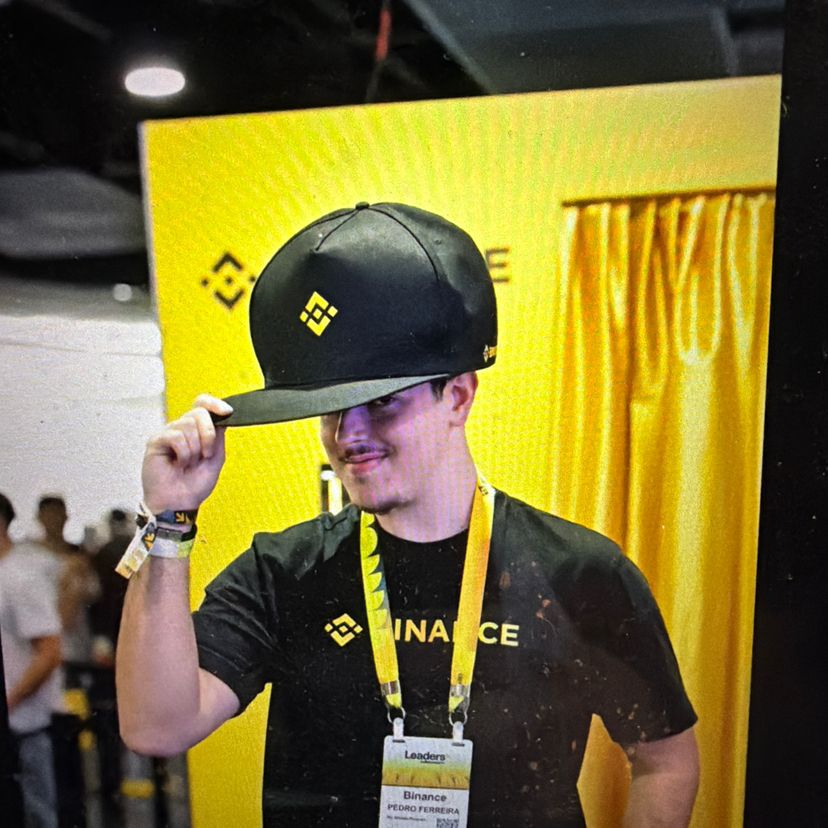
It’s a great honor to represent Brazil at the Blockchain 100 Awards—let’s go!
🏆🇧🇷 Visit my profile and vote for me in the Rising Star category!
It’s a great honor to represent Brazil at the Blockchain 100 Awards—let’s go!
🏆🇧🇷 Visit my profile and vote for me in the Rising Star category!
🏆🇧🇷 Visit my profile and vote for me in the Rising Star category!
Pedro Bonis
·
--
🏆🇧🇷 BLOCKCHAIN 100 AWARDS 2026 — MEET THE BRAZILIANS IN THE RUNNING!
Have you heard of Blockchain 100?
The global award, presented by Binance, recognizes 100 content creators who contribute to the financial and crypto markets through education, analysis, information, and quality content.
🌎 The initiative brings together creators from around the world in five categories, recognizing everyone from traders and major influencers to streamers, content producers, and rising stars.
🇧🇷 Brazil is represented too!
Check out the 13 Brazilian creators taking part in this edition, listed in alphabetical order:
• @Deividi Guedes
• @Diego Bechara
• @diogomury
• @Dicas de Cripto
• @eduardofeldberg
• Flávia Jabur
• @bitdasminas
• Igor Freitas
• @Jana Crypto Queen
• @Mek
• @Sávio Investe
• @Valéria Garcia
• @Vinicius Velasque
🗳️ Voting is now open!
Until October 28, Binance users with verified identities can vote for their favorite creators, with up to five votes per day and a limit of one vote per category.
🏆 The winners will be announced on October 29
🔗 Check out the nominees and cast your vote:
https://www.binance.com/pt/square/blockchain-100-2026
Let’s celebrate the Brazilians who contribute to financial education and the growth of the crypto ecosystem! 🚀
#Blockchain100 #Binance #Crypto #Brasil #BinanceSquare
Have you heard of Blockchain 100?
The global award, presented by Binance, recognizes 100 content creators who contribute to the financial and crypto markets through education, analysis, information, and quality content.
🌎 The initiative brings together creators from around the world in five categories, recognizing everyone from traders and major influencers to streamers, content producers, and rising stars.
🇧🇷 Brazil is represented too!
Check out the 13 Brazilian creators taking part in this edition, listed in alphabetical order:
• @Deividi Guedes
• @Diego Bechara
• @diogomury
• @Dicas de Cripto
• @eduardofeldberg
• Flávia Jabur
• @bitdasminas
• Igor Freitas
• @Jana Crypto Queen
• @Mek
• @Sávio Investe
• @Valéria Garcia
• @Vinicius Velasque
🗳️ Voting is now open!
Until October 28, Binance users with verified identities can vote for their favorite creators, with up to five votes per day and a limit of one vote per category.
🏆 The winners will be announced on October 29
🔗 Check out the nominees and cast your vote:
https://www.binance.com/pt/square/blockchain-100-2026
Let’s celebrate the Brazilians who contribute to financial education and the growth of the crypto ecosystem! 🚀
#Blockchain100 #Binance #Crypto #Brasil #BinanceSquare
1
7
·
--
Since June 4, Bitcoin has been up nearly 40% over about 137 days.
But the curious thing is that this rally happened in about 8 days.
In other words, traders who kept trying to pick the perfect day to buy probably missed out.
Being well positioned beats getting the timing right.
And patient investors tend to beat impatient traders.
Are you still trying to call every top and bottom, or have you learned to trade like the big players?
Since June 4, Bitcoin has been up nearly 40% over about 137 days.
But the curious thing is that this rally happened in about 8 days.
In other words, traders who kept trying to pick the perfect day to buy probably missed out.
Being well positioned beats getting the timing right.
And patient investors tend to beat impatient traders.
Are you still trying to call every top and bottom, or have you learned to trade like the big players?
But the curious thing is that this rally happened in about 8 days.
In other words, traders who kept trying to pick the perfect day to buy probably missed out.
Being well positioned beats getting the timing right.
And patient investors tend to beat impatient traders.
Are you still trying to call every top and bottom, or have you learned to trade like the big players?
2
116
·
--
Disputed
One of the WORLD’S BIGGEST investors is betting on the COLLAPSE of fiat currency. 📈
87% of Ray Dalio’s family office portfolio, as disclosed, is in gold.
The rest? A little in Treasury bonds, a little in stocks, and almost nothing else.
That’s literally what shows up in the second-quarter 13F filing.
He’s showing with his money where the real risk lies: in the government’s colored paper.
One of the WORLD’S BIGGEST investors is betting on the COLLAPSE of fiat currency. 📈
87% of Ray Dalio’s family office portfolio, as disclosed, is in gold.
The rest? A little in Treasury bonds, a little in stocks, and almost nothing else.
That’s literally what shows up in the second-quarter 13F filing.
He’s showing with his money where the real risk lies: in the government’s colored paper.
87% of Ray Dalio’s family office portfolio, as disclosed, is in gold.
The rest? A little in Treasury bonds, a little in stocks, and almost nothing else.
That’s literally what shows up in the second-quarter 13F filing.
He’s showing with his money where the real risk lies: in the government’s colored paper.
1
540
·
--
FUTURES LIQUIDITY BECOMES A DRIVER FOR BITCOIN 📈
After a period of spot dominance in microstructural price action, the order book’s liquidation pattern is likely to make BTC follow liquidity grabs in the short term.
Today, the price is squeezed between three ranges.
Above, there’s a smaller concentration near $84.5K and the densest area on the map, around $87–88K, which has remained intact since the beginning of the month.
Below, there’s the range just under $80K, which the price has already touched at a low of $79.7K, but hasn’t completely cleared.
These areas may become clearer over the next 3–5 days, and the price may pursue the closure of these orders.
In this case, the upper ranges may have the greatest density and act as a magnet.
FUTURES LIQUIDITY BECOMES A DRIVER FOR BITCOIN 📈
After a period of spot dominance in microstructural price action, the order book’s liquidation pattern is likely to make BTC follow liquidity grabs in the short term.
Today, the price is squeezed between three ranges.
Above, there’s a smaller concentration near $84.5K and the densest area on the map, around $87–88K, which has remained intact since the beginning of the month.
Below, there’s the range just under $80K, which the price has already touched at a low of $79.7K, but hasn’t completely cleared.
These areas may become clearer over the next 3–5 days, and the price may pursue the closure of these orders.
In this case, the upper ranges may have the greatest density and act as a magnet.
After a period of spot dominance in microstructural price action, the order book’s liquidation pattern is likely to make BTC follow liquidity grabs in the short term.
Today, the price is squeezed between three ranges.
Above, there’s a smaller concentration near $84.5K and the densest area on the map, around $87–88K, which has remained intact since the beginning of the month.
Below, there’s the range just under $80K, which the price has already touched at a low of $79.7K, but hasn’t completely cleared.
These areas may become clearer over the next 3–5 days, and the price may pursue the closure of these orders.
In this case, the upper ranges may have the greatest density and act as a magnet.
1
1
96
·
--
I was nominated for Rising Star in #Blockchain100 . I’m counting on your support and vote, representing all of you who are always here with me 🇧🇷💛
[Binance Blockchain 100](https://app.binance.com/uni-qr/cact26user/661?uc=app_square_share_link&us=copylink) visit my profile
I was nominated for Rising Star in #Blockchain100 . I’m counting on your support and vote, representing all of you who are always here with me 🇧🇷💛
Binance Blockchain 100 visit my profile
Binance Blockchain 100 visit my profile
1
120
·
--
Over the last 10 years, Brazilian government revenue rose 132%, to R$ 2,47 trillion.
Spending rose by the same 132%, to R$ 3,59 trillion.
The result: gross debt went from R$ 4,2 trillion to R$ 10,9 TRILLION.
Same growth, different starting points. The annual deficit doubled, and interest payments more than tripled.
Now ask yourself: how is this gap being financed?
The answer will give you the first clue about what the government has been doing with your money.
Over the last 10 years, Brazilian government revenue rose 132%, to R$ 2,47 trillion.
Spending rose by the same 132%, to R$ 3,59 trillion.
The result: gross debt went from R$ 4,2 trillion to R$ 10,9 TRILLION.
Same growth, different starting points. The annual deficit doubled, and interest payments more than tripled.
Now ask yourself: how is this gap being financed?
The answer will give you the first clue about what the government has been doing with your money.
Spending rose by the same 132%, to R$ 3,59 trillion.
The result: gross debt went from R$ 4,2 trillion to R$ 10,9 TRILLION.
Same growth, different starting points. The annual deficit doubled, and interest payments more than tripled.
Now ask yourself: how is this gap being financed?
The answer will give you the first clue about what the government has been doing with your money.
2
455
·
--
The richest countries in the world are paying the highest interest rates in nearly 20 years to roll over their own debt.
And now the IMF is calling for “fiscal credibility,” after a decade of applauding spending financed at zero interest.
The problem is that, with debt near its highest level since World War II, the central bank is losing control of its own policy.
If it raises interest rates, the government goes broke.
If it doesn’t, inflation eats away at the currency.
There’s a name for this: fiscal dominance.
In other words, decisions about interest rates are no longer made by the central bank, but by the size of the government’s bill.
And every populist promise of free money only makes that bill bigger.
The richest countries in the world are paying the highest interest rates in nearly 20 years to roll over their own debt.
And now the IMF is calling for “fiscal credibility,” after a decade of applauding spending financed at zero interest.
The problem is that, with debt near its highest level since World War II, the central bank is losing control of its own policy.
If it raises interest rates, the government goes broke.
If it doesn’t, inflation eats away at the currency.
There’s a name for this: fiscal dominance.
In other words, decisions about interest rates are no longer made by the central bank, but by the size of the government’s bill.
And every populist promise of free money only makes that bill bigger.
And now the IMF is calling for “fiscal credibility,” after a decade of applauding spending financed at zero interest.
The problem is that, with debt near its highest level since World War II, the central bank is losing control of its own policy.
If it raises interest rates, the government goes broke.
If it doesn’t, inflation eats away at the currency.
There’s a name for this: fiscal dominance.
In other words, decisions about interest rates are no longer made by the central bank, but by the size of the government’s bill.
And every populist promise of free money only makes that bill bigger.
1
143
·
--
No authoritarian country is going to make Bitcoin self-custody easy.
Because self-custody is one of the best tools for freedom there is.
The fear of free citizens is immense.
Opt out.
No authoritarian country is going to make Bitcoin self-custody easy.
Because self-custody is one of the best tools for freedom there is.
The fear of free citizens is immense.
Opt out.
Because self-custody is one of the best tools for freedom there is.
The fear of free citizens is immense.
Opt out.
1
1
157
Log in to explore more content
Join global crypto users on Binance Square
⚡️ Get latest and useful information about crypto.
💬 Trusted by the world’s largest crypto exchange.
👍 Discover real insights from verified creators.
Email / Phone number
Trending Topics
EarningsSeason
3.3M views
16,026 Discussing
Join #EarningsSeason: Predict Earnings on Binance Pick, Share Your Take on Binance Square!
Binance Square Official
·187 Likes
·109.3k views
PepeJumps14%ToLeadAltcoinRebound
18,554 views
440 Discussing
GoldFallsBelow$4000ForFirstTimeSinceJuly
5,419 views
53 Discussing