

美琳 Měi Lín
9.5k Posts

美琳 Měi Lín
 Square Verified+
ONEday.......... inshallah
Open Trade
Frequent Trader
1.1 Years
868 Following
43.4K+ Followers
20.9K+ Liked
Posts
Portfolio
All
Quotes
Live
PINNED

自由1688
·
--
Experts interpret “Explanation of the Inspection of the Zunjie V800 Brake Pedal”: “Gradually increasing force” differs from “instantaneous force”
On October 13, a reporter from the Beijing News Shell Finance learned from JAC Motors that the “Explanation of the Inspection of the Zunjie V800 Brake Pedal” states that the Zunjie V800 brake pedal can withstand a force of 1,500 N, meeting industry standards. In a more stringent test, it was subjected to a longitudinal force of 3,000 N, with no cracks or damage observed. Two experts offered their interpretations and analysis.
The explanation states that the Zunjie V800 was tested by “gradually increasing the longitudinal force to 3,000 N at a loading speed of 20 mm/min, holding it for 5 seconds before releasing the force. This was repeated five times across 14 brake-pedal assemblies, none of which showed cracks or damage on visual inspection.”
Meng Wei, deputy chief engineer for complete-vehicle products at an automaker, told a reporter from the Beijing News Shell Finance: “National standards do not require force to be applied at an extremely high speed. Slowly increasing the force to 2,000 N over one or two seconds is a different test from applying 2,000 N with a sudden ‘slam’ in a fraction of a second when someone faces an emergency. The brake pedal has to withstand different pressures in these two situations, and the people designing its support bracket need to take that into account.”
An Xin, a product structural design engineer, added another perspective to the Beijing News Shell Finance reporter: “The force on a brake pedal differs depending on whether the vehicle is stationary or moving. Zunjie did not specify whether this test was static or dynamic. The speed at which the force is applied—fast or slow—is also very important.”
On October 13, a reporter from the Beijing News Shell Finance learned from JAC Motors that the “Explanation of the Inspection of the Zunjie V800 Brake Pedal” states that the Zunjie V800 brake pedal can withstand a force of 1,500 N, meeting industry standards. In a more stringent test, it was subjected to a longitudinal force of 3,000 N, with no cracks or damage observed. Two experts offered their interpretations and analysis.
The explanation states that the Zunjie V800 was tested by “gradually increasing the longitudinal force to 3,000 N at a loading speed of 20 mm/min, holding it for 5 seconds before releasing the force. This was repeated five times across 14 brake-pedal assemblies, none of which showed cracks or damage on visual inspection.”
Meng Wei, deputy chief engineer for complete-vehicle products at an automaker, told a reporter from the Beijing News Shell Finance: “National standards do not require force to be applied at an extremely high speed. Slowly increasing the force to 2,000 N over one or two seconds is a different test from applying 2,000 N with a sudden ‘slam’ in a fraction of a second when someone faces an emergency. The brake pedal has to withstand different pressures in these two situations, and the people designing its support bracket need to take that into account.”
An Xin, a product structural design engineer, added another perspective to the Beijing News Shell Finance reporter: “The force on a brake pedal differs depending on whether the vehicle is stationary or moving. Zunjie did not specify whether this test was static or dynamic. The speed at which the force is applied—fast or slow—is also very important.”

Deepak_XBT
·
--
🚀 Solana Leads Crypto Networks in Weekly Active Users!
Blockchain adoption is showing some interesting trends.
According to the shared data, Solana ($SOL) leads with 15.9 million weekly active users, up 56.3%. BNB Chain ($BNB) follows with 12.5 million users, recording 17.5% growth, while TRON ($TRX) ranks third with 6.7 million despite a 12.4% decline.
📊 Top 5 Networks:
🥇 Solana — 15.9M
🥈 BNB Chain — 12.5M
🥉 TRON — 6.7M
4️⃣ opBNB — 3.8M
5️⃣ World Mobile Chain — 3.2M
Meanwhile, Arbitrum One surged 137.1% and Jito grew 130.4% week-over-week. Solana also reached 1.88 million daily active addresses, its highest level in 13 months, according to the cited data.
My takeaway: User activity matters, but sustainable adoption depends on real usage, retention, and ecosystem growth.
Which network has the strongest long-term potential: SOL, BNB, or TRX?
#crypto #solana #BNB_Market_Update #Tron #blockchain
Blockchain adoption is showing some interesting trends.
According to the shared data, Solana ($SOL) leads with 15.9 million weekly active users, up 56.3%. BNB Chain ($BNB) follows with 12.5 million users, recording 17.5% growth, while TRON ($TRX) ranks third with 6.7 million despite a 12.4% decline.
📊 Top 5 Networks:
🥇 Solana — 15.9M
🥈 BNB Chain — 12.5M
🥉 TRON — 6.7M
4️⃣ opBNB — 3.8M
5️⃣ World Mobile Chain — 3.2M
Meanwhile, Arbitrum One surged 137.1% and Jito grew 130.4% week-over-week. Solana also reached 1.88 million daily active addresses, its highest level in 13 months, according to the cited data.
My takeaway: User activity matters, but sustainable adoption depends on real usage, retention, and ecosystem growth.
Which network has the strongest long-term potential: SOL, BNB, or TRX?
#crypto #solana #BNB_Market_Update #Tron #blockchain

Leo - F0
·
--
Bullish🧧🧧🔥GOOD MORNING FROM DUBAİ, FAMİLY.🔥🧧🧧
I told you to buy $NEAR 💙 when it was at $1.5
As I told you before, $NEAR 💙 will be $20.💎
BTTC🔥🔥🧧🧧 $BTC #xrp #DOGE #bnb #solana #TRUMP
I told you to buy $NEAR 💙 when it was at $1.5
As I told you before, $NEAR 💙 will be $20.💎
BTTC🔥🔥🧧🧧 $BTC #xrp #DOGE #bnb #solana #TRUMP

MAYA_
·
--
@ETHcryptohub Give your brother some 1 / 2 BTC, man 🤣
🎁🎁 GIFT BOX 🎁🎁
🎁🎁🎁🎁🎁🎁🎁🎁
🎁🎁 GIFT BOX 🎁🎁
🎁🎁🎁🎁🎁🎁🎁🎁
·
--
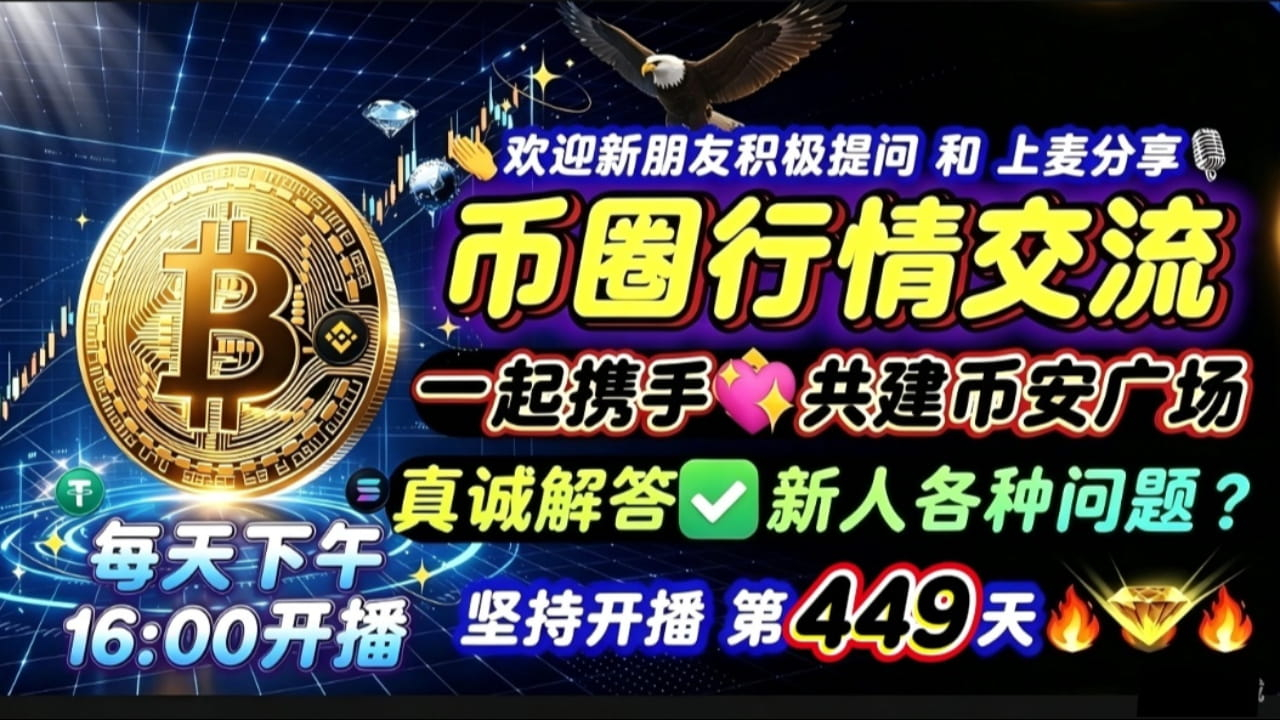
🎙️ Crypto Market Discussions; Answers to Newcomers’ Questions ✅ Let’s Build Binance Square Together 🦅 Spread the Ideals of Freedom! Maintain Ecological Balance!
End
03 h 21 m 15 s
9.7k
69
ETHcryptohub
·
--
🎁🎁🎁🎁Free Gifts for Everyone 🎁🎁🎁🎁
Comment: Yes
🚀🚀🚀🚀🚀🚀🚀🚀🚀🚀🚀🚀🚀🚀🚀
💖💖💖Like 💖💖💖 Repost 💖💖💖
#Ethcryptohub
$LUMIA $BTC
Comment: Yes
🚀🚀🚀🚀🚀🚀🚀🚀🚀🚀🚀🚀🚀🚀🚀
💖💖💖Like 💖💖💖 Repost 💖💖💖
#Ethcryptohub
$LUMIA $BTC
Quoted content has been removed

Sherry长得帅不如跑的快1688
·
--
🚨 BTC Below $82K — But I’m Not Rushing to Turn Bearish!
Bitcoin’s recent price action has been frustrating.
Every rally toward $87K faces selling pressure, while buyers keep showing up near $80K.
Bulls can’t break through. Bears can’t finish the job.
And traders chasing either direction keep getting trapped.
Here’s what caught my attention:
US spot Bitcoin ETFs reportedly saw around $679M in net outflows last week, suggesting institutional demand remains weak.
Meanwhile, the recent selloff has flushed out leveraged positions, leaving the market searching for a new equilibrium.
Here’s what I’m watching:
📍 $80K: A critical support zone. Losing it could increase downside pressure.
📍 $84K–$84.5K: Reclaiming this area could strengthen the recovery case.
📍 $87K: A major resistance zone. Breaking through sustainably will likely require stronger spot demand.
The upcoming US inflation data could also trigger significant volatility.
I’m not rushing to call the bottom.
And I’m definitely not declaring the bull market over.
Bitcoin doesn’t need another bullish narrative right now. It needs real buyers.
So here’s the question:
Is $80K the foundation for the next rally, or just another stop before a deeper correction?
#BTC #ETH #BNB
Bitcoin’s recent price action has been frustrating.
Every rally toward $87K faces selling pressure, while buyers keep showing up near $80K.
Bulls can’t break through. Bears can’t finish the job.
And traders chasing either direction keep getting trapped.
Here’s what caught my attention:
US spot Bitcoin ETFs reportedly saw around $679M in net outflows last week, suggesting institutional demand remains weak.
Meanwhile, the recent selloff has flushed out leveraged positions, leaving the market searching for a new equilibrium.
Here’s what I’m watching:
📍 $80K: A critical support zone. Losing it could increase downside pressure.
📍 $84K–$84.5K: Reclaiming this area could strengthen the recovery case.
📍 $87K: A major resistance zone. Breaking through sustainably will likely require stronger spot demand.
The upcoming US inflation data could also trigger significant volatility.
I’m not rushing to call the bottom.
And I’m definitely not declaring the bull market over.
Bitcoin doesn’t need another bullish narrative right now. It needs real buyers.
So here’s the question:
Is $80K the foundation for the next rally, or just another stop before a deeper correction?
#BTC #ETH #BNB

VeronX143
·
--
Claim your gift guys Fastly 🤧
$GTC $RSR $CT
$GTC $RSR $CT

Shaheen 69
·
--
One question for every crypto trader 👇
If you could go back to your first day in crypto, what is the ONE mistake you would never repeat? 🤔
Mine: Trusting signals before learning the basics.
Your turn, brothers and sisters! 👇 Let’s help new traders learn from our real experiences. ❤️
#BinanceSquare #cryptotrading
$MAGIC $LUMIA $BAT
If you could go back to your first day in crypto, what is the ONE mistake you would never repeat? 🤔
Mine: Trusting signals before learning the basics.
Your turn, brothers and sisters! 👇 Let’s help new traders learn from our real experiences. ❤️
#BinanceSquare #cryptotrading
$MAGIC $LUMIA $BAT

静心1688
·
--
🎁Follow and like to claim 🧧🧧🧧
#代币化股票总市值创39亿美元新高
#代币化股票总市值创39亿美元新高
crypto-MS
·
--
🎁 Binance Red Packet 🔥
🚀 BTC + ETH
💰 Big Moves, Strong Opportunities
📈 Watch the Market
🎯 Trade Smart, Stay Focused
Good Luck Everyone! ❤️
🚀 BTC + ETH
💰 Big Moves, Strong Opportunities
📈 Watch the Market
🎯 Trade Smart, Stay Focused
Good Luck Everyone! ❤️

兰汐kyL
·
--
. Good morning, everyone! I'm a complete beginner and have just entered the crypto space. Are there any sectors that are beginner-friendly? Could any experienced folks offer me some guidance? Thanks so much 🙏🙏🙏,

老和必定A8
·
--
Tides rise and fall—that’s their nature; in the sea of crypto, don’t panic as fortunes ebb and flow.
Don’t chase every fleeting trend, or get swept up in momentary rises and falls.
Keep a little reserve in hand, and a thousand miles of light in your heart.
Calmly watch the winds and clouds gather; smile as bulls and bears take the stage.
May you all weather the clouds and see the moon shine bright—may fortune flow your way and prosperity last year after year. 🧧🧧🧧
Don’t chase every fleeting trend, or get swept up in momentary rises and falls.
Keep a little reserve in hand, and a thousand miles of light in your heart.
Calmly watch the winds and clouds gather; smile as bulls and bears take the stage.
May you all weather the clouds and see the moon shine bright—may fortune flow your way and prosperity last year after year. 🧧🧧🧧

分析师尤斯1688
·
--
🎁🧧
分析师尤斯1688
·
--
🎁🧧
Shaheen 69
·
--
One question for every crypto trader 👇
If you could go back to your first day in crypto, what is the ONE mistake you would never repeat? 🤔
Mine: Trusting signals before learning the basics.
Your turn, brothers and sisters! 👇 Let’s help new traders learn from our real experiences. ❤️
#BinanceSquare #cryptotrading
$MAGIC $LUMIA $BAT
If you could go back to your first day in crypto, what is the ONE mistake you would never repeat? 🤔
Mine: Trusting signals before learning the basics.
Your turn, brothers and sisters! 👇 Let’s help new traders learn from our real experiences. ❤️
#BinanceSquare #cryptotrading
$MAGIC $LUMIA $BAT

Ezra_Insight
·
--
🧧 A Little Red Packet, A Lot of Good Vibes! ❤️
Crypto is not just about charts, prices, and profits. It’s also about sharing happiness and making the community feel special.
That’s why I love the Red Packet tradition on Binance Square. A small surprise can bring a smile, connect people, and make our crypto journey more fun. 🎁
Let’s share some positive energy and spread a little happiness today!
Who’s ready to grab a Red Packet? 👀
$SPCX $METAB
Crypto is not just about charts, prices, and profits. It’s also about sharing happiness and making the community feel special.
That’s why I love the Red Packet tradition on Binance Square. A small surprise can bring a smile, connect people, and make our crypto journey more fun. 🎁
Let’s share some positive energy and spread a little happiness today!
Who’s ready to grab a Red Packet? 👀
$SPCX $METAB

E L E X A
·
--
🚨 IT’S LIVE 🚨
Watching is simple… but winners take action 👀
🎁 Want FREE $USDT?
💬 Comment 888
❤️ Like
🔁 Share
➕ Follow
⏳ Don’t miss your chance — spots are limited!
Drop 888 below and join now 🚀
#Crypto #USDT #Giveaway
Watching is simple… but winners take action 👀
🎁 Want FREE $USDT?
💬 Comment 888
❤️ Like
🔁 Share
➕ Follow
⏳ Don’t miss your chance — spots are limited!
Drop 888 below and join now 🚀
#Crypto #USDT #Giveaway
Log in to explore more content