

ME LE 71828
195 Posts

ME LE 71828
Report
Block User
Crypto、web3内容分享
15 Following
71 Followers
266 Liked
Posts
All
Quotes
·
--
All holders of $QAIT should steer clear of these scammers; don't invest a single cent—it's all a scam.
All holders of $QAIT should steer clear of these scammers; don't invest a single cent—it's all a scam.
273
·
--
You made it!!!
You made it!!!


Yi He
·
--
Here we are.
1. From the margins to the spotlight
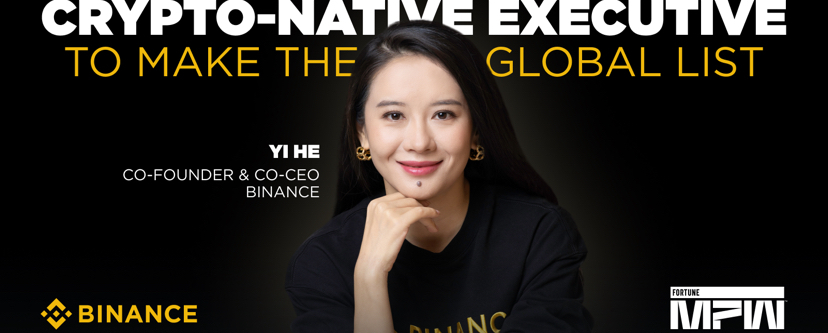
When I first found out I'd be featured on the 'Most Influential Women in Business' list, my first feeling was one of humility, and my second was the weight of responsibility.
This recognition has my name on it, but it belongs to the Binance team, to Binance users, and to Satoshi, as well as to every community member who has helped turn this industry from an idea into a global movement.
A few years ago, it would have been unusual for a native crypto entrepreneur to appear on such a list; today, it feels like our industry has steadily moved from the fringes of finance and technology into the spotlight. This isn't just my 'achievement'; I simply saw the wave coming and bravely hopped on the surfboard, clumsily learning to ride the tide. But this recognition represents another step in the long journey of the blockchain industry transitioning from niche geek culture to everyday life. The road ahead is still long; we must grind it out day by day, building and refining step by step. This is what we do every day.
When I first found out I'd be featured on the 'Most Influential Women in Business' list, my first feeling was one of humility, and my second was the weight of responsibility.
This recognition has my name on it, but it belongs to the Binance team, to Binance users, and to Satoshi, as well as to every community member who has helped turn this industry from an idea into a global movement.
A few years ago, it would have been unusual for a native crypto entrepreneur to appear on such a list; today, it feels like our industry has steadily moved from the fringes of finance and technology into the spotlight. This isn't just my 'achievement'; I simply saw the wave coming and bravely hopped on the surfboard, clumsily learning to ride the tide. But this recognition represents another step in the long journey of the blockchain industry transitioning from niche geek culture to everyday life. The road ahead is still long; we must grind it out day by day, building and refining step by step. This is what we do every day.
6
·
--
🛡️ The era of encrypted combination configuration has begun! ProShares launches the KRYP Index ETF, the compliance wind has shifted!
ProShares has just launched the first ETF tracking the CoinDesk 20 Index (KRYP). This not only means mainstream funds can easily allocate to the top 20 blue-chip crypto assets, but it also indicates institutions' absolute admiration for 'regulatory and compliant' configurations.
In this wave, Dusk Network ($DUSK ) demonstrates its unique position as the compliance king in the RWA track. With the mainnet going live in January 2026, Dusk is providing institutions with securities tokenization settlement that meets MiCA standards through privacy protection technology. KRYP lowers the entry barriers, while Dusk builds the expressway for asset on-chain. Compliance is no longer a shackle, but the biggest growth driver in 2026!
#dusk #RWA #MiCA #BinanceSquare #内容挖矿 $BTC $ETH
{spot}(ETHUSDT)
{spot}(BTCUSDT)
{spot}(DUSKUSDT)
🛡️ The era of encrypted combination configuration has begun! ProShares launches the KRYP Index ETF, the compliance wind has shifted!
ProShares has just launched the first ETF tracking the CoinDesk 20 Index (KRYP). This not only means mainstream funds can easily allocate to the top 20 blue-chip crypto assets, but it also indicates institutions' absolute admiration for 'regulatory and compliant' configurations.
In this wave, Dusk Network ($DUSK ) demonstrates its unique position as the compliance king in the RWA track. With the mainnet going live in January 2026, Dusk is providing institutions with securities tokenization settlement that meets MiCA standards through privacy protection technology. KRYP lowers the entry barriers, while Dusk builds the expressway for asset on-chain. Compliance is no longer a shackle, but the biggest growth driver in 2026!
#dusk #RWA #MiCA #BinanceSquare #内容挖矿 $BTC $ETH
ProShares has just launched the first ETF tracking the CoinDesk 20 Index (KRYP). This not only means mainstream funds can easily allocate to the top 20 blue-chip crypto assets, but it also indicates institutions' absolute admiration for 'regulatory and compliant' configurations.
In this wave, Dusk Network ($DUSK ) demonstrates its unique position as the compliance king in the RWA track. With the mainnet going live in January 2026, Dusk is providing institutions with securities tokenization settlement that meets MiCA standards through privacy protection technology. KRYP lowers the entry barriers, while Dusk builds the expressway for asset on-chain. Compliance is no longer a shackle, but the biggest growth driver in 2026!
#dusk #RWA #MiCA #BinanceSquare #内容挖矿 $BTC $ETH
2
337
·
--
MetaMask connects to Ondo U.S. stock assets: RWA explosion eve, what is the 'ultimate answer' in the eyes of institutions?On February 3, 2026, the RWA field welcomed a milestone moment: Consensys' MetaMask and Ondo Finance announced a deep collaboration. From now on, globally eligible users can bypass complex traditional channels and trade tokenized U.S. stocks, ETFs, and commodities directly in MetaMask.
This is not just a functional update; it is a 'dimensionality reduction strike' against traditional financial barriers.
1. The gateway of liquidity opens: RWA moves towards mainstreaming
Ondo Finance, with its Global Markets system, successfully brought highly liquid traditional financial products into DeFi. MetaMask, as the super entrance to Web3, means that the combination has lowered the liquidity threshold for RWA assets to a historic low. However, as trillion-scale assets flow onto the chain, a key issue arises: who will safeguard the privacy and compliance of institutional-level trading?
MetaMask connects to Ondo U.S. stock assets: RWA explosion eve, what is the 'ultimate answer' in the eyes of institutions?
On February 3, 2026, the RWA field welcomed a milestone moment: Consensys' MetaMask and Ondo Finance announced a deep collaboration. From now on, globally eligible users can bypass complex traditional channels and trade tokenized U.S. stocks, ETFs, and commodities directly in MetaMask.
This is not just a functional update; it is a 'dimensionality reduction strike' against traditional financial barriers.
1. The gateway of liquidity opens: RWA moves towards mainstreaming
Ondo Finance, with its Global Markets system, successfully brought highly liquid traditional financial products into DeFi. MetaMask, as the super entrance to Web3, means that the combination has lowered the liquidity threshold for RWA assets to a historic low. However, as trillion-scale assets flow onto the chain, a key issue arises: who will safeguard the privacy and compliance of institutional-level trading?
This is not just a functional update; it is a 'dimensionality reduction strike' against traditional financial barriers.
1. The gateway of liquidity opens: RWA moves towards mainstreaming
Ondo Finance, with its Global Markets system, successfully brought highly liquid traditional financial products into DeFi. MetaMask, as the super entrance to Web3, means that the combination has lowered the liquidity threshold for RWA assets to a historic low. However, as trillion-scale assets flow onto the chain, a key issue arises: who will safeguard the privacy and compliance of institutional-level trading?
2
268
·
--
📉 Will BTC retrace to $58,000? Alex Thorn warns: Who is the real 'safe haven' during the turbulence?
Galaxy Digital's research director Alex Thorn warns that the narrative logic of BTC is damaged and it could fall towards the 200-week moving average within months. With 46% of the supply in losses, the market is looking for new 'safe havens'.
This is the time for Dusk Network ($DUSK ) to showcase its real defensive strength. As the leader in the RWA track for 2026, Dusk has brought hundreds of millions of euros in compliant securities onto the chain through its mainnet. As BTC's hedge properties come under pressure, DUSK, with its MiCA compliance and real institutional asset settlement, is stepping in to become a safe haven for funds under scrutiny.
Don't wait until BTC hits the bottom to regret it; start positioning now with DUSK, backed by real assets! @Dusk_Foundation
#dusk #BTC #RWA #内容挖矿 #BinanceSquare $BTC $ETH
{future}(BTCUSDT)
{spot}(ETHUSDT)
{spot}(DUSKUSDT)
📉 Will BTC retrace to $58,000? Alex Thorn warns: Who is the real 'safe haven' during the turbulence?
Galaxy Digital's research director Alex Thorn warns that the narrative logic of BTC is damaged and it could fall towards the 200-week moving average within months. With 46% of the supply in losses, the market is looking for new 'safe havens'.
This is the time for Dusk Network ($DUSK ) to showcase its real defensive strength. As the leader in the RWA track for 2026, Dusk has brought hundreds of millions of euros in compliant securities onto the chain through its mainnet. As BTC's hedge properties come under pressure, DUSK, with its MiCA compliance and real institutional asset settlement, is stepping in to become a safe haven for funds under scrutiny.
Don't wait until BTC hits the bottom to regret it; start positioning now with DUSK, backed by real assets! @Dusk
#dusk #BTC #RWA #内容挖矿 #BinanceSquare $BTC $ETH
Galaxy Digital's research director Alex Thorn warns that the narrative logic of BTC is damaged and it could fall towards the 200-week moving average within months. With 46% of the supply in losses, the market is looking for new 'safe havens'.
This is the time for Dusk Network ($DUSK ) to showcase its real defensive strength. As the leader in the RWA track for 2026, Dusk has brought hundreds of millions of euros in compliant securities onto the chain through its mainnet. As BTC's hedge properties come under pressure, DUSK, with its MiCA compliance and real institutional asset settlement, is stepping in to become a safe haven for funds under scrutiny.
Don't wait until BTC hits the bottom to regret it; start positioning now with DUSK, backed by real assets! @Dusk
#dusk #BTC #RWA #内容挖矿 #BinanceSquare $BTC $ETH
1
303
·
--
Vitalik's 'long-termism' behind selling coins: 45 million USD invested in privacy and open-source, who is carrying the underlying ideals of Web3?On February 3, 2026, Ethereum founder Vitalik Buterin once again became the focus on-chain. Data shows that he has begun to sell ETH from his multi-signature address in batches to obtain USDC and GHO stablecoins. This is not a coincidental sale, but rather a fulfillment of his commitment made on January 30: to withdraw 16,384 ETH (approximately 45 million USD) to fund those 'hardcore projects that the Ethereum Foundation struggles to cover' in the coming years.
Vitalik's 'wish list' is clear: open-source hardware, encrypted communication, privacy protection, and a local operating system that protects user data sovereignty.
Vitalik's 'long-termism' behind selling coins: 45 million USD invested in privacy and open-source, who is carrying the underlying ideals of Web3?
On February 3, 2026, Ethereum founder Vitalik Buterin once again became the focus on-chain. Data shows that he has begun to sell ETH from his multi-signature address in batches to obtain USDC and GHO stablecoins. This is not a coincidental sale, but rather a fulfillment of his commitment made on January 30: to withdraw 16,384 ETH (approximately 45 million USD) to fund those 'hardcore projects that the Ethereum Foundation struggles to cover' in the coming years.
Vitalik's 'wish list' is clear: open-source hardware, encrypted communication, privacy protection, and a local operating system that protects user data sovereignty.
Vitalik's 'wish list' is clear: open-source hardware, encrypted communication, privacy protection, and a local operating system that protects user data sovereignty.
1
300
·
--
🛡️ What He Yi responds to SAFU's doubts: Transparency is the cornerstone of trust, and AI infrastructure is the answer to the future!\nToday, He Yi clarified that the SAFU fund increased its holdings by $BTC for internal transactions, reiterating Binance's transparent management of the $1 billion user protection fund. Behind this "self-proving innocence" lies the industry's extreme desire for data authenticity.\nThis is precisely the core narrative of Vanar Chain ($VANRY ). As an AI-native L1, @Vanar is dedicated to automating auditing processes similar to SAFU. Through the Kayon AI engine, the flow of large assets no longer requires manual explanation; AI can automatically verify and publicly disclose its logical compliance. While Binance builds a BTC firewall on the asset side, Vanar provides real-time AI auditing on the technical side.\nChoose Binance for safe assets, and pay attention to VANRY for transparent infrastructure!\n#vanar #VANRY #Binance #SAFU🙏 #BinanceSquareFamily $ETH \n{spot}(BTCUSDT)\n{spot}(VANRYUSDT)\n{spot}(ETHUSDT)
🛡️ What He Yi responds to SAFU's doubts: Transparency is the cornerstone of trust, and AI infrastructure is the answer to the future!\nToday, He Yi clarified that the SAFU fund increased its holdings by $BTC for internal transactions, reiterating Binance's transparent management of the $1 billion user protection fund. Behind this "self-proving innocence" lies the industry's extreme desire for data authenticity.\nThis is precisely the core narrative of Vanar Chain ($VANRY ). As an AI-native L1, @Vanar is dedicated to automating auditing processes similar to SAFU. Through the Kayon AI engine, the flow of large assets no longer requires manual explanation; AI can automatically verify and publicly disclose its logical compliance. While Binance builds a BTC firewall on the asset side, Vanar provides real-time AI auditing on the technical side.\nChoose Binance for safe assets, and pay attention to VANRY for transparent infrastructure!\n#vanar #VANRY #Binance #SAFU🙏 #BinanceSquareFamily $ETH \n\n\n
2
3
534
·
--
Binance SAFU buys $100 million in BTC: When reserve assets 'de-dollarize', who defines the new foundation of Web3?On February 2, 2026, an on-chain operation of the Binance SAFU fund ignited the market: its whitelist address officially transferred approximately 1,315 BTC. This was not only the first substantial move following Binance's announcement to convert $1 billion in reserves into Bitcoin, but it also marked a paradigm shift in the crypto market from reliance on fiat to decentralized consensus.
1. 100 million dollars of confidence: Why now?
During market volatility, Binance chose to convert the SAFU (Secure Asset Fund for Users) 'vault' into Bitcoin, based on absolute trust in BTC's long-term anti-inflation properties. This transition from stablecoins to hard currency aims to eliminate third-party centralized custody risks, allowing security to truly return to on-chain consensus.
Binance SAFU buys $100 million in BTC: When reserve assets 'de-dollarize', who defines the new foundation of Web3?
On February 2, 2026, an on-chain operation of the Binance SAFU fund ignited the market: its whitelist address officially transferred approximately 1,315 BTC. This was not only the first substantial move following Binance's announcement to convert $1 billion in reserves into Bitcoin, but it also marked a paradigm shift in the crypto market from reliance on fiat to decentralized consensus.
1. 100 million dollars of confidence: Why now?
During market volatility, Binance chose to convert the SAFU (Secure Asset Fund for Users) 'vault' into Bitcoin, based on absolute trust in BTC's long-term anti-inflation properties. This transition from stablecoins to hard currency aims to eliminate third-party centralized custody risks, allowing security to truly return to on-chain consensus.
1. 100 million dollars of confidence: Why now?
During market volatility, Binance chose to convert the SAFU (Secure Asset Fund for Users) 'vault' into Bitcoin, based on absolute trust in BTC's long-term anti-inflation properties. This transition from stablecoins to hard currency aims to eliminate third-party centralized custody risks, allowing security to truly return to on-chain consensus.
2
526
·
--
Fenbushi Capital scoops up tens of thousands of ETH staking: The arrival of a robust asset era, and the 'new staking opportunities' with $WALOn February 2, 2026, on-chain monitoring showed that one of Asia's most established blockchain venture capital firms, Fenbushi Capital, injected 2,432 Ethereum into the staking contract again. As a result, its total ETH staking on-chain has reached 10,944 (approximately 25 million USD).
This action released a very clear signal: in the year 2026, a year of returning to value, the preferred strategy of top institutions is to lock in liquidity in exchange for sovereign returns from the underlying network.
1. The essence of staking: transforming from single yield to infrastructure empowerment.
Fenbushi Capital scoops up tens of thousands of ETH staking: The arrival of a robust asset era, and the 'new staking opportunities' with $WAL
On February 2, 2026, on-chain monitoring showed that one of Asia's most established blockchain venture capital firms, Fenbushi Capital, injected 2,432 Ethereum into the staking contract again. As a result, its total ETH staking on-chain has reached 10,944 (approximately 25 million USD).
This action released a very clear signal: in the year 2026, a year of returning to value, the preferred strategy of top institutions is to lock in liquidity in exchange for sovereign returns from the underlying network.
1. The essence of staking: transforming from single yield to infrastructure empowerment.
This action released a very clear signal: in the year 2026, a year of returning to value, the preferred strategy of top institutions is to lock in liquidity in exchange for sovereign returns from the underlying network.
1. The essence of staking: transforming from single yield to infrastructure empowerment.
1
424
·
--
Institutional Pledge Tide Unabated: Fenbushi Increases Holdings by 2432 ETH, Where is the Next Staking High Ground?
According to monitoring, Fenbushi Capital has recently withdrawn 2432 ETH from Binance for staking, bringing its total ETH staking amount close to 11,000. The top institutions' desire for 'staking yield' assets is gradually spreading to more growth-oriented infrastructure sectors.
In the infrastructure wave of 2026, @WalrusProtocol ($WAL ) is attracting a lot of institutional attention with its unique 'storage node staking reward' mechanism. Unlike traditional POS staking, the staking returns of #Walrus come not only from token inflation but also from the enormous data storage demands of global AI and streaming media. As ETH staking becomes the underlying asset, staking WAL is becoming a new choice for institutions to seek higher alpha returns!
#walrus #SuiEcosystem #DePIN #sui #内容挖矿 $BTC $ETH
{future}(BTCUSDT)
{future}(ETHUSDT)
{alpha}(CT_7840x356a26eb9e012a68958082340d4c4116e7f55615cf27affcff209cf0ae544f59::wal::WAL)
Institutional Pledge Tide Unabated: Fenbushi Increases Holdings by 2432 ETH, Where is the Next Staking High Ground?
According to monitoring, Fenbushi Capital has recently withdrawn 2432 ETH from Binance for staking, bringing its total ETH staking amount close to 11,000. The top institutions' desire for 'staking yield' assets is gradually spreading to more growth-oriented infrastructure sectors.
In the infrastructure wave of 2026, @Walrus 🦭/acc ($WAL ) is attracting a lot of institutional attention with its unique 'storage node staking reward' mechanism. Unlike traditional POS staking, the staking returns of #Walrus come not only from token inflation but also from the enormous data storage demands of global AI and streaming media. As ETH staking becomes the underlying asset, staking WAL is becoming a new choice for institutions to seek higher alpha returns!
#walrus #SuiEcosystem #DePIN #sui #内容挖矿 $BTC $ETH
According to monitoring, Fenbushi Capital has recently withdrawn 2432 ETH from Binance for staking, bringing its total ETH staking amount close to 11,000. The top institutions' desire for 'staking yield' assets is gradually spreading to more growth-oriented infrastructure sectors.
In the infrastructure wave of 2026, @Walrus 🦭/acc ($WAL ) is attracting a lot of institutional attention with its unique 'storage node staking reward' mechanism. Unlike traditional POS staking, the staking returns of #Walrus come not only from token inflation but also from the enormous data storage demands of global AI and streaming media. As ETH staking becomes the underlying asset, staking WAL is becoming a new choice for institutions to seek higher alpha returns!
#walrus #SuiEcosystem #DePIN #sui #内容挖矿 $BTC $ETH
1
522
·
--
Trend Research's 1.3 billion USD Defense: How should we reconstruct Web3 confidence when the leverage liquidation wave strikes?On February 2, 2026, the DeFi market is witnessing a thrilling self-rescue. On-chain data shows that the whale Trend Research has collateralized WETH worth 1.33 billion USD across multiple addresses and borrowed 939 million USD in stablecoins. As the ETH price approaches its liquidation range (1781.09-1862.02 USD), this institution has accumulated over 73,000 ETH to repay loans to Binance in the past 24 hours.
This is not only a crisis for major players but also an extreme test of the entire Ethereum ecosystem's leverage structure.
1. The Woes of Leverage: Why has 'digital gold' turned into a 'death knell'?
Trend Research's 1.3 billion USD Defense: How should we reconstruct Web3 confidence when the leverage liquidation wave strikes?
On February 2, 2026, the DeFi market is witnessing a thrilling self-rescue. On-chain data shows that the whale Trend Research has collateralized WETH worth 1.33 billion USD across multiple addresses and borrowed 939 million USD in stablecoins. As the ETH price approaches its liquidation range (1781.09-1862.02 USD), this institution has accumulated over 73,000 ETH to repay loans to Binance in the past 24 hours.
This is not only a crisis for major players but also an extreme test of the entire Ethereum ecosystem's leverage structure.
1. The Woes of Leverage: Why has 'digital gold' turned into a 'death knell'?
This is not only a crisis for major players but also an extreme test of the entire Ethereum ecosystem's leverage structure.
1. The Woes of Leverage: Why has 'digital gold' turned into a 'death knell'?
1
465
·
--
1.3 billion USD ETH hanging by a thread: The winter of leverage liquidation, who can provide a safe haven?
According to monitoring, the whale Trend Research has pledged 1.33 billion USD WETH to borrow nearly 1 billion stablecoins, with the liquidation range already close at hand. To save itself, it urgently recharged 20,000 ETH to Binance, and this game on the "leverage life and death line" once again reveals the fragility of the current DeFi architecture.
This is precisely why @Plasma ($XPL ) insists on being "native to stablecoins and compliance above all." When whales struggle on the edge of liquidation, the stablecoin payment network built by Plasma emphasizes the robustness of underlying assets and rapid settlement, aiming to bring finance back to the essence of payment, away from the black swans brought by insane leverage.
The market is reshuffling, only solid infrastructure can endure.
#Plasma #ETH #内容挖矿 #Liquidations #PayFi
$BTC $ETH
{future}(BTCUSDT)
{future}(ETHUSDT)
{alpha}(560x405fbc9004d857903bfd6b3357792d71a50726b0)
1.3 billion USD ETH hanging by a thread: The winter of leverage liquidation, who can provide a safe haven?
According to monitoring, the whale Trend Research has pledged 1.33 billion USD WETH to borrow nearly 1 billion stablecoins, with the liquidation range already close at hand. To save itself, it urgently recharged 20,000 ETH to Binance, and this game on the "leverage life and death line" once again reveals the fragility of the current DeFi architecture.
This is precisely why @Plasma ($XPL ) insists on being "native to stablecoins and compliance above all." When whales struggle on the edge of liquidation, the stablecoin payment network built by Plasma emphasizes the robustness of underlying assets and rapid settlement, aiming to bring finance back to the essence of payment, away from the black swans brought by insane leverage.
The market is reshuffling, only solid infrastructure can endure.
#Plasma #ETH #内容挖矿 #Liquidations #PayFi
$BTC $ETH
According to monitoring, the whale Trend Research has pledged 1.33 billion USD WETH to borrow nearly 1 billion stablecoins, with the liquidation range already close at hand. To save itself, it urgently recharged 20,000 ETH to Binance, and this game on the "leverage life and death line" once again reveals the fragility of the current DeFi architecture.
This is precisely why @Plasma ($XPL ) insists on being "native to stablecoins and compliance above all." When whales struggle on the edge of liquidation, the stablecoin payment network built by Plasma emphasizes the robustness of underlying assets and rapid settlement, aiming to bring finance back to the essence of payment, away from the black swans brought by insane leverage.
The market is reshuffling, only solid infrastructure can endure.
#Plasma #ETH #内容挖矿 #Liquidations #PayFi
$BTC $ETH
1
223
Log in to explore more content
Join global crypto users on Binance Square
⚡️ Get latest and useful information about crypto.
💬 Trusted by the world’s largest crypto exchange.
👍 Discover real insights from verified creators.
Email / Phone number