

Mr Max
738 Posts

Mr Max
 Square Verified
Report
Block User
🔹I am Max 🔹 Spot Trader 🔹X:- Max_786m🔹 Airdrop & Campaign Hunter 🔹Coin Analyst 🔹5 Years Experience in Online Field
Frequent Trader
9.7 Months
716 Following
30.3K+ Followers
12.2K+ Liked
Posts
All
Quotes
Live

·
--
Verified
#nil $NIL @nillionnetwork
One thing I’ve noticed about transparent blockchains is that seeing everything isn’t always an advantage. If a trading strategy becomes visible before an order is executed, others may get the chance to react before it plays out.
That’s what makes Nillion’s Covenants interesting to me.
The idea is to keep instructions encrypted until a specific condition is met. But I think the real challenge is making that work without relying on one party to reveal the information at the right time.
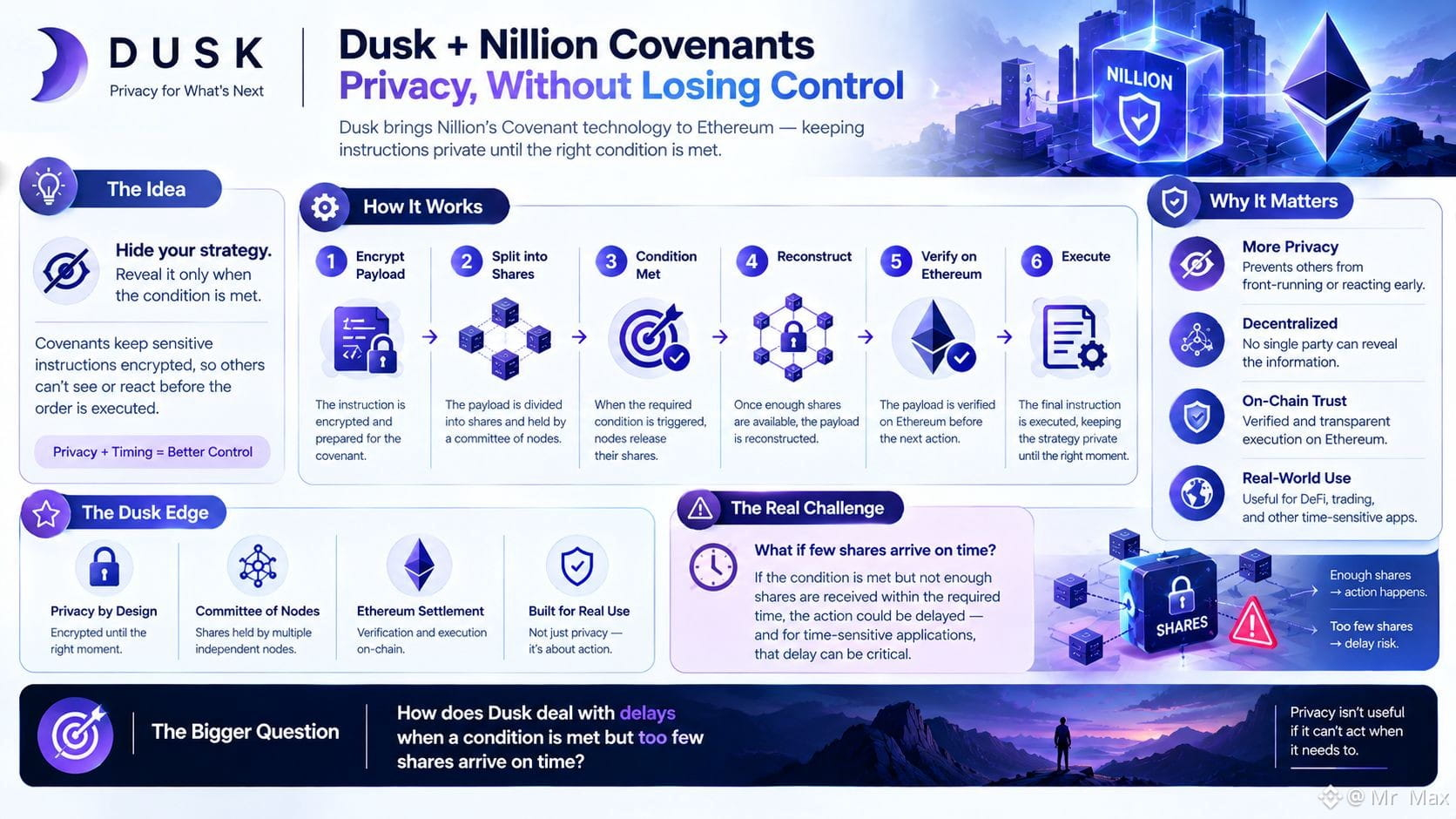
Dusk brings this approach to Ethereum. According to Nillion, a Covenant’s encrypted payload is split into shares held by a committee of nodes. When the required condition is met, the nodes release their shares. Once enough are available, the payload can be reconstructed and verified on Ethereum before the next action takes place.
There’s one part I’m particularly curious about, though. What happens if the condition is met but enough shares don’t arrive in time? For applications that depend on timing, even a delay could become a real problem.
To me, privacy only goes so far if the application can’t act when it needs to. The way Covenants handle that trade off will be worth watching.
How does Dusk deal with delays when a condition is met but too few shares arrive on time?
#nil $NIL @Nillion
One thing I’ve noticed about transparent blockchains is that seeing everything isn’t always an advantage. If a trading strategy becomes visible before an order is executed, others may get the chance to react before it plays out.
That’s what makes Nillion’s Covenants interesting to me.
The idea is to keep instructions encrypted until a specific condition is met. But I think the real challenge is making that work without relying on one party to reveal the information at the right time.
Dusk brings this approach to Ethereum. According to Nillion, a Covenant’s encrypted payload is split into shares held by a committee of nodes. When the required condition is met, the nodes release their shares. Once enough are available, the payload can be reconstructed and verified on Ethereum before the next action takes place.
There’s one part I’m particularly curious about, though. What happens if the condition is met but enough shares don’t arrive in time? For applications that depend on timing, even a delay could become a real problem.
To me, privacy only goes so far if the application can’t act when it needs to. The way Covenants handle that trade off will be worth watching.
How does Dusk deal with delays when a condition is met but too few shares arrive on time?
1
1.1k
·
--
Thank you so much @Dreamer_Official 💫 Your kind words truly mean a lot to me. People like you make this journey more beautiful and inspiring. Wishing you endless growth, success, and many amazing milestones ahead too 💙
Thank you so much @Dream Spicer 梦想家 💫 Your kind words truly mean a lot to me. People like you make this journey more beautiful and inspiring. Wishing you endless growth, success, and many amazing milestones ahead too 💙

Dream Spicer 梦想家
·
--
Big congratulations to @Square-Creator-cb94b8f66d3bb on hitting 30K followers on Binance Square! 🎉❤️
Honestly, it’s always nice to see someone growing and reaching new milestones in this community. 30K followers don’t come overnight; it takes time, effort, and consistency.
Happy to see you reach this point, Max! Keep doing your thing, keep growing and keep making your mark in the community. 🫶🏻
30K achieved, and hopefully 50K is not too far away! 👀🔥
Wishing you more success and bigger milestones ahead. You deserve it! 🤝💛
#DreamSpicer梦想家 #30K_Followers

1
2
1k
·
--
Congratulations 🎉 @Dreamer_Official for 30k and Peeli batti, these achievements on Binance is not small achievement. Your consistency, hard work, and determination truly speak for themselves. ❤️
Achieving all of this independently is not easy. But you achieved it.
This is just the beginning. Many more milestones are waiting for you and InshaAllah you will achieve every single one of them.
And now we are waiting for that 50K milestone. InshaAllah its closer than it looks.
$BTC $NVDAB $SNDK #BTC突破7万大关 #BTC70K✈️ #BTC🔥🔥🔥🔥🔥🔥 #BTC☀️
Congratulations 🎉 @Dream Spicer 梦想家 for 30k and Peeli batti, these achievements on Binance is not small achievement. Your consistency, hard work, and determination truly speak for themselves. ❤️
Achieving all of this independently is not easy. But you achieved it.
This is just the beginning. Many more milestones are waiting for you and InshaAllah you will achieve every single one of them.
And now we are waiting for that 50K milestone. InshaAllah its closer than it looks.
$BTC $NVDAB $SNDK #BTC突破7万大关 #BTC70K✈️ #BTC🔥🔥🔥🔥🔥🔥 #BTC☀️

1.5k
9
92
1.5k
·
--
Verified
August CPI Seals It: The Fed Has to Hike on September 16 #CPIWatch
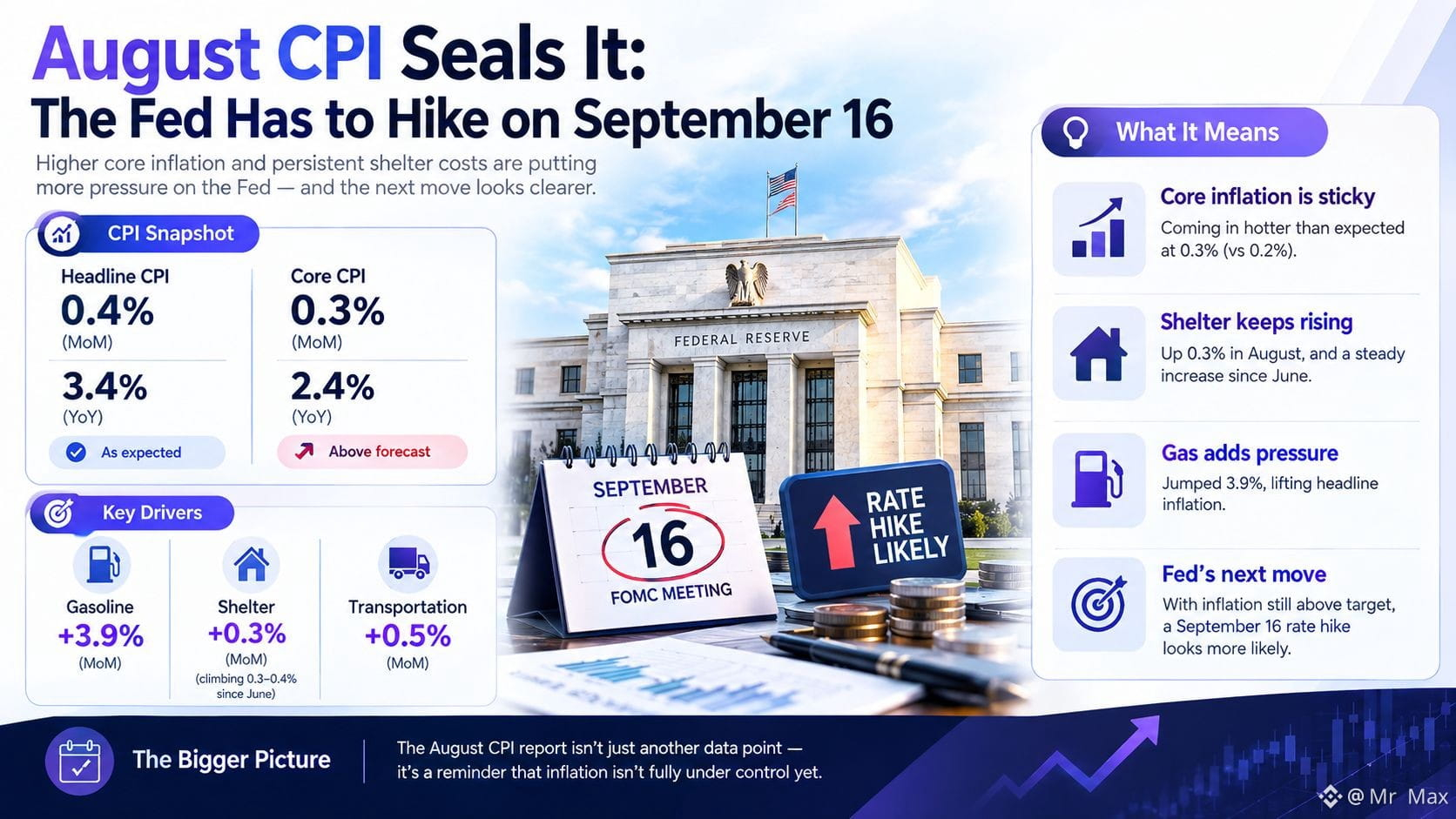
August's CPI landed right where forecasters expected 0.4% monthly, 3.4% annual. But core inflation didn't cooperate, coming in at 0.3% against a 0.2% forecast, with the yearly core rate still parked at 2.4%. Gas jumped 3.9%, shelter ticked up 0.3%, transportation rose 0.5%. And shelter's not a one-off it's been climbing 0.3-0.4% every month since June, per BLS data, which is starting to look a lot less like noise.
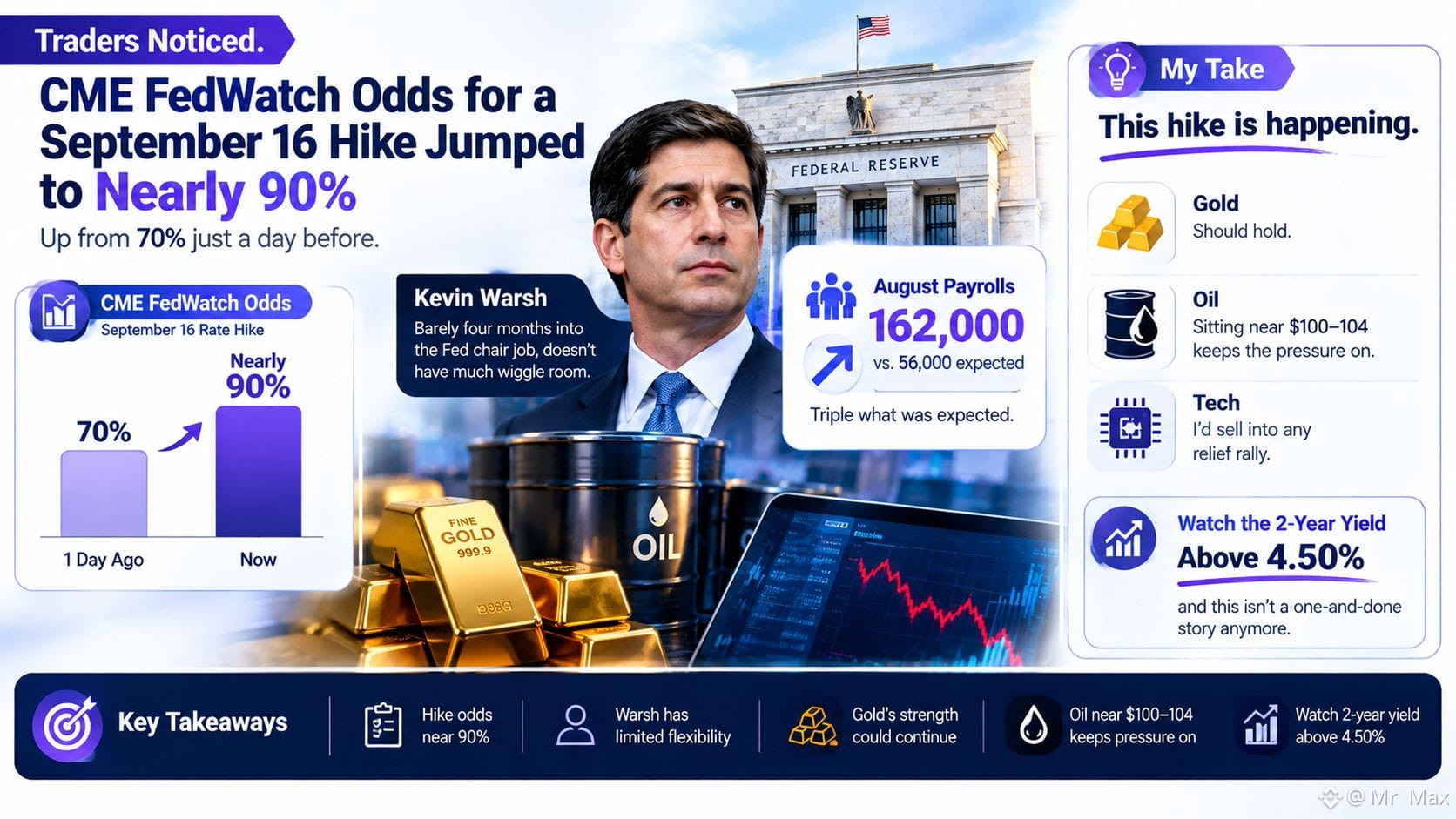
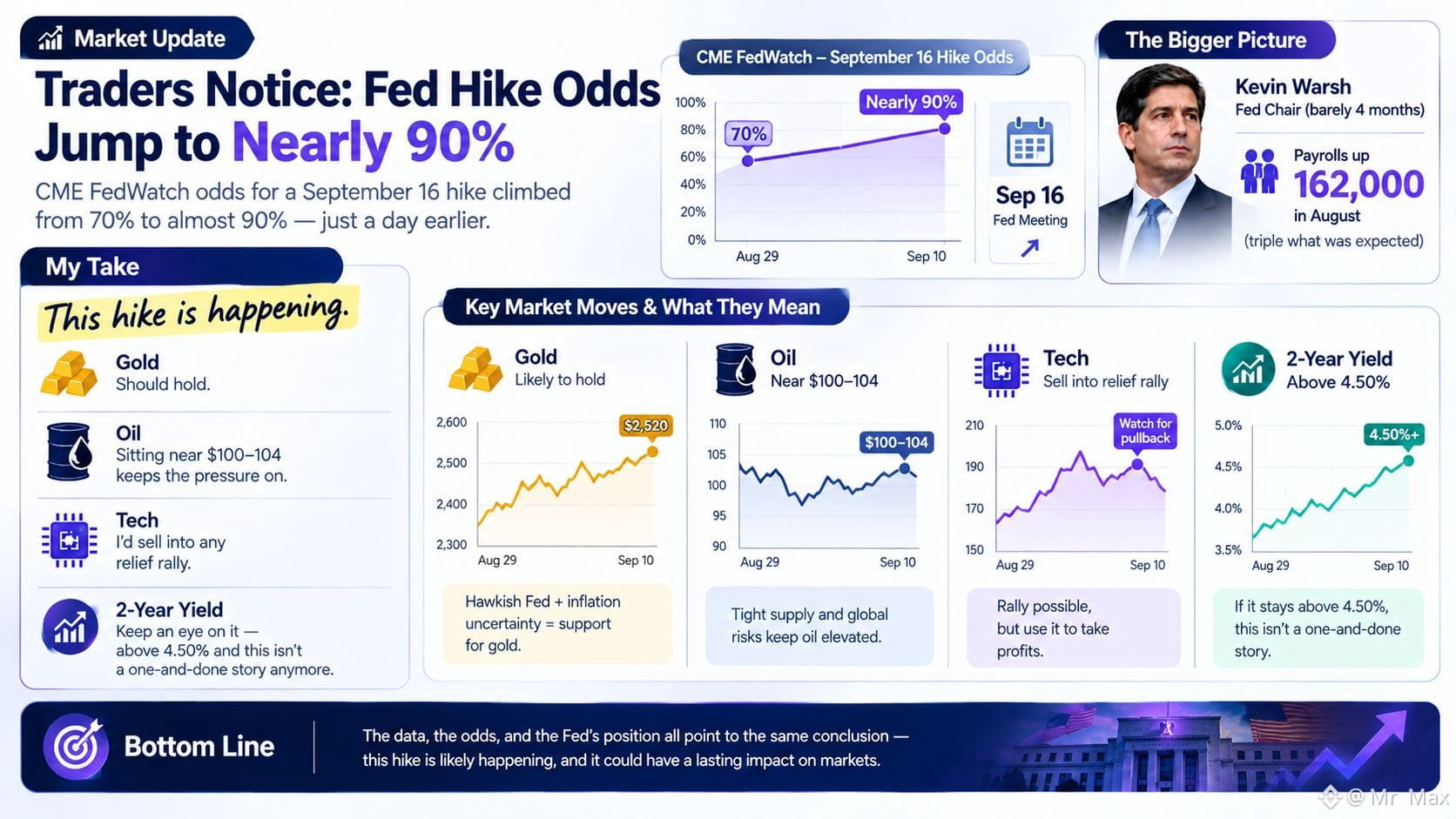
Traders noticed. CME FedWatch odds for a September 16 hike jumped to nearly 90%, up from 70% just a day before. Kevin Warsh, barely four months into the Fed chair job, doesn't have much wiggle room not with payrolls up 162,000 in August, triple what was expected.
My read: this hike is happening. Gold should hold, oil sitting near $100-104 keeps the pressure on, and I'd sell into any tech relief rally. Keep an eye on the 2 year yield above 4.50% and this isn't a one and done story anymore.
#CPIWatch
$XAUT
{future}(XAUTUSDT)
$牛来
{future}(牛来USDT)
$BTC
{future}(BTCUSDT)
August CPI Seals It: The Fed Has to Hike on September 16 #CPIWatch
August's CPI landed right where forecasters expected 0.4% monthly, 3.4% annual. But core inflation didn't cooperate, coming in at 0.3% against a 0.2% forecast, with the yearly core rate still parked at 2.4%. Gas jumped 3.9%, shelter ticked up 0.3%, transportation rose 0.5%. And shelter's not a one-off it's been climbing 0.3-0.4% every month since June, per BLS data, which is starting to look a lot less like noise.
Traders noticed. CME FedWatch odds for a September 16 hike jumped to nearly 90%, up from 70% just a day before. Kevin Warsh, barely four months into the Fed chair job, doesn't have much wiggle room not with payrolls up 162,000 in August, triple what was expected.
My read: this hike is happening. Gold should hold, oil sitting near $100-104 keeps the pressure on, and I'd sell into any tech relief rally. Keep an eye on the 2 year yield above 4.50% and this isn't a one and done story anymore.
#CPIWatch
$XAUT
$牛来
$BTC
2
1
5
547
·
--
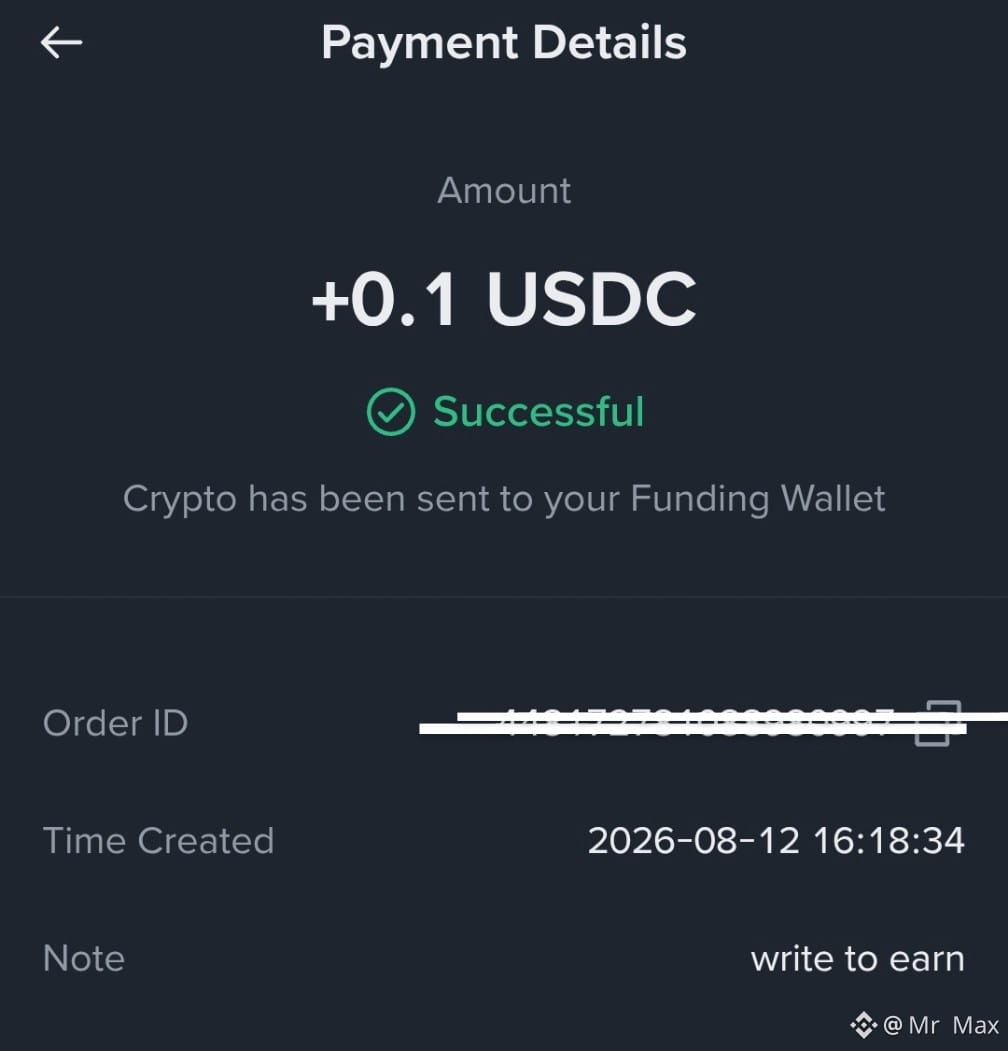
Wednesday is the payout day from the Binance square
Now accidentally i open my notification page & my past week payment received from the Write ✍🏻 to Earn from Binance Square
You should also write on Binance square but your content should be original
$BTC
{future}(BTCUSDT)
$USDC
{future}(USDCUSDT)
Wednesday is the payout day from the Binance square
Now accidentally i open my notification page & my past week payment received from the Write ✍🏻 to Earn from Binance Square
You should also write on Binance square but your content should be original
$BTC
$USDC
Now accidentally i open my notification page & my past week payment received from the Write ✍🏻 to Earn from Binance Square
You should also write on Binance square but your content should be original
$BTC
$USDC
2
6
692
·
--
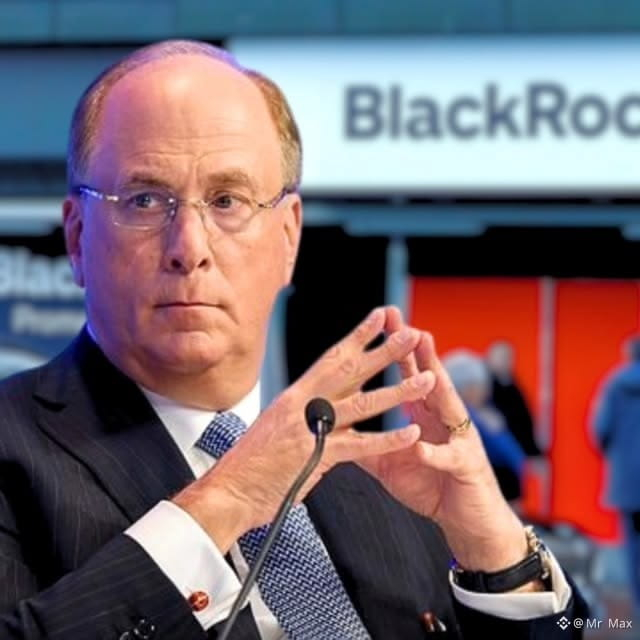
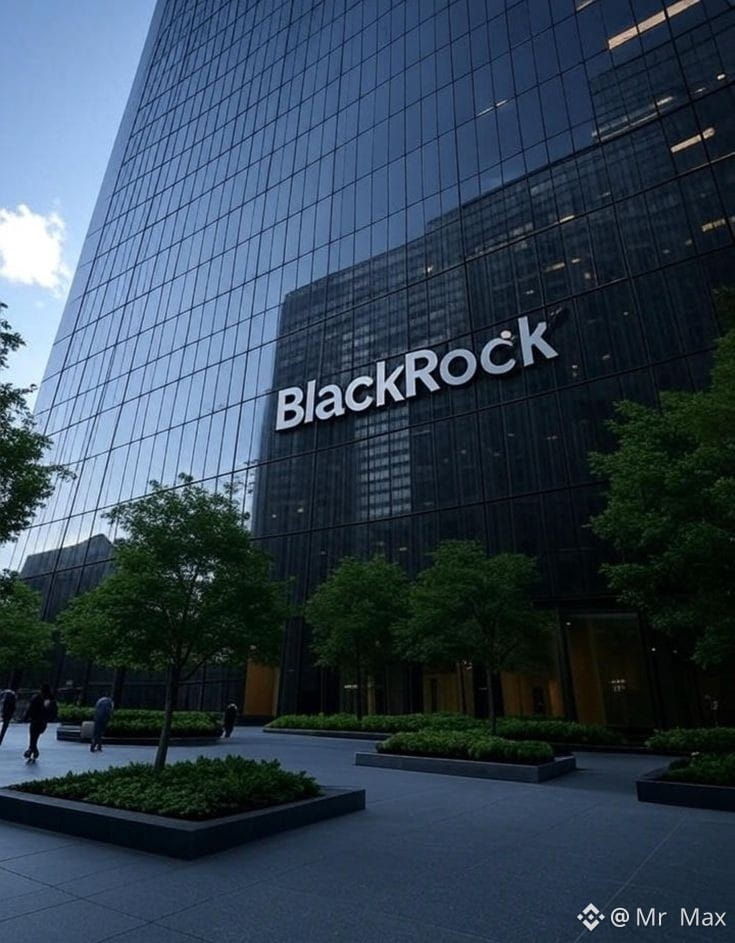
🚨 Institutions still buying 🚀
BlackRock wallets picked up around $240M in BTC + ETH in one hour. BitMine now holds 5.85M ETH (almost 5% of supply).
Just say the word and I’ll keep dropping more like this.
$BTC
{future}(BTCUSDT)
$ETH
{future}(ETHUSDT)
🚨 Institutions still buying 🚀
BlackRock wallets picked up around $240M in BTC + ETH in one hour. BitMine now holds 5.85M ETH (almost 5% of supply).
Just say the word and I’ll keep dropping more like this.
$BTC
$ETH
BlackRock wallets picked up around $240M in BTC + ETH in one hour. BitMine now holds 5.85M ETH (almost 5% of supply).
Just say the word and I’ll keep dropping more like this.
$BTC
$ETH
1
600
·
--
Verified
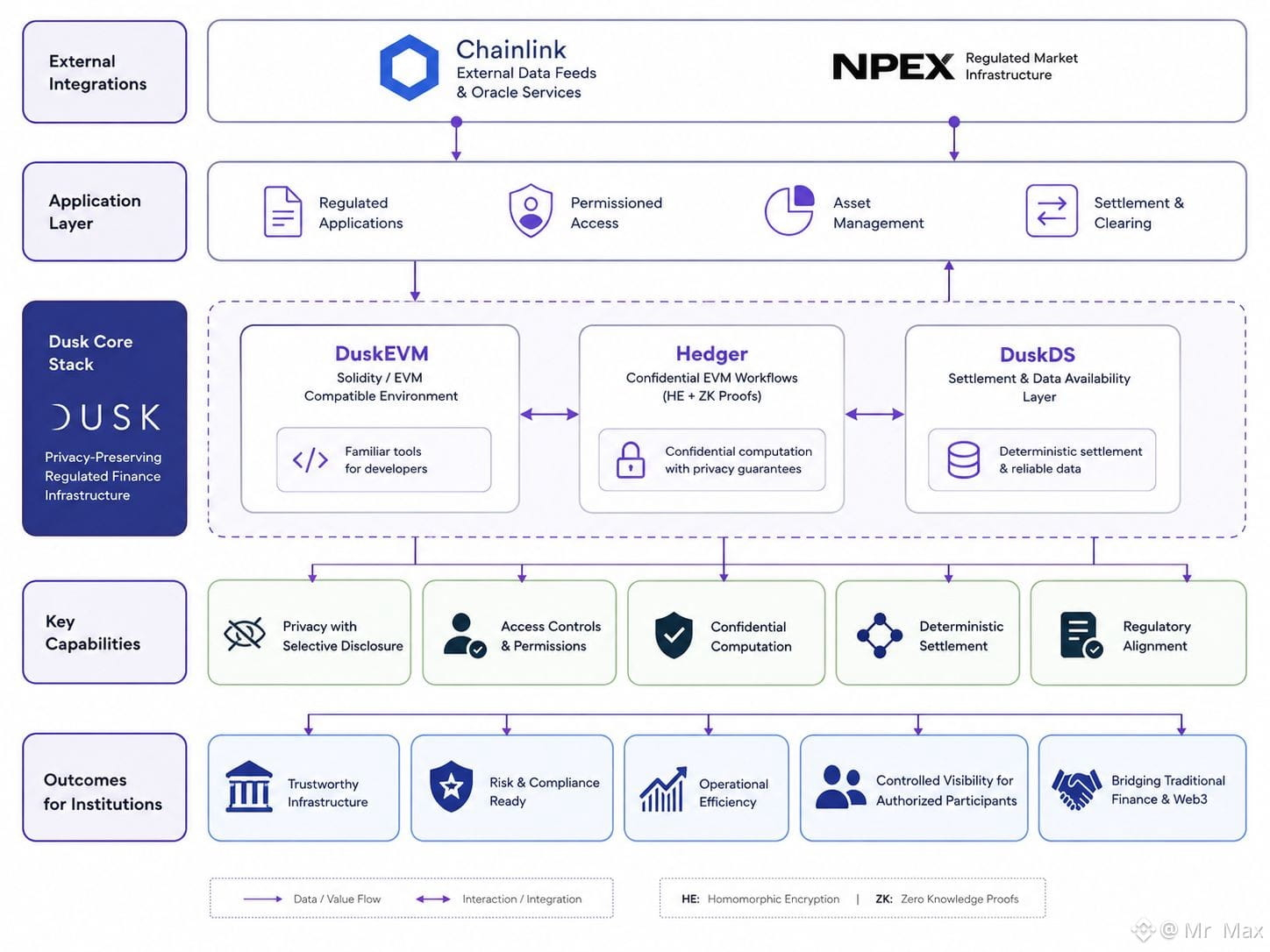
#dusk $DUSK @Dusk_Foundation I still think the interesting part of @Dusk_Foundation isn’t the cryptography alone. I went down the DuskEVM/Hedger rabbit hole, then started looking at how those pieces fit the regulated finance story and that’s where I noticed the real tension.
DuskEVM gives builders a familiar Solidity/EVM environment, while Hedger is designed for confidential EVM workflows using homomorphic encryption and zero knowledge proofs. DuskDS provides the settlement and data availability foundation.
But Dusk isn’t treating privacy as simple transaction invisibility. The goal is privacy alongside selective disclosure, access controls and deterministic settlement.
That matters when the assets being moved are regulated. Dusk’s work with NPEX points toward regulated market infrastructure, while its work with Chainlink connects Dusk to external data infrastructure. Suddenly, confidentiality alone isn’t enough authorized participants still need visibility, permissions and reliable settlement.
So I keep coming back to this when all of these have to coexist, which part of the stack will institutions ultimately trust most?
#dusk $DUSK @Dusk I still think the interesting part of @Dusk isn’t the cryptography alone. I went down the DuskEVM/Hedger rabbit hole, then started looking at how those pieces fit the regulated finance story and that’s where I noticed the real tension.
DuskEVM gives builders a familiar Solidity/EVM environment, while Hedger is designed for confidential EVM workflows using homomorphic encryption and zero knowledge proofs. DuskDS provides the settlement and data availability foundation.
But Dusk isn’t treating privacy as simple transaction invisibility. The goal is privacy alongside selective disclosure, access controls and deterministic settlement.
That matters when the assets being moved are regulated. Dusk’s work with NPEX points toward regulated market infrastructure, while its work with Chainlink connects Dusk to external data infrastructure. Suddenly, confidentiality alone isn’t enough authorized participants still need visibility, permissions and reliable settlement.
So I keep coming back to this when all of these have to coexist, which part of the stack will institutions ultimately trust most?
1
377
·
--
30D trade $DUSK 5.1K USDT
The more I look at @Dusk_Foundation ’s neobroker setup, the more I notice a risk that sits outside the blockchain itself.
The idea of bringing regulated assets on-chain is interesting, but the underlying assets can still depend on real-world brokers, custodians, and other intermediaries.
That matters because Dusk can make the on-chain side work smoothly while problems elsewhere still affect the user. If one custody partner faces operational issues, financial stress, or restrictions, accessing the underlying asset may become much harder than the blockchain experience suggests.
This is the part I think deserves more attention. Tokenization can improve how assets are represented and settled, but it doesn’t make counterparty risk disappear. The blockchain can be running perfectly while the real bottleneck sits somewhere off-chain.
For Dusk, I’m more interested in how this whole structure behaves under pressure.
Who holds the assets, how access is maintained, and how quickly problems can be resolved are just as important as the technology itself. The RWA story is exciting, but the plumbing underneath it matters more than the headline.
#dusk $DUSK @Dusk_Foundation
The more I look at @Dusk ’s neobroker setup, the more I notice a risk that sits outside the blockchain itself.
The idea of bringing regulated assets on-chain is interesting, but the underlying assets can still depend on real-world brokers, custodians, and other intermediaries.
That matters because Dusk can make the on-chain side work smoothly while problems elsewhere still affect the user. If one custody partner faces operational issues, financial stress, or restrictions, accessing the underlying asset may become much harder than the blockchain experience suggests.
This is the part I think deserves more attention. Tokenization can improve how assets are represented and settled, but it doesn’t make counterparty risk disappear. The blockchain can be running perfectly while the real bottleneck sits somewhere off-chain.
For Dusk, I’m more interested in how this whole structure behaves under pressure.
Who holds the assets, how access is maintained, and how quickly problems can be resolved are just as important as the technology itself. The RWA story is exciting, but the plumbing underneath it matters more than the headline.
#dusk $DUSK @Dusk
3
219
·
--
🎙️ Dusk Volume Campaign Reward Dusk Market Analysis
End
01 h 14 m 57 s
180
DUSKUSDT
Perp
Limit/Long
3
0

·
--
I keep coming back to @termmax because the gap between the story and the numbers is hard to ignore.
The marketing makes TermMax sound like institutional fixed income infrastructure already finding its place on Wall Street.
The actual numbers tell a quieter story.
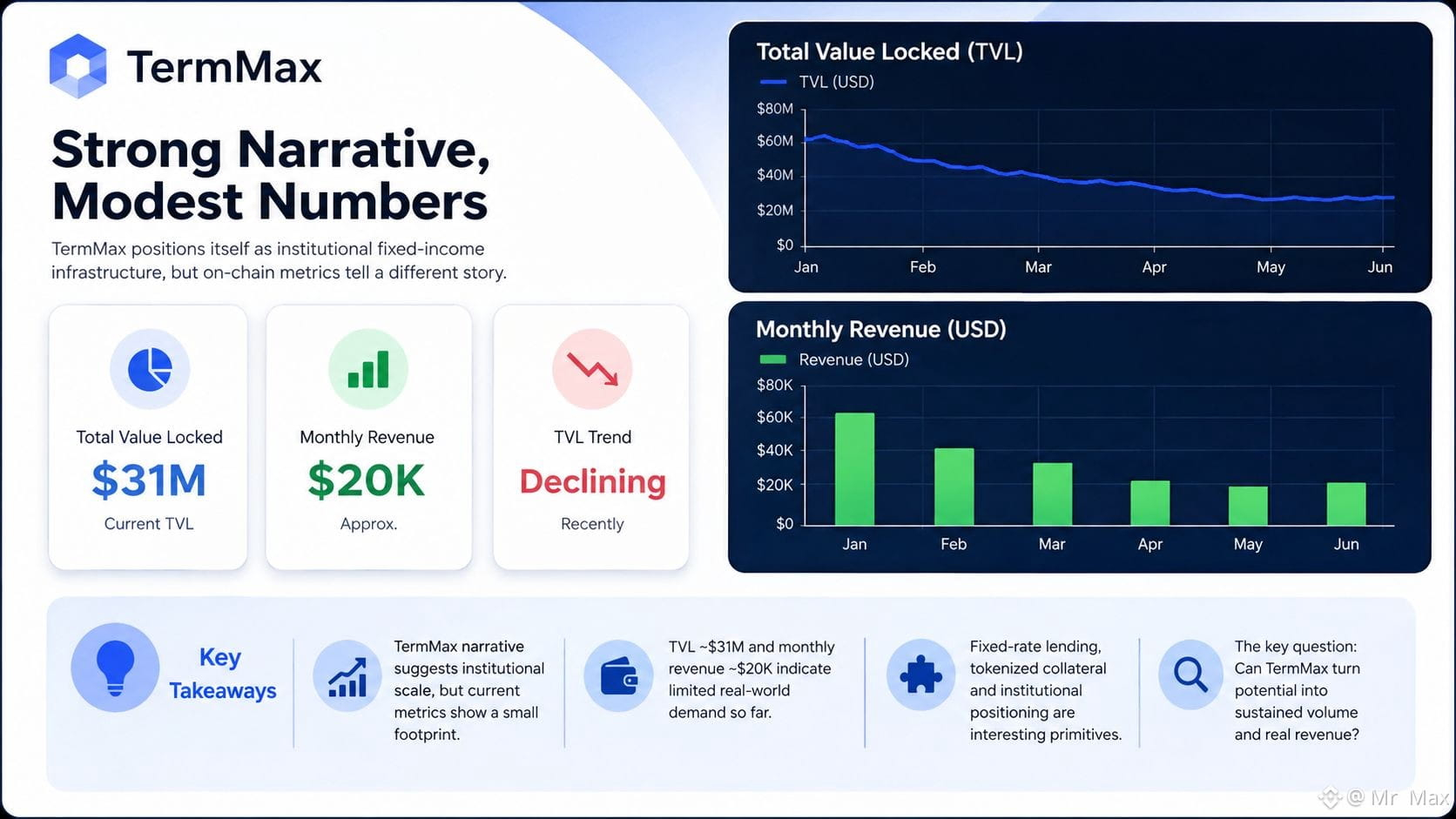
TVL is around $31M, monthly revenue is only around $20K, and TVL has been trending lower recently. That’s still a small footprint compared with the lending protocols that dominate the market.
None of this means the product is bad. I actually think the fixed rate lending idea is one of the more interesting parts of the thesis.
But there’s a difference between having a good financial primitive and having enough demand to make that primitive economically meaningful.
That’s the part I’m watching.
Can TermMax turn tokenized collateral, fixed rate borrowing and institutional positioning into sustained volume and real revenue?
For now, I’m less interested in the announcements and more interested in whether the numbers start catching up with the narrative.
The product may have potential. The numbers just haven’t proved the story yet.
#termmax @termmax
$BTW
{future}(BTWUSDT)
$SNDK
{future}(SNDKUSDT)
$ETH
{future}(ETHUSDT)
I keep coming back to @TermMax because the gap between the story and the numbers is hard to ignore.
The marketing makes TermMax sound like institutional fixed income infrastructure already finding its place on Wall Street.
The actual numbers tell a quieter story.
TVL is around $31M, monthly revenue is only around $20K, and TVL has been trending lower recently. That’s still a small footprint compared with the lending protocols that dominate the market.
None of this means the product is bad. I actually think the fixed rate lending idea is one of the more interesting parts of the thesis.
But there’s a difference between having a good financial primitive and having enough demand to make that primitive economically meaningful.
That’s the part I’m watching.
Can TermMax turn tokenized collateral, fixed rate borrowing and institutional positioning into sustained volume and real revenue?
For now, I’m less interested in the announcements and more interested in whether the numbers start catching up with the narrative.
The product may have potential. The numbers just haven’t proved the story yet.
#termmax @TermMax
$BTW
$SNDK
$ETH
2
4
512
·
--
I’ve been noticing how much unnecessary work can sit behind a simple leverage strategy, and that’s what made TermMax interesting to me.
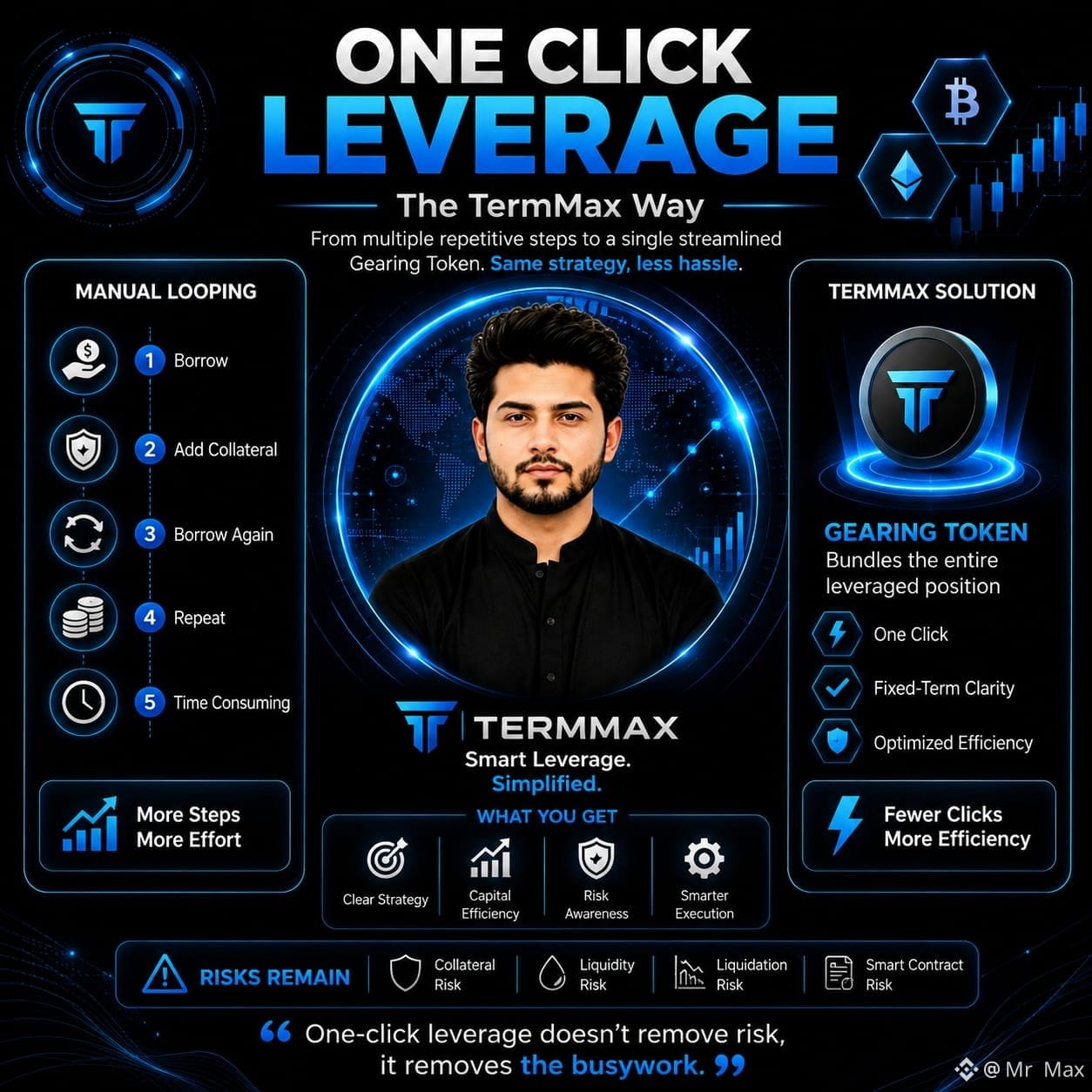
With manual looping, you borrow, add collateral, borrow again, and repeat. On paper it looks straightforward, but doing it several times can become tedious surprisingly quickly.
That’s where it gets interesting.
TermMax uses Gearing Tokens to bundle the leveraged position, instead of asking users to handle every borrowing and redepositing step themselves.
It reminds me of combining several small errands into one trip. You are not changing the destination; you are just cutting out some of the back-and-forth.
What I find more interesting is the capital side. Fixed-term borrowing can give the strategy a clearer financing structure than repeatedly dealing with changing borrowing rates.
But fewer clicks do not mean fewer risks.
Collateral, liquidity, maturity, liquidation conditions, and smart-contract risk still matter underneath the simpler experience.
That trade-off is easy to overlook.
Experienced users may appreciate the reduced operational work, while newer users might mistake convenience for safety.
So I keep asking myself: does one-click leverage really improve capital efficiency, or does it simply make a complicated strategy easier to use? @termmax #termmax
$BTC
{future}(BTCUSDT)
$ETH
{future}(ETHUSDT)
$SOL
{future}(SOLUSDT)
I’ve been noticing how much unnecessary work can sit behind a simple leverage strategy, and that’s what made TermMax interesting to me.
With manual looping, you borrow, add collateral, borrow again, and repeat. On paper it looks straightforward, but doing it several times can become tedious surprisingly quickly.
That’s where it gets interesting.
TermMax uses Gearing Tokens to bundle the leveraged position, instead of asking users to handle every borrowing and redepositing step themselves.
It reminds me of combining several small errands into one trip. You are not changing the destination; you are just cutting out some of the back-and-forth.
What I find more interesting is the capital side. Fixed-term borrowing can give the strategy a clearer financing structure than repeatedly dealing with changing borrowing rates.
But fewer clicks do not mean fewer risks.
Collateral, liquidity, maturity, liquidation conditions, and smart-contract risk still matter underneath the simpler experience.
That trade-off is easy to overlook.
Experienced users may appreciate the reduced operational work, while newer users might mistake convenience for safety.
So I keep asking myself: does one-click leverage really improve capital efficiency, or does it simply make a complicated strategy easier to use? @TermMax #termmax
$BTC
$ETH
$SOL
5
4
551
·
--
I’ve been looking at @termmax ’s zero-slippage trading architecture, and the part that interests me most is the problem behind it: how do you trade fixed-rate products without making execution unnecessarily complicated?
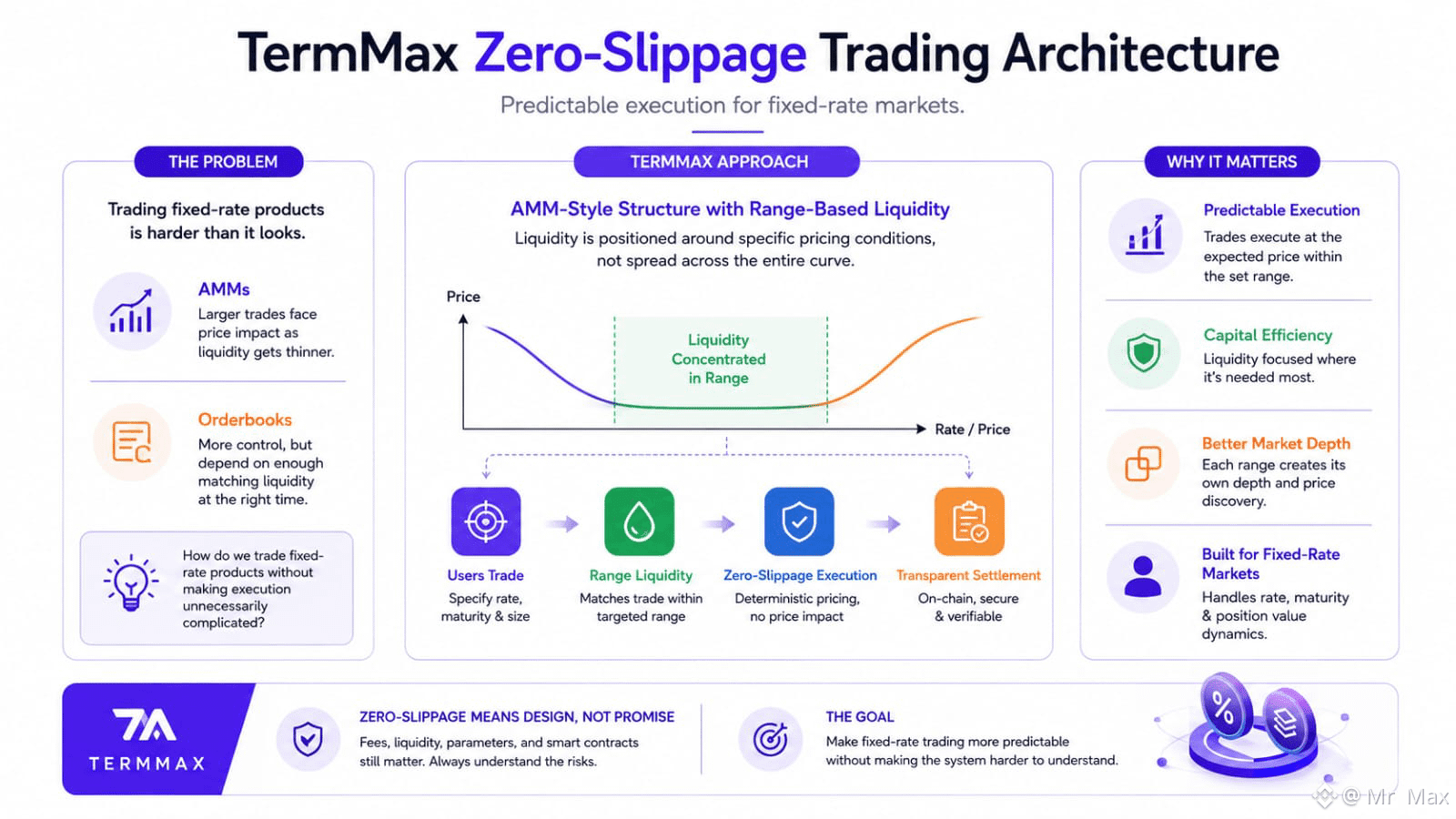
Traditional AMMs are simple, but larger trades can face price impact as liquidity gets thinner. Orderbooks offer more control, yet they depend on enough matching liquidity being available at the right time.
TermMax takes a different route, using an AMM-style structure with range-based liquidity. Instead of spreading liquidity across the entire curve, liquidity can be positioned around specific pricing conditions.
That detail is easy to miss.
For fixed-term markets, the challenge is bigger than simply exchanging two assets. Rate, maturity, and the changing value of a position all matter, so the trading mechanism has to account for more than a normal spot swap. #TermMax
I also think “zero-slippage” needs context. It describes the mechanism’s design, not a guarantee of zero fees, execution risk, or smart-contract risk. Liquidity, parameters, and market conditions still matter.
That’s what makes TermMax interesting to me. If its architecture can make fixed-rate trading more predictable without making the system harder to understand, it could address one of the less obvious problems in on-chain fixed income. #termmax
I’ve been looking at @TermMax ’s zero-slippage trading architecture, and the part that interests me most is the problem behind it: how do you trade fixed-rate products without making execution unnecessarily complicated?
Traditional AMMs are simple, but larger trades can face price impact as liquidity gets thinner. Orderbooks offer more control, yet they depend on enough matching liquidity being available at the right time.
TermMax takes a different route, using an AMM-style structure with range-based liquidity. Instead of spreading liquidity across the entire curve, liquidity can be positioned around specific pricing conditions.
That detail is easy to miss.
For fixed-term markets, the challenge is bigger than simply exchanging two assets. Rate, maturity, and the changing value of a position all matter, so the trading mechanism has to account for more than a normal spot swap. #TermMax
I also think “zero-slippage” needs context. It describes the mechanism’s design, not a guarantee of zero fees, execution risk, or smart-contract risk. Liquidity, parameters, and market conditions still matter.
That’s what makes TermMax interesting to me. If its architecture can make fixed-rate trading more predictable without making the system harder to understand, it could address one of the less obvious problems in on-chain fixed income. #termmax
21
16
1.1k
Log in to explore more content
Join global crypto users on Binance Square
⚡️ Get latest and useful information about crypto.
💬 Trusted by the world’s largest crypto exchange.
👍 Discover real insights from verified creators.
Email / Phone number