
Masao BNB
7.1k Posts

Masao BNB
Report
Block User
A CHANNEL FOR FAST AND ACCURATE NEWS
Open Trade
High-Frequency Trader
3.6 Years
105 Following
1.0K+ Followers
9.3K+ Liked
Posts
Portfolio
All
Quotes
Videos
Live
·
--
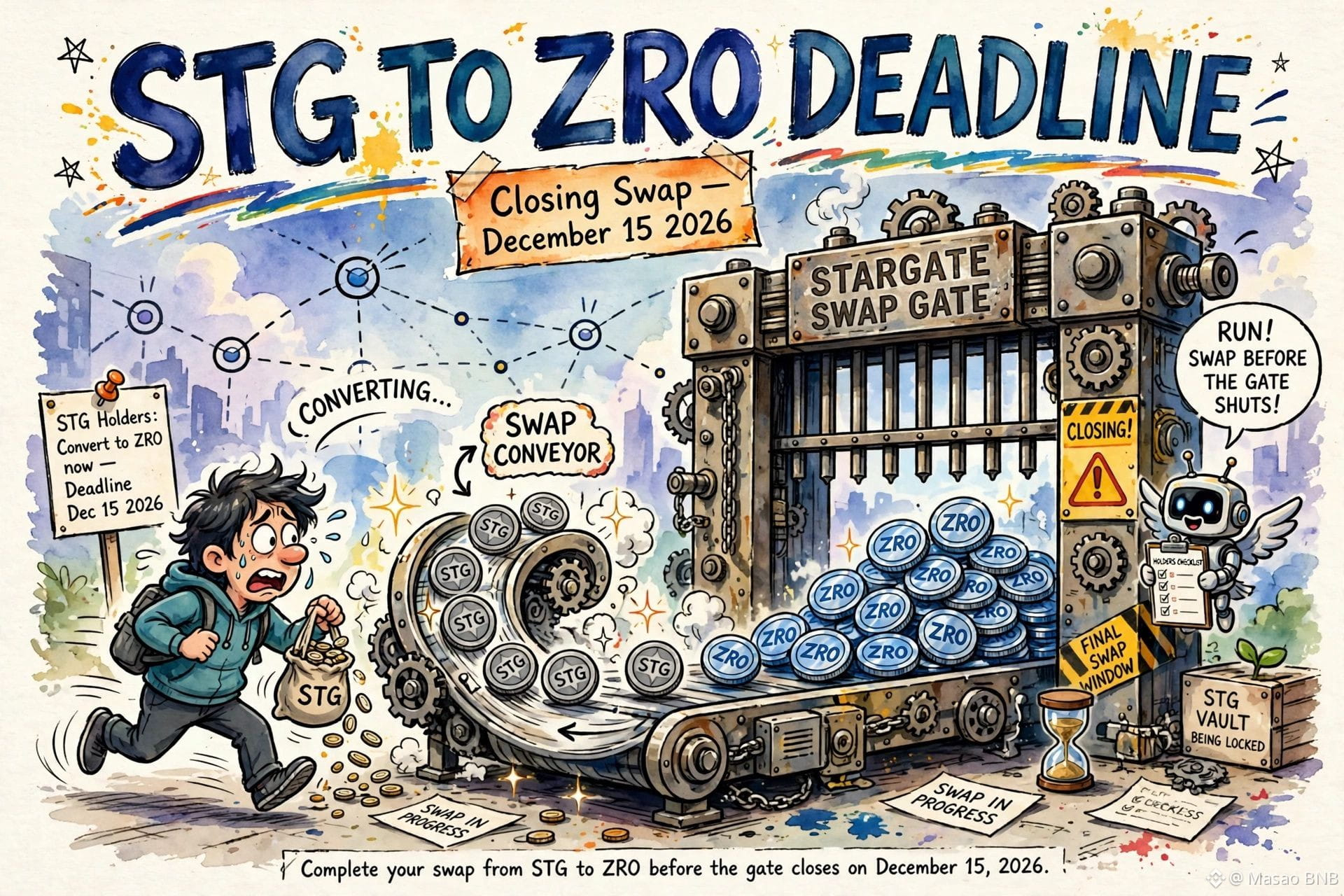
LayerZero sets deadline to swap STG for ZRO: 15/12/2026
LayerZero has announced that December 15, 2026, is the final deadline for users to swap STG tokens for ZRO, bringing the Stargate acquisition to a close. After this date, the conversion portal will be permanently shut down.
The project is coordinating with major platforms, market makers, and custodians to manage the transfer process. STG holders must complete the token swap before the deadline to preserve their rights.
Ahead of the Zero mainnet launch, control of the ZRO contract will transition to the OneSig mechanism, while the DVN verification network will raise its mandatory approval threshold to 4/4 to strengthen security.
This is a deadline STG holders shouldn’t let pass, because after 15/12, there will be no more opportunity to swap.
👇 TRADE HOT COINS HERE 👇
$BMT $LSK $HOT
12
·
--
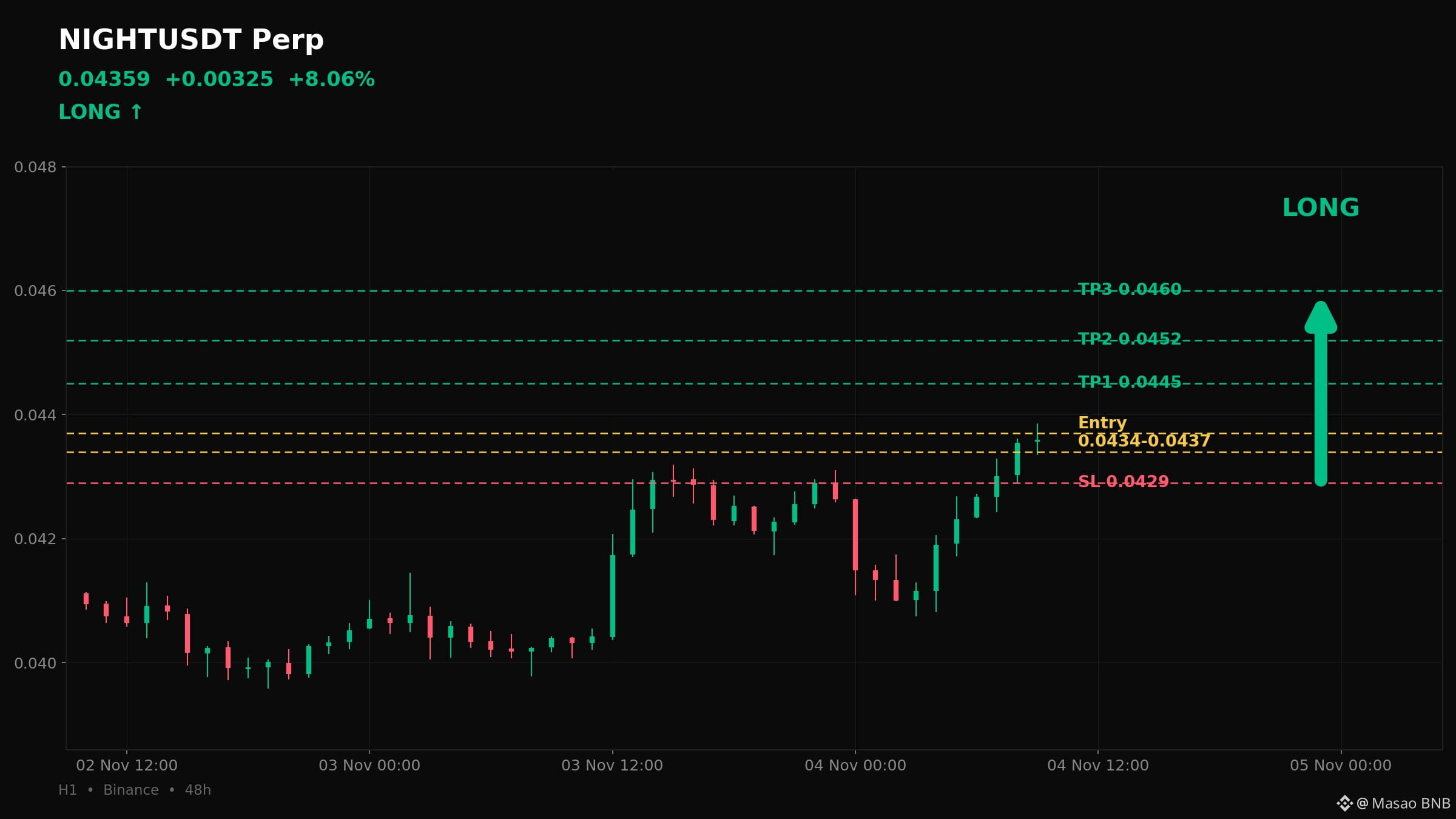
NIGHT H1 – LONG ↑
Current price: 0,04359 USD (+8,06% in 24h), latest H1 candle close 0,04354 USD (+8,20% vs. the close of 24 candles ago at 0,04024 USD).
24h high: 0,04385 USD, low: 0,04008 USD.
NIGHT has just rebounded from 0,04076 USD to near the 24h high. This is a trend-following buy as long as price holds above the Entry zone, rather than chasing the price after it has broken above the high.
LONG setup:
- Entry: 0,0434 - 0,0437
- SL: 0,0429
- TP1: 0,0445
- TP2: 0,0452
- TP3: 0,0460
Bearish scenario: if price breaks down and holds below 0,0429, the LONG setup is no longer valid, and NIGHT could retest 0,0420 - 0,0410.
Bullish scenario: hold above Entry, with targets at TP1, then TP2, then TP3, breaking above the 24h high.
$NIGHT
5
·
--
U.S. clears the way for stock trading through contracts with no expiration date
The CFTC, the U.S. regulator of futures markets, has approved perpetual futures contracts tied to individual U.S. stocks. These contracts allow investors to take positions betting that prices will rise or fall, with no expiration date. It is not yet clear which exchange will offer them or when trading will begin.
Since September, exchanges including Coinbase, Kalshi, Kraken, and OG.com have submitted proposals to offer these products. The CFTC had previously also approved some perpetual futures contracts linked to Bitcoin and crypto.
However, CME Group has sued the CFTC, arguing that these contracts should be subject to stricter regulations and that the agency has exceeded its authority. The CFTC countered that CME had not demonstrated any harm and could easily list similar products itself.
This is a major step toward bringing crypto-style instruments to traditional stock markets, but the legal battle with CME remains unresolved.
👇 TRADE HOT COINS HERE 👇
$BMT $LSK $HOT
23
·
--
US ETF Flows (3/11🇺🇸 - 4/11🇻🇳)
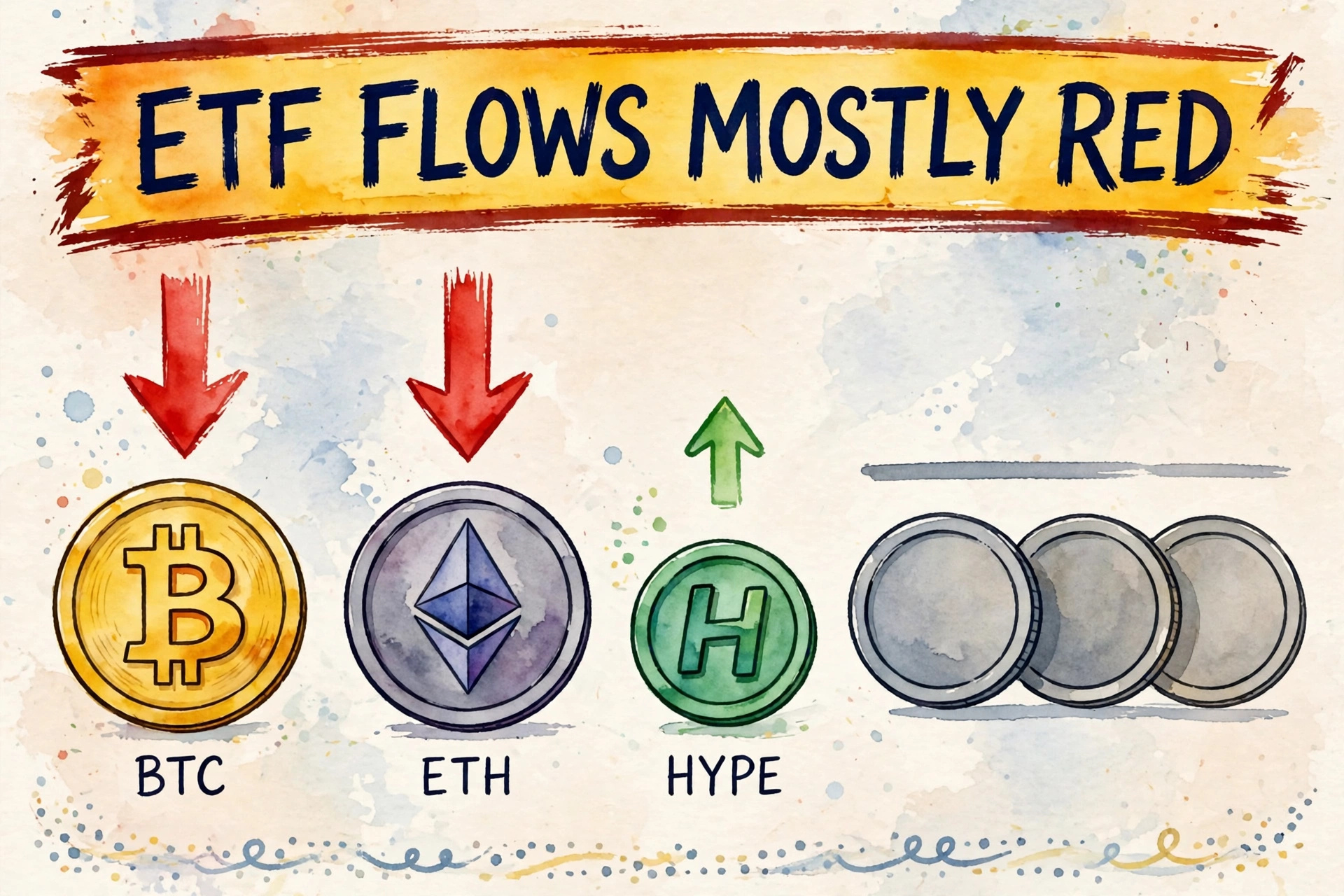
On the previous trading day, US ETF flows were heavily skewed toward net outflows, with HYPE the only rare bright spot:
🔴 BTC: -115.56 million USD
🔴 ETH: -85.35 million USD
⚪️ XRP: 0
⚪️ SOL: 0
🔴 ZEC: -3.58 million USD
🟢 HYPE: +605.08 thousand USD
⚪️ LINK: 0
🔴 BNB: -271.01 thousand USD
🔴 NEAR: -3.60 million USD
⚪️ HBAR: 0
⚪️ TRX: 0
⚪️ AVAX: 0
⚪️ DOGE: 0
⚪️ LTC: 0
⚪️ DOT: 0
BTC and ETH remain the two largest net outflows, while most of the other ETFs stayed at 0.
👇 TRADE HOT COINS HERE 👇
$BMT $LSK $HOT
18
·
--
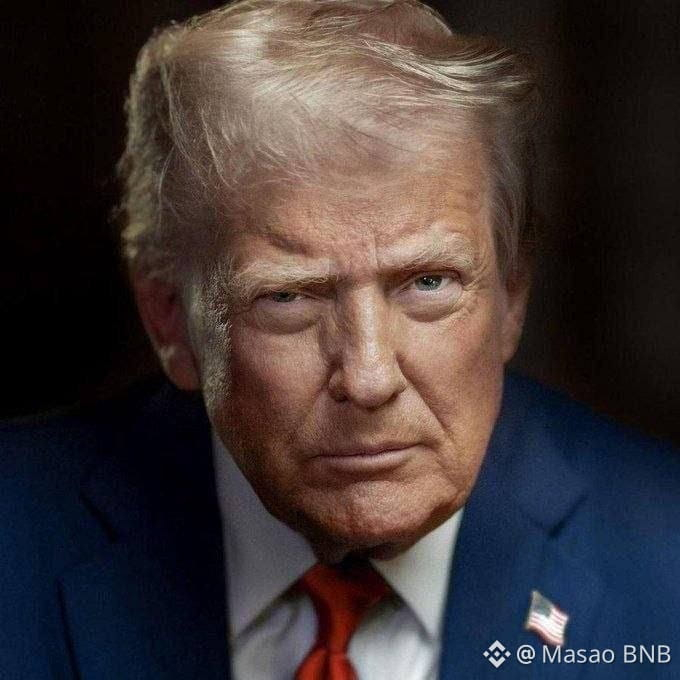
Trump: Iran war contributed to Republicans losing the midterm elections
According to the WSJ, President Trump believes the Iran war was one of the reasons Republicans lost the midterm elections.
However, he still insists that he does not regret his decision to launch the war. This is one of the rare occasions on which he has publicly acknowledged the war’s political cost while maintaining his position on the original decision.
This context has further heated up the debate in Washington over what to do next with Iran, as the midterm election results reshape the balance of power.
👇 TRADE HOT COINS HERE 👇
$BMT $LSK $HOT
90
·
--
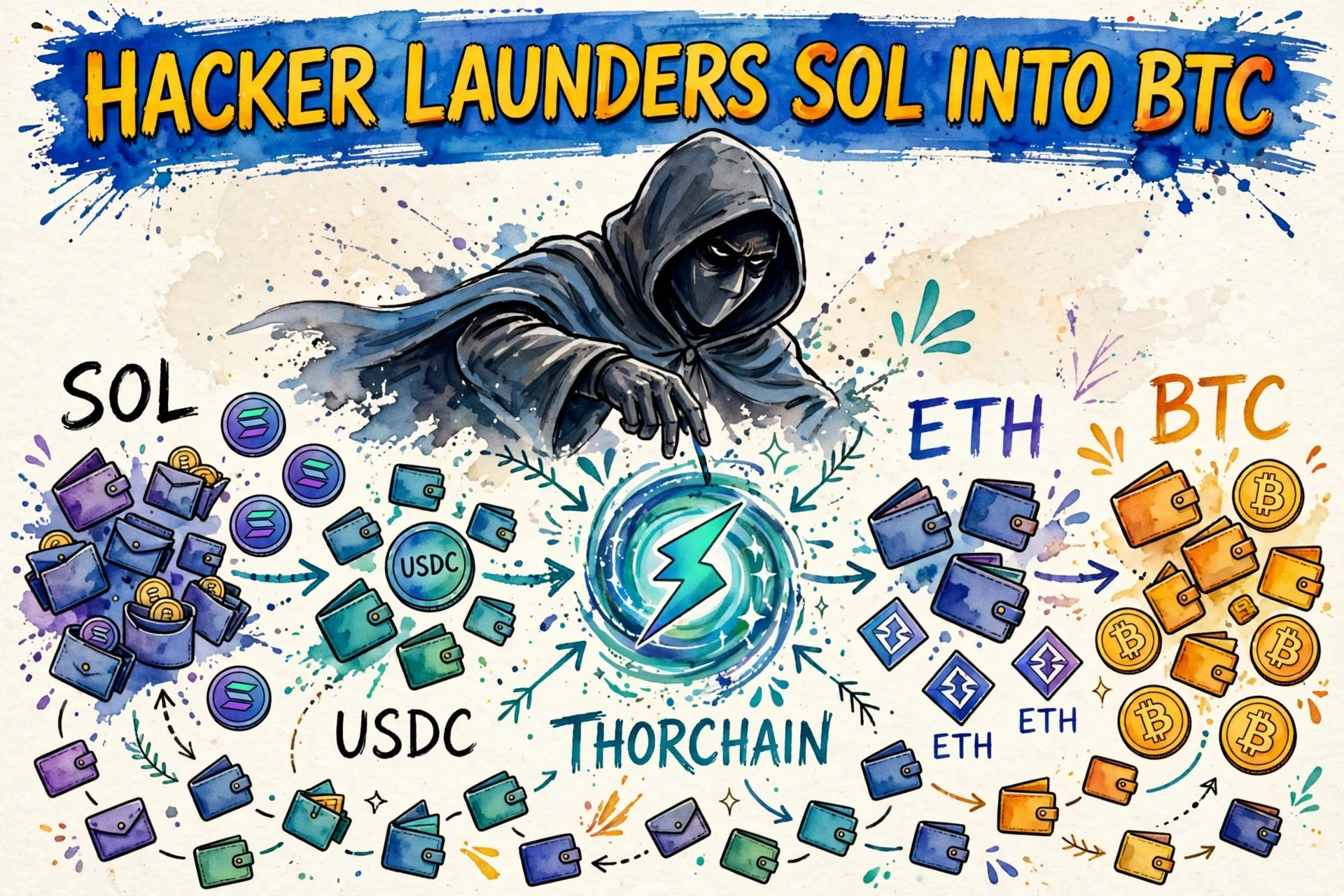
Binance hacker turns to THORChain to launder SOL into BTC
According to Lookonchain, the hacker behind the $6.3 billion Binance exploit is still converting stolen SOL into BTC.
The funds are moving as follows:
- Stolen SOL is split across multiple wallets
- SOL is sold for USDC
- USDC is bridged to Ethereum to buy ETH
- ETH is then swapped for BTC via THORChain
This is the latest step in the money-laundering chain following the hack, as the hacker keeps moving across multiple assets and chains to obscure the trail rather than holding onto a single type of stolen coin.
$SOL $BTC $ETH
15
·
--
XRP H1 – LONG ↑
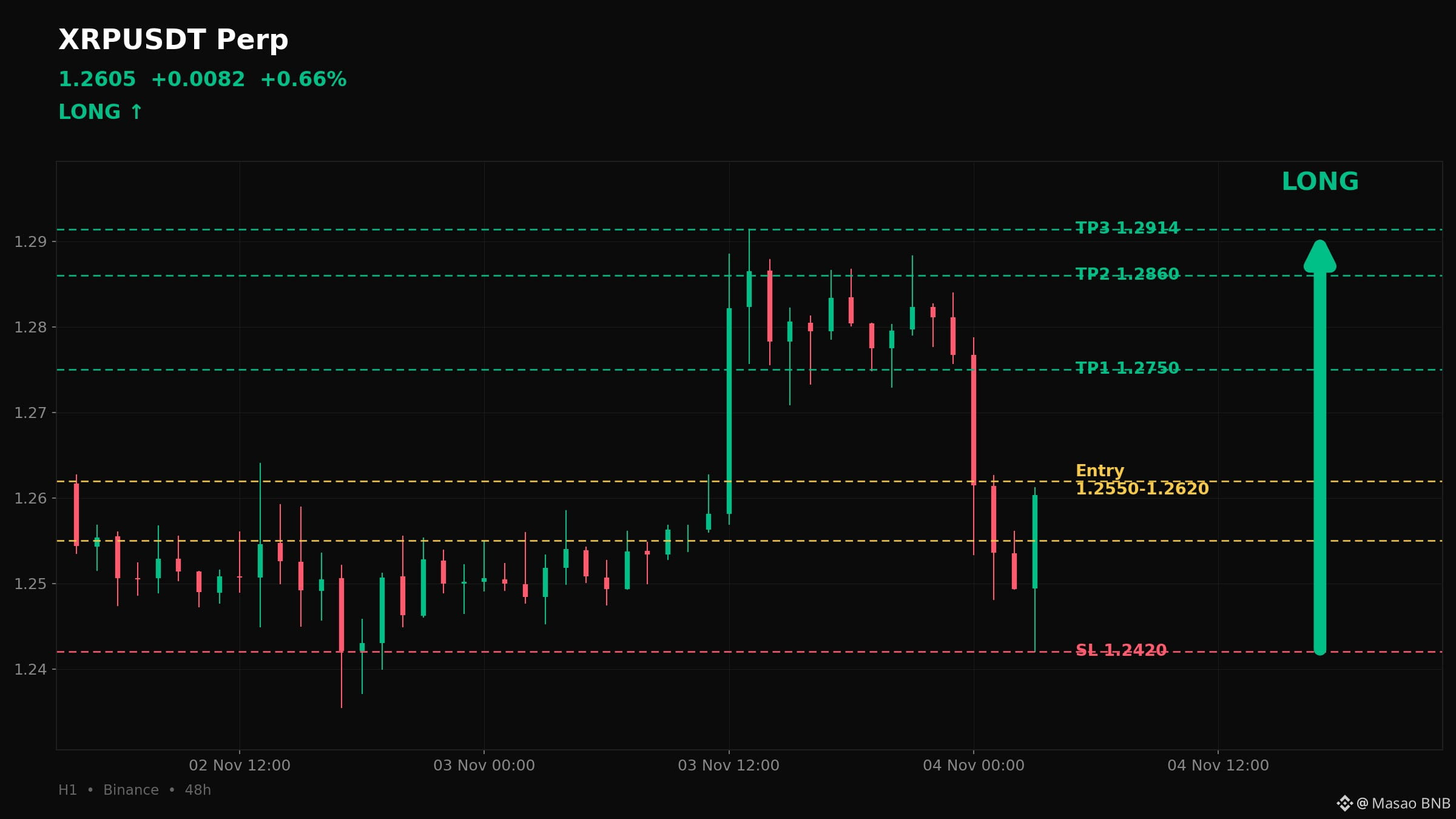
Current price: 1.2605 USD (+0.66% 24h), latest closed H1 candle: 1.2493 USD (+0.07% versus the close 24 candles ago at 1.2484 USD).
24h high: 1.2914 USD, low: 1.2420 USD.
XRP recently rose to 1.2914 USD, then corrected to the 24h low of 1.2420 USD, and is now bouncing strongly back to 1.2605 USD in the current H1 candle — a recovery following a bounce from the low, unlike the breakdown momentum in BTC and BNB.
LONG trade:
- Entry: 1.2550 - 1.2620
- SL: 1.2420
- TP1: 1.2750
- TP2: 1.2860
- TP3: 1.2914
Bearish scenario: if the price breaks below 1.2420 and stays there, the LONG trade is no longer valid; XRP could retest 1.2355.
Bullish scenario: hold above the Entry, with targets at TP1, then TP2, then TP3, retesting the 24h high.
$XRP
4
·
--
ZEC H1 – LONG ↑
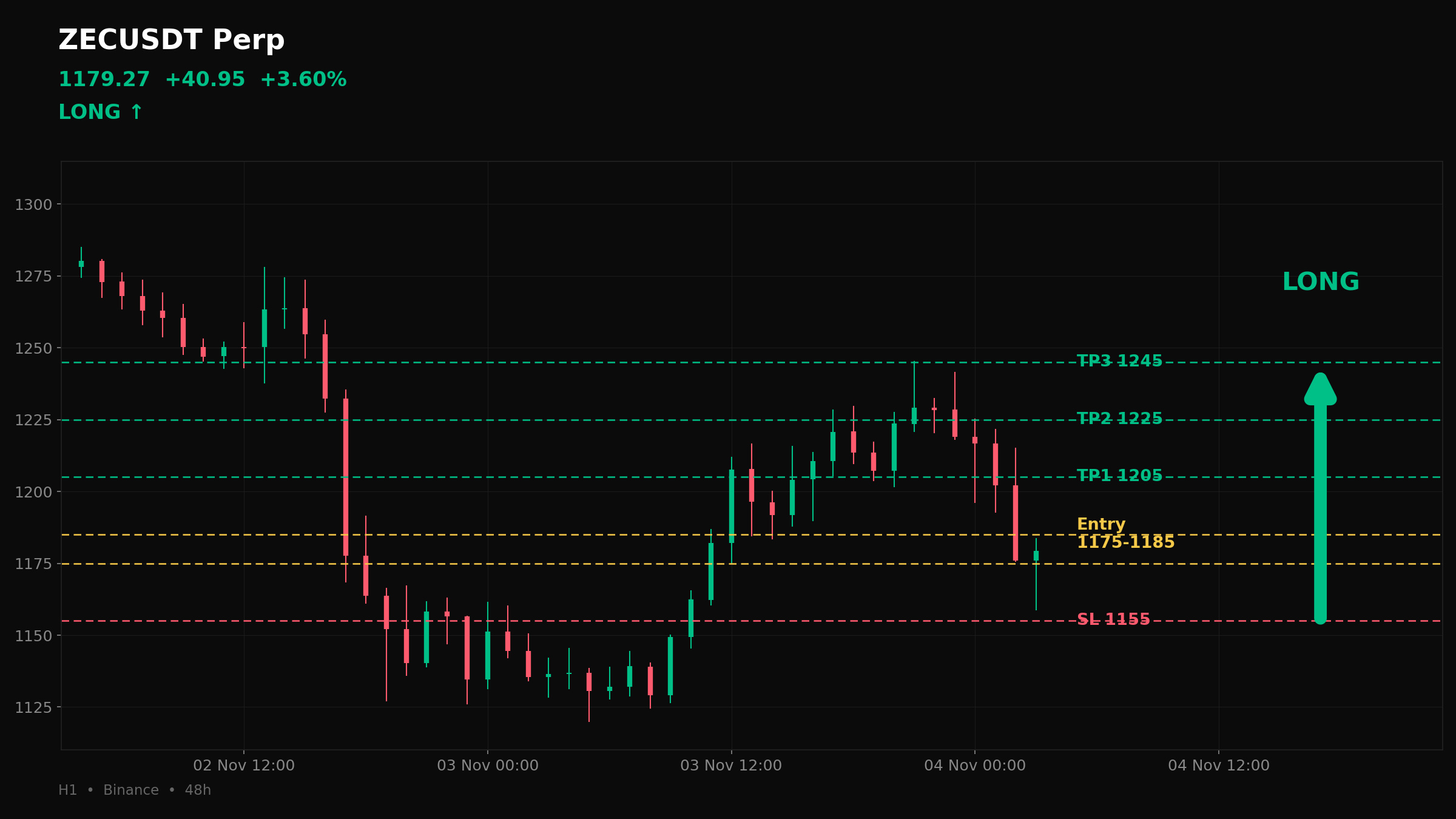
Current price: 1.179,27 USD (+3,60% in 24h); most recent H1 candle closed at 1.175,99 USD (+3,58% compared with the closing price of 24 candles ago, 1.135,36 USD).
24h high: 1.245,13 USD; low: 1.120,03 USD.
ZEC just surged from 1.120 USD to 1.245 USD, then pulled back to around 1.159 USD and is now recovering. This is a buy-the-dip opportunity in an uptrend rather than chasing the high.
LONG setup:
- Entry: 1.175 - 1.185
- SL: 1.155
- TP1: 1.205
- TP2: 1.225
- TP3: 1.245
Bearish scenario: if the price breaks below 1.155 and stays there, the LONG setup is invalidated, and ZEC could retest 1.135.
Bullish scenario: if the price holds above Entry, the targets are TP1, then TP2, then TP3, retesting the 24h high.
$ZEC
7
·
--
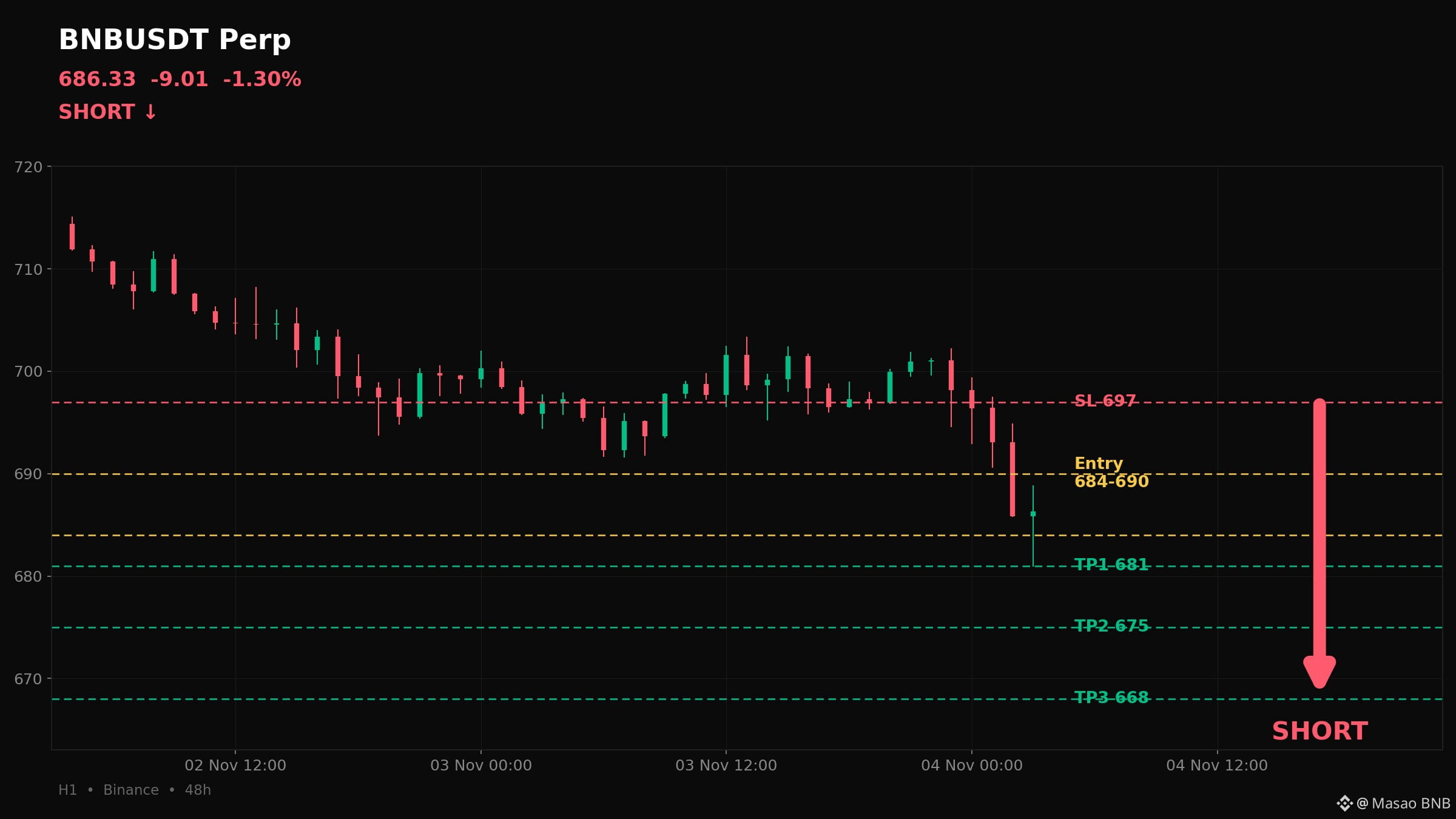
BNB H1 – SHORT ↓
Current price: 686.33 USD (-1.30% in 24h), latest H1 candle closed at 685.86 USD (-1.44% compared with the close of 24 candles ago at 695.86 USD).
24h high: 703.30 USD, low: 681.00 USD.
BNB just broke sharply down from around 701 USD to a new low of 681 USD in the last 2 H1 candles, tracking the broader decline alongside BTC. Sellers are dominating.
SHORT setup:
- Entry: 684 - 690
- SL: 697
- TP1: 681
- TP2: 675
- TP3: 668
Bullish scenario: if the price rebounds above 697 and holds, the SHORT setup is no longer valid, and BNB could retest 703.
Bearish scenario: if it stays below the Entry, the targets are TP1, then TP2, and finally TP3.
$BNB
3
·
--
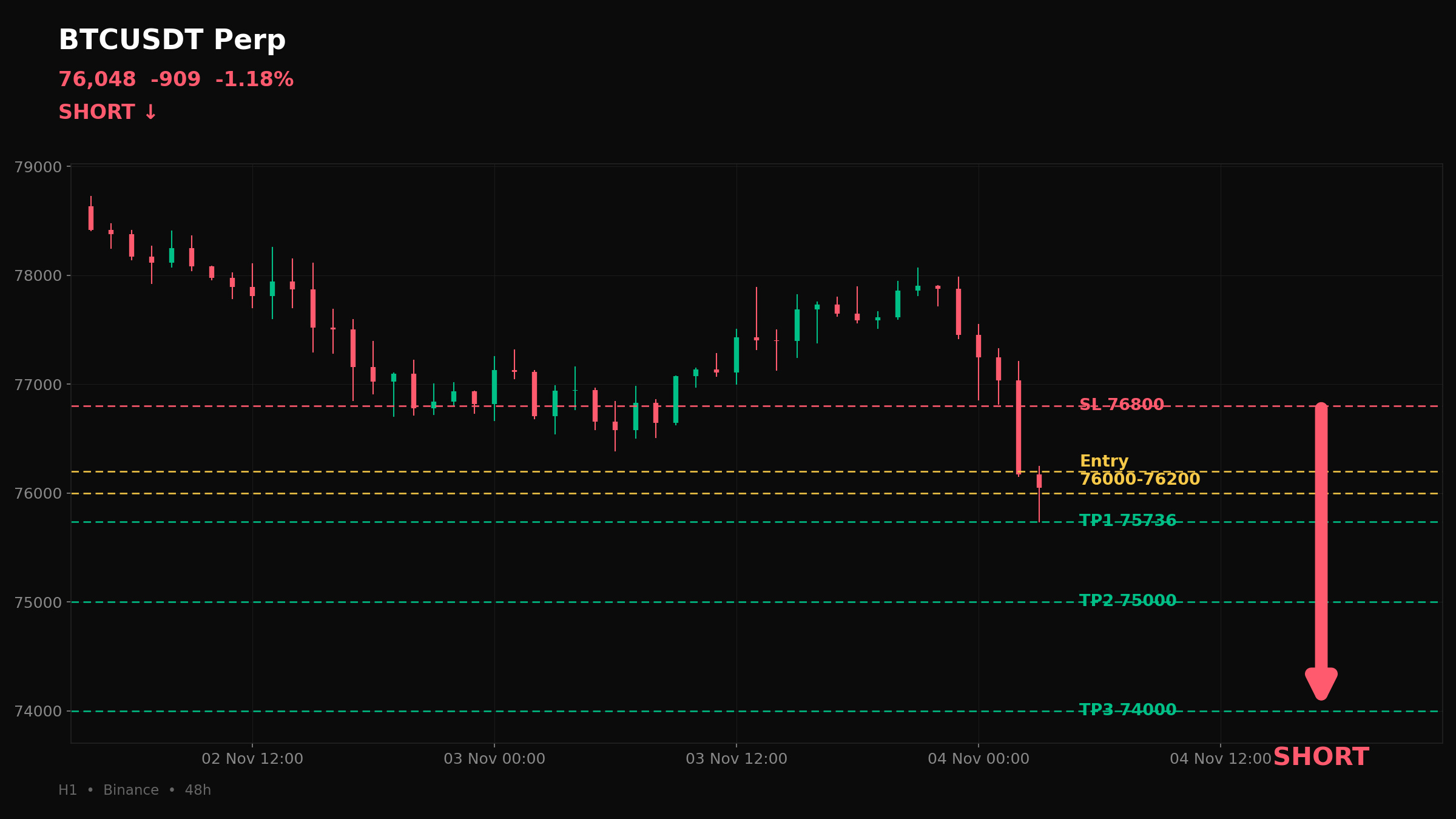
BTC H1 – SHORT ↓
Current price: 76.048 USD (-1.18% in 24h), most recent H1 candle closed at 76.170 USD (-0.70% compared with the close of 24 candles ago at 76.705 USD).
24h high: 78.063 USD, low: 75.736 USD.
BTC just broke down from the 78K area to around 75.7K as the Democratic Party took control of the U.S. House of Representatives; downward momentum is prevailing.
SHORT setup:
- Entry: 76.000 - 76.200
- SL: 76.800
- TP1: 75.736
- TP2: 75.000
- TP3: 74.000
Bullish scenario: if the price rebounds above 76.800 and holds, the SHORT setup is no longer valid; BTC could retest 77.300.
Bearish scenario: if it stays below Entry, targets are TP1, TP2, then TP3, with the 73K - 74K demand zone in sight.
$BTC
8
·
--
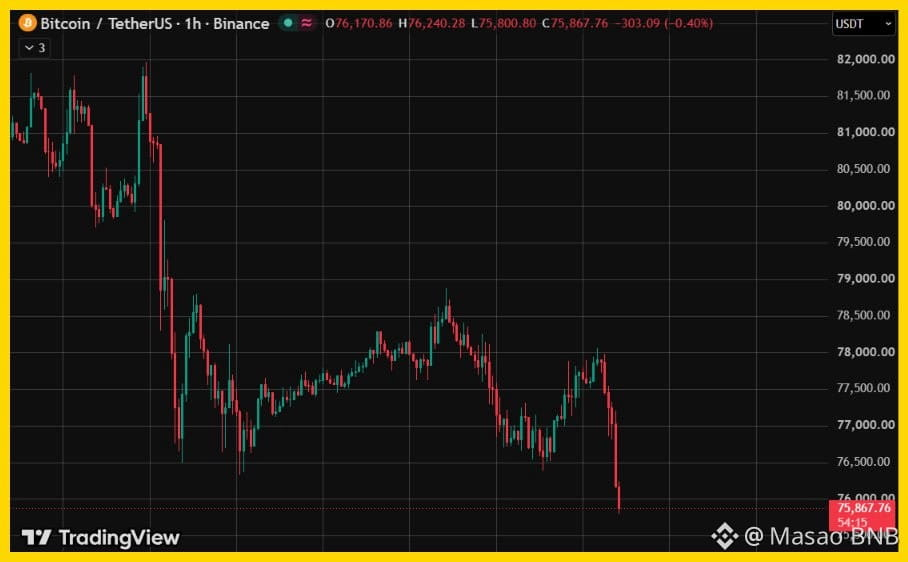
Bitcoin continues to break down to $75K as Democrats take control of the U.S. House
It’s nearing the $73K–$74K level, where demand is expected to come in. If it breaks below this level, the outlook looks pretty bad.
$BTC
#binancewithdrawalscamwarning
Bitcoin continues to break down to $75K as Democrats take control of the U.S. House
It’s nearing the $73K–$74K level, where demand is expected to come in. If it breaks below this level, the outlook looks pretty bad.
$BTC
#binancewithdrawalscamwarning
It’s nearing the $73K–$74K level, where demand is expected to come in. If it breaks below this level, the outlook looks pretty bad.
$BTC
#binancewithdrawalscamwarning
13
·
--
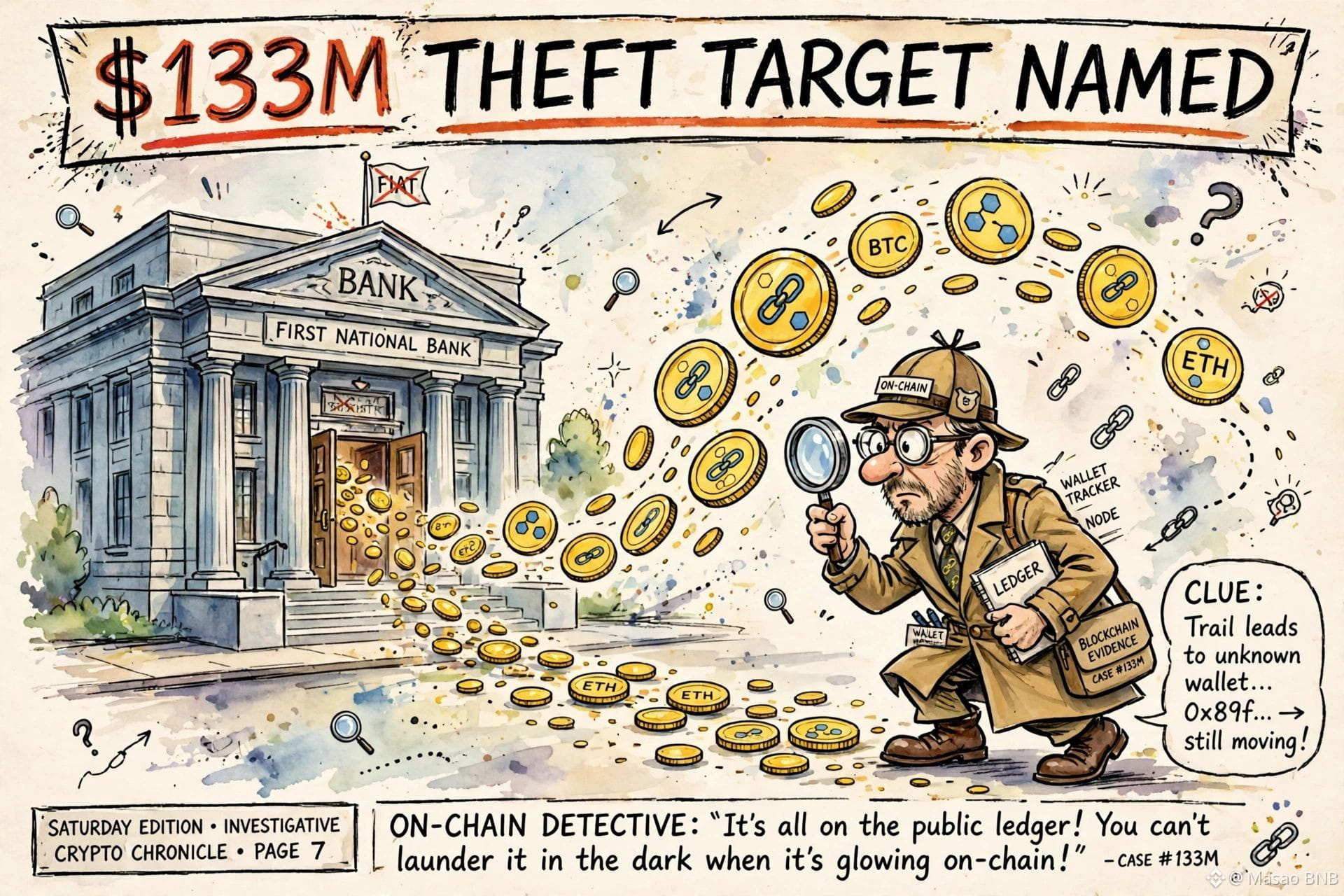
ZachXBT: Victim of $133 million theft is French bank Crédit Mutuel Arkéa
On Nov. 4, on-chain investigator ZachXBT revealed that the financial institution reportedly affected by the theft of more than $133 million in crypto was Crédit Mutuel Arkéa, a French banking group with total assets of around $235 billion.
Earlier, ZachXBT had reported that an EU-based entity was suspected of losing more than $106 million from multiple centralized exchange accounts on Nov. 1. The attacker is suspected of withdrawing funds in USDC and USDT before converting them to ETH and the privacy coin XMR, then moving the funds across multiple blockchains.
$ETH $XMR
#binancewithdrawalscamwarning
16
·
--
🚨 MARKETS: U.S. stock futures fell as investors awaited the results of the U.S. midterm elections, with S&P 500 futures down 0.5% and Nasdaq futures down 0.9%.
Bitcoin fell more than 1% to around $76,800 as traders became increasingly confident that Democrats would retake the Senate, with Ether and other major coins following suit.
$BTC $ETH
#binancewithdrawalscamwarning
Bitcoin fell more than 1% to around $76,800 as traders became increasingly confident that Democrats would retake the Senate, with Ether and other major coins following suit.
$BTC $ETH
#binancewithdrawalscamwarning
38
·
--
Hacker impersonates a recruiter to target Binance employees
Binance has shared the latest developments in the hack:
- June: A Binance engineer downloaded fake AI software containing malware. Binance detected and dealt with it, but the hacker had already learned more about the wallet management team.
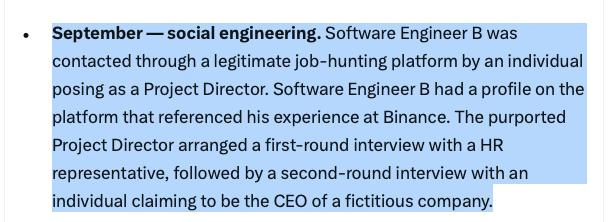
- September: The hacker posed as a Project Director, contacted another Binance engineer through a legitimate recruitment platform, and conducted two rounds of interviews. At the end, the hacker asked the engineer to download a malware-infected coding test onto their work computer, thereby compromising the device.
- October 20: The hacker exploited the compromised computer and internal AI tools to target two more engineers. During this process, they found information that granted permission to deploy software to the wallet management system.
- October 29: The hacker used the stolen access privileges to tamper with an internal transaction-signing service, transferring BTC, XRP, SOL, OP, and many other assets out of Binance hot wallets.
Previously, Binance revealed that its security team had detected and prevented 57 cyberattacks suspected to be linked to North Korea in 2026, many involving similar tactics such as posing as recruiters and planting malware in software or online meeting apps.
$BTC $XRP $SOL
#binancewithdrawalscamwarning
73
·
--
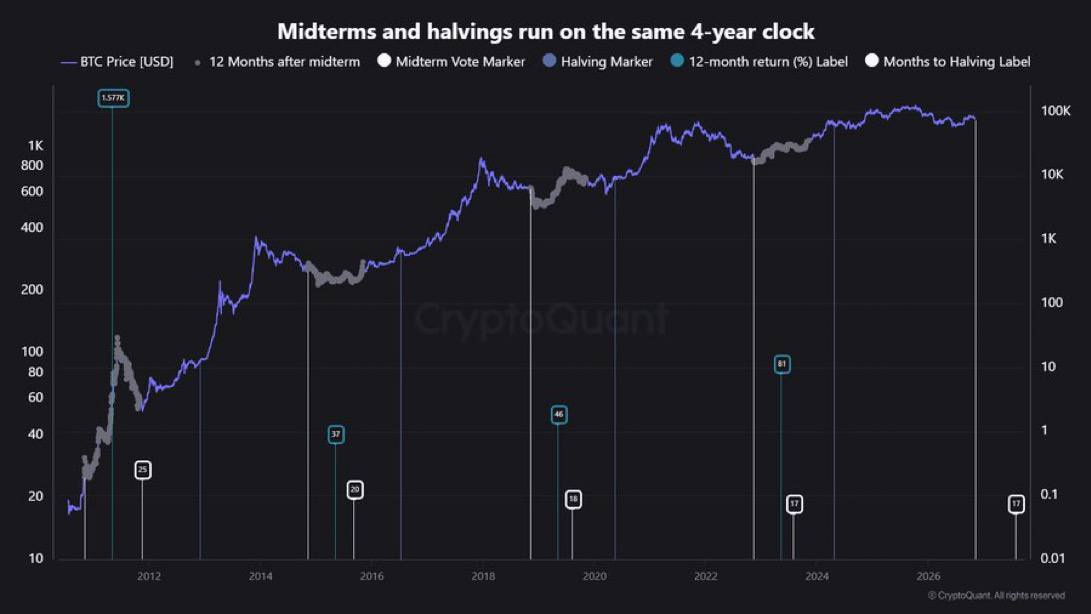
🇺🇸 INSIGHT: According to CryptoQuant, Bitcoin has gained an average of 63% (median) in the 12 months following every U.S. midterm election since 2010.
Specifically:
• After the 2014 midterm elections: BTC gained 36.8%
• After the 2018 midterm elections: BTC gained 45.8%
• After the 2022 midterm elections: BTC gained 80.8%
However, CryptoQuant warns that this pattern may reflect Bitcoin’s 4-year halving cycle more than election results, and 2026 is showing a different trend.
$BTC
#binancewithdrawalscamwarning
52
·
--
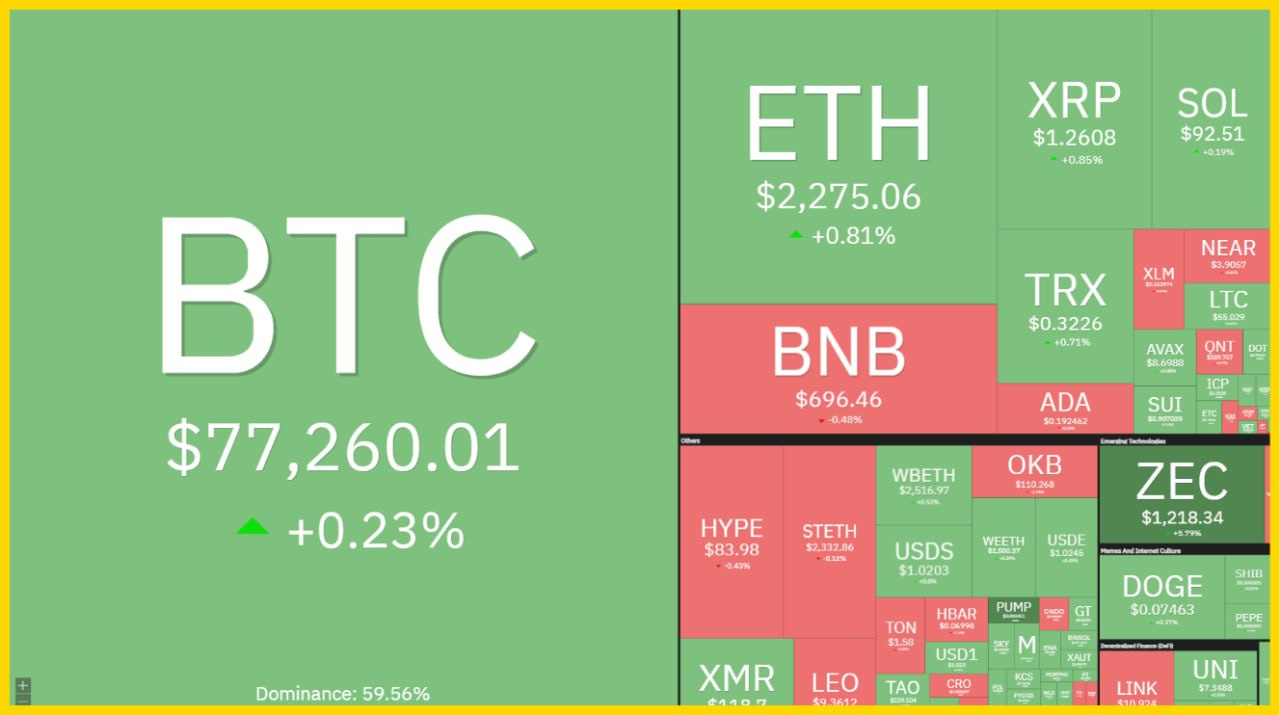
Last night, markets were fairly calm:
• Gold hovered around $3.9K, while Bitcoin climbed to $78K before turning back.
• U.S. stocks rebounded, and money flowed back into chip stocks. AMD rose 5% after hours on better-than-expected earnings.
This morning, the focus is on the U.S. midterm election results, with betting markets heavily favoring the Democrats. If they win both chambers, disagreements with the Trump administration could affect crypto policy and the war with Iran.
As of 7 a.m., Democrats had 83 House seats and 42 Senate seats, while Republicans had 60 and 34, respectively. Neither side has enough seats yet to secure control.
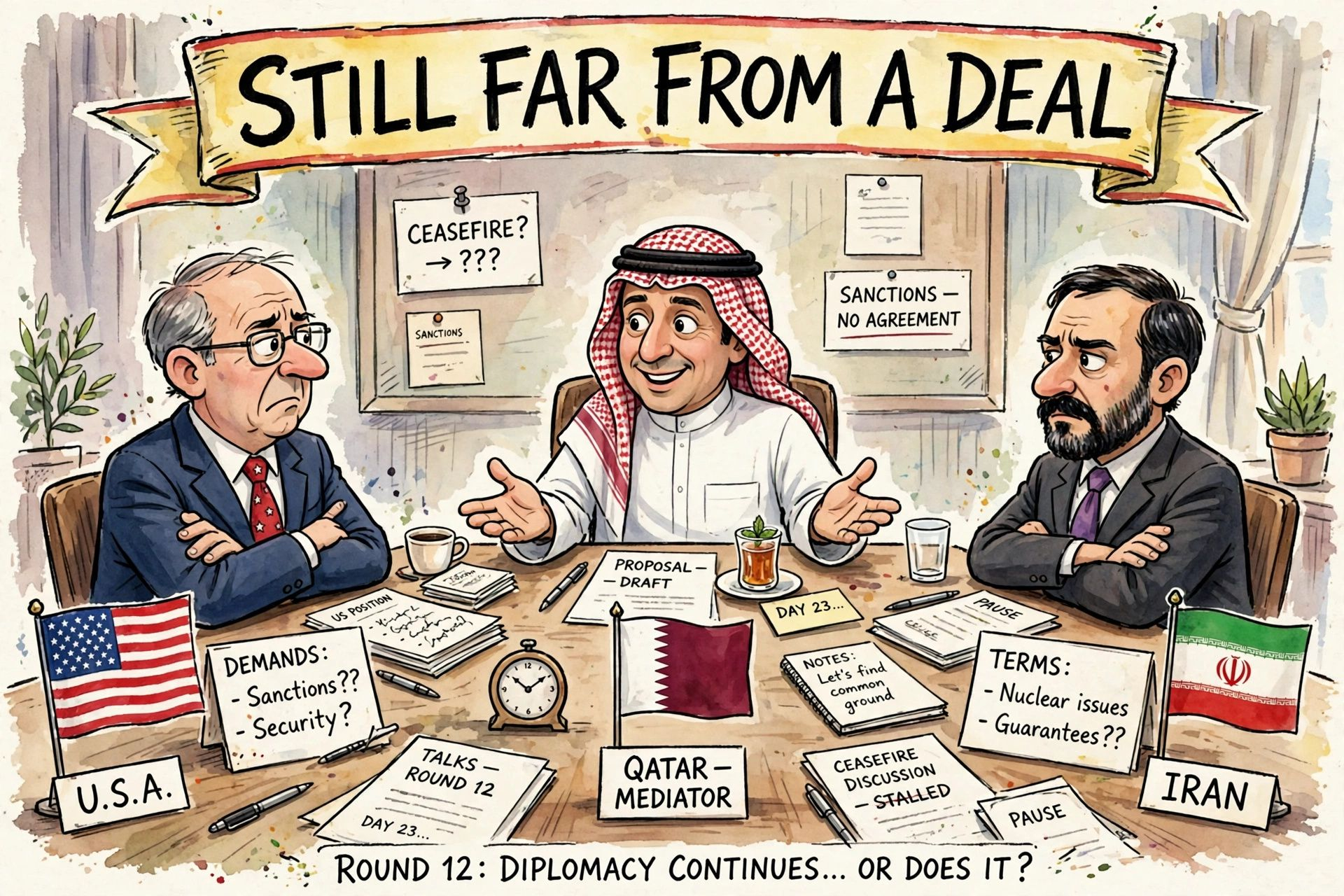
As for the conflict, Qatar-mediated negotiations are continuing, but Iran says the two sides remain far from an agreement. Trump also said the U.S. has no immediate plans to attack Iran.
$BTC $ETH
#binancewithdrawalscamwarning
79
·
--
🇺🇸🇮🇷 Senior Iranian officials say the US and Iran remain a long way from an agreement to end the war, even as the two sides continue negotiations through Qatar.
Talks are ongoing, but the gap between the two sides remains wide. The message suggests that the road to a peace agreement is still long, and tensions are unlikely to ease anytime soon.
#binancewithdrawalscamwarning
Talks are ongoing, but the gap between the two sides remains wide. The message suggests that the road to a peace agreement is still long, and tensions are unlikely to ease anytime soon.
#binancewithdrawalscamwarning
318
·
--
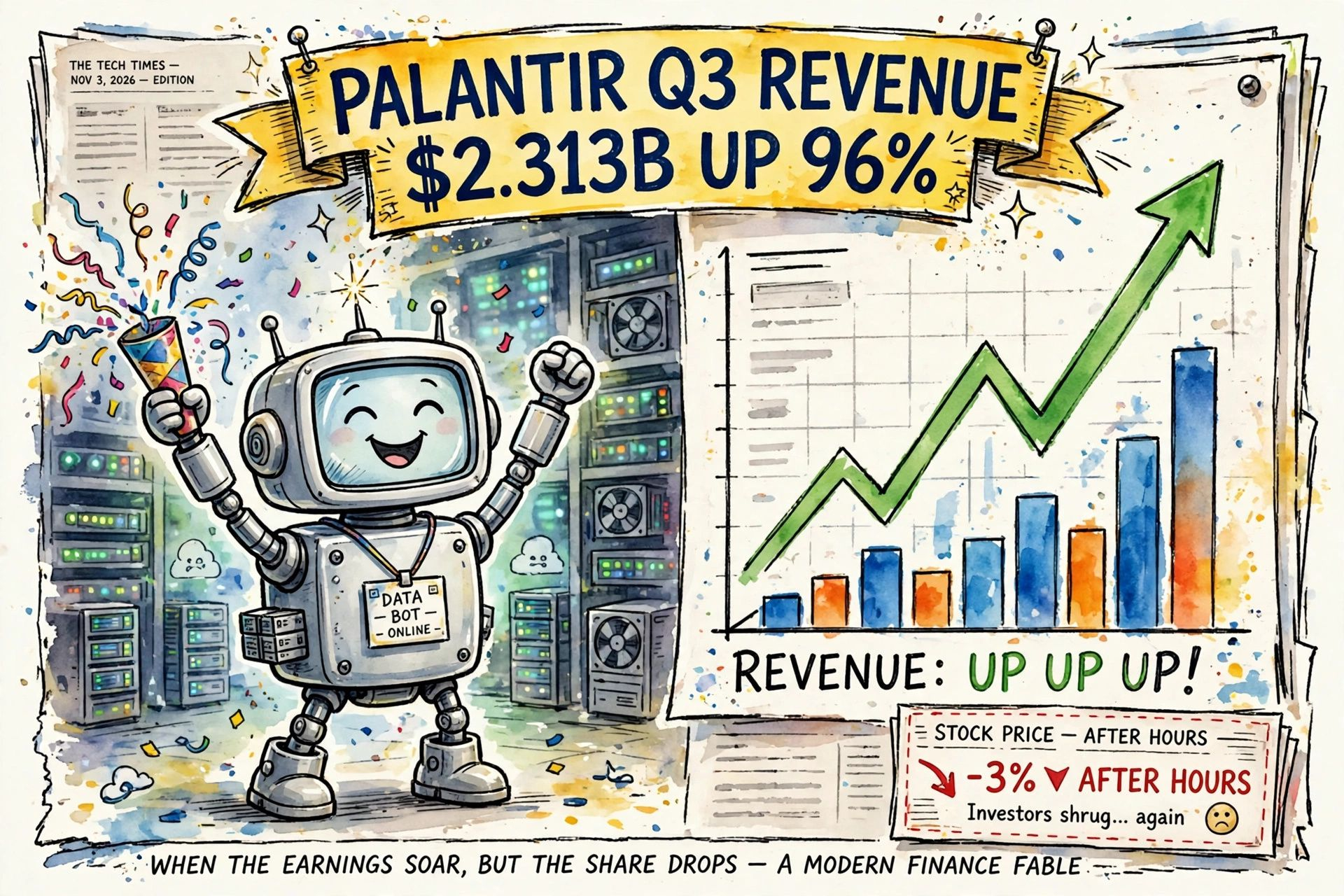
#STOCK⚡️ Palantir's (PLTR) Q3 2026 financial results explode: revenue doubles to $2.313 billion, U.S. commercial revenue exceeds government revenue for the first time, full-year guidance is sharply raised, yet the stock still falls about 3% after hours!
Key figures:
- Revenue of $2.313 billion (up 96%, beating expectations)
- Adjusted EPS of $0.44 (beating expectations of $0.41)
- U.S. commercial revenue of $984 million (up 148%, exceeding U.S. government revenue for the first time)
- U.S. government revenue of $953 million (up 96%)
- Q4 guidance: revenue of $2.649–$2.653 billion (well above expectations)
- Full-year revenue guidance raised to $8.530–$8.534 billion (up about 91%)
Brief take: The inflection point for commercializing AI through the data-center model has arrived. U.S. commercial revenue overtaking government business in scale is the biggest highlight; both growth and profits far exceeded expectations, and full-year guidance was also sharply raised. However, with the valuation so high, the market is still following the “buy the expectations, sell the facts” trend, sending the stock down about 3% after hours.
#binancewithdrawalscamwarning
26
·
--
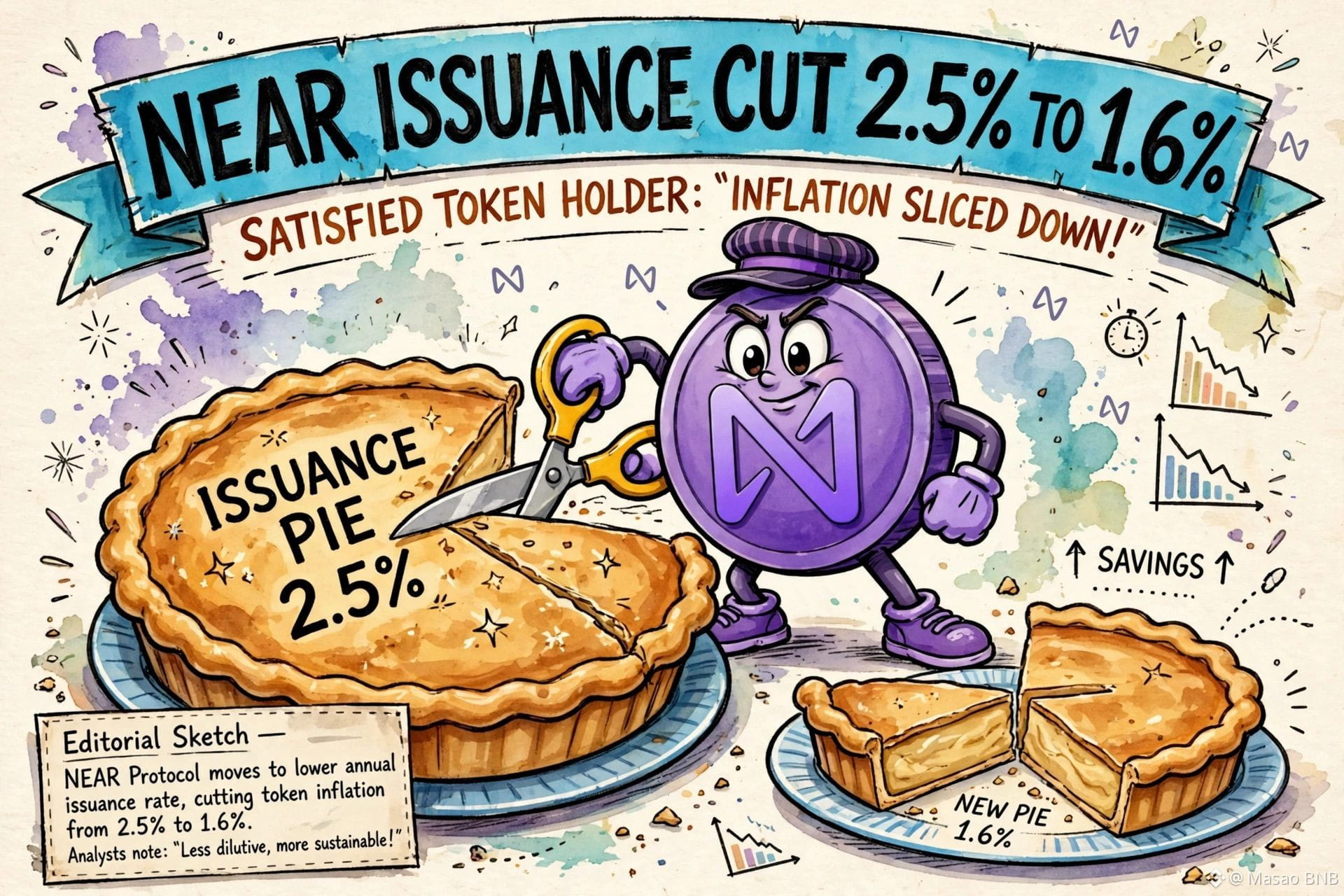
🚨 UPDATE: NEAR Protocol passes proposal to reduce maximum annual issuance
NEAR Protocol says the proposal to reduce NEAR’s maximum annual issuance from 2.5% to 1.6% has been approved.
The change will be implemented in phases over 24 months.
Slower growth in new supply means lower token inflation — a notable move for NEAR’s tokenomics.
$NEAR
NEAR Protocol says the proposal to reduce NEAR’s maximum annual issuance from 2.5% to 1.6% has been approved.
The change will be implemented in phases over 24 months.
Slower growth in new supply means lower token inflation — a notable move for NEAR’s tokenomics.
$NEAR
47
·
--
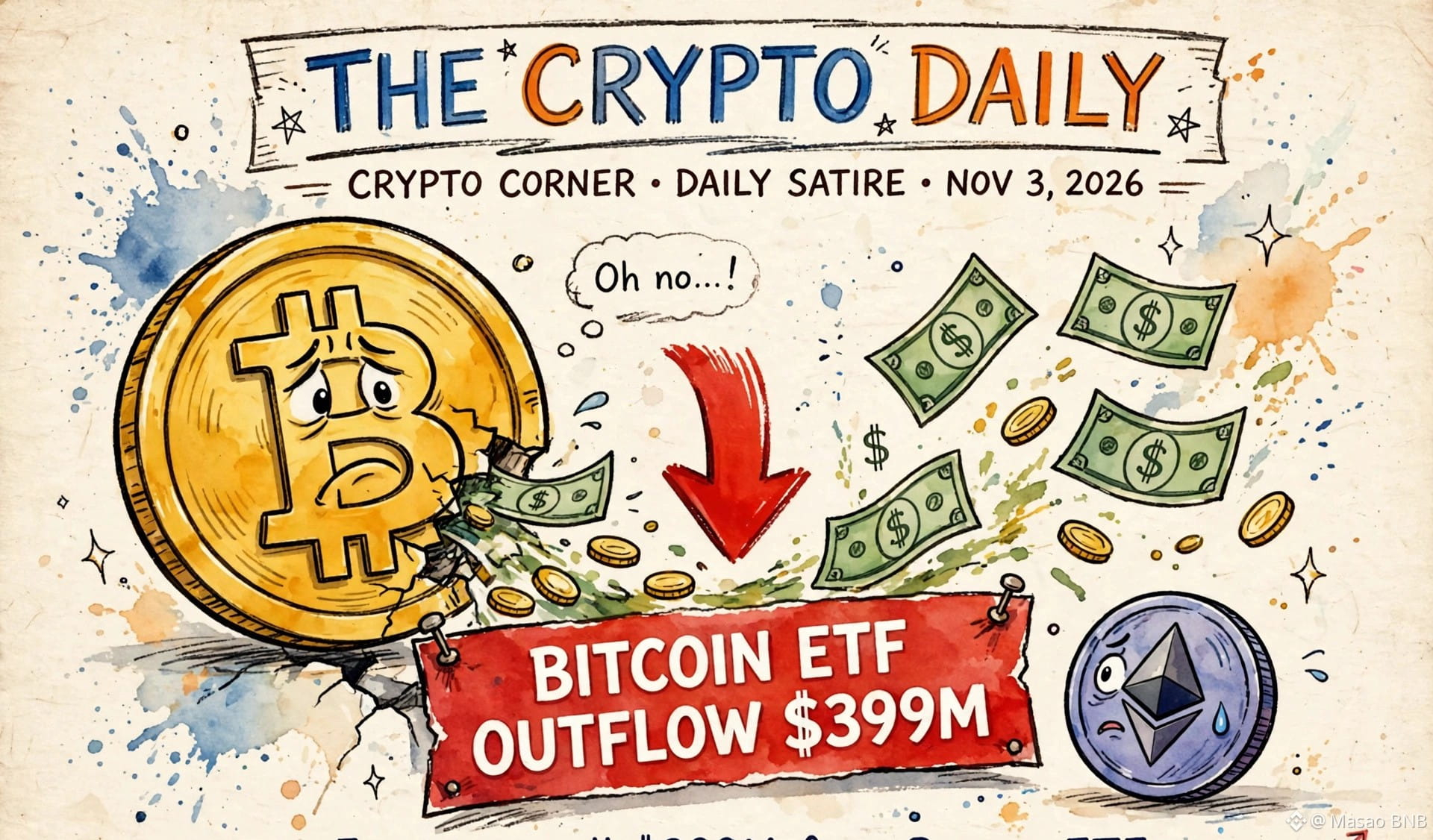
🇺🇸 U.S. Bitcoin ETFs see $399 million in net outflows, Ether funds lose $140 million
According to SoSoValue, on November 2, U.S. spot Bitcoin ETFs recorded $399 million in net outflows. Among them, Fidelity’s FBTC led individual funds in inflows, with $6.68 million.
On the same day, spot Ethereum ETFs saw $140 million in net outflows. Morgan Stanley’s Ethereum Trust (MSSE) had the largest inflow, at $3.15 million.
Notably, Morgan Stanley — one of Wall Street’s largest investment banks — only launched its Ethereum Trust in July 2026.
Read more: https://wublockchain.xyz/news/us-bitcoin-etfs-lose-399m-ether-funds-lose-140m-21497
$BTC $ETH
7
Log in to explore more content
Join global crypto users on Binance Square
⚡️ Get latest and useful information about crypto.
💬 Trusted by the world’s largest crypto exchange.
👍 Discover real insights from verified creators.
Email / Phone number
Trending Topics
Binance98PercentReplenished
2 views
39 Discussing
Binance News Update | Binance Expands Proof of Reserves to 44 Tokens as 98% of Impacted Assets Are Replenished
Binance News
·2 Likes
·904 views
USMidterms-WhatAreMarketsExpecting?
188,134 views
1,473 Discussing
USOctoberNFP-AreRateCutsStillPossible
304,873 views
2,407 Discussing