
maik的小钱钱
230 Posts

maik的小钱钱
 Square Verified
Report
Block User
探索项目真谛,寻找交互真相,从实践阐述的,切勿夸夸其谈(推特:@maik2hello)

原创之星
15 Following
2.4K+ Followers
2.9K+ Liked
1 Badges
Posts
All
Quotes
·
--
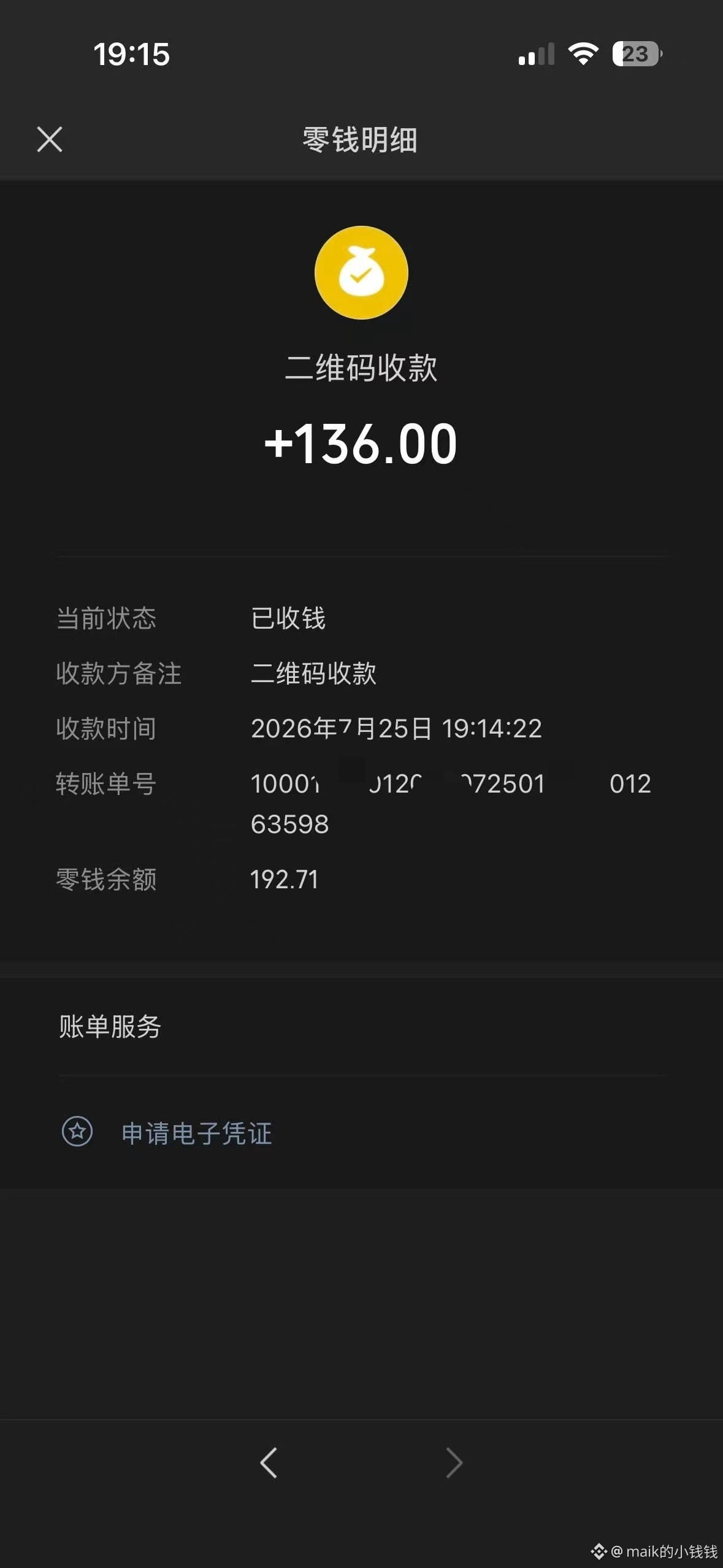
Hahaha, I took down the scammer and got them to transfer me 136 yuan. After getting trained for years in the biggest scam pit in the crypto world, I still got tricked by Web2?
They pretended it was a job recruitment and asked me to download an app for a trial run. They said they’d pay me 136 yuan per day. I used a spare phone to do it, and didn’t expect it to go so quickly—WeChat directly transferred me 136 yuan. The main thing is they weren’t very professional. Who in their right mind has a finance department who can make a payment on a weekend at 7:00–8:00 PM? Then I uninstalled it.
I’m still too young and my tech isn’t mature enough. Last night they even emailed to scold me 😂
Hahaha, I took down the scammer and got them to transfer me 136 yuan. After getting trained for years in the biggest scam pit in the crypto world, I still got tricked by Web2?
They pretended it was a job recruitment and asked me to download an app for a trial run. They said they’d pay me 136 yuan per day. I used a spare phone to do it, and didn’t expect it to go so quickly—WeChat directly transferred me 136 yuan. The main thing is they weren’t very professional. Who in their right mind has a finance department who can make a payment on a weekend at 7:00–8:00 PM? Then I uninstalled it.
I’m still too young and my tech isn’t mature enough. Last night they even emailed to scold me 😂
They pretended it was a job recruitment and asked me to download an app for a trial run. They said they’d pay me 136 yuan per day. I used a spare phone to do it, and didn’t expect it to go so quickly—WeChat directly transferred me 136 yuan. The main thing is they weren’t very professional. Who in their right mind has a finance department who can make a payment on a weekend at 7:00–8:00 PM? Then I uninstalled it.
I’m still too young and my tech isn’t mature enough. Last night they even emailed to scold me 😂
4
1
16
7.4k
·
--
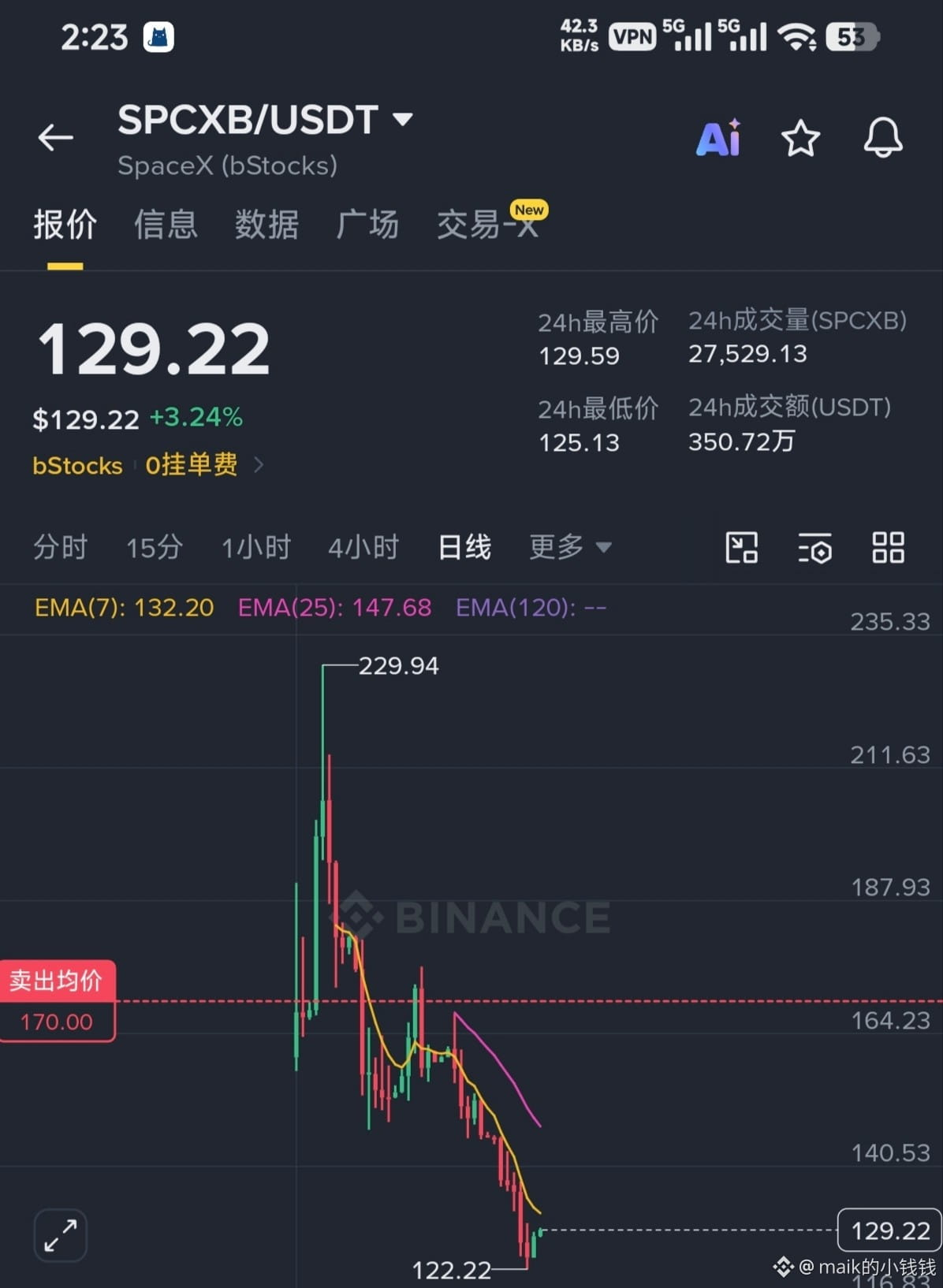
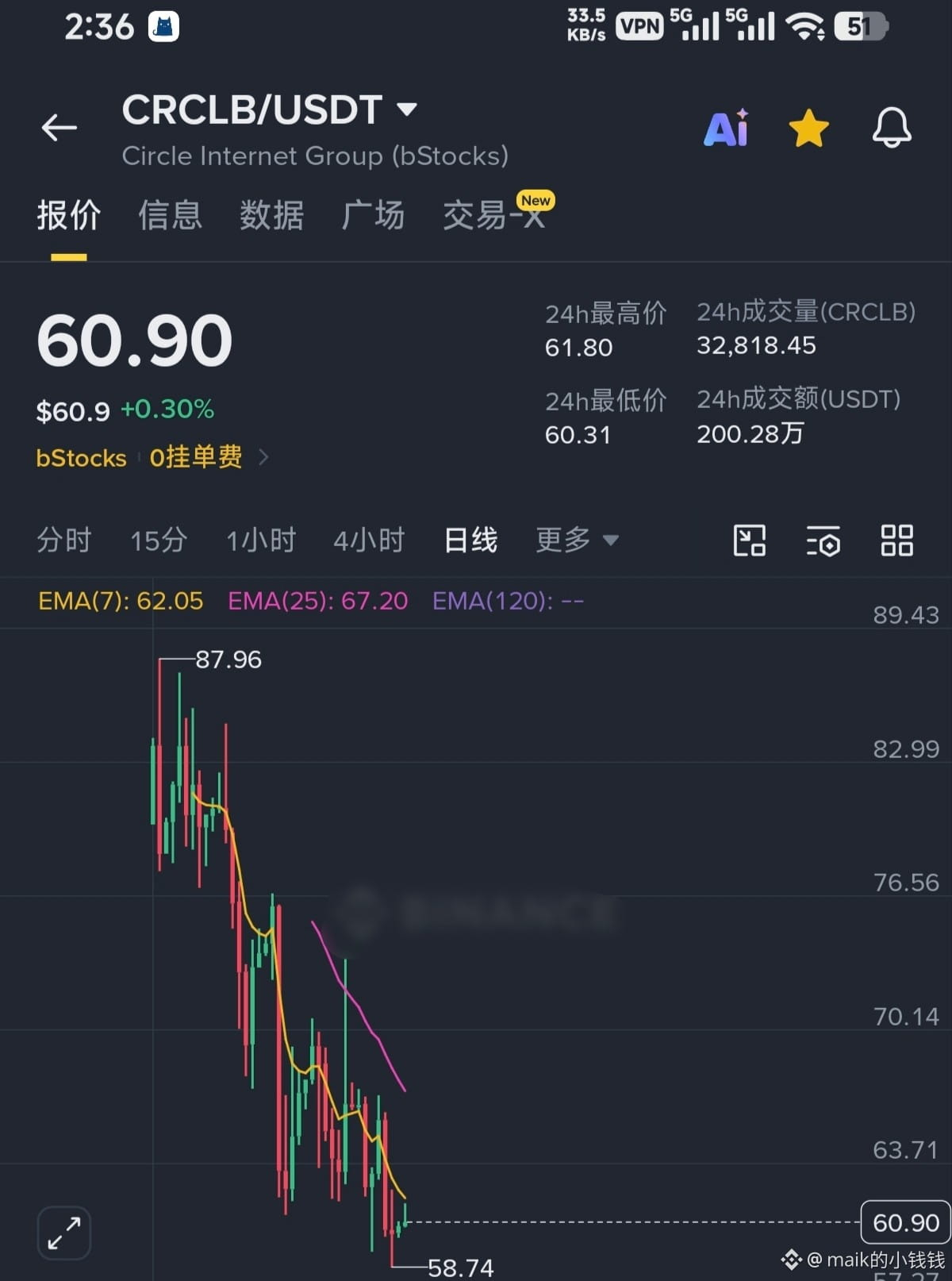
Over the past month, Cathie Wood—aka “Wooden Head”—has been buying the dip in a completely unfavorable market. Two assets that many people are particularly interested in—SpaceX (commercial space) and the stablecoin CRCL—are both among the large positions she has added.
What is the logic behind her dip-buying strategy? I’d like to write and attempt an analysis from a personal perspective.
Circle — the value anchor in upgrading from the crypto stablecoin narrative to financial infrastructure, and the settlement and clearing foundation for AI agents’ autonomous on-chain payments.
Circle has just obtained an OCC national trust bank charter (the highest regulatory credit tier). As the world’s first stablecoin issuer to receive a full trust banking license from the U.S. Federal Bank framework, it has become a compliant infrastructure regulated under the federal banking framework—not just a compliant stablecoin issuer. It is highly likely that in the future it will become a provider of crypto custody services for traditional financial institutions.
Payments and settlement-clearing foundation
Cathie Wood’s remarks on The Rollup podcast on April 28, 2026 were very direct:
In the future, a lot of chatbots will work for us. We’ll have to pay the robots that provide the data. Everything will be machine-to-machine, and blockchain payment systems are the only sensible underlying infrastructure.
(Circle is also promoting Agent Stack, Circle Payments Network, and the Arc blockchain.)
Cathie Wood’s logic for buying CRCL is similar to when she bought Tesla back then—Coinbase also placed a big bet with real money on long-term trends when nobody believed in them.
SpaceX
Cathie Wood has long been a staunch supporter of SpaceX. It falls under the theme of autonomous technology and space—reusable rockets, Starlink—and she views it as a disruptive innovation platform rather than a single stock. She’s looking at long-term trends, and this is also her core holding thesis (accumulated over $475 million).
Over the past month, Cathie Wood—aka “Wooden Head”—has been buying the dip in a completely unfavorable market. Two assets that many people are particularly interested in—SpaceX (commercial space) and the stablecoin CRCL—are both among the large positions she has added.
What is the logic behind her dip-buying strategy? I’d like to write and attempt an analysis from a personal perspective.
Circle — the value anchor in upgrading from the crypto stablecoin narrative to financial infrastructure, and the settlement and clearing foundation for AI agents’ autonomous on-chain payments.
Circle has just obtained an OCC national trust bank charter (the highest regulatory credit tier). As the world’s first stablecoin issuer to receive a full trust banking license from the U.S. Federal Bank framework, it has become a compliant infrastructure regulated under the federal banking framework—not just a compliant stablecoin issuer. It is highly likely that in the future it will become a provider of crypto custody services for traditional financial institutions.
Payments and settlement-clearing foundation
Cathie Wood’s remarks on The Rollup podcast on April 28, 2026 were very direct:
In the future, a lot of chatbots will work for us. We’ll have to pay the robots that provide the data. Everything will be machine-to-machine, and blockchain payment systems are the only sensible underlying infrastructure.
(Circle is also promoting Agent Stack, Circle Payments Network, and the Arc blockchain.)
Cathie Wood’s logic for buying CRCL is similar to when she bought Tesla back then—Coinbase also placed a big bet with real money on long-term trends when nobody believed in them.
SpaceX
Cathie Wood has long been a staunch supporter of SpaceX. It falls under the theme of autonomous technology and space—reusable rockets, Starlink—and she views it as a disruptive innovation platform rather than a single stock. She’s looking at long-term trends, and this is also her core holding thesis (accumulated over $475 million).
What is the logic behind her dip-buying strategy? I’d like to write and attempt an analysis from a personal perspective.
Circle — the value anchor in upgrading from the crypto stablecoin narrative to financial infrastructure, and the settlement and clearing foundation for AI agents’ autonomous on-chain payments.
Circle has just obtained an OCC national trust bank charter (the highest regulatory credit tier). As the world’s first stablecoin issuer to receive a full trust banking license from the U.S. Federal Bank framework, it has become a compliant infrastructure regulated under the federal banking framework—not just a compliant stablecoin issuer. It is highly likely that in the future it will become a provider of crypto custody services for traditional financial institutions.
Payments and settlement-clearing foundation
Cathie Wood’s remarks on The Rollup podcast on April 28, 2026 were very direct:
In the future, a lot of chatbots will work for us. We’ll have to pay the robots that provide the data. Everything will be machine-to-machine, and blockchain payment systems are the only sensible underlying infrastructure.
(Circle is also promoting Agent Stack, Circle Payments Network, and the Arc blockchain.)
Cathie Wood’s logic for buying CRCL is similar to when she bought Tesla back then—Coinbase also placed a big bet with real money on long-term trends when nobody believed in them.
SpaceX
Cathie Wood has long been a staunch supporter of SpaceX. It falls under the theme of autonomous technology and space—reusable rockets, Starlink—and she views it as a disruptive innovation platform rather than a single stock. She’s looking at long-term trends, and this is also her core holding thesis (accumulated over $475 million).
1
959
·
--
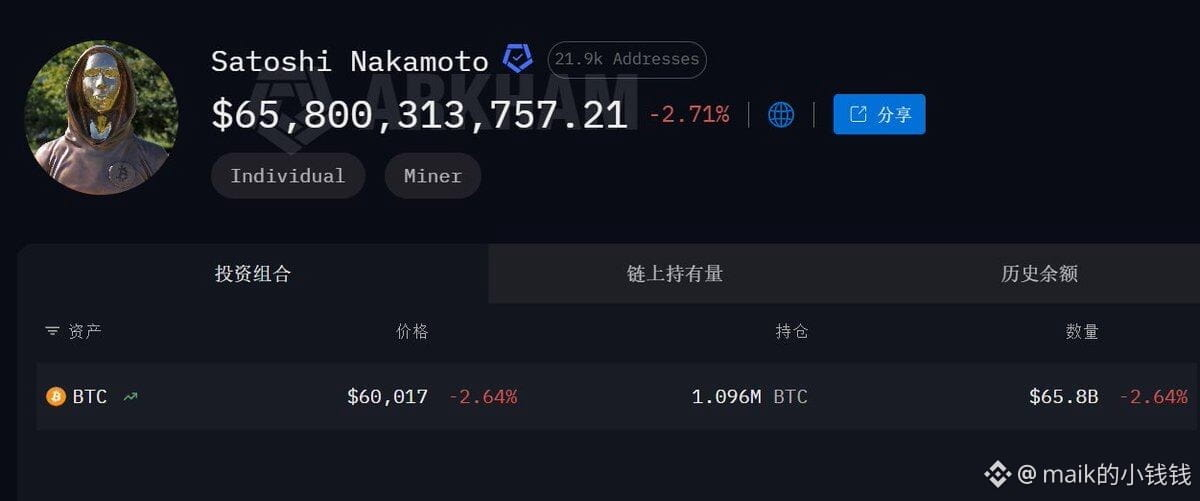
1.09 million BTC, $65.8 billion
If one day Satoshi’s wallet shows a transfer of 0.1 BTC, would your belief in BTC collapse?
1.09 million BTC, $65.8 billion
If one day Satoshi’s wallet shows a transfer of 0.1 BTC, would your belief in BTC collapse?
If one day Satoshi’s wallet shows a transfer of 0.1 BTC, would your belief in BTC collapse?
5
1
4
3k
·
--
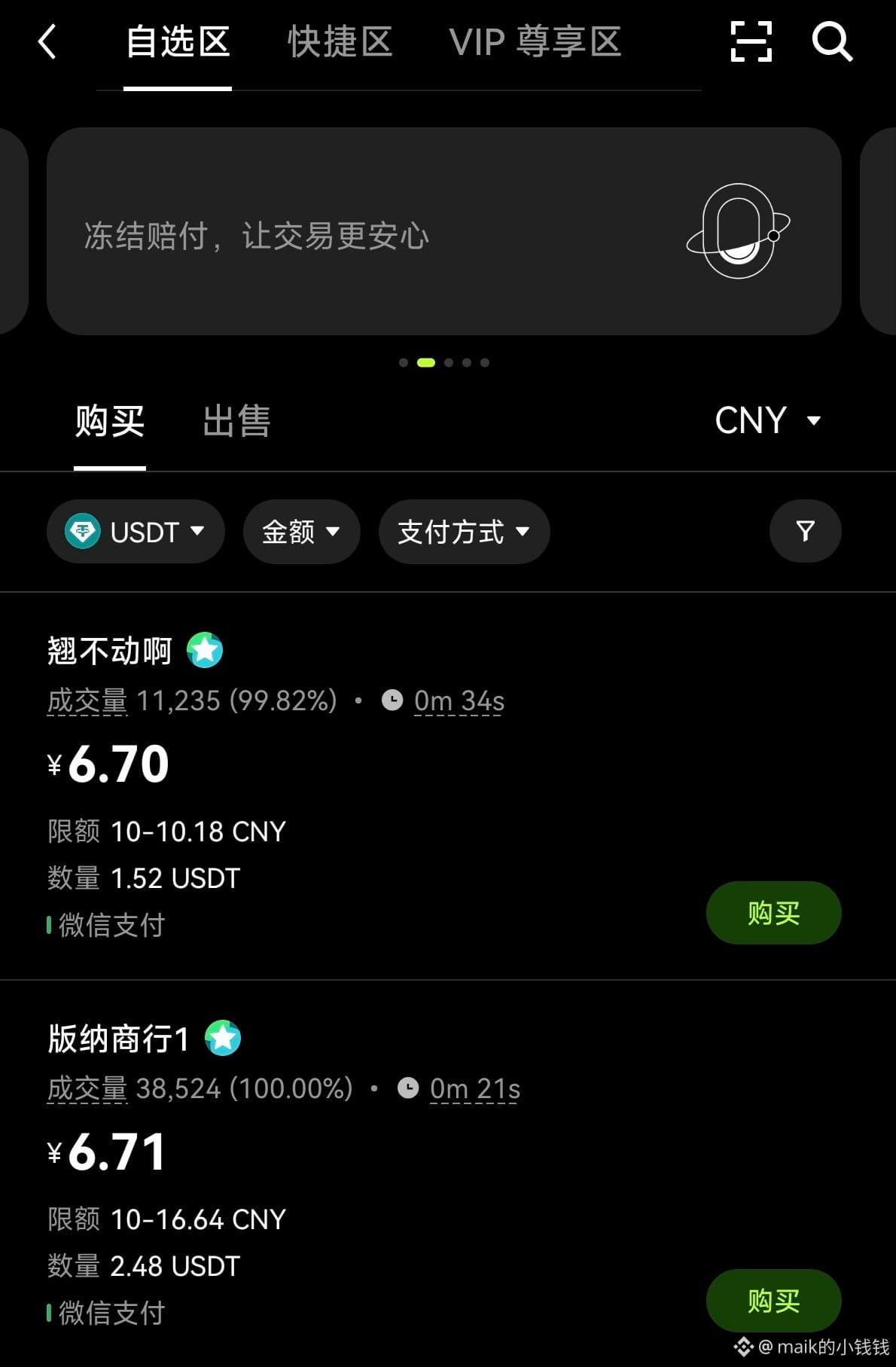
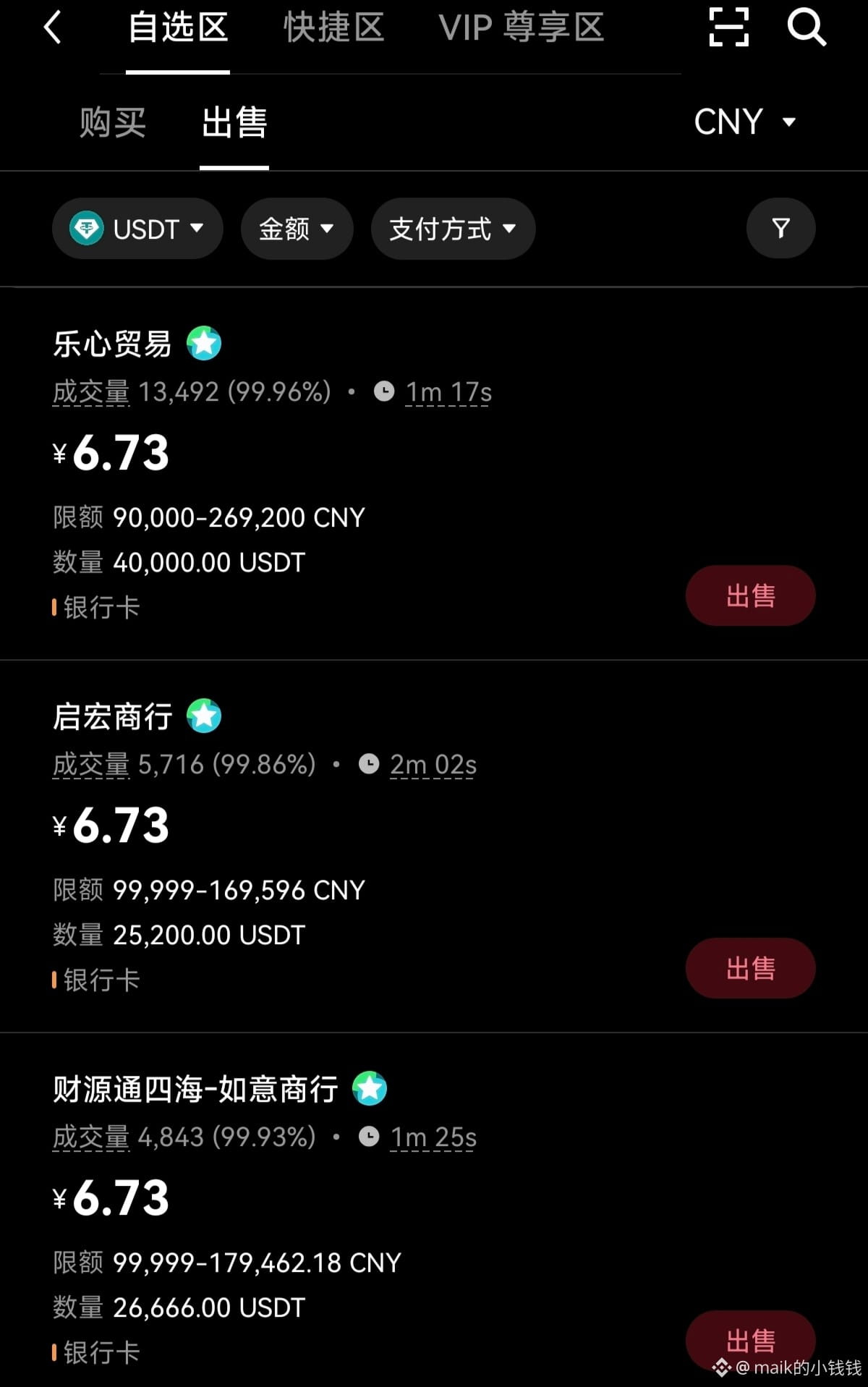
The U price drops to 6.7—investment products are almost keeping up
If U’s price goes into inversion, can you do it like this? Sellers who sell U directly resell the inverted U to merchants who buy U. That way, it benefits both sides, and with large volume—shouldn’t someone be doing this?
The U price drops to 6.7—investment products are almost keeping up
If U’s price goes into inversion, can you do it like this? Sellers who sell U directly resell the inverted U to merchants who buy U. That way, it benefits both sides, and with large volume—shouldn’t someone be doing this?
If U’s price goes into inversion, can you do it like this? Sellers who sell U directly resell the inverted U to merchants who buy U. That way, it benefits both sides, and with large volume—shouldn’t someone be doing this?
3
17
7.5k
·
--
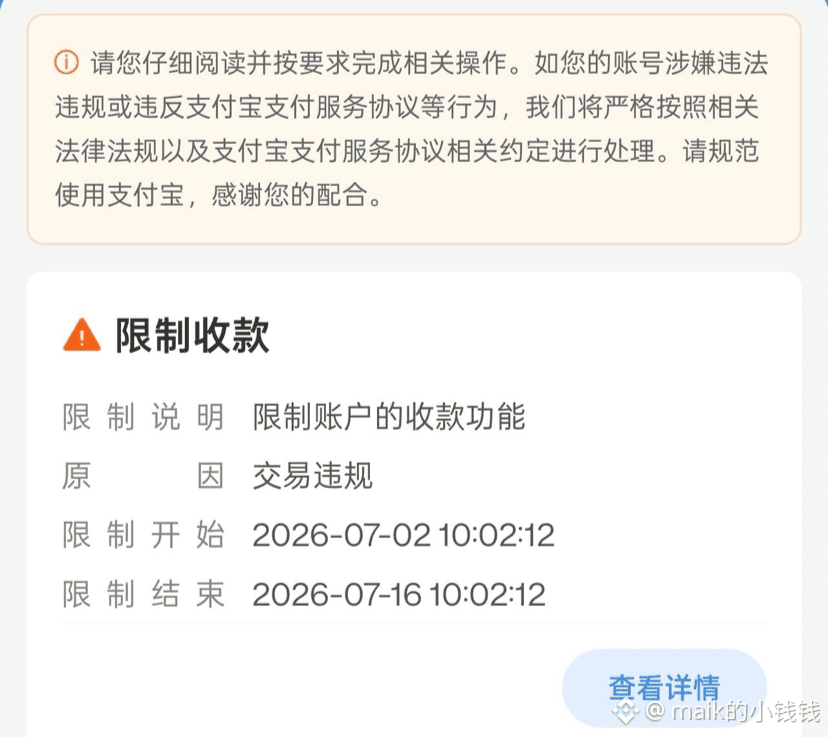
I recently found that Alipay has been getting U accounts banned in large numbers because of lockdowns. I often use it (over 100 transactions), and so far I haven’t encountered any lockdowns. I don’t know how everyone filters the criteria, so I’ll share my experience.
First of all, with Alipay, I consciously do buying/selling and transfers regularly to keep an account active and maintain transaction volume (at least several thousand to ten thousand).
How I choose suitable merchants:
I don’t choose the ones with the highest prices, and I don’t choose merchants with very large limit ranges. For example, when I withdraw 30,000 RMB, I choose ones with limits no higher than 50,000, and I make sure each transaction doesn’t exceed 50,000 RMB. I feel that if the amount is too large, it’s more likely to get you locked/banned.
I also don’t make transactions frequently in a short period. I do transactions, then wait a few days before doing the next ones.
I will never chat with the merchant privately. I won’t listen to any of their explanations or excuses; I simply cancel the transaction.
And the most basic criteria for choosing merchants are:
The merchant has been in this business for a relatively long time (at least 1–2 years),
They have a large number of completed transactions (at least several thousand),
And their completion rate is high (97% or above).
If you also have good methods, please share them in the comments so everyone can参考.
I recently found that Alipay has been getting U accounts banned in large numbers because of lockdowns. I often use it (over 100 transactions), and so far I haven’t encountered any lockdowns. I don’t know how everyone filters the criteria, so I’ll share my experience.
First of all, with Alipay, I consciously do buying/selling and transfers regularly to keep an account active and maintain transaction volume (at least several thousand to ten thousand).
How I choose suitable merchants:
I don’t choose the ones with the highest prices, and I don’t choose merchants with very large limit ranges. For example, when I withdraw 30,000 RMB, I choose ones with limits no higher than 50,000, and I make sure each transaction doesn’t exceed 50,000 RMB. I feel that if the amount is too large, it’s more likely to get you locked/banned.
I also don’t make transactions frequently in a short period. I do transactions, then wait a few days before doing the next ones.
I will never chat with the merchant privately. I won’t listen to any of their explanations or excuses; I simply cancel the transaction.
And the most basic criteria for choosing merchants are:
The merchant has been in this business for a relatively long time (at least 1–2 years),
They have a large number of completed transactions (at least several thousand),
And their completion rate is high (97% or above).
If you also have good methods, please share them in the comments so everyone can参考.
First of all, with Alipay, I consciously do buying/selling and transfers regularly to keep an account active and maintain transaction volume (at least several thousand to ten thousand).
How I choose suitable merchants:
I don’t choose the ones with the highest prices, and I don’t choose merchants with very large limit ranges. For example, when I withdraw 30,000 RMB, I choose ones with limits no higher than 50,000, and I make sure each transaction doesn’t exceed 50,000 RMB. I feel that if the amount is too large, it’s more likely to get you locked/banned.
I also don’t make transactions frequently in a short period. I do transactions, then wait a few days before doing the next ones.
I will never chat with the merchant privately. I won’t listen to any of their explanations or excuses; I simply cancel the transaction.
And the most basic criteria for choosing merchants are:
The merchant has been in this business for a relatively long time (at least 1–2 years),
They have a large number of completed transactions (at least several thousand),
And their completion rate is high (97% or above).
If you also have good methods, please share them in the comments so everyone can参考.
5
1
13
6.9k
·
--
What ruins people is never the crypto market itself, but the addiction brought on by ways to make money quickly.
For those who enter the crypto market and trade coins, can their mind and body return to normal life? To be honest, it’s hard—because this kind of money-making is too fast. Once you’ve experienced a huge profit, it’s easy to become addicted. The addiction to quick riches is something no ordinary job can replace. From then on, it becomes unstoppable: watching the charts day and night, eating and sleeping with your phone in hand. Whenever you have time, you can’t help but take a look at the K-line.
Many people believe the crypto market is one of the rare chances for them to turn things around. After experiencing how simple it feels to make money by trading coins—seeing how, through word of mouth, many group members can buy a coin and make tens of thousands to millions—you may also believe that all you need to do is catch one opportunity.
Even more deadly is getting involved with contract leverage. In the short term, you can move dozens of points back and forth, your assets doubling. This intense stimulation is far easier to make you lose your head than anything else. Temporary gains make you want to earn even more, while those who get trapped become even more fixated—thinking, “The next order will make it back.” From then on, you detach from reality: the “boring life.” Most of your time goes into researching charts, projects, and the crypto market—hoping that one day you’ll get rich and return home in style.
What ruins people is never the crypto market itself, but the addiction brought on by ways to make money quickly.
For those who enter the crypto market and trade coins, can their mind and body return to normal life? To be honest, it’s hard—because this kind of money-making is too fast. Once you’ve experienced a huge profit, it’s easy to become addicted. The addiction to quick riches is something no ordinary job can replace. From then on, it becomes unstoppable: watching the charts day and night, eating and sleeping with your phone in hand. Whenever you have time, you can’t help but take a look at the K-line.
Many people believe the crypto market is one of the rare chances for them to turn things around. After experiencing how simple it feels to make money by trading coins—seeing how, through word of mouth, many group members can buy a coin and make tens of thousands to millions—you may also believe that all you need to do is catch one opportunity.
Even more deadly is getting involved with contract leverage. In the short term, you can move dozens of points back and forth, your assets doubling. This intense stimulation is far easier to make you lose your head than anything else. Temporary gains make you want to earn even more, while those who get trapped become even more fixated—thinking, “The next order will make it back.” From then on, you detach from reality: the “boring life.” Most of your time goes into researching charts, projects, and the crypto market—hoping that one day you’ll get rich and return home in style.
For those who enter the crypto market and trade coins, can their mind and body return to normal life? To be honest, it’s hard—because this kind of money-making is too fast. Once you’ve experienced a huge profit, it’s easy to become addicted. The addiction to quick riches is something no ordinary job can replace. From then on, it becomes unstoppable: watching the charts day and night, eating and sleeping with your phone in hand. Whenever you have time, you can’t help but take a look at the K-line.
Many people believe the crypto market is one of the rare chances for them to turn things around. After experiencing how simple it feels to make money by trading coins—seeing how, through word of mouth, many group members can buy a coin and make tens of thousands to millions—you may also believe that all you need to do is catch one opportunity.
Even more deadly is getting involved with contract leverage. In the short term, you can move dozens of points back and forth, your assets doubling. This intense stimulation is far easier to make you lose your head than anything else. Temporary gains make you want to earn even more, while those who get trapped become even more fixated—thinking, “The next order will make it back.” From then on, you detach from reality: the “boring life.” Most of your time goes into researching charts, projects, and the crypto market—hoping that one day you’ll get rich and return home in style.

1
6
2.9k
·
--
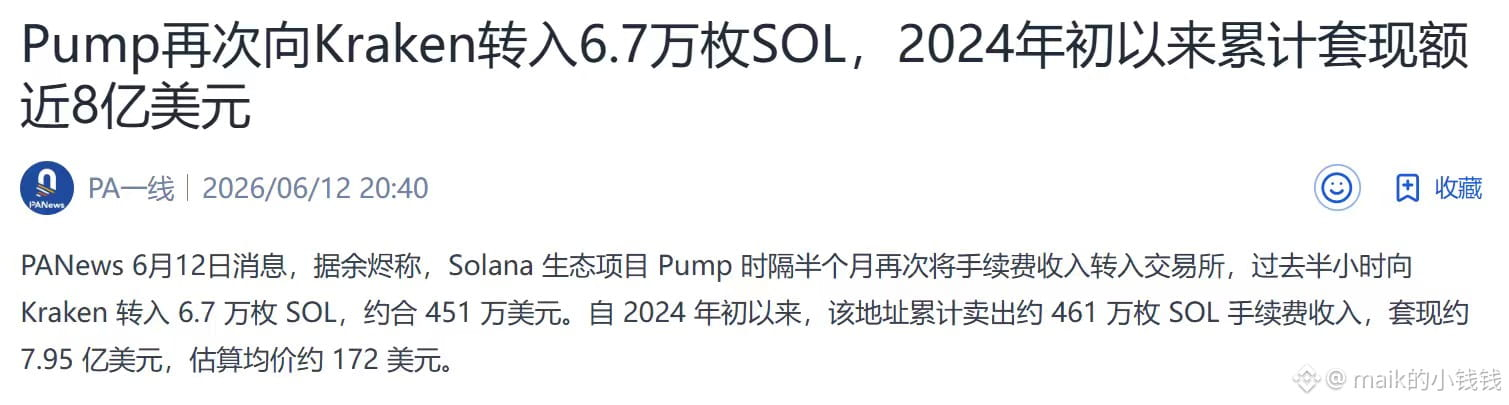
This toxic PUMP liquidity is being drained by these scumbags, accumulating cash-outs of $800 million.
Pump has transferred 67,000 SOL to Kraken again, totaling nearly $800 million in cash-outs since the beginning of 2024.
This toxic PUMP liquidity is being drained by these scumbags, accumulating cash-outs of $800 million.
Pump has transferred 67,000 SOL to Kraken again, totaling nearly $800 million in cash-outs since the beginning of 2024.
Pump has transferred 67,000 SOL to Kraken again, totaling nearly $800 million in cash-outs since the beginning of 2024.
2
2
7.4k
·
--
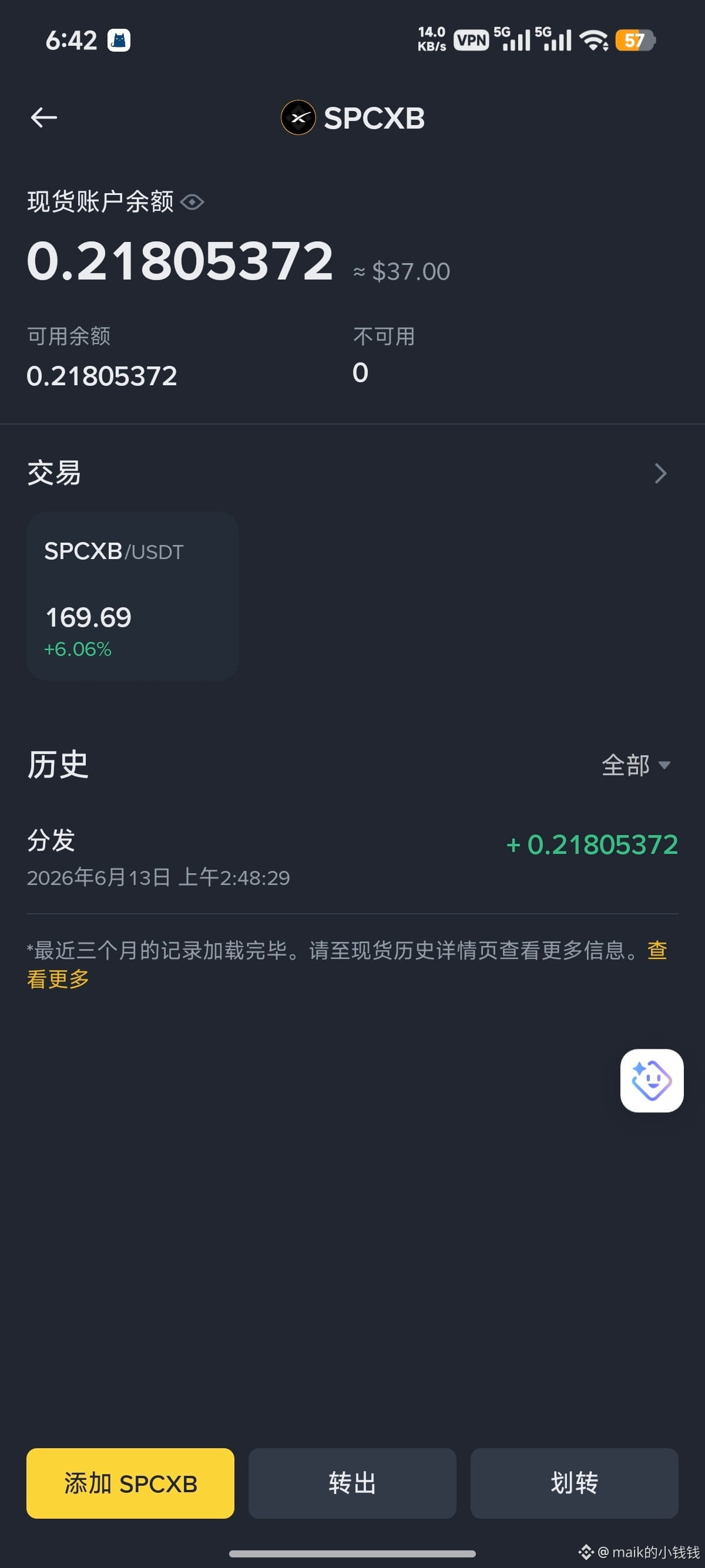
Got my hands on SPCX stock like this, Binance distributed $1M worth of SPCX to every participant, valued at $37.
Even though I couldn't get in on this IPO due to force majeure, they still dropped a compensation reward. Gotta respect Binance's big league move! 🤝 Sometimes you gotta think twice before losing cash; sometimes you just gotta FOMO in to bag those gains! 🤣
Got my hands on SPCX stock like this, Binance distributed $1M worth of SPCX to every participant, valued at $37.
Even though I couldn't get in on this IPO due to force majeure, they still dropped a compensation reward. Gotta respect Binance's big league move! 🤝 Sometimes you gotta think twice before losing cash; sometimes you just gotta FOMO in to bag those gains! 🤣
Even though I couldn't get in on this IPO due to force majeure, they still dropped a compensation reward. Gotta respect Binance's big league move! 🤝 Sometimes you gotta think twice before losing cash; sometimes you just gotta FOMO in to bag those gains! 🤣
3
3
7.1k
·
--
A lot of folks have noticed something new—Uniswap V4's Hooks. Why is MaiK talking about it? Because this concept might lead to some serious action.
What are V4 Hooks?—My understanding is that they’re performance enhancers.
The official definition of hooks is a modular plugin.
To make it easy to grasp, UniSwap has opened a slot for itself, allowing developers to install custom plugins to boost the functionality of the originally fixed pools.
The core of UniSwap revolves around AMM pools, and hooks play their role during specific timeframes (liquidity pools, swaps, fees, liquidity providers).
What can V4 Hooks achieve? For example, in Uniswap V2/V3, fees are fixed, but V4 can have dynamic fees.
Let’s break it down:
In V2/V3, the fixed fee is 0.3%, and during market spikes or drops, liquidity providers can easily take a hit.
What can V4 Hooks do?
Developers can write a Hook contract linked to a specific Uniswap pool, triggered before a trade. The Hook automatically assesses the current situation: if the market is calm, the fee drops to 0.05% (encouraging more trades). If the market is volatile, the fee rises to 1% (protecting LPs from bigger losses).
The essence of Hooks can be summed up in one line: inserting custom logic during trading/liquidity provision and other critical moments to achieve dynamic fee rates, automatic rewards for limit orders, custom curves, and other advanced features (the official source lists 8 types of what Hooks can do; due to space constraints, I won’t elaborate further, but feel free to check it out).
A lot of folks have noticed something new—Uniswap V4's Hooks. Why is MaiK talking about it? Because this concept might lead to some serious action.
What are V4 Hooks?—My understanding is that they’re performance enhancers.
The official definition of hooks is a modular plugin.
To make it easy to grasp, UniSwap has opened a slot for itself, allowing developers to install custom plugins to boost the functionality of the originally fixed pools.
The core of UniSwap revolves around AMM pools, and hooks play their role during specific timeframes (liquidity pools, swaps, fees, liquidity providers).
What can V4 Hooks achieve? For example, in Uniswap V2/V3, fees are fixed, but V4 can have dynamic fees.
Let’s break it down:
In V2/V3, the fixed fee is 0.3%, and during market spikes or drops, liquidity providers can easily take a hit.
What can V4 Hooks do?
Developers can write a Hook contract linked to a specific Uniswap pool, triggered before a trade. The Hook automatically assesses the current situation: if the market is calm, the fee drops to 0.05% (encouraging more trades). If the market is volatile, the fee rises to 1% (protecting LPs from bigger losses).
The essence of Hooks can be summed up in one line: inserting custom logic during trading/liquidity provision and other critical moments to achieve dynamic fee rates, automatic rewards for limit orders, custom curves, and other advanced features (the official source lists 8 types of what Hooks can do; due to space constraints, I won’t elaborate further, but feel free to check it out).
What are V4 Hooks?—My understanding is that they’re performance enhancers.
The official definition of hooks is a modular plugin.
To make it easy to grasp, UniSwap has opened a slot for itself, allowing developers to install custom plugins to boost the functionality of the originally fixed pools.
The core of UniSwap revolves around AMM pools, and hooks play their role during specific timeframes (liquidity pools, swaps, fees, liquidity providers).
What can V4 Hooks achieve? For example, in Uniswap V2/V3, fees are fixed, but V4 can have dynamic fees.
Let’s break it down:
In V2/V3, the fixed fee is 0.3%, and during market spikes or drops, liquidity providers can easily take a hit.
What can V4 Hooks do?
Developers can write a Hook contract linked to a specific Uniswap pool, triggered before a trade. The Hook automatically assesses the current situation: if the market is calm, the fee drops to 0.05% (encouraging more trades). If the market is volatile, the fee rises to 1% (protecting LPs from bigger losses).
The essence of Hooks can be summed up in one line: inserting custom logic during trading/liquidity provision and other critical moments to achieve dynamic fee rates, automatic rewards for limit orders, custom curves, and other advanced features (the official source lists 8 types of what Hooks can do; due to space constraints, I won’t elaborate further, but feel free to check it out).

524
·
--
Verified
A lot of folks haven't really grasped the logic behind the recent rise of $HYPE . Let me break down the logic for you: my conclusion is that HYPE is way more than just the 1.0 version of an on-chain contract trading platform. Why have A16Z and OG whales been stacking up recently? I think it’s totally different from the previous logic. First, consider what’s been happening with HYPE lately? Right, they rolled out contracts for some real-world AI giants in a Pre-IPO phase (like SpaceX and the earlier Cerebras) — this touches the core of traditional finance — the power of asset pricing. Traditionally, crypto trading platforms have focused on the cryptocurrency itself, but HYPE is doing something different by moving core traditional financial assets onto the chain (the key is that the indicators HYPE is working on have shown some serious firepower, with logic and expected effects performing exceptionally well).
This is why the Americans' ICE and CME are starting to sweat and want to regulate HYPE, filing suits with the CFTC and lobbying the government (the price discovery of risk assets is no longer controlled by traditional trading institutions; think about how terrifying that is for them, especially as they keep losing users and draining liquidity. Plus, crypto trading platforms operate 24/7).
If this keeps going, will all sorts of global assets start moving onto the chain and begin to detach from traditional trading times, meaning the power of pricing could slowly be stripped away by the blockchain? Could the traditional financial system be dismantled? Consequently, the current financial structure could be reshaped. This isn’t just a story; it’s something that could really happen.
Some people like to compare $BNB and $HYPE . BNB's value comes from the growth of platform users' trading and token utility, which falls under platform asset categories. But what does Hyperliquid represent? — a DEX for contracts plus traditional financial infrastructure on-chain. It has platform asset attributes too, but there's another layer; what's unique is that it brings continuous on-chain transformation of global traditional financial assets (right now it's pre-market US stocks, and later there will be more asset categories on-chain — that's the bigger narrative. Correspondingly, the token HYPE not only shares platform asset traits with BNB (and I’m definitely not trying to downplay BNB here) but also adds a core element — the value reflection brought by traditional financial infrastructure on-chain. Personally, I think this is why these institutions are continuously stacking up.
A lot of folks haven't really grasped the logic behind the recent rise of $HYPE . Let me break down the logic for you: my conclusion is that HYPE is way more than just the 1.0 version of an on-chain contract trading platform. Why have A16Z and OG whales been stacking up recently? I think it’s totally different from the previous logic. First, consider what’s been happening with HYPE lately? Right, they rolled out contracts for some real-world AI giants in a Pre-IPO phase (like SpaceX and the earlier Cerebras) — this touches the core of traditional finance — the power of asset pricing. Traditionally, crypto trading platforms have focused on the cryptocurrency itself, but HYPE is doing something different by moving core traditional financial assets onto the chain (the key is that the indicators HYPE is working on have shown some serious firepower, with logic and expected effects performing exceptionally well).
This is why the Americans' ICE and CME are starting to sweat and want to regulate HYPE, filing suits with the CFTC and lobbying the government (the price discovery of risk assets is no longer controlled by traditional trading institutions; think about how terrifying that is for them, especially as they keep losing users and draining liquidity. Plus, crypto trading platforms operate 24/7).
If this keeps going, will all sorts of global assets start moving onto the chain and begin to detach from traditional trading times, meaning the power of pricing could slowly be stripped away by the blockchain? Could the traditional financial system be dismantled? Consequently, the current financial structure could be reshaped. This isn’t just a story; it’s something that could really happen.
Some people like to compare $BNB and $HYPE . BNB's value comes from the growth of platform users' trading and token utility, which falls under platform asset categories. But what does Hyperliquid represent? — a DEX for contracts plus traditional financial infrastructure on-chain. It has platform asset attributes too, but there's another layer; what's unique is that it brings continuous on-chain transformation of global traditional financial assets (right now it's pre-market US stocks, and later there will be more asset categories on-chain — that's the bigger narrative. Correspondingly, the token HYPE not only shares platform asset traits with BNB (and I’m definitely not trying to downplay BNB here) but also adds a core element — the value reflection brought by traditional financial infrastructure on-chain. Personally, I think this is why these institutions are continuously stacking up.
This is why the Americans' ICE and CME are starting to sweat and want to regulate HYPE, filing suits with the CFTC and lobbying the government (the price discovery of risk assets is no longer controlled by traditional trading institutions; think about how terrifying that is for them, especially as they keep losing users and draining liquidity. Plus, crypto trading platforms operate 24/7).
If this keeps going, will all sorts of global assets start moving onto the chain and begin to detach from traditional trading times, meaning the power of pricing could slowly be stripped away by the blockchain? Could the traditional financial system be dismantled? Consequently, the current financial structure could be reshaped. This isn’t just a story; it’s something that could really happen.
Some people like to compare $BNB and $HYPE . BNB's value comes from the growth of platform users' trading and token utility, which falls under platform asset categories. But what does Hyperliquid represent? — a DEX for contracts plus traditional financial infrastructure on-chain. It has platform asset attributes too, but there's another layer; what's unique is that it brings continuous on-chain transformation of global traditional financial assets (right now it's pre-market US stocks, and later there will be more asset categories on-chain — that's the bigger narrative. Correspondingly, the token HYPE not only shares platform asset traits with BNB (and I’m definitely not trying to downplay BNB here) but also adds a core element — the value reflection brought by traditional financial infrastructure on-chain. Personally, I think this is why these institutions are continuously stacking up.
1
2.4k
·
--
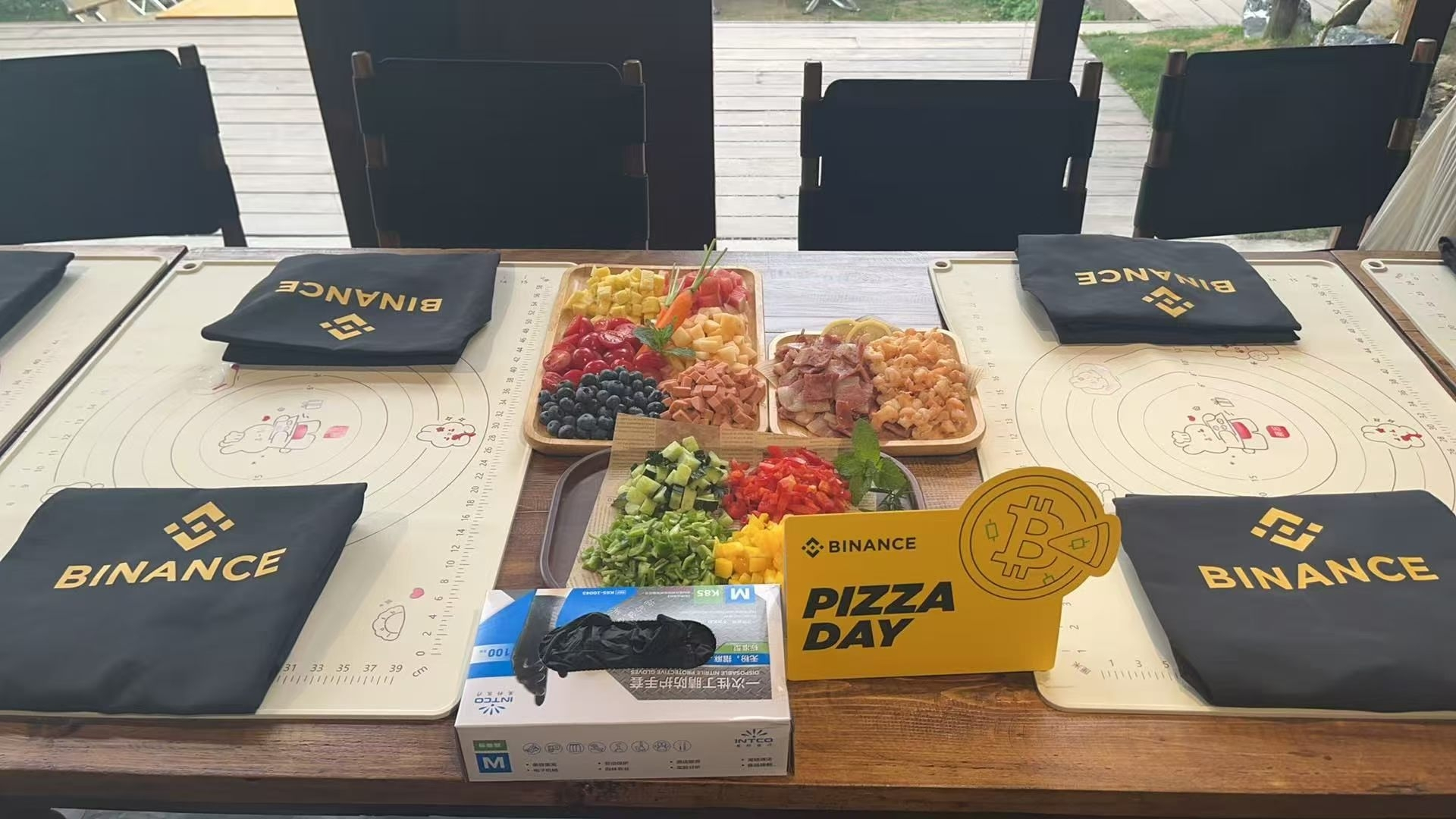
Today I joined the Binance @binancezh offline PIZZA DAY, had a blast like a 10-year-old kid. I fed and rode the horse, planted some veggies, and even made a pizza myself. I can only say it was a total win, delicious 😎
#BinancePizzaFest
Today I joined the Binance @binancezh offline PIZZA DAY, had a blast like a 10-year-old kid. I fed and rode the horse, planted some veggies, and even made a pizza myself. I can only say it was a total win, delicious 😎
#BinancePizzaFest
#BinancePizzaFest



1
240
·
--
Verified
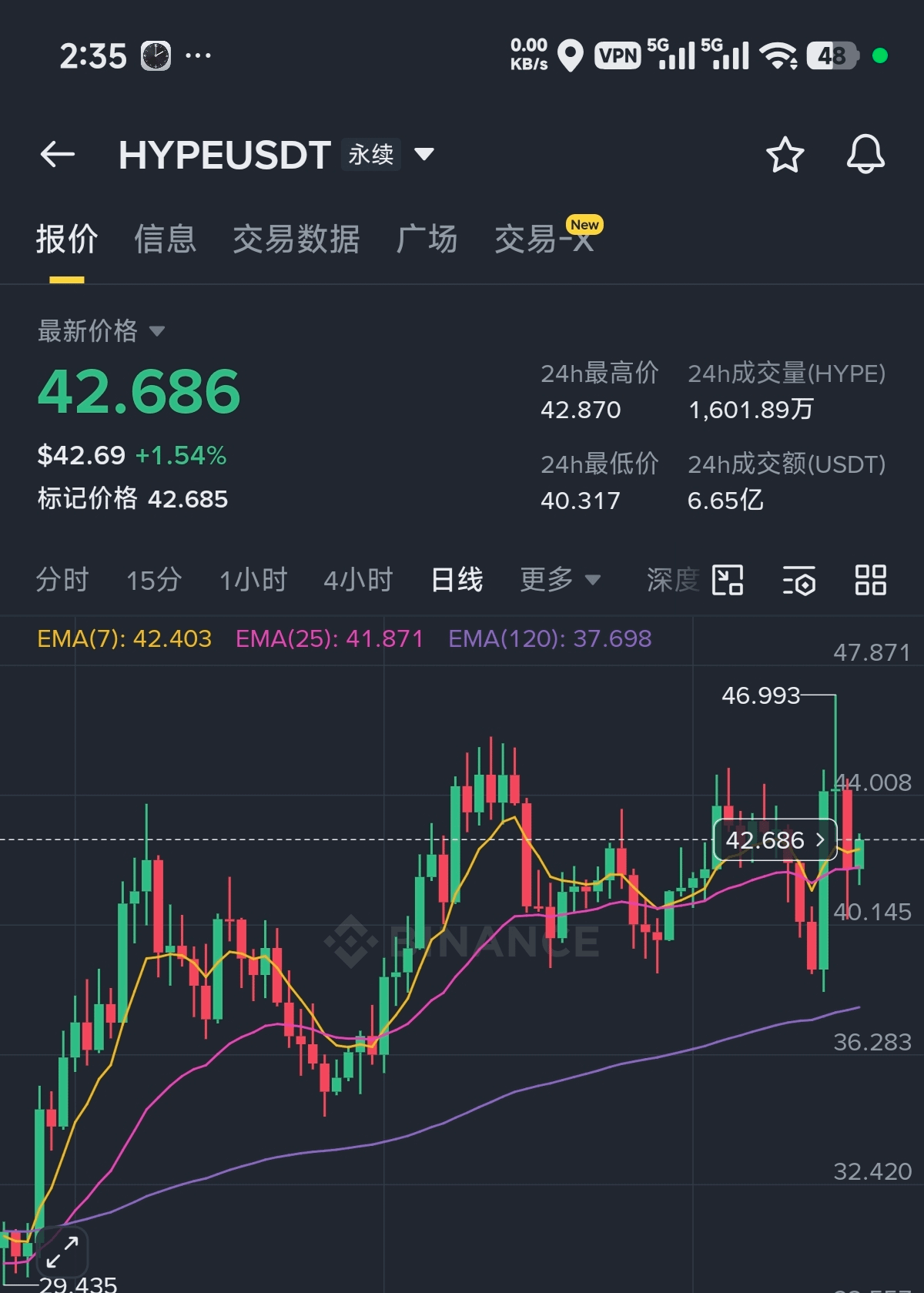
$HYPE is under investigation, and I think the core issue is that it's messing with the slice of the traditional financial derivatives market in the US. The user base and liquidity are growing, and cutting off cash flow is a big deal—if not HYPE, then who?
If HYPE can navigate through this mess smoothly, hitting $100 is just around the corner.
As for the future trajectory, I don't think Hyperliquid can be completely shut down.
In the short term, the likely outcome is that HYPE's price will definitely swing (we're already seeing a drop).
If the CFTC follows up on this, strong regulations could come in, limiting access for US users.
$HYPE is under investigation, and I think the core issue is that it's messing with the slice of the traditional financial derivatives market in the US. The user base and liquidity are growing, and cutting off cash flow is a big deal—if not HYPE, then who?
If HYPE can navigate through this mess smoothly, hitting $100 is just around the corner.
As for the future trajectory, I don't think Hyperliquid can be completely shut down.
In the short term, the likely outcome is that HYPE's price will definitely swing (we're already seeing a drop).
If the CFTC follows up on this, strong regulations could come in, limiting access for US users.
If HYPE can navigate through this mess smoothly, hitting $100 is just around the corner.
As for the future trajectory, I don't think Hyperliquid can be completely shut down.
In the short term, the likely outcome is that HYPE's price will definitely swing (we're already seeing a drop).
If the CFTC follows up on this, strong regulations could come in, limiting access for US users.
1
8
8k
·
--
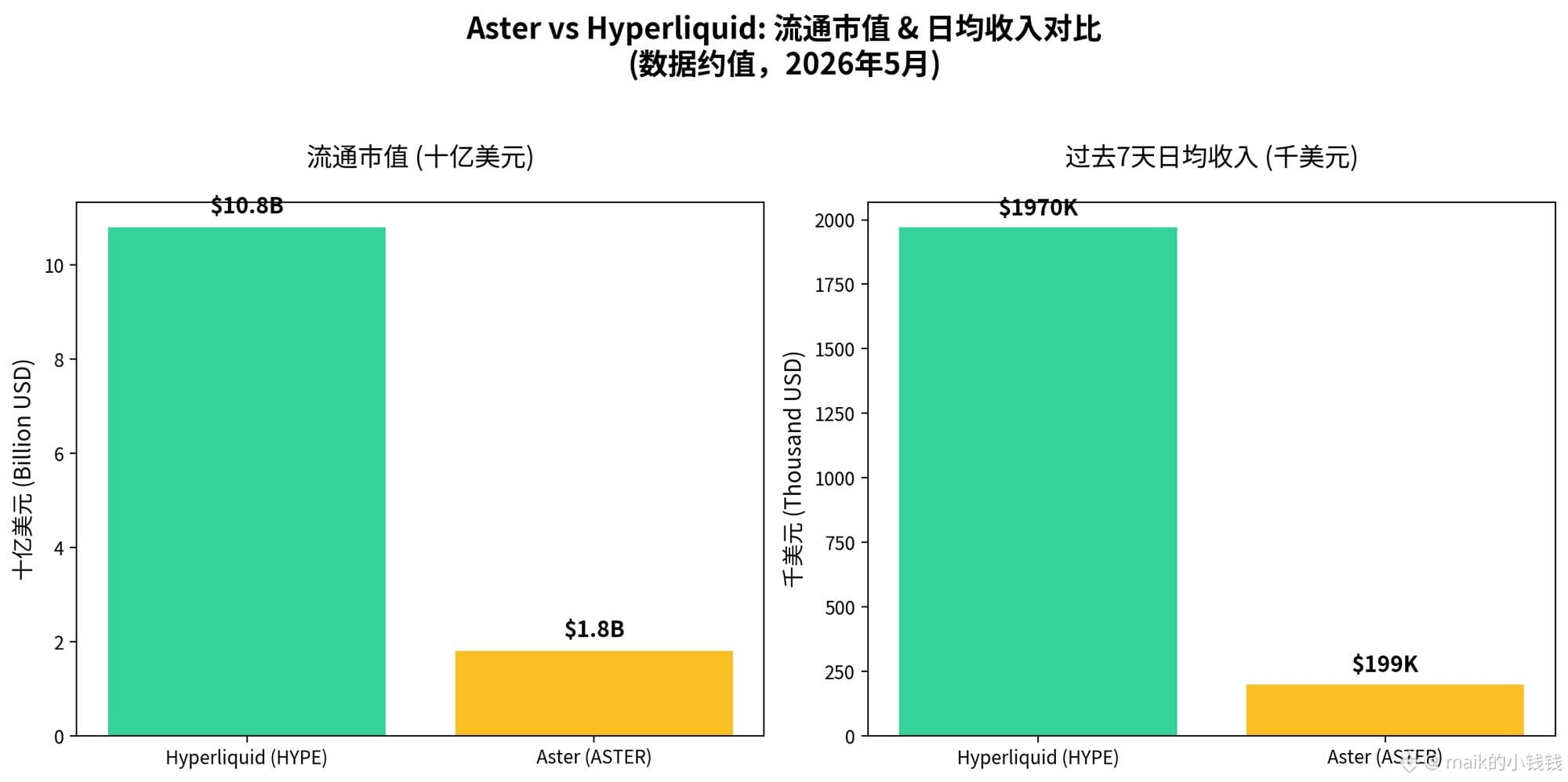
The entry price for ASTER seems off right now. Core data comparison with $HYPE reveals some interesting insights (for reference only).
Currently, on-chain contract rankings: HYPE is first, ASTER is second, but the data between them is vastly different.
Platform income — a 9.5x difference.
Hyperliquid has a daily trading volume of about $5.8 billion, translating to a fee income of $1.9 million.
ASTER's daily trading volume is $1.6 billion, with an average income of $200,000.
(The above data is derived from a comprehensive overview of the last 7 days.)
Buyback mechanism:
Hyperliquid uses almost all (97%-100%) of its income for buybacks to burn HYPE.
ASTER calculates about 70% of its income for buybacks, but only half of the repurchased tokens are burned; the other half is used for incentive airdrops. In reality, only 35% of the income is used to burn tokens, making the burn ratio of HYPE 2.7 times that of ASTER.
Current circulating market cap comparison shows a 6.1x difference:
HYPE's circulating market cap is $11 billion.
ASTER's circulating market cap is $1.8 billion.
The multiple difference in platform income combined with the buyback mechanism suggests that the premium for leading projects likely exceeds a 6.1x gap.
Personal opinion: The multiplicative factors here aren't just additive or multiplicative. Overall, I feel the gap exceeds 6.1x. Therefore, considering purely data comparisons without other variable factors (like CZ's influence early on, Binance's support, etc.), ASTER's current price isn't ideal.
The entry price for ASTER seems off right now. Core data comparison with $HYPE reveals some interesting insights (for reference only).
Currently, on-chain contract rankings: HYPE is first, ASTER is second, but the data between them is vastly different.
Platform income — a 9.5x difference.
Hyperliquid has a daily trading volume of about $5.8 billion, translating to a fee income of $1.9 million.
ASTER's daily trading volume is $1.6 billion, with an average income of $200,000.
(The above data is derived from a comprehensive overview of the last 7 days.)
Buyback mechanism:
Hyperliquid uses almost all (97%-100%) of its income for buybacks to burn HYPE.
ASTER calculates about 70% of its income for buybacks, but only half of the repurchased tokens are burned; the other half is used for incentive airdrops. In reality, only 35% of the income is used to burn tokens, making the burn ratio of HYPE 2.7 times that of ASTER.
Current circulating market cap comparison shows a 6.1x difference:
HYPE's circulating market cap is $11 billion.
ASTER's circulating market cap is $1.8 billion.
The multiple difference in platform income combined with the buyback mechanism suggests that the premium for leading projects likely exceeds a 6.1x gap.
Personal opinion: The multiplicative factors here aren't just additive or multiplicative. Overall, I feel the gap exceeds 6.1x. Therefore, considering purely data comparisons without other variable factors (like CZ's influence early on, Binance's support, etc.), ASTER's current price isn't ideal.
Currently, on-chain contract rankings: HYPE is first, ASTER is second, but the data between them is vastly different.
Platform income — a 9.5x difference.
Hyperliquid has a daily trading volume of about $5.8 billion, translating to a fee income of $1.9 million.
ASTER's daily trading volume is $1.6 billion, with an average income of $200,000.
(The above data is derived from a comprehensive overview of the last 7 days.)
Buyback mechanism:
Hyperliquid uses almost all (97%-100%) of its income for buybacks to burn HYPE.
ASTER calculates about 70% of its income for buybacks, but only half of the repurchased tokens are burned; the other half is used for incentive airdrops. In reality, only 35% of the income is used to burn tokens, making the burn ratio of HYPE 2.7 times that of ASTER.
Current circulating market cap comparison shows a 6.1x difference:
HYPE's circulating market cap is $11 billion.
ASTER's circulating market cap is $1.8 billion.
The multiple difference in platform income combined with the buyback mechanism suggests that the premium for leading projects likely exceeds a 6.1x gap.
Personal opinion: The multiplicative factors here aren't just additive or multiplicative. Overall, I feel the gap exceeds 6.1x. Therefore, considering purely data comparisons without other variable factors (like CZ's influence early on, Binance's support, etc.), ASTER's current price isn't ideal.
1
3
4.6k
·
--
Feeling a bit anxious, what's going on?
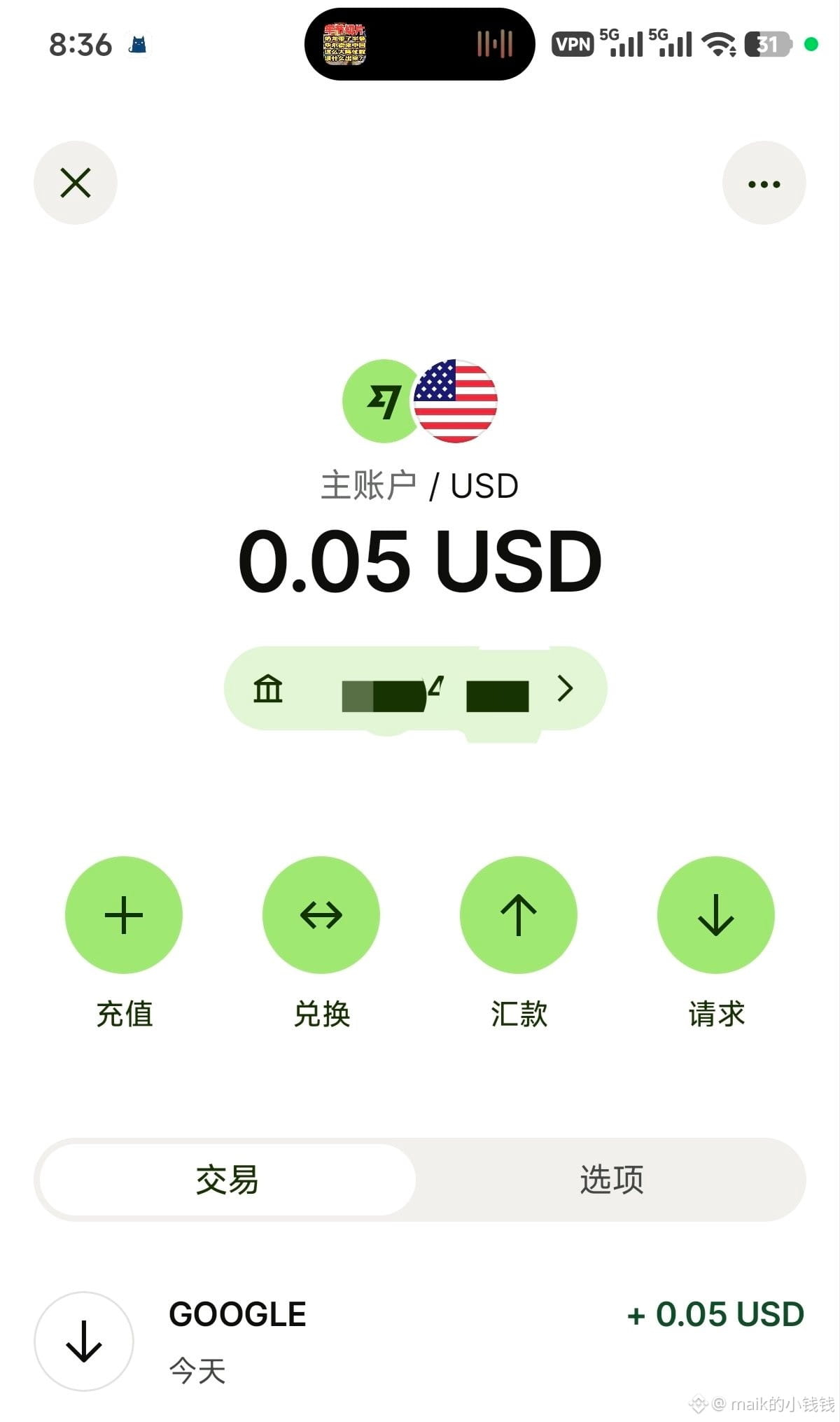
Why is Google transferring to my Wise US account? It's a bit sketchy, we don't have any business dealings.
Feeling a bit anxious, what's going on?
Why is Google transferring to my Wise US account? It's a bit sketchy, we don't have any business dealings.
Why is Google transferring to my Wise US account? It's a bit sketchy, we don't have any business dealings.
2
2.8k
·
--
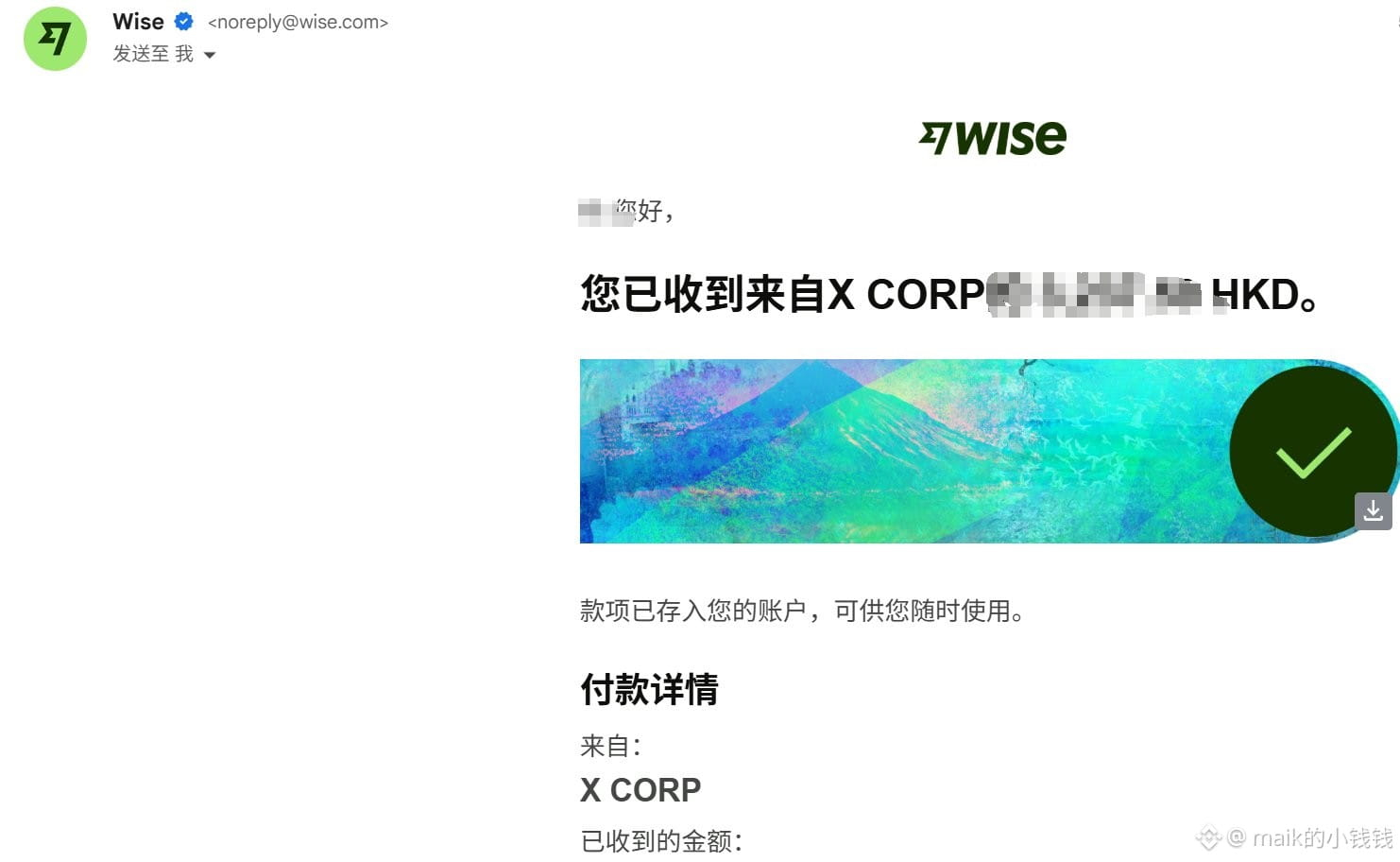
The Wise card is finally up and running! Let me share some insights: domestic users can successfully get the card to receive X Twitter earnings. If you don't have a foreign card and can't go to Hong Kong to open a bank account, you can get a Wise card using your domestic ID. It's now possible to process this with a local ID (just download the app and follow the usual steps). When setting up your Hong Kong account, there might be a 1-2 month delay for processing. During this time, contact customer support via email to expedite the card opening process. (For Wise card identity verification, make sure to take your photo in good natural lighting.)
To set up your Twitter payment account (Hong Kong dollar account), fill in a normal Hong Kong address (find one online) and select the W-8/W-9 tax form. As for the provincial ID verification, just fill it out as you normally would in your home country.
When choosing your bank address, to find your corresponding branch, simply enter your bank branch code, and you’ll be able to locate the correct bank below.
The Wise card is finally up and running! Let me share some insights: domestic users can successfully get the card to receive X Twitter earnings. If you don't have a foreign card and can't go to Hong Kong to open a bank account, you can get a Wise card using your domestic ID. It's now possible to process this with a local ID (just download the app and follow the usual steps). When setting up your Hong Kong account, there might be a 1-2 month delay for processing. During this time, contact customer support via email to expedite the card opening process. (For Wise card identity verification, make sure to take your photo in good natural lighting.)
To set up your Twitter payment account (Hong Kong dollar account), fill in a normal Hong Kong address (find one online) and select the W-8/W-9 tax form. As for the provincial ID verification, just fill it out as you normally would in your home country.
When choosing your bank address, to find your corresponding branch, simply enter your bank branch code, and you’ll be able to locate the correct bank below.
To set up your Twitter payment account (Hong Kong dollar account), fill in a normal Hong Kong address (find one online) and select the W-8/W-9 tax form. As for the provincial ID verification, just fill it out as you normally would in your home country.
When choosing your bank address, to find your corresponding branch, simply enter your bank branch code, and you’ll be able to locate the correct bank below.
4
10
5.2k
·
--
Binance just launched a withdrawal protection feature, and everyone really needs to know how to activate it; I think it could be a lifesaver in emergency situations.
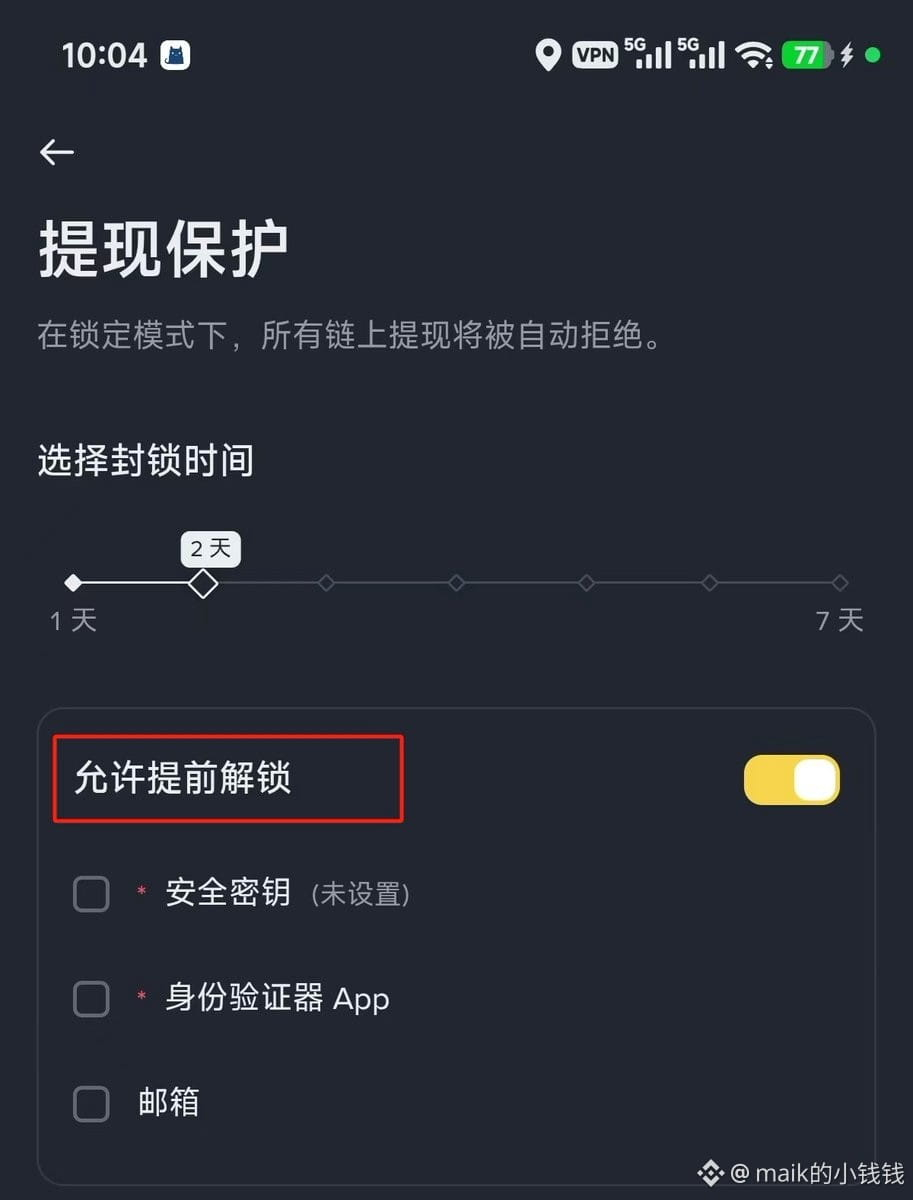
Once withdrawal protection is activated, no one can touch your assets. Setting a lock period of 1-7 days means all on-chain withdrawals can be intercepted, and during this time, hackers, including Binance, can't unlock it.
How to activate withdrawal protection: top left menu → account avatar → account security → withdrawal protection → set lock period.
Of course, this allows for early unlocking (input security key + authenticator).
It's like getting the best of both worlds: flexibility and strict security, and other functions like trading and holding won’t be affected at all.
#Binance has always been committed to a user-centric philosophy, prioritizing the security of funds as a fundamental infrastructure rather than just chasing innovation. I think everyone can see this; I've also put a significant portion of my assets on Binance to earn various yields, and I feel secure.
The core pain point of crypto asset theft has never been a lack of warnings but a lack of time. Passwords + 2FA can fend off remote attacks, but they can’t stop scammers, Trojans, or even personal threats that could drain funds in just a few minutes. #Binance is tackling these real issues by addressing users' most genuine pain points, combining layers of protection like withdrawal whitelists, access keys, and anti-phishing codes to embed security deep within the platform, allowing users to confidently entrust their assets to it.
Security has never been about luck; it’s a robust platform system diligently guarding the gates.
Binance just launched a withdrawal protection feature, and everyone really needs to know how to activate it; I think it could be a lifesaver in emergency situations.
Once withdrawal protection is activated, no one can touch your assets. Setting a lock period of 1-7 days means all on-chain withdrawals can be intercepted, and during this time, hackers, including Binance, can't unlock it.
How to activate withdrawal protection: top left menu → account avatar → account security → withdrawal protection → set lock period.
Of course, this allows for early unlocking (input security key + authenticator).
It's like getting the best of both worlds: flexibility and strict security, and other functions like trading and holding won’t be affected at all.
#Binance has always been committed to a user-centric philosophy, prioritizing the security of funds as a fundamental infrastructure rather than just chasing innovation. I think everyone can see this; I've also put a significant portion of my assets on Binance to earn various yields, and I feel secure.
The core pain point of crypto asset theft has never been a lack of warnings but a lack of time. Passwords + 2FA can fend off remote attacks, but they can’t stop scammers, Trojans, or even personal threats that could drain funds in just a few minutes. #Binance is tackling these real issues by addressing users' most genuine pain points, combining layers of protection like withdrawal whitelists, access keys, and anti-phishing codes to embed security deep within the platform, allowing users to confidently entrust their assets to it.
Security has never been about luck; it’s a robust platform system diligently guarding the gates.
Once withdrawal protection is activated, no one can touch your assets. Setting a lock period of 1-7 days means all on-chain withdrawals can be intercepted, and during this time, hackers, including Binance, can't unlock it.
How to activate withdrawal protection: top left menu → account avatar → account security → withdrawal protection → set lock period.
Of course, this allows for early unlocking (input security key + authenticator).
It's like getting the best of both worlds: flexibility and strict security, and other functions like trading and holding won’t be affected at all.
#Binance has always been committed to a user-centric philosophy, prioritizing the security of funds as a fundamental infrastructure rather than just chasing innovation. I think everyone can see this; I've also put a significant portion of my assets on Binance to earn various yields, and I feel secure.
The core pain point of crypto asset theft has never been a lack of warnings but a lack of time. Passwords + 2FA can fend off remote attacks, but they can’t stop scammers, Trojans, or even personal threats that could drain funds in just a few minutes. #Binance is tackling these real issues by addressing users' most genuine pain points, combining layers of protection like withdrawal whitelists, access keys, and anti-phishing codes to embed security deep within the platform, allowing users to confidently entrust their assets to it.
Security has never been about luck; it’s a robust platform system diligently guarding the gates.
2
6
9.9k
·
--
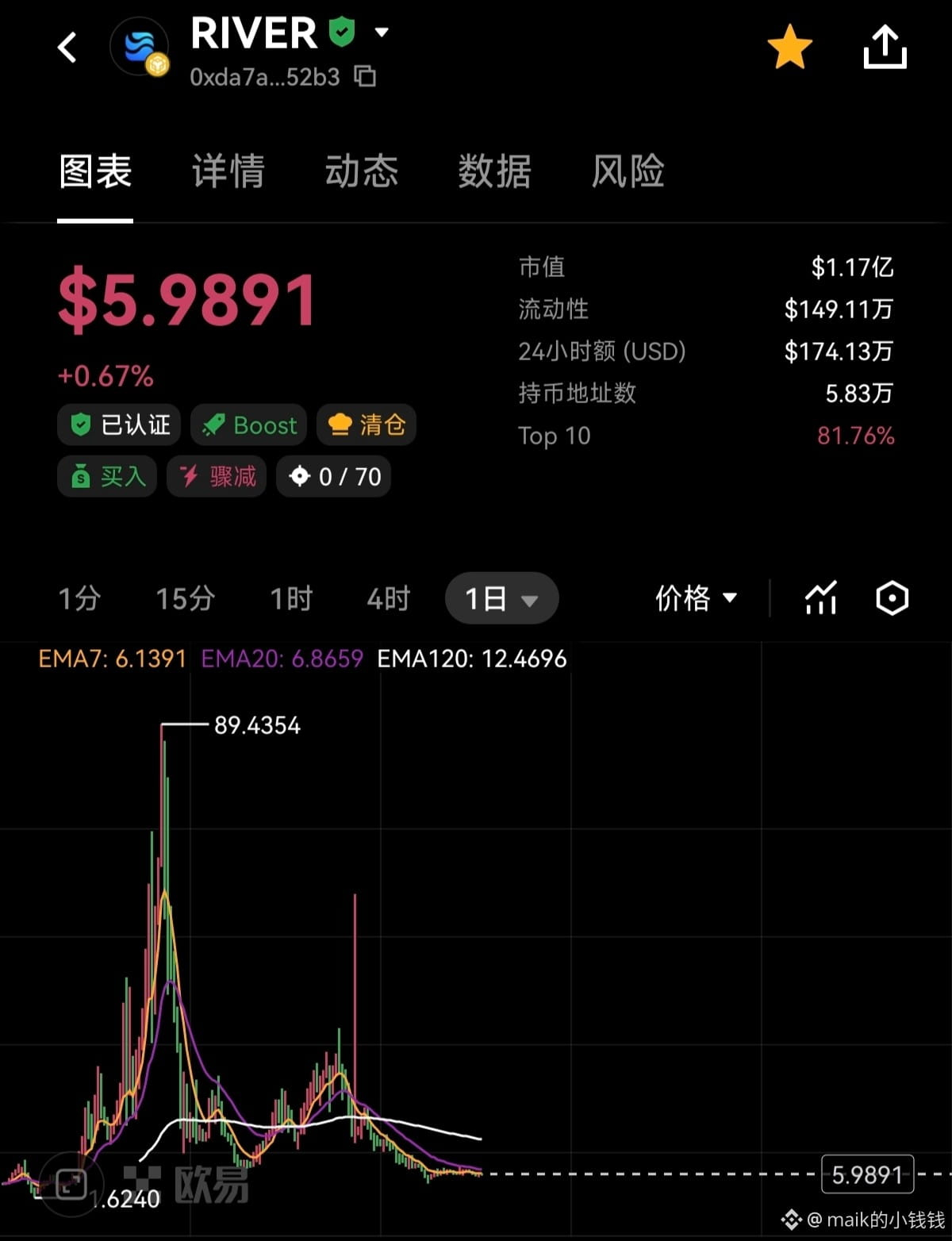
$$RIVER Doge whale, are you still going to pump? Promise me you won't abandon the market. RIVER's price action is getting weaker and weaker; where's that momentum you had when you pushed it to $89? Don't make me lose respect for you 🙈
$$RIVER Doge whale, are you still going to pump? Promise me you won't abandon the market. RIVER's price action is getting weaker and weaker; where's that momentum you had when you pushed it to $89? Don't make me lose respect for you 🙈
1
3
5.3k
·
--
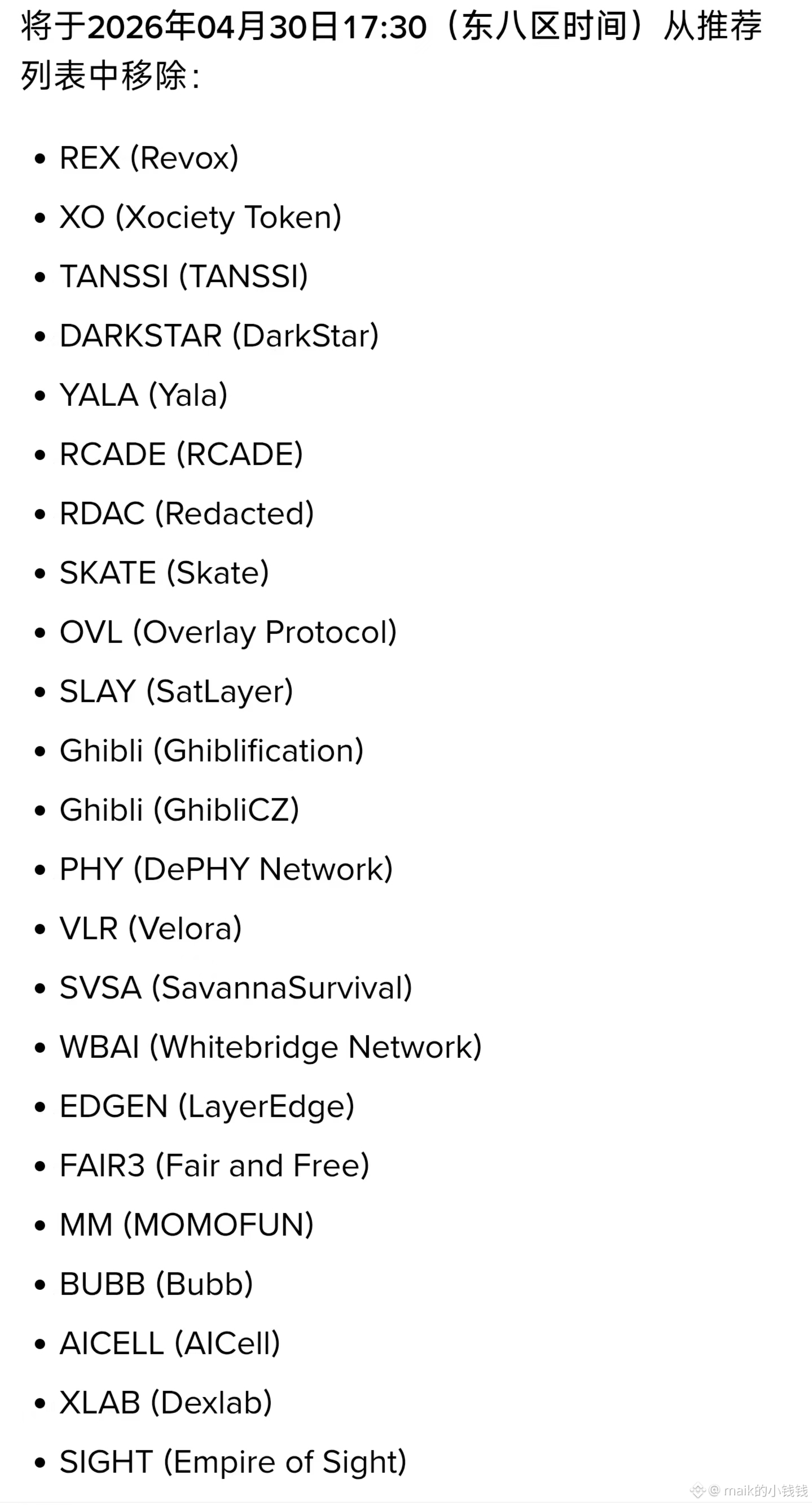
26 tokens delisted—let's see how many familiar faces are gone. I reckon a few people are well aware that hitting the exchange means the countdown to exit has begun. From day one on the exchange, the project team knows, the exchange knows, the investors know, but only us retail traders are left in the dark. This is the harsh reality of the current market.
26 tokens delisted—let's see how many familiar faces are gone. I reckon a few people are well aware that hitting the exchange means the countdown to exit has begun. From day one on the exchange, the project team knows, the exchange knows, the investors know, but only us retail traders are left in the dark. This is the harsh reality of the current market.
18
3
52
29.9k
·
--
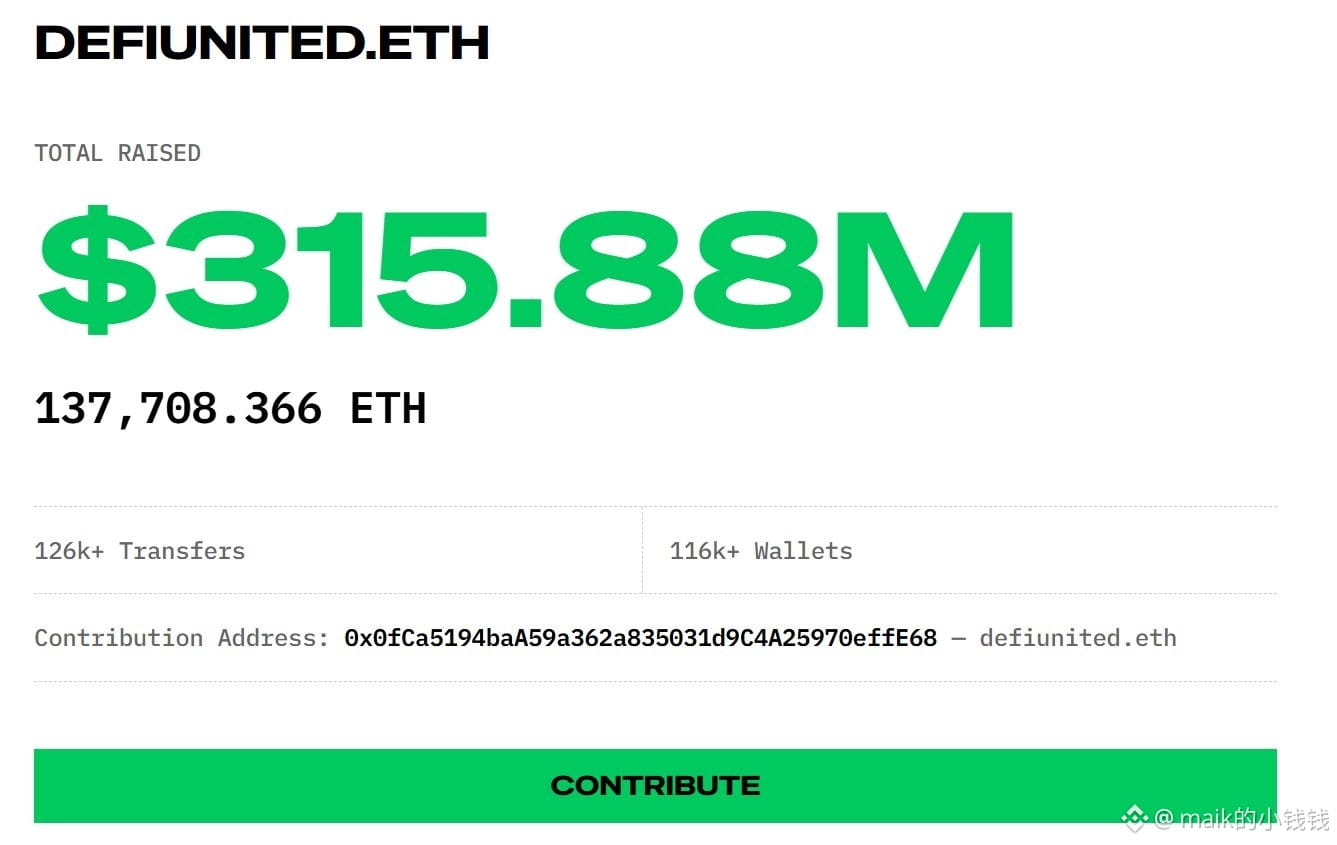
Already donated $315.88 million, $AAVE the crypto industry is still too rich. For potential airdrops, bots are working 24/7 pumping money into it. defiunited.world
Already donated $315.88 million, $AAVE the crypto industry is still too rich. For potential airdrops, bots are working 24/7 pumping money into it. defiunited.world
3
2
5.5k
·
--
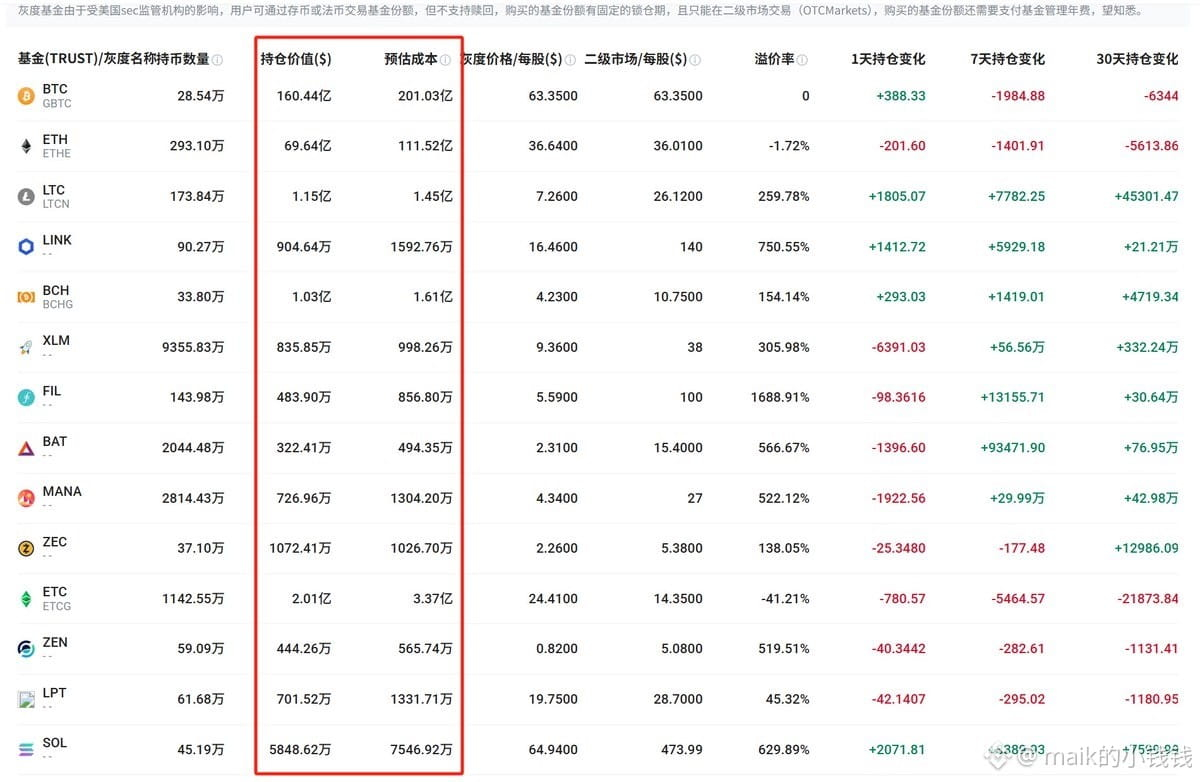
Grayscale is just another retail trader 🤣. I checked out Grayscale's holdings, and all 14 coins are sitting above their entry prices, losing over $4 billion. However, they've been stacking quite a few coins this month, like $SOL .
Grayscale is just another retail trader 🤣. I checked out Grayscale's holdings, and all 14 coins are sitting above their entry prices, losing over $4 billion. However, they've been stacking quite a few coins this month, like $SOL .
56
1
34
51.4k
Log in to explore more content
Join global crypto users on Binance Square
⚡️ Get latest and useful information about crypto.
💬 Trusted by the world’s largest crypto exchange.
👍 Discover real insights from verified creators.
Email / Phone number
Trending Topics
BitcoinReboundsTo$79K
23,450 views
226 Discussing
🚨 $BTC is pushing higher.
Bitcoin is trading around $78,804, up roughly 1.9%, after reclaiming the $78K area. The next level to watch is the intraday high near $78,905.
A clean break above that level could open the way toward $79K–$80K. If BTC gets rejected, support sits around $78,300, then $77,975.
Bulls have momentum, but BTC needs to hold above $78K.
#Bitcoin #BTC #CryptoTrading #CryptoMarket #CryptoAnalysis
PulseON
·19 Likes
·18.7k views
USDCOnChainVolumeTops$100Trillion
0 views
0 Discussing
BitcoinSpotETFsNetInflow$160M
797 views
51 Discussing