
罗尼交易指南
829 Posts

罗尼交易指南
Report
Block User
《罗尼交易指南》主理人 | 14年交易经验 | 专注投资者教育9年 | 纯裸K手工交易 | 精研交易心理学及价格行为学

原创之星
28 Following
5.1K+ Followers
2.7K+ Liked
1 Badges
Posts
All
Quotes
Videos
·
--
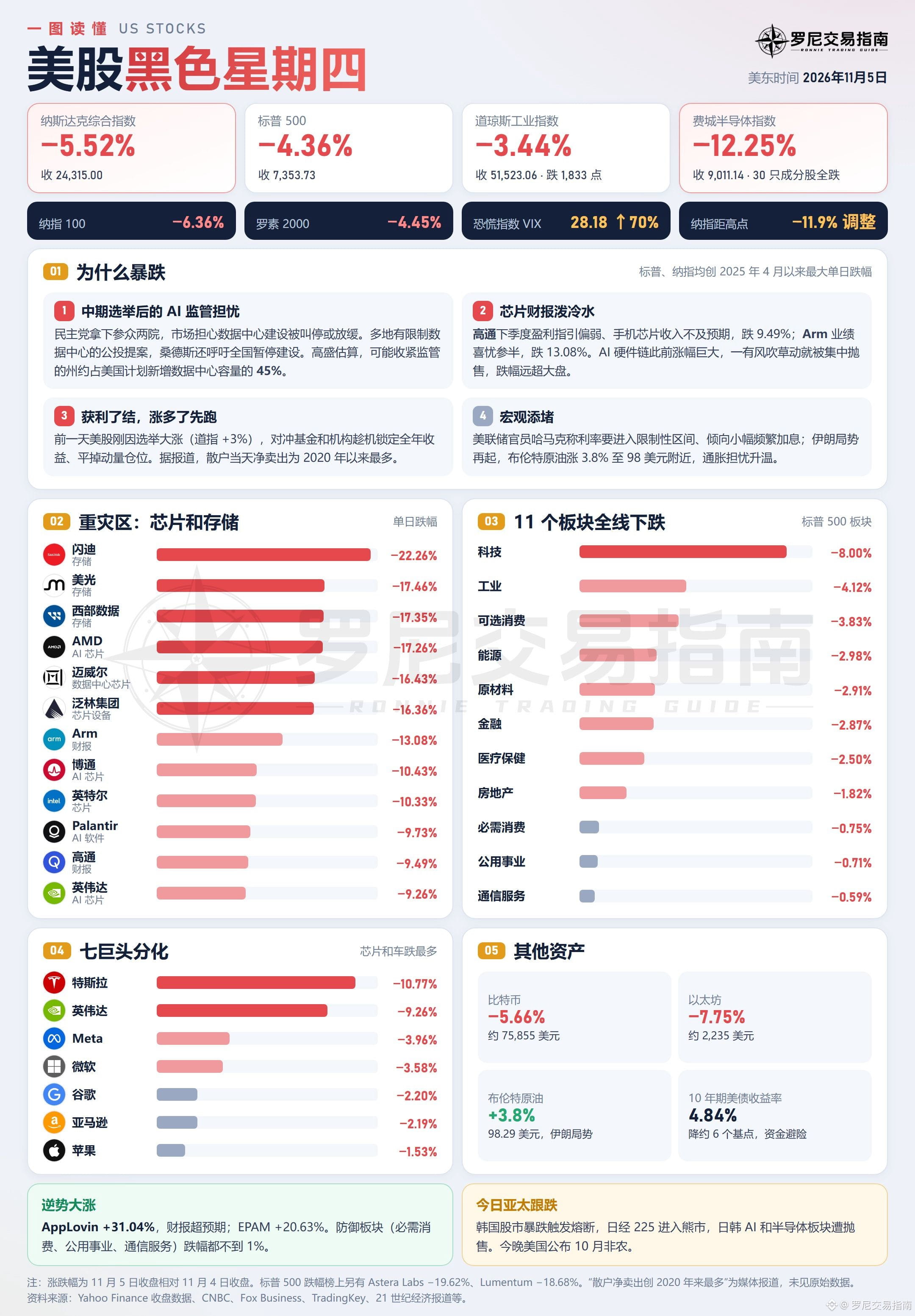
The day before yesterday, U.S. stocks were still celebrating the election results, with the Dow up 3%. Then last night, one brutal sell-off wiped out all those gains.
The Nasdaq fell 5.52%, the S&P 500 dropped 4.36%, and the Dow shed more than 1,800 points. It was the worst day since the tariff-driven plunge last April. The Nasdaq has now pulled back nearly 12% from its peak, officially entering correction territory.
Chips took the hardest hit. The Philadelphia Semiconductor Index plunged 12% in a single day, with all 30 of its components in the red. Memory stocks fared even worse: SanDisk fell 22%, Micron and Western Digital both dropped more than 17%, and AMD was down 17% too. Nvidia fell more than 9%, adding to its sizeable losses over the past few days.
The reason isn’t complicated. Democrats won both chambers of Congress, several states have proposals to restrict data centers, and Sanders has called for a nationwide pause on construction. Goldman Sachs estimates that states considering tighter regulations account for about half of the planned increase in U.S. data center capacity. AI stocks have surged so much over the past two years that the market fears those four words most: “construction is slowing.” Qualcomm and Arm also reported disappointing results, giving investors who had piled in after the previous day’s rally a reason to head for the exits.
Not everything fell. Apple was down just 1.5%, while defensive sectors such as consumer staples and utilities lost less than 1%. AppLovin beat earnings expectations and surged 31% against the trend. So this sell-off was mainly about deflating the AI hardware bubble, not everything crashing at once.
Crypto wasn’t spared either: Bitcoin fell more than 5%, returning to around 76,000. South Korea’s stock market triggered a circuit breaker this morning, and the Nikkei has also entered a bear market.
U.S. nonfarm payrolls are due at 21:30 tonight. In this climate, the market could magnify the impact of the data, good or bad. If you’re carrying a large position, be sure to manage your risk.#美股超话 #黄金 #美股暴跌 @luonijiepan
The day before yesterday, U.S. stocks were still celebrating the election results, with the Dow up 3%. Then last night, one brutal sell-off wiped out all those gains.
The Nasdaq fell 5.52%, the S&P 500 dropped 4.36%, and the Dow shed more than 1,800 points. It was the worst day since the tariff-driven plunge last April. The Nasdaq has now pulled back nearly 12% from its peak, officially entering correction territory.
Chips took the hardest hit. The Philadelphia Semiconductor Index plunged 12% in a single day, with all 30 of its components in the red. Memory stocks fared even worse: SanDisk fell 22%, Micron and Western Digital both dropped more than 17%, and AMD was down 17% too. Nvidia fell more than 9%, adding to its sizeable losses over the past few days.
The reason isn’t complicated. Democrats won both chambers of Congress, several states have proposals to restrict data centers, and Sanders has called for a nationwide pause on construction. Goldman Sachs estimates that states considering tighter regulations account for about half of the planned increase in U.S. data center capacity. AI stocks have surged so much over the past two years that the market fears those four words most: “construction is slowing.” Qualcomm and Arm also reported disappointing results, giving investors who had piled in after the previous day’s rally a reason to head for the exits.
Not everything fell. Apple was down just 1.5%, while defensive sectors such as consumer staples and utilities lost less than 1%. AppLovin beat earnings expectations and surged 31% against the trend. So this sell-off was mainly about deflating the AI hardware bubble, not everything crashing at once.
Crypto wasn’t spared either: Bitcoin fell more than 5%, returning to around 76,000. South Korea’s stock market triggered a circuit breaker this morning, and the Nikkei has also entered a bear market.
U.S. nonfarm payrolls are due at 21:30 tonight. In this climate, the market could magnify the impact of the data, good or bad. If you’re carrying a large position, be sure to manage your risk.#美股超话 #黄金 #美股暴跌 @罗尼交易指南
216
·
--
Bullish
Verified
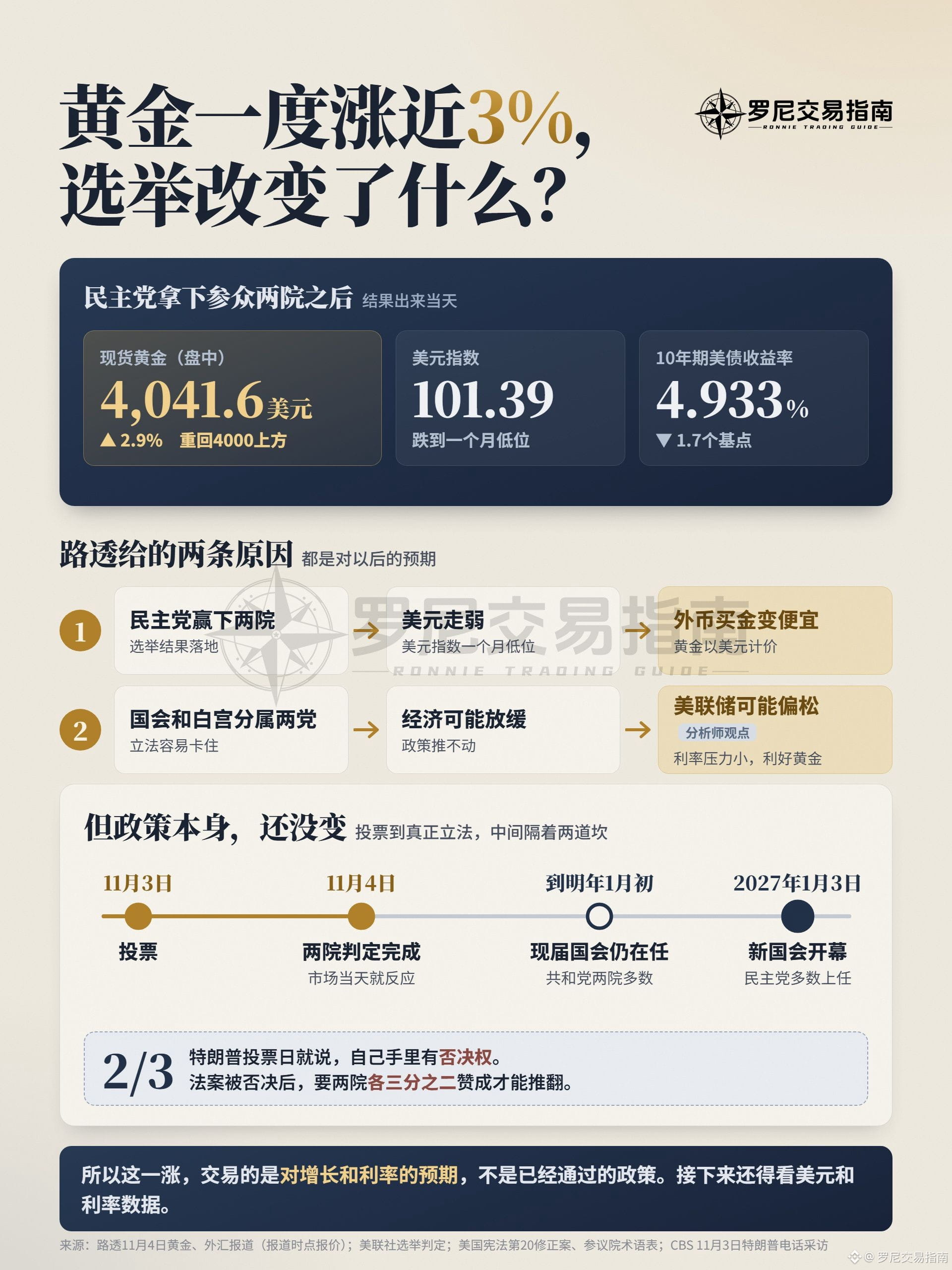
Gold briefly rose nearly 3%—what exactly did the election change?
In the U.S. midterm elections, Democrats won control of both the House and the Senate. On the day the results came in, spot gold rose as high as $4,041 intraday, up 2.9%, and climbed back above $4,000. The U.S. Dollar Index fell to a one-month low.
Reuters pointed to two main reasons: a weaker dollar made gold cheaper for buyers using other currencies; and with Congress and the White House controlled by different parties, legislation could stall, potentially slowing the economy. Some analysts believe this could make the Fed lean toward easing.
But policy itself hasn’t changed yet. The new Congress won’t convene until January 3 next year, and any bill would still have to get past Trump. On Election Day, he said he had veto power; overriding a veto requires a two-thirds majority in each chamber.
So this rally reflects expectations about future growth and interest rates, not policies that have already been enacted. From here, gold will still be watching the dollar and interest-rate data, including today’s nonfarm payrolls report. #黄金 @luonijiepan
Gold briefly rose nearly 3%—what exactly did the election change?
In the U.S. midterm elections, Democrats won control of both the House and the Senate. On the day the results came in, spot gold rose as high as $4,041 intraday, up 2.9%, and climbed back above $4,000. The U.S. Dollar Index fell to a one-month low.
Reuters pointed to two main reasons: a weaker dollar made gold cheaper for buyers using other currencies; and with Congress and the White House controlled by different parties, legislation could stall, potentially slowing the economy. Some analysts believe this could make the Fed lean toward easing.
But policy itself hasn’t changed yet. The new Congress won’t convene until January 3 next year, and any bill would still have to get past Trump. On Election Day, he said he had veto power; overriding a veto requires a two-thirds majority in each chamber.
So this rally reflects expectations about future growth and interest rates, not policies that have already been enacted. From here, gold will still be watching the dollar and interest-rate data, including today’s nonfarm payrolls report. #黄金 @罗尼交易指南
4
25
3.4k
·
--
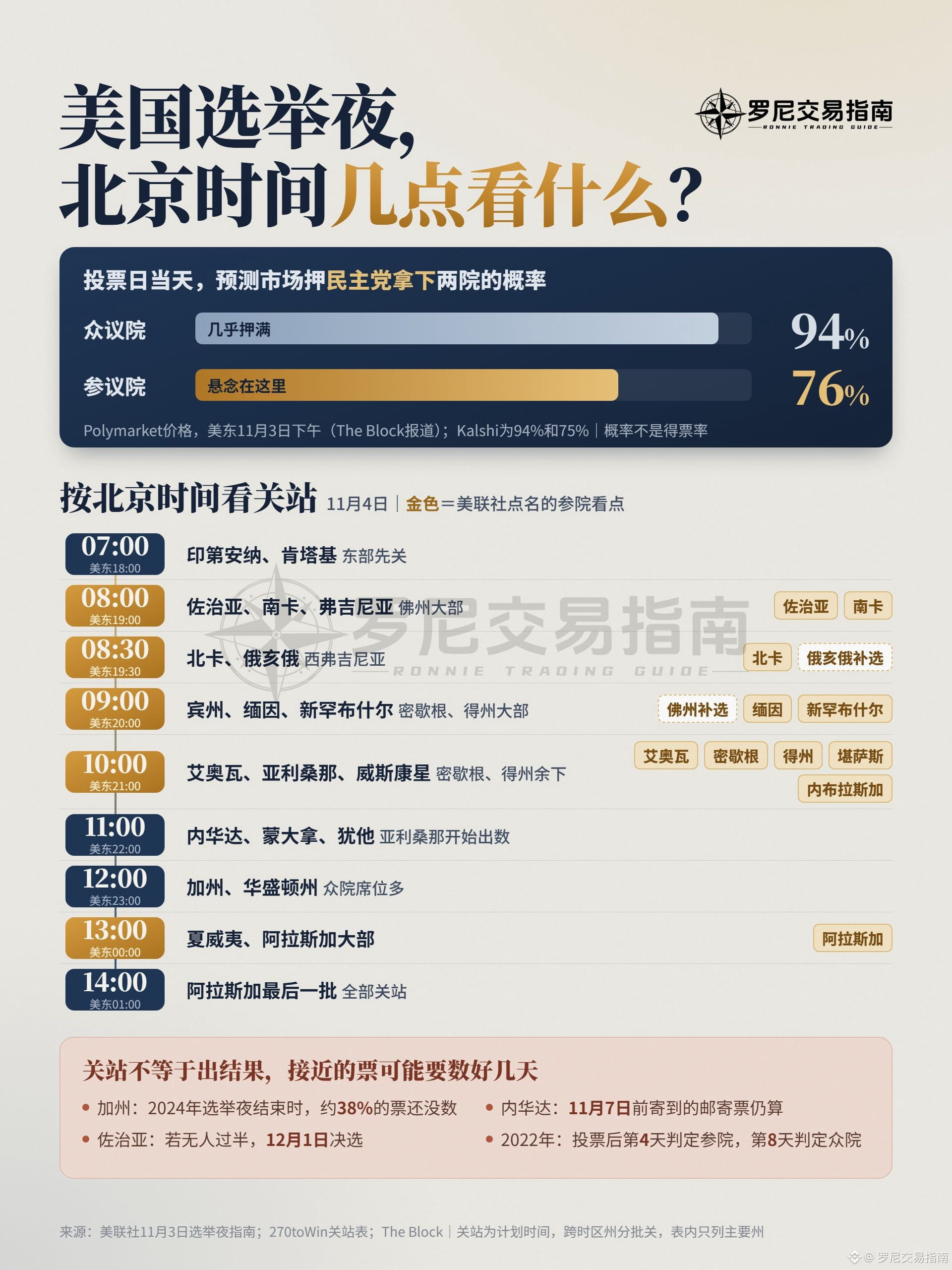
U.S. Election Night: What to Watch, and When, Beijing Time?
The U.S. midterm elections are being counted today. At 8 a.m. Beijing time, polls close first in Georgia and Virginia; between 8:30 and 10 a.m., polls close in a string of states to watch in the Senate races, including North Carolina, Ohio, Maine, and Michigan; at 2 p.m., the last polls close in Alaska.
On Election Day, prediction markets put the odds of Democrats winning the House at about 94%, and the Senate at about 76%. The House is practically a sure bet, so a flip as expected wouldn’t be news. If the Senate result doesn’t match that 76%, that’s what the market hasn’t priced in.
Polls closing doesn’t mean results are in. Mail-in ballots in California and Nevada take a while to count. In 2022, the Senate race wasn’t called until the fourth day after Election Day, and the House race until the eighth. The leads you see in the morning are often based on only a partial count.
5
27
171.2k
·
--
Verified
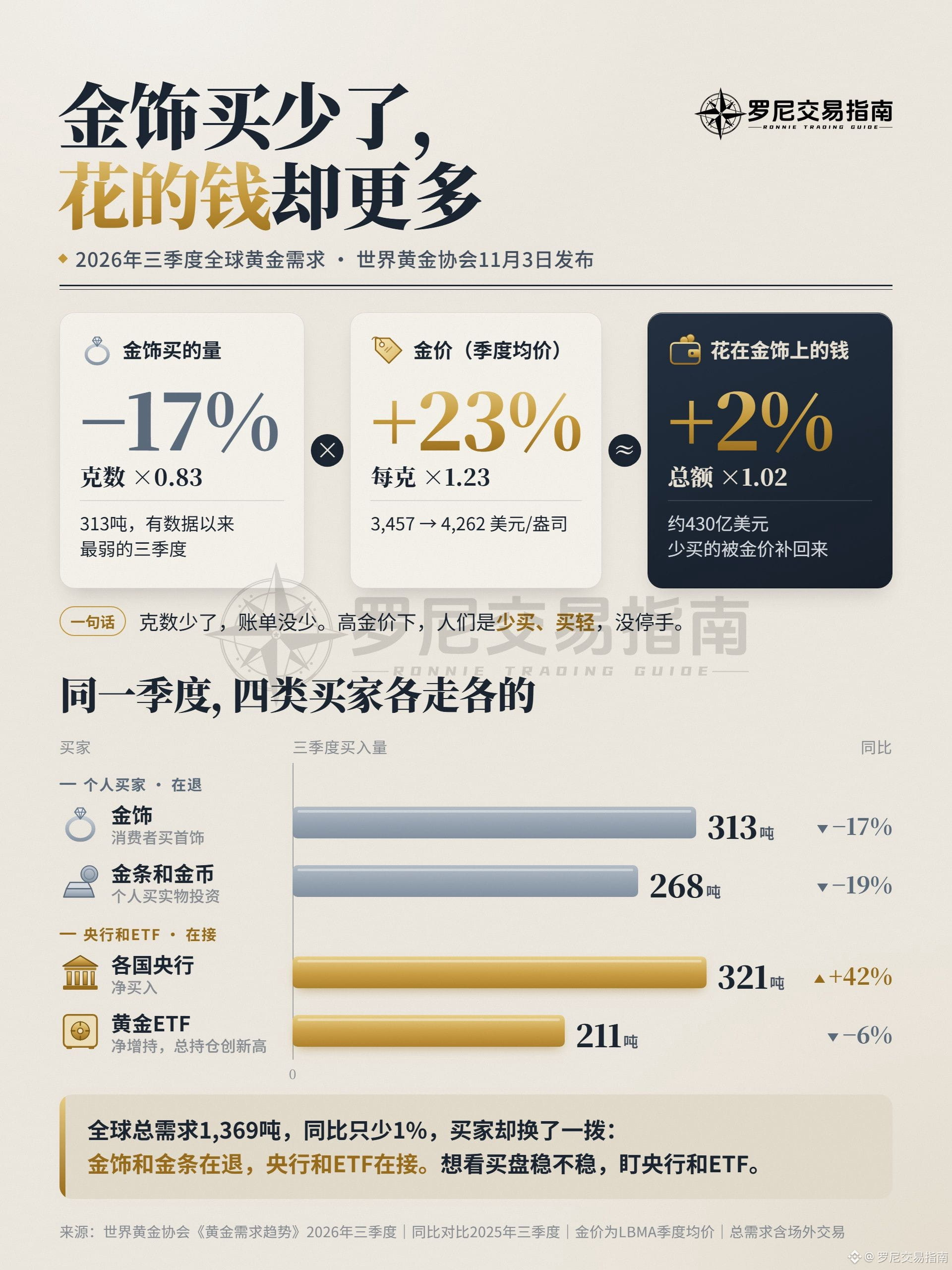
The World Gold Council released its third-quarter report today: global gold jewelry sales totaled just 313 tonnes, down 17% year on year—the weakest third quarter on record. Yet spending on gold jewelry rose 2%, as the average price for the quarter climbed 23%. People bought less, and bought lighter pieces, but they didn’t stop buying.
Demand was propped up by a different group of buyers: central banks made net purchases of 321 tonnes, up 42% year on year, while gold ETFs saw net inflows of 211 tonnes, taking holdings to a record high. Total demand fell just 1%; it was the buyers who changed. To gauge what’s underpinning gold prices, it’s more useful to watch central banks and funds than jewelry stores.#黄金 @luonijiepan
The World Gold Council released its third-quarter report today: global gold jewelry sales totaled just 313 tonnes, down 17% year on year—the weakest third quarter on record. Yet spending on gold jewelry rose 2%, as the average price for the quarter climbed 23%. People bought less, and bought lighter pieces, but they didn’t stop buying.
Demand was propped up by a different group of buyers: central banks made net purchases of 321 tonnes, up 42% year on year, while gold ETFs saw net inflows of 211 tonnes, taking holdings to a record high. Total demand fell just 1%; it was the buyers who changed. To gauge what’s underpinning gold prices, it’s more useful to watch central banks and funds than jewelry stores.#黄金 @罗尼交易指南
Demand was propped up by a different group of buyers: central banks made net purchases of 321 tonnes, up 42% year on year, while gold ETFs saw net inflows of 211 tonnes, taking holdings to a record high. Total demand fell just 1%; it was the buyers who changed. To gauge what’s underpinning gold prices, it’s more useful to watch central banks and funds than jewelry stores.#黄金 @罗尼交易指南
1.2k
·
--
Verified
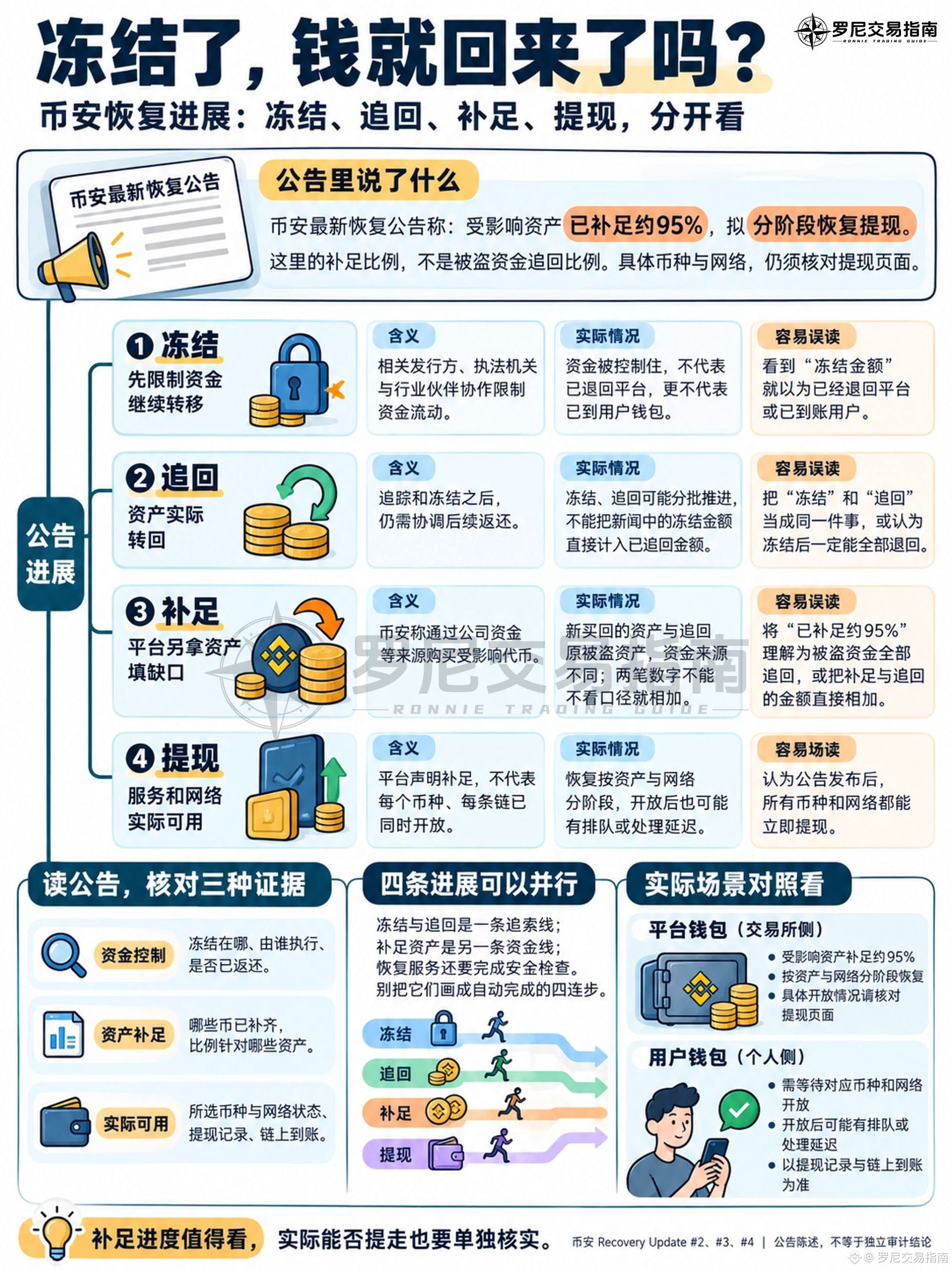
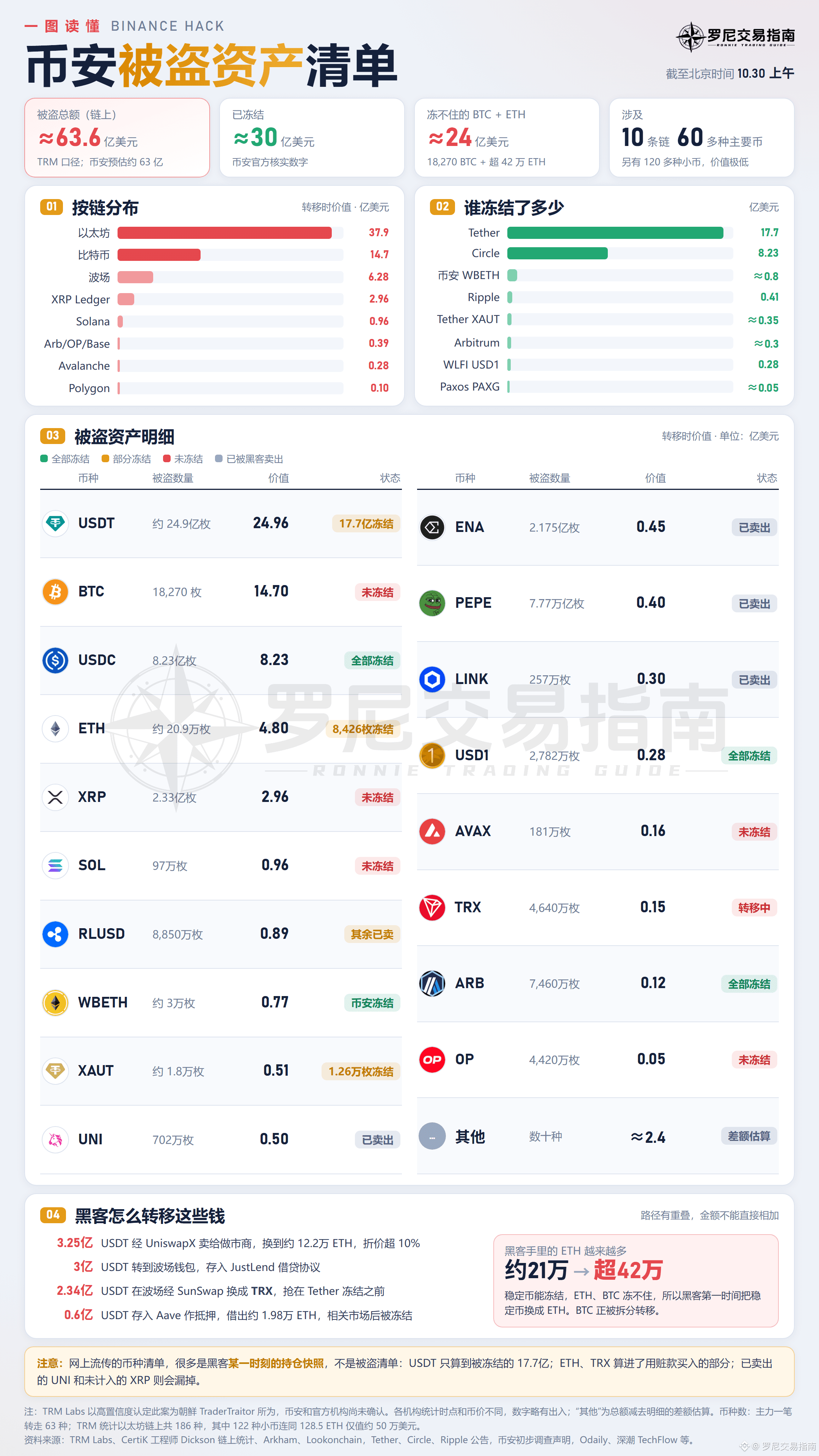
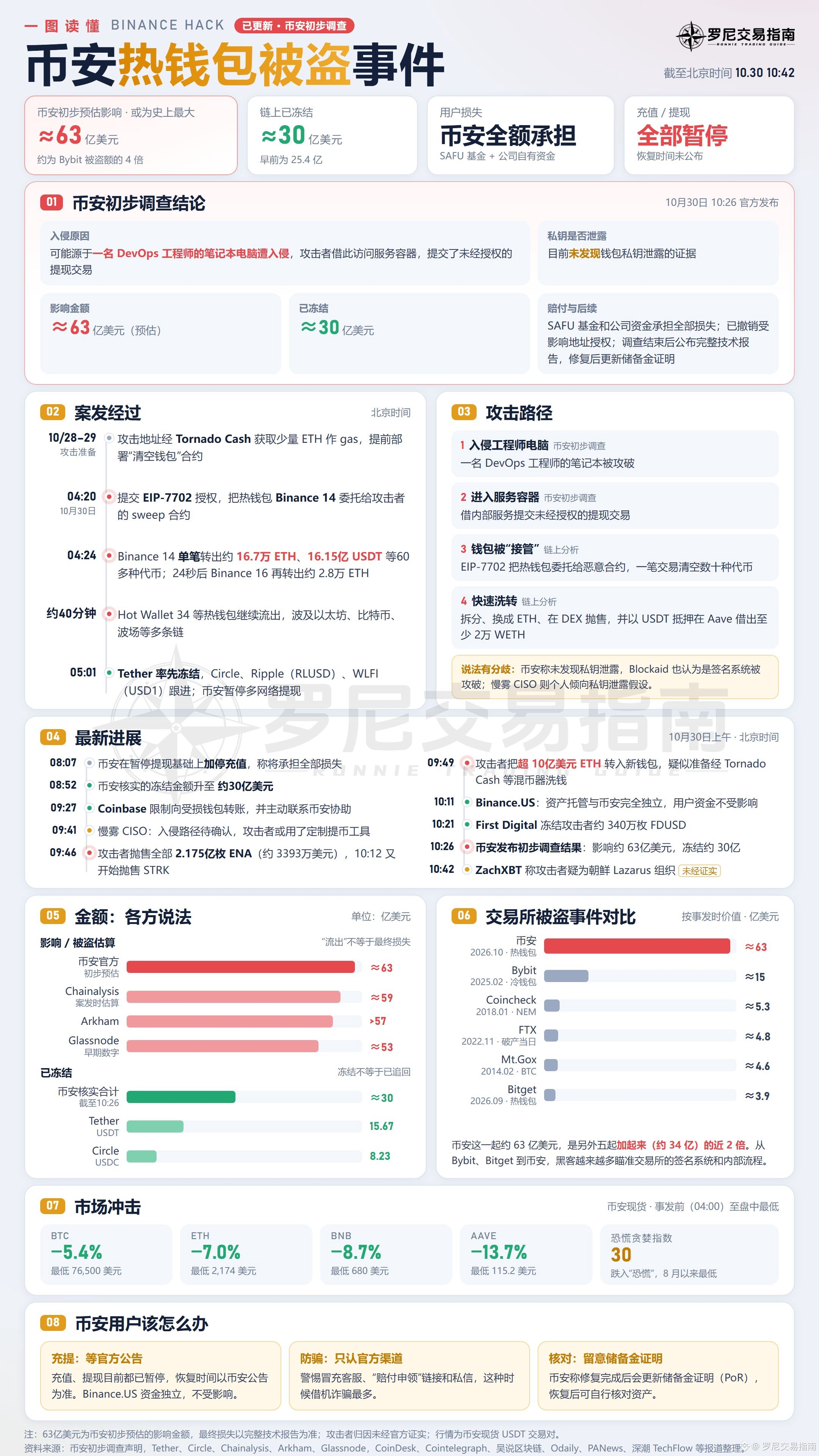
Binance announced on November 1 that about 95% of the affected assets had been replenished, and that withdrawals would resume in phases.
Here’s the easiest point to misread: the platform buying back tokens with its own money and recovering stolen assets are two different things. “Frozen” also doesn’t mean the money has been returned. The replenishment percentage, amount recovered, and scope of withdrawals being reopened should be considered separately.
The progress toward resuming withdrawals is certainly important, but what matters in the end is whether the coins you hold and the networks you chose can be withdrawn, and whether the funds actually arrive. Looking at a single 95% figure isn’t enough to assess any of these things. #币安被盗 #行情分析 #BTC #bnb @luonijiepan
Binance announced on November 1 that about 95% of the affected assets had been replenished, and that withdrawals would resume in phases.
Here’s the easiest point to misread: the platform buying back tokens with its own money and recovering stolen assets are two different things. “Frozen” also doesn’t mean the money has been returned. The replenishment percentage, amount recovered, and scope of withdrawals being reopened should be considered separately.
The progress toward resuming withdrawals is certainly important, but what matters in the end is whether the coins you hold and the networks you chose can be withdrawn, and whether the funds actually arrive. Looking at a single 95% figure isn’t enough to assess any of these things. #币安被盗 #行情分析 #BTC #bnb @罗尼交易指南
1k

·
--
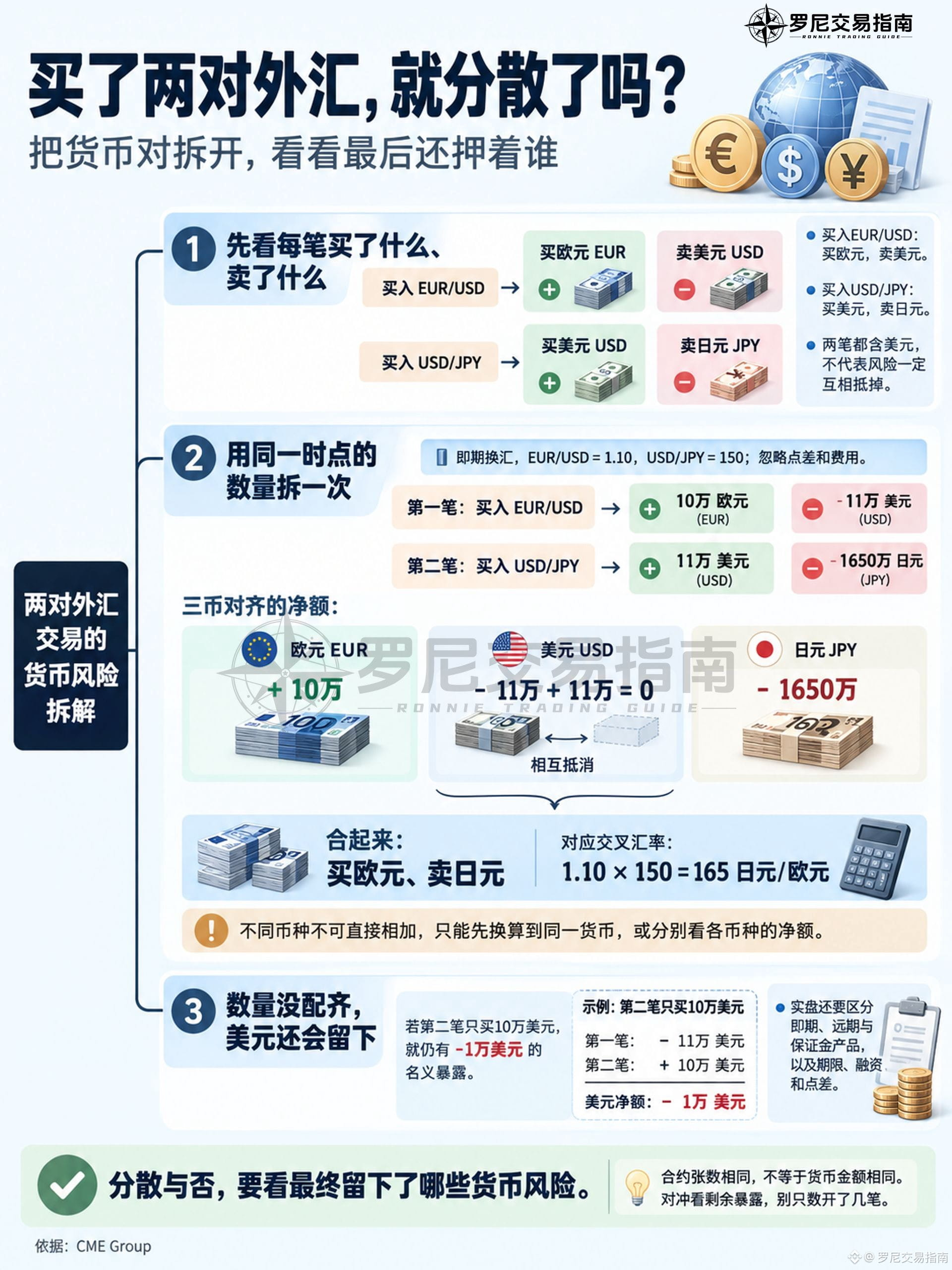
Buying EUR/USD and USD/JPY at the same time may look like two trades, but the USD risk could cancel out exactly.
In the spot FX example in the image, once the USD amounts on both sides are matched, what remains is exposure to buying euros and selling yen. If the amounts don't match, some USD exposure remains.
So opening another position doesn't necessarily mean greater diversification. You need to break down the amount of each currency, rather than simply count the trades. The amounts and exchange rates shown in the image are hypothetical.
1
2.6k
·
--
I’m honored to be shortlisted in the “Long-Form Article / Video Creator of the Year” category of the Binance 2026 Global Top 100 Blockchain Creators Awards. The community voting round is now underway.
After all these years creating trading content, what I cherish most is your continued support and company. I’d be truly grateful for your help in this vote:
Open the Square section in the app and search for “Ronnie’s Trading Guide.” Find my account and tap Vote. Voting closes at 23:59 on October 28. Verified accounts can vote once per day.
Thanks so much for your help. I’m sincerely grateful 🙏


1
5
773
·
--
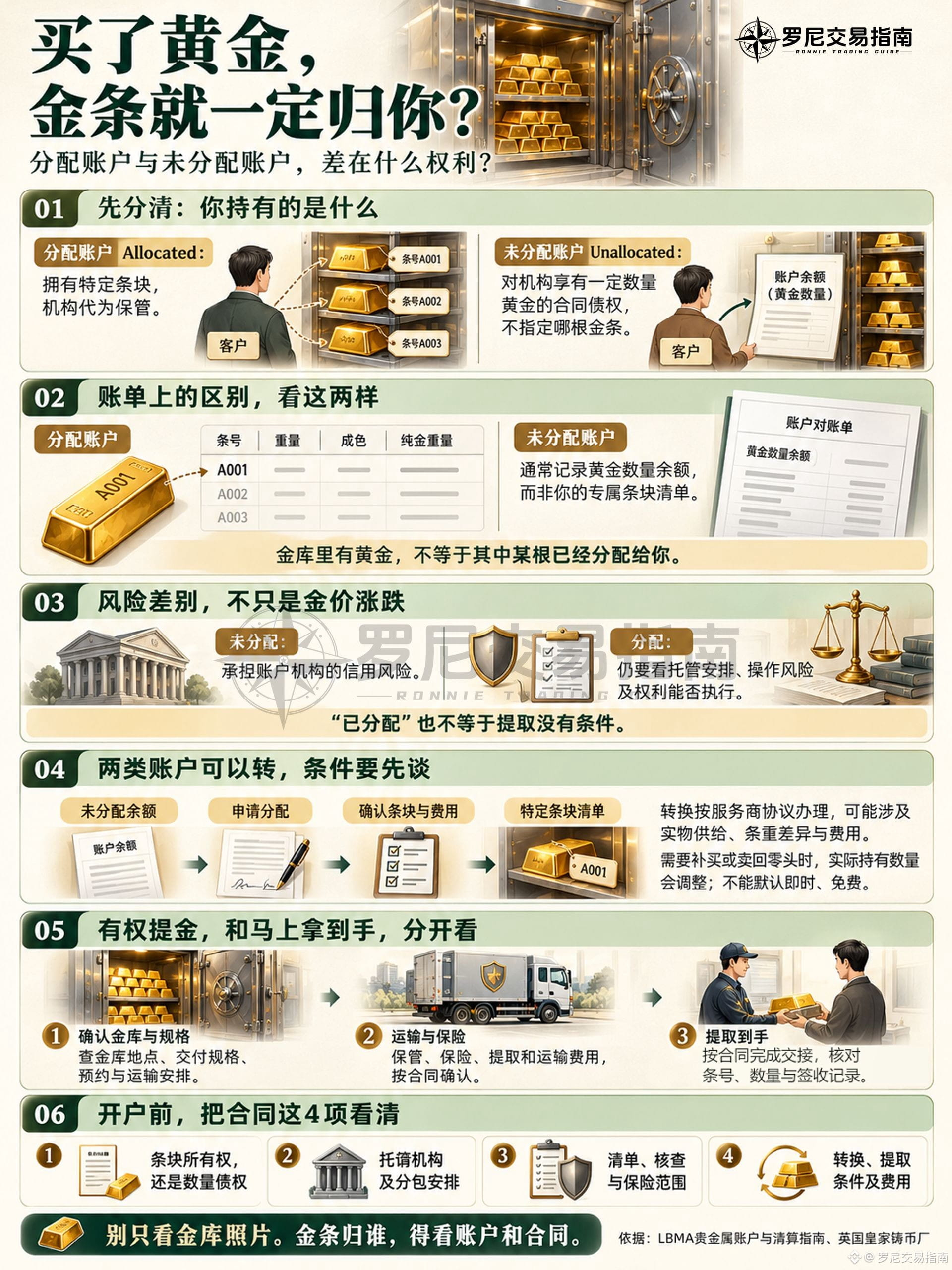
Buying gold doesn’t necessarily mean you own a specific gold bar.
In the London over-the-counter market, an allocated account lists the specific bars that belong to you; an unallocated account records the amount of gold an institution owes you. The two types of accounts give you different rights and involve different risks.
So the phrase “backed by physical gold” is too vague. Who owns the specific bars, who is responsible for storing them, and what conditions must be met to withdraw them all depend on the contract. A photo of a vault alone won’t tell you any of that. #黄金 @luonijiepan
Buying gold doesn’t necessarily mean you own a specific gold bar.
In the London over-the-counter market, an allocated account lists the specific bars that belong to you; an unallocated account records the amount of gold an institution owes you. The two types of accounts give you different rights and involve different risks.
So the phrase “backed by physical gold” is too vague. Who owns the specific bars, who is responsible for storing them, and what conditions must be met to withdraw them all depend on the contract. A photo of a vault alone won’t tell you any of that. #黄金 @罗尼交易指南
4
603
Log in to explore more content
Join global crypto users on Binance Square
⚡️ Get latest and useful information about crypto.
💬 Trusted by the world’s largest crypto exchange.
👍 Discover real insights from verified creators.
Email / Phone number
Trending Topics
JobsReportRaisesHikeOdds
344,132 views
2,633 Discussing
TradFi News | US Adds 165,000 Jobs in October, More Than Double the 65,000 Forecast, as Unemployment Falls to 4.1%
Binance News
·39 Likes
·23.6k views
CPITestsDecemberRateOutlook
64,136 views
702 Discussing
BitcoinRebounds$75KAsChipsLead
28,757 views
264 Discussing