
李狗蛋30
839 Posts

李狗蛋30
 Square Verified
Report
Block User
✨✨🐺 ✨✨🐺 🐦Twitter:@zkgoudan

Level 1 Creator
Open Trade

BNB Holder
High-Frequency Trader
5.7 Years
117 Following
5.5K+ Followers
5.3K+ Liked
1 Badges
Posts
Portfolio
All
Quotes
Videos
Live
·
--
#美国7月cpi与ppi数据本周出炉
If CPI/PPI is below expectations: rate-cut expectations heat up, and risk assets could continue to strengthen. If above expectations: it may weigh on market sentiment, leading to a short-term pullback and greater volatility.
US stocks are at elevated levels. What the market fears most right now isn’t a lack of stories—it’s that the data won’t cooperate.
This week, the US will release July CPI and PPI in succession. This will directly affect the market’s assessment of inflation, the interest-rate path, and risk appetite.
#美国7月cpi与ppi数据本周出炉
If CPI/PPI is below expectations: rate-cut expectations heat up, and risk assets could continue to strengthen. If above expectations: it may weigh on market sentiment, leading to a short-term pullback and greater volatility.
US stocks are at elevated levels. What the market fears most right now isn’t a lack of stories—it’s that the data won’t cooperate.
This week, the US will release July CPI and PPI in succession. This will directly affect the market’s assessment of inflation, the interest-rate path, and risk appetite.
If CPI/PPI is below expectations: rate-cut expectations heat up, and risk assets could continue to strengthen. If above expectations: it may weigh on market sentiment, leading to a short-term pullback and greater volatility.
US stocks are at elevated levels. What the market fears most right now isn’t a lack of stories—it’s that the data won’t cooperate.
This week, the US will release July CPI and PPI in succession. This will directly affect the market’s assessment of inflation, the interest-rate path, and risk appetite.
351
·
--
I wake up every day just to check whether $GRVT is going to crash. I’m hoping to put my entire life savings of $10,000 on a short position and get 10x returns
{future}(GRVTUSDT)
I wake up every day just to check whether $GRVT is going to crash. I’m hoping to put my entire life savings of $10,000 on a short position and get 10x returns
1
377
·
--
Verified
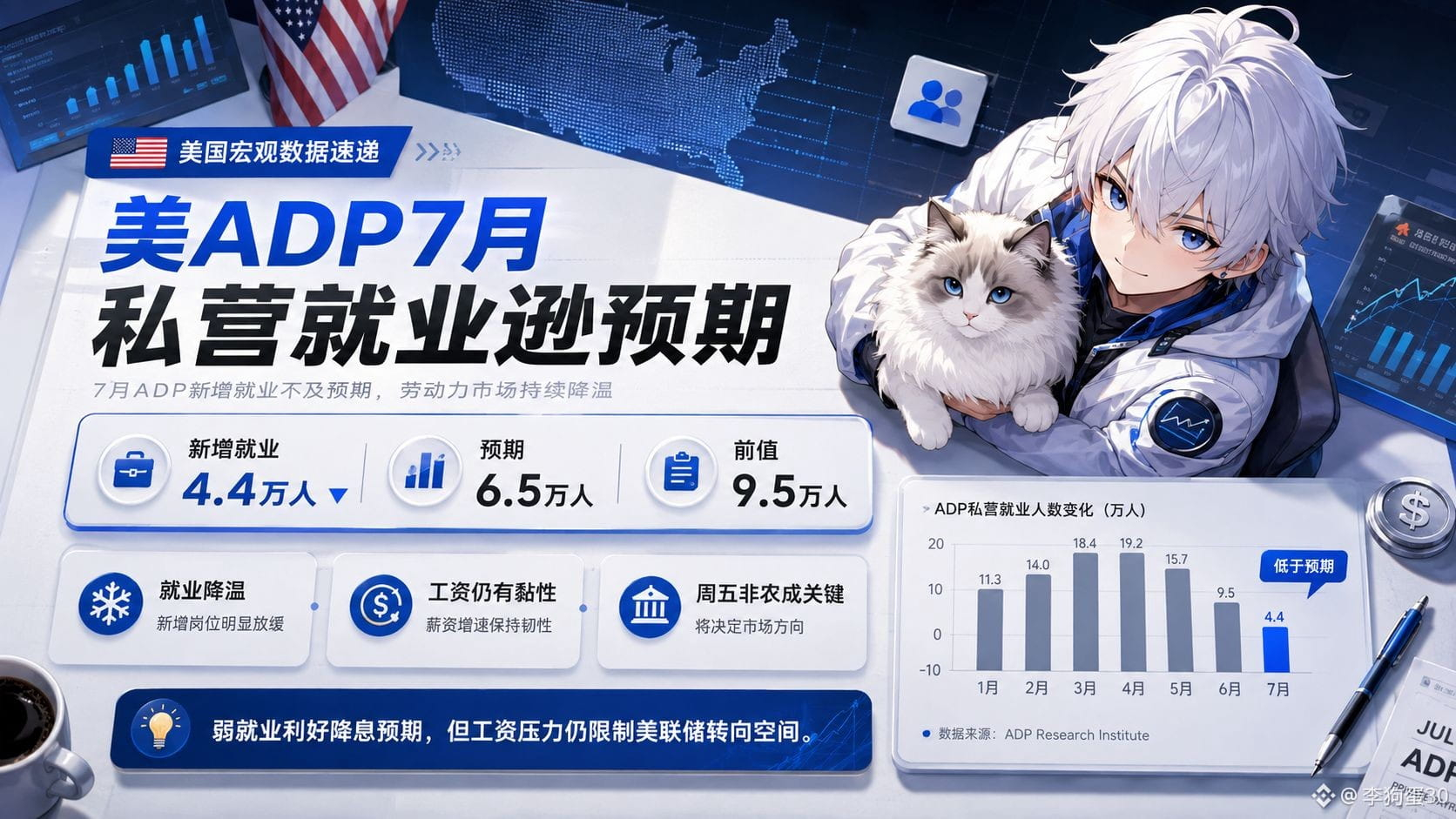
The US “mini non-farm payrolls” in July clearly cooled off. ADP’s private sector added only 44,000 jobs—falling short of market expectations and also slashing the 95,000 reported for June after revisions, marking the weakest performance in nearly six months. Employment in education and healthcare added 36,000, but the leisure and hospitality industry decreased by 11,000
However, these data are also a bit contradictory: while hiring is cooling, wages are not showing a clear loosening. Pay for retained employees rose 4.4% year over year, and pay for job-hoppers rose even more, up 7%, suggesting that some industries still face labor shortages and that inflation pressure has not fully disappeared
The real highlight is Friday’s non-farm payrolls: if the non-farm figure continues to come in below expectations, US equities in the short term may first price in expectations for interest-rate cuts; but if the unemployment rate rises quickly, the market logic could shift from “rate-cut optimism” to “concerns about an economic downturn
$QQQB
{spot}(QQQBUSDT)
#美adp7月私营就业逊预期
The US “mini non-farm payrolls” in July clearly cooled off. ADP’s private sector added only 44,000 jobs—falling short of market expectations and also slashing the 95,000 reported for June after revisions, marking the weakest performance in nearly six months. Employment in education and healthcare added 36,000, but the leisure and hospitality industry decreased by 11,000
However, these data are also a bit contradictory: while hiring is cooling, wages are not showing a clear loosening. Pay for retained employees rose 4.4% year over year, and pay for job-hoppers rose even more, up 7%, suggesting that some industries still face labor shortages and that inflation pressure has not fully disappeared
The real highlight is Friday’s non-farm payrolls: if the non-farm figure continues to come in below expectations, US equities in the short term may first price in expectations for interest-rate cuts; but if the unemployment rate rises quickly, the market logic could shift from “rate-cut optimism” to “concerns about an economic downturn
$QQQB
#美adp7月私营就业逊预期
However, these data are also a bit contradictory: while hiring is cooling, wages are not showing a clear loosening. Pay for retained employees rose 4.4% year over year, and pay for job-hoppers rose even more, up 7%, suggesting that some industries still face labor shortages and that inflation pressure has not fully disappeared
The real highlight is Friday’s non-farm payrolls: if the non-farm figure continues to come in below expectations, US equities in the short term may first price in expectations for interest-rate cuts; but if the unemployment rate rises quickly, the market logic could shift from “rate-cut optimism” to “concerns about an economic downturn
$QQQB
#美adp7月私营就业逊预期
1
2
1.9k
·
--
My current assessment of GRVT is: the product logic hasn’t failed, but the token currently lacks sufficiently strong buy-side demand. A price drop isn’t necessarily scary; what we truly need to observe is whether trading volume can increase going forward, whether staking can reduce circulating supply, and whether platform revenue can gradually feed back into the token. It’s still too early to talk about GRVT failing, but if we want it to regain strength, we can’t rely solely on community sentiment and activity incentives.
I won’t blindly bottom-fish just because the price is low, and I won’t completely write it off just because its performance is temporarily poor. What’s worth watching next is whether GRVT can turn its product advantages into real revenue$GRVT
{future}(GRVTUSDT)
My current assessment of GRVT is: the product logic hasn’t failed, but the token currently lacks sufficiently strong buy-side demand. A price drop isn’t necessarily scary; what we truly need to observe is whether trading volume can increase going forward, whether staking can reduce circulating supply, and whether platform revenue can gradually feed back into the token. It’s still too early to talk about GRVT failing, but if we want it to regain strength, we can’t rely solely on community sentiment and activity incentives.
I won’t blindly bottom-fish just because the price is low, and I won’t completely write it off just because its performance is temporarily poor. What’s worth watching next is whether GRVT can turn its product advantages into real revenue$GRVT
I won’t blindly bottom-fish just because the price is low, and I won’t completely write it off just because its performance is temporarily poor. What’s worth watching next is whether GRVT can turn its product advantages into real revenue$GRVT
1
445
·
--
BTC is not just “digital gold”; it is becoming collateral for on-chain finance
#baby $BABY Users who hold large amounts of BTC—how can they use this portion of their assets without selling their BTC? Many approaches choose to enter DeFi by wrapping BTC, using cross-chain solutions, or through custodial services, but these also introduce additional trust costs.
@BabylonLabs_io ’s Trustless Bitcoin Vaults (TBV) are exploring another path. TBV allows native BTC to be used directly as collateral for on-chain financial applications—no need to wrap BTC, no need for traditional cross-chain bridges, and no need for centralized custody.
How can the largest crypto asset, while maintaining Bitcoin’s native security, connect to a broader on-chain economy? In the future, native BTC may not only be used for lending and borrowing, but could also enter more financial scenarios such as stablecoins, derivatives, payments, insurance, and more.
The next phase of Bitcoin may not be about creating “alternatives” to more BTC, but about giving the real BTC itself more application value.
The TBV public testnet is already live. You can try the native BTC collateralized lending flow and submit your feedback.
$BABY
#baby #Bitcoin #BTCFi
{future}(BABYUSDT)
BTC is not just “digital gold”; it is becoming collateral for on-chain finance
#baby $BABY Users who hold large amounts of BTC—how can they use this portion of their assets without selling their BTC? Many approaches choose to enter DeFi by wrapping BTC, using cross-chain solutions, or through custodial services, but these also introduce additional trust costs.
@BabylonLabs_io ’s Trustless Bitcoin Vaults (TBV) are exploring another path. TBV allows native BTC to be used directly as collateral for on-chain financial applications—no need to wrap BTC, no need for traditional cross-chain bridges, and no need for centralized custody.
How can the largest crypto asset, while maintaining Bitcoin’s native security, connect to a broader on-chain economy? In the future, native BTC may not only be used for lending and borrowing, but could also enter more financial scenarios such as stablecoins, derivatives, payments, insurance, and more.
The next phase of Bitcoin may not be about creating “alternatives” to more BTC, but about giving the real BTC itself more application value.
The TBV public testnet is already live. You can try the native BTC collateralized lending flow and submit your feedback.
$BABY
#baby #Bitcoin #BTCFi
#baby $BABY Users who hold large amounts of BTC—how can they use this portion of their assets without selling their BTC? Many approaches choose to enter DeFi by wrapping BTC, using cross-chain solutions, or through custodial services, but these also introduce additional trust costs.
@BabylonLabs_io ’s Trustless Bitcoin Vaults (TBV) are exploring another path. TBV allows native BTC to be used directly as collateral for on-chain financial applications—no need to wrap BTC, no need for traditional cross-chain bridges, and no need for centralized custody.
How can the largest crypto asset, while maintaining Bitcoin’s native security, connect to a broader on-chain economy? In the future, native BTC may not only be used for lending and borrowing, but could also enter more financial scenarios such as stablecoins, derivatives, payments, insurance, and more.
The next phase of Bitcoin may not be about creating “alternatives” to more BTC, but about giving the real BTC itself more application value.
The TBV public testnet is already live. You can try the native BTC collateralized lending flow and submit your feedback.
$BABY
#baby #Bitcoin #BTCFi
157
·
--
No one has a good view of Nvidia—should I buy more now? $NVDAB
No one has a good view of Nvidia—should I buy more now? $NVDAB

958
·
--
BTC capital efficiency—this time, perhaps Babylon is here @babylonlabs_io
Many people hold BTC long-term, but there aren’t many ways to actually use it.
If you sell, you lose exposure to future upside; if you wrap it across chains, you add bridge, custody, and smart contract risks. So Bitcoin’s biggest contradiction has never been “whether it has value,” but rather that while its value is high, it’s difficult to securely access it.
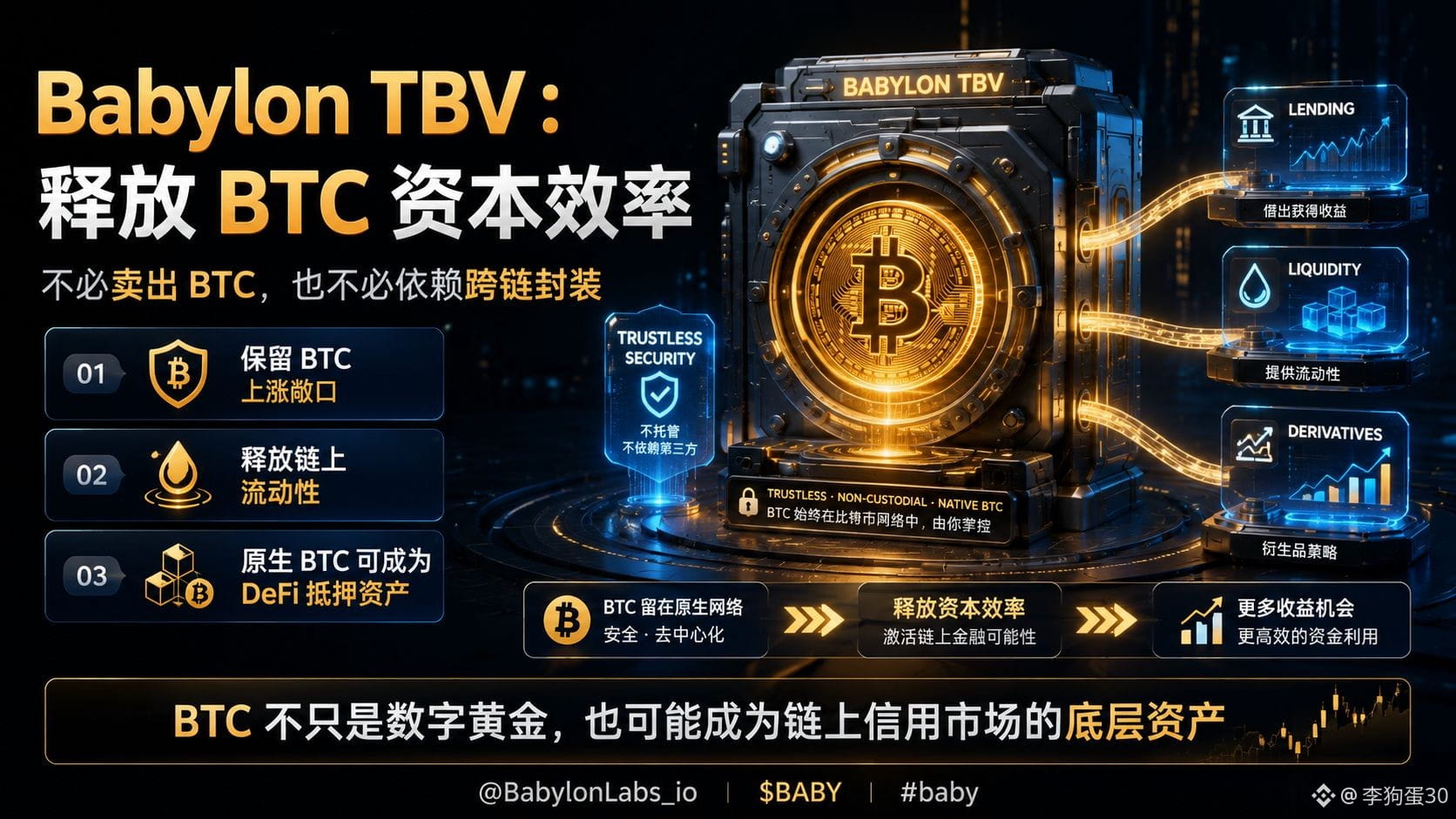
Babylon Trustless Bitcoin Vaults (TBV) aims to address BTC’s capital efficiency. Users don’t need to sell their BTC, nor do they need to hand assets over to a centralized custodian. Instead, through a verifiable vault structure, native BTC becomes collateral for on-chain lending.
For long-term holders, this means BTC is no longer just an asset sitting in a wallet—it also creates an opportunity to release liquidity while retaining price exposure.
What “Goudan” cares about isn’t short-term returns, but whether TBV can enable native BTC to gradually become a foundational collateral asset in DeFi. If this direction works, BTC’s future role may be more than just “digital gold”—it could also become an important underlying asset for on-chain credit markets.
@babylonlabs_io $BABY #baby
BTC capital efficiency—this time, perhaps Babylon is here @BabylonLabs_io
Many people hold BTC long-term, but there aren’t many ways to actually use it.
If you sell, you lose exposure to future upside; if you wrap it across chains, you add bridge, custody, and smart contract risks. So Bitcoin’s biggest contradiction has never been “whether it has value,” but rather that while its value is high, it’s difficult to securely access it.
Babylon Trustless Bitcoin Vaults (TBV) aims to address BTC’s capital efficiency. Users don’t need to sell their BTC, nor do they need to hand assets over to a centralized custodian. Instead, through a verifiable vault structure, native BTC becomes collateral for on-chain lending.
For long-term holders, this means BTC is no longer just an asset sitting in a wallet—it also creates an opportunity to release liquidity while retaining price exposure.
What “Goudan” cares about isn’t short-term returns, but whether TBV can enable native BTC to gradually become a foundational collateral asset in DeFi. If this direction works, BTC’s future role may be more than just “digital gold”—it could also become an important underlying asset for on-chain credit markets.
@BabylonLabs_io $BABY #baby
Many people hold BTC long-term, but there aren’t many ways to actually use it.
If you sell, you lose exposure to future upside; if you wrap it across chains, you add bridge, custody, and smart contract risks. So Bitcoin’s biggest contradiction has never been “whether it has value,” but rather that while its value is high, it’s difficult to securely access it.
Babylon Trustless Bitcoin Vaults (TBV) aims to address BTC’s capital efficiency. Users don’t need to sell their BTC, nor do they need to hand assets over to a centralized custodian. Instead, through a verifiable vault structure, native BTC becomes collateral for on-chain lending.
For long-term holders, this means BTC is no longer just an asset sitting in a wallet—it also creates an opportunity to release liquidity while retaining price exposure.
What “Goudan” cares about isn’t short-term returns, but whether TBV can enable native BTC to gradually become a foundational collateral asset in DeFi. If this direction works, BTC’s future role may be more than just “digital gold”—it could also become an important underlying asset for on-chain credit markets.
@BabylonLabs_io $BABY #baby
247
·
--
Verified
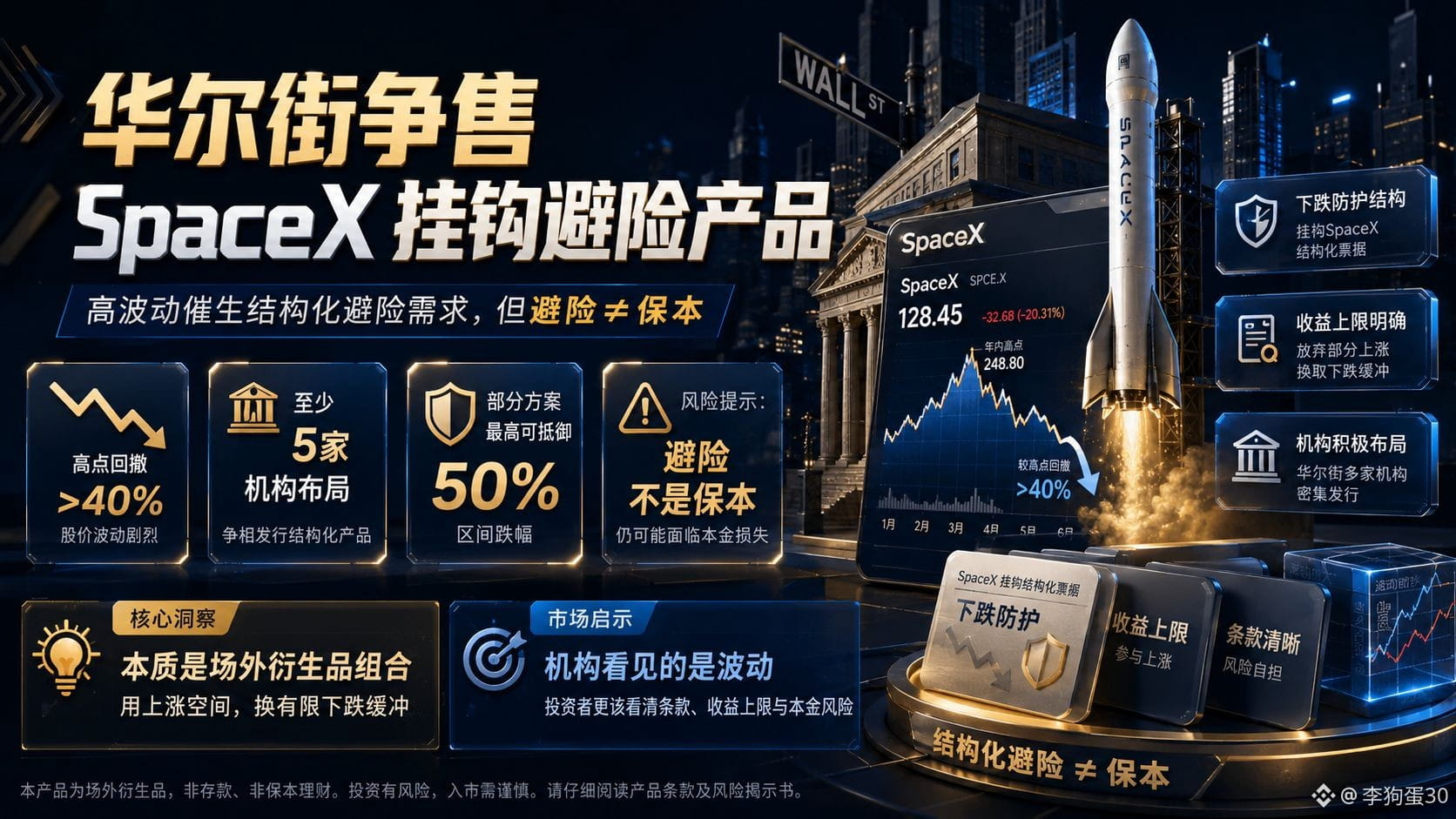
After SpaceX’s listing, it has pulled back more than 40% from its peak, with noticeably increased volatility. At least five institutions, including Morgan Stanley and Marex, have begun issuing structured notes linked to SpaceX stock. Some products claim they can withstand up to 50% of an interval decline.
The logic is usually: investors give up part of the upside potential in exchange for a limited downside buffer. As long as the decline exceeds the protected range, losses must still be borne by the investor. And if SpaceX rebounds sharply later, returns may also be capped in advance.
I think this reflects two signals:
First, institutions believe SpaceX’s short-term volatility will remain high. Second, market demand for these kinds of high-profile IPOs is still very strong, so Wall Street quickly repackaged the volatility into new products.
For ordinary investors, the more complex the product, the more you should first understand the knock-in/trigger conditions, the return cap, and the rules for how much of your principal can be lost.
{future}(SPCXUSDT)
#华尔街争售spacex挂钩避险产品
After SpaceX’s listing, it has pulled back more than 40% from its peak, with noticeably increased volatility. At least five institutions, including Morgan Stanley and Marex, have begun issuing structured notes linked to SpaceX stock. Some products claim they can withstand up to 50% of an interval decline.
The logic is usually: investors give up part of the upside potential in exchange for a limited downside buffer. As long as the decline exceeds the protected range, losses must still be borne by the investor. And if SpaceX rebounds sharply later, returns may also be capped in advance.
I think this reflects two signals:
First, institutions believe SpaceX’s short-term volatility will remain high. Second, market demand for these kinds of high-profile IPOs is still very strong, so Wall Street quickly repackaged the volatility into new products.
For ordinary investors, the more complex the product, the more you should first understand the knock-in/trigger conditions, the return cap, and the rules for how much of your principal can be lost.
#华尔街争售spacex挂钩避险产品
The logic is usually: investors give up part of the upside potential in exchange for a limited downside buffer. As long as the decline exceeds the protected range, losses must still be borne by the investor. And if SpaceX rebounds sharply later, returns may also be capped in advance.
I think this reflects two signals:
First, institutions believe SpaceX’s short-term volatility will remain high. Second, market demand for these kinds of high-profile IPOs is still very strong, so Wall Street quickly repackaged the volatility into new products.
For ordinary investors, the more complex the product, the more you should first understand the knock-in/trigger conditions, the return cap, and the rules for how much of your principal can be lost.
#华尔街争售spacex挂钩避险产品
2
8
11.2k
·
--
Why is native BTC lending important? #baby $BABY
Today, BTC lending offers users three options: users can continue to hold BTC while using it as collateral to borrow stablecoins or other assets for investing, spending, trading, or managing cash flow. In terms of asset efficiency, this means turning originally static BTC into more actively usable scenarios.
What is TBV’s core value?
In the past, cross-chain BTC DeFi projects were often targeted by attacks. TBV aims to embed more security rules directly into Bitcoin transaction conditions, using on-chain verifiable mechanisms to reduce reliance on intermediaries. BTC no longer must be handed over to a centralized institution or a cross-chain bridge first in order to enter DeFi.
For Babylon, TBV is not just a standalone product—it could become the foundational infrastructure for native BTCFi. In the future, if more lending protocols, stablecoin protocols, and yield products integrate with TBV, the liquidity that has long been deposited within the Bitcoin network may have the opportunity to enter a broader on-chain financial market without depending on traditional cross-chain custodial models.
It feels like BTC will have even more use cases going forward.
Why is native BTC lending important? #baby $BABY
Today, BTC lending offers users three options: users can continue to hold BTC while using it as collateral to borrow stablecoins or other assets for investing, spending, trading, or managing cash flow. In terms of asset efficiency, this means turning originally static BTC into more actively usable scenarios.
What is TBV’s core value?
In the past, cross-chain BTC DeFi projects were often targeted by attacks. TBV aims to embed more security rules directly into Bitcoin transaction conditions, using on-chain verifiable mechanisms to reduce reliance on intermediaries. BTC no longer must be handed over to a centralized institution or a cross-chain bridge first in order to enter DeFi.
For Babylon, TBV is not just a standalone product—it could become the foundational infrastructure for native BTCFi. In the future, if more lending protocols, stablecoin protocols, and yield products integrate with TBV, the liquidity that has long been deposited within the Bitcoin network may have the opportunity to enter a broader on-chain financial market without depending on traditional cross-chain custodial models.
It feels like BTC will have even more use cases going forward.
Today, BTC lending offers users three options: users can continue to hold BTC while using it as collateral to borrow stablecoins or other assets for investing, spending, trading, or managing cash flow. In terms of asset efficiency, this means turning originally static BTC into more actively usable scenarios.
What is TBV’s core value?
In the past, cross-chain BTC DeFi projects were often targeted by attacks. TBV aims to embed more security rules directly into Bitcoin transaction conditions, using on-chain verifiable mechanisms to reduce reliance on intermediaries. BTC no longer must be handed over to a centralized institution or a cross-chain bridge first in order to enter DeFi.
For Babylon, TBV is not just a standalone product—it could become the foundational infrastructure for native BTCFi. In the future, if more lending protocols, stablecoin protocols, and yield products integrate with TBV, the liquidity that has long been deposited within the Bitcoin network may have the opportunity to enter a broader on-chain financial market without depending on traditional cross-chain custodial models.
It feels like BTC will have even more use cases going forward.
206
·
--
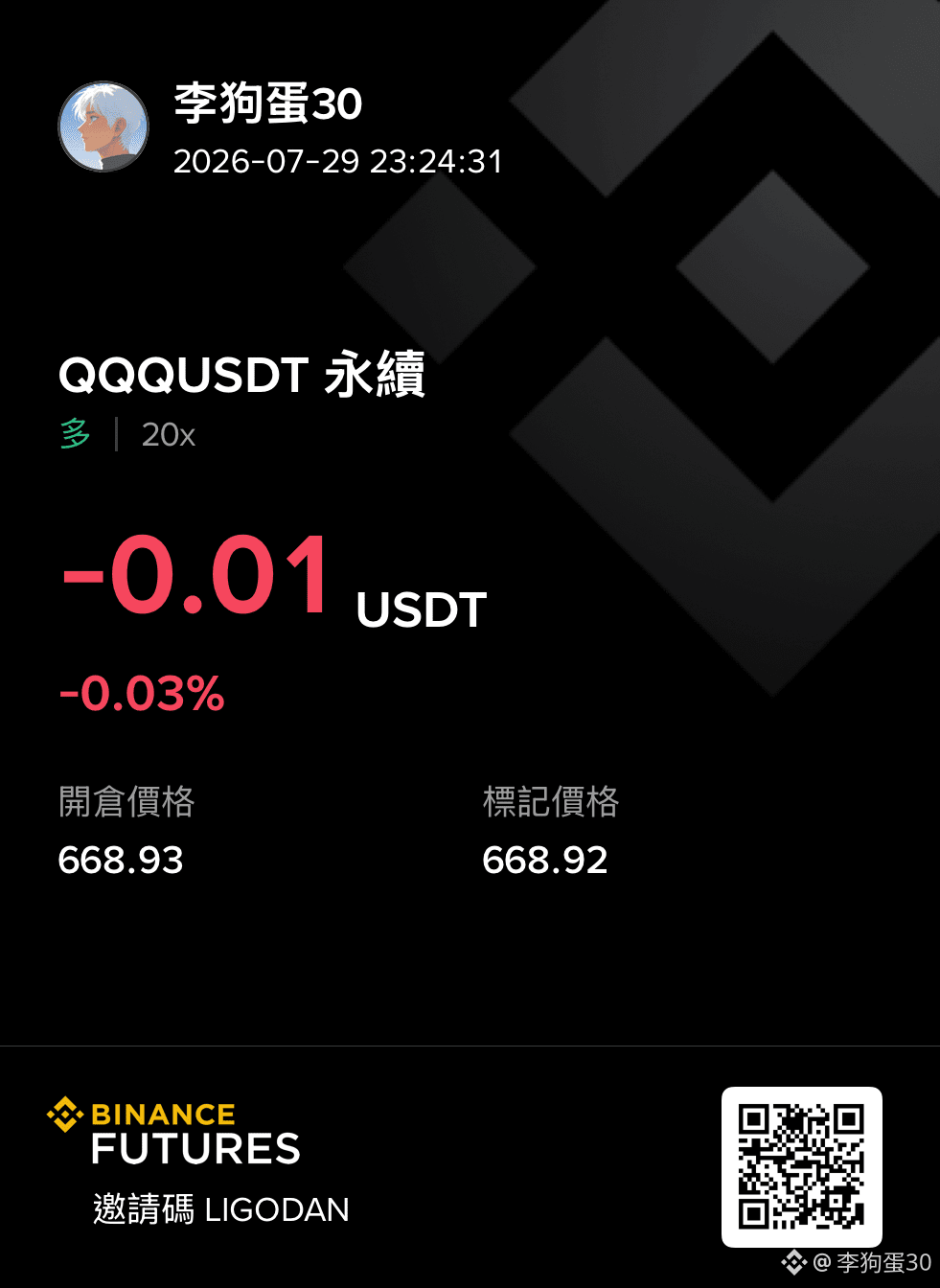
Open a bit of QQQ to feel the market conditions. Starting tonight, I’ll begin investing regularly in Tslab, every day.
I believe in America’s national fortunes—one represents the technology growth sector. QQQ tracks the Nasdaq index. Its advantage is that it’s relatively diversified in risk. If one company’s earnings report isn’t good, the others can provide support so it won’t drop too much.
The reason I’m DCA-ing (regularly investing) into Tslab is that it has higher upside potential. His future is in autonomous driving, robot reserves—so the rebound will definitely be higher than QQQ. And Musk’s ambitions go far beyond this.
Right now, Dogdan has already started DCA. This season’s price swings have been too intense. Maybe tech stocks could fall, so I’m planning to set aside tens of thousands of “u” and DCA slowly. I hope to have a good outcome—no need to be on edge every day.
#tradfi晒单
Open a bit of QQQ to feel the market conditions. Starting tonight, I’ll begin investing regularly in Tslab, every day.
I believe in America’s national fortunes—one represents the technology growth sector. QQQ tracks the Nasdaq index. Its advantage is that it’s relatively diversified in risk. If one company’s earnings report isn’t good, the others can provide support so it won’t drop too much.
The reason I’m DCA-ing (regularly investing) into Tslab is that it has higher upside potential. His future is in autonomous driving, robot reserves—so the rebound will definitely be higher than QQQ. And Musk’s ambitions go far beyond this.
Right now, Dogdan has already started DCA. This season’s price swings have been too intense. Maybe tech stocks could fall, so I’m planning to set aside tens of thousands of “u” and DCA slowly. I hope to have a good outcome—no need to be on edge every day.
#tradfi晒单
I believe in America’s national fortunes—one represents the technology growth sector. QQQ tracks the Nasdaq index. Its advantage is that it’s relatively diversified in risk. If one company’s earnings report isn’t good, the others can provide support so it won’t drop too much.
The reason I’m DCA-ing (regularly investing) into Tslab is that it has higher upside potential. His future is in autonomous driving, robot reserves—so the rebound will definitely be higher than QQQ. And Musk’s ambitions go far beyond this.
Right now, Dogdan has already started DCA. This season’s price swings have been too intense. Maybe tech stocks could fall, so I’m planning to set aside tens of thousands of “u” and DCA slowly. I hope to have a good outcome—no need to be on edge every day.
#tradfi晒单
743
·
--
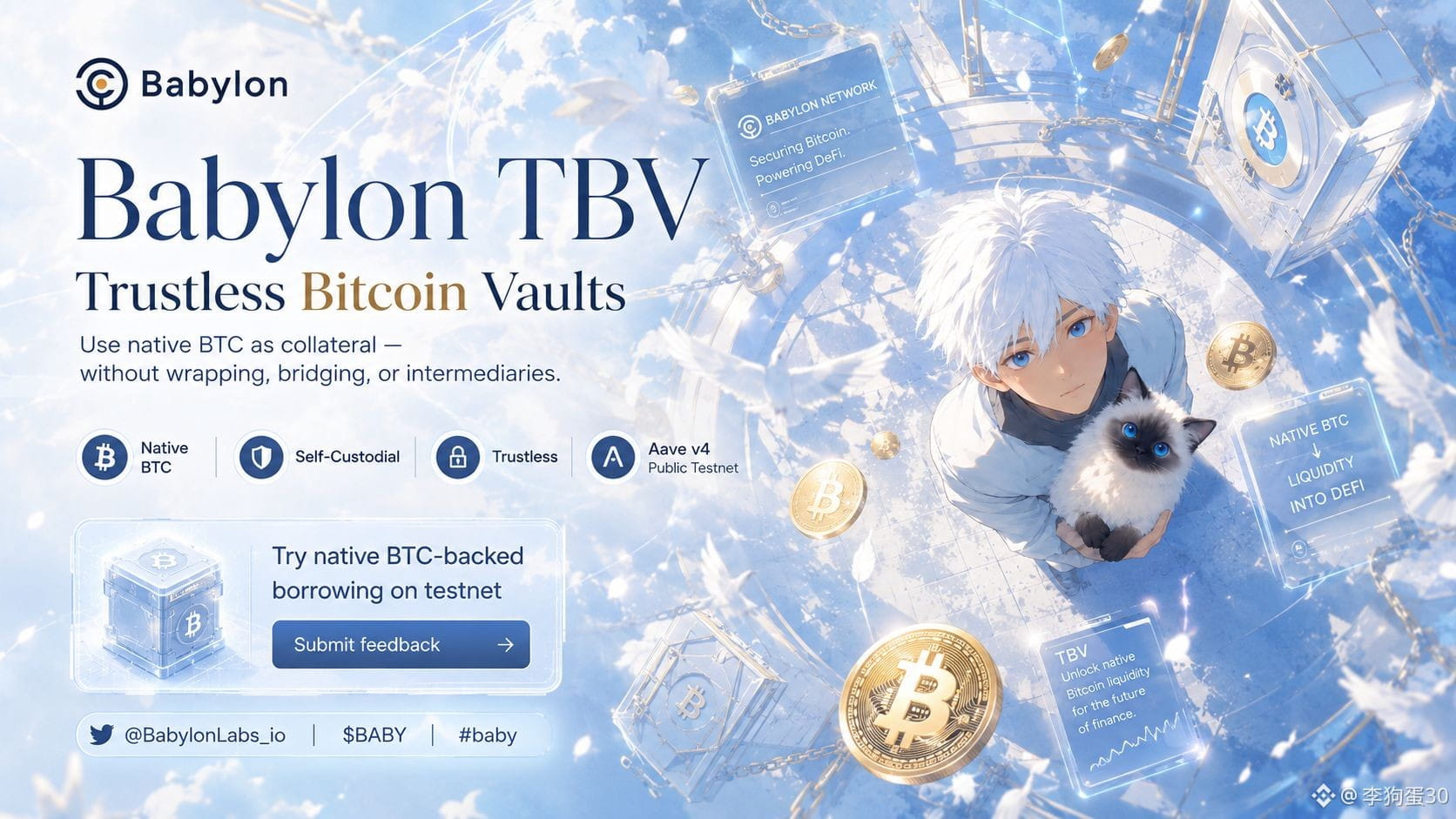
Babylon TBV, another new storm is coming ⛈️! @babylonlabs_io
Remember, I previously also staked BTC on Babylon. BTC has always been one of the market’s consensus assets. But in BTC DeFi, you often need to wrap it or bridge it—these are things old DeFi players definitely understand. The risks caused by wrapping and bridging increase exponentially. This time, Babylon is solving it again!
The Trustless Bitcoin Vaults (TBV) launched by @babylonlabs_io are trying to address this problem. Let Dogdan walk you through their general workflow 👇:
1️⃣ Use native BTC as collateral
Users don’t need to convert BTC into wrapped assets first, reducing extra steps from asset conversion and cross-chain processes right at the source.
2️⃣ Maintain self-custody properties
Users still control their own keys and Bitcoin. “Your keys, your Bitcoin”—this is also the key difference between native BTC collateral solutions and traditional custody-based lending.
3️⃣ TBV’s goal is to build a more trust-minimized collateral architecture
So that BTC can enter on-chain financial markets without relying on centralized custodial institutions.
4️⃣ Improve capital efficiency
BTC holders don’t necessarily need to sell their assets. They can also borrow stablecoins against their collateral, gaining liquidity and participating in more on-chain applications.
This Babylon TBV is good news for retail users. TBV allows users to directly use native BTC as collateral and apply it across different blockchains and financial applications. No need to wrap BTC, no need for traditional cross-chain bridges, and no need to hand assets over to a centralized custodian.
In the future, you won’t need those so tedious cross-chain bridges and wrappers anymore—just use Babylon to participate in on-chain financial activities!
#baby #baby #Bitcoin #BTCFi #DeFi
Babylon TBV, another new storm is coming ⛈️! @BabylonLabs_io
Remember, I previously also staked BTC on Babylon. BTC has always been one of the market’s consensus assets. But in BTC DeFi, you often need to wrap it or bridge it—these are things old DeFi players definitely understand. The risks caused by wrapping and bridging increase exponentially. This time, Babylon is solving it again!
The Trustless Bitcoin Vaults (TBV) launched by @BabylonLabs_io are trying to address this problem. Let Dogdan walk you through their general workflow 👇:
1️⃣ Use native BTC as collateral
Users don’t need to convert BTC into wrapped assets first, reducing extra steps from asset conversion and cross-chain processes right at the source.
2️⃣ Maintain self-custody properties
Users still control their own keys and Bitcoin. “Your keys, your Bitcoin”—this is also the key difference between native BTC collateral solutions and traditional custody-based lending.
3️⃣ TBV’s goal is to build a more trust-minimized collateral architecture
So that BTC can enter on-chain financial markets without relying on centralized custodial institutions.
4️⃣ Improve capital efficiency
BTC holders don’t necessarily need to sell their assets. They can also borrow stablecoins against their collateral, gaining liquidity and participating in more on-chain applications.
This Babylon TBV is good news for retail users. TBV allows users to directly use native BTC as collateral and apply it across different blockchains and financial applications. No need to wrap BTC, no need for traditional cross-chain bridges, and no need to hand assets over to a centralized custodian.
In the future, you won’t need those so tedious cross-chain bridges and wrappers anymore—just use Babylon to participate in on-chain financial activities!
#baby #baby #Bitcoin #BTCFi #DeFi
Remember, I previously also staked BTC on Babylon. BTC has always been one of the market’s consensus assets. But in BTC DeFi, you often need to wrap it or bridge it—these are things old DeFi players definitely understand. The risks caused by wrapping and bridging increase exponentially. This time, Babylon is solving it again!
The Trustless Bitcoin Vaults (TBV) launched by @BabylonLabs_io are trying to address this problem. Let Dogdan walk you through their general workflow 👇:
1️⃣ Use native BTC as collateral
Users don’t need to convert BTC into wrapped assets first, reducing extra steps from asset conversion and cross-chain processes right at the source.
2️⃣ Maintain self-custody properties
Users still control their own keys and Bitcoin. “Your keys, your Bitcoin”—this is also the key difference between native BTC collateral solutions and traditional custody-based lending.
3️⃣ TBV’s goal is to build a more trust-minimized collateral architecture
So that BTC can enter on-chain financial markets without relying on centralized custodial institutions.
4️⃣ Improve capital efficiency
BTC holders don’t necessarily need to sell their assets. They can also borrow stablecoins against their collateral, gaining liquidity and participating in more on-chain applications.
This Babylon TBV is good news for retail users. TBV allows users to directly use native BTC as collateral and apply it across different blockchains and financial applications. No need to wrap BTC, no need for traditional cross-chain bridges, and no need to hand assets over to a centralized custodian.
In the future, you won’t need those so tedious cross-chain bridges and wrappers anymore—just use Babylon to participate in on-chain financial activities!
#baby #baby #Bitcoin #BTCFi #DeFi
1
225
·
--
As the tide goes out, you only then find out who was swimming naked! $BNB
{future}(BNBUSDT)
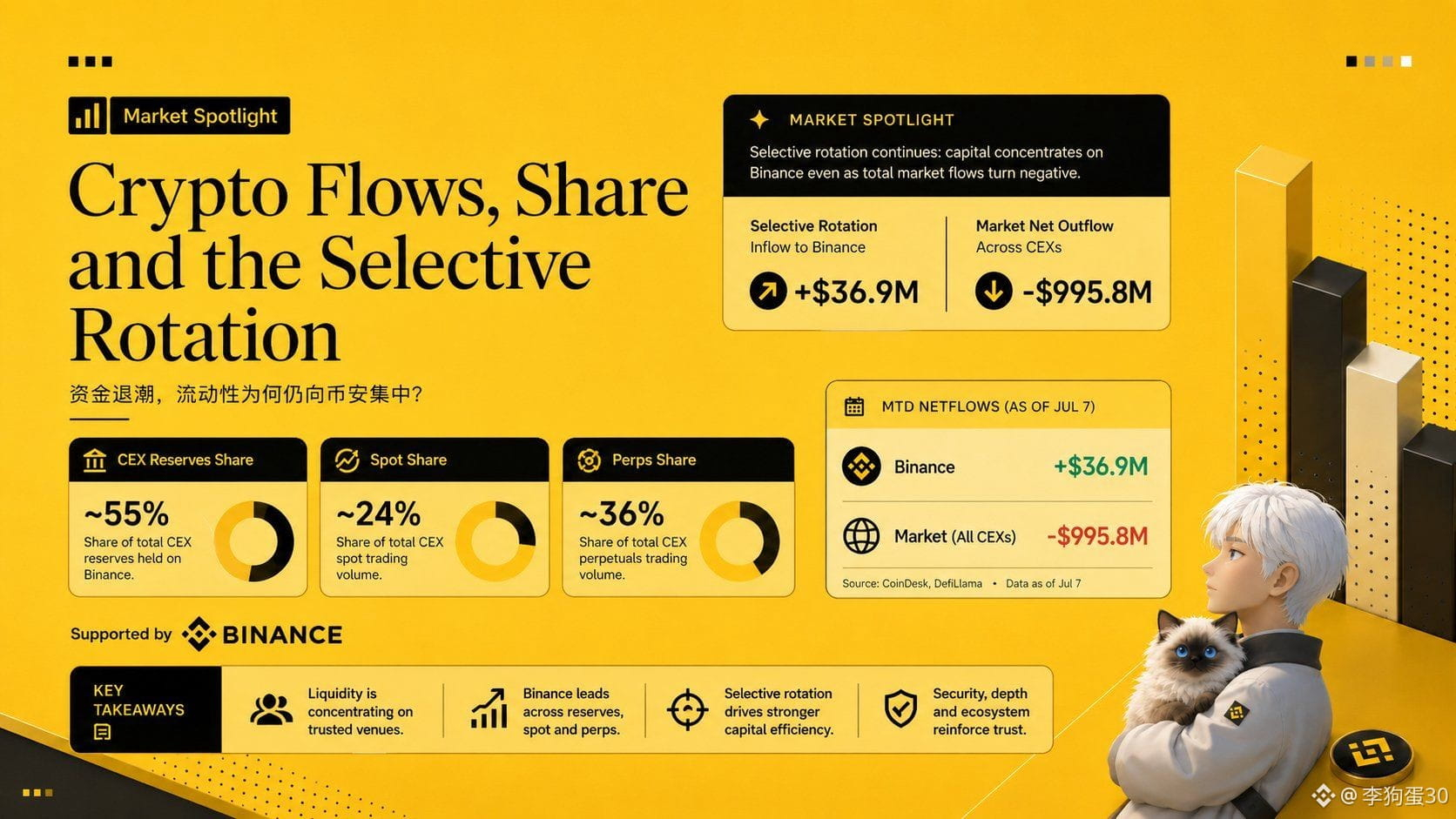
I took a look at the report published by CoinDesk Research. In June, Bitcoin, spot ETFs, and the exchanges’ overall balances were all shrinking—people clearly weren’t as much in FOMO as before. Add in on-chain hackers and smaller exchanges shutting down, and you can see a clear polarization of funds.
🏝️Binance is seeing net inflows—why is that?
1️⃣ Stablecoin supply decreased by $11 billion. The report tracked 77 exchanges with a cumulative outflow of $996 million. In the same period, Binance had a $36.9 million inflow. This isn’t casual retail users leaving the market—it’s that funds are starting to choose different places to stay.
2️⃣ Just look at someone like me—an average “noob investor.” Safety 🔐, trading depth, and the stability of having a rich array of assets are the first things I care about. Binance has already been far ahead in these areas.
3️⃣ Trading activity in the market is declining. The report says Binance accounts for 22% of the $85 billion global perpetual contracts. What does that mean? It shows that people are simply reducing trading frequency, but large trades still only recognize Binance.
🏝️So should the bull market happen on Binance?
1️⃣ Binance’s trading has many sectors. Recently, the older batch of altcoins has been popping off. In the past, privacy-related sectors like ZEC and the ETH ecosystem—Binance has the most concentrated liquidity and depth for these. Binance’s advantage isn’t that it’s the only one—it’s that it can bring liquidity from different sectors together.
2️⃣ Altcoin liquidity is a hard problem. If I trade altcoins on-chain, I don’t get enough liquidity. But once you switch to Binance, you’ll find slippage and depth are both excellent. Money doesn’t lie—people will only choose places with liquidity.
3️⃣ The market is like a frightened bird right now. On one side, everyone is obsessed with not believing in crypto; on the other, people are bottom-fishing because they believe in the future. These two camps are split. Large amounts of funds are returning to Binance, but the market has already given its answer—the direction of these inflows.
Funds are choosing Binance as the big pool, because Binance has capital deposits, market share, core assets across different sectors, and abundant depth and liquidity—fish all prefer deeper water.
As the tide goes out, you only then find out who was swimming naked! $BNB
I took a look at the report published by CoinDesk Research. In June, Bitcoin, spot ETFs, and the exchanges’ overall balances were all shrinking—people clearly weren’t as much in FOMO as before. Add in on-chain hackers and smaller exchanges shutting down, and you can see a clear polarization of funds.
🏝️Binance is seeing net inflows—why is that?
1️⃣ Stablecoin supply decreased by $11 billion. The report tracked 77 exchanges with a cumulative outflow of $996 million. In the same period, Binance had a $36.9 million inflow. This isn’t casual retail users leaving the market—it’s that funds are starting to choose different places to stay.
2️⃣ Just look at someone like me—an average “noob investor.” Safety 🔐, trading depth, and the stability of having a rich array of assets are the first things I care about. Binance has already been far ahead in these areas.
3️⃣ Trading activity in the market is declining. The report says Binance accounts for 22% of the $85 billion global perpetual contracts. What does that mean? It shows that people are simply reducing trading frequency, but large trades still only recognize Binance.
🏝️So should the bull market happen on Binance?
1️⃣ Binance’s trading has many sectors. Recently, the older batch of altcoins has been popping off. In the past, privacy-related sectors like ZEC and the ETH ecosystem—Binance has the most concentrated liquidity and depth for these. Binance’s advantage isn’t that it’s the only one—it’s that it can bring liquidity from different sectors together.
2️⃣ Altcoin liquidity is a hard problem. If I trade altcoins on-chain, I don’t get enough liquidity. But once you switch to Binance, you’ll find slippage and depth are both excellent. Money doesn’t lie—people will only choose places with liquidity.
3️⃣ The market is like a frightened bird right now. On one side, everyone is obsessed with not believing in crypto; on the other, people are bottom-fishing because they believe in the future. These two camps are split. Large amounts of funds are returning to Binance, but the market has already given its answer—the direction of these inflows.
Funds are choosing Binance as the big pool, because Binance has capital deposits, market share, core assets across different sectors, and abundant depth and liquidity—fish all prefer deeper water.
I took a look at the report published by CoinDesk Research. In June, Bitcoin, spot ETFs, and the exchanges’ overall balances were all shrinking—people clearly weren’t as much in FOMO as before. Add in on-chain hackers and smaller exchanges shutting down, and you can see a clear polarization of funds.
🏝️Binance is seeing net inflows—why is that?
1️⃣ Stablecoin supply decreased by $11 billion. The report tracked 77 exchanges with a cumulative outflow of $996 million. In the same period, Binance had a $36.9 million inflow. This isn’t casual retail users leaving the market—it’s that funds are starting to choose different places to stay.
2️⃣ Just look at someone like me—an average “noob investor.” Safety 🔐, trading depth, and the stability of having a rich array of assets are the first things I care about. Binance has already been far ahead in these areas.
3️⃣ Trading activity in the market is declining. The report says Binance accounts for 22% of the $85 billion global perpetual contracts. What does that mean? It shows that people are simply reducing trading frequency, but large trades still only recognize Binance.
🏝️So should the bull market happen on Binance?
1️⃣ Binance’s trading has many sectors. Recently, the older batch of altcoins has been popping off. In the past, privacy-related sectors like ZEC and the ETH ecosystem—Binance has the most concentrated liquidity and depth for these. Binance’s advantage isn’t that it’s the only one—it’s that it can bring liquidity from different sectors together.
2️⃣ Altcoin liquidity is a hard problem. If I trade altcoins on-chain, I don’t get enough liquidity. But once you switch to Binance, you’ll find slippage and depth are both excellent. Money doesn’t lie—people will only choose places with liquidity.
3️⃣ The market is like a frightened bird right now. On one side, everyone is obsessed with not believing in crypto; on the other, people are bottom-fishing because they believe in the future. These two camps are split. Large amounts of funds are returning to Binance, but the market has already given its answer—the direction of these inflows.
Funds are choosing Binance as the big pool, because Binance has capital deposits, market share, core assets across different sectors, and abundant depth and liquidity—fish all prefer deeper water.
355
·
--
Rebound Condition Assessment
Positive Factors:
From 7/23 to 7/24, the price rebounded from $0.025 to $0.031 (+24%), indicating that the $0.022–$0.025 range has buyer support over the past 24h. The buy/sell ratio is 1.48 (buyers are dominant). Top PnL wallet net inflow is $11.5k (5.6x the average). After the sharp drop on 7/14, major holders who were selling have basically cleared out; the main selling pressure sources have been exhausted.
Negative Factors:
$BILL
{future}(BILLUSDT)
Exchange net inflow over 24h is $165.5k (2.7x the average). There is still a large amount of BILL deposited into the exchange, preparing to be sold. Two newly received wallets have taken in 20 million BILL (worth $538k), accounting for about 10% of circulating supply—this implies huge potential sell pressure. Trading volume continues to shrink (down 79% over 7d). There is a lack of rebound momentum. Holdings are highly concentrated, and the BILL Distributor holds 40.95%, which could dump at any time.
Conclusion
Short-term rebound conditions are not sufficient 🟡: Although the $0.022–$0.025 bottom has support and buyers have a slight advantage, the surge in exchange inflows ($165.5k) + two newly received wallets holding 20 million BILL as potential sell pressure + declining volume (no momentum follow-through) mean the rebound lacks supportive volume. Rebound confirmation requires: 1) a breakout above $0.032 with volume expansion and holding it; 2) exchange net inflow turning negative; 3) and not depositing to the exchange. Before that, $0.0225 is the key defense level; a break below could accelerate downside.
Rebound Condition Assessment
Positive Factors:
From 7/23 to 7/24, the price rebounded from $0.025 to $0.031 (+24%), indicating that the $0.022–$0.025 range has buyer support over the past 24h. The buy/sell ratio is 1.48 (buyers are dominant). Top PnL wallet net inflow is $11.5k (5.6x the average). After the sharp drop on 7/14, major holders who were selling have basically cleared out; the main selling pressure sources have been exhausted.
Negative Factors:
$BILL
Exchange net inflow over 24h is $165.5k (2.7x the average). There is still a large amount of BILL deposited into the exchange, preparing to be sold. Two newly received wallets have taken in 20 million BILL (worth $538k), accounting for about 10% of circulating supply—this implies huge potential sell pressure. Trading volume continues to shrink (down 79% over 7d). There is a lack of rebound momentum. Holdings are highly concentrated, and the BILL Distributor holds 40.95%, which could dump at any time.
Conclusion
Short-term rebound conditions are not sufficient 🟡: Although the $0.022–$0.025 bottom has support and buyers have a slight advantage, the surge in exchange inflows ($165.5k) + two newly received wallets holding 20 million BILL as potential sell pressure + declining volume (no momentum follow-through) mean the rebound lacks supportive volume. Rebound confirmation requires: 1) a breakout above $0.032 with volume expansion and holding it; 2) exchange net inflow turning negative; 3) and not depositing to the exchange. Before that, $0.0225 is the key defense level; a break below could accelerate downside.
Positive Factors:
From 7/23 to 7/24, the price rebounded from $0.025 to $0.031 (+24%), indicating that the $0.022–$0.025 range has buyer support over the past 24h. The buy/sell ratio is 1.48 (buyers are dominant). Top PnL wallet net inflow is $11.5k (5.6x the average). After the sharp drop on 7/14, major holders who were selling have basically cleared out; the main selling pressure sources have been exhausted.
Negative Factors:
$BILL
Exchange net inflow over 24h is $165.5k (2.7x the average). There is still a large amount of BILL deposited into the exchange, preparing to be sold. Two newly received wallets have taken in 20 million BILL (worth $538k), accounting for about 10% of circulating supply—this implies huge potential sell pressure. Trading volume continues to shrink (down 79% over 7d). There is a lack of rebound momentum. Holdings are highly concentrated, and the BILL Distributor holds 40.95%, which could dump at any time.
Conclusion
Short-term rebound conditions are not sufficient 🟡: Although the $0.022–$0.025 bottom has support and buyers have a slight advantage, the surge in exchange inflows ($165.5k) + two newly received wallets holding 20 million BILL as potential sell pressure + declining volume (no momentum follow-through) mean the rebound lacks supportive volume. Rebound confirmation requires: 1) a breakout above $0.032 with volume expansion and holding it; 2) exchange net inflow turning negative; 3) and not depositing to the exchange. Before that, $0.0225 is the key defense level; a break below could accelerate downside.
1
333
·
--
$BILL People who scam with fraud: every time it drops, it must start with at least a 20-point rise. Get the suckers onboard.
$BILL People who scam with fraud: every time it drops, it must start with at least a 20-point rise. Get the suckers onboard.
184
·
--
Today is the second-to-last day of the countdown—remember to check in! $NVDAB
Today is the second-to-last day of the countdown—remember to check in! $NVDAB
751
·
--
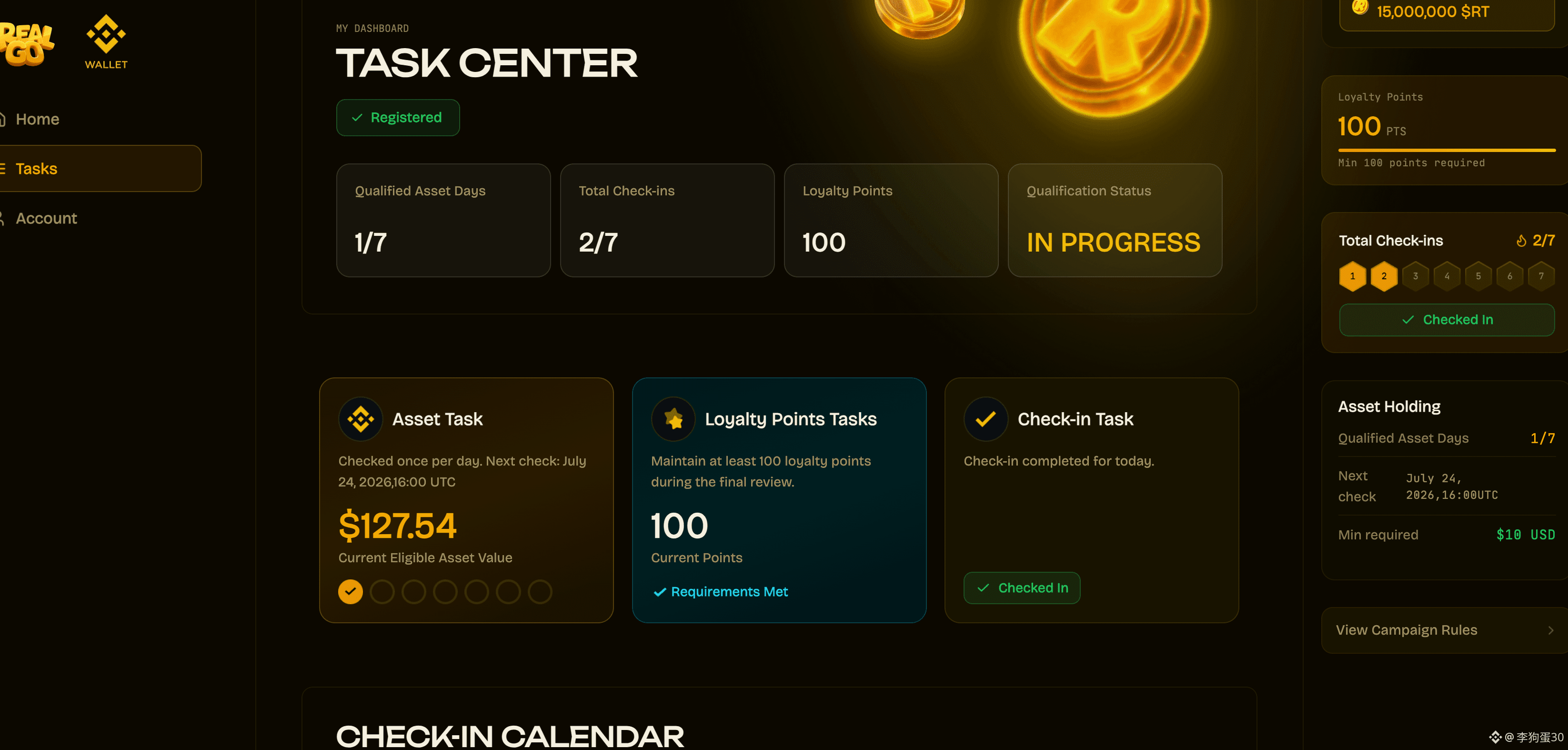
Binance Wallet exclusive activities for the last seven days—everyone remember to join!
🏝️Follow Dogdan and complete the tasks in 3 minutes:
1️⃣ Open the Binance homepage, select Binance Wallet, then jump to Binance Wallet, and choose the “Exclusive Activity” 🎡 at the top
2️⃣ Dogdan chose this first activity. There are only seven days left. The tasks are very simple:签到 + registration, and then hold funds! More than $10 in USDC, USDT, BNB, etc.
You must签到 for seven consecutive days. I figured it out—it’s exactly enough for the last seven days. Hurry up and go for it!
$BNB
{spot}(BNBUSDT)
Binance Wallet exclusive activities for the last seven days—everyone remember to join!
🏝️Follow Dogdan and complete the tasks in 3 minutes:
1️⃣ Open the Binance homepage, select Binance Wallet, then jump to Binance Wallet, and choose the “Exclusive Activity” 🎡 at the top
2️⃣ Dogdan chose this first activity. There are only seven days left. The tasks are very simple:签到 + registration, and then hold funds! More than $10 in USDC, USDT, BNB, etc.
You must签到 for seven consecutive days. I figured it out—it’s exactly enough for the last seven days. Hurry up and go for it!
$BNB
🏝️Follow Dogdan and complete the tasks in 3 minutes:
1️⃣ Open the Binance homepage, select Binance Wallet, then jump to Binance Wallet, and choose the “Exclusive Activity” 🎡 at the top
2️⃣ Dogdan chose this first activity. There are only seven days left. The tasks are very simple:签到 + registration, and then hold funds! More than $10 in USDC, USDT, BNB, etc.
You must签到 for seven consecutive days. I figured it out—it’s exactly enough for the last seven days. Hurry up and go for it!
$BNB

6
11
6.1k
·
--
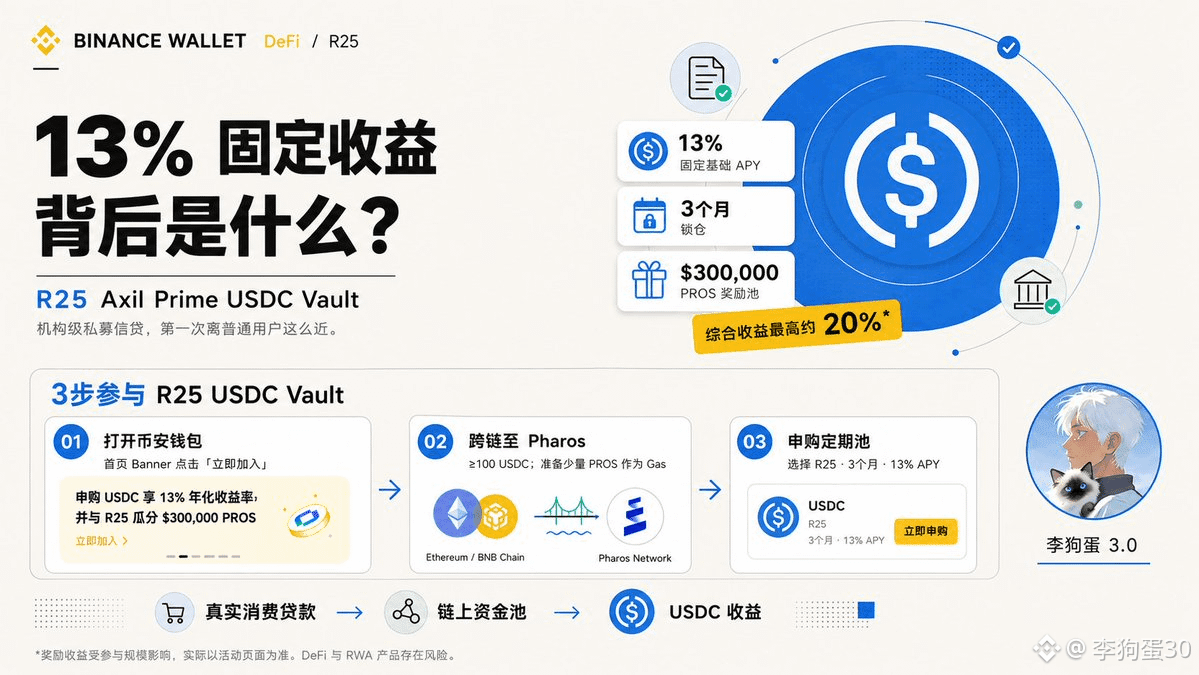
3-month fixed 13% APY stablecoin yield—Dogdan, I just want to lie back and relax. @BinanceWallet
⏰We only have the last 7 hours. This time, Binance Wallet’s Pharos R25 Axil “giveaway” campaign again—though it has a lock-up period. Just do it in 20s with Dogdan and deposit a bit.
Don’t play with perps. Save some money. Three months later, it’ll be a brand-new bull market—then you can take interest while the shorts get squeezed.
💎 Binance Wallet - R25 linked tutorial:
1️⃣
Enter the wallet 👛: Finance / homepage ad slot (R25 split $300000 PROS) - Cross-chain → 100$USDC to Pharos (remember to buy a little USDC in advance—use cross-chain to buy Pharos as gas)
2️⃣ Choose the 3-month lock-up term pool, deposit USDC. The start time is 7.15—so it’ll be around October after three months.
👆The above is just a rough tutorial. It’s super simple—once you’re in the campaign, just deposit and that’s it.
For this campaign, Dogdan noticed it a few days ago. Since it’s for three months, I locked my 120 $BNB {spot}(BNBUSDT) BNB as collateral, then borrowed about $15,000 and deposited it in.
🏝️Where does R25 get the confidence to send everyone airdrops and yield?
1️⃣ Dogdan checked this pool: the Axil Prime Credit pool. It’s a 3-month locked “vault.” The underlying yield logic is consumer loans in the market; they provide RWA private credit from institutions, and the process has four layers of credit enhancement with institutional protection.
2️⃣ This team is strong. Most team members come from professional financial institutions such as Ant, HSBC, and the Hong Kong Stock Exchange, and reportedly the team has deep ties with the Ant Group—so the background is very solid.
3️⃣ Binance Wallet + Binance’s endorsement—at least I feel safer putting funds in. This lock-up from us small retail users is basically participating on-chain to enjoy institutional private-credit yield with USDC.
Dogdan actually also has a DeFi position in the wallet, but with this kind of market, LP rates keep fluctuating and impermanent loss risk is higher. Compared with my LPs, stablecoin at 13% is more straightforward. And there’s another big reason: I can’t control my own hands—these kinds of lock-ups are actually useful for me.
3-month fixed 13% APY stablecoin yield—Dogdan, I just want to lie back and relax. @Binance Wallet
⏰We only have the last 7 hours. This time, Binance Wallet’s Pharos R25 Axil “giveaway” campaign again—though it has a lock-up period. Just do it in 20s with Dogdan and deposit a bit.
Don’t play with perps. Save some money. Three months later, it’ll be a brand-new bull market—then you can take interest while the shorts get squeezed.
💎 Binance Wallet - R25 linked tutorial:
1️⃣
Enter the wallet 👛: Finance / homepage ad slot (R25 split $300000 PROS) - Cross-chain → 100$USDC to Pharos (remember to buy a little USDC in advance—use cross-chain to buy Pharos as gas)
2️⃣ Choose the 3-month lock-up term pool, deposit USDC. The start time is 7.15—so it’ll be around October after three months.
👆The above is just a rough tutorial. It’s super simple—once you’re in the campaign, just deposit and that’s it.
For this campaign, Dogdan noticed it a few days ago. Since it’s for three months, I locked my 120 $BNB BNB as collateral, then borrowed about $15,000 and deposited it in.
🏝️Where does R25 get the confidence to send everyone airdrops and yield?
1️⃣ Dogdan checked this pool: the Axil Prime Credit pool. It’s a 3-month locked “vault.” The underlying yield logic is consumer loans in the market; they provide RWA private credit from institutions, and the process has four layers of credit enhancement with institutional protection.
2️⃣ This team is strong. Most team members come from professional financial institutions such as Ant, HSBC, and the Hong Kong Stock Exchange, and reportedly the team has deep ties with the Ant Group—so the background is very solid.
3️⃣ Binance Wallet + Binance’s endorsement—at least I feel safer putting funds in. This lock-up from us small retail users is basically participating on-chain to enjoy institutional private-credit yield with USDC.
Dogdan actually also has a DeFi position in the wallet, but with this kind of market, LP rates keep fluctuating and impermanent loss risk is higher. Compared with my LPs, stablecoin at 13% is more straightforward. And there’s another big reason: I can’t control my own hands—these kinds of lock-ups are actually useful for me.
⏰We only have the last 7 hours. This time, Binance Wallet’s Pharos R25 Axil “giveaway” campaign again—though it has a lock-up period. Just do it in 20s with Dogdan and deposit a bit.
Don’t play with perps. Save some money. Three months later, it’ll be a brand-new bull market—then you can take interest while the shorts get squeezed.
💎 Binance Wallet - R25 linked tutorial:
1️⃣
Enter the wallet 👛: Finance / homepage ad slot (R25 split $300000 PROS) - Cross-chain → 100$USDC to Pharos (remember to buy a little USDC in advance—use cross-chain to buy Pharos as gas)
2️⃣ Choose the 3-month lock-up term pool, deposit USDC. The start time is 7.15—so it’ll be around October after three months.
👆The above is just a rough tutorial. It’s super simple—once you’re in the campaign, just deposit and that’s it.
For this campaign, Dogdan noticed it a few days ago. Since it’s for three months, I locked my 120 $BNB BNB as collateral, then borrowed about $15,000 and deposited it in.
🏝️Where does R25 get the confidence to send everyone airdrops and yield?
1️⃣ Dogdan checked this pool: the Axil Prime Credit pool. It’s a 3-month locked “vault.” The underlying yield logic is consumer loans in the market; they provide RWA private credit from institutions, and the process has four layers of credit enhancement with institutional protection.
2️⃣ This team is strong. Most team members come from professional financial institutions such as Ant, HSBC, and the Hong Kong Stock Exchange, and reportedly the team has deep ties with the Ant Group—so the background is very solid.
3️⃣ Binance Wallet + Binance’s endorsement—at least I feel safer putting funds in. This lock-up from us small retail users is basically participating on-chain to enjoy institutional private-credit yield with USDC.
Dogdan actually also has a DeFi position in the wallet, but with this kind of market, LP rates keep fluctuating and impermanent loss risk is higher. Compared with my LPs, stablecoin at 13% is more straightforward. And there’s another big reason: I can’t control my own hands—these kinds of lock-ups are actually useful for me.
2
336
·
--
Bullish
Verified
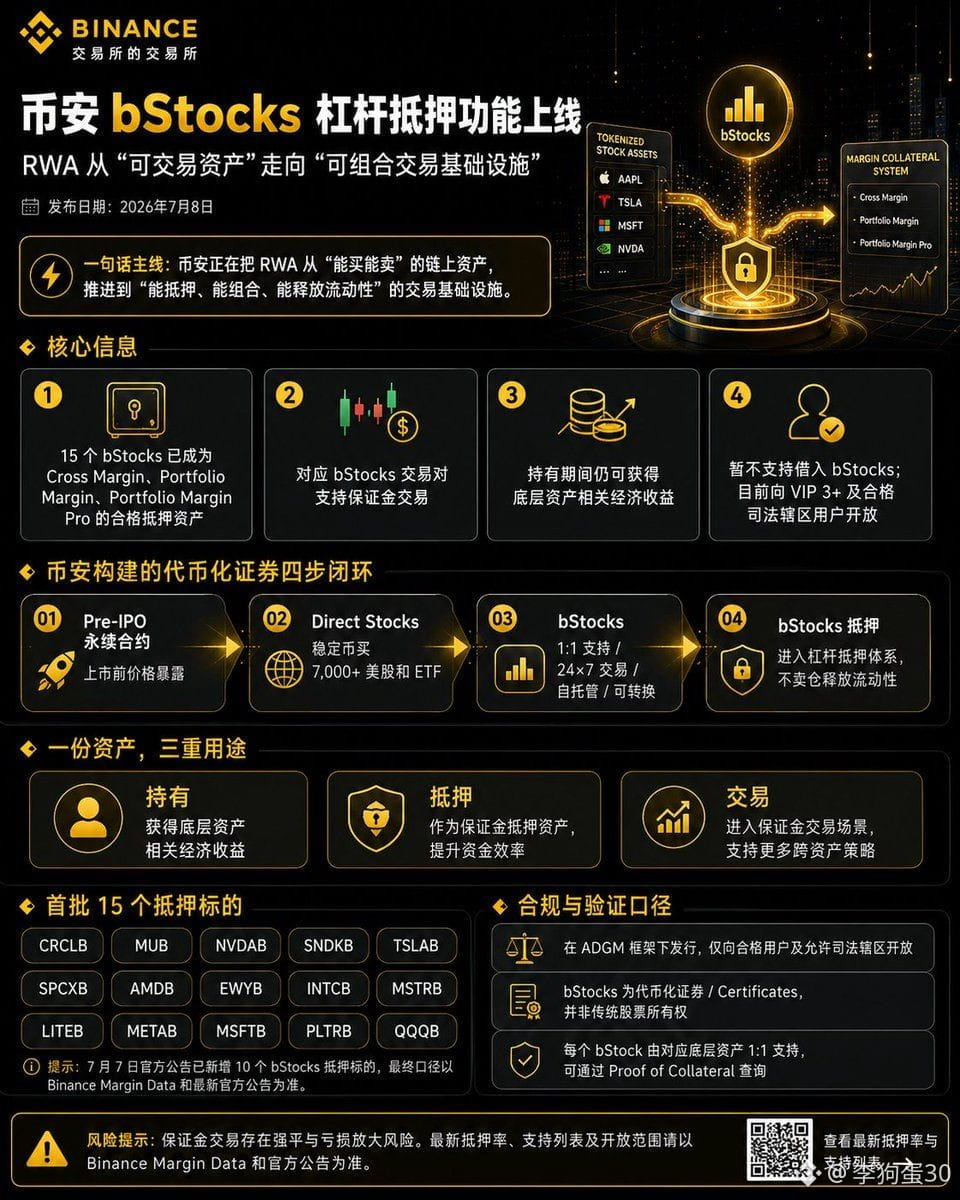
bStocks has come up with a new way to play
Today I saw the announcement and went to check Binance’s US stock offerings. The main issue Dogdan ran into when buying US traditional stocks is that if you buy stocks, you can’t transfer funds through immediately—you have to wait until the next day when the US stock market settles.
So I bought bStocks stocks, like SPCXB and SKHYB. You can trade 24/7, no worries about getting stuck with funds!
🏝️
bStocks new feature:
1️⃣ In addition to the existing 24-hour trading, Dogdan noticed that there are now 15 new bStocks margin trading options. That means the bStocks you buy can be used as margin collateral for margin and pledge trading.
2️⃣ The bStocks collateral assets in Binance have fully released liquidity. It includes tech giants, AI/chips, growth stocks, space exploration, and ETFs.
3️⃣ Now the bStocks we’re buying have officially entered the margin system. Not only can you buy and sell, but you can also do partial collateralization. Compared with meme coins, this kind of US stock collateral feels safer. However, this currently does not support lending.
🏝️ How Dogdan plays bStocks collateral:
I’ve always liked US stocks. Usually I buy them for long-term holding. For example, with spcxb, my current move is: I buy it on Binance, then use it as collateral, borrow USDT, and then go to BSC to provide liquidity for SPCXB/USDT (LP).
But this is currently available only to users VIP3 and above, and to users from eligible jurisdictions. In the future it may open up to more users. If you’re qualified, I suggest you give bStocks a try.
Maximize the use of your funds—but this is also leverage, so don’t let your risk exposure get too large! I usually keep 20% of my stablecoins as backup margin. $NVDAB
bStocks has come up with a new way to play
Today I saw the announcement and went to check Binance’s US stock offerings. The main issue Dogdan ran into when buying US traditional stocks is that if you buy stocks, you can’t transfer funds through immediately—you have to wait until the next day when the US stock market settles.
So I bought bStocks stocks, like SPCXB and SKHYB. You can trade 24/7, no worries about getting stuck with funds!
🏝️
bStocks new feature:
1️⃣ In addition to the existing 24-hour trading, Dogdan noticed that there are now 15 new bStocks margin trading options. That means the bStocks you buy can be used as margin collateral for margin and pledge trading.
2️⃣ The bStocks collateral assets in Binance have fully released liquidity. It includes tech giants, AI/chips, growth stocks, space exploration, and ETFs.
3️⃣ Now the bStocks we’re buying have officially entered the margin system. Not only can you buy and sell, but you can also do partial collateralization. Compared with meme coins, this kind of US stock collateral feels safer. However, this currently does not support lending.
🏝️ How Dogdan plays bStocks collateral:
I’ve always liked US stocks. Usually I buy them for long-term holding. For example, with spcxb, my current move is: I buy it on Binance, then use it as collateral, borrow USDT, and then go to BSC to provide liquidity for SPCXB/USDT (LP).
But this is currently available only to users VIP3 and above, and to users from eligible jurisdictions. In the future it may open up to more users. If you’re qualified, I suggest you give bStocks a try.
Maximize the use of your funds—but this is also leverage, so don’t let your risk exposure get too large! I usually keep 20% of my stablecoins as backup margin. $NVDAB
Today I saw the announcement and went to check Binance’s US stock offerings. The main issue Dogdan ran into when buying US traditional stocks is that if you buy stocks, you can’t transfer funds through immediately—you have to wait until the next day when the US stock market settles.
So I bought bStocks stocks, like SPCXB and SKHYB. You can trade 24/7, no worries about getting stuck with funds!
🏝️
bStocks new feature:
1️⃣ In addition to the existing 24-hour trading, Dogdan noticed that there are now 15 new bStocks margin trading options. That means the bStocks you buy can be used as margin collateral for margin and pledge trading.
2️⃣ The bStocks collateral assets in Binance have fully released liquidity. It includes tech giants, AI/chips, growth stocks, space exploration, and ETFs.
3️⃣ Now the bStocks we’re buying have officially entered the margin system. Not only can you buy and sell, but you can also do partial collateralization. Compared with meme coins, this kind of US stock collateral feels safer. However, this currently does not support lending.
🏝️ How Dogdan plays bStocks collateral:
I’ve always liked US stocks. Usually I buy them for long-term holding. For example, with spcxb, my current move is: I buy it on Binance, then use it as collateral, borrow USDT, and then go to BSC to provide liquidity for SPCXB/USDT (LP).
But this is currently available only to users VIP3 and above, and to users from eligible jurisdictions. In the future it may open up to more users. If you’re qualified, I suggest you give bStocks a try.
Maximize the use of your funds—but this is also leverage, so don’t let your risk exposure get too large! I usually keep 20% of my stablecoins as backup margin. $NVDAB
3
4
7.2k
·
--
$BILL is out of 20,000 u, brothers, we take off
$BILL is out of 20,000 u, brothers, we take off
2
291
·
--
$BILL This kind of brainless empty shots are over
$BILL This kind of brainless empty shots are over
130
Log in to explore more content
Join global crypto users on Binance Square
⚡️ Get latest and useful information about crypto.
💬 Trusted by the world’s largest crypto exchange.
👍 Discover real insights from verified creators.
Email / Phone number
Trending Topics
USAugustPPIRisesLessThanExpected
56,057 views
849 Discussing
🚨 US AUG PPI: Rises LESS Than Expected! Bullish for Crypto? 🚀
PPI +0.4% MoM as expected, but CORE PPI only +0.2% vs +0.3% expected - cooling!
What it means:
• Wholesale inflation softer than feared
• Fed rate hike chance now 62% - but dovish signals coming
• Core PCE revisions expected downward - bullish
• BTC usually pumps on softer PPI
Fed meeting Sep 15-16 - Market now expects pause, not hike?
Is this the green light for Q4 rally?
#Bitcoin #PPI #Fed #CryptoNews #BTC#usaugustppiriseslessthanexpected
True News
·1 Likes
·1.4k views
SECApprovesNasdaqTexasCommodityTrustRule
29,183 views
614 Discussing
ECBRaisesRatesSecondTimeTo2.5%
26,786 views
439 Discussing