
LeonardMSardua
24 Posts

LeonardMSardua
Report
Block User
18 Following
4 Followers
23 Liked
Posts
All
Quotes
PINNED
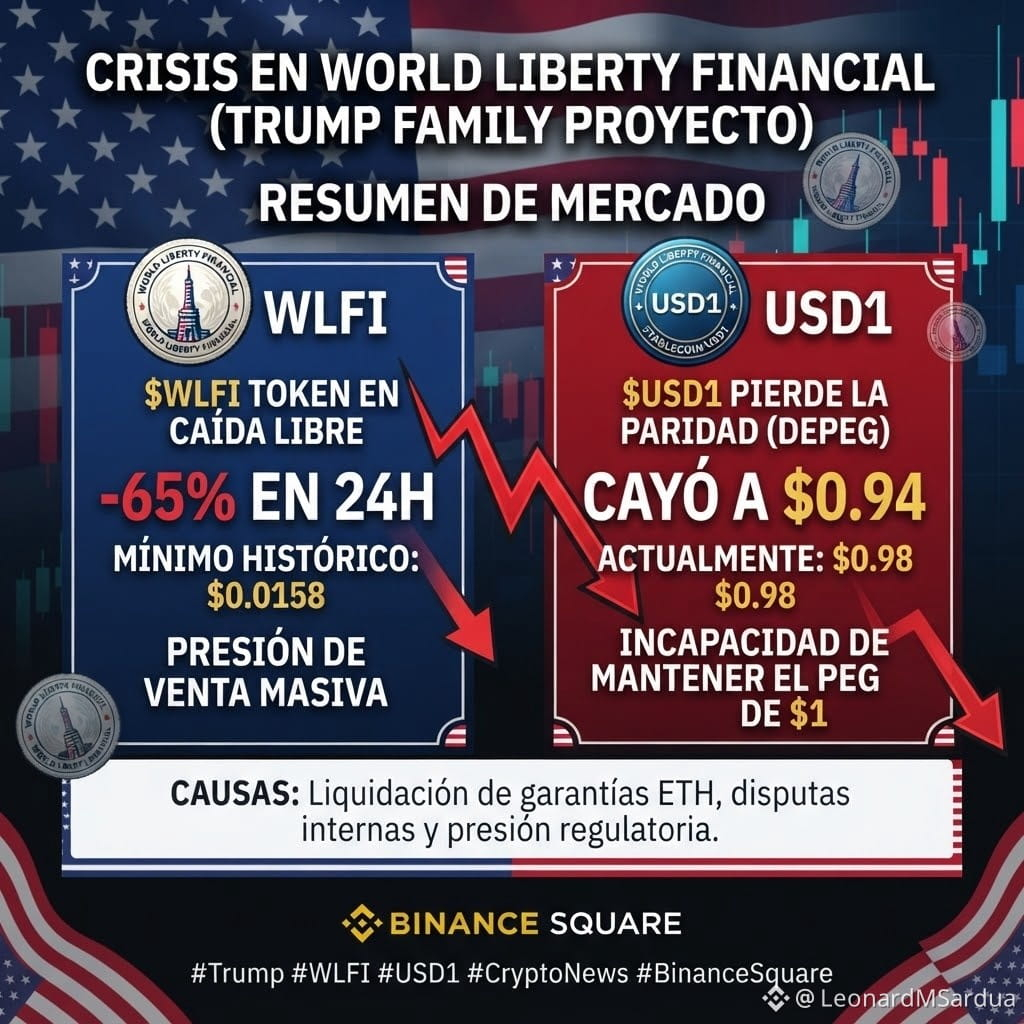
Recent developments related to the decentralized finance project World Liberty Financial, backed by the Trump family, include a drop in its governance token and stablecoin:
$WLFI token plunge: The project's native token suffered a sharp drop of between 50% and 60% within hours, reaching record lows near $0.0158 before a slight rebound. Selling pressure intensified amid speculation about the massive sale of Ether (ETH) collateral to cover or restructure multibillion-dollar debts taken out on the Dolomite lending platform against $WLFI tokens.
$USD1 depeg: The platform-issued stablecoin briefly broke its peg to the U.S. dollar, falling as low as $0.94 on exchanges such as Binance before rebounding and stabilizing near $1 through market-maker arbitrage.
Internal tensions and disputes: The episode comes amid public legal disputes and tensions between the project and major early investors (such as Justin Sun), as well as regulatory scrutiny of the risks of mass token liquidation $WLFI in DeFi lending protocols.
#WILFI #USD1
$WLFI $USD1
{spot}(USD1USDT)
{spot}(WLFIUSDT)
Recent developments related to the decentralized finance project World Liberty Financial, backed by the Trump family, include a drop in its governance token and stablecoin:
$WLFI token plunge: The project's native token suffered a sharp drop of between 50% and 60% within hours, reaching record lows near $0.0158 before a slight rebound. Selling pressure intensified amid speculation about the massive sale of Ether (ETH) collateral to cover or restructure multibillion-dollar debts taken out on the Dolomite lending platform against $WLFI tokens.
$USD1 depeg: The platform-issued stablecoin briefly broke its peg to the U.S. dollar, falling as low as $0.94 on exchanges such as Binance before rebounding and stabilizing near $1 through market-maker arbitrage.
Internal tensions and disputes: The episode comes amid public legal disputes and tensions between the project and major early investors (such as Justin Sun), as well as regulatory scrutiny of the risks of mass token liquidation $WLFI in DeFi lending protocols.
#WILFI #USD1
$WLFI $USD1
1
140
PINNED
1. Current context and key data
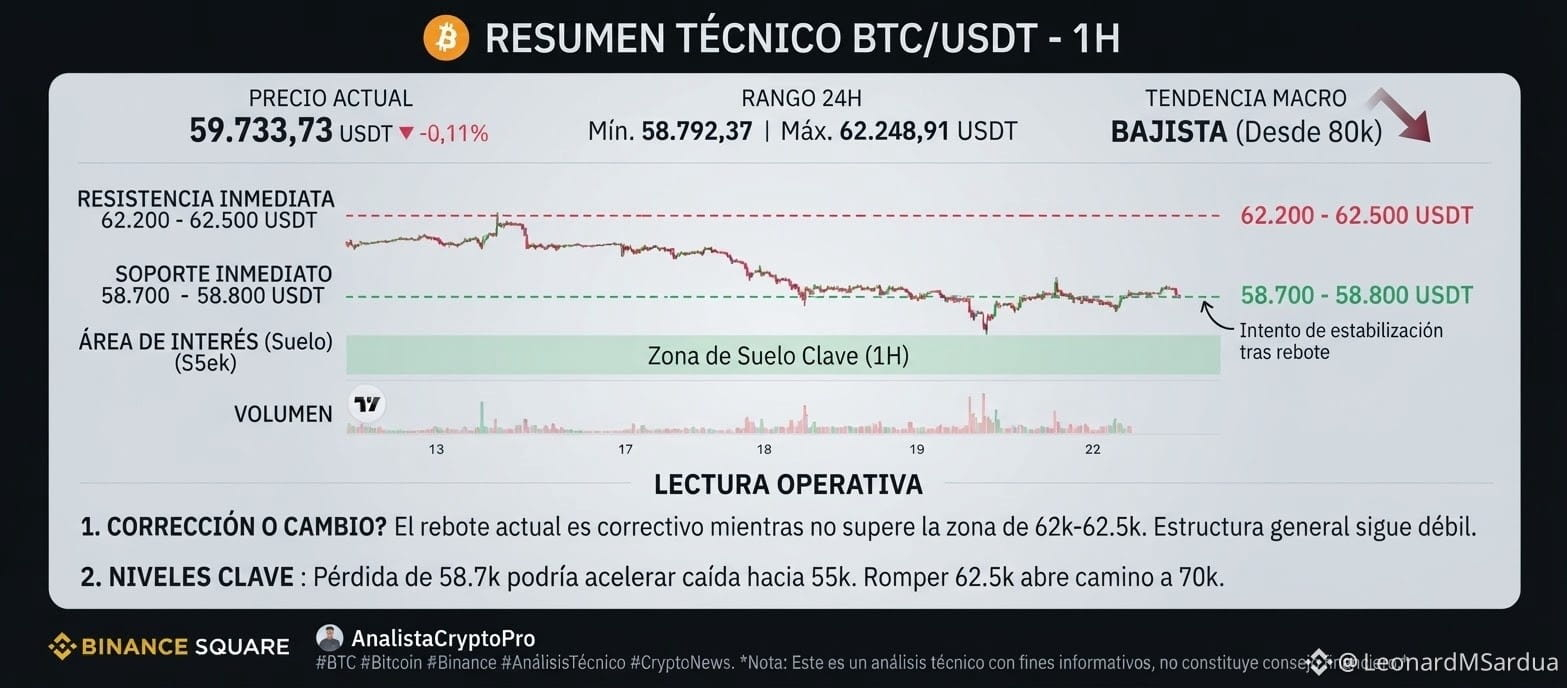
Current price: 59.733,73 USDT (-64,69 / -0,11% on the candle/reading shown; -1,45% on a daily basis).
24h range: High of 62.248,91 and low of 58.792,37 USDT.
24h volume: 20.701,20 BTC (1,26B USDT), with the volume histogram below showing occasional spikes during sharp moves and moderate/contained activity during sideways periods.
2. Structure and price action
Macro chart trend (since late October / early November): Clearly bearish, with a sequence of lower highs and lower lows from levels above 80.000 USDT toward the 50.000–60.000 USDT area.
Visible phases:
1. Distribution / Gradual decline: After rejections near 80.000 and brief pauses/consolidations (for example, between the 4th and 10th, and then near 70.000 USDT), the price loses support and accelerates downward around mid-month.
2. Relative bottom and rebound: A deep low is marked around the 21st–22nd (below 55.000 USDT, near the 52.000–54.000 USDT range according to the scale), accompanied by a spike in volume.
3. Corrective recovery / Recent range: From that low, a rebound with higher short-term highs can be observed, briefly moving above 62.000 USDT, followed by a pullback/consolidation around 59.700 USDT.
3. Reference zones (Support and Resistance)
Immediate / intraday support: 58.700 – 58.800 USDT area (24h low); below that, the 55.000 USDT area and the recent low of the upward move.
Immediate resistance: 62.200 – 62.500 USDT area (24h high and ceiling of the recent rebound); higher up, the psychological 70.000 USDT area continues to act as a major prior reference on the chart.
$BTC #BTC☀ #bitcoin
1
1
133
🔥💪🏻👌🏻
🔥💪🏻👌🏻

Criptronica
·
--
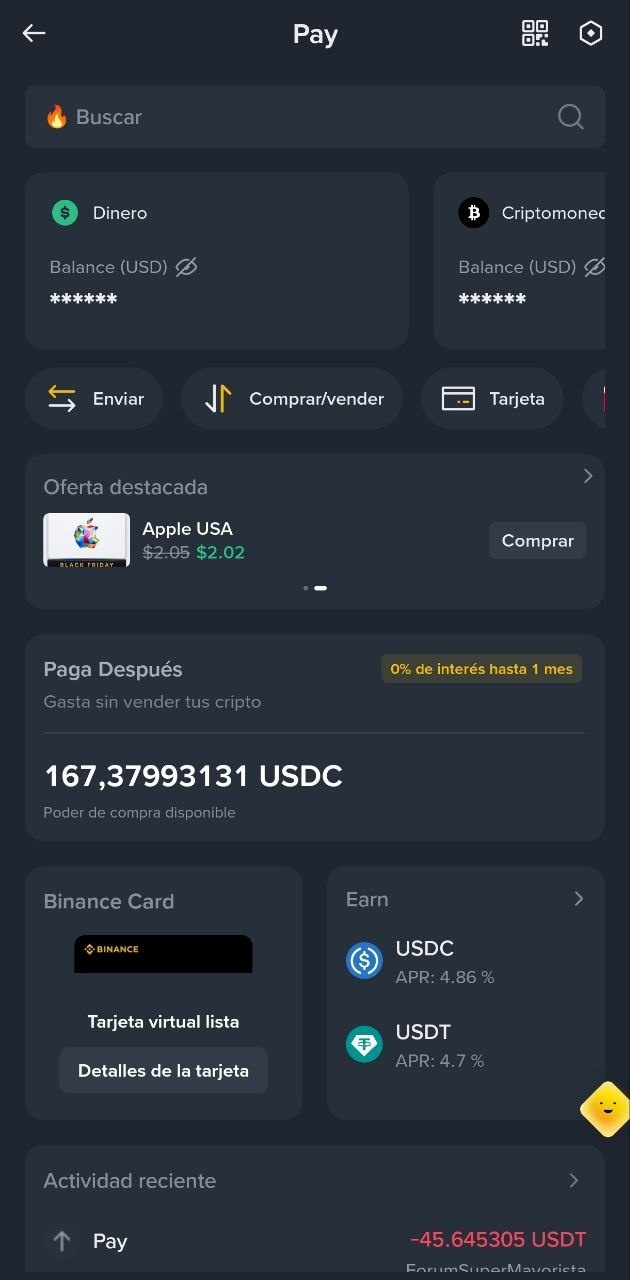
I'm already testing Binance Pay Later in Venezuela: a credit line of up to 1,000 USDC, using your BTC, ETH, or BNB as collateral for card and QR code purchases.
How does it work?
🛒 Buy today and pay the following month with 0% interest, spending your crypto without having to sell it.
🔒 You finance yourself: You need to put your crypto up as collateral to activate the credit line.
⚙️ Step by step: In the Pay Later section of Pay, you can see your limit. The loan is generated when you pay, and the collateral is locked.
Watch out for the risk: There’s no interest if you pay before the 1st of each month, but you should be prepared for possible liquidations.
Is this something new? Not really. It’s the same logic as the collateralized loans we already used in Binance Earn, but now adapted for instant payments, with potential future rewards and the aim of bringing your holdings to the platform.
1
72

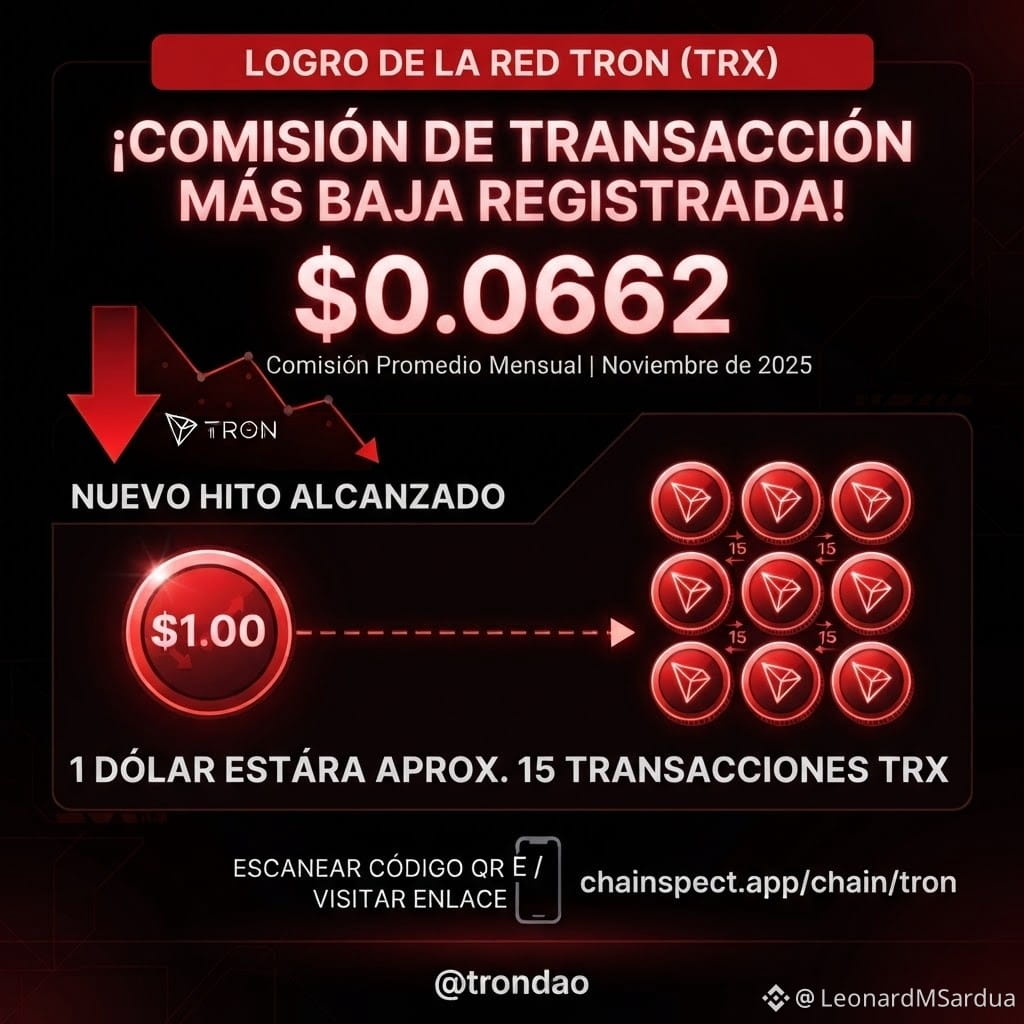
The average monthly fee per transaction on 💸 @trondao dropped to $0.0662 yesterday, the lowest level it has ever reached.
Now, one dollar can buy approximately 15 transactions.
Now, one dollar can buy approximately 15 transactions.
📊 chainspect.app/chain/tron?ran…
mind-blowing!!! #Tron #TronNetwork
The average monthly fee per transaction on 💸 @trondao dropped to $0.0662 yesterday, the lowest level it has ever reached.
Now, one dollar can buy approximately 15 transactions.
Now, one dollar can buy approximately 15 transactions.
📊 chainspect.app/chain/tron?ran…
mind-blowing!!! #Tron #TronNetwork
Now, one dollar can buy approximately 15 transactions.
Now, one dollar can buy approximately 15 transactions.
📊 chainspect.app/chain/tron?ran…
mind-blowing!!! #Tron #TronNetwork
1
281
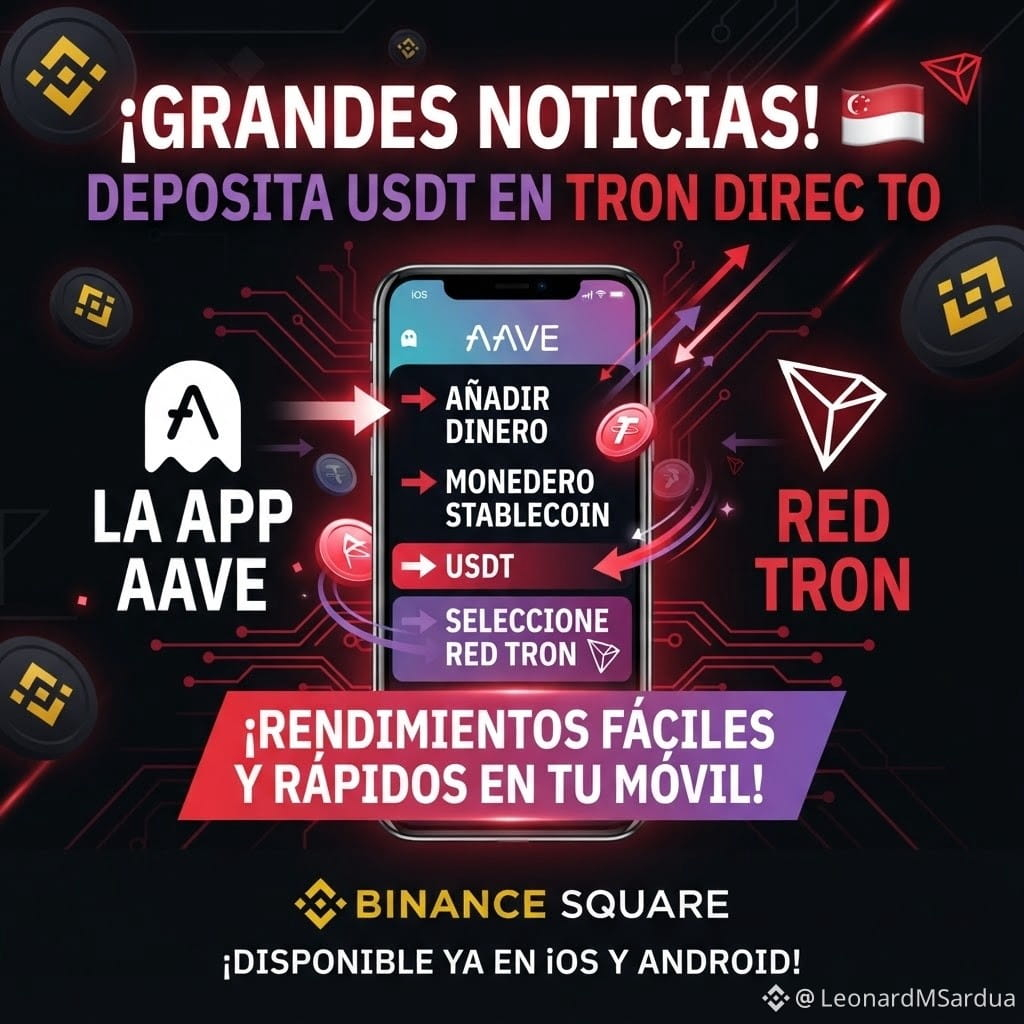
This news marks a major milestone in the adoption of decentralized finance (DeFi), as Aave Labs has enabled USDT deposits through the TRON network in its official mobile app (available for iOS and Android).
This integration simplifies access to on-chain yields, allowing everyday users to interact with decentralized savings protocols without dealing with the technical complexity typically associated with Web3.
Key Points: The story in detail
Multichain and mobile support: The Aave app (which recently expanded to Android) integrated the TRON network (TRC-20 standard) as a direct deposit option for USDT.
Automatic yield
(Per-second yield): Users can deposit USDT on TRON and earn a variable interest rate (with an advertised peak of up to 7.25% APY, depending on market conditions and region). Interest is credited every second, and funds are not subject to lock-up periods.
The strategic partnership (Aave + TRON):
TRON is the dominant network for the global circulation of Tether, hosting more than $94 billion in USDT (widely used for payments, remittances, and as a store of value in emerging economies).
Aave is the most liquid lending and savings protocol in decentralized finance (with more than $45 million raised quickly through its mobile app).
Simplified user experience (UX): The app eliminates the need for retail investors to manage complex gas fees or navigate confusing DeFi interfaces. It also features security measures such as biometric authentication (Face ID), two-factor authentication (2FA), and the Balance Protection program.
Why is this such a significant move?
1. Financial inclusion and remittances: TRON is hugely popular in Latin America, Asia, and Africa due to its ultra-low transaction fees. Allowing those same USDT holdings to generate daily yield directly from a mobile phone democratizes access to interest rates that traditional banks rarely offer.
$TRX #TRON✅
2
332
🩸. General context and catalysts
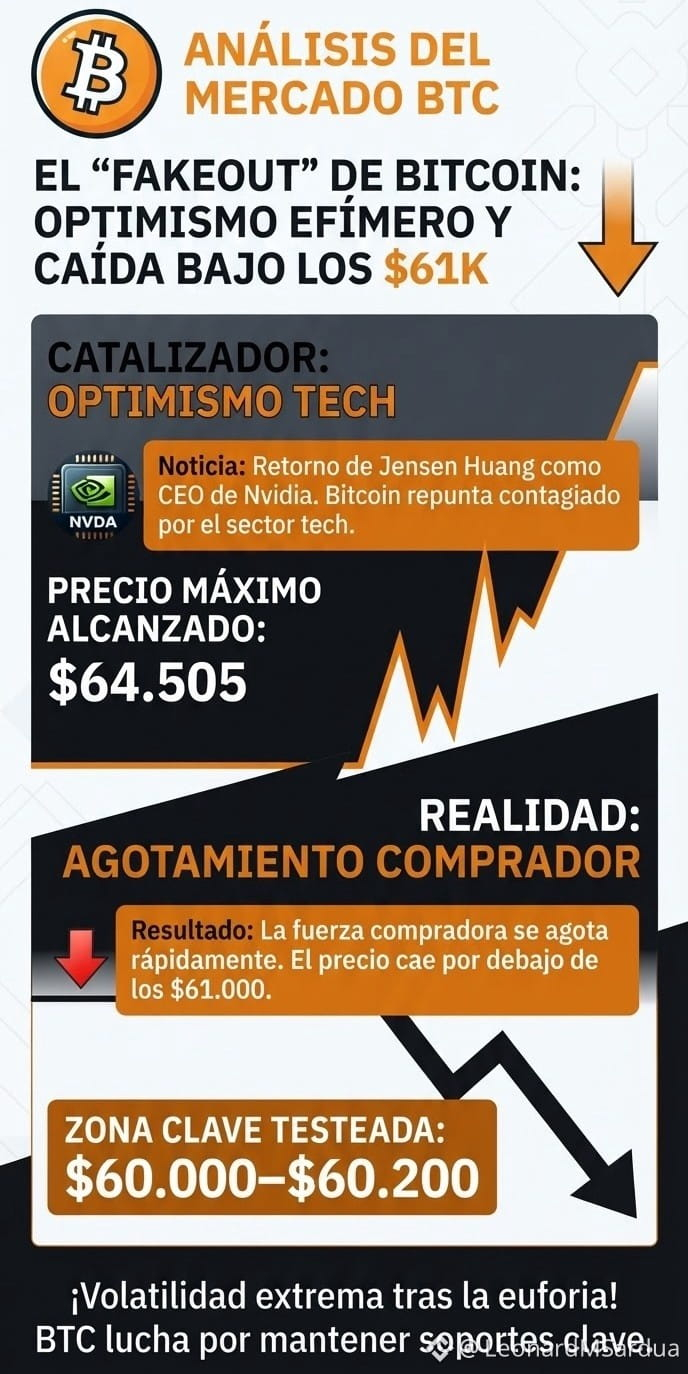
«Fakeout» effect after macro/tech news: After the announcement that Jensen Huang was returning as Nvidia CEO, Bitcoin rebounded toward $64,505, buoyed by optimism in the tech sector. However, buying pressure quickly faded, sending the price back below $61,000 (and testing the key $60,000–$60,200 zone).
You could see it coming; there’s no strength at all ... be patient and keep following the market.
$BTC #NVIDIAReinstatesJensenHuangasCEO
#BTC走势分析
{spot}(BTCUSDT)
🩸. General context and catalysts
«Fakeout» effect after macro/tech news: After the announcement that Jensen Huang was returning as Nvidia CEO, Bitcoin rebounded toward $64,505, buoyed by optimism in the tech sector. However, buying pressure quickly faded, sending the price back below $61,000 (and testing the key $60,000–$60,200 zone).
You could see it coming; there’s no strength at all ... be patient and keep following the market.
$BTC #NVIDIAReinstatesJensenHuangasCEO
#BTC走势分析
1
149
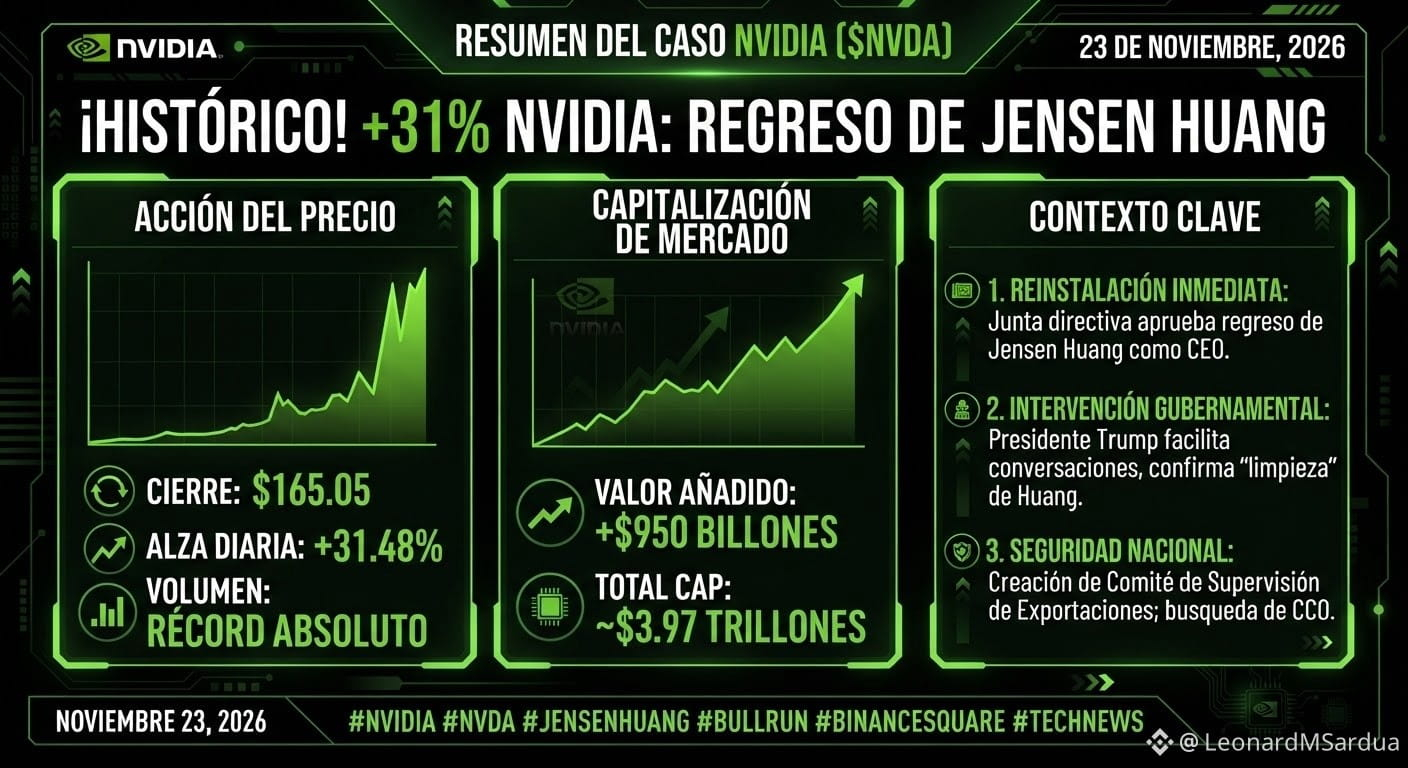
November 23, 2026, marked a historic day for NVIDIA (NVDA) and global financial markets, dominated by the reinstatement of its longtime CEO, Jensen Huang.
1. Jensen Huang’s return as CEO
NVIDIA’s Board of Directors voted unanimously to reinstate Jensen Huang as chairman, CEO, and member of the board, effective immediately.
Huang had resigned just 11 days earlier following press reports and personal and governance controversies. His immediate return removes uncertainty about executive leadership and strategic partnerships with major tech companies acquiring artificial intelligence infrastructure.
2. Market reaction and stock performance
Record surge: Nvidia shares soared +31.48%, closing the day at $165.05 per share.
Market capitalization gains: The company added approximately $950 billion to its market value in a single day, reaching a total valuation of nearly $3.97 trillion. This was its largest daily percentage gain in more than 20 years.
Ripple effect on Wall Street: The Nasdaq Composite technology index rebounded 6.5%, recovering much of the losses recorded in the semiconductor sector the previous week.
3. Political context and national security
U.S. government intervention: President Donald Trump publicly stated that he had influenced discussions with the board to urge Huang’s return, noting that the administration had found no evidence of illegal conduct by Huang.
Pure and simple manipulation!!!
$NVDA #NVIDIA
1
241
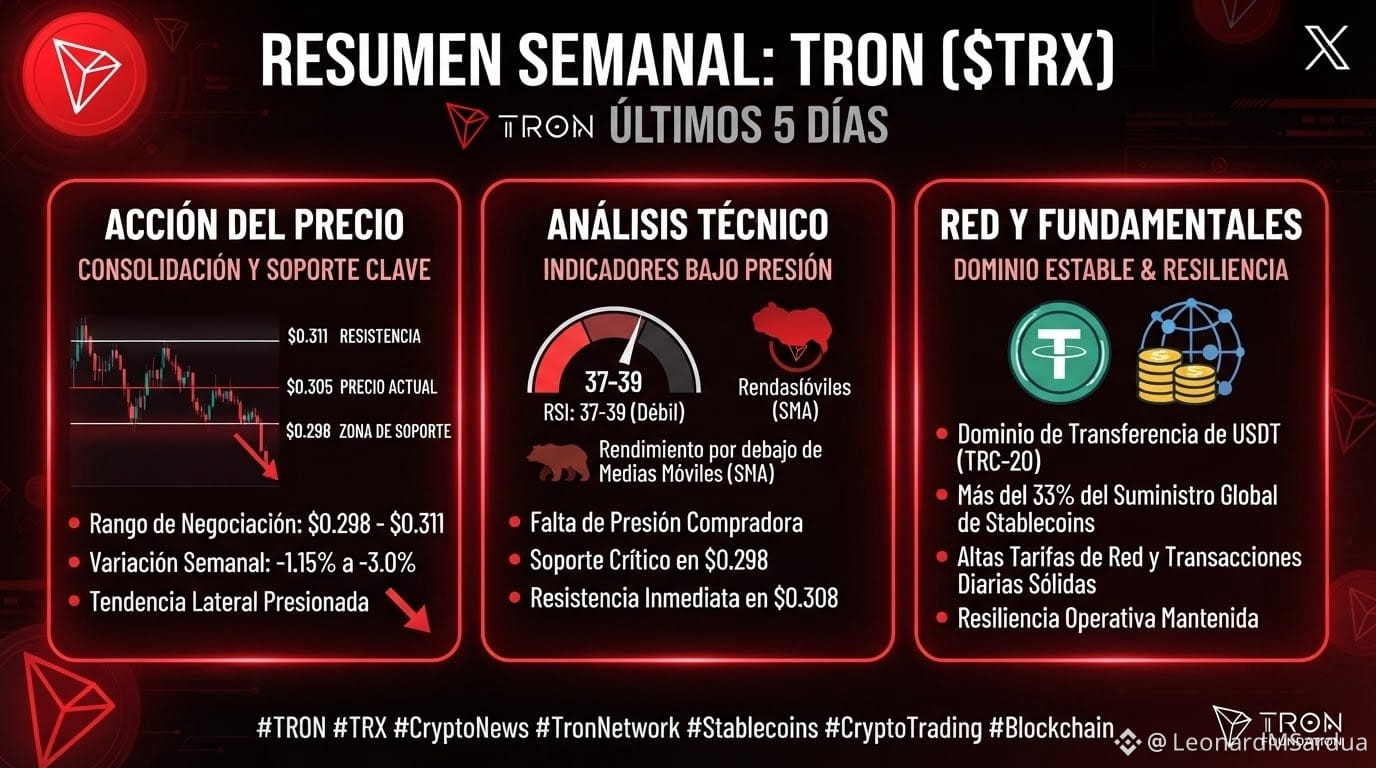
TRON ($TRX) is in a narrow-range consolidation phase, trading around $0.304–$0.306 USD.
Despite recording slight intraday rebounds, the price remains under pressure below its main moving averages after losing ground from the $0.315 USD zone in mid-November.
1. Price Action (Last 5 Days)
Trading Range: Between $0.2984 USD (recorded local low) and $0.3112 USD (immediate resistance).
Weekly Change: Returns of -1.15% to -3.0%, moving sideways to slightly downward compared with the rest of the crypto market.
Recent Close: Moderate rebound (~+1.3%) from the key $0.298 USD support, stabilizing near $0.305 USD, with daily trading volume of around $400M–$690M USD.
2. Technical Analysis and Indicators
Short-Term Trend: Neutral to bearish. $TRX is trading below its key 7-, 15-, and 30-day moving averages.
Momentum: The RSI is at ~37–39, reflecting structural weakness and a lack of buying pressure, although it has not formally entered oversold territory.
Key Levels to Monitor:
Support: $0.302 USD and the recent low of $0.298 USD. If it falls below $0.298, it could move toward the $0.292–$0.293 USD zone.
Resistance: $0.308 USD (SMA-7) and $0.311 USD (SMA-15). A daily close above $0.321 USD is needed to confirm a trend reversal.
3. Network and Fundamentals
Stablecoin Dominance: The TRON network maintains its dominant position in global USDT (TRC-20) transfers, supporting more than 33% of the total stablecoin supply (~$93.7B) and capturing consistently high transaction volume.
Operational Resilience: Although the price shows short-term consolidation, network revenue (energy/bandwidth fees) and daily transactions remain strong.
Objectivity and reality when creating content—I sell reality, not hype.
$TRX #TRX/USDT❤️
TRON ($TRX ) is in a narrow-range consolidation phase, trading around $0.304–$0.306 USD.
Despite recording slight intraday rebounds, the price remains under pressure below its main moving averages after losing ground from the $0.315 USD zone in mid-November.
1. Price Action (Last 5 Days)
Trading Range: Between $0.2984 USD (recorded local low) and $0.3112 USD (immediate resistance).
Weekly Change: Returns of -1.15% to -3.0%, moving sideways to slightly downward compared with the rest of the crypto market.
Recent Close: Moderate rebound (~+1.3%) from the key $0.298 USD support, stabilizing near $0.305 USD, with daily trading volume of around $400M–$690M USD.
2. Technical Analysis and Indicators
Short-Term Trend: Neutral to bearish. $TRX is trading below its key 7-, 15-, and 30-day moving averages.
Momentum: The RSI is at ~37–39, reflecting structural weakness and a lack of buying pressure, although it has not formally entered oversold territory.
Key Levels to Monitor:
Support: $0.302 USD and the recent low of $0.298 USD. If it falls below $0.298, it could move toward the $0.292–$0.293 USD zone.
Resistance: $0.308 USD (SMA-7) and $0.311 USD (SMA-15). A daily close above $0.321 USD is needed to confirm a trend reversal.
3. Network and Fundamentals
Stablecoin Dominance: The TRON network maintains its dominant position in global USDT (TRC-20) transfers, supporting more than 33% of the total stablecoin supply (~$93.7B) and capturing consistently high transaction volume.
Operational Resilience: Although the price shows short-term consolidation, network revenue (energy/bandwidth fees) and daily transactions remain strong.
Objectivity and reality when creating content—I sell reality, not hype.
$TRX #TRX/USDT❤️
1
274
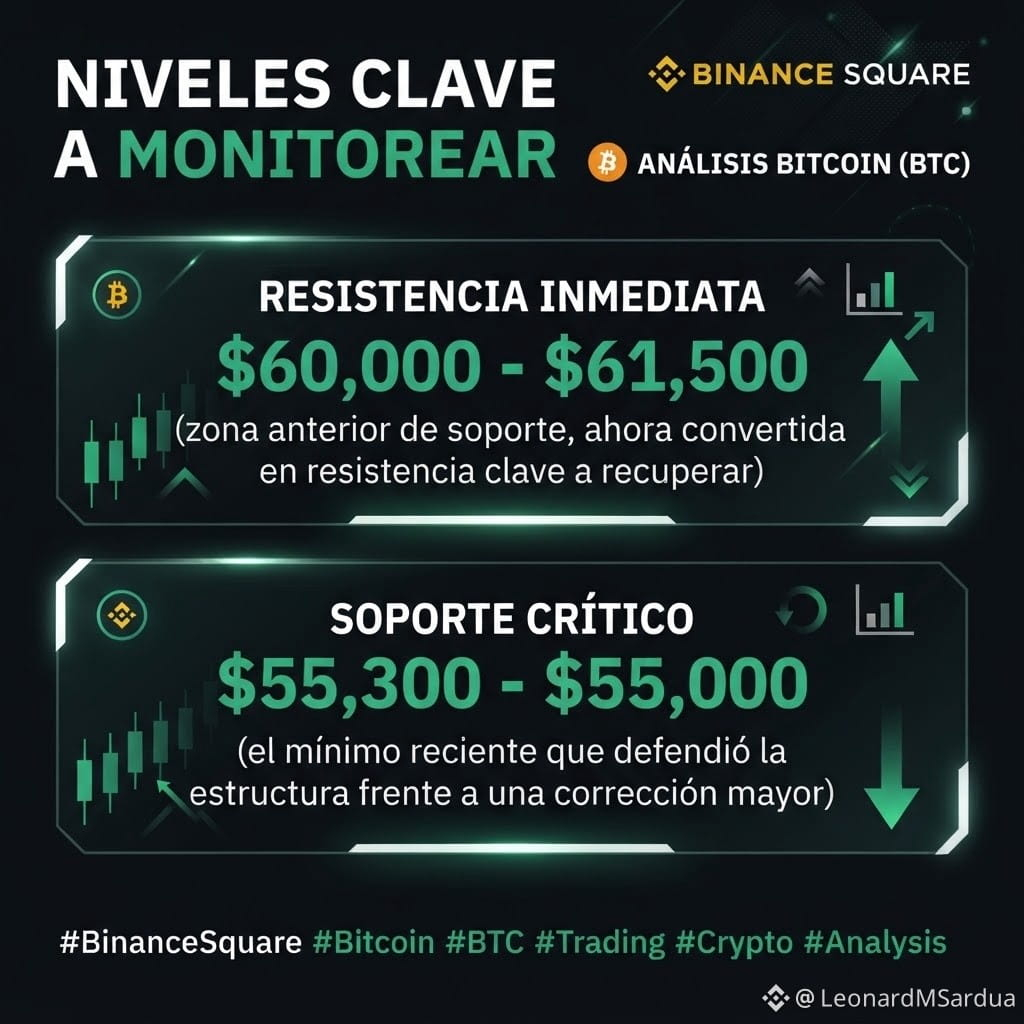
Key levels to monitor
Immediate resistance: $60,000 - $61,500 (previous support zone, now turned into key resistance to reclaim).
Critical support: $55,300 - $55,000 (the recent low that defended the structure against a deeper correction).
keep a close eye, keep a close eye
$BTC
Key levels to monitor
Immediate resistance: $60,000 - $61,500 (previous support zone, now turned into key resistance to reclaim).
Critical support: $55,300 - $55,000 (the recent low that defended the structure against a deeper correction).
keep a close eye, keep a close eye
$BTC
Immediate resistance: $60,000 - $61,500 (previous support zone, now turned into key resistance to reclaim).
Critical support: $55,300 - $55,000 (the recent low that defended the structure against a deeper correction).
keep a close eye, keep a close eye
$BTC
1
128
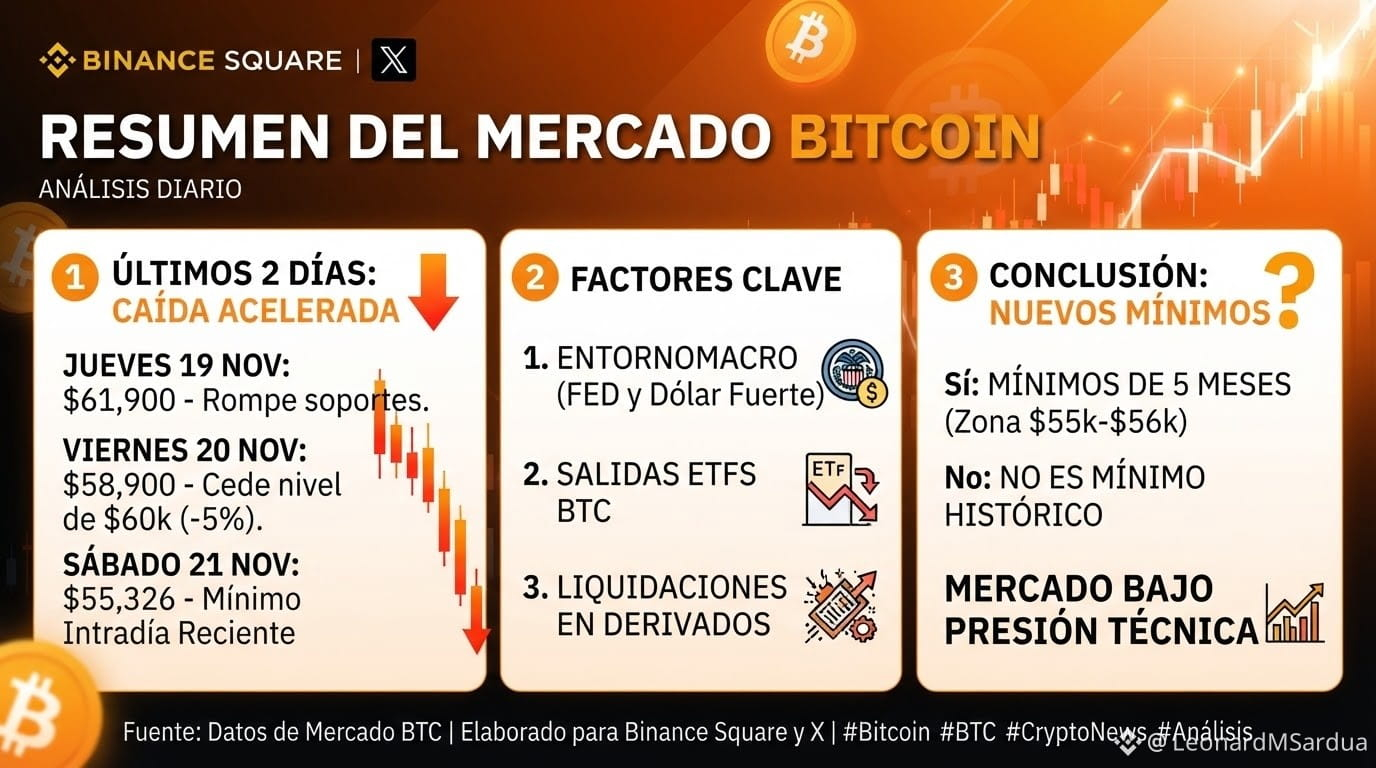
The Bitcoin market has experienced strong selling pressure over the past 48 hours, intensifying the downward trend across the crypto market.
1. Summary of the Last Two Days
Thursday (November 19): Bitcoin was trading in the $61,900–$62,000 range, breaking key support levels amid concerns about the Federal Reserve's (Fed) stance and continued net outflows from spot BTC ETFs.
Friday (November 20): Selling pressure intensified. BTC fell below the psychological $60,000 level, closing the day near $58,900 after declining around 5% over the course of the day.
Saturday (November 21 - Today): Volatility increased during the day, with Bitcoin reaching an intraday low of $55,326 before temporarily stabilizing in the $57,800–$58,000 range.
2. Factors Behind the Decline
1. Macroeconomic Environment and Interest Rates: A more restrictive tone from the Fed and a strengthening dollar reduced liquidity for risk assets.
2. Institutional Fund Outflows (ETFs): Bitcoin ETFs recorded significant net outflows during the week, adding selling pressure to the spot market.
3. Cascade Effect in Derivatives: The break below $60,000 triggered the forced liquidation of long positions in futures markets, accelerating the decline toward $55,000.
3. Are We Seeing New Lows?
Lows of the Past Few Months: Yes. The decline to the $55,300–$55,600 range marks Bitcoin's lowest level in more than 5 months (and establishes a new floor within the past 52 weeks' range).
All-Time Lows: No. Bitcoin's all-time high is around $126,270 (reached in October 2025). Therefore, this is not an all-time low for the asset overall, but it is a yearly/six-month low that puts the price in a delicate technical zone.
$BTC
1
112
🔥
🔥
Criptronica
·
--
I’m already trying out Binance Pay Later in Venezuela: a credit line of up to 1,000 USDC backed by your BTC, ETH, or BNB for card and QR code purchases.
🛒 Shop today and pay the following month with 0% interest, spending your crypto without selling it.
🔒 You finance yourself: You have to put your crypto up as collateral to activate the credit line.
⚙️ From Pay, you can see your limit. The loan is generated when you pay, and your collateral remains locked.
It works like the collateralized loans we already used on Binance Earn, but adapted for instant payments and designed to bring your holdings onto the platform.
4
Partly True
$ANT Anthropic
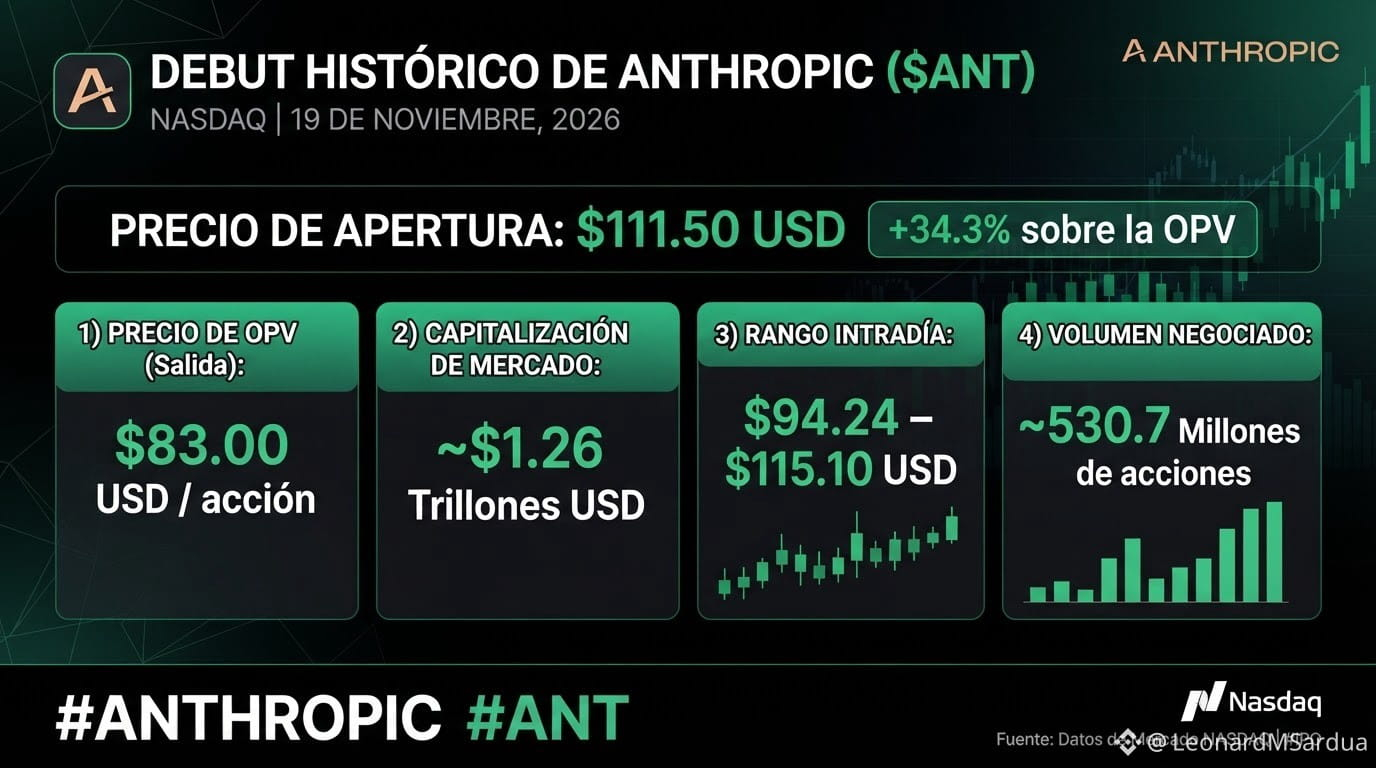
Key details of its debut today (November 19, 2026)
• IPO price (offering): $83.00 USD per share
• Nasdaq opening price: $111.50 USD (+34.3% above the IPO price)
• Intraday range: $94.24 – $115.10 USD
• Market capitalization: ~$1.26 trillion USD
• Trading volume: ~530.7 million shares
#Anthropic
Key details of its debut today (November 19, 2026)
• IPO price (offering): $83.00 USD per share
• Nasdaq opening price: $111.50 USD (+34.3% above the IPO price)
• Intraday range: $94.24 – $115.10 USD
• Market capitalization: ~$1.26 trillion USD
• Trading volume: ~530.7 million shares
#Anthropic
2
576
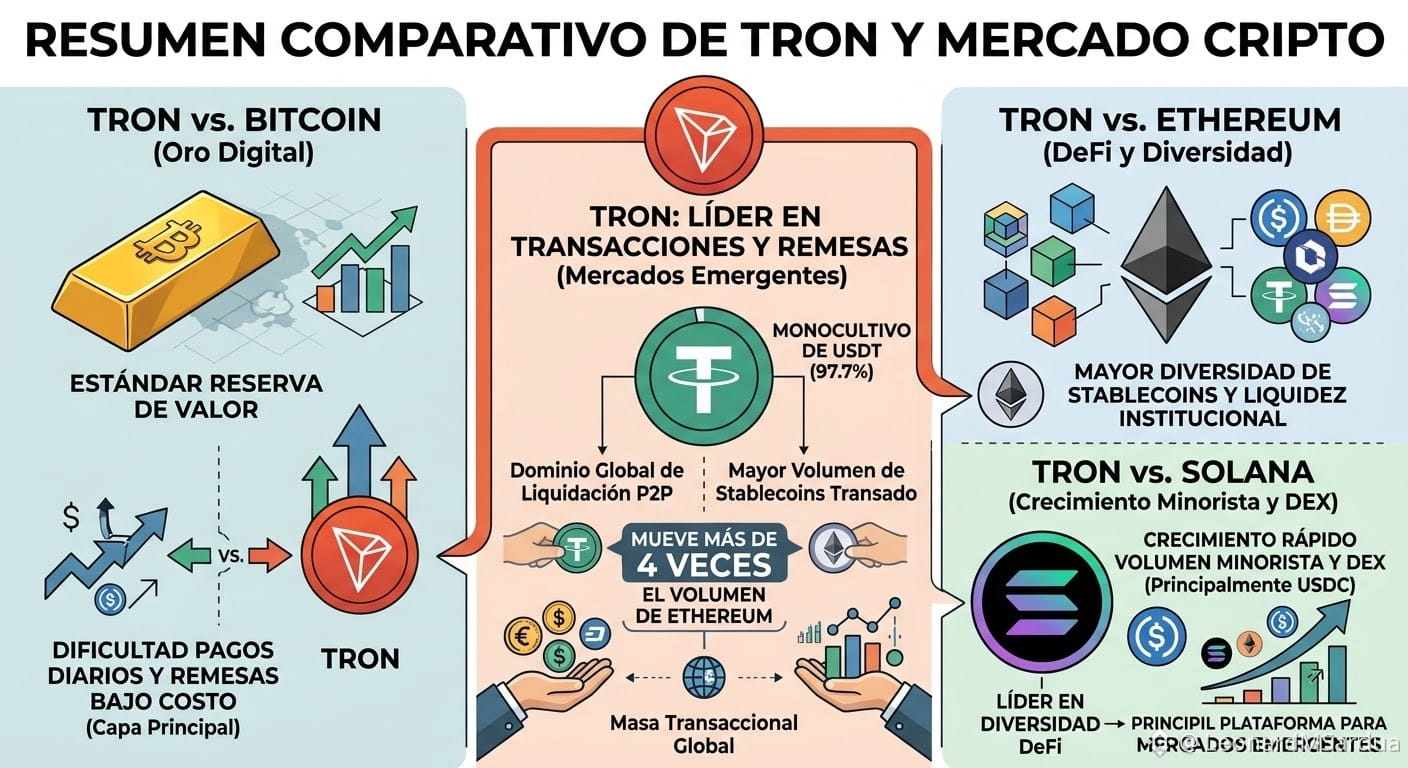
TRON vs. Bitcoin:
Bitcoin is the standard for storing value (digital gold), but it does not process stablecoin payments on its main layer. TRON filled the niche of daily transactions and international remittances that Bitcoin could not cover at low cost on Layer 1.
TRON vs. Ethereum:
By volume: TRON moves more than 4 times the stablecoin volume of Ethereum (73% vs. 15%).
In diversity and DeFi: Ethereum hosts the greatest variety of stablecoins (USDC, DAI, etc.) and institutional DeFi liquidity, while TRON is a USDT monoculture (97.7% of its ecosystem).
TRON vs. Solana:
Solana has grown rapidly in retail volume and decentralized exchanges, mainly using USDC. However, in terms of global transaction volume and frozen circulating money (USDT supply), TRON continues to dominate as the favored P2P settlement network in emerging markets.
1
392
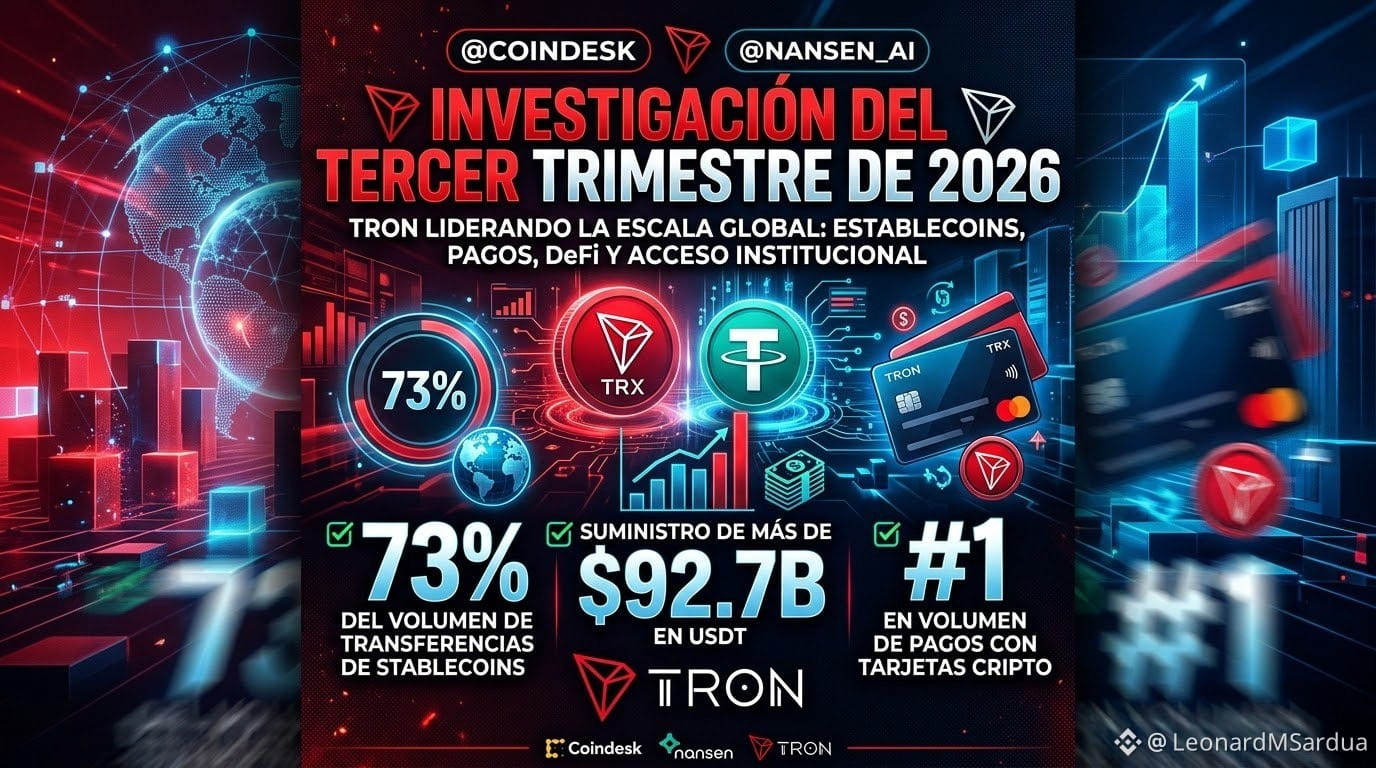
The biggest money highway in crypto—it’s easy to say, but it takes many years of building and continuous development 💪🏻. We also have AI development with @BAI_AGI, and quantum security already deployed on TESTNET!
Developer tools are ready, launched, and updated, and we also have ETFs!!!
The numbers show continuous and strong infrastructure development, confirming that growth is tied to crypto and institutional adoption.
#TRON is making crypto a much safer space!
Developer tools are ready, launched, and updated, and we also have ETFs!!!
The numbers show continuous and strong infrastructure development, confirming that growth is tied to crypto and institutional adoption.
#TRON is making crypto a much safer space!
214
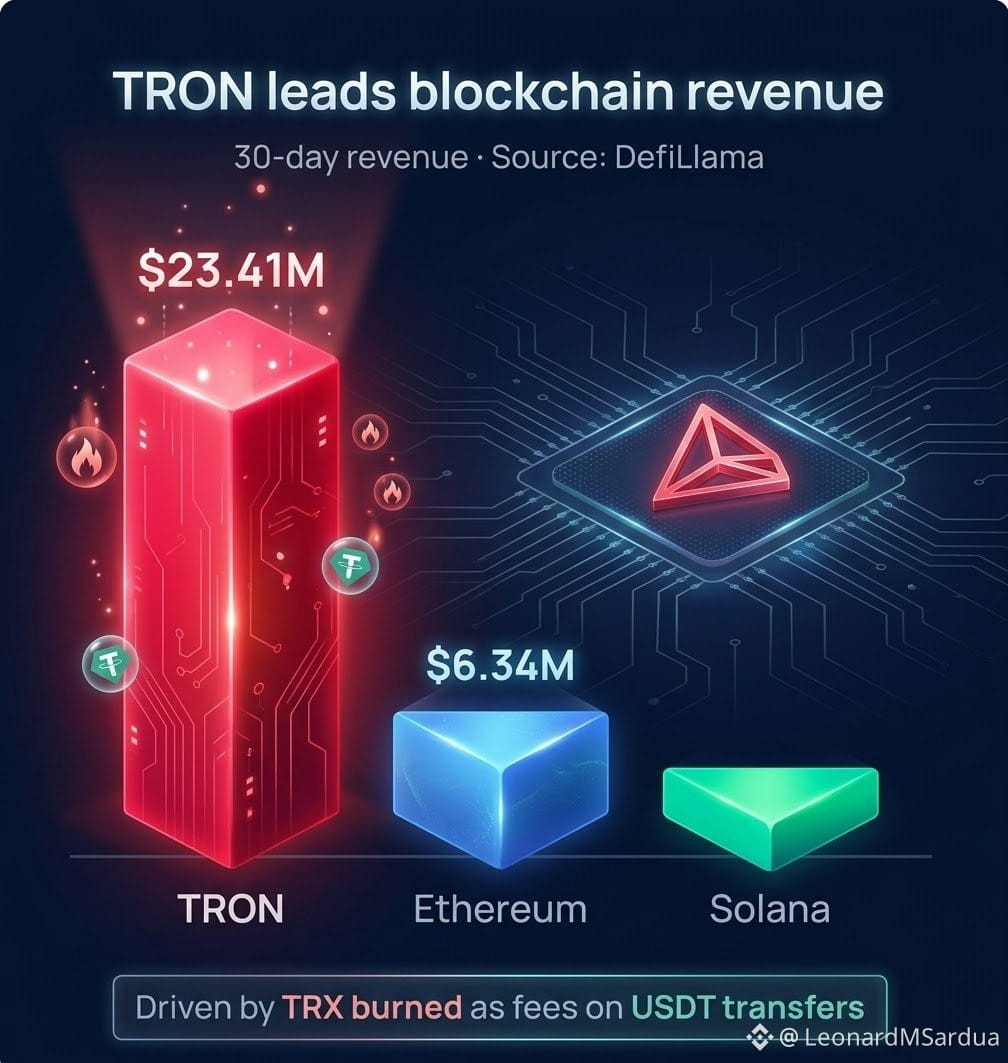
TRON Surpasses Ethereum and Solana, Leading Blockchain Revenue
According to DefiLlama, TRON has officially claimed the top spot in revenue among blockchains.
Over the past 30 days, the network has generated more than USD 23.41 million—almost four times Ethereum’s total (around USD 6.34 million) and more than six times Solana’s.
Most of this figure comes from burning TRX as a fee when users transfer USDT, so it reflects real network activity rather than traditional business-style revenue.
TRON also holds the top spot over the 7-day period (around USD 5.8 million) and the 24-hour period (more than USD 554,000).
#TronNetwork #TGF
1
310
beautiful all That's great! are s them we bless
beautiful all That's great! are s them we bless


Richard Teng
·
--
We are deeply saddened by the devastation caused by the earthquakes in Venezuela.
Binance Charity will donate 3 million dollars in USDT to help Binance users living in the affected areas.
Also, for a limited time, we'll be waiving all P2P fees and waiving all merchant fees on Binance Pay.
Our thoughts are with Venezuela. 🙏
Binance Charity will donate 3 million dollars in USDT to help Binance users living in the affected areas.
Also, for a limited time, we'll be waiving all P2P fees and waiving all merchant fees on Binance Pay.
Our thoughts are with Venezuela. 🙏
8
Log in to explore more content
Join global crypto users on Binance Square
⚡️ Get latest and useful information about crypto.
💬 Trusted by the world’s largest crypto exchange.
👍 Discover real insights from verified creators.
Email / Phone number
Trending Topics
EvolveAtBinanceBlockchainWeek
2M views
18,877 Discussing
Binance Blockchain Week is officially underway! 🌍
On November 28–29, whether you’re in Bangkok or joining from afar, tune in to the livestreams and join the conversation on Binance Square!
Here’s what’s in store 👇
📺 Watch the main stage live
Tune in throughout both days as industry speakers share their perspectives on this year’s theme, “Evolve” From technological innovation to real-world applications, explore what’s next for crypto.
⚔️ Watch two trading competitions
The Aster Open Qualifier and the Binance Trading Master Tournament will both be streamed live. Tune in to follow the traders in action.
🏆 Watch The Blockchain 100 Awards Ceremony
The Blockchain 100 list was selected by the community. Join us in celebrating the creators and the ideas they share!
💬 Join the community conversation
Use #EvolveAtBinanceBlockchainWeek in a post with a photo to share what you’re looking forward to, your views on the industry, or your favorite moments from the event.
The event page is now live! Subscribe to all livestreams with one click so you don’t miss a moment 👏
Binance Blockchain Week
·524 Likes
·755k views
BitcoinETFsExtendOutflowStreakToEightDays
33,648 views
438 Discussing
ColdcardFlawLeadsToTheftOfAtLeast1789BTC
99,239 views
766 Discussing