

Arthur Academy
69 Posts

Arthur Academy
Report
Block User
Learn about Crypto in Arthur Academy. Simple guide to upgrade your trading skills | Update 2 Articles/day | Follow me on X to find my Airdrop project 🚀
Open Trade
Frequent Trader
5.4 Years
10 Following
185 Followers
97 Liked
Posts
Portfolio
PINNED

Article
How to Identify Entry and Exit PointsMastering the art of identifying entry and exit points is essential for successful cryptocurrency trading. Precise timing can significantly affect your profitability, whether you're a long-term investor or an active trader. This guide explains how to determine optimal entry and exit points using technical analysis, indicators, and market sentiment.
1. Why Entry and Exit Points Matter
Timing your trades involves identifying when to buy (entry) and when to sell (exit) an asset. Correct timing helps:
Maximize profits.Minimize risks.Avoid emotional decision-making by following a structured plan.
2. Identifying Entry Points
A. Support Levels
Support is a price level where an asset tends to stop falling and bounce back.
How to Spot It: Look for historical price levels where the asset has consistently reversed upward.Why It Works: Traders see these levels as good buying opportunities because they often indicate demand.
B. Trend Lines and Breakouts
Trend lines connect a series of price highs or lows to show the overall direction. Breakouts occur when the price crosses a resistance level or a trend line.
How to Use: Buy when the price breaks above a significant resistance level, signaling upward momentum.Caution: Confirm breakouts with indicators like volume to avoid false signals.
C. Indicators for Entry
Moving Averages (MA): A short-term MA crossing above a long-term MA often signals a buying opportunity.Relative Strength Index (RSI): When RSI is below 30 (oversold), it may indicate a good entry point.
3. Identifying Exit Points
A. Resistance Levels
Resistance is a price level where an asset tends to stop rising and reverse downward.
How to Spot It: Look for historical price levels where the asset has consistently reversed downward.Why It Works: Traders often sell at these levels to lock in profits, creating a self-fulfilling price drop.
B. Risk-Reward Ratio
Determine your risk-reward ratio before entering a trade.
Example: If your risk is $100, aim for a reward of at least $200 (2:1 ratio).How to Exit: Close your trade when the price reaches your predefined target.
C. Indicators for Exit
Bollinger Bands: When the price reaches the upper band, it might be overbought and a good time to sell.RSI: When RSI is above 70 (overbought), it may signal a good exit point.
4. Using Stop-Loss and Take-Profit Orders
Stop-Loss Orders
Automatically close your position if the price falls to a certain level, limiting potential losses.
How to Set: Place your stop-loss below a key support level.Example: If you buy Bitcoin at $30,000, set a stop-loss at $28,000 to cap your loss.
Take-Profit Orders
Automatically close your position when the price hits your desired profit level.
How to Set: Place it just below a resistance level or based on your risk-reward ratio.Example: If your target is a 10% profit, set your take-profit at $33,000.
5. Combining Indicators for Better Accuracy
Using multiple tools together can improve the accuracy of your entry and exit points:
Volume and Trend Lines: Combine breakouts with rising volume to confirm momentum.RSI and Moving Averages: Use RSI for oversold/overbought signals and MAs for trend confirmation.
6. Using Binance for Entry and Exit Strategies
Binance offers several features to help traders optimize entry and exit points:
Charting Tools: Use TradingView integration on Binance to analyze support, resistance, and indicators.Advanced Orders: Set stop-loss and take-profit orders directly in the app.Price Alerts: Receive notifications when an asset hits your predefined entry or exit levels.
7. Common Mistakes to Avoid
Chasing Trades: Avoid entering late during a price surge due to FOMO (fear of missing out).Ignoring Stop-Losses: Failing to set stop-losses can lead to significant losses during unexpected market drops.Overtrading: Entering and exiting too frequently can lead to high fees and reduced profits.
Conclusion
Identifying entry and exit points is a fundamental skill for crypto traders. By combining support and resistance levels, technical indicators, and risk management tools, you can make well-informed decisions and maximize your trading success. Use Binance’s comprehensive tools to streamline your strategy and ensure you're always one step ahead in the fast-paced world of crypto trading.
{spot}(BTCUSDT)
{spot}(BNBUSDT)
{spot}(SOLUSDT)
How to Identify Entry and Exit Points
Mastering the art of identifying entry and exit points is essential for successful cryptocurrency trading. Precise timing can significantly affect your profitability, whether you're a long-term investor or an active trader. This guide explains how to determine optimal entry and exit points using technical analysis, indicators, and market sentiment.
1. Why Entry and Exit Points Matter
Timing your trades involves identifying when to buy (entry) and when to sell (exit) an asset. Correct timing helps:
Maximize profits.Minimize risks.Avoid emotional decision-making by following a structured plan.
2. Identifying Entry Points
A. Support Levels
Support is a price level where an asset tends to stop falling and bounce back.
How to Spot It: Look for historical price levels where the asset has consistently reversed upward.Why It Works: Traders see these levels as good buying opportunities because they often indicate demand.
B. Trend Lines and Breakouts
Trend lines connect a series of price highs or lows to show the overall direction. Breakouts occur when the price crosses a resistance level or a trend line.
How to Use: Buy when the price breaks above a significant resistance level, signaling upward momentum.Caution: Confirm breakouts with indicators like volume to avoid false signals.
C. Indicators for Entry
Moving Averages (MA): A short-term MA crossing above a long-term MA often signals a buying opportunity.Relative Strength Index (RSI): When RSI is below 30 (oversold), it may indicate a good entry point.
3. Identifying Exit Points
A. Resistance Levels
Resistance is a price level where an asset tends to stop rising and reverse downward.
How to Spot It: Look for historical price levels where the asset has consistently reversed downward.Why It Works: Traders often sell at these levels to lock in profits, creating a self-fulfilling price drop.
B. Risk-Reward Ratio
Determine your risk-reward ratio before entering a trade.
Example: If your risk is $100, aim for a reward of at least $200 (2:1 ratio).How to Exit: Close your trade when the price reaches your predefined target.
C. Indicators for Exit
Bollinger Bands: When the price reaches the upper band, it might be overbought and a good time to sell.RSI: When RSI is above 70 (overbought), it may signal a good exit point.
4. Using Stop-Loss and Take-Profit Orders
Stop-Loss Orders
Automatically close your position if the price falls to a certain level, limiting potential losses.
How to Set: Place your stop-loss below a key support level.Example: If you buy Bitcoin at $30,000, set a stop-loss at $28,000 to cap your loss.
Take-Profit Orders
Automatically close your position when the price hits your desired profit level.
How to Set: Place it just below a resistance level or based on your risk-reward ratio.Example: If your target is a 10% profit, set your take-profit at $33,000.
5. Combining Indicators for Better Accuracy
Using multiple tools together can improve the accuracy of your entry and exit points:
Volume and Trend Lines: Combine breakouts with rising volume to confirm momentum.RSI and Moving Averages: Use RSI for oversold/overbought signals and MAs for trend confirmation.
6. Using Binance for Entry and Exit Strategies
Binance offers several features to help traders optimize entry and exit points:
Charting Tools: Use TradingView integration on Binance to analyze support, resistance, and indicators.Advanced Orders: Set stop-loss and take-profit orders directly in the app.Price Alerts: Receive notifications when an asset hits your predefined entry or exit levels.
7. Common Mistakes to Avoid
Chasing Trades: Avoid entering late during a price surge due to FOMO (fear of missing out).Ignoring Stop-Losses: Failing to set stop-losses can lead to significant losses during unexpected market drops.Overtrading: Entering and exiting too frequently can lead to high fees and reduced profits.
Conclusion
Identifying entry and exit points is a fundamental skill for crypto traders. By combining support and resistance levels, technical indicators, and risk management tools, you can make well-informed decisions and maximize your trading success. Use Binance’s comprehensive tools to streamline your strategy and ensure you're always one step ahead in the fast-paced world of crypto trading.
1. Why Entry and Exit Points Matter
Timing your trades involves identifying when to buy (entry) and when to sell (exit) an asset. Correct timing helps:
Maximize profits.Minimize risks.Avoid emotional decision-making by following a structured plan.
2. Identifying Entry Points
A. Support Levels
Support is a price level where an asset tends to stop falling and bounce back.
How to Spot It: Look for historical price levels where the asset has consistently reversed upward.Why It Works: Traders see these levels as good buying opportunities because they often indicate demand.
B. Trend Lines and Breakouts
Trend lines connect a series of price highs or lows to show the overall direction. Breakouts occur when the price crosses a resistance level or a trend line.
How to Use: Buy when the price breaks above a significant resistance level, signaling upward momentum.Caution: Confirm breakouts with indicators like volume to avoid false signals.
C. Indicators for Entry
Moving Averages (MA): A short-term MA crossing above a long-term MA often signals a buying opportunity.Relative Strength Index (RSI): When RSI is below 30 (oversold), it may indicate a good entry point.
3. Identifying Exit Points
A. Resistance Levels
Resistance is a price level where an asset tends to stop rising and reverse downward.
How to Spot It: Look for historical price levels where the asset has consistently reversed downward.Why It Works: Traders often sell at these levels to lock in profits, creating a self-fulfilling price drop.
B. Risk-Reward Ratio
Determine your risk-reward ratio before entering a trade.
Example: If your risk is $100, aim for a reward of at least $200 (2:1 ratio).How to Exit: Close your trade when the price reaches your predefined target.
C. Indicators for Exit
Bollinger Bands: When the price reaches the upper band, it might be overbought and a good time to sell.RSI: When RSI is above 70 (overbought), it may signal a good exit point.
4. Using Stop-Loss and Take-Profit Orders
Stop-Loss Orders
Automatically close your position if the price falls to a certain level, limiting potential losses.
How to Set: Place your stop-loss below a key support level.Example: If you buy Bitcoin at $30,000, set a stop-loss at $28,000 to cap your loss.
Take-Profit Orders
Automatically close your position when the price hits your desired profit level.
How to Set: Place it just below a resistance level or based on your risk-reward ratio.Example: If your target is a 10% profit, set your take-profit at $33,000.
5. Combining Indicators for Better Accuracy
Using multiple tools together can improve the accuracy of your entry and exit points:
Volume and Trend Lines: Combine breakouts with rising volume to confirm momentum.RSI and Moving Averages: Use RSI for oversold/overbought signals and MAs for trend confirmation.
6. Using Binance for Entry and Exit Strategies
Binance offers several features to help traders optimize entry and exit points:
Charting Tools: Use TradingView integration on Binance to analyze support, resistance, and indicators.Advanced Orders: Set stop-loss and take-profit orders directly in the app.Price Alerts: Receive notifications when an asset hits your predefined entry or exit levels.
7. Common Mistakes to Avoid
Chasing Trades: Avoid entering late during a price surge due to FOMO (fear of missing out).Ignoring Stop-Losses: Failing to set stop-losses can lead to significant losses during unexpected market drops.Overtrading: Entering and exiting too frequently can lead to high fees and reduced profits.
Conclusion
Identifying entry and exit points is a fundamental skill for crypto traders. By combining support and resistance levels, technical indicators, and risk management tools, you can make well-informed decisions and maximize your trading success. Use Binance’s comprehensive tools to streamline your strategy and ensure you're always one step ahead in the fast-paced world of crypto trading.
1
15
15.2k

Article
Portfolio Diversification for Advanced TradersDiversification is one of the most effective strategies to manage risk in trading. While beginners focus on basic asset allocation, advanced traders take diversification to a whole new level. By incorporating different asset classes, trading strategies, and risk management techniques, diversification can maximize returns while minimizing exposure to market volatility.
Why Diversification Matters
The primary goal of diversification is to reduce risk. In crypto trading, market conditions can be unpredictable. A well-diversified portfolio ensures that a loss in one area doesn’t disproportionately affect your overall performance. For advanced traders, it’s about balancing risk and reward across multiple dimensions.
Key Diversification Strategies
Diversify Across Asset Classes:
Cryptocurrencies: Invest in a mix of large-cap (e.g., Bitcoin, Ethereum), mid-cap, and small-cap altcoins.Stablecoins: Allocate a portion of your portfolio to stablecoins (e.g., USDT, BUSD) to provide liquidity and reduce overall volatility.Other Assets: Consider exposure to non-crypto assets like precious metals, stocks, or even real estate if your trading platform supports them.
Diversify By Market Segments:
DeFi Tokens: Include tokens from decentralized finance platforms (e.g., AAVE, UNI).NFT Ecosystems: Invest in NFT-related tokens like MANA or SAND.Layer 1 vs. Layer 2: Allocate funds between Layer 1 blockchains (e.g., Solana, Avalanche) and Layer 2 solutions (e.g., Polygon).
Time Horizon Diversification:
Short-Term Trades: Focus on high-volatility assets or leveraged instruments for quick gains.Long-Term Investments: Allocate funds to projects with strong fundamentals and growth potential.
Geographical Diversification:
Crypto adoption varies by region. Diversifying into projects or tokens popular in emerging markets can provide exposure to localized growth trends.
Strategy Diversification:
Use a combination of scalping, swing trading, and position trading to capture different market opportunities.Employ automated trading bots or algorithmic strategies to complement manual trading.
Advanced Risk Management
Position Sizing
Avoid overexposure to any single asset or strategy. Advanced traders often limit individual positions to a specific percentage of their portfolio, such as 2-5%.Hedging
Use derivatives like futures or options to hedge against unfavorable price movements. For example, short Bitcoin futures to protect gains during a market downturn.Rebalancing
Regularly review and adjust your portfolio allocation to align with changing market conditions and personal goals.
Common Mistakes to Avoid
Over-Diversification
Holding too many assets can dilute your returns and make portfolio management complex. Focus on quality over quantity.Ignoring Correlations
Many crypto assets are highly correlated, meaning they move in the same direction. Diversify into less correlated or inverse-correlated assets to truly reduce risk.Chasing Trends
Avoid overallocating to hyped projects or sectors. Maintain a balance between growth potential and stability.
Practical Tips for Diversifying on Binance
Explore Binance Earn: Diversify income streams by using staking, liquidity farming, or savings products.Use Binance Futures: Access leverage to diversify into short positions or hedge trades.Binance Launchpad: Invest in promising early-stage tokens for high-growth opportunities.Portfolio Tracker: Use Binance’s built-in portfolio tracker to monitor your diversification strategy.
Conclusion
For advanced traders, diversification goes beyond spreading funds across a few assets. It’s a comprehensive approach that considers asset types, strategies, market segments, and time horizons. A well-diversified portfolio ensures resilience in volatile markets, enabling you to capitalize on opportunities while mitigating risks.
By leveraging the tools and features available on platforms like Binance, advanced traders can craft a portfolio that adapts to market conditions and aligns with their trading objectives.
#MarketPullback
Portfolio Diversification for Advanced Traders
Diversification is one of the most effective strategies to manage risk in trading. While beginners focus on basic asset allocation, advanced traders take diversification to a whole new level. By incorporating different asset classes, trading strategies, and risk management techniques, diversification can maximize returns while minimizing exposure to market volatility.
Why Diversification Matters
The primary goal of diversification is to reduce risk. In crypto trading, market conditions can be unpredictable. A well-diversified portfolio ensures that a loss in one area doesn’t disproportionately affect your overall performance. For advanced traders, it’s about balancing risk and reward across multiple dimensions.
Key Diversification Strategies
Diversify Across Asset Classes:
Cryptocurrencies: Invest in a mix of large-cap (e.g., Bitcoin, Ethereum), mid-cap, and small-cap altcoins.Stablecoins: Allocate a portion of your portfolio to stablecoins (e.g., USDT, BUSD) to provide liquidity and reduce overall volatility.Other Assets: Consider exposure to non-crypto assets like precious metals, stocks, or even real estate if your trading platform supports them.
Diversify By Market Segments:
DeFi Tokens: Include tokens from decentralized finance platforms (e.g., AAVE, UNI).NFT Ecosystems: Invest in NFT-related tokens like MANA or SAND.Layer 1 vs. Layer 2: Allocate funds between Layer 1 blockchains (e.g., Solana, Avalanche) and Layer 2 solutions (e.g., Polygon).
Time Horizon Diversification:
Short-Term Trades: Focus on high-volatility assets or leveraged instruments for quick gains.Long-Term Investments: Allocate funds to projects with strong fundamentals and growth potential.
Geographical Diversification:
Crypto adoption varies by region. Diversifying into projects or tokens popular in emerging markets can provide exposure to localized growth trends.
Strategy Diversification:
Use a combination of scalping, swing trading, and position trading to capture different market opportunities.Employ automated trading bots or algorithmic strategies to complement manual trading.
Advanced Risk Management
Position Sizing
Avoid overexposure to any single asset or strategy. Advanced traders often limit individual positions to a specific percentage of their portfolio, such as 2-5%.Hedging
Use derivatives like futures or options to hedge against unfavorable price movements. For example, short Bitcoin futures to protect gains during a market downturn.Rebalancing
Regularly review and adjust your portfolio allocation to align with changing market conditions and personal goals.
Common Mistakes to Avoid
Over-Diversification
Holding too many assets can dilute your returns and make portfolio management complex. Focus on quality over quantity.Ignoring Correlations
Many crypto assets are highly correlated, meaning they move in the same direction. Diversify into less correlated or inverse-correlated assets to truly reduce risk.Chasing Trends
Avoid overallocating to hyped projects or sectors. Maintain a balance between growth potential and stability.
Practical Tips for Diversifying on Binance
Explore Binance Earn: Diversify income streams by using staking, liquidity farming, or savings products.Use Binance Futures: Access leverage to diversify into short positions or hedge trades.Binance Launchpad: Invest in promising early-stage tokens for high-growth opportunities.Portfolio Tracker: Use Binance’s built-in portfolio tracker to monitor your diversification strategy.
Conclusion
For advanced traders, diversification goes beyond spreading funds across a few assets. It’s a comprehensive approach that considers asset types, strategies, market segments, and time horizons. A well-diversified portfolio ensures resilience in volatile markets, enabling you to capitalize on opportunities while mitigating risks.
By leveraging the tools and features available on platforms like Binance, advanced traders can craft a portfolio that adapts to market conditions and aligns with their trading objectives.
#MarketPullback
Why Diversification Matters
The primary goal of diversification is to reduce risk. In crypto trading, market conditions can be unpredictable. A well-diversified portfolio ensures that a loss in one area doesn’t disproportionately affect your overall performance. For advanced traders, it’s about balancing risk and reward across multiple dimensions.
Key Diversification Strategies
Diversify Across Asset Classes:
Cryptocurrencies: Invest in a mix of large-cap (e.g., Bitcoin, Ethereum), mid-cap, and small-cap altcoins.Stablecoins: Allocate a portion of your portfolio to stablecoins (e.g., USDT, BUSD) to provide liquidity and reduce overall volatility.Other Assets: Consider exposure to non-crypto assets like precious metals, stocks, or even real estate if your trading platform supports them.
Diversify By Market Segments:
DeFi Tokens: Include tokens from decentralized finance platforms (e.g., AAVE, UNI).NFT Ecosystems: Invest in NFT-related tokens like MANA or SAND.Layer 1 vs. Layer 2: Allocate funds between Layer 1 blockchains (e.g., Solana, Avalanche) and Layer 2 solutions (e.g., Polygon).
Time Horizon Diversification:
Short-Term Trades: Focus on high-volatility assets or leveraged instruments for quick gains.Long-Term Investments: Allocate funds to projects with strong fundamentals and growth potential.
Geographical Diversification:
Crypto adoption varies by region. Diversifying into projects or tokens popular in emerging markets can provide exposure to localized growth trends.
Strategy Diversification:
Use a combination of scalping, swing trading, and position trading to capture different market opportunities.Employ automated trading bots or algorithmic strategies to complement manual trading.
Advanced Risk Management
Position Sizing
Avoid overexposure to any single asset or strategy. Advanced traders often limit individual positions to a specific percentage of their portfolio, such as 2-5%.Hedging
Use derivatives like futures or options to hedge against unfavorable price movements. For example, short Bitcoin futures to protect gains during a market downturn.Rebalancing
Regularly review and adjust your portfolio allocation to align with changing market conditions and personal goals.
Common Mistakes to Avoid
Over-Diversification
Holding too many assets can dilute your returns and make portfolio management complex. Focus on quality over quantity.Ignoring Correlations
Many crypto assets are highly correlated, meaning they move in the same direction. Diversify into less correlated or inverse-correlated assets to truly reduce risk.Chasing Trends
Avoid overallocating to hyped projects or sectors. Maintain a balance between growth potential and stability.
Practical Tips for Diversifying on Binance
Explore Binance Earn: Diversify income streams by using staking, liquidity farming, or savings products.Use Binance Futures: Access leverage to diversify into short positions or hedge trades.Binance Launchpad: Invest in promising early-stage tokens for high-growth opportunities.Portfolio Tracker: Use Binance’s built-in portfolio tracker to monitor your diversification strategy.
Conclusion
For advanced traders, diversification goes beyond spreading funds across a few assets. It’s a comprehensive approach that considers asset types, strategies, market segments, and time horizons. A well-diversified portfolio ensures resilience in volatile markets, enabling you to capitalize on opportunities while mitigating risks.
By leveraging the tools and features available on platforms like Binance, advanced traders can craft a portfolio that adapts to market conditions and aligns with their trading objectives.
#MarketPullback
846

Article
How to Use Backtesting to Improve StrategiesBacktesting is an essential tool for traders looking to refine their strategies and improve profitability. By testing a trading strategy against historical data, you can evaluate its effectiveness without risking real capital. Platforms like Binance and other tools make it easier for traders to perform backtests and optimize their decision-making processes. Here’s a beginner-friendly guide on how to use backtesting to improve your trading strategies.
What Is Backtesting?
Backtesting involves running your trading strategy against historical market data to see how it would have performed in the past. The idea is simple: if a strategy worked well before, it has a higher chance of being effective in the future under similar market conditions.
Why Backtesting Matters:
It helps traders:Identify the strengths and weaknesses of their strategy.Understand the potential risks and rewards.Build confidence in their trading approach before applying it live.
How to Perform Backtesting
1. Choose a Trading Platform or Tool
Many platforms support backtesting, including:
Binance: Offers historical data for spot and futures markets.TradingView: A popular platform for technical analysis and backtesting.Python Libraries: Tools like Backtrader or Pandas for custom strategies.
2. Define Your Strategy
Your strategy should include:
Entry Points: When to buy or sell (e.g., crossing moving averages, RSI levels).Exit Points: When to close positions (e.g., take-profit or stop-loss levels).Risk Management: Position size, leverage, and maximum risk per trade.
Example: A simple moving average crossover strategy:
Buy when the 50-day moving average crosses above the 200-day moving average.Sell when the 50-day moving average crosses below the 200-day moving average.
3. Collect Historical Data
Obtain historical data for the asset and time frame you want to test. Binance provides data for most major cryptocurrencies, including Bitcoin (BTC), Ethereum (ETH), and altcoins.
4. Run the Backtest
Use your chosen platform to simulate trades based on historical data. Pay attention to:
Win Rate: Percentage of profitable trades.Profit Factor: Ratio of total profits to total losses.Maximum Drawdown: Largest peak-to-trough drop in equity during the backtest.Sharpe Ratio: Measures risk-adjusted returns.
5. Analyze the Results
Evaluate the backtest results to identify patterns and areas for improvement:
If the strategy performs well, consider using it in a demo account before live trading.If the results are poor, adjust parameters (e.g., time frames, indicators) and retest.
Best Practices for Backtesting
Use High-Quality Data:
Ensure the historical data is accurate and free of gaps. Low-quality data can skew results.Incorporate Trading Fees and Slippage:
Factor in transaction costs and slippage to get realistic results, especially on Binance where fees may vary by trading pair.Test Multiple Time Frames:
Evaluate your strategy across different time frames (e.g., 1-hour, daily) to see how it performs under various conditions.Avoid Overfitting:
Don’t tweak your strategy too much to fit historical data, as this may lead to poor performance in live markets.Simulate Various Market Conditions:
Backtest during bull, bear, and sideways markets to ensure your strategy can adapt to different trends.
Tools for Backtesting
Binance Futures Testnet:
Allows you to test strategies in real-time without using real funds.TradingView:
Offers built-in backtesting features for strategies coded in Pine Script.Python Backtesting Frameworks:
For advanced users, Python libraries like Backtrader or QuantConnect allow custom backtesting setups.
Benefits of Backtesting
Confidence Building:
Knowing your strategy is based on data, not guesswork, can boost your confidence.Improved Risk Management:
Backtesting helps refine position sizing and stop-loss levels, minimizing unnecessary risks.Strategy Optimization:
Fine-tune parameters like moving average lengths or RSI thresholds for better performance.
Limitations of Backtesting
Past Performance ≠ Future Results:
Even the best backtested strategy might fail due to unforeseen market conditions.Over-Optimization Risk:
Overfitting your strategy to past data can make it less robust in live trading.Human Error:
Manual backtesting can introduce bias. Use automated tools to minimize this.
Conclusion
Backtesting is a powerful tool that every trader should master. By testing your strategies on historical data, you can identify flaws, optimize performance, and gain confidence before trading on Binance. While it’s not a guarantee of future success, backtesting provides a solid foundation for building a consistent and data-driven approach to trading. Combine it with risk management and market awareness, and you’ll be better prepared to tackle the ever-changing world of crypto trading.
#SOLETFsOnTheHorizon
How to Use Backtesting to Improve Strategies
Backtesting is an essential tool for traders looking to refine their strategies and improve profitability. By testing a trading strategy against historical data, you can evaluate its effectiveness without risking real capital. Platforms like Binance and other tools make it easier for traders to perform backtests and optimize their decision-making processes. Here’s a beginner-friendly guide on how to use backtesting to improve your trading strategies.
What Is Backtesting?
Backtesting involves running your trading strategy against historical market data to see how it would have performed in the past. The idea is simple: if a strategy worked well before, it has a higher chance of being effective in the future under similar market conditions.
Why Backtesting Matters:
It helps traders:Identify the strengths and weaknesses of their strategy.Understand the potential risks and rewards.Build confidence in their trading approach before applying it live.
How to Perform Backtesting
1. Choose a Trading Platform or Tool
Many platforms support backtesting, including:
Binance: Offers historical data for spot and futures markets.TradingView: A popular platform for technical analysis and backtesting.Python Libraries: Tools like Backtrader or Pandas for custom strategies.
2. Define Your Strategy
Your strategy should include:
Entry Points: When to buy or sell (e.g., crossing moving averages, RSI levels).Exit Points: When to close positions (e.g., take-profit or stop-loss levels).Risk Management: Position size, leverage, and maximum risk per trade.
Example: A simple moving average crossover strategy:
Buy when the 50-day moving average crosses above the 200-day moving average.Sell when the 50-day moving average crosses below the 200-day moving average.
3. Collect Historical Data
Obtain historical data for the asset and time frame you want to test. Binance provides data for most major cryptocurrencies, including Bitcoin (BTC), Ethereum (ETH), and altcoins.
4. Run the Backtest
Use your chosen platform to simulate trades based on historical data. Pay attention to:
Win Rate: Percentage of profitable trades.Profit Factor: Ratio of total profits to total losses.Maximum Drawdown: Largest peak-to-trough drop in equity during the backtest.Sharpe Ratio: Measures risk-adjusted returns.
5. Analyze the Results
Evaluate the backtest results to identify patterns and areas for improvement:
If the strategy performs well, consider using it in a demo account before live trading.If the results are poor, adjust parameters (e.g., time frames, indicators) and retest.
Best Practices for Backtesting
Use High-Quality Data:
Ensure the historical data is accurate and free of gaps. Low-quality data can skew results.Incorporate Trading Fees and Slippage:
Factor in transaction costs and slippage to get realistic results, especially on Binance where fees may vary by trading pair.Test Multiple Time Frames:
Evaluate your strategy across different time frames (e.g., 1-hour, daily) to see how it performs under various conditions.Avoid Overfitting:
Don’t tweak your strategy too much to fit historical data, as this may lead to poor performance in live markets.Simulate Various Market Conditions:
Backtest during bull, bear, and sideways markets to ensure your strategy can adapt to different trends.
Tools for Backtesting
Binance Futures Testnet:
Allows you to test strategies in real-time without using real funds.TradingView:
Offers built-in backtesting features for strategies coded in Pine Script.Python Backtesting Frameworks:
For advanced users, Python libraries like Backtrader or QuantConnect allow custom backtesting setups.
Benefits of Backtesting
Confidence Building:
Knowing your strategy is based on data, not guesswork, can boost your confidence.Improved Risk Management:
Backtesting helps refine position sizing and stop-loss levels, minimizing unnecessary risks.Strategy Optimization:
Fine-tune parameters like moving average lengths or RSI thresholds for better performance.
Limitations of Backtesting
Past Performance ≠ Future Results:
Even the best backtested strategy might fail due to unforeseen market conditions.Over-Optimization Risk:
Overfitting your strategy to past data can make it less robust in live trading.Human Error:
Manual backtesting can introduce bias. Use automated tools to minimize this.
Conclusion
Backtesting is a powerful tool that every trader should master. By testing your strategies on historical data, you can identify flaws, optimize performance, and gain confidence before trading on Binance. While it’s not a guarantee of future success, backtesting provides a solid foundation for building a consistent and data-driven approach to trading. Combine it with risk management and market awareness, and you’ll be better prepared to tackle the ever-changing world of crypto trading.
#SOLETFsOnTheHorizon
What Is Backtesting?
Backtesting involves running your trading strategy against historical market data to see how it would have performed in the past. The idea is simple: if a strategy worked well before, it has a higher chance of being effective in the future under similar market conditions.
Why Backtesting Matters:
It helps traders:Identify the strengths and weaknesses of their strategy.Understand the potential risks and rewards.Build confidence in their trading approach before applying it live.
How to Perform Backtesting
1. Choose a Trading Platform or Tool
Many platforms support backtesting, including:
Binance: Offers historical data for spot and futures markets.TradingView: A popular platform for technical analysis and backtesting.Python Libraries: Tools like Backtrader or Pandas for custom strategies.
2. Define Your Strategy
Your strategy should include:
Entry Points: When to buy or sell (e.g., crossing moving averages, RSI levels).Exit Points: When to close positions (e.g., take-profit or stop-loss levels).Risk Management: Position size, leverage, and maximum risk per trade.
Example: A simple moving average crossover strategy:
Buy when the 50-day moving average crosses above the 200-day moving average.Sell when the 50-day moving average crosses below the 200-day moving average.
3. Collect Historical Data
Obtain historical data for the asset and time frame you want to test. Binance provides data for most major cryptocurrencies, including Bitcoin (BTC), Ethereum (ETH), and altcoins.
4. Run the Backtest
Use your chosen platform to simulate trades based on historical data. Pay attention to:
Win Rate: Percentage of profitable trades.Profit Factor: Ratio of total profits to total losses.Maximum Drawdown: Largest peak-to-trough drop in equity during the backtest.Sharpe Ratio: Measures risk-adjusted returns.
5. Analyze the Results
Evaluate the backtest results to identify patterns and areas for improvement:
If the strategy performs well, consider using it in a demo account before live trading.If the results are poor, adjust parameters (e.g., time frames, indicators) and retest.
Best Practices for Backtesting
Use High-Quality Data:
Ensure the historical data is accurate and free of gaps. Low-quality data can skew results.Incorporate Trading Fees and Slippage:
Factor in transaction costs and slippage to get realistic results, especially on Binance where fees may vary by trading pair.Test Multiple Time Frames:
Evaluate your strategy across different time frames (e.g., 1-hour, daily) to see how it performs under various conditions.Avoid Overfitting:
Don’t tweak your strategy too much to fit historical data, as this may lead to poor performance in live markets.Simulate Various Market Conditions:
Backtest during bull, bear, and sideways markets to ensure your strategy can adapt to different trends.
Tools for Backtesting
Binance Futures Testnet:
Allows you to test strategies in real-time without using real funds.TradingView:
Offers built-in backtesting features for strategies coded in Pine Script.Python Backtesting Frameworks:
For advanced users, Python libraries like Backtrader or QuantConnect allow custom backtesting setups.
Benefits of Backtesting
Confidence Building:
Knowing your strategy is based on data, not guesswork, can boost your confidence.Improved Risk Management:
Backtesting helps refine position sizing and stop-loss levels, minimizing unnecessary risks.Strategy Optimization:
Fine-tune parameters like moving average lengths or RSI thresholds for better performance.
Limitations of Backtesting
Past Performance ≠ Future Results:
Even the best backtested strategy might fail due to unforeseen market conditions.Over-Optimization Risk:
Overfitting your strategy to past data can make it less robust in live trading.Human Error:
Manual backtesting can introduce bias. Use automated tools to minimize this.
Conclusion
Backtesting is a powerful tool that every trader should master. By testing your strategies on historical data, you can identify flaws, optimize performance, and gain confidence before trading on Binance. While it’s not a guarantee of future success, backtesting provides a solid foundation for building a consistent and data-driven approach to trading. Combine it with risk management and market awareness, and you’ll be better prepared to tackle the ever-changing world of crypto trading.
#SOLETFsOnTheHorizon
769

Article
Introduction to Leveraged TokensLeveraged tokens are an exciting and innovative financial instrument in the cryptocurrency world. They offer traders the ability to gain amplified exposure to the price movements of crypto assets without the complexities of managing margin or collateral. Available on platforms like Binance, leveraged tokens are a great tool for short-term strategies. However, they also carry unique risks that require careful understanding.
What Are Leveraged Tokens?
Leveraged tokens are tokenized derivatives designed to provide leveraged exposure to the performance of an underlying cryptocurrency. They are usually denoted by their leverage factor, such as 2x, 3x, or -1x.
Long Tokens (e.g., BTCUP): These increase in value when the underlying asset’s price rises.Short Tokens (e.g., BTCDOWN): These gain value when the underlying asset’s price falls.
For instance:
A 3x long token will amplify the gains of the underlying asset by 3 times (e.g., if Bitcoin rises by 5%, the token rises by 15%).Conversely, if the underlying asset drops by 5%, the token will lose 15%.
Key Features of Leveraged Tokens
No Margin Management:
Unlike traditional leveraged trading, you don’t need to manage margin or worry about liquidation. The rebalancing mechanism built into leveraged tokens ensures they maintain their leverage ratio automatically.Rebalancing:
Leveraged tokens rebalance their positions daily or during extreme market movements. This ensures the leverage ratio stays constant but can lead to compounding effects over time, especially in volatile markets.Accessibility:
Leveraged tokens can be easily traded like regular tokens on exchanges like Binance, making them accessible even to traders who aren’t familiar with futures or margin trading.
How to Use Leveraged Tokens on Binance
Access the Leveraged Tokens Section:
Navigate to the “Leveraged Tokens” page on Binance. Popular tokens like BTCUP, BTCDOWN, ETHUP, and ETHDOWN are available.Understand the Details:
Before trading, review the token’s leverage ratio, rebalancing mechanism, and potential fees.Trade Like a Regular Token:
Buy or sell the tokens on the spot market using USDT or other supported currencies.
Advantages of Leveraged Tokens
Simplified Leverage:
Gain leveraged exposure without the need for managing margin or collateral.No Liquidation Risk:
Unlike futures or margin trading, leveraged tokens cannot be liquidated, providing more security to traders.Short-Term Gains:
Ideal for capitalizing on short-term price movements due to their daily rebalancing feature.
Risks of Leveraged Tokens
Volatility Decay:
Leveraged tokens are affected by compounding effects, which can erode value during highly volatile or sideways markets. This makes them unsuitable for long-term holding.Rebalancing Risks:
The daily rebalancing mechanism can lead to unexpected losses, especially in choppy markets where prices move up and down frequently.Fees:
Leveraged tokens typically carry higher management fees compared to standard tokens.
Best Practices for Trading Leveraged Tokens
Use for Short-Term Strategies:
Leveraged tokens are best suited for intraday or short-term trades to take advantage of price trends.Monitor Market Trends:
Ensure you have a solid understanding of the market’s direction before investing in leveraged tokens.Avoid Holding During Sideways Markets:
In volatile or sideways markets, the compounding effect can lead to losses even if the underlying asset returns to its original price.Set Stop-Losses:
Protect your investment by using stop-loss orders to minimize potential losses during unfavorable market conditions.
Who Should Use Leveraged Tokens?
Leveraged tokens are ideal for traders who:
Have experience in trading and understand leverage.Want to capitalize on short-term market trends.Are looking for a simpler alternative to futures or margin trading.
They are not recommended for:
Beginners unfamiliar with leverage or token mechanics.Long-term investors seeking stable returns.
Conclusion
Leveraged tokens offer a unique way to trade cryptocurrencies with amplified exposure. They combine the benefits of leverage with the simplicity of spot trading, making them accessible to a wide range of traders. However, they require a clear understanding of their mechanics, especially the rebalancing process and the risks associated with volatility decay.
If used wisely, leveraged tokens on Binance can be a powerful tool for short-term trading strategies. Always remember to manage your risk, stay informed, and use these instruments as part of a well-rounded trading plan.
#USConsumerConfidence
Introduction to Leveraged Tokens
Leveraged tokens are an exciting and innovative financial instrument in the cryptocurrency world. They offer traders the ability to gain amplified exposure to the price movements of crypto assets without the complexities of managing margin or collateral. Available on platforms like Binance, leveraged tokens are a great tool for short-term strategies. However, they also carry unique risks that require careful understanding.
What Are Leveraged Tokens?
Leveraged tokens are tokenized derivatives designed to provide leveraged exposure to the performance of an underlying cryptocurrency. They are usually denoted by their leverage factor, such as 2x, 3x, or -1x.
Long Tokens (e.g., BTCUP): These increase in value when the underlying asset’s price rises.Short Tokens (e.g., BTCDOWN): These gain value when the underlying asset’s price falls.
For instance:
A 3x long token will amplify the gains of the underlying asset by 3 times (e.g., if Bitcoin rises by 5%, the token rises by 15%).Conversely, if the underlying asset drops by 5%, the token will lose 15%.
Key Features of Leveraged Tokens
No Margin Management:
Unlike traditional leveraged trading, you don’t need to manage margin or worry about liquidation. The rebalancing mechanism built into leveraged tokens ensures they maintain their leverage ratio automatically.Rebalancing:
Leveraged tokens rebalance their positions daily or during extreme market movements. This ensures the leverage ratio stays constant but can lead to compounding effects over time, especially in volatile markets.Accessibility:
Leveraged tokens can be easily traded like regular tokens on exchanges like Binance, making them accessible even to traders who aren’t familiar with futures or margin trading.
How to Use Leveraged Tokens on Binance
Access the Leveraged Tokens Section:
Navigate to the “Leveraged Tokens” page on Binance. Popular tokens like BTCUP, BTCDOWN, ETHUP, and ETHDOWN are available.Understand the Details:
Before trading, review the token’s leverage ratio, rebalancing mechanism, and potential fees.Trade Like a Regular Token:
Buy or sell the tokens on the spot market using USDT or other supported currencies.
Advantages of Leveraged Tokens
Simplified Leverage:
Gain leveraged exposure without the need for managing margin or collateral.No Liquidation Risk:
Unlike futures or margin trading, leveraged tokens cannot be liquidated, providing more security to traders.Short-Term Gains:
Ideal for capitalizing on short-term price movements due to their daily rebalancing feature.
Risks of Leveraged Tokens
Volatility Decay:
Leveraged tokens are affected by compounding effects, which can erode value during highly volatile or sideways markets. This makes them unsuitable for long-term holding.Rebalancing Risks:
The daily rebalancing mechanism can lead to unexpected losses, especially in choppy markets where prices move up and down frequently.Fees:
Leveraged tokens typically carry higher management fees compared to standard tokens.
Best Practices for Trading Leveraged Tokens
Use for Short-Term Strategies:
Leveraged tokens are best suited for intraday or short-term trades to take advantage of price trends.Monitor Market Trends:
Ensure you have a solid understanding of the market’s direction before investing in leveraged tokens.Avoid Holding During Sideways Markets:
In volatile or sideways markets, the compounding effect can lead to losses even if the underlying asset returns to its original price.Set Stop-Losses:
Protect your investment by using stop-loss orders to minimize potential losses during unfavorable market conditions.
Who Should Use Leveraged Tokens?
Leveraged tokens are ideal for traders who:
Have experience in trading and understand leverage.Want to capitalize on short-term market trends.Are looking for a simpler alternative to futures or margin trading.
They are not recommended for:
Beginners unfamiliar with leverage or token mechanics.Long-term investors seeking stable returns.
Conclusion
Leveraged tokens offer a unique way to trade cryptocurrencies with amplified exposure. They combine the benefits of leverage with the simplicity of spot trading, making them accessible to a wide range of traders. However, they require a clear understanding of their mechanics, especially the rebalancing process and the risks associated with volatility decay.
If used wisely, leveraged tokens on Binance can be a powerful tool for short-term trading strategies. Always remember to manage your risk, stay informed, and use these instruments as part of a well-rounded trading plan.
#USConsumerConfidence
What Are Leveraged Tokens?
Leveraged tokens are tokenized derivatives designed to provide leveraged exposure to the performance of an underlying cryptocurrency. They are usually denoted by their leverage factor, such as 2x, 3x, or -1x.
Long Tokens (e.g., BTCUP): These increase in value when the underlying asset’s price rises.Short Tokens (e.g., BTCDOWN): These gain value when the underlying asset’s price falls.
For instance:
A 3x long token will amplify the gains of the underlying asset by 3 times (e.g., if Bitcoin rises by 5%, the token rises by 15%).Conversely, if the underlying asset drops by 5%, the token will lose 15%.
Key Features of Leveraged Tokens
No Margin Management:
Unlike traditional leveraged trading, you don’t need to manage margin or worry about liquidation. The rebalancing mechanism built into leveraged tokens ensures they maintain their leverage ratio automatically.Rebalancing:
Leveraged tokens rebalance their positions daily or during extreme market movements. This ensures the leverage ratio stays constant but can lead to compounding effects over time, especially in volatile markets.Accessibility:
Leveraged tokens can be easily traded like regular tokens on exchanges like Binance, making them accessible even to traders who aren’t familiar with futures or margin trading.
How to Use Leveraged Tokens on Binance
Access the Leveraged Tokens Section:
Navigate to the “Leveraged Tokens” page on Binance. Popular tokens like BTCUP, BTCDOWN, ETHUP, and ETHDOWN are available.Understand the Details:
Before trading, review the token’s leverage ratio, rebalancing mechanism, and potential fees.Trade Like a Regular Token:
Buy or sell the tokens on the spot market using USDT or other supported currencies.
Advantages of Leveraged Tokens
Simplified Leverage:
Gain leveraged exposure without the need for managing margin or collateral.No Liquidation Risk:
Unlike futures or margin trading, leveraged tokens cannot be liquidated, providing more security to traders.Short-Term Gains:
Ideal for capitalizing on short-term price movements due to their daily rebalancing feature.
Risks of Leveraged Tokens
Volatility Decay:
Leveraged tokens are affected by compounding effects, which can erode value during highly volatile or sideways markets. This makes them unsuitable for long-term holding.Rebalancing Risks:
The daily rebalancing mechanism can lead to unexpected losses, especially in choppy markets where prices move up and down frequently.Fees:
Leveraged tokens typically carry higher management fees compared to standard tokens.
Best Practices for Trading Leveraged Tokens
Use for Short-Term Strategies:
Leveraged tokens are best suited for intraday or short-term trades to take advantage of price trends.Monitor Market Trends:
Ensure you have a solid understanding of the market’s direction before investing in leveraged tokens.Avoid Holding During Sideways Markets:
In volatile or sideways markets, the compounding effect can lead to losses even if the underlying asset returns to its original price.Set Stop-Losses:
Protect your investment by using stop-loss orders to minimize potential losses during unfavorable market conditions.
Who Should Use Leveraged Tokens?
Leveraged tokens are ideal for traders who:
Have experience in trading and understand leverage.Want to capitalize on short-term market trends.Are looking for a simpler alternative to futures or margin trading.
They are not recommended for:
Beginners unfamiliar with leverage or token mechanics.Long-term investors seeking stable returns.
Conclusion
Leveraged tokens offer a unique way to trade cryptocurrencies with amplified exposure. They combine the benefits of leverage with the simplicity of spot trading, making them accessible to a wide range of traders. However, they require a clear understanding of their mechanics, especially the rebalancing process and the risks associated with volatility decay.
If used wisely, leveraged tokens on Binance can be a powerful tool for short-term trading strategies. Always remember to manage your risk, stay informed, and use these instruments as part of a well-rounded trading plan.
#USConsumerConfidence
241

Article
The Impact of Global Events on Crypto MarketsCryptocurrency markets, much like traditional financial markets, are highly sensitive to global events. Whether it's economic policies, geopolitical tensions, technological advancements, or regulatory announcements, external factors can significantly influence the value of cryptocurrencies. Understanding these impacts is essential for traders looking to navigate the volatile crypto landscape, especially on platforms like Binance.
How Global Events Affect Crypto Markets
1. Economic Policies and Inflation
Global economic policies, particularly those related to inflation and interest rates, often impact crypto markets.
Inflation Hedge:
Cryptocurrencies like Bitcoin are increasingly viewed as a hedge against inflation. When central banks print more money, reducing fiat currency value, investors may shift toward Bitcoin or stable assets like USDT.Interest Rate Changes:
Higher interest rates can reduce liquidity in financial markets, leading to a decline in investments across risky assets, including cryptocurrencies.
2. Regulatory Announcements
Cryptocurrency regulations can either boost or suppress market confidence.
Positive Regulation:
Countries adopting crypto-friendly policies (e.g., approving Bitcoin ETFs or legalizing crypto payments) can lead to bullish trends.Negative Regulation:
Crackdowns, bans, or heavy restrictions on crypto usage, like China's ban on crypto mining, often result in sharp market declines.
3. Geopolitical Tensions
Geopolitical events such as wars, trade disputes, or international sanctions can impact crypto prices in unexpected ways.
Flight to Safety:
In times of geopolitical uncertainty, investors often flock to cryptocurrencies as alternative assets to safeguard their wealth, causing price surges.Sanctions and Crypto:
Countries facing international sanctions may turn to cryptocurrencies to bypass traditional financial systems, driving demand for decentralized assets.
4. Technological Advancements and Security Concerns
The crypto market is deeply influenced by advancements and setbacks in blockchain technology.
Innovations:
Updates like Ethereum’s transition to Proof-of-Stake (Ethereum 2.0) can spark enthusiasm and price increases.Hacks and Scams:
Major security breaches on crypto exchanges or DeFi platforms can erode trust, leading to widespread sell-offs.
5. Global Financial Crises
During global financial downturns, crypto markets can either follow traditional market trends or diverge significantly.
Correlation with Stock Markets:
In some cases, crypto markets move in tandem with traditional financial markets, especially during large-scale sell-offs.Decoupling During Crises:
Conversely, during localized financial crises (e.g., in economies like Turkey or Venezuela), cryptocurrencies may become more valuable as they serve as a store of value against collapsing local currencies.
Case Studies of Global Events Impacting Crypto Markets
1. COVID-19 Pandemic
Initial Decline:
In March 2020, the pandemic caused a massive sell-off in all markets, including cryptocurrencies, as investors sought liquidity.Subsequent Bull Run:
Massive stimulus packages and low-interest rates fueled a Bitcoin rally, pushing it to new all-time highs by late 2020.
2. Russia-Ukraine War
Spike in Bitcoin Demand:
The conflict in early 2022 saw an increase in Bitcoin trading volumes in Eastern Europe as people sought alternatives to unstable fiat currencies.
3. FTX Collapse (2022)
The high-profile collapse of FTX, a major crypto exchange, triggered a loss of trust in centralized platforms, leading to significant market downturns.
Strategies for Traders to Manage Global Event Risks
Stay Informed:Regularly monitor global news, especially financial and geopolitical developments. Use Binance's news section or external resources for updates.Diversify Investments:Spread your portfolio across multiple cryptocurrencies and stablecoins to mitigate the risk of a single event impacting all your assets.Set Stop-Loss Orders:Protect your investments by using stop-loss orders, especially during periods of heightened volatility.Leverage Stablecoins:In uncertain times, convert part of your portfolio to stablecoins like USDT to preserve value.Adopt a Long-Term Perspective:While global events cause short-term volatility, focusing on long-term trends can help reduce emotional decision-making.
Conclusion
Global events are a double-edged sword for cryptocurrency markets. They can either trigger rapid price increases or cause sharp declines. For traders on Binance and other platforms, staying informed, managing risks, and diversifying investments are crucial strategies to navigate this volatile environment. By understanding the broader implications of these events, you can position yourself to capitalize on opportunities while mitigating potential losses.
#USConsumerConfidence
The Impact of Global Events on Crypto Markets
Cryptocurrency markets, much like traditional financial markets, are highly sensitive to global events. Whether it's economic policies, geopolitical tensions, technological advancements, or regulatory announcements, external factors can significantly influence the value of cryptocurrencies. Understanding these impacts is essential for traders looking to navigate the volatile crypto landscape, especially on platforms like Binance.
How Global Events Affect Crypto Markets
1. Economic Policies and Inflation
Global economic policies, particularly those related to inflation and interest rates, often impact crypto markets.
Inflation Hedge:
Cryptocurrencies like Bitcoin are increasingly viewed as a hedge against inflation. When central banks print more money, reducing fiat currency value, investors may shift toward Bitcoin or stable assets like USDT.Interest Rate Changes:
Higher interest rates can reduce liquidity in financial markets, leading to a decline in investments across risky assets, including cryptocurrencies.
2. Regulatory Announcements
Cryptocurrency regulations can either boost or suppress market confidence.
Positive Regulation:
Countries adopting crypto-friendly policies (e.g., approving Bitcoin ETFs or legalizing crypto payments) can lead to bullish trends.Negative Regulation:
Crackdowns, bans, or heavy restrictions on crypto usage, like China's ban on crypto mining, often result in sharp market declines.
3. Geopolitical Tensions
Geopolitical events such as wars, trade disputes, or international sanctions can impact crypto prices in unexpected ways.
Flight to Safety:
In times of geopolitical uncertainty, investors often flock to cryptocurrencies as alternative assets to safeguard their wealth, causing price surges.Sanctions and Crypto:
Countries facing international sanctions may turn to cryptocurrencies to bypass traditional financial systems, driving demand for decentralized assets.
4. Technological Advancements and Security Concerns
The crypto market is deeply influenced by advancements and setbacks in blockchain technology.
Innovations:
Updates like Ethereum’s transition to Proof-of-Stake (Ethereum 2.0) can spark enthusiasm and price increases.Hacks and Scams:
Major security breaches on crypto exchanges or DeFi platforms can erode trust, leading to widespread sell-offs.
5. Global Financial Crises
During global financial downturns, crypto markets can either follow traditional market trends or diverge significantly.
Correlation with Stock Markets:
In some cases, crypto markets move in tandem with traditional financial markets, especially during large-scale sell-offs.Decoupling During Crises:
Conversely, during localized financial crises (e.g., in economies like Turkey or Venezuela), cryptocurrencies may become more valuable as they serve as a store of value against collapsing local currencies.
Case Studies of Global Events Impacting Crypto Markets
1. COVID-19 Pandemic
Initial Decline:
In March 2020, the pandemic caused a massive sell-off in all markets, including cryptocurrencies, as investors sought liquidity.Subsequent Bull Run:
Massive stimulus packages and low-interest rates fueled a Bitcoin rally, pushing it to new all-time highs by late 2020.
2. Russia-Ukraine War
Spike in Bitcoin Demand:
The conflict in early 2022 saw an increase in Bitcoin trading volumes in Eastern Europe as people sought alternatives to unstable fiat currencies.
3. FTX Collapse (2022)
The high-profile collapse of FTX, a major crypto exchange, triggered a loss of trust in centralized platforms, leading to significant market downturns.
Strategies for Traders to Manage Global Event Risks
Stay Informed:Regularly monitor global news, especially financial and geopolitical developments. Use Binance's news section or external resources for updates.Diversify Investments:Spread your portfolio across multiple cryptocurrencies and stablecoins to mitigate the risk of a single event impacting all your assets.Set Stop-Loss Orders:Protect your investments by using stop-loss orders, especially during periods of heightened volatility.Leverage Stablecoins:In uncertain times, convert part of your portfolio to stablecoins like USDT to preserve value.Adopt a Long-Term Perspective:While global events cause short-term volatility, focusing on long-term trends can help reduce emotional decision-making.
Conclusion
Global events are a double-edged sword for cryptocurrency markets. They can either trigger rapid price increases or cause sharp declines. For traders on Binance and other platforms, staying informed, managing risks, and diversifying investments are crucial strategies to navigate this volatile environment. By understanding the broader implications of these events, you can position yourself to capitalize on opportunities while mitigating potential losses.
#USConsumerConfidence
How Global Events Affect Crypto Markets
1. Economic Policies and Inflation
Global economic policies, particularly those related to inflation and interest rates, often impact crypto markets.
Inflation Hedge:
Cryptocurrencies like Bitcoin are increasingly viewed as a hedge against inflation. When central banks print more money, reducing fiat currency value, investors may shift toward Bitcoin or stable assets like USDT.Interest Rate Changes:
Higher interest rates can reduce liquidity in financial markets, leading to a decline in investments across risky assets, including cryptocurrencies.
2. Regulatory Announcements
Cryptocurrency regulations can either boost or suppress market confidence.
Positive Regulation:
Countries adopting crypto-friendly policies (e.g., approving Bitcoin ETFs or legalizing crypto payments) can lead to bullish trends.Negative Regulation:
Crackdowns, bans, or heavy restrictions on crypto usage, like China's ban on crypto mining, often result in sharp market declines.
3. Geopolitical Tensions
Geopolitical events such as wars, trade disputes, or international sanctions can impact crypto prices in unexpected ways.
Flight to Safety:
In times of geopolitical uncertainty, investors often flock to cryptocurrencies as alternative assets to safeguard their wealth, causing price surges.Sanctions and Crypto:
Countries facing international sanctions may turn to cryptocurrencies to bypass traditional financial systems, driving demand for decentralized assets.
4. Technological Advancements and Security Concerns
The crypto market is deeply influenced by advancements and setbacks in blockchain technology.
Innovations:
Updates like Ethereum’s transition to Proof-of-Stake (Ethereum 2.0) can spark enthusiasm and price increases.Hacks and Scams:
Major security breaches on crypto exchanges or DeFi platforms can erode trust, leading to widespread sell-offs.
5. Global Financial Crises
During global financial downturns, crypto markets can either follow traditional market trends or diverge significantly.
Correlation with Stock Markets:
In some cases, crypto markets move in tandem with traditional financial markets, especially during large-scale sell-offs.Decoupling During Crises:
Conversely, during localized financial crises (e.g., in economies like Turkey or Venezuela), cryptocurrencies may become more valuable as they serve as a store of value against collapsing local currencies.
Case Studies of Global Events Impacting Crypto Markets
1. COVID-19 Pandemic
Initial Decline:
In March 2020, the pandemic caused a massive sell-off in all markets, including cryptocurrencies, as investors sought liquidity.Subsequent Bull Run:
Massive stimulus packages and low-interest rates fueled a Bitcoin rally, pushing it to new all-time highs by late 2020.
2. Russia-Ukraine War
Spike in Bitcoin Demand:
The conflict in early 2022 saw an increase in Bitcoin trading volumes in Eastern Europe as people sought alternatives to unstable fiat currencies.
3. FTX Collapse (2022)
The high-profile collapse of FTX, a major crypto exchange, triggered a loss of trust in centralized platforms, leading to significant market downturns.
Strategies for Traders to Manage Global Event Risks
Stay Informed:Regularly monitor global news, especially financial and geopolitical developments. Use Binance's news section or external resources for updates.Diversify Investments:Spread your portfolio across multiple cryptocurrencies and stablecoins to mitigate the risk of a single event impacting all your assets.Set Stop-Loss Orders:Protect your investments by using stop-loss orders, especially during periods of heightened volatility.Leverage Stablecoins:In uncertain times, convert part of your portfolio to stablecoins like USDT to preserve value.Adopt a Long-Term Perspective:While global events cause short-term volatility, focusing on long-term trends can help reduce emotional decision-making.
Conclusion
Global events are a double-edged sword for cryptocurrency markets. They can either trigger rapid price increases or cause sharp declines. For traders on Binance and other platforms, staying informed, managing risks, and diversifying investments are crucial strategies to navigate this volatile environment. By understanding the broader implications of these events, you can position yourself to capitalize on opportunities while mitigating potential losses.
#USConsumerConfidence
616

Article
Building Your Own Algorithmic Trading StrategyAlgorithmic trading, also known as "algo trading," involves using computer algorithms to execute trades based on predefined criteria. This type of trading is increasingly popular in the crypto markets due to its speed, precision, and ability to execute complex strategies without human intervention. If you're looking to build your own algorithmic trading strategy, here's a step-by-step guide to get started, specifically tailored for crypto trading on platforms like Binance.
What Is Algorithmic Trading?
Algorithmic trading refers to the use of automated systems to make trading decisions based on a set of rules and parameters. These rules can range from basic conditions like price and volume to more complex conditions like market sentiment or news events.
Key Features:Executes trades automatically.Based on mathematical models and predefined conditions.Aims to remove emotional decision-making and human error.
Why Use Algorithmic Trading?
Speed and Precision:Algo trading allows you to execute trades faster than manual methods, taking advantage of even the smallest market opportunities.Backtesting and Optimization:You can backtest your strategy using historical data to see how it would have performed in different market conditions.24/7 Trading:Crypto markets are open around the clock. Algorithms can trade on your behalf even when you're not available.Reduced Emotional Bias:Automated trading eliminates the risk of emotional decisions, such as panic selling or impulsive buying.
Step-by-Step Guide to Building Your Own Algorithmic Trading Strategy
Step 1: Define Your Strategy
Before writing any code, you need to define the strategy your algorithm will follow. Some common types of algorithmic trading strategies in the crypto market include:
Trend-Following Strategies:These strategies aim to buy when prices are rising and sell when they’re falling.Example: Use moving averages to determine the trend direction and trade accordingly.Arbitrage:Exploit price discrepancies between different exchanges or crypto pairs.Example: Buy Bitcoin on Exchange A at $25,000 and sell it on Exchange B at $25,100.Market-Making:Place both buy and sell orders at different prices to profit from the bid-ask spread.Mean Reversion:This strategy assumes that prices will revert to their historical mean.Example: Buy when the price is below the moving average and sell when it’s above.
Step 2: Choose Your Tools and Platform
To start coding your algorithm, you’ll need:
Programming Language:Popular languages for algorithmic trading include Python, Java, and C++. Python is especially popular due to its simplicity and access to powerful libraries.Trading Platform:Platforms like Binance offer robust API access, enabling you to connect your algorithm directly to your trading account.Backtesting Tools:Use backtesting platforms like Backtrader or QuantConnect to test your strategy against historical data before going live.
Step 3: Write the Algorithm
Now, let’s get into the core of building your algorithm. Here’s how to approach it:
Fetch Market Data:Use Binance’s API to fetch real-time market data like price, volume, and order book depth.Example: Fetch the latest Bitcoin price using Binance’s GET /api/v3/ticker/price endpoint.Define Entry and Exit Signals:Based on your strategy, set rules for when to buy or sell.Example: If the price crosses above a 50-period moving average, trigger a buy signal.Risk Management:Set parameters for stop-loss, take-profit, and position sizing.Example: Use a 2% stop-loss to minimize potential losses on each trade.Order Execution:Use Binance’s trading API to place orders based on the signals your algorithm generates.Example: Place a market order with Binance’s POST /api/v3/order endpoint.Monitor and Optimize:Your algorithm should be able to continuously monitor the market and adjust orders as needed.
Step 4: Backtest Your Strategy
Backtesting is one of the most critical aspects of algorithmic trading. It allows you to simulate how your strategy would have performed in the past, using historical market data.
Test Across Different Market Conditions:Make sure your strategy performs well during various market conditions: bull markets, bear markets, and sideways trends.Evaluate Performance Metrics:Metrics like win rate, profit factor, and drawdown are essential to understanding the risk-reward ratio of your strategy.
Step 5: Paper Trade (Simulated Trading)
Before using real money, run your algorithm in a paper trading environment.
Paper Trading on Binance:Binance offers testnet accounts for you to simulate trades without risking real funds.This step helps ensure your strategy is sound and ready for live trading.
Step 6: Go Live with Real Capital
Once you’ve tested your algorithm thoroughly, it’s time to deploy it with real capital. However, start small to minimize risk as you adjust to live market conditions.
Monitor Performance:Regularly check your algorithm’s performance to ensure it’s functioning as expected.Use Binance’s API to receive real-time updates on your trades and account balance.Adjust as Needed:Market conditions evolve, and your strategy might need fine-tuning over time. Be prepared to make adjustments to your algorithm for maximum effectiveness.
Tips for Successful Algorithmic Trading
Start with Simple Strategies:Begin with basic strategies like moving average crossovers before moving to more complex ones.Risk Management Is Key:Always incorporate stop-loss orders and never risk more than you can afford to lose.Use Proper Infrastructure:Ensure you have a reliable server and fast internet connection for low-latency trading.Continuous Learning:The crypto market is volatile, and your algorithm needs constant updates and improvements. Keep learning from market feedback.
Conclusion
Building your own algorithmic trading strategy can seem like a daunting task, but with the right approach and tools, it can be incredibly rewarding. By defining your strategy, choosing the right tools, writing your algorithm, and rigorously testing it, you can automate your trading on Binance and take advantage of the fast-paced crypto markets. Always remember to implement sound risk management practices and keep refining your strategy as you gain more experience.
#BinanceMegadropSolv
Building Your Own Algorithmic Trading Strategy
Algorithmic trading, also known as "algo trading," involves using computer algorithms to execute trades based on predefined criteria. This type of trading is increasingly popular in the crypto markets due to its speed, precision, and ability to execute complex strategies without human intervention. If you're looking to build your own algorithmic trading strategy, here's a step-by-step guide to get started, specifically tailored for crypto trading on platforms like Binance.
What Is Algorithmic Trading?
Algorithmic trading refers to the use of automated systems to make trading decisions based on a set of rules and parameters. These rules can range from basic conditions like price and volume to more complex conditions like market sentiment or news events.
Key Features:Executes trades automatically.Based on mathematical models and predefined conditions.Aims to remove emotional decision-making and human error.
Why Use Algorithmic Trading?
Speed and Precision:Algo trading allows you to execute trades faster than manual methods, taking advantage of even the smallest market opportunities.Backtesting and Optimization:You can backtest your strategy using historical data to see how it would have performed in different market conditions.24/7 Trading:Crypto markets are open around the clock. Algorithms can trade on your behalf even when you're not available.Reduced Emotional Bias:Automated trading eliminates the risk of emotional decisions, such as panic selling or impulsive buying.
Step-by-Step Guide to Building Your Own Algorithmic Trading Strategy
Step 1: Define Your Strategy
Before writing any code, you need to define the strategy your algorithm will follow. Some common types of algorithmic trading strategies in the crypto market include:
Trend-Following Strategies:These strategies aim to buy when prices are rising and sell when they’re falling.Example: Use moving averages to determine the trend direction and trade accordingly.Arbitrage:Exploit price discrepancies between different exchanges or crypto pairs.Example: Buy Bitcoin on Exchange A at $25,000 and sell it on Exchange B at $25,100.Market-Making:Place both buy and sell orders at different prices to profit from the bid-ask spread.Mean Reversion:This strategy assumes that prices will revert to their historical mean.Example: Buy when the price is below the moving average and sell when it’s above.
Step 2: Choose Your Tools and Platform
To start coding your algorithm, you’ll need:
Programming Language:Popular languages for algorithmic trading include Python, Java, and C++. Python is especially popular due to its simplicity and access to powerful libraries.Trading Platform:Platforms like Binance offer robust API access, enabling you to connect your algorithm directly to your trading account.Backtesting Tools:Use backtesting platforms like Backtrader or QuantConnect to test your strategy against historical data before going live.
Step 3: Write the Algorithm
Now, let’s get into the core of building your algorithm. Here’s how to approach it:
Fetch Market Data:Use Binance’s API to fetch real-time market data like price, volume, and order book depth.Example: Fetch the latest Bitcoin price using Binance’s GET /api/v3/ticker/price endpoint.Define Entry and Exit Signals:Based on your strategy, set rules for when to buy or sell.Example: If the price crosses above a 50-period moving average, trigger a buy signal.Risk Management:Set parameters for stop-loss, take-profit, and position sizing.Example: Use a 2% stop-loss to minimize potential losses on each trade.Order Execution:Use Binance’s trading API to place orders based on the signals your algorithm generates.Example: Place a market order with Binance’s POST /api/v3/order endpoint.Monitor and Optimize:Your algorithm should be able to continuously monitor the market and adjust orders as needed.
Step 4: Backtest Your Strategy
Backtesting is one of the most critical aspects of algorithmic trading. It allows you to simulate how your strategy would have performed in the past, using historical market data.
Test Across Different Market Conditions:Make sure your strategy performs well during various market conditions: bull markets, bear markets, and sideways trends.Evaluate Performance Metrics:Metrics like win rate, profit factor, and drawdown are essential to understanding the risk-reward ratio of your strategy.
Step 5: Paper Trade (Simulated Trading)
Before using real money, run your algorithm in a paper trading environment.
Paper Trading on Binance:Binance offers testnet accounts for you to simulate trades without risking real funds.This step helps ensure your strategy is sound and ready for live trading.
Step 6: Go Live with Real Capital
Once you’ve tested your algorithm thoroughly, it’s time to deploy it with real capital. However, start small to minimize risk as you adjust to live market conditions.
Monitor Performance:Regularly check your algorithm’s performance to ensure it’s functioning as expected.Use Binance’s API to receive real-time updates on your trades and account balance.Adjust as Needed:Market conditions evolve, and your strategy might need fine-tuning over time. Be prepared to make adjustments to your algorithm for maximum effectiveness.
Tips for Successful Algorithmic Trading
Start with Simple Strategies:Begin with basic strategies like moving average crossovers before moving to more complex ones.Risk Management Is Key:Always incorporate stop-loss orders and never risk more than you can afford to lose.Use Proper Infrastructure:Ensure you have a reliable server and fast internet connection for low-latency trading.Continuous Learning:The crypto market is volatile, and your algorithm needs constant updates and improvements. Keep learning from market feedback.
Conclusion
Building your own algorithmic trading strategy can seem like a daunting task, but with the right approach and tools, it can be incredibly rewarding. By defining your strategy, choosing the right tools, writing your algorithm, and rigorously testing it, you can automate your trading on Binance and take advantage of the fast-paced crypto markets. Always remember to implement sound risk management practices and keep refining your strategy as you gain more experience.
#BinanceMegadropSolv
What Is Algorithmic Trading?
Algorithmic trading refers to the use of automated systems to make trading decisions based on a set of rules and parameters. These rules can range from basic conditions like price and volume to more complex conditions like market sentiment or news events.
Key Features:Executes trades automatically.Based on mathematical models and predefined conditions.Aims to remove emotional decision-making and human error.
Why Use Algorithmic Trading?
Speed and Precision:Algo trading allows you to execute trades faster than manual methods, taking advantage of even the smallest market opportunities.Backtesting and Optimization:You can backtest your strategy using historical data to see how it would have performed in different market conditions.24/7 Trading:Crypto markets are open around the clock. Algorithms can trade on your behalf even when you're not available.Reduced Emotional Bias:Automated trading eliminates the risk of emotional decisions, such as panic selling or impulsive buying.
Step-by-Step Guide to Building Your Own Algorithmic Trading Strategy
Step 1: Define Your Strategy
Before writing any code, you need to define the strategy your algorithm will follow. Some common types of algorithmic trading strategies in the crypto market include:
Trend-Following Strategies:These strategies aim to buy when prices are rising and sell when they’re falling.Example: Use moving averages to determine the trend direction and trade accordingly.Arbitrage:Exploit price discrepancies between different exchanges or crypto pairs.Example: Buy Bitcoin on Exchange A at $25,000 and sell it on Exchange B at $25,100.Market-Making:Place both buy and sell orders at different prices to profit from the bid-ask spread.Mean Reversion:This strategy assumes that prices will revert to their historical mean.Example: Buy when the price is below the moving average and sell when it’s above.
Step 2: Choose Your Tools and Platform
To start coding your algorithm, you’ll need:
Programming Language:Popular languages for algorithmic trading include Python, Java, and C++. Python is especially popular due to its simplicity and access to powerful libraries.Trading Platform:Platforms like Binance offer robust API access, enabling you to connect your algorithm directly to your trading account.Backtesting Tools:Use backtesting platforms like Backtrader or QuantConnect to test your strategy against historical data before going live.
Step 3: Write the Algorithm
Now, let’s get into the core of building your algorithm. Here’s how to approach it:
Fetch Market Data:Use Binance’s API to fetch real-time market data like price, volume, and order book depth.Example: Fetch the latest Bitcoin price using Binance’s GET /api/v3/ticker/price endpoint.Define Entry and Exit Signals:Based on your strategy, set rules for when to buy or sell.Example: If the price crosses above a 50-period moving average, trigger a buy signal.Risk Management:Set parameters for stop-loss, take-profit, and position sizing.Example: Use a 2% stop-loss to minimize potential losses on each trade.Order Execution:Use Binance’s trading API to place orders based on the signals your algorithm generates.Example: Place a market order with Binance’s POST /api/v3/order endpoint.Monitor and Optimize:Your algorithm should be able to continuously monitor the market and adjust orders as needed.
Step 4: Backtest Your Strategy
Backtesting is one of the most critical aspects of algorithmic trading. It allows you to simulate how your strategy would have performed in the past, using historical market data.
Test Across Different Market Conditions:Make sure your strategy performs well during various market conditions: bull markets, bear markets, and sideways trends.Evaluate Performance Metrics:Metrics like win rate, profit factor, and drawdown are essential to understanding the risk-reward ratio of your strategy.
Step 5: Paper Trade (Simulated Trading)
Before using real money, run your algorithm in a paper trading environment.
Paper Trading on Binance:Binance offers testnet accounts for you to simulate trades without risking real funds.This step helps ensure your strategy is sound and ready for live trading.
Step 6: Go Live with Real Capital
Once you’ve tested your algorithm thoroughly, it’s time to deploy it with real capital. However, start small to minimize risk as you adjust to live market conditions.
Monitor Performance:Regularly check your algorithm’s performance to ensure it’s functioning as expected.Use Binance’s API to receive real-time updates on your trades and account balance.Adjust as Needed:Market conditions evolve, and your strategy might need fine-tuning over time. Be prepared to make adjustments to your algorithm for maximum effectiveness.
Tips for Successful Algorithmic Trading
Start with Simple Strategies:Begin with basic strategies like moving average crossovers before moving to more complex ones.Risk Management Is Key:Always incorporate stop-loss orders and never risk more than you can afford to lose.Use Proper Infrastructure:Ensure you have a reliable server and fast internet connection for low-latency trading.Continuous Learning:The crypto market is volatile, and your algorithm needs constant updates and improvements. Keep learning from market feedback.
Conclusion
Building your own algorithmic trading strategy can seem like a daunting task, but with the right approach and tools, it can be incredibly rewarding. By defining your strategy, choosing the right tools, writing your algorithm, and rigorously testing it, you can automate your trading on Binance and take advantage of the fast-paced crypto markets. Always remember to implement sound risk management practices and keep refining your strategy as you gain more experience.
#BinanceMegadropSolv
1
195

Article
High-Frequency Trading in Crypto MarketsHigh-Frequency Trading (HFT) is a cutting-edge trading strategy that utilizes advanced algorithms and technology to execute trades at lightning speed. While HFT has been a staple in traditional financial markets, its adoption in cryptocurrency trading has grown significantly due to the market's high volatility and 24/7 operation. Here's an overview of HFT in the crypto markets, including its benefits, challenges, and how traders can get started.
What Is High-Frequency Trading?
HFT involves using algorithms to execute a large number of trades in a fraction of a second. The goal is to capitalize on tiny price differences across exchanges or within the same market.
Core Features:High-speed trade execution.Reliance on advanced algorithms and trading bots.Exploitation of market inefficiencies.
Why HFT Works in Crypto Markets
High Volatility:The frequent price swings in crypto markets provide ample opportunities for HFT strategies.Fragmented Market:With hundreds of exchanges operating globally, price discrepancies are common, making arbitrage opportunities plentiful.24/7 Market Operation:Unlike traditional markets, crypto trading never stops, allowing HFT systems to operate continuously.
Popular HFT Strategies in Crypto
Market MakingPlacing both buy and sell orders to profit from bid-ask spreads.Example: A bot might buy Bitcoin at $25,000 and sell it at $25,005, pocketing the $5 spread.ArbitrageExploiting price differences between exchanges.Example: Buying Ethereum on Exchange A for $1,800 and selling it on Exchange B for $1,810.Momentum TradingIdentifying and riding short-term price trends based on volume and momentum indicators.Statistical ArbitrageUsing mathematical models to identify and exploit price inefficiencies.
Benefits of HFT in Crypto
Speed:HFT bots can process and execute trades faster than any human trader.Scalability:Algorithms can handle thousands of trades simultaneously, increasing potential profits.Efficiency:Reduces manual effort, as algorithms handle all the heavy lifting.
Challenges of HFT in Crypto
High Technical Requirements:Requires advanced infrastructure, such as low-latency networks and powerful servers.Market Risks:Extreme volatility can lead to unexpected losses.Example: Sudden market crashes can liquidate HFT positions.Competition:Many players, including institutional traders, use HFT, increasing competition for opportunities.Regulatory Concerns:As HFT grows in crypto, some jurisdictions might impose regulations to ensure market fairness.
Getting Started with HFT
1. Choose the Right Platform
Binance is an excellent choice for HFT due to:High liquidity across trading pairs.Advanced API access for algorithmic trading.
2. Develop or Acquire a Bot
Developing Your Bot:Requires programming knowledge (e.g., Python, Java).Integrate with Binance API to execute trades.Third-Party Solutions:Use platforms like 3Commas, HaasOnline, or Cryptohopper for pre-built HFT bots.
3. Optimize Your Strategy
Test your algorithm using historical data or in a demo account.Focus on minimizing latency and optimizing execution speed.
4. Monitor and Adjust
Even the best algorithms require regular updates to stay effective.Monitor performance metrics like win rate, average profit per trade, and execution speed.
Tips for Successful HFT in Crypto
Start Small:Test your strategy with smaller capital before scaling up.Focus on Liquid Markets:Trade high-volume pairs like BTC/USDT or ETH/USDT to ensure smooth execution.Stay Updated on Fees:Understand Binance’s fee structure to ensure profitability.Use Reliable Infrastructure:Invest in low-latency servers and high-speed internet connections.
Is HFT Right for You?
High-Frequency Trading offers immense potential but demands a combination of technical expertise, infrastructure, and strategic insight. While it’s not suited for every trader, those willing to invest in the necessary tools and knowledge can find it to be a lucrative avenue in the fast-moving crypto markets.
Whether you're building your first bot or refining an existing one, the Binance platform provides a robust environment for implementing and scaling HFT strategies.
#BitcoinHashRateSurge
High-Frequency Trading in Crypto Markets
High-Frequency Trading (HFT) is a cutting-edge trading strategy that utilizes advanced algorithms and technology to execute trades at lightning speed. While HFT has been a staple in traditional financial markets, its adoption in cryptocurrency trading has grown significantly due to the market's high volatility and 24/7 operation. Here's an overview of HFT in the crypto markets, including its benefits, challenges, and how traders can get started.
What Is High-Frequency Trading?
HFT involves using algorithms to execute a large number of trades in a fraction of a second. The goal is to capitalize on tiny price differences across exchanges or within the same market.
Core Features:High-speed trade execution.Reliance on advanced algorithms and trading bots.Exploitation of market inefficiencies.
Why HFT Works in Crypto Markets
High Volatility:The frequent price swings in crypto markets provide ample opportunities for HFT strategies.Fragmented Market:With hundreds of exchanges operating globally, price discrepancies are common, making arbitrage opportunities plentiful.24/7 Market Operation:Unlike traditional markets, crypto trading never stops, allowing HFT systems to operate continuously.
Popular HFT Strategies in Crypto
Market MakingPlacing both buy and sell orders to profit from bid-ask spreads.Example: A bot might buy Bitcoin at $25,000 and sell it at $25,005, pocketing the $5 spread.ArbitrageExploiting price differences between exchanges.Example: Buying Ethereum on Exchange A for $1,800 and selling it on Exchange B for $1,810.Momentum TradingIdentifying and riding short-term price trends based on volume and momentum indicators.Statistical ArbitrageUsing mathematical models to identify and exploit price inefficiencies.
Benefits of HFT in Crypto
Speed:HFT bots can process and execute trades faster than any human trader.Scalability:Algorithms can handle thousands of trades simultaneously, increasing potential profits.Efficiency:Reduces manual effort, as algorithms handle all the heavy lifting.
Challenges of HFT in Crypto
High Technical Requirements:Requires advanced infrastructure, such as low-latency networks and powerful servers.Market Risks:Extreme volatility can lead to unexpected losses.Example: Sudden market crashes can liquidate HFT positions.Competition:Many players, including institutional traders, use HFT, increasing competition for opportunities.Regulatory Concerns:As HFT grows in crypto, some jurisdictions might impose regulations to ensure market fairness.
Getting Started with HFT
1. Choose the Right Platform
Binance is an excellent choice for HFT due to:High liquidity across trading pairs.Advanced API access for algorithmic trading.
2. Develop or Acquire a Bot
Developing Your Bot:Requires programming knowledge (e.g., Python, Java).Integrate with Binance API to execute trades.Third-Party Solutions:Use platforms like 3Commas, HaasOnline, or Cryptohopper for pre-built HFT bots.
3. Optimize Your Strategy
Test your algorithm using historical data or in a demo account.Focus on minimizing latency and optimizing execution speed.
4. Monitor and Adjust
Even the best algorithms require regular updates to stay effective.Monitor performance metrics like win rate, average profit per trade, and execution speed.
Tips for Successful HFT in Crypto
Start Small:Test your strategy with smaller capital before scaling up.Focus on Liquid Markets:Trade high-volume pairs like BTC/USDT or ETH/USDT to ensure smooth execution.Stay Updated on Fees:Understand Binance’s fee structure to ensure profitability.Use Reliable Infrastructure:Invest in low-latency servers and high-speed internet connections.
Is HFT Right for You?
High-Frequency Trading offers immense potential but demands a combination of technical expertise, infrastructure, and strategic insight. While it’s not suited for every trader, those willing to invest in the necessary tools and knowledge can find it to be a lucrative avenue in the fast-moving crypto markets.
Whether you're building your first bot or refining an existing one, the Binance platform provides a robust environment for implementing and scaling HFT strategies.
#BitcoinHashRateSurge
What Is High-Frequency Trading?
HFT involves using algorithms to execute a large number of trades in a fraction of a second. The goal is to capitalize on tiny price differences across exchanges or within the same market.
Core Features:High-speed trade execution.Reliance on advanced algorithms and trading bots.Exploitation of market inefficiencies.
Why HFT Works in Crypto Markets
High Volatility:The frequent price swings in crypto markets provide ample opportunities for HFT strategies.Fragmented Market:With hundreds of exchanges operating globally, price discrepancies are common, making arbitrage opportunities plentiful.24/7 Market Operation:Unlike traditional markets, crypto trading never stops, allowing HFT systems to operate continuously.
Popular HFT Strategies in Crypto
Market MakingPlacing both buy and sell orders to profit from bid-ask spreads.Example: A bot might buy Bitcoin at $25,000 and sell it at $25,005, pocketing the $5 spread.ArbitrageExploiting price differences between exchanges.Example: Buying Ethereum on Exchange A for $1,800 and selling it on Exchange B for $1,810.Momentum TradingIdentifying and riding short-term price trends based on volume and momentum indicators.Statistical ArbitrageUsing mathematical models to identify and exploit price inefficiencies.
Benefits of HFT in Crypto
Speed:HFT bots can process and execute trades faster than any human trader.Scalability:Algorithms can handle thousands of trades simultaneously, increasing potential profits.Efficiency:Reduces manual effort, as algorithms handle all the heavy lifting.
Challenges of HFT in Crypto
High Technical Requirements:Requires advanced infrastructure, such as low-latency networks and powerful servers.Market Risks:Extreme volatility can lead to unexpected losses.Example: Sudden market crashes can liquidate HFT positions.Competition:Many players, including institutional traders, use HFT, increasing competition for opportunities.Regulatory Concerns:As HFT grows in crypto, some jurisdictions might impose regulations to ensure market fairness.
Getting Started with HFT
1. Choose the Right Platform
Binance is an excellent choice for HFT due to:High liquidity across trading pairs.Advanced API access for algorithmic trading.
2. Develop or Acquire a Bot
Developing Your Bot:Requires programming knowledge (e.g., Python, Java).Integrate with Binance API to execute trades.Third-Party Solutions:Use platforms like 3Commas, HaasOnline, or Cryptohopper for pre-built HFT bots.
3. Optimize Your Strategy
Test your algorithm using historical data or in a demo account.Focus on minimizing latency and optimizing execution speed.
4. Monitor and Adjust
Even the best algorithms require regular updates to stay effective.Monitor performance metrics like win rate, average profit per trade, and execution speed.
Tips for Successful HFT in Crypto
Start Small:Test your strategy with smaller capital before scaling up.Focus on Liquid Markets:Trade high-volume pairs like BTC/USDT or ETH/USDT to ensure smooth execution.Stay Updated on Fees:Understand Binance’s fee structure to ensure profitability.Use Reliable Infrastructure:Invest in low-latency servers and high-speed internet connections.
Is HFT Right for You?
High-Frequency Trading offers immense potential but demands a combination of technical expertise, infrastructure, and strategic insight. While it’s not suited for every trader, those willing to invest in the necessary tools and knowledge can find it to be a lucrative avenue in the fast-moving crypto markets.
Whether you're building your first bot or refining an existing one, the Binance platform provides a robust environment for implementing and scaling HFT strategies.
#BitcoinHashRateSurge
183

Article
How to Trade Based on News and AnnouncementsIn the fast-paced world of cryptocurrency, news and announcements often play a critical role in influencing market trends. Understanding how to leverage this information can give traders a significant edge. Here’s a guide to trading based on news and announcements effectively.
Why News Matters in Crypto Trading
Market Sentiment:Positive news boosts confidence and drives demand, leading to price increases.Negative news fosters fear, often causing sell-offs and price drops.High Volatility:Crypto markets react quickly to breaking news, creating both opportunities and risks.Global Impact:Regulatory updates, technological developments, and adoption news have global implications on crypto markets.
Types of News That Influence the Market
Regulatory AnnouncementsGovernments imposing restrictions or legalizing crypto trading can significantly impact prices.Example: Bitcoin price surged after El Salvador announced BTC as legal tender.Technological UpgradesNews about blockchain upgrades, forks, or innovations can influence investor sentiment.Example: Ethereum’s shift to Proof-of-Stake boosted ETH’s price due to increased efficiency and reduced energy usage.Partnerships and AdoptionCollaborations with major companies or increased institutional adoption often lead to bullish trends.Example: News of Tesla accepting Bitcoin caused a temporary BTC price rally.Security Breaches or HacksExchange hacks or vulnerabilities in protocols can lead to sharp price declines.Macro-Economic FactorsInflation, monetary policy, and global financial stability indirectly affect crypto markets.
Steps to Trade Based on News
1. Stay Updated
Reliable News Sources:Follow Binance News, CoinDesk, CryptoSlate, and official project announcements.Use platforms like Twitter to monitor updates from trusted crypto influencers.Set Alerts:Enable notifications for major crypto-related developments using apps like Google Alerts or news aggregators.
2. Analyze the News
Immediate Impact:Determine whether the news is positive or negative.Consider the asset involved and its market relevance.Longevity of Impact:Temporary news (e.g., minor hacks) may cause short-term volatility.Major developments (e.g., regulatory shifts) often have lasting effects.
3. Use Technical Analysis for Timing
Combine the news with chart analysis to find optimal entry and exit points.Example: If positive news causes a breakout above resistance, confirm the trend with volume analysis before entering.
4. Avoid Emotional Reactions
Do not chase the market after sudden spikes or dips caused by news.Wait for the market to stabilize before making a move.
5. Diversify Your Portfolio
Avoid overexposing yourself to a single asset based on news, as crypto markets are highly unpredictable.
Trading News on Binance
Spot and Futures Trading:Use the Binance platform to execute trades immediately after breaking news.Price Alerts:Set alerts for assets you’re monitoring to respond quickly to price movements.Charting Tools:Apply indicators like RSI or MACD to validate the direction of price movement after news events.
Example Scenarios
Scenario 1: Positive Adoption News
News: A major retailer starts accepting BTC.Response:Expect increased buying pressure.Buy BTC if technical analysis shows a strong uptrend and sufficient volume.
Scenario 2: Regulatory Crackdown
News: A country announces a ban on crypto exchanges.Response:Anticipate a sell-off.Consider shorting the affected assets in the futures market if volume confirms bearish momentum.
Scenario 3: Blockchain Upgrade Announcement
News: Ethereum announces a significant upgrade date.Response:Accumulate ETH in advance if sentiment remains positive.Monitor for a potential “buy the rumor, sell the news” event near the upgrade date.
Tips for Trading Based on News
Verify the SourceAvoid reacting to unverified rumors or fake news.Check multiple reliable sources before trading.Act Quickly, But WiselyCrypto markets react instantly to news; delay can lead to missed opportunities.Balance speed with careful analysis.Use Stop-Loss OrdersProtect your trades from unexpected reversals caused by market overreaction.Learn from Past EventsStudy historical price reactions to similar news to predict potential outcomes.
Conclusion
Trading based on news and announcements can be highly profitable, but it requires staying informed, analyzing events critically, and managing risk effectively. By combining timely information with solid trading strategies on Binance, you can turn market-moving news into trading opportunities. Stay vigilant and always double-check your sources before making decisions.
#CryptoReboundStrategy
How to Trade Based on News and Announcements
In the fast-paced world of cryptocurrency, news and announcements often play a critical role in influencing market trends. Understanding how to leverage this information can give traders a significant edge. Here’s a guide to trading based on news and announcements effectively.
Why News Matters in Crypto Trading
Market Sentiment:Positive news boosts confidence and drives demand, leading to price increases.Negative news fosters fear, often causing sell-offs and price drops.High Volatility:Crypto markets react quickly to breaking news, creating both opportunities and risks.Global Impact:Regulatory updates, technological developments, and adoption news have global implications on crypto markets.
Types of News That Influence the Market
Regulatory AnnouncementsGovernments imposing restrictions or legalizing crypto trading can significantly impact prices.Example: Bitcoin price surged after El Salvador announced BTC as legal tender.Technological UpgradesNews about blockchain upgrades, forks, or innovations can influence investor sentiment.Example: Ethereum’s shift to Proof-of-Stake boosted ETH’s price due to increased efficiency and reduced energy usage.Partnerships and AdoptionCollaborations with major companies or increased institutional adoption often lead to bullish trends.Example: News of Tesla accepting Bitcoin caused a temporary BTC price rally.Security Breaches or HacksExchange hacks or vulnerabilities in protocols can lead to sharp price declines.Macro-Economic FactorsInflation, monetary policy, and global financial stability indirectly affect crypto markets.
Steps to Trade Based on News
1. Stay Updated
Reliable News Sources:Follow Binance News, CoinDesk, CryptoSlate, and official project announcements.Use platforms like Twitter to monitor updates from trusted crypto influencers.Set Alerts:Enable notifications for major crypto-related developments using apps like Google Alerts or news aggregators.
2. Analyze the News
Immediate Impact:Determine whether the news is positive or negative.Consider the asset involved and its market relevance.Longevity of Impact:Temporary news (e.g., minor hacks) may cause short-term volatility.Major developments (e.g., regulatory shifts) often have lasting effects.
3. Use Technical Analysis for Timing
Combine the news with chart analysis to find optimal entry and exit points.Example: If positive news causes a breakout above resistance, confirm the trend with volume analysis before entering.
4. Avoid Emotional Reactions
Do not chase the market after sudden spikes or dips caused by news.Wait for the market to stabilize before making a move.
5. Diversify Your Portfolio
Avoid overexposing yourself to a single asset based on news, as crypto markets are highly unpredictable.
Trading News on Binance
Spot and Futures Trading:Use the Binance platform to execute trades immediately after breaking news.Price Alerts:Set alerts for assets you’re monitoring to respond quickly to price movements.Charting Tools:Apply indicators like RSI or MACD to validate the direction of price movement after news events.
Example Scenarios
Scenario 1: Positive Adoption News
News: A major retailer starts accepting BTC.Response:Expect increased buying pressure.Buy BTC if technical analysis shows a strong uptrend and sufficient volume.
Scenario 2: Regulatory Crackdown
News: A country announces a ban on crypto exchanges.Response:Anticipate a sell-off.Consider shorting the affected assets in the futures market if volume confirms bearish momentum.
Scenario 3: Blockchain Upgrade Announcement
News: Ethereum announces a significant upgrade date.Response:Accumulate ETH in advance if sentiment remains positive.Monitor for a potential “buy the rumor, sell the news” event near the upgrade date.
Tips for Trading Based on News
Verify the SourceAvoid reacting to unverified rumors or fake news.Check multiple reliable sources before trading.Act Quickly, But WiselyCrypto markets react instantly to news; delay can lead to missed opportunities.Balance speed with careful analysis.Use Stop-Loss OrdersProtect your trades from unexpected reversals caused by market overreaction.Learn from Past EventsStudy historical price reactions to similar news to predict potential outcomes.
Conclusion
Trading based on news and announcements can be highly profitable, but it requires staying informed, analyzing events critically, and managing risk effectively. By combining timely information with solid trading strategies on Binance, you can turn market-moving news into trading opportunities. Stay vigilant and always double-check your sources before making decisions.
#CryptoReboundStrategy
Why News Matters in Crypto Trading
Market Sentiment:Positive news boosts confidence and drives demand, leading to price increases.Negative news fosters fear, often causing sell-offs and price drops.High Volatility:Crypto markets react quickly to breaking news, creating both opportunities and risks.Global Impact:Regulatory updates, technological developments, and adoption news have global implications on crypto markets.
Types of News That Influence the Market
Regulatory AnnouncementsGovernments imposing restrictions or legalizing crypto trading can significantly impact prices.Example: Bitcoin price surged after El Salvador announced BTC as legal tender.Technological UpgradesNews about blockchain upgrades, forks, or innovations can influence investor sentiment.Example: Ethereum’s shift to Proof-of-Stake boosted ETH’s price due to increased efficiency and reduced energy usage.Partnerships and AdoptionCollaborations with major companies or increased institutional adoption often lead to bullish trends.Example: News of Tesla accepting Bitcoin caused a temporary BTC price rally.Security Breaches or HacksExchange hacks or vulnerabilities in protocols can lead to sharp price declines.Macro-Economic FactorsInflation, monetary policy, and global financial stability indirectly affect crypto markets.
Steps to Trade Based on News
1. Stay Updated
Reliable News Sources:Follow Binance News, CoinDesk, CryptoSlate, and official project announcements.Use platforms like Twitter to monitor updates from trusted crypto influencers.Set Alerts:Enable notifications for major crypto-related developments using apps like Google Alerts or news aggregators.
2. Analyze the News
Immediate Impact:Determine whether the news is positive or negative.Consider the asset involved and its market relevance.Longevity of Impact:Temporary news (e.g., minor hacks) may cause short-term volatility.Major developments (e.g., regulatory shifts) often have lasting effects.
3. Use Technical Analysis for Timing
Combine the news with chart analysis to find optimal entry and exit points.Example: If positive news causes a breakout above resistance, confirm the trend with volume analysis before entering.
4. Avoid Emotional Reactions
Do not chase the market after sudden spikes or dips caused by news.Wait for the market to stabilize before making a move.
5. Diversify Your Portfolio
Avoid overexposing yourself to a single asset based on news, as crypto markets are highly unpredictable.
Trading News on Binance
Spot and Futures Trading:Use the Binance platform to execute trades immediately after breaking news.Price Alerts:Set alerts for assets you’re monitoring to respond quickly to price movements.Charting Tools:Apply indicators like RSI or MACD to validate the direction of price movement after news events.
Example Scenarios
Scenario 1: Positive Adoption News
News: A major retailer starts accepting BTC.Response:Expect increased buying pressure.Buy BTC if technical analysis shows a strong uptrend and sufficient volume.
Scenario 2: Regulatory Crackdown
News: A country announces a ban on crypto exchanges.Response:Anticipate a sell-off.Consider shorting the affected assets in the futures market if volume confirms bearish momentum.
Scenario 3: Blockchain Upgrade Announcement
News: Ethereum announces a significant upgrade date.Response:Accumulate ETH in advance if sentiment remains positive.Monitor for a potential “buy the rumor, sell the news” event near the upgrade date.
Tips for Trading Based on News
Verify the SourceAvoid reacting to unverified rumors or fake news.Check multiple reliable sources before trading.Act Quickly, But WiselyCrypto markets react instantly to news; delay can lead to missed opportunities.Balance speed with careful analysis.Use Stop-Loss OrdersProtect your trades from unexpected reversals caused by market overreaction.Learn from Past EventsStudy historical price reactions to similar news to predict potential outcomes.
Conclusion
Trading based on news and announcements can be highly profitable, but it requires staying informed, analyzing events critically, and managing risk effectively. By combining timely information with solid trading strategies on Binance, you can turn market-moving news into trading opportunities. Stay vigilant and always double-check your sources before making decisions.
#CryptoReboundStrategy
227

Article
Combining Technical and Fundamental AnalysisWhen it comes to cryptocurrency trading, two main approaches dominate the scene: technical analysis (TA) and fundamental analysis (FA). While each has its own strengths, combining these methods can provide a more comprehensive view of the market, allowing traders to make informed decisions. Here's a guide to effectively integrating both analyses.
What Is Technical Analysis (TA)?
Technical analysis focuses on analyzing price charts and market data to predict future price movements.
Key Tools:Price Charts: Line, candlestick, and bar charts.Indicators: RSI, MACD, Bollinger Bands, Moving Averages.Chart Patterns: Head and Shoulders, Double Tops, Flags.Objective: Identify trends, support/resistance levels, and market entry/exit points.
What Is Fundamental Analysis (FA)?
Fundamental analysis examines the intrinsic value of an asset based on external factors.
Key Factors:Project Fundamentals: Team, roadmap, partnerships, and technology.Market Sentiment: News, regulations, and adoption rates.On-Chain Metrics: Network activity, token supply, and distribution.Objective: Understand the long-term potential of a cryptocurrency.
Why Combine Both?
Broader PerspectiveTA reveals short-term price movements.FA offers insights into long-term viability.Enhanced AccuracyTA confirms timing for trades based on FA signals.FA validates the fundamental strength of a TA signal.Risk MitigationCombining both methods reduces reliance on a single data point, lowering the risk of errors.
How to Combine TA and FA
1. Start with Fundamental Analysis
Evaluate Project Fundamentals:Research the whitepaper, team, use case, and competitive edge.Example: Ethereum’s shift to Proof-of-Stake (PoS) drove interest due to sustainability and scalability improvements.Check Market Sentiment:Monitor crypto news and social media for trends and announcements.Example: A regulatory crackdown can suppress bullish trends despite positive TA signals.Assess On-Chain Metrics:Use tools like Glassnode or CryptoQuant to evaluate metrics such as active addresses and transaction volumes.
2. Use Technical Analysis for Timing
Identify Trends:Use moving averages or trend lines to confirm whether the market is bullish or bearish.Pinpoint Entry and Exit Points:Utilize RSI to detect overbought/oversold conditions.Use Fibonacci retracements to identify key support and resistance levels.Track Volume:Increasing volume confirms the validity of price movements.
3. Combine Signals
Scenario Action
Positive FA + Confirming TA = Consider buying or holding.
Positive FA + Diverging TA = Wait for TA signals to align or use small positions.
Negative FA + Confirming TA = Trade cautiously; consider shorter time frames.
Negative FA + Diverging TA = Avoid trading; the asset lacks strong long-term potential.
Practical Example: Bitcoin
Fundamental AnalysisBitcoin’s limited supply (21 million) and increasing institutional adoption strengthen its long-term potential.News of ETF approval could drive positive sentiment.Technical AnalysisTA shows BTC breaking through a key resistance level with high volume.RSI is neutral, suggesting room for further upward movement.ConclusionCombine FA (positive sentiment) with TA (bullish breakout) to make a buy decision.
Tips for Using Both Analyses on Binance
FA Tools on Binance:Check Binance News for updates on market trends.Use Binance Research for in-depth reports on projects.TA Tools on Binance:Use advanced charting features to apply indicators and analyze price movements.Set price alerts for key levels to act on TA signals promptly.
Conclusion
Combining technical and fundamental analysis equips traders with a well-rounded strategy for navigating the volatile crypto markets. By leveraging both approaches, you can balance short-term opportunities with long-term insights, ultimately enhancing your decision-making and increasing your chances of success in trading.
#Crypto2025Trends
Combining Technical and Fundamental Analysis
When it comes to cryptocurrency trading, two main approaches dominate the scene: technical analysis (TA) and fundamental analysis (FA). While each has its own strengths, combining these methods can provide a more comprehensive view of the market, allowing traders to make informed decisions. Here's a guide to effectively integrating both analyses.
What Is Technical Analysis (TA)?
Technical analysis focuses on analyzing price charts and market data to predict future price movements.
Key Tools:Price Charts: Line, candlestick, and bar charts.Indicators: RSI, MACD, Bollinger Bands, Moving Averages.Chart Patterns: Head and Shoulders, Double Tops, Flags.Objective: Identify trends, support/resistance levels, and market entry/exit points.
What Is Fundamental Analysis (FA)?
Fundamental analysis examines the intrinsic value of an asset based on external factors.
Key Factors:Project Fundamentals: Team, roadmap, partnerships, and technology.Market Sentiment: News, regulations, and adoption rates.On-Chain Metrics: Network activity, token supply, and distribution.Objective: Understand the long-term potential of a cryptocurrency.
Why Combine Both?
Broader PerspectiveTA reveals short-term price movements.FA offers insights into long-term viability.Enhanced AccuracyTA confirms timing for trades based on FA signals.FA validates the fundamental strength of a TA signal.Risk MitigationCombining both methods reduces reliance on a single data point, lowering the risk of errors.
How to Combine TA and FA
1. Start with Fundamental Analysis
Evaluate Project Fundamentals:Research the whitepaper, team, use case, and competitive edge.Example: Ethereum’s shift to Proof-of-Stake (PoS) drove interest due to sustainability and scalability improvements.Check Market Sentiment:Monitor crypto news and social media for trends and announcements.Example: A regulatory crackdown can suppress bullish trends despite positive TA signals.Assess On-Chain Metrics:Use tools like Glassnode or CryptoQuant to evaluate metrics such as active addresses and transaction volumes.
2. Use Technical Analysis for Timing
Identify Trends:Use moving averages or trend lines to confirm whether the market is bullish or bearish.Pinpoint Entry and Exit Points:Utilize RSI to detect overbought/oversold conditions.Use Fibonacci retracements to identify key support and resistance levels.Track Volume:Increasing volume confirms the validity of price movements.
3. Combine Signals
Scenario Action
Positive FA + Confirming TA = Consider buying or holding.
Positive FA + Diverging TA = Wait for TA signals to align or use small positions.
Negative FA + Confirming TA = Trade cautiously; consider shorter time frames.
Negative FA + Diverging TA = Avoid trading; the asset lacks strong long-term potential.
Practical Example: Bitcoin
Fundamental AnalysisBitcoin’s limited supply (21 million) and increasing institutional adoption strengthen its long-term potential.News of ETF approval could drive positive sentiment.Technical AnalysisTA shows BTC breaking through a key resistance level with high volume.RSI is neutral, suggesting room for further upward movement.ConclusionCombine FA (positive sentiment) with TA (bullish breakout) to make a buy decision.
Tips for Using Both Analyses on Binance
FA Tools on Binance:Check Binance News for updates on market trends.Use Binance Research for in-depth reports on projects.TA Tools on Binance:Use advanced charting features to apply indicators and analyze price movements.Set price alerts for key levels to act on TA signals promptly.
Conclusion
Combining technical and fundamental analysis equips traders with a well-rounded strategy for navigating the volatile crypto markets. By leveraging both approaches, you can balance short-term opportunities with long-term insights, ultimately enhancing your decision-making and increasing your chances of success in trading.
#Crypto2025Trends
What Is Technical Analysis (TA)?
Technical analysis focuses on analyzing price charts and market data to predict future price movements.
Key Tools:Price Charts: Line, candlestick, and bar charts.Indicators: RSI, MACD, Bollinger Bands, Moving Averages.Chart Patterns: Head and Shoulders, Double Tops, Flags.Objective: Identify trends, support/resistance levels, and market entry/exit points.
What Is Fundamental Analysis (FA)?
Fundamental analysis examines the intrinsic value of an asset based on external factors.
Key Factors:Project Fundamentals: Team, roadmap, partnerships, and technology.Market Sentiment: News, regulations, and adoption rates.On-Chain Metrics: Network activity, token supply, and distribution.Objective: Understand the long-term potential of a cryptocurrency.
Why Combine Both?
Broader PerspectiveTA reveals short-term price movements.FA offers insights into long-term viability.Enhanced AccuracyTA confirms timing for trades based on FA signals.FA validates the fundamental strength of a TA signal.Risk MitigationCombining both methods reduces reliance on a single data point, lowering the risk of errors.
How to Combine TA and FA
1. Start with Fundamental Analysis
Evaluate Project Fundamentals:Research the whitepaper, team, use case, and competitive edge.Example: Ethereum’s shift to Proof-of-Stake (PoS) drove interest due to sustainability and scalability improvements.Check Market Sentiment:Monitor crypto news and social media for trends and announcements.Example: A regulatory crackdown can suppress bullish trends despite positive TA signals.Assess On-Chain Metrics:Use tools like Glassnode or CryptoQuant to evaluate metrics such as active addresses and transaction volumes.
2. Use Technical Analysis for Timing
Identify Trends:Use moving averages or trend lines to confirm whether the market is bullish or bearish.Pinpoint Entry and Exit Points:Utilize RSI to detect overbought/oversold conditions.Use Fibonacci retracements to identify key support and resistance levels.Track Volume:Increasing volume confirms the validity of price movements.
3. Combine Signals
Scenario Action
Positive FA + Confirming TA = Consider buying or holding.
Positive FA + Diverging TA = Wait for TA signals to align or use small positions.
Negative FA + Confirming TA = Trade cautiously; consider shorter time frames.
Negative FA + Diverging TA = Avoid trading; the asset lacks strong long-term potential.
Practical Example: Bitcoin
Fundamental AnalysisBitcoin’s limited supply (21 million) and increasing institutional adoption strengthen its long-term potential.News of ETF approval could drive positive sentiment.Technical AnalysisTA shows BTC breaking through a key resistance level with high volume.RSI is neutral, suggesting room for further upward movement.ConclusionCombine FA (positive sentiment) with TA (bullish breakout) to make a buy decision.
Tips for Using Both Analyses on Binance
FA Tools on Binance:Check Binance News for updates on market trends.Use Binance Research for in-depth reports on projects.TA Tools on Binance:Use advanced charting features to apply indicators and analyze price movements.Set price alerts for key levels to act on TA signals promptly.
Conclusion
Combining technical and fundamental analysis equips traders with a well-rounded strategy for navigating the volatile crypto markets. By leveraging both approaches, you can balance short-term opportunities with long-term insights, ultimately enhancing your decision-making and increasing your chances of success in trading.
#Crypto2025Trends
500

Article
Reading Whale Activity and Its Market ImpactIn the world of cryptocurrency, whales—individuals or entities holding large amounts of crypto—can significantly influence market movements. Understanding how whale activity affects market trends can help traders anticipate potential price changes and make more informed decisions.
What Is Whale Activity?
Whale activity refers to the movements and actions of large crypto holders in the market. This includes:
Massive Transactions: Transfers of large amounts of cryptocurrency between wallets, exchanges, or cold storage.Buy and Sell Orders: Whales placing large orders can cause significant price fluctuations.Accumulation and Distribution: Whales gradually accumulating or selling off assets over time.
Whale movements are often tracked through blockchain analytics, as most transactions are transparent.
Why Does Whale Activity Matter?
Liquidity Shifts: Whales moving assets onto exchanges may signal selling pressure, while withdrawing assets can indicate holding intentions.Price Volatility: Large buy or sell orders can lead to sudden spikes or drops in price.Market Sentiment: Whale behavior often influences retail traders, amplifying trends.
How to Track Whale Activity
On-Chain Analytics ToolsPlatforms like Whale Alert, Glassnode, and CryptoQuant monitor large transactions and wallet movements.Look for large deposits to exchanges, which might signal upcoming sell pressure.Order Book AnalysisObserve order books on exchanges like Binance. Large buy walls or sell walls can reveal whale intentions.A large sell wall might indicate resistance, while a buy wall could signal support.Whale Wallet MonitoringTrack known whale wallets to see their activity patterns.Wallets accumulating coins might hint at an impending price increase.
Types of Whale Activity and Their Impact
1. Large Exchange Deposits
What It Means: Whales transferring large amounts to exchanges typically intend to sell.Impact: Increased sell pressure may lead to a price drop.Action for Traders:Prepare for potential price dips.Use stop-loss orders to protect positions.
2. Large Withdrawals from Exchanges
What It Means: Whales moving assets off exchanges suggest a long-term holding strategy.Impact: Reduced sell pressure and possible price stabilization or increase.Action for Traders:Look for accumulation opportunities.
3. Sudden Large Trades
What It Means: A whale executing a massive buy or sell order can cause short-term volatility.Impact: Price spikes or dumps.Action for Traders:Monitor price levels and volume.Avoid chasing the market after abrupt movements.
4. Pump-and-Dump Activity
What It Means: Coordinated whale actions to manipulate prices for profit.Impact: Artificial price movements followed by rapid corrections.Action for Traders:Be cautious of sudden, unexplained price surges.Avoid buying into pumps without solid market justification.
Strategies to Respond to Whale Activity
Analyze ContextConsider market conditions. Whale activity may coincide with news events or market cycles.Follow the TrendWhen whales accumulate, consider aligning with their buying behavior.When they distribute, evaluate whether to sell or hold.Diversify Your PortfolioMinimize risk by spreading investments across multiple assets to avoid overexposure to whale-driven volatility.Use Binance ToolsUtilize advanced charting tools on Binance to analyze large trades and market depth.Enable alerts for unusual trading volumes or large price movements.
Real-World Examples
Bitcoin Bull Run 2020–2021Large institutions like MicroStrategy accumulated significant BTC, driving bullish sentiment and price increases.Market Dips Following Exchange DepositsSeveral times, large Bitcoin deposits to exchanges preceded price corrections, showing the impact of whale selling.
Conclusion
Understanding and tracking whale activity is an essential skill for any crypto trader. By observing wallet movements, order books, and on-chain data, you can better predict market trends and avoid being caught off guard by sudden price shifts. Stay vigilant and use tools like Binance’s market insights to incorporate whale analysis into your trading strategy.
#XmasCryptoMiracles
Reading Whale Activity and Its Market Impact
In the world of cryptocurrency, whales—individuals or entities holding large amounts of crypto—can significantly influence market movements. Understanding how whale activity affects market trends can help traders anticipate potential price changes and make more informed decisions.
What Is Whale Activity?
Whale activity refers to the movements and actions of large crypto holders in the market. This includes:
Massive Transactions: Transfers of large amounts of cryptocurrency between wallets, exchanges, or cold storage.Buy and Sell Orders: Whales placing large orders can cause significant price fluctuations.Accumulation and Distribution: Whales gradually accumulating or selling off assets over time.
Whale movements are often tracked through blockchain analytics, as most transactions are transparent.
Why Does Whale Activity Matter?
Liquidity Shifts: Whales moving assets onto exchanges may signal selling pressure, while withdrawing assets can indicate holding intentions.Price Volatility: Large buy or sell orders can lead to sudden spikes or drops in price.Market Sentiment: Whale behavior often influences retail traders, amplifying trends.
How to Track Whale Activity
On-Chain Analytics ToolsPlatforms like Whale Alert, Glassnode, and CryptoQuant monitor large transactions and wallet movements.Look for large deposits to exchanges, which might signal upcoming sell pressure.Order Book AnalysisObserve order books on exchanges like Binance. Large buy walls or sell walls can reveal whale intentions.A large sell wall might indicate resistance, while a buy wall could signal support.Whale Wallet MonitoringTrack known whale wallets to see their activity patterns.Wallets accumulating coins might hint at an impending price increase.
Types of Whale Activity and Their Impact
1. Large Exchange Deposits
What It Means: Whales transferring large amounts to exchanges typically intend to sell.Impact: Increased sell pressure may lead to a price drop.Action for Traders:Prepare for potential price dips.Use stop-loss orders to protect positions.
2. Large Withdrawals from Exchanges
What It Means: Whales moving assets off exchanges suggest a long-term holding strategy.Impact: Reduced sell pressure and possible price stabilization or increase.Action for Traders:Look for accumulation opportunities.
3. Sudden Large Trades
What It Means: A whale executing a massive buy or sell order can cause short-term volatility.Impact: Price spikes or dumps.Action for Traders:Monitor price levels and volume.Avoid chasing the market after abrupt movements.
4. Pump-and-Dump Activity
What It Means: Coordinated whale actions to manipulate prices for profit.Impact: Artificial price movements followed by rapid corrections.Action for Traders:Be cautious of sudden, unexplained price surges.Avoid buying into pumps without solid market justification.
Strategies to Respond to Whale Activity
Analyze ContextConsider market conditions. Whale activity may coincide with news events or market cycles.Follow the TrendWhen whales accumulate, consider aligning with their buying behavior.When they distribute, evaluate whether to sell or hold.Diversify Your PortfolioMinimize risk by spreading investments across multiple assets to avoid overexposure to whale-driven volatility.Use Binance ToolsUtilize advanced charting tools on Binance to analyze large trades and market depth.Enable alerts for unusual trading volumes or large price movements.
Real-World Examples
Bitcoin Bull Run 2020–2021Large institutions like MicroStrategy accumulated significant BTC, driving bullish sentiment and price increases.Market Dips Following Exchange DepositsSeveral times, large Bitcoin deposits to exchanges preceded price corrections, showing the impact of whale selling.
Conclusion
Understanding and tracking whale activity is an essential skill for any crypto trader. By observing wallet movements, order books, and on-chain data, you can better predict market trends and avoid being caught off guard by sudden price shifts. Stay vigilant and use tools like Binance’s market insights to incorporate whale analysis into your trading strategy.
#XmasCryptoMiracles
What Is Whale Activity?
Whale activity refers to the movements and actions of large crypto holders in the market. This includes:
Massive Transactions: Transfers of large amounts of cryptocurrency between wallets, exchanges, or cold storage.Buy and Sell Orders: Whales placing large orders can cause significant price fluctuations.Accumulation and Distribution: Whales gradually accumulating or selling off assets over time.
Whale movements are often tracked through blockchain analytics, as most transactions are transparent.
Why Does Whale Activity Matter?
Liquidity Shifts: Whales moving assets onto exchanges may signal selling pressure, while withdrawing assets can indicate holding intentions.Price Volatility: Large buy or sell orders can lead to sudden spikes or drops in price.Market Sentiment: Whale behavior often influences retail traders, amplifying trends.
How to Track Whale Activity
On-Chain Analytics ToolsPlatforms like Whale Alert, Glassnode, and CryptoQuant monitor large transactions and wallet movements.Look for large deposits to exchanges, which might signal upcoming sell pressure.Order Book AnalysisObserve order books on exchanges like Binance. Large buy walls or sell walls can reveal whale intentions.A large sell wall might indicate resistance, while a buy wall could signal support.Whale Wallet MonitoringTrack known whale wallets to see their activity patterns.Wallets accumulating coins might hint at an impending price increase.
Types of Whale Activity and Their Impact
1. Large Exchange Deposits
What It Means: Whales transferring large amounts to exchanges typically intend to sell.Impact: Increased sell pressure may lead to a price drop.Action for Traders:Prepare for potential price dips.Use stop-loss orders to protect positions.
2. Large Withdrawals from Exchanges
What It Means: Whales moving assets off exchanges suggest a long-term holding strategy.Impact: Reduced sell pressure and possible price stabilization or increase.Action for Traders:Look for accumulation opportunities.
3. Sudden Large Trades
What It Means: A whale executing a massive buy or sell order can cause short-term volatility.Impact: Price spikes or dumps.Action for Traders:Monitor price levels and volume.Avoid chasing the market after abrupt movements.
4. Pump-and-Dump Activity
What It Means: Coordinated whale actions to manipulate prices for profit.Impact: Artificial price movements followed by rapid corrections.Action for Traders:Be cautious of sudden, unexplained price surges.Avoid buying into pumps without solid market justification.
Strategies to Respond to Whale Activity
Analyze ContextConsider market conditions. Whale activity may coincide with news events or market cycles.Follow the TrendWhen whales accumulate, consider aligning with their buying behavior.When they distribute, evaluate whether to sell or hold.Diversify Your PortfolioMinimize risk by spreading investments across multiple assets to avoid overexposure to whale-driven volatility.Use Binance ToolsUtilize advanced charting tools on Binance to analyze large trades and market depth.Enable alerts for unusual trading volumes or large price movements.
Real-World Examples
Bitcoin Bull Run 2020–2021Large institutions like MicroStrategy accumulated significant BTC, driving bullish sentiment and price increases.Market Dips Following Exchange DepositsSeveral times, large Bitcoin deposits to exchanges preceded price corrections, showing the impact of whale selling.
Conclusion
Understanding and tracking whale activity is an essential skill for any crypto trader. By observing wallet movements, order books, and on-chain data, you can better predict market trends and avoid being caught off guard by sudden price shifts. Stay vigilant and use tools like Binance’s market insights to incorporate whale analysis into your trading strategy.
#XmasCryptoMiracles
2
502
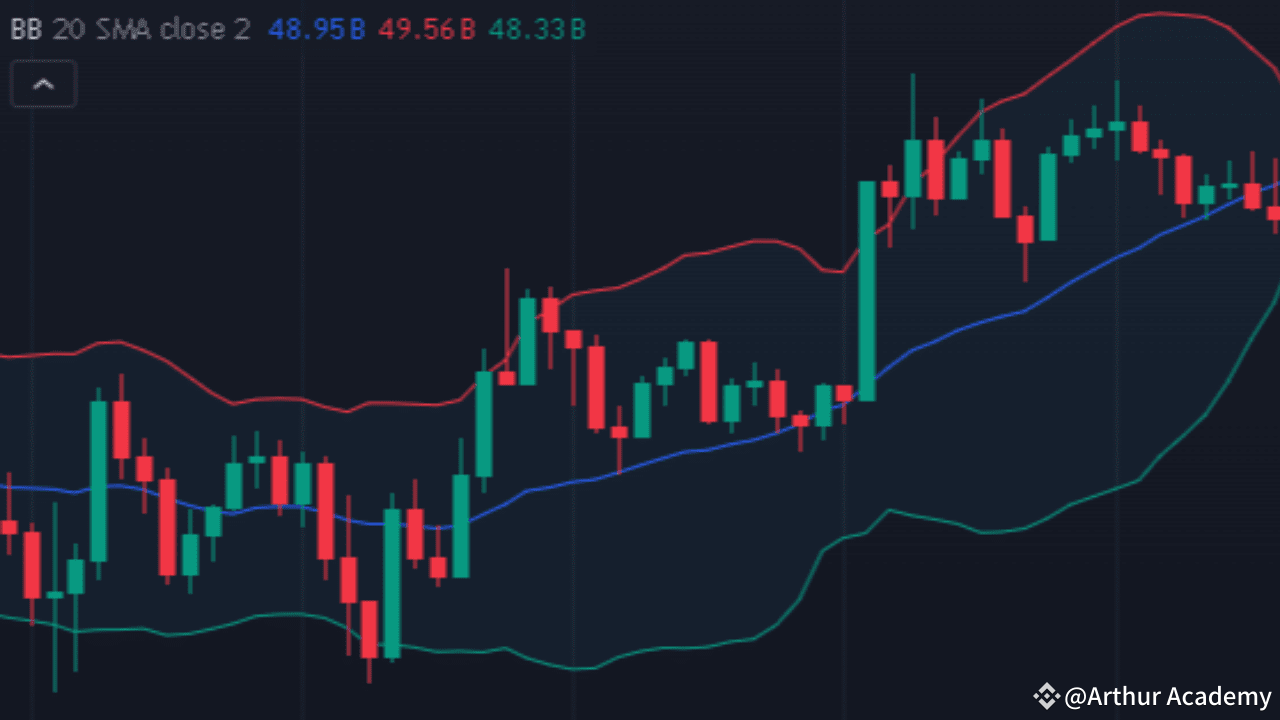
Article
Advanced Bollinger Bands TechniquesBollinger Bands are a versatile tool in technical analysis, widely used to assess market volatility and identify potential trading opportunities. While many traders are familiar with the basics, advanced techniques can unlock greater insights and improve trading strategies. Let’s dive into these advanced Bollinger Bands strategies tailored for crypto trading.
Quick Recap: What Are Bollinger Bands?
Bollinger Bands consist of:
Middle Band: A simple moving average (SMA).Upper Band: SMA plus 2 standard deviations of price.Lower Band: SMA minus 2 standard deviations of price.
The bands expand during high volatility and contract during low volatility, providing insights into market conditions.
1. Bollinger Band Squeeze Strategy
What It Is
The Bollinger Bands squeeze indicates periods of low volatility, often preceding significant price movements.
How to Use It
Look for a squeeze, where the upper and lower bands contract close to the SMA.Prepare for a breakout, but wait for confirmation (e.g., a candle closing outside the bands).Combine with volume analysis to confirm the direction of the breakout.
Pro Tip
Trade cautiously after the breakout; false breakouts can occur. Use stop-loss orders to manage risk.
2. Riding the Bands
What It Is
This technique involves trading trends that "ride" along the upper or lower Bollinger Band.
How to Use It
Bullish Trend: Price consistently touches or closes near the upper band while staying above the middle band.Bearish Trend: Price consistently touches or closes near the lower band while staying below the middle band.Use the middle band as a dynamic stop-loss level.
Pro Tip
Avoid trading against the trend when using this method. Ensure the trend is supported by strong volume.
3. Bollinger Band Divergences
What It Is
Divergences occur when price movement contradicts Bollinger Band behavior, signaling potential reversals.
How to Use It
Bullish Divergence: Price forms a lower low, but the lower band doesn’t extend further down.Bearish Divergence: Price forms a higher high, but the upper band doesn’t extend further up.Combine with momentum indicators like RSI for confirmation.
4. Double Bollinger Bands (DBBs)
What It Is
Using two sets of Bollinger Bands with different standard deviation settings (e.g., ±1 and ±2).
How to Use It
The area between the first and second bands (inner bands) indicates moderate volatility.When price stays outside the outer bands, it signals strong trends.Enter trades when the price moves from the inner bands toward the outer bands.
Pro Tip
DBBs can help refine entries and exits, particularly in trending markets.
5. Bollinger Bands with Other Indicators
What It Is
Combine Bollinger Bands with complementary indicators for deeper insights.
How to Use It
RSI (Relative Strength Index): Use RSI to confirm overbought/oversold conditions when price touches the bands.MACD (Moving Average Convergence Divergence): Look for MACD crossovers during Bollinger Band squeezes to predict breakout directions.Volume Analysis: Ensure breakout trades are supported by a spike in volume for higher reliability.
6. Bollinger Band Mean Reversion
What It Is
Prices tend to revert to the mean (middle band) after moving toward the upper or lower band.
How to Use It
When price touches the upper band in a ranging market, consider short positions.When price touches the lower band in a ranging market, consider long positions.Set take-profit levels near the middle band.
Pro Tip
Avoid this strategy during strong trending markets as prices may continue to ride the bands.
Using Bollinger Bands on Binance
Chart Tools: Binance’s charting tools allow easy customization of Bollinger Bands.Combine with Alerts: Set price alerts to notify you of band breakouts or squeezes.Test Strategies: Use the Binance Futures Testnet or a demo account to practice these techniques before live trading.
Conclusion
Mastering advanced Bollinger Bands techniques can significantly enhance your crypto trading skills. Whether you’re identifying squeezes for breakout opportunities, riding trends, or using double bands for precision, Bollinger Bands offer endless possibilities. Always combine these techniques with sound risk management and other indicators to maximize your success in the volatile crypto market.
#ReboundRally
Advanced Bollinger Bands Techniques
Bollinger Bands are a versatile tool in technical analysis, widely used to assess market volatility and identify potential trading opportunities. While many traders are familiar with the basics, advanced techniques can unlock greater insights and improve trading strategies. Let’s dive into these advanced Bollinger Bands strategies tailored for crypto trading.
Quick Recap: What Are Bollinger Bands?
Bollinger Bands consist of:
Middle Band: A simple moving average (SMA).Upper Band: SMA plus 2 standard deviations of price.Lower Band: SMA minus 2 standard deviations of price.
The bands expand during high volatility and contract during low volatility, providing insights into market conditions.
1. Bollinger Band Squeeze Strategy
What It Is
The Bollinger Bands squeeze indicates periods of low volatility, often preceding significant price movements.
How to Use It
Look for a squeeze, where the upper and lower bands contract close to the SMA.Prepare for a breakout, but wait for confirmation (e.g., a candle closing outside the bands).Combine with volume analysis to confirm the direction of the breakout.
Pro Tip
Trade cautiously after the breakout; false breakouts can occur. Use stop-loss orders to manage risk.
2. Riding the Bands
What It Is
This technique involves trading trends that "ride" along the upper or lower Bollinger Band.
How to Use It
Bullish Trend: Price consistently touches or closes near the upper band while staying above the middle band.Bearish Trend: Price consistently touches or closes near the lower band while staying below the middle band.Use the middle band as a dynamic stop-loss level.
Pro Tip
Avoid trading against the trend when using this method. Ensure the trend is supported by strong volume.
3. Bollinger Band Divergences
What It Is
Divergences occur when price movement contradicts Bollinger Band behavior, signaling potential reversals.
How to Use It
Bullish Divergence: Price forms a lower low, but the lower band doesn’t extend further down.Bearish Divergence: Price forms a higher high, but the upper band doesn’t extend further up.Combine with momentum indicators like RSI for confirmation.
4. Double Bollinger Bands (DBBs)
What It Is
Using two sets of Bollinger Bands with different standard deviation settings (e.g., ±1 and ±2).
How to Use It
The area between the first and second bands (inner bands) indicates moderate volatility.When price stays outside the outer bands, it signals strong trends.Enter trades when the price moves from the inner bands toward the outer bands.
Pro Tip
DBBs can help refine entries and exits, particularly in trending markets.
5. Bollinger Bands with Other Indicators
What It Is
Combine Bollinger Bands with complementary indicators for deeper insights.
How to Use It
RSI (Relative Strength Index): Use RSI to confirm overbought/oversold conditions when price touches the bands.MACD (Moving Average Convergence Divergence): Look for MACD crossovers during Bollinger Band squeezes to predict breakout directions.Volume Analysis: Ensure breakout trades are supported by a spike in volume for higher reliability.
6. Bollinger Band Mean Reversion
What It Is
Prices tend to revert to the mean (middle band) after moving toward the upper or lower band.
How to Use It
When price touches the upper band in a ranging market, consider short positions.When price touches the lower band in a ranging market, consider long positions.Set take-profit levels near the middle band.
Pro Tip
Avoid this strategy during strong trending markets as prices may continue to ride the bands.
Using Bollinger Bands on Binance
Chart Tools: Binance’s charting tools allow easy customization of Bollinger Bands.Combine with Alerts: Set price alerts to notify you of band breakouts or squeezes.Test Strategies: Use the Binance Futures Testnet or a demo account to practice these techniques before live trading.
Conclusion
Mastering advanced Bollinger Bands techniques can significantly enhance your crypto trading skills. Whether you’re identifying squeezes for breakout opportunities, riding trends, or using double bands for precision, Bollinger Bands offer endless possibilities. Always combine these techniques with sound risk management and other indicators to maximize your success in the volatile crypto market.
#ReboundRally
Quick Recap: What Are Bollinger Bands?
Bollinger Bands consist of:
Middle Band: A simple moving average (SMA).Upper Band: SMA plus 2 standard deviations of price.Lower Band: SMA minus 2 standard deviations of price.
The bands expand during high volatility and contract during low volatility, providing insights into market conditions.
1. Bollinger Band Squeeze Strategy
What It Is
The Bollinger Bands squeeze indicates periods of low volatility, often preceding significant price movements.
How to Use It
Look for a squeeze, where the upper and lower bands contract close to the SMA.Prepare for a breakout, but wait for confirmation (e.g., a candle closing outside the bands).Combine with volume analysis to confirm the direction of the breakout.
Pro Tip
Trade cautiously after the breakout; false breakouts can occur. Use stop-loss orders to manage risk.
2. Riding the Bands
What It Is
This technique involves trading trends that "ride" along the upper or lower Bollinger Band.
How to Use It
Bullish Trend: Price consistently touches or closes near the upper band while staying above the middle band.Bearish Trend: Price consistently touches or closes near the lower band while staying below the middle band.Use the middle band as a dynamic stop-loss level.
Pro Tip
Avoid trading against the trend when using this method. Ensure the trend is supported by strong volume.
3. Bollinger Band Divergences
What It Is
Divergences occur when price movement contradicts Bollinger Band behavior, signaling potential reversals.
How to Use It
Bullish Divergence: Price forms a lower low, but the lower band doesn’t extend further down.Bearish Divergence: Price forms a higher high, but the upper band doesn’t extend further up.Combine with momentum indicators like RSI for confirmation.
4. Double Bollinger Bands (DBBs)
What It Is
Using two sets of Bollinger Bands with different standard deviation settings (e.g., ±1 and ±2).
How to Use It
The area between the first and second bands (inner bands) indicates moderate volatility.When price stays outside the outer bands, it signals strong trends.Enter trades when the price moves from the inner bands toward the outer bands.
Pro Tip
DBBs can help refine entries and exits, particularly in trending markets.
5. Bollinger Bands with Other Indicators
What It Is
Combine Bollinger Bands with complementary indicators for deeper insights.
How to Use It
RSI (Relative Strength Index): Use RSI to confirm overbought/oversold conditions when price touches the bands.MACD (Moving Average Convergence Divergence): Look for MACD crossovers during Bollinger Band squeezes to predict breakout directions.Volume Analysis: Ensure breakout trades are supported by a spike in volume for higher reliability.
6. Bollinger Band Mean Reversion
What It Is
Prices tend to revert to the mean (middle band) after moving toward the upper or lower band.
How to Use It
When price touches the upper band in a ranging market, consider short positions.When price touches the lower band in a ranging market, consider long positions.Set take-profit levels near the middle band.
Pro Tip
Avoid this strategy during strong trending markets as prices may continue to ride the bands.
Using Bollinger Bands on Binance
Chart Tools: Binance’s charting tools allow easy customization of Bollinger Bands.Combine with Alerts: Set price alerts to notify you of band breakouts or squeezes.Test Strategies: Use the Binance Futures Testnet or a demo account to practice these techniques before live trading.
Conclusion
Mastering advanced Bollinger Bands techniques can significantly enhance your crypto trading skills. Whether you’re identifying squeezes for breakout opportunities, riding trends, or using double bands for precision, Bollinger Bands offer endless possibilities. Always combine these techniques with sound risk management and other indicators to maximize your success in the volatile crypto market.
#ReboundRally
153

Article
Reading Market Liquidity and Its Impact on TradingMarket liquidity is one of the most crucial factors to consider when trading cryptocurrency. Understanding what it is, how to measure it, and its impact on your trades can significantly improve your trading strategies and decision-making.
What Is Market Liquidity?
Liquidity refers to how easily you can buy or sell an asset without causing a significant change in its price. In a highly liquid market, assets can be traded quickly and with minimal price fluctuation.
Key Characteristics of Liquidity:
High Liquidity: Many buyers and sellers actively trading, resulting in tight bid-ask spreads.Low Liquidity: Fewer participants, leading to wider spreads and potential price slippage.
Why Is Liquidity Important?
1. Smooth Transactions
High liquidity ensures smoother transactions with lower chances of delays or order cancellations.
2. Reduced Price Impact
In a liquid market, your trades are less likely to move the asset’s price significantly, especially when trading large amounts.
3. Lower Trading Costs
Tighter bid-ask spreads in liquid markets mean you pay less in trading fees and price discrepancies.
4. Market Stability
Highly liquid markets are generally more stable and less prone to extreme volatility.
How to Measure Liquidity
1. Trading Volume
Higher trading volumes indicate more activity and liquidity. You can check 24-hour trading volume for any cryptocurrency on Binance.
2. Order Book Depth
Look at the number of buy and sell orders in the order book. A deep order book signals high liquidity.
3. Bid-Ask Spread
The difference between the highest buy order (bid) and the lowest sell order (ask). Smaller spreads indicate better liquidity.
4. Liquidity Pools
For decentralized exchanges (DEXs), liquidity pools measure the availability of tokens for trading pairs. Check liquidity pool data on platforms like PancakeSwap or Uniswap.
Liquidity’s Impact on Trading
1. Slippage
In low-liquidity markets, large orders may not be fully executed at the desired price, causing slippage. For example, buying a large amount of a low-liquidity token could push its price up, resulting in a higher average buy price.
2. Volatility
Low-liquidity markets tend to experience more price swings, making them riskier for traders.
3. Scalping and Day Trading
High liquidity is essential for short-term trading strategies like scalping, as it allows for quick entry and exit at predictable prices.
Tips for Navigating Market Liquidity
1. Stick to High-Liquidity Assets
Trade well-known cryptocurrencies like Bitcoin ($BTC ) and Ethereum ($ETH ), which typically have high liquidity on Binance.
2. Use Limit Orders
Limit orders let you set the maximum or minimum price at which you want to buy or sell, helping you avoid unfavorable slippage.
3. Analyze Market Depth
Before placing a trade, review the market depth chart on Binance to understand potential price impacts.
4. Monitor Trading Volume
Use Binance’s trading interface to check 24-hour volume and prioritize pairs with higher activity.
5. Avoid Trading Large Positions in Low-Liquidity Markets
If you must trade in low-liquidity markets, break your trades into smaller orders to minimize price impact.
Conclusion
Understanding market liquidity is vital for successful crypto trading. By analyzing trading volume, order books, and bid-ask spreads, you can make informed decisions and avoid common pitfalls like slippage and high volatility. Platforms like Binance provide all the tools you need to assess liquidity and optimize your trades. Always consider liquidity as a key factor when building your trading strategy—it can be the difference between a profitable trade and a costly mistake.
#BTCNextMove
Reading Market Liquidity and Its Impact on Trading
Market liquidity is one of the most crucial factors to consider when trading cryptocurrency. Understanding what it is, how to measure it, and its impact on your trades can significantly improve your trading strategies and decision-making.
What Is Market Liquidity?
Liquidity refers to how easily you can buy or sell an asset without causing a significant change in its price. In a highly liquid market, assets can be traded quickly and with minimal price fluctuation.
Key Characteristics of Liquidity:
High Liquidity: Many buyers and sellers actively trading, resulting in tight bid-ask spreads.Low Liquidity: Fewer participants, leading to wider spreads and potential price slippage.
Why Is Liquidity Important?
1. Smooth Transactions
High liquidity ensures smoother transactions with lower chances of delays or order cancellations.
2. Reduced Price Impact
In a liquid market, your trades are less likely to move the asset’s price significantly, especially when trading large amounts.
3. Lower Trading Costs
Tighter bid-ask spreads in liquid markets mean you pay less in trading fees and price discrepancies.
4. Market Stability
Highly liquid markets are generally more stable and less prone to extreme volatility.
How to Measure Liquidity
1. Trading Volume
Higher trading volumes indicate more activity and liquidity. You can check 24-hour trading volume for any cryptocurrency on Binance.
2. Order Book Depth
Look at the number of buy and sell orders in the order book. A deep order book signals high liquidity.
3. Bid-Ask Spread
The difference between the highest buy order (bid) and the lowest sell order (ask). Smaller spreads indicate better liquidity.
4. Liquidity Pools
For decentralized exchanges (DEXs), liquidity pools measure the availability of tokens for trading pairs. Check liquidity pool data on platforms like PancakeSwap or Uniswap.
Liquidity’s Impact on Trading
1. Slippage
In low-liquidity markets, large orders may not be fully executed at the desired price, causing slippage. For example, buying a large amount of a low-liquidity token could push its price up, resulting in a higher average buy price.
2. Volatility
Low-liquidity markets tend to experience more price swings, making them riskier for traders.
3. Scalping and Day Trading
High liquidity is essential for short-term trading strategies like scalping, as it allows for quick entry and exit at predictable prices.
Tips for Navigating Market Liquidity
1. Stick to High-Liquidity Assets
Trade well-known cryptocurrencies like Bitcoin ($BTC ) and Ethereum ($ETH ), which typically have high liquidity on Binance.
2. Use Limit Orders
Limit orders let you set the maximum or minimum price at which you want to buy or sell, helping you avoid unfavorable slippage.
3. Analyze Market Depth
Before placing a trade, review the market depth chart on Binance to understand potential price impacts.
4. Monitor Trading Volume
Use Binance’s trading interface to check 24-hour volume and prioritize pairs with higher activity.
5. Avoid Trading Large Positions in Low-Liquidity Markets
If you must trade in low-liquidity markets, break your trades into smaller orders to minimize price impact.
Conclusion
Understanding market liquidity is vital for successful crypto trading. By analyzing trading volume, order books, and bid-ask spreads, you can make informed decisions and avoid common pitfalls like slippage and high volatility. Platforms like Binance provide all the tools you need to assess liquidity and optimize your trades. Always consider liquidity as a key factor when building your trading strategy—it can be the difference between a profitable trade and a costly mistake.
#BTCNextMove
What Is Market Liquidity?
Liquidity refers to how easily you can buy or sell an asset without causing a significant change in its price. In a highly liquid market, assets can be traded quickly and with minimal price fluctuation.
Key Characteristics of Liquidity:
High Liquidity: Many buyers and sellers actively trading, resulting in tight bid-ask spreads.Low Liquidity: Fewer participants, leading to wider spreads and potential price slippage.
Why Is Liquidity Important?
1. Smooth Transactions
High liquidity ensures smoother transactions with lower chances of delays or order cancellations.
2. Reduced Price Impact
In a liquid market, your trades are less likely to move the asset’s price significantly, especially when trading large amounts.
3. Lower Trading Costs
Tighter bid-ask spreads in liquid markets mean you pay less in trading fees and price discrepancies.
4. Market Stability
Highly liquid markets are generally more stable and less prone to extreme volatility.
How to Measure Liquidity
1. Trading Volume
Higher trading volumes indicate more activity and liquidity. You can check 24-hour trading volume for any cryptocurrency on Binance.
2. Order Book Depth
Look at the number of buy and sell orders in the order book. A deep order book signals high liquidity.
3. Bid-Ask Spread
The difference between the highest buy order (bid) and the lowest sell order (ask). Smaller spreads indicate better liquidity.
4. Liquidity Pools
For decentralized exchanges (DEXs), liquidity pools measure the availability of tokens for trading pairs. Check liquidity pool data on platforms like PancakeSwap or Uniswap.
Liquidity’s Impact on Trading
1. Slippage
In low-liquidity markets, large orders may not be fully executed at the desired price, causing slippage. For example, buying a large amount of a low-liquidity token could push its price up, resulting in a higher average buy price.
2. Volatility
Low-liquidity markets tend to experience more price swings, making them riskier for traders.
3. Scalping and Day Trading
High liquidity is essential for short-term trading strategies like scalping, as it allows for quick entry and exit at predictable prices.
Tips for Navigating Market Liquidity
1. Stick to High-Liquidity Assets
Trade well-known cryptocurrencies like Bitcoin ($BTC ) and Ethereum ($ETH ), which typically have high liquidity on Binance.
2. Use Limit Orders
Limit orders let you set the maximum or minimum price at which you want to buy or sell, helping you avoid unfavorable slippage.
3. Analyze Market Depth
Before placing a trade, review the market depth chart on Binance to understand potential price impacts.
4. Monitor Trading Volume
Use Binance’s trading interface to check 24-hour volume and prioritize pairs with higher activity.
5. Avoid Trading Large Positions in Low-Liquidity Markets
If you must trade in low-liquidity markets, break your trades into smaller orders to minimize price impact.
Conclusion
Understanding market liquidity is vital for successful crypto trading. By analyzing trading volume, order books, and bid-ask spreads, you can make informed decisions and avoid common pitfalls like slippage and high volatility. Platforms like Binance provide all the tools you need to assess liquidity and optimize your trades. Always consider liquidity as a key factor when building your trading strategy—it can be the difference between a profitable trade and a costly mistake.
#BTCNextMove
1
1
714

Article
Risk-Adjusted Returns in Crypto TradingIn the volatile world of cryptocurrency, profits can be tempting, but chasing gains without considering the associated risks can lead to significant losses. To trade smarter, it's essential to focus on risk-adjusted returns, a method that evaluates the profitability of an investment relative to its risk.
What Are Risk-Adjusted Returns?
Risk-adjusted returns measure how much return you earn for the level of risk you take. This concept allows traders to compare different investments or strategies on a fair playing field, even if the risks involved are different.
Key Formula:
Risk-Adjusted Return = Return : Risk
The goal is to achieve the highest return with the lowest possible risk, maximizing efficiency in your trading strategy.
Why Do Risk-Adjusted Returns Matter?
Volatility Management: Crypto markets are highly volatile. Assessing risk-adjusted returns helps balance potential gains with the probability of loss.Better Decision-Making: Helps you identify whether a high return is worth the risk taken.Long-Term Success: Prioritizing risk-adjusted returns promotes sustainable trading practices rather than chasing short-term gains.
Metrics to Measure Risk-Adjusted Returns
Sharpe Ratio
The Sharpe ratio evaluates returns relative to risk by comparing your trading strategy’s performance to a risk-free asset.Formula:
Sharpe Ratio = Portfolio Return−Risk-Free Rate : Standard Deviation of ReturnsInterpretation:A higher Sharpe ratio indicates better risk-adjusted performance.Sortino Ratio
Unlike the Sharpe ratio, the Sortino ratio only considers downside risk (negative volatility).Formula:
Sortino Ratio = Portfolio Return−Risk-Free Rate : Downside DeviationUse Case: Suitable for traders focusing on minimizing losses.Maximum Drawdown (MDD)
Measures the largest peak-to-trough decline in a portfolio over a specific period. Lower MDD indicates a more resilient strategy.
How to Achieve Better Risk-Adjusted Returns
Diversify Your Portfolio
Spread investments across different coins and sectors to reduce exposure to any single asset’s volatility.Position Sizing
Use a risk-based approach to determine how much capital to allocate per trade. A common rule is to risk no more than 1-2% of your total portfolio on a single trade.Leverage Management
Avoid excessive leverage, which can amplify both gains and losses.Use Stop-Loss Orders
Limit potential losses by setting stop-loss levels based on technical analysis and risk tolerance.Focus on High-Liquidity Markets
Trade assets with high liquidity to minimize slippage and ensure smoother execution of trades.Regularly Review Strategies
Evaluate your trading performance and adjust strategies based on risk-adjusted returns.
Example of Risk-Adjusted Returns
Scenario:
Trader A and Trader B both earn a 10% return in one month.
Trader A trades Bitcoin with moderate volatility.Trader B trades a low-cap altcoin with extreme price swings.
By comparing their Sharpe ratios, we find:
Trader A: Sharpe Ratio = 1.5 (Higher risk-adjusted return)Trader B: Sharpe Ratio = 0.7 (Lower risk-adjusted return)
Although both achieved the same return, Trader A managed risk better, making their strategy more sustainable.
Using Binance Tools for Risk Management
Portfolio Analytics: Binance provides tools to track your portfolio’s performance and volatility.Stop-Loss and Take-Profit Orders: Automate risk control directly from the Binance app.Futures Trading with Limited Leverage: Customize leverage levels to reduce exposure.
Conclusion
In crypto trading, success isn’t just about earning high returns; it’s about achieving those returns while managing risk effectively. By focusing on risk-adjusted returns, you can build a sustainable and resilient trading strategy. Use metrics like the Sharpe ratio and tools available on Binance to fine-tune your approach, ensuring every trade aligns with your long-term goals. Remember, consistent and calculated gains will always outweigh reckless and risky profits.
#MarketCorrectionBuyOrHODL
Risk-Adjusted Returns in Crypto Trading
In the volatile world of cryptocurrency, profits can be tempting, but chasing gains without considering the associated risks can lead to significant losses. To trade smarter, it's essential to focus on risk-adjusted returns, a method that evaluates the profitability of an investment relative to its risk.
What Are Risk-Adjusted Returns?
Risk-adjusted returns measure how much return you earn for the level of risk you take. This concept allows traders to compare different investments or strategies on a fair playing field, even if the risks involved are different.
Key Formula:
Risk-Adjusted Return = Return : Risk
The goal is to achieve the highest return with the lowest possible risk, maximizing efficiency in your trading strategy.
Why Do Risk-Adjusted Returns Matter?
Volatility Management: Crypto markets are highly volatile. Assessing risk-adjusted returns helps balance potential gains with the probability of loss.Better Decision-Making: Helps you identify whether a high return is worth the risk taken.Long-Term Success: Prioritizing risk-adjusted returns promotes sustainable trading practices rather than chasing short-term gains.
Metrics to Measure Risk-Adjusted Returns
Sharpe Ratio
The Sharpe ratio evaluates returns relative to risk by comparing your trading strategy’s performance to a risk-free asset.Formula:
Sharpe Ratio = Portfolio Return−Risk-Free Rate : Standard Deviation of ReturnsInterpretation:A higher Sharpe ratio indicates better risk-adjusted performance.Sortino Ratio
Unlike the Sharpe ratio, the Sortino ratio only considers downside risk (negative volatility).Formula:
Sortino Ratio = Portfolio Return−Risk-Free Rate : Downside DeviationUse Case: Suitable for traders focusing on minimizing losses.Maximum Drawdown (MDD)
Measures the largest peak-to-trough decline in a portfolio over a specific period. Lower MDD indicates a more resilient strategy.
How to Achieve Better Risk-Adjusted Returns
Diversify Your Portfolio
Spread investments across different coins and sectors to reduce exposure to any single asset’s volatility.Position Sizing
Use a risk-based approach to determine how much capital to allocate per trade. A common rule is to risk no more than 1-2% of your total portfolio on a single trade.Leverage Management
Avoid excessive leverage, which can amplify both gains and losses.Use Stop-Loss Orders
Limit potential losses by setting stop-loss levels based on technical analysis and risk tolerance.Focus on High-Liquidity Markets
Trade assets with high liquidity to minimize slippage and ensure smoother execution of trades.Regularly Review Strategies
Evaluate your trading performance and adjust strategies based on risk-adjusted returns.
Example of Risk-Adjusted Returns
Scenario:
Trader A and Trader B both earn a 10% return in one month.
Trader A trades Bitcoin with moderate volatility.Trader B trades a low-cap altcoin with extreme price swings.
By comparing their Sharpe ratios, we find:
Trader A: Sharpe Ratio = 1.5 (Higher risk-adjusted return)Trader B: Sharpe Ratio = 0.7 (Lower risk-adjusted return)
Although both achieved the same return, Trader A managed risk better, making their strategy more sustainable.
Using Binance Tools for Risk Management
Portfolio Analytics: Binance provides tools to track your portfolio’s performance and volatility.Stop-Loss and Take-Profit Orders: Automate risk control directly from the Binance app.Futures Trading with Limited Leverage: Customize leverage levels to reduce exposure.
Conclusion
In crypto trading, success isn’t just about earning high returns; it’s about achieving those returns while managing risk effectively. By focusing on risk-adjusted returns, you can build a sustainable and resilient trading strategy. Use metrics like the Sharpe ratio and tools available on Binance to fine-tune your approach, ensuring every trade aligns with your long-term goals. Remember, consistent and calculated gains will always outweigh reckless and risky profits.
#MarketCorrectionBuyOrHODL
What Are Risk-Adjusted Returns?
Risk-adjusted returns measure how much return you earn for the level of risk you take. This concept allows traders to compare different investments or strategies on a fair playing field, even if the risks involved are different.
Key Formula:
Risk-Adjusted Return = Return : Risk
The goal is to achieve the highest return with the lowest possible risk, maximizing efficiency in your trading strategy.
Why Do Risk-Adjusted Returns Matter?
Volatility Management: Crypto markets are highly volatile. Assessing risk-adjusted returns helps balance potential gains with the probability of loss.Better Decision-Making: Helps you identify whether a high return is worth the risk taken.Long-Term Success: Prioritizing risk-adjusted returns promotes sustainable trading practices rather than chasing short-term gains.
Metrics to Measure Risk-Adjusted Returns
Sharpe Ratio
The Sharpe ratio evaluates returns relative to risk by comparing your trading strategy’s performance to a risk-free asset.Formula:
Sharpe Ratio = Portfolio Return−Risk-Free Rate : Standard Deviation of ReturnsInterpretation:A higher Sharpe ratio indicates better risk-adjusted performance.Sortino Ratio
Unlike the Sharpe ratio, the Sortino ratio only considers downside risk (negative volatility).Formula:
Sortino Ratio = Portfolio Return−Risk-Free Rate : Downside DeviationUse Case: Suitable for traders focusing on minimizing losses.Maximum Drawdown (MDD)
Measures the largest peak-to-trough decline in a portfolio over a specific period. Lower MDD indicates a more resilient strategy.
How to Achieve Better Risk-Adjusted Returns
Diversify Your Portfolio
Spread investments across different coins and sectors to reduce exposure to any single asset’s volatility.Position Sizing
Use a risk-based approach to determine how much capital to allocate per trade. A common rule is to risk no more than 1-2% of your total portfolio on a single trade.Leverage Management
Avoid excessive leverage, which can amplify both gains and losses.Use Stop-Loss Orders
Limit potential losses by setting stop-loss levels based on technical analysis and risk tolerance.Focus on High-Liquidity Markets
Trade assets with high liquidity to minimize slippage and ensure smoother execution of trades.Regularly Review Strategies
Evaluate your trading performance and adjust strategies based on risk-adjusted returns.
Example of Risk-Adjusted Returns
Scenario:
Trader A and Trader B both earn a 10% return in one month.
Trader A trades Bitcoin with moderate volatility.Trader B trades a low-cap altcoin with extreme price swings.
By comparing their Sharpe ratios, we find:
Trader A: Sharpe Ratio = 1.5 (Higher risk-adjusted return)Trader B: Sharpe Ratio = 0.7 (Lower risk-adjusted return)
Although both achieved the same return, Trader A managed risk better, making their strategy more sustainable.
Using Binance Tools for Risk Management
Portfolio Analytics: Binance provides tools to track your portfolio’s performance and volatility.Stop-Loss and Take-Profit Orders: Automate risk control directly from the Binance app.Futures Trading with Limited Leverage: Customize leverage levels to reduce exposure.
Conclusion
In crypto trading, success isn’t just about earning high returns; it’s about achieving those returns while managing risk effectively. By focusing on risk-adjusted returns, you can build a sustainable and resilient trading strategy. Use metrics like the Sharpe ratio and tools available on Binance to fine-tune your approach, ensuring every trade aligns with your long-term goals. Remember, consistent and calculated gains will always outweigh reckless and risky profits.
#MarketCorrectionBuyOrHODL
455
Article
Intro to Smart Contracts and DeFi TokensSmart contracts and decentralized finance (DeFi) tokens have revolutionized the cryptocurrency world, enabling new financial opportunities and automation. Understanding their purpose and mechanics is essential for anyone entering the crypto space.
What Are Smart Contracts?
A smart contract is a self-executing program on a blockchain that automatically enforces agreements when specific conditions are met. These contracts eliminate the need for intermediaries, ensuring transparency, speed, and cost efficiency.
Key Features of Smart Contracts:
Automation: Executes transactions automatically.Immutable: Once deployed, the code can’t be altered.Transparent: Code and transactions are visible to all participants on the blockchain.
Popular Blockchain for Smart Contracts:
Ethereum: $ETH The pioneer in smart contract platforms.Binance Smart Chain (BSC): $BNB Offers faster and cheaper transactions compared to Ethereum.
Example Use Case:
Imagine renting a property using a smart contract. The contract automatically releases the security deposit to the landlord once you pay the rent and fulfill the terms.
What Are DeFi Tokens?
DeFi tokens power decentralized finance protocols, providing tools for borrowing, lending, staking, and trading without traditional banks.
Functions of DeFi Tokens:
Governance: Token holders vote on protocol changes.Staking Rewards: Tokens earned by staking or locking funds.Utility: Used within the ecosystem for fees or collateral.
Popular DeFi Tokens:
UNI (Uniswap): Powers the Uniswap decentralized exchange (DEX).CAKE (PancakeSwap): Used on Binance Smart Chain’s leading DEX.AAVE: Enables decentralized lending and borrowing.
How Do Smart Contracts and DeFi Tokens Work Together?
DeFi protocols rely on smart contracts to automate financial services:
Lending Platforms: Users lend crypto and earn interest, all managed by smart contracts.Decentralized Exchanges (DEXs): Traders swap tokens directly using automated market maker (AMM) contracts.Yield Farming: Smart contracts distribute rewards to liquidity providers.
Example: On PancakeSwap, smart contracts facilitate token swaps and distribute CAKE tokens as staking rewards.
Why Are They Important?
Eliminating Intermediaries: Cuts costs by removing banks and brokers.Global Accessibility: Anyone with internet access can participate.Innovation: Opens up new financial instruments like flash loans and liquidity pools.
Risks and Considerations
Smart Contract Bugs: Exploitable vulnerabilities in the code can result in losses.Market Volatility: DeFi tokens often experience significant price swings.Regulatory Uncertainty: The future of DeFi faces scrutiny from governments worldwide.
Getting Started with Smart Contracts and DeFi Tokens
On Binance Smart Chain (BSC):
Use Trust Wallet to connect to DeFi platforms.Start small by staking in PancakeSwap’s pools to earn CAKE.
Learning Resources:
Binance Academy offers in-depth guides on DeFi and smart contracts.Explore Ethereum’s smart contract examples to understand basic coding concepts.
Conclusion
Smart contracts and DeFi tokens are at the heart of the crypto revolution, transforming traditional finance into a more accessible and decentralized ecosystem. By understanding their mechanics and risks, you can unlock the potential of this rapidly growing sector. Whether you’re looking to trade, invest, or simply learn, platforms like Binance make it easy to explore and participate in the DeFi space.
{spot}(BNBUSDT)
#CryptoUsersHit18M
Intro to Smart Contracts and DeFi Tokens
Smart contracts and decentralized finance (DeFi) tokens have revolutionized the cryptocurrency world, enabling new financial opportunities and automation. Understanding their purpose and mechanics is essential for anyone entering the crypto space.
What Are Smart Contracts?
A smart contract is a self-executing program on a blockchain that automatically enforces agreements when specific conditions are met. These contracts eliminate the need for intermediaries, ensuring transparency, speed, and cost efficiency.
Key Features of Smart Contracts:
Automation: Executes transactions automatically.Immutable: Once deployed, the code can’t be altered.Transparent: Code and transactions are visible to all participants on the blockchain.
Popular Blockchain for Smart Contracts:
Ethereum: $ETH The pioneer in smart contract platforms.Binance Smart Chain (BSC): $BNB Offers faster and cheaper transactions compared to Ethereum.
Example Use Case:
Imagine renting a property using a smart contract. The contract automatically releases the security deposit to the landlord once you pay the rent and fulfill the terms.
What Are DeFi Tokens?
DeFi tokens power decentralized finance protocols, providing tools for borrowing, lending, staking, and trading without traditional banks.
Functions of DeFi Tokens:
Governance: Token holders vote on protocol changes.Staking Rewards: Tokens earned by staking or locking funds.Utility: Used within the ecosystem for fees or collateral.
Popular DeFi Tokens:
UNI (Uniswap): Powers the Uniswap decentralized exchange (DEX).CAKE (PancakeSwap): Used on Binance Smart Chain’s leading DEX.AAVE: Enables decentralized lending and borrowing.
How Do Smart Contracts and DeFi Tokens Work Together?
DeFi protocols rely on smart contracts to automate financial services:
Lending Platforms: Users lend crypto and earn interest, all managed by smart contracts.Decentralized Exchanges (DEXs): Traders swap tokens directly using automated market maker (AMM) contracts.Yield Farming: Smart contracts distribute rewards to liquidity providers.
Example: On PancakeSwap, smart contracts facilitate token swaps and distribute CAKE tokens as staking rewards.
Why Are They Important?
Eliminating Intermediaries: Cuts costs by removing banks and brokers.Global Accessibility: Anyone with internet access can participate.Innovation: Opens up new financial instruments like flash loans and liquidity pools.
Risks and Considerations
Smart Contract Bugs: Exploitable vulnerabilities in the code can result in losses.Market Volatility: DeFi tokens often experience significant price swings.Regulatory Uncertainty: The future of DeFi faces scrutiny from governments worldwide.
Getting Started with Smart Contracts and DeFi Tokens
On Binance Smart Chain (BSC):
Use Trust Wallet to connect to DeFi platforms.Start small by staking in PancakeSwap’s pools to earn CAKE.
Learning Resources:
Binance Academy offers in-depth guides on DeFi and smart contracts.Explore Ethereum’s smart contract examples to understand basic coding concepts.
Conclusion
Smart contracts and DeFi tokens are at the heart of the crypto revolution, transforming traditional finance into a more accessible and decentralized ecosystem. By understanding their mechanics and risks, you can unlock the potential of this rapidly growing sector. Whether you’re looking to trade, invest, or simply learn, platforms like Binance make it easy to explore and participate in the DeFi space.
#CryptoUsersHit18M
What Are Smart Contracts?
A smart contract is a self-executing program on a blockchain that automatically enforces agreements when specific conditions are met. These contracts eliminate the need for intermediaries, ensuring transparency, speed, and cost efficiency.
Key Features of Smart Contracts:
Automation: Executes transactions automatically.Immutable: Once deployed, the code can’t be altered.Transparent: Code and transactions are visible to all participants on the blockchain.
Popular Blockchain for Smart Contracts:
Ethereum: $ETH The pioneer in smart contract platforms.Binance Smart Chain (BSC): $BNB Offers faster and cheaper transactions compared to Ethereum.
Example Use Case:
Imagine renting a property using a smart contract. The contract automatically releases the security deposit to the landlord once you pay the rent and fulfill the terms.
What Are DeFi Tokens?
DeFi tokens power decentralized finance protocols, providing tools for borrowing, lending, staking, and trading without traditional banks.
Functions of DeFi Tokens:
Governance: Token holders vote on protocol changes.Staking Rewards: Tokens earned by staking or locking funds.Utility: Used within the ecosystem for fees or collateral.
Popular DeFi Tokens:
UNI (Uniswap): Powers the Uniswap decentralized exchange (DEX).CAKE (PancakeSwap): Used on Binance Smart Chain’s leading DEX.AAVE: Enables decentralized lending and borrowing.
How Do Smart Contracts and DeFi Tokens Work Together?
DeFi protocols rely on smart contracts to automate financial services:
Lending Platforms: Users lend crypto and earn interest, all managed by smart contracts.Decentralized Exchanges (DEXs): Traders swap tokens directly using automated market maker (AMM) contracts.Yield Farming: Smart contracts distribute rewards to liquidity providers.
Example: On PancakeSwap, smart contracts facilitate token swaps and distribute CAKE tokens as staking rewards.
Why Are They Important?
Eliminating Intermediaries: Cuts costs by removing banks and brokers.Global Accessibility: Anyone with internet access can participate.Innovation: Opens up new financial instruments like flash loans and liquidity pools.
Risks and Considerations
Smart Contract Bugs: Exploitable vulnerabilities in the code can result in losses.Market Volatility: DeFi tokens often experience significant price swings.Regulatory Uncertainty: The future of DeFi faces scrutiny from governments worldwide.
Getting Started with Smart Contracts and DeFi Tokens
On Binance Smart Chain (BSC):
Use Trust Wallet to connect to DeFi platforms.Start small by staking in PancakeSwap’s pools to earn CAKE.
Learning Resources:
Binance Academy offers in-depth guides on DeFi and smart contracts.Explore Ethereum’s smart contract examples to understand basic coding concepts.
Conclusion
Smart contracts and DeFi tokens are at the heart of the crypto revolution, transforming traditional finance into a more accessible and decentralized ecosystem. By understanding their mechanics and risks, you can unlock the potential of this rapidly growing sector. Whether you’re looking to trade, invest, or simply learn, platforms like Binance make it easy to explore and participate in the DeFi space.
#CryptoUsersHit18M
959

Article
TRON CEO Spends $6.2 Million on "Banana Art", Plans to Eat ItA U.S.-based crypto entrepreneur, Justin Sun, spent a jaw-dropping $6.2 million to purchase a controversial artwork featuring a banana duct-taped to a wall. His plans? To eat the banana as part of an “artistic experience.”
In 2019, Maurizio Cattelan’s satirical artwork “Comedian” created a stir on social media. Displayed at Art Basel Miami, it featured a single banana taped to a wall and sold for $120,000. Years later, this piece returned to the spotlight, selling for $6.2 million in an auction held by Sotheby’s in New York on November 20, 2024.
Justin Sun, the founder of TRON cryptocurrency, emerged victorious in the bidding war against six others, paying for the artwork entirely in cryptocurrency. Sun expressed his excitement on X (formerly Twitter):
"I’m thrilled to announce that I’ve successfully acquired Maurizio Cattelan’s iconic artwork, Comedian, for $6.2 million."
What Did He Actually Buy?
According to David Galperin, Sotheby’s head of contemporary art, the true value of “Comedian” isn’t in the banana itself. What buyers receive is a certificate of authenticity, which grants them the right to recreate the artwork.
“You’re not buying the banana; you’re buying the license to reproduce the artwork as an authentic Maurizio Cattelan creation,” explained Galperin.
Sun sees the purchase as more than a quirky investment. He believes “Comedian” bridges the worlds of art, memes, and cryptocurrency, labeling it a cultural phenomenon.
Rather than simply displaying the piece, Sun plans to eat the banana as a tribute to art and pop culture. “I’m honored to own Comedian and hope this inspires art lovers worldwide. I’ll also eat the banana privately in the coming days as a unique artistic experience to celebrate its place in history,” Sun shared.
The package Sun received included a roll of duct tape, instructions on how to display the banana properly, and a certificate of authenticity.
Impact on the Crypto Market
Justin Sun’s extravagant purchase could have ripple effects on the cryptocurrency market:
Boosted Publicity for TRON: As the TRON founder, Sun’s actions often double as marketing stunts. This event could draw more attention to TRON, potentially increasing its adoption and value.Highlighting Crypto’s Role in Art Investment: Paying for “Comedian” in cryptocurrency showcases how crypto is becoming a legitimate medium for high-profile transactions, possibly attracting more traditional investors to the crypto space.Market Sentiment Shifts: While some may see the purchase as a savvy move to connect crypto and culture, others might view it as frivolous. This mixed sentiment could lead to short-term market fluctuations.
In the long run, such events help position cryptocurrency as a versatile asset capable of influencing diverse sectors, including art, tech, and entertainment. However, it also raises questions about the sustainability of such high-profile, unconventional investments.
{spot}(TRXUSDT)
#2024WithBinance
TRON CEO Spends $6.2 Million on "Banana Art", Plans to Eat It
A U.S.-based crypto entrepreneur, Justin Sun, spent a jaw-dropping $6.2 million to purchase a controversial artwork featuring a banana duct-taped to a wall. His plans? To eat the banana as part of an “artistic experience.”
In 2019, Maurizio Cattelan’s satirical artwork “Comedian” created a stir on social media. Displayed at Art Basel Miami, it featured a single banana taped to a wall and sold for $120,000. Years later, this piece returned to the spotlight, selling for $6.2 million in an auction held by Sotheby’s in New York on November 20, 2024.
Justin Sun, the founder of TRON cryptocurrency, emerged victorious in the bidding war against six others, paying for the artwork entirely in cryptocurrency. Sun expressed his excitement on X (formerly Twitter):
"I’m thrilled to announce that I’ve successfully acquired Maurizio Cattelan’s iconic artwork, Comedian, for $6.2 million."
What Did He Actually Buy?
According to David Galperin, Sotheby’s head of contemporary art, the true value of “Comedian” isn’t in the banana itself. What buyers receive is a certificate of authenticity, which grants them the right to recreate the artwork.
“You’re not buying the banana; you’re buying the license to reproduce the artwork as an authentic Maurizio Cattelan creation,” explained Galperin.
Sun sees the purchase as more than a quirky investment. He believes “Comedian” bridges the worlds of art, memes, and cryptocurrency, labeling it a cultural phenomenon.
Rather than simply displaying the piece, Sun plans to eat the banana as a tribute to art and pop culture. “I’m honored to own Comedian and hope this inspires art lovers worldwide. I’ll also eat the banana privately in the coming days as a unique artistic experience to celebrate its place in history,” Sun shared.
The package Sun received included a roll of duct tape, instructions on how to display the banana properly, and a certificate of authenticity.
Impact on the Crypto Market
Justin Sun’s extravagant purchase could have ripple effects on the cryptocurrency market:
Boosted Publicity for TRON: As the TRON founder, Sun’s actions often double as marketing stunts. This event could draw more attention to TRON, potentially increasing its adoption and value.Highlighting Crypto’s Role in Art Investment: Paying for “Comedian” in cryptocurrency showcases how crypto is becoming a legitimate medium for high-profile transactions, possibly attracting more traditional investors to the crypto space.Market Sentiment Shifts: While some may see the purchase as a savvy move to connect crypto and culture, others might view it as frivolous. This mixed sentiment could lead to short-term market fluctuations.
In the long run, such events help position cryptocurrency as a versatile asset capable of influencing diverse sectors, including art, tech, and entertainment. However, it also raises questions about the sustainability of such high-profile, unconventional investments.
#2024WithBinance
In 2019, Maurizio Cattelan’s satirical artwork “Comedian” created a stir on social media. Displayed at Art Basel Miami, it featured a single banana taped to a wall and sold for $120,000. Years later, this piece returned to the spotlight, selling for $6.2 million in an auction held by Sotheby’s in New York on November 20, 2024.
Justin Sun, the founder of TRON cryptocurrency, emerged victorious in the bidding war against six others, paying for the artwork entirely in cryptocurrency. Sun expressed his excitement on X (formerly Twitter):
"I’m thrilled to announce that I’ve successfully acquired Maurizio Cattelan’s iconic artwork, Comedian, for $6.2 million."
What Did He Actually Buy?
According to David Galperin, Sotheby’s head of contemporary art, the true value of “Comedian” isn’t in the banana itself. What buyers receive is a certificate of authenticity, which grants them the right to recreate the artwork.
“You’re not buying the banana; you’re buying the license to reproduce the artwork as an authentic Maurizio Cattelan creation,” explained Galperin.
Sun sees the purchase as more than a quirky investment. He believes “Comedian” bridges the worlds of art, memes, and cryptocurrency, labeling it a cultural phenomenon.
Rather than simply displaying the piece, Sun plans to eat the banana as a tribute to art and pop culture. “I’m honored to own Comedian and hope this inspires art lovers worldwide. I’ll also eat the banana privately in the coming days as a unique artistic experience to celebrate its place in history,” Sun shared.
The package Sun received included a roll of duct tape, instructions on how to display the banana properly, and a certificate of authenticity.
Impact on the Crypto Market
Justin Sun’s extravagant purchase could have ripple effects on the cryptocurrency market:
Boosted Publicity for TRON: As the TRON founder, Sun’s actions often double as marketing stunts. This event could draw more attention to TRON, potentially increasing its adoption and value.Highlighting Crypto’s Role in Art Investment: Paying for “Comedian” in cryptocurrency showcases how crypto is becoming a legitimate medium for high-profile transactions, possibly attracting more traditional investors to the crypto space.Market Sentiment Shifts: While some may see the purchase as a savvy move to connect crypto and culture, others might view it as frivolous. This mixed sentiment could lead to short-term market fluctuations.
In the long run, such events help position cryptocurrency as a versatile asset capable of influencing diverse sectors, including art, tech, and entertainment. However, it also raises questions about the sustainability of such high-profile, unconventional investments.
#2024WithBinance
675

Article
Identifying and Avoiding Pump-and-Dump SchemesPump-and-dump schemes are one of the most common scams in the cryptocurrency world. These schemes manipulate the price of a cryptocurrency, enticing unsuspecting traders to invest, only for the orchestrators to sell at inflated prices, leaving others with significant losses. Here’s how to spot and steer clear of these traps.
What Is a Pump-and-Dump Scheme?
A pump-and-dump scheme involves artificially inflating the price of a cryptocurrency ("pumping") through misleading information, fake hype, or coordinated buying. Once the price peaks, scammers sell off their holdings ("dumping"), causing the price to plummet.
Common Targets:
Low-cap altcoins with limited liquidity.New tokens with minimal regulatory oversight.
How to Identify a Pump-and-Dump Scheme
1. Sudden Price Spikes Without News
Look for sharp, unexplained price increases. Legitimate surges are often accompanied by positive news, partnerships, or technological advancements. If there’s no obvious reason, be cautious.
2. Overhyped Social Media Posts
Scammers often use platforms like Telegram, Discord, or Twitter to spread FOMO (fear of missing out).
Promises of massive gains in a short time.Messages urging people to "buy now" before it’s too late.Anonymous accounts with no prior credibility.
3. Unusual Trading Volume
A sudden spike in trading volume, especially for lesser-known tokens, is a red flag. Use Binance’s market data tools to analyze volume trends.
4. Limited Information About the Token
Projects involved in pump-and-dump schemes often have vague goals, no whitepaper, or little online presence. If you can’t find detailed information about a cryptocurrency, it’s likely unreliable.
5. Coordinated Buying Patterns
If you see large buy orders or repeated transactions from the same wallets, this could indicate manipulation.
How to Avoid Falling for These Schemes
1. Do Your Own Research (DYOR)
Before investing in any cryptocurrency, investigate:
The project’s purpose and team.Its market cap, trading volume, and tokenomics.Past price behavior and growth patterns.
2. Be Skeptical of "Too Good to Be True" Promises
Avoid investments that promise overnight wealth or guaranteed returns. The crypto market is volatile, and no investment is risk-free.
3. Avoid FOMO
Scammers rely on creating urgency to manipulate traders. Take your time to assess the situation before making decisions.
4. Use Trusted Exchanges
Trade only on reputable platforms like Binance. Binance provides robust tools to analyze price movements, volume, and token legitimacy.
5. Stick to Known Cryptocurrencies
Established cryptocurrencies like Bitcoin (BTC) or Ethereum (ETH) are less likely to be targeted by pump-and-dump schemes due to their high liquidity and strong market presence.
6. Set Trading Limits
Use stop-loss and take-profit orders to protect your investments from sudden price crashes. Binance’s trading platform allows you to set these limits easily.
7. Monitor Regulatory Compliance
Tokens with regulatory approval or partnerships with trusted institutions are generally safer investments.
What to Do If You Suspect a Pump-and-Dump
Report the Activity: Notify the exchange where the trading is taking place.Avoid Investing Further: Don’t double down on a sinking token.Warn Others: Share your findings to protect other traders.
Real-Life Example: The Risks of Low-Cap Tokens
In 2021, many traders fell for pump-and-dump schemes targeting obscure tokens promoted on social media. Prices soared by hundreds of percent within minutes, only to crash just as quickly, leaving late investors with heavy losses.
Conclusion
Pump-and-dump schemes prey on uninformed traders and exploit market psychology. By staying vigilant, conducting thorough research, and avoiding FOMO, you can protect yourself from these scams. Always rely on trusted platforms like Binance to trade and use its tools to analyze and verify tokens before investing.
Trading smart means staying informed—don’t let hype cloud your judgment.
#ETHOnTheRise
Identifying and Avoiding Pump-and-Dump Schemes
Pump-and-dump schemes are one of the most common scams in the cryptocurrency world. These schemes manipulate the price of a cryptocurrency, enticing unsuspecting traders to invest, only for the orchestrators to sell at inflated prices, leaving others with significant losses. Here’s how to spot and steer clear of these traps.
What Is a Pump-and-Dump Scheme?
A pump-and-dump scheme involves artificially inflating the price of a cryptocurrency ("pumping") through misleading information, fake hype, or coordinated buying. Once the price peaks, scammers sell off their holdings ("dumping"), causing the price to plummet.
Common Targets:
Low-cap altcoins with limited liquidity.New tokens with minimal regulatory oversight.
How to Identify a Pump-and-Dump Scheme
1. Sudden Price Spikes Without News
Look for sharp, unexplained price increases. Legitimate surges are often accompanied by positive news, partnerships, or technological advancements. If there’s no obvious reason, be cautious.
2. Overhyped Social Media Posts
Scammers often use platforms like Telegram, Discord, or Twitter to spread FOMO (fear of missing out).
Promises of massive gains in a short time.Messages urging people to "buy now" before it’s too late.Anonymous accounts with no prior credibility.
3. Unusual Trading Volume
A sudden spike in trading volume, especially for lesser-known tokens, is a red flag. Use Binance’s market data tools to analyze volume trends.
4. Limited Information About the Token
Projects involved in pump-and-dump schemes often have vague goals, no whitepaper, or little online presence. If you can’t find detailed information about a cryptocurrency, it’s likely unreliable.
5. Coordinated Buying Patterns
If you see large buy orders or repeated transactions from the same wallets, this could indicate manipulation.
How to Avoid Falling for These Schemes
1. Do Your Own Research (DYOR)
Before investing in any cryptocurrency, investigate:
The project’s purpose and team.Its market cap, trading volume, and tokenomics.Past price behavior and growth patterns.
2. Be Skeptical of "Too Good to Be True" Promises
Avoid investments that promise overnight wealth or guaranteed returns. The crypto market is volatile, and no investment is risk-free.
3. Avoid FOMO
Scammers rely on creating urgency to manipulate traders. Take your time to assess the situation before making decisions.
4. Use Trusted Exchanges
Trade only on reputable platforms like Binance. Binance provides robust tools to analyze price movements, volume, and token legitimacy.
5. Stick to Known Cryptocurrencies
Established cryptocurrencies like Bitcoin (BTC) or Ethereum (ETH) are less likely to be targeted by pump-and-dump schemes due to their high liquidity and strong market presence.
6. Set Trading Limits
Use stop-loss and take-profit orders to protect your investments from sudden price crashes. Binance’s trading platform allows you to set these limits easily.
7. Monitor Regulatory Compliance
Tokens with regulatory approval or partnerships with trusted institutions are generally safer investments.
What to Do If You Suspect a Pump-and-Dump
Report the Activity: Notify the exchange where the trading is taking place.Avoid Investing Further: Don’t double down on a sinking token.Warn Others: Share your findings to protect other traders.
Real-Life Example: The Risks of Low-Cap Tokens
In 2021, many traders fell for pump-and-dump schemes targeting obscure tokens promoted on social media. Prices soared by hundreds of percent within minutes, only to crash just as quickly, leaving late investors with heavy losses.
Conclusion
Pump-and-dump schemes prey on uninformed traders and exploit market psychology. By staying vigilant, conducting thorough research, and avoiding FOMO, you can protect yourself from these scams. Always rely on trusted platforms like Binance to trade and use its tools to analyze and verify tokens before investing.
Trading smart means staying informed—don’t let hype cloud your judgment.
#ETHOnTheRise
What Is a Pump-and-Dump Scheme?
A pump-and-dump scheme involves artificially inflating the price of a cryptocurrency ("pumping") through misleading information, fake hype, or coordinated buying. Once the price peaks, scammers sell off their holdings ("dumping"), causing the price to plummet.
Common Targets:
Low-cap altcoins with limited liquidity.New tokens with minimal regulatory oversight.
How to Identify a Pump-and-Dump Scheme
1. Sudden Price Spikes Without News
Look for sharp, unexplained price increases. Legitimate surges are often accompanied by positive news, partnerships, or technological advancements. If there’s no obvious reason, be cautious.
2. Overhyped Social Media Posts
Scammers often use platforms like Telegram, Discord, or Twitter to spread FOMO (fear of missing out).
Promises of massive gains in a short time.Messages urging people to "buy now" before it’s too late.Anonymous accounts with no prior credibility.
3. Unusual Trading Volume
A sudden spike in trading volume, especially for lesser-known tokens, is a red flag. Use Binance’s market data tools to analyze volume trends.
4. Limited Information About the Token
Projects involved in pump-and-dump schemes often have vague goals, no whitepaper, or little online presence. If you can’t find detailed information about a cryptocurrency, it’s likely unreliable.
5. Coordinated Buying Patterns
If you see large buy orders or repeated transactions from the same wallets, this could indicate manipulation.
How to Avoid Falling for These Schemes
1. Do Your Own Research (DYOR)
Before investing in any cryptocurrency, investigate:
The project’s purpose and team.Its market cap, trading volume, and tokenomics.Past price behavior and growth patterns.
2. Be Skeptical of "Too Good to Be True" Promises
Avoid investments that promise overnight wealth or guaranteed returns. The crypto market is volatile, and no investment is risk-free.
3. Avoid FOMO
Scammers rely on creating urgency to manipulate traders. Take your time to assess the situation before making decisions.
4. Use Trusted Exchanges
Trade only on reputable platforms like Binance. Binance provides robust tools to analyze price movements, volume, and token legitimacy.
5. Stick to Known Cryptocurrencies
Established cryptocurrencies like Bitcoin (BTC) or Ethereum (ETH) are less likely to be targeted by pump-and-dump schemes due to their high liquidity and strong market presence.
6. Set Trading Limits
Use stop-loss and take-profit orders to protect your investments from sudden price crashes. Binance’s trading platform allows you to set these limits easily.
7. Monitor Regulatory Compliance
Tokens with regulatory approval or partnerships with trusted institutions are generally safer investments.
What to Do If You Suspect a Pump-and-Dump
Report the Activity: Notify the exchange where the trading is taking place.Avoid Investing Further: Don’t double down on a sinking token.Warn Others: Share your findings to protect other traders.
Real-Life Example: The Risks of Low-Cap Tokens
In 2021, many traders fell for pump-and-dump schemes targeting obscure tokens promoted on social media. Prices soared by hundreds of percent within minutes, only to crash just as quickly, leaving late investors with heavy losses.
Conclusion
Pump-and-dump schemes prey on uninformed traders and exploit market psychology. By staying vigilant, conducting thorough research, and avoiding FOMO, you can protect yourself from these scams. Always rely on trusted platforms like Binance to trade and use its tools to analyze and verify tokens before investing.
Trading smart means staying informed—don’t let hype cloud your judgment.
#ETHOnTheRise
241

Article
How to Conduct Fundamental Analysis in CryptoFundamental analysis (FA) is a powerful method to evaluate the true value of a cryptocurrency, helping traders make informed decisions. It focuses on understanding the underlying factors that drive an asset's long-term potential rather than short-term price movements. Here’s a comprehensive guide to conducting FA for cryptocurrencies, particularly when trading on platforms like Binance.
1. Understand the Project's Purpose
Key Questions to Ask:
What problem is the cryptocurrency solving?Is it offering a unique solution or improving existing technologies?Who are its competitors, and how does it differentiate itself?
Example: Ethereum introduced smart contracts, a game-changing innovation in blockchain technology.
2. Evaluate the Whitepaper
A cryptocurrency’s whitepaper serves as its blueprint, outlining its purpose, technology, and roadmap.
Key Points to Analyze:
Clarity of Objectives: Is the problem and solution clearly defined?Tokenomics: How is the cryptocurrency’s supply structured?Technology: Does the project offer an innovative or unique technology?
Red Flag: A poorly written or overly complex whitepaper can indicate a lack of seriousness or attempt to mislead.
3. Study the Team and Advisors
A strong team often correlates with the success of a cryptocurrency project.
Questions to Ask:
Do the team members have relevant experience in blockchain or related industries?Are the advisors credible and active?Is the team transparent and accessible via official channels?
Example: Projects led by recognized industry professionals, like Binance CEO Changpeng Zhao (CZ), instill confidence in investors.
4. Analyze Market Data
Market data provides a snapshot of a cryptocurrency’s position and potential.
Key Metrics:
Market Cap: High market cap assets are more stable, while lower caps offer high-risk, high-reward opportunities.Trading Volume: Indicates liquidity and market interest.Supply Metrics: Evaluate circulating supply, total supply, and inflation potential.
Pro Tip: Use Binance’s “Markets” section to review real-time data.
5. Check Developer Activity
A healthy development environment ensures continuous innovation and reliability.
How to Evaluate:
Visit repositories like GitHub for code updates and community contributions.Look for frequent updates and bug fixes.
Red Flag: Stagnant development activity could mean the project is inactive or abandoned.
6. Assess Partnerships and Integrations
Strong partnerships indicate trust and utility.
Key Points to Evaluate:
Are there partnerships with reputable organizations or platforms?Is the cryptocurrency integrated into real-world applications or other ecosystems?
Example: Chainlink (LINK) has partnered with various DeFi platforms to provide reliable data feeds.
7. Tokenomics and Use Case
Tokenomics refers to the economic model of a cryptocurrency.
What to Check:
Utility: Does the token have a clear purpose (e.g., governance, staking)?Supply Mechanism: Are new tokens introduced gradually or in large quantities?Burn Mechanisms: Regular token burns, like Binance Coin (BNB), increase scarcity.
8. Community and Social Presence
Community support can significantly influence a project’s growth.
How to Evaluate:
Check activity levels on Telegram, Discord, Twitter, and Reddit.Analyze the quality of discussions—are they focused on genuine interest or hype?
Tip: Beware of overhyped communities; focus on real engagement.
9. Security and Regulation
Security vulnerabilities or regulatory issues can severely impact a project.
Key Areas to Review:
Has the project undergone third-party audits (e.g., Certik)?What is its approach to complying with global regulations?
Example: Regulatory clarity often makes projects more attractive to institutional investors.
10. Review the Roadmap
A well-defined roadmap indicates a clear vision and direction.
Key Considerations:
Are the milestones realistic and achievable?Has the team met past deadlines consistently?
Tip: Look for projects with both short-term and long-term goals to ensure sustained growth.
Case Study: Binance Coin (BNB)
Purpose: Utility token for Binance exchange, used for fee discounts, staking, and DeFi applications.Tokenomics: Regular token burns reduce supply, increasing value over time.Development: Binance consistently rolls out new features, such as Binance Pay and Launchpad.Community: Large and engaged user base due to Binance’s global reach.Partnerships: Integrated with various DeFi platforms and merchant services.
Result: A fundamentally strong cryptocurrency with a clear utility and growth potential.
Conclusion
Fundamental analysis helps you look beyond the hype, focusing on what truly matters: the cryptocurrency’s value proposition, team, community, and market potential. By systematically evaluating these aspects, you can make informed decisions and build a robust crypto portfolio.
Always combine FA with proper risk management and technical analysis for a balanced trading approach, especially when trading on Binance.
#BSCOnTheRise
How to Conduct Fundamental Analysis in Crypto
Fundamental analysis (FA) is a powerful method to evaluate the true value of a cryptocurrency, helping traders make informed decisions. It focuses on understanding the underlying factors that drive an asset's long-term potential rather than short-term price movements. Here’s a comprehensive guide to conducting FA for cryptocurrencies, particularly when trading on platforms like Binance.
1. Understand the Project's Purpose
Key Questions to Ask:
What problem is the cryptocurrency solving?Is it offering a unique solution or improving existing technologies?Who are its competitors, and how does it differentiate itself?
Example: Ethereum introduced smart contracts, a game-changing innovation in blockchain technology.
2. Evaluate the Whitepaper
A cryptocurrency’s whitepaper serves as its blueprint, outlining its purpose, technology, and roadmap.
Key Points to Analyze:
Clarity of Objectives: Is the problem and solution clearly defined?Tokenomics: How is the cryptocurrency’s supply structured?Technology: Does the project offer an innovative or unique technology?
Red Flag: A poorly written or overly complex whitepaper can indicate a lack of seriousness or attempt to mislead.
3. Study the Team and Advisors
A strong team often correlates with the success of a cryptocurrency project.
Questions to Ask:
Do the team members have relevant experience in blockchain or related industries?Are the advisors credible and active?Is the team transparent and accessible via official channels?
Example: Projects led by recognized industry professionals, like Binance CEO Changpeng Zhao (CZ), instill confidence in investors.
4. Analyze Market Data
Market data provides a snapshot of a cryptocurrency’s position and potential.
Key Metrics:
Market Cap: High market cap assets are more stable, while lower caps offer high-risk, high-reward opportunities.Trading Volume: Indicates liquidity and market interest.Supply Metrics: Evaluate circulating supply, total supply, and inflation potential.
Pro Tip: Use Binance’s “Markets” section to review real-time data.
5. Check Developer Activity
A healthy development environment ensures continuous innovation and reliability.
How to Evaluate:
Visit repositories like GitHub for code updates and community contributions.Look for frequent updates and bug fixes.
Red Flag: Stagnant development activity could mean the project is inactive or abandoned.
6. Assess Partnerships and Integrations
Strong partnerships indicate trust and utility.
Key Points to Evaluate:
Are there partnerships with reputable organizations or platforms?Is the cryptocurrency integrated into real-world applications or other ecosystems?
Example: Chainlink (LINK) has partnered with various DeFi platforms to provide reliable data feeds.
7. Tokenomics and Use Case
Tokenomics refers to the economic model of a cryptocurrency.
What to Check:
Utility: Does the token have a clear purpose (e.g., governance, staking)?Supply Mechanism: Are new tokens introduced gradually or in large quantities?Burn Mechanisms: Regular token burns, like Binance Coin (BNB), increase scarcity.
8. Community and Social Presence
Community support can significantly influence a project’s growth.
How to Evaluate:
Check activity levels on Telegram, Discord, Twitter, and Reddit.Analyze the quality of discussions—are they focused on genuine interest or hype?
Tip: Beware of overhyped communities; focus on real engagement.
9. Security and Regulation
Security vulnerabilities or regulatory issues can severely impact a project.
Key Areas to Review:
Has the project undergone third-party audits (e.g., Certik)?What is its approach to complying with global regulations?
Example: Regulatory clarity often makes projects more attractive to institutional investors.
10. Review the Roadmap
A well-defined roadmap indicates a clear vision and direction.
Key Considerations:
Are the milestones realistic and achievable?Has the team met past deadlines consistently?
Tip: Look for projects with both short-term and long-term goals to ensure sustained growth.
Case Study: Binance Coin (BNB)
Purpose: Utility token for Binance exchange, used for fee discounts, staking, and DeFi applications.Tokenomics: Regular token burns reduce supply, increasing value over time.Development: Binance consistently rolls out new features, such as Binance Pay and Launchpad.Community: Large and engaged user base due to Binance’s global reach.Partnerships: Integrated with various DeFi platforms and merchant services.
Result: A fundamentally strong cryptocurrency with a clear utility and growth potential.
Conclusion
Fundamental analysis helps you look beyond the hype, focusing on what truly matters: the cryptocurrency’s value proposition, team, community, and market potential. By systematically evaluating these aspects, you can make informed decisions and build a robust crypto portfolio.
Always combine FA with proper risk management and technical analysis for a balanced trading approach, especially when trading on Binance.
#BSCOnTheRise
1. Understand the Project's Purpose
Key Questions to Ask:
What problem is the cryptocurrency solving?Is it offering a unique solution or improving existing technologies?Who are its competitors, and how does it differentiate itself?
Example: Ethereum introduced smart contracts, a game-changing innovation in blockchain technology.
2. Evaluate the Whitepaper
A cryptocurrency’s whitepaper serves as its blueprint, outlining its purpose, technology, and roadmap.
Key Points to Analyze:
Clarity of Objectives: Is the problem and solution clearly defined?Tokenomics: How is the cryptocurrency’s supply structured?Technology: Does the project offer an innovative or unique technology?
Red Flag: A poorly written or overly complex whitepaper can indicate a lack of seriousness or attempt to mislead.
3. Study the Team and Advisors
A strong team often correlates with the success of a cryptocurrency project.
Questions to Ask:
Do the team members have relevant experience in blockchain or related industries?Are the advisors credible and active?Is the team transparent and accessible via official channels?
Example: Projects led by recognized industry professionals, like Binance CEO Changpeng Zhao (CZ), instill confidence in investors.
4. Analyze Market Data
Market data provides a snapshot of a cryptocurrency’s position and potential.
Key Metrics:
Market Cap: High market cap assets are more stable, while lower caps offer high-risk, high-reward opportunities.Trading Volume: Indicates liquidity and market interest.Supply Metrics: Evaluate circulating supply, total supply, and inflation potential.
Pro Tip: Use Binance’s “Markets” section to review real-time data.
5. Check Developer Activity
A healthy development environment ensures continuous innovation and reliability.
How to Evaluate:
Visit repositories like GitHub for code updates and community contributions.Look for frequent updates and bug fixes.
Red Flag: Stagnant development activity could mean the project is inactive or abandoned.
6. Assess Partnerships and Integrations
Strong partnerships indicate trust and utility.
Key Points to Evaluate:
Are there partnerships with reputable organizations or platforms?Is the cryptocurrency integrated into real-world applications or other ecosystems?
Example: Chainlink (LINK) has partnered with various DeFi platforms to provide reliable data feeds.
7. Tokenomics and Use Case
Tokenomics refers to the economic model of a cryptocurrency.
What to Check:
Utility: Does the token have a clear purpose (e.g., governance, staking)?Supply Mechanism: Are new tokens introduced gradually or in large quantities?Burn Mechanisms: Regular token burns, like Binance Coin (BNB), increase scarcity.
8. Community and Social Presence
Community support can significantly influence a project’s growth.
How to Evaluate:
Check activity levels on Telegram, Discord, Twitter, and Reddit.Analyze the quality of discussions—are they focused on genuine interest or hype?
Tip: Beware of overhyped communities; focus on real engagement.
9. Security and Regulation
Security vulnerabilities or regulatory issues can severely impact a project.
Key Areas to Review:
Has the project undergone third-party audits (e.g., Certik)?What is its approach to complying with global regulations?
Example: Regulatory clarity often makes projects more attractive to institutional investors.
10. Review the Roadmap
A well-defined roadmap indicates a clear vision and direction.
Key Considerations:
Are the milestones realistic and achievable?Has the team met past deadlines consistently?
Tip: Look for projects with both short-term and long-term goals to ensure sustained growth.
Case Study: Binance Coin (BNB)
Purpose: Utility token for Binance exchange, used for fee discounts, staking, and DeFi applications.Tokenomics: Regular token burns reduce supply, increasing value over time.Development: Binance consistently rolls out new features, such as Binance Pay and Launchpad.Community: Large and engaged user base due to Binance’s global reach.Partnerships: Integrated with various DeFi platforms and merchant services.
Result: A fundamentally strong cryptocurrency with a clear utility and growth potential.
Conclusion
Fundamental analysis helps you look beyond the hype, focusing on what truly matters: the cryptocurrency’s value proposition, team, community, and market potential. By systematically evaluating these aspects, you can make informed decisions and build a robust crypto portfolio.
Always combine FA with proper risk management and technical analysis for a balanced trading approach, especially when trading on Binance.
#BSCOnTheRise
523

Article
Key Metrics for Analyzing AltcoinsWith thousands of altcoins in the cryptocurrency market, identifying the most promising ones can be overwhelming. To make informed decisions, you need to focus on specific key metrics that provide valuable insights into an altcoin's potential. This guide outlines the essential metrics to consider when analyzing altcoins, particularly for trading on platforms like Binance.
1. Market Capitalization
Definition:
Market capitalization is the total value of all the coins in circulation, calculated as:
Market Cap = Current Price × Circulating Supply
Why It Matters:
High Market Cap: Indicates stability but may have limited growth potential. Examples: $ETH $BNB .Low Market Cap: High risk but potentially high reward. Often includes newer or niche projects.
Use Case: Compare market caps of similar projects to identify undervalued options.
2. Volume and Liquidity
Definition:
Volume: Total value of an altcoin traded within a specific time frame (e.g., 24 hours).Liquidity: How easily the altcoin can be bought or sold without significantly affecting its price.
Why It Matters:
High volume and liquidity indicate active trading and easier entry/exit points.Low liquidity may lead to slippage, especially in large trades.
Use Case: On Binance, monitor the trading volume in the order book to identify actively traded altcoins.
3. Circulating vs. Total Supply
Definition:
Circulating Supply: Coins currently in circulation.Total Supply: The maximum number of coins that will ever exist.
Why It Matters:
A low circulating supply compared to the total supply may lead to inflationary pressure if new coins are introduced rapidly.A limited total supply often attracts investors due to scarcity (e.g., Bitcoin’s 21M cap).
Use Case: Assess supply dynamics to predict future price pressures.
4. Utility and Use Case
Definition:
The purpose of the altcoin within its ecosystem or in solving real-world problems.
Why It Matters:
Altcoins with strong use cases often have long-term growth potential.Example: Ethereum's smart contracts, Chainlink’s data oracles.
Use Case: Evaluate whitepapers or official websites to understand an altcoin's utility.
5. Developer Activity
Definition:
The frequency of updates, commits, and contributions to the project’s codebase.
Why It Matters:
Active development indicates a committed team and evolving technology.Stagnant activity may signal a lack of progress or abandonment.
Use Case: Use platforms like GitHub or crypto trackers to check the development status.
6. Community Engagement
Definition:
The level of support and activity from the altcoin's community.
Why It Matters:
A strong community often translates into organic adoption and marketing.Overhyped communities may inflate prices without fundamental backing.
Use Case: Monitor social media, forums, and official communication channels for sentiment and updates.
7. Partnerships and Integrations
Definition:
Collaborations with other projects, businesses, or institutions.
Why It Matters:
Real-world partnerships often validate the project’s use case and increase adoption.Example: Altcoins used in DeFi platforms or gaming ecosystems.
Use Case: Research the project's roadmap and press releases to identify key partnerships.
8. Competitors and Differentiation
Definition:
Other projects that offer similar solutions or target the same market.
Why It Matters:
Understanding competitors helps identify whether the altcoin offers a unique advantage.Example: Compare Polygon (MATIC) and Avalanche (AVAX) in the layer-2 scaling niche.
Use Case: Evaluate whitepapers, tokenomics, and technology to spot differentiating factors.
9. Tokenomics
Definition:
The economic model of the altcoin, including distribution, staking rewards, and incentives.
Why It Matters:
Well-designed tokenomics encourage holding and usage.Poorly designed tokenomics may lead to inflation and price instability.
Use Case: Analyze token distribution and staking mechanisms for sustainability.
10. Security and Audit Reports
Definition:
The altcoin's track record in avoiding hacks and vulnerabilities.
Why It Matters:
Security issues can devastate investor confidence and lead to significant losses.Audits by reputable firms signal reliability.
Use Case: Check if the project has undergone third-party audits (e.g., Certik, SlowMist).
Example: Applying These Metrics on Binance
Scenario: Comparing Altcoins A and B
Altcoin A:
Market Cap: $2 billionVolume: $500 millionUse Case: Decentralized storageDevelopment Activity: Frequent updates on GitHub
Altcoin B:
Market Cap: $200 millionVolume: $10 millionUse Case: Payment processingDevelopment Activity: Infrequent updates
Analysis:
Altcoin A has a robust development team and strong trading activity, making it a safer choice for long-term investment. Altcoin B, while riskier, may offer higher returns if its ecosystem gains adoption.
Conclusion
Analyzing altcoins involves more than just price movements; it requires understanding their market position, utility, and growth potential. By focusing on these key metrics, you can make better-informed trading decisions and minimize risks. Always combine these analyses with your trading strategy and risk management practices on Binance.
#AIAndGameFiBoom
Key Metrics for Analyzing Altcoins
With thousands of altcoins in the cryptocurrency market, identifying the most promising ones can be overwhelming. To make informed decisions, you need to focus on specific key metrics that provide valuable insights into an altcoin's potential. This guide outlines the essential metrics to consider when analyzing altcoins, particularly for trading on platforms like Binance.
1. Market Capitalization
Definition:
Market capitalization is the total value of all the coins in circulation, calculated as:
Market Cap = Current Price × Circulating Supply
Why It Matters:
High Market Cap: Indicates stability but may have limited growth potential. Examples: $ETH $BNB .Low Market Cap: High risk but potentially high reward. Often includes newer or niche projects.
Use Case: Compare market caps of similar projects to identify undervalued options.
2. Volume and Liquidity
Definition:
Volume: Total value of an altcoin traded within a specific time frame (e.g., 24 hours).Liquidity: How easily the altcoin can be bought or sold without significantly affecting its price.
Why It Matters:
High volume and liquidity indicate active trading and easier entry/exit points.Low liquidity may lead to slippage, especially in large trades.
Use Case: On Binance, monitor the trading volume in the order book to identify actively traded altcoins.
3. Circulating vs. Total Supply
Definition:
Circulating Supply: Coins currently in circulation.Total Supply: The maximum number of coins that will ever exist.
Why It Matters:
A low circulating supply compared to the total supply may lead to inflationary pressure if new coins are introduced rapidly.A limited total supply often attracts investors due to scarcity (e.g., Bitcoin’s 21M cap).
Use Case: Assess supply dynamics to predict future price pressures.
4. Utility and Use Case
Definition:
The purpose of the altcoin within its ecosystem or in solving real-world problems.
Why It Matters:
Altcoins with strong use cases often have long-term growth potential.Example: Ethereum's smart contracts, Chainlink’s data oracles.
Use Case: Evaluate whitepapers or official websites to understand an altcoin's utility.
5. Developer Activity
Definition:
The frequency of updates, commits, and contributions to the project’s codebase.
Why It Matters:
Active development indicates a committed team and evolving technology.Stagnant activity may signal a lack of progress or abandonment.
Use Case: Use platforms like GitHub or crypto trackers to check the development status.
6. Community Engagement
Definition:
The level of support and activity from the altcoin's community.
Why It Matters:
A strong community often translates into organic adoption and marketing.Overhyped communities may inflate prices without fundamental backing.
Use Case: Monitor social media, forums, and official communication channels for sentiment and updates.
7. Partnerships and Integrations
Definition:
Collaborations with other projects, businesses, or institutions.
Why It Matters:
Real-world partnerships often validate the project’s use case and increase adoption.Example: Altcoins used in DeFi platforms or gaming ecosystems.
Use Case: Research the project's roadmap and press releases to identify key partnerships.
8. Competitors and Differentiation
Definition:
Other projects that offer similar solutions or target the same market.
Why It Matters:
Understanding competitors helps identify whether the altcoin offers a unique advantage.Example: Compare Polygon (MATIC) and Avalanche (AVAX) in the layer-2 scaling niche.
Use Case: Evaluate whitepapers, tokenomics, and technology to spot differentiating factors.
9. Tokenomics
Definition:
The economic model of the altcoin, including distribution, staking rewards, and incentives.
Why It Matters:
Well-designed tokenomics encourage holding and usage.Poorly designed tokenomics may lead to inflation and price instability.
Use Case: Analyze token distribution and staking mechanisms for sustainability.
10. Security and Audit Reports
Definition:
The altcoin's track record in avoiding hacks and vulnerabilities.
Why It Matters:
Security issues can devastate investor confidence and lead to significant losses.Audits by reputable firms signal reliability.
Use Case: Check if the project has undergone third-party audits (e.g., Certik, SlowMist).
Example: Applying These Metrics on Binance
Scenario: Comparing Altcoins A and B
Altcoin A:
Market Cap: $2 billionVolume: $500 millionUse Case: Decentralized storageDevelopment Activity: Frequent updates on GitHub
Altcoin B:
Market Cap: $200 millionVolume: $10 millionUse Case: Payment processingDevelopment Activity: Infrequent updates
Analysis:
Altcoin A has a robust development team and strong trading activity, making it a safer choice for long-term investment. Altcoin B, while riskier, may offer higher returns if its ecosystem gains adoption.
Conclusion
Analyzing altcoins involves more than just price movements; it requires understanding their market position, utility, and growth potential. By focusing on these key metrics, you can make better-informed trading decisions and minimize risks. Always combine these analyses with your trading strategy and risk management practices on Binance.
#AIAndGameFiBoom
1. Market Capitalization
Definition:
Market capitalization is the total value of all the coins in circulation, calculated as:
Market Cap = Current Price × Circulating Supply
Why It Matters:
High Market Cap: Indicates stability but may have limited growth potential. Examples: $ETH $BNB .Low Market Cap: High risk but potentially high reward. Often includes newer or niche projects.
Use Case: Compare market caps of similar projects to identify undervalued options.
2. Volume and Liquidity
Definition:
Volume: Total value of an altcoin traded within a specific time frame (e.g., 24 hours).Liquidity: How easily the altcoin can be bought or sold without significantly affecting its price.
Why It Matters:
High volume and liquidity indicate active trading and easier entry/exit points.Low liquidity may lead to slippage, especially in large trades.
Use Case: On Binance, monitor the trading volume in the order book to identify actively traded altcoins.
3. Circulating vs. Total Supply
Definition:
Circulating Supply: Coins currently in circulation.Total Supply: The maximum number of coins that will ever exist.
Why It Matters:
A low circulating supply compared to the total supply may lead to inflationary pressure if new coins are introduced rapidly.A limited total supply often attracts investors due to scarcity (e.g., Bitcoin’s 21M cap).
Use Case: Assess supply dynamics to predict future price pressures.
4. Utility and Use Case
Definition:
The purpose of the altcoin within its ecosystem or in solving real-world problems.
Why It Matters:
Altcoins with strong use cases often have long-term growth potential.Example: Ethereum's smart contracts, Chainlink’s data oracles.
Use Case: Evaluate whitepapers or official websites to understand an altcoin's utility.
5. Developer Activity
Definition:
The frequency of updates, commits, and contributions to the project’s codebase.
Why It Matters:
Active development indicates a committed team and evolving technology.Stagnant activity may signal a lack of progress or abandonment.
Use Case: Use platforms like GitHub or crypto trackers to check the development status.
6. Community Engagement
Definition:
The level of support and activity from the altcoin's community.
Why It Matters:
A strong community often translates into organic adoption and marketing.Overhyped communities may inflate prices without fundamental backing.
Use Case: Monitor social media, forums, and official communication channels for sentiment and updates.
7. Partnerships and Integrations
Definition:
Collaborations with other projects, businesses, or institutions.
Why It Matters:
Real-world partnerships often validate the project’s use case and increase adoption.Example: Altcoins used in DeFi platforms or gaming ecosystems.
Use Case: Research the project's roadmap and press releases to identify key partnerships.
8. Competitors and Differentiation
Definition:
Other projects that offer similar solutions or target the same market.
Why It Matters:
Understanding competitors helps identify whether the altcoin offers a unique advantage.Example: Compare Polygon (MATIC) and Avalanche (AVAX) in the layer-2 scaling niche.
Use Case: Evaluate whitepapers, tokenomics, and technology to spot differentiating factors.
9. Tokenomics
Definition:
The economic model of the altcoin, including distribution, staking rewards, and incentives.
Why It Matters:
Well-designed tokenomics encourage holding and usage.Poorly designed tokenomics may lead to inflation and price instability.
Use Case: Analyze token distribution and staking mechanisms for sustainability.
10. Security and Audit Reports
Definition:
The altcoin's track record in avoiding hacks and vulnerabilities.
Why It Matters:
Security issues can devastate investor confidence and lead to significant losses.Audits by reputable firms signal reliability.
Use Case: Check if the project has undergone third-party audits (e.g., Certik, SlowMist).
Example: Applying These Metrics on Binance
Scenario: Comparing Altcoins A and B
Altcoin A:
Market Cap: $2 billionVolume: $500 millionUse Case: Decentralized storageDevelopment Activity: Frequent updates on GitHub
Altcoin B:
Market Cap: $200 millionVolume: $10 millionUse Case: Payment processingDevelopment Activity: Infrequent updates
Analysis:
Altcoin A has a robust development team and strong trading activity, making it a safer choice for long-term investment. Altcoin B, while riskier, may offer higher returns if its ecosystem gains adoption.
Conclusion
Analyzing altcoins involves more than just price movements; it requires understanding their market position, utility, and growth potential. By focusing on these key metrics, you can make better-informed trading decisions and minimize risks. Always combine these analyses with your trading strategy and risk management practices on Binance.
#AIAndGameFiBoom
772

Article
What Are Stochastic Oscillators? A Beginner’s GuideThe stochastic oscillator is a momentum indicator that compares the closing price of an asset to its price range over a specific period. It is based on the idea that during an uptrend, prices tend to close near their highs, while in a downtrend, they close near their lows.
The indicator consists of two lines:
%K Line: The main line that tracks the momentum.%D Line: A moving average of the %K line, used to signal potential trend reversals.
The stochastic oscillator ranges between 0 and 100, where:
Above 80: Indicates an overbought condition.Below 20: Indicates an oversold condition.
How Is the Stochastic Oscillator Calculated?
The stochastic oscillator is calculated using the following formulas:
%K = [(Current Close - Lowest Low) / (Highest High - Lowest Low)] × 100Lowest Low: Lowest price during the look-back period.Highest High: Highest price during the look-back period.%D = 3-day Simple Moving Average (SMA) of %K
For example, if the look-back period is 14 days:
The lowest low and highest high are based on the last 14 days of price data.%D smooths out the fluctuations of %K for easier interpretation.
How to Use the Stochastic Oscillator in Trading
1. Overbought and Oversold Levels
Overbought (>80): Indicates that the asset may be overvalued and due for a pullback.Oversold (<20): Suggests that the asset might be undervalued and could rebound soon.
2. Identifying Divergences
Bullish Divergence: The price makes lower lows, but the stochastic oscillator forms higher lows, signaling a potential upward reversal.Bearish Divergence: The price makes higher highs, but the oscillator forms lower highs, indicating a possible downward reversal.
3. Crossovers
When the %K line crosses above the %D line, it’s a buy signal.When the %K line crosses below the %D line, it’s a sell signal.
Using Stochastic Oscillators on Binance
Open the Chart: Log in to Binance, select the asset pair (e.g., $BTC ), and access the trading chart.Add the Indicator: Click on the indicator menu and search for "Stochastic Oscillator."Adjust Settings: The default setting is 14,3,3 (14-period %K, 3-period %D, and a smoothing factor of 3). Modify as needed.Analyze: Look for overbought/oversold levels, divergences, and crossovers to identify trade opportunities.
{future}(BTCUSDT)
Example: Stochastic Oscillator in Action
Scenario:
Asset: ETH/USDTThe stochastic oscillator shows a reading of 85, indicating overbought conditions.The %K line crosses below the %D line, confirming a sell signal.
Action:
Consider opening a short position or exiting a long position.Use a stop-loss above the recent high to manage risk.
{future}(ETHUSDT)
Advantages of Using the Stochastic Oscillator
Easy to Use: Simple to interpret, even for beginners.Early Signals: Helps identify potential reversals before they occur.Versatility: Effective in both trending and range-bound markets.
Limitations of the Stochastic Oscillator
False Signals: It may generate false buy or sell signals during high volatility.Lagging Nature: Crossovers can sometimes occur too late in a fast-moving market.Not Standalone: Works best when combined with other indicators, such as RSI or MACD.
Tips for Using Stochastic Oscillators Effectively
Combine with Trend Analysis: Use stochastic oscillators alongside trend indicators like Moving Averages to confirm signals.Adjust Settings: Shorten the look-back period for more sensitivity in volatile markets or lengthen it for smoother signals.Practice First: Use the Binance demo account to test strategies without risking real funds.
Conclusion
The stochastic oscillator is a valuable tool for identifying potential reversals, overbought or oversold conditions, and timing trades in the crypto market. When used correctly and combined with other technical analysis tools, it can significantly enhance your trading decisions on Binance. Always practice proper risk management to safeguard your investments.
#ThanksgivingBTCMoves
What Are Stochastic Oscillators? A Beginner’s Guide
The stochastic oscillator is a momentum indicator that compares the closing price of an asset to its price range over a specific period. It is based on the idea that during an uptrend, prices tend to close near their highs, while in a downtrend, they close near their lows.
The indicator consists of two lines:
%K Line: The main line that tracks the momentum.%D Line: A moving average of the %K line, used to signal potential trend reversals.
The stochastic oscillator ranges between 0 and 100, where:
Above 80: Indicates an overbought condition.Below 20: Indicates an oversold condition.
How Is the Stochastic Oscillator Calculated?
The stochastic oscillator is calculated using the following formulas:
%K = [(Current Close - Lowest Low) / (Highest High - Lowest Low)] × 100Lowest Low: Lowest price during the look-back period.Highest High: Highest price during the look-back period.%D = 3-day Simple Moving Average (SMA) of %K
For example, if the look-back period is 14 days:
The lowest low and highest high are based on the last 14 days of price data.%D smooths out the fluctuations of %K for easier interpretation.
How to Use the Stochastic Oscillator in Trading
1. Overbought and Oversold Levels
Overbought (>80): Indicates that the asset may be overvalued and due for a pullback.Oversold (<20): Suggests that the asset might be undervalued and could rebound soon.
2. Identifying Divergences
Bullish Divergence: The price makes lower lows, but the stochastic oscillator forms higher lows, signaling a potential upward reversal.Bearish Divergence: The price makes higher highs, but the oscillator forms lower highs, indicating a possible downward reversal.
3. Crossovers
When the %K line crosses above the %D line, it’s a buy signal.When the %K line crosses below the %D line, it’s a sell signal.
Using Stochastic Oscillators on Binance
Open the Chart: Log in to Binance, select the asset pair (e.g., $BTC ), and access the trading chart.Add the Indicator: Click on the indicator menu and search for "Stochastic Oscillator."Adjust Settings: The default setting is 14,3,3 (14-period %K, 3-period %D, and a smoothing factor of 3). Modify as needed.Analyze: Look for overbought/oversold levels, divergences, and crossovers to identify trade opportunities.
Example: Stochastic Oscillator in Action
Scenario:
Asset: ETH/USDTThe stochastic oscillator shows a reading of 85, indicating overbought conditions.The %K line crosses below the %D line, confirming a sell signal.
Action:
Consider opening a short position or exiting a long position.Use a stop-loss above the recent high to manage risk.
Advantages of Using the Stochastic Oscillator
Easy to Use: Simple to interpret, even for beginners.Early Signals: Helps identify potential reversals before they occur.Versatility: Effective in both trending and range-bound markets.
Limitations of the Stochastic Oscillator
False Signals: It may generate false buy or sell signals during high volatility.Lagging Nature: Crossovers can sometimes occur too late in a fast-moving market.Not Standalone: Works best when combined with other indicators, such as RSI or MACD.
Tips for Using Stochastic Oscillators Effectively
Combine with Trend Analysis: Use stochastic oscillators alongside trend indicators like Moving Averages to confirm signals.Adjust Settings: Shorten the look-back period for more sensitivity in volatile markets or lengthen it for smoother signals.Practice First: Use the Binance demo account to test strategies without risking real funds.
Conclusion
The stochastic oscillator is a valuable tool for identifying potential reversals, overbought or oversold conditions, and timing trades in the crypto market. When used correctly and combined with other technical analysis tools, it can significantly enhance your trading decisions on Binance. Always practice proper risk management to safeguard your investments.
#ThanksgivingBTCMoves
The indicator consists of two lines:
%K Line: The main line that tracks the momentum.%D Line: A moving average of the %K line, used to signal potential trend reversals.
The stochastic oscillator ranges between 0 and 100, where:
Above 80: Indicates an overbought condition.Below 20: Indicates an oversold condition.
How Is the Stochastic Oscillator Calculated?
The stochastic oscillator is calculated using the following formulas:
%K = [(Current Close - Lowest Low) / (Highest High - Lowest Low)] × 100Lowest Low: Lowest price during the look-back period.Highest High: Highest price during the look-back period.%D = 3-day Simple Moving Average (SMA) of %K
For example, if the look-back period is 14 days:
The lowest low and highest high are based on the last 14 days of price data.%D smooths out the fluctuations of %K for easier interpretation.
How to Use the Stochastic Oscillator in Trading
1. Overbought and Oversold Levels
Overbought (>80): Indicates that the asset may be overvalued and due for a pullback.Oversold (<20): Suggests that the asset might be undervalued and could rebound soon.
2. Identifying Divergences
Bullish Divergence: The price makes lower lows, but the stochastic oscillator forms higher lows, signaling a potential upward reversal.Bearish Divergence: The price makes higher highs, but the oscillator forms lower highs, indicating a possible downward reversal.
3. Crossovers
When the %K line crosses above the %D line, it’s a buy signal.When the %K line crosses below the %D line, it’s a sell signal.
Using Stochastic Oscillators on Binance
Open the Chart: Log in to Binance, select the asset pair (e.g., $BTC ), and access the trading chart.Add the Indicator: Click on the indicator menu and search for "Stochastic Oscillator."Adjust Settings: The default setting is 14,3,3 (14-period %K, 3-period %D, and a smoothing factor of 3). Modify as needed.Analyze: Look for overbought/oversold levels, divergences, and crossovers to identify trade opportunities.
Example: Stochastic Oscillator in Action
Scenario:
Asset: ETH/USDTThe stochastic oscillator shows a reading of 85, indicating overbought conditions.The %K line crosses below the %D line, confirming a sell signal.
Action:
Consider opening a short position or exiting a long position.Use a stop-loss above the recent high to manage risk.
Advantages of Using the Stochastic Oscillator
Easy to Use: Simple to interpret, even for beginners.Early Signals: Helps identify potential reversals before they occur.Versatility: Effective in both trending and range-bound markets.
Limitations of the Stochastic Oscillator
False Signals: It may generate false buy or sell signals during high volatility.Lagging Nature: Crossovers can sometimes occur too late in a fast-moving market.Not Standalone: Works best when combined with other indicators, such as RSI or MACD.
Tips for Using Stochastic Oscillators Effectively
Combine with Trend Analysis: Use stochastic oscillators alongside trend indicators like Moving Averages to confirm signals.Adjust Settings: Shorten the look-back period for more sensitivity in volatile markets or lengthen it for smoother signals.Practice First: Use the Binance demo account to test strategies without risking real funds.
Conclusion
The stochastic oscillator is a valuable tool for identifying potential reversals, overbought or oversold conditions, and timing trades in the crypto market. When used correctly and combined with other technical analysis tools, it can significantly enhance your trading decisions on Binance. Always practice proper risk management to safeguard your investments.
#ThanksgivingBTCMoves
1.1k
Log in to explore more content
Join global crypto users on Binance Square
⚡️ Get latest and useful information about crypto.
💬 Trusted by the world’s largest crypto exchange.
👍 Discover real insights from verified creators.
Email / Phone number
Trending Topics
SECProposesCryptoCustodyRules
649 views
55 Discussing
#secproposescryptocustodyrules
The SEC is finally chilling out! 🧘♂️ Under Chairman Paul Atkins, they just dropped a new proposal under "Project Crypto" allowing asset managers and investment advisers to self-custody or use state-chartered trusts instead of forcing everyone into traditional banks.
Does it protect traders?
Heck yes! It keeps institutional capital secure without traditional banking chokeholds, meaning way more market liquidity. For everyday traders, it brings safety without killing innovation. Gary Gensler is probably crying somewhere. 😢
What should traders do?
Relax and stay positioned. This institutional green light is structurally bullish for crypto infrastructure. Accumulate your favorite assets safely!
Not financial advice! Use code VINHTOCDO or link to register: https://www.binance.com/register?ref=VINHTOCDO
Click trading below to support me! 👇
$BTC
$ETH
$BNB
#CryptoRegulation #SECProjectCrypto #CryptoCustody #DeFi #VINHTOCDO #SEC
Vinhtocdo
·1 Likes
·143 views
SECApproves3xLongCryptoCommodityETPs
1,450 views
98 Discussing
G7PlansToReleaseUpTo100MBarrelsOilDiesel
3,179 views
146 Discussing