
KrypToon
286 Posts

KrypToon
 Square Verified
Report
Block User
Web3 media & community platform covering crypto news, research, project discovery, AMAs and X Spaces. Connecting emerging projects with active crypto audiences.

Macro KOL
Open Trade
Occasional Trader
1.5 Years
204 Following
30.1K+ Followers
217 Liked
1 Badges
Posts
Portfolio
All
Quotes
Live
·
--
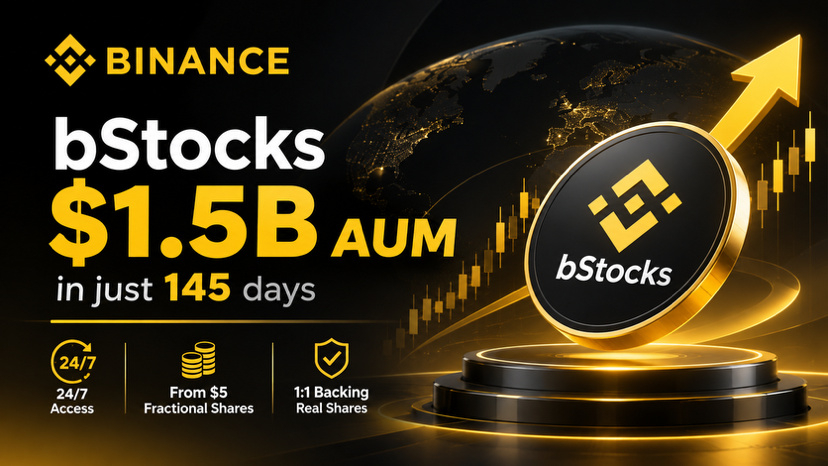
Binance bStocks has crossed $1.5B in AUM in just 145 days, becoming the largest issuer in tokenized equities.
56% of trading volume happens outside regular US market hours, while emerging and frontier markets contribute around 70% of total volume.
With fractional US stock exposure starting at $5, 24/7 access and 1:1 backing by real shares and ETFs, Binance is making traditional markets more accessible.
The tokenized equities market is growing fast, and this is just the beginning.
Binance bStocks has crossed $1.5B in AUM in just 145 days, becoming the largest issuer in tokenized equities.
56% of trading volume happens outside regular US market hours, while emerging and frontier markets contribute around 70% of total volume.
With fractional US stock exposure starting at $5, 24/7 access and 1:1 backing by real shares and ETFs, Binance is making traditional markets more accessible.
The tokenized equities market is growing fast, and this is just the beginning.
56% of trading volume happens outside regular US market hours, while emerging and frontier markets contribute around 70% of total volume.
With fractional US stock exposure starting at $5, 24/7 access and 1:1 backing by real shares and ETFs, Binance is making traditional markets more accessible.
The tokenized equities market is growing fast, and this is just the beginning.
72
·
--
Verified
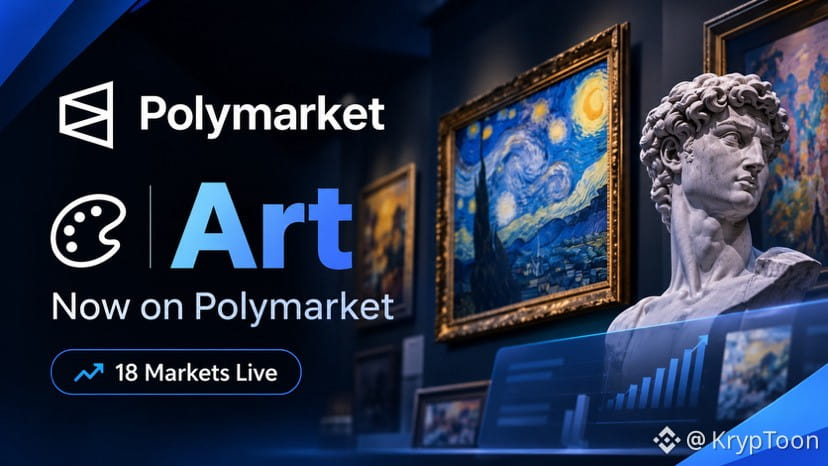
Prediction markets are expanding into more than politics, crypto and sports.
@polymarket is also bringing real-time market insights to the art world.
Its Art category currently features 18 markets covering the Turner Prize 2026, major artwork auction prices, Picasso, Van Gogh and even AI-generated art.
What’s interesting is how market participants turn new information and collective sentiment into continuously updated probabilities.
A different perspective on how the world of art is evolving.
Explore Polymarket: https://polymarket.com?via=kryp-toon
Disclosure: This is my referral link. Trading involves financial risk. Always do your own research and check eligibility under local laws.
Prediction markets are expanding into more than politics, crypto and sports.
@Polymarket is also bringing real-time market insights to the art world.
Its Art category currently features 18 markets covering the Turner Prize 2026, major artwork auction prices, Picasso, Van Gogh and even AI-generated art.
What’s interesting is how market participants turn new information and collective sentiment into continuously updated probabilities.
A different perspective on how the world of art is evolving.
Explore Polymarket: https://polymarket.com?via=kryp-toon
Disclosure: This is my referral link. Trading involves financial risk. Always do your own research and check eligibility under local laws.
@Polymarket is also bringing real-time market insights to the art world.
Its Art category currently features 18 markets covering the Turner Prize 2026, major artwork auction prices, Picasso, Van Gogh and even AI-generated art.
What’s interesting is how market participants turn new information and collective sentiment into continuously updated probabilities.
A different perspective on how the world of art is evolving.
Explore Polymarket: https://polymarket.com?via=kryp-toon
Disclosure: This is my referral link. Trading involves financial risk. Always do your own research and check eligibility under local laws.
1
271
·
--
Verified
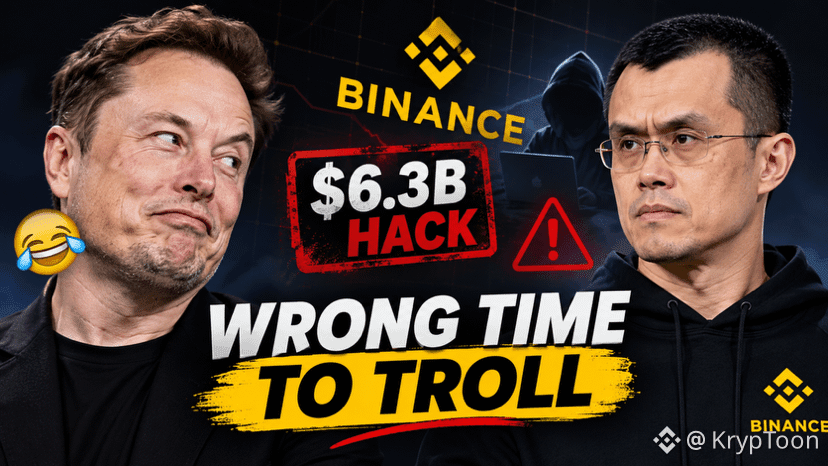
Elon Musk Picked the Wrong Moment to Troll Binance 🤡
Binance is reportedly dealing with a massive $6.3 billion crypto theft, with customers facing uncertainty and billions in assets frozen.
Yet Elon Musk chose to respond with laughing emojis and jokes about zero days.
CZ responded with respect but made one point clear: this was not the time for trolling. During a major crisis, even a little support matters more than memes.
Wealth and influence mean little if empathy is missing.
What’s your take? Was Elon out of line?
Follow for more crypto updates.
Elon Musk Picked the Wrong Moment to Troll Binance 🤡
Binance is reportedly dealing with a massive $6.3 billion crypto theft, with customers facing uncertainty and billions in assets frozen.
Yet Elon Musk chose to respond with laughing emojis and jokes about zero days.
CZ responded with respect but made one point clear: this was not the time for trolling. During a major crisis, even a little support matters more than memes.
Wealth and influence mean little if empathy is missing.
What’s your take? Was Elon out of line?
Follow for more crypto updates.
Binance is reportedly dealing with a massive $6.3 billion crypto theft, with customers facing uncertainty and billions in assets frozen.
Yet Elon Musk chose to respond with laughing emojis and jokes about zero days.
CZ responded with respect but made one point clear: this was not the time for trolling. During a major crisis, even a little support matters more than memes.
Wealth and influence mean little if empathy is missing.
What’s your take? Was Elon out of line?
Follow for more crypto updates.
984
·
--
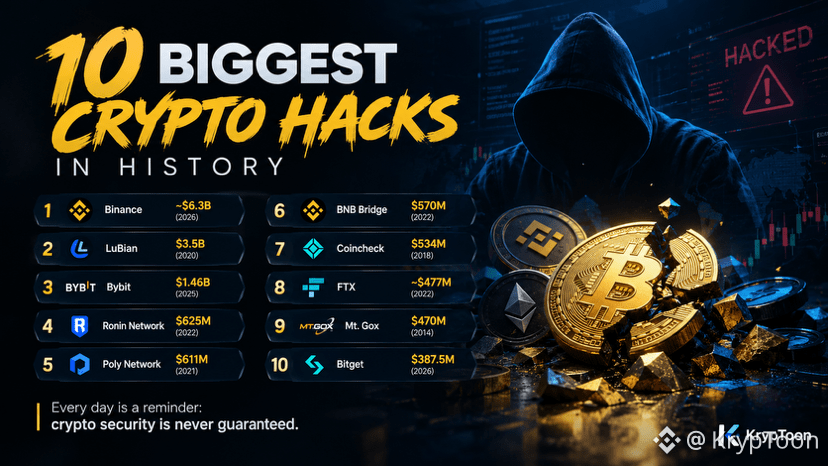
🚨 BREAKING: Binance Reportedly Hit by a $5.6 Billion Crypto Hack
A reported security breach involving the world’s largest crypto exchange could rank among the largest hacks in crypto history.
💰 Reported Assets Stolen:
• $1.45B in $BTC
• $875M in $ETH
• $234M in $TRX
• $50M in $XAUT
• $1.57B in $USDT
• $823M in $USDC
• $75M in $WBETH
• $88.5M in $RLUSD
• $447.5M in other cryptocurrencies
⚠️ Estimated Total: Over $5.6 Billion
If confirmed, this would represent an unprecedented event for the crypto industry.
Stay alert and verify information through official sources before making financial decisions.
🚨 BREAKING: Binance Reportedly Hit by a $5.6 Billion Crypto Hack
A reported security breach involving the world’s largest crypto exchange could rank among the largest hacks in crypto history.
💰 Reported Assets Stolen:
• $1.45B in $BTC
• $875M in $ETH
• $234M in $TRX
• $50M in $XAUT
• $1.57B in $USDT
• $823M in $USDC
• $75M in $WBETH
• $88.5M in $RLUSD
• $447.5M in other cryptocurrencies
⚠️ Estimated Total: Over $5.6 Billion
If confirmed, this would represent an unprecedented event for the crypto industry.
Stay alert and verify information through official sources before making financial decisions.
A reported security breach involving the world’s largest crypto exchange could rank among the largest hacks in crypto history.
💰 Reported Assets Stolen:
• $1.45B in $BTC
• $875M in $ETH
• $234M in $TRX
• $50M in $XAUT
• $1.57B in $USDT
• $823M in $USDC
• $75M in $WBETH
• $88.5M in $RLUSD
• $447.5M in other cryptocurrencies
⚠️ Estimated Total: Over $5.6 Billion
If confirmed, this would represent an unprecedented event for the crypto industry.
Stay alert and verify information through official sources before making financial decisions.
92
·
--
📊 Bitcoin ($BTC): Short-Term Holder Profitability Signals a Potential Market Shift
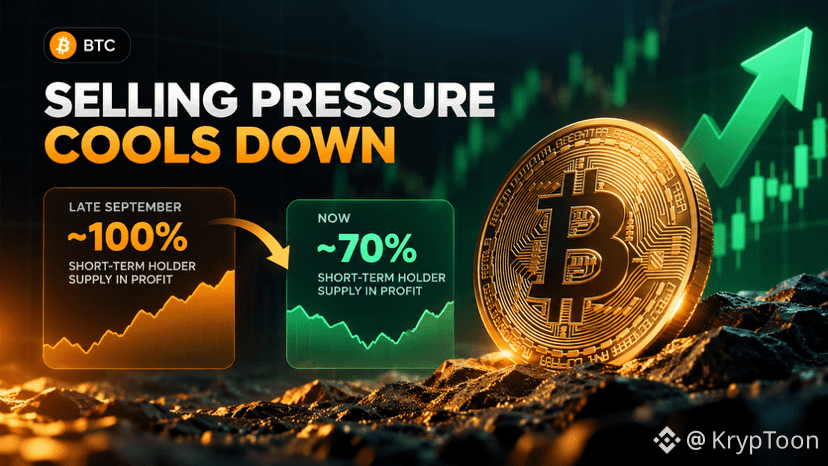
Recent on-chain data suggests that selling pressure from short-term Bitcoin holders may be easing.
In late September, nearly 100% of short-term holder supply was in profit. That figure has since declined to approximately 70%, potentially reducing the incentive for profit-taking.
📈 Market Outlook: This shift could create a more balanced market environment. However, a sustained bullish recovery will likely depend on renewed buying demand and stronger market momentum.
🔎 Key Takeaway: Reduced profit-taking pressure may support price stability, but it does not guarantee an upward trend.
Disclaimer: For informational purposes only. Not financial advice. Always DYOR.
#Bitcoin #BTC #CryptoMarket #OnChainAnalysis
📊 Bitcoin ($BTC): Short-Term Holder Profitability Signals a Potential Market Shift
Recent on-chain data suggests that selling pressure from short-term Bitcoin holders may be easing.
In late September, nearly 100% of short-term holder supply was in profit. That figure has since declined to approximately 70%, potentially reducing the incentive for profit-taking.
📈 Market Outlook: This shift could create a more balanced market environment. However, a sustained bullish recovery will likely depend on renewed buying demand and stronger market momentum.
🔎 Key Takeaway: Reduced profit-taking pressure may support price stability, but it does not guarantee an upward trend.
Disclaimer: For informational purposes only. Not financial advice. Always DYOR.
#Bitcoin #BTC #CryptoMarket #OnChainAnalysis
Recent on-chain data suggests that selling pressure from short-term Bitcoin holders may be easing.
In late September, nearly 100% of short-term holder supply was in profit. That figure has since declined to approximately 70%, potentially reducing the incentive for profit-taking.
📈 Market Outlook: This shift could create a more balanced market environment. However, a sustained bullish recovery will likely depend on renewed buying demand and stronger market momentum.
🔎 Key Takeaway: Reduced profit-taking pressure may support price stability, but it does not guarantee an upward trend.
Disclaimer: For informational purposes only. Not financial advice. Always DYOR.
#Bitcoin #BTC #CryptoMarket #OnChainAnalysis
109
·
--
Verified
dreamDEX Perps Arena: Four Weeks of Simulated Trading Competition
dreamDEX has announced its Perps Arena competition, running from October 12 to November 9, with a stated total prize pool of $15,000.
The event focuses on perpetual futures trading using simulated funds, allowing participants to test trading strategies without risking real trading capital.
Competition Overview:
• Duration: 4 weeks
• Weekly allocation: 1,000 paper USDso
• Total prizes: 510 across three categories
• Weekly leaderboard resets every Monday
Three Competition Categories:
1. Weekly Trading Leaderboard
2. Weekly Prize Raffles
3. Season Leaderboard
Eligibility Requirements
According to the campaign details, participants must hold at least 10 $SOMI in their registered wallet to qualify for rewards.
Although trading uses simulated funds, acquiring or holding $SOMI may involve financial risk.
The competition offers an opportunity to explore perpetual futures strategies and evaluate trading performance in a simulated environment.
Disclaimer: Competition information is provided for awareness only. Rewards are subject to official eligibility requirements and campaign terms. This is not financial advice or a guarantee of rewards.
#dreamDEX #Somnia #DeFi
dreamDEX Perps Arena: Four Weeks of Simulated Trading Competition
dreamDEX has announced its Perps Arena competition, running from October 12 to November 9, with a stated total prize pool of $15,000.
The event focuses on perpetual futures trading using simulated funds, allowing participants to test trading strategies without risking real trading capital.
Competition Overview:
• Duration: 4 weeks
• Weekly allocation: 1,000 paper USDso
• Total prizes: 510 across three categories
• Weekly leaderboard resets every Monday
Three Competition Categories:
1. Weekly Trading Leaderboard
2. Weekly Prize Raffles
3. Season Leaderboard
Eligibility Requirements
According to the campaign details, participants must hold at least 10 $SOMI in their registered wallet to qualify for rewards.
Although trading uses simulated funds, acquiring or holding $SOMI may involve financial risk.
The competition offers an opportunity to explore perpetual futures strategies and evaluate trading performance in a simulated environment.
Disclaimer: Competition information is provided for awareness only. Rewards are subject to official eligibility requirements and campaign terms. This is not financial advice or a guarantee of rewards.
#dreamDEX #Somnia #DeFi
dreamDEX has announced its Perps Arena competition, running from October 12 to November 9, with a stated total prize pool of $15,000.
The event focuses on perpetual futures trading using simulated funds, allowing participants to test trading strategies without risking real trading capital.
Competition Overview:
• Duration: 4 weeks
• Weekly allocation: 1,000 paper USDso
• Total prizes: 510 across three categories
• Weekly leaderboard resets every Monday
Three Competition Categories:
1. Weekly Trading Leaderboard
2. Weekly Prize Raffles
3. Season Leaderboard
Eligibility Requirements
According to the campaign details, participants must hold at least 10 $SOMI in their registered wallet to qualify for rewards.
Although trading uses simulated funds, acquiring or holding $SOMI may involve financial risk.
The competition offers an opportunity to explore perpetual futures strategies and evaluate trading performance in a simulated environment.
Disclaimer: Competition information is provided for awareness only. Rewards are subject to official eligibility requirements and campaign terms. This is not financial advice or a guarantee of rewards.
#dreamDEX #Somnia #DeFi
300
·
--
🧯 Recovery Depends on More Than Reopening the Protocol
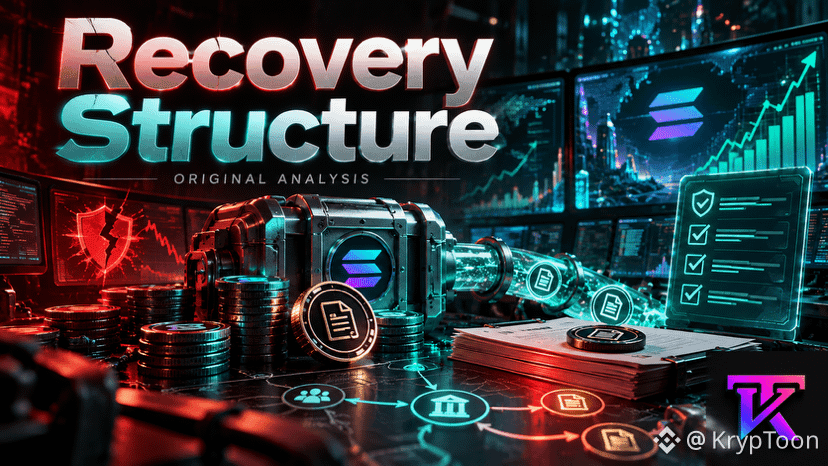
Drift reported that approximately $295 million in user losses remained outstanding following its exploit.
Its recovery framework included up to $127.5 million in support from Tether, approximately $20 million from partners and a $100 million revenue-linked credit facility. Drift also proposed a separate recovery token for affected users rather than using the existing DRIFT governance token for the same purpose.
That separation is important.
A recovery token represents a claim connected to recovery resources or future repayments. DRIFT represents governance and broader ecosystem exposure. Treating them as interchangeable could obscure the different risks held by each group.
The recovery plan should be judged through claim transparency, enforceable funding, repayment progress and demonstrated security improvements—not relaunch speed alone.
If repayment relies partly on future business revenue, affected users remain exposed to execution risk and the protocol’s operating performance.
The next evidence should include completed audits, funded recovery pools, repayment cadence and changes to the settlement architecture.
Disclaimer: DeFi recovery analysis only, not financial advice. Commitments, funding availability and repayment timelines may change.
$DRIFT
Drift • Solana DeFi • Protocol Recovery
#DRIFT #DeFiSecurity #Solana
🧯 Recovery Depends on More Than Reopening the Protocol
Drift reported that approximately $295 million in user losses remained outstanding following its exploit.
Its recovery framework included up to $127.5 million in support from Tether, approximately $20 million from partners and a $100 million revenue-linked credit facility. Drift also proposed a separate recovery token for affected users rather than using the existing DRIFT governance token for the same purpose.
That separation is important.
A recovery token represents a claim connected to recovery resources or future repayments. DRIFT represents governance and broader ecosystem exposure. Treating them as interchangeable could obscure the different risks held by each group.
The recovery plan should be judged through claim transparency, enforceable funding, repayment progress and demonstrated security improvements—not relaunch speed alone.
If repayment relies partly on future business revenue, affected users remain exposed to execution risk and the protocol’s operating performance.
The next evidence should include completed audits, funded recovery pools, repayment cadence and changes to the settlement architecture.
Disclaimer: DeFi recovery analysis only, not financial advice. Commitments, funding availability and repayment timelines may change.
$DRIFT
Drift • Solana DeFi • Protocol Recovery
#DRIFT #DeFiSecurity #Solana
Drift reported that approximately $295 million in user losses remained outstanding following its exploit.
Its recovery framework included up to $127.5 million in support from Tether, approximately $20 million from partners and a $100 million revenue-linked credit facility. Drift also proposed a separate recovery token for affected users rather than using the existing DRIFT governance token for the same purpose.
That separation is important.
A recovery token represents a claim connected to recovery resources or future repayments. DRIFT represents governance and broader ecosystem exposure. Treating them as interchangeable could obscure the different risks held by each group.
The recovery plan should be judged through claim transparency, enforceable funding, repayment progress and demonstrated security improvements—not relaunch speed alone.
If repayment relies partly on future business revenue, affected users remain exposed to execution risk and the protocol’s operating performance.
The next evidence should include completed audits, funded recovery pools, repayment cadence and changes to the settlement architecture.
Disclaimer: DeFi recovery analysis only, not financial advice. Commitments, funding availability and repayment timelines may change.
$DRIFT
Drift • Solana DeFi • Protocol Recovery
#DRIFT #DeFiSecurity #Solana
1
258
·
--
🏗️ a16z Crypto’s $2.2B Fund Reflects Long-Term Deployment Capacity
a16z crypto raised a $2.2 billion fifth fund during a weaker period for crypto trading activity.
TechCrunch reported that March 2026 was the slowest month for exchange volume since November 2023 and that first-quarter crypto startup funding was below the previous year.
The contrast highlights two different timelines.
Venture funds can deploy capital over several years. Liquid markets react to short-term supply, demand and leverage. A large fund therefore indicates long-duration investment capacity—but not an immediate inflow into SOL or another listed token.
For Solana, the relevant question is what the funded companies eventually create. Applications and infrastructure matter if they attract users, consume blockspace and generate demand for ecosystem services.
Venture abundance also carries risk. It can finance weak projects, encourage unnecessary token issuance and fragment developer attention.
Watch deployment pace, sector allocation, product launches and sustained user activity rather than the headline fund size alone.
Disclaimer: Venture and ecosystem analysis only, not financial advice. Fundraising does not imply purchases of SOL or guaranteed ecosystem growth.
$SOL
a16z Crypto • Solana Ecosystem • Venture Capital
#SOL #CryptoVC #Web3Startups
🏗️ a16z Crypto’s $2.2B Fund Reflects Long-Term Deployment Capacity
a16z crypto raised a $2.2 billion fifth fund during a weaker period for crypto trading activity.
TechCrunch reported that March 2026 was the slowest month for exchange volume since November 2023 and that first-quarter crypto startup funding was below the previous year.
The contrast highlights two different timelines.
Venture funds can deploy capital over several years. Liquid markets react to short-term supply, demand and leverage. A large fund therefore indicates long-duration investment capacity—but not an immediate inflow into SOL or another listed token.
For Solana, the relevant question is what the funded companies eventually create. Applications and infrastructure matter if they attract users, consume blockspace and generate demand for ecosystem services.
Venture abundance also carries risk. It can finance weak projects, encourage unnecessary token issuance and fragment developer attention.
Watch deployment pace, sector allocation, product launches and sustained user activity rather than the headline fund size alone.
Disclaimer: Venture and ecosystem analysis only, not financial advice. Fundraising does not imply purchases of SOL or guaranteed ecosystem growth.
$SOL
a16z Crypto • Solana Ecosystem • Venture Capital
#SOL #CryptoVC #Web3Startups
a16z crypto raised a $2.2 billion fifth fund during a weaker period for crypto trading activity.
TechCrunch reported that March 2026 was the slowest month for exchange volume since November 2023 and that first-quarter crypto startup funding was below the previous year.
The contrast highlights two different timelines.
Venture funds can deploy capital over several years. Liquid markets react to short-term supply, demand and leverage. A large fund therefore indicates long-duration investment capacity—but not an immediate inflow into SOL or another listed token.
For Solana, the relevant question is what the funded companies eventually create. Applications and infrastructure matter if they attract users, consume blockspace and generate demand for ecosystem services.
Venture abundance also carries risk. It can finance weak projects, encourage unnecessary token issuance and fragment developer attention.
Watch deployment pace, sector allocation, product launches and sustained user activity rather than the headline fund size alone.
Disclaimer: Venture and ecosystem analysis only, not financial advice. Fundraising does not imply purchases of SOL or guaranteed ecosystem growth.
$SOL
a16z Crypto • Solana Ecosystem • Venture Capital
#SOL #CryptoVC #Web3Startups

1
104
·
--
🎯 A Smart Contract Can Work Correctly While the User Interface Is Compromised
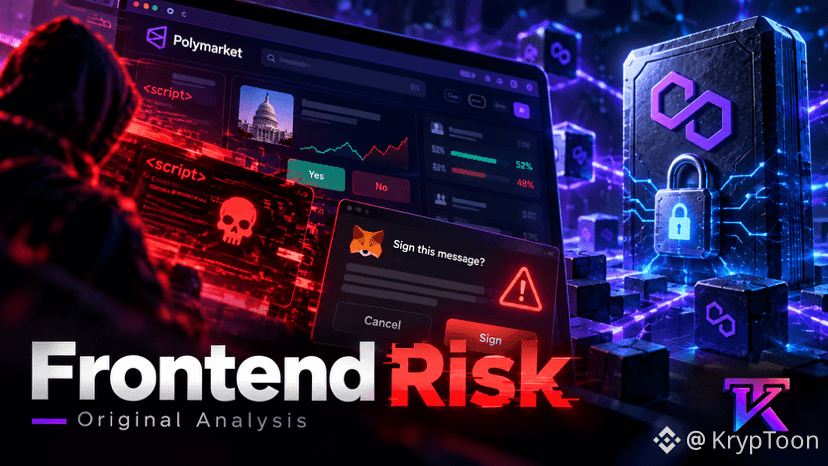
Polymarket confirmed that a third-party compromise allowed malicious code to reach some users and led to stolen funds.
An external estimate reported by TechCrunch placed losses near $3 million across more than 11 victims. Polymarket said affected users would be refunded, although final incident accounting may differ from preliminary estimates.
The broader lesson is architectural.
Blockchain settlement can operate as designed while a website, external script, authentication process or other frontend component is compromised. A user may still be deceived into approving a malicious transaction.
Security analysis should therefore consider the full blast radius:
• Which vendor or component failed?
• What permissions became available?
• Could users understand what they were signing?
• How quickly was the threat contained?
Transaction simulation, clearer approval screens and stronger isolation of third-party code could reduce similar risks.
Disclaimer: Security and infrastructure analysis only, not financial advice. Preliminary loss estimates and recovery figures can change.
$USDC
Polymarket • Prediction Markets • Frontend Security
#USDC #PredictionMarkets #Web3Security
🎯 A Smart Contract Can Work Correctly While the User Interface Is Compromised
Polymarket confirmed that a third-party compromise allowed malicious code to reach some users and led to stolen funds.
An external estimate reported by TechCrunch placed losses near $3 million across more than 11 victims. Polymarket said affected users would be refunded, although final incident accounting may differ from preliminary estimates.
The broader lesson is architectural.
Blockchain settlement can operate as designed while a website, external script, authentication process or other frontend component is compromised. A user may still be deceived into approving a malicious transaction.
Security analysis should therefore consider the full blast radius:
• Which vendor or component failed?
• What permissions became available?
• Could users understand what they were signing?
• How quickly was the threat contained?
Transaction simulation, clearer approval screens and stronger isolation of third-party code could reduce similar risks.
Disclaimer: Security and infrastructure analysis only, not financial advice. Preliminary loss estimates and recovery figures can change.
$USDC
Polymarket • Prediction Markets • Frontend Security
#USDC #PredictionMarkets #Web3Security
Polymarket confirmed that a third-party compromise allowed malicious code to reach some users and led to stolen funds.
An external estimate reported by TechCrunch placed losses near $3 million across more than 11 victims. Polymarket said affected users would be refunded, although final incident accounting may differ from preliminary estimates.
The broader lesson is architectural.
Blockchain settlement can operate as designed while a website, external script, authentication process or other frontend component is compromised. A user may still be deceived into approving a malicious transaction.
Security analysis should therefore consider the full blast radius:
• Which vendor or component failed?
• What permissions became available?
• Could users understand what they were signing?
• How quickly was the threat contained?
Transaction simulation, clearer approval screens and stronger isolation of third-party code could reduce similar risks.
Disclaimer: Security and infrastructure analysis only, not financial advice. Preliminary loss estimates and recovery figures can change.
$USDC
Polymarket • Prediction Markets • Frontend Security
#USDC #PredictionMarkets #Web3Security
2
94
·
--
⚙️ OKX AI Is Testing Whether Autonomous Software Can Become an Economic Participant
OKX reported registering more than 10,000 agent identities and listing over 4,000 approved providers by September.
The proposed model extends beyond trading. Agents can discover tasks, engage other agents, make payments and build onchain work histories. Stablecoins may handle direct payments, while more complicated jobs can involve escrow and dispute-resolution mechanisms.
Payments are probably not the hardest part. Crypto networks already transfer value globally and continuously.
The harder questions are about trust:
Who completed the task?
Did the result satisfy the specification?
Can the work be verified?
Who resolves a dispute?
That makes identity, reputation and verifiable performance history central infrastructure for an agent economy.
Large registration totals alone are not proof of demand. The stronger metrics will be paid task volume, completion rates, repeat buyers, dispute frequency and average transaction value.
Disclaimer: Technology and ecosystem commentary only, not financial advice. Early marketplace statistics do not establish sustainable adoption.
$USDT
OKX AI • Agent Economy • Stablecoin Payments
#AIAgents #Stablecoins #Web3Infrastructure
⚙️ OKX AI Is Testing Whether Autonomous Software Can Become an Economic Participant
OKX reported registering more than 10,000 agent identities and listing over 4,000 approved providers by September.
The proposed model extends beyond trading. Agents can discover tasks, engage other agents, make payments and build onchain work histories. Stablecoins may handle direct payments, while more complicated jobs can involve escrow and dispute-resolution mechanisms.
Payments are probably not the hardest part. Crypto networks already transfer value globally and continuously.
The harder questions are about trust:
Who completed the task?
Did the result satisfy the specification?
Can the work be verified?
Who resolves a dispute?
That makes identity, reputation and verifiable performance history central infrastructure for an agent economy.
Large registration totals alone are not proof of demand. The stronger metrics will be paid task volume, completion rates, repeat buyers, dispute frequency and average transaction value.
Disclaimer: Technology and ecosystem commentary only, not financial advice. Early marketplace statistics do not establish sustainable adoption.
$USDT
OKX AI • Agent Economy • Stablecoin Payments
#AIAgents #Stablecoins #Web3Infrastructure
OKX reported registering more than 10,000 agent identities and listing over 4,000 approved providers by September.
The proposed model extends beyond trading. Agents can discover tasks, engage other agents, make payments and build onchain work histories. Stablecoins may handle direct payments, while more complicated jobs can involve escrow and dispute-resolution mechanisms.
Payments are probably not the hardest part. Crypto networks already transfer value globally and continuously.
The harder questions are about trust:
Who completed the task?
Did the result satisfy the specification?
Can the work be verified?
Who resolves a dispute?
That makes identity, reputation and verifiable performance history central infrastructure for an agent economy.
Large registration totals alone are not proof of demand. The stronger metrics will be paid task volume, completion rates, repeat buyers, dispute frequency and average transaction value.
Disclaimer: Technology and ecosystem commentary only, not financial advice. Early marketplace statistics do not establish sustainable adoption.
$USDT
OKX AI • Agent Economy • Stablecoin Payments
#AIAgents #Stablecoins #Web3Infrastructure

2
104
·
--
🧠 The Important Question Is Whether Product Usage Produces Measurable VVV Demand
Venice AI raised a $65 million Series A at a reported $1 billion valuation. The company also reports millions of users and more than one trillion model tokens processed monthly.
For crypto investors, the valuation is only one part of the story.
VVV can be staked and used to mint DIEM, which provides recurring API credits. Venice also introduced a program under which $5 from every $100 of purchased credits is used to buy and burn VVV. Annual token emissions are being reduced in stages.
This creates a model that can be measured against actual platform activity. Revenue, credit purchases, staking and burns can be compared instead of relying entirely on an AI narrative.
The central risk is that strong product usage may not create equivalent token demand. Users can access parts of the platform without necessarily buying or staking VVV.
Watch monthly burn value, DIEM issuance, staking participation, platform revenue and net token emissions together.
Disclaimer: Project and tokenomics analysis only, not financial advice. Revenue, staking and burns do not guarantee token appreciation.
$VVV
Venice AI • AI Compute • Token Utility
#VVV #AICrypto #Base
🧠 The Important Question Is Whether Product Usage Produces Measurable VVV Demand
Venice AI raised a $65 million Series A at a reported $1 billion valuation. The company also reports millions of users and more than one trillion model tokens processed monthly.
For crypto investors, the valuation is only one part of the story.
VVV can be staked and used to mint DIEM, which provides recurring API credits. Venice also introduced a program under which $5 from every $100 of purchased credits is used to buy and burn VVV. Annual token emissions are being reduced in stages.
This creates a model that can be measured against actual platform activity. Revenue, credit purchases, staking and burns can be compared instead of relying entirely on an AI narrative.
The central risk is that strong product usage may not create equivalent token demand. Users can access parts of the platform without necessarily buying or staking VVV.
Watch monthly burn value, DIEM issuance, staking participation, platform revenue and net token emissions together.
Disclaimer: Project and tokenomics analysis only, not financial advice. Revenue, staking and burns do not guarantee token appreciation.
$VVV
Venice AI • AI Compute • Token Utility
#VVV #AICrypto #Base
Venice AI raised a $65 million Series A at a reported $1 billion valuation. The company also reports millions of users and more than one trillion model tokens processed monthly.
For crypto investors, the valuation is only one part of the story.
VVV can be staked and used to mint DIEM, which provides recurring API credits. Venice also introduced a program under which $5 from every $100 of purchased credits is used to buy and burn VVV. Annual token emissions are being reduced in stages.
This creates a model that can be measured against actual platform activity. Revenue, credit purchases, staking and burns can be compared instead of relying entirely on an AI narrative.
The central risk is that strong product usage may not create equivalent token demand. Users can access parts of the platform without necessarily buying or staking VVV.
Watch monthly burn value, DIEM issuance, staking participation, platform revenue and net token emissions together.
Disclaimer: Project and tokenomics analysis only, not financial advice. Revenue, staking and burns do not guarantee token appreciation.
$VVV
Venice AI • AI Compute • Token Utility
#VVV #AICrypto #Base

2
379
·
--
🛠️ Paradigm’s New Fund Should Be Evaluated Through What It Builds
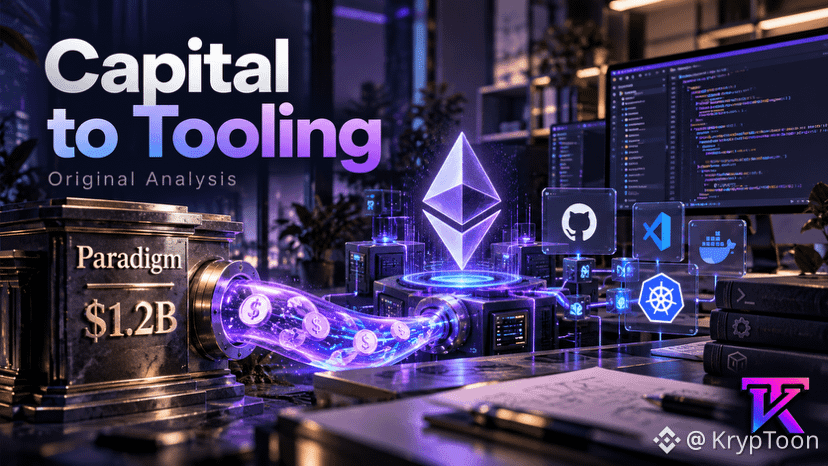
Paradigm raised a $1.2 billion fund focused on what it describes as the “technical frontier,” including crypto, artificial intelligence, robotics and related technologies.
For Ethereum, the relevant connection is the infrastructure layer. Paradigm has supported developer and research tools including Foundry, Reth and security-focused systems that can improve how Ethereum applications are built and operated.
However, fund size should not be interpreted as a direct purchase of ETH.
Venture capital can extend developer runway, finance experimentation and improve open-source infrastructure. Token holders benefit only if that work eventually produces durable applications, active users, settlement demand or sustainable fees.
The fund’s wider mandate also means not every dollar will be deployed into crypto, let alone Ethereum.
Instead of treating the announcement as a price catalyst, watch open-source releases, developer adoption and measurable onchain activity produced by funded teams.
Disclaimer: Ecosystem analysis only, not financial advice. Venture fundraising does not establish future token purchases or investment returns.
$ETH
Paradigm • Ethereum Developers • Open Source
#Ethereum #Web3Builders #CryptoVC
🛠️ Paradigm’s New Fund Should Be Evaluated Through What It Builds
Paradigm raised a $1.2 billion fund focused on what it describes as the “technical frontier,” including crypto, artificial intelligence, robotics and related technologies.
For Ethereum, the relevant connection is the infrastructure layer. Paradigm has supported developer and research tools including Foundry, Reth and security-focused systems that can improve how Ethereum applications are built and operated.
However, fund size should not be interpreted as a direct purchase of ETH.
Venture capital can extend developer runway, finance experimentation and improve open-source infrastructure. Token holders benefit only if that work eventually produces durable applications, active users, settlement demand or sustainable fees.
The fund’s wider mandate also means not every dollar will be deployed into crypto, let alone Ethereum.
Instead of treating the announcement as a price catalyst, watch open-source releases, developer adoption and measurable onchain activity produced by funded teams.
Disclaimer: Ecosystem analysis only, not financial advice. Venture fundraising does not establish future token purchases or investment returns.
$ETH
Paradigm • Ethereum Developers • Open Source
#Ethereum #Web3Builders #CryptoVC
Paradigm raised a $1.2 billion fund focused on what it describes as the “technical frontier,” including crypto, artificial intelligence, robotics and related technologies.
For Ethereum, the relevant connection is the infrastructure layer. Paradigm has supported developer and research tools including Foundry, Reth and security-focused systems that can improve how Ethereum applications are built and operated.
However, fund size should not be interpreted as a direct purchase of ETH.
Venture capital can extend developer runway, finance experimentation and improve open-source infrastructure. Token holders benefit only if that work eventually produces durable applications, active users, settlement demand or sustainable fees.
The fund’s wider mandate also means not every dollar will be deployed into crypto, let alone Ethereum.
Instead of treating the announcement as a price catalyst, watch open-source releases, developer adoption and measurable onchain activity produced by funded teams.
Disclaimer: Ecosystem analysis only, not financial advice. Venture fundraising does not establish future token purchases or investment returns.
$ETH
Paradigm • Ethereum Developers • Open Source
#Ethereum #Web3Builders #CryptoVC
1
76
·
--
🧬 World Raised $52.5 Million—but the Supply Picture Requires More Than One Number
World completed a $52.5 million strategic WLD sale with a 12-month lockup.
Separately, World disclosed that the aggregate WLD unlock rate decreased by 43% on July 24, from approximately 5.1 million WLD per day to around 2.9 million per day under the existing schedules.
These developments should not be combined into a single bullish or bearish headline.
A locked strategic sale can finance development without creating immediate spot-market supply. Scheduled unlocks still expand the unlocked token pool over time, even after the daily rate falls.
A better framework tracks three variables independently:
• Treasury and strategic sales
• Scheduled token unlocks
• Actual movement into circulating markets
A slower unlock rate does not guarantee scarcity. Demand from World ID adoption and other token utility must still absorb future supply.
The most useful evidence will be circulating-supply composition, network adoption and whether ecosystem revenue reduces reliance on additional treasury sales.
Disclaimer: Tokenomics analysis only, not financial advice. Lockups and slower unlock schedules do not guarantee price appreciation.
$WLD
World • World ID • Tokenomics
#WLD #Tokenomics #ProofOfHuman
🧬 World Raised $52.5 Million—but the Supply Picture Requires More Than One Number
World completed a $52.5 million strategic WLD sale with a 12-month lockup.
Separately, World disclosed that the aggregate WLD unlock rate decreased by 43% on July 24, from approximately 5.1 million WLD per day to around 2.9 million per day under the existing schedules.
These developments should not be combined into a single bullish or bearish headline.
A locked strategic sale can finance development without creating immediate spot-market supply. Scheduled unlocks still expand the unlocked token pool over time, even after the daily rate falls.
A better framework tracks three variables independently:
• Treasury and strategic sales
• Scheduled token unlocks
• Actual movement into circulating markets
A slower unlock rate does not guarantee scarcity. Demand from World ID adoption and other token utility must still absorb future supply.
The most useful evidence will be circulating-supply composition, network adoption and whether ecosystem revenue reduces reliance on additional treasury sales.
Disclaimer: Tokenomics analysis only, not financial advice. Lockups and slower unlock schedules do not guarantee price appreciation.
$WLD
World • World ID • Tokenomics
#WLD #Tokenomics #ProofOfHuman
World completed a $52.5 million strategic WLD sale with a 12-month lockup.
Separately, World disclosed that the aggregate WLD unlock rate decreased by 43% on July 24, from approximately 5.1 million WLD per day to around 2.9 million per day under the existing schedules.
These developments should not be combined into a single bullish or bearish headline.
A locked strategic sale can finance development without creating immediate spot-market supply. Scheduled unlocks still expand the unlocked token pool over time, even after the daily rate falls.
A better framework tracks three variables independently:
• Treasury and strategic sales
• Scheduled token unlocks
• Actual movement into circulating markets
A slower unlock rate does not guarantee scarcity. Demand from World ID adoption and other token utility must still absorb future supply.
The most useful evidence will be circulating-supply composition, network adoption and whether ecosystem revenue reduces reliance on additional treasury sales.
Disclaimer: Tokenomics analysis only, not financial advice. Lockups and slower unlock schedules do not guarantee price appreciation.
$WLD
World • World ID • Tokenomics
#WLD #Tokenomics #ProofOfHuman
1
300
·
--
🤖 Binance Agent OS Moves the Debate Beyond Prediction Quality
Binance Agent OS allows compatible AI agents to read market information and, when authorized, interact with designated trading functions through an Agentic sub-account.
Binance says the integration does not provide external withdrawal permissions. Users can also configure whether orders require individual approval or whether an agent may operate more autonomously within established permissions.
Those controls reduce the area in which an agent can act, but they do not remove strategy risk.
An AI system can still act on faulty market data, weak reasoning, prompt injection, misunderstood instructions or a strategy that performs poorly when conditions change.
The strongest AI-trading systems may therefore compete on sandbox design as much as model intelligence. Account isolation, funding limits, approval gates, audit logs and emergency controls can matter more than a confident-looking trading signal.
A sensible evaluation begins with the amount at risk and the permissions granted—not the sophistication of the agent’s language.
Disclaimer: Technology and market-structure analysis only, not financial advice. Automated trading can produce rapid losses.
$BNB
Binance • AI Agents • Trading Infrastructure
#BNB #AIAgents #CryptoTrading
🤖 Binance Agent OS Moves the Debate Beyond Prediction Quality
Binance Agent OS allows compatible AI agents to read market information and, when authorized, interact with designated trading functions through an Agentic sub-account.
Binance says the integration does not provide external withdrawal permissions. Users can also configure whether orders require individual approval or whether an agent may operate more autonomously within established permissions.
Those controls reduce the area in which an agent can act, but they do not remove strategy risk.
An AI system can still act on faulty market data, weak reasoning, prompt injection, misunderstood instructions or a strategy that performs poorly when conditions change.
The strongest AI-trading systems may therefore compete on sandbox design as much as model intelligence. Account isolation, funding limits, approval gates, audit logs and emergency controls can matter more than a confident-looking trading signal.
A sensible evaluation begins with the amount at risk and the permissions granted—not the sophistication of the agent’s language.
Disclaimer: Technology and market-structure analysis only, not financial advice. Automated trading can produce rapid losses.
$BNB
Binance • AI Agents • Trading Infrastructure
#BNB #AIAgents #CryptoTrading
Binance Agent OS allows compatible AI agents to read market information and, when authorized, interact with designated trading functions through an Agentic sub-account.
Binance says the integration does not provide external withdrawal permissions. Users can also configure whether orders require individual approval or whether an agent may operate more autonomously within established permissions.
Those controls reduce the area in which an agent can act, but they do not remove strategy risk.
An AI system can still act on faulty market data, weak reasoning, prompt injection, misunderstood instructions or a strategy that performs poorly when conditions change.
The strongest AI-trading systems may therefore compete on sandbox design as much as model intelligence. Account isolation, funding limits, approval gates, audit logs and emergency controls can matter more than a confident-looking trading signal.
A sensible evaluation begins with the amount at risk and the permissions granted—not the sophistication of the agent’s language.
Disclaimer: Technology and market-structure analysis only, not financial advice. Automated trading can produce rapid losses.
$BNB
Binance • AI Agents • Trading Infrastructure
#BNB #AIAgents #CryptoTrading

1
67
·
--
🧩 One Incident Can Create Two Different Recovery Problems
Blockstream reported that an attacker exploited a rangeproof-verification cache bug on September 6. Federation signers released approximately 3,996 BTC on Bitcoin mainnet before the Liquid network was paused.
The attacker later returned around 3,400 BTC, leaving approximately 600 BTC subject to continuing recovery and accounting efforts at the time of the later assessment.
The chain problem and reserve problem are related, but they are not identical.
Replaying the chain without the faulty cache allowed invalid transactions and their descendants to be identified deterministically. That helps restore confidence in chain history. It does not automatically replace every reserve asset or settle every outstanding accounting question.
Sidechain security should be measured across code correctness, federation controls, peg accounting, monitoring and recovery procedures.
Reopening operations should depend on independently verified chain history and reserve reconciliation—not only the amount already recovered.
Disclaimer: Protocol-security commentary only. Recovery totals and incident status may change as technical and financial reviews continue.
$BTC
Liquid Network • Blockstream • Bitcoin Infrastructure
#Bitcoin #Sidechains #BlockchainSecurity
🧩 One Incident Can Create Two Different Recovery Problems
Blockstream reported that an attacker exploited a rangeproof-verification cache bug on September 6. Federation signers released approximately 3,996 BTC on Bitcoin mainnet before the Liquid network was paused.
The attacker later returned around 3,400 BTC, leaving approximately 600 BTC subject to continuing recovery and accounting efforts at the time of the later assessment.
The chain problem and reserve problem are related, but they are not identical.
Replaying the chain without the faulty cache allowed invalid transactions and their descendants to be identified deterministically. That helps restore confidence in chain history. It does not automatically replace every reserve asset or settle every outstanding accounting question.
Sidechain security should be measured across code correctness, federation controls, peg accounting, monitoring and recovery procedures.
Reopening operations should depend on independently verified chain history and reserve reconciliation—not only the amount already recovered.
Disclaimer: Protocol-security commentary only. Recovery totals and incident status may change as technical and financial reviews continue.
$BTC
Liquid Network • Blockstream • Bitcoin Infrastructure
#Bitcoin #Sidechains #BlockchainSecurity
Blockstream reported that an attacker exploited a rangeproof-verification cache bug on September 6. Federation signers released approximately 3,996 BTC on Bitcoin mainnet before the Liquid network was paused.
The attacker later returned around 3,400 BTC, leaving approximately 600 BTC subject to continuing recovery and accounting efforts at the time of the later assessment.
The chain problem and reserve problem are related, but they are not identical.
Replaying the chain without the faulty cache allowed invalid transactions and their descendants to be identified deterministically. That helps restore confidence in chain history. It does not automatically replace every reserve asset or settle every outstanding accounting question.
Sidechain security should be measured across code correctness, federation controls, peg accounting, monitoring and recovery procedures.
Reopening operations should depend on independently verified chain history and reserve reconciliation—not only the amount already recovered.
Disclaimer: Protocol-security commentary only. Recovery totals and incident status may change as technical and financial reviews continue.
$BTC
Liquid Network • Blockstream • Bitcoin Infrastructure
#Bitcoin #Sidechains #BlockchainSecurity
1
104
·
--
🔐 Trezor’s Third-Party Email Incident Shows That Self-Custody Security Extends Beyond the Device
Trezor reported that a compromise involving Brevo, its third-party email provider, exposed 347,149 marketing contacts. Attackers subsequently used phishing messages that directed recipients toward a fake application requesting wallet backups.
Trezor said its wallet systems were not breached. That distinction is technically important, but it does not mean users faced no practical danger.
A secure hardware wallet can still be surrounded by vulnerable communication, support and customer-data systems. Social engineering targets the person holding the recovery phrase because obtaining that phrase can bypass the protection offered by the device.
Wallet companies should therefore treat email vendors, support channels, delivery systems, data retention and recovery education as parts of the security perimeter.
For users, the rule remains simple: a recovery phrase should never be entered into a website, message or unverified application.
Disclaimer: Security education only, not financial advice. Verify instructions through official channels and never share a recovery phrase.
$BTC
Trezor • Self-Custody • Wallet Security
#CryptoSecurity #SelfCustody #Bitcoin
🔐 Trezor’s Third-Party Email Incident Shows That Self-Custody Security Extends Beyond the Device
Trezor reported that a compromise involving Brevo, its third-party email provider, exposed 347,149 marketing contacts. Attackers subsequently used phishing messages that directed recipients toward a fake application requesting wallet backups.
Trezor said its wallet systems were not breached. That distinction is technically important, but it does not mean users faced no practical danger.
A secure hardware wallet can still be surrounded by vulnerable communication, support and customer-data systems. Social engineering targets the person holding the recovery phrase because obtaining that phrase can bypass the protection offered by the device.
Wallet companies should therefore treat email vendors, support channels, delivery systems, data retention and recovery education as parts of the security perimeter.
For users, the rule remains simple: a recovery phrase should never be entered into a website, message or unverified application.
Disclaimer: Security education only, not financial advice. Verify instructions through official channels and never share a recovery phrase.
$BTC
Trezor • Self-Custody • Wallet Security
#CryptoSecurity #SelfCustody #Bitcoin
Trezor reported that a compromise involving Brevo, its third-party email provider, exposed 347,149 marketing contacts. Attackers subsequently used phishing messages that directed recipients toward a fake application requesting wallet backups.
Trezor said its wallet systems were not breached. That distinction is technically important, but it does not mean users faced no practical danger.
A secure hardware wallet can still be surrounded by vulnerable communication, support and customer-data systems. Social engineering targets the person holding the recovery phrase because obtaining that phrase can bypass the protection offered by the device.
Wallet companies should therefore treat email vendors, support channels, delivery systems, data retention and recovery education as parts of the security perimeter.
For users, the rule remains simple: a recovery phrase should never be entered into a website, message or unverified application.
Disclaimer: Security education only, not financial advice. Verify instructions through official channels and never share a recovery phrase.
$BTC
Trezor • Self-Custody • Wallet Security
#CryptoSecurity #SelfCustody #Bitcoin
1
75
·
--
🔐 The EU’s Quantum Warning Is About Migration Time—not a Claim That Bitcoin Is Broken Today
European banking, insurance and markets supervisors recently warned that a sufficiently advanced quantum computer could eventually undermine cryptography used across communications, transactions, databases and blockchains.
The warning also addressed “harvest now, decrypt later”: attackers can collect encrypted information today in the hope that future quantum systems will be capable of reading it.
This is a preparedness issue, not evidence that current quantum hardware can break Bitcoin signatures today.
The EU’s NIS Cooperation Group has recommended that member states develop post-quantum migration strategies by the end of 2026. The practical concern is lead time. Wallets, exchanges, custodians, signing standards and user funds cannot all migrate immediately after a major technical breakthrough.
For crypto networks, post-quantum research should be viewed as infrastructure insurance. Urgency would increase if fault-tolerant quantum computing advanced faster than protocol and wallet migration capabilities.
Starting early carries complexity, but waiting too long could leave difficult coordination problems unresolved.
Disclaimer: Cybersecurity commentary only, not financial advice. Quantum timelines are uncertain and should not be presented as confirmed predictions.
$BTC
Bitcoin Security • Quantum Computing • Protocol Risk
#Bitcoin #QuantumComputing #Cybersecurity
🔐 The EU’s Quantum Warning Is About Migration Time—not a Claim That Bitcoin Is Broken Today
European banking, insurance and markets supervisors recently warned that a sufficiently advanced quantum computer could eventually undermine cryptography used across communications, transactions, databases and blockchains.
The warning also addressed “harvest now, decrypt later”: attackers can collect encrypted information today in the hope that future quantum systems will be capable of reading it.
This is a preparedness issue, not evidence that current quantum hardware can break Bitcoin signatures today.
The EU’s NIS Cooperation Group has recommended that member states develop post-quantum migration strategies by the end of 2026. The practical concern is lead time. Wallets, exchanges, custodians, signing standards and user funds cannot all migrate immediately after a major technical breakthrough.
For crypto networks, post-quantum research should be viewed as infrastructure insurance. Urgency would increase if fault-tolerant quantum computing advanced faster than protocol and wallet migration capabilities.
Starting early carries complexity, but waiting too long could leave difficult coordination problems unresolved.
Disclaimer: Cybersecurity commentary only, not financial advice. Quantum timelines are uncertain and should not be presented as confirmed predictions.
$BTC
Bitcoin Security • Quantum Computing • Protocol Risk
#Bitcoin #QuantumComputing #Cybersecurity
European banking, insurance and markets supervisors recently warned that a sufficiently advanced quantum computer could eventually undermine cryptography used across communications, transactions, databases and blockchains.
The warning also addressed “harvest now, decrypt later”: attackers can collect encrypted information today in the hope that future quantum systems will be capable of reading it.
This is a preparedness issue, not evidence that current quantum hardware can break Bitcoin signatures today.
The EU’s NIS Cooperation Group has recommended that member states develop post-quantum migration strategies by the end of 2026. The practical concern is lead time. Wallets, exchanges, custodians, signing standards and user funds cannot all migrate immediately after a major technical breakthrough.
For crypto networks, post-quantum research should be viewed as infrastructure insurance. Urgency would increase if fault-tolerant quantum computing advanced faster than protocol and wallet migration capabilities.
Starting early carries complexity, but waiting too long could leave difficult coordination problems unresolved.
Disclaimer: Cybersecurity commentary only, not financial advice. Quantum timelines are uncertain and should not be presented as confirmed predictions.
$BTC
Bitcoin Security • Quantum Computing • Protocol Risk
#Bitcoin #QuantumComputing #Cybersecurity

73
·
--
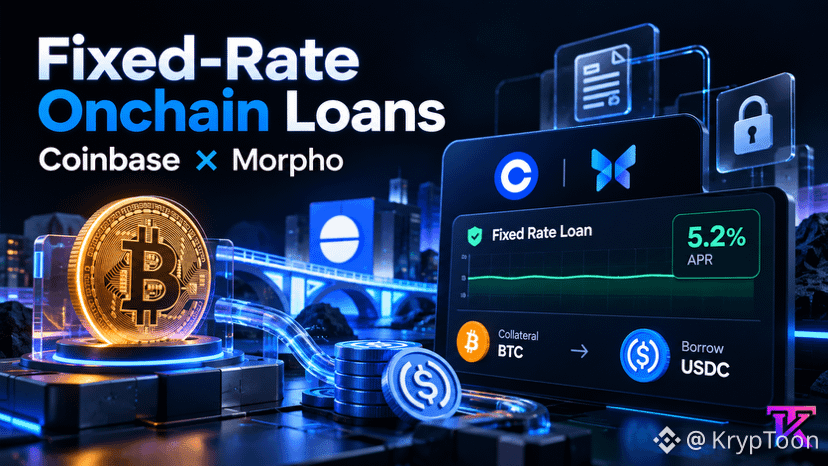
🏦 Coinbase and Morpho Are Bringing Fixed-Rate Credit Into Onchain Lending
Coinbase has introduced fixed-rate loans powered by Morpho, allowing eligible users to borrow USDC against Bitcoin with the interest rate and repayment date established at origination.
The reported structure assigns different responsibilities across the stack: Coinbase provides the user experience, Morpho supplies the credit infrastructure and Base handles settlement.
Scale is already relevant. Morpho figures cited by Decrypt indicated that Coinbase’s existing variable-rate lending channel exceeded $1.4 billion in active loans backed by approximately $3 billion in collateral.
Fixed rates make borrowing costs easier to model because users do not face an interest rate that changes continuously. They do not eliminate collateral risk.
A sharp decline in Bitcoin can still push positions toward liquidation. Smart-contract, oracle, liquidity and platform risks also remain part of the structure.
The real test is whether predictable rates generate sustainable borrowing demand without weakening collateral standards. Fixed-rate credit improves planning, but collateral volatility remains the primary stress variable.
Disclaimer: Educational analysis only, not financial advice. Crypto-backed loans can result in rapid liquidation and loss of collateral.
$MORPHO $BTC
Morpho • Fixed-Rate Lending • Onchain Credit
#DeFi #CryptoLending #Base
🏦 Coinbase and Morpho Are Bringing Fixed-Rate Credit Into Onchain Lending
Coinbase has introduced fixed-rate loans powered by Morpho, allowing eligible users to borrow USDC against Bitcoin with the interest rate and repayment date established at origination.
The reported structure assigns different responsibilities across the stack: Coinbase provides the user experience, Morpho supplies the credit infrastructure and Base handles settlement.
Scale is already relevant. Morpho figures cited by Decrypt indicated that Coinbase’s existing variable-rate lending channel exceeded $1.4 billion in active loans backed by approximately $3 billion in collateral.
Fixed rates make borrowing costs easier to model because users do not face an interest rate that changes continuously. They do not eliminate collateral risk.
A sharp decline in Bitcoin can still push positions toward liquidation. Smart-contract, oracle, liquidity and platform risks also remain part of the structure.
The real test is whether predictable rates generate sustainable borrowing demand without weakening collateral standards. Fixed-rate credit improves planning, but collateral volatility remains the primary stress variable.
Disclaimer: Educational analysis only, not financial advice. Crypto-backed loans can result in rapid liquidation and loss of collateral.
$MORPHO $BTC
Morpho • Fixed-Rate Lending • Onchain Credit
#DeFi #CryptoLending #Base
Coinbase has introduced fixed-rate loans powered by Morpho, allowing eligible users to borrow USDC against Bitcoin with the interest rate and repayment date established at origination.
The reported structure assigns different responsibilities across the stack: Coinbase provides the user experience, Morpho supplies the credit infrastructure and Base handles settlement.
Scale is already relevant. Morpho figures cited by Decrypt indicated that Coinbase’s existing variable-rate lending channel exceeded $1.4 billion in active loans backed by approximately $3 billion in collateral.
Fixed rates make borrowing costs easier to model because users do not face an interest rate that changes continuously. They do not eliminate collateral risk.
A sharp decline in Bitcoin can still push positions toward liquidation. Smart-contract, oracle, liquidity and platform risks also remain part of the structure.
The real test is whether predictable rates generate sustainable borrowing demand without weakening collateral standards. Fixed-rate credit improves planning, but collateral volatility remains the primary stress variable.
Disclaimer: Educational analysis only, not financial advice. Crypto-backed loans can result in rapid liquidation and loss of collateral.
$MORPHO $BTC
Morpho • Fixed-Rate Lending • Onchain Credit
#DeFi #CryptoLending #Base
194
·
--
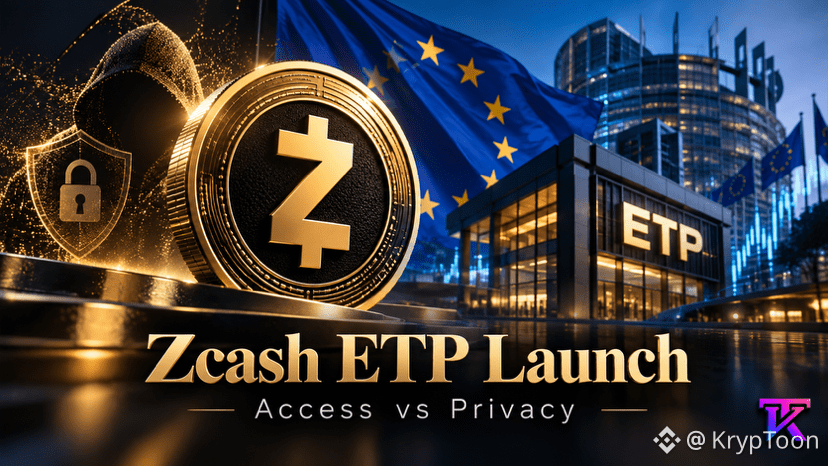
🕶️ The 21Shares Zcash ETP Expands Market Access—but Does Not Recreate Onchain Privacy
21Shares launched its Zcash ETP with an inception date of September 21. The product trades under the ticker ZCASH, is physically backed, uses institutional custody and carries a 2.50% annual management fee. BitGo is listed among its custodial service providers.
The important distinction is access versus functionality.
An exchange-traded product allows eligible investors to obtain ZEC price exposure through a brokerage account without directly managing private keys. That may broaden regulated access, but ETP ownership is not the same as directly holding ZEC or using shielded transactions on the Zcash network.
The product should be evaluated through sustained assets under management, trading volume, spreads and investor demand—not launch-day attention alone.
The 2.50% annual fee also matters because it creates a continuing cost that direct token holders do not face in the same form.
This is primarily a financial-access development. It does not independently prove that private onchain transaction usage is increasing.
Disclaimer: Informational analysis only, not financial advice. ETPs carry fee, custody, issuer, tracking and liquidity risks.
$ZEC
Zcash • ETP • Regulated Access
#Zcash #Privacy #DigitalAssets
🕶️ The 21Shares Zcash ETP Expands Market Access—but Does Not Recreate Onchain Privacy
21Shares launched its Zcash ETP with an inception date of September 21. The product trades under the ticker ZCASH, is physically backed, uses institutional custody and carries a 2.50% annual management fee. BitGo is listed among its custodial service providers.
The important distinction is access versus functionality.
An exchange-traded product allows eligible investors to obtain ZEC price exposure through a brokerage account without directly managing private keys. That may broaden regulated access, but ETP ownership is not the same as directly holding ZEC or using shielded transactions on the Zcash network.
The product should be evaluated through sustained assets under management, trading volume, spreads and investor demand—not launch-day attention alone.
The 2.50% annual fee also matters because it creates a continuing cost that direct token holders do not face in the same form.
This is primarily a financial-access development. It does not independently prove that private onchain transaction usage is increasing.
Disclaimer: Informational analysis only, not financial advice. ETPs carry fee, custody, issuer, tracking and liquidity risks.
$ZEC
Zcash • ETP • Regulated Access
#Zcash #Privacy #DigitalAssets
21Shares launched its Zcash ETP with an inception date of September 21. The product trades under the ticker ZCASH, is physically backed, uses institutional custody and carries a 2.50% annual management fee. BitGo is listed among its custodial service providers.
The important distinction is access versus functionality.
An exchange-traded product allows eligible investors to obtain ZEC price exposure through a brokerage account without directly managing private keys. That may broaden regulated access, but ETP ownership is not the same as directly holding ZEC or using shielded transactions on the Zcash network.
The product should be evaluated through sustained assets under management, trading volume, spreads and investor demand—not launch-day attention alone.
The 2.50% annual fee also matters because it creates a continuing cost that direct token holders do not face in the same form.
This is primarily a financial-access development. It does not independently prove that private onchain transaction usage is increasing.
Disclaimer: Informational analysis only, not financial advice. ETPs carry fee, custody, issuer, tracking and liquidity risks.
$ZEC
Zcash • ETP • Regulated Access
#Zcash #Privacy #DigitalAssets
425
·
--
🧠 VVV’s Utility Is Measurable, but Its Holder Concentration Remains the Hard Risk
Venice’s VVV reached a reported all-time high of $34.51 on September 21 after trading as low as $0.92 the previous December. Decrypt reported a market capitalization near $1.6 billion at the time.
VVV has a measurable utility model. Holders can stake it to access Venice AI inference capacity and use staked positions to mint DIEM, which provides recurring API credits. Venice also uses portions of platform activity to buy and burn VVV.
Annual issuance was reduced to 2.5 million VVV on September 1, with a further reduction to 2 million scheduled for October 1. Venice also reported crossing a $100 million annualized revenue run rate in August.
The major counterweight is concentration. Onchain data cited by Decrypt indicated that the 100 largest wallets controlled roughly 98% of supply. Concentrated ownership can dominate liquidity and price discovery even when product usage grows.
The useful dashboard is therefore not price alone: API consumption, revenue, staking, burns, net issuance and holder distribution all matter.
Disclaimer: Project analysis only, not financial advice. VVV is highly volatile, and concentrated ownership can increase liquidity risk.
$VVV
Venice AI • Token Utility • AI Inference
#VVV #AICrypto #Tokenomics
🧠 VVV’s Utility Is Measurable, but Its Holder Concentration Remains the Hard Risk
Venice’s VVV reached a reported all-time high of $34.51 on September 21 after trading as low as $0.92 the previous December. Decrypt reported a market capitalization near $1.6 billion at the time.
VVV has a measurable utility model. Holders can stake it to access Venice AI inference capacity and use staked positions to mint DIEM, which provides recurring API credits. Venice also uses portions of platform activity to buy and burn VVV.
Annual issuance was reduced to 2.5 million VVV on September 1, with a further reduction to 2 million scheduled for October 1. Venice also reported crossing a $100 million annualized revenue run rate in August.
The major counterweight is concentration. Onchain data cited by Decrypt indicated that the 100 largest wallets controlled roughly 98% of supply. Concentrated ownership can dominate liquidity and price discovery even when product usage grows.
The useful dashboard is therefore not price alone: API consumption, revenue, staking, burns, net issuance and holder distribution all matter.
Disclaimer: Project analysis only, not financial advice. VVV is highly volatile, and concentrated ownership can increase liquidity risk.
$VVV
Venice AI • Token Utility • AI Inference
#VVV #AICrypto #Tokenomics
Venice’s VVV reached a reported all-time high of $34.51 on September 21 after trading as low as $0.92 the previous December. Decrypt reported a market capitalization near $1.6 billion at the time.
VVV has a measurable utility model. Holders can stake it to access Venice AI inference capacity and use staked positions to mint DIEM, which provides recurring API credits. Venice also uses portions of platform activity to buy and burn VVV.
Annual issuance was reduced to 2.5 million VVV on September 1, with a further reduction to 2 million scheduled for October 1. Venice also reported crossing a $100 million annualized revenue run rate in August.
The major counterweight is concentration. Onchain data cited by Decrypt indicated that the 100 largest wallets controlled roughly 98% of supply. Concentrated ownership can dominate liquidity and price discovery even when product usage grows.
The useful dashboard is therefore not price alone: API consumption, revenue, staking, burns, net issuance and holder distribution all matter.
Disclaimer: Project analysis only, not financial advice. VVV is highly volatile, and concentrated ownership can increase liquidity risk.
$VVV
Venice AI • Token Utility • AI Inference
#VVV #AICrypto #Tokenomics

382
Log in to explore more content
Join global crypto users on Binance Square
⚡️ Get latest and useful information about crypto.
💬 Trusted by the world’s largest crypto exchange.
👍 Discover real insights from verified creators.
Email / Phone number
Trending Topics
CryptoSelloffTriggersMultipleWhaleLiquidations
167,824 views
1,719 Discussing
Crypto Liquidations Top $2B in 24 Hours as 329,000 Traders Are Wiped Out
Binance News
·39 Likes
·52k views
USSpotXRPETFsSeeLargestWeeklyOutflowIn8Months
152,325 views
1,515 Discussing
WillFOMCMinutesReinforceRateHikeExpectations?
43,934 views
713 Discussing