

John_BNB
1.1k Posts
John_BNB
Report
Block User
I’m John, Binance Angel from Cambodia 🇰🇭
Active in trading, P2P, Web3 farming & community building.
x: @JohnRealKH
square: @John_BNB

Binance Square Angels
Open Trade
Frequent Trader
9 Years
338 Following
4.6K+ Followers
4.4K+ Liked
1 Badges
Posts
Portfolio
All
Quotes
Videos
Live
PINNED
·
--
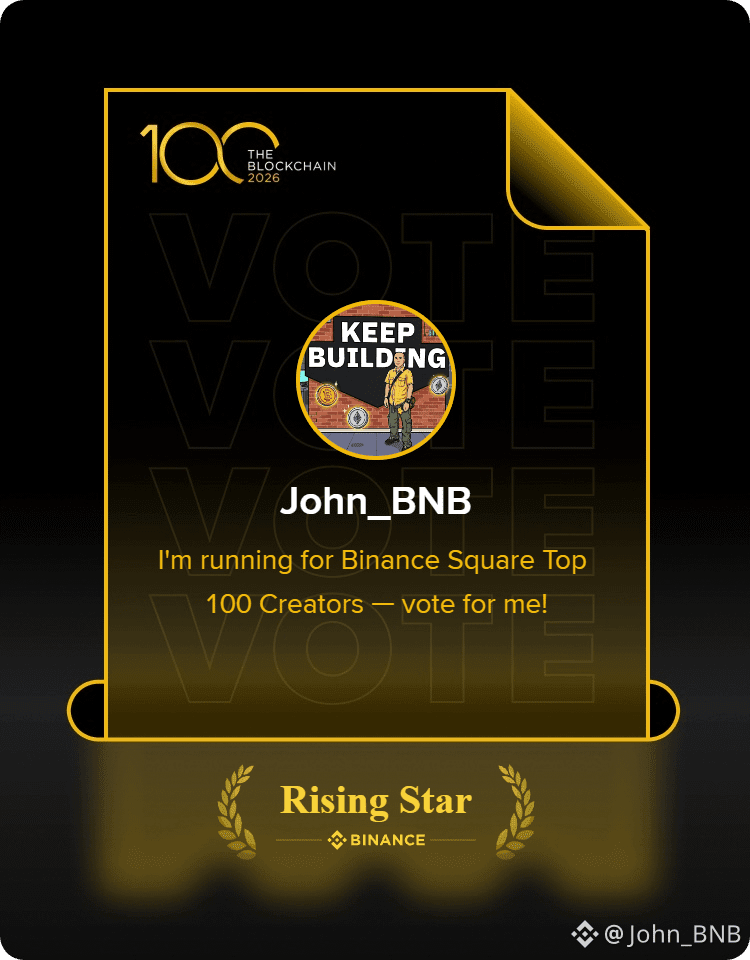
🇰🇭 From Cambodia to Blockchain 100 — Rising Star
For me, building in Web3 has never been just about trading, creating content, or chasing recognition. It's about people, connections, and the opportunities we can create together.
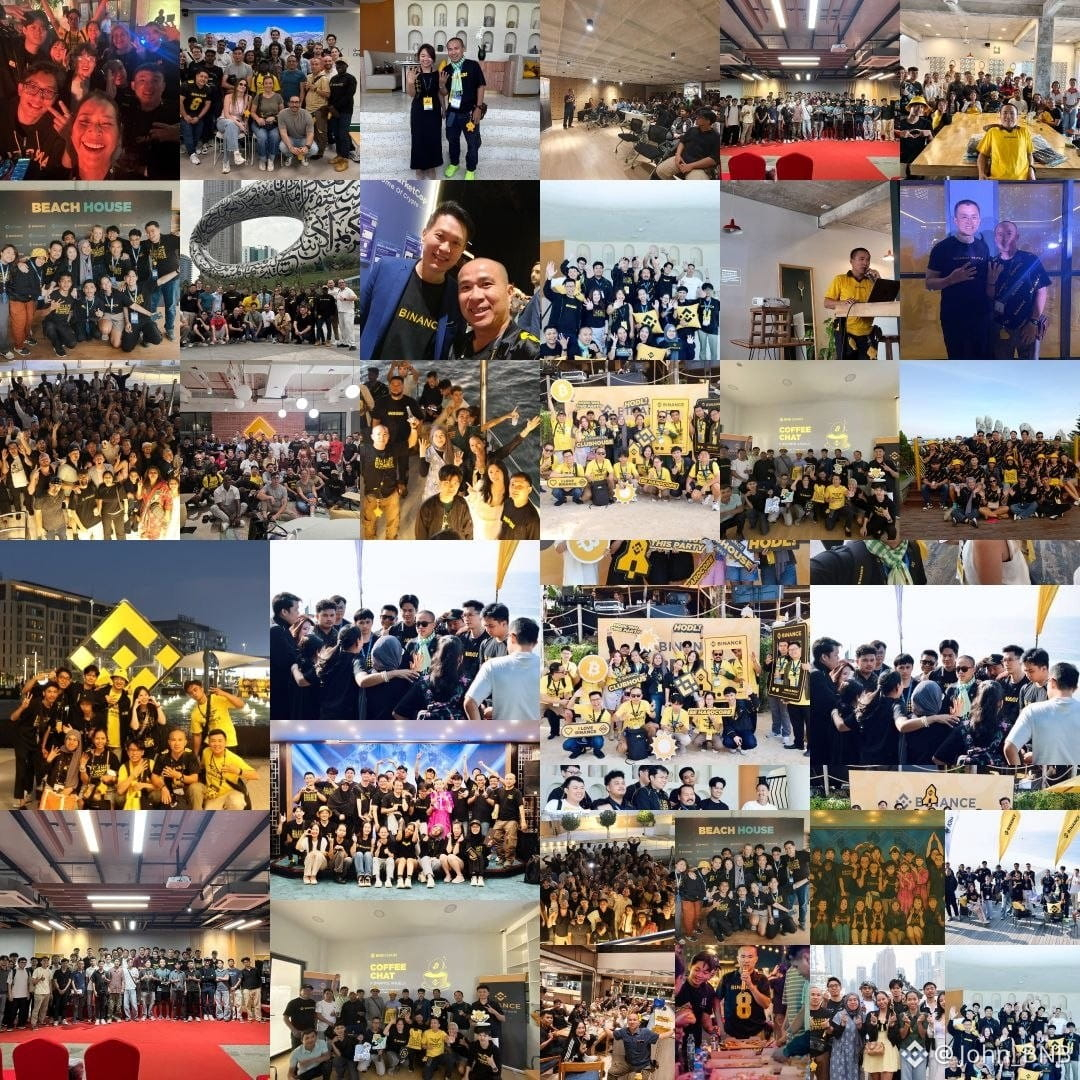
As a Binance Angel from Cambodia, I've had the opportunity to work not only with local Khmer Angels, but also with Angels from different regions around the world. Every collaboration brings new perspectives, ideas, and opportunities to learn from one another.
From hosting local meetups and collaborating with KOLs, influencers, and Web3 communities, to creating spaces where people can connect, exchange knowledge, and explore new opportunities, my goal has always been to make these gatherings meaningful.
Because crypto isn't just something happening on a screen. It's becoming part of people's lives — how we learn, connect, build, and prepare for the future.
I believe our work today is about more than growing a community. It's about bringing Web3 closer to everyday people, inspiring the next generation, and creating opportunities that can reach beyond borders.
Being nominated for Blockchain 100 — Rising Star is an honor, and I'm grateful to everyone I've met, worked with, and learned from along this journey.
This isn't the finish line. There is still so much to build, together. 🌍🚀
If you believe in this journey and what we're building for Cambodia's Web3 community, I'd be grateful for your support.
🗳️ Vote for John_BNB — Rising Star: [Vote now](https://app.binance.com/uni-qr/cact26user/528)
Let's keep building. 🇰🇭
#Blockchain100 #RisingStar #BinanceAngels #Cambodia #Web3
🇰🇭 From Cambodia to Blockchain 100 — Rising Star
For me, building in Web3 has never been just about trading, creating content, or chasing recognition. It's about people, connections, and the opportunities we can create together.
As a Binance Angel from Cambodia, I've had the opportunity to work not only with local Khmer Angels, but also with Angels from different regions around the world. Every collaboration brings new perspectives, ideas, and opportunities to learn from one another.
From hosting local meetups and collaborating with KOLs, influencers, and Web3 communities, to creating spaces where people can connect, exchange knowledge, and explore new opportunities, my goal has always been to make these gatherings meaningful.
Because crypto isn't just something happening on a screen. It's becoming part of people's lives — how we learn, connect, build, and prepare for the future.
I believe our work today is about more than growing a community. It's about bringing Web3 closer to everyday people, inspiring the next generation, and creating opportunities that can reach beyond borders.
Being nominated for Blockchain 100 — Rising Star is an honor, and I'm grateful to everyone I've met, worked with, and learned from along this journey.
This isn't the finish line. There is still so much to build, together. 🌍🚀
If you believe in this journey and what we're building for Cambodia's Web3 community, I'd be grateful for your support.
🗳️ Vote for John_BNB — Rising Star: Vote now
Let's keep building. 🇰🇭
#Blockchain100 #RisingStar #BinanceAngels #Cambodia #Web3
For me, building in Web3 has never been just about trading, creating content, or chasing recognition. It's about people, connections, and the opportunities we can create together.
As a Binance Angel from Cambodia, I've had the opportunity to work not only with local Khmer Angels, but also with Angels from different regions around the world. Every collaboration brings new perspectives, ideas, and opportunities to learn from one another.
From hosting local meetups and collaborating with KOLs, influencers, and Web3 communities, to creating spaces where people can connect, exchange knowledge, and explore new opportunities, my goal has always been to make these gatherings meaningful.
Because crypto isn't just something happening on a screen. It's becoming part of people's lives — how we learn, connect, build, and prepare for the future.
I believe our work today is about more than growing a community. It's about bringing Web3 closer to everyday people, inspiring the next generation, and creating opportunities that can reach beyond borders.
Being nominated for Blockchain 100 — Rising Star is an honor, and I'm grateful to everyone I've met, worked with, and learned from along this journey.
This isn't the finish line. There is still so much to build, together. 🌍🚀
If you believe in this journey and what we're building for Cambodia's Web3 community, I'd be grateful for your support.
🗳️ Vote for John_BNB — Rising Star: Vote now
Let's keep building. 🇰🇭
#Blockchain100 #RisingStar #BinanceAngels #Cambodia #Web3
1
3
9
236
·
--
Article
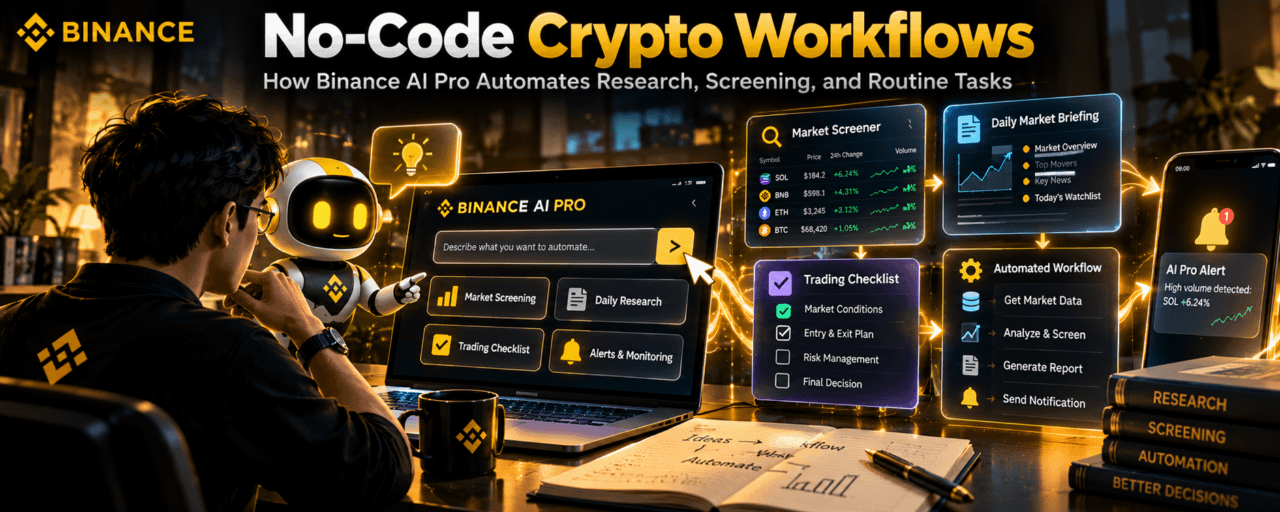
No-Code Crypto Workflows: How Binance AI Pro Automates Research, Screening, and Routine TasksIntroduction: Stop Repeating the Same Work Every Day
How much time do you spend checking charts, researching tokens, reviewing market conditions, and repeating the same analysis every day?
If you're an active crypto user, you probably know the routine.
Open Binance. Check Bitcoin. Review altcoins. Look for volume spikes. Read market news. Check your watchlist. Repeat everything a few hours later.
The problem isn't necessarily a lack of information. It's the amount of manual work required to turn that information into something useful.
This is where Binance AI Pro and no-code workflows could make a difference.
Instead of writing Python scripts or building a trading bot from scratch, you can describe the task you want to accomplish in natural language and use the available AI capabilities to help structure your workflow.
Let's explore four practical examples you can try yourself.
1. Build Your First Crypto Market Screener
Imagine you want to find cryptocurrencies worth researching without opening dozens of charts.
You could manually review trading volume, price changes, and market trends. Or you could ask Binance AI Pro to help screen the market according to criteria you define.
Try it yourself — Your first AI-powered market screener
Prompt to paste into Binance AI Pro:
------
Act as my crypto market research assistant.Help me screen the available spot trading pairs on Binance to identify potential opportunities for further research.Use the following criteria:Focus on USDT trading pairs.Prioritize pairs with sufficient trading liquidity.Identify assets showing unusual trading volume compared with their recent baseline, where data is available.Review 24-hour price changes and relevant market trends.Exclude assets that do not meet the minimum liquidity requirements you establish.Present the results in a table with these columns:SymbolCurrent price24-hour price change24-hour trading volumeRelative volume, if availableWhy the asset passed the screenKey risks or reasons to investigate furtherExplain the screening criteria and distinguish verified market data from estimates or unavailable information.Do not recommend automatic purchases. I want a shortlist for manual research, not a buy signal.If you cannot access live market data or screen the full available market, tell me clearly and suggest the closest supported alternative.
----------
What to look for in the result
Ideally, you'll receive a structured shortlist instead of a long explanation.
Pay attention to whether the results include actual market data, clearly defined screening rules, and meaningful reasons for selecting each asset.
If the tool cannot access the necessary data directly, you may need to provide data or narrow the task to supported sources.
Why this matters: You're turning a vague activity—looking for opportunities—into a repeatable screening process.
2. Automate Your Daily Crypto Research
Finding potential opportunities is only the beginning. You also need to understand what's happening across the market.
Many traders repeat the same research every morning: check Bitcoin, examine major altcoins, review market news, and identify important events.
A structured daily report can make that process more consistent.
Try it yourself - Generate a daily market briefing
Prompt to paste into Binance AI Pro:
Create a concise daily crypto market briefing for me.Organize the report into five sections:1. Market overview
Summarize the latest available BTC and ETH prices, their 24-hour percentage changes, and overall market conditions.2. Top market movers
Identify up to five significant gainers and five significant losers among available liquid spot trading pairs. Include percentage changes and trading volume where available.3. Unusual activity
Highlight assets with unusual volume or price movements relative to their recent history, if reliable data is available.4. Important developments
Summarize relevant crypto news, token unlocks, major announcements, or economic events that may affect market conditions. Include dates and sources when available.5. Today's watchlist
Suggest up to five assets to investigate further. For each asset, explain why it deserves attention and identify one important risk.Keep the report concise, structured, and easy to review in five minutes.Use current data where supported. Clearly label the timestamp, identify unavailable information, and never invent prices, news, or statistics.End with a checklist of questions I should investigate before making a trading decision.
What to look for in the result
The goal is to create a consistent format you can use every day.
Instead of jumping between different information sources without a plan, you have a structured starting point for your research.
You can also compare reports over time to see whether your areas of interest have changed.
Take it one step further: If your version of Binance AI Pro supports scheduled workflows, ask it to help configure this briefing to run automatically each morning.
Use this follow-up prompt:
Help me turn this daily market briefing into a scheduled workflow that runs every morning at 8:00 AM Cambodia time.Show me the available scheduling options, the data sources it can access, and how I can review or disable the workflow.Do not claim that the workflow has been scheduled unless the feature is available and the scheduling action is completed successfully.
3. Create a Repeatable Trading Checklist
Here's where a research workflow becomes more useful.
Many traders don't necessarily lack a strategy. They struggle with consistency.
They enter trades without checking every condition, change their rules when the market moves quickly, or overlook risk because they are focused on potential profits.
A standardized checklist can help reduce these mistakes.
Try it yourself— Build a no-code trading checklist
Prompt to paste into Binance AI Pro:
Help me create a reusable pre-trade checklist for BTC/USDT spot trading.I want to evaluate potential trades consistently without automatically executing any orders.Build a checklist covering:Market conditionsOverall BTC trendRelevant support and resistance levelsTrading volume and volatilityImportant upcoming economic or crypto eventsTrade setupMy intended entry priceConditions that would support the trade ideaConditions that would invalidate the ideaPotential exit or profit-taking levelsRisk managementAmount of capital allocated to the tradeMaximum acceptable lossEstimated trading feesPosition size relative to my accountFinal decisionConditions satisfiedConditions not satisfiedInformation still missingReasons to skip the tradePresent the checklist as a table with a status column for each condition.Do not invent current BTC prices or chart levels. If live data is unavailable, leave those fields blank for me to complete.Do not automatically recommend entering a position. The purpose is to improve consistency and help me identify missing information before making my own decision.
What to look for in the result
A useful checklist should help you identify what you know, what you don't know, and which conditions must be met before considering a trade.
It should also make it easier to skip trades when the setup is incomplete.
Remember, a checklist does not make a trading strategy profitable by itself. It helps you follow a process more consistently.
4. Turn a One-Time Task Into a Repeatable Workflow
So far, we've used AI to screen markets, prepare research, and build a trading checklist.
But there's a difference between generating a report once and creating a workflow you can reuse.
The next step is to explore which parts of the process Binance AI Pro can actually save, schedule, or run repeatedly.
Try it yourself— Ask Binance AI Pro to create a reusable workflow
Prompt to paste into Binance AI Pro:
Help me design a reusable crypto research workflow called "Daily Market Watch."The workflow should:Retrieve supported market data for BTC, ETH, and my selected watchlist.Summarize available 24-hour price changes and trading volume.Flag significant movements based on configurable thresholds.Identify missing data and potential data-quality issues.Generate a concise market report.Present a list of assets that may deserve further research, without issuing automatic buy or sell instructions.First, explain which steps you can perform directly and which require additional setup.Then show me how to configure the workflow using the available no-code features.If scheduling is supported, explain how to set a schedule and review the output.If saving or scheduling is not supported, give me a reusable prompt and explain the simplest available way to repeat the task.Do not execute trades, transfer funds, or change account settings.Finish by showing me how to test the workflow, inspect its output, and disable it if necessary.
What to look for in the result
This is the practical test.
Can Binance AI Pro help you create a reusable process? Does your interface offer scheduling, saved workflows, or another supported automation mechanism?
Capture what actually happens.
If the tool produces instructions but cannot save or schedule the workflow, that's still useful information for readers. It demonstrates the distinction between AI-assisted task creation and genuine automation.
5. Stay in Control: Automation Is Not Autopilot
Automating routine work can save time, but it also introduces new risks.
A workflow may use outdated data, misunderstand a condition, or generate a report that looks convincing despite containing errors.
Before relying on any workflow, follow these principles:
Verify the Check timestamps, sources, and important market figures.Test before relying on it: Compare the output with information you can independently verify.Start with read-only tasks: Market summaries, screening, and alerts are sensible starting points.Set clear boundaries: Define what the workflow can access and which actions it may perform.Review regularly: Market conditions change, and a workflow that was useful last month may no longer serve your needs.
If you later explore trading automation, investigate the available permissions, position limits, and safeguards before enabling any live trading functionality.
Never give an AI workflow broader access than its task requires.
Conclusion: Build Your Own AI-Powered Trading Desk
The biggest opportunity in no-code crypto workflows isn't necessarily predicting the next 100x token.
It's eliminating repetitive work so you can spend more time evaluating information and making informed decisions.
With Binance AI Pro, the practical starting points are simple: create a market screener, generate a daily briefing, standardize your trading checklist, and investigate whether those tasks can be saved or scheduled.
You don't need to automate everything on day one.
Start with one task you repeat every day. Test it. Check the results. Improve the process.
Then move to the next task when you're comfortable with the first.
The goal is not to let AI make every decision. It's to build a more consistent process around the decisions that matter.
Your turn: If you could automate one crypto task today, would you choose market screening, daily research, or trading alerts? Share your answer in the comments.
$BTW $AGT $PIEVERSE
{future}(PIEVERSEUSDT)
{future}(AGTUSDT)
{future}(BTWUSDT)
#BinanceAIPro #Workflow #Automate
Disclaimer: This article is for educational purposes only and does not constitute financial advice. AI outputs may be inaccurate, and crypto trading involves significant risk. Features, data access, scheduling, and automation capabilities depend on the version of Binance AI Pro available to you.
No-Code Crypto Workflows: How Binance AI Pro Automates Research, Screening, and Routine Tasks
Introduction: Stop Repeating the Same Work Every Day
How much time do you spend checking charts, researching tokens, reviewing market conditions, and repeating the same analysis every day?
If you're an active crypto user, you probably know the routine.
Open Binance. Check Bitcoin. Review altcoins. Look for volume spikes. Read market news. Check your watchlist. Repeat everything a few hours later.
The problem isn't necessarily a lack of information. It's the amount of manual work required to turn that information into something useful.
This is where Binance AI Pro and no-code workflows could make a difference.
Instead of writing Python scripts or building a trading bot from scratch, you can describe the task you want to accomplish in natural language and use the available AI capabilities to help structure your workflow.
Let's explore four practical examples you can try yourself.
1. Build Your First Crypto Market Screener
Imagine you want to find cryptocurrencies worth researching without opening dozens of charts.
You could manually review trading volume, price changes, and market trends. Or you could ask Binance AI Pro to help screen the market according to criteria you define.
Try it yourself — Your first AI-powered market screener
Prompt to paste into Binance AI Pro:
------
Act as my crypto market research assistant.Help me screen the available spot trading pairs on Binance to identify potential opportunities for further research.Use the following criteria:Focus on USDT trading pairs.Prioritize pairs with sufficient trading liquidity.Identify assets showing unusual trading volume compared with their recent baseline, where data is available.Review 24-hour price changes and relevant market trends.Exclude assets that do not meet the minimum liquidity requirements you establish.Present the results in a table with these columns:SymbolCurrent price24-hour price change24-hour trading volumeRelative volume, if availableWhy the asset passed the screenKey risks or reasons to investigate furtherExplain the screening criteria and distinguish verified market data from estimates or unavailable information.Do not recommend automatic purchases. I want a shortlist for manual research, not a buy signal.If you cannot access live market data or screen the full available market, tell me clearly and suggest the closest supported alternative.
----------
What to look for in the result
Ideally, you'll receive a structured shortlist instead of a long explanation.
Pay attention to whether the results include actual market data, clearly defined screening rules, and meaningful reasons for selecting each asset.
If the tool cannot access the necessary data directly, you may need to provide data or narrow the task to supported sources.
Why this matters: You're turning a vague activity—looking for opportunities—into a repeatable screening process.
2. Automate Your Daily Crypto Research
Finding potential opportunities is only the beginning. You also need to understand what's happening across the market.
Many traders repeat the same research every morning: check Bitcoin, examine major altcoins, review market news, and identify important events.
A structured daily report can make that process more consistent.
Try it yourself - Generate a daily market briefing
Prompt to paste into Binance AI Pro:
Create a concise daily crypto market briefing for me.Organize the report into five sections:1. Market overview
Summarize the latest available BTC and ETH prices, their 24-hour percentage changes, and overall market conditions.2. Top market movers
Identify up to five significant gainers and five significant losers among available liquid spot trading pairs. Include percentage changes and trading volume where available.3. Unusual activity
Highlight assets with unusual volume or price movements relative to their recent history, if reliable data is available.4. Important developments
Summarize relevant crypto news, token unlocks, major announcements, or economic events that may affect market conditions. Include dates and sources when available.5. Today's watchlist
Suggest up to five assets to investigate further. For each asset, explain why it deserves attention and identify one important risk.Keep the report concise, structured, and easy to review in five minutes.Use current data where supported. Clearly label the timestamp, identify unavailable information, and never invent prices, news, or statistics.End with a checklist of questions I should investigate before making a trading decision.
What to look for in the result
The goal is to create a consistent format you can use every day.
Instead of jumping between different information sources without a plan, you have a structured starting point for your research.
You can also compare reports over time to see whether your areas of interest have changed.
Take it one step further: If your version of Binance AI Pro supports scheduled workflows, ask it to help configure this briefing to run automatically each morning.
Use this follow-up prompt:
Help me turn this daily market briefing into a scheduled workflow that runs every morning at 8:00 AM Cambodia time.Show me the available scheduling options, the data sources it can access, and how I can review or disable the workflow.Do not claim that the workflow has been scheduled unless the feature is available and the scheduling action is completed successfully.
3. Create a Repeatable Trading Checklist
Here's where a research workflow becomes more useful.
Many traders don't necessarily lack a strategy. They struggle with consistency.
They enter trades without checking every condition, change their rules when the market moves quickly, or overlook risk because they are focused on potential profits.
A standardized checklist can help reduce these mistakes.
Try it yourself— Build a no-code trading checklist
Prompt to paste into Binance AI Pro:
Help me create a reusable pre-trade checklist for BTC/USDT spot trading.I want to evaluate potential trades consistently without automatically executing any orders.Build a checklist covering:Market conditionsOverall BTC trendRelevant support and resistance levelsTrading volume and volatilityImportant upcoming economic or crypto eventsTrade setupMy intended entry priceConditions that would support the trade ideaConditions that would invalidate the ideaPotential exit or profit-taking levelsRisk managementAmount of capital allocated to the tradeMaximum acceptable lossEstimated trading feesPosition size relative to my accountFinal decisionConditions satisfiedConditions not satisfiedInformation still missingReasons to skip the tradePresent the checklist as a table with a status column for each condition.Do not invent current BTC prices or chart levels. If live data is unavailable, leave those fields blank for me to complete.Do not automatically recommend entering a position. The purpose is to improve consistency and help me identify missing information before making my own decision.
What to look for in the result
A useful checklist should help you identify what you know, what you don't know, and which conditions must be met before considering a trade.
It should also make it easier to skip trades when the setup is incomplete.
Remember, a checklist does not make a trading strategy profitable by itself. It helps you follow a process more consistently.
4. Turn a One-Time Task Into a Repeatable Workflow
So far, we've used AI to screen markets, prepare research, and build a trading checklist.
But there's a difference between generating a report once and creating a workflow you can reuse.
The next step is to explore which parts of the process Binance AI Pro can actually save, schedule, or run repeatedly.
Try it yourself— Ask Binance AI Pro to create a reusable workflow
Prompt to paste into Binance AI Pro:
Help me design a reusable crypto research workflow called "Daily Market Watch."The workflow should:Retrieve supported market data for BTC, ETH, and my selected watchlist.Summarize available 24-hour price changes and trading volume.Flag significant movements based on configurable thresholds.Identify missing data and potential data-quality issues.Generate a concise market report.Present a list of assets that may deserve further research, without issuing automatic buy or sell instructions.First, explain which steps you can perform directly and which require additional setup.Then show me how to configure the workflow using the available no-code features.If scheduling is supported, explain how to set a schedule and review the output.If saving or scheduling is not supported, give me a reusable prompt and explain the simplest available way to repeat the task.Do not execute trades, transfer funds, or change account settings.Finish by showing me how to test the workflow, inspect its output, and disable it if necessary.
What to look for in the result
This is the practical test.
Can Binance AI Pro help you create a reusable process? Does your interface offer scheduling, saved workflows, or another supported automation mechanism?
Capture what actually happens.
If the tool produces instructions but cannot save or schedule the workflow, that's still useful information for readers. It demonstrates the distinction between AI-assisted task creation and genuine automation.
5. Stay in Control: Automation Is Not Autopilot
Automating routine work can save time, but it also introduces new risks.
A workflow may use outdated data, misunderstand a condition, or generate a report that looks convincing despite containing errors.
Before relying on any workflow, follow these principles:
Verify the Check timestamps, sources, and important market figures.Test before relying on it: Compare the output with information you can independently verify.Start with read-only tasks: Market summaries, screening, and alerts are sensible starting points.Set clear boundaries: Define what the workflow can access and which actions it may perform.Review regularly: Market conditions change, and a workflow that was useful last month may no longer serve your needs.
If you later explore trading automation, investigate the available permissions, position limits, and safeguards before enabling any live trading functionality.
Never give an AI workflow broader access than its task requires.
Conclusion: Build Your Own AI-Powered Trading Desk
The biggest opportunity in no-code crypto workflows isn't necessarily predicting the next 100x token.
It's eliminating repetitive work so you can spend more time evaluating information and making informed decisions.
With Binance AI Pro, the practical starting points are simple: create a market screener, generate a daily briefing, standardize your trading checklist, and investigate whether those tasks can be saved or scheduled.
You don't need to automate everything on day one.
Start with one task you repeat every day. Test it. Check the results. Improve the process.
Then move to the next task when you're comfortable with the first.
The goal is not to let AI make every decision. It's to build a more consistent process around the decisions that matter.
Your turn: If you could automate one crypto task today, would you choose market screening, daily research, or trading alerts? Share your answer in the comments.
$BTW $AGT $PIEVERSE
#BinanceAIPro #Workflow #Automate
Disclaimer: This article is for educational purposes only and does not constitute financial advice. AI outputs may be inaccurate, and crypto trading involves significant risk. Features, data access, scheduling, and automation capabilities depend on the version of Binance AI Pro available to you.
How much time do you spend checking charts, researching tokens, reviewing market conditions, and repeating the same analysis every day?
If you're an active crypto user, you probably know the routine.
Open Binance. Check Bitcoin. Review altcoins. Look for volume spikes. Read market news. Check your watchlist. Repeat everything a few hours later.
The problem isn't necessarily a lack of information. It's the amount of manual work required to turn that information into something useful.
This is where Binance AI Pro and no-code workflows could make a difference.
Instead of writing Python scripts or building a trading bot from scratch, you can describe the task you want to accomplish in natural language and use the available AI capabilities to help structure your workflow.
Let's explore four practical examples you can try yourself.
1. Build Your First Crypto Market Screener
Imagine you want to find cryptocurrencies worth researching without opening dozens of charts.
You could manually review trading volume, price changes, and market trends. Or you could ask Binance AI Pro to help screen the market according to criteria you define.
Try it yourself — Your first AI-powered market screener
Prompt to paste into Binance AI Pro:
------
Act as my crypto market research assistant.Help me screen the available spot trading pairs on Binance to identify potential opportunities for further research.Use the following criteria:Focus on USDT trading pairs.Prioritize pairs with sufficient trading liquidity.Identify assets showing unusual trading volume compared with their recent baseline, where data is available.Review 24-hour price changes and relevant market trends.Exclude assets that do not meet the minimum liquidity requirements you establish.Present the results in a table with these columns:SymbolCurrent price24-hour price change24-hour trading volumeRelative volume, if availableWhy the asset passed the screenKey risks or reasons to investigate furtherExplain the screening criteria and distinguish verified market data from estimates or unavailable information.Do not recommend automatic purchases. I want a shortlist for manual research, not a buy signal.If you cannot access live market data or screen the full available market, tell me clearly and suggest the closest supported alternative.
----------
What to look for in the result
Ideally, you'll receive a structured shortlist instead of a long explanation.
Pay attention to whether the results include actual market data, clearly defined screening rules, and meaningful reasons for selecting each asset.
If the tool cannot access the necessary data directly, you may need to provide data or narrow the task to supported sources.
Why this matters: You're turning a vague activity—looking for opportunities—into a repeatable screening process.
2. Automate Your Daily Crypto Research
Finding potential opportunities is only the beginning. You also need to understand what's happening across the market.
Many traders repeat the same research every morning: check Bitcoin, examine major altcoins, review market news, and identify important events.
A structured daily report can make that process more consistent.
Try it yourself - Generate a daily market briefing
Prompt to paste into Binance AI Pro:
Create a concise daily crypto market briefing for me.Organize the report into five sections:1. Market overview
Summarize the latest available BTC and ETH prices, their 24-hour percentage changes, and overall market conditions.2. Top market movers
Identify up to five significant gainers and five significant losers among available liquid spot trading pairs. Include percentage changes and trading volume where available.3. Unusual activity
Highlight assets with unusual volume or price movements relative to their recent history, if reliable data is available.4. Important developments
Summarize relevant crypto news, token unlocks, major announcements, or economic events that may affect market conditions. Include dates and sources when available.5. Today's watchlist
Suggest up to five assets to investigate further. For each asset, explain why it deserves attention and identify one important risk.Keep the report concise, structured, and easy to review in five minutes.Use current data where supported. Clearly label the timestamp, identify unavailable information, and never invent prices, news, or statistics.End with a checklist of questions I should investigate before making a trading decision.
What to look for in the result
The goal is to create a consistent format you can use every day.
Instead of jumping between different information sources without a plan, you have a structured starting point for your research.
You can also compare reports over time to see whether your areas of interest have changed.
Take it one step further: If your version of Binance AI Pro supports scheduled workflows, ask it to help configure this briefing to run automatically each morning.
Use this follow-up prompt:
Help me turn this daily market briefing into a scheduled workflow that runs every morning at 8:00 AM Cambodia time.Show me the available scheduling options, the data sources it can access, and how I can review or disable the workflow.Do not claim that the workflow has been scheduled unless the feature is available and the scheduling action is completed successfully.
3. Create a Repeatable Trading Checklist
Here's where a research workflow becomes more useful.
Many traders don't necessarily lack a strategy. They struggle with consistency.
They enter trades without checking every condition, change their rules when the market moves quickly, or overlook risk because they are focused on potential profits.
A standardized checklist can help reduce these mistakes.
Try it yourself— Build a no-code trading checklist
Prompt to paste into Binance AI Pro:
Help me create a reusable pre-trade checklist for BTC/USDT spot trading.I want to evaluate potential trades consistently without automatically executing any orders.Build a checklist covering:Market conditionsOverall BTC trendRelevant support and resistance levelsTrading volume and volatilityImportant upcoming economic or crypto eventsTrade setupMy intended entry priceConditions that would support the trade ideaConditions that would invalidate the ideaPotential exit or profit-taking levelsRisk managementAmount of capital allocated to the tradeMaximum acceptable lossEstimated trading feesPosition size relative to my accountFinal decisionConditions satisfiedConditions not satisfiedInformation still missingReasons to skip the tradePresent the checklist as a table with a status column for each condition.Do not invent current BTC prices or chart levels. If live data is unavailable, leave those fields blank for me to complete.Do not automatically recommend entering a position. The purpose is to improve consistency and help me identify missing information before making my own decision.
What to look for in the result
A useful checklist should help you identify what you know, what you don't know, and which conditions must be met before considering a trade.
It should also make it easier to skip trades when the setup is incomplete.
Remember, a checklist does not make a trading strategy profitable by itself. It helps you follow a process more consistently.
4. Turn a One-Time Task Into a Repeatable Workflow
So far, we've used AI to screen markets, prepare research, and build a trading checklist.
But there's a difference between generating a report once and creating a workflow you can reuse.
The next step is to explore which parts of the process Binance AI Pro can actually save, schedule, or run repeatedly.
Try it yourself— Ask Binance AI Pro to create a reusable workflow
Prompt to paste into Binance AI Pro:
Help me design a reusable crypto research workflow called "Daily Market Watch."The workflow should:Retrieve supported market data for BTC, ETH, and my selected watchlist.Summarize available 24-hour price changes and trading volume.Flag significant movements based on configurable thresholds.Identify missing data and potential data-quality issues.Generate a concise market report.Present a list of assets that may deserve further research, without issuing automatic buy or sell instructions.First, explain which steps you can perform directly and which require additional setup.Then show me how to configure the workflow using the available no-code features.If scheduling is supported, explain how to set a schedule and review the output.If saving or scheduling is not supported, give me a reusable prompt and explain the simplest available way to repeat the task.Do not execute trades, transfer funds, or change account settings.Finish by showing me how to test the workflow, inspect its output, and disable it if necessary.
What to look for in the result
This is the practical test.
Can Binance AI Pro help you create a reusable process? Does your interface offer scheduling, saved workflows, or another supported automation mechanism?
Capture what actually happens.
If the tool produces instructions but cannot save or schedule the workflow, that's still useful information for readers. It demonstrates the distinction between AI-assisted task creation and genuine automation.
5. Stay in Control: Automation Is Not Autopilot
Automating routine work can save time, but it also introduces new risks.
A workflow may use outdated data, misunderstand a condition, or generate a report that looks convincing despite containing errors.
Before relying on any workflow, follow these principles:
Verify the Check timestamps, sources, and important market figures.Test before relying on it: Compare the output with information you can independently verify.Start with read-only tasks: Market summaries, screening, and alerts are sensible starting points.Set clear boundaries: Define what the workflow can access and which actions it may perform.Review regularly: Market conditions change, and a workflow that was useful last month may no longer serve your needs.
If you later explore trading automation, investigate the available permissions, position limits, and safeguards before enabling any live trading functionality.
Never give an AI workflow broader access than its task requires.
Conclusion: Build Your Own AI-Powered Trading Desk
The biggest opportunity in no-code crypto workflows isn't necessarily predicting the next 100x token.
It's eliminating repetitive work so you can spend more time evaluating information and making informed decisions.
With Binance AI Pro, the practical starting points are simple: create a market screener, generate a daily briefing, standardize your trading checklist, and investigate whether those tasks can be saved or scheduled.
You don't need to automate everything on day one.
Start with one task you repeat every day. Test it. Check the results. Improve the process.
Then move to the next task when you're comfortable with the first.
The goal is not to let AI make every decision. It's to build a more consistent process around the decisions that matter.
Your turn: If you could automate one crypto task today, would you choose market screening, daily research, or trading alerts? Share your answer in the comments.
$BTW $AGT $PIEVERSE
#BinanceAIPro #Workflow #Automate
Disclaimer: This article is for educational purposes only and does not constitute financial advice. AI outputs may be inaccurate, and crypto trading involves significant risk. Features, data access, scheduling, and automation capabilities depend on the version of Binance AI Pro available to you.
1
144
·
--
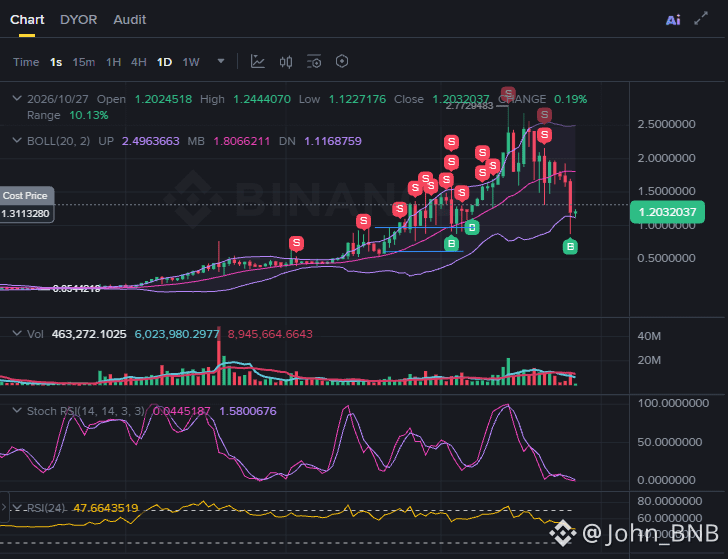
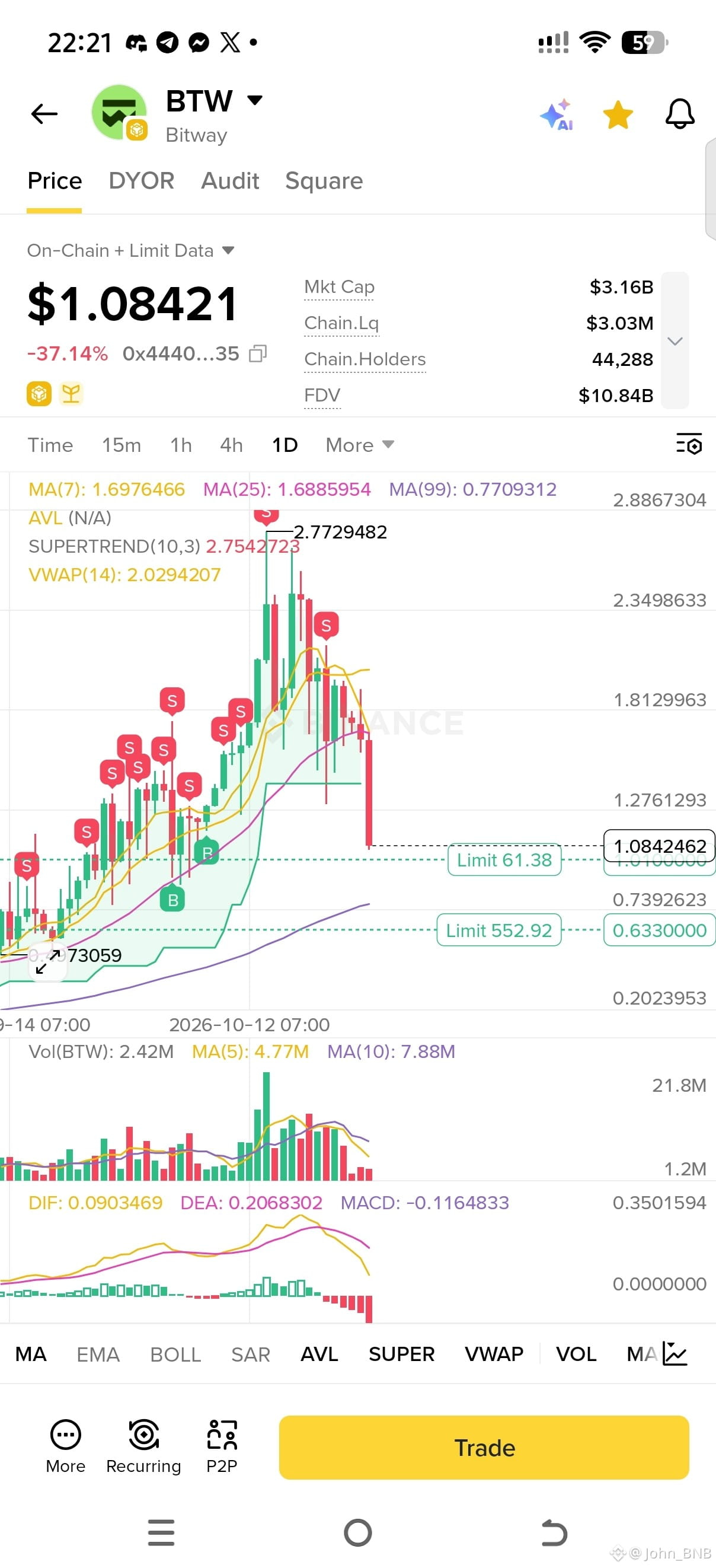
Simple: buy in the fear, sell in the greed.
I tell you that's the buy low / sell high theory but coming to real practice. Human psychology is the protective mechanism. So when thing get worst, it will try to protect you, get you away from harm and such. And avoid buying the opportunity.
Then when thing good, greed come and push you afraid to be missed opportunity..
These 2 elements in fail mindset will never bring you success.
No no....not meaning of doing everything blindly.
1. Money management
2. Risk management
3. Diversification
4. Contently learning to improve over time.
$BTW
{future}(BTWUSDT)
#crypto #trading #phsychology
Simple: buy in the fear, sell in the greed.
I tell you that's the buy low / sell high theory but coming to real practice. Human psychology is the protective mechanism. So when thing get worst, it will try to protect you, get you away from harm and such. And avoid buying the opportunity.
Then when thing good, greed come and push you afraid to be missed opportunity..
These 2 elements in fail mindset will never bring you success.
No no....not meaning of doing everything blindly.
1. Money management
2. Risk management
3. Diversification
4. Contently learning to improve over time.
$BTW
#crypto #trading #phsychology
I tell you that's the buy low / sell high theory but coming to real practice. Human psychology is the protective mechanism. So when thing get worst, it will try to protect you, get you away from harm and such. And avoid buying the opportunity.
Then when thing good, greed come and push you afraid to be missed opportunity..
These 2 elements in fail mindset will never bring you success.
No no....not meaning of doing everything blindly.
1. Money management
2. Risk management
3. Diversification
4. Contently learning to improve over time.
$BTW
#crypto #trading #phsychology
1
2
608
·
--
3
7
2.1k
·
--
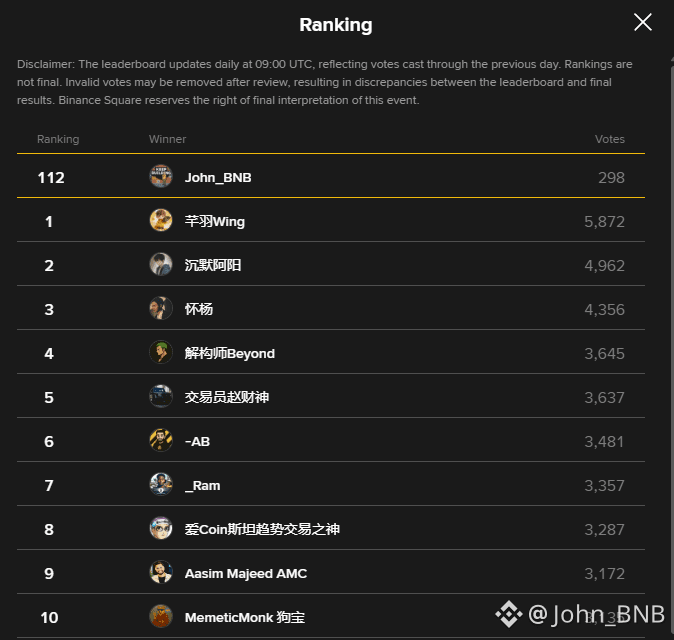
With just 2 days left, I'm now at Rank 112 with 298 votes. WOW! 🥹❤️
For my first time being nominated for #Blockchain100 #RisingStar, this experience has been truly amazing.
I honestly don't have enough words to thank everyone who has voted for me. Every single vote means more than a number. It's your time, trust, and belief in my journey. I'm truly grateful for every one of you. 🙏❤️
No matter where I finish, I'm already proud to have made it this far. This journey reminds me that what matters most isn't just recognition, but the people we meet, the connections we build, and the positive impact we create together.
Let's keep building a Web3 ecosystem based on trust, good faith, and greater financial freedom for millions of people. 🌍🚀
Next stop: #BBW2026! 🥳 Can't wait to see everyone, and hopefully meet @CZ again! 😍👏
Thank you for being part of my journey. You are all amazing! ❤️
Still can vote for me =>
🫡 https://app.binance.com/uni-qr/cact26user/528 😘🙏
#KeepBuilding #Web3 #Blockchain100 #BinanceAngels #BBW2026
With just 2 days left, I'm now at Rank 112 with 298 votes. WOW! 🥹❤️
For my first time being nominated for #Blockchain100 #RisingStar, this experience has been truly amazing.
I honestly don't have enough words to thank everyone who has voted for me. Every single vote means more than a number. It's your time, trust, and belief in my journey. I'm truly grateful for every one of you. 🙏❤️
No matter where I finish, I'm already proud to have made it this far. This journey reminds me that what matters most isn't just recognition, but the people we meet, the connections we build, and the positive impact we create together.
Let's keep building a Web3 ecosystem based on trust, good faith, and greater financial freedom for millions of people. 🌍🚀
Next stop: #BBW2026! 🥳 Can't wait to see everyone, and hopefully meet @CZ again! 😍👏
Thank you for being part of my journey. You are all amazing! ❤️
Still can vote for me =>
🫡 https://app.binance.com/uni-qr/cact26user/528 😘🙏
#KeepBuilding #Web3 #Blockchain100 #BinanceAngels #BBW2026
For my first time being nominated for #Blockchain100 #RisingStar, this experience has been truly amazing.
I honestly don't have enough words to thank everyone who has voted for me. Every single vote means more than a number. It's your time, trust, and belief in my journey. I'm truly grateful for every one of you. 🙏❤️
No matter where I finish, I'm already proud to have made it this far. This journey reminds me that what matters most isn't just recognition, but the people we meet, the connections we build, and the positive impact we create together.
Let's keep building a Web3 ecosystem based on trust, good faith, and greater financial freedom for millions of people. 🌍🚀
Next stop: #BBW2026! 🥳 Can't wait to see everyone, and hopefully meet @CZ again! 😍👏
Thank you for being part of my journey. You are all amazing! ❤️
Still can vote for me =>
🫡 https://app.binance.com/uni-qr/cact26user/528 😘🙏
#KeepBuilding #Web3 #Blockchain100 #BinanceAngels #BBW2026
3
6
488
·
--
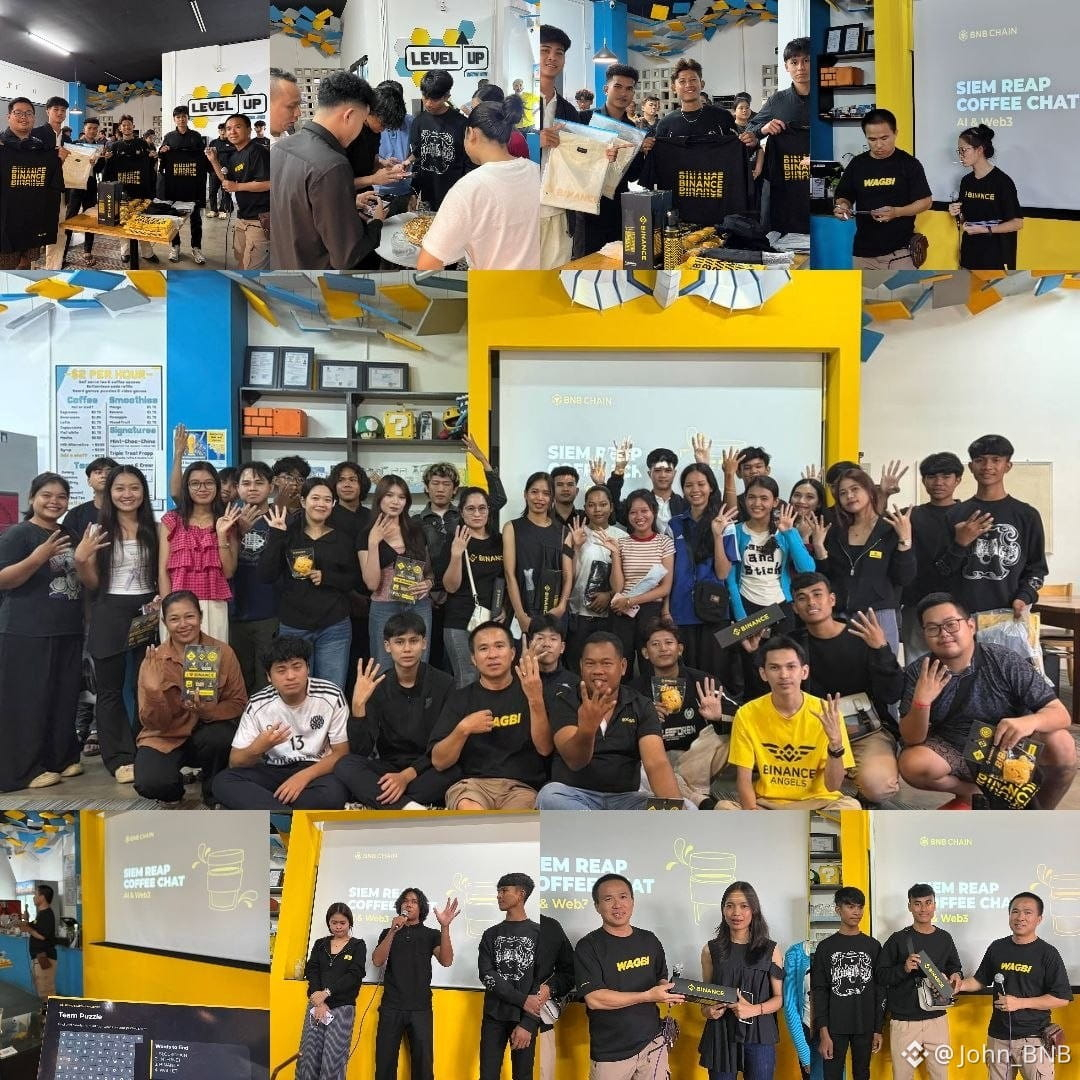
🚀 BNB Chain Meetup x Binance Academy | Siem Reap, Cambodia 🇰🇭
55 registered. 40 checked in. One community, countless smiles! 💛
This meetup was about more than learning blockchain. It was about bringing people together, making new friends, sharing experiences, and having fun along the way.
🍕 Slide to Build: Teams turned pizza into the Binance logo!
🧩 Crypto Word Puzzle: Testing crypto knowledge through teamwork.
😂 Funny Question Game: Including the legendary debate about the difference between a latte with 0% sugar and one with no sugar! 😬☕
🎤 Participants also took the stage to share their experiences and suggest future activities, from cycling to sports and outdoor adventures. 🚴♂️
The best part? People weren't just sitting and listening. They were participating, laughing, connecting, and looking forward to what comes next.
💛 This time, we didn't just learn. We connected, had fun, and refreshed our community spirit.
Thank you to everyone who joined and helped make this meetup memorable!
Let's keep building a stronger Web3 community in Cambodia — one conversation, one connection, and one activity at a time.
See you at the next one! 👋
#BNBChain #BinanceAcademy #Web3 #Cambodia #communitybuilding @withpechtoch @BNB_Chain @Binance_Academy @Binance_Square_Official @Binance_Angels
🚀 BNB Chain Meetup x Binance Academy | Siem Reap, Cambodia 🇰🇭
55 registered. 40 checked in. One community, countless smiles! 💛
This meetup was about more than learning blockchain. It was about bringing people together, making new friends, sharing experiences, and having fun along the way.
🍕 Slide to Build: Teams turned pizza into the Binance logo!
🧩 Crypto Word Puzzle: Testing crypto knowledge through teamwork.
😂 Funny Question Game: Including the legendary debate about the difference between a latte with 0% sugar and one with no sugar! 😬☕
🎤 Participants also took the stage to share their experiences and suggest future activities, from cycling to sports and outdoor adventures. 🚴♂️
The best part? People weren't just sitting and listening. They were participating, laughing, connecting, and looking forward to what comes next.
💛 This time, we didn't just learn. We connected, had fun, and refreshed our community spirit.
Thank you to everyone who joined and helped make this meetup memorable!
Let's keep building a stronger Web3 community in Cambodia — one conversation, one connection, and one activity at a time.
See you at the next one! 👋
#BNBChain #BinanceAcademy #Web3 #Cambodia #communitybuilding @Ching Chang @BNB Chain @Binance Academy @Binance Square Official @Binance Angels
55 registered. 40 checked in. One community, countless smiles! 💛
This meetup was about more than learning blockchain. It was about bringing people together, making new friends, sharing experiences, and having fun along the way.
🍕 Slide to Build: Teams turned pizza into the Binance logo!
🧩 Crypto Word Puzzle: Testing crypto knowledge through teamwork.
😂 Funny Question Game: Including the legendary debate about the difference between a latte with 0% sugar and one with no sugar! 😬☕
🎤 Participants also took the stage to share their experiences and suggest future activities, from cycling to sports and outdoor adventures. 🚴♂️
The best part? People weren't just sitting and listening. They were participating, laughing, connecting, and looking forward to what comes next.
💛 This time, we didn't just learn. We connected, had fun, and refreshed our community spirit.
Thank you to everyone who joined and helped make this meetup memorable!
Let's keep building a stronger Web3 community in Cambodia — one conversation, one connection, and one activity at a time.
See you at the next one! 👋
#BNBChain #BinanceAcademy #Web3 #Cambodia #communitybuilding @Ching Chang @BNB Chain @Binance Academy @Binance Square Official @Binance Angels
2
11
930
·
--
Article
$1B in AUM, ~$40B in Trading Volume: Why Users Are Choosing bStocks for Tokenized StocksIntroduction: Traditional Markets Are Going On-Chain
Crypto users have spent years trading digital assets around the clock. But what if the same crypto-native experience could extend to traditional equities?
That idea is becoming increasingly relevant as tokenized stocks connect conventional financial markets with blockchain-based infrastructure.
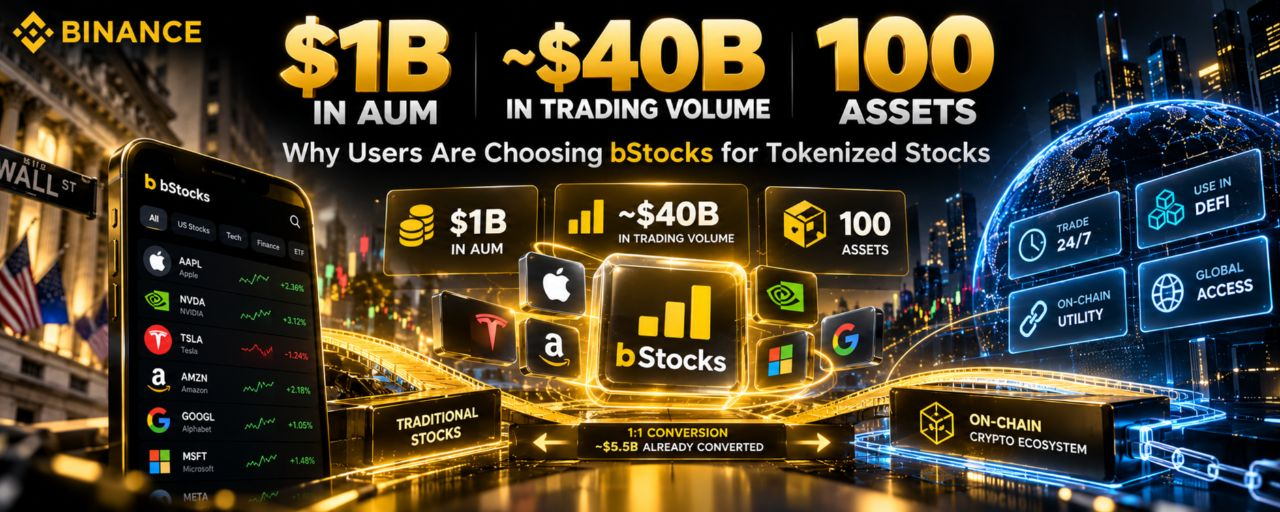
One product gaining attention is bStocks, which has reached a major milestone: $1 billion in assets under management (AUM), approximately $40 billion in cumulative trading volume, and 100 available bStocks assets.
These numbers tell an important story. Users are not simply exploring tokenized stocks as a new concept. The market is developing around capital allocation, trading activity, asset diversity, and the ability to move between different financial environments.
But the bigger question is not how much volume bStocks has generated. It is why this model could matter for the next generation of financial markets.
1. $1 Billion in AUM: Capital Is Finding a Home
Assets under management measure the value of assets held within a product at a given point in time.
For bStocks, reaching $1 billion in AUM represents a significant milestone in its development as a tokenized-stock offering.
However, AUM alone does not tell the whole story. A large number could reflect concentrated holdings in a small number of assets or a limited group of users.
A more complete picture considers how capital is distributed across users and assets.
A diversified distribution can indicate broader participation and demand across multiple investment opportunities. Combined with user growth and activity across different assets, it offers a more useful view of adoption than a single headline figure.
For users, the appeal is straightforward: tokenized stocks offer another way to access traditional equity exposure through a crypto-native environment.
The milestone is meaningful, but sustained adoption will depend on liquidity, product accessibility, transparency, and the ability to serve users' needs over time.
2. Approximately $40 Billion in Trading Volume: Beyond Holding Assets
If AUM measures the capital held in a product, cumulative trading volume measures how much trading activity has passed through it.
bStocks has recorded approximately $40 billion in cumulative trading volume.
That distinction matters.
Some investors buy assets and hold them. Others actively trade around changing market conditions. A product that supports both behaviors can serve a wider range of market participants.
Trading volume also needs context. Cumulative volume is not the same as current daily activity, unique users, or net capital inflows. The same capital can be traded multiple times.
Nevertheless, when considered alongside AUM, the figure provides another perspective on how the product is being used.
Capital shows what users hold. Trading volume shows how actively they trade. Both matter when evaluating adoption.
3. One Hundred Assets: More Choice Across Traditional Markets
A broader selection of assets gives users more opportunities to explore different companies and investment themes.
With 100 bStocks assets offered, users have access to a wider range of tokenized-stock choices within the product.
This matters because investors rarely have identical objectives.
Some may want exposure to established technology companies. Others may prefer different industries or want to diversify their equity exposure rather than concentrate on one company.
A wider asset selection can help accommodate those preferences.
However, more assets do not automatically mean better diversification. Investors still need to understand the underlying exposure, concentration risks, trading costs, and applicable product restrictions.
The important development is that tokenized-stock products are expanding beyond a single-asset experiment toward a broader market experience.
4. The Differentiator: Approximately $5.5 Billion Converted 1:1 to Direct Stocks
Perhaps the most distinctive part of the bStocks model is its conversion mechanism.
Approximately $5.5 billion has already been converted between bStocks and Direct Stocks through the 1:1 conversion mechanism described for the product.
Why does this matter?
Traditional stock markets and blockchain-based markets operate through different infrastructure. Moving between them can involve separate processes, restrictions, costs, and settlement arrangements.
A conversion mechanism designed to connect tokenized stocks with Direct Stocks offers a bridge between those environments.
For users, that can mean greater flexibility in how they access supported equity exposure, rather than treating tokenized holdings and traditional stocks as completely separate destinations.
The reported $5.5 billion conversion figure is particularly notable because it highlights activity beyond simply buying and holding tokenized assets.
It suggests that interoperability between financial environments is an important part of the product proposition.
That said, conversion eligibility, timing, fees, and restrictions depend on the applicable product rules. A 1:1 conversion ratio does not by itself guarantee identical execution prices, immediate settlement, or unrestricted access for every user.
5. Adoption Beyond AUM and Trading Volume
The next stage of tokenized-stock adoption depends on more than headline numbers.
Three additional indicators deserve attention.
Utilization rates: How much of the available capital is actually being put to use? Capital deployed in supported activities can reveal utility beyond assets simply being held.
On-chain activity: Are tokenized assets participating in blockchain-based financial applications? Depending on the product's supported integrations, activity may extend into collateral use, lending, and other decentralized finance applications.
User and asset distribution: Is participation expanding across a broader group of users and investment choices, or is activity concentrated among a few large participants?
These indicators help distinguish between capital accumulation and deeper product usage.
A tokenized asset becomes more interesting when it can do more than represent exposure to a traditional financial instrument. Subject to its design and restrictions, it may also become part of a broader digital financial workflow.
That is the opportunity behind the convergence of tokenization and crypto-native infrastructure.
6. Why This Matters for the Future of Finance
The growth of bStocks reflects a broader shift in what some crypto users want from financial products.
They want access to traditional markets without abandoning the convenience and flexibility of digital financial infrastructure.
They want more asset choices, the ability to trade within supported market hours, and potentially new ways to use their holdings across compatible financial applications.
Tokenization does not eliminate the risks of traditional equities, nor does it automatically provide every feature associated with directly owning a stock. Product structure, legal rights, custody arrangements, liquidity, and jurisdictional availability remain important considerations.
Still, the direction is clear: the boundaries between traditional financial products and blockchain-based markets are becoming increasingly connected.
The strongest products will not necessarily be those with the most tokens or the largest headline numbers. They will be the ones that combine useful access, reliable infrastructure, meaningful utility, and flexibility that users can understand.
Conclusion: The Next Milestone Is Utility
bStocks has reached $1 billion in AUM, approximately $40 billion in cumulative trading volume, and 100 available assets. Approximately $5.5 billion has also been converted between bStocks and Direct Stocks through its 1:1 conversion mechanism.
Together, these figures provide several perspectives on adoption: capital held, trading activity, asset choice, and movement between financial environments.
But the longer-term opportunity goes beyond reaching another numerical milestone.
The real test is whether tokenized stocks become useful financial assets—not just digital representations of traditional equities.
If tokenized stocks can combine accessible market exposure, meaningful on-chain utility, and flexible connections to traditional financial infrastructure, they could become an important part of the evolving digital economy.
For users, the question is no longer just whether stocks can be tokenized. It is how much more useful financial assets can become when traditional markets and blockchain infrastructure work together.
Disclaimer: This article is for informational and educational purposes only and does not constitute financial or investment advice. Tokenized-stock products may involve market, liquidity, counterparty, custody, regulatory, and technology risks. Product eligibility, conversion terms, and availability vary by jurisdiction. Verify the applicable product documentation before participating.
#Binance #BStocks #TokenizedStocks #RWA #REALWORLDASSET
$NVDAB $SPCXB $TSLAB
{spot}(TSLABUSDT)
{spot}(SPCXBUSDT)
{spot}(NVDABUSDT)
$1B in AUM, ~$40B in Trading Volume: Why Users Are Choosing bStocks for Tokenized Stocks
Introduction: Traditional Markets Are Going On-Chain
Crypto users have spent years trading digital assets around the clock. But what if the same crypto-native experience could extend to traditional equities?
That idea is becoming increasingly relevant as tokenized stocks connect conventional financial markets with blockchain-based infrastructure.
One product gaining attention is bStocks, which has reached a major milestone: $1 billion in assets under management (AUM), approximately $40 billion in cumulative trading volume, and 100 available bStocks assets.
These numbers tell an important story. Users are not simply exploring tokenized stocks as a new concept. The market is developing around capital allocation, trading activity, asset diversity, and the ability to move between different financial environments.
But the bigger question is not how much volume bStocks has generated. It is why this model could matter for the next generation of financial markets.
1. $1 Billion in AUM: Capital Is Finding a Home
Assets under management measure the value of assets held within a product at a given point in time.
For bStocks, reaching $1 billion in AUM represents a significant milestone in its development as a tokenized-stock offering.
However, AUM alone does not tell the whole story. A large number could reflect concentrated holdings in a small number of assets or a limited group of users.
A more complete picture considers how capital is distributed across users and assets.
A diversified distribution can indicate broader participation and demand across multiple investment opportunities. Combined with user growth and activity across different assets, it offers a more useful view of adoption than a single headline figure.
For users, the appeal is straightforward: tokenized stocks offer another way to access traditional equity exposure through a crypto-native environment.
The milestone is meaningful, but sustained adoption will depend on liquidity, product accessibility, transparency, and the ability to serve users' needs over time.
2. Approximately $40 Billion in Trading Volume: Beyond Holding Assets
If AUM measures the capital held in a product, cumulative trading volume measures how much trading activity has passed through it.
bStocks has recorded approximately $40 billion in cumulative trading volume.
That distinction matters.
Some investors buy assets and hold them. Others actively trade around changing market conditions. A product that supports both behaviors can serve a wider range of market participants.
Trading volume also needs context. Cumulative volume is not the same as current daily activity, unique users, or net capital inflows. The same capital can be traded multiple times.
Nevertheless, when considered alongside AUM, the figure provides another perspective on how the product is being used.
Capital shows what users hold. Trading volume shows how actively they trade. Both matter when evaluating adoption.
3. One Hundred Assets: More Choice Across Traditional Markets
A broader selection of assets gives users more opportunities to explore different companies and investment themes.
With 100 bStocks assets offered, users have access to a wider range of tokenized-stock choices within the product.
This matters because investors rarely have identical objectives.
Some may want exposure to established technology companies. Others may prefer different industries or want to diversify their equity exposure rather than concentrate on one company.
A wider asset selection can help accommodate those preferences.
However, more assets do not automatically mean better diversification. Investors still need to understand the underlying exposure, concentration risks, trading costs, and applicable product restrictions.
The important development is that tokenized-stock products are expanding beyond a single-asset experiment toward a broader market experience.
4. The Differentiator: Approximately $5.5 Billion Converted 1:1 to Direct Stocks
Perhaps the most distinctive part of the bStocks model is its conversion mechanism.
Approximately $5.5 billion has already been converted between bStocks and Direct Stocks through the 1:1 conversion mechanism described for the product.
Why does this matter?
Traditional stock markets and blockchain-based markets operate through different infrastructure. Moving between them can involve separate processes, restrictions, costs, and settlement arrangements.
A conversion mechanism designed to connect tokenized stocks with Direct Stocks offers a bridge between those environments.
For users, that can mean greater flexibility in how they access supported equity exposure, rather than treating tokenized holdings and traditional stocks as completely separate destinations.
The reported $5.5 billion conversion figure is particularly notable because it highlights activity beyond simply buying and holding tokenized assets.
It suggests that interoperability between financial environments is an important part of the product proposition.
That said, conversion eligibility, timing, fees, and restrictions depend on the applicable product rules. A 1:1 conversion ratio does not by itself guarantee identical execution prices, immediate settlement, or unrestricted access for every user.
5. Adoption Beyond AUM and Trading Volume
The next stage of tokenized-stock adoption depends on more than headline numbers.
Three additional indicators deserve attention.
Utilization rates: How much of the available capital is actually being put to use? Capital deployed in supported activities can reveal utility beyond assets simply being held.
On-chain activity: Are tokenized assets participating in blockchain-based financial applications? Depending on the product's supported integrations, activity may extend into collateral use, lending, and other decentralized finance applications.
User and asset distribution: Is participation expanding across a broader group of users and investment choices, or is activity concentrated among a few large participants?
These indicators help distinguish between capital accumulation and deeper product usage.
A tokenized asset becomes more interesting when it can do more than represent exposure to a traditional financial instrument. Subject to its design and restrictions, it may also become part of a broader digital financial workflow.
That is the opportunity behind the convergence of tokenization and crypto-native infrastructure.
6. Why This Matters for the Future of Finance
The growth of bStocks reflects a broader shift in what some crypto users want from financial products.
They want access to traditional markets without abandoning the convenience and flexibility of digital financial infrastructure.
They want more asset choices, the ability to trade within supported market hours, and potentially new ways to use their holdings across compatible financial applications.
Tokenization does not eliminate the risks of traditional equities, nor does it automatically provide every feature associated with directly owning a stock. Product structure, legal rights, custody arrangements, liquidity, and jurisdictional availability remain important considerations.
Still, the direction is clear: the boundaries between traditional financial products and blockchain-based markets are becoming increasingly connected.
The strongest products will not necessarily be those with the most tokens or the largest headline numbers. They will be the ones that combine useful access, reliable infrastructure, meaningful utility, and flexibility that users can understand.
Conclusion: The Next Milestone Is Utility
bStocks has reached $1 billion in AUM, approximately $40 billion in cumulative trading volume, and 100 available assets. Approximately $5.5 billion has also been converted between bStocks and Direct Stocks through its 1:1 conversion mechanism.
Together, these figures provide several perspectives on adoption: capital held, trading activity, asset choice, and movement between financial environments.
But the longer-term opportunity goes beyond reaching another numerical milestone.
The real test is whether tokenized stocks become useful financial assets—not just digital representations of traditional equities.
If tokenized stocks can combine accessible market exposure, meaningful on-chain utility, and flexible connections to traditional financial infrastructure, they could become an important part of the evolving digital economy.
For users, the question is no longer just whether stocks can be tokenized. It is how much more useful financial assets can become when traditional markets and blockchain infrastructure work together.
Disclaimer: This article is for informational and educational purposes only and does not constitute financial or investment advice. Tokenized-stock products may involve market, liquidity, counterparty, custody, regulatory, and technology risks. Product eligibility, conversion terms, and availability vary by jurisdiction. Verify the applicable product documentation before participating.
#Binance #BStocks #TokenizedStocks #RWA #REALWORLDASSET
$NVDAB $SPCXB $TSLAB
Crypto users have spent years trading digital assets around the clock. But what if the same crypto-native experience could extend to traditional equities?
That idea is becoming increasingly relevant as tokenized stocks connect conventional financial markets with blockchain-based infrastructure.
One product gaining attention is bStocks, which has reached a major milestone: $1 billion in assets under management (AUM), approximately $40 billion in cumulative trading volume, and 100 available bStocks assets.
These numbers tell an important story. Users are not simply exploring tokenized stocks as a new concept. The market is developing around capital allocation, trading activity, asset diversity, and the ability to move between different financial environments.
But the bigger question is not how much volume bStocks has generated. It is why this model could matter for the next generation of financial markets.
1. $1 Billion in AUM: Capital Is Finding a Home
Assets under management measure the value of assets held within a product at a given point in time.
For bStocks, reaching $1 billion in AUM represents a significant milestone in its development as a tokenized-stock offering.
However, AUM alone does not tell the whole story. A large number could reflect concentrated holdings in a small number of assets or a limited group of users.
A more complete picture considers how capital is distributed across users and assets.
A diversified distribution can indicate broader participation and demand across multiple investment opportunities. Combined with user growth and activity across different assets, it offers a more useful view of adoption than a single headline figure.
For users, the appeal is straightforward: tokenized stocks offer another way to access traditional equity exposure through a crypto-native environment.
The milestone is meaningful, but sustained adoption will depend on liquidity, product accessibility, transparency, and the ability to serve users' needs over time.
2. Approximately $40 Billion in Trading Volume: Beyond Holding Assets
If AUM measures the capital held in a product, cumulative trading volume measures how much trading activity has passed through it.
bStocks has recorded approximately $40 billion in cumulative trading volume.
That distinction matters.
Some investors buy assets and hold them. Others actively trade around changing market conditions. A product that supports both behaviors can serve a wider range of market participants.
Trading volume also needs context. Cumulative volume is not the same as current daily activity, unique users, or net capital inflows. The same capital can be traded multiple times.
Nevertheless, when considered alongside AUM, the figure provides another perspective on how the product is being used.
Capital shows what users hold. Trading volume shows how actively they trade. Both matter when evaluating adoption.
3. One Hundred Assets: More Choice Across Traditional Markets
A broader selection of assets gives users more opportunities to explore different companies and investment themes.
With 100 bStocks assets offered, users have access to a wider range of tokenized-stock choices within the product.
This matters because investors rarely have identical objectives.
Some may want exposure to established technology companies. Others may prefer different industries or want to diversify their equity exposure rather than concentrate on one company.
A wider asset selection can help accommodate those preferences.
However, more assets do not automatically mean better diversification. Investors still need to understand the underlying exposure, concentration risks, trading costs, and applicable product restrictions.
The important development is that tokenized-stock products are expanding beyond a single-asset experiment toward a broader market experience.
4. The Differentiator: Approximately $5.5 Billion Converted 1:1 to Direct Stocks
Perhaps the most distinctive part of the bStocks model is its conversion mechanism.
Approximately $5.5 billion has already been converted between bStocks and Direct Stocks through the 1:1 conversion mechanism described for the product.
Why does this matter?
Traditional stock markets and blockchain-based markets operate through different infrastructure. Moving between them can involve separate processes, restrictions, costs, and settlement arrangements.
A conversion mechanism designed to connect tokenized stocks with Direct Stocks offers a bridge between those environments.
For users, that can mean greater flexibility in how they access supported equity exposure, rather than treating tokenized holdings and traditional stocks as completely separate destinations.
The reported $5.5 billion conversion figure is particularly notable because it highlights activity beyond simply buying and holding tokenized assets.
It suggests that interoperability between financial environments is an important part of the product proposition.
That said, conversion eligibility, timing, fees, and restrictions depend on the applicable product rules. A 1:1 conversion ratio does not by itself guarantee identical execution prices, immediate settlement, or unrestricted access for every user.
5. Adoption Beyond AUM and Trading Volume
The next stage of tokenized-stock adoption depends on more than headline numbers.
Three additional indicators deserve attention.
Utilization rates: How much of the available capital is actually being put to use? Capital deployed in supported activities can reveal utility beyond assets simply being held.
On-chain activity: Are tokenized assets participating in blockchain-based financial applications? Depending on the product's supported integrations, activity may extend into collateral use, lending, and other decentralized finance applications.
User and asset distribution: Is participation expanding across a broader group of users and investment choices, or is activity concentrated among a few large participants?
These indicators help distinguish between capital accumulation and deeper product usage.
A tokenized asset becomes more interesting when it can do more than represent exposure to a traditional financial instrument. Subject to its design and restrictions, it may also become part of a broader digital financial workflow.
That is the opportunity behind the convergence of tokenization and crypto-native infrastructure.
6. Why This Matters for the Future of Finance
The growth of bStocks reflects a broader shift in what some crypto users want from financial products.
They want access to traditional markets without abandoning the convenience and flexibility of digital financial infrastructure.
They want more asset choices, the ability to trade within supported market hours, and potentially new ways to use their holdings across compatible financial applications.
Tokenization does not eliminate the risks of traditional equities, nor does it automatically provide every feature associated with directly owning a stock. Product structure, legal rights, custody arrangements, liquidity, and jurisdictional availability remain important considerations.
Still, the direction is clear: the boundaries between traditional financial products and blockchain-based markets are becoming increasingly connected.
The strongest products will not necessarily be those with the most tokens or the largest headline numbers. They will be the ones that combine useful access, reliable infrastructure, meaningful utility, and flexibility that users can understand.
Conclusion: The Next Milestone Is Utility
bStocks has reached $1 billion in AUM, approximately $40 billion in cumulative trading volume, and 100 available assets. Approximately $5.5 billion has also been converted between bStocks and Direct Stocks through its 1:1 conversion mechanism.
Together, these figures provide several perspectives on adoption: capital held, trading activity, asset choice, and movement between financial environments.
But the longer-term opportunity goes beyond reaching another numerical milestone.
The real test is whether tokenized stocks become useful financial assets—not just digital representations of traditional equities.
If tokenized stocks can combine accessible market exposure, meaningful on-chain utility, and flexible connections to traditional financial infrastructure, they could become an important part of the evolving digital economy.
For users, the question is no longer just whether stocks can be tokenized. It is how much more useful financial assets can become when traditional markets and blockchain infrastructure work together.
Disclaimer: This article is for informational and educational purposes only and does not constitute financial or investment advice. Tokenized-stock products may involve market, liquidity, counterparty, custody, regulatory, and technology risks. Product eligibility, conversion terms, and availability vary by jurisdiction. Verify the applicable product documentation before participating.
#Binance #BStocks #TokenizedStocks #RWA #REALWORLDASSET
$NVDAB $SPCXB $TSLAB
4
37
·
--
I need this last greed Day candle surpass the previous 3 before the red. So more possibility of local bottom for $PIEVERSE
I already add my position around 1.08 and 1.03. And been holding since 0.7, but missed the sell at 2 area. it's ok, missed is missed. No chase.
This quick position just aiming for 1.59
#ALPHA
I need this last greed Day candle surpass the previous 3 before the red. So more possibility of local bottom for $PIEVERSE
I already add my position around 1.08 and 1.03. And been holding since 0.7, but missed the sell at 2 area. it's ok, missed is missed. No chase.
This quick position just aiming for 1.59
#ALPHA
I already add my position around 1.08 and 1.03. And been holding since 0.7, but missed the sell at 2 area. it's ok, missed is missed. No chase.
This quick position just aiming for 1.59
#ALPHA
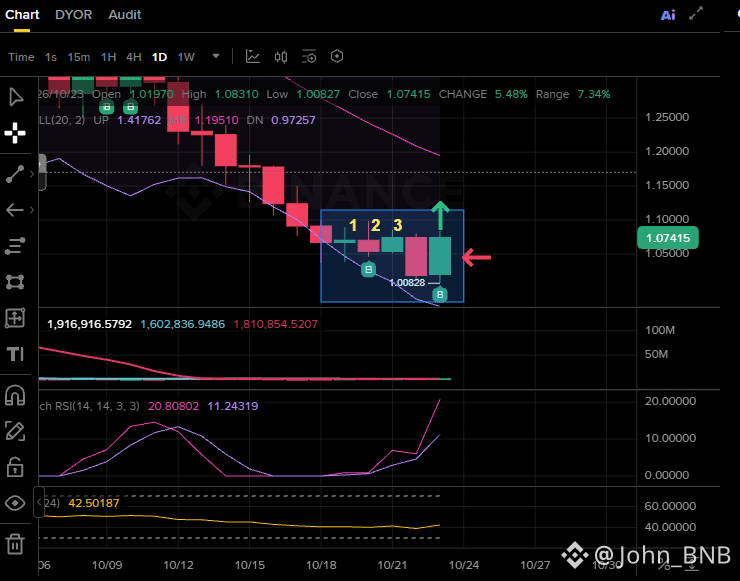
3
253
·
--
- Under President Trump’s leadership, the FBI is going on OFFENSE against cyber criminals targeting the American people.
- Through Operation Blackout - this FBI’s global scam center demolition campaign:
- 20+ scam compounds DEMOLISHED. $17 BILLION+ seized. 11,000 Americans protected from $675 MILLION in fraud.
- Cybercriminals no longer have sanctuary no matter where they try to hide - we’re finding them and we’re getting them.
And they are moving everywhere around the world to avoid this blackout.
This topic is really hot esp South East Asia countries.
#scam #FBI #BTC
- Under President Trump’s leadership, the FBI is going on OFFENSE against cyber criminals targeting the American people.
- Through Operation Blackout - this FBI’s global scam center demolition campaign:
- 20+ scam compounds DEMOLISHED. $17 BILLION+ seized. 11,000 Americans protected from $675 MILLION in fraud.
- Cybercriminals no longer have sanctuary no matter where they try to hide - we’re finding them and we’re getting them.
And they are moving everywhere around the world to avoid this blackout.
This topic is really hot esp South East Asia countries.
#scam #FBI #BTC
- Through Operation Blackout - this FBI’s global scam center demolition campaign:
- 20+ scam compounds DEMOLISHED. $17 BILLION+ seized. 11,000 Americans protected from $675 MILLION in fraud.
- Cybercriminals no longer have sanctuary no matter where they try to hide - we’re finding them and we’re getting them.
And they are moving everywhere around the world to avoid this blackout.
This topic is really hot esp South East Asia countries.
#scam #FBI #BTC

2
110
·
--
Wow looks at the top 10 they are so amazing to gather such a good number. Really happy for them, even I am not in the top 100 list but still be proud to be shown in the category.
There is no fail till we stop working. And I keep building no matter be the winners of #Blockchain100 or not. because I will show up at #BBW2026 and support community either.
Say hi, when you see me there.
Also you can help me by voting for me too. I really appreciate and thank everyone for supporting me either.
[Vote here](https://app.binance.com/uni-qr/cact26user/528) 😍
See you at BBW 2026! ✌️🌱🌇
Wow looks at the top 10 they are so amazing to gather such a good number. Really happy for them, even I am not in the top 100 list but still be proud to be shown in the category.
There is no fail till we stop working. And I keep building no matter be the winners of #Blockchain100 or not. because I will show up at #BBW2026 and support community either.
Say hi, when you see me there.
Also you can help me by voting for me too. I really appreciate and thank everyone for supporting me either.
Vote here 😍
See you at BBW 2026! ✌️🌱🌇
There is no fail till we stop working. And I keep building no matter be the winners of #Blockchain100 or not. because I will show up at #BBW2026 and support community either.
Say hi, when you see me there.
Also you can help me by voting for me too. I really appreciate and thank everyone for supporting me either.
Vote here 😍
See you at BBW 2026! ✌️🌱🌇
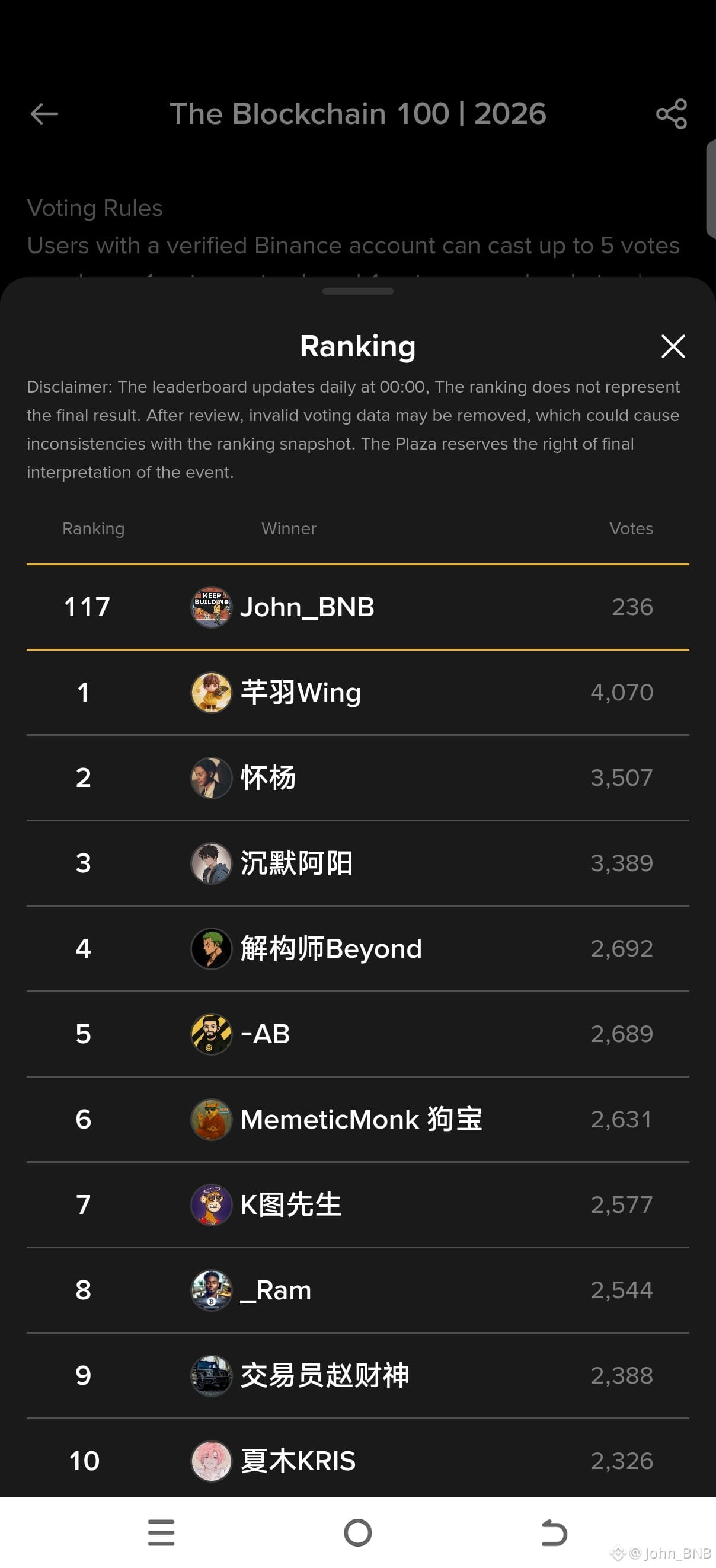
John_BNB
·
--
🇰🇭 From Cambodia to Blockchain 100 — Rising Star
For me, building in Web3 has never been just about trading, creating content, or chasing recognition. It's about people, connections, and the opportunities we can create together.
As a Binance Angel from Cambodia, I've had the opportunity to work not only with local Khmer Angels, but also with Angels from different regions around the world. Every collaboration brings new perspectives, ideas, and opportunities to learn from one another.
From hosting local meetups and collaborating with KOLs, influencers, and Web3 communities, to creating spaces where people can connect, exchange knowledge, and explore new opportunities, my goal has always been to make these gatherings meaningful.
Because crypto isn't just something happening on a screen. It's becoming part of people's lives — how we learn, connect, build, and prepare for the future.
I believe our work today is about more than growing a community. It's about bringing Web3 closer to everyday people, inspiring the next generation, and creating opportunities that can reach beyond borders.
Being nominated for Blockchain 100 — Rising Star is an honor, and I'm grateful to everyone I've met, worked with, and learned from along this journey.
This isn't the finish line. There is still so much to build, together. 🌍🚀
If you believe in this journey and what we're building for Cambodia's Web3 community, I'd be grateful for your support.
🗳️ Vote for John_BNB — Rising Star: Vote now
Let's keep building. 🇰🇭
#Blockchain100 #RisingStar #BinanceAngels #Cambodia #Web3
For me, building in Web3 has never been just about trading, creating content, or chasing recognition. It's about people, connections, and the opportunities we can create together.
As a Binance Angel from Cambodia, I've had the opportunity to work not only with local Khmer Angels, but also with Angels from different regions around the world. Every collaboration brings new perspectives, ideas, and opportunities to learn from one another.
From hosting local meetups and collaborating with KOLs, influencers, and Web3 communities, to creating spaces where people can connect, exchange knowledge, and explore new opportunities, my goal has always been to make these gatherings meaningful.
Because crypto isn't just something happening on a screen. It's becoming part of people's lives — how we learn, connect, build, and prepare for the future.
I believe our work today is about more than growing a community. It's about bringing Web3 closer to everyday people, inspiring the next generation, and creating opportunities that can reach beyond borders.
Being nominated for Blockchain 100 — Rising Star is an honor, and I'm grateful to everyone I've met, worked with, and learned from along this journey.
This isn't the finish line. There is still so much to build, together. 🌍🚀
If you believe in this journey and what we're building for Cambodia's Web3 community, I'd be grateful for your support.
🗳️ Vote for John_BNB — Rising Star: Vote now
Let's keep building. 🇰🇭
#Blockchain100 #RisingStar #BinanceAngels #Cambodia #Web3
3
85
·
--
Binance Pumpkin Camp is coming! 🎃
Who says learning crypto has to be scary? This Halloween, we are making it a treat:
🚀10 days to Level up your XP and Knowledge
🏆Quests, Badges, and a Graduation Card waiting for you at the finish line!
🎁 A 6,000 USDC prize pool for the top 2,000 participants on the leaderboard.
No tricks - just treats! Learning with Binance daily is not scary.
🎃Stay tuned! #BinancePumpkinCamp
Campaign Period: Oct 24 - Nov 02, 2026
#Learn&Earn #crypto #Binance #Web3
Binance Pumpkin Camp is coming! 🎃
Who says learning crypto has to be scary? This Halloween, we are making it a treat:
🚀10 days to Level up your XP and Knowledge
🏆Quests, Badges, and a Graduation Card waiting for you at the finish line!
🎁 A 6,000 USDC prize pool for the top 2,000 participants on the leaderboard.
No tricks - just treats! Learning with Binance daily is not scary.
🎃Stay tuned! #BinancePumpkinCamp
Campaign Period: Oct 24 - Nov 02, 2026
#Learn&Earn #crypto #Binance #Web3
Who says learning crypto has to be scary? This Halloween, we are making it a treat:
🚀10 days to Level up your XP and Knowledge
🏆Quests, Badges, and a Graduation Card waiting for you at the finish line!
🎁 A 6,000 USDC prize pool for the top 2,000 participants on the leaderboard.
No tricks - just treats! Learning with Binance daily is not scary.
🎃Stay tuned! #BinancePumpkinCamp
Campaign Period: Oct 24 - Nov 02, 2026
#Learn&Earn #crypto #Binance #Web3
3
134
·
--
Lets go team!
Lets go team!
Falcon_BNB
·
--
🎃 Binance Pumpkin Camp is coming! 👻
Crypto isn’t scary. This Halloween, let’s learn and earn rewards! 🧡
🚀 Spend 10 days boosting your XP and Crypto knowledge.
🏆 Quests, badges, and Graduation Cards are waiting for you.
🎁 The top 2,000 on the leaderboard will share a total prize pool of 6,000 USDC.
Banish your fears and claim those rewards!
📅 Campaign period: October 24 to November 2
🎃 Stay tuned for more details!
#BinancePumpkinCamp
Crypto isn’t scary. This Halloween, let’s learn and earn rewards! 🧡
🚀 Spend 10 days boosting your XP and Crypto knowledge.
🏆 Quests, badges, and Graduation Cards are waiting for you.
🎁 The top 2,000 on the leaderboard will share a total prize pool of 6,000 USDC.
Banish your fears and claim those rewards!
📅 Campaign period: October 24 to November 2
🎃 Stay tuned for more details!
#BinancePumpkinCamp
3
22
·
--
Pls join everyone! lets learn
Pls join everyone! lets learn

Trevor R
·
--
Binance Pumpkin Camp is coming TOMORROW! 🎃
Who says learning about crypto has to be scary?
This Halloween, let's learn while having fun:
🚀 10 days to earn XP and boost your crypto knowledge!
🏆 Missions, badges, and a Graduation Card await you at the end of the journey!
🎁 A total of 6,000 USDC in rewards for the top 2,000 participants on the leaderboard.
No tricks, just fun! Learning with Binance every day doesn't have to be scary. 🎃
Campaign Period: October 24–November 2
Get ready for the fun! #BinancePumpkinCamp
Disclaimer: Digital asset prices can fluctuate. This is not financial advice.
Who says learning about crypto has to be scary?
This Halloween, let's learn while having fun:
🚀 10 days to earn XP and boost your crypto knowledge!
🏆 Missions, badges, and a Graduation Card await you at the end of the journey!
🎁 A total of 6,000 USDC in rewards for the top 2,000 participants on the leaderboard.
No tricks, just fun! Learning with Binance every day doesn't have to be scary. 🎃
Campaign Period: October 24–November 2
Get ready for the fun! #BinancePumpkinCamp
Disclaimer: Digital asset prices can fluctuate. This is not financial advice.
2
50
·
--
Should've wait little bit to get 2x1 but it is ok, profut is profit.
$AGT
Should've wait little bit to get 2x1 but it is ok, profut is profit.
$AGT
$AGT
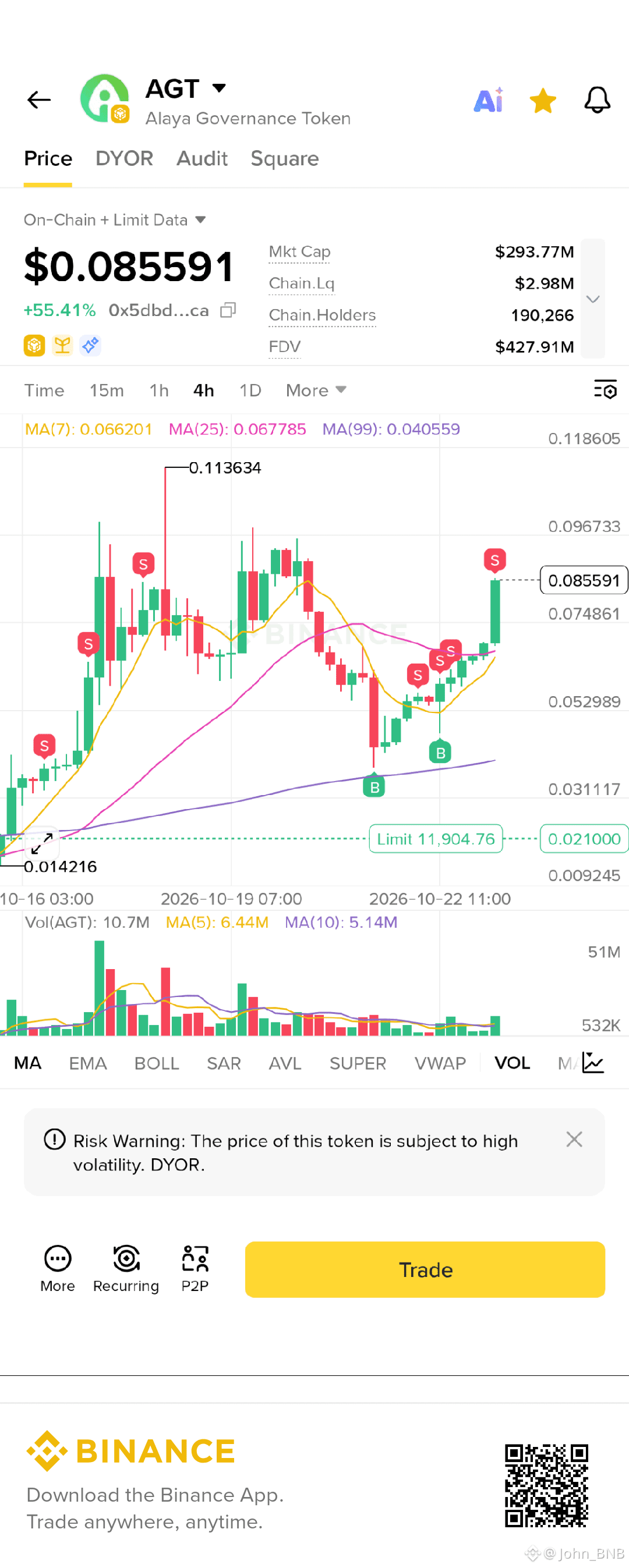
3
357
·
--
In this big red candle $AGT some people might see big fear, but I saw opportunity. A fast 30% ish...
{future}(AGTUSDT)
In this big red candle $AGT some people might see big fear, but I saw opportunity. A fast 30% ish...
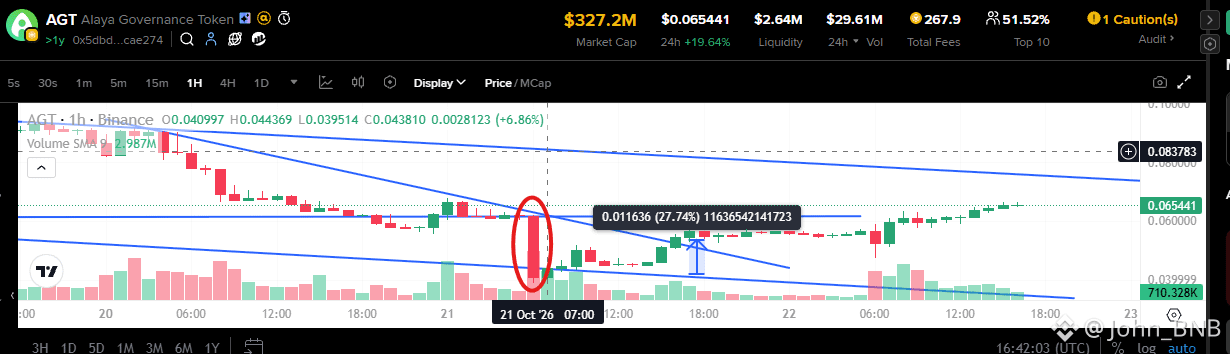
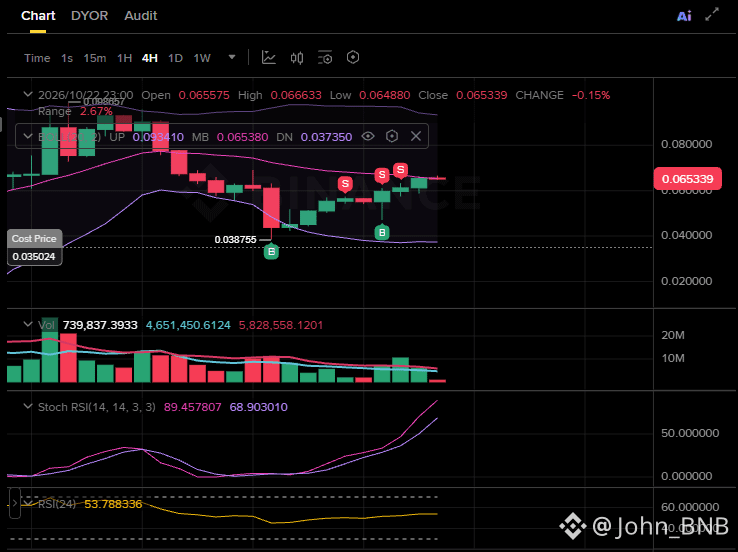


2
230
·
--
🌍❤️ Web3 has taught me something powerful: we may come from different countries, speak different languages, and follow different paths, but we can still build something meaningful together.
Being shortlisted for Blockchain 100 – 2026 | Rising Star is an honor. But the people I've met, the knowledge we've shared, and the communities we've built mean even more.
To everyone who has encouraged me, supported my work, or been part of this journey — THANK YOU. 🙏
If you believe in community, education, and making Web3 more accessible to everyone, I'd be grateful for your support.
🗳️ Vote for John_BNB ❤️
[https://app.binance.com/uni-qr/cact26user/528](https://app.binance.com/uni-qr/cact26user/528)
Different roots. One global community. 🌱🌍
#Blockchain100 #RisingStar #Web3
Love you all🫶
🌍❤️ Web3 has taught me something powerful: we may come from different countries, speak different languages, and follow different paths, but we can still build something meaningful together.
Being shortlisted for Blockchain 100 – 2026 | Rising Star is an honor. But the people I've met, the knowledge we've shared, and the communities we've built mean even more.
To everyone who has encouraged me, supported my work, or been part of this journey — THANK YOU. 🙏
If you believe in community, education, and making Web3 more accessible to everyone, I'd be grateful for your support.
🗳️ Vote for John_BNB ❤️
https://app.binance.com/uni-qr/cact26user/528
Different roots. One global community. 🌱🌍
#Blockchain100 #RisingStar #Web3
Love you all🫶
Being shortlisted for Blockchain 100 – 2026 | Rising Star is an honor. But the people I've met, the knowledge we've shared, and the communities we've built mean even more.
To everyone who has encouraged me, supported my work, or been part of this journey — THANK YOU. 🙏
If you believe in community, education, and making Web3 more accessible to everyone, I'd be grateful for your support.
🗳️ Vote for John_BNB ❤️
https://app.binance.com/uni-qr/cact26user/528
Different roots. One global community. 🌱🌍
#Blockchain100 #RisingStar #Web3
Love you all🫶
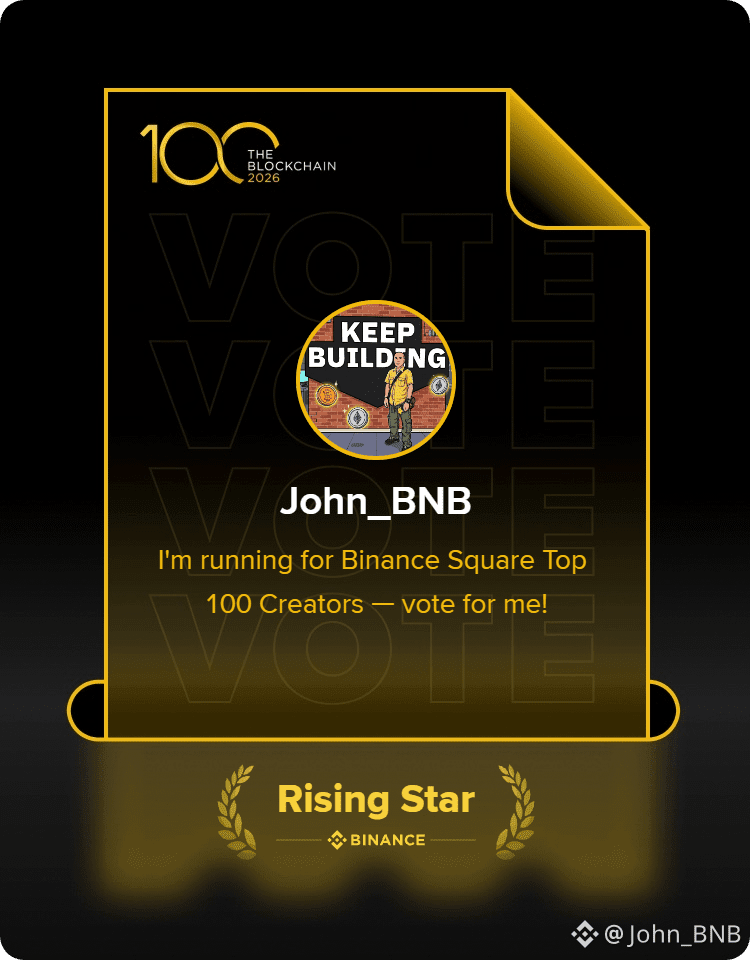
4
139
·
--
Take my profit here with around 25% profit. The rest keep it runs, and stable wait for another opportunity...
$AGT
{future}(AGTUSDT)
Take my profit here with around 25% profit. The rest keep it runs, and stable wait for another opportunity...
$AGT
$AGT
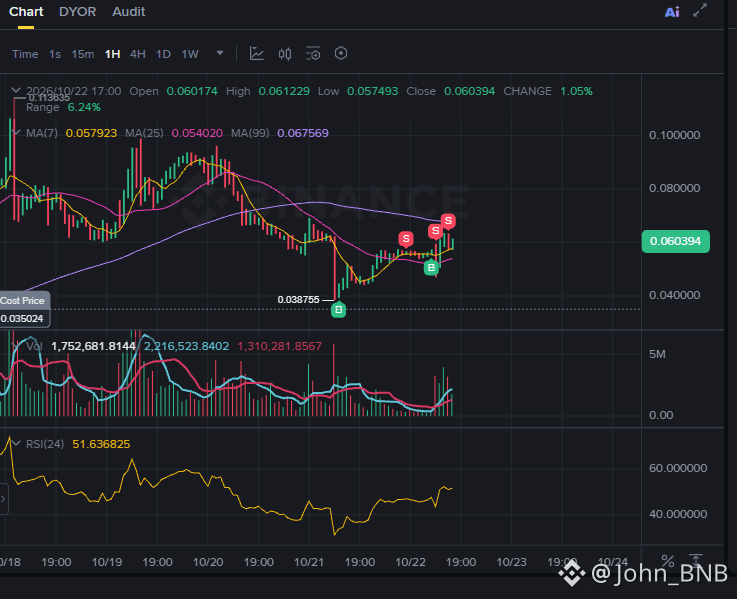
John_BNB
·
--
What happened $AGT discount so hard today?
Get back in. This is why taking profit always better, event it goes higher because no one know, when it gonna crush you like this.
#crypto #lesson
Get back in. This is why taking profit always better, event it goes higher because no one know, when it gonna crush you like this.
#crypto #lesson
4
252
·
--
GM, still need some more love till 28 Oct. Your one vote, means a lot to me.
Please don't forget to vote for me.
[https://app.binance.com/uni-qr/cact26user/528](https://app.binance.com/uni-qr/cact26user/528)
#Blockchain100 @Binance_Square_Official #bbw2026
GM, still need some more love till 28 Oct. Your one vote, means a lot to me.
Please don't forget to vote for me.
https://app.binance.com/uni-qr/cact26user/528
#Blockchain100 @Binance Square Official #bbw2026
Please don't forget to vote for me.
https://app.binance.com/uni-qr/cact26user/528
#Blockchain100 @Binance Square Official #bbw2026
John_BNB
·
--
🇰🇭 From Cambodia to Blockchain 100 — Rising Star
For me, building in Web3 has never been just about trading, creating content, or chasing recognition. It's about people, connections, and the opportunities we can create together.
As a Binance Angel from Cambodia, I've had the opportunity to work not only with local Khmer Angels, but also with Angels from different regions around the world. Every collaboration brings new perspectives, ideas, and opportunities to learn from one another.
From hosting local meetups and collaborating with KOLs, influencers, and Web3 communities, to creating spaces where people can connect, exchange knowledge, and explore new opportunities, my goal has always been to make these gatherings meaningful.
Because crypto isn't just something happening on a screen. It's becoming part of people's lives — how we learn, connect, build, and prepare for the future.
I believe our work today is about more than growing a community. It's about bringing Web3 closer to everyday people, inspiring the next generation, and creating opportunities that can reach beyond borders.
Being nominated for Blockchain 100 — Rising Star is an honor, and I'm grateful to everyone I've met, worked with, and learned from along this journey.
This isn't the finish line. There is still so much to build, together. 🌍🚀
If you believe in this journey and what we're building for Cambodia's Web3 community, I'd be grateful for your support.
🗳️ Vote for John_BNB — Rising Star: Vote now
Let's keep building. 🇰🇭
#Blockchain100 #RisingStar #BinanceAngels #Cambodia #Web3
For me, building in Web3 has never been just about trading, creating content, or chasing recognition. It's about people, connections, and the opportunities we can create together.
As a Binance Angel from Cambodia, I've had the opportunity to work not only with local Khmer Angels, but also with Angels from different regions around the world. Every collaboration brings new perspectives, ideas, and opportunities to learn from one another.
From hosting local meetups and collaborating with KOLs, influencers, and Web3 communities, to creating spaces where people can connect, exchange knowledge, and explore new opportunities, my goal has always been to make these gatherings meaningful.
Because crypto isn't just something happening on a screen. It's becoming part of people's lives — how we learn, connect, build, and prepare for the future.
I believe our work today is about more than growing a community. It's about bringing Web3 closer to everyday people, inspiring the next generation, and creating opportunities that can reach beyond borders.
Being nominated for Blockchain 100 — Rising Star is an honor, and I'm grateful to everyone I've met, worked with, and learned from along this journey.
This isn't the finish line. There is still so much to build, together. 🌍🚀
If you believe in this journey and what we're building for Cambodia's Web3 community, I'd be grateful for your support.
🗳️ Vote for John_BNB — Rising Star: Vote now
Let's keep building. 🇰🇭
#Blockchain100 #RisingStar #BinanceAngels #Cambodia #Web3
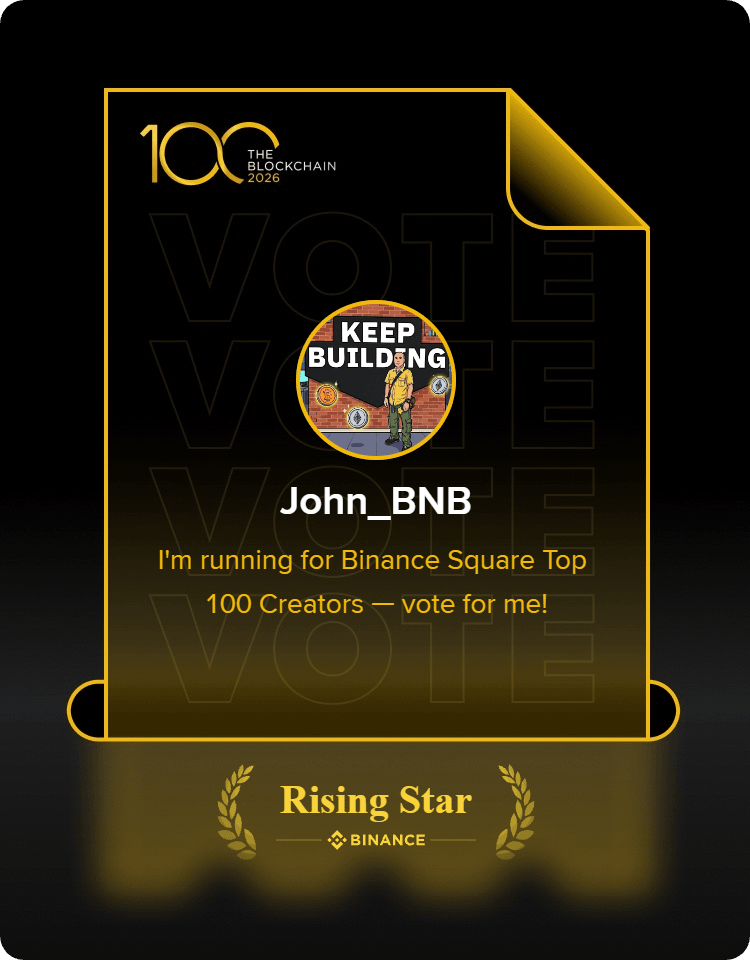
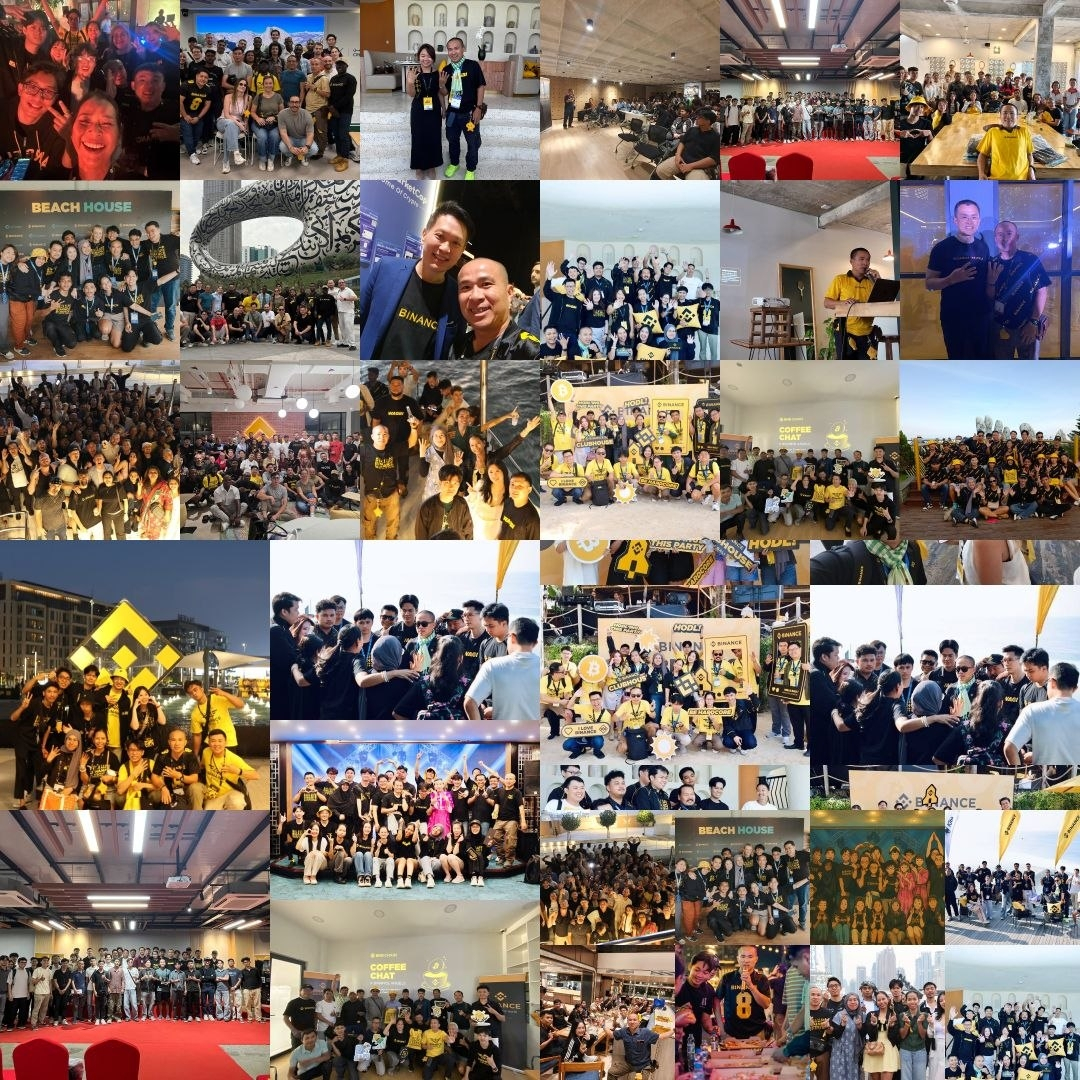
2
20
·
--
Do you want to see this @kryptoniankh following you?
1. Follow me (even new account with 0 followers)
2. [Vote for me](https://app.binance.com/uni-qr/cact26user/528)
3. comment done.
I will follow every single of you. Just not at everyone same time, cos algorithm might judge me as bot haha
👌🤩😍👉💥🔥Remember I will not reward you anything, beside follow you back, keep posting useful content you can benefit and lets grow crypto space together. Keep building🙏👌⭐🎁
Lets grow together
#Blockchain100
Do you want to see this @John_BNB following you?
1. Follow me (even new account with 0 followers)
2. Vote for me
3. comment done.
I will follow every single of you. Just not at everyone same time, cos algorithm might judge me as bot haha
👌🤩😍👉💥🔥Remember I will not reward you anything, beside follow you back, keep posting useful content you can benefit and lets grow crypto space together. Keep building🙏👌⭐🎁
Lets grow together
#Blockchain100
1. Follow me (even new account with 0 followers)
2. Vote for me
3. comment done.
I will follow every single of you. Just not at everyone same time, cos algorithm might judge me as bot haha
👌🤩😍👉💥🔥Remember I will not reward you anything, beside follow you back, keep posting useful content you can benefit and lets grow crypto space together. Keep building🙏👌⭐🎁
Lets grow together
#Blockchain100
1
3
68
Log in to explore more content
Join global crypto users on Binance Square
⚡️ Get latest and useful information about crypto.
💬 Trusted by the world’s largest crypto exchange.
👍 Discover real insights from verified creators.
Email / Phone number
Trending Topics
EthereumDropsBelow$2300
1,517 views
60 Discussing
CZ predicted this way before 🤣
$BTC below $80K
$ETH below $2300
$XRP below $1.3
Is this another opportunity to accumulate or you guys waiting for Bitcoin $35k bottom ❓
ParvezMayar
·8 Likes
·3.7k views
BitcoinSlipsBelow$80KAgain
1,997 views
33 Discussing
ThailandLaunchesWORPTStablecoinToQRPaymentApp
3,550 views
109 Discussing