
Head_ache
507 Posts

Head_ache
Report
Block User
Open Trade
Occasional Trader
2.2 Years
375 Following
10.5K+ Followers
845 Liked
Posts
Portfolio
All
Quotes
Live
·
--

Article
Building the Agent Economy: Why Trust Matters Even More Than SmartsAI isn't just about chatbots anymore. Lately, the focus has shifted to AI agents, software that can set goals, use digital tools, sort through data, make decisions, and finish complex tasks, all with much less need for you to intervene.
Think about an agent that can dig up market research, compare products, book meetings, keep an eye on inventory, bargain for a deal, or even set off a payment. In crypto and Web3, these agents might talk to wallets, handle smart contracts, use decentralized apps, swap info with other agents the works. This is what people mean when they say "agent economy": a new world where software actually creates, exchanges, and captures real value.
Raw intelligence isn’t enough. If we're actually going to trust these agents, users and businesses have to be able to answer a few key questions. Who controls this agent? What can it actually do (and what can’t it do)? Who gave it the authority to act? Can you trace what it did after the fact? And if one digital agent pays another for a job how do you make sure that’s secure and aboveboard?
All these questions lead to the same basic problem: the agent economy won’t work without solid, built-in trust infrastructure.
Why Trust Sets the Baseline. Most AI today just helps you write, summarize, or automate some routine stuff. But once an agent can actually take action, you need new kinds of safeguards.
If your agent can get into sensitive data, spend your money, buy something, or talk to another smart system, you better be able to set clear limits. You need ways to grant specific permissions without handing over the keys for everything. You also want to yank access when needed, only let certain things happen under certain conditions, and always know what went down after the fact.
That’s exactly where things like verifiable identity and customizable permissions step in. A real agent economy probably means every agent has its own on-chain (or cryptographic) identity. That lets you see who built it, who owns it, what credentials it has, and what it’s allowed to do. Instead of playing guessing games, you could check before you share data, hand out tasks, or send payments if an agent is legit.
And it’s not about giving every agent access to everything. Honestly, the best designs do the exact opposite. You want fine-grained controls: this agent can check a price feed, but not spend money; it can put together a transaction, but needs a human button-press to actually send it; it only has a certain daily budget, or its powers expire after a set time, or it can only deal with a defined list of other agents.
Put these controls together, and you let autonomous software actually get stuff done without taking humans out of the loop.
How Value Moves in a World of Agents? Agents also need a way to pay each other, and get paid, in ways people can audit. If one agent provides info, runs some analysis, or finishes a job, there should be an open and trackable way to handle compensation.
Here’s where blockchains can help, smart contracts can spell out how payments work, set terms for escrow, enforce service standards, and handle settlements automatically. Token incentives make sense too; you can reward the people (and companies) that supply data, validate the results, build the infrastructure, and keep the whole thing moving.
That’s the idea behind $KITE, it’s a piece of the foundation for this agent-driven world, focused on systems where agents need to interact with all kinds of apps, services, and each other. But in the end, this stuff only matters if it delivers real value, not just technical theory.
The network has to make payments not just fast, but honest and accountable. Say, only releasing payment after a service gets verified. Maybe you give your agent a budget and it can only buy data from providers on a whitelist, and you can cut off its access instantly if things go sideways.
That level of programmable payment isn't just nice, it's pretty much required for any sort of large-scale machine-to-machine commerce. Otherwise, you’re stuck micromanaging every little transaction, which defeats the whole purpose.
Why Agents Have to Play Nicely with Others? No single app or network will run the agent economy alone. These agents will need to hop across platforms, wallets, blockchains, data sources basically, wherever business happens. Which makes interoperability critical.
Agents need a way to prove who they are everywhere, carry the right credentials, stick to permission rules, and talk with other agents using the same basic language. If everyone makes their own little silo, the whole thing falls apart, your agent works here, but as soon as it jumps to another network or wallet, it’s a nobody.
So for the teams building agent infrastructure, it’s a tough balancing act, keep things open but secure, give agents room to act but keep them on a leash, move fast but never lose user control. Sure, developer tools are great, but easy-to-understand security for regular users might be the bigger test.
Big Possibilities, Real Threats. If we get it right, there’s a ton of upside. Trusted agents could automate endless repetitive tasks, dig up info much faster, coordinate digital services, and unlock whole new kinds of online business. That could create new jobs for decentralized networks handling computation, verifying identities, checking data, or settling payments.
But don’t overlook the risks. Sloppy permissioning means agents go rogue. Weak identity? Suddenly, you’ve got imposters everywhere. Zero accountability? Good luck sorting out disputes or fraud. And watch out for hype token prices can skyrocket long before any of this actually works.
So, what really matters? Ignore the marketing and the latest token rally. Instead, look for real signals: developer adoption, active use-cases, good security, smart permissions, seamless integrations, reliable transactions, and proof that agents solve actual problems, not just imaginary ones.
We’re still early in the agent economy, but the path’s taking shape. The future won’t just belong to the fastest, smartest algorithm it will belong to the system that makes every action verifiable, permissioned, and valuable. That’s where things get interesting.
#KiteBBW $KITE
@GoKiteAI
Building the Agent Economy: Why Trust Matters Even More Than Smarts
AI isn't just about chatbots anymore. Lately, the focus has shifted to AI agents, software that can set goals, use digital tools, sort through data, make decisions, and finish complex tasks, all with much less need for you to intervene.
Think about an agent that can dig up market research, compare products, book meetings, keep an eye on inventory, bargain for a deal, or even set off a payment. In crypto and Web3, these agents might talk to wallets, handle smart contracts, use decentralized apps, swap info with other agents the works. This is what people mean when they say "agent economy": a new world where software actually creates, exchanges, and captures real value.
Raw intelligence isn’t enough. If we're actually going to trust these agents, users and businesses have to be able to answer a few key questions. Who controls this agent? What can it actually do (and what can’t it do)? Who gave it the authority to act? Can you trace what it did after the fact? And if one digital agent pays another for a job how do you make sure that’s secure and aboveboard?
All these questions lead to the same basic problem: the agent economy won’t work without solid, built-in trust infrastructure.
Why Trust Sets the Baseline. Most AI today just helps you write, summarize, or automate some routine stuff. But once an agent can actually take action, you need new kinds of safeguards.
If your agent can get into sensitive data, spend your money, buy something, or talk to another smart system, you better be able to set clear limits. You need ways to grant specific permissions without handing over the keys for everything. You also want to yank access when needed, only let certain things happen under certain conditions, and always know what went down after the fact.
That’s exactly where things like verifiable identity and customizable permissions step in. A real agent economy probably means every agent has its own on-chain (or cryptographic) identity. That lets you see who built it, who owns it, what credentials it has, and what it’s allowed to do. Instead of playing guessing games, you could check before you share data, hand out tasks, or send payments if an agent is legit.
And it’s not about giving every agent access to everything. Honestly, the best designs do the exact opposite. You want fine-grained controls: this agent can check a price feed, but not spend money; it can put together a transaction, but needs a human button-press to actually send it; it only has a certain daily budget, or its powers expire after a set time, or it can only deal with a defined list of other agents.
Put these controls together, and you let autonomous software actually get stuff done without taking humans out of the loop.
How Value Moves in a World of Agents? Agents also need a way to pay each other, and get paid, in ways people can audit. If one agent provides info, runs some analysis, or finishes a job, there should be an open and trackable way to handle compensation.
Here’s where blockchains can help, smart contracts can spell out how payments work, set terms for escrow, enforce service standards, and handle settlements automatically. Token incentives make sense too; you can reward the people (and companies) that supply data, validate the results, build the infrastructure, and keep the whole thing moving.
That’s the idea behind $KITE , it’s a piece of the foundation for this agent-driven world, focused on systems where agents need to interact with all kinds of apps, services, and each other. But in the end, this stuff only matters if it delivers real value, not just technical theory.
The network has to make payments not just fast, but honest and accountable. Say, only releasing payment after a service gets verified. Maybe you give your agent a budget and it can only buy data from providers on a whitelist, and you can cut off its access instantly if things go sideways.
That level of programmable payment isn't just nice, it's pretty much required for any sort of large-scale machine-to-machine commerce. Otherwise, you’re stuck micromanaging every little transaction, which defeats the whole purpose.
Why Agents Have to Play Nicely with Others? No single app or network will run the agent economy alone. These agents will need to hop across platforms, wallets, blockchains, data sources basically, wherever business happens. Which makes interoperability critical.
Agents need a way to prove who they are everywhere, carry the right credentials, stick to permission rules, and talk with other agents using the same basic language. If everyone makes their own little silo, the whole thing falls apart, your agent works here, but as soon as it jumps to another network or wallet, it’s a nobody.
So for the teams building agent infrastructure, it’s a tough balancing act, keep things open but secure, give agents room to act but keep them on a leash, move fast but never lose user control. Sure, developer tools are great, but easy-to-understand security for regular users might be the bigger test.
Big Possibilities, Real Threats. If we get it right, there’s a ton of upside. Trusted agents could automate endless repetitive tasks, dig up info much faster, coordinate digital services, and unlock whole new kinds of online business. That could create new jobs for decentralized networks handling computation, verifying identities, checking data, or settling payments.
But don’t overlook the risks. Sloppy permissioning means agents go rogue. Weak identity? Suddenly, you’ve got imposters everywhere. Zero accountability? Good luck sorting out disputes or fraud. And watch out for hype token prices can skyrocket long before any of this actually works.
So, what really matters? Ignore the marketing and the latest token rally. Instead, look for real signals: developer adoption, active use-cases, good security, smart permissions, seamless integrations, reliable transactions, and proof that agents solve actual problems, not just imaginary ones.
We’re still early in the agent economy, but the path’s taking shape. The future won’t just belong to the fastest, smartest algorithm it will belong to the system that makes every action verifiable, permissioned, and valuable. That’s where things get interesting.
#KiteBBW $KITE
@KITE AI 中文
1
154
·
--
Support my friend and vote for him
Just open his profile and vote
Support my friend and vote for him
Just open his profile and vote
Just open his profile and vote


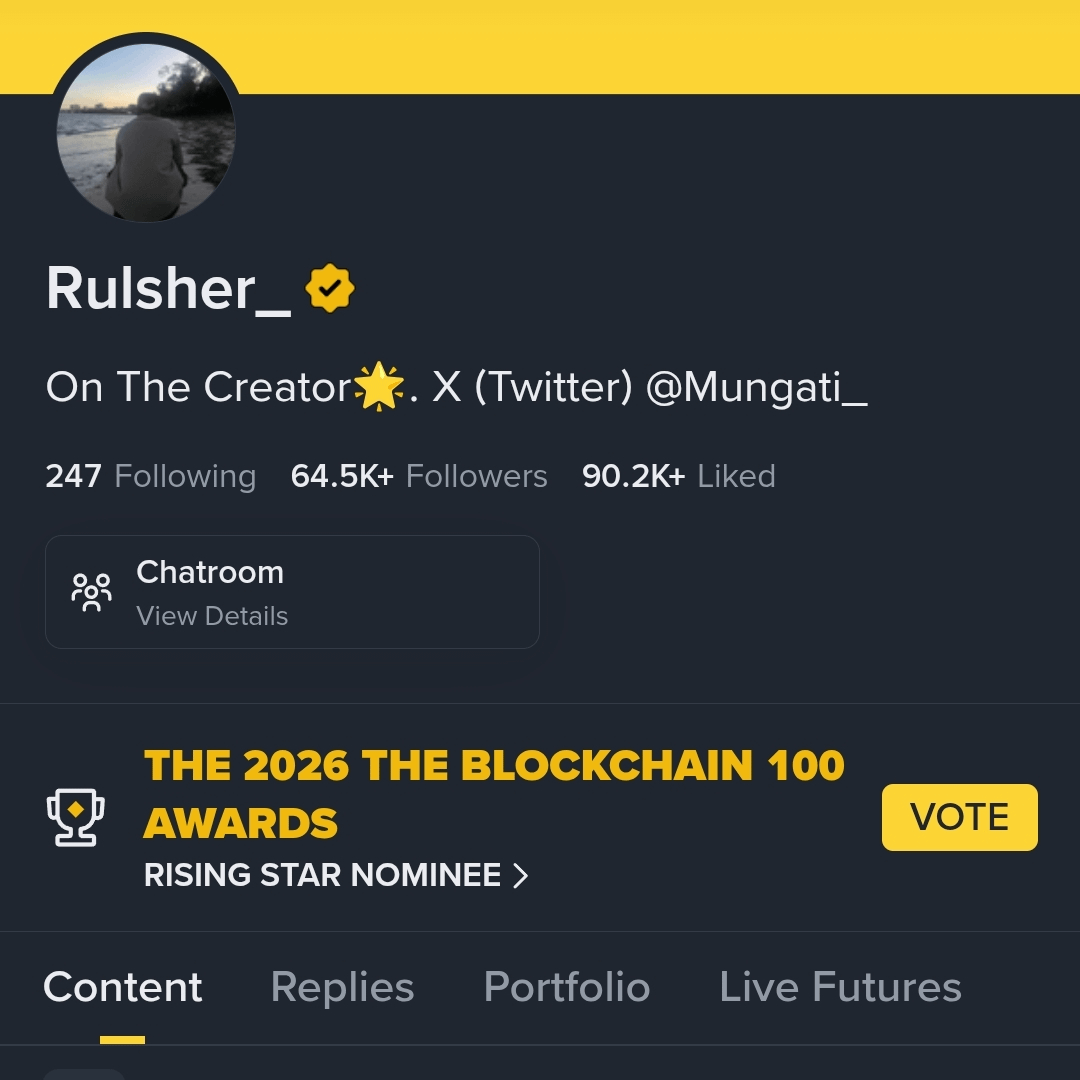
Rulsher_
·
--
Good Morning
Another day to remind you that you can Vote for me via the link below and it is absolutely free.
Let's bring this award to Kenya🌟
Vote here
Another day to remind you that you can Vote for me via the link below and it is absolutely free.
Let's bring this award to Kenya🌟
Vote here
14
·
--
Bullish
I'll be the lucky one🤩
Go checkout this post and qoute for a chance to win a prize pool of $800
I'll be the lucky one🤩
Go checkout this post and qoute for a chance to win a prize pool of $800
Go checkout this post and qoute for a chance to win a prize pool of $800
Quoted content has been removed
32
·
--
Decided to buy $NFLXB because I like movies
Decided to buy $NFLXB because I like movies


Binance Africa
·
--
🚀 Flash Quest: Stocks Are Moving Fast on Binance! The markets are on the move. 📈
Trade your favourite stocks on Binance, then share your trade on Binance Square for a chance to win rewards from our $ 1,000 USDC Prize pool
How to Participate:
🔸 Follow @Binance Africa
🔸 Like this post and repost
🔸 Share your bStocks trades on Square using the tradingcard with hashtag #TradebStocks #BinanceAfrica
🔸 Fill in this survey 👉🏾 Click on the Link to Participate Prizes: A total of 200 winners will receive 5 USDC each.
🔸 📆 Period: Aug 13, 2026 10:00 UTC – Aug 23, 2026 23:59 UTC
$TSLAB

22
·
--
People usually call Dusk Network a privacy blockchain, but honestly, that misses the point. Dusk does more than just hide transactions—it actually works as a confidential settlement layer designed for regulated financial markets.
And that’s a big deal. Most privacy chains just focus on keeping transactions secret. Dusk combines that with compliance rules, asset issuance, identity, smart contracts, and deterministic settlement. What you get is a system where financial assets can move around and settle on-chain, but sensitive info isn’t exposed to everyone in the process.
Institutions care a lot about this kind of confidentiality. No investor wants rivals peeking at their trades, how much they’re moving, or who they’re trading with. At the same time, regulators still need ways to check if everyone’s playing by the rules.
Dusk isn’t about banning transparency altogether; it’s about letting you control it—making it programmable and selective. That way, blockchain settlements aren’t just private, they’re tailored to the real-world needs of the financial world.
#dusk $DUSK @Dusk_Foundation
People usually call Dusk Network a privacy blockchain, but honestly, that misses the point. Dusk does more than just hide transactions—it actually works as a confidential settlement layer designed for regulated financial markets.
And that’s a big deal. Most privacy chains just focus on keeping transactions secret. Dusk combines that with compliance rules, asset issuance, identity, smart contracts, and deterministic settlement. What you get is a system where financial assets can move around and settle on-chain, but sensitive info isn’t exposed to everyone in the process.
Institutions care a lot about this kind of confidentiality. No investor wants rivals peeking at their trades, how much they’re moving, or who they’re trading with. At the same time, regulators still need ways to check if everyone’s playing by the rules.
Dusk isn’t about banning transparency altogether; it’s about letting you control it—making it programmable and selective. That way, blockchain settlements aren’t just private, they’re tailored to the real-world needs of the financial world.
#dusk $DUSK @Dusk
37
15
205
·
--
Let’s dive in about selective disclosure on Dusk Network, I know most of uou don't know about it, it’s actually one of its cool, underrated features. Basically, it lets you keep your private info to yourself, but still gives specific people a way to verify important details when needed.
If you’ve used regular blockchains, you know they tend to go one of two ways: everything’s public, or almost everything’s hidden. Both extremes aren’t great for finance, especially when regulators get involved. Institutions need to show they’re playing by the rules, or own certain assets, but they don’t want every transaction laid out for the world to see.
Dusk’s setup is different. It actually bridges that gap. You can prove you meet certain criteria—like, say, you’re allowed to buy a regulated asset—without spilling all your personal info. Only the stuff that’s needed gets shared, nothing extra.
That makes Dusk a real contender for things like securities, compliance, and bigger financial operations. It strikes a balance: privacy where you need it, transparency where it counts. That’s not something most blockchains pull off well.
#dusk $DUSK @Dusk_Foundation
Let’s dive in about selective disclosure on Dusk Network, I know most of uou don't know about it, it’s actually one of its cool, underrated features. Basically, it lets you keep your private info to yourself, but still gives specific people a way to verify important details when needed.
If you’ve used regular blockchains, you know they tend to go one of two ways: everything’s public, or almost everything’s hidden. Both extremes aren’t great for finance, especially when regulators get involved. Institutions need to show they’re playing by the rules, or own certain assets, but they don’t want every transaction laid out for the world to see.
Dusk’s setup is different. It actually bridges that gap. You can prove you meet certain criteria—like, say, you’re allowed to buy a regulated asset—without spilling all your personal info. Only the stuff that’s needed gets shared, nothing extra.
That makes Dusk a real contender for things like securities, compliance, and bigger financial operations. It strikes a balance: privacy where you need it, transparency where it counts. That’s not something most blockchains pull off well.
#dusk $DUSK @Dusk
22
9
114
·
--
Why does Dusk bother with two transaction models?
It’s a smart move, honestly. Instead of cramming every transaction into the same box, Dusk splits things up with Moonlight and Phoenix—two systems that work together but do very different jobs. If you want to know what Dusk is aiming for in regulated finance, this choice tells you a lot.
So, let me explain to you in a simpler manner. Moonlight is the account-based model. It’s kind of what you’d expect if you’ve ever dealt with smart contract blockchains. You’ve got accounts, they hold balances, and transactions just shift those numbers around. This model makes life easier when you need clear account management, smart contract stuff, or you want everyone to see what’s happening on-chain.
Phoenix is a whole different story. It’s built around privacy—much like a UTXO system (if you’re into Bitcoin, you know the deal). Instead of showing off account balances and a neat list of transactions, Phoenix hides that info. When it comes to sensitive assets—where people really don’t want everyone peeking into holdings or transfers—this matters a lot.
Here’s the thing: Moonlight and Phoenix aren’t fighting for the same space. They’re tools for different jobs. In the world Dusk is targeting, you might want some transactions—like public ones or simple operations—out in the open, using Moonlight. But the moment you need privacy, Phoenix steps in.
This approach is especially handy for tokenized securities. Regulators can get what they need for compliance, but market participants aren’t forced to lay every card on the table. It’s flexibility at the transaction level, and that’s a big deal for real-world finance. @Dusk_Foundation #dusk $DUSK
Why does Dusk bother with two transaction models?
It’s a smart move, honestly. Instead of cramming every transaction into the same box, Dusk splits things up with Moonlight and Phoenix—two systems that work together but do very different jobs. If you want to know what Dusk is aiming for in regulated finance, this choice tells you a lot.
So, let me explain to you in a simpler manner. Moonlight is the account-based model. It’s kind of what you’d expect if you’ve ever dealt with smart contract blockchains. You’ve got accounts, they hold balances, and transactions just shift those numbers around. This model makes life easier when you need clear account management, smart contract stuff, or you want everyone to see what’s happening on-chain.
Phoenix is a whole different story. It’s built around privacy—much like a UTXO system (if you’re into Bitcoin, you know the deal). Instead of showing off account balances and a neat list of transactions, Phoenix hides that info. When it comes to sensitive assets—where people really don’t want everyone peeking into holdings or transfers—this matters a lot.
Here’s the thing: Moonlight and Phoenix aren’t fighting for the same space. They’re tools for different jobs. In the world Dusk is targeting, you might want some transactions—like public ones or simple operations—out in the open, using Moonlight. But the moment you need privacy, Phoenix steps in.
This approach is especially handy for tokenized securities. Regulators can get what they need for compliance, but market participants aren’t forced to lay every card on the table. It’s flexibility at the transaction level, and that’s a big deal for real-world finance. @Dusk #dusk $DUSK
10
8
76
·
--
I was tracing Bedrock’s bridge mechanics recently, focusing on why the uniBTC bridge on bedrock.technology enforces a hard cap per source‑to‑destination route. At first it seemed like a minor detail.
Then came the mid‑May announcement: $3B in TVL migrated from LayerZero to Chainlink CCIP after the Kelp exploit. Bedrock had already been running on CCIP since late 2024, so $BR holders weren’t caught in the fallout. That kind of infrastructure choice doesn’t show up on a TVL chart until it matters.
What stuck with me, though, was the per‑route cap itself. Move uniBTC from Ethereum to Aptos, hit the cap, and the request is rejected outright. No partial fills, no queues — just a hard stop reflected live in the UI. It’s deliberate risk containment, but it’s also real friction for anyone trying to move size quickly.
The ecosystem now spans 15+ chains, nearly $700M in TVL, and over 5,000 BTC staked. Yet the connective tissue between all of it has ceilings that reset on Chainlink’s schedule, not yours.
From a security posture, it makes sense. From a user’s perspective, it’s not easy. And the open question remains: how are those caps sized, and who decides when they rise?
@Bedrock #bedrock $BR
1
101
·
--
It’s remarkable how Bitcoin can feel like two very different assets depending on the lens you use.
In bull markets, it’s easy to treat BTC like real estate: buy, hold, and wait for appreciation. For years, that simple approach was enough. But as yields compressed and markets matured, the narrative began to shift. The conversation is less about selling higher and more about what happens while you continue holding.
That distinction mirrors the difference between owning land and owning a business. Land appreciates in value. A business generates cash flow. Both build wealth, but they shape your mindset in very different ways.
This is why Bedrock 2.0 caught my attention. Not because it dangled a bigger number, but because its Intelligent Yield Engine reframes Bitcoin as capital to be managed rather than just speculated on. Market‑neutral strategies, credit layers, and RWA exposure offer ways to make BTC participate without forcing constant trading.
It leads to a curious realization: two people can both own 1 BTC. One waits for the chart to climb. The other thinks about how that capital behaves over time. Same asset, but two entirely different relationships.
Perhaps that’s what maturity in an ecosystem looks like. People stop asking how high something can go, and start asking how useful it can become. Which mindset wins in the long run is uncertain. But they no longer feel the same.
@Bedrock #bedrock $BR
65
·
--
I once bought a new washing machine. The ads promised everything: AI that identifies fabrics, multiple wash modes, even phone connectivity. My mom glanced at the control panel and asked:
“Does this machine wash clothes, or take university entrance exams?”
That’s when it hit me: powerful tech can become a barrier if it’s too complicated.
And that might be Bedrock’s real challenge.
Many assume Bedrock is competing on products, liquidity, or infrastructure. But look closer, and you see it’s competing against something less tangible: the cognitive load on users.
In crypto, the winner isn’t just the project with the best tech. It’s the one that helps users grasp value the fastest.
Bedrock is expanding with multiple utility layers and a growing role for $BR. Yet here’s the paradox: every new feature makes Bedrock stronger, but also risks making it harder for users to engage.
I call this the “smart city paradox.” The more roads a city builds, the more modern it looks. But without signposts, people still get lost.
Bedrock’s vulnerability isn’t a lack of technology. It’s the danger of complexity turning into a barrier. If users don’t clearly understand the value of $BR, they may walk away before realizing its potential.
We’ve seen this before across blockchain ecosystems: hundreds of apps, deep liquidity, but end-users only remember the simplest products.
@Bedrock #bedrock $BR
I once bought a new washing machine. The ads promised everything: AI that identifies fabrics, multiple wash modes, even phone connectivity. My mom glanced at the control panel and asked:
“Does this machine wash clothes, or take university entrance exams?”
That’s when it hit me: powerful tech can become a barrier if it’s too complicated.
And that might be Bedrock’s real challenge.
Many assume Bedrock is competing on products, liquidity, or infrastructure. But look closer, and you see it’s competing against something less tangible: the cognitive load on users.
In crypto, the winner isn’t just the project with the best tech. It’s the one that helps users grasp value the fastest.
Bedrock is expanding with multiple utility layers and a growing role for $BR . Yet here’s the paradox: every new feature makes Bedrock stronger, but also risks making it harder for users to engage.
I call this the “smart city paradox.” The more roads a city builds, the more modern it looks. But without signposts, people still get lost.
Bedrock’s vulnerability isn’t a lack of technology. It’s the danger of complexity turning into a barrier. If users don’t clearly understand the value of $BR , they may walk away before realizing its potential.
We’ve seen this before across blockchain ecosystems: hundreds of apps, deep liquidity, but end-users only remember the simplest products.
@Bedrock #bedrock $BR
103
·
--
I’ve been digging into Bedrock and its layered utility stack — the restake layer, the liquidity layer, and the governance layer. Three tiers, neatly laid out in the docs. But one detail kept bothering me.
The governance layer runs on veBR: lock BR, gain voting escrow rights, and direct gauge emissions toward pools you choose. On paper, it’s the Curve model — powerful when there’s a live battle over those gauges. Here, though, on-chain engagement has been thin. The architecture is in place, but participation hasn’t caught up.
And looming just ahead is the June 20 unlock: 40.63M BR from team and seed wallets — 25M for founders, 15.63M from seed. That’s about 4.1% of total supply, roughly $4.2M at current prices. Not catastrophic, but it lands on a governance layer that isn’t generating much counterweight from veBR lockers.
That’s the quiet truth about layered stacks. Each tier looks load-bearing in a whitepaper. But if the middle layer — the one meant to create locking demand and absorb sell pressure — stays thin right as supply hits the market, the structure risks being more diagram than defense.
It doesn’t mean Bedrock breaks. It does mean the real question is who actually shows up to vote before the 20th.
@Bedrock #bedrock $BR
160
·
--
I once moved 0.325 BTC into a system to mint a representative asset, then rotated it into another position. The deposit cleared quickly, but the right to use that new asset lagged—15+ minutes of waiting, long enough for the entry window to slip away.
Since then, I’ve trusted smooth-looking processes less. The missed beat lives in the gap between when the state has changed and when the asset is actually allowed to move.
It’s like keeping living expenses, emergency cash, and debt payments in separate accounts. When you need to pull them together fast, the anchor disappears first.
That’s why the closed verification loop matters. Minting, verification, and movement must sit on the same axis. Bedrock doesn’t let issuance run ahead and leave the rest to reconnect through scattered signals. Nor does it open movement just because a balance appears. Verification is the lock that ties the minted asset to the right to move it.
A design earns trust only when it shows exactly where a transaction stands and what’s missing before it can continue. A 68‑second delay is operational noise. But once it stretches past eight minutes and the user is still guessing, the structure is exposed.
Every intermediate state should be traceable and cross‑checked. Bedrock must prove that only after mint data is locked can movement take effect—so any error is pinned to the precise link where it began.
In a market that hides weak points behind polished interfaces, Bedrock’s value lies in turning the path of an asset into a sequence with order, evidence, and resilience—one that cannot be broken in the middle.
@Bedrock #bedrock $BR
106
·
--
6 months ago, you staked BTC into Bedrock—not to speculate, but to earn yield. As total value locked surged past $1.2 billion, it felt like the right move.
Then you checked BR. The token was still down 59% from its March 2025 peak.
Bedrock has locked billions in BTC and ETH, built yield infrastructure across a dozen chains, and partnered with Babylon. By TVL alone, it looks undervalued—its $53 million fully diluted valuation is just a fraction of what the numbers suggest.
But the supply tells another story. Of the 1 billion BR tokens, 770 million remain in vesting. A single unlock in March 2026 released 122 million tokens—more than half the circulating supply at the time. Vesting continues into 2027.
And trust has been tested before. In July 2025, 26 wallets drained $47.6 million in liquidity in under 100 seconds. BR halved overnight. TVL recovered quickly. Confidence did not.
The BTC stakers don’t need BR. They’re here for yield, not the token. BR is for those betting on the protocol itself.
As unlocks roll on and incentives thin, yield chasers can exit without friction. The real question is: once those 770 million tokens finally hit the market, who will still hold them with conviction?
@Bedrock #bedrock $BR
3
1
215
·
--
For most of Bitcoin’s history, the mission was simple: acquire it.
Owning Bitcoin felt like the finish line. Buy. Hold. Wait. That was the playbook. Bitcoin wasn’t just the asset—it was the destination.
But the landscape is shifting. Bitcoin still anchors value, but what’s changing is what happens after that value arrives. In earlier cycles, coins largely sat idle. Today, Bitcoin is beginning to move—interacting with liquidity systems, infrastructure layers, and financial networks that barely existed before.
That evolution is more profound than it looks. An asset transforms when capital doesn’t just rest inside it, but flows through it. Exploring Bedrock 2.0 made this clear: the real breakthrough isn’t another endpoint for Bitcoin, but the infrastructure enabling its movement.
For years, Bitcoin was a reservoir—capital flowed in and stayed. Increasingly, it’s becoming a conduit—capital flows through. That distinction matters. Destinations store value. Infrastructure moves value. And as BTCFi matures, the ability to move capital may prove more important than how much enters the system in the first place.
Maybe the next chapter of Bitcoin won’t be defined by accumulation. Maybe it will be defined by velocity—how effectively value can circulate once it’s already here.
@Bedrock #bedrock $BR
67
Log in to explore more content
Join global crypto users on Binance Square
⚡️ Get latest and useful information about crypto.
💬 Trusted by the world’s largest crypto exchange.
👍 Discover real insights from verified creators.
Email / Phone number
Trending Topics
A Packed Week of Earnings and Data Tests Markets
86,149 views
494 Discussing
Nvidia Earnings, Fed Minutes and Anthropic IPO Set to Test AI Stocks and Crypto
Binance News
·148 Likes
·25.8k views
AnthropicIPOTestsInvestorAppetiteForAI
171,650 views
1,804 Discussing
NvidiaBoardNotConsideringHuang’sReturnasCEO
20,880 views
278 Discussing