

Kaze BNB
7k Posts

Kaze BNB
 Square Verified+
Report
Block User
X • @KazeBNB | 📊 Trader & Alpha Provider | 🔥 Futures • Spot • BNB Edge | 💎 Profit with Precision | 🚀 Guiding
Frequent Trader
2.3 Years
148 Following
33.5K+ Followers
23.8K+ Liked
Posts
All
Quotes
Live
·
--
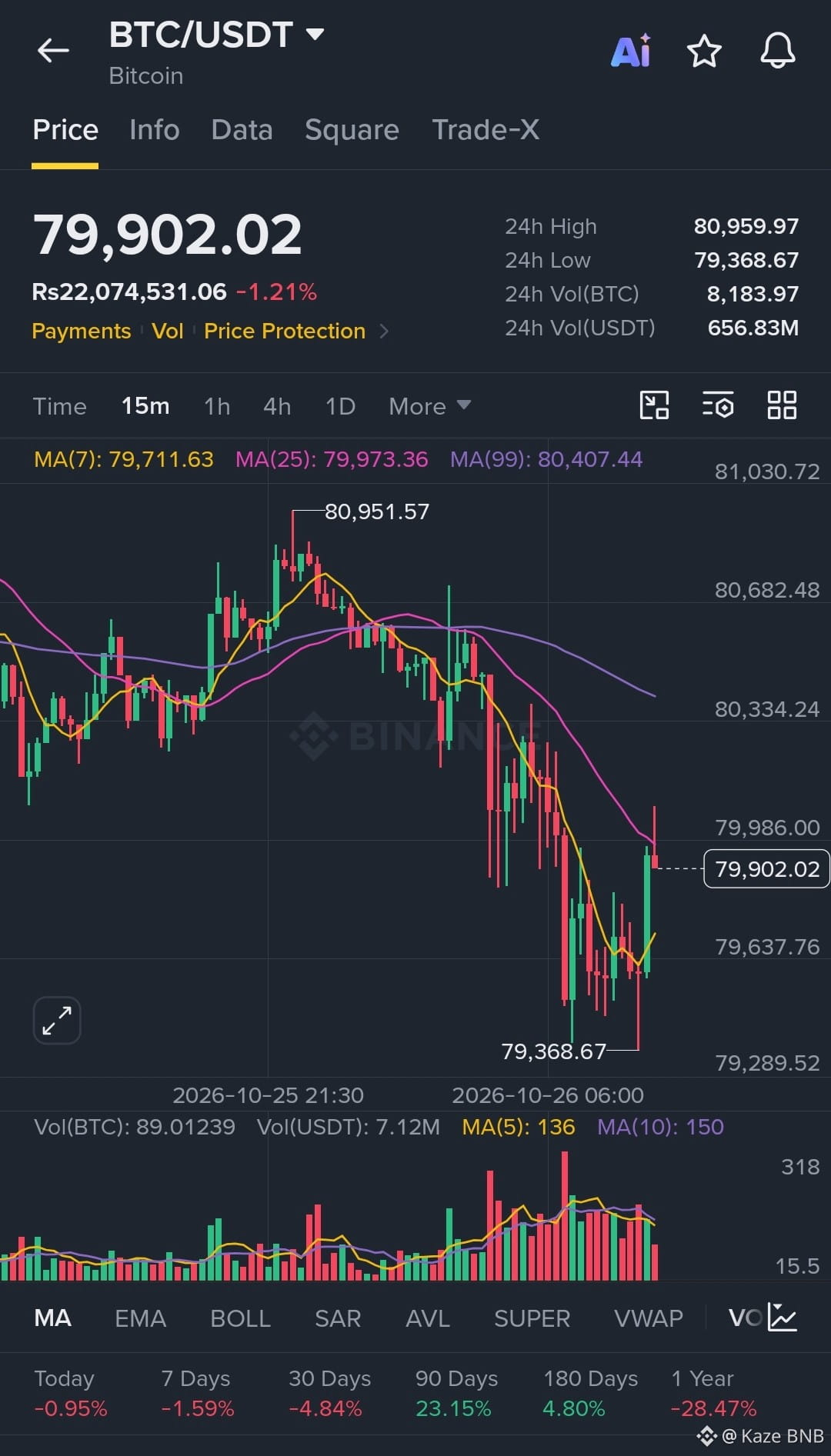
$BTC really making 80k look like a psychological experiment rn 😂
Price flushed to 79.36k, everyone probably started preparing the “next stop 75k” posts… and now it already bounced back near 79.9k.
But i wouldn’t celebrate yet.
That bounce is nice, yeah, but BTC is still fighting below MA25 around 79.97k and MA99 sitting much higher near 80.4k. So bulls basically recovered from the low, they didn’t recover the structure yet.
What i wanna see is simple: can price take 80k back properly and stay there ?
If yes, that 79.3k sweep may just end up being another liquidity grab.
If not… then this bounce probably just gave some trapped longs a nicer exit 😂
Either way, 80k is doing way more work than people expected.
$BTC
$BTC really making 80k look like a psychological experiment rn 😂
Price flushed to 79.36k, everyone probably started preparing the “next stop 75k” posts… and now it already bounced back near 79.9k.
But i wouldn’t celebrate yet.
That bounce is nice, yeah, but BTC is still fighting below MA25 around 79.97k and MA99 sitting much higher near 80.4k. So bulls basically recovered from the low, they didn’t recover the structure yet.
What i wanna see is simple: can price take 80k back properly and stay there ?
If yes, that 79.3k sweep may just end up being another liquidity grab.
If not… then this bounce probably just gave some trapped longs a nicer exit 😂
Either way, 80k is doing way more work than people expected.
$BTC
Price flushed to 79.36k, everyone probably started preparing the “next stop 75k” posts… and now it already bounced back near 79.9k.
But i wouldn’t celebrate yet.
That bounce is nice, yeah, but BTC is still fighting below MA25 around 79.97k and MA99 sitting much higher near 80.4k. So bulls basically recovered from the low, they didn’t recover the structure yet.
What i wanna see is simple: can price take 80k back properly and stay there ?
If yes, that 79.3k sweep may just end up being another liquidity grab.
If not… then this bounce probably just gave some trapped longs a nicer exit 😂
Either way, 80k is doing way more work than people expected.
$BTC
10
7
4.7k
·
--
Okay what exactly are you guys doing with these pumps today ? 😂
Looks beautiful until you check where people actually bought.
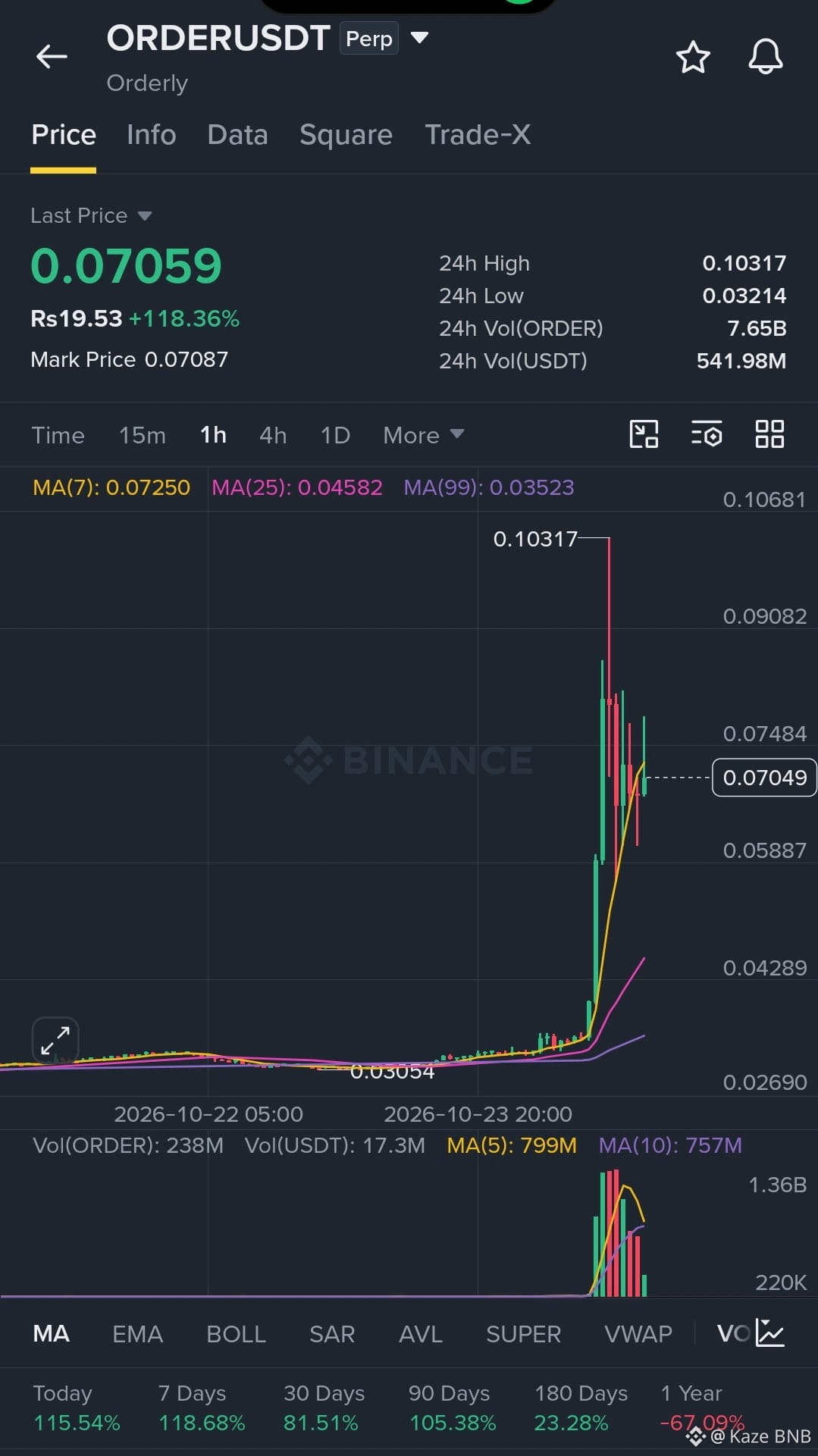
ORDER already touched 0.103 and came back around 0.070.
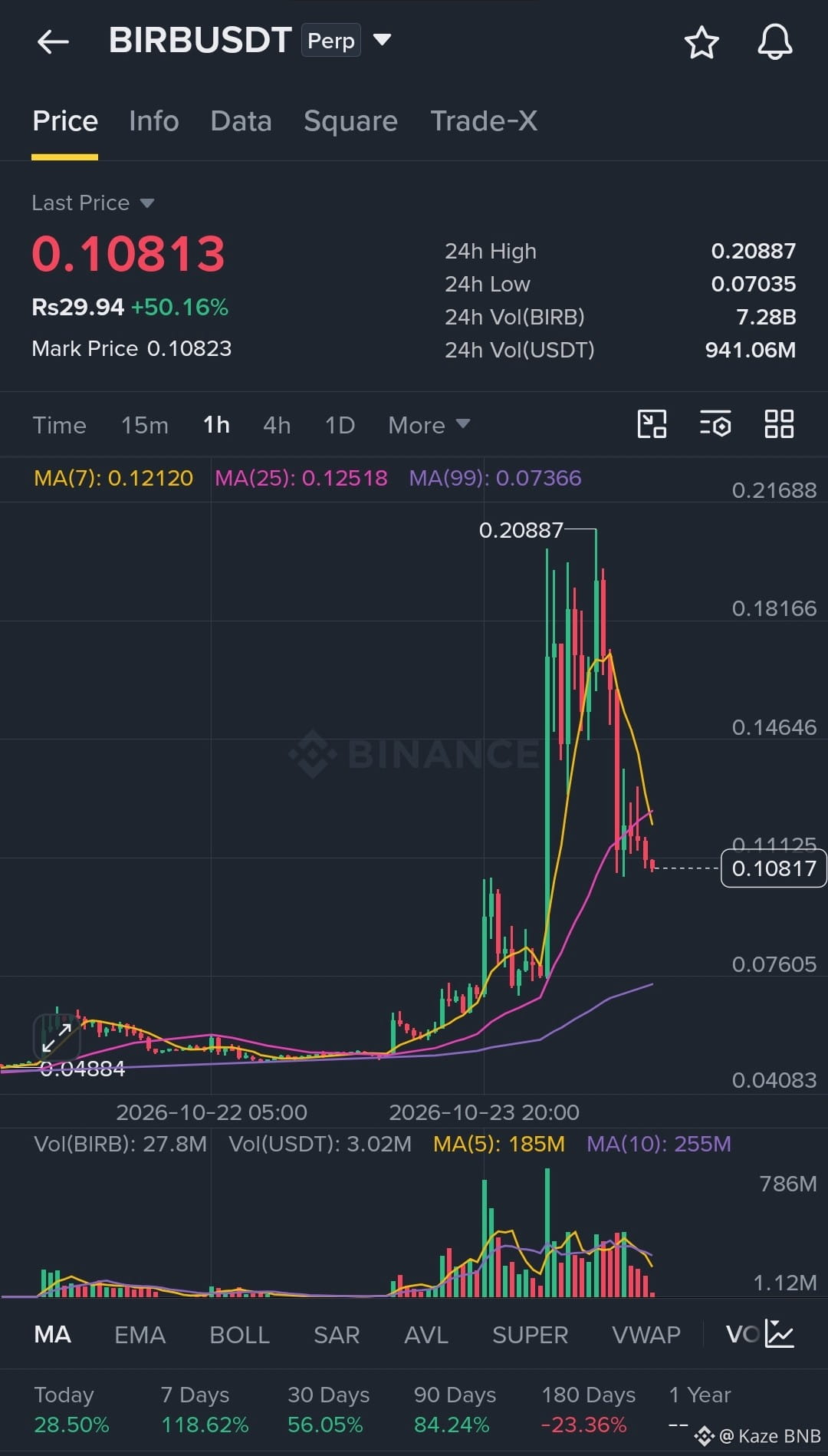
BIRB literally wicked to 0.208 and now sitting near 0.108… almost half of that top gone 😭
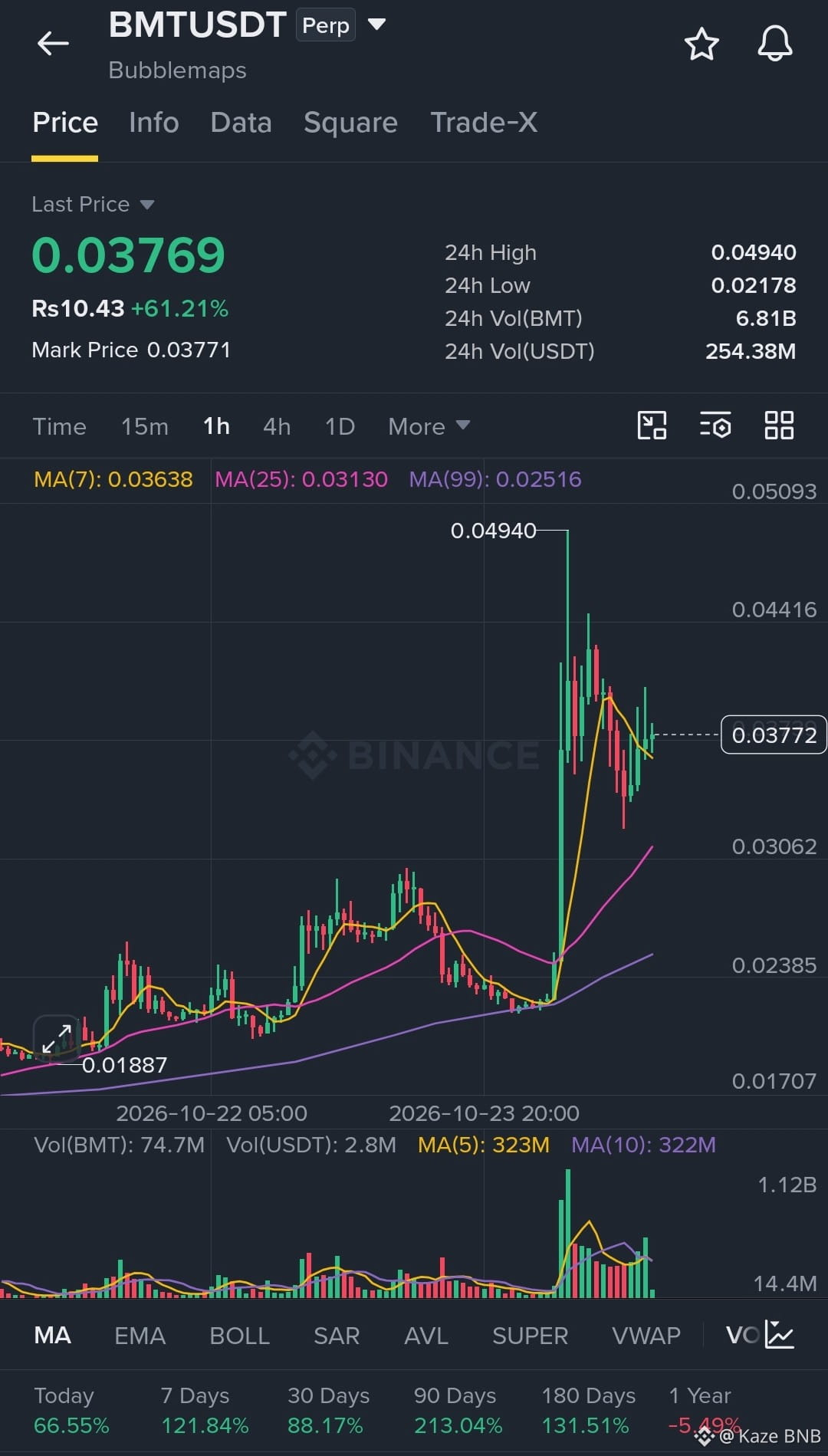
BMT is the only one here that somehow still looks relatively clean around 0.037 after the first pullback.
And yeah, maybe all 3 pump again. I dunno.
But this is exactly why “top gainer = buy” makes no sense to me. Someone buying BIRB at 0.19 today and someone buying it at 0.07 were technically buying the same +50% coin… completely different trade tho 😂
If you wanna play these moves, at least know where you’re entering and who may already be taking profits on you.
Which one are you actually touching here ?
$ORDER $BMT $BIRB
Okay what exactly are you guys doing with these pumps today ? 😂
Looks beautiful until you check where people actually bought.
ORDER already touched 0.103 and came back around 0.070.
BIRB literally wicked to 0.208 and now sitting near 0.108… almost half of that top gone 😭
BMT is the only one here that somehow still looks relatively clean around 0.037 after the first pullback.
And yeah, maybe all 3 pump again. I dunno.
But this is exactly why “top gainer = buy” makes no sense to me. Someone buying BIRB at 0.19 today and someone buying it at 0.07 were technically buying the same +50% coin… completely different trade tho 😂
If you wanna play these moves, at least know where you’re entering and who may already be taking profits on you.
Which one are you actually touching here ?
$ORDER $BMT $BIRB
Looks beautiful until you check where people actually bought.
ORDER already touched 0.103 and came back around 0.070.
BIRB literally wicked to 0.208 and now sitting near 0.108… almost half of that top gone 😭
BMT is the only one here that somehow still looks relatively clean around 0.037 after the first pullback.
And yeah, maybe all 3 pump again. I dunno.
But this is exactly why “top gainer = buy” makes no sense to me. Someone buying BIRB at 0.19 today and someone buying it at 0.07 were technically buying the same +50% coin… completely different trade tho 😂
If you wanna play these moves, at least know where you’re entering and who may already be taking profits on you.
Which one are you actually touching here ?
$ORDER $BMT $BIRB
2
712
·
--
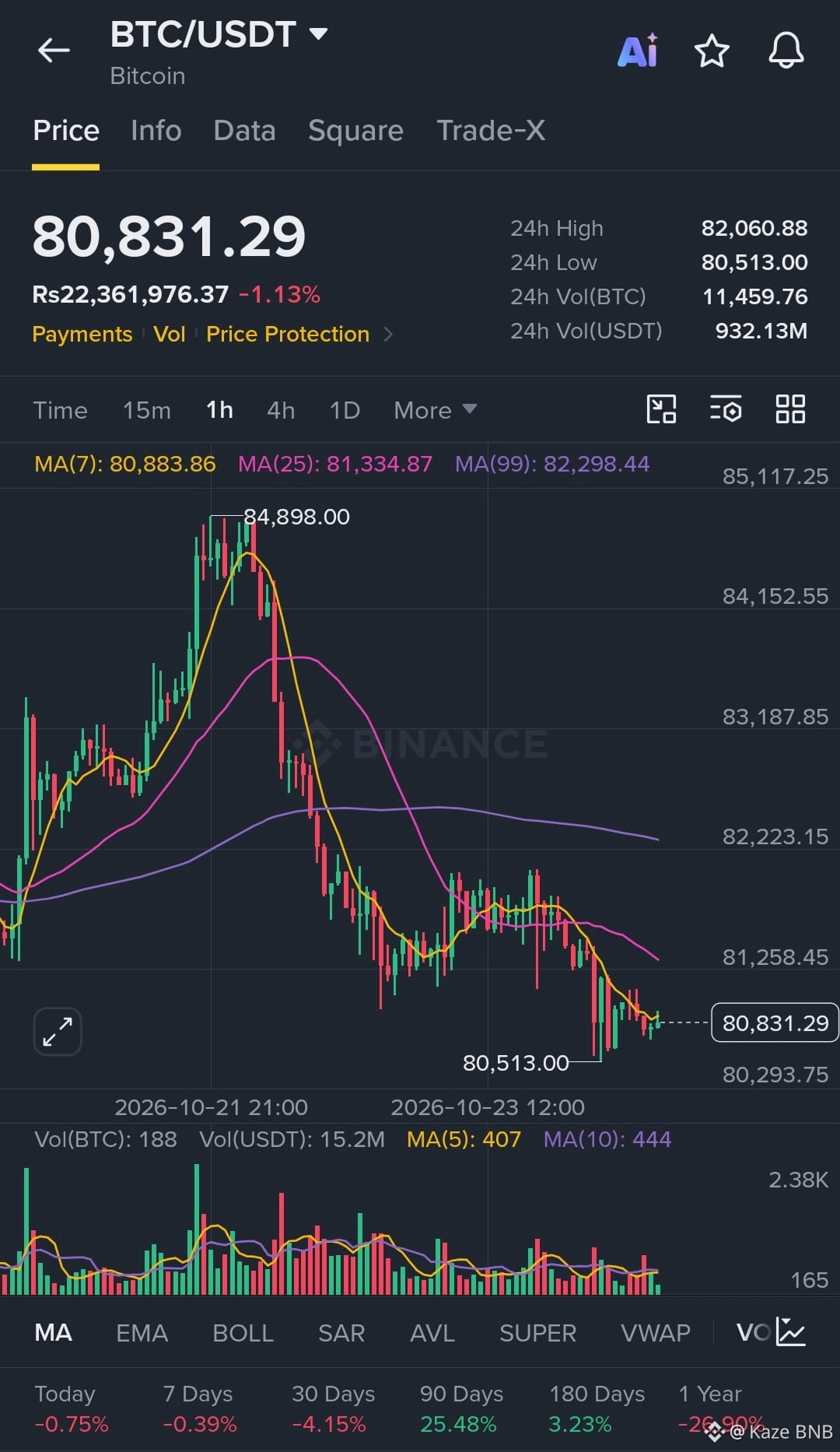
$BTC is really testing people patience around 80k rn 😂
Price got rejected from almost 84.9k and since then it’s basically been bleeding lower, now sitting around 80.8k with 80.5k already tested.
What i don’t like short term is that price is still below MA25 and MA99, so bulls haven’t really reclaimed anything important yet.
But i also wouldn’t rush to short after this drop either.
80k area is exactly where i wanna see how buyers react, bcz if BTC keeps holding here and finally takes back 81.3k-82.2k, then this whole move can just become another shakeout.
If 80.5k breaks clean tho… yeah, then bears probably gonna ask for more 😭
So, are you buying this dip or still waiting lower ?
$BTC
{future}(BTCUSDT)
$BTC is really testing people patience around 80k rn 😂
Price got rejected from almost 84.9k and since then it’s basically been bleeding lower, now sitting around 80.8k with 80.5k already tested.
What i don’t like short term is that price is still below MA25 and MA99, so bulls haven’t really reclaimed anything important yet.
But i also wouldn’t rush to short after this drop either.
80k area is exactly where i wanna see how buyers react, bcz if BTC keeps holding here and finally takes back 81.3k-82.2k, then this whole move can just become another shakeout.
If 80.5k breaks clean tho… yeah, then bears probably gonna ask for more 😭
So, are you buying this dip or still waiting lower ?
$BTC
Price got rejected from almost 84.9k and since then it’s basically been bleeding lower, now sitting around 80.8k with 80.5k already tested.
What i don’t like short term is that price is still below MA25 and MA99, so bulls haven’t really reclaimed anything important yet.
But i also wouldn’t rush to short after this drop either.
80k area is exactly where i wanna see how buyers react, bcz if BTC keeps holding here and finally takes back 81.3k-82.2k, then this whole move can just become another shakeout.
If 80.5k breaks clean tho… yeah, then bears probably gonna ask for more 😭
So, are you buying this dip or still waiting lower ?
$BTC
2
9
1.5k
·
--
If you just discovered $SKR today after +80% pump, careful 😂
It already did around +259% in 7 days and even touched 0.0348 before getting pushed back. That’s not small move anymore.
Can it pump again ? ofc, nobody knows where hype finally stop. But buying here just bcz every candle is green and then calling it “long term bag” after first -30%... cmon 😭
I’d rather watch how it behave around that 0.034 zone first. If buyers really want more, they’ll have to prove it again.
So, who’s actually buying $SKR here and who already took profits ?
If you just discovered $SKR today after +80% pump, careful 😂
It already did around +259% in 7 days and even touched 0.0348 before getting pushed back. That’s not small move anymore.
Can it pump again ? ofc, nobody knows where hype finally stop. But buying here just bcz every candle is green and then calling it “long term bag” after first -30%... cmon 😭
I’d rather watch how it behave around that 0.034 zone first. If buyers really want more, they’ll have to prove it again.
So, who’s actually buying $SKR here and who already took profits ?
It already did around +259% in 7 days and even touched 0.0348 before getting pushed back. That’s not small move anymore.
Can it pump again ? ofc, nobody knows where hype finally stop. But buying here just bcz every candle is green and then calling it “long term bag” after first -30%... cmon 😭
I’d rather watch how it behave around that 0.034 zone first. If buyers really want more, they’ll have to prove it again.
So, who’s actually buying $SKR here and who already took profits ?
4
321
·
--
Buddies... $SKR is just going unstoppable...
My portfolio be like: Please don't enter
My brain when i see pumps: GO All In 😂
I am going all in on SKR , $ZKC and $ZORA .
What is your strategy on SKR?
Buddies... $SKR is just going unstoppable...
My portfolio be like: Please don't enter
My brain when i see pumps: GO All In 😂
I am going all in on SKR , $ZKC and $ZORA .
What is your strategy on SKR?
My portfolio be like: Please don't enter
My brain when i see pumps: GO All In 😂
I am going all in on SKR , $ZKC and $ZORA .
What is your strategy on SKR?
I am buying 😬
54%
I am waiting for pullback
14%
Too risky
18%
Just chilling
14%
22 votes • Voting closed
5
1.5k
·
--
The trade I remember most wasn’t the one that made me the most money.
It was the one that almost made me forget everything I thought I knew.
I entered with a plan, watched the position move in my favor, and within minutes my brain started doing what it does best when a candle turns green “Maybe hold a little longer… maybe this is the big one.” 😭
Then the market pulled back.
Suddenly the same trade that had me feeling like a genius had me staring at the screen wondering why I hadn’t taken profit when I had the chance.
That moment taught me more than any winning screenshot ever could.
I realized I wasn’t really fighting the market. I was fighting myself, greed when things went well, fear when they didn’t, and the temptation to change the plan every time the chart changed color.
Since then, I’ve tried to make one thing non-negotiable, decide what would make me enter, what would make me exit, and what would prove my idea wrong before the position starts messing with my emotions.
Some trades still work. Some don’t. I still make mistakes.
But I don’t measure a “good trade” only by whether it ended green anymore.
Sometimes the best trade is the one where you followed your plan, protected your downside, and walked away knowing exactly what you learned.
That one trade didn’t make me rich.
It made me more disciplined and honestly, that has been worth much more to my journey on Binance.
#ShareYourStoryWithBinanceAugust
The trade I remember most wasn’t the one that made me the most money.
It was the one that almost made me forget everything I thought I knew.
I entered with a plan, watched the position move in my favor, and within minutes my brain started doing what it does best when a candle turns green “Maybe hold a little longer… maybe this is the big one.” 😭
Then the market pulled back.
Suddenly the same trade that had me feeling like a genius had me staring at the screen wondering why I hadn’t taken profit when I had the chance.
That moment taught me more than any winning screenshot ever could.
I realized I wasn’t really fighting the market. I was fighting myself, greed when things went well, fear when they didn’t, and the temptation to change the plan every time the chart changed color.
Since then, I’ve tried to make one thing non-negotiable, decide what would make me enter, what would make me exit, and what would prove my idea wrong before the position starts messing with my emotions.
Some trades still work. Some don’t. I still make mistakes.
But I don’t measure a “good trade” only by whether it ended green anymore.
Sometimes the best trade is the one where you followed your plan, protected your downside, and walked away knowing exactly what you learned.
That one trade didn’t make me rich.
It made me more disciplined and honestly, that has been worth much more to my journey on Binance.
#ShareYourStoryWithBinanceAugust
It was the one that almost made me forget everything I thought I knew.
I entered with a plan, watched the position move in my favor, and within minutes my brain started doing what it does best when a candle turns green “Maybe hold a little longer… maybe this is the big one.” 😭
Then the market pulled back.
Suddenly the same trade that had me feeling like a genius had me staring at the screen wondering why I hadn’t taken profit when I had the chance.
That moment taught me more than any winning screenshot ever could.
I realized I wasn’t really fighting the market. I was fighting myself, greed when things went well, fear when they didn’t, and the temptation to change the plan every time the chart changed color.
Since then, I’ve tried to make one thing non-negotiable, decide what would make me enter, what would make me exit, and what would prove my idea wrong before the position starts messing with my emotions.
Some trades still work. Some don’t. I still make mistakes.
But I don’t measure a “good trade” only by whether it ended green anymore.
Sometimes the best trade is the one where you followed your plan, protected your downside, and walked away knowing exactly what you learned.
That one trade didn’t make me rich.
It made me more disciplined and honestly, that has been worth much more to my journey on Binance.
#ShareYourStoryWithBinanceAugust

1
7
652
·
--
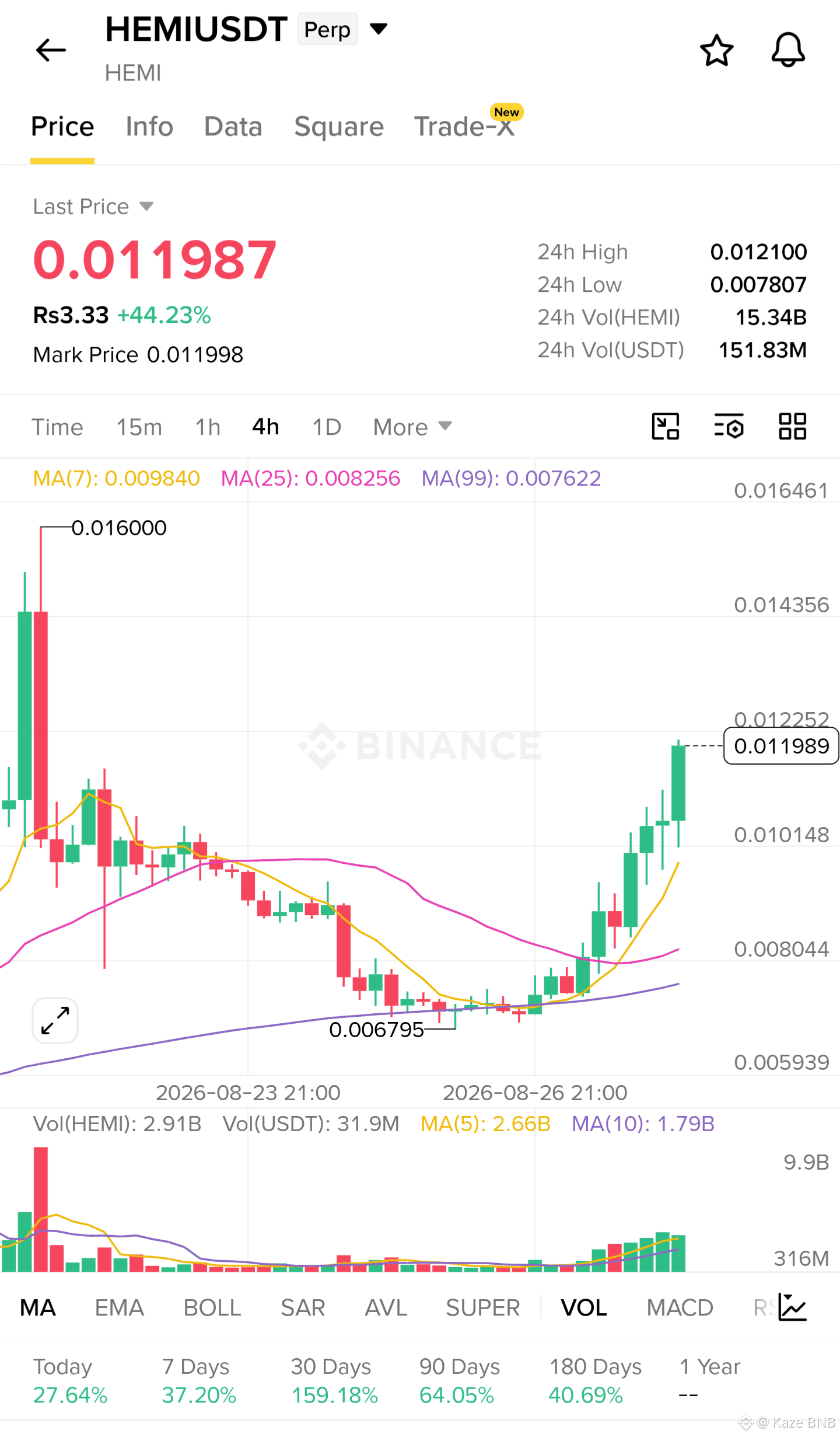
Ngl... $HEMI at $0.012 is making that old $0.016 wick look a little TOO close now 👀😂
I was not expecting this comeback at all.
Ngl... $HEMI at $0.012 is making that old $0.016 wick look a little TOO close now 👀😂
I was not expecting this comeback at all.
I was not expecting this comeback at all.
2
3
195
·
--
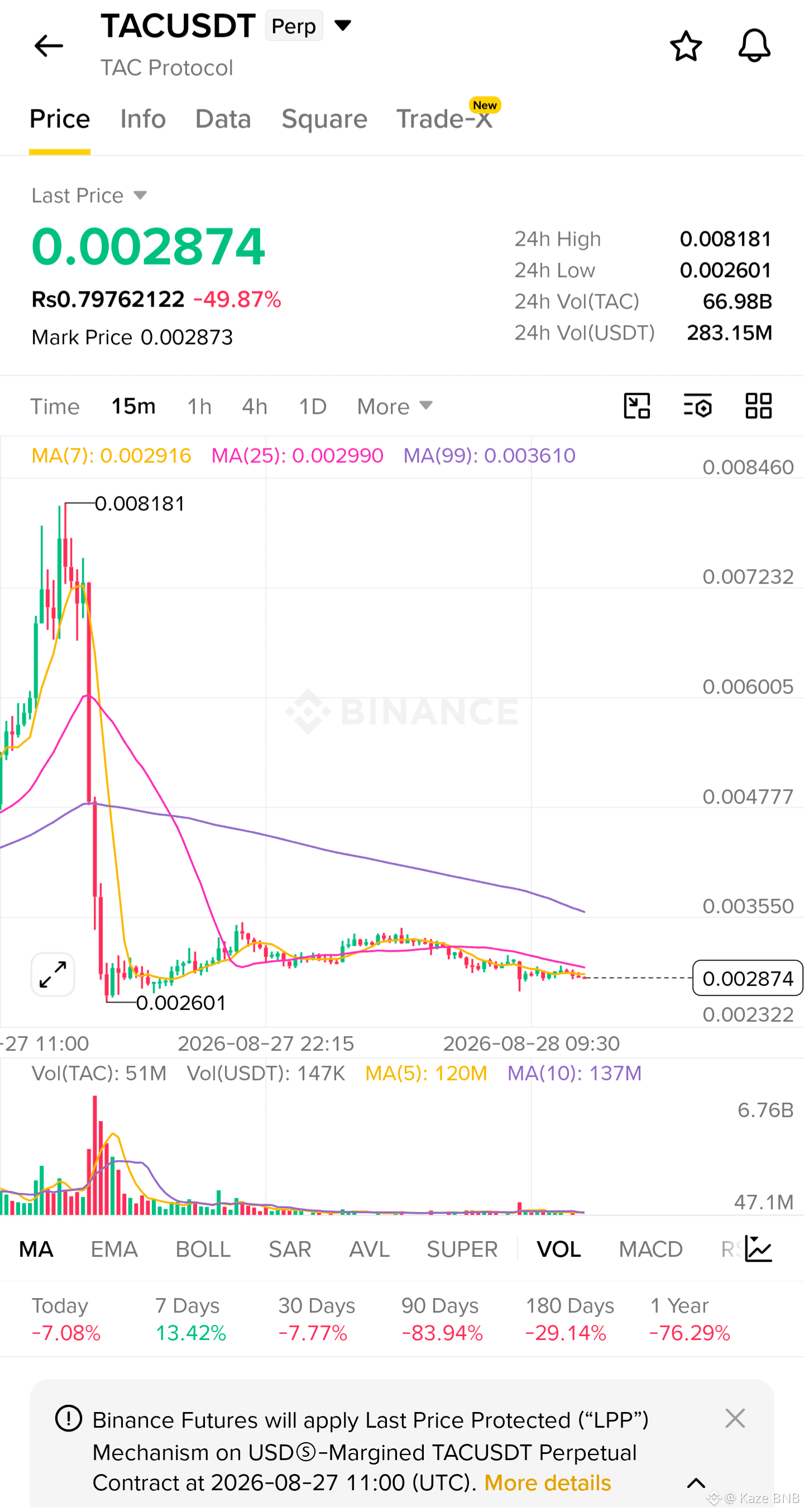
$TAC really trapped both sides 😭
First $0.0081... then straight back near $0.0028 💀
Whoever chased that green candle... you okay bro? 🤣
$TAC really trapped both sides 😭
First $0.0081... then straight back near $0.0028 💀
Whoever chased that green candle... you okay bro? 🤣
First $0.0081... then straight back near $0.0028 💀
Whoever chased that green candle... you okay bro? 🤣
4
177
·
--
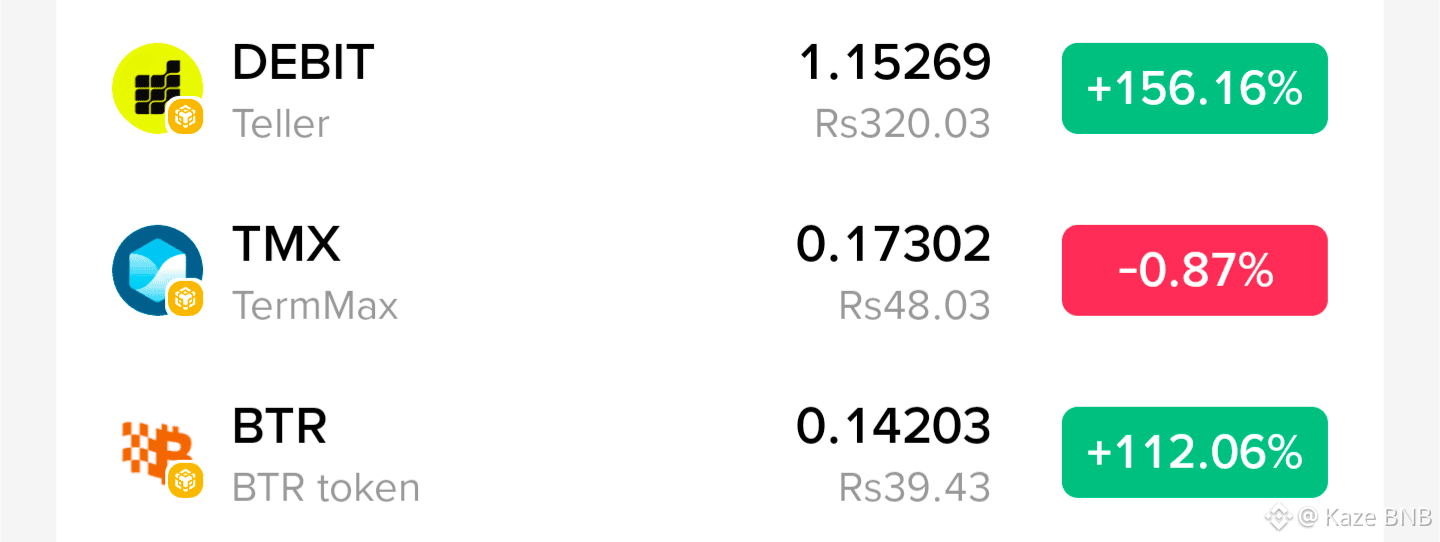
The leaderboard looks completely broken today. 😭🔥
$DEBIT : +156.16% at $1.15269
$BTR : +112.06% at $0.14203
$TMX : -0.87% at $0.17302
DEBIT did not just take first place. It doubled and then kept going.
There is actually a catalyst behind it. Teller’s DEBIT airdrop claim went live on August 26, triggering huge claim activity and speculative demand. Market data showed trading volume exploding alongside the launch.
BTR somehow decided +112% was the reasonable alternative.
Then TMX sits there red by 0.87%, which is almost comedy considering its token only launched on August 25 and immediately landed across Binance Alpha, Kraken, Bitget, KuCoin, MEXC and other platforms.
So today we have:
DEBIT with fresh airdrop hype.
BTR casually printing triple digits.
TMX getting multiple listings and still watching everyone else have fun.
Crypto really has no respect for effort. 💀
Which one would you touch from here?
DEBIT, BTR or TMX? 👀👇
The leaderboard looks completely broken today. 😭🔥
$DEBIT : +156.16% at $1.15269
$BTR : +112.06% at $0.14203
$TMX : -0.87% at $0.17302
DEBIT did not just take first place. It doubled and then kept going.
There is actually a catalyst behind it. Teller’s DEBIT airdrop claim went live on August 26, triggering huge claim activity and speculative demand. Market data showed trading volume exploding alongside the launch.
BTR somehow decided +112% was the reasonable alternative.
Then TMX sits there red by 0.87%, which is almost comedy considering its token only launched on August 25 and immediately landed across Binance Alpha, Kraken, Bitget, KuCoin, MEXC and other platforms.
So today we have:
DEBIT with fresh airdrop hype.
BTR casually printing triple digits.
TMX getting multiple listings and still watching everyone else have fun.
Crypto really has no respect for effort. 💀
Which one would you touch from here?
DEBIT, BTR or TMX? 👀👇
$DEBIT : +156.16% at $1.15269
$BTR : +112.06% at $0.14203
$TMX : -0.87% at $0.17302
DEBIT did not just take first place. It doubled and then kept going.
There is actually a catalyst behind it. Teller’s DEBIT airdrop claim went live on August 26, triggering huge claim activity and speculative demand. Market data showed trading volume exploding alongside the launch.
BTR somehow decided +112% was the reasonable alternative.
Then TMX sits there red by 0.87%, which is almost comedy considering its token only launched on August 25 and immediately landed across Binance Alpha, Kraken, Bitget, KuCoin, MEXC and other platforms.
So today we have:
DEBIT with fresh airdrop hype.
BTR casually printing triple digits.
TMX getting multiple listings and still watching everyone else have fun.
Crypto really has no respect for effort. 💀
Which one would you touch from here?
DEBIT, BTR or TMX? 👀👇
2
470
·
--
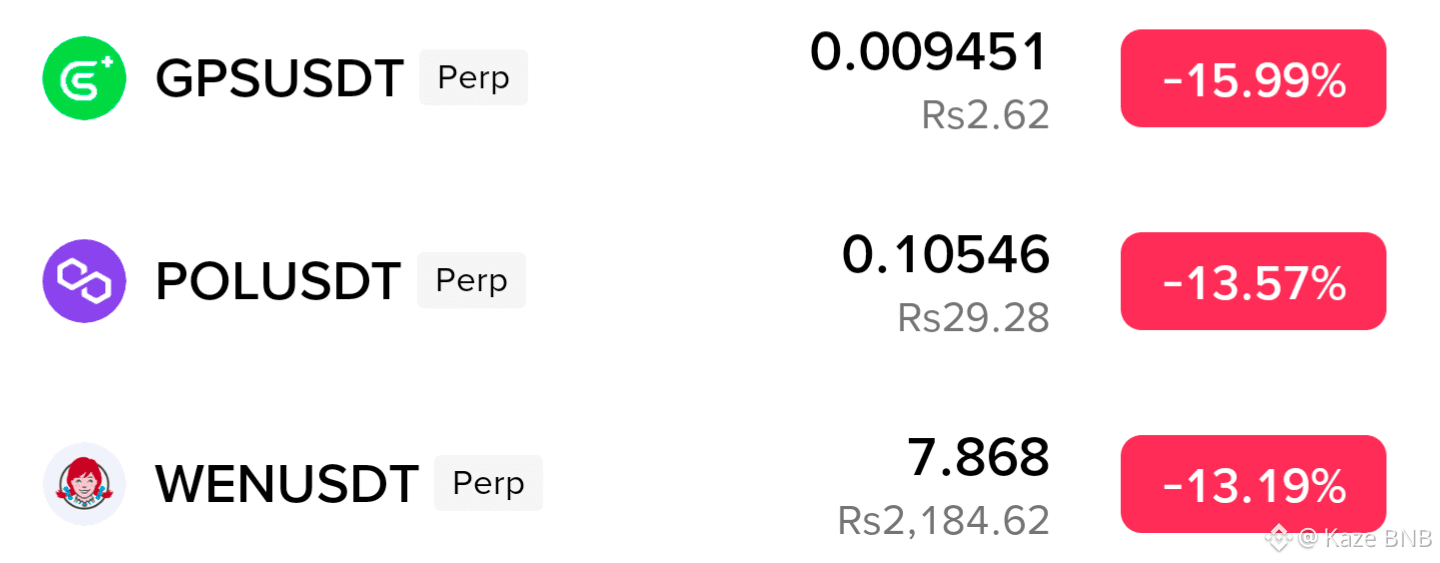
The market handed all three the same red uniform today. 💀
🔻 $GPS : -15.99%
🔻 $POL : -13.57%
🔻 $WEN : -13.19%
GPS is taking the hardest hit despite GoPlus recently upgrading DeepScan with AI-powered contract auditing and expanding security support into Robinhood Chain. Good news arrived, traders apparently chose profit-taking instead.
POL is almost matching the damage even while Polygon keeps shipping. Its latest updates include work around confidential transactions through a private mempool, plus continued expansion of its payments infrastructure. Fundamentals can improve while the candle simply says “not today.”
For WEN, I could not find a fresh verified catalyst strong enough to explain today's drop.
The interesting part is how close these losses are.
Nobody is getting uniquely destroyed here. It looks more like traders reducing risk across the board.
Now comes the dangerous question:
Which one is actually oversold...
and which one is only halfway through ruining somebody's “perfect dip entry”? 😭👇
The market handed all three the same red uniform today. 💀
🔻 $GPS : -15.99%
🔻 $POL : -13.57%
🔻 $WEN : -13.19%
GPS is taking the hardest hit despite GoPlus recently upgrading DeepScan with AI-powered contract auditing and expanding security support into Robinhood Chain. Good news arrived, traders apparently chose profit-taking instead.
POL is almost matching the damage even while Polygon keeps shipping. Its latest updates include work around confidential transactions through a private mempool, plus continued expansion of its payments infrastructure. Fundamentals can improve while the candle simply says “not today.”
For WEN, I could not find a fresh verified catalyst strong enough to explain today's drop.
The interesting part is how close these losses are.
Nobody is getting uniquely destroyed here. It looks more like traders reducing risk across the board.
Now comes the dangerous question:
Which one is actually oversold...
and which one is only halfway through ruining somebody's “perfect dip entry”? 😭👇
🔻 $GPS : -15.99%
🔻 $POL : -13.57%
🔻 $WEN : -13.19%
GPS is taking the hardest hit despite GoPlus recently upgrading DeepScan with AI-powered contract auditing and expanding security support into Robinhood Chain. Good news arrived, traders apparently chose profit-taking instead.
POL is almost matching the damage even while Polygon keeps shipping. Its latest updates include work around confidential transactions through a private mempool, plus continued expansion of its payments infrastructure. Fundamentals can improve while the candle simply says “not today.”
For WEN, I could not find a fresh verified catalyst strong enough to explain today's drop.
The interesting part is how close these losses are.
Nobody is getting uniquely destroyed here. It looks more like traders reducing risk across the board.
Now comes the dangerous question:
Which one is actually oversold...
and which one is only halfway through ruining somebody's “perfect dip entry”? 😭👇
2
249
·
--
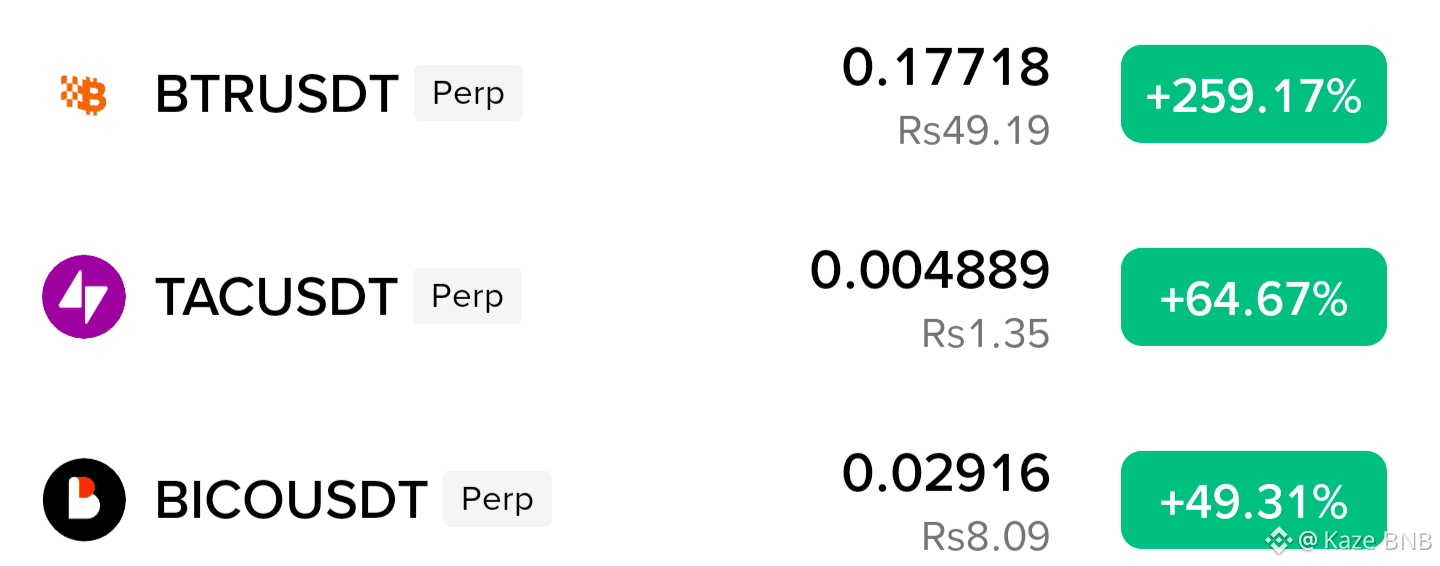
This leaderboard is broken. 😂
$BTR +259.17%
$TAC +64.67%
$BICO +49.31%
Normally a 50% daily pump gets all the attention.
Today BICO looks like it forgot to participate because BTR decided +259% was a perfectly normal afternoon.
The news behind each one makes it even stranger.
BTR is now attracting manipulation concerns. On-chain analyst EmberCN recently flagged unusual activity around BTR and several other violently moving tokens. That is an allegation, not proof, but after a 259% candle it deserves attention.
TAC is pumping despite TAC being among Cosmos EVM networks affected by the recent security incident that forced emergency responses across multiple chains. Apparently bad headlines are optional when momentum arrives.
BICO has the cleanest recent catalyst. Upbit added BICO BTC and USDT markets on August 21, bringing fresh Korean exchange liquidity and a noticeable volume boost.
So we have:
BTR with insanity.
TAC with controversy.
BICO with an actual listing catalyst.
The dangerous part?
After watching +259%, traders start looking at +49% and thinking it is somehow "early."
Crypto has officially damaged the measuring equipment. 💀📈
Which one survives after the FOMO cools, BTR, TAC or BICO?
This leaderboard is broken. 😂
$BTR +259.17%
$TAC +64.67%
$BICO +49.31%
Normally a 50% daily pump gets all the attention.
Today BICO looks like it forgot to participate because BTR decided +259% was a perfectly normal afternoon.
The news behind each one makes it even stranger.
BTR is now attracting manipulation concerns. On-chain analyst EmberCN recently flagged unusual activity around BTR and several other violently moving tokens. That is an allegation, not proof, but after a 259% candle it deserves attention.
TAC is pumping despite TAC being among Cosmos EVM networks affected by the recent security incident that forced emergency responses across multiple chains. Apparently bad headlines are optional when momentum arrives.
BICO has the cleanest recent catalyst. Upbit added BICO BTC and USDT markets on August 21, bringing fresh Korean exchange liquidity and a noticeable volume boost.
So we have:
BTR with insanity.
TAC with controversy.
BICO with an actual listing catalyst.
The dangerous part?
After watching +259%, traders start looking at +49% and thinking it is somehow "early."
Crypto has officially damaged the measuring equipment. 💀📈
Which one survives after the FOMO cools, BTR, TAC or BICO?
$BTR +259.17%
$TAC +64.67%
$BICO +49.31%
Normally a 50% daily pump gets all the attention.
Today BICO looks like it forgot to participate because BTR decided +259% was a perfectly normal afternoon.
The news behind each one makes it even stranger.
BTR is now attracting manipulation concerns. On-chain analyst EmberCN recently flagged unusual activity around BTR and several other violently moving tokens. That is an allegation, not proof, but after a 259% candle it deserves attention.
TAC is pumping despite TAC being among Cosmos EVM networks affected by the recent security incident that forced emergency responses across multiple chains. Apparently bad headlines are optional when momentum arrives.
BICO has the cleanest recent catalyst. Upbit added BICO BTC and USDT markets on August 21, bringing fresh Korean exchange liquidity and a noticeable volume boost.
So we have:
BTR with insanity.
TAC with controversy.
BICO with an actual listing catalyst.
The dangerous part?
After watching +259%, traders start looking at +49% and thinking it is somehow "early."
Crypto has officially damaged the measuring equipment. 💀📈
Which one survives after the FOMO cools, BTR, TAC or BICO?
1
486
·
--
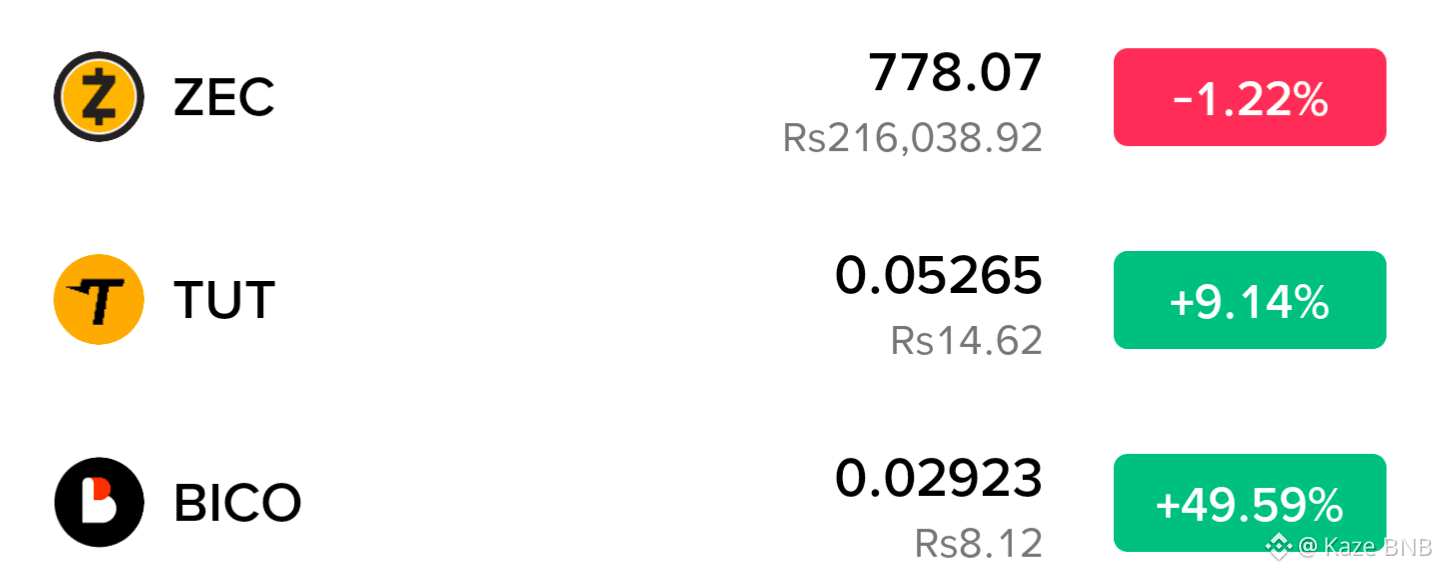
Three coins, three completely different stories. 👀
$BICO +49.59%
$TUT +9.14%
$ZEC -1.22%
BICO is the obvious momentum trade here. Price is around $0.02923, and the latest catalyst is real. Upbit listed BICO on August 21, giving it fresh South Korean liquidity and attention. The problem is that BICO already went through a huge August volatility cycle, so another 50% move can attract profit takers just as quickly as new buyers.
TUT is quieter at +9.14%, but it is still benefiting from renewed BNB Chain meme activity. Recent coverage linked TUT's strength to BNB Chain trading campaigns worth roughly $200K, which brought fresh attention back to the sector.
Then there is ZEC.
Only -1.22% today, but that tiny red number hides a monster recent run. Zcash recently traded above $800 for the first time since 2018 as Grayscale pushed forward with a spot Zcash ETF and futures activity exploded. Open interest climbed toward $1.8B, which means leverage is now a major part of the story.
So the psychological setup is almost backwards:
BICO has the biggest candle.
TUT has the meme rotation.
ZEC has the biggest institutional narrative, yet it is the only red one today.
Which would you rather buy before the next move?
BICO, TUT or ZEC? 👇
Three coins, three completely different stories. 👀
$BICO +49.59%
$TUT +9.14%
$ZEC -1.22%
BICO is the obvious momentum trade here. Price is around $0.02923, and the latest catalyst is real. Upbit listed BICO on August 21, giving it fresh South Korean liquidity and attention. The problem is that BICO already went through a huge August volatility cycle, so another 50% move can attract profit takers just as quickly as new buyers.
TUT is quieter at +9.14%, but it is still benefiting from renewed BNB Chain meme activity. Recent coverage linked TUT's strength to BNB Chain trading campaigns worth roughly $200K, which brought fresh attention back to the sector.
Then there is ZEC.
Only -1.22% today, but that tiny red number hides a monster recent run. Zcash recently traded above $800 for the first time since 2018 as Grayscale pushed forward with a spot Zcash ETF and futures activity exploded. Open interest climbed toward $1.8B, which means leverage is now a major part of the story.
So the psychological setup is almost backwards:
BICO has the biggest candle.
TUT has the meme rotation.
ZEC has the biggest institutional narrative, yet it is the only red one today.
Which would you rather buy before the next move?
BICO, TUT or ZEC? 👇
$BICO +49.59%
$TUT +9.14%
$ZEC -1.22%
BICO is the obvious momentum trade here. Price is around $0.02923, and the latest catalyst is real. Upbit listed BICO on August 21, giving it fresh South Korean liquidity and attention. The problem is that BICO already went through a huge August volatility cycle, so another 50% move can attract profit takers just as quickly as new buyers.
TUT is quieter at +9.14%, but it is still benefiting from renewed BNB Chain meme activity. Recent coverage linked TUT's strength to BNB Chain trading campaigns worth roughly $200K, which brought fresh attention back to the sector.
Then there is ZEC.
Only -1.22% today, but that tiny red number hides a monster recent run. Zcash recently traded above $800 for the first time since 2018 as Grayscale pushed forward with a spot Zcash ETF and futures activity exploded. Open interest climbed toward $1.8B, which means leverage is now a major part of the story.
So the psychological setup is almost backwards:
BICO has the biggest candle.
TUT has the meme rotation.
ZEC has the biggest institutional narrative, yet it is the only red one today.
Which would you rather buy before the next move?
BICO, TUT or ZEC? 👇
1
300
·
--
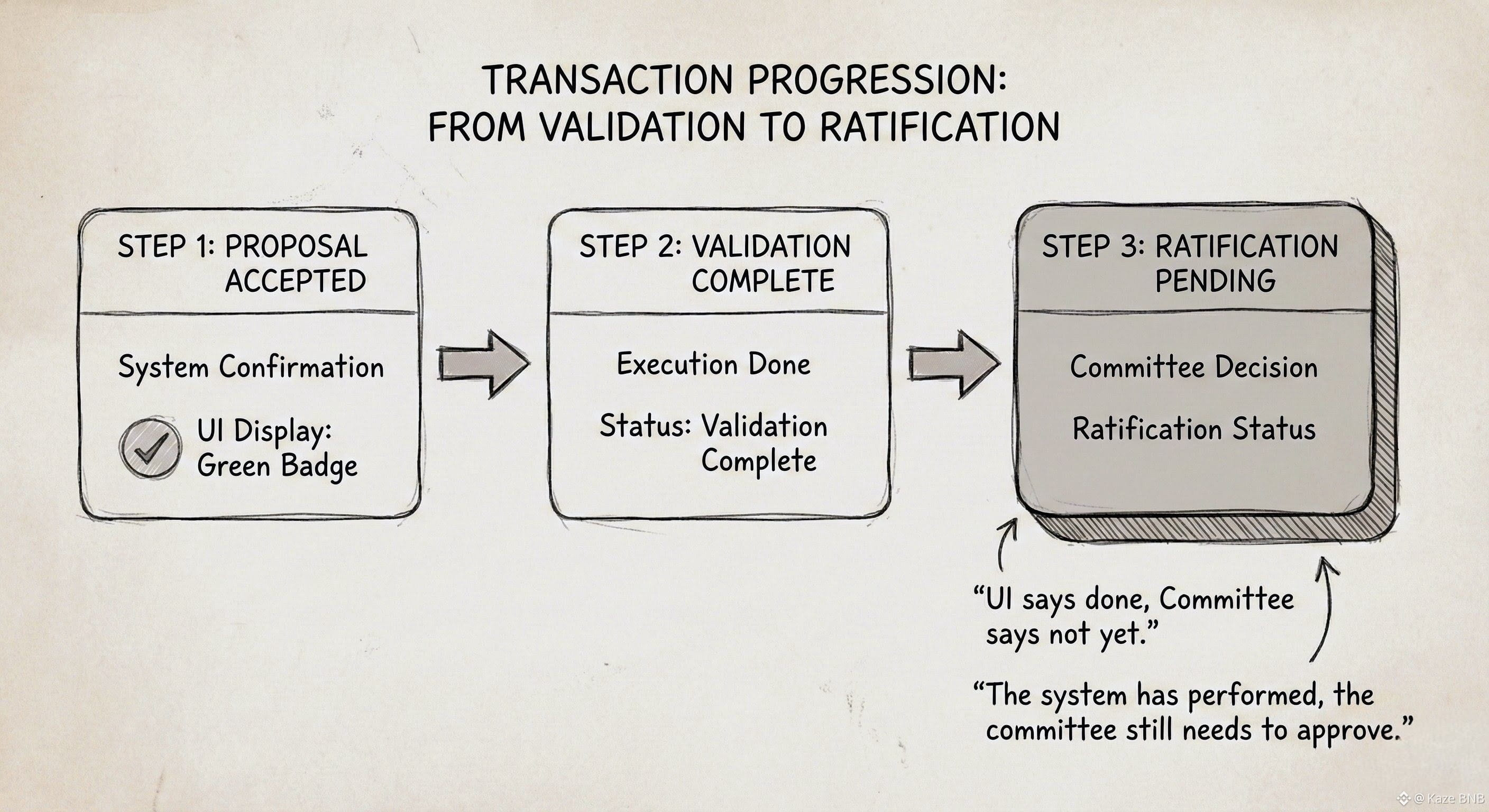
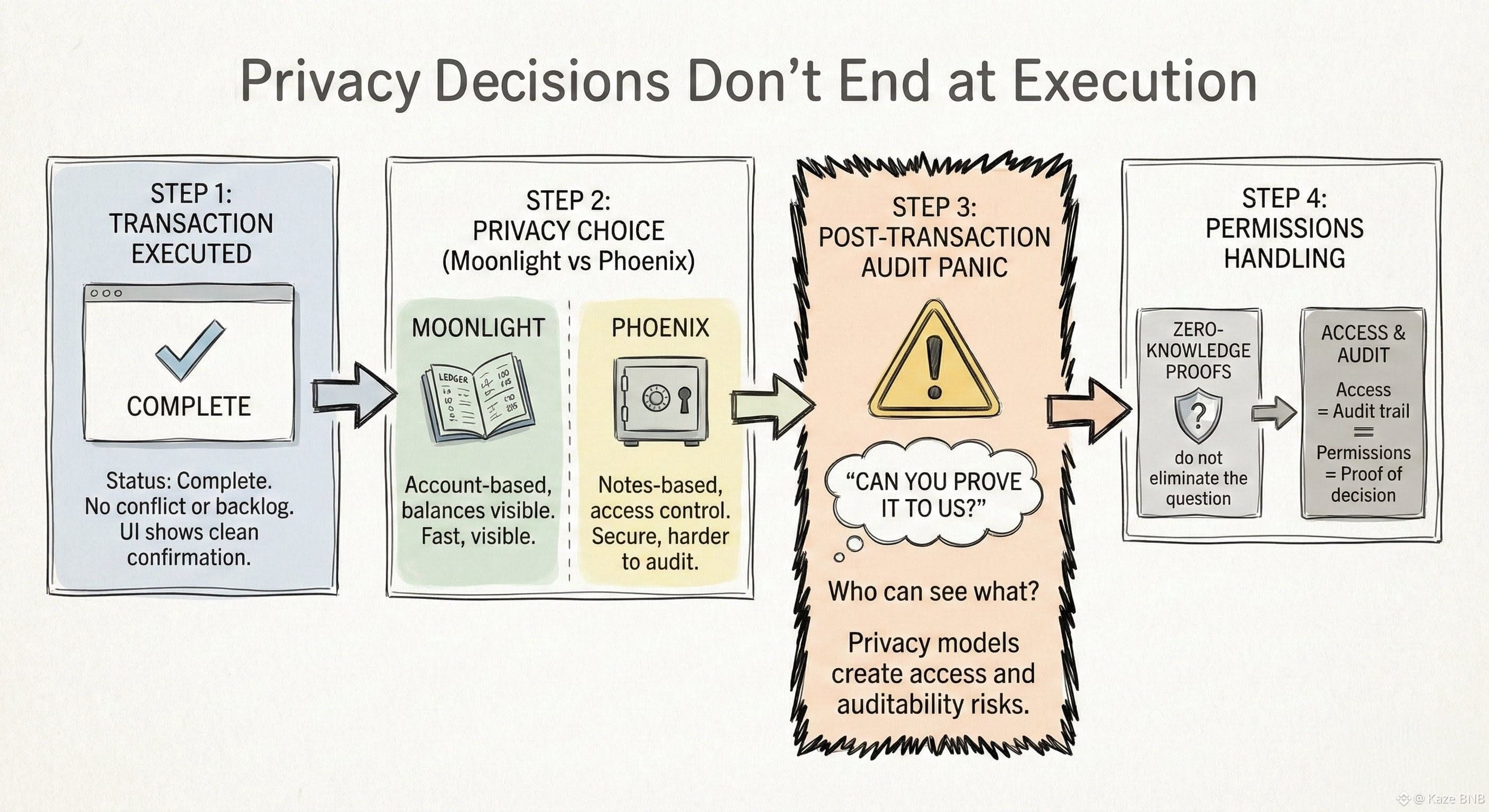
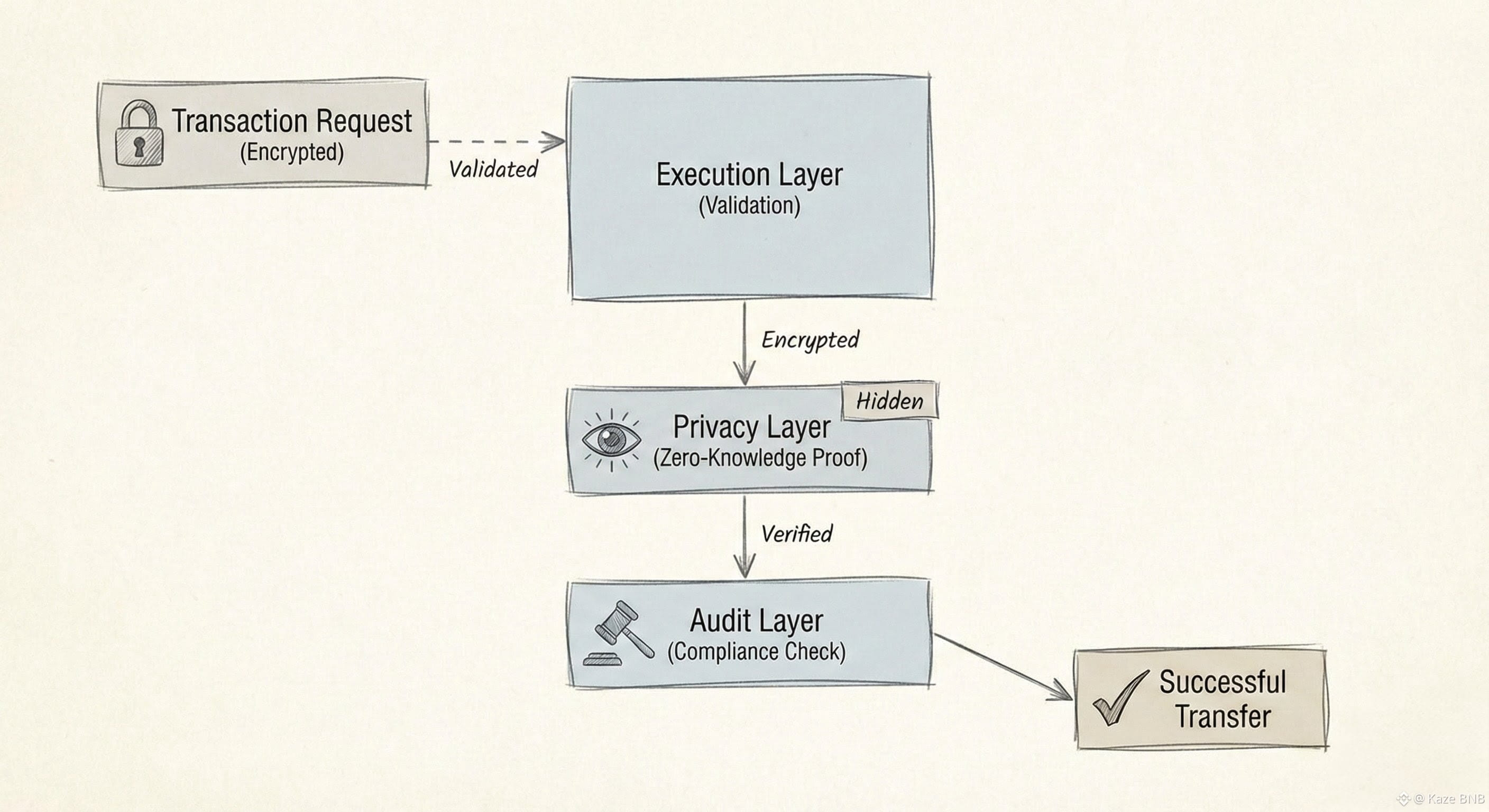
i keep thinking if my Rusk node is already following DuskDS and knows the same settled Dusk history as everyone else, then it should already have some say in what comes next.
like it isn't lost.
the node is synchronized. it knows where Dusk is. it can follow what DuskDS already accepted and keep up with the same chain history.
so what exactly is missing before that turns into a voice inside Succinct Attestation? apparently the DUSK stake that actually makes the node a provisioner.
because a Rusk node can follow DuskDS perfectly and still not be one of the provisioners Succinct Attestation listens to.
and that keeps messing with me because the node can know exactly what DuskDS accepted without being allowed to help with what comes next.
“same history. no voice yet.”
apparently knowing Dusk isn't what changes the node. putting the DUSK behind it through the Stake Contract and becoming a provisioner does.
Succinct Attestation still needs a provisioner, not just a Rusk node that happens to be perfectly caught up.
which feels backwards because knowledge normally feels like the hard part.
if my Rusk node already knows the current DuskDS result, why isn't being correct enough?
so the node can be completely caught up with DuskDS and still sit outside Succinct Attestation.
then DUSK stake turns it into a provisioner and suddenly that same node gets a voice.
what actually changed there... the node, or what Dusk is willing to trust it with?
@Dusk_Foundation #dusk #Dusk $DUSK
i keep thinking if my Rusk node is already following DuskDS and knows the same settled Dusk history as everyone else, then it should already have some say in what comes next.
like it isn't lost.
the node is synchronized. it knows where Dusk is. it can follow what DuskDS already accepted and keep up with the same chain history.
so what exactly is missing before that turns into a voice inside Succinct Attestation? apparently the DUSK stake that actually makes the node a provisioner.
because a Rusk node can follow DuskDS perfectly and still not be one of the provisioners Succinct Attestation listens to.
and that keeps messing with me because the node can know exactly what DuskDS accepted without being allowed to help with what comes next.
“same history. no voice yet.”
apparently knowing Dusk isn't what changes the node. putting the DUSK behind it through the Stake Contract and becoming a provisioner does.
Succinct Attestation still needs a provisioner, not just a Rusk node that happens to be perfectly caught up.
which feels backwards because knowledge normally feels like the hard part.
if my Rusk node already knows the current DuskDS result, why isn't being correct enough?
so the node can be completely caught up with DuskDS and still sit outside Succinct Attestation.
then DUSK stake turns it into a provisioner and suddenly that same node gets a voice.
what actually changed there... the node, or what Dusk is willing to trust it with?
@Dusk #dusk #Dusk $DUSK
like it isn't lost.
the node is synchronized. it knows where Dusk is. it can follow what DuskDS already accepted and keep up with the same chain history.
so what exactly is missing before that turns into a voice inside Succinct Attestation? apparently the DUSK stake that actually makes the node a provisioner.
because a Rusk node can follow DuskDS perfectly and still not be one of the provisioners Succinct Attestation listens to.
and that keeps messing with me because the node can know exactly what DuskDS accepted without being allowed to help with what comes next.
“same history. no voice yet.”
apparently knowing Dusk isn't what changes the node. putting the DUSK behind it through the Stake Contract and becoming a provisioner does.
Succinct Attestation still needs a provisioner, not just a Rusk node that happens to be perfectly caught up.
which feels backwards because knowledge normally feels like the hard part.
if my Rusk node already knows the current DuskDS result, why isn't being correct enough?
so the node can be completely caught up with DuskDS and still sit outside Succinct Attestation.
then DUSK stake turns it into a provisioner and suddenly that same node gets a voice.
what actually changed there... the node, or what Dusk is willing to trust it with?
@Dusk #dusk #Dusk $DUSK
1
3
70
·
--
$BTR did not win this leaderboard.
It deleted the leaderboard.
At +318.38%, BTR is trading around 0.13501 and has gained more than three times its starting value on top of the original price.
That puts it roughly 234 percentage points ahead of $TAC .
For comparison:
TAC is exploding at +83.86%.
$BMT is flying at +57.98%.
And somehow both look like they arrived late to work because BTR decided +300% was a reasonable afternoon activity.
This creates a completely different situation from three coins simply pumping together.
BTR is now trading in headline territory.
At this level, another +20% barely changes the story, while one violent rejection could erase an amount of profit that would normally qualify as an entire rally.
TAC is more interesting for a different reason.
An 83% gain is already enormous, but beside BTR it looks almost disciplined.
That comparison is dangerous because BTR has basically broken everyone's internal measuring device.
Then BMT sits at +58%.
Normally traders would be screaming about a move like that.
Today BMT is the quiet guy at the table because someone next to him just turned $1 into more than $4 and ruined the conversation.
This is not really about which one is strongest anymore.
BTR already answered that.
Now the question is whether BTR can keep carrying this ridiculous valuation expansion, or whether attention starts spilling into TAC and BMT once chasing +318% begins feeling slightly unhinged.
One coin is having a historic-looking session.
The other two are having huge sessions.
Crypto simply put them on the same screen for comedy.
$BTR did not win this leaderboard.
It deleted the leaderboard.
At +318.38%, BTR is trading around 0.13501 and has gained more than three times its starting value on top of the original price.
That puts it roughly 234 percentage points ahead of $TAC .
For comparison:
TAC is exploding at +83.86%.
$BMT is flying at +57.98%.
And somehow both look like they arrived late to work because BTR decided +300% was a reasonable afternoon activity.
This creates a completely different situation from three coins simply pumping together.
BTR is now trading in headline territory.
At this level, another +20% barely changes the story, while one violent rejection could erase an amount of profit that would normally qualify as an entire rally.
TAC is more interesting for a different reason.
An 83% gain is already enormous, but beside BTR it looks almost disciplined.
That comparison is dangerous because BTR has basically broken everyone's internal measuring device.
Then BMT sits at +58%.
Normally traders would be screaming about a move like that.
Today BMT is the quiet guy at the table because someone next to him just turned $1 into more than $4 and ruined the conversation.
This is not really about which one is strongest anymore.
BTR already answered that.
Now the question is whether BTR can keep carrying this ridiculous valuation expansion, or whether attention starts spilling into TAC and BMT once chasing +318% begins feeling slightly unhinged.
One coin is having a historic-looking session.
The other two are having huge sessions.
Crypto simply put them on the same screen for comedy.
It deleted the leaderboard.
At +318.38%, BTR is trading around 0.13501 and has gained more than three times its starting value on top of the original price.
That puts it roughly 234 percentage points ahead of $TAC .
For comparison:
TAC is exploding at +83.86%.
$BMT is flying at +57.98%.
And somehow both look like they arrived late to work because BTR decided +300% was a reasonable afternoon activity.
This creates a completely different situation from three coins simply pumping together.
BTR is now trading in headline territory.
At this level, another +20% barely changes the story, while one violent rejection could erase an amount of profit that would normally qualify as an entire rally.
TAC is more interesting for a different reason.
An 83% gain is already enormous, but beside BTR it looks almost disciplined.
That comparison is dangerous because BTR has basically broken everyone's internal measuring device.
Then BMT sits at +58%.
Normally traders would be screaming about a move like that.
Today BMT is the quiet guy at the table because someone next to him just turned $1 into more than $4 and ruined the conversation.
This is not really about which one is strongest anymore.
BTR already answered that.
Now the question is whether BTR can keep carrying this ridiculous valuation expansion, or whether attention starts spilling into TAC and BMT once chasing +318% begins feeling slightly unhinged.
One coin is having a historic-looking session.
The other two are having huge sessions.
Crypto simply put them on the same screen for comedy.
🛸 BTR goes even more absurd
61%
🧪 TAC becomes next experiment
21%
BMT forgotten-money rotation
9%
🧊 Somebody finally casino
9%
67 votes • Voting closed
6
8
7.9k
·
--
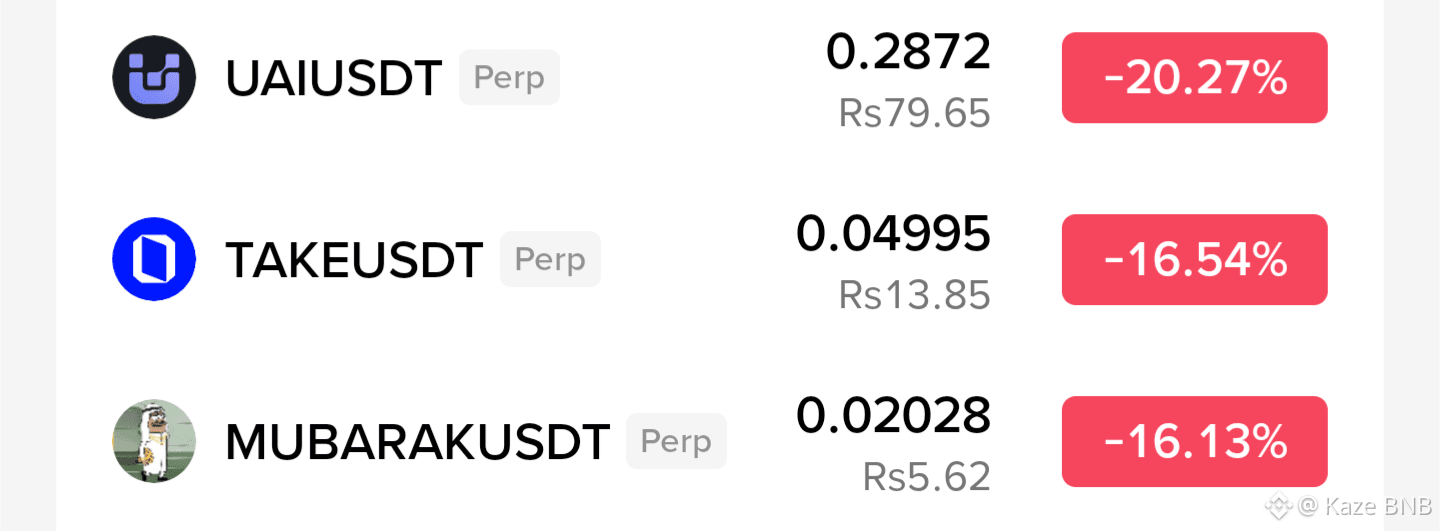
Three red coins, but they are not red for the same reason. 👀
🔻 $UAI : -20.27%
🔻 $TAKE : -16.54%
🔻 $MUBARAK : -16.13%
UAI is the weakest today, yet UnifAI recently added Jupiter integration on Solana, letting its AI agents analyze liquidity and execute swaps. The project story is still developing, but traders clearly took profits after the recent rally.
TAKE is giving back part of its explosive August run. Recent momentum was helped by a futures listing plus new payment and ecosystem partnerships, but one major risk remains: reported wallet concentration is extremely high.
MUBARAK is almost matching TAKE's decline. Its recent strength came with renewed BNB Chain meme activity, including trading competitions, plus an earlier Aster perpetual listing. Now the market is testing how much of that excitement was temporary.
Three different stories, same red screen.
Which dip looks healthiest to you?
UAI, TAKE or MUBARAK? 🤔👇
Three red coins, but they are not red for the same reason. 👀
🔻 $UAI : -20.27%
🔻 $TAKE : -16.54%
🔻 $MUBARAK : -16.13%
UAI is the weakest today, yet UnifAI recently added Jupiter integration on Solana, letting its AI agents analyze liquidity and execute swaps. The project story is still developing, but traders clearly took profits after the recent rally.
TAKE is giving back part of its explosive August run. Recent momentum was helped by a futures listing plus new payment and ecosystem partnerships, but one major risk remains: reported wallet concentration is extremely high.
MUBARAK is almost matching TAKE's decline. Its recent strength came with renewed BNB Chain meme activity, including trading competitions, plus an earlier Aster perpetual listing. Now the market is testing how much of that excitement was temporary.
Three different stories, same red screen.
Which dip looks healthiest to you?
UAI, TAKE or MUBARAK? 🤔👇
🔻 $UAI : -20.27%
🔻 $TAKE : -16.54%
🔻 $MUBARAK : -16.13%
UAI is the weakest today, yet UnifAI recently added Jupiter integration on Solana, letting its AI agents analyze liquidity and execute swaps. The project story is still developing, but traders clearly took profits after the recent rally.
TAKE is giving back part of its explosive August run. Recent momentum was helped by a futures listing plus new payment and ecosystem partnerships, but one major risk remains: reported wallet concentration is extremely high.
MUBARAK is almost matching TAKE's decline. Its recent strength came with renewed BNB Chain meme activity, including trading competitions, plus an earlier Aster perpetual listing. Now the market is testing how much of that excitement was temporary.
Three different stories, same red screen.
Which dip looks healthiest to you?
UAI, TAKE or MUBARAK? 🤔👇
1
185
·
--
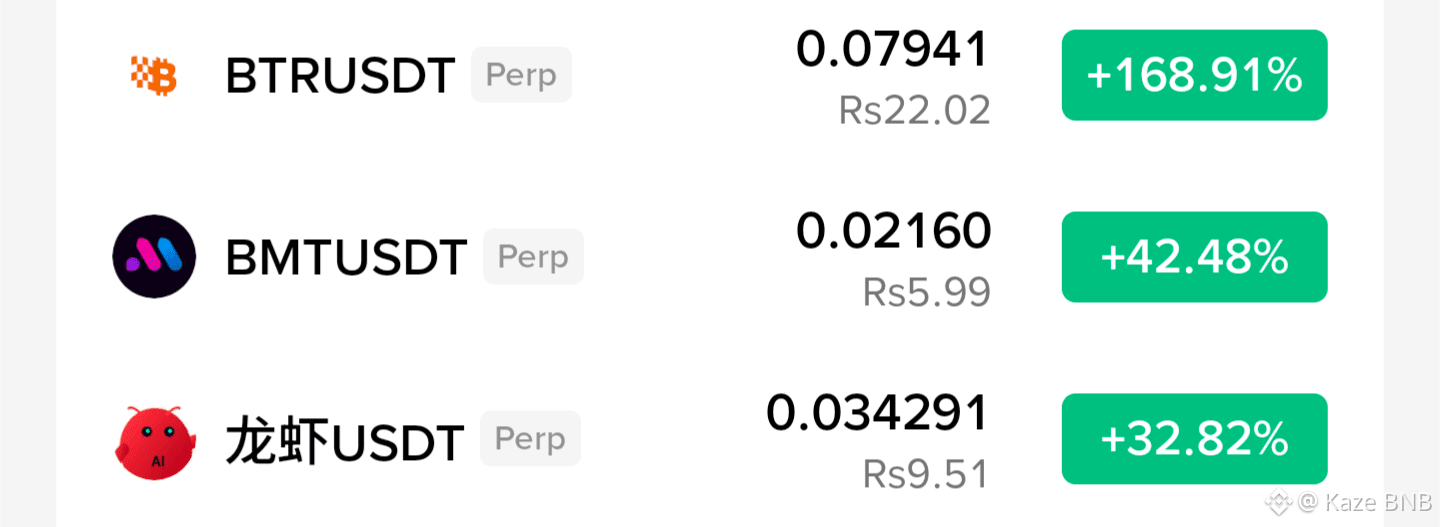
This leaderboard looks like three different versions of FOMO fighting for attention. 🔥
🟢 $BTR +168.91% at $0.07941
🟢 $BMT +42.48% at $0.02160
🟢 $龙虾 +32.82% at $0.03429
BTR is the obvious monster here. A 168% move is no longer just "bullish momentum." It is the point where traders who ignored Bitlayer at lower prices suddenly become extremely interested because one candle told them to be. Bitlayer still has its Bitcoin L2 and BitVM infrastructure narrative, but I found no fresh same-day announcement big enough to cleanly explain this explosion.
BMT has a more visible recent catalyst. Upbit listed Bubblemaps on August 21, giving it fresh Korean liquidity and attention. The listing initially pushed BMT higher, so today's 42% move may be another round of momentum returning to that narrative.
龙虾 is doing what meme coins do best: moving first and explaining itself later. Recent coverage points mainly to community hype, whale activity and recurring trader attention rather than a major new fundamental catalyst.
The dangerous part?
BTR is already the coin everyone wishes they bought yesterday.
And that is usually exactly when people decide today is the perfect entry.
Which one still has another leg left?
BTR, BMT or 龙虾? 👀👇
This leaderboard looks like three different versions of FOMO fighting for attention. 🔥
🟢 $BTR +168.91% at $0.07941
🟢 $BMT +42.48% at $0.02160
🟢 $龙虾 +32.82% at $0.03429
BTR is the obvious monster here. A 168% move is no longer just "bullish momentum." It is the point where traders who ignored Bitlayer at lower prices suddenly become extremely interested because one candle told them to be. Bitlayer still has its Bitcoin L2 and BitVM infrastructure narrative, but I found no fresh same-day announcement big enough to cleanly explain this explosion.
BMT has a more visible recent catalyst. Upbit listed Bubblemaps on August 21, giving it fresh Korean liquidity and attention. The listing initially pushed BMT higher, so today's 42% move may be another round of momentum returning to that narrative.
龙虾 is doing what meme coins do best: moving first and explaining itself later. Recent coverage points mainly to community hype, whale activity and recurring trader attention rather than a major new fundamental catalyst.
The dangerous part?
BTR is already the coin everyone wishes they bought yesterday.
And that is usually exactly when people decide today is the perfect entry.
Which one still has another leg left?
BTR, BMT or 龙虾? 👀👇
🟢 $BTR +168.91% at $0.07941
🟢 $BMT +42.48% at $0.02160
🟢 $龙虾 +32.82% at $0.03429
BTR is the obvious monster here. A 168% move is no longer just "bullish momentum." It is the point where traders who ignored Bitlayer at lower prices suddenly become extremely interested because one candle told them to be. Bitlayer still has its Bitcoin L2 and BitVM infrastructure narrative, but I found no fresh same-day announcement big enough to cleanly explain this explosion.
BMT has a more visible recent catalyst. Upbit listed Bubblemaps on August 21, giving it fresh Korean liquidity and attention. The listing initially pushed BMT higher, so today's 42% move may be another round of momentum returning to that narrative.
龙虾 is doing what meme coins do best: moving first and explaining itself later. Recent coverage points mainly to community hype, whale activity and recurring trader attention rather than a major new fundamental catalyst.
The dangerous part?
BTR is already the coin everyone wishes they bought yesterday.
And that is usually exactly when people decide today is the perfect entry.
Which one still has another leg left?
BTR, BMT or 龙虾? 👀👇
1
423
·
--
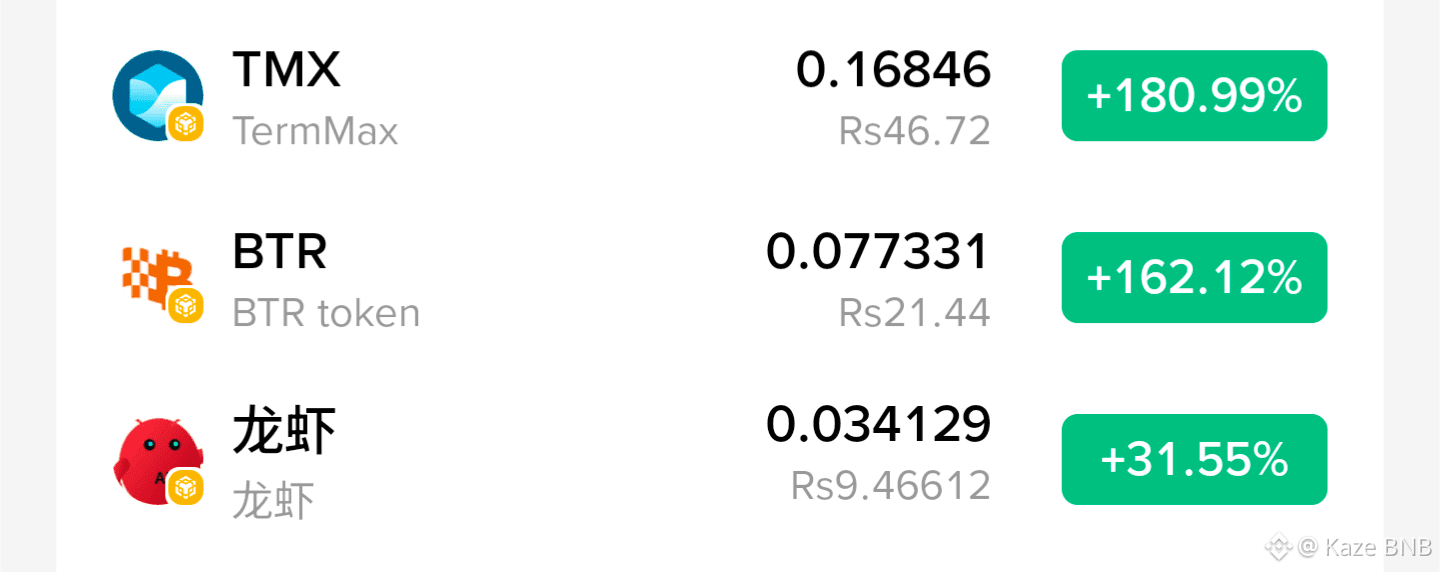
Two coins just went vertical, while the third suddenly looks boring at +31%. That tells you how broken crypto psychology gets during momentum season. 😭
🔥 $TMX +180.99% at $0.16846
🔥 $BTR +162.12% at $0.077331
🟢 $龙虾 +31.55% at $0.034129
TMX has the clearest fresh catalyst.
TermMax launched TMX on August 25, with trading exposure through Binance Alpha and MEXC. CoinMarketCap lists only about 15.28% of the 1B maximum supply as circulating, so the combination of fresh listing liquidity and limited float can create extremely violent price discovery.
The funny part is that +181% now makes +31% look weak.
龙虾 recently received extra attention through a Gate Alpha community campaign where traders shared a 120,000 龙虾 reward pool. That event ran from August 14 to August 20, so the promotional catalyst has already ended and the token is now trading more on community momentum.
For the specific BTR shown here, I could not confidently match a fresh verified catalyst to this exact token, so I would treat the +162% move as momentum first until proven otherwise.
Three green numbers.
Only one question matters now:
Which one still has buyers after everyone who wanted to chase has already bought? 👀🔥
Two coins just went vertical, while the third suddenly looks boring at +31%. That tells you how broken crypto psychology gets during momentum season. 😭
🔥 $TMX +180.99% at $0.16846
🔥 $BTR +162.12% at $0.077331
🟢 $龙虾 +31.55% at $0.034129
TMX has the clearest fresh catalyst.
TermMax launched TMX on August 25, with trading exposure through Binance Alpha and MEXC. CoinMarketCap lists only about 15.28% of the 1B maximum supply as circulating, so the combination of fresh listing liquidity and limited float can create extremely violent price discovery.
The funny part is that +181% now makes +31% look weak.
龙虾 recently received extra attention through a Gate Alpha community campaign where traders shared a 120,000 龙虾 reward pool. That event ran from August 14 to August 20, so the promotional catalyst has already ended and the token is now trading more on community momentum.
For the specific BTR shown here, I could not confidently match a fresh verified catalyst to this exact token, so I would treat the +162% move as momentum first until proven otherwise.
Three green numbers.
Only one question matters now:
Which one still has buyers after everyone who wanted to chase has already bought? 👀🔥
🔥 $TMX +180.99% at $0.16846
🔥 $BTR +162.12% at $0.077331
🟢 $龙虾 +31.55% at $0.034129
TMX has the clearest fresh catalyst.
TermMax launched TMX on August 25, with trading exposure through Binance Alpha and MEXC. CoinMarketCap lists only about 15.28% of the 1B maximum supply as circulating, so the combination of fresh listing liquidity and limited float can create extremely violent price discovery.
The funny part is that +181% now makes +31% look weak.
龙虾 recently received extra attention through a Gate Alpha community campaign where traders shared a 120,000 龙虾 reward pool. That event ran from August 14 to August 20, so the promotional catalyst has already ended and the token is now trading more on community momentum.
For the specific BTR shown here, I could not confidently match a fresh verified catalyst to this exact token, so I would treat the +162% move as momentum first until proven otherwise.
Three green numbers.
Only one question matters now:
Which one still has buyers after everyone who wanted to chase has already bought? 👀🔥
1
521
·
--
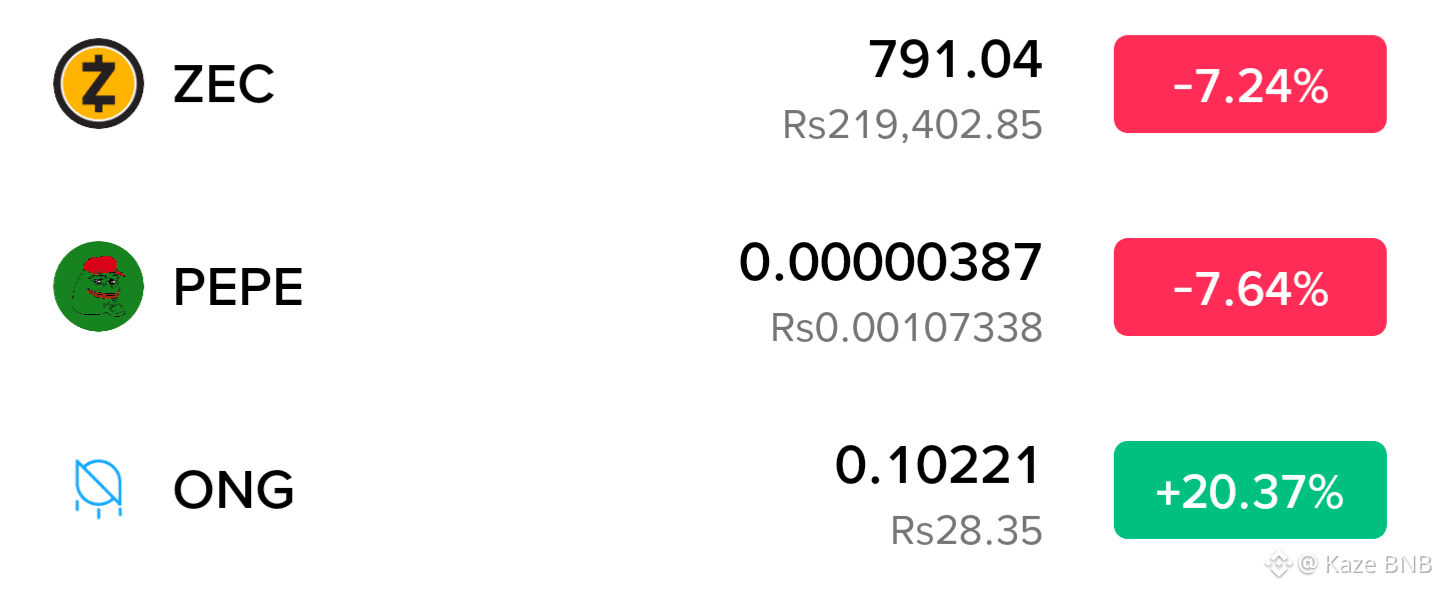
Two red, one green, and the green one actually has fresh news behind it. 👀
🔻 $ZEC : -7.24% at $791.04
🔻 $PEPE : -7.64% at $0.00000387
🟢 $ONG : +20.37% at $0.10221
ZEC is cooling after one of its wildest runs in years. It recently pushed above $800 as futures activity exploded and Grayscale made fresh progress toward converting its Zcash Trust into a spot ETF. After that kind of move, a 7% red day looks more like profit taking than disaster.
PEPE is almost perfectly matching ZEC's loss, except there is no equally strong fresh catalyst underneath it. Meme coins rallied hard with the broader market last week, so this looks more like momentum leaking out after traders spent several days chasing frogs again.
ONG is the interesting one.
Ontology completed its v3.1.2 mainnet hard fork on August 21, adding Ethereum compatibility and reducing friction for developers. The token already had a violent run and correction afterward, but buyers are back again today.
So the setup is basically:
ZEC has ETF speculation.
PEPE has meme liquidity.
ONG has an actual network upgrade.
And somehow the frog is the one asking everyone to trust the process. 🐸💀
Which one would you hold from here, ZEC, PEPE or ONG? 👇
Two red, one green, and the green one actually has fresh news behind it. 👀
🔻 $ZEC : -7.24% at $791.04
🔻 $PEPE : -7.64% at $0.00000387
🟢 $ONG : +20.37% at $0.10221
ZEC is cooling after one of its wildest runs in years. It recently pushed above $800 as futures activity exploded and Grayscale made fresh progress toward converting its Zcash Trust into a spot ETF. After that kind of move, a 7% red day looks more like profit taking than disaster.
PEPE is almost perfectly matching ZEC's loss, except there is no equally strong fresh catalyst underneath it. Meme coins rallied hard with the broader market last week, so this looks more like momentum leaking out after traders spent several days chasing frogs again.
ONG is the interesting one.
Ontology completed its v3.1.2 mainnet hard fork on August 21, adding Ethereum compatibility and reducing friction for developers. The token already had a violent run and correction afterward, but buyers are back again today.
So the setup is basically:
ZEC has ETF speculation.
PEPE has meme liquidity.
ONG has an actual network upgrade.
And somehow the frog is the one asking everyone to trust the process. 🐸💀
Which one would you hold from here, ZEC, PEPE or ONG? 👇
🔻 $ZEC : -7.24% at $791.04
🔻 $PEPE : -7.64% at $0.00000387
🟢 $ONG : +20.37% at $0.10221
ZEC is cooling after one of its wildest runs in years. It recently pushed above $800 as futures activity exploded and Grayscale made fresh progress toward converting its Zcash Trust into a spot ETF. After that kind of move, a 7% red day looks more like profit taking than disaster.
PEPE is almost perfectly matching ZEC's loss, except there is no equally strong fresh catalyst underneath it. Meme coins rallied hard with the broader market last week, so this looks more like momentum leaking out after traders spent several days chasing frogs again.
ONG is the interesting one.
Ontology completed its v3.1.2 mainnet hard fork on August 21, adding Ethereum compatibility and reducing friction for developers. The token already had a violent run and correction afterward, but buyers are back again today.
So the setup is basically:
ZEC has ETF speculation.
PEPE has meme liquidity.
ONG has an actual network upgrade.
And somehow the frog is the one asking everyone to trust the process. 🐸💀
Which one would you hold from here, ZEC, PEPE or ONG? 👇
1
277
·
--
This trio looks like three traders arriving at the same party at different times.
$TAC got there first and immediately started breaking furniture.
At +44.10%, trading around 0.002542, it has the strongest move on the screen, but not by enough to completely ignore what is happening underneath.
$ONG is already at +39.17% around 0.10503.
That puts it close enough to TAC that one fresh burst could turn first place into an argument instead of a fact.
Then $STAR sits at +30.70% near 0.15829.
And this is where the market starts doing psychological magic.
Thirty percent should look aggressive.
Instead, beside +44% and +39%, STAR suddenly looks like the guy who "hasn't moved yet."
Apparently +30% is now considered waiting patiently.
The interesting thing is that all three are already deep into profitable territory for early buyers, which means new buyers are not entering an empty market.
They are entering against people who already have something worth protecting.
TAC holders have the biggest cushion.
ONG holders are close behind.
STAR holders have less profit, but also less pressure to rush for the exit.
That can make STAR either the sleeper of the group or the one that simply never gets the same attention.
This screen is basically three versions of greed.
TAC says chase strength.
ONG says catch the leader.
STAR says buy the one that looks "behind."
And somehow every path ends with someone explaining why their entry was technically different from FOMO.
The market will decide which story survives.
The screenshots will only remember the winner.
This trio looks like three traders arriving at the same party at different times.
$TAC got there first and immediately started breaking furniture.
At +44.10%, trading around 0.002542, it has the strongest move on the screen, but not by enough to completely ignore what is happening underneath.
$ONG is already at +39.17% around 0.10503.
That puts it close enough to TAC that one fresh burst could turn first place into an argument instead of a fact.
Then $STAR sits at +30.70% near 0.15829.
And this is where the market starts doing psychological magic.
Thirty percent should look aggressive.
Instead, beside +44% and +39%, STAR suddenly looks like the guy who "hasn't moved yet."
Apparently +30% is now considered waiting patiently.
The interesting thing is that all three are already deep into profitable territory for early buyers, which means new buyers are not entering an empty market.
They are entering against people who already have something worth protecting.
TAC holders have the biggest cushion.
ONG holders are close behind.
STAR holders have less profit, but also less pressure to rush for the exit.
That can make STAR either the sleeper of the group or the one that simply never gets the same attention.
This screen is basically three versions of greed.
TAC says chase strength.
ONG says catch the leader.
STAR says buy the one that looks "behind."
And somehow every path ends with someone explaining why their entry was technically different from FOMO.
The market will decide which story survives.
The screenshots will only remember the winner.
$TAC got there first and immediately started breaking furniture.
At +44.10%, trading around 0.002542, it has the strongest move on the screen, but not by enough to completely ignore what is happening underneath.
$ONG is already at +39.17% around 0.10503.
That puts it close enough to TAC that one fresh burst could turn first place into an argument instead of a fact.
Then $STAR sits at +30.70% near 0.15829.
And this is where the market starts doing psychological magic.
Thirty percent should look aggressive.
Instead, beside +44% and +39%, STAR suddenly looks like the guy who "hasn't moved yet."
Apparently +30% is now considered waiting patiently.
The interesting thing is that all three are already deep into profitable territory for early buyers, which means new buyers are not entering an empty market.
They are entering against people who already have something worth protecting.
TAC holders have the biggest cushion.
ONG holders are close behind.
STAR holders have less profit, but also less pressure to rush for the exit.
That can make STAR either the sleeper of the group or the one that simply never gets the same attention.
This screen is basically three versions of greed.
TAC says chase strength.
ONG says catch the leader.
STAR says buy the one that looks "behind."
And somehow every path ends with someone explaining why their entry was technically different from FOMO.
The market will decide which story survives.
The screenshots will only remember the winner.
🦹 TAC keeps causing trouble
43%
🪐 ONG steals the spotlight
14%
🎇 STAR becomes surprise
0%
🛋️ Everyone sits down at once
43%
7 votes • Voting closed
2
1k
·
--
i keep thinking if the DUSK is mine and i'm the one putting it into Hyperstaking, then my wallet should be the thing Dusk sees as staking.
like what else would ownership mean here.
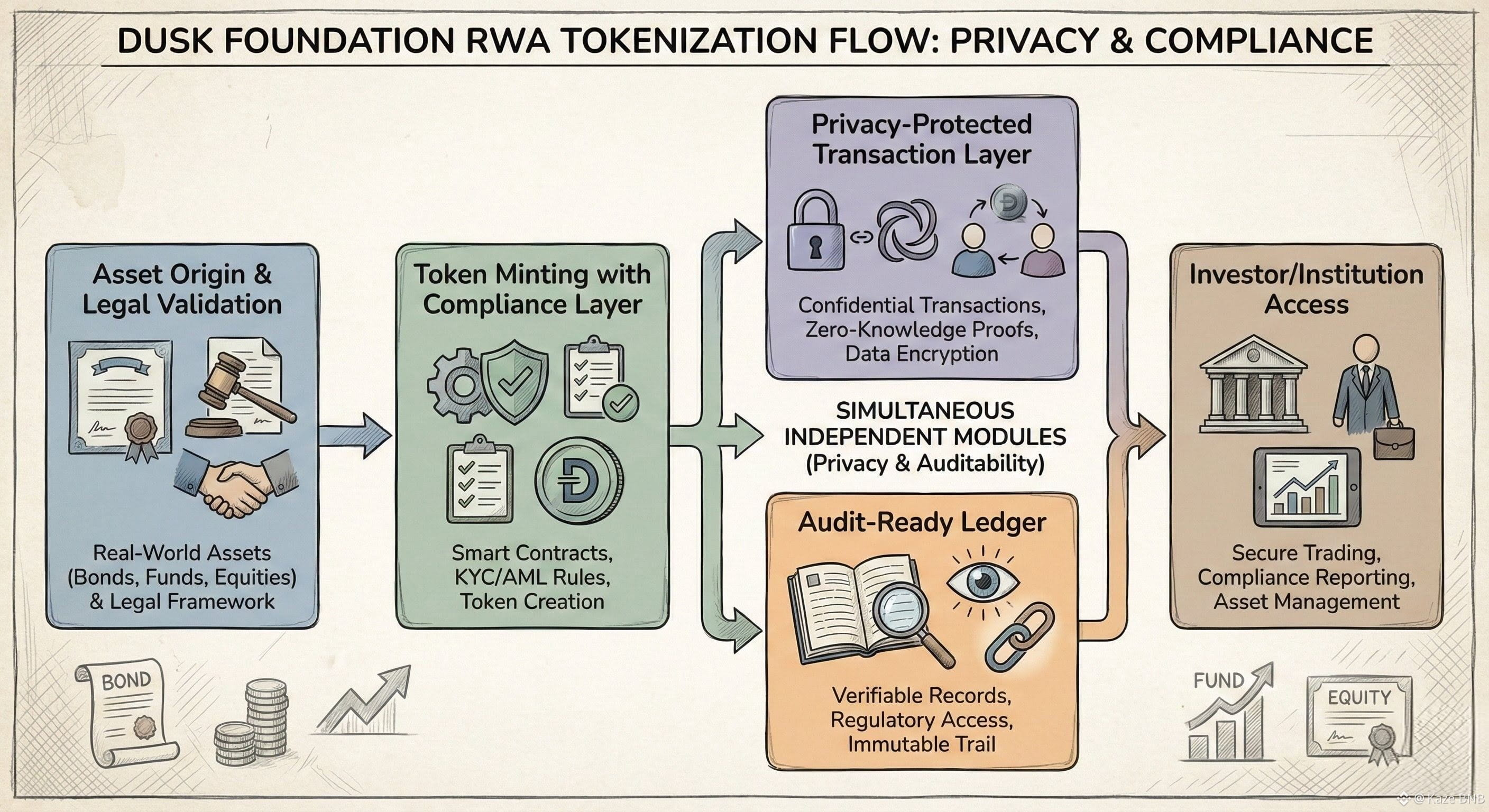
my DUSK leaves through the Transfer Contract, enters a Stake Abstraction pool, and now somehow the Stake Contract position can sit under that Hyperstaking pool instead of under my wallet like a direct provisioner stake.
that part feels wrong.
because i'm still the one who supplied that DUSK into the pool. whatever share of the provisioner rewards comes back to me still starts from that contribution.
but the Hyperstaking pool can sit on DuskVM managing the Stake Contract position, while the provisioner is still the thing participating through Succinct Attestation with pooled DUSK behind it.
so wait. my DUSK can be helping that provisioner matter to Dusk consensus without my wallet being the provisioner at all?
“my DUSK is in the stake. my wallet isn't the stake.”
and i think that's the bit i kept collapsing.
the Hyperstaking pool can manage the Stake Contract position while the provisioner is the thing Succinct Attestation actually needs, and my wallet is still sitting outside that provisioner position even though the DUSK started with me.
which is weird because from my side i staked.
but when Succinct Attestation needs a provisioner, Dusk isn't looking through the Hyperstaking pool trying to find my wallet.
so what exactly did my wallet become in that staking relationship?
@Dusk_Foundation #dusk #Dusk $DUSK
i keep thinking if the DUSK is mine and i'm the one putting it into Hyperstaking, then my wallet should be the thing Dusk sees as staking.
like what else would ownership mean here.
my DUSK leaves through the Transfer Contract, enters a Stake Abstraction pool, and now somehow the Stake Contract position can sit under that Hyperstaking pool instead of under my wallet like a direct provisioner stake.
that part feels wrong.
because i'm still the one who supplied that DUSK into the pool. whatever share of the provisioner rewards comes back to me still starts from that contribution.
but the Hyperstaking pool can sit on DuskVM managing the Stake Contract position, while the provisioner is still the thing participating through Succinct Attestation with pooled DUSK behind it.
so wait. my DUSK can be helping that provisioner matter to Dusk consensus without my wallet being the provisioner at all?
“my DUSK is in the stake. my wallet isn't the stake.”
and i think that's the bit i kept collapsing.
the Hyperstaking pool can manage the Stake Contract position while the provisioner is the thing Succinct Attestation actually needs, and my wallet is still sitting outside that provisioner position even though the DUSK started with me.
which is weird because from my side i staked.
but when Succinct Attestation needs a provisioner, Dusk isn't looking through the Hyperstaking pool trying to find my wallet.
so what exactly did my wallet become in that staking relationship?
@Dusk #dusk #Dusk $DUSK
like what else would ownership mean here.
my DUSK leaves through the Transfer Contract, enters a Stake Abstraction pool, and now somehow the Stake Contract position can sit under that Hyperstaking pool instead of under my wallet like a direct provisioner stake.
that part feels wrong.
because i'm still the one who supplied that DUSK into the pool. whatever share of the provisioner rewards comes back to me still starts from that contribution.
but the Hyperstaking pool can sit on DuskVM managing the Stake Contract position, while the provisioner is still the thing participating through Succinct Attestation with pooled DUSK behind it.
so wait. my DUSK can be helping that provisioner matter to Dusk consensus without my wallet being the provisioner at all?
“my DUSK is in the stake. my wallet isn't the stake.”
and i think that's the bit i kept collapsing.
the Hyperstaking pool can manage the Stake Contract position while the provisioner is the thing Succinct Attestation actually needs, and my wallet is still sitting outside that provisioner position even though the DUSK started with me.
which is weird because from my side i staked.
but when Succinct Attestation needs a provisioner, Dusk isn't looking through the Hyperstaking pool trying to find my wallet.
so what exactly did my wallet become in that staking relationship?
@Dusk #dusk #Dusk $DUSK
3
133
Log in to explore more content
Join global crypto users on Binance Square
⚡️ Get latest and useful information about crypto.
💬 Trusted by the world’s largest crypto exchange.
👍 Discover real insights from verified creators.
Email / Phone number
Trending Topics
BitcoinSlipsBelow$80KAgain
1,161 views
29 Discussing
BTC Is Bleeding While the Whale W Move Out — Stacked Against a Corporate Bid
Seven days of downside, and it wasn't retail that drove.
The: BTC closed ~79,796 on Oct27, down ~2.6% over 7 days and ~5.2% over 30 days. Daily RSI(12) sits at 39.8. The week's range: high ~84,377 (Oct 22), low ~79,220 (Oct 24). No capitulation candle. No reclaim of 84K. Just grind.
The supply side is doing the talking. Dormant wallets moved 2,571 BTC (~$206.5M) toward institutional exchanges. That is supply arriving at the venue, not leaving it. Treasury appetite also cooled — Strategy redirected $204.9M into share buybacks instead of BTC.
The bid underneath is corporate, not speculative. Strive acquired 6,182 BTC (~$511.4M); public firms added 6,200+ BTC combined. That is a real floor argument near $79.7K — but it is a floor, not a breakout catalyst.
Momentum is not on the bulls' side. MACD histogram at −23.99, price under the 99 EMA. Upside is capped below ~$80.5K until that structure fl.
Positioning is mildly bullish, not euphoric. Square community poll: 2,116 bullish vs 1,714 bearish of 3,830 votes A limited sample — worth knowing, not worth trading on alone.
My read: this is distribution into a corporate bid. The floor is real; the momentum is not there. Watching whether the 79.2K–79.7K zone absorbs the exchange inflow is the whole story this week.
#BitcoinSlipsBelow$80KAgain
_Mr_Singh_
·0 Likes
·471 views
ThailandLaunchesWORPTStablecoinToQRPaymentApp
1,604 views
72 Discussing
StrategySkipsBitcoinPurchasesSpends$205MOnSTRCBuybacks
3,079 views
68 Discussing