

三月蘑菇屋
312 Posts

三月蘑菇屋
Report
Block User
X:@kabuda325 🍄【加密、养生两不误】副业八段锦续命(本金不崩,气血不崩)
Frequent Trader
2 Years
27 Following
146 Followers
395 Liked
Posts
All
Quotes
·
--
There’s really no need to keep watching it all day!
There’s just no way there’ll be any results this year!
#美伊3小時會談釋放積極訊號 $NEAR
There’s really no need to keep watching it all day!
There’s just no way there’ll be any results this year!
#美伊3小時會談釋放積極訊號 $NEAR
There’s just no way there’ll be any results this year!
#美伊3小時會談釋放積極訊號 $NEAR

1
429

·
--
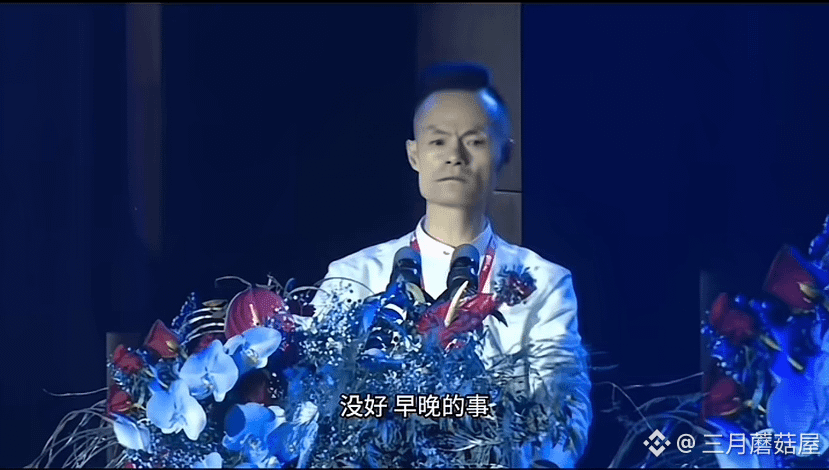
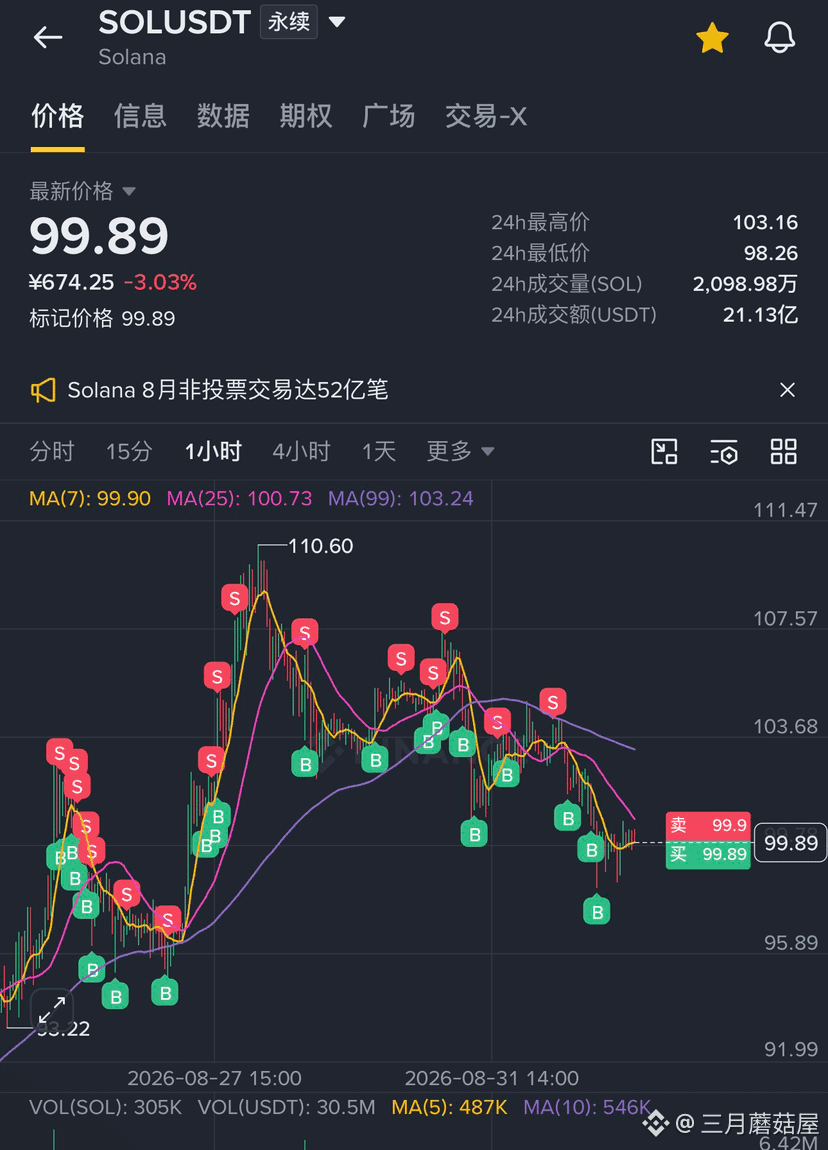
100 held on
We should play the long game this round, right?
$SOL
100 held on
We should play the long game this round, right?
$SOL
We should play the long game this round, right?
$SOL

1
1.2k
·
--
Take SOL as an example
It rebounded to around 113.38 at its peak today,
then gave it all back and is now around 108.
A 4.4% pullback in a single day 🙄
So, how many of you are still trading short-term?
$SOL #SolanaETF ends 14 consecutive weeks of net inflows
Take SOL as an example
It rebounded to around 113.38 at its peak today,
then gave it all back and is now around 108.
A 4.4% pullback in a single day 🙄
So, how many of you are still trading short-term?
$SOL #SolanaETF ends 14 consecutive weeks of net inflows
It rebounded to around 113.38 at its peak today,
then gave it all back and is now around 108.
A 4.4% pullback in a single day 🙄
So, how many of you are still trading short-term?
$SOL #SolanaETF ends 14 consecutive weeks of net inflows
2
1.2k
·
--
At which point did Sol get connected?
Over 48.78M in 24 hours
This round is a massive deleveraging
$SOL #币安推出BinanceIntelligence
At which point did Sol get connected?
Over 48.78M in 24 hours
This round is a massive deleveraging
$SOL #币安推出BinanceIntelligence
Over 48.78M in 24 hours
This round is a massive deleveraging
$SOL #币安推出BinanceIntelligence
2
539
·
--
I place more importance on the support level around 110
🍄
This uptrend started from around 95 to around 114
🍄
The first retracement level at 23.6% lines up exactly at: around 109.8
$SOL #SOL涨约10%
I place more importance on the support level around 110
🍄
This uptrend started from around 95 to around 114
🍄
The first retracement level at 23.6% lines up exactly at: around 109.8
$SOL #SOL涨约10%
🍄
This uptrend started from around 95 to around 114
🍄
The first retracement level at 23.6% lines up exactly at: around 109.8
$SOL #SOL涨约10%
2
241
·
--
Verified
What’s even more uncomfortable now is:
Oil prices $108 → inflation re-accelerates → the Fed may hike rates → 2Y surges → 10Y breaks above 5% → the knife-rises
This is no longer just a question of whether they will hike or not
#美联储加息概率升至89% $SOL
What’s even more uncomfortable now is:
Oil prices $108 → inflation re-accelerates → the Fed may hike rates → 2Y surges → 10Y breaks above 5% → the knife-rises
This is no longer just a question of whether they will hike or not
#美联储加息概率升至89% $SOL
Oil prices $108 → inflation re-accelerates → the Fed may hike rates → 2Y surges → 10Y breaks above 5% → the knife-rises
This is no longer just a question of whether they will hike or not
#美联储加息概率升至89% $SOL

1
1
249
·
--
In the end, DOGE-1 is just an event!
It won’t directly change DOGE’s supply, and it won’t directly bring in new adoption, institutional capital, or payment demand.
What really matters is attention!
Honestly, this timing is kind of awkward right now.
The Fed, oil prices, the 10Y, Iran, and the 16th are all squeezed onto the same table.
Just “Dogecoin to the Moon” might not be enough to win people over.
The key is still DOGE’s main course—old chef has to let Ma Ge take the lead.
#全网爆仓6.74亿美元 $DOGE
3
517
·
--
Partly True
The risk of not raising:
Inflation continues to rise → expectations get unanchored → later they’re forced to raise more.
The risk of raising interest rates:
Energy eases on its own, yet the Fed pushes demand too hard → corporate financing worsens → employment weakens → and in 2027 they’ll have to turn back toward rate cuts.
So this is not really an elementary-school arithmetic problem of “CPI 3.4 > 2, therefore raise rates.”
Now 10Y has already briefly touched 4.99%, and 30Y has even reached 5.42%.
In other words, even if the Fed hasn’t moved, the market itself has already tightened financial conditions to some extent.
$ETH #CPI数据来袭能否触发9月加息

2
307
·
--
There’s something kind of awkward right now:
Oil prices
Yesterday, the market was simultaneously facing:
A strong jobs report
The risk of the Fed raising rates
Oil prices have climbed back above around $100
A long-term fiscal deficit
So the Ministry of Finance came up with $6 billion, and across the table sat four big guys. 😂
No wonder the bond market didn’t give it any face.
And the fact that the war is pushing up energy prices and inflation is also an important reason why long-term yields continue to come under pressure!
$SOL
2
149
·
--
The Ministry of Finance and the Fed
It’s like applying two forces to the market in different directions.
Ministry of Finance: Long-term bond yields are too high, so I increase repos to improve liquidity.
Fed: Inflation is still high, and I may keep raising interest rates.
So this also explains why the market doesn’t, like before, just see a “60% chance of a rate hike” and immediately slam the brakes down
$SOL
2
134
·
--
Verified
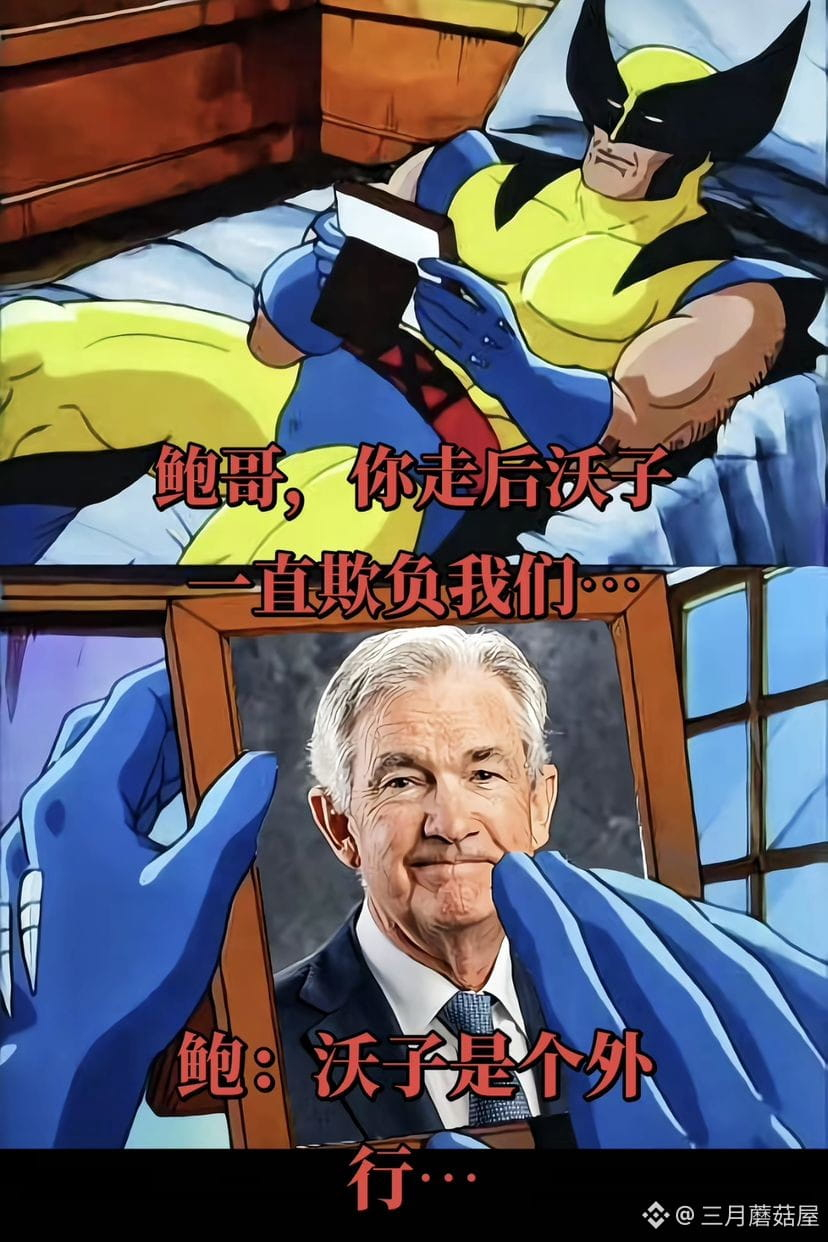
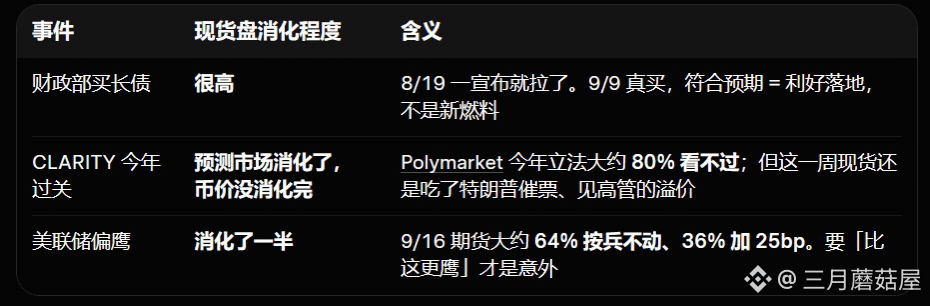
The sound of rate hikes is already over 50%,
and I think it’s mostly fueled by three fires:
First, July PCE was 3.7% year over year, and core PCE was 3.3%—both clearly above the 2% target.
Second, the situation in the Middle East: oil prices and inflation have reignited.
Third, Warsh’s remarks came across as hawkish.
But I’m more inclined to think: keep it unchanged in September!
In the July meeting minutes, there was a phenomenon: oil prices had already risen noticeably, but the compensation for inflation over the medium to long term hadn’t gotten out of control, and long-term inflation expectations remained relatively stable.
This suggests the Fed may not necessarily need to slam the brakes immediately for a possibly short-term energy shock.
Also, in the July meeting, the market was already pricing in the question of a rate hike in September, but the FOMC ultimately kept rates unchanged at 3.50% to 3.75% with a vote of 9 to 3.
Now, the market has pushed the odds of a rate hike too far,
everyone is almost calling the September hike a done deal—I actually think it may not be.
#美联储加息概率升至68% $SOL
2
2
336
·
--
The “One Piece” magazine is sealed, rated, and tokenized. Solana will promote this release on Friday, and the first tokenized “One Piece” comic is already tradable on-chain.
The protagonist’s first appearance—there are only 118 worldwide.
It’s the first tokenized comic in history. Buyers hold tokens that point to a verified graded collectible, not a photo listing.
These 118 copies can’t disappear instantly.
$SOL
The protagonist’s first appearance—there are only 118 worldwide.
It’s the first tokenized comic in history. Buyers hold tokens that point to a verified graded collectible, not a photo listing.
These 118 copies can’t disappear instantly.
$SOL
2
202
·
--
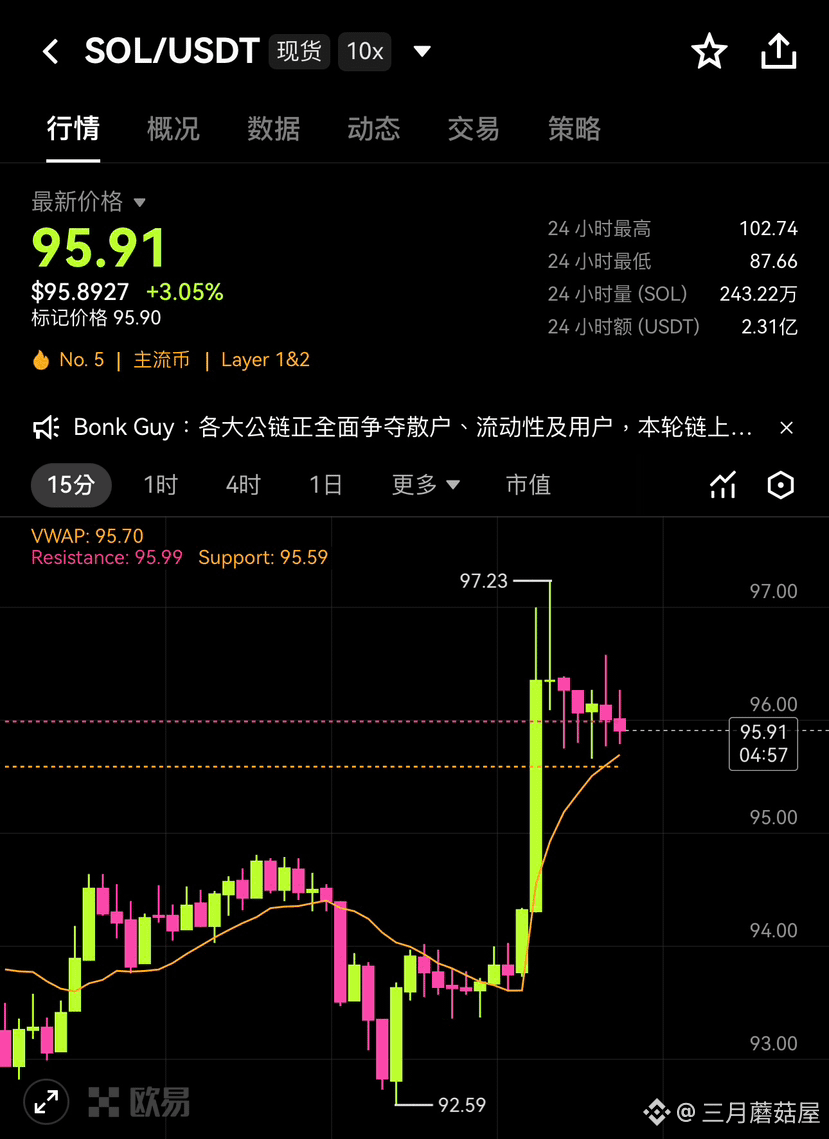
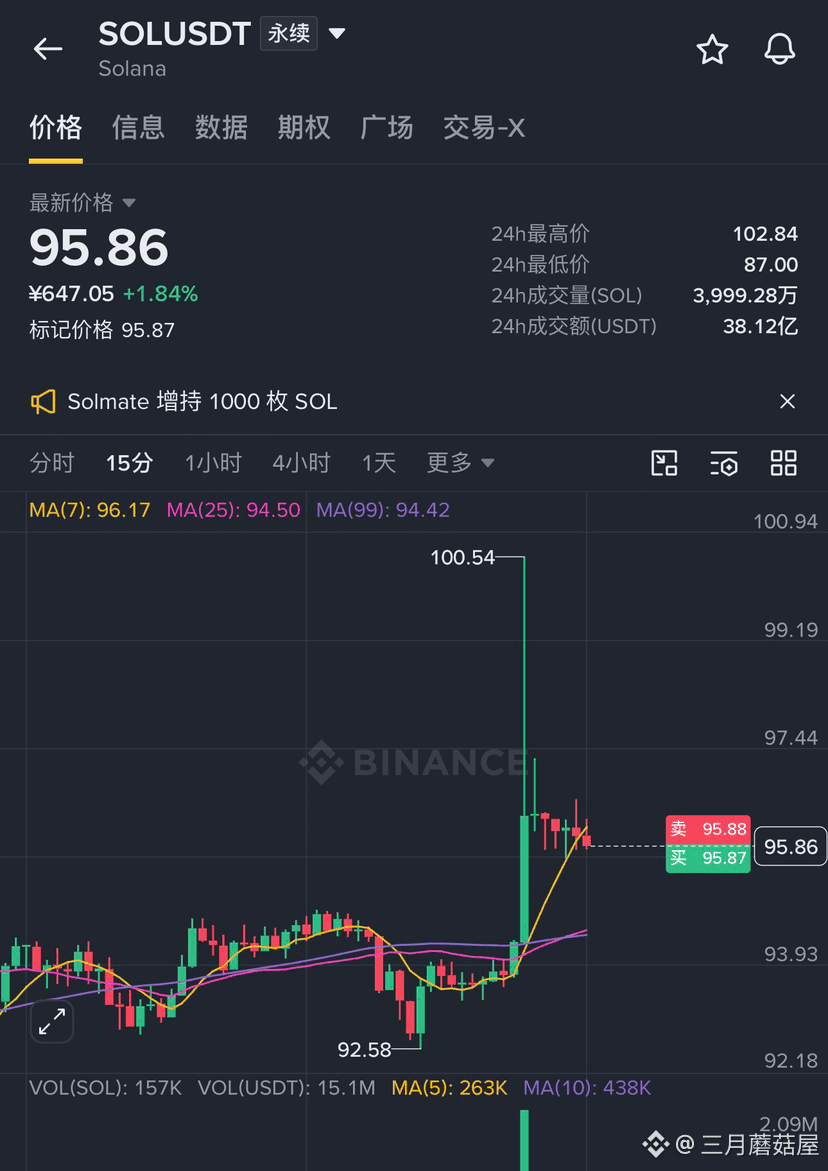
SOL15 minutes line
Why are the two exchanges so different?
Does anyone know what this means?
$SOL
SOL15 minutes line
Why are the two exchanges so different?
Does anyone know what this means?
$SOL
Why are the two exchanges so different?
Does anyone know what this means?
$SOL
11
2
955
·
--
Article
I found that people who know how to trade can also become a platform entry point!Let’s talk about @Velvet_Capital’s trade management economics.
If you know how to trade, can you turn it into a new source of incoming funds on Velvet?
Most of the time, many traders' influence mainly stays at the content level.
Share insights,
Show off your returns,
Keep the pace.
But if trading behavior can be accumulated and solidified, things are different.
How do you control position sizing?
How often should it be done?
How do returns and drawdowns play out?
Chase the hot topics or ride the trends?
Where is the risk boundary?
Once these records exist for a long time, a person's trading ability begins to take on an observable shape.
and Velvet has capabilities related to trading and portfolio management.
I found that people who know how to trade can also become a platform entry point!
Let’s talk about @Velvet_Capital’s trade management economics.
If you know how to trade, can you turn it into a new source of incoming funds on Velvet?
Most of the time, many traders' influence mainly stays at the content level.
Share insights,
Show off your returns,
Keep the pace.
But if trading behavior can be accumulated and solidified, things are different.
How do you control position sizing?
How often should it be done?
How do returns and drawdowns play out?
Chase the hot topics or ride the trends?
Where is the risk boundary?
Once these records exist for a long time, a person's trading ability begins to take on an observable shape.
and Velvet has capabilities related to trading and portfolio management.
1
162
·
--
Article
First light the fire, then help users understand how to playLet’s talk about the Renaiss new product release
In the previous post, we talked about opening jadeite packs—how’s everyone playing?
@renaissxyz
This time, the jadeite pack!
A limited pool of 1,000 packs, $100 per pack, with a maximum draw of collectibles valued at $3,200.
On the surface, this is a blind box release.
But I’m more interested in the first-tier issuance logic behind it.
To get the collectibles market going, the first step usually isn’t to wait for the secondary market to become lively on its own; instead, you supply new products first to align attention, purchase actions, and unboxing anticipation at the same time.
The limited pool is responsible for creating a sense of scarcity.
High-value prizes are responsible for manufacturing unboxing emotions.
First light the fire, then help users understand how to play
Let’s talk about the Renaiss new product release
In the previous post, we talked about opening jadeite packs—how’s everyone playing?
@renaissxyz
This time, the jadeite pack!
A limited pool of 1,000 packs, $100 per pack, with a maximum draw of collectibles valued at $3,200.
On the surface, this is a blind box release.
But I’m more interested in the first-tier issuance logic behind it.
To get the collectibles market going, the first step usually isn’t to wait for the secondary market to become lively on its own; instead, you supply new products first to align attention, purchase actions, and unboxing anticipation at the same time.
The limited pool is responsible for creating a sense of scarcity.
High-value prizes are responsible for manufacturing unboxing emotions.
1
96
·
--
Article
Renaiss Beginner’s GuideTo understand Renaiss the first time, you just need to follow the story of one card and trace the whole loop—
the first time you come into contact with it
@renaissxyz
, many people’s attention will end up on the card, opening packs, and the trading pages.
But for beginners, the two things that are most likely to cause confusion are actually:
What exactly do you get on-chain?
Where are the physical collectibles?
Let’s start with a brief introduction to the background.
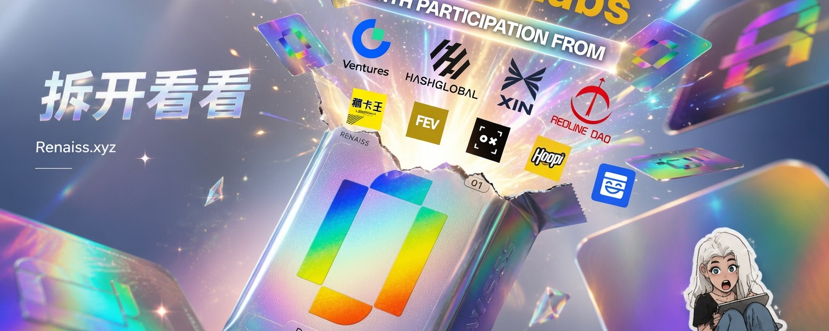
Renaiss is a real-world asset (RWA) liquidity project built on the BNB Chain. It has graduated from the YZi Labs EASY Residency S3 and completed a $1.5 million seed round led by YZi Labs.
A Pokémon card or a limited-edition collectible toy has a price because of scarcity, cultural influence, and buyer consensus.
Renaiss Beginner’s Guide
To understand Renaiss the first time, you just need to follow the story of one card and trace the whole loop—
the first time you come into contact with it
@renaissxyz
, many people’s attention will end up on the card, opening packs, and the trading pages.
But for beginners, the two things that are most likely to cause confusion are actually:
What exactly do you get on-chain?
Where are the physical collectibles?
Let’s start with a brief introduction to the background.
Renaiss is a real-world asset (RWA) liquidity project built on the BNB Chain. It has graduated from the YZi Labs EASY Residency S3 and completed a $1.5 million seed round led by YZi Labs.
A Pokémon card or a limited-edition collectible toy has a price because of scarcity, cultural influence, and buyer consensus.
1
98
·
--
Article
Curator’s LP: from choosing markets to choosing strategiesThey say @HertzFlow_xyz but don’t talk about leverage, and they don’t talk about opening the market either.
I want to see a more downstream role:
Once the capital comes in, who helps allocate it?
The more open markets there are, the more complex the problems LPs face.
Which market to enter, which market lacks depth, which returns look high—actually, the tail risk is very heavy.
Not everyone can assess things one by one.
According to disclosures from the project team, the HertzFlow architecture includes a Vault and a Curator strategy layer.
I understand that Curator is more like a risk steward for the capital.
Its value isn’t just helping capital find a place to go; more importantly, it changes how LPs make decisions.
Curator’s LP: from choosing markets to choosing strategies
They say @HertzFlow_xyz but don’t talk about leverage, and they don’t talk about opening the market either.
I want to see a more downstream role:
Once the capital comes in, who helps allocate it?
The more open markets there are, the more complex the problems LPs face.
Which market to enter, which market lacks depth, which returns look high—actually, the tail risk is very heavy.
Not everyone can assess things one by one.
According to disclosures from the project team, the HertzFlow architecture includes a Vault and a Curator strategy layer.
I understand that Curator is more like a risk steward for the capital.
Its value isn’t just helping capital find a place to go; more importantly, it changes how LPs make decisions.
1
84
·
--

Article
How to turn messages into trading actions!Speaking of @Velvet_Capital 's SocialFAI, how does it turn messages into trading actions!
I want to see a more trading-oriented question:
How does a piece of information go from “seeing it” to “daring to trade.”
We all know the chain isn’t short on messages.
On X there are trade calls, screenshots in groups, KOLs have opinions, and even smart money addresses can be tracked.
The problem is that when these things are presented on their own, they can easily turn into noise.
When a coin suddenly gets mentioned by a lot of people, it could mean the market is starting—or it could just be sentiment brewing.
If an address buys a certain asset, it could be early positioning, or it could just be a test order.
How to turn messages into trading actions!
Speaking of @Velvet_Capital 's SocialFAI, how does it turn messages into trading actions!
I want to see a more trading-oriented question:
How does a piece of information go from “seeing it” to “daring to trade.”
We all know the chain isn’t short on messages.
On X there are trade calls, screenshots in groups, KOLs have opinions, and even smart money addresses can be tracked.
The problem is that when these things are presented on their own, they can easily turn into noise.
When a coin suddenly gets mentioned by a lot of people, it could mean the market is starting—or it could just be sentiment brewing.
If an address buys a certain asset, it could be early positioning, or it could just be a test order.
1
183
Log in to explore more content
Join global crypto users on Binance Square
⚡️ Get latest and useful information about crypto.
💬 Trusted by the world’s largest crypto exchange.
👍 Discover real insights from verified creators.
Email / Phone number