Binance Square

Jeeya_Awan

MPhil Student | ๐Ÿ“š ๐ŸŒ Exploring crypto ๐Ÿ’ก Excited to grow in digital finance | Letโ€™s connect, learn & grow in blockchain ๐Ÿš€
Open Trade
High-Frequency Trader
2.7 Years
555 Following
19.0K+ Followers
7.4K+ Liked
207 Shared
Posts
Portfolio
ยท
--
Plasma with Aave: The Global Credit LayerWe are building a global financial system powered by stablecoins. To support this vision, we need a credit layer that turns USDโ‚ฎ deposits into predictable, market-grade capital. โ€Our partnership with Aave, combined with precise risk calibration and targeted incentives, has delivered a low USDโ‚ฎ borrow rate that converts deep deposit liquidity into dependable borrowing capacity. That durable and low-cost borrow rate is the foundation of our onchain strategy. It enables builders and institutions to design yield products and leverage strategies that remain viable in both bear and bull markets. Plasma with Aave: The Global Credit Layer As part of the Aave deployment proposal, we committed an initial $10 million in XPL tokens. This commitment was part of a broader incentive program. Within 48 hours of the @Plasma mainnet launch, deposits into Aave on Plasma reached $5.9 billion. By mid-October, it peaked at $6.6 billion. The incentives and Aaveโ€™s deployment on Plasma attracted billions of dollars in cumulative deposits and established it as a core venue for stablecoin credit. The PlasmAave Effect: A New Standard for Credit Launches The launch of Aave on Plasma set a new benchmark for a day one credit layer. The program achieved a peak of about $6.6 billion in TVL. The first 8 weeks were especially efficient, delivering $160 in TVL for every $1 of incentives. We worked closely with Aave ecosystem contributors on risk, oracles, and asset parameters so that once incentives went live, the system was ready for large flows. Key pieces include LayerZero-native assets like Tether on Plasma (USDโ‚ฎ0), Ethena's USDe and sUSDe, and Ether.fi's weETH, all using the OFT standard. These assets can bridge into Plasma and directly into Aave with zero slippage. Beyond TVL: Building a True Credit Market While TVL measures deposits, borrowing measures actual credit market activity. People generally borrow for two primary reasons: to increase exposure to an asset (leverage) or to amplify yield (looping). We created a market with deep liquidity and stable borrowing rates on Aave, which is critical for these strategies. Aave on Plasma has generated $1.58B in active borrowing, with exceptional utilization rates: WETH at 84.9% and USDโ‚ฎ0 at 84.1%. This represents significant active borrowing relative to incentives spent in the initial period. Utilization shows the share of supplied liquidity thatโ€™s actively borrowed. The 84%-plus utilization on WETH and USDโ‚ฎ0 means most available liquidity for those assets is being put to work, fueling leverage and yield-looping strategies rather than sitting idle. Market-wide utilization of 42.5% signals durable, broad-based demand for credit that underpins predictable borrow rates and the flexible yield primitives builders and institutions rely on. What makes Plasma's rate structure notable is its stability. Despite TVL fluctuations from $6.6B to $1.7B, USDโ‚ฎ0 borrow rates have maintained a remarkably consistent 5-6% range since launch. This stability is critical for leverage strategies and yield looping, where borrowers need predictable costs to maintain profitable positions. At a 4.48% net borrow rate it remains competitive with broader DeFi yields. Users can borrow USDโ‚ฎ and deploy it into strategies earning higher APY, creating net positive carry. The concentrated liquidity model with only three borrowable assets created deep markets that support these strategies at scale, with $1.70B in active borrowing demonstrating sustained demand. Plasma: The #2 Aave Market Globally โ€As of November 26, 2025, Plasma is the second-largest Aave market in the world across all chains, second only to Ethereum mainnet. #Plasma consists of approximately 8.0% of all Aave borrowing liquidity globally, a significant achievement for a market that launched only recently. Among the largest markets with over $1B in TVL, Plasma demonstrates strong capital efficiency with a 42.5% utilization rate. Plasma's $1.58B in active borrowing is nearly 2x the size of the #3 market and represents a substantial portion of all L2 and alternative L1 lending activity combined. Activating Credit Across Assets With Aave live and incentives active, the market quickly organized around a clear structure of borrowable assets and supply-only collateral. Of the assets listed on Aave Plasma, only USDโ‚ฎ0, USDe, and WETH are configured as borrowable. Assets like sUSDe, weETH, Pendle PT tokens, and XAUt0 serve as supply-only collateral, allowing users to deposit and earn yield while using these positions to borrow assets. USDโ‚ฎ0: The Backbone of the Market โ€USDโ‚ฎ0 is the primary dollar asset for both the chain and Aave. As of November 2025, the market has $1.78B in USDโ‚ฎ0 supply with $1.49B borrowed, maintaining a strong 83.7% utilization rate. USDโ‚ฎ0 now acts as the unit of account and main lending currency on Plasma. Ethena and Ether.fi: Yielding Collateral โ€Ethena's USDe and sUSDe generate yield at the asset level. On Plasma, users can deposit sUSDe into Aave to earn both Ethena's yield and Aave rewards, then borrow USDโ‚ฎ0 against that position. Ether.fi's weETH serves as high-quality collateral with $270M supplied, allowing users to borrow against their restaked ETH positions while maintaining yield exposure. Lessons and What Comes Next โ€We anchored Plasma's credit market to a group of partners including but not limited to: Aave for lending, Tether for dollars, Ethena and Ether.fi for productive collateral. The launch of Aave on Plasma was a strong start, but the true test of an ecosystem is net new borrowing activity to drive capital efficiency. To get there we will deepen integrations with on/off ramps as well as FX providers, and expand our licensed payments and custody stack so onchain credit connects to real-world settlement and distribution. Those distribution and payments capabilities are the multiplier: they plug predictable onchain credit into merchant settlement, treasury services and cross-border corridors at scale for both individuals and institutions. Over time, this is how Plasma powers the credit layer for stablecoin infrastructure in the new global financial system we are building. $XPL {future}(XPLUSDT)

Plasma with Aave: The Global Credit Layer

We are building a global financial system powered by stablecoins. To support this vision, we need a credit layer that turns USDโ‚ฎ deposits into predictable, market-grade capital.
โ€Our partnership with Aave, combined with precise risk calibration and targeted incentives, has delivered a low USDโ‚ฎ borrow rate that converts deep deposit liquidity into dependable borrowing capacity.
That durable and low-cost borrow rate is the foundation of our onchain strategy. It enables builders and institutions to design yield products and leverage strategies that remain viable in both bear and bull markets.
Plasma with Aave: The Global Credit Layer

As part of the Aave deployment proposal, we committed an initial $10 million in XPL tokens. This commitment was part of a broader incentive program.
Within 48 hours of the @Plasma mainnet launch, deposits into Aave on Plasma reached $5.9 billion. By mid-October, it peaked at $6.6 billion.
The incentives and Aaveโ€™s deployment on Plasma attracted billions of dollars in cumulative deposits and established it as a core venue for stablecoin credit.
The PlasmAave Effect: A New Standard for Credit Launches
The launch of Aave on Plasma set a new benchmark for a day one credit layer. The program achieved a peak of about $6.6 billion in TVL. The first 8 weeks were especially efficient, delivering $160 in TVL for every $1 of incentives.
We worked closely with Aave ecosystem contributors on risk, oracles, and asset parameters so that once incentives went live, the system was ready for large flows.
Key pieces include LayerZero-native assets like Tether on Plasma (USDโ‚ฎ0), Ethena's USDe and sUSDe, and Ether.fi's weETH, all using the OFT standard. These assets can bridge into Plasma and directly into Aave with zero slippage.
Beyond TVL: Building a True Credit Market

While TVL measures deposits, borrowing measures actual credit market activity.
People generally borrow for two primary reasons: to increase exposure to an asset (leverage) or to amplify yield (looping). We created a market with deep liquidity and stable borrowing rates on Aave, which is critical for these strategies.
Aave on Plasma has generated $1.58B in active borrowing, with exceptional utilization rates: WETH at 84.9% and USDโ‚ฎ0 at 84.1%. This represents significant active borrowing relative to incentives spent in the initial period.
Utilization shows the share of supplied liquidity thatโ€™s actively borrowed. The 84%-plus utilization on WETH and USDโ‚ฎ0 means most available liquidity for those assets is being put to work, fueling leverage and yield-looping strategies rather than sitting idle.
Market-wide utilization of 42.5% signals durable, broad-based demand for credit that underpins predictable borrow rates and the flexible yield primitives builders and institutions rely on.
What makes Plasma's rate structure notable is its stability. Despite TVL fluctuations from $6.6B to $1.7B, USDโ‚ฎ0 borrow rates have maintained a remarkably consistent 5-6% range since launch.
This stability is critical for leverage strategies and yield looping, where borrowers need predictable costs to maintain profitable positions.

At a 4.48% net borrow rate it remains competitive with broader DeFi yields. Users can borrow USDโ‚ฎ and deploy it into strategies earning higher APY, creating net positive carry.
The concentrated liquidity model with only three borrowable assets created deep markets that support these strategies at scale, with $1.70B in active borrowing demonstrating sustained demand.
Plasma: The #2 Aave Market Globally
โ€As of November 26, 2025, Plasma is the second-largest Aave market in the world across all chains, second only to Ethereum mainnet.

#Plasma consists of approximately 8.0% of all Aave borrowing liquidity globally, a significant achievement for a market that launched only recently. Among the largest markets with over $1B in TVL, Plasma demonstrates strong capital efficiency with a 42.5% utilization rate.
Plasma's $1.58B in active borrowing is nearly 2x the size of the #3 market and represents a substantial portion of all L2 and alternative L1 lending activity combined.
Activating Credit Across Assets
With Aave live and incentives active, the market quickly organized around a clear structure of borrowable assets and supply-only collateral.
Of the assets listed on Aave Plasma, only USDโ‚ฎ0, USDe, and WETH are configured as borrowable. Assets like sUSDe, weETH, Pendle PT tokens, and XAUt0 serve as supply-only collateral, allowing users to deposit and earn yield while using these positions to borrow assets.
USDโ‚ฎ0: The Backbone of the Market
โ€USDโ‚ฎ0 is the primary dollar asset for both the chain and Aave. As of November 2025, the market has $1.78B in USDโ‚ฎ0 supply with $1.49B borrowed, maintaining a strong 83.7% utilization rate.
USDโ‚ฎ0 now acts as the unit of account and main lending currency on Plasma.
Ethena and Ether.fi: Yielding Collateral
โ€Ethena's USDe and sUSDe generate yield at the asset level. On Plasma, users can deposit sUSDe into Aave to earn both Ethena's yield and Aave rewards, then borrow USDโ‚ฎ0 against that position.
Ether.fi's weETH serves as high-quality collateral with $270M supplied, allowing users to borrow against their restaked ETH positions while maintaining yield exposure.
Lessons and What Comes Next
โ€We anchored Plasma's credit market to a group of partners including but not limited to: Aave for lending, Tether for dollars, Ethena and Ether.fi for productive collateral.
The launch of Aave on Plasma was a strong start, but the true test of an ecosystem is net new borrowing activity to drive capital efficiency.
To get there we will deepen integrations with on/off ramps as well as FX providers, and expand our licensed payments and custody stack so onchain credit connects to real-world settlement and distribution.
Those distribution and payments capabilities are the multiplier: they plug predictable onchain credit into merchant settlement, treasury services and cross-border corridors at scale for both individuals and institutions.
Over time, this is how Plasma powers the credit layer for stablecoin infrastructure in the new global financial system we are building.
$XPL
ยท
--
Ethereum taught us the importance of scalability. @Plasma raises a more complex question: what if the settlement issues were resolved first? By giving stablecoins native status, #Plasma eliminates the complexity that developers typically consider normal. When the underlying architecture becomes simpler, everything built on top of it becomes more transparent. $XPL {future}(XPLUSDT)
Ethereum taught us the importance of scalability.
@Plasma raises a more complex question: what if the settlement issues were resolved first?
By giving stablecoins native status, #Plasma eliminates the complexity that developers typically consider normal. When the underlying architecture becomes simpler, everything built on top of it becomes more transparent.
$XPL
ยท
--
How Dusk Turns Privacy Into Finality?What impressed me most when I first used Dusk wasn't its speed or novelty, but its quietness. On @Dusk_Foundation , when a rule was applied for the first time, no one objected. The applicability of a rule was determined entirely by its text. After committee approval, Phoenix continued generating blocks. On Moonlight, everything was so straightforward that no one added comments or opened files. There was no noise. It justโ€ฆ silently ran. The second time, someone recognized the rule and relaxed. The third time, no one even shouted out the rule's terms. They would say, "It's already approved," and move on to the next step. That's when I truly understood Dusk's design philosophy. #Dusk is the first layer of security designed for the regulated financial sector, where privacy doesn't mean secrecy, and its application doesn't mean controversy. The rule's inevitable application with limited visibility is itself a form of protection. It doesn't always prove its worth, but it ends the debate. Challenging it is like challenging the decision itself. Over time, subtle changes occurred. Exceptions ceased to appear. Not because they disappeared, but because the reactions far exceeded human perception. The system doesn't provide exception paths, and the exceptions in Dusk aren't innocent; they are proprietary problems associated with specific names. Therefore, behavior adjusts accordingly. Inputs are pre-filtered. Decisions are made early. Timelines adapt to predetermined paths, rather than disrupting them. Things themselves remain unchanged, but everything around them changes. This is the hidden power of Dusk. Founded in 2018, Dusk assumes that regulation is permanent, not an obstacle to overcome. Its design embodies this reality: selective disclosure through zero-knowledge proofs, private settlements through verifiable compliance, and explicit finality that organizations can truly trust. Not complete transparency, nor blind secrecy, but controlled visibility. Most blockchains reveal intent the instant value is transferred. In the real financial world, this is an operational risk. The Dusk platform views privacy as a data retention infrastructure because organizations don't abandon systems for ideological reasons, but rather when these systems create obligations. This is what makes Dusk's implementation unique. It focuses on migration paths, validation incentives, settlement guarantees, and compliance foundations. This architecture isn't elegant, but it's crucialโ€”it's an architecture that builds trust gradually. Dusk doesn't demand trust; it uses mathematical principles instead, and execution to justify it. Moreover, the smoother it operates, the harder it is to find a reason to change a solution that's already so perfectly implemented. Therefore, the real question isn't whether Dusk prioritizes privacy or compliance, but whether the financial industry is ultimately ready to let mathematics solve the argument. $DUSK {future}(DUSKUSDT)

How Dusk Turns Privacy Into Finality?

What impressed me most when I first used Dusk wasn't its speed or novelty, but its quietness.
On @Dusk , when a rule was applied for the first time, no one objected.
The applicability of a rule was determined entirely by its text. After committee approval, Phoenix continued generating blocks. On Moonlight, everything was so straightforward that no one added comments or opened files. There was no noise. It justโ€ฆ silently ran.
The second time, someone recognized the rule and relaxed.
The third time, no one even shouted out the rule's terms. They would say, "It's already approved," and move on to the next step.
That's when I truly understood Dusk's design philosophy.
#Dusk is the first layer of security designed for the regulated financial sector, where privacy doesn't mean secrecy, and its application doesn't mean controversy. The rule's inevitable application with limited visibility is itself a form of protection. It doesn't always prove its worth, but it ends the debate. Challenging it is like challenging the decision itself.
Over time, subtle changes occurred. Exceptions ceased to appear. Not because they disappeared, but because the reactions far exceeded human perception. The system doesn't provide exception paths, and the exceptions in Dusk aren't innocent; they are proprietary problems associated with specific names.
Therefore, behavior adjusts accordingly.
Inputs are pre-filtered. Decisions are made early. Timelines adapt to predetermined paths, rather than disrupting them. Things themselves remain unchanged, but everything around them changes.
This is the hidden power of Dusk.
Founded in 2018, Dusk assumes that regulation is permanent, not an obstacle to overcome. Its design embodies this reality: selective disclosure through zero-knowledge proofs, private settlements through verifiable compliance, and explicit finality that organizations can truly trust. Not complete transparency, nor blind secrecy, but controlled visibility.
Most blockchains reveal intent the instant value is transferred. In the real financial world, this is an operational risk. The Dusk platform views privacy as a data retention infrastructure because organizations don't abandon systems for ideological reasons, but rather when these systems create obligations.
This is what makes Dusk's implementation unique. It focuses on migration paths, validation incentives, settlement guarantees, and compliance foundations. This architecture isn't elegant, but it's crucialโ€”it's an architecture that builds trust gradually.
Dusk doesn't demand trust; it uses mathematical principles instead, and execution to justify it.
Moreover, the smoother it operates, the harder it is to find a reason to change a solution that's already so perfectly implemented.
Therefore, the real question isn't whether Dusk prioritizes privacy or compliance, but whether the financial industry is ultimately ready to let mathematics solve the argument.
$DUSK
ยท
--
Watching @Dusk_Foundation in action is noticing absence: no arguments, no replays, no "oops" moments. Blocks close, rules are enforced, and sensitive information is protected by multiple layers of privacy. Compliance is not secondary, it's paramount. Funds flow smoothly, predictably, and verifiably. Institutions can trust it; audits are transparent and open, and sensitive workflows are always protected. Isn't this exactly what real-world money needs? #Dusk $DUSK {future}(DUSKUSDT)
Watching @Dusk in action is noticing absence: no arguments, no replays, no "oops" moments.
Blocks close, rules are enforced, and sensitive information is protected by multiple layers of privacy.
Compliance is not secondary, it's paramount. Funds flow smoothly, predictably, and verifiably. Institutions can trust it; audits are transparent and open, and sensitive workflows are always protected.
Isn't this exactly what real-world money needs?
#Dusk $DUSK
ยท
--
@Dusk_Foundation demonstrates a robust strength in privacy protection. It doesn't aim to hide activities, but rather to verify them without revealing unnecessary details. With zero-knowledge built into execution, explict finality, and an architecture that balances compliance and confidentiality, #Dusk is more like a complete infrastructure than an experiment. In the real financial world, the real danger lies in ambiguity, and Dusk is designed to eliminate that ambiguity. $DUSK {future}(DUSKUSDT)
@Dusk demonstrates a robust strength in privacy protection. It doesn't aim to hide activities, but rather to verify them without revealing unnecessary details. With zero-knowledge built into execution, explict finality, and an architecture that balances compliance and confidentiality, #Dusk is more like a complete infrastructure than an experiment. In the real financial world, the real danger lies in ambiguity, and Dusk is designed to eliminate that ambiguity.
$DUSK
ยท
--
Dusk Network: When Privacy Stops Being a Feature and Becomes InfrastructureThe Real Problem Dusk Solves In the real-world financial system, failures rarely have catastrophic consequences; they are often elusive. Ultimately, a settlement is likely. A barely satisfactory report. An unconvincing explanation. @Dusk_Foundation network exist in the delicate intersection of finance, compliance, and cryptography. Their core concept is simple yet extremely demanding: participants must be able to verify their actions without revealing all other information. This is not privacy in the sense of secrecy, but privacy that minimizes information disclosure. Privacy is verifiability, not obfuscation. The Dusk architecture treats confidentiality as a fundamental constraint, not an add-on. It does not require users to "trust" an opaque system, but rather to verify their actions mathematically. This approach is based on a tightly integrated cryptographic architecture: PLONK is used for zero-knowledge proofs, maintaining verifiability even under stress.BLS12-381 is used for reliable aggregation and scalable verification.Poseidon hashes are used for zero-knowledge data commitments.JubJub + Schnorr signatures are used for clear, circuit-compliant authorization. These elements together form a universal syntax that minimizes disputes about what actually happened. Phoenix and Zedger: Optimized Confidential Financial Governance #Dusk clearly separates tasks: Phoenix handles confidential transactions and the execution of private smart contracts. Zedger focuses on regulated assets, lifecycle rules, and compliance logic. This is crucial because true finance is more than just the transfer of funds; it also involves inventory, constraints, counterparties, and intent, details that, if managed completely transparently, pose systemic risks. Building a Trustworthy Endpoint for Institutions Dusk refuses to blur the lines between transaction activity and settlement. The system will not masquerade as any other state if it cannot be proven that a transaction has been ultimately completed. This design choice, seemingly conservative, is crucial for the organization. Potentially completed transactions are essentially useless. Verifiable Architecture Dusk's Rust-based architecture and its deterministic virtual machine are intentional constraints. They are not designed to slow down developers, but to prevent ambiguous execution paths. Less freedom. Higher predictability. Few unexplainable situations. Based on a token economic model of waning interest Initial Supply: 500 million DUSK Maximum Supply: 1 billion within 36 years Release Cycle: Decreasing geometrically every four years This architecture rewards long-term investors, rather than focusing on short-term gains. Storage requirements also prioritize long-term commitment over ease of use. What is Dusk's long-term significance? Dusk does not pursue hype. Instead, it strives to build high credibility under rigorous scrutiny. In the future, funding sources must be verifiable, confidential, and legally compliant; Dusk positions itself as infrastructure, not a platform. Infrastructure doesn't need to attract attention; it earns trust quietly. $DUSK {future}(DUSKUSDT)

Dusk Network: When Privacy Stops Being a Feature and Becomes Infrastructure

The Real Problem Dusk Solves
In the real-world financial system, failures rarely have catastrophic consequences; they are often elusive.
Ultimately, a settlement is likely.
A barely satisfactory report.
An unconvincing explanation.
@Dusk network exist in the delicate intersection of finance, compliance, and cryptography. Their core concept is simple yet extremely demanding: participants must be able to verify their actions without revealing all other information.
This is not privacy in the sense of secrecy, but privacy that minimizes information disclosure.

Privacy is verifiability, not obfuscation.
The Dusk architecture treats confidentiality as a fundamental constraint, not an add-on. It does not require users to "trust" an opaque system, but rather to verify their actions mathematically.
This approach is based on a tightly integrated cryptographic architecture:
PLONK is used for zero-knowledge proofs, maintaining verifiability even under stress.BLS12-381 is used for reliable aggregation and scalable verification.Poseidon hashes are used for zero-knowledge data commitments.JubJub + Schnorr signatures are used for clear, circuit-compliant authorization.
These elements together form a universal syntax that minimizes disputes about what actually happened.
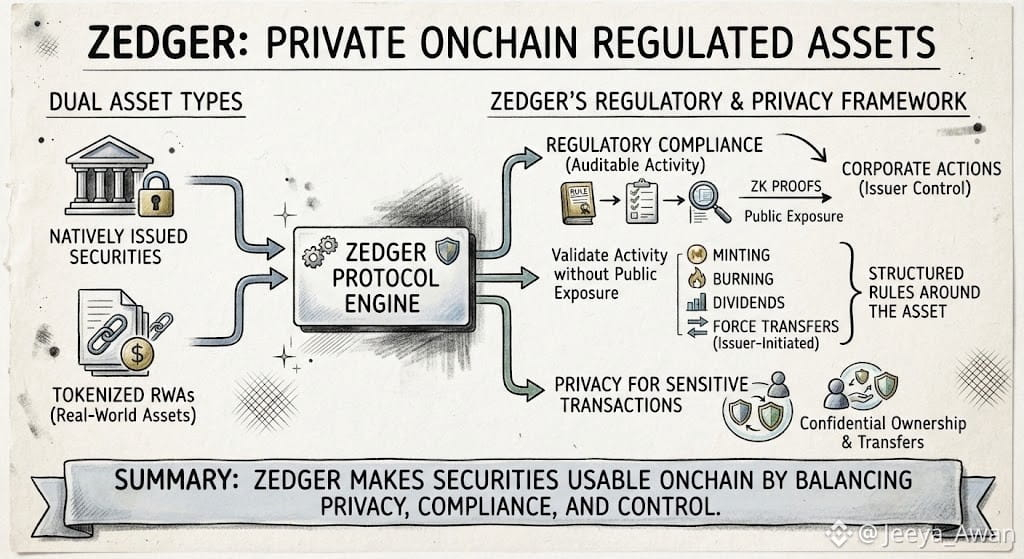
Phoenix and Zedger: Optimized Confidential Financial Governance
#Dusk clearly separates tasks:
Phoenix handles confidential transactions and the execution of private smart contracts.
Zedger focuses on regulated assets, lifecycle rules, and compliance logic.
This is crucial because true finance is more than just the transfer of funds; it also involves inventory, constraints, counterparties, and intent, details that, if managed completely transparently, pose systemic risks.
Building a Trustworthy Endpoint for Institutions
Dusk refuses to blur the lines between transaction activity and settlement.
The system will not masquerade as any other state if it cannot be proven that a transaction has been ultimately completed.
This design choice, seemingly conservative, is crucial for the organization.
Potentially completed transactions are essentially useless.
Verifiable Architecture
Dusk's Rust-based architecture and its deterministic virtual machine are intentional constraints.
They are not designed to slow down developers, but to prevent ambiguous execution paths.
Less freedom.
Higher predictability.
Few unexplainable situations.
Based on a token economic model of waning interest
Initial Supply: 500 million DUSK
Maximum Supply: 1 billion within 36 years
Release Cycle: Decreasing geometrically every four years
This architecture rewards long-term investors, rather than focusing on short-term gains. Storage requirements also prioritize long-term commitment over ease of use.
What is Dusk's long-term significance?
Dusk does not pursue hype. Instead, it strives to build high credibility under rigorous scrutiny.
In the future, funding sources must be verifiable, confidential, and legally compliant; Dusk positions itself as infrastructure, not a platform.
Infrastructure doesn't need to attract attention; it earns trust quietly.
$DUSK
ยท
--
Crypto continues to evolve, but sending digital dollars still seems far more complex than actually required. @Plasma (XPL) is changing that, building its network around stablecoins from the ground up. Zero-fee USDT transfers, transaction fees paid in stablecoins, sub-second transaction speeds, and EVM compatibility make payments easy and convenient again. Plasma's goal isn't to be all-encompassing, but rather to focus on efficient settlement. #Plasma $XPL {future}(XPLUSDT)
Crypto continues to evolve, but sending digital dollars still seems far more complex than actually required. @Plasma (XPL) is changing that, building its network around stablecoins from the ground up. Zero-fee USDT transfers, transaction fees paid in stablecoins, sub-second transaction speeds, and EVM compatibility make payments easy and convenient again. Plasma's goal isn't to be all-encompassing, but rather to focus on efficient settlement.
#Plasma $XPL
ยท
--
Plasma Mainnet Beta and XPLOn September 25, Plasmaโ€™s mainnet beta went live alongside the launch of theirr native token, XPL, as the 8th largest blockchain by stablecoin liquidity. $2B in stablecoins remain active on @Plasma from day one. Capital deployed across 100+ DeFi partners, including Aave, Ethena, Fluid, Euler and more. The goal is immediate utility: savings that preserve value, deep USDโ‚ฎ markets, and the lowest USDโ‚ฎ borrow rates in the industry. At mainnet beta, Plasma has vault deposits so users can withdraw USDโ‚ฎ0. This marked the completion of plasma final launch phase. Plasma enable zero-fee USDโ‚ฎ transfers for all users through its dashboard at app.plasma.to. The Journey From the beginning, Plasma was built alongside the community. Early access to Plasma opened for everyone through Echo. The Stablecoin Collective was created as a forum for education and collaboration. A deposit campaign was ran on Plasma, where in just over 30 minutes more than $1B in stablecoin liquidity was committed to the vaults to earn the right to participate in XPL public sale. This public sale ran on Echo so ownership was widely distributed. It drew in $373M in commitments, far surpassing $XPL cap of $50M by a 7x multiple. That foundation led to the partnership with Binance Earn. The first onchain USDโ‚ฎ yield product was launched inside the most widely used crypto application. The $1B cap was reached quickly. It became the largest and most successful campaign in Binance Earnโ€™s history. This journey then led to mainnet beta, where the largest chain was launched, by day one stablecoin liquidity in history. The Rails for Digital Dollars Plasmaโ€™s mission is to become the foundation for global money movement. Mainnet beta is the next step in making that vision real. As stablecoin regulation matures worldwide, led by the US moving in a positive direction, Plasma is built for alignment from day one. We see a world where Plasma is used in daily life for payments, foreign exchange, card networks, on- and off-ramps, and more. To facilitate this, mainnet beta introduced PlasmaBFT, which is a high-throughput consensus layer designed for stablecoin flows. At mainnet beta, users are able to move USDโ‚ฎ with zero fees using authorization-based transfers. During rollout and stress testing, zero-fee transfers are limited to Plasmaโ€™s own products. Over time, zero-fee transfers could extend beyond this products. App builders can leverage a chain engineered for composability, speed, efficiency, and security. Plasma infrastructure is a first of its kind for a chain of Plasmaโ€™s scale. Redefining how money moves is a distribution challenge. Money operates on network effects and networks are built on distribution. Reaching people who are excluded by legacy financial systems means going country by country, integrating deeply in local markets, and putting digital dollars directly in peopleโ€™s hands. Plasma is built to support that distribution at global scale. The chain is connected to physical peer-to-peer cash networks, so digital dollars achieve merchant penetration, moving along the same channels that people already trust. Own the System XPL is the native token that powers #Plasma . 10% of the supply was sold to community members in the public sale. At the launch of mainnet beta, an additional 25 million XPL tokens was distributed to recognize smaller depositors who completed Sonar (by Echo) verification and participated in that sale. This keeps ownership broad and aligned. 2.5 million XPL are reserved for current and future members of the Stablecoin Collective. The Collective began as a forum to build familiarity with stablecoins. It has since grown into a community that educates, contributes, and helps drive stablecoin adoption. It plays an active role in getting USDโ‚ฎ on Plasma into peopleโ€™s hands and in supporting the broader ecosystem. Together, these distributions reflect the core principles that participation should be broad, ownership should be shared, and contributors should be recognized. Beyond distribution, the Plasma network is secured by XPL. The token aligns incentives for validators, and ensures that ownership of the system sits with the people who use it and build on it. For the public sale, XPL will be distributed at mainnet beta launch to non-US participants. For US participants, distribution will occur on July 28, 2026, 12 months after the public sale concluded, in line with applicable laws. The Trillion-Dollar Opportunity Stablecoins are the most significant financial innovation since the creation of money. In emerging markets they are unwinding decades of friction by preserving purchasing power overnight, compressing remittances from weeks to minutes, and enabling small businesses to accept payments without gatekeepers. Hundreds of millions of people already rely on digital dollars as the only way to save, pay, and plan. Plasma is building a new global financial system for everyone, everywhere. Mainnet beta and XPL are the next steps toward that vision. The rails are delivered for global money movement, with the distribution that turns onchain dollars into everyday money. Stablecoins are Money 2.0. Plasma is how they get into the hands of everyone. {future}(XPLUSDT)

Plasma Mainnet Beta and XPL

On September 25, Plasmaโ€™s mainnet beta went live alongside the launch of theirr native token, XPL, as the 8th largest blockchain by stablecoin liquidity.
$2B in stablecoins remain active on @Plasma from day one. Capital deployed across 100+ DeFi partners, including Aave, Ethena, Fluid, Euler and more. The goal is immediate utility: savings that preserve value, deep USDโ‚ฎ markets, and the lowest USDโ‚ฎ borrow rates in the industry.
At mainnet beta, Plasma has vault deposits so users can withdraw USDโ‚ฎ0. This marked the completion of plasma final launch phase. Plasma enable zero-fee USDโ‚ฎ transfers for all users through its dashboard at app.plasma.to.
The Journey
From the beginning, Plasma was built alongside the community.
Early access to Plasma opened for everyone through Echo. The Stablecoin Collective was created as a forum for education and collaboration. A deposit campaign was ran on Plasma, where in just over 30 minutes more than $1B in stablecoin liquidity was committed to the vaults to earn the right to participate in XPL public sale. This public sale ran on Echo so ownership was widely distributed. It drew in $373M in commitments, far surpassing $XPL cap of $50M by a 7x multiple.
That foundation led to the partnership with Binance Earn. The first onchain USDโ‚ฎ yield product was launched inside the most widely used crypto application. The $1B cap was reached quickly. It became the largest and most successful campaign in Binance Earnโ€™s history.
This journey then led to mainnet beta, where the largest chain was launched, by day one stablecoin liquidity in history.
The Rails for Digital Dollars
Plasmaโ€™s mission is to become the foundation for global money movement. Mainnet beta is the next step in making that vision real. As stablecoin regulation matures worldwide, led by the US moving in a positive direction, Plasma is built for alignment from day one. We see a world where Plasma is used in daily life for payments, foreign exchange, card networks, on- and off-ramps, and more.
To facilitate this, mainnet beta introduced PlasmaBFT, which is a high-throughput consensus layer designed for stablecoin flows. At mainnet beta, users are able to move USDโ‚ฎ with zero fees using authorization-based transfers. During rollout and stress testing, zero-fee transfers are limited to Plasmaโ€™s own products. Over time, zero-fee transfers could extend beyond this products. App builders can leverage a chain engineered for composability, speed, efficiency, and security. Plasma infrastructure is a first of its kind for a chain of Plasmaโ€™s scale.
Redefining how money moves is a distribution challenge. Money operates on network effects and networks are built on distribution. Reaching people who are excluded by legacy financial systems means going country by country, integrating deeply in local markets, and putting digital dollars directly in peopleโ€™s hands. Plasma is built to support that distribution at global scale. The chain is connected to physical peer-to-peer cash networks, so digital dollars achieve merchant penetration, moving along the same channels that people already trust.
Own the System
XPL is the native token that powers #Plasma . 10% of the supply was sold to community members in the public sale. At the launch of mainnet beta, an additional 25 million XPL tokens was distributed to recognize smaller depositors who completed Sonar (by Echo) verification and participated in that sale. This keeps ownership broad and aligned.
2.5 million XPL are reserved for current and future members of the Stablecoin Collective. The Collective began as a forum to build familiarity with stablecoins. It has since grown into a community that educates, contributes, and helps drive stablecoin adoption. It plays an active role in getting USDโ‚ฎ on Plasma into peopleโ€™s hands and in supporting the broader ecosystem.
Together, these distributions reflect the core principles that participation should be broad, ownership should be shared, and contributors should be recognized. Beyond distribution, the Plasma network is secured by XPL. The token aligns incentives for validators, and ensures that ownership of the system sits with the people who use it and build on it.
For the public sale, XPL will be distributed at mainnet beta launch to non-US participants. For US participants, distribution will occur on July 28, 2026, 12 months after the public sale concluded, in line with applicable laws.
The Trillion-Dollar Opportunity
Stablecoins are the most significant financial innovation since the creation of money. In emerging markets they are unwinding decades of friction by preserving purchasing power overnight, compressing remittances from weeks to minutes, and enabling small businesses to accept payments without gatekeepers. Hundreds of millions of people already rely on digital dollars as the only way to save, pay, and plan.
Plasma is building a new global financial system for everyone, everywhere. Mainnet beta and XPL are the next steps toward that vision. The rails are delivered for global money movement, with the distribution that turns onchain dollars into everyday money.
Stablecoins are Money 2.0. Plasma is how they get into the hands of everyone.
ยท
--
ยท
--
I'm closely following the @Dusk_Foundation because it's built on an idealized model of financial reality, not crypto. Dusk's privacy protection doesn't mean hiding everything, but rather selective disclosure. Its zero-knowledge proof ensures confidentiality while also providing auditing and accountability mechanisms, which are crucial for regulated decentralized finance and tokenized RWAs. The widespread adoption of Dusk will take time, but it seems well-prepared as institutions migrate to blockchain technology. #Dusk $DUSK {future}(DUSKUSDT)
I'm closely following the @Dusk because it's built on an idealized model of financial reality, not crypto. Dusk's privacy protection doesn't mean hiding everything, but rather selective disclosure. Its zero-knowledge proof ensures confidentiality while also providing auditing and accountability mechanisms, which are crucial for regulated decentralized finance and tokenized RWAs. The widespread adoption of Dusk will take time, but it seems well-prepared as institutions migrate to blockchain technology.
#Dusk $DUSK
ยท
--
Dusk Network: Privacy with Proof, Built for Regulated AssetsWhile crypto chases speculative narratives, Dusk Network focuses on long term development: building a regulatory, compliant enterprise financing infrastructure on the blockchain. Core Concept: Auditable Privacy Dusk's core innovation lies not only in privacy but also in selective disclosure. In the crypto space, privacy is often used as a marketing slogan or a legal hurdle. The key is not privacy itself, but verification. This balance is crucial for regulated markets. Dusk's implementation includes: Predefined confidential transactions, using zero-knowledge proofs.Regulatory and auditable access, accessing specific data when legally required.Providing regulatory pathways for physical assets and securities. Market Positioning: The Right Time for Institutional Transformation Dusk focused on this early on, but the market eventually followed suit. Regulated tokenized assets and decentralized finance (DeFi) have become key development areas, especially in Europe, with frameworks such as distributed ledger technology (DLT) experimental systems emerging. Key Ecosystem Achievements: Mainnet Operation, employing confidential smart contracts.Strategic Partnership with NPEX, the Dutch tokenized securities exchange.DuskEVM, Compatible with the Solidity language, allowing developers to leverage existing tools.Citadel, A private and verified shared knowledge-free KYC layer. DUSK Token: Coordinating Network Incentive Mechanism The total supply of $DUSK tokens is capped at 1 billion, designed to ensure long-term network security and user participation. Circulating Supply, Approximately 500 million tokens.Issuance Schedule, A 36-year geometric decay mechanism to reward participants and validators.Utility: Secures the network, processes transactions, and manages protocol development. Importance of this Architecture Dusk is not competing with giants in the open decentralized finance (DeFi) space. Conversely, it creates a crucial space between public transparency and complete privacy. Real-world use case A platform for issuing tokenized private credit. Investor privacy is protected.Transaction limits are enforced on the blockchain.Regulators can audit fund flows without accessing all users' records. This is an infrastructure designed according to how the financial industry actually operates, providing legally binding rules and privacy protections when needed. Future Development Path and Risks Adoption of Dusk Network in the regulated financial sector will be a slow and cautious process. Success depends on the continued development of the following aspects: Regulatory approval of the selective disclosure model.Launch of actual products with partners such as NPEX.Ecosystem development around developer tools, such as the W3sper SDK for integration. Competition from Ethereum Layer 2 networks is fierce, but Dusk Network's design based on core compliance principles gives it a unique and defensible advantage. Conclusion: Following the Rules Dusk Network doesn't position itself as an island, but rather as one of the few projects deliberately built to comply with existing financial regulations. It's one of the few projects that deliberately follows European market regulatory practices rather than the communication methods preferred by the crypto space. In the wave of blockchain technology adoption, a blockchain that can provide audit, privacy, and compliance solutions within a single architecture is not only attractive but also crucial. Dusk is quietly building this foundational layer. @Dusk_Foundation #Dusk {future}(DUSKUSDT)

Dusk Network: Privacy with Proof, Built for Regulated Assets

While crypto chases speculative narratives, Dusk Network focuses on long term development: building a regulatory, compliant enterprise financing infrastructure on the blockchain.

Core Concept: Auditable Privacy
Dusk's core innovation lies not only in privacy but also in selective disclosure.
In the crypto space, privacy is often used as a marketing slogan or a legal hurdle. The key is not privacy itself, but verification.
This balance is crucial for regulated markets. Dusk's implementation includes:
Predefined confidential transactions, using zero-knowledge proofs.Regulatory and auditable access, accessing specific data when legally required.Providing regulatory pathways for physical assets and securities.
Market Positioning: The Right Time for Institutional Transformation
Dusk focused on this early on, but the market eventually followed suit. Regulated tokenized assets and decentralized finance (DeFi) have become key development areas, especially in Europe, with frameworks such as distributed ledger technology (DLT) experimental systems emerging.
Key Ecosystem Achievements:
Mainnet Operation, employing confidential smart contracts.Strategic Partnership with NPEX, the Dutch tokenized securities exchange.DuskEVM, Compatible with the Solidity language, allowing developers to leverage existing tools.Citadel, A private and verified shared knowledge-free KYC layer.
DUSK Token: Coordinating Network Incentive Mechanism
The total supply of $DUSK tokens is capped at 1 billion, designed to ensure long-term network security and user participation.
Circulating Supply, Approximately 500 million tokens.Issuance Schedule, A 36-year geometric decay mechanism to reward participants and validators.Utility: Secures the network, processes transactions, and manages protocol development.
Importance of this Architecture
Dusk is not competing with giants in the open decentralized finance (DeFi) space. Conversely, it creates a crucial space between public transparency and complete privacy.
Real-world use case
A platform for issuing tokenized private credit.
Investor privacy is protected.Transaction limits are enforced on the blockchain.Regulators can audit fund flows without accessing all users' records.
This is an infrastructure designed according to how the financial industry actually operates, providing legally binding rules and privacy protections when needed.
Future Development Path and Risks
Adoption of Dusk Network in the regulated financial sector will be a slow and cautious process. Success depends on the continued development of the following aspects:
Regulatory approval of the selective disclosure model.Launch of actual products with partners such as NPEX.Ecosystem development around developer tools, such as the W3sper SDK for integration.
Competition from Ethereum Layer 2 networks is fierce, but Dusk Network's design based on core compliance principles gives it a unique and defensible advantage.
Conclusion: Following the Rules
Dusk Network doesn't position itself as an island, but rather as one of the few projects deliberately built to comply with existing financial regulations.
It's one of the few projects that deliberately follows European market regulatory practices rather than the communication methods preferred by the crypto space.
In the wave of blockchain technology adoption, a blockchain that can provide audit, privacy, and compliance solutions within a single architecture is not only attractive but also crucial. Dusk is quietly building this foundational layer.
@Dusk #Dusk
ยท
--
#Plasma is not just another generic blockchain. It is a L1 with a very clear design goal: efficient, reliable, and massive stablecoin transfers. Plasma has provided over $2B in stablecoin liquidity from the day one and supports free USDT transfers across the entire protocol, treating payments as a core infrastructure, not an add-on feature. In a field obsessed with various narratives, Plasma focuses on what truly matters: predictable settlement. The $XPL is the engine behind that design. @Plasma {spot}(XPLUSDT)
#Plasma is not just another generic blockchain. It is a L1 with a very clear design goal: efficient, reliable, and massive stablecoin transfers. Plasma has provided over $2B in stablecoin liquidity from the day one and supports free USDT transfers across the entire protocol, treating payments as a core infrastructure, not an add-on feature. In a field obsessed with various narratives, Plasma focuses on what truly matters: predictable settlement. The $XPL is the engine behind that design.
@Plasma
ยท
--
Plasma: A Stablecoin Chain Designed for Payments, Not HypeIn a market saturated with multi-chain concepts, Plasma stands out with its focused essence. It's not a general-purpose Layer 1 network, but a professional settlement network designed for efficient, reliable, and large-scale stablecoin transfers. Launch: Core First Plasma officially launches at the end of 2025 and boasts outstanding core features: Over $2 billion in stablecoin liquidity on launch day.Integrated with over 100 decentralized finance platforms, including Aave and Chainlink.Its native token, $XPL, is listed on Binance, ensuring instant access for users. This is not a speculative project, but a mature and reliable payment system ready for immediate deployment. Architectural Advantages: Focus as the Core While other blockchains expand their reach, Plasma maintains its limitations. This precise focus is precisely its strategic advantage: Reduces systemic risk, enhancing reliability.Strengthens clear accountability mechanisms within the network.Optimizes overall infrastructure, ensuring the predictability of stablecoin settlements. Scope is based on risk-based decisions. Plasma's limitations make its safeguards more reliable. Solving Real-World Problems Plasma directly addresses the shortcomings in stablecoin usability: Achieves zero USDT transfers at the protocol level through a custodial payment manager.Fast and finalized, settlements take only seconds, not potentially minutes.A stablecoin-centric user experience, reducing reliance on volatile Gas tokens. XPL Token: Service Engine The XPL token is designed to serve the network: Secures the chain through validator staking.Supports governance and USDT-independent transactions.Incentivizes network growth and stability. EVM Compatibility: A Strategic Bridge Plasma doesn't prioritize EVM compatibility as an end goal, but rather as a developer gateway. It allows teams to build using existing tools while the chain itself provides a new and improved stablecoin user experience. The Ultimate Goal Plasma's concept is simple: as stablecoins become the primary means of on-chain value transfer, custom-designed settlement layers will outperform public settlement layers. Plasma's goal isn't to please everyone. It aims to make stablecoin payments a reliable everyday payment method globally. Amidst various speculative trends, Plasma focuses on practical applications. This is a low-key bet on the future of cryptocurrency infrastructure. The Road Ahead: Challenges and Infrastructure Bets The Plasma project has not been without its challenges. It remains experimental, its tools are still under development, and its native ecosystem is still in its infancy compared to mature blockchains. Its success hinges on execution. With stablecoin market capitalization exceeding $300 billion and continuing to grow, Plasma represents a focused bet on the future: a future where professional and trustworthy payment pipelines will be key global infrastructure. Plasma: A Quiet Evolution Sometimes, the most important changes are not the most eye-catching. Plasma is noteworthy not because it may generate media buzz, but because it is committed to creating a seamless, reliable, and convenient blockchain payment experience. In the realm of financial infrastructure, simplicity is often the highest praise. Plasma integrates its technology, token economics, and philosophy around a single goal, efficiently settling stablecoins, paving the way for the next wave of digital currency adoption: a wave driven not by volatility, but by stable and usable value transfers facilitating global trade. @Plasma #Plasma $XPL {spot}(XPLUSDT)

Plasma: A Stablecoin Chain Designed for Payments, Not Hype

In a market saturated with multi-chain concepts, Plasma stands out with its focused essence. It's not a general-purpose Layer 1 network, but a professional settlement network designed for efficient, reliable, and large-scale stablecoin transfers.
Launch: Core First
Plasma officially launches at the end of 2025 and boasts outstanding core features:
Over $2 billion in stablecoin liquidity on launch day.Integrated with over 100 decentralized finance platforms, including Aave and Chainlink.Its native token, $XPL , is listed on Binance, ensuring instant access for users.
This is not a speculative project, but a mature and reliable payment system ready for immediate deployment.
Architectural Advantages: Focus as the Core
While other blockchains expand their reach, Plasma maintains its limitations. This precise focus is precisely its strategic advantage:
Reduces systemic risk, enhancing reliability.Strengthens clear accountability mechanisms within the network.Optimizes overall infrastructure, ensuring the predictability of stablecoin settlements.
Scope is based on risk-based decisions. Plasma's limitations make its safeguards more reliable.
Solving Real-World Problems
Plasma directly addresses the shortcomings in stablecoin usability:
Achieves zero USDT transfers at the protocol level through a custodial payment manager.Fast and finalized, settlements take only seconds, not potentially minutes.A stablecoin-centric user experience, reducing reliance on volatile Gas tokens.
XPL Token: Service Engine
The XPL token is designed to serve the network:
Secures the chain through validator staking.Supports governance and USDT-independent transactions.Incentivizes network growth and stability.
EVM Compatibility: A Strategic Bridge
Plasma doesn't prioritize EVM compatibility as an end goal, but rather as a developer gateway. It allows teams to build using existing tools while the chain itself provides a new and improved stablecoin user experience.
The Ultimate Goal
Plasma's concept is simple: as stablecoins become the primary means of on-chain value transfer, custom-designed settlement layers will outperform public settlement layers. Plasma's goal isn't to please everyone. It aims to make stablecoin payments a reliable everyday payment method globally.
Amidst various speculative trends, Plasma focuses on practical applications. This is a low-key bet on the future of cryptocurrency infrastructure.
The Road Ahead: Challenges and Infrastructure Bets
The Plasma project has not been without its challenges. It remains experimental, its tools are still under development, and its native ecosystem is still in its infancy compared to mature blockchains. Its success hinges on execution. With stablecoin market capitalization exceeding $300 billion and continuing to grow, Plasma represents a focused bet on the future: a future where professional and trustworthy payment pipelines will be key global infrastructure.
Plasma: A Quiet Evolution
Sometimes, the most important changes are not the most eye-catching. Plasma is noteworthy not because it may generate media buzz, but because it is committed to creating a seamless, reliable, and convenient blockchain payment experience.
In the realm of financial infrastructure, simplicity is often the highest praise.
Plasma integrates its technology, token economics, and philosophy around a single goal, efficiently settling stablecoins, paving the way for the next wave of digital currency adoption: a wave driven not by volatility, but by stable and usable value transfers facilitating global trade.
@Plasma #Plasma $XPL
ยท
--
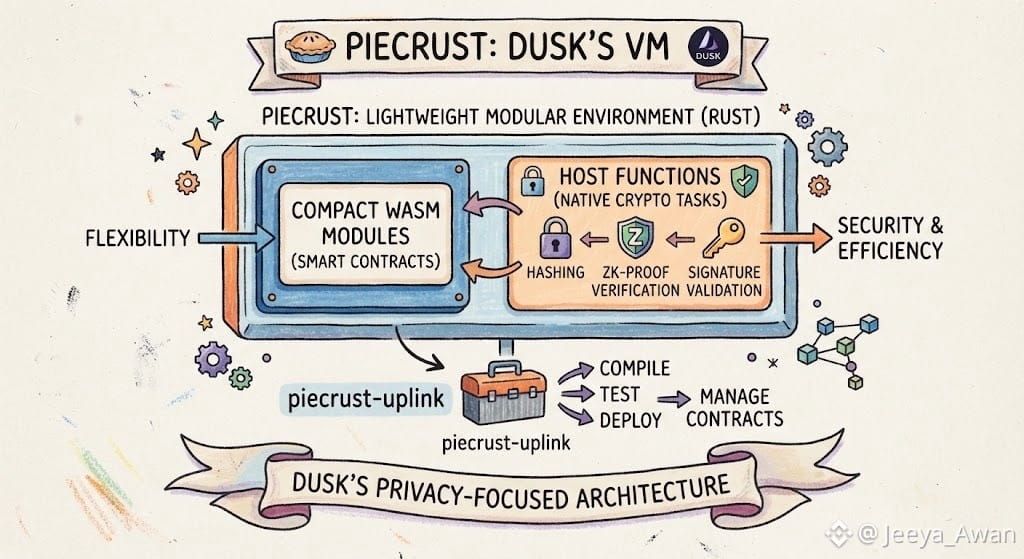
From the outset, Dusk Network has prioritized the confidentiality and regulatory compliance of its smart contracts, with its Rusk Virtual Machine (RVM). The network delivers deterministic finality through the PlasmaBFT consensus mechanism, with transaction settlement times in under a second, crucial in the financial sector. This design supports auditable proprietary financial transactions, such as tokenized securities, ensuring stability and reliability even in rapid experimentation. @Dusk_Foundation #Dusk $DUSK {spot}(DUSKUSDT)
From the outset, Dusk Network has prioritized the confidentiality and regulatory compliance of its smart contracts, with its Rusk Virtual Machine (RVM).
The network delivers deterministic finality through the PlasmaBFT consensus mechanism, with transaction settlement times in under a second, crucial in the financial sector.
This design supports auditable proprietary financial transactions, such as tokenized securities, ensuring stability and reliability even in rapid experimentation.
@Dusk #Dusk $DUSK
ยท
--
Dusk Network: The Architecture of Institutional ConfidenceDUSK is not simply a privacy chain, but a blockchain designed around the fundamental constraints of real-world finance: ConfidentialityCompliancePredictable execution This core focus determines its distinctive design philosophy, prioritizing long-term stability over experimental flexibility, making it inherently enterprise-oriented. Core Design Principle: Privacy as a Fundamental Constraint By enforcing confidentiality from the outset, the network design is fundamentally altered. Execution Model When executing smart contracts, the DUSK Virtual Machine (RVM) pre-emptively maintains privacy. Data and logic remain confidential; however, the system can generate selectively encrypted evidence for auditing and compliance purposes, simulating the operation of regulated finance. Audit Logic Auditors work in a system where they cannot see all information. Sharing requires storage space, and rewards are tied to continuous uptime and reliability, thus curbing opportunistic behavior and promoting long-term stability. Governance Assumption Gradual Change. Protocol updates focus on maintaining system integrity and predictability, rather than rapid and disruptive iterations. This adjustment is an advantage for enterprises. Result A network that operates quietly and reliably under pressure, ultimately delivering trustworthy results. This network is designed for everyday reliability, not rapid fluctuations. DUSK Token: Designed for stability, not speculation. The token's original design embodies the nature of an enterprise network. Stable Supply Eliminates the uncertainty of long-term inflation. Incentive Mechanism Allocation prioritizes auditors and infrastructure providers to ensure network security and efficiency. Use-Oriented Designed for storage, contract execution, and governance, classified as critical infrastructure, not a speculative asset. Implication: Real-world use cases The Dusk architecture is designed for applications that require a balance between confidentiality and auditability. Tokenized securities and digital assetsRegulated payments and transfersPrivate financial protocols and settlementsCompliant decentralized finance (DeFi) tools Developers do not need to add privacy and compliance requirements later; these functionalities are built into the execution layer, allowing teams to focus on product development. Conclusion: Building a Robust Infrastructure for Sustainable Value Dusk's value proposition, seemingly simple, is profoundly meaningful. It achieves a balance between maximum flexibility and predictable, reliable performance within real-world constraints. Its success does not depend on rapid deployment, but on the stability of its auditing firm, predictable settlement, and the complete trust of institutions conducting sensitive financial transactions through its platform. In an industry obsessed with innovation, Dusk is building infrastructure that forms the foundation of a lasting financial system. @Dusk_Foundation #Dusk $DUSK {spot}(DUSKUSDT)

Dusk Network: The Architecture of Institutional Confidence

DUSK is not simply a privacy chain, but a blockchain designed around the fundamental constraints of real-world finance:
ConfidentialityCompliancePredictable execution
This core focus determines its distinctive design philosophy, prioritizing long-term stability over experimental flexibility, making it inherently enterprise-oriented.

Core Design Principle: Privacy as a Fundamental Constraint
By enforcing confidentiality from the outset, the network design is fundamentally altered.
Execution Model
When executing smart contracts, the DUSK Virtual Machine (RVM) pre-emptively maintains privacy. Data and logic remain confidential; however, the system can generate selectively encrypted evidence for auditing and compliance purposes, simulating the operation of regulated finance.
Audit Logic
Auditors work in a system where they cannot see all information. Sharing requires storage space, and rewards are tied to continuous uptime and reliability, thus curbing opportunistic behavior and promoting long-term stability.
Governance Assumption
Gradual Change. Protocol updates focus on maintaining system integrity and predictability, rather than rapid and disruptive iterations. This adjustment is an advantage for enterprises.
Result
A network that operates quietly and reliably under pressure, ultimately delivering trustworthy results. This network is designed for everyday reliability, not rapid fluctuations.

DUSK Token: Designed for stability, not speculation.
The token's original design embodies the nature of an enterprise network.
Stable Supply
Eliminates the uncertainty of long-term inflation.
Incentive Mechanism
Allocation prioritizes auditors and infrastructure providers to ensure network security and efficiency.
Use-Oriented
Designed for storage, contract execution, and governance, classified as critical infrastructure, not a speculative asset.
Implication: Real-world use cases
The Dusk architecture is designed for applications that require a balance between confidentiality and auditability.
Tokenized securities and digital assetsRegulated payments and transfersPrivate financial protocols and settlementsCompliant decentralized finance (DeFi) tools
Developers do not need to add privacy and compliance requirements later; these functionalities are built into the execution layer, allowing teams to focus on product development.
Conclusion: Building a Robust Infrastructure for Sustainable Value
Dusk's value proposition, seemingly simple, is profoundly meaningful. It achieves a balance between maximum flexibility and predictable, reliable performance within real-world constraints.
Its success does not depend on rapid deployment, but on the stability of its auditing firm, predictable settlement, and the complete trust of institutions conducting sensitive financial transactions through its platform. In an industry obsessed with innovation, Dusk is building infrastructure that forms the foundation of a lasting financial system.
@Dusk #Dusk $DUSK
ยท
--
Plasma: A Blockchain Technology Designed for Real-World MoneyVarious blockchain technologies do promises of all-encompassing solutions, Plasma stands out for its focus on one goal: Building the infrastructure for stablecoin payments. It's a Layer 1 blockchain technology designed not for speculation, but for the reliable, cost-effective, and instant transfer of value. Why is Plasma's Stablecoin-First Design So Important? Most blockchain technologies treat stablecoins no differently than other tokens. Plasma, however, treats them as a core product. This fundamental choice completely reshapes the user experience and the underlying technology. Stablecoins Meet Market Demands Used for everyday purposes: Cross-border transfersBusiness paymentsPayrollSavings. Plasma is designed to meet these real-world needs. Stablecoins are market-friendly De-gas-fee elimination is crucial, not a gimmick Users can send USDT or USDC without purchasing volatile gas tokens. Fees are fixed and predictable, typically paid in the stablecoin itself. A radical transformation of the user experience The entire process shifts from "I sent funds" to "I sent funds using blockchain technology." This is crucial for transitioning from a small cryptocurrency user base to a global user base. Designed for payments, not standards The payment architecture is designed for reliability and finality, not peak throughput. Fast and guaranteed finality Transaction settlement takes <1 second and is absolutely accurate. This is essential for merchants confirming sales, businesses managing payroll, and making instant transfers. Low and predictable costs Low and stable fees make fund transfers virtually cost-effective. EVM compatibility for developers Developers can use familiar Ethereum tools, reducing integration risks and shortening deployment time. Plasma doesn't use this functionality to become a general-purpose blockchain; rather, it serves as the foundation for improving stablecoin settlements. Plasma's Main Use Cases Plasma is designed to support high-volume, real-world financial applications. Global Payments and Transfers Remittances Supports low-cost, instant cross-border transfers without intermediaries. Global Payments Facilitates instant payments, payroll processing, and partner payments globally. Merchant Payments Enables businesses to accept global payments, achieving instant settlement and reduced costs. Financial Inclusion and Accessibility USD Access Provides an open, global digital USD access channel for economies with weak local currencies. Open Banking Enables saving, spending, and earning without a traditional bank account. Micropayments Enables small, automated transactions of digital content and services. XPL: Network Backbone Native digital currencySupport the circulation of stablecoins. Goal To ensure network security and manage protocol evolution through validator incentive mechanisms. Design Concept XPL is the economic backbone, not just a transaction fee gateway for frequent user interactions. The goal is to maintain payment simplicity and focus on stablecoins. Strategic Excellence and Future Vision Plasma takes a long-term view, aiming to become the invisible and trusted infrastructure of the global financial sector. Bitcoin-Based SecurityDecentralized-First StrategySuccess Metric Conclusion: Habit-Cultivating Infrastructure Plasma doesn't chase fame or fortune; Plasma is systematically building the infrastructure needed for stablecoins to become truly usable currencies. Plasma's focus on payment needs, makes it not just another blockchain technology, but a fundamental financial infrastructure. In the history of crypto, the most influential networks aren't necessarily the most exciting, but those that require little attention due to their stable operation. Plasma is building precisely that future. @Plasma #Plasma $XPL {spot}(XPLUSDT)

Plasma: A Blockchain Technology Designed for Real-World Money

Various blockchain technologies do promises of all-encompassing solutions, Plasma stands out for its focus on one goal:
Building the infrastructure for stablecoin payments.
It's a Layer 1 blockchain technology designed not for speculation, but for the reliable, cost-effective, and instant transfer of value.
Why is Plasma's Stablecoin-First Design So Important?
Most blockchain technologies treat stablecoins no differently than other tokens. Plasma, however, treats them as a core product. This fundamental choice completely reshapes the user experience and the underlying technology.
Stablecoins Meet Market Demands
Used for everyday purposes:
Cross-border transfersBusiness paymentsPayrollSavings.
Plasma is designed to meet these real-world needs. Stablecoins are market-friendly
De-gas-fee elimination is crucial, not a gimmick
Users can send USDT or USDC without purchasing volatile gas tokens. Fees are fixed and predictable, typically paid in the stablecoin itself.
A radical transformation of the user experience
The entire process shifts from "I sent funds" to "I sent funds using blockchain technology." This is crucial for transitioning from a small cryptocurrency user base to a global user base.

Designed for payments, not standards
The payment architecture is designed for reliability and finality, not peak throughput.
Fast and guaranteed finality
Transaction settlement takes <1 second and is absolutely accurate. This is essential for merchants confirming sales, businesses managing payroll, and making instant transfers.
Low and predictable costs
Low and stable fees make fund transfers virtually cost-effective.
EVM compatibility for developers
Developers can use familiar Ethereum tools, reducing integration risks and shortening deployment time. Plasma doesn't use this functionality to become a general-purpose blockchain; rather, it serves as the foundation for improving stablecoin settlements.

Plasma's Main Use Cases
Plasma is designed to support high-volume, real-world financial applications.
Global Payments and Transfers
Remittances
Supports low-cost, instant cross-border transfers without intermediaries.
Global Payments
Facilitates instant payments, payroll processing, and partner payments globally.
Merchant Payments
Enables businesses to accept global payments, achieving instant settlement and reduced costs.
Financial Inclusion and Accessibility
USD Access
Provides an open, global digital USD access channel for economies with weak local currencies.
Open Banking
Enables saving, spending, and earning without a traditional bank account.
Micropayments
Enables small, automated transactions of digital content and services.
XPL: Network Backbone
Native digital currencySupport the circulation of stablecoins.
Goal
To ensure network security and manage protocol evolution through validator incentive mechanisms.
Design Concept
XPL is the economic backbone, not just a transaction fee gateway for frequent user interactions. The goal is to maintain payment simplicity and focus on stablecoins.
Strategic Excellence and Future Vision
Plasma takes a long-term view, aiming to become the invisible and trusted infrastructure of the global financial sector.
Bitcoin-Based SecurityDecentralized-First StrategySuccess Metric
Conclusion: Habit-Cultivating Infrastructure
Plasma doesn't chase fame or fortune; Plasma is systematically building the infrastructure needed for stablecoins to become truly usable currencies. Plasma's focus on payment needs, makes it not just another blockchain technology, but a fundamental financial infrastructure. In the history of crypto, the most influential networks aren't necessarily the most exciting, but those that require little attention due to their stable operation.
Plasma is building precisely that future.
@Plasma #Plasma $XPL
ยท
--
$DCR | $USDT is showing strong bullish momentum, up +28.32% over the last 24 hours. After hitting a high of 25.00, the price is currently consolidating around 23.61. The SuperTrend indicator remains green, suggesting the upward trend is still intact as long as it stays above the support level near 22.02. However, the recent red candles and declining volume indicate a temporary cooling-off period. If it holds the current support, we could see another test of the 25.00 resistance; otherwise, a dip toward the 21.88 zone is possible. #MarketCorrection #RiskAssetsMarketShock #WhenWillBTCRebound
$DCR | $USDT is showing strong bullish momentum, up +28.32% over the last 24 hours. After hitting a high of 25.00, the price is currently consolidating around 23.61.
The SuperTrend indicator remains green, suggesting the upward trend is still intact as long as it stays above the support level near 22.02. However, the recent red candles and declining volume indicate a temporary cooling-off period. If it holds the current support, we could see another test of the 25.00 resistance; otherwise, a dip toward the 21.88 zone is possible.
#MarketCorrection
#RiskAssetsMarketShock
#WhenWillBTCRebound
B
FRAX/USDT
Price
0.7789
ยท
--
What impressed me most about Walrus was its deep integration with Sui. Storage is no longer just an abstract concept; it exists on the blockchain and is ownable, divisible, and programmable. Large binary data (blobs) are transformed into objects that smart contracts can resolve: availability, expiration time, expansion, and deletion. This is the first time I've felt that decentralized storage is an integral part of the blockchain, not just an external add-on, and it has completely changed the way I think about building large-scale, data-centric decentralized applications (dApps). @WalrusProtocol #Walrus $WAL {spot}(WALUSDT)
What impressed me most about Walrus was its deep integration with Sui. Storage is no longer just an abstract concept; it exists on the blockchain and is ownable, divisible, and programmable. Large binary data (blobs) are transformed into objects that smart contracts can resolve: availability, expiration time, expansion, and deletion. This is the first time I've felt that decentralized storage is an integral part of the blockchain, not just an external add-on, and it has completely changed the way I think about building large-scale, data-centric decentralized applications (dApps).
@Walrus ๐Ÿฆญ/acc #Walrus $WAL
ยท
--
From Skeptic to Advocate: My Hands-On Journey with Walrus ProtocolI still remember my first time using Walrus. I faced a problem familiar to developers: how to reliably and economically store massive datasets used to train AI. Centralized cloud storage seemed both expensive and opaque for such unstructured, public data. A colleague recommended Walrus to me. Despite my skepticism, I curiously launched the command-line interface. The whole process was surprisingly simple. Within minutes, my data was fragmented, encrypted, and distributed across a decentralized network. A forged credential appeared in my wallet, a cryptographic proof that my data had been stored and was accessible. I wasn't just paying for bytes on a server; I was interacting with a dynamic, tokenized data marketplace. The brilliance of the experience was evident. It wasn't just storage; it was a programmable and verifiable data tool. My Personal Journey into Decentralized Storage That first experience was a revelation. As Walrus has been integrated into more and more projects, my appreciation for it has only grown. The protocol's core promise, making data reliable, valuable, and manageable, has gone from a marketing slogan to a tangible reality. Reliability Achieved Through Innovative Architecture Walrus doesn't simply copy your data multiple times; it uses advanced linear coding to divide each data block into a series of recursive coded segments and stores them in a dynamic global network of nodes. The result? Even if many nodes fail or suffer malicious attacks, my data is still recoverable. This Byzantine fault tolerance provides profound peace of mind, especially for archived data whose goal is "set up and rest easy." Sui intelligent nodes continuously verify data availability, transforming data from static archives into vibrant, verifiable assets. Scalable Cost-Effectiveness The true "aha" moment came when I analyzed costs. Traditional full replication is prohibitively expensive for large datasets. Walrus' erasure coding keeps the stored data size to about five times the original size, a significant improvement. But I learned how to optimize. For small files, tools like Walrus Quilt become indispensable, as they can package files to spread the cost of static metadata. I started purchasing larger storage resources in bulk on Sui and then programmatically splitting them using Programmable Transaction Blocks (PTBs) to reduce gas fees. Whenever a short-term project ended, I proactively reclaimed and reused storage space, making cost management an efficient and profitable part of the development cycle. Governance and Integration Seamless integration with the Sui blockchain is Walrus's biggest strength. Every storage resource and data archive is a Sui native component. This means my smart contracts can programmatically verify the state of a dataset, extend its lifecycle, or manage access permissions. The Delegated Proof-of-Stake (DPoS) model, powered by WAL code, establishes real compatibility between storage participants, storage nodes, and users like myself. I am not a passive consumer; instead, I participate in an ecosystem where providing reliable services is economically rewarded. Beyond Hype: Developer Tools Walrus serves developers worldwide. Whether I'm using the command-line interface for quick tasks, the SDK for application integration, or the standard HTTP API for compatibility with existing Content Delivery Networks (CDNs), I get a stable and reliable experience. The protocol doesn't require a complete overhaul of the infrastructure; it integrates seamlessly into workflows and is enhanced by decentralized security mechanisms. Conclusion: The Cornerstone of the AI Data Era My exploration of Walrus has evolved from initial curiosity to deep application. It has made me realize that data in the AI era is not just about quantity, but also about verifiability, availability, and economic sustainability. Walrus was created for this purpose. It transforms the problem of messy, unstructured data storage into a structured, market-driven solution. For any developer committed to building the future of AI and Web3, mastering the Walrus protocol is no longer an option, but an essential skill, transforming data from a burden into a valuable and reliable asset. @WalrusProtocol #Walrus $WAL {spot}(WALUSDT)

From Skeptic to Advocate: My Hands-On Journey with Walrus Protocol

I still remember my first time using Walrus. I faced a problem familiar to developers: how to reliably and economically store massive datasets used to train AI. Centralized cloud storage seemed both expensive and opaque for such unstructured, public data. A colleague recommended Walrus to me. Despite my skepticism, I curiously launched the command-line interface. The whole process was surprisingly simple. Within minutes, my data was fragmented, encrypted, and distributed across a decentralized network. A forged credential appeared in my wallet, a cryptographic proof that my data had been stored and was accessible. I wasn't just paying for bytes on a server; I was interacting with a dynamic, tokenized data marketplace. The brilliance of the experience was evident. It wasn't just storage; it was a programmable and verifiable data tool.

My Personal Journey into Decentralized Storage
That first experience was a revelation. As Walrus has been integrated into more and more projects, my appreciation for it has only grown. The protocol's core promise, making data reliable, valuable, and manageable, has gone from a marketing slogan to a tangible reality.
Reliability Achieved Through Innovative Architecture
Walrus doesn't simply copy your data multiple times; it uses advanced linear coding to divide each data block into a series of recursive coded segments and stores them in a dynamic global network of nodes. The result? Even if many nodes fail or suffer malicious attacks, my data is still recoverable. This Byzantine fault tolerance provides profound peace of mind, especially for archived data whose goal is "set up and rest easy." Sui intelligent nodes continuously verify data availability, transforming data from static archives into vibrant, verifiable assets.
Scalable Cost-Effectiveness
The true "aha" moment came when I analyzed costs. Traditional full replication is prohibitively expensive for large datasets. Walrus' erasure coding keeps the stored data size to about five times the original size, a significant improvement. But I learned how to optimize. For small files, tools like Walrus Quilt become indispensable, as they can package files to spread the cost of static metadata. I started purchasing larger storage resources in bulk on Sui and then programmatically splitting them using Programmable Transaction Blocks (PTBs) to reduce gas fees. Whenever a short-term project ended, I proactively reclaimed and reused storage space, making cost management an efficient and profitable part of the development cycle.
Governance and Integration
Seamless integration with the Sui blockchain is Walrus's biggest strength. Every storage resource and data archive is a Sui native component. This means my smart contracts can programmatically verify the state of a dataset, extend its lifecycle, or manage access permissions. The Delegated Proof-of-Stake (DPoS) model, powered by WAL code, establishes real compatibility between storage participants, storage nodes, and users like myself. I am not a passive consumer; instead, I participate in an ecosystem where providing reliable services is economically rewarded.
Beyond Hype: Developer Tools
Walrus serves developers worldwide. Whether I'm using the command-line interface for quick tasks, the SDK for application integration, or the standard HTTP API for compatibility with existing Content Delivery Networks (CDNs), I get a stable and reliable experience. The protocol doesn't require a complete overhaul of the infrastructure; it integrates seamlessly into workflows and is enhanced by decentralized security mechanisms.
Conclusion: The Cornerstone of the AI Data Era
My exploration of Walrus has evolved from initial curiosity to deep application. It has made me realize that data in the AI era is not just about quantity, but also about verifiability, availability, and economic sustainability. Walrus was created for this purpose. It transforms the problem of messy, unstructured data storage into a structured, market-driven solution. For any developer committed to building the future of AI and Web3, mastering the Walrus protocol is no longer an option, but an essential skill, transforming data from a burden into a valuable and reliable asset.
@Walrus ๐Ÿฆญ/acc #Walrus $WAL
ยท
--
$EUL | $USDT EUL is feeling the heat. Down 22.5% today, hitting an all-time low of $0.856. The sell-off follows a CertiK report highlighting DeFi security risks, reminding traders of past exploits. With the CEO recently stepping down to focus on institutions, uncertainty is high. Bulls need to defend $0.85 or risk further capitulation. #MarketCorrection #RiskAssetsMarketShock #WarshFedPolicyOutlook {spot}(EULUSDT)
$EUL | $USDT
EUL is feeling the heat. Down 22.5% today, hitting an all-time low of $0.856.
The sell-off follows a CertiK report highlighting DeFi security risks, reminding traders of past exploits. With the CEO recently stepping down to focus on institutions, uncertainty is high.
Bulls need to defend $0.85 or risk further capitulation.
#MarketCorrection #RiskAssetsMarketShock #WarshFedPolicyOutlook
Login to explore more contents
Explore the latest crypto news
โšก๏ธ Be a part of the latests discussions in crypto
๐Ÿ’ฌ Interact with your favorite creators
๐Ÿ‘ Enjoy content that interests you
Email / Phone number
Sitemap
Cookie Preferences
Platform T&Cs