
paulmaxwell
11 Posts

paulmaxwell
Report
Block User
unlocking crypto's potential. Sharing actionable insights on market trends, DeFi, and Web3 innovation. Always focused on value. 💡"
2 Following
2 Followers
0 Liked
Posts
·
--
Dogecoin for the Next 10 Years: Buy, Hold, or Avoid?#dogecoin
$BTC
rightly gets attention as the original cryptocurrency, but investors shouldn't forget $DOGE
(CRYPTO: DOGE). It may come as a surprise that the dog-themed digital asset was born as far back as 2013. It's actually one of the early members of this new asset class, and it has clearly stayed relevant for a long time.
Looking at this meme token with a 10-year time horizon, should investors buy, hold, or avoid Dogecoin?
Investors who follow the crypto market know just how volatile things can get. Dogecoin is the perfect example of the industry's wild ups and downs, which can make owning these assets extremely difficult.
As of Jan. 26, Dogecoin is trading a gut-wrenching 82% below its peak, which was established during the crypto boom of May 2021. This was when there was heightened interest in decentralized applications, most notably non-fungible tokens. Speculative behavior certainly lifted Dogecoin.
However, the fact that the price has tanked since then is a telltale sign that perhaps Dogecoin's greatest asset, its community, is starting to weaken. This is happening with its cousin, Shiba Inu, as well, which is 91% off its all-time record. Despite there being so many digital assets available, the market appears to be more critical these days about the value proposition that most of them offer.
Dogecoin has failed to add real-world utility in any meaningful way over the years. When it comes to payments, it's accepted at more than 2,100 merchants, according to cryptwerk.com. But these are very obscure businesses. There's not much reason to be optimistic, especially since the developer community is so small.
It doesn't help that Dogecoin faces stiff competition from Bitcoin. People would rather own a crypto that has the strongest brand name, a fixed supply cap, powerful network effects, and recognition from political and financial power players. This setup will keep working against Dogecoin.
The answer is clear for long-term investors
Market participants can certainly make money from $DOGE
. But you must be a highly successful trader who can perfectly time when hype cycles are about to start and end. This is an impossible task for nearly everyone, and it will likely lead to losses.
Betting on short-lived trends is not a smart way to allocate your hard-earned savings. Assuming Dogecoin survives over the next decade, there will undoubtedly be periods of time when its price skyrockets. This is how markets work. I'd bet that the price falls just as fast as it climbed in those instances.
Dogecoin for the Next 10 Years: Buy, Hold, or Avoid?
#dogecoin
$BTC
rightly gets attention as the original cryptocurrency, but investors shouldn't forget $DOGE
(CRYPTO: DOGE). It may come as a surprise that the dog-themed digital asset was born as far back as 2013. It's actually one of the early members of this new asset class, and it has clearly stayed relevant for a long time.
Looking at this meme token with a 10-year time horizon, should investors buy, hold, or avoid Dogecoin?
Investors who follow the crypto market know just how volatile things can get. Dogecoin is the perfect example of the industry's wild ups and downs, which can make owning these assets extremely difficult.
As of Jan. 26, Dogecoin is trading a gut-wrenching 82% below its peak, which was established during the crypto boom of May 2021. This was when there was heightened interest in decentralized applications, most notably non-fungible tokens. Speculative behavior certainly lifted Dogecoin.
However, the fact that the price has tanked since then is a telltale sign that perhaps Dogecoin's greatest asset, its community, is starting to weaken. This is happening with its cousin, Shiba Inu, as well, which is 91% off its all-time record. Despite there being so many digital assets available, the market appears to be more critical these days about the value proposition that most of them offer.
Dogecoin has failed to add real-world utility in any meaningful way over the years. When it comes to payments, it's accepted at more than 2,100 merchants, according to cryptwerk.com. But these are very obscure businesses. There's not much reason to be optimistic, especially since the developer community is so small.
It doesn't help that Dogecoin faces stiff competition from Bitcoin. People would rather own a crypto that has the strongest brand name, a fixed supply cap, powerful network effects, and recognition from political and financial power players. This setup will keep working against Dogecoin.
The answer is clear for long-term investors
Market participants can certainly make money from $DOGE
. But you must be a highly successful trader who can perfectly time when hype cycles are about to start and end. This is an impossible task for nearly everyone, and it will likely lead to losses.
Betting on short-lived trends is not a smart way to allocate your hard-earned savings. Assuming Dogecoin survives over the next decade, there will undoubtedly be periods of time when its price skyrockets. This is how markets work. I'd bet that the price falls just as fast as it climbed in those instances.
$BTC
rightly gets attention as the original cryptocurrency, but investors shouldn't forget $DOGE
(CRYPTO: DOGE). It may come as a surprise that the dog-themed digital asset was born as far back as 2013. It's actually one of the early members of this new asset class, and it has clearly stayed relevant for a long time.
Looking at this meme token with a 10-year time horizon, should investors buy, hold, or avoid Dogecoin?
Investors who follow the crypto market know just how volatile things can get. Dogecoin is the perfect example of the industry's wild ups and downs, which can make owning these assets extremely difficult.
As of Jan. 26, Dogecoin is trading a gut-wrenching 82% below its peak, which was established during the crypto boom of May 2021. This was when there was heightened interest in decentralized applications, most notably non-fungible tokens. Speculative behavior certainly lifted Dogecoin.
However, the fact that the price has tanked since then is a telltale sign that perhaps Dogecoin's greatest asset, its community, is starting to weaken. This is happening with its cousin, Shiba Inu, as well, which is 91% off its all-time record. Despite there being so many digital assets available, the market appears to be more critical these days about the value proposition that most of them offer.
Dogecoin has failed to add real-world utility in any meaningful way over the years. When it comes to payments, it's accepted at more than 2,100 merchants, according to cryptwerk.com. But these are very obscure businesses. There's not much reason to be optimistic, especially since the developer community is so small.
It doesn't help that Dogecoin faces stiff competition from Bitcoin. People would rather own a crypto that has the strongest brand name, a fixed supply cap, powerful network effects, and recognition from political and financial power players. This setup will keep working against Dogecoin.
The answer is clear for long-term investors
Market participants can certainly make money from $DOGE
. But you must be a highly successful trader who can perfectly time when hype cycles are about to start and end. This is an impossible task for nearly everyone, and it will likely lead to losses.
Betting on short-lived trends is not a smart way to allocate your hard-earned savings. Assuming Dogecoin survives over the next decade, there will undoubtedly be periods of time when its price skyrockets. This is how markets work. I'd bet that the price falls just as fast as it climbed in those instances.
73
·
--
#dogecoin
Dogecoin for the Next 10 Years: Buy, Hold, or Avoid?
Ans: read articles that i have written on my page.
#dogecoin
Dogecoin for the Next 10 Years: Buy, Hold, or Avoid?
Ans: read articles that i have written on my page.
Dogecoin for the Next 10 Years: Buy, Hold, or Avoid?
Ans: read articles that i have written on my page.
33
·
--
Who Is Trump’s Fed Chair Pick Kevin Warsh, And Is He Good for Crypto?#whoisnextfedchair
President Donald $TRUMP
{spot}(TRUMPUSDT)
Has named Kevin Warsh as his pick for the next Chair of the US Federal Reserve, setting up a leadership change at the world’s most powerful central bank in May 2026.
The nomination comes at a fragile moment. Inflation remains sticky, markets are jittery, and $CRV
{spot}(CRVUSDT)
crypto is already under pressure from macro uncertainty. The choice of Fed chair now matters more than at any point since the pandemic.
Who Is Kevin Warsh?
Kevin Warsh is not an outsider to the Federal Reserve. His appointment will require Senate confirmation. But markets are already reacting to the policy signal behind the pick.
Warsh served as a Fed Governor from 2006 to 2011, becoming the youngest governor in the institution’s history.
He worked closely with then-chair Ben Bernanke during the global financial crisis and represented the $FET Fed at G20 meetings.
After leaving the Fed, Warsh moved into academia and policy. He is currently a senior fellow at Stanford’s Hoover Institution and a frequent critic of modern central banking.
Warsh’s Monetary Policy Record: A Known Inflation Hawk
Historically, Warsh is best described as an inflation hawk.
During the 2008–2009 crisis, he repeatedly warned that aggressive easing could fuel future inflation. He opposed extended quantitative easing and pushed for a smaller Fed balance sheet, even when inflation was subdued.
Who Is Trump’s Fed Chair Pick Kevin Warsh, And Is He Good for Crypto?
#whoisnextfedchair
President Donald $TRUMP
Has named Kevin Warsh as his pick for the next Chair of the US Federal Reserve, setting up a leadership change at the world’s most powerful central bank in May 2026.
The nomination comes at a fragile moment. Inflation remains sticky, markets are jittery, and $CRV
crypto is already under pressure from macro uncertainty. The choice of Fed chair now matters more than at any point since the pandemic.
Who Is Kevin Warsh?
Kevin Warsh is not an outsider to the Federal Reserve. His appointment will require Senate confirmation. But markets are already reacting to the policy signal behind the pick.
Warsh served as a Fed Governor from 2006 to 2011, becoming the youngest governor in the institution’s history.
He worked closely with then-chair Ben Bernanke during the global financial crisis and represented the $FET Fed at G20 meetings.
After leaving the Fed, Warsh moved into academia and policy. He is currently a senior fellow at Stanford’s Hoover Institution and a frequent critic of modern central banking.
Warsh’s Monetary Policy Record: A Known Inflation Hawk
Historically, Warsh is best described as an inflation hawk.
During the 2008–2009 crisis, he repeatedly warned that aggressive easing could fuel future inflation. He opposed extended quantitative easing and pushed for a smaller Fed balance sheet, even when inflation was subdued.
President Donald $TRUMP
Has named Kevin Warsh as his pick for the next Chair of the US Federal Reserve, setting up a leadership change at the world’s most powerful central bank in May 2026.
The nomination comes at a fragile moment. Inflation remains sticky, markets are jittery, and $CRV
crypto is already under pressure from macro uncertainty. The choice of Fed chair now matters more than at any point since the pandemic.
Who Is Kevin Warsh?
Kevin Warsh is not an outsider to the Federal Reserve. His appointment will require Senate confirmation. But markets are already reacting to the policy signal behind the pick.
Warsh served as a Fed Governor from 2006 to 2011, becoming the youngest governor in the institution’s history.
He worked closely with then-chair Ben Bernanke during the global financial crisis and represented the $FET Fed at G20 meetings.
After leaving the Fed, Warsh moved into academia and policy. He is currently a senior fellow at Stanford’s Hoover Institution and a frequent critic of modern central banking.
Warsh’s Monetary Policy Record: A Known Inflation Hawk
Historically, Warsh is best described as an inflation hawk.
During the 2008–2009 crisis, he repeatedly warned that aggressive easing could fuel future inflation. He opposed extended quantitative easing and pushed for a smaller Fed balance sheet, even when inflation was subdued.
11
·
--
#whoisnextfedchair
Who Is Trump’s Fed Chair Pick Kevin Warsh, And Is He Good for Crypto?
Drop your thought in comment ?$ETH
{future}(ETHUSDT)
#whoisnextfedchair
Who Is Trump’s Fed Chair Pick Kevin Warsh, And Is He Good for Crypto?
Drop your thought in comment ?$ETH
Who Is Trump’s Fed Chair Pick Kevin Warsh, And Is He Good for Crypto?
Drop your thought in comment ?$ETH
9
·
--
Bitcoin, ether extend declines as leverage unwind accelerates: Crypto Markets Today.#marketcorrection
Crypto markets fell further overnight as bitcoin and ether extended losses, metals tumbled and liquidation pressure hit leveraged traders across derivatives markets.
What to know:
Bitcoin and ether extended declines as the crypto market compounded Thursday's selloff.Silver and gold also fell, adding to broader market weakness alongside a firmer dollar.Crypto liquidations hit $1.8 billion, while bitcoin dominance slipped as traders rotated into riskier altcoins.The drawdown comes alongside heavy losses for precious metals, with silver now trading at $96 following a 20% drop from Thursday's record high of $121. Gold is trading back below $5,000 after tumbling by 11% from Wednesday's $5,600 high.U.S. equity index futures ticked lower while the dollar index (DXY) posted a 0.57% gain, buoyed by the expectation that Kevin Warsh looks set to become new the Federal Reserve chairman.The global market rout, which saw bitcoin hit its lowest level since November, led to $1.8 billion in liquidations across crypto markets as leverage traders were caught off-guard by the precipitous fall despite a weak start to the year for crypto.
Bitcoin, ether extend declines as leverage unwind accelerates: Crypto Markets Today.
#marketcorrection
Crypto markets fell further overnight as bitcoin and ether extended losses, metals tumbled and liquidation pressure hit leveraged traders across derivatives markets.
What to know:
Bitcoin and ether extended declines as the crypto market compounded Thursday's selloff.Silver and gold also fell, adding to broader market weakness alongside a firmer dollar.Crypto liquidations hit $1.8 billion, while bitcoin dominance slipped as traders rotated into riskier altcoins.The drawdown comes alongside heavy losses for precious metals, with silver now trading at $96 following a 20% drop from Thursday's record high of $121. Gold is trading back below $5,000 after tumbling by 11% from Wednesday's $5,600 high.U.S. equity index futures ticked lower while the dollar index (DXY) posted a 0.57% gain, buoyed by the expectation that Kevin Warsh looks set to become new the Federal Reserve chairman.The global market rout, which saw bitcoin hit its lowest level since November, led to $1.8 billion in liquidations across crypto markets as leverage traders were caught off-guard by the precipitous fall despite a weak start to the year for crypto.
Crypto markets fell further overnight as bitcoin and ether extended losses, metals tumbled and liquidation pressure hit leveraged traders across derivatives markets.
What to know:
Bitcoin and ether extended declines as the crypto market compounded Thursday's selloff.Silver and gold also fell, adding to broader market weakness alongside a firmer dollar.Crypto liquidations hit $1.8 billion, while bitcoin dominance slipped as traders rotated into riskier altcoins.The drawdown comes alongside heavy losses for precious metals, with silver now trading at $96 following a 20% drop from Thursday's record high of $121. Gold is trading back below $5,000 after tumbling by 11% from Wednesday's $5,600 high.U.S. equity index futures ticked lower while the dollar index (DXY) posted a 0.57% gain, buoyed by the expectation that Kevin Warsh looks set to become new the Federal Reserve chairman.The global market rout, which saw bitcoin hit its lowest level since November, led to $1.8 billion in liquidations across crypto markets as leverage traders were caught off-guard by the precipitous fall despite a weak start to the year for crypto.
14
·
--
Binance to shift $1 billion user protection fund into bitcoin amid market rout of#marketcorrection
Binance will convert the stablecoin holdings in its $1 billion Secure Asset Fund for Users to bitcoin over the next 30 days, with plans for regular audits.
What to know:
Binance will convert the stablecoin holdings in its $1 billion Secure Asset Fund for Users to bitcoin over the next 30 days, with plans for regular audits.The exchange has pledged to replenish the fund to $1 billion if bitcoin price swings cause its value to fall below $800 million.Binance framed the change as part of its long-term industry-building efforts.
Top cryptocurrency exchange $BTC Binance announced said Friday that it shall switch the stablecoin in its $1 billion emergency user protection fund to $BITCOIN
{alpha}(10x72e4f9f808c49a2a61de9c5896298920dc4eeea9)
bitcoin over the next 30 days.
The move targets the Secure asset Fund for Users (SAFU), which is a security fund created to protect users from losses due to unforeseen events such as hacks. The exchangeof $BNB
{spot}(BNBUSDT)
plans to gradually convert the stablecoin holdings within 30 days, committing to regular audits.
It added that if bitcoin's price swings drop the fund's value below $800 million, the exchange will top it back up to $1 billion.
Binance to shift $1 billion user protection fund into bitcoin amid market rout of
#marketcorrection
Binance will convert the stablecoin holdings in its $1 billion Secure Asset Fund for Users to bitcoin over the next 30 days, with plans for regular audits.
What to know:
Binance will convert the stablecoin holdings in its $1 billion Secure Asset Fund for Users to bitcoin over the next 30 days, with plans for regular audits.The exchange has pledged to replenish the fund to $1 billion if bitcoin price swings cause its value to fall below $800 million.Binance framed the change as part of its long-term industry-building efforts.
Top cryptocurrency exchange $BTC Binance announced said Friday that it shall switch the stablecoin in its $1 billion emergency user protection fund to $BITCOIN
bitcoin over the next 30 days.
The move targets the Secure asset Fund for Users (SAFU), which is a security fund created to protect users from losses due to unforeseen events such as hacks. The exchangeof $BNB
plans to gradually convert the stablecoin holdings within 30 days, committing to regular audits.
It added that if bitcoin's price swings drop the fund's value below $800 million, the exchange will top it back up to $1 billion.
Binance will convert the stablecoin holdings in its $1 billion Secure Asset Fund for Users to bitcoin over the next 30 days, with plans for regular audits.
What to know:
Binance will convert the stablecoin holdings in its $1 billion Secure Asset Fund for Users to bitcoin over the next 30 days, with plans for regular audits.The exchange has pledged to replenish the fund to $1 billion if bitcoin price swings cause its value to fall below $800 million.Binance framed the change as part of its long-term industry-building efforts.
Top cryptocurrency exchange $BTC Binance announced said Friday that it shall switch the stablecoin in its $1 billion emergency user protection fund to $BITCOIN
bitcoin over the next 30 days.
The move targets the Secure asset Fund for Users (SAFU), which is a security fund created to protect users from losses due to unforeseen events such as hacks. The exchangeof $BNB
plans to gradually convert the stablecoin holdings within 30 days, committing to regular audits.
It added that if bitcoin's price swings drop the fund's value below $800 million, the exchange will top it back up to $1 billion.
6
·
--
#marketcorrection
Binance to shift $1 billion user protection fund into bitcoin amid market rout
#marketcorrection
Binance to shift $1 billion user protection fund into bitcoin amid market rout
Binance to shift $1 billion user protection fund into bitcoin amid market rout
3
·
--
$BTC how much save your btc coins ... drop your answer in the comment .
{spot}(BTCUSDT)
$BTC how much save your btc coins ... drop your answer in the comment .
22
·
--
Fed holds interest rates steady, taking a pause from rate cuts to assess the economy#FedHoldsRates .
A report from the Conference Board Tuesday showed that concerns about job security are weighing on consumer confidence.
But Fed policymakers have to balance their worries about slower job growth with a watchful eye on inflation. Although price hikes have slowed, inflation remains well above the Fed's target of 2%.
The Federal Reserve held interest rates steady Wednesday, as expected, despite pressure from President $TRUMP
p for much lower borrowing costs.
The central bank has already cut its benchmark interest rate three times since September, making it cheaper to borrow money to buy a car, expand a business or carry a balance on a credit card. But with inflation still above target, most Fed policymakers voted to hold their target rate unchanged, in a range between 3.5 and 3.75%.
"The unemployment rate has shown some signs of stabilization," policymakers said in a statement. "Inflation remains somewhat elevated."
Fed governors Chris Waller and Stephen Miran dissented, saying they would have preferred to cut the benchmark rate by a quarter percentage point.
President $TRUMP p wants much lower interest rates, and he's waged an unusually aggressive campaign to push the Fed in that direction, even though the central bank is designed to be insulated from political interference.
Trump has tried to fire Fed Governor Lisa Cook, which would allow him to replace her with someone who would support bigger rate cuts. So far, that effort has been blocked by the Supreme Court.
Fed also targets Powell
Trump has also threatened to fire Fed Chairman Jerome Powell. While Powell has generally tried to avoid getting dragged into a conflict with the president, he pushed back earlier this month after the Justice Department served the central bank with subpoenas, as part of an investigation of cost overruns at the Fed's headquarters.
"Public service sometimes requires standing firm in the face of threats," Powell said in an unusually combative video statement. "This is about whether the Fed will be able to continue to set interest rates based on evidence and economic conditions—or whether instead monetary policy will be directed by political pressure or intimidation."
Powell's term as Fed chair ends in May, so he will likely preside over two more rate-setting meetings. Trump is expected to nominate a new Fed leader soon. Powell has the$BNB
option to remain on the Fed's governing board for two more years, which would limit the president's opportunities to install more malleable policymakers on the board.
President Trump wants much lower interest rates, and he's waged an unusually aggressive campaign to push the Fed in that direction, even though the central bank is designed to be insulated from political interference.
Trump has tried to fire Fed Governor Lisa Cook, which would allow him to replace her with someone who would support bigger rate cuts. So far, that effort has been blocked by the Supreme Court.
Fed also targets Powell
Trump has also threatened to fire Fed Chairman Jerome Powell. While Powell has generally tried to avoid getting dragged into a conflict with the president, he pushed back earlier this month after the Justice Department served the central bank with subpoenas, as part of an investigation of cost overruns at the Fed's headquarters.
"Public service sometimes requires standing firm in the face of threats," Powell said in an unusually combative video statement. "This is about whether the Fed will be able to continue to set interest rates based on evidence and economic conditions—or whether instead monetary policy will be directed by political pressure or intimidation."
Powell's term as Fed chair ends in May, so he will likely preside over two more rate-setting meetings. Trump is expected to nominate a new Fed leader soon. Powell has the option to remain on the Fed's governing board for two more years, which would limit the president's opportunities to install more malleable policymakers on the board.
Fed holds interest rates steady, taking a pause from rate cuts to assess the economy
#FedHoldsRates .
A report from the Conference Board Tuesday showed that concerns about job security are weighing on consumer confidence.
But Fed policymakers have to balance their worries about slower job growth with a watchful eye on inflation. Although price hikes have slowed, inflation remains well above the Fed's target of 2%.
The Federal Reserve held interest rates steady Wednesday, as expected, despite pressure from President $TRUMP
p for much lower borrowing costs.
The central bank has already cut its benchmark interest rate three times since September, making it cheaper to borrow money to buy a car, expand a business or carry a balance on a credit card. But with inflation still above target, most Fed policymakers voted to hold their target rate unchanged, in a range between 3.5 and 3.75%.
"The unemployment rate has shown some signs of stabilization," policymakers said in a statement. "Inflation remains somewhat elevated."
Fed governors Chris Waller and Stephen Miran dissented, saying they would have preferred to cut the benchmark rate by a quarter percentage point.
President $TRUMP p wants much lower interest rates, and he's waged an unusually aggressive campaign to push the Fed in that direction, even though the central bank is designed to be insulated from political interference.
Trump has tried to fire Fed Governor Lisa Cook, which would allow him to replace her with someone who would support bigger rate cuts. So far, that effort has been blocked by the Supreme Court.
Fed also targets Powell
Trump has also threatened to fire Fed Chairman Jerome Powell. While Powell has generally tried to avoid getting dragged into a conflict with the president, he pushed back earlier this month after the Justice Department served the central bank with subpoenas, as part of an investigation of cost overruns at the Fed's headquarters.
"Public service sometimes requires standing firm in the face of threats," Powell said in an unusually combative video statement. "This is about whether the Fed will be able to continue to set interest rates based on evidence and economic conditions—or whether instead monetary policy will be directed by political pressure or intimidation."
Powell's term as Fed chair ends in May, so he will likely preside over two more rate-setting meetings. Trump is expected to nominate a new Fed leader soon. Powell has the$BNB
option to remain on the Fed's governing board for two more years, which would limit the president's opportunities to install more malleable policymakers on the board.
President Trump wants much lower interest rates, and he's waged an unusually aggressive campaign to push the Fed in that direction, even though the central bank is designed to be insulated from political interference.
Trump has tried to fire Fed Governor Lisa Cook, which would allow him to replace her with someone who would support bigger rate cuts. So far, that effort has been blocked by the Supreme Court.
Fed also targets Powell
Trump has also threatened to fire Fed Chairman Jerome Powell. While Powell has generally tried to avoid getting dragged into a conflict with the president, he pushed back earlier this month after the Justice Department served the central bank with subpoenas, as part of an investigation of cost overruns at the Fed's headquarters.
"Public service sometimes requires standing firm in the face of threats," Powell said in an unusually combative video statement. "This is about whether the Fed will be able to continue to set interest rates based on evidence and economic conditions—or whether instead monetary policy will be directed by political pressure or intimidation."
Powell's term as Fed chair ends in May, so he will likely preside over two more rate-setting meetings. Trump is expected to nominate a new Fed leader soon. Powell has the option to remain on the Fed's governing board for two more years, which would limit the president's opportunities to install more malleable policymakers on the board.
A report from the Conference Board Tuesday showed that concerns about job security are weighing on consumer confidence.
But Fed policymakers have to balance their worries about slower job growth with a watchful eye on inflation. Although price hikes have slowed, inflation remains well above the Fed's target of 2%.
The Federal Reserve held interest rates steady Wednesday, as expected, despite pressure from President $TRUMP
p for much lower borrowing costs.
The central bank has already cut its benchmark interest rate three times since September, making it cheaper to borrow money to buy a car, expand a business or carry a balance on a credit card. But with inflation still above target, most Fed policymakers voted to hold their target rate unchanged, in a range between 3.5 and 3.75%.
"The unemployment rate has shown some signs of stabilization," policymakers said in a statement. "Inflation remains somewhat elevated."
Fed governors Chris Waller and Stephen Miran dissented, saying they would have preferred to cut the benchmark rate by a quarter percentage point.
President $TRUMP p wants much lower interest rates, and he's waged an unusually aggressive campaign to push the Fed in that direction, even though the central bank is designed to be insulated from political interference.
Trump has tried to fire Fed Governor Lisa Cook, which would allow him to replace her with someone who would support bigger rate cuts. So far, that effort has been blocked by the Supreme Court.
Fed also targets Powell
Trump has also threatened to fire Fed Chairman Jerome Powell. While Powell has generally tried to avoid getting dragged into a conflict with the president, he pushed back earlier this month after the Justice Department served the central bank with subpoenas, as part of an investigation of cost overruns at the Fed's headquarters.
"Public service sometimes requires standing firm in the face of threats," Powell said in an unusually combative video statement. "This is about whether the Fed will be able to continue to set interest rates based on evidence and economic conditions—or whether instead monetary policy will be directed by political pressure or intimidation."
Powell's term as Fed chair ends in May, so he will likely preside over two more rate-setting meetings. Trump is expected to nominate a new Fed leader soon. Powell has the$BNB
option to remain on the Fed's governing board for two more years, which would limit the president's opportunities to install more malleable policymakers on the board.
President Trump wants much lower interest rates, and he's waged an unusually aggressive campaign to push the Fed in that direction, even though the central bank is designed to be insulated from political interference.
Trump has tried to fire Fed Governor Lisa Cook, which would allow him to replace her with someone who would support bigger rate cuts. So far, that effort has been blocked by the Supreme Court.
Fed also targets Powell
Trump has also threatened to fire Fed Chairman Jerome Powell. While Powell has generally tried to avoid getting dragged into a conflict with the president, he pushed back earlier this month after the Justice Department served the central bank with subpoenas, as part of an investigation of cost overruns at the Fed's headquarters.
"Public service sometimes requires standing firm in the face of threats," Powell said in an unusually combative video statement. "This is about whether the Fed will be able to continue to set interest rates based on evidence and economic conditions—or whether instead monetary policy will be directed by political pressure or intimidation."
Powell's term as Fed chair ends in May, so he will likely preside over two more rate-setting meetings. Trump is expected to nominate a new Fed leader soon. Powell has the option to remain on the Fed's governing board for two more years, which would limit the president's opportunities to install more malleable policymakers on the board.
8
·
--
Article
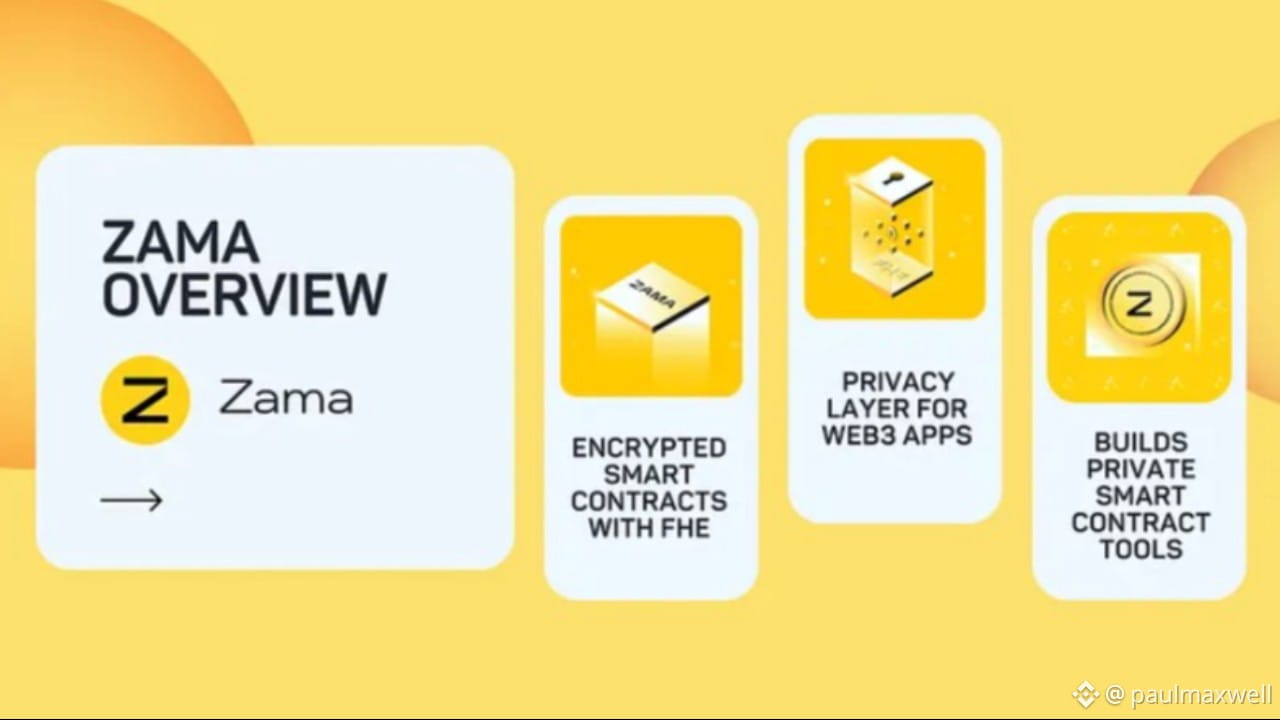
What is ZAMA?zama is a blockchain infrastructure firm that specializes in fully homomorphic encryption (FHE). It represents a cryptography breakthrough that enables computation to happen on encrypted data without any decryption.
To put it in very simple terms, Zama allows developers to create decentralized apps that are capable of working with sensitive information without losing privacy at any given moment.
Applications of this technology include the use in private DeFi operations, on-chain identity and voting, private gaming logic, and protecting enterprise blockchain applications. Zama enables smart contracts to perform logic, and user data is encrypted, which solves one of the largest issues of blockchain adoption: privacy without loss of decentralization.
Why Binance Picked ZAMA
Binance does not simply pick up the projects of Pre-TGE. The decisions depend on technical innovation, relevance, long-term ecosystem value, and strong development teams.
Zama stands out because:
It has been the first homomorphic encryption in Web3.It deals with regulatory and enterprise privacy issues.It supports confidential smart contracts, which is a significant barrier to institutional adoption.It is consistent with the infrastructure-layer innovation of Binance.
Even before its official launch, Zama has surpassed $121 million in Total Value Shielded (TVS), showing how much potential it has. $Zama, being the 5th Pre-TGE project, is a shortlist of promising early-stage blockchain projects to launch on the Binance ecosystem.
Tokenomics: How $ZAMA Is Structured
The $ZAMA token is the native token of the Zama Protocol. Holders use $$ZAMA or paying protocol fees and staking. There are 11 billiolon kens, but only 20% will be made available at the TGE in February.
What is ZAMA?
zama is a blockchain infrastructure firm that specializes in fully homomorphic encryption (FHE). It represents a cryptography breakthrough that enables computation to happen on encrypted data without any decryption.
To put it in very simple terms, Zama allows developers to create decentralized apps that are capable of working with sensitive information without losing privacy at any given moment.
Applications of this technology include the use in private DeFi operations, on-chain identity and voting, private gaming logic, and protecting enterprise blockchain applications. Zama enables smart contracts to perform logic, and user data is encrypted, which solves one of the largest issues of blockchain adoption: privacy without loss of decentralization.
Why Binance Picked ZAMA
Binance does not simply pick up the projects of Pre-TGE. The decisions depend on technical innovation, relevance, long-term ecosystem value, and strong development teams.
Zama stands out because:
It has been the first homomorphic encryption in Web3.It deals with regulatory and enterprise privacy issues.It supports confidential smart contracts, which is a significant barrier to institutional adoption.It is consistent with the infrastructure-layer innovation of Binance.
Even before its official launch, Zama has surpassed $121 million in Total Value Shielded (TVS), showing how much potential it has. $Zama, being the 5th Pre-TGE project, is a shortlist of promising early-stage blockchain projects to launch on the Binance ecosystem.
Tokenomics: How $ZAMA Is Structured
The $ZAMA token is the native token of the Zama Protocol. Holders use $$ZAMA or paying protocol fees and staking. There are 11 billiolon kens, but only 20% will be made available at the TGE in February.
To put it in very simple terms, Zama allows developers to create decentralized apps that are capable of working with sensitive information without losing privacy at any given moment.
Applications of this technology include the use in private DeFi operations, on-chain identity and voting, private gaming logic, and protecting enterprise blockchain applications. Zama enables smart contracts to perform logic, and user data is encrypted, which solves one of the largest issues of blockchain adoption: privacy without loss of decentralization.
Why Binance Picked ZAMA
Binance does not simply pick up the projects of Pre-TGE. The decisions depend on technical innovation, relevance, long-term ecosystem value, and strong development teams.
Zama stands out because:
It has been the first homomorphic encryption in Web3.It deals with regulatory and enterprise privacy issues.It supports confidential smart contracts, which is a significant barrier to institutional adoption.It is consistent with the infrastructure-layer innovation of Binance.
Even before its official launch, Zama has surpassed $121 million in Total Value Shielded (TVS), showing how much potential it has. $Zama, being the 5th Pre-TGE project, is a shortlist of promising early-stage blockchain projects to launch on the Binance ecosystem.
Tokenomics: How $ZAMA Is Structured
The $ZAMA token is the native token of the Zama Protocol. Holders use $$ZAMA or paying protocol fees and staking. There are 11 billiolon kens, but only 20% will be made available at the TGE in February.
127
·
--

Article
BTC crash today: Why is crypto down today? Bitcoin price slips as Fed holds rates and geopolitics.Bitcoin prices moved sharply lower on Thursday, January 29, 2026, as a mix of macro caution, geopolitical stress, and fading near-term liquidity weighed on risk appetite. After a brief one-day rebound earlier in the week, the broader crypto market reversed course. Total market capitalization fell about 1.7% to $3.06 trillion, while 90 of the top 100 digital assets traded in the red. Trading volumes remained elevated at $124 billion, signaling active repositioning rather than panic selling.
Bitcoin led the pullback among majors, falling roughly 5% intraday to $84,623 at one point before stabilizing higher. Ethereum followed with a sharper percentage decline, while most large-cap altcoins mirrored the move. The weakness comes as markets digest the US Federal Reserve’s first policy decision of 2026, persistent ETF outflows, and renewed geopolitical risk tied to Middle East tensions. Together, these forces are reinforcing a consolidation phase rather than signaling a full-blown trend reversal.
Bitcoin price today: what the numbers say
Bitcoin entered Thursday near $90,315 but slipped below the key $90,000 psychological level during Asian and early European trading. The session low printed around $87,653, before buyers stepped in. On a weekly basis, BTC is down about 2.4%, trading within a $86,319–$90,475 range. That range underscores a market caught between dip buyers and macro-driven sellers.Ethereum also lost ground, trading near $2,942, down about 2.5% on the day and 2.2% over the past week. ETH failed to hold above $3,000, a level that had acted as short-term support earlier in the month. Among other majors, Dogecoin slid roughly 4.5%, Solana fell more than 3%, and Litecoin dropped close to 6%. Binance Coin showed relative resilience with a near 1% decline, while Tron was the only gainer among the top ten.
The Nasdaq Crypto Index echoed the move, falling more than 5%, highlighting that the sell-off was broad-based rather than isolated to one token or sector.
Federal Reserve policy and liquidity remain the core driver
The immediate macro catalyst was the US Federal Reserve’s decision to hold interest rates steady at 3.50%–3.75%, a move that was widely expected by markets. The lack of a surprise limited downside volatility, but it also failed to provide fresh upside fuel. Fed Chair Jerome Powell offered no clear signal of imminent rate cuts, reinforcing the message that policy easing is unlikely until later in 2026 unless economic data weakens materially.
Gracy Chen, CEO of Bitget, said the rate hold preserves existing liquidity without tightening conditions further, which can be constructive for crypto in the near term. However, she emphasized that the current environment favors consolidation over a breakout. In her view, Bitcoin is likely to trade in an $88,000–$91,000 range, with any push toward $95,000 requiring clearer macro support.
From a liquidity perspective, the absence of fresh capital is becoming more visible. US spot ETFs recorded net outflows of about $19.6 million, extending a multi-week trend that has seen more than $140 million leave the products this week alone. Last week’s outflows were even steeper, exceeding $1.3 billion. While spot Ethereum ETFs saw $28.1 million in inflows, the amounts were not large enough to offset broader market pressure.$BTC $ETH $BITCOIN
{alpha}(10x72e4f9f808c49a2a61de9c5896298920dc4eeea9)
BTC crash today: Why is crypto down today? Bitcoin price slips as Fed holds rates and geopolitics.
Bitcoin prices moved sharply lower on Thursday, January 29, 2026, as a mix of macro caution, geopolitical stress, and fading near-term liquidity weighed on risk appetite. After a brief one-day rebound earlier in the week, the broader crypto market reversed course. Total market capitalization fell about 1.7% to $3.06 trillion, while 90 of the top 100 digital assets traded in the red. Trading volumes remained elevated at $124 billion, signaling active repositioning rather than panic selling.
Bitcoin led the pullback among majors, falling roughly 5% intraday to $84,623 at one point before stabilizing higher. Ethereum followed with a sharper percentage decline, while most large-cap altcoins mirrored the move. The weakness comes as markets digest the US Federal Reserve’s first policy decision of 2026, persistent ETF outflows, and renewed geopolitical risk tied to Middle East tensions. Together, these forces are reinforcing a consolidation phase rather than signaling a full-blown trend reversal.
Bitcoin price today: what the numbers say
Bitcoin entered Thursday near $90,315 but slipped below the key $90,000 psychological level during Asian and early European trading. The session low printed around $87,653, before buyers stepped in. On a weekly basis, BTC is down about 2.4%, trading within a $86,319–$90,475 range. That range underscores a market caught between dip buyers and macro-driven sellers.Ethereum also lost ground, trading near $2,942, down about 2.5% on the day and 2.2% over the past week. ETH failed to hold above $3,000, a level that had acted as short-term support earlier in the month. Among other majors, Dogecoin slid roughly 4.5%, Solana fell more than 3%, and Litecoin dropped close to 6%. Binance Coin showed relative resilience with a near 1% decline, while Tron was the only gainer among the top ten.
The Nasdaq Crypto Index echoed the move, falling more than 5%, highlighting that the sell-off was broad-based rather than isolated to one token or sector.
Federal Reserve policy and liquidity remain the core driver
The immediate macro catalyst was the US Federal Reserve’s decision to hold interest rates steady at 3.50%–3.75%, a move that was widely expected by markets. The lack of a surprise limited downside volatility, but it also failed to provide fresh upside fuel. Fed Chair Jerome Powell offered no clear signal of imminent rate cuts, reinforcing the message that policy easing is unlikely until later in 2026 unless economic data weakens materially.
Gracy Chen, CEO of Bitget, said the rate hold preserves existing liquidity without tightening conditions further, which can be constructive for crypto in the near term. However, she emphasized that the current environment favors consolidation over a breakout. In her view, Bitcoin is likely to trade in an $88,000–$91,000 range, with any push toward $95,000 requiring clearer macro support.
From a liquidity perspective, the absence of fresh capital is becoming more visible. US spot ETFs recorded net outflows of about $19.6 million, extending a multi-week trend that has seen more than $140 million leave the products this week alone. Last week’s outflows were even steeper, exceeding $1.3 billion. While spot Ethereum ETFs saw $28.1 million in inflows, the amounts were not large enough to offset broader market pressure.$BTC $ETH $BITCOIN
Bitcoin led the pullback among majors, falling roughly 5% intraday to $84,623 at one point before stabilizing higher. Ethereum followed with a sharper percentage decline, while most large-cap altcoins mirrored the move. The weakness comes as markets digest the US Federal Reserve’s first policy decision of 2026, persistent ETF outflows, and renewed geopolitical risk tied to Middle East tensions. Together, these forces are reinforcing a consolidation phase rather than signaling a full-blown trend reversal.
Bitcoin price today: what the numbers say
Bitcoin entered Thursday near $90,315 but slipped below the key $90,000 psychological level during Asian and early European trading. The session low printed around $87,653, before buyers stepped in. On a weekly basis, BTC is down about 2.4%, trading within a $86,319–$90,475 range. That range underscores a market caught between dip buyers and macro-driven sellers.Ethereum also lost ground, trading near $2,942, down about 2.5% on the day and 2.2% over the past week. ETH failed to hold above $3,000, a level that had acted as short-term support earlier in the month. Among other majors, Dogecoin slid roughly 4.5%, Solana fell more than 3%, and Litecoin dropped close to 6%. Binance Coin showed relative resilience with a near 1% decline, while Tron was the only gainer among the top ten.
The Nasdaq Crypto Index echoed the move, falling more than 5%, highlighting that the sell-off was broad-based rather than isolated to one token or sector.
Federal Reserve policy and liquidity remain the core driver
The immediate macro catalyst was the US Federal Reserve’s decision to hold interest rates steady at 3.50%–3.75%, a move that was widely expected by markets. The lack of a surprise limited downside volatility, but it also failed to provide fresh upside fuel. Fed Chair Jerome Powell offered no clear signal of imminent rate cuts, reinforcing the message that policy easing is unlikely until later in 2026 unless economic data weakens materially.
Gracy Chen, CEO of Bitget, said the rate hold preserves existing liquidity without tightening conditions further, which can be constructive for crypto in the near term. However, she emphasized that the current environment favors consolidation over a breakout. In her view, Bitcoin is likely to trade in an $88,000–$91,000 range, with any push toward $95,000 requiring clearer macro support.
From a liquidity perspective, the absence of fresh capital is becoming more visible. US spot ETFs recorded net outflows of about $19.6 million, extending a multi-week trend that has seen more than $140 million leave the products this week alone. Last week’s outflows were even steeper, exceeding $1.3 billion. While spot Ethereum ETFs saw $28.1 million in inflows, the amounts were not large enough to offset broader market pressure.$BTC $ETH $BITCOIN
52
Log in to explore more content
Join global crypto users on Binance Square
⚡️ Get latest and useful information about crypto.
💬 Trusted by the world’s largest crypto exchange.
👍 Discover real insights from verified creators.
Email / Phone number
Trending Topics
USAugustPPIRisesLessThanExpected
48,425 views
795 Discussing
🚨 US AUG PPI: Rises LESS Than Expected! Bullish for Crypto? 🚀
PPI +0.4% MoM as expected, but CORE PPI only +0.2% vs +0.3% expected - cooling!
What it means:
• Wholesale inflation softer than feared
• Fed rate hike chance now 62% - but dovish signals coming
• Core PCE revisions expected downward - bullish
• BTC usually pumps on softer PPI
Fed meeting Sep 15-16 - Market now expects pause, not hike?
Is this the green light for Q4 rally?
#Bitcoin #PPI #Fed #CryptoNews #BTC#usaugustppiriseslessthanexpected
True News
·1 Likes
·1.4k views
SECApprovesNasdaqTexasCommodityTrustRule
26,971 views
580 Discussing
ECBRaisesRatesSecondTimeTo2.5%
24,517 views
418 Discussing