

静以观复
57 Posts

静以观复
Report
Block User
每一次交易,都经过风险评估。专注稳健策略,控制回撤,追求长期收益。简单跟随,纪律执行,让专业的人做专业的事。
Open Trade
High-Frequency Trader
5.5 Years
1.0K+ Following
1.1K+ Followers
117 Liked
Posts
Portfolio
·
--
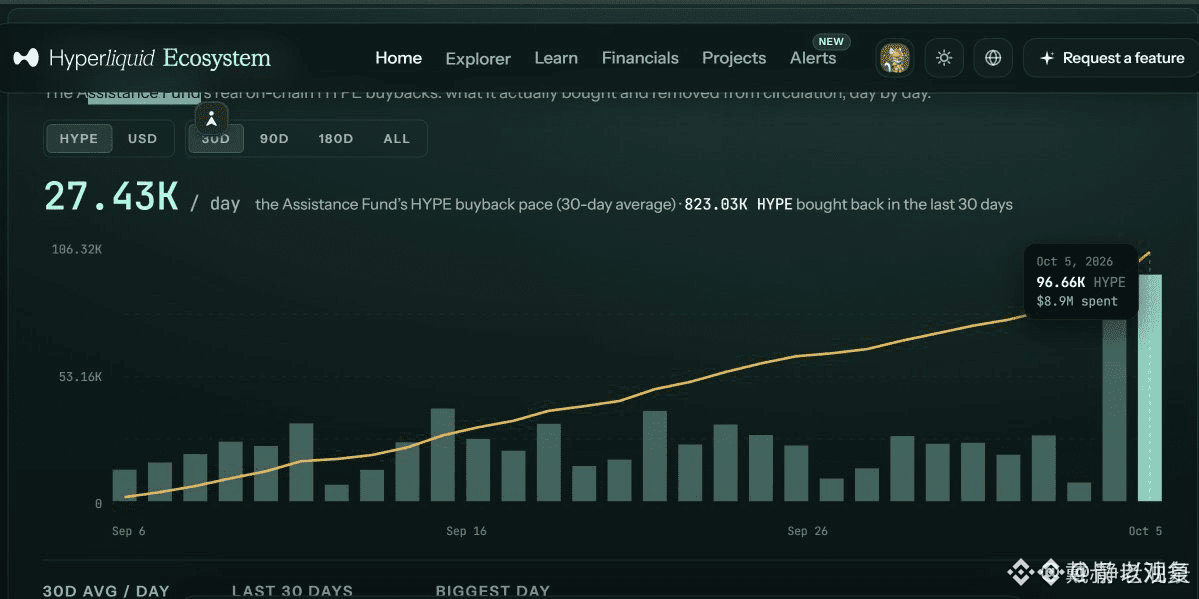
Most crypto projects don’t earn anywhere near $8.9 million in an entire year. But the Hyperliquid Assistance Fund put that much to work on-chain in just one day, directly buying and burning 96,600 $NVDAB
Still poring over the white paper to calculate unlock pressure? Take a look at the most aggressive form of value capture instead. Burning through a year’s worth of someone else’s revenue in a single day isn’t just deflationary—it’s a pure cash-flow knockout.
Taking tokens out of circulation for good with real money is stronger than any bullish narrative pulled out of thin air. With buying power like this providing support, handing over your tokens lightly is disrespectful to real money.
#HYPE
👇
{future}(HYPEUSDT)
Most crypto projects don’t earn anywhere near $8.9 million in an entire year. But the Hyperliquid Assistance Fund put that much to work on-chain in just one day, directly buying and burning 96,600 $NVDAB
Still poring over the white paper to calculate unlock pressure? Take a look at the most aggressive form of value capture instead. Burning through a year’s worth of someone else’s revenue in a single day isn’t just deflationary—it’s a pure cash-flow knockout.
Taking tokens out of circulation for good with real money is stronger than any bullish narrative pulled out of thin air. With buying power like this providing support, handing over your tokens lightly is disrespectful to real money.
#HYPE
👇
Still poring over the white paper to calculate unlock pressure? Take a look at the most aggressive form of value capture instead. Burning through a year’s worth of someone else’s revenue in a single day isn’t just deflationary—it’s a pure cash-flow knockout.
Taking tokens out of circulation for good with real money is stronger than any bullish narrative pulled out of thin air. With buying power like this providing support, handing over your tokens lightly is disrespectful to real money.
#HYPE
👇
63
·
--
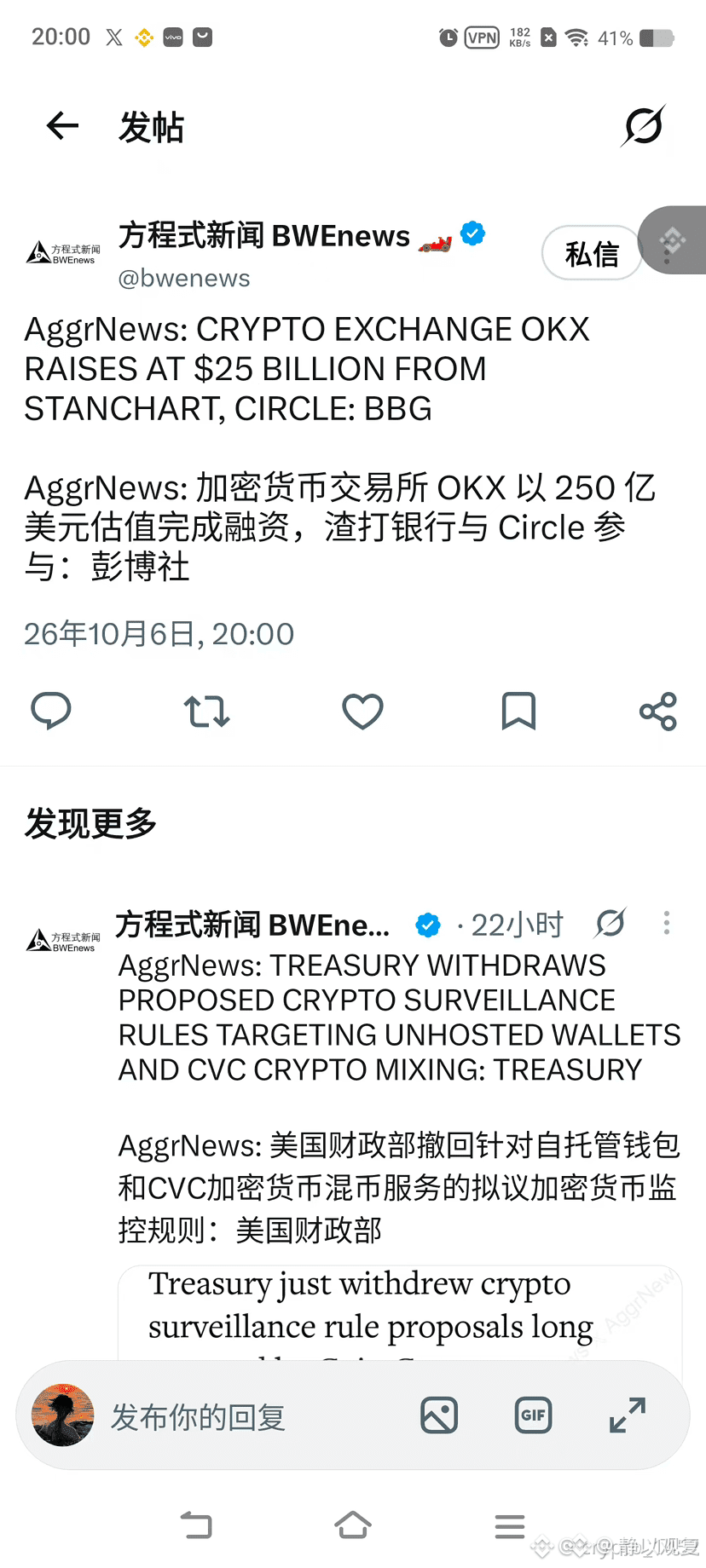
The valuation has jumped straight to $25 billion—and many people still see the funding round OKX just finalized as little more than competitor hype.
Standard Chartered and Circle are coming in with capital, showing that traditional institutions are putting real money behind the cash-generating capacity of leading exchanges. If competitors can secure valuation backing at this level, then BNB, as the sector leader with greater scale and a deeper ecosystem, will only have more leverage—and be even harder to sell off cheaply.
Big money in the OTC market is working together to push up the entire sector’s valuation floor. When the ceiling gets blown off, rushing to turn bearish on the leaders clearly underestimates the weight of this tens-of-billions-dollar funding round.
#BNB
👇
{future}(BNBUSDT)
The valuation has jumped straight to $25 billion—and many people still see the funding round OKX just finalized as little more than competitor hype.
Standard Chartered and Circle are coming in with capital, showing that traditional institutions are putting real money behind the cash-generating capacity of leading exchanges. If competitors can secure valuation backing at this level, then BNB, as the sector leader with greater scale and a deeper ecosystem, will only have more leverage—and be even harder to sell off cheaply.
Big money in the OTC market is working together to push up the entire sector’s valuation floor. When the ceiling gets blown off, rushing to turn bearish on the leaders clearly underestimates the weight of this tens-of-billions-dollar funding round.
#BNB
👇
Standard Chartered and Circle are coming in with capital, showing that traditional institutions are putting real money behind the cash-generating capacity of leading exchanges. If competitors can secure valuation backing at this level, then BNB, as the sector leader with greater scale and a deeper ecosystem, will only have more leverage—and be even harder to sell off cheaply.
Big money in the OTC market is working together to push up the entire sector’s valuation floor. When the ceiling gets blown off, rushing to turn bearish on the leaders clearly underestimates the weight of this tens-of-billions-dollar funding round.
#BNB
👇
137
·
--
Tomorrow (October 8) is a major milestone.
With 473 million tokens, the world’s first all-XRP treasury—managed by a former Ripple executive—is headed to Nasdaq to ring the opening bell. The outcome will soon be revealed.
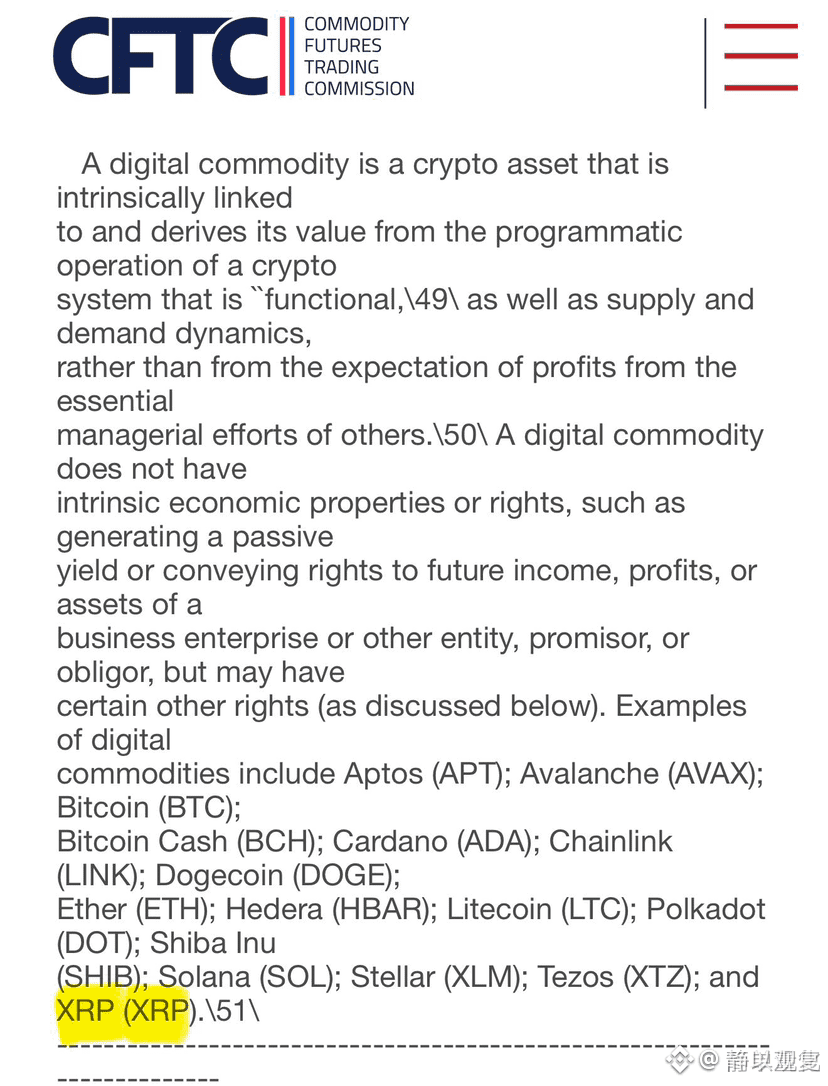
To understand the significance, you have to consider the regulatory backdrop: the CFTC has explicitly named XRP as an example of a digital commodity in an official document, in black and white.
As long as it isn’t a security, the compliance hurdles are completely cleared. Once the treasury is listed on a U.S. stock exchange, institutional capital can flow in openly and legitimately. Regulatory clarity combined with access to U.S. markets is paving the way for big buyers. A compliant channel is about to take shape—there’s no reason for spot holders to get out early now.
#XRP
👇
{future}(XRPUSDT)
Tomorrow (October 8) is a major milestone.
With 473 million tokens, the world’s first all-XRP treasury—managed by a former Ripple executive—is headed to Nasdaq to ring the opening bell. The outcome will soon be revealed.
To understand the significance, you have to consider the regulatory backdrop: the CFTC has explicitly named XRP as an example of a digital commodity in an official document, in black and white.
As long as it isn’t a security, the compliance hurdles are completely cleared. Once the treasury is listed on a U.S. stock exchange, institutional capital can flow in openly and legitimately. Regulatory clarity combined with access to U.S. markets is paving the way for big buyers. A compliant channel is about to take shape—there’s no reason for spot holders to get out early now.
#XRP
👇
With 473 million tokens, the world’s first all-XRP treasury—managed by a former Ripple executive—is headed to Nasdaq to ring the opening bell. The outcome will soon be revealed.
To understand the significance, you have to consider the regulatory backdrop: the CFTC has explicitly named XRP as an example of a digital commodity in an official document, in black and white.
As long as it isn’t a security, the compliance hurdles are completely cleared. Once the treasury is listed on a U.S. stock exchange, institutional capital can flow in openly and legitimately. Regulatory clarity combined with access to U.S. markets is paving the way for big buyers. A compliant channel is about to take shape—there’s no reason for spot holders to get out early now.
#XRP
👇
1
265
·
--
With the launch of the Glamsterdam upgrade testnet, vast sums of stablecoin and RWA capital continue to anchor their security in Ethereum. Driven by technological progress and the ecosystem’s powerful pull, those spooked by short-term volatility have completely failed to see what truly underpins the financial system.
#ETH
👇
{future}(ETHUSDT)
With the launch of the Glamsterdam upgrade testnet, vast sums of stablecoin and RWA capital continue to anchor their security in Ethereum. Driven by technological progress and the ecosystem’s powerful pull, those spooked by short-term volatility have completely failed to see what truly underpins the financial system.
#ETH
👇
#ETH
👇

169
·
--
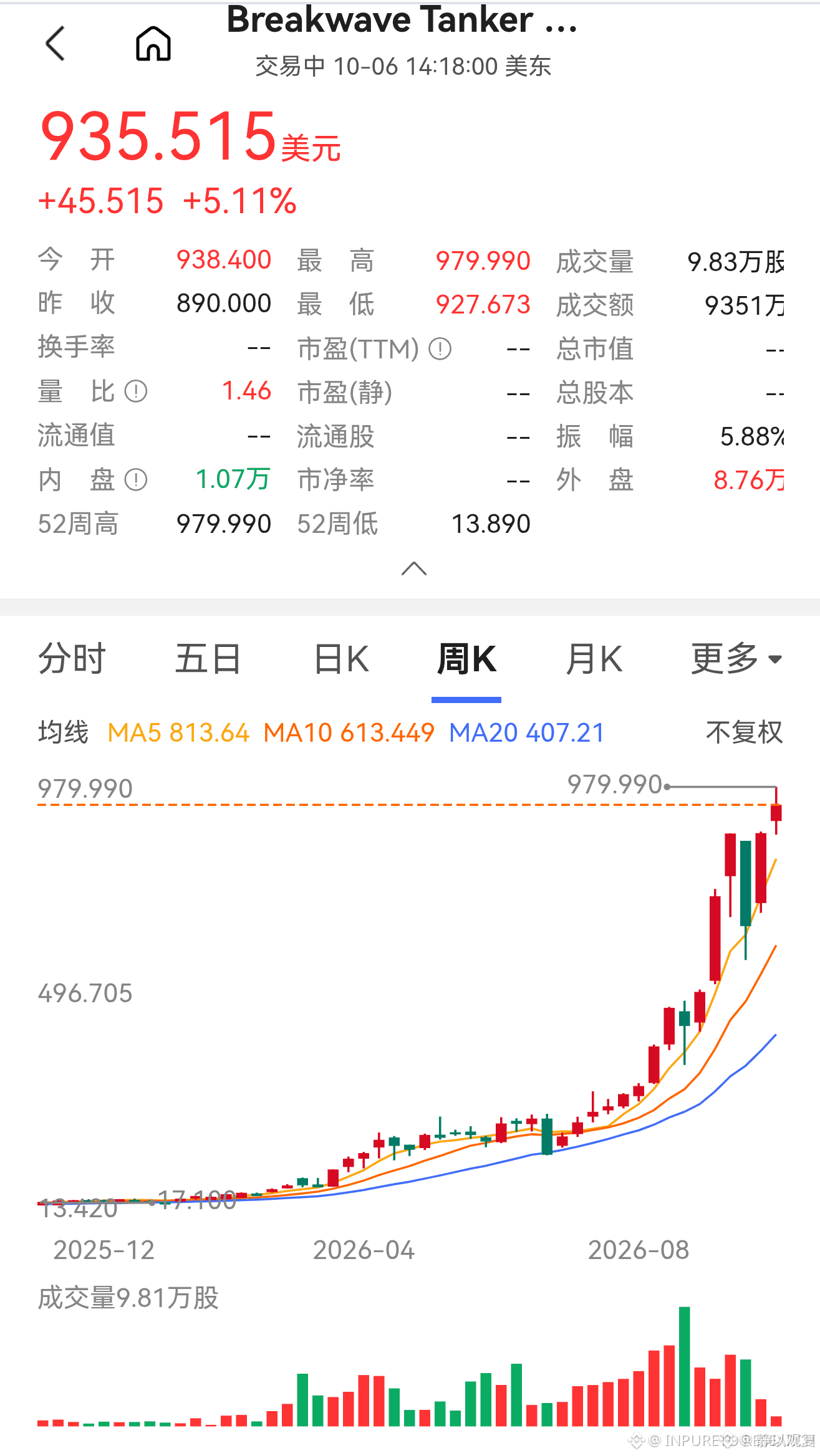
Many people see $BWET rise 70-fold and shout that it’s topped out. But look closely at the chart: from $13.89 to $979.99, its weekly chart has maintained an exceptionally clean bullish structure throughout.
A 70-fold gain sounds frightening, but if short-term hot money were exiting, the rally could never have lasted a full year. A weekly advance of this magnitude is driven by trend-following capital continually raising the floor for its positions.
Writing off a trend based solely on the size of its gains is an extremely crude way of thinking. Bears are waiting for a crash; those who understand the trend are watching to see whether the structure breaks. As long as the weekly uptrend remains intact, trying to call the top prematurely is one of the costliest trades you can make.
#BWET
👇
{future}(BWETUSDT)
Many people see $BWET rise 70-fold and shout that it’s topped out. But look closely at the chart: from $13.89 to $979.99, its weekly chart has maintained an exceptionally clean bullish structure throughout.
A 70-fold gain sounds frightening, but if short-term hot money were exiting, the rally could never have lasted a full year. A weekly advance of this magnitude is driven by trend-following capital continually raising the floor for its positions.
Writing off a trend based solely on the size of its gains is an extremely crude way of thinking. Bears are waiting for a crash; those who understand the trend are watching to see whether the structure breaks. As long as the weekly uptrend remains intact, trying to call the top prematurely is one of the costliest trades you can make.
#BWET
👇
A 70-fold gain sounds frightening, but if short-term hot money were exiting, the rally could never have lasted a full year. A weekly advance of this magnitude is driven by trend-following capital continually raising the floor for its positions.
Writing off a trend based solely on the size of its gains is an extremely crude way of thinking. Bears are waiting for a crash; those who understand the trend are watching to see whether the structure breaks. As long as the weekly uptrend remains intact, trying to call the top prematurely is one of the costliest trades you can make.
#BWET
👇
292
·
--
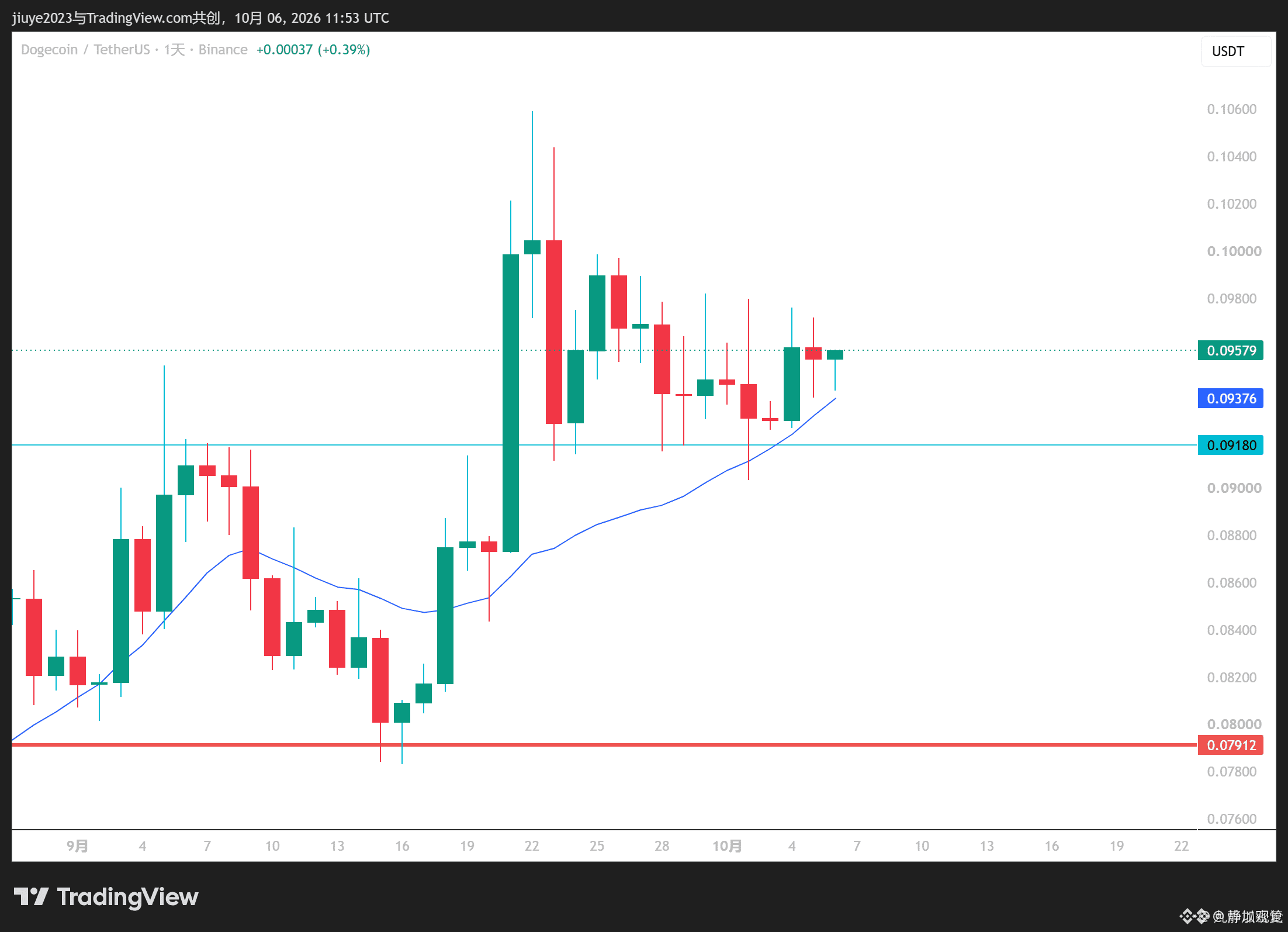
Many people think that without breaking news, $DOGE is going nowhere—but chart structure is often more honest than sentiment.
The daily chart continues to find support along the rising moving average. More importantly, the price lows during this consolidation are gradually moving higher.
The bears can’t push prices to new lows, which shows that selling pressure is weakening with each attempt. The bulls keep moving their line of defense higher, proving that buyers are willing to step in at higher levels.
Rather than putting faith in wildly overblown calls predicting moves of dozens of dollars, keep an eye on the structure right in front of you: when pullbacks get shallower and the moving average holds firm as support, the odds have already shifted in favor of the bulls.
#DOGE
👇
{future}(DOGEUSDT)
Many people think that without breaking news, $DOGE is going nowhere—but chart structure is often more honest than sentiment.
The daily chart continues to find support along the rising moving average. More importantly, the price lows during this consolidation are gradually moving higher.
The bears can’t push prices to new lows, which shows that selling pressure is weakening with each attempt. The bulls keep moving their line of defense higher, proving that buyers are willing to step in at higher levels.
Rather than putting faith in wildly overblown calls predicting moves of dozens of dollars, keep an eye on the structure right in front of you: when pullbacks get shallower and the moving average holds firm as support, the odds have already shifted in favor of the bulls.
#DOGE
👇
The daily chart continues to find support along the rising moving average. More importantly, the price lows during this consolidation are gradually moving higher.
The bears can’t push prices to new lows, which shows that selling pressure is weakening with each attempt. The bulls keep moving their line of defense higher, proving that buyers are willing to step in at higher levels.
Rather than putting faith in wildly overblown calls predicting moves of dozens of dollars, keep an eye on the structure right in front of you: when pullbacks get shallower and the moving average holds firm as support, the odds have already shifted in favor of the bulls.
#DOGE
👇
1
629
·
--
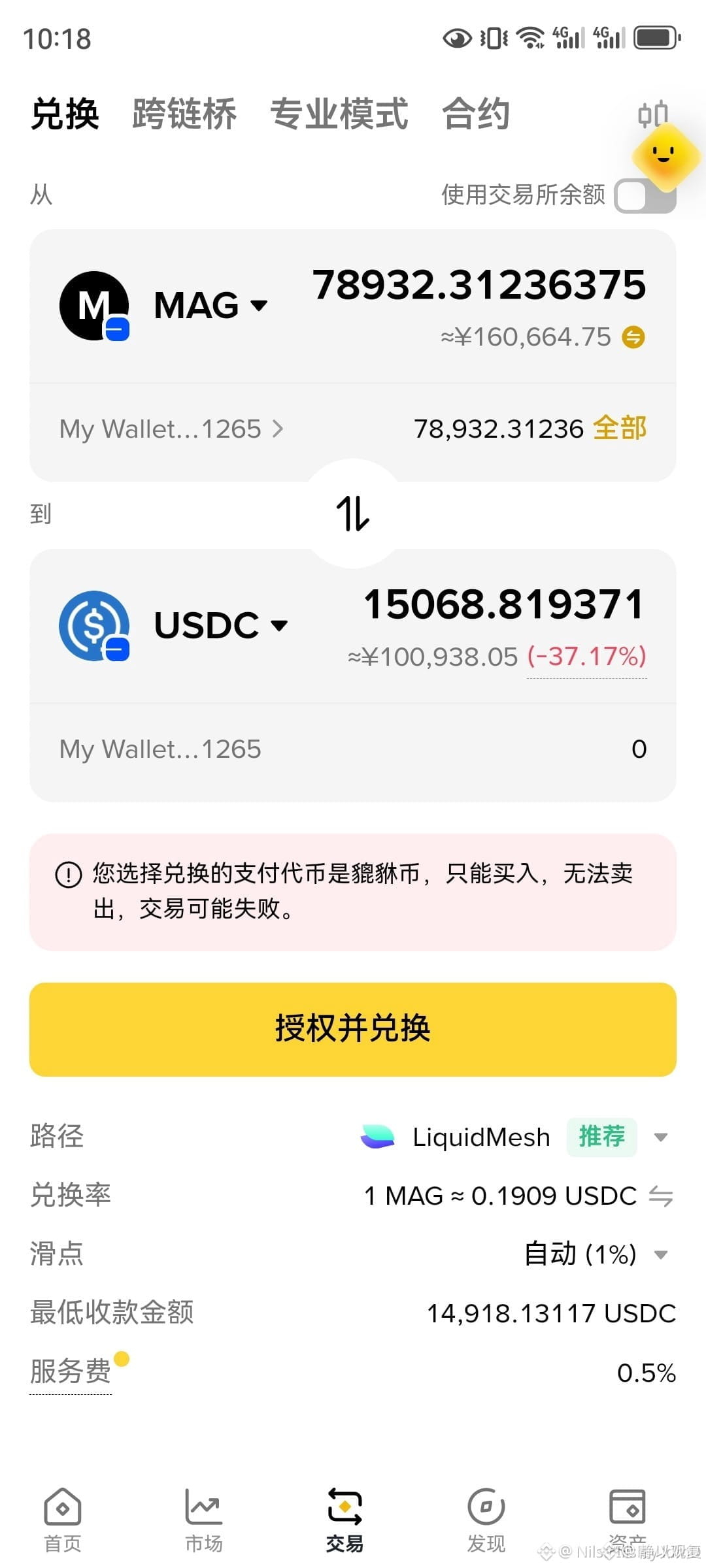
No matter how tempting the unrealized gains look on paper, if you can’t press the sell button, it’s nothing but a black hole that only takes your money.
MAG has been explicitly blocked by the system on the trading and swap interface and flagged as a honeypot token: the contract has hard-coded selling permissions to be locked, allowing purchases only and making the tokens impossible to offload. This means that no matter how beautiful the price chart looks or how many times your paper profits have multiplied, the moment you buy the tokens, your liquidity has already been completely stripped away.
This is no longer normal trading; it’s pure technical exploitation. If the path to cashing out has been physically cut off, you can forget any short-term fantasies about the token.
#MAG
👇
No matter how tempting the unrealized gains look on paper, if you can’t press the sell button, it’s nothing but a black hole that only takes your money.
MAG has been explicitly blocked by the system on the trading and swap interface and flagged as a honeypot token: the contract has hard-coded selling permissions to be locked, allowing purchases only and making the tokens impossible to offload. This means that no matter how beautiful the price chart looks or how many times your paper profits have multiplied, the moment you buy the tokens, your liquidity has already been completely stripped away.
This is no longer normal trading; it’s pure technical exploitation. If the path to cashing out has been physically cut off, you can forget any short-term fantasies about the token.
#MAG
👇
MAG has been explicitly blocked by the system on the trading and swap interface and flagged as a honeypot token: the contract has hard-coded selling permissions to be locked, allowing purchases only and making the tokens impossible to offload. This means that no matter how beautiful the price chart looks or how many times your paper profits have multiplied, the moment you buy the tokens, your liquidity has already been completely stripped away.
This is no longer normal trading; it’s pure technical exploitation. If the path to cashing out has been physically cut off, you can forget any short-term fantasies about the token.
#MAG
👇
49
·
--
At an average price of $84,422. While retail investors are still worried about buying at the top, publicly listed company Strive has just dropped $169 million to scoop up 2,000 BTC and transferred them straight into its own wallet.
The key isn’t the amount—it’s where the money came from: most of it came from preferred stock financing, with the rest raised through warrants. Wall Street is using its most time-tested traditional finance leverage to aggressively siphon money into the crypto market, then buying spot and locking up liquidity.
The playbook of issuing shares to finance Bitcoin hoarding is being copied at a breakneck pace. Institutions borrowing money to buy in at prices above $80,000 shows they’re not after short-term swings at all—they want long-term pricing power. As long as this siphoning machine keeps running, there’s no reason to part with the spot BTC you’re holding too easily.
#BTC
👇
{future}(BTCUSDT)
At an average price of $84,422. While retail investors are still worried about buying at the top, publicly listed company Strive has just dropped $169 million to scoop up 2,000 BTC and transferred them straight into its own wallet.
The key isn’t the amount—it’s where the money came from: most of it came from preferred stock financing, with the rest raised through warrants. Wall Street is using its most time-tested traditional finance leverage to aggressively siphon money into the crypto market, then buying spot and locking up liquidity.
The playbook of issuing shares to finance Bitcoin hoarding is being copied at a breakneck pace. Institutions borrowing money to buy in at prices above $80,000 shows they’re not after short-term swings at all—they want long-term pricing power. As long as this siphoning machine keeps running, there’s no reason to part with the spot BTC you’re holding too easily.
#BTC
👇
The key isn’t the amount—it’s where the money came from: most of it came from preferred stock financing, with the rest raised through warrants. Wall Street is using its most time-tested traditional finance leverage to aggressively siphon money into the crypto market, then buying spot and locking up liquidity.
The playbook of issuing shares to finance Bitcoin hoarding is being copied at a breakneck pace. Institutions borrowing money to buy in at prices above $80,000 shows they’re not after short-term swings at all—they want long-term pricing power. As long as this siphoning machine keeps running, there’s no reason to part with the spot BTC you’re holding too easily.
#BTC
👇

144
·
--
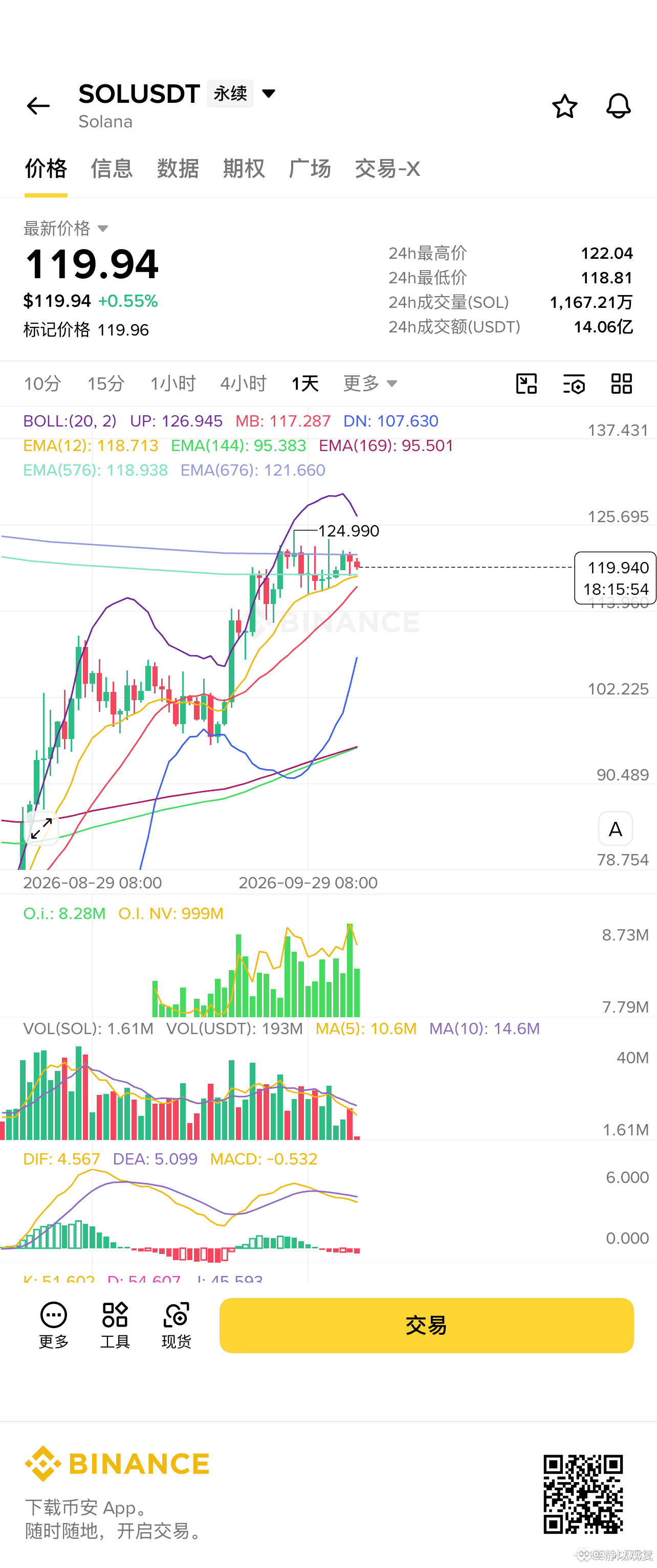
A 99% cliff-like plunge—this isn’t the price of the coin, but the actual drop in net inflows to SOL spot ETFs.
The sudden cooldown in capital flows was reflected on the charts in full. The daily price hit $124.99 and immediately ran into resistance, stalling. It spent several days repeatedly testing higher levels, but trading volume showed no signs of picking up with each upward push.
Rallies need money behind them. A price spike without volume is essentially a weak false breakout. Inflows of real money have hit the brakes, and no matter how much the market tests higher, volume fails to materialize—a sign that the bulls are already backing off. Staying blindly bullish now means trying to catch the market near its highs against the headwind of capital outflows. There’s no need to stay here and hold the line for someone else.
#SOL
👇
{future}(SOLUSDT)
A 99% cliff-like plunge—this isn’t the price of the coin, but the actual drop in net inflows to SOL spot ETFs.
The sudden cooldown in capital flows was reflected on the charts in full. The daily price hit $124.99 and immediately ran into resistance, stalling. It spent several days repeatedly testing higher levels, but trading volume showed no signs of picking up with each upward push.
Rallies need money behind them. A price spike without volume is essentially a weak false breakout. Inflows of real money have hit the brakes, and no matter how much the market tests higher, volume fails to materialize—a sign that the bulls are already backing off. Staying blindly bullish now means trying to catch the market near its highs against the headwind of capital outflows. There’s no need to stay here and hold the line for someone else.
#SOL
👇
The sudden cooldown in capital flows was reflected on the charts in full. The daily price hit $124.99 and immediately ran into resistance, stalling. It spent several days repeatedly testing higher levels, but trading volume showed no signs of picking up with each upward push.
Rallies need money behind them. A price spike without volume is essentially a weak false breakout. Inflows of real money have hit the brakes, and no matter how much the market tests higher, volume fails to materialize—a sign that the bulls are already backing off. Staying blindly bullish now means trying to catch the market near its highs against the headwind of capital outflows. There’s no need to stay here and hold the line for someone else.
#SOL
👇
240
·
--
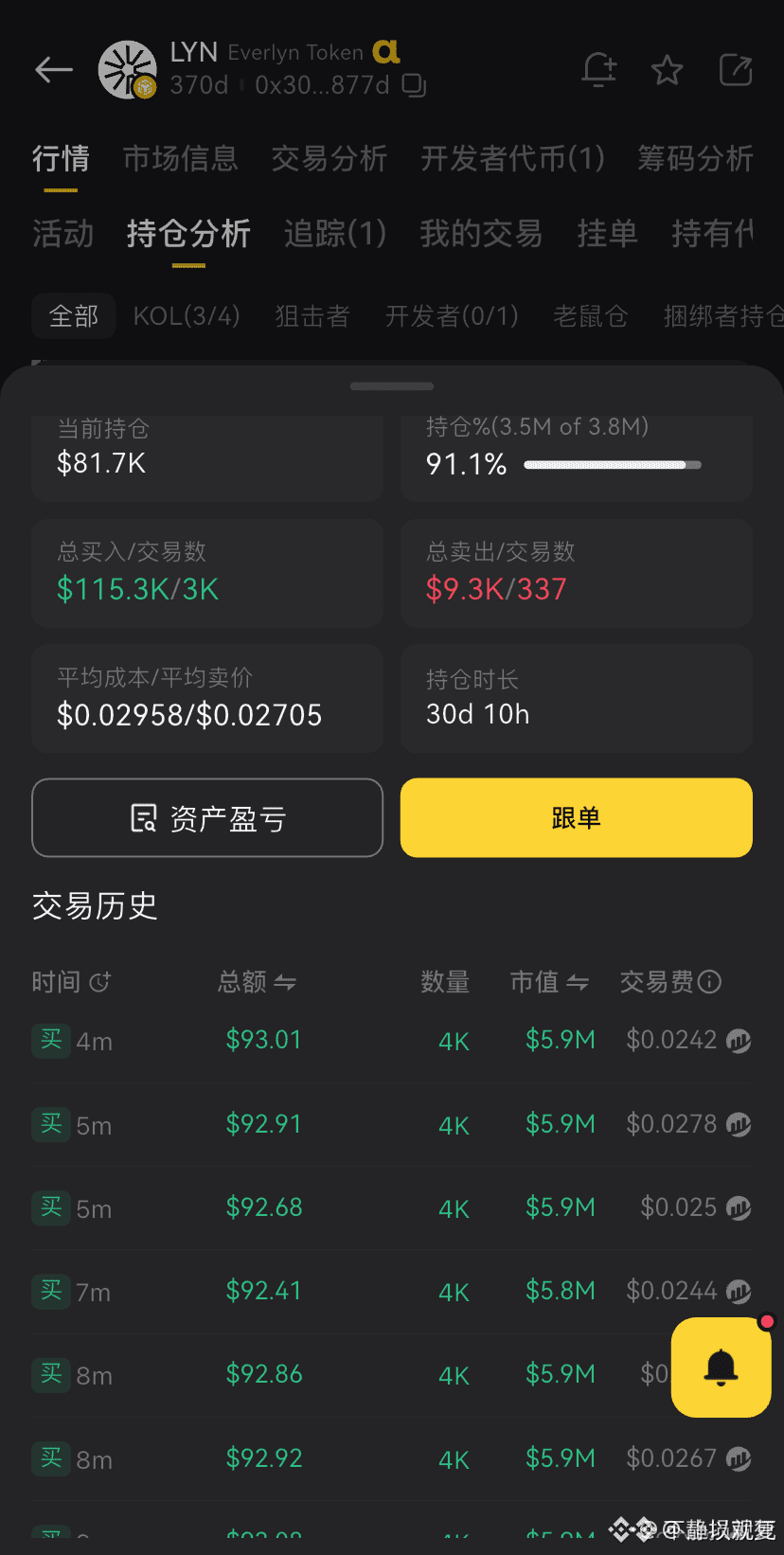
3,000 buy orders, all to accumulate $115,000 worth of LYN.
This on-chain address operates with remarkable restraint: no pumping the price, no front-running—just a steady stream of high-frequency, small orders grinding away. Ordinary traders wouldn’t bother confirming 3,000 separate purchases. Only a programmatic buyer intent on accumulating without moving the market would go to such lengths to stay hidden.
It has bought a total of $115,000 worth, and currently holds about $81,700 worth. Despite being underwater, it’s still scooping up more. The surface looks calm, but underneath, tokens are being quietly siphoned away bit by bit, like ants carrying off crumbs.
Someone going to such lengths to enter discreetly isn’t aiming for a rebound of just a few percentage points after an oversold dip.
#LYN
👇
{future}(LYNUSDT)
3,000 buy orders, all to accumulate $115,000 worth of LYN.
This on-chain address operates with remarkable restraint: no pumping the price, no front-running—just a steady stream of high-frequency, small orders grinding away. Ordinary traders wouldn’t bother confirming 3,000 separate purchases. Only a programmatic buyer intent on accumulating without moving the market would go to such lengths to stay hidden.
It has bought a total of $115,000 worth, and currently holds about $81,700 worth. Despite being underwater, it’s still scooping up more. The surface looks calm, but underneath, tokens are being quietly siphoned away bit by bit, like ants carrying off crumbs.
Someone going to such lengths to enter discreetly isn’t aiming for a rebound of just a few percentage points after an oversold dip.
#LYN
👇
This on-chain address operates with remarkable restraint: no pumping the price, no front-running—just a steady stream of high-frequency, small orders grinding away. Ordinary traders wouldn’t bother confirming 3,000 separate purchases. Only a programmatic buyer intent on accumulating without moving the market would go to such lengths to stay hidden.
It has bought a total of $115,000 worth, and currently holds about $81,700 worth. Despite being underwater, it’s still scooping up more. The surface looks calm, but underneath, tokens are being quietly siphoned away bit by bit, like ants carrying off crumbs.
Someone going to such lengths to enter discreetly isn’t aiming for a rebound of just a few percentage points after an oversold dip.
#LYN
👇
38
·
--
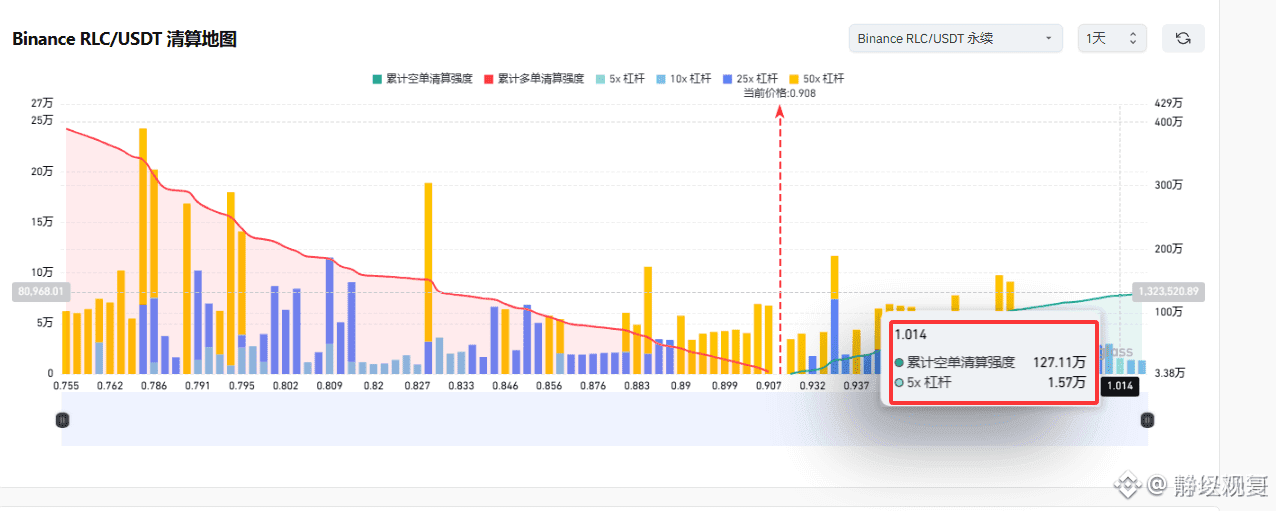
Liquidations on over $1.2 million worth of shorts are stacked around $1.014—a dead giveaway that longs are being handed fuel.
After retesting on the 1-hour chart, RLC has been consolidating near the highs, building momentum just below the $1 mark. Bears think that round-number level is resistance, but if price pushes through $1 with the trend, this cluster of liquidation orders could turn into a cascade of buying pressure.
When a retest fails to push price lower and it keeps holding sideways near the highs, piling into resistance is like risking your neck to give the breakout a running start.
#RLC
👇
{future}(RLCUSDT)
Liquidations on over $1.2 million worth of shorts are stacked around $1.014—a dead giveaway that longs are being handed fuel.
After retesting on the 1-hour chart, RLC has been consolidating near the highs, building momentum just below the $1 mark. Bears think that round-number level is resistance, but if price pushes through $1 with the trend, this cluster of liquidation orders could turn into a cascade of buying pressure.
When a retest fails to push price lower and it keeps holding sideways near the highs, piling into resistance is like risking your neck to give the breakout a running start.
#RLC
👇
After retesting on the 1-hour chart, RLC has been consolidating near the highs, building momentum just below the $1 mark. Bears think that round-number level is resistance, but if price pushes through $1 with the trend, this cluster of liquidation orders could turn into a cascade of buying pressure.
When a retest fails to push price lower and it keeps holding sideways near the highs, piling into resistance is like risking your neck to give the breakout a running start.
#RLC
👇
1
575
·
--
Verified
Don’t mistake this mascot for some casually drawn animal avatar. It delivers free learning content to children and is backed by over ten million in real donations—a rare foundation with real-world impact.
More importantly, CZ publicly posted, “Go become a Giggle hero,” handing the community a clear rallying cry for creating and sharing their own content.
On one side is a charitable foundation backed by over ten million in real money; on the other is a sense of identity fueled by a slogan from a top influencer. Compared with projects that just feed off each other and can fizzle out at any moment, GIGGLE has all the fuel it needs to spread organically.
#GIGGLE
👇
{future}(GIGGLEUSDT)
Don’t mistake this mascot for some casually drawn animal avatar. It delivers free learning content to children and is backed by over ten million in real donations—a rare foundation with real-world impact.
More importantly, CZ publicly posted, “Go become a Giggle hero,” handing the community a clear rallying cry for creating and sharing their own content.
On one side is a charitable foundation backed by over ten million in real money; on the other is a sense of identity fueled by a slogan from a top influencer. Compared with projects that just feed off each other and can fizzle out at any moment, GIGGLE has all the fuel it needs to spread organically.
#GIGGLE
👇
More importantly, CZ publicly posted, “Go become a Giggle hero,” handing the community a clear rallying cry for creating and sharing their own content.
On one side is a charitable foundation backed by over ten million in real money; on the other is a sense of identity fueled by a slogan from a top influencer. Compared with projects that just feed off each other and can fizzle out at any moment, GIGGLE has all the fuel it needs to spread organically.
#GIGGLE
👇


259
·
--
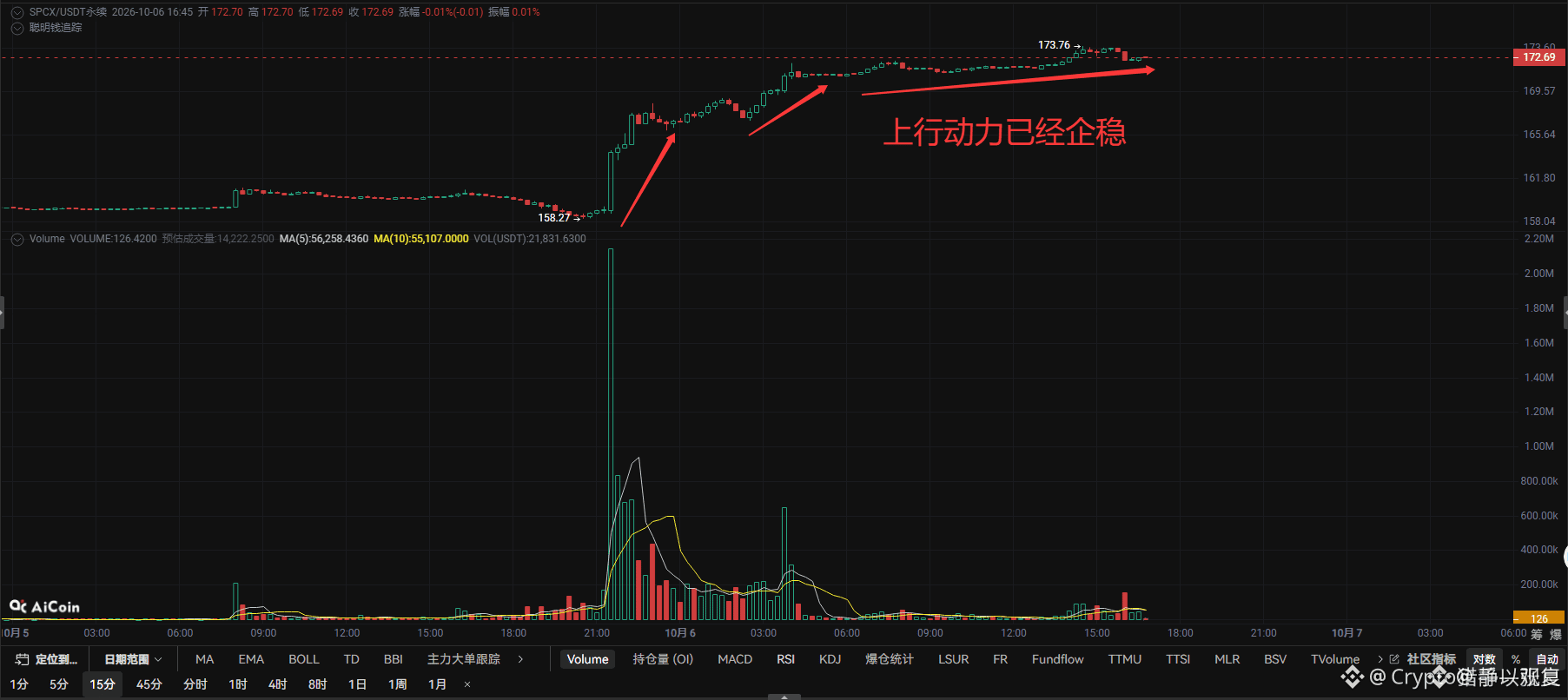
Many people dismiss Morgan Stanley’s $300 price target as an investment bank’s pie-in-the-sky forecast, but one look at the price action shows that the market isn’t treating it as a joke.
Since taking off from 158.27, SPCX has continued to make higher highs, with a significant increase in trading volume, surging all the way to 173.76.
If this were a false breakout or mere hype, the price would have been pushed back down as soon as it surged. But what the chart shows is a high-volume rally, with each successive high moving higher. The $300 target opens up substantial room for long-term growth, and volume is backing it up in real time. With the trend already firmly in motion, trying to call a top against it offers no chance of winning.
#SPCX
👇
{future}(SPCXUSDT)
Many people dismiss Morgan Stanley’s $300 price target as an investment bank’s pie-in-the-sky forecast, but one look at the price action shows that the market isn’t treating it as a joke.
Since taking off from 158.27, SPCX has continued to make higher highs, with a significant increase in trading volume, surging all the way to 173.76.
If this were a false breakout or mere hype, the price would have been pushed back down as soon as it surged. But what the chart shows is a high-volume rally, with each successive high moving higher. The $300 target opens up substantial room for long-term growth, and volume is backing it up in real time. With the trend already firmly in motion, trying to call a top against it offers no chance of winning.
#SPCX
👇
Since taking off from 158.27, SPCX has continued to make higher highs, with a significant increase in trading volume, surging all the way to 173.76.
If this were a false breakout or mere hype, the price would have been pushed back down as soon as it surged. But what the chart shows is a high-volume rally, with each successive high moving higher. The $300 target opens up substantial room for long-term growth, and volume is backing it up in real time. With the trend already firmly in motion, trying to call a top against it offers no chance of winning.
#SPCX
👇
83
·
--
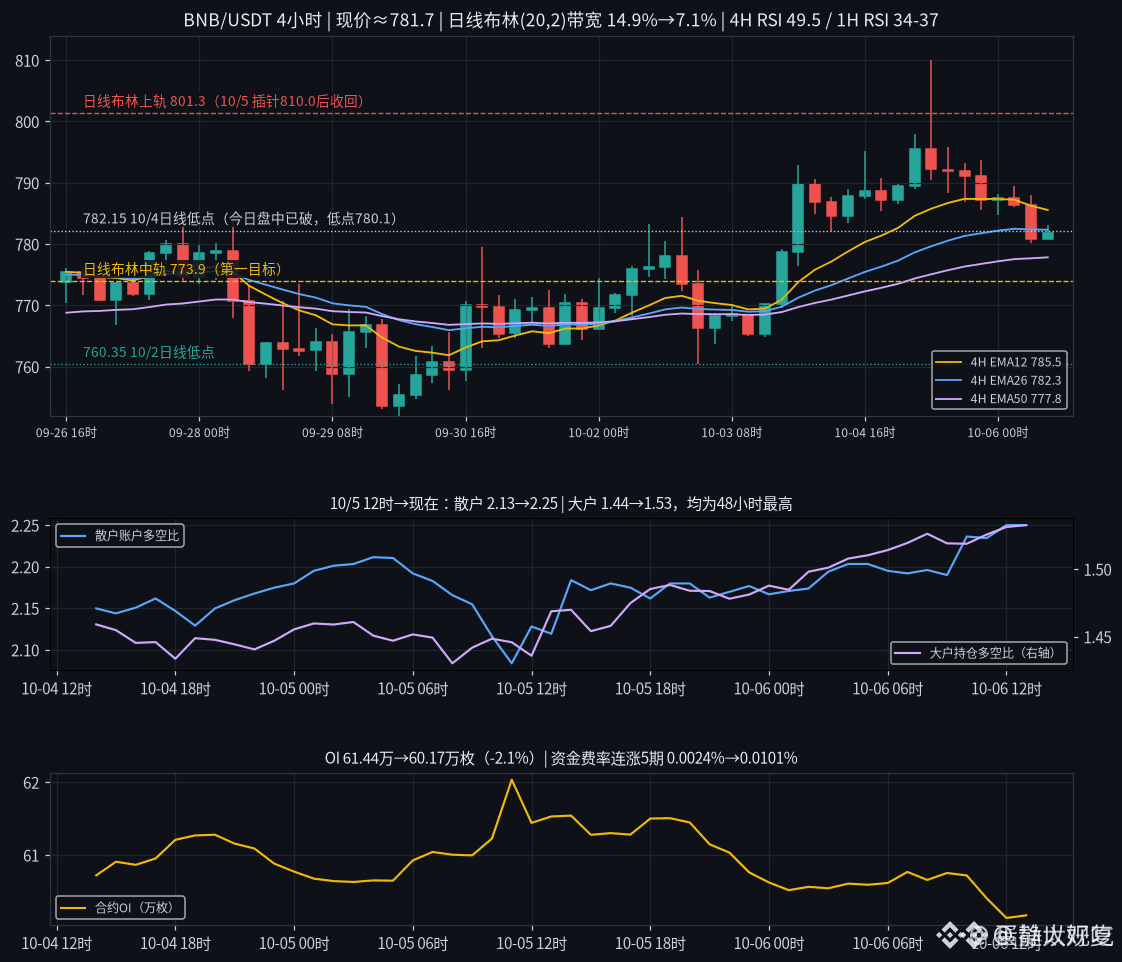
The support structure has broken down, yet whales and retail traders are still scrambling into the long train.
BNB’s trend of steadily rising lows had already been broken when the price fell below the previous low of $782. But in an extremely unusual twist, as the price slid from $792, neither whales nor retail traders exited. Instead, the long/short ratios for both groups climbed against the trend, hitting 48-hour highs, with nearly 70% of accounts positioned long.
The price is falling, but the longs are getting more and more crowded. Rather than accept the trend breakdown, traders are piling in together to bet on a rebound. If these highly concentrated long positions can’t hold, they could quickly turn into a brutal long squeeze. With the market having broken down, I don’t buy the bullish case when the train is this packed.
#BNB
👇
{future}(BNBUSDT)
The support structure has broken down, yet whales and retail traders are still scrambling into the long train.
BNB’s trend of steadily rising lows had already been broken when the price fell below the previous low of $782. But in an extremely unusual twist, as the price slid from $792, neither whales nor retail traders exited. Instead, the long/short ratios for both groups climbed against the trend, hitting 48-hour highs, with nearly 70% of accounts positioned long.
The price is falling, but the longs are getting more and more crowded. Rather than accept the trend breakdown, traders are piling in together to bet on a rebound. If these highly concentrated long positions can’t hold, they could quickly turn into a brutal long squeeze. With the market having broken down, I don’t buy the bullish case when the train is this packed.
#BNB
👇
BNB’s trend of steadily rising lows had already been broken when the price fell below the previous low of $782. But in an extremely unusual twist, as the price slid from $792, neither whales nor retail traders exited. Instead, the long/short ratios for both groups climbed against the trend, hitting 48-hour highs, with nearly 70% of accounts positioned long.
The price is falling, but the longs are getting more and more crowded. Rather than accept the trend breakdown, traders are piling in together to bet on a rebound. If these highly concentrated long positions can’t hold, they could quickly turn into a brutal long squeeze. With the market having broken down, I don’t buy the bullish case when the train is this packed.
#BNB
👇
117
·
--
On one side, crypto insiders are still calling it outdated. On the other, a SPAC shell company preparing to merge with an $XRP treasury company saw its share price soar 270% in a single week.
You can’t fool traditional investors: give them a compliant way to invest, and they’ll pour real money in immediately.
Backing up this buying signal is Ripple’s newly launched pilot for collateralized lending. The impact on the market is direct. In the past, the $XRP held by whales earned no yield and could become selling pressure at any moment. If the pilot takes off, those holdings can earn interest, and a large amount of spot $XRP will be actively locked into the protocol.
The U.S. stock market channel brings in new money; yield-bearing lending locks up existing holdings. One expands buying pressure, the other eases selling pressure. This is no time to get out lightly.
#XRP
👇
{future}(XRPUSDT)
On one side, crypto insiders are still calling it outdated. On the other, a SPAC shell company preparing to merge with an $XRP treasury company saw its share price soar 270% in a single week.
You can’t fool traditional investors: give them a compliant way to invest, and they’ll pour real money in immediately.
Backing up this buying signal is Ripple’s newly launched pilot for collateralized lending. The impact on the market is direct. In the past, the $XRP held by whales earned no yield and could become selling pressure at any moment. If the pilot takes off, those holdings can earn interest, and a large amount of spot $XRP will be actively locked into the protocol.
The U.S. stock market channel brings in new money; yield-bearing lending locks up existing holdings. One expands buying pressure, the other eases selling pressure. This is no time to get out lightly.
#XRP
👇
You can’t fool traditional investors: give them a compliant way to invest, and they’ll pour real money in immediately.
Backing up this buying signal is Ripple’s newly launched pilot for collateralized lending. The impact on the market is direct. In the past, the $XRP held by whales earned no yield and could become selling pressure at any moment. If the pilot takes off, those holdings can earn interest, and a large amount of spot $XRP will be actively locked into the protocol.
The U.S. stock market channel brings in new money; yield-bearing lending locks up existing holdings. One expands buying pressure, the other eases selling pressure. This is no time to get out lightly.
#XRP
👇
112
·
--
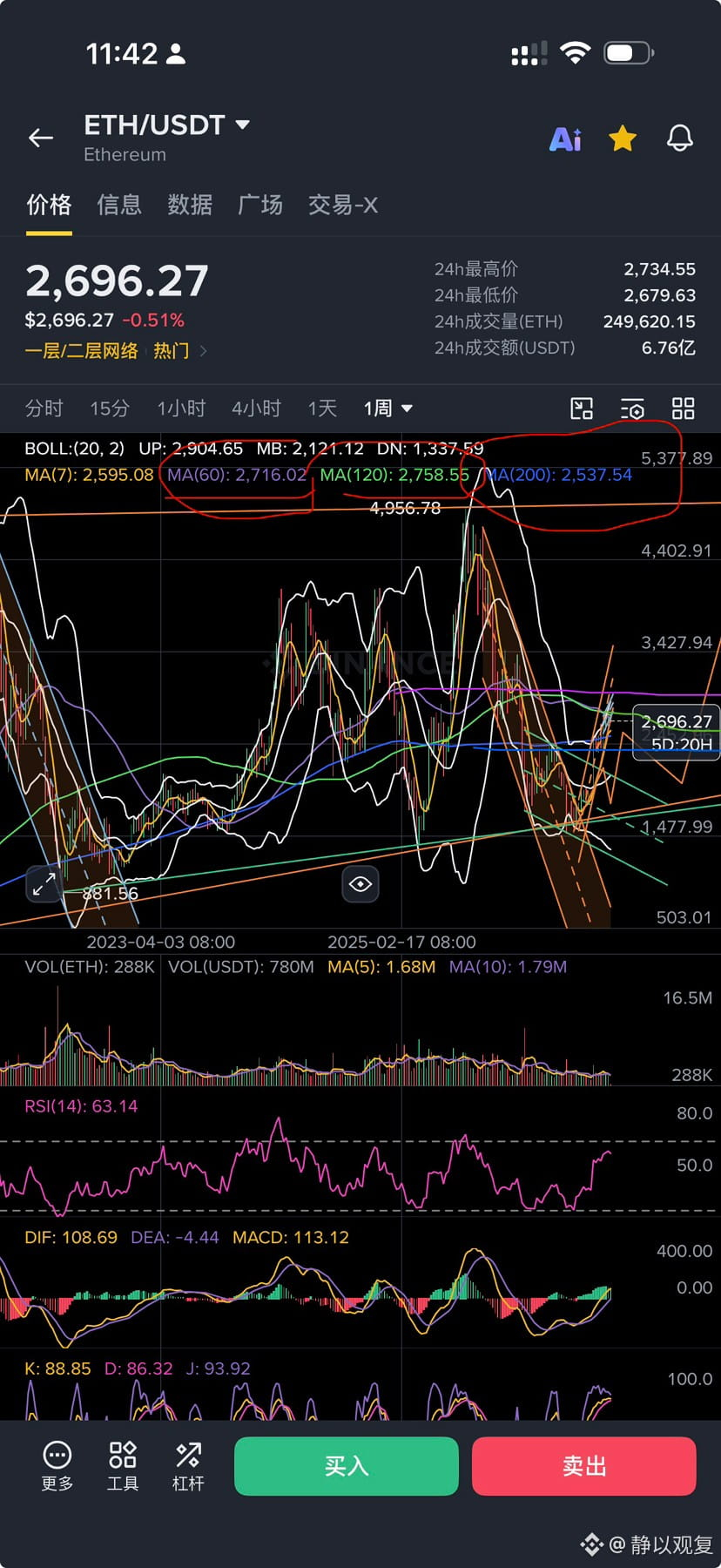
ETH has fallen below the weekly MA60 and MA120, with its price plunging to $2,696. It looks like a breakdown, but the downside has already been effectively sealed off.
During crypto bull-market cycles, Ethereum’s weekly price rarely falls below the MA200. That ultimate moving average is now at $2,537, less than $160 from the current price.
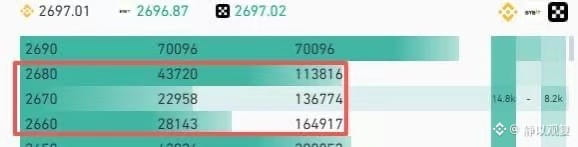
The order book makes the picture even clearer: dense clusters of large buy orders are stacked between $2,660 and $2,680. Large buyers are stepping in early to establish a floor, and the long-term moving average is just around the corner. With such an asymmetric risk-reward ratio, selling at an extreme support level would be the costliest misjudgment.
#ETH
👇
{future}(ETHUSDT)
ETH has fallen below the weekly MA60 and MA120, with its price plunging to $2,696. It looks like a breakdown, but the downside has already been effectively sealed off.
During crypto bull-market cycles, Ethereum’s weekly price rarely falls below the MA200. That ultimate moving average is now at $2,537, less than $160 from the current price.
The order book makes the picture even clearer: dense clusters of large buy orders are stacked between $2,660 and $2,680. Large buyers are stepping in early to establish a floor, and the long-term moving average is just around the corner. With such an asymmetric risk-reward ratio, selling at an extreme support level would be the costliest misjudgment.
#ETH
👇
During crypto bull-market cycles, Ethereum’s weekly price rarely falls below the MA200. That ultimate moving average is now at $2,537, less than $160 from the current price.
The order book makes the picture even clearer: dense clusters of large buy orders are stacked between $2,660 and $2,680. Large buyers are stepping in early to establish a floor, and the long-term moving average is just around the corner. With such an asymmetric risk-reward ratio, selling at an extreme support level would be the costliest misjudgment.
#ETH
👇
151
·
--
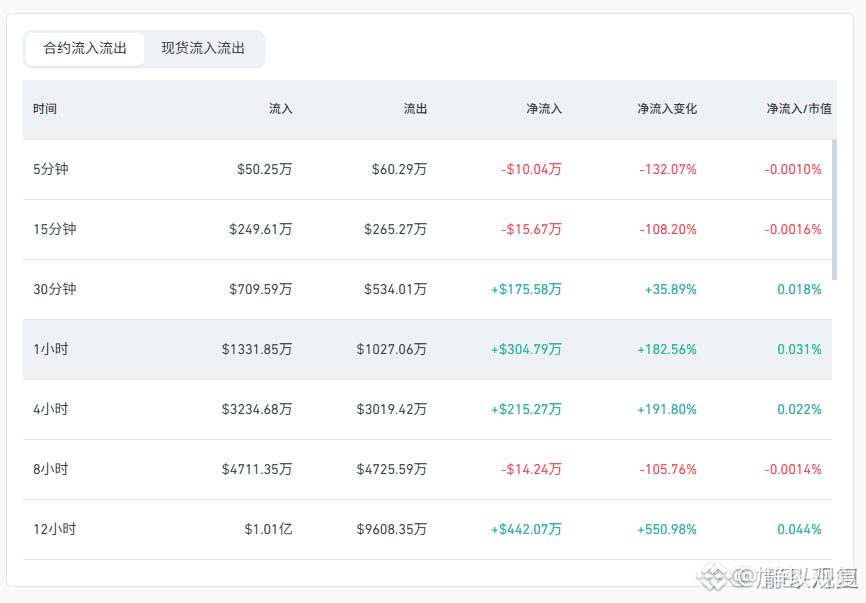
From 1 hour to 4 hours and then 12 hours, ADA has seen net inflows across the board in the futures market, with the 12-hour timeframe alone absorbing $4.4207 million.
A surge in a single candlestick could be an emotional burst, but when futures capital flows stay consistently aligned across multiple timeframes, that’s a completely different story. All three timeframes are injecting real money into the bulls. This isn’t a fake move that’s over in a flash—it’s capital steadily lifting the market higher.
The market is still hesitating over whether to follow, but underlying buying pressure has already made its stance clear. As long as this cross-timeframe inflow momentum holds, this rally is nowhere near running out of steam.
#ADA
👇
{future}(ADAUSDT)
From 1 hour to 4 hours and then 12 hours, ADA has seen net inflows across the board in the futures market, with the 12-hour timeframe alone absorbing $4.4207 million.
A surge in a single candlestick could be an emotional burst, but when futures capital flows stay consistently aligned across multiple timeframes, that’s a completely different story. All three timeframes are injecting real money into the bulls. This isn’t a fake move that’s over in a flash—it’s capital steadily lifting the market higher.
The market is still hesitating over whether to follow, but underlying buying pressure has already made its stance clear. As long as this cross-timeframe inflow momentum holds, this rally is nowhere near running out of steam.
#ADA
👇
A surge in a single candlestick could be an emotional burst, but when futures capital flows stay consistently aligned across multiple timeframes, that’s a completely different story. All three timeframes are injecting real money into the bulls. This isn’t a fake move that’s over in a flash—it’s capital steadily lifting the market higher.
The market is still hesitating over whether to follow, but underlying buying pressure has already made its stance clear. As long as this cross-timeframe inflow momentum holds, this rally is nowhere near running out of steam.
#ADA
👇
237
·
--
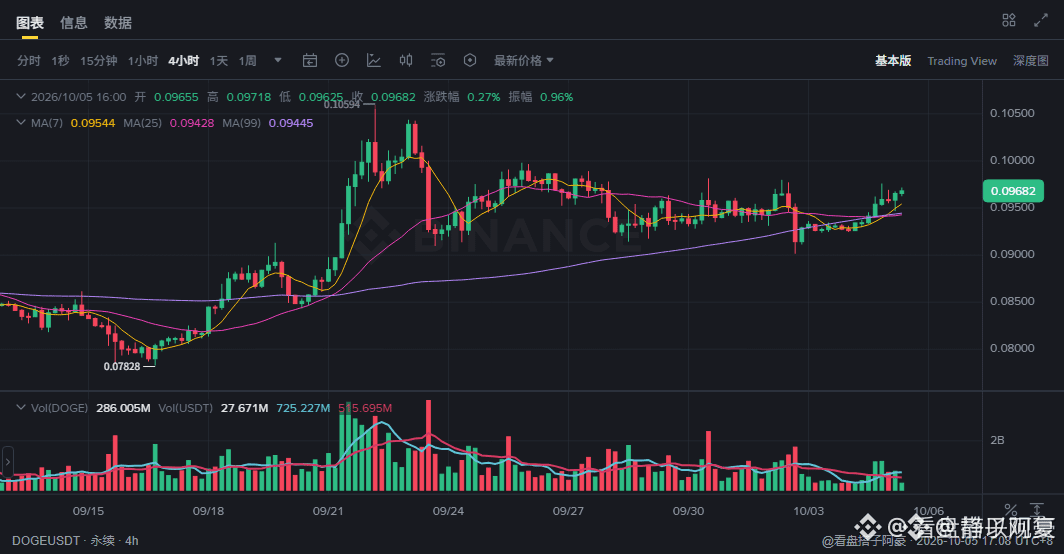
The three key moving averages have been squeezed into an extremely narrow range of less than $0.0012, and DOGE’s 4-hour chart is sending a clear signal.
MA7 (0.0954), MA25 (0.0942), and MA99 (0.0944) are all clustered below the price, providing a solid floor, while the price holds above 0.0968. The short- and long-term moving averages are tightly converged beneath the price, indicating that cost bases have leveled out and support below is exceptionally strong.
Every downward push by the bears runs into a wall of moving averages, while a test of the 0.09799 resistance to the upside seems like the natural next move. Hesitating where the moving averages are densely clustered as support can mean missing the real breakout.
#DOGE
👇
{future}(DOGEUSDT)
The three key moving averages have been squeezed into an extremely narrow range of less than $0.0012, and DOGE’s 4-hour chart is sending a clear signal.
MA7 (0.0954), MA25 (0.0942), and MA99 (0.0944) are all clustered below the price, providing a solid floor, while the price holds above 0.0968. The short- and long-term moving averages are tightly converged beneath the price, indicating that cost bases have leveled out and support below is exceptionally strong.
Every downward push by the bears runs into a wall of moving averages, while a test of the 0.09799 resistance to the upside seems like the natural next move. Hesitating where the moving averages are densely clustered as support can mean missing the real breakout.
#DOGE
👇
MA7 (0.0954), MA25 (0.0942), and MA99 (0.0944) are all clustered below the price, providing a solid floor, while the price holds above 0.0968. The short- and long-term moving averages are tightly converged beneath the price, indicating that cost bases have leveled out and support below is exceptionally strong.
Every downward push by the bears runs into a wall of moving averages, while a test of the 0.09799 resistance to the upside seems like the natural next move. Hesitating where the moving averages are densely clustered as support can mean missing the real breakout.
#DOGE
👇
347
·
--
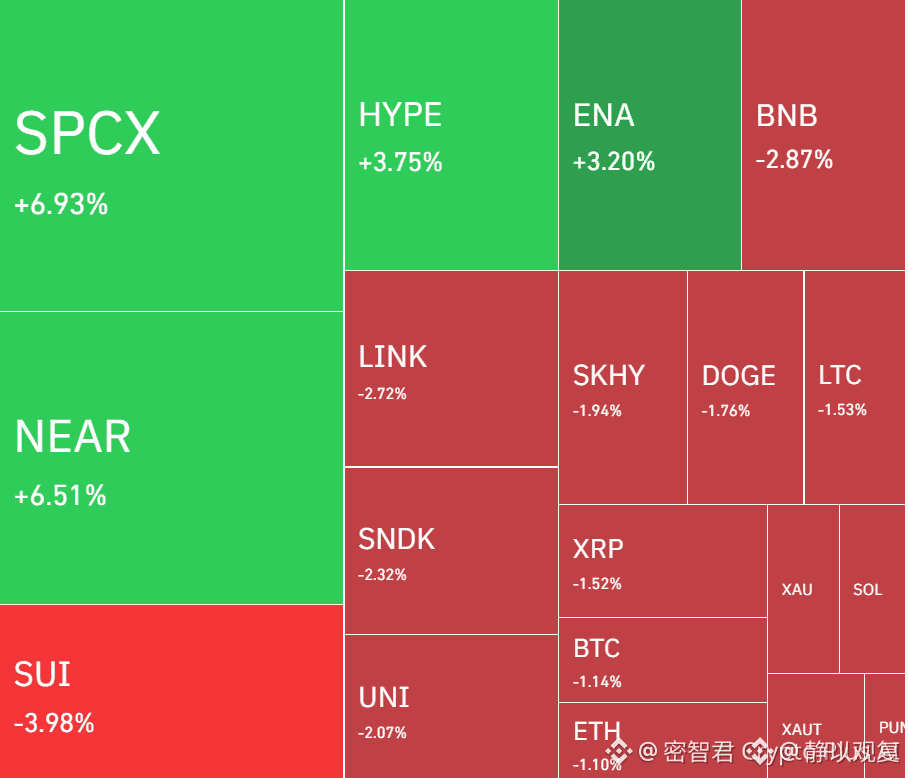
Today, 3.75 million tokens worth about $340 million are being unlocked, yet HYPE has unexpectedly risen more than 3% against the broader trend.
Seeing a rally against the trend and assuming the bulls are strong completely ignores the scale. A $340 million spot supply is not something a rebound of a few percentage points can easily absorb.
Before the unlock, traders heated up the market by playing on expectations. Essentially, they’re setting the stage for profit-takers to cash out. With a full 3.75 million tokens hanging overhead, where can large holders exit if they don’t use the excitement to attract enough buyers on the other side?
The more tempting this against-the-trend rally looks, the more concentrated the risk of a sell-off once the tokens hit the market. Chasing what is merely liquidity created ahead of a sell-off as if it were a breakout signal is volunteering to be someone else’s stepping stone.
#HYPE
👇
{future}(HYPEUSDT)
Today, 3.75 million tokens worth about $340 million are being unlocked, yet HYPE has unexpectedly risen more than 3% against the broader trend.
Seeing a rally against the trend and assuming the bulls are strong completely ignores the scale. A $340 million spot supply is not something a rebound of a few percentage points can easily absorb.
Before the unlock, traders heated up the market by playing on expectations. Essentially, they’re setting the stage for profit-takers to cash out. With a full 3.75 million tokens hanging overhead, where can large holders exit if they don’t use the excitement to attract enough buyers on the other side?
The more tempting this against-the-trend rally looks, the more concentrated the risk of a sell-off once the tokens hit the market. Chasing what is merely liquidity created ahead of a sell-off as if it were a breakout signal is volunteering to be someone else’s stepping stone.
#HYPE
👇
Seeing a rally against the trend and assuming the bulls are strong completely ignores the scale. A $340 million spot supply is not something a rebound of a few percentage points can easily absorb.
Before the unlock, traders heated up the market by playing on expectations. Essentially, they’re setting the stage for profit-takers to cash out. With a full 3.75 million tokens hanging overhead, where can large holders exit if they don’t use the excitement to attract enough buyers on the other side?
The more tempting this against-the-trend rally looks, the more concentrated the risk of a sell-off once the tokens hit the market. Chasing what is merely liquidity created ahead of a sell-off as if it were a breakout signal is volunteering to be someone else’s stepping stone.
#HYPE
👇
587
·
--
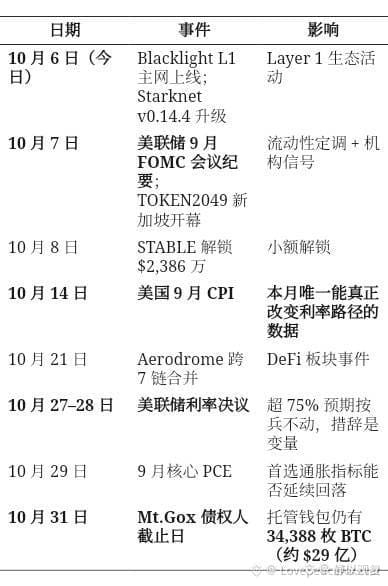
The 10-year U.S. Treasury yield has surged to 5.25%, its highest level since 2002. With macroeconomic liquidity being drained this aggressively, blindly applying the “Q4 always rises” rule from a low-interest-rate environment to today’s market is like carving a mark on a moving boat and expecting it to guide you later.
There’s also significant selling pressure looming at month-end: nearly $2.9 billion (about 34,000 BTC) in the Mt. Gox wallet is due to be repaid by October 31.
More than 5% risk-free yields are drawing capital away, while billions of dollars’ worth of spot supply are certain to hit the market. With pressure on both liquidity and supply, buying at these highs to bet on some so-called year-end rally just doesn’t add up.
#BTC👇
{future}(BTCUSDT)
The 10-year U.S. Treasury yield has surged to 5.25%, its highest level since 2002. With macroeconomic liquidity being drained this aggressively, blindly applying the “Q4 always rises” rule from a low-interest-rate environment to today’s market is like carving a mark on a moving boat and expecting it to guide you later.
There’s also significant selling pressure looming at month-end: nearly $2.9 billion (about 34,000 BTC) in the Mt. Gox wallet is due to be repaid by October 31.
More than 5% risk-free yields are drawing capital away, while billions of dollars’ worth of spot supply are certain to hit the market. With pressure on both liquidity and supply, buying at these highs to bet on some so-called year-end rally just doesn’t add up.
#BTC👇
There’s also significant selling pressure looming at month-end: nearly $2.9 billion (about 34,000 BTC) in the Mt. Gox wallet is due to be repaid by October 31.
More than 5% risk-free yields are drawing capital away, while billions of dollars’ worth of spot supply are certain to hit the market. With pressure on both liquidity and supply, buying at these highs to bet on some so-called year-end rally just doesn’t add up.
#BTC👇
161
Log in to explore more content
Join global crypto users on Binance Square
⚡️ Get latest and useful information about crypto.
💬 Trusted by the world’s largest crypto exchange.
👍 Discover real insights from verified creators.
Email / Phone number
Trending Topics
BinanceLaunchesBinanceIntelligence
641,031 views
3,913 Discussing
#binancelaunchesbinanceintelligence 🚨 WHAT IF THE NEXT BIG EXCHANGE BATTLE ISN’T ABOUT FEES? 👀
Binance just made a bigger move than adding another AI chatbot.
With Binance Intelligence, AI is moving deeper into the exchange — from understanding market data to building trading workflows. 🤖⚡
The real question is:
Who has the best liquidity?
Or who has the smartest AI layer?
If users can research, test ideas and manage trading workflows without switching between different tools, the exchange itself could become a financial assistant.
That could be a much bigger shift than it looks today.
If Binance Intelligence drives more users, more strategies and more trading activity, $BNB could become one of the tokens to watch. 👀
Is Binance building the future of AI-powered finance?
$BNB
#binancelaunchesbinanceintelligence #BinanceAI #CryptoAI #AITrading
Suleman Khan Haqqani
·4 Likes
·5.8k views
BTCFallsBelow$84K
8,244 views
44 Discussing
DubaiVARAIssuesReserveAssetAuditCircular
13 views
20 Discussing