


Imran Khan Dahri
📊 Crypto Markets | Charts | Trade Setups 🎯 Real levels. | Selective Trades. No FOMO. 🧠 Analysis • Insights • Disciplines
Open Trade
Frequent Trader
1.7 Years
138 Following
170 Followers
308 Liked
Posts
Portfolio
All
Quotes
Videos
Imran Khan Dahri
·
--
Crypto Survival School — Episode 5
Your Stop-Loss Was at $95. So Why Did You Sell at $92.80?
Imagine buying a coin at $100.
You don't want to lose too much, so you set a stop-loss at $95.
Good. You've planned your exit before the trade goes wrong.
Then the market suddenly drops.
You open your account and discover that your position was sold at $92.80.
Wait a minute.
You set your stop at $95. How did you end up selling at $92.80?
Did the exchange ignore your order?
Not necessarily.
There's something about stop-loss orders that many beginners discover only after their first painful trade:
The price that triggers your exit isn't always the price you receive.
And if you don't understand the difference, you might believe you're risking less than you actually are.
First, understand what happened to your $100 trade
Let's return to the example.
You bought at $100 and set a stop-loss trigger at $95.
Your plan was to exit if the price fell 5% below your entry.
But the market was moving quickly. By the time your sell order found available buyers, your average execution price was $92.80.
Your actual loss was 7.2%, not 5%, before fees.
The stop wasn't necessarily broken. The market moved, and the available selling prices were worse than the trigger price.
This is one reason execution matters just as much as choosing an entry.
A stop-loss is an instruction for what should happen when a condition is met. It isn't a promise that the market will give you a particular exit price.
Think of it as a planned exit—not a force field around your money.
Two stop-loss orders. Two different problems.
Here's where things get interesting.
Traders often talk about stop-market and stop-limit orders as if one is simply better than the other.
But they solve different problems.
A stop-market order prioritizes getting out.
When the trigger condition is met, the order becomes a market order that seeks to sell at the best available prices.
The advantage is that you're not restricting the sale to one particular limit price.
The disadvantage? In a fast-moving or illiquid market, the execution price can be worse than expected.
Let's say your stop triggers at $95, but available buyers are bidding $93.50.
Your order may sell around that lower price, depending on the available liquidity and order size.
You triggered the exit at $95. You didn't guarantee a $95 sale.
A stop-limit order prioritizes price control.
This order has two prices:
The stop price, which activates the order.
The limit price, which sets the minimum price you'll accept when selling.
Suppose you set a stop trigger at $95 and a sell limit at $94.50.
When the trigger is reached, a sell limit order is placed at $94.50.
That gives you more control over the acceptable selling price.
But what happens if the market suddenly falls from $95 to $92.80 and buyers aren't willing to pay $94.50 or more?
Your order might not fill.
You could still be holding the coin while its price continues falling.
That's the trade-off beginners need to understand:
A stop-market order can give you a worse price than expected. A stop-limit order can leave you without an exit.
Neither eliminates market risk.
The dangerous assumption: "At least I have a stop-loss."
Having a stop-loss is not the same as understanding how it works.
Imagine two traders holding the same coin.
Both bought at $100.
Both planned to exit if the price fell to $95.
The first trader uses a stop-market order and understands that the actual sale could happen below $95.
The second uses a stop-limit order but doesn't realize the order could remain unfilled if the market falls too quickly.
When the price crashes, both discover that their planned exits have different limitations.
The lesson isn't that one trader must always be right.
It's that you should know what your order can—and cannot—do before you depend on it.
And there's another detail worth paying attention to if you trade futures.
Futures traders have one more price to understand
On Binance Futures, stop orders can use either Last Price or Mark Price as their trigger reference, depending on the order and settings.
Last Price is the latest traded price of the contract.
Mark Price is an estimated fair value used in futures calculations, including unrealized profit and loss and liquidation monitoring.
These prices can differ, particularly during volatile markets.
That means a stop configured to trigger using Last Price may behave differently from one triggered using Mark Price.
There's also a serious risk when using leverage: liquidation can occur before your planned stop-loss protects the position.
Binance's documentation specifically warns against placing a stop-loss trigger too close to the estimated liquidation price because liquidation may happen first.
So if you're trading futures, don't just ask, "Where is my stop?"
Ask, "Which price triggers it, and how close is my liquidation price?"
If you're still learning, consider practising with a demo account before risking real money on leveraged trades.
So how should a beginner use a stop-loss?
You don't need a complicated trading system. You need to understand your exit before entering.
Here's a practical checklist.
1. Decide where your trade idea becomes invalid.
Don't choose a stop just because you want to lose only a certain number of cents.
First understand what would prove your trading idea wrong. Then consider whether the distance to that level makes sense for your account and position size.
If the potential loss is too large, reduce the position or skip the trade.
2. Understand the order type you're using.
If you use a stop-market order, understand that the final execution price can differ from the trigger.
If you use a stop-limit order, understand that the order might not fill.
Don't choose an order simply because its name sounds safer.
3. Check the actual order after placing it.
Make sure the stop is active, the quantity is correct, and the trigger reference and other settings match your plan.
A stop you intended to place but never successfully submitted cannot protect your position.
4. Leave room for execution risk.
A stop price is not a guarantee of your maximum loss.
Fast moves, limited liquidity, fees and slippage can increase the loss beyond your initial calculation.
That's why position sizing matters. If you cannot tolerate a larger-than-expected loss, your position may be too large.
5. Never use your stop as an excuse to take a reckless trade.
Some beginners think they can enter any setup because they have a stop-loss.
But a stop doesn't turn a bad entry into a good one. It doesn't guarantee a fill at the intended price, and it doesn't eliminate the possibility of losing money.
Risk management begins before you enter—not when the chart turns red.
One final thought
I want you to remember something the next time you place a trade.
Your entry price is a number.
Your stop price is a trigger or limit condition, depending on the order.
Your actual exit is determined by how the order executes under the market conditions that exist at the time.
Those are three different things.
Understanding that difference won't prevent every loss. Nothing can do that.
But it can stop you from building a trading plan around an assumption that was never guaranteed in the first place.
And that's what we're trying to do in Crypto Survival School: learn the uncomfortable details before they become expensive lessons.
Let me ask you something:
If you were holding a coin and your stop-loss triggered, which would worry you more?
A) Selling below your planned stop price.
B) Using a stop-limit order and discovering that it never filled.
Tell me why. There's a real trade-off here, and understanding it matters more than memorizing the names of different orders.
Next in Crypto Survival School: The Green Number on Your Screen Isn't Your Profit Yet.

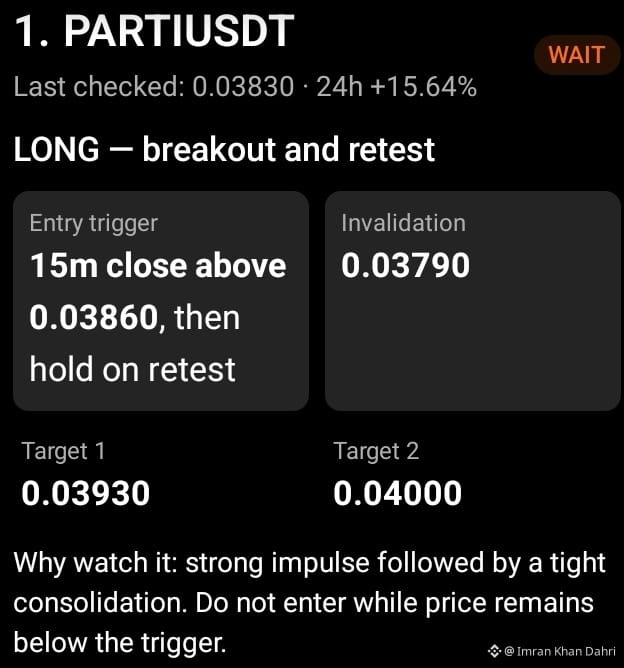
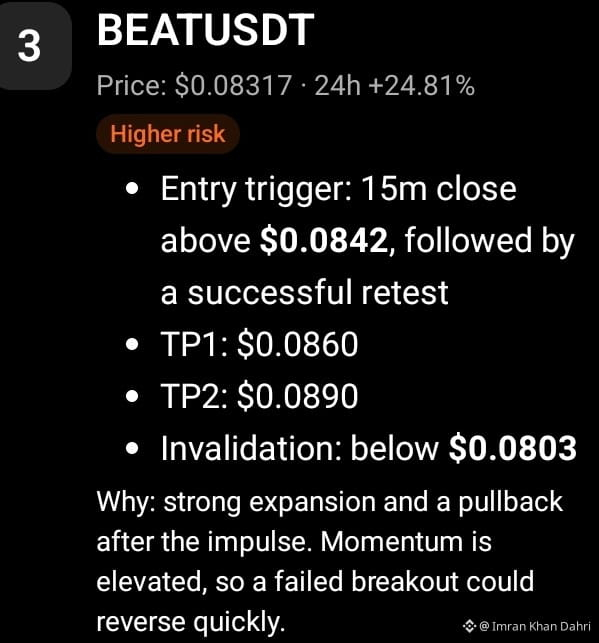
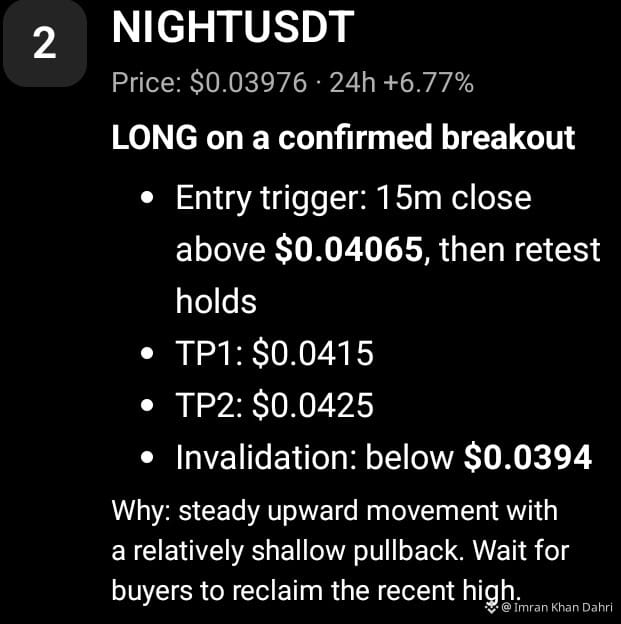
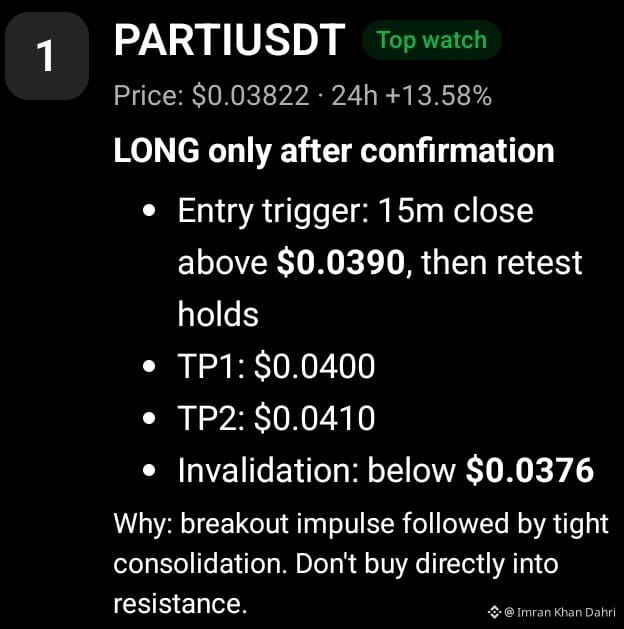
Imran Khan Dahri
·
--
Crypto Survival School — Episode 4
A Coin Is Trending. Who Is Left to Buy It?
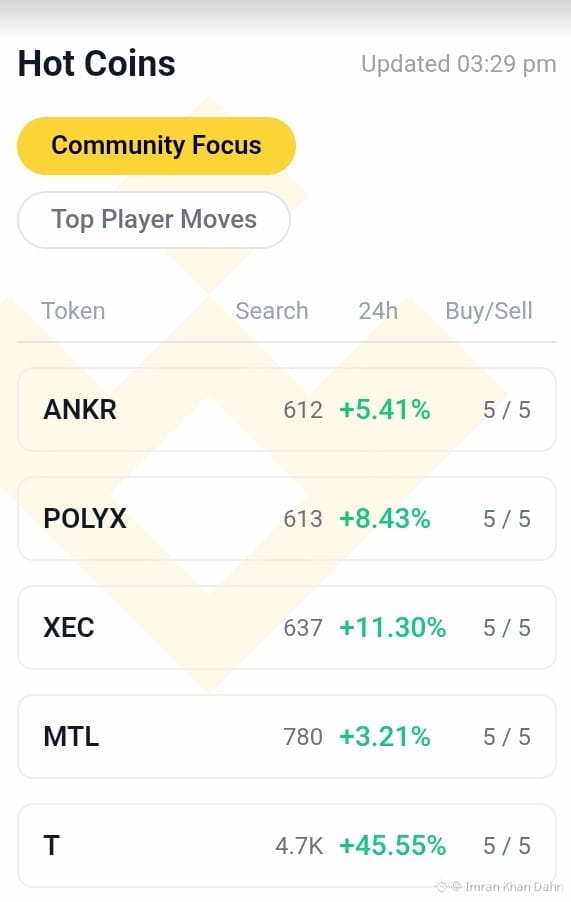
You open Binance and see a coin flying.
It's up 40%. Its trading volume has exploded. People are talking about it everywhere.
One thought enters your mind:
"If I buy now, maybe I can catch another 20%."
You buy.
For a few minutes, nothing happens. Then the price starts slipping. The green candles become smaller, and suddenly the coin you thought was about to take off is falling.
You check the market again. The coin is still up massively over the last 24 hours.
So why are you losing money?
Because you saw how far the coin had already travelled, but you never asked what could drive it higher from your entry price.
Let's talk about the question that can save a beginner from a lot of painful decisions.
A trending coin needs something you can't see on a percentage chart
Imagine a token rises from $1 to $1.40.
That's a 40% increase.
Now thousands of people notice it. Some buy because of the chart. Others buy because their friends are talking about it. Some traders who bought much earlier begin taking profits.
All of these people can be looking at the same coin for completely different reasons.
And here's the interesting part: the fact that the price has risen doesn't tell you how many people are still willing to buy it at $1.40, $1.50, or $1.60.
The next move depends on what buyers and sellers actually do.
If buyers are willing to keep paying higher prices, the rally can continue.
If buyers become less aggressive while sellers are increasingly willing to sell, the price can stall or fall.
Neither outcome is guaranteed simply because the coin is trending.
Popularity tells you that people are paying attention. It doesn't tell you what they'll pay next.
The volume number is more misleading than you might think
Let's say you see a coin with $20 million in trading volume over 24 hours.
That sounds impressive.
But what does the number actually tell you?
It tells you how much trading took place during that period, according to the reported volume measure.
It does not mean $20 million of brand-new money entered the coin and is now waiting to push its price higher.
Every completed trade has a buyer and a seller. One person may be opening a position while another is closing one. Traders can buy and sell repeatedly, generating substantial volume without that number telling you which direction the price will move next.
High volume can accompany a strong breakout. It can also accompany heavy selling, profit-taking, or a battle between buyers and sellers.
So don't look at a large volume number and automatically translate it into "more upside coming."
Ask a better question:
What is the price actually doing while all this trading is happening?
Is it continuing to make progress? Is it breaking above a level and holding it? Or is the price repeatedly pushing higher and then falling back?
Volume provides context. It doesn't predict the future by itself.
Here's a detail beginners often overlook: getting out matters, too
Suppose you find a smaller token that looks ready to move.
Its chart is exciting, and the last price looks attractive.
But you check the order book and discover that the gap between the best available buying price and selling price is relatively wide. There aren't many orders near the current price, either.
That matters.
Liquidity describes how easily you can buy or sell without significantly affecting the price. When liquidity is thin, a market order may execute at a worse average price than you expected. That difference is called slippage.
In plain English, the price you see on the screen isn't always the price you get.
This can hurt when entering a trade, and it can hurt again when exiting.
A coin might look easy to trade while its price is rising, but that doesn't guarantee you'll be able to sell your position at the price you want if the market suddenly turns.
That's why a spectacular percentage gain isn't enough to judge a trading opportunity.
You also need to consider the market in which you're trading.
So how do you judge a coin that's already trending?
You don't have to predict the exact top. Nobody can do that consistently.
Instead, take a moment to examine four things before you decide whether a trade is worth considering.
First, look beyond the 24-hour percentage.
Open the chart and zoom out.
Has the coin just broken above a level it struggled to cross previously? Or has it already travelled a long way from its recent trading range?
A large move doesn't automatically mean the rally is finished. But it does mean you should understand where you're entering rather than buying simply because the number is green.
Second, watch what happens after the surge.
Does the price hold near the breakout area, or does it quickly fall back into its previous range?
A breakout that holds may provide a different trading opportunity from one that immediately fails.
Neither pattern guarantees success. The point is to observe the market's response instead of assuming the next candle must be green.
Third, check the trading conditions.
Look at the bid-ask spread and the available orders near the current price.
A deep order book generally makes it easier to trade without moving the price as much. A thin book can make execution more difficult.
Remember, visible orders can change or disappear, so an order book is a snapshot—not a promise that liquidity will remain available.
Finally, know what would make you walk away.
Before entering, decide what would invalidate your trading idea and how much you can afford to lose if you're wrong.
If the only reason you want to buy is that the coin is trending, you haven't yet established a reason to take the trade.
You can simply wait.
What if the coin keeps rising without you?
This is where the hardest part begins.
You decide not to buy. Then the coin rises another 10%.
Now you feel foolish for waiting.
You think you should have trusted your instincts. Next time, you promise yourself, you'll enter earlier.
But notice what just happened.
You made a decision based on the information available at the time. The market then moved in a direction you didn't capture. That doesn't automatically make your decision wrong.
A cautious decision can miss a profitable move. An impulsive decision can occasionally make money.
The result of one trade doesn't tell you whether your decision-making process is good.
Research published in Psychology & Marketing examined how fear-of-missing-out messages influence crypto investment decisions. Across five studies involving eight experiments, the researchers found that FOMO appeals could influence investment intentions and encourage repeated investment decisions, including after previous losses.
That doesn't mean every trending coin is dangerous. It means the feeling of missing out can itself become a reason to take risks.
And that's worth recognizing before you click Buy.
The question to remember
The next time a coin suddenly appears everywhere, don't ask only:
"How much higher can this go?"
Ask:
"What evidence would convince me that buyers are still in control—and what would tell me I'm wrong?"
You might still decide to trade it. You might decide to wait for a pullback or a confirmed breakout. You might decide the opportunity isn't worth the risk.
Those are different choices, but each can be made deliberately.
You don't have to catch every rally to become a better trader.
Sometimes the most valuable skill is learning to watch a coin run without feeling that you must chase it.
Let me ask you something:
When you see a coin up 30–50% on the trending list, what's your first instinct?
Do you buy because the momentum looks strong, wait for a pullback, or avoid it altogether?
Tell me why. I'm interested in how beginners actually make these decisions—not just what the perfect answer looks like after the chart has already moved.
Next in Crypto Survival School: The Stop-Loss That Didn't Save You — Understanding Why Your Exit Price Isn't Always Your Final Price.

Log in to explore more content