
ILIQ69
216 Posts

ILIQ69
Report
Block User
42 Following
53 Followers
241 Liked
Posts
PINNED
·
--
Bullish
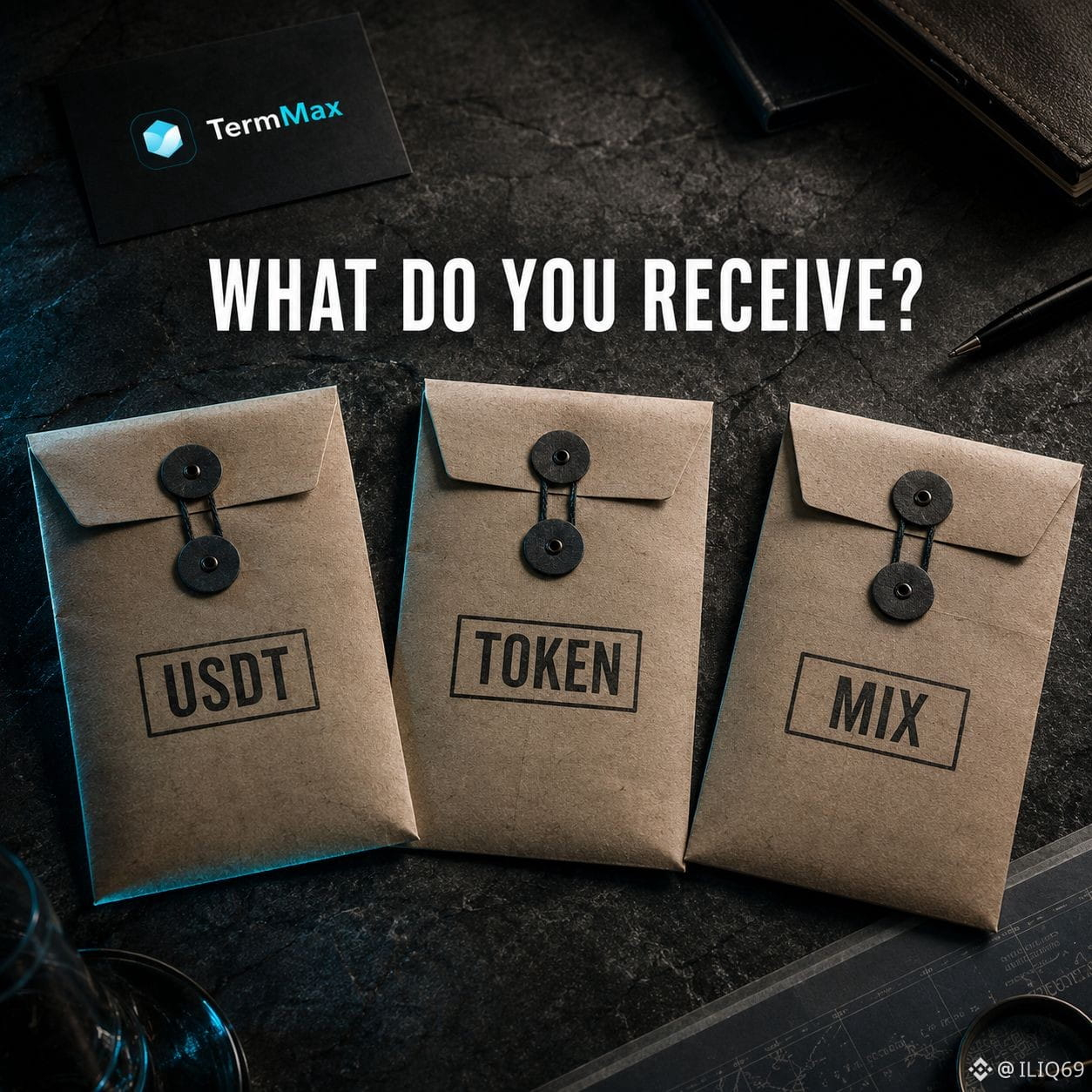
A vault return can look simple until you ask a more practical question: what asset might I actually receive at settlement?
TermMax Alpha documentation explains that, after maturity, a Dual Investment vault may end with USDT, the token, or a mix of both in a partial-exercise scenario. The final composition depends on the settlement outcome and available liquidity.
That detail makes me read a yield offer differently. The rate is only one part of the decision. The settlement asset is another. If I deposit USDT but the setup can settle into tokens under certain conditions, I need to be comfortable with that possibility before I enter.
Which final outcome would you want defined most clearly before depositing?
@termmax $TMX #TermMax
A vault return can look simple until you ask a more practical question: what asset might I actually receive at settlement?
TermMax Alpha documentation explains that, after maturity, a Dual Investment vault may end with USDT, the token, or a mix of both in a partial-exercise scenario. The final composition depends on the settlement outcome and available liquidity.
That detail makes me read a yield offer differently. The rate is only one part of the decision. The settlement asset is another. If I deposit USDT but the setup can settle into tokens under certain conditions, I need to be comfortable with that possibility before I enter.
Which final outcome would you want defined most clearly before depositing?
@TermMax $TMX #TermMax
TermMax Alpha documentation explains that, after maturity, a Dual Investment vault may end with USDT, the token, or a mix of both in a partial-exercise scenario. The final composition depends on the settlement outcome and available liquidity.
That detail makes me read a yield offer differently. The rate is only one part of the decision. The settlement asset is another. If I deposit USDT but the setup can settle into tokens under certain conditions, I need to be comfortable with that possibility before I enter.
Which final outcome would you want defined most clearly before depositing?
@TermMax $TMX #TermMax
Settlement asset
0%
Strike price
0%
Maturity date
0%
Partial-exercise rules
0%
0 votes • Voting closed
15
6
110
·
--
I've been closely following the developments around Kite AI, and I am genuinely impressed by what they are building in the Web3 space. The integration of artificial intelligence with decentralized technology is exactly what the industry needs right now to push boundaries. The community is growing fast, and the future potential of $KITE looks incredibly promising. This is definitely a project worth keeping an eye on as they continue to innovate and expand their ecosystem. Exciting times ahead for everyone involved! 🚀 #KiteBBW
I've been closely following the developments around Kite AI, and I am genuinely impressed by what they are building in the Web3 space. The integration of artificial intelligence with decentralized technology is exactly what the industry needs right now to push boundaries. The community is growing fast, and the future potential of $KITE looks incredibly promising. This is definitely a project worth keeping an eye on as they continue to innovate and expand their ecosystem. Exciting times ahead for everyone involved! 🚀 #KiteBBW
1
194
·
--
Tokenization can change not an active itself, but the entire way you interact with it.
Traditional financial assets have worked through centralized infrastructure for decades.
Blockchain offers a different approach—moving the representation of assets into a programmable on-chain environment.
bStocks is interesting precisely in this context.
This isn’t just a story about “stocks on the blockchain.” It’s part of a bigger trend in which TradFi is gradually getting acquainted with crypto tools.
And if tokenization becomes the standard, blockchain won’t be an alternative to finance anymore—it will be part of it.
Tokenization can change not an active itself, but the entire way you interact with it.
Traditional financial assets have worked through centralized infrastructure for decades.
Blockchain offers a different approach—moving the representation of assets into a programmable on-chain environment.
bStocks is interesting precisely in this context.
This isn’t just a story about “stocks on the blockchain.” It’s part of a bigger trend in which TradFi is gradually getting acquainted with crypto tools.
And if tokenization becomes the standard, blockchain won’t be an alternative to finance anymore—it will be part of it.
Traditional financial assets have worked through centralized infrastructure for decades.
Blockchain offers a different approach—moving the representation of assets into a programmable on-chain environment.
bStocks is interesting precisely in this context.
This isn’t just a story about “stocks on the blockchain.” It’s part of a bigger trend in which TradFi is gradually getting acquainted with crypto tools.
And if tokenization becomes the standard, blockchain won’t be an alternative to finance anymore—it will be part of it.
63
·
--
Blockchain is gradually moving beyond cryptocurrencies.
One of the most interesting areas is the tokenization of traditional financial assets.
bStocks works in exactly this direction, combining traditional assets with on-chain infrastructure.
And here the key principle is this: blockchain can be not only a place to create new assets, but also a technology for transferring already existing financial instruments into a digital environment.
This creates a bridge between TradFi and crypto.
Perhaps real mass adoption of blockchain will begin with assets that people already know.
Blockchain is gradually moving beyond cryptocurrencies.
One of the most interesting areas is the tokenization of traditional financial assets.
bStocks works in exactly this direction, combining traditional assets with on-chain infrastructure.
And here the key principle is this: blockchain can be not only a place to create new assets, but also a technology for transferring already existing financial instruments into a digital environment.
This creates a bridge between TradFi and crypto.
Perhaps real mass adoption of blockchain will begin with assets that people already know.
One of the most interesting areas is the tokenization of traditional financial assets.
bStocks works in exactly this direction, combining traditional assets with on-chain infrastructure.
And here the key principle is this: blockchain can be not only a place to create new assets, but also a technology for transferring already existing financial instruments into a digital environment.
This creates a bridge between TradFi and crypto.
Perhaps real mass adoption of blockchain will begin with assets that people already know.
69
·
--
The future of TradFi may look much more on-chain than we’re used to imagining.
bStocks is interesting precisely because of this trend—tokenizing traditional financial assets.
Blockchain here acts not just as a technology for cryptocurrencies.
It can become an infrastructural layer for interacting with assets that historically existed outside the crypto market.
This is gradually blurring the line between the two financial ecosystems.
Crypto doesn’t necessarily have to replace TradFi. Maybe the next stage is their integration.
The future of TradFi may look much more on-chain than we’re used to imagining.
bStocks is interesting precisely because of this trend—tokenizing traditional financial assets.
Blockchain here acts not just as a technology for cryptocurrencies.
It can become an infrastructural layer for interacting with assets that historically existed outside the crypto market.
This is gradually blurring the line between the two financial ecosystems.
Crypto doesn’t necessarily have to replace TradFi. Maybe the next stage is their integration.
bStocks is interesting precisely because of this trend—tokenizing traditional financial assets.
Blockchain here acts not just as a technology for cryptocurrencies.
It can become an infrastructural layer for interacting with assets that historically existed outside the crypto market.
This is gradually blurring the line between the two financial ecosystems.
Crypto doesn’t necessarily have to replace TradFi. Maybe the next stage is their integration.
28
·
--
Financial assets change not only in price. The way you access them changes too.
bStocks is interesting precisely from this point of view — it works in the direction of tokenizing traditional assets.
Blockchain adds an on-chain infrastructure layer to the familiar financial model.
This creates a completely different approach to interacting with assets: instead of viewing blockchain only as the foundation for cryptocurrencies, it can be used for financial instruments across the broader market.
Tokenization can become one of the main bridges between TradFi and crypto.
And it’s this direction’s development that’s especially worth watching right now.
Financial assets change not only in price. The way you access them changes too.
bStocks is interesting precisely from this point of view — it works in the direction of tokenizing traditional assets.
Blockchain adds an on-chain infrastructure layer to the familiar financial model.
This creates a completely different approach to interacting with assets: instead of viewing blockchain only as the foundation for cryptocurrencies, it can be used for financial instruments across the broader market.
Tokenization can become one of the main bridges between TradFi and crypto.
And it’s this direction’s development that’s especially worth watching right now.
bStocks is interesting precisely from this point of view — it works in the direction of tokenizing traditional assets.
Blockchain adds an on-chain infrastructure layer to the familiar financial model.
This creates a completely different approach to interacting with assets: instead of viewing blockchain only as the foundation for cryptocurrencies, it can be used for financial instruments across the broader market.
Tokenization can become one of the main bridges between TradFi and crypto.
And it’s this direction’s development that’s especially worth watching right now.
1
81
·
--
TradFi does not necessarily need to be replaced. It can be rebuilt.
Tokenization is one way to bring traditional financial assets into an on-chain environment.
This is exactly where the bStocks direction becomes interesting.
The idea is simple: combine familiar financial assets with blockchain infrastructure.
For the market, this is more important than the next crypto hype cycle.
Because if tokenization becomes mainstream, blockchain could transform from an alternative financial infrastructure into part of TradFi itself.
This is already a direction worth watching.
TradFi does not necessarily need to be replaced. It can be rebuilt.
Tokenization is one way to bring traditional financial assets into an on-chain environment.
This is exactly where the bStocks direction becomes interesting.
The idea is simple: combine familiar financial assets with blockchain infrastructure.
For the market, this is more important than the next crypto hype cycle.
Because if tokenization becomes mainstream, blockchain could transform from an alternative financial infrastructure into part of TradFi itself.
This is already a direction worth watching.
Tokenization is one way to bring traditional financial assets into an on-chain environment.
This is exactly where the bStocks direction becomes interesting.
The idea is simple: combine familiar financial assets with blockchain infrastructure.
For the market, this is more important than the next crypto hype cycle.
Because if tokenization becomes mainstream, blockchain could transform from an alternative financial infrastructure into part of TradFi itself.
This is already a direction worth watching.
40
·
--
Bullish
The next step for TradFi might not be a new asset, but a new format.
Tokenization brings familiar financial assets into an on-chain environment.
That’s the core idea behind bStocks: to combine the traditional financial world with blockchain infrastructure.
It’s interesting not because of the hype around the word “tokenization.”
It’s interesting because blockchain could potentially become another layer for interacting with financial assets.
And if this direction continues to develop, the line between TradFi and crypto may become thinner and thinner.
The next step for TradFi might not be a new asset, but a new format.
Tokenization brings familiar financial assets into an on-chain environment.
That’s the core idea behind bStocks: to combine the traditional financial world with blockchain infrastructure.
It’s interesting not because of the hype around the word “tokenization.”
It’s interesting because blockchain could potentially become another layer for interacting with financial assets.
And if this direction continues to develop, the line between TradFi and crypto may become thinner and thinner.
Tokenization brings familiar financial assets into an on-chain environment.
That’s the core idea behind bStocks: to combine the traditional financial world with blockchain infrastructure.
It’s interesting not because of the hype around the word “tokenization.”
It’s interesting because blockchain could potentially become another layer for interacting with financial assets.
And if this direction continues to develop, the line between TradFi and crypto may become thinner and thinner.
74
·
--
bStocks — it’s not just another way to trade assets.
The main intrigue here is in the approach itself: traditional financial assets get an on-chain format.
Blockchain can change not only how assets are stored, but also how users interact with them.
That’s why the tokenized assets direction is worth keeping an eye on. It sits at the intersection of two worlds — TradFi and crypto.
The question is no longer whether these areas can overlap.
The question is how deep that overlap will be.
And bStocks is one of the projects worth watching.
bStocks — it’s not just another way to trade assets.
The main intrigue here is in the approach itself: traditional financial assets get an on-chain format.
Blockchain can change not only how assets are stored, but also how users interact with them.
That’s why the tokenized assets direction is worth keeping an eye on. It sits at the intersection of two worlds — TradFi and crypto.
The question is no longer whether these areas can overlap.
The question is how deep that overlap will be.
And bStocks is one of the projects worth watching.
The main intrigue here is in the approach itself: traditional financial assets get an on-chain format.
Blockchain can change not only how assets are stored, but also how users interact with them.
That’s why the tokenized assets direction is worth keeping an eye on. It sits at the intersection of two worlds — TradFi and crypto.
The question is no longer whether these areas can overlap.
The question is how deep that overlap will be.
And bStocks is one of the projects worth watching.
76
·
--
Bullish
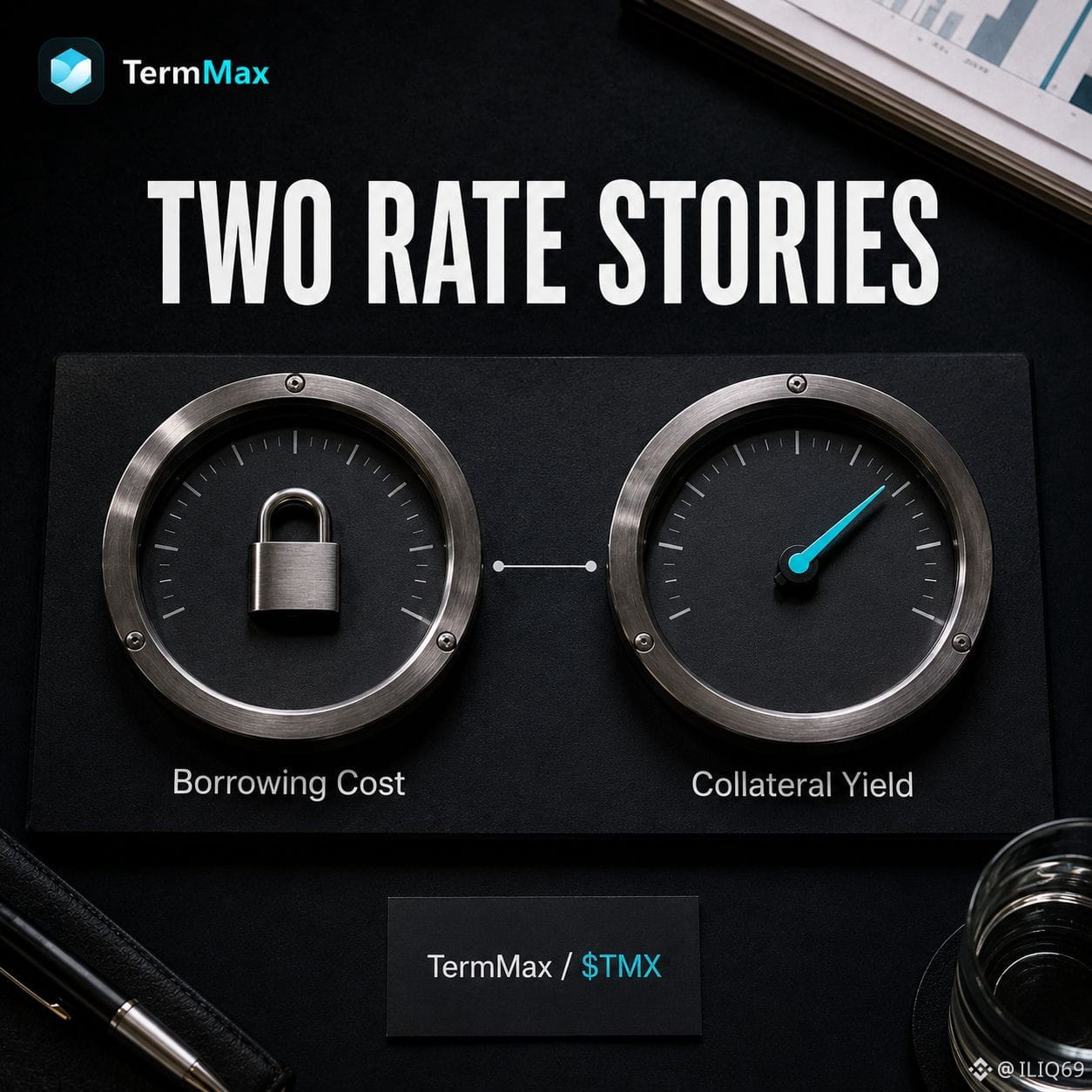
A fixed borrowing rate does not automatically mean the whole position has a fixed outcome. That distinction becomes clearer when yield-bearing collateral enters the picture.
TermMax documentation says the borrowing rate can stay fixed while the income from collateral depends on what that collateral is. A fixed-rate asset such as a PT can have fixed income, while collateral with a floating yield can keep moving with the market.
So I would separate the position into two questions: what is my known cost of borrowing, and what is the return behavior of the asset I locked? Calling both sides “fixed” would hide the part that can still change.
Which part would you separate first when assessing a yield-bearing position?
@termmax #TermMax
A fixed borrowing rate does not automatically mean the whole position has a fixed outcome. That distinction becomes clearer when yield-bearing collateral enters the picture.
TermMax documentation says the borrowing rate can stay fixed while the income from collateral depends on what that collateral is. A fixed-rate asset such as a PT can have fixed income, while collateral with a floating yield can keep moving with the market.
So I would separate the position into two questions: what is my known cost of borrowing, and what is the return behavior of the asset I locked? Calling both sides “fixed” would hide the part that can still change.
Which part would you separate first when assessing a yield-bearing position?
@TermMax #TermMax
TermMax documentation says the borrowing rate can stay fixed while the income from collateral depends on what that collateral is. A fixed-rate asset such as a PT can have fixed income, while collateral with a floating yield can keep moving with the market.
So I would separate the position into two questions: what is my known cost of borrowing, and what is the return behavior of the asset I locked? Calling both sides “fixed” would hide the part that can still change.
Which part would you separate first when assessing a yield-bearing position?
@TermMax #TermMax
Borrowing cost
0%
Collateral yield
0%
LTV risk
0%
All three together
0%
0 votes • Voting closed
79
·
--
Bullish
The part of the TMX whitepaper I almost skipped was Atomic Orders. TermMax describes virtual liquidity being spread across multiple orders before the funds are actually borrowed.
That sounds like plumbing, but I think it changes what “available liquidity” really means. Capital does not have to choose one market too early just to be ready. It can be positioned for more than one opportunity instead of being fragmented the moment it enters the system.
I would not treat that as proof that every market will have deep execution. A clever design still has to work in live conditions. But it is a more interesting problem than simply displaying one attractive rate: where should liquidity wait before someone needs it?
Would you rather reserve liquidity in one market or keep it positioned across several opportunities?
@termmax $TMX #TermMax
The part of the TMX whitepaper I almost skipped was Atomic Orders. TermMax describes virtual liquidity being spread across multiple orders before the funds are actually borrowed.
That sounds like plumbing, but I think it changes what “available liquidity” really means. Capital does not have to choose one market too early just to be ready. It can be positioned for more than one opportunity instead of being fragmented the moment it enters the system.
I would not treat that as proof that every market will have deep execution. A clever design still has to work in live conditions. But it is a more interesting problem than simply displaying one attractive rate: where should liquidity wait before someone needs it?
Would you rather reserve liquidity in one market or keep it positioned across several opportunities?
@TermMax $TMX #TermMax
That sounds like plumbing, but I think it changes what “available liquidity” really means. Capital does not have to choose one market too early just to be ready. It can be positioned for more than one opportunity instead of being fragmented the moment it enters the system.
I would not treat that as proof that every market will have deep execution. A clever design still has to work in live conditions. But it is a more interesting problem than simply displaying one attractive rate: where should liquidity wait before someone needs it?
Would you rather reserve liquidity in one market or keep it positioned across several opportunities?
@TermMax $TMX #TermMax

Reserve one market
0%
Spread it across markets
0%
Depends on execution
0%
I need more data
0%
0 votes • Voting closed
2
2
112
·
--
Bullish
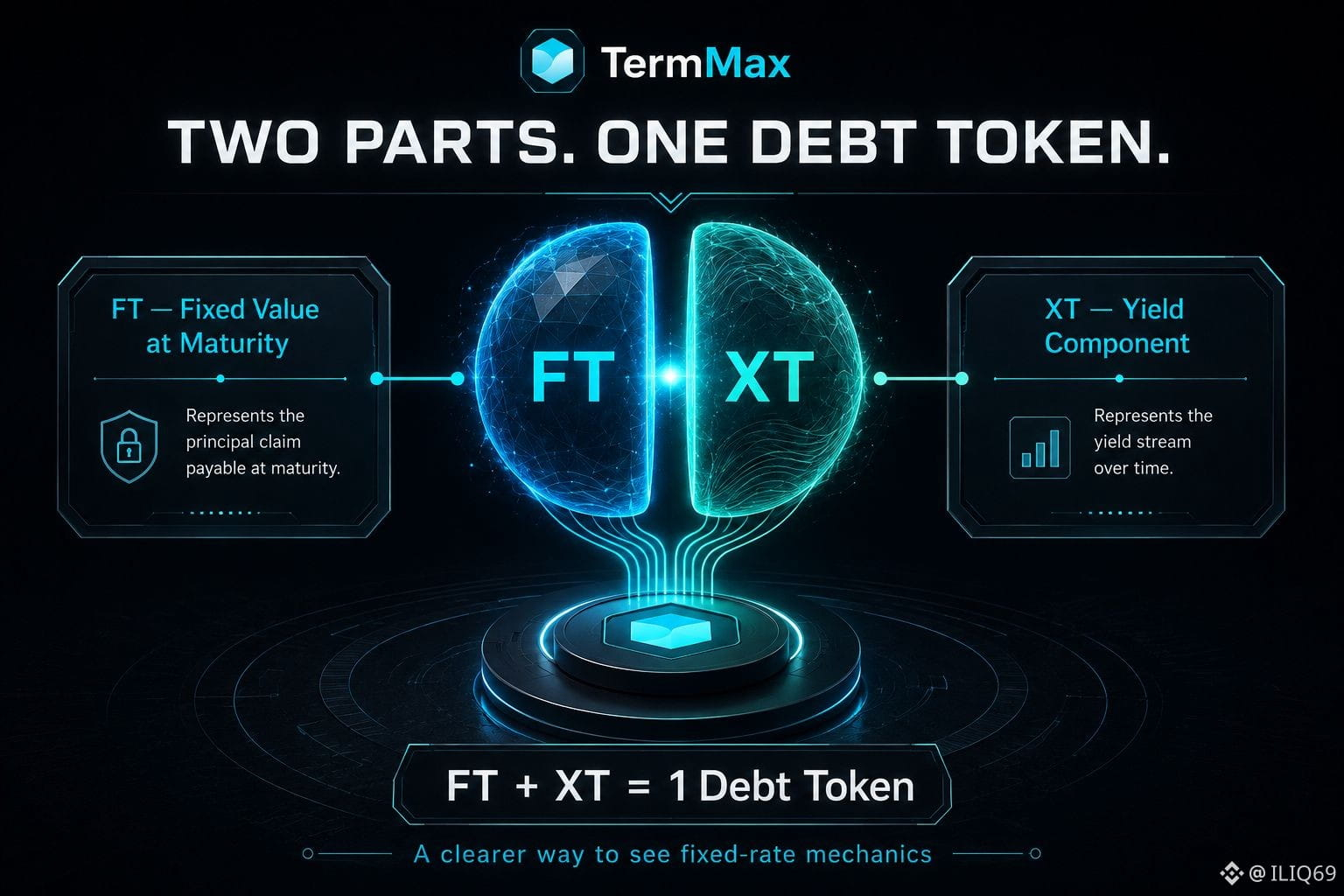
The FT and XT structure on @termmax looked technical to me at first. Then I stopped trying to memorize acronyms and used a simpler mental model.
One debt token can be represented by two connected pieces: FT + XT. The FT carries the fixed-value claim at maturity, while XT represents the other side of that value before maturity. Together, they make the original debt token whole.
I like systems that make the economics visible instead of hiding everything inside one black-box balance. It does not remove risk or make the process “easy money,” but it gives lenders and borrowers a clearer way to see how fixed yield and borrowing cost are formed.
Which part of the FT + XT model would you want explained with a real example?
@termmax #TermMax
The FT and XT structure on @TermMax looked technical to me at first. Then I stopped trying to memorize acronyms and used a simpler mental model.
One debt token can be represented by two connected pieces: FT + XT. The FT carries the fixed-value claim at maturity, while XT represents the other side of that value before maturity. Together, they make the original debt token whole.
I like systems that make the economics visible instead of hiding everything inside one black-box balance. It does not remove risk or make the process “easy money,” but it gives lenders and borrowers a clearer way to see how fixed yield and borrowing cost are formed.
Which part of the FT + XT model would you want explained with a real example?
@TermMax #TermMax
One debt token can be represented by two connected pieces: FT + XT. The FT carries the fixed-value claim at maturity, while XT represents the other side of that value before maturity. Together, they make the original debt token whole.
I like systems that make the economics visible instead of hiding everything inside one black-box balance. It does not remove risk or make the process “easy money,” but it gives lenders and borrowers a clearer way to see how fixed yield and borrowing cost are formed.
Which part of the FT + XT model would you want explained with a real example?
@TermMax #TermMax
How FT earns yield
0%
What XT represents
0%
Why they equal one asset
0%
The borrower flow
0%
0 votes • Voting closed
6
1
90
·
--
Bullish
The part of a trade I want to understand before buying is the exit path.
Binance explains that eligible users can convert between a supported direct stock and the corresponding bStock at a 1:1 ratio with no conversion fee. It also notes that conversion can be paused temporarily for corporate-action processing or maintenance. That is useful, but it is not a reason to skip the details.
For me, the practical takeaway is simple: eligibility, product terms, and operational timing matter before I need them — not after I have already built a position. And because a bStock is a certificate structure rather than direct share ownership, I should understand what I hold before making any conversion plan.
That is not the most exciting part of trading, but it is the part that makes the rest feel more deliberate.
Would you check conversion and eligibility rules before buying a bStock?
#bstockscis @BinanceCIS #bStocksCIS $EWYB
The part of a trade I want to understand before buying is the exit path.
Binance explains that eligible users can convert between a supported direct stock and the corresponding bStock at a 1:1 ratio with no conversion fee. It also notes that conversion can be paused temporarily for corporate-action processing or maintenance. That is useful, but it is not a reason to skip the details.
For me, the practical takeaway is simple: eligibility, product terms, and operational timing matter before I need them — not after I have already built a position. And because a bStock is a certificate structure rather than direct share ownership, I should understand what I hold before making any conversion plan.
That is not the most exciting part of trading, but it is the part that makes the rest feel more deliberate.
Would you check conversion and eligibility rules before buying a bStock?
#bstockscis @BinanceCIS #bStocksCIS $EWYB
Binance explains that eligible users can convert between a supported direct stock and the corresponding bStock at a 1:1 ratio with no conversion fee. It also notes that conversion can be paused temporarily for corporate-action processing or maintenance. That is useful, but it is not a reason to skip the details.
For me, the practical takeaway is simple: eligibility, product terms, and operational timing matter before I need them — not after I have already built a position. And because a bStock is a certificate structure rather than direct share ownership, I should understand what I hold before making any conversion plan.
That is not the most exciting part of trading, but it is the part that makes the rest feel more deliberate.
Would you check conversion and eligibility rules before buying a bStock?
#bstockscis @BinanceCIS #bStocksCIS $EWYB

Always before buying
50%
Only for a large position
0%
Only when I need it
50%
I did not know this existed
0%
2 votes • Voting closed
2
3
133
·
--
Bullish
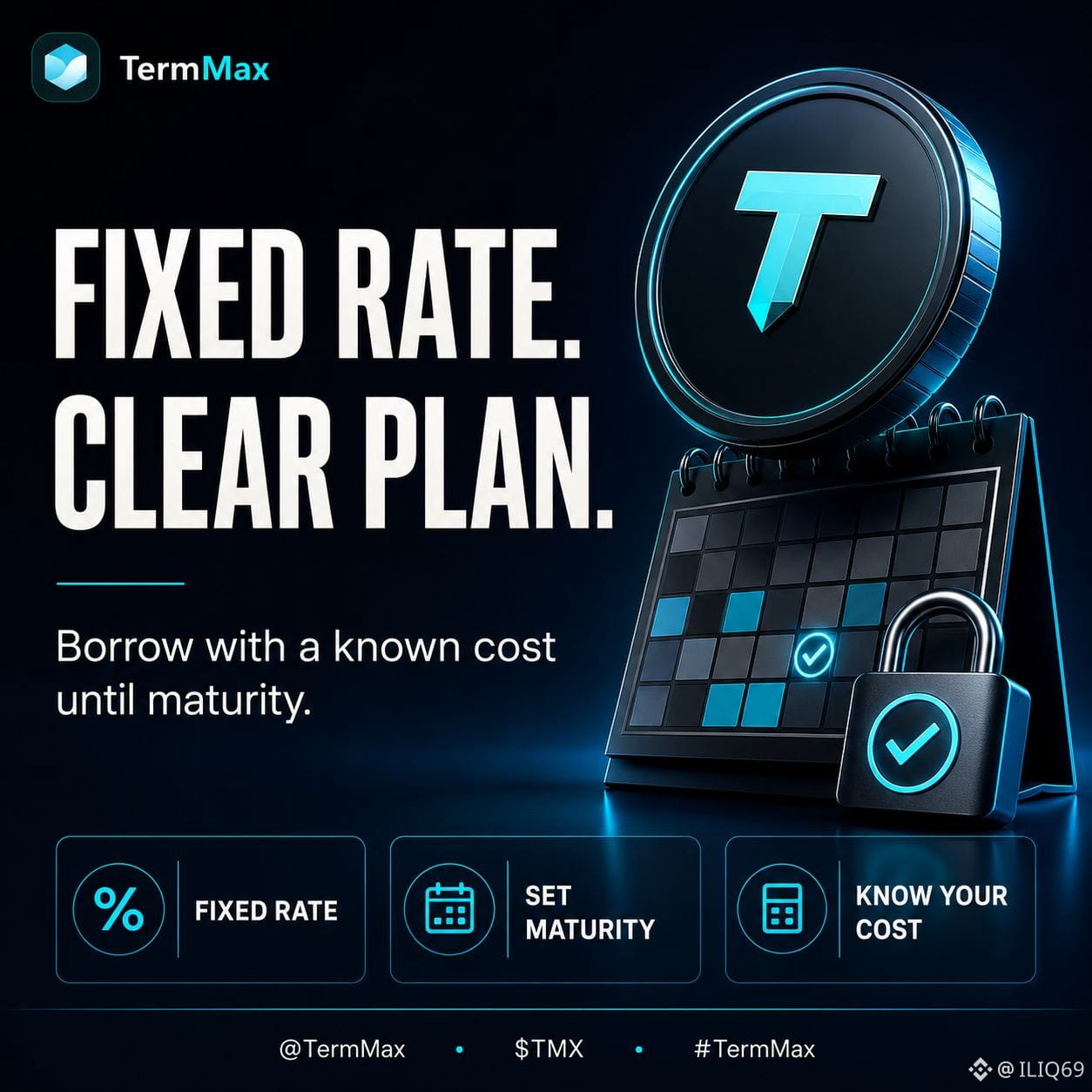
@termmax made me think about DeFi borrowing like planning a small business budget. I can accept a cost; what is difficult to work with is a cost that shifts while the plan stays the same.
With a fixed rate and a fixed maturity, I know the question upfront: is this borrowing cost worth the time I am buying? That feels more honest than treating an APY widget like a promise.
The trade-off still matters. A fixed rate can look less attractive if floating rates later fall, and collateral can still move against you. But certainty has value when the goal is to make a deliberate decision instead of refreshing a dashboard every day.
What would help you more when borrowing: a known rate or maximum flexibility?
@termmax #TermMax
@TermMax made me think about DeFi borrowing like planning a small business budget. I can accept a cost; what is difficult to work with is a cost that shifts while the plan stays the same.
With a fixed rate and a fixed maturity, I know the question upfront: is this borrowing cost worth the time I am buying? That feels more honest than treating an APY widget like a promise.
The trade-off still matters. A fixed rate can look less attractive if floating rates later fall, and collateral can still move against you. But certainty has value when the goal is to make a deliberate decision instead of refreshing a dashboard every day.
What would help you more when borrowing: a known rate or maximum flexibility?
@TermMax #TermMax
With a fixed rate and a fixed maturity, I know the question upfront: is this borrowing cost worth the time I am buying? That feels more honest than treating an APY widget like a promise.
The trade-off still matters. A fixed rate can look less attractive if floating rates later fall, and collateral can still move against you. But certainty has value when the goal is to make a deliberate decision instead of refreshing a dashboard every day.
What would help you more when borrowing: a known rate or maximum flexibility?
@TermMax #TermMax
A known rate
0%
Maximum flexibility
0%
A mix of both
0%
Not borrowing now
0%
0 votes • Voting closed
1
78
·
--
Bullish
There is a useful tension in bStocks that I do not see discussed enough: the market can be open 24/7, while the underlying company still tells its business story on a normal reporting calendar.
With $NVDAB , a price can move at any hour on Binance Spot. But a serious research process still needs the company’s results, guidance, product cycle, customer demand, and risks. A live chart can show that attention changed; it cannot explain whether the business thesis improved.
So I am trying to separate two activities. One is watching the market. The other is reading the company. The first is fast and emotional; the second is slower and usually more useful.
That distinction is what keeps 24/7 access from becoming 24/7 noise for me.
What do you read first when a company publishes results?
#bstockscis @BinanceCIS #bStocksCIS $NVDAB
There is a useful tension in bStocks that I do not see discussed enough: the market can be open 24/7, while the underlying company still tells its business story on a normal reporting calendar.
With $NVDAB , a price can move at any hour on Binance Spot. But a serious research process still needs the company’s results, guidance, product cycle, customer demand, and risks. A live chart can show that attention changed; it cannot explain whether the business thesis improved.
So I am trying to separate two activities. One is watching the market. The other is reading the company. The first is fast and emotional; the second is slower and usually more useful.
That distinction is what keeps 24/7 access from becoming 24/7 noise for me.
What do you read first when a company publishes results?
#bstockscis @BinanceCIS #bStocksCIS $NVDAB
With $NVDAB , a price can move at any hour on Binance Spot. But a serious research process still needs the company’s results, guidance, product cycle, customer demand, and risks. A live chart can show that attention changed; it cannot explain whether the business thesis improved.
So I am trying to separate two activities. One is watching the market. The other is reading the company. The first is fast and emotional; the second is slower and usually more useful.
That distinction is what keeps 24/7 access from becoming 24/7 noise for me.
What do you read first when a company publishes results?
#bstockscis @BinanceCIS #bStocksCIS $NVDAB

Revenue and earnings
100%
Forward guidance
0%
Management commentary
0%
I wait for analysis
0%
1 votes • Voting closed
4
1
112
·
--
Bullish
One bStocks habit I am trying to build is boring on purpose: I do not confuse a market being open with a trade automatically being a good idea.
$SPCXB can trade on Binance Spot around the clock. That is useful, especially when a traditional exchange is closed. But “available to trade” is not the same as “I should rush in with a market order.” Before entering, I want to look at the live order book, decide the maximum price I am comfortable paying, and size the position before emotion takes over.
That is not a prediction about SpaceX. It is an execution rule for any 24/7 asset: convenience should make me more prepared, not more impulsive.
The best trade I avoid may be the one I nearly made because a chart looked exciting at midnight.
When you trade an always-open market, which rule helps you most?
#bstockscis @BinanceCIS #bStocksCIS $SPCXB
One bStocks habit I am trying to build is boring on purpose: I do not confuse a market being open with a trade automatically being a good idea.
$SPCXB can trade on Binance Spot around the clock. That is useful, especially when a traditional exchange is closed. But “available to trade” is not the same as “I should rush in with a market order.” Before entering, I want to look at the live order book, decide the maximum price I am comfortable paying, and size the position before emotion takes over.
That is not a prediction about SpaceX. It is an execution rule for any 24/7 asset: convenience should make me more prepared, not more impulsive.
The best trade I avoid may be the one I nearly made because a chart looked exciting at midnight.
When you trade an always-open market, which rule helps you most?
#bstockscis @BinanceCIS #bStocksCIS $SPCXB
$SPCXB can trade on Binance Spot around the clock. That is useful, especially when a traditional exchange is closed. But “available to trade” is not the same as “I should rush in with a market order.” Before entering, I want to look at the live order book, decide the maximum price I am comfortable paying, and size the position before emotion takes over.
That is not a prediction about SpaceX. It is an execution rule for any 24/7 asset: convenience should make me more prepared, not more impulsive.
The best trade I avoid may be the one I nearly made because a chart looked exciting at midnight.
When you trade an always-open market, which rule helps you most?
#bstockscis @BinanceCIS #bStocksCIS $SPCXB

Use limit orders
0%
Check the order book
67%
Set a position size first
0%
Wait for the main session
33%
3 votes • Voting closed
10
5
235
·
--
Bullish
Verified
The easy AI narrative is “buy the company that designs the fastest chip.” $ASMLB asks a different question: who makes the equipment that helps chipmakers manufacture advanced chips in the first place?
ASML designs and manufactures lithography machines, plus the software and services used by chipmakers in production. That puts its business further upstream than a familiar consumer-tech headline.
It also changes what I would research. I would not use the next smartphone launch as my whole thesis. I would look at customer capital spending, the manufacturing roadmap, and whether customers are taking delivery and using complex equipment effectively.
This is not a claim that one position is better than another. It is a reminder that “semiconductors” is a chain of very different businesses, each with its own bottlenecks.
Which part of the chip ecosystem interests you most?
#bstockscis @BinanceCIS #bStocksCIS $ASMLB
The easy AI narrative is “buy the company that designs the fastest chip.” $ASMLB asks a different question: who makes the equipment that helps chipmakers manufacture advanced chips in the first place?
ASML designs and manufactures lithography machines, plus the software and services used by chipmakers in production. That puts its business further upstream than a familiar consumer-tech headline.
It also changes what I would research. I would not use the next smartphone launch as my whole thesis. I would look at customer capital spending, the manufacturing roadmap, and whether customers are taking delivery and using complex equipment effectively.
This is not a claim that one position is better than another. It is a reminder that “semiconductors” is a chain of very different businesses, each with its own bottlenecks.
Which part of the chip ecosystem interests you most?
#bstockscis @BinanceCIS #bStocksCIS $ASMLB
ASML designs and manufactures lithography machines, plus the software and services used by chipmakers in production. That puts its business further upstream than a familiar consumer-tech headline.
It also changes what I would research. I would not use the next smartphone launch as my whole thesis. I would look at customer capital spending, the manufacturing roadmap, and whether customers are taking delivery and using complex equipment effectively.
This is not a claim that one position is better than another. It is a reminder that “semiconductors” is a chain of very different businesses, each with its own bottlenecks.
Which part of the chip ecosystem interests you most?
#bstockscis @BinanceCIS #bStocksCIS $ASMLB

Chip design
29%
Manufacturing equipment
0%
Memory and storage
28%
Servers and systems
43%
7 votes • Voting closed
10
9
265
·
--
Bullish
When I see Nokia mentioned, my first mental image is still an old phone. That is exactly why $NOKB makes for a useful research exercise.
Nokia describes itself as a B2B technology company working across mobile, fixed, and cloud networks, with customers that include service providers and enterprises. That means a quick consumer-product narrative misses the actual business lens.
If I were researching this ticker, I would care less about nostalgia and more about network investment cycles, customer contracts, technology standards, and how infrastructure spending converts into results. It is a quieter story than a viral gadget launch, but it is also a more accurate place to start.
The lesson is simple: before trading a familiar brand, ask what the company really sells today.
What would you check first when researching $NOKB ?
@BinanceCIS #bStocksCIS #bstockscis
When I see Nokia mentioned, my first mental image is still an old phone. That is exactly why $NOKB makes for a useful research exercise.
Nokia describes itself as a B2B technology company working across mobile, fixed, and cloud networks, with customers that include service providers and enterprises. That means a quick consumer-product narrative misses the actual business lens.
If I were researching this ticker, I would care less about nostalgia and more about network investment cycles, customer contracts, technology standards, and how infrastructure spending converts into results. It is a quieter story than a viral gadget launch, but it is also a more accurate place to start.
The lesson is simple: before trading a familiar brand, ask what the company really sells today.
What would you check first when researching $NOKB ?
@BinanceCIS #bStocksCIS #bstockscis
Nokia describes itself as a B2B technology company working across mobile, fixed, and cloud networks, with customers that include service providers and enterprises. That means a quick consumer-product narrative misses the actual business lens.
If I were researching this ticker, I would care less about nostalgia and more about network investment cycles, customer contracts, technology standards, and how infrastructure spending converts into results. It is a quieter story than a viral gadget launch, but it is also a more accurate place to start.
The lesson is simple: before trading a familiar brand, ask what the company really sells today.
What would you check first when researching $NOKB ?
@BinanceCIS #bStocksCIS #bstockscis

Network customers
25%
5G and cloud strategy
50%
Financial results
0%
Competitive landscape
25%
4 votes • Voting closed
2
5
753
·
--
Bullish
Verified
One thing I like about researching $INTCB is that it forces me to drop the “chip company” label. It is too vague to be useful.
Intel reports product businesses that design and sell processors and related semiconductor solutions. It also has Intel Foundry, a manufacturing-and-services business that aims to serve external customers. Those are connected, but they ask for different proof points.
For the product side, I would watch demand and competitiveness. For the foundry side, I would ask about manufacturing execution, customer trust, and whether outside demand is actually developing. Calling both of those things simply “AI exposure” hides more than it explains.
That is my favourite kind of bStock research: not a prediction, just a better map of what the ticker represents.
Which $INTCB story would you study first?
#bstockscis @BinanceCIS #bStocksCIS $INTCB
One thing I like about researching $INTCB is that it forces me to drop the “chip company” label. It is too vague to be useful.
Intel reports product businesses that design and sell processors and related semiconductor solutions. It also has Intel Foundry, a manufacturing-and-services business that aims to serve external customers. Those are connected, but they ask for different proof points.
For the product side, I would watch demand and competitiveness. For the foundry side, I would ask about manufacturing execution, customer trust, and whether outside demand is actually developing. Calling both of those things simply “AI exposure” hides more than it explains.
That is my favourite kind of bStock research: not a prediction, just a better map of what the ticker represents.
Which $INTCB story would you study first?
#bstockscis @BinanceCIS #bStocksCIS $INTCB
Intel reports product businesses that design and sell processors and related semiconductor solutions. It also has Intel Foundry, a manufacturing-and-services business that aims to serve external customers. Those are connected, but they ask for different proof points.
For the product side, I would watch demand and competitiveness. For the foundry side, I would ask about manufacturing execution, customer trust, and whether outside demand is actually developing. Calling both of those things simply “AI exposure” hides more than it explains.
That is my favourite kind of bStock research: not a prediction, just a better map of what the ticker represents.
Which $INTCB story would you study first?
#bstockscis @BinanceCIS #bStocksCIS $INTCB

Consumer and data-center chips
25%
Intel Foundry
0%
Manufacturing execution
25%
All of the above
50%
4 votes • Voting closed
2
4
228
·
--
Bullish
Verified
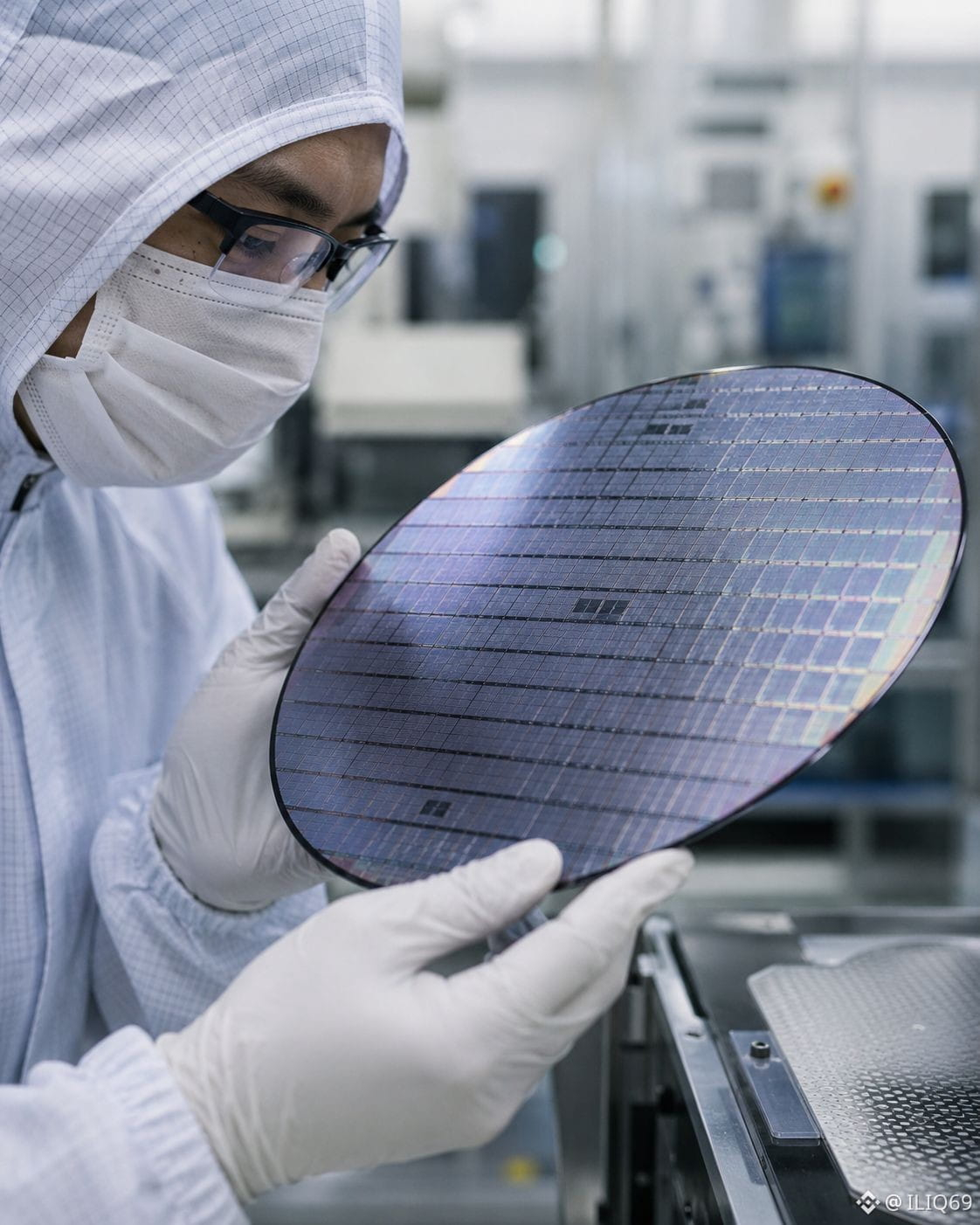
AI discussions usually start with the chip doing the calculation. I have started paying more attention to the memory that lets the system keep data moving.
Micron’s own product range includes DRAM, NAND, and NOR memory and storage products. That does not make $MUB a shortcut to “the AI trade.” It gives me a clearer research question: which part of the compute stack is this company actually exposed to, and what needs to go right for demand to translate into a better business result?
The distinction matters. A strong headline about AI can lift a whole sector, while the economics of memory can still depend on supply, product mix, customer demand, and execution.
So I would rather understand the company’s role in the system than buy a ticker because it appears next to an AI headline.
What would you research first before looking at $MUB ?
@BinanceCIS #bStocksCIS #bstockscis
AI discussions usually start with the chip doing the calculation. I have started paying more attention to the memory that lets the system keep data moving.
Micron’s own product range includes DRAM, NAND, and NOR memory and storage products. That does not make $MUB a shortcut to “the AI trade.” It gives me a clearer research question: which part of the compute stack is this company actually exposed to, and what needs to go right for demand to translate into a better business result?
The distinction matters. A strong headline about AI can lift a whole sector, while the economics of memory can still depend on supply, product mix, customer demand, and execution.
So I would rather understand the company’s role in the system than buy a ticker because it appears next to an AI headline.
What would you research first before looking at $MUB ?
@BinanceCIS #bStocksCIS #bstockscis
Micron’s own product range includes DRAM, NAND, and NOR memory and storage products. That does not make $MUB a shortcut to “the AI trade.” It gives me a clearer research question: which part of the compute stack is this company actually exposed to, and what needs to go right for demand to translate into a better business result?
The distinction matters. A strong headline about AI can lift a whole sector, while the economics of memory can still depend on supply, product mix, customer demand, and execution.
So I would rather understand the company’s role in the system than buy a ticker because it appears next to an AI headline.
What would you research first before looking at $MUB ?
@BinanceCIS #bStocksCIS #bstockscis
Memory product mix
50%
Demand outlook
25%
Supply conditions
0%
Earnings report
25%
4 votes • Voting closed
2
5
174
Log in to explore more content
Join global crypto users on Binance Square
⚡️ Get latest and useful information about crypto.
💬 Trusted by the world’s largest crypto exchange.
👍 Discover real insights from verified creators.
Email / Phone number
Trending Topics
BinanceReopensWithdrawalsForMoreAssets
38,279 views
856 Discussing
Security Incident | Recovery Update #6: Withdrawals Reopen for More Assets (2026-11-03)
Binance Announcement
·176 Likes
·486.2k views
AppleReportsMixedResults
23,353 views
609 Discussing
BinanceHourlyDepositsExceedWithdrawals
10,226 views
270 Discussing