

链上万人迷
43 Posts

链上万人迷
Report
Block User
自动返佣邀请码:WRM888 链上找机会 广场找同类
Open Trade
Frequent Trader
12.1 Months
5 Following
50 Followers
34 Liked
Posts
Portfolio
·
--
$COIN
Latest available quote: 195.53; mark price: 195.53.🔗
First, let’s make it clear: we are currently in the weekend, outside trading hours. Binance US stock futures will resume overnight trading at 08:00 Beijing time on Monday. Therefore, 195.53 is the latest available quote, and it does not mean there are normal continuous trades during the weekend.
In the previous trading cycle, the price fell by about 2.5%, and OI decreased by 4.76%, which suggests leveraged long positions are retreating. Large holders’ long positions still account for 76.1%, and the order book is extremely crowded. However, the daily timeframe is still above the EMA20 at 187.96, so the medium-term long structure has not been broken.👀
🔥 190—193: First observation zone
🔥 184—188: Core left-side zone
❌ Below 179: cancel the bullish view
🎯 On rebound, watch 202.70 and 208.40, with extension to 215
When trading resumes on Monday, COIN will most likely be repriced first according to the weekend $BTC . The directional bias stays bullish on the left side, but do not set buy orders in advance before trading resumes.
$COIN
Latest available quote: 195.53; mark price: 195.53.🔗
First, let’s make it clear: we are currently in the weekend, outside trading hours. Binance US stock futures will resume overnight trading at 08:00 Beijing time on Monday. Therefore, 195.53 is the latest available quote, and it does not mean there are normal continuous trades during the weekend.
In the previous trading cycle, the price fell by about 2.5%, and OI decreased by 4.76%, which suggests leveraged long positions are retreating. Large holders’ long positions still account for 76.1%, and the order book is extremely crowded. However, the daily timeframe is still above the EMA20 at 187.96, so the medium-term long structure has not been broken.👀
🔥 190—193: First observation zone
🔥 184—188: Core left-side zone
❌ Below 179: cancel the bullish view
🎯 On rebound, watch 202.70 and 208.40, with extension to 215
When trading resumes on Monday, COIN will most likely be repriced first according to the weekend $BTC . The directional bias stays bullish on the left side, but do not set buy orders in advance before trading resumes.
Latest available quote: 195.53; mark price: 195.53.🔗
First, let’s make it clear: we are currently in the weekend, outside trading hours. Binance US stock futures will resume overnight trading at 08:00 Beijing time on Monday. Therefore, 195.53 is the latest available quote, and it does not mean there are normal continuous trades during the weekend.
In the previous trading cycle, the price fell by about 2.5%, and OI decreased by 4.76%, which suggests leveraged long positions are retreating. Large holders’ long positions still account for 76.1%, and the order book is extremely crowded. However, the daily timeframe is still above the EMA20 at 187.96, so the medium-term long structure has not been broken.👀
🔥 190—193: First observation zone
🔥 184—188: Core left-side zone
❌ Below 179: cancel the bullish view
🎯 On rebound, watch 202.70 and 208.40, with extension to 215
When trading resumes on Monday, COIN will most likely be repriced first according to the weekend $BTC . The directional bias stays bullish on the left side, but do not set buy orders in advance before trading resumes.
190
·
--
$BTC BTC drops to 83,480,
But there’s a detail worth paying attention to this time.
In the past 24 hours, the price is down 2.26%, yet OI has fallen by about 9.39%. If a large number of new short positions were truly opened, OI would usually increase; what we’re seeing now looks more like deleveraging driven by longs closing positions, stop-outs, and liquidations.
The issue is also clear: over the last 4 hours, the ratio of aggressive buying and selling is only 0.827, and large holders’ long positions still account for 66.2%. The shakeout may not be fully over yet.
My left-side plan:
81,600—82,400: main staging area
79,500—80,500: deeper pullback zone
Below 78,500: the setup is invalid
Above, first look at 85,900 and 87,300,
with the real profit target at 89,800—90,500
For those going long now, are they taking in the golden pit, or catching the next waterfall? I choose the former—but only when the price is cheap enough.
$BTC BTC drops to 83,480,
But there’s a detail worth paying attention to this time.
In the past 24 hours, the price is down 2.26%, yet OI has fallen by about 9.39%. If a large number of new short positions were truly opened, OI would usually increase; what we’re seeing now looks more like deleveraging driven by longs closing positions, stop-outs, and liquidations.
The issue is also clear: over the last 4 hours, the ratio of aggressive buying and selling is only 0.827, and large holders’ long positions still account for 66.2%. The shakeout may not be fully over yet.
My left-side plan:
81,600—82,400: main staging area
79,500—80,500: deeper pullback zone
Below 78,500: the setup is invalid
Above, first look at 85,900 and 87,300,
with the real profit target at 89,800—90,500
For those going long now, are they taking in the golden pit, or catching the next waterfall? I choose the former—but only when the price is cheap enough.
But there’s a detail worth paying attention to this time.
In the past 24 hours, the price is down 2.26%, yet OI has fallen by about 9.39%. If a large number of new short positions were truly opened, OI would usually increase; what we’re seeing now looks more like deleveraging driven by longs closing positions, stop-outs, and liquidations.
The issue is also clear: over the last 4 hours, the ratio of aggressive buying and selling is only 0.827, and large holders’ long positions still account for 66.2%. The shakeout may not be fully over yet.
My left-side plan:
81,600—82,400: main staging area
79,500—80,500: deeper pullback zone
Below 78,500: the setup is invalid
Above, first look at 85,900 and 87,300,
with the real profit target at 89,800—90,500
For those going long now, are they taking in the golden pit, or catching the next waterfall? I choose the former—but only when the price is cheap enough.
148
·
--
$SOL 📣 Left-side trading heat and order book reconciliation
🗣️ Seeing “institutional funds on Solana,”
first, don’t assume it means institutions are buying SOL today.
Project Harmonia introduced by the official on September 16 relates to tokenized fund infrastructure. This is a verifiable industry development, but it’s not a brand-new catalyst that appeared out of nowhere today—and it can’t be directly translated into a SOL buy order.
📊 The order book isn’t exaggerated to that extent either. In the first four hours, price rose by about 0.49%, and the volume was about 69% of the average volume of the prior 20 candles—slightly weaker than BTC. You can study a pullback-long setup, but there’s no reason to chase the story for now.
🔍 Long on the left side: 117.60—118.00.
This zone corresponds to the low of 117.56 this morning, followed by the repeat buy-backs at 117.78 and 117.83.
Support: 117.56—117.83 / 115.53—115.83
Resistance: 119.62—119.99
Initial protection: 115.25 (entry price).
Within the range, if the 15-minute timeframe probes lower and closes bullish, and the active buy volume exceeds the sell volume—while BTC simultaneously holds 85,948.50—then we can consider it. Anything around 119 is not currently in the plan.
If the hourly close breaks above 119.99, then start a moving take-profit. The current tracking distance is about 2.28 USDT. Don’t set a fixed sell task just to line up with an integer level.
🧊 If, in the hour before entry, price closes below 117.56, then pause. 115.25 is a protective buffer outside deep support; the biggest risk is that the project continues to ferment via messaging, but the price never catches up.
$SOL 📣 Left-side trading heat and order book reconciliation
🗣️ Seeing “institutional funds on Solana,”
first, don’t assume it means institutions are buying SOL today.
Project Harmonia introduced by the official on September 16 relates to tokenized fund infrastructure. This is a verifiable industry development, but it’s not a brand-new catalyst that appeared out of nowhere today—and it can’t be directly translated into a SOL buy order.
📊 The order book isn’t exaggerated to that extent either. In the first four hours, price rose by about 0.49%, and the volume was about 69% of the average volume of the prior 20 candles—slightly weaker than BTC. You can study a pullback-long setup, but there’s no reason to chase the story for now.
🔍 Long on the left side: 117.60—118.00.
This zone corresponds to the low of 117.56 this morning, followed by the repeat buy-backs at 117.78 and 117.83.
Support: 117.56—117.83 / 115.53—115.83
Resistance: 119.62—119.99
Initial protection: 115.25 (entry price).
Within the range, if the 15-minute timeframe probes lower and closes bullish, and the active buy volume exceeds the sell volume—while BTC simultaneously holds 85,948.50—then we can consider it. Anything around 119 is not currently in the plan.
If the hourly close breaks above 119.99, then start a moving take-profit. The current tracking distance is about 2.28 USDT. Don’t set a fixed sell task just to line up with an integer level.
🧊 If, in the hour before entry, price closes below 117.56, then pause. 115.25 is a protective buffer outside deep support; the biggest risk is that the project continues to ferment via messaging, but the price never catches up.
🗣️ Seeing “institutional funds on Solana,”
first, don’t assume it means institutions are buying SOL today.
Project Harmonia introduced by the official on September 16 relates to tokenized fund infrastructure. This is a verifiable industry development, but it’s not a brand-new catalyst that appeared out of nowhere today—and it can’t be directly translated into a SOL buy order.
📊 The order book isn’t exaggerated to that extent either. In the first four hours, price rose by about 0.49%, and the volume was about 69% of the average volume of the prior 20 candles—slightly weaker than BTC. You can study a pullback-long setup, but there’s no reason to chase the story for now.
🔍 Long on the left side: 117.60—118.00.
This zone corresponds to the low of 117.56 this morning, followed by the repeat buy-backs at 117.78 and 117.83.
Support: 117.56—117.83 / 115.53—115.83
Resistance: 119.62—119.99
Initial protection: 115.25 (entry price).
Within the range, if the 15-minute timeframe probes lower and closes bullish, and the active buy volume exceeds the sell volume—while BTC simultaneously holds 85,948.50—then we can consider it. Anything around 119 is not currently in the plan.
If the hourly close breaks above 119.99, then start a moving take-profit. The current tracking distance is about 2.28 USDT. Don’t set a fixed sell task just to line up with an integer level.
🧊 If, in the hour before entry, price closes below 117.56, then pause. 115.25 is a protective buffer outside deep support; the biggest risk is that the project continues to ferment via messaging, but the price never catches up.
1
227
·
--
$AVAX
📣 The AVAX upgrade hasn’t gone live yet—yet chasing the top has already played out first.
🗣️ The official schedule is very clear: the Helicon upgrade is expected to activate at 23:00 Beijing time on September 22. There’s an original source for the news, but this announcement was published on September 8, so it can’t be packaged as a suddenly appearing positive catalyst today.
📊 From 08:00 to 12:00 today, AVAX surged to 10.823, but it ultimately closed at 9.564. The volume reached about 4.44 times the average of the previous 20 four-hour candles—yet the price failed to hold onto the gains.
That’s why I still look for a pullback long before the upgrade, but I’m not willing to chase this rebound right now.
🔍 Long setup (left side): 9.430—9.500
Support: 9.406—9.430, overlapping with the lows from the early morning and late morning; the next reference level is last night’s low at 9.327.
Resistance: 9.817—9.856, then look at 10.176 from earlier.
Reduce position at 9.800 first, with 10.150 as the second target.
Hard stop-loss at 9.300, triggered by the contract’s fill price.
After entering the target zone, you want a 15-minute candle with a lower wick, closing back within 9.460—9.500, and actively selling volume should be reduced versus the previous candle; only then consider entry if BTC’s hourly chart is still holding 80043.
🧊 If the hour before entry closes below 9.406, withdraw the plan first. 9.300 is an analytical buffer beyond the support.
I acknowledge this catalyst, and I also admit that part of it has already been traded. What needs to be tested next is whether there’s still follow-through around 9.43—not how many times the announcement can be forwarded anymore.
$AVAX
📣 The AVAX upgrade hasn’t gone live yet—yet chasing the top has already played out first.
🗣️ The official schedule is very clear: the Helicon upgrade is expected to activate at 23:00 Beijing time on September 22. There’s an original source for the news, but this announcement was published on September 8, so it can’t be packaged as a suddenly appearing positive catalyst today.
📊 From 08:00 to 12:00 today, AVAX surged to 10.823, but it ultimately closed at 9.564. The volume reached about 4.44 times the average of the previous 20 four-hour candles—yet the price failed to hold onto the gains.
That’s why I still look for a pullback long before the upgrade, but I’m not willing to chase this rebound right now.
🔍 Long setup (left side): 9.430—9.500
Support: 9.406—9.430, overlapping with the lows from the early morning and late morning; the next reference level is last night’s low at 9.327.
Resistance: 9.817—9.856, then look at 10.176 from earlier.
Reduce position at 9.800 first, with 10.150 as the second target.
Hard stop-loss at 9.300, triggered by the contract’s fill price.
After entering the target zone, you want a 15-minute candle with a lower wick, closing back within 9.460—9.500, and actively selling volume should be reduced versus the previous candle; only then consider entry if BTC’s hourly chart is still holding 80043.
🧊 If the hour before entry closes below 9.406, withdraw the plan first. 9.300 is an analytical buffer beyond the support.
I acknowledge this catalyst, and I also admit that part of it has already been traded. What needs to be tested next is whether there’s still follow-through around 9.43—not how many times the announcement can be forwarded anymore.
📣 The AVAX upgrade hasn’t gone live yet—yet chasing the top has already played out first.
🗣️ The official schedule is very clear: the Helicon upgrade is expected to activate at 23:00 Beijing time on September 22. There’s an original source for the news, but this announcement was published on September 8, so it can’t be packaged as a suddenly appearing positive catalyst today.
📊 From 08:00 to 12:00 today, AVAX surged to 10.823, but it ultimately closed at 9.564. The volume reached about 4.44 times the average of the previous 20 four-hour candles—yet the price failed to hold onto the gains.
That’s why I still look for a pullback long before the upgrade, but I’m not willing to chase this rebound right now.
🔍 Long setup (left side): 9.430—9.500
Support: 9.406—9.430, overlapping with the lows from the early morning and late morning; the next reference level is last night’s low at 9.327.
Resistance: 9.817—9.856, then look at 10.176 from earlier.
Reduce position at 9.800 first, with 10.150 as the second target.
Hard stop-loss at 9.300, triggered by the contract’s fill price.
After entering the target zone, you want a 15-minute candle with a lower wick, closing back within 9.460—9.500, and actively selling volume should be reduced versus the previous candle; only then consider entry if BTC’s hourly chart is still holding 80043.
🧊 If the hour before entry closes below 9.406, withdraw the plan first. 9.300 is an analytical buffer beyond the support.
I acknowledge this catalyst, and I also admit that part of it has already been traded. What needs to be tested next is whether there’s still follow-through around 9.43—not how many times the announcement can be forwarded anymore.
324
·
--
$BTR 📣 The story of BTR having $BTC in ecosystem, yet the order book hasn’t kept up with BTC
🗣️ Bitlayer’s technical narrative can be studied, but in this round there wasn’t sufficient verification in the new X posts to explain the price changes. I won’t use old stories to excuse today’s weakness.
📊 In the past 7 complete daily K-bars, the high touched 0.05812 and it ultimately closed at 0.04869, a pullback of about 16.2% from that peak. Meanwhile, as of 10:00, open interest increased by about 1.11% compared to 24 hours ago.
With weak price action and positions not clearly shrinking, it’s worth being cautious; but you can’t directly translate it as “the main force is adding shorts.” In this round, I’m leaning toward shorting the rebound; I won’t chase from the current low.
🔍 Left-side short zone: 0.04960—0.04985
Overhead resistance 0.04966—0.04990, coming from repeated rebound highs from last night; second level 0.05074.
Support below: 0.04816/0.04782.
Hard stop-loss at entry price 0.05010
First target 0.04875; second target 0.04820
After entering the short zone, consider it only if that 15-minute rally fades and closes in the lower half of that candle while still staying within the range; if the主动卖量 (active sell volume) exceeds the active buy volume, and the成交量 (trading volume) is no less than the average volume of the previous 20 candles.
🧊 If, within the hour before entry, the price has closed above 0.04990, or if BTC’s hour breaks 81,933.90, then withdraw this trade first. The stop-loss is 0.00020 higher than 0.04990; this is the analytical buffer. BTR liquidity is relatively thin, rebounds can be quite sharp—don’t skip the stop-loss just because it’s weak.
$BTR 📣 The story of BTR having $BTC in ecosystem, yet the order book hasn’t kept up with BTC
🗣️ Bitlayer’s technical narrative can be studied, but in this round there wasn’t sufficient verification in the new X posts to explain the price changes. I won’t use old stories to excuse today’s weakness.
📊 In the past 7 complete daily K-bars, the high touched 0.05812 and it ultimately closed at 0.04869, a pullback of about 16.2% from that peak. Meanwhile, as of 10:00, open interest increased by about 1.11% compared to 24 hours ago.
With weak price action and positions not clearly shrinking, it’s worth being cautious; but you can’t directly translate it as “the main force is adding shorts.” In this round, I’m leaning toward shorting the rebound; I won’t chase from the current low.
🔍 Left-side short zone: 0.04960—0.04985
Overhead resistance 0.04966—0.04990, coming from repeated rebound highs from last night; second level 0.05074.
Support below: 0.04816/0.04782.
Hard stop-loss at entry price 0.05010
First target 0.04875; second target 0.04820
After entering the short zone, consider it only if that 15-minute rally fades and closes in the lower half of that candle while still staying within the range; if the主动卖量 (active sell volume) exceeds the active buy volume, and the成交量 (trading volume) is no less than the average volume of the previous 20 candles.
🧊 If, within the hour before entry, the price has closed above 0.04990, or if BTC’s hour breaks 81,933.90, then withdraw this trade first. The stop-loss is 0.00020 higher than 0.04990; this is the analytical buffer. BTR liquidity is relatively thin, rebounds can be quite sharp—don’t skip the stop-loss just because it’s weak.
🗣️ Bitlayer’s technical narrative can be studied, but in this round there wasn’t sufficient verification in the new X posts to explain the price changes. I won’t use old stories to excuse today’s weakness.
📊 In the past 7 complete daily K-bars, the high touched 0.05812 and it ultimately closed at 0.04869, a pullback of about 16.2% from that peak. Meanwhile, as of 10:00, open interest increased by about 1.11% compared to 24 hours ago.
With weak price action and positions not clearly shrinking, it’s worth being cautious; but you can’t directly translate it as “the main force is adding shorts.” In this round, I’m leaning toward shorting the rebound; I won’t chase from the current low.
🔍 Left-side short zone: 0.04960—0.04985
Overhead resistance 0.04966—0.04990, coming from repeated rebound highs from last night; second level 0.05074.
Support below: 0.04816/0.04782.
Hard stop-loss at entry price 0.05010
First target 0.04875; second target 0.04820
After entering the short zone, consider it only if that 15-minute rally fades and closes in the lower half of that candle while still staying within the range; if the主动卖量 (active sell volume) exceeds the active buy volume, and the成交量 (trading volume) is no less than the average volume of the previous 20 candles.
🧊 If, within the hour before entry, the price has closed above 0.04990, or if BTC’s hour breaks 81,933.90, then withdraw this trade first. The stop-loss is 0.00020 higher than 0.04990; this is the analytical buffer. BTR liquidity is relatively thin, rebounds can be quite sharp—don’t skip the stop-loss just because it’s weak.
320
·
--
$XRP 📣 Heat and Order Book Reconciliation
📊 XRP just completed its 20:00—20:15 window. It opened at 1.2953 and closed at 1.2878. The主动 sell volume is clearly higher than the buy volume.
Next, look at the earlier 16:00—20:00 period: open interest increased by about 1.66%, yet the price never managed to challenge the midday high of 1.3120. Position buildup has not, for now, translated into sufficiently strong price performance.
🔍 The left-side short (sell) zone is kept at 1.3230—1.3290.
This corresponds to the 1.3246 close and the 1.3291 high around that time (after midnight). The nearer resistance is 1.3120.
Support to watch first at 1.2836, then 1.2736—1.2766.
Hard stop-loss: 1.3410. First target: 1.2970. Second target: 1.2760.
After price reaches the zone: if the 15-minute candle closes in the lower half of that K-line, with主动 sell volume exceeding buy volume, and the price is still in the short zone—then consider it. Right now, it’s far from the levels, so there’s no need to force a trade.
🧊 Not enabled before 20:45. If, before entry, the XRP hourly closes above 1.3291, or the BTC hourly closes above 76,550.60, the plan is cancelled.
Stop-loss is triggered by the contract execution price, with 1.3410 as the buffer outside the invalidation. The main risk is macro data driving a broad market rise; a weak coin can also suddenly rebound. An increase in OI by itself doesn’t prove who is accumulating or shorting.
$XRP 📣 Heat and Order Book Reconciliation
📊 XRP just completed its 20:00—20:15 window. It opened at 1.2953 and closed at 1.2878. The主动 sell volume is clearly higher than the buy volume.
Next, look at the earlier 16:00—20:00 period: open interest increased by about 1.66%, yet the price never managed to challenge the midday high of 1.3120. Position buildup has not, for now, translated into sufficiently strong price performance.
🔍 The left-side short (sell) zone is kept at 1.3230—1.3290.
This corresponds to the 1.3246 close and the 1.3291 high around that time (after midnight). The nearer resistance is 1.3120.
Support to watch first at 1.2836, then 1.2736—1.2766.
Hard stop-loss: 1.3410. First target: 1.2970. Second target: 1.2760.
After price reaches the zone: if the 15-minute candle closes in the lower half of that K-line, with主动 sell volume exceeding buy volume, and the price is still in the short zone—then consider it. Right now, it’s far from the levels, so there’s no need to force a trade.
🧊 Not enabled before 20:45. If, before entry, the XRP hourly closes above 1.3291, or the BTC hourly closes above 76,550.60, the plan is cancelled.
Stop-loss is triggered by the contract execution price, with 1.3410 as the buffer outside the invalidation. The main risk is macro data driving a broad market rise; a weak coin can also suddenly rebound. An increase in OI by itself doesn’t prove who is accumulating or shorting.
📊 XRP just completed its 20:00—20:15 window. It opened at 1.2953 and closed at 1.2878. The主动 sell volume is clearly higher than the buy volume.
Next, look at the earlier 16:00—20:00 period: open interest increased by about 1.66%, yet the price never managed to challenge the midday high of 1.3120. Position buildup has not, for now, translated into sufficiently strong price performance.
🔍 The left-side short (sell) zone is kept at 1.3230—1.3290.
This corresponds to the 1.3246 close and the 1.3291 high around that time (after midnight). The nearer resistance is 1.3120.
Support to watch first at 1.2836, then 1.2736—1.2766.
Hard stop-loss: 1.3410. First target: 1.2970. Second target: 1.2760.
After price reaches the zone: if the 15-minute candle closes in the lower half of that K-line, with主动 sell volume exceeding buy volume, and the price is still in the short zone—then consider it. Right now, it’s far from the levels, so there’s no need to force a trade.
🧊 Not enabled before 20:45. If, before entry, the XRP hourly closes above 1.3291, or the BTC hourly closes above 76,550.60, the plan is cancelled.
Stop-loss is triggered by the contract execution price, with 1.3410 as the buffer outside the invalidation. The main risk is macro data driving a broad market rise; a weak coin can also suddenly rebound. An increase in OI by itself doesn’t prove who is accumulating or shorting.
311
·
--
$XRP 📣 Heat and order book reconciliation
🔴 Left side is bearish|Wait for a higher rebound zone and open a short.
⏰ Beijing time Sep 16 execution price 1.2895
Mark price 1.29172|Index price 1.29253
🗣️ X’s popular original post this round has not been verified—don’t use “everyone in the community is catching the bottom” to vouch for the order book.
📊 XRP’s active buy/sell ratio between 10—11 o’clock has returned to about 1.21, and the rebound is indeed supported by buy-side participation. Right now it’s opening a short while stuck near the lows—I feel the position is uncomfortable; but the hourly chart has not yet reclaimed the area above that was broken and turned bearish.
🔍 Mark the levels directly:
Support: 1.2736—1.2743 / 1.2641.
Resistance: 1.2970—1.3019 / 1.3246—1.3291.
Left-side short zone: 1.3230—1.3290.
Hard stop-loss: 1.3410.
First partial de-risk target: 1.2970.
Second target: 1.2760.
1.3246—1.3291 comes from the hourly close after the sharp drop and the rebound high. I’ll wait for it to come back to test sell pressure: only if within the range the 15-minute chart spikes up and closes bearish, and the active buy/sell ratio falls back below 1—then I’ll consider shorting. If the BTC hourly chart has already closed above 76,550, then pause.
🧊 Not at the price yet. If the 15-minute chart closes directly above 1.3290, this entry is canceled; for existing positions, use 1.3410 as the hard stop-loss. Recheck at 12 o’clock—the biggest risk is that the rebound after the sharp drop is more violent than expected.
$XRP 📣 Heat and order book reconciliation
🔴 Left side is bearish|Wait for a higher rebound zone and open a short.
⏰ Beijing time Sep 16 execution price 1.2895
Mark price 1.29172|Index price 1.29253
🗣️ X’s popular original post this round has not been verified—don’t use “everyone in the community is catching the bottom” to vouch for the order book.
📊 XRP’s active buy/sell ratio between 10—11 o’clock has returned to about 1.21, and the rebound is indeed supported by buy-side participation. Right now it’s opening a short while stuck near the lows—I feel the position is uncomfortable; but the hourly chart has not yet reclaimed the area above that was broken and turned bearish.
🔍 Mark the levels directly:
Support: 1.2736—1.2743 / 1.2641.
Resistance: 1.2970—1.3019 / 1.3246—1.3291.
Left-side short zone: 1.3230—1.3290.
Hard stop-loss: 1.3410.
First partial de-risk target: 1.2970.
Second target: 1.2760.
1.3246—1.3291 comes from the hourly close after the sharp drop and the rebound high. I’ll wait for it to come back to test sell pressure: only if within the range the 15-minute chart spikes up and closes bearish, and the active buy/sell ratio falls back below 1—then I’ll consider shorting. If the BTC hourly chart has already closed above 76,550, then pause.
🧊 Not at the price yet. If the 15-minute chart closes directly above 1.3290, this entry is canceled; for existing positions, use 1.3410 as the hard stop-loss. Recheck at 12 o’clock—the biggest risk is that the rebound after the sharp drop is more violent than expected.
🔴 Left side is bearish|Wait for a higher rebound zone and open a short.
⏰ Beijing time Sep 16 execution price 1.2895
Mark price 1.29172|Index price 1.29253
🗣️ X’s popular original post this round has not been verified—don’t use “everyone in the community is catching the bottom” to vouch for the order book.
📊 XRP’s active buy/sell ratio between 10—11 o’clock has returned to about 1.21, and the rebound is indeed supported by buy-side participation. Right now it’s opening a short while stuck near the lows—I feel the position is uncomfortable; but the hourly chart has not yet reclaimed the area above that was broken and turned bearish.
🔍 Mark the levels directly:
Support: 1.2736—1.2743 / 1.2641.
Resistance: 1.2970—1.3019 / 1.3246—1.3291.
Left-side short zone: 1.3230—1.3290.
Hard stop-loss: 1.3410.
First partial de-risk target: 1.2970.
Second target: 1.2760.
1.3246—1.3291 comes from the hourly close after the sharp drop and the rebound high. I’ll wait for it to come back to test sell pressure: only if within the range the 15-minute chart spikes up and closes bearish, and the active buy/sell ratio falls back below 1—then I’ll consider shorting. If the BTC hourly chart has already closed above 76,550, then pause.
🧊 Not at the price yet. If the 15-minute chart closes directly above 1.3290, this entry is canceled; for existing positions, use 1.3410 as the hard stop-loss. Recheck at 12 o’clock—the biggest risk is that the rebound after the sharp drop is more violent than expected.
169
·
--
$XRP In the evening, what made me look at it a bit longer was XRP—not because the bill has already won—since the vote hasn’t started yet.
XRP touched 1.3852 in the afternoon, but the 4-hour candle pulled back to 1.4002; meanwhile, its volume was about 27% higher than the average volume across roughly the last 20 candles of the same period. At the same time, BTC was nearly flat. XRP at least showed a bit of independent strength.
I’m bullish on studying how XRP will be supported when it pulls back next—rather than throwing a victory party for the market before the news even drops. First look at strength via volume; leave the ticket counts for the actual vote.
$XRP In the evening, what made me look at it a bit longer was XRP—not because the bill has already won—since the vote hasn’t started yet.
XRP touched 1.3852 in the afternoon, but the 4-hour candle pulled back to 1.4002; meanwhile, its volume was about 27% higher than the average volume across roughly the last 20 candles of the same period. At the same time, BTC was nearly flat. XRP at least showed a bit of independent strength.
I’m bullish on studying how XRP will be supported when it pulls back next—rather than throwing a victory party for the market before the news even drops. First look at strength via volume; leave the ticket counts for the actual vote.
XRP touched 1.3852 in the afternoon, but the 4-hour candle pulled back to 1.4002; meanwhile, its volume was about 27% higher than the average volume across roughly the last 20 candles of the same period. At the same time, BTC was nearly flat. XRP at least showed a bit of independent strength.
I’m bullish on studying how XRP will be supported when it pulls back next—rather than throwing a victory party for the market before the news even drops. First look at strength via volume; leave the ticket counts for the actual vote.
1
315
·
--
$BTC increased compared to 24 hours ago,
while the number of open contracts is down by about 1.58%.
So for this round of rebound, I won’t yet treat it as a fresh round of concentrated capital adding positions. Short covering might be involved, but judging solely by position changes, it’s still hard to figure out how much each type of capital accounts for.
And it’s not that there are absolutely no buyers. From 9:00 to 10:00 this morning, the volume of trades from buy orders exceeded that from sell orders, yet the hourly candle still closed below 78,000—someone is taking bids, but the price hasn’t caught up yet.
Next, what I want to see is that buyers can push the price higher and hold it there. This step hasn’t happened—just a single rebound isn’t enough.
$BTC increased compared to 24 hours ago,
while the number of open contracts is down by about 1.58%.
So for this round of rebound, I won’t yet treat it as a fresh round of concentrated capital adding positions. Short covering might be involved, but judging solely by position changes, it’s still hard to figure out how much each type of capital accounts for.
And it’s not that there are absolutely no buyers. From 9:00 to 10:00 this morning, the volume of trades from buy orders exceeded that from sell orders, yet the hourly candle still closed below 78,000—someone is taking bids, but the price hasn’t caught up yet.
Next, what I want to see is that buyers can push the price higher and hold it there. This step hasn’t happened—just a single rebound isn’t enough.
while the number of open contracts is down by about 1.58%.
So for this round of rebound, I won’t yet treat it as a fresh round of concentrated capital adding positions. Short covering might be involved, but judging solely by position changes, it’s still hard to figure out how much each type of capital accounts for.
And it’s not that there are absolutely no buyers. From 9:00 to 10:00 this morning, the volume of trades from buy orders exceeded that from sell orders, yet the hourly candle still closed below 78,000—someone is taking bids, but the price hasn’t caught up yet.
Next, what I want to see is that buyers can push the price higher and hold it there. This step hasn’t happened—just a single rebound isn’t enough.
119
·
--
All women should thank Brother Sun
After living this long
I only now learned that an egg weighs 3.5 micrograms
This research is arguably one of humanity’s greatest discoveries 😂
All women should thank Brother Sun
After living this long
I only now learned that an egg weighs 3.5 micrograms
This research is arguably one of humanity’s greatest discoveries 😂
After living this long
I only now learned that an egg weighs 3.5 micrograms
This research is arguably one of humanity’s greatest discoveries 😂


91
·
--
$ZEC
Current price: $809.27, up 34.28% in the past 24 hours.
On the plaza, the target has already been shouted up from 900 to 1000.
This move isn’t just about sentiment. SEC filings show that the Zcash trust is expected to be upgraded to an ETF and listed on the NYSE Arca around August 25, though it still requires regulatory approval. Even more exciting: currently, about 62.74% of accounts are shorting. As long as the price holds up, these short sellers are fuel for the next leg higher.
Hold 780—800, and I’ll keep looking at 860. If it breaks above 860.28, the next stop is 900. If it falls below 735, the long thesis is invalid.
Are you planning to wait for a pullback,
or are you betting along with the 60% who are short that it won’t be able to move higher?
$ZEC
Current price: $809.27, up 34.28% in the past 24 hours.
On the plaza, the target has already been shouted up from 900 to 1000.
This move isn’t just about sentiment. SEC filings show that the Zcash trust is expected to be upgraded to an ETF and listed on the NYSE Arca around August 25, though it still requires regulatory approval. Even more exciting: currently, about 62.74% of accounts are shorting. As long as the price holds up, these short sellers are fuel for the next leg higher.
Hold 780—800, and I’ll keep looking at 860. If it breaks above 860.28, the next stop is 900. If it falls below 735, the long thesis is invalid.
Are you planning to wait for a pullback,
or are you betting along with the 60% who are short that it won’t be able to move higher?
Current price: $809.27, up 34.28% in the past 24 hours.
On the plaza, the target has already been shouted up from 900 to 1000.
This move isn’t just about sentiment. SEC filings show that the Zcash trust is expected to be upgraded to an ETF and listed on the NYSE Arca around August 25, though it still requires regulatory approval. Even more exciting: currently, about 62.74% of accounts are shorting. As long as the price holds up, these short sellers are fuel for the next leg higher.
Hold 780—800, and I’ll keep looking at 860. If it breaks above 860.28, the next stop is 900. If it falls below 735, the long thesis is invalid.
Are you planning to wait for a pullback,
or are you betting along with the 60% who are short that it won’t be able to move higher?
216
·
--
$HYPE Plaza now has two kinds of people:
Those who haven’t bought $HYPE under $70—keep yelling that it’s too high every day; those who just chased in around $75—have already started thinking about how to spend $100.
The real order flow is actually between the two. HYPE is currently $74.68, and in the past hour it still remains above the short-term moving average; the latest aggressive buy orders have also started to pick up again. But over the last 24 hours, the number of positions fell by about 3.43%, which suggests the previous rise wasn’t entirely driven by fresh capital pushing it up—there’s also been some short covering and leverage being liquidated.
So I’m only watching one move: when it breaks $75.23, can the trading volume and open interest increase in sync?
If yes, the next stop is $77–$80.
If not, the price will most likely keep ranging between $72.50 and $75.23. Will you wait for the pullback to $73, or wait for the breakout before jumping in?
$HYPE Plaza now has two kinds of people:
Those who haven’t bought $HYPE under $70—keep yelling that it’s too high every day; those who just chased in around $75—have already started thinking about how to spend $100.
The real order flow is actually between the two. HYPE is currently $74.68, and in the past hour it still remains above the short-term moving average; the latest aggressive buy orders have also started to pick up again. But over the last 24 hours, the number of positions fell by about 3.43%, which suggests the previous rise wasn’t entirely driven by fresh capital pushing it up—there’s also been some short covering and leverage being liquidated.
So I’m only watching one move: when it breaks $75.23, can the trading volume and open interest increase in sync?
If yes, the next stop is $77–$80.
If not, the price will most likely keep ranging between $72.50 and $75.23. Will you wait for the pullback to $73, or wait for the breakout before jumping in?
Those who haven’t bought $HYPE under $70—keep yelling that it’s too high every day; those who just chased in around $75—have already started thinking about how to spend $100.
The real order flow is actually between the two. HYPE is currently $74.68, and in the past hour it still remains above the short-term moving average; the latest aggressive buy orders have also started to pick up again. But over the last 24 hours, the number of positions fell by about 3.43%, which suggests the previous rise wasn’t entirely driven by fresh capital pushing it up—there’s also been some short covering and leverage being liquidated.
So I’m only watching one move: when it breaks $75.23, can the trading volume and open interest increase in sync?
If yes, the next stop is $77–$80.
If not, the price will most likely keep ranging between $72.50 and $75.23. Will you wait for the pullback to $73, or wait for the breakout before jumping in?
101
·
--
$HYPE The current crowd dynamics are very interesting
On Binance, about 63% of regular accounts are bullish, and around 64.5% of whale positions are also biased bullish—so it already looks a bit crowded. However, the funding rate is only 0.005%, and contract open interest has not shown any obvious increase, suggesting that everyone’s direction is aligned, even though leverage hasn’t gotten out of control.
Recently, a sell order suddenly strengthened on a 15-minute basis. But over the past hour, overall aggressive buy orders have still remained higher than sell orders. Some people cashed out at $73, while others are waiting below.
If it regains and holds above $73.5, the shorts will again have to face $75.23. If the previous high is broken, $77 may just be the next stop.
Do you think this is distribution at a high level, or the final round of switching hands before a breakout?
$HYPE The current crowd dynamics are very interesting
On Binance, about 63% of regular accounts are bullish, and around 64.5% of whale positions are also biased bullish—so it already looks a bit crowded. However, the funding rate is only 0.005%, and contract open interest has not shown any obvious increase, suggesting that everyone’s direction is aligned, even though leverage hasn’t gotten out of control.
Recently, a sell order suddenly strengthened on a 15-minute basis. But over the past hour, overall aggressive buy orders have still remained higher than sell orders. Some people cashed out at $73, while others are waiting below.
If it regains and holds above $73.5, the shorts will again have to face $75.23. If the previous high is broken, $77 may just be the next stop.
Do you think this is distribution at a high level, or the final round of switching hands before a breakout?
On Binance, about 63% of regular accounts are bullish, and around 64.5% of whale positions are also biased bullish—so it already looks a bit crowded. However, the funding rate is only 0.005%, and contract open interest has not shown any obvious increase, suggesting that everyone’s direction is aligned, even though leverage hasn’t gotten out of control.
Recently, a sell order suddenly strengthened on a 15-minute basis. But over the past hour, overall aggressive buy orders have still remained higher than sell orders. Some people cashed out at $73, while others are waiting below.
If it regains and holds above $73.5, the shorts will again have to face $75.23. If the previous high is broken, $77 may just be the next stop.
Do you think this is distribution at a high level, or the final round of switching hands before a breakout?
129
·
--
Bullish
$ZEC This wave is kind of interesting: prices rose nearly 12% in a single day, yet across the whole market there are still about 60% of accounts shorting.
The Ironwood upgrade has already been rolled out, and the privacy-pool migration is still ongoing. The theme wasn’t suddenly “invented” today; open interest also increased by about 4%, suggesting both long and short sides are still adding positions rather than this being a one-off spike that’s already done.
I’ll treat 550 as the emotional dividing line. If it holds, 581—600 will inevitably need to be tested again; if you squeeze through, you might even reach 620—650. If it falls back below 535, even the favorite won’t step in to plead its case first.
The more people don’t believe in the rally,
the more likely it is to move in a way that leaves people feeling uncomfortable.
$ZEC This wave is kind of interesting: prices rose nearly 12% in a single day, yet across the whole market there are still about 60% of accounts shorting.
The Ironwood upgrade has already been rolled out, and the privacy-pool migration is still ongoing. The theme wasn’t suddenly “invented” today; open interest also increased by about 4%, suggesting both long and short sides are still adding positions rather than this being a one-off spike that’s already done.
I’ll treat 550 as the emotional dividing line. If it holds, 581—600 will inevitably need to be tested again; if you squeeze through, you might even reach 620—650. If it falls back below 535, even the favorite won’t step in to plead its case first.
The more people don’t believe in the rally,
the more likely it is to move in a way that leaves people feeling uncomfortable.
The Ironwood upgrade has already been rolled out, and the privacy-pool migration is still ongoing. The theme wasn’t suddenly “invented” today; open interest also increased by about 4%, suggesting both long and short sides are still adding positions rather than this being a one-off spike that’s already done.
I’ll treat 550 as the emotional dividing line. If it holds, 581—600 will inevitably need to be tested again; if you squeeze through, you might even reach 620—650. If it falls back below 535, even the favorite won’t step in to plead its case first.
The more people don’t believe in the rally,
the more likely it is to move in a way that leaves people feeling uncomfortable.
162
·
--
$BTC Break down this BTC breakout step by step—it's more interesting than just watching a 11% jump. Over the past 24 hours, Binance perpetual open interest increased by only about 3.5% in BTC terms, but rose nearly 15% in U.S. dollar notional value. When the sharp rally began, the contract count briefly dipped by around 1.7%. In other words, the first leg up was clearly accompanied by short positions reducing exposure and being squeezed—not a one-sided hard push from newly added leverage.
After that, active buying still stays around 1.25, and the funding rate is only 0.01%, so the structure is temporarily favorable for longs. The risk is that the top-side long positions have already climbed to 61.2%. In the short term, we expect consolidation to first absorb liquidity between 70,000 and 72,500. Only a breakout on increased volume above 72,500 would set up room to extend toward 74,000–75,000. If price and open interest both weaken and fall below 69,200, then be prepared for this squeeze-driven rally to cool off.
$BTC Break down this BTC breakout step by step—it's more interesting than just watching a 11% jump. Over the past 24 hours, Binance perpetual open interest increased by only about 3.5% in BTC terms, but rose nearly 15% in U.S. dollar notional value. When the sharp rally began, the contract count briefly dipped by around 1.7%. In other words, the first leg up was clearly accompanied by short positions reducing exposure and being squeezed—not a one-sided hard push from newly added leverage.
After that, active buying still stays around 1.25, and the funding rate is only 0.01%, so the structure is temporarily favorable for longs. The risk is that the top-side long positions have already climbed to 61.2%. In the short term, we expect consolidation to first absorb liquidity between 70,000 and 72,500. Only a breakout on increased volume above 72,500 would set up room to extend toward 74,000–75,000. If price and open interest both weaken and fall below 69,200, then be prepared for this squeeze-driven rally to cool off.
After that, active buying still stays around 1.25, and the funding rate is only 0.01%, so the structure is temporarily favorable for longs. The risk is that the top-side long positions have already climbed to 61.2%. In the short term, we expect consolidation to first absorb liquidity between 70,000 and 72,500. Only a breakout on increased volume above 72,500 would set up room to extend toward 74,000–75,000. If price and open interest both weaken and fall below 69,200, then be prepared for this squeeze-driven rally to cool off.
277
·
--
$ZEC In the past 24 hours, prices have risen nearly 10%; open interest value has increased by about 12.5% as well, indicating that this round of market action isn’t just about price—leveraged capital has also moved in.
Interestingly, during the recent 4-hour pullback, open positions actually fell by about 2.8%; it looks more like profit-taking that got out first rather than aggressive short-selling adding heavily. However, in the latest 15 minutes, the ratio of active buy to sell is only 0.76, and sellers still hold the upper hand right now.
For the short term, look for 545—565. Only after reclaiming 565 will there be a chance for a second push toward 581. If 545 is broken, it’s likely to return to the 535 area to clear the remaining leverage.
$ZEC In the past 24 hours, prices have risen nearly 10%; open interest value has increased by about 12.5% as well, indicating that this round of market action isn’t just about price—leveraged capital has also moved in.
Interestingly, during the recent 4-hour pullback, open positions actually fell by about 2.8%; it looks more like profit-taking that got out first rather than aggressive short-selling adding heavily. However, in the latest 15 minutes, the ratio of active buy to sell is only 0.76, and sellers still hold the upper hand right now.
For the short term, look for 545—565. Only after reclaiming 565 will there be a chance for a second push toward 581. If 545 is broken, it’s likely to return to the 535 area to clear the remaining leverage.
Interestingly, during the recent 4-hour pullback, open positions actually fell by about 2.8%; it looks more like profit-taking that got out first rather than aggressive short-selling adding heavily. However, in the latest 15 minutes, the ratio of active buy to sell is only 0.76, and sellers still hold the upper hand right now.
For the short term, look for 545—565. Only after reclaiming 565 will there be a chance for a second push toward 581. If 545 is broken, it’s likely to return to the 535 area to clear the remaining leverage.
83
·
--
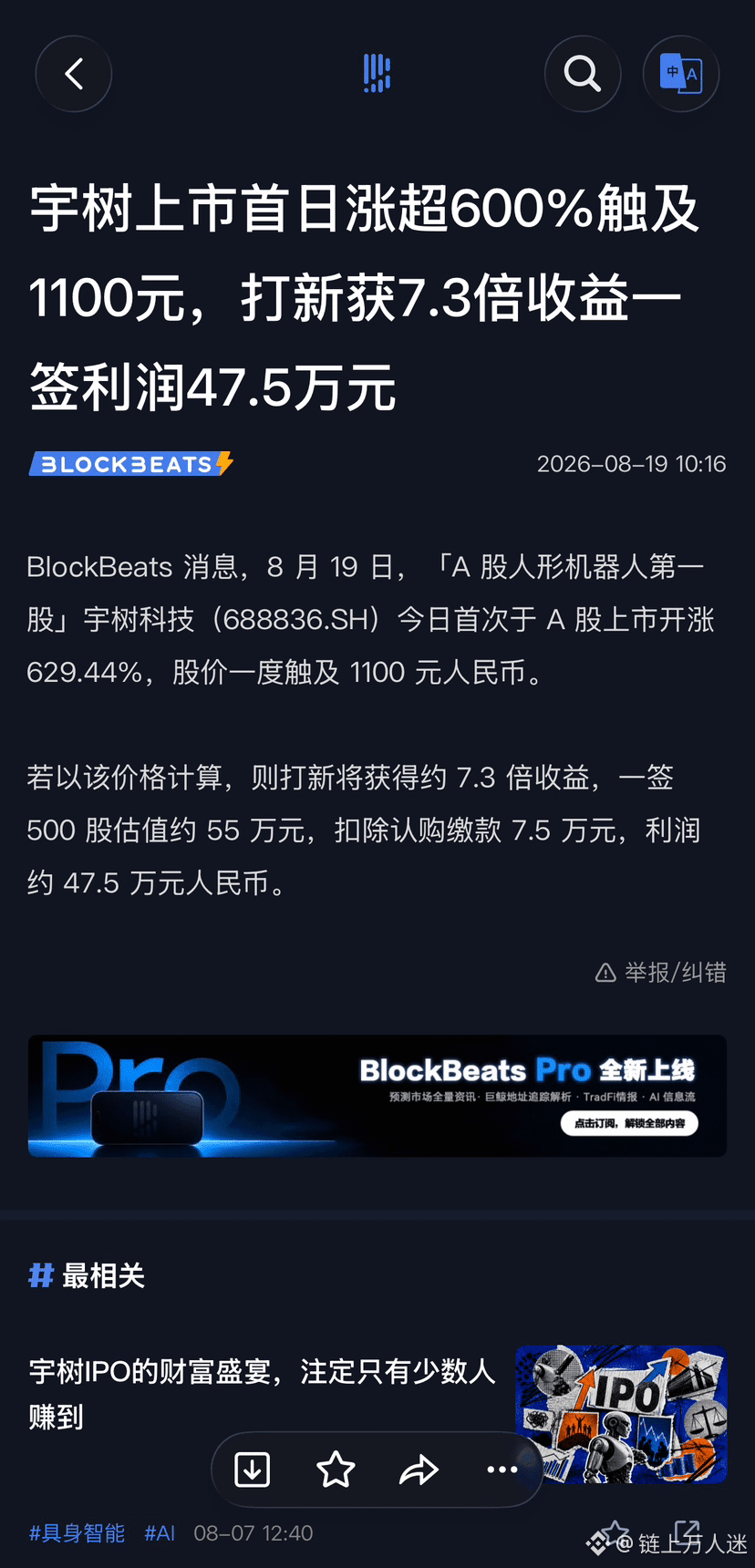
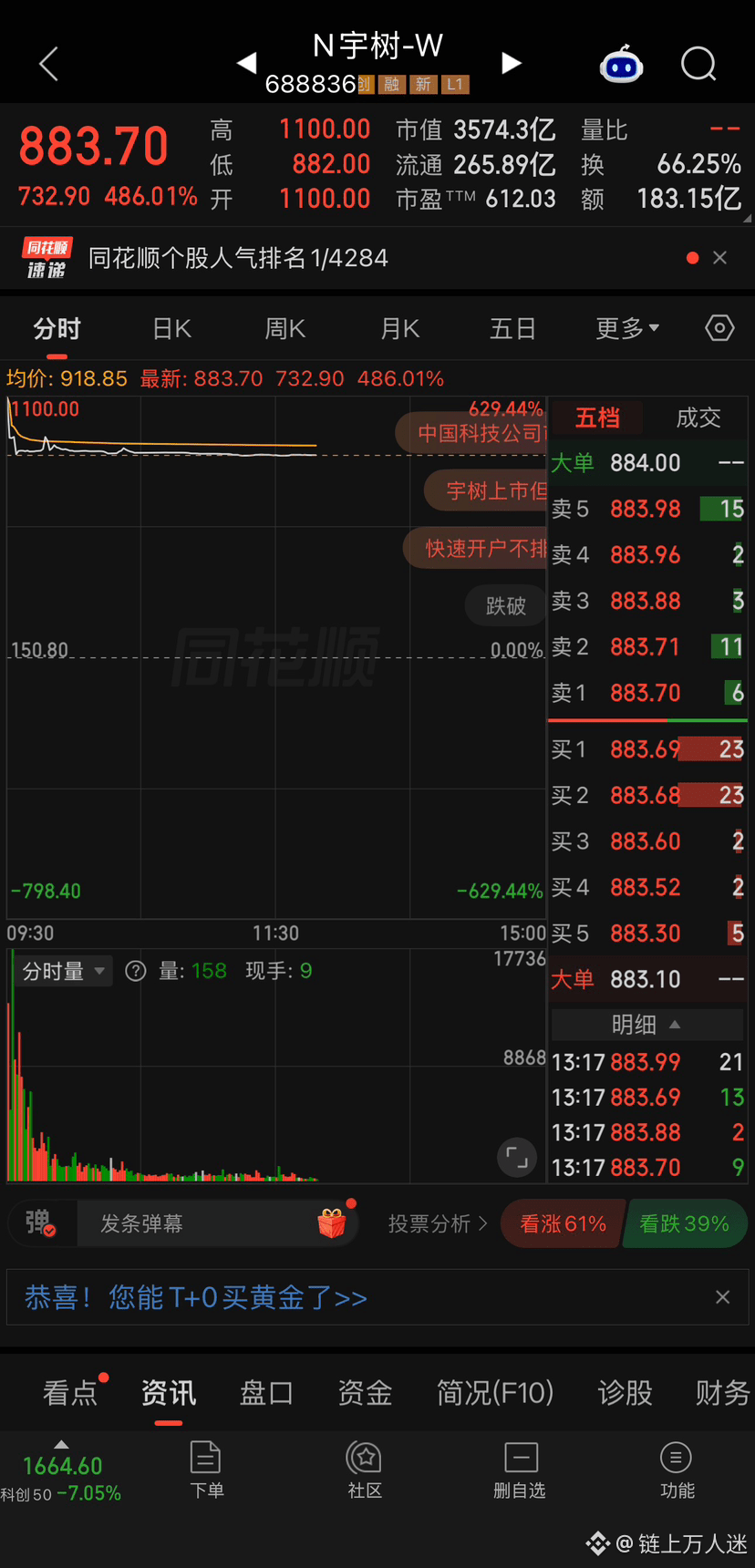
$UNITREE
The joy of Chinese Qixi Festival is given by U Shu
First draw: a 475,000 profit
Did everyone win?
$UNITREE
The joy of Chinese Qixi Festival is given by U Shu
First draw: a 475,000 profit
Did everyone win?
The joy of Chinese Qixi Festival is given by U Shu
First draw: a 475,000 profit
Did everyone win?
398
·
--
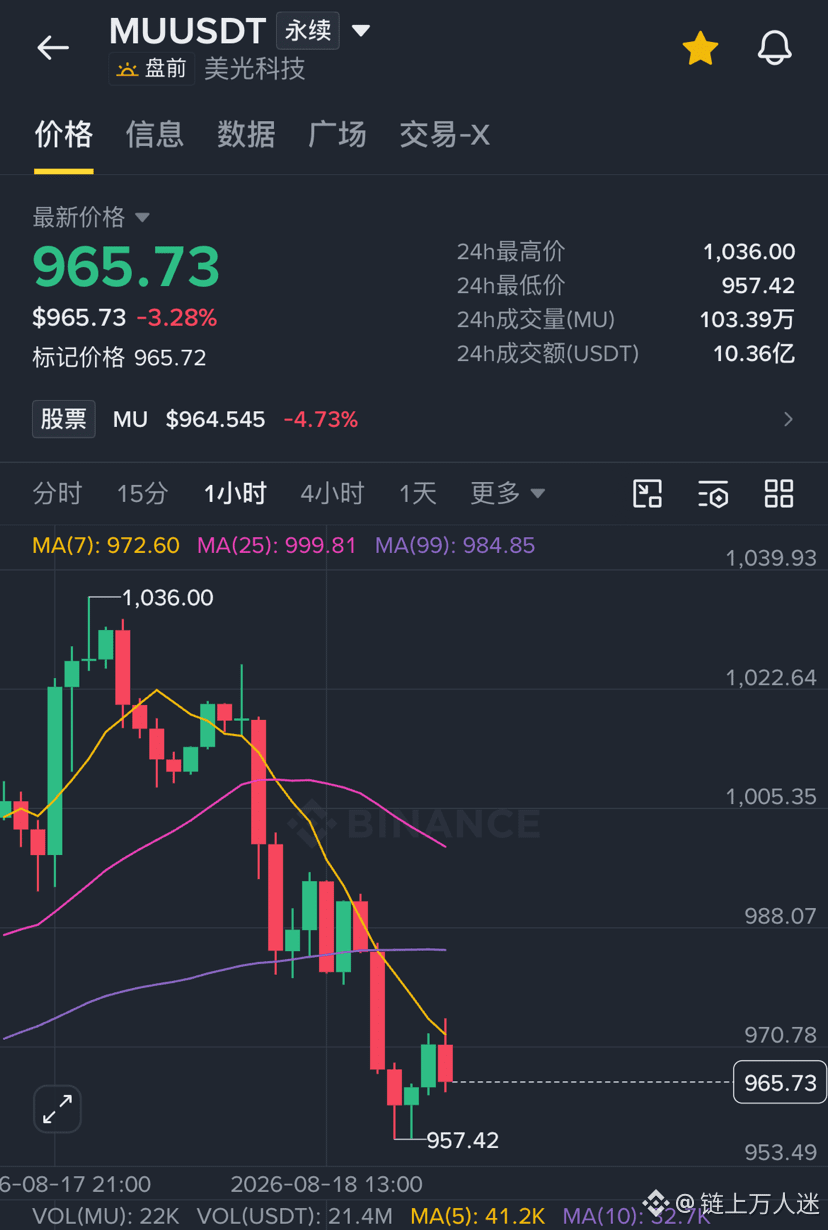
$MU suddenly has a very strong hunch
Tonight when US stocks open, the memory/storage sector will likely take a collective plunge
Most likely, Micron will lead the drop after last night’s rally near 1036
It then kept falling all the way to 957, and it’s currently hovering around 970
Sis Mi calculates with her fingers—it should go below 950
Air force never serves as slaves to the bears ✌️
$MU suddenly has a very strong hunch
Tonight when US stocks open, the memory/storage sector will likely take a collective plunge
Most likely, Micron will lead the drop after last night’s rally near 1036
It then kept falling all the way to 957, and it’s currently hovering around 970
Sis Mi calculates with her fingers—it should go below 950
Air force never serves as slaves to the bears ✌️
Tonight when US stocks open, the memory/storage sector will likely take a collective plunge
Most likely, Micron will lead the drop after last night’s rally near 1036
It then kept falling all the way to 957, and it’s currently hovering around 970
Sis Mi calculates with her fingers—it should go below 950
Air force never serves as slaves to the bears ✌️

209
·
--
#spcx今日走势分析
$SPCX Jumped from 139.3 to 149.7, then retreated back to 144.46. The gain from the previous round has already been eaten up by nearly half.
Although the price is still in the green, the follow-through at the high level is clearly insufficient. Holding 143 will mean sideways consolidation; if it breaks, it’s likely to return to around 140.
#spcx今日走势分析
$SPCX Jumped from 139.3 to 149.7, then retreated back to 144.46. The gain from the previous round has already been eaten up by nearly half.
Although the price is still in the green, the follow-through at the high level is clearly insufficient. Holding 143 will mean sideways consolidation; if it breaks, it’s likely to return to around 140.
$SPCX Jumped from 139.3 to 149.7, then retreated back to 144.46. The gain from the previous round has already been eaten up by nearly half.
Although the price is still in the green, the follow-through at the high level is clearly insufficient. Holding 143 will mean sideways consolidation; if it breaks, it’s likely to return to around 140.
185
·
--
Partly True
$SNDK If tonight’s SanDisk opens higher, it’s not surprising. What’s truly worth watching is whether there’s continued capital after the gap-up.
With 8 client accounts, up to 5 years, and a long-term agreement worth $9.39 billion, what the market is trading isn’t just a rise in NAND prices anymore—it’s that SanDisk’s future revenue will be more stable. If the gains hold after the open, the re-rating may continue. If it spikes up and quickly falls back, that suggests the funds are using the good news to cash out.
$SNDK If tonight’s SanDisk opens higher, it’s not surprising. What’s truly worth watching is whether there’s continued capital after the gap-up.
With 8 client accounts, up to 5 years, and a long-term agreement worth $9.39 billion, what the market is trading isn’t just a rise in NAND prices anymore—it’s that SanDisk’s future revenue will be more stable. If the gains hold after the open, the re-rating may continue. If it spikes up and quickly falls back, that suggests the funds are using the good news to cash out.
With 8 client accounts, up to 5 years, and a long-term agreement worth $9.39 billion, what the market is trading isn’t just a rise in NAND prices anymore—it’s that SanDisk’s future revenue will be more stable. If the gains hold after the open, the re-rating may continue. If it spikes up and quickly falls back, that suggests the funds are using the good news to cash out.
596
Log in to explore more content
Join global crypto users on Binance Square
⚡️ Get latest and useful information about crypto.
💬 Trusted by the world’s largest crypto exchange.
👍 Discover real insights from verified creators.
Email / Phone number
Trending Topics
BTCFallsBelow$83000
4,077 views
72 Discussing
🚀 *BTC/USDT — LONG*
💎 75X Cross
📍 *Entry:* 83000 – 82400
🎯 *TP:* 83600 • 84200 • 84800 • 85400
🛑 *SL:* 81388
⚠️ *Risk:* Max 3–5% per trade.
$BTC
jinifer
·3 Likes
·3.2k views
BitgetDetailsSecurityIncidentTimeline
47 views
37 Discussing
BitcoinSpotETFs$2.39BWeeklyNetInflow
318 views
11 Discussing