

重点快讯
55 Posts

重点快讯
Report
Block User
Open Trade
Frequent Trader
5.1 Years
631 Following
357 Followers
131 Liked
Posts
Portfolio
·
--
Bullish
$NOM second-stage launch, if you can’t hold on then go home and plant trees; can a few million market cap really go to zero?
{spot}(NOMUSDT)
$NOM second-stage launch, if you can’t hold on then go home and plant trees; can a few million market cap really go to zero?
1
610
·
--
Bullish
$NOM Xin Gouzhuang, come on, one more round🙄 With a market value of 60 million, where can it possibly drop to?
$NOM Xin Gouzhuang, come on, one more round🙄 With a market value of 60 million, where can it possibly drop to?
1
452
·
--
$POL a large number of short sellers are waiting to be liquidated 😂
{future}(POLUSDT)
$POL a large number of short sellers are waiting to be liquidated 😂
216
·
--
Bearish
$NVDA OpenAi’s weak and ineffectual counterattack against the low-price strategy used to deal with China’s domestic open-source large language models.
With the performance gap in reasoning ability only 10–15%,
the API call price—
DeepSeek V4 flash—
needs only $0.4 per million tokens, whereas
GPT 5.6, across its various versions,
requires $7–35.
Under these circumstances, OpenAI’s future expected revenue will drop sharply,
and the existing OpenAI user base is also rushing to embrace China’s domestic LLMs.
$NVDA OpenAi’s weak and ineffectual counterattack against the low-price strategy used to deal with China’s domestic open-source large language models.
With the performance gap in reasoning ability only 10–15%,
the API call price—
DeepSeek V4 flash—
needs only $0.4 per million tokens, whereas
GPT 5.6, across its various versions,
requires $7–35.
Under these circumstances, OpenAI’s future expected revenue will drop sharply,
and the existing OpenAI user base is also rushing to embrace China’s domestic LLMs.
With the performance gap in reasoning ability only 10–15%,
the API call price—
DeepSeek V4 flash—
needs only $0.4 per million tokens, whereas
GPT 5.6, across its various versions,
requires $7–35.
Under these circumstances, OpenAI’s future expected revenue will drop sharply,
and the existing OpenAI user base is also rushing to embrace China’s domestic LLMs.

147
·
--
Bearish
$NVDA NVIDIA's AI myth is being shattered one after another by the successive releases of China's domestic open-source large models DeepSeek-V4-Pro and Kimi-K3.
When open-source model performance rivals GPT-5.5, yet API prices are only 2% of American competitors', why would enterprises still spend a fortune rushing to buy H100s? With training and inference costs plummeting off a cliff, the logic of brute-force computing power accumulation has already collapsed. Even Microsoft is researching replacing OpenAI with DeepSeek—who can NVIDIA still count on for its trillion-dollar orders?
More critically, the early development costs of closed-source models, which once ran into tens of billions of dollars, have instantly become unrecoverable sunk costs. Valuations of U.S. AI companies have evaporated by hundreds of billions, and capital expenditure cuts are imminent. And the CUDA ecosystem moat? The open-source community is bypassing it with optimizations and alternative solutions.
With valuations at 100 times earnings, the market narrative is shifting from "compute scarcity" to "cost efficiency." Once expectations reverse, a double blow is inevitable.
The AI dividend has peaked, and the bubble should burst.
$NVDA NVIDIA's AI myth is being shattered one after another by the successive releases of China's domestic open-source large models DeepSeek-V4-Pro and Kimi-K3.
When open-source model performance rivals GPT-5.5, yet API prices are only 2% of American competitors', why would enterprises still spend a fortune rushing to buy H100s? With training and inference costs plummeting off a cliff, the logic of brute-force computing power accumulation has already collapsed. Even Microsoft is researching replacing OpenAI with DeepSeek—who can NVIDIA still count on for its trillion-dollar orders?
More critically, the early development costs of closed-source models, which once ran into tens of billions of dollars, have instantly become unrecoverable sunk costs. Valuations of U.S. AI companies have evaporated by hundreds of billions, and capital expenditure cuts are imminent. And the CUDA ecosystem moat? The open-source community is bypassing it with optimizations and alternative solutions.
With valuations at 100 times earnings, the market narrative is shifting from "compute scarcity" to "cost efficiency." Once expectations reverse, a double blow is inevitable.
The AI dividend has peaked, and the bubble should burst.
When open-source model performance rivals GPT-5.5, yet API prices are only 2% of American competitors', why would enterprises still spend a fortune rushing to buy H100s? With training and inference costs plummeting off a cliff, the logic of brute-force computing power accumulation has already collapsed. Even Microsoft is researching replacing OpenAI with DeepSeek—who can NVIDIA still count on for its trillion-dollar orders?
More critically, the early development costs of closed-source models, which once ran into tens of billions of dollars, have instantly become unrecoverable sunk costs. Valuations of U.S. AI companies have evaporated by hundreds of billions, and capital expenditure cuts are imminent. And the CUDA ecosystem moat? The open-source community is bypassing it with optimizations and alternative solutions.
With valuations at 100 times earnings, the market narrative is shifting from "compute scarcity" to "cost efficiency." Once expectations reverse, a double blow is inevitable.
The AI dividend has peaked, and the bubble should burst.
112
·
--
Bearish
$NVDA can we mount it with a jumper like this? It looks like it's about to make a big waterfall
$NVDA can we mount it with a jumper like this? It looks like it's about to make a big waterfall
103
·
--
$KOMA Can Shigou Zhuang go back for a round? With a market value of 6 million, how low can it fall?
$KOMA Can Shigou Zhuang go back for a round? With a market value of 6 million, how low can it fall?
259
·
--
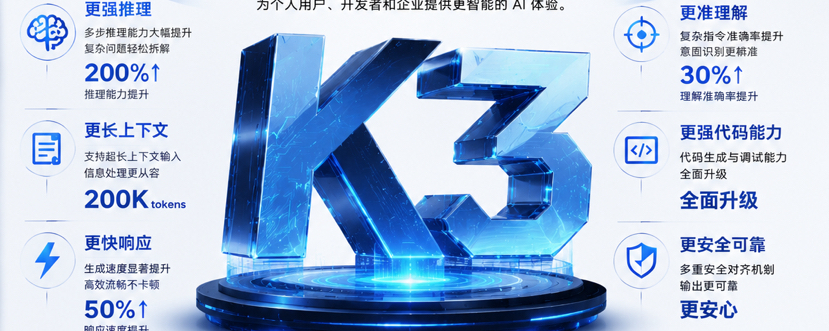
Article
Seven days of evaporating $2 trillion—China’s large models came out on topOn the closing moment of July 24, the green numbers on the screen were no longer candlesticks—they were blood.
The seven giants. In a single day, $79.7 billion vanished into thin air. From the May peak, over seven trading days, the global AI sector’s total evaporation reached $2.3 trillion. This isn’t a pullback—it’s a collapse of faith.
The Philadelphia Semiconductor Index left two consecutive Friday gap-downs—down 6.8% on July 17 and down 5.4% on July 24. It plunged 17.2% straight down from the June peak. A technical bear market isn’t a forecast—it’s a fact that’s already happened. In just one week, the SOX index took two cuts, each one striking the most painful place: the first right on the night Kimi K3 topped the Arena programming leaderboard, and the second on the day TSMC, face to face, refused Huang Renxun.
Seven days of evaporating $2 trillion—China’s large models came out on top
On the closing moment of July 24, the green numbers on the screen were no longer candlesticks—they were blood.
The seven giants. In a single day, $79.7 billion vanished into thin air. From the May peak, over seven trading days, the global AI sector’s total evaporation reached $2.3 trillion. This isn’t a pullback—it’s a collapse of faith.
The Philadelphia Semiconductor Index left two consecutive Friday gap-downs—down 6.8% on July 17 and down 5.4% on July 24. It plunged 17.2% straight down from the June peak. A technical bear market isn’t a forecast—it’s a fact that’s already happened. In just one week, the SOX index took two cuts, each one striking the most painful place: the first right on the night Kimi K3 topped the Arena programming leaderboard, and the second on the day TSMC, face to face, refused Huang Renxun.
The seven giants. In a single day, $79.7 billion vanished into thin air. From the May peak, over seven trading days, the global AI sector’s total evaporation reached $2.3 trillion. This isn’t a pullback—it’s a collapse of faith.
The Philadelphia Semiconductor Index left two consecutive Friday gap-downs—down 6.8% on July 17 and down 5.4% on July 24. It plunged 17.2% straight down from the June peak. A technical bear market isn’t a forecast—it’s a fact that’s already happened. In just one week, the SOX index took two cuts, each one striking the most painful place: the first right on the night Kimi K3 topped the Arena programming leaderboard, and the second on the day TSMC, face to face, refused Huang Renxun.
127
·
--
$ACT now the moment this situation is taken down, once the delisting notice comes, it will crash and lure shorts with a fakeout, then surge violently, liquidating all the short positions—this dog of a broker is just too stingy with its shares.
$ACT now the moment this situation is taken down, once the delisting notice comes, it will crash and lure shorts with a fakeout, then surge violently, liquidating all the short positions—this dog of a broker is just too stingy with its shares.
1
1
440
·
--
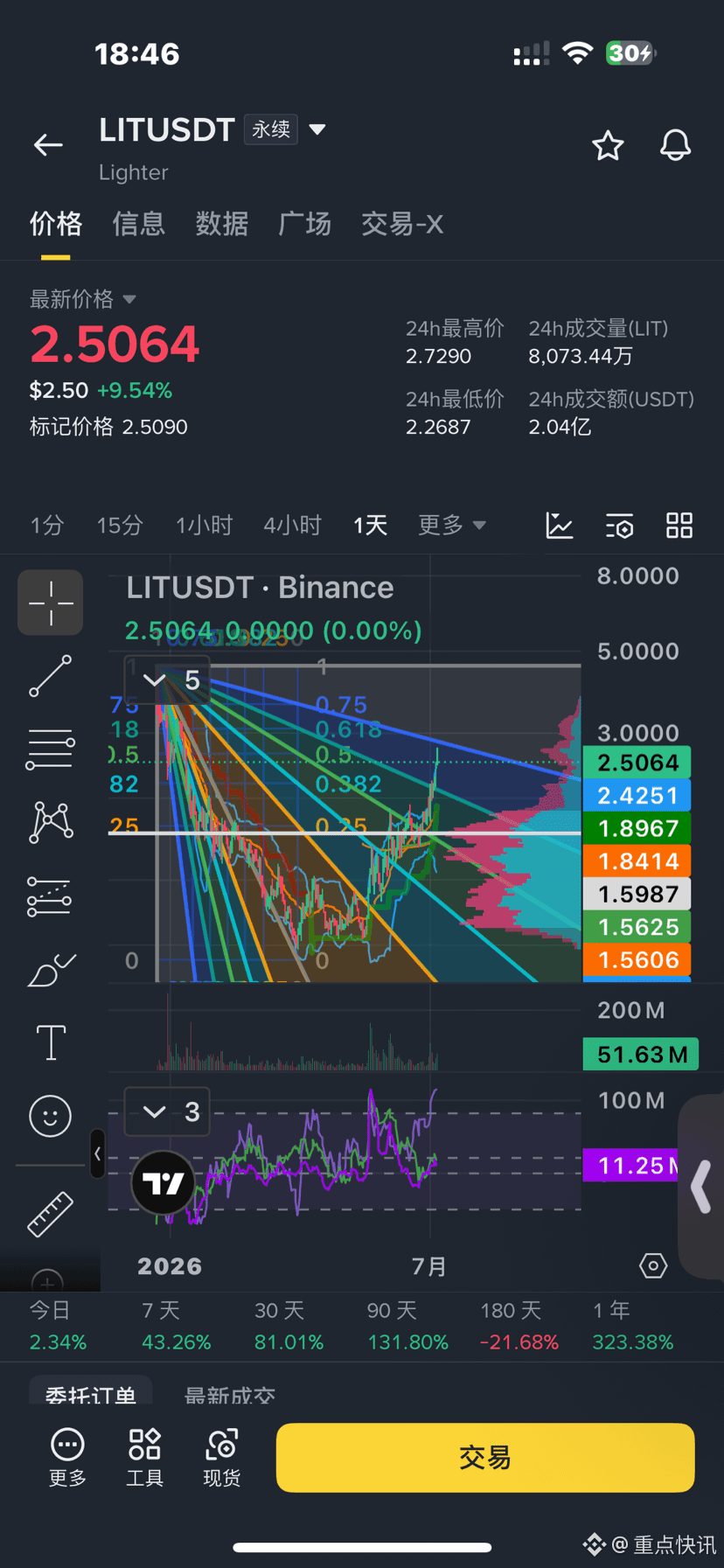
$LIT doesn't look like it can rush up; the position is good, with a bit of room in the middle, in his hands
$LIT doesn't look like it can rush up; the position is good, with a bit of room in the middle, in his hands
203
·
--
$ACT Hurry up and dump the order, you half-dead, half-alive. Air Force brothers, increase your efforts. The market cap is too high—take a look and drop to 3 million.
$ACT Hurry up and dump the order, you half-dead, half-alive. Air Force brothers, increase your efforts. The market cap is too high—take a look and drop to 3 million.

501
·
--
$ACT held on, brothers—at most let it drop to a 5 million market cap to cut losses. If it’s above 15 million market cap, find a spot to take profit.
$ACT held on, brothers—at most let it drop to a 5 million market cap to cut losses. If it’s above 15 million market cap, find a spot to take profit.
359
·
--
Bullish
$ACT hehe😁 time again for my entry price—going from a market cap of 8 million to 30 million isn’t too much to ask, right?
{future}(ACTUSDT)
$ACT hehe😁 time again for my entry price—going from a market cap of 8 million to 30 million isn’t too much to ask, right?
262
·
--
$ACT damn it😫, my market value dropped to 3 million and I'm going to be liquidated!
$ACT damn it😫, my market value dropped to 3 million and I'm going to be liquidated!
290
·
--
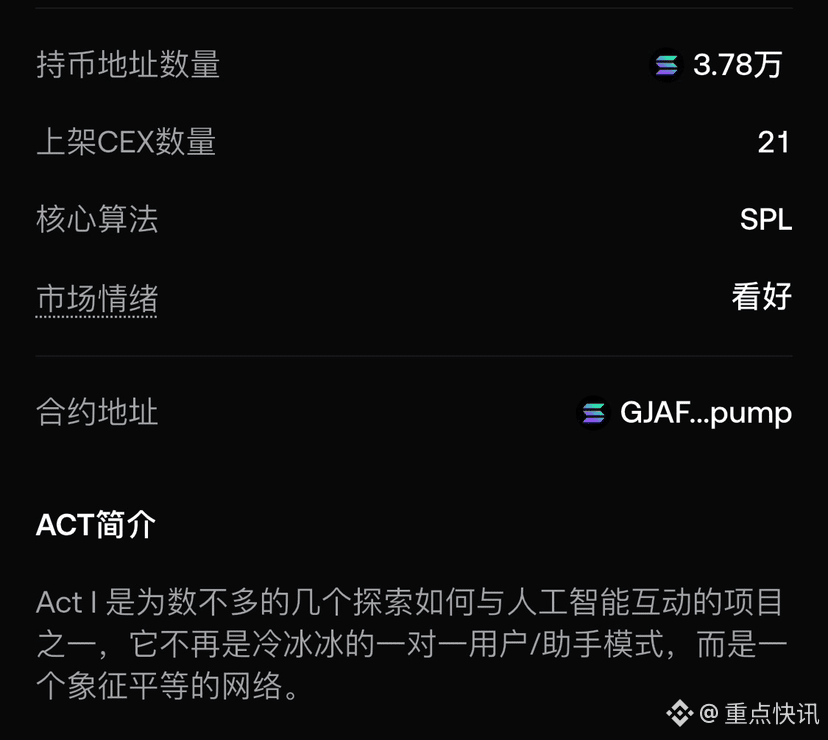
$ACT can’t even manage a 10 million market cap coin that’s listed on more than 20 exchanges—shouldn’t it be getting delisted soon?
$ACT can’t even manage a 10 million market cap coin that’s listed on more than 20 exchanges—shouldn’t it be getting delisted soon?
4
2
4.3k
·
--
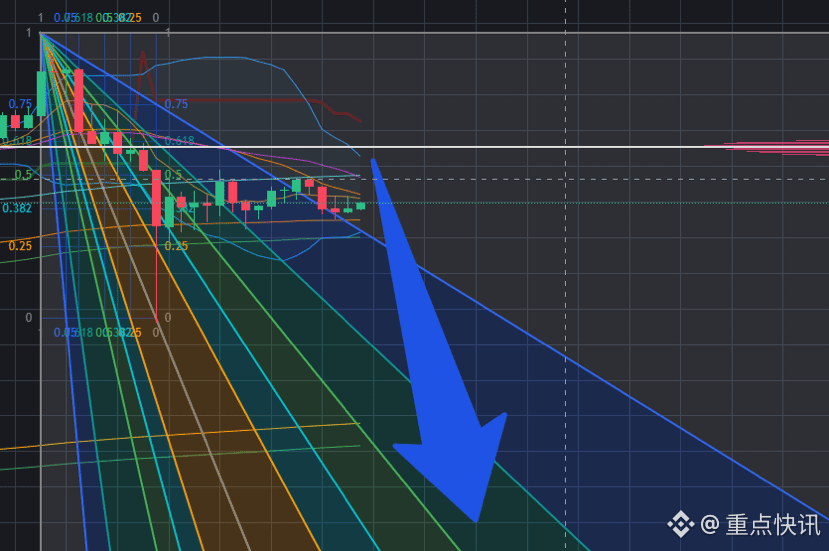
$VELVET is about to plunge into the abyss from 1.8
$VELVET is about to plunge into the abyss from 1.8
4
4
1.2k
·
--
$ACT has entered the observation period. At minimum, by the end of next month it has to be pulled down to 0.05 so we can continue to feed on the platform’s users. Otherwise, it’ll be taken down.
$ACT has entered the observation period. At minimum, by the end of next month it has to be pulled down to 0.05 so we can continue to feed on the platform’s users. Otherwise, it’ll be taken down.
4
561
·
--
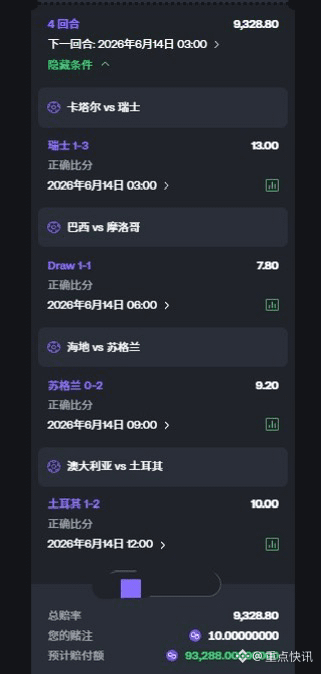
$POL Just wait until I hit the jackpot with this 10POL World Cup lottery ticket, then I'm going to dump the market. Brace yourselves, noobs!
$POL Just wait until I hit the jackpot with this 10POL World Cup lottery ticket, then I'm going to dump the market. Brace yourselves, noobs!
347
·
--
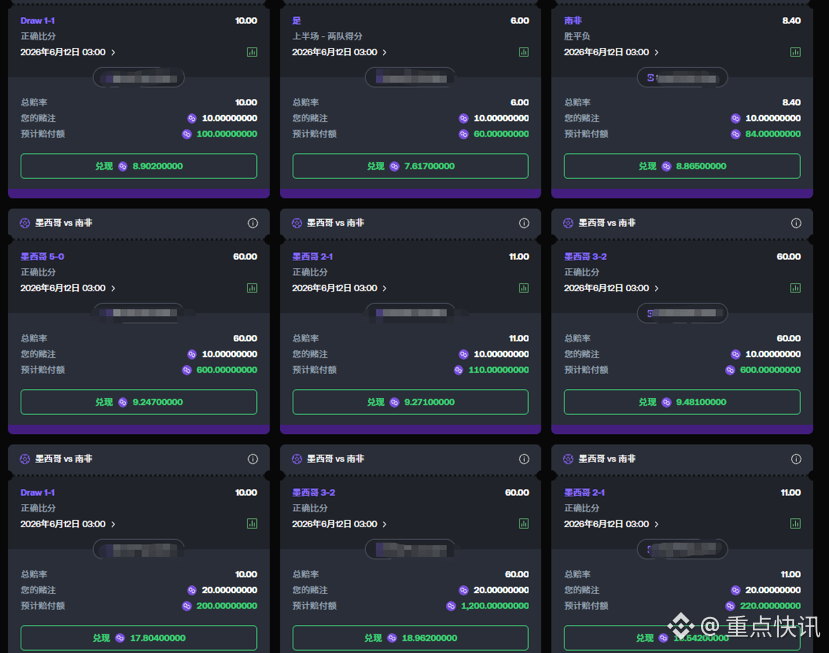
$POL Why is it still dipping during the World Cup? The transaction fees for betting using POL are so cheap.
$POL Why is it still dipping during the World Cup? The transaction fees for betting using POL are so cheap.
1
419
Log in to explore more content
Join global crypto users on Binance Square
⚡️ Get latest and useful information about crypto.
💬 Trusted by the world’s largest crypto exchange.
👍 Discover real insights from verified creators.
Email / Phone number
Trending Topics
BitgetHackerFailsToMoveStolenFunds
794 views
81 Discussing
BREAKING: Bitget Hacker BLOCKED! Security Win! 🛡️
Bitget’s $388M hacker FAILED to move stolen funds today Sep 29!
Hacker tried to launder 100 SOL via Chainflip, but broker rejected deposit — message: “Deposit rejected by broker.” Funds returned to hack wallet, zero movement.
Earlier, $NEAR Intents blocked $50M laundering attempt! Only $166K slipped, $503K frozen during execution. NEAR even waived bounty to help Bitget.
Good news: Bitget restored $BTC withdrawals Sep 28, 08:00 UTC. CEO Gracy Chen says user funds are SAFU.
Crypto security is getting stronger. Is Bitget now safest exchange? Comment below! 👇
#Bitget #BitgetHack #Chainflip $NEAR #CryptoSecurity#bitgethackerfailstomovestolenfunds
True News
·2 Likes
·2k views
BitMineETHHoldingsTop6Million
4,164 views
231 Discussing
StrategyAdds1666BTCHoldingsReach847666
3,357 views
183 Discussing