

Holaitsak47
7.1k Posts

Holaitsak47
 Square Verified
Report
Block User
X App: @Holaitsak47 | Trader 24/7 | Blockchain | Stay updated with the latest Crypto News! | Crypto Influencer

Creator Awards 2024

Top Voices

BNB Holder
Occasional Trader
5.5 Years
95 Following
94.4K+ Followers
76.6K+ Liked
2 Badges
Posts
All
Quotes
Videos
PINNED
·
--
When hard work meets a bit of rebellion - you get results
Honored to be named Creator of the Year by @binance and beyond grateful to receive this recognition - Proof that hard work and a little bit of disruption go a long way
From dreams to reality - Thank you @binance @Binance_Square_Official @richardteng 🤍
When hard work meets a bit of rebellion - you get results
Honored to be named Creator of the Year by @binance and beyond grateful to receive this recognition - Proof that hard work and a little bit of disruption go a long way
From dreams to reality - Thank you @binance @Binance Square Official @Richard Teng 🤍
Honored to be named Creator of the Year by @binance and beyond grateful to receive this recognition - Proof that hard work and a little bit of disruption go a long way
From dreams to reality - Thank you @binance @Binance Square Official @Richard Teng 🤍


78
49
337
1.3k
·
--
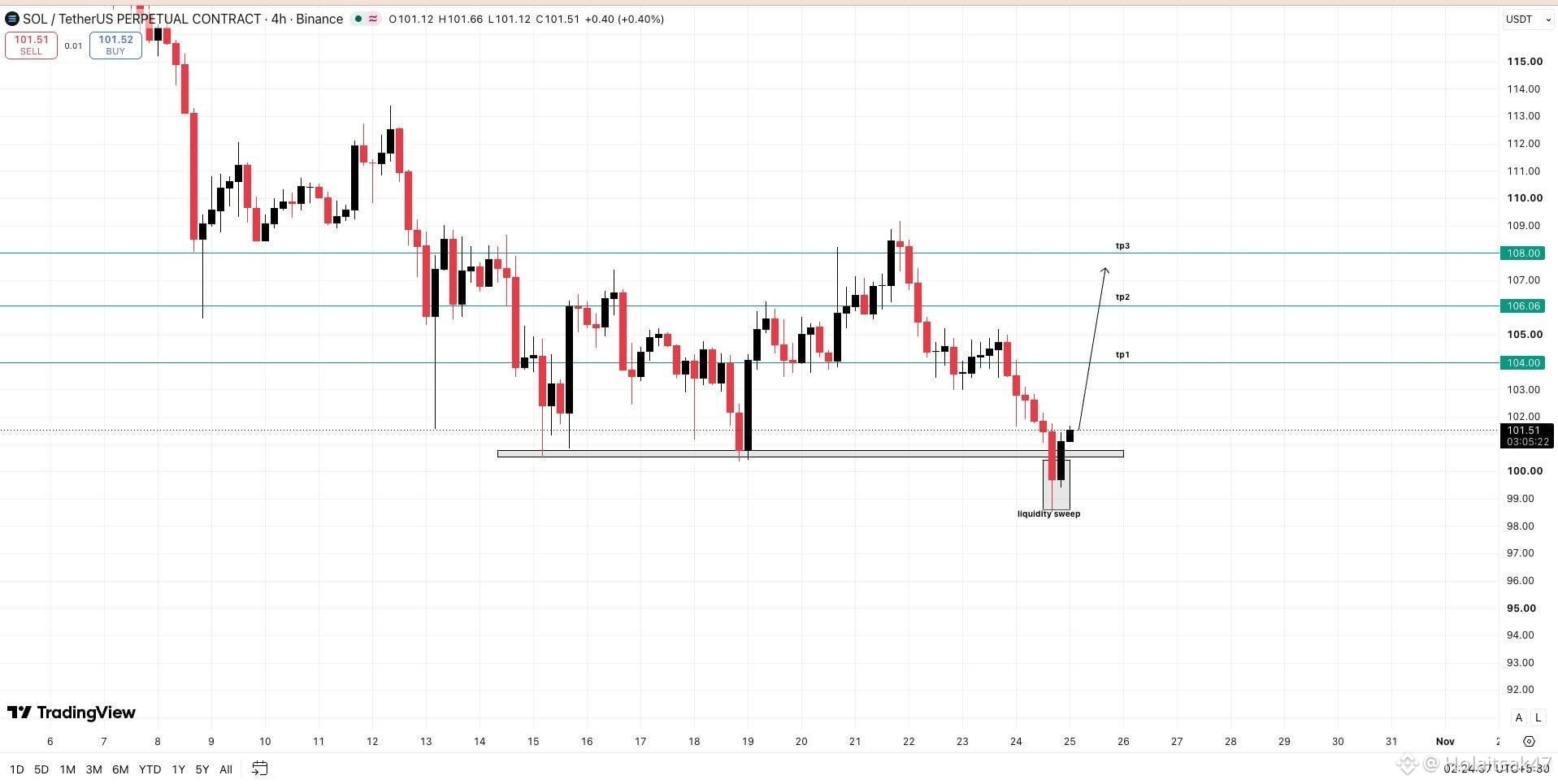
$SOL is back above support at $101.50 after sweeping liquidity below it.
Holding this reclaimed zone could open the door for a move toward the upper targets marked on the chart.
Watching for bullish follow-through. Stay tuned! 👀
$SOL is back above support at $101.50 after sweeping liquidity below it.
Holding this reclaimed zone could open the door for a move toward the upper targets marked on the chart.
Watching for bullish follow-through. Stay tuned! 👀
Holding this reclaimed zone could open the door for a move toward the upper targets marked on the chart.
Watching for bullish follow-through. Stay tuned! 👀
1
6
698
·
--
Bad headlines everywhere, yet price is still holding a key level.
I’m watching the chart more than the mood on the timeline. As long as this S/R flip holds, I still see room for one more move higher.
A bounce is my preferred scenario. Losing support would change that.
Bad headlines everywhere, yet price is still holding a key level.
I’m watching the chart more than the mood on the timeline. As long as this S/R flip holds, I still see room for one more move higher.
A bounce is my preferred scenario. Losing support would change that.
I’m watching the chart more than the mood on the timeline. As long as this S/R flip holds, I still see room for one more move higher.
A bounce is my preferred scenario. Losing support would change that.
5
414
·
--
Let’s turn this nomination into a win
I’m nominated for Rising Star at The Blockchain 100 Awards 2026, and your support could help make it happen 🤍
[GO AND VOTE 💛](https://app.binance.com/uni-qr/cpro/HolaItsAk47)
Head to my profile, cast your vote, then claim your $BNB through my profile!
You can vote again every day during the voting period—every vote counts.
Thank you for backing me. Let’s bring this home together! 🚀
Let’s turn this nomination into a win
I’m nominated for Rising Star at The Blockchain 100 Awards 2026, and your support could help make it happen 🤍
GO AND VOTE 💛
Head to my profile, cast your vote, then claim your $BNB through my profile!
You can vote again every day during the voting period—every vote counts.
Thank you for backing me. Let’s bring this home together! 🚀
I’m nominated for Rising Star at The Blockchain 100 Awards 2026, and your support could help make it happen 🤍
GO AND VOTE 💛
Head to my profile, cast your vote, then claim your $BNB through my profile!
You can vote again every day during the voting period—every vote counts.
Thank you for backing me. Let’s bring this home together! 🚀

Best Wishes!
From Holaitsak47
27
38
332
·
--
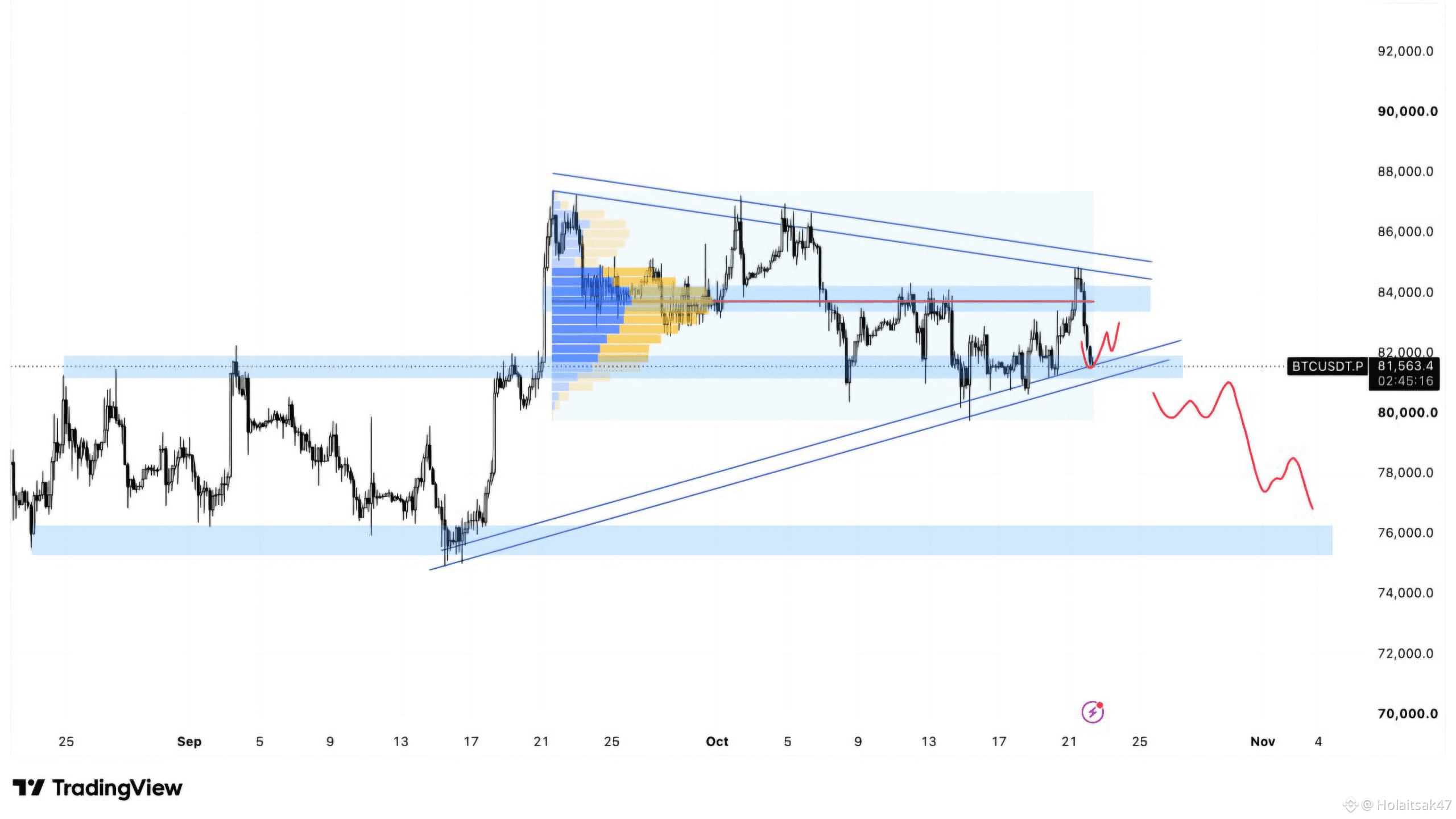
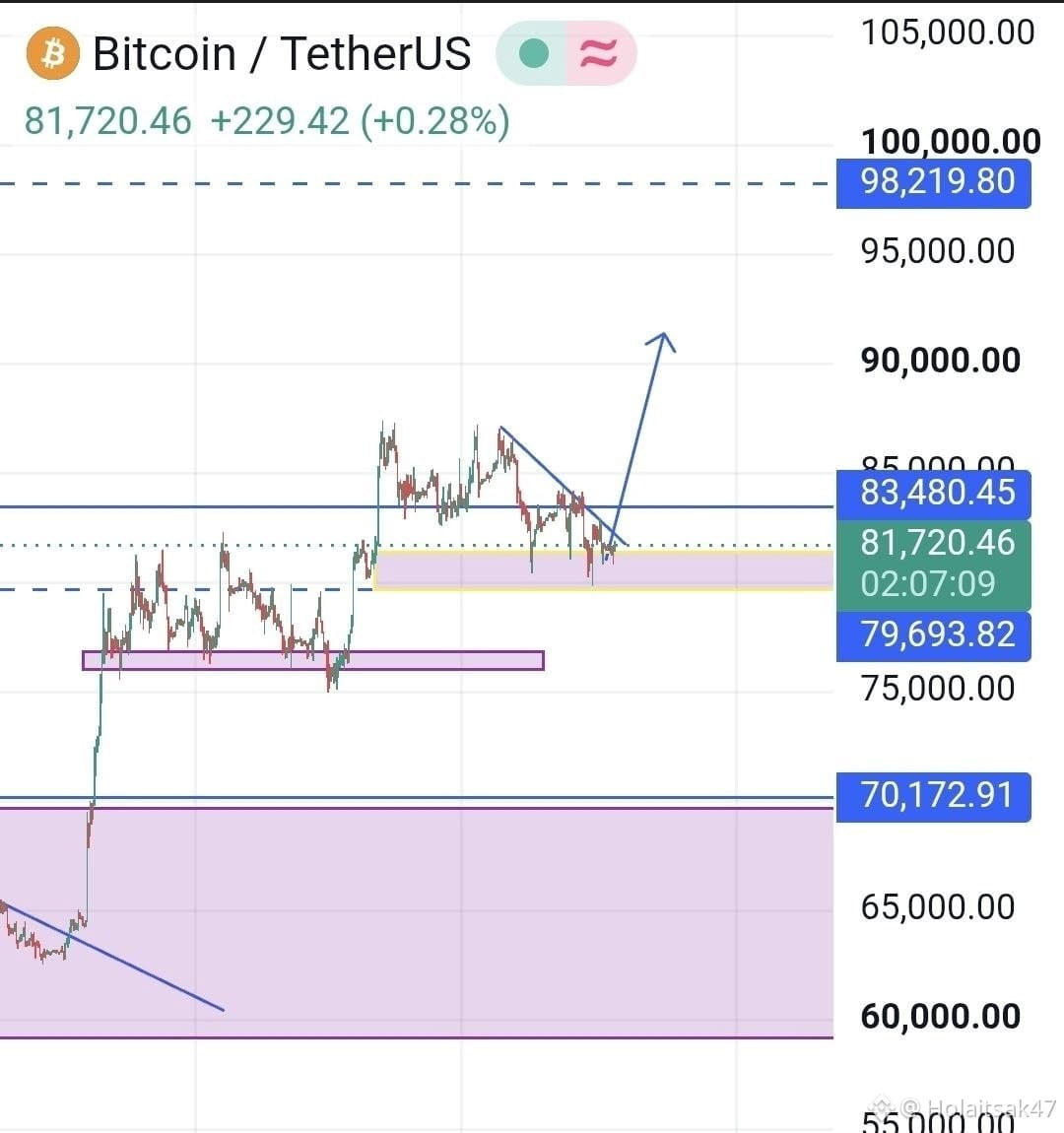
$BTC 4H — The range is closing in. 👀
Bitcoin is testing rising support near $81.6K, with descending resistance keeping every bounce under pressure.
The key ceiling: $83.8K–$84.5K.
My base case is a brief bounce or W-shaped recovery attempt. If that reclaim fails and support breaks, $76K–$78K comes into focus.
A convincing breakout above resistance would challenge that view and put $88K+ back on the radar.
Watching the break—and whether it holds. ⚡
$BTC 4H — The range is closing in. 👀
Bitcoin is testing rising support near $81.6K, with descending resistance keeping every bounce under pressure.
The key ceiling: $83.8K–$84.5K.
My base case is a brief bounce or W-shaped recovery attempt. If that reclaim fails and support breaks, $76K–$78K comes into focus.
A convincing breakout above resistance would challenge that view and put $88K+ back on the radar.
Watching the break—and whether it holds. ⚡
Bitcoin is testing rising support near $81.6K, with descending resistance keeping every bounce under pressure.
The key ceiling: $83.8K–$84.5K.
My base case is a brief bounce or W-shaped recovery attempt. If that reclaim fails and support breaks, $76K–$78K comes into focus.
A convincing breakout above resistance would challenge that view and put $88K+ back on the radar.
Watching the break—and whether it holds. ⚡
2
10
4.5k
·
--
Really happy to share some exciting news! ❤️
I've been nominated by Binance for Rising Star Content Creator of the Year 2026! 🏆
[https://app.binance.com/uni-qr/cpro/HolaItsAk47](https://app.binance.com/uni-qr/cpro/HolaItsAk47)
This honestly means a lot to me, and I'm so grateful for all the support I've received throughout my journey.
Now I need your support once again! 🫶
Please take a moment to vote for me through the link below. Every vote means a lot!
Thank you for always supporting me! ❤️
Really happy to share some exciting news! ❤️
I've been nominated by Binance for Rising Star Content Creator of the Year 2026! 🏆
https://app.binance.com/uni-qr/cpro/HolaItsAk47
This honestly means a lot to me, and I'm so grateful for all the support I've received throughout my journey.
Now I need your support once again! 🫶
Please take a moment to vote for me through the link below. Every vote means a lot!
Thank you for always supporting me! ❤️
I've been nominated by Binance for Rising Star Content Creator of the Year 2026! 🏆
https://app.binance.com/uni-qr/cpro/HolaItsAk47
This honestly means a lot to me, and I'm so grateful for all the support I've received throughout my journey.
Now I need your support once again! 🫶
Please take a moment to vote for me through the link below. Every vote means a lot!
Thank you for always supporting me! ❤️
2
2
12
779
·
--
Everyone seems to be getting bearish on $BTC again, but price is still holding above $80K.
i'm not convinced this is the start of a bigger drop.
feels more like the market is shaking out weak hands before one final push toward $90K.
could be wrong, but this week's price action should tell us a lot 👀
Everyone seems to be getting bearish on $BTC again, but price is still holding above $80K.
i'm not convinced this is the start of a bigger drop.
feels more like the market is shaking out weak hands before one final push toward $90K.
could be wrong, but this week's price action should tell us a lot 👀
i'm not convinced this is the start of a bigger drop.
feels more like the market is shaking out weak hands before one final push toward $90K.
could be wrong, but this week's price action should tell us a lot 👀
5
834
·
--
$BTC is sitting right at an interesting level 👀
i'm watching that $80K support zone closely. buyers have defended this area before and if they step in again, we could see a nice recovery toward $83.5K first.
break that level and $90K starts looking possible 🚀
but if support fails, the whole setup changes. let's see how BTC plays this one out.
$BTC is sitting right at an interesting level 👀
i'm watching that $80K support zone closely. buyers have defended this area before and if they step in again, we could see a nice recovery toward $83.5K first.
break that level and $90K starts looking possible 🚀
but if support fails, the whole setup changes. let's see how BTC plays this one out.
i'm watching that $80K support zone closely. buyers have defended this area before and if they step in again, we could see a nice recovery toward $83.5K first.
break that level and $90K starts looking possible 🚀
but if support fails, the whole setup changes. let's see how BTC plays this one out.
1
5
1.1k
·
--
Verified
$Privacy is becoming a key part of Web3, and @nillionnetwork is building something worth exploring. 🔐
What interests me most is Covenants, Nillion's core product, and DUSK, its first release on Ethereum. Together, they represent an exciting step toward secure, programmable data access and privacy-focused innovation.
I've also explored $NIL through Spot trading and look forward to seeing how the Nillion ecosystem develops.
#nil $NIL @nillionnetwork
$Privacy is becoming a key part of Web3, and @Nillion is building something worth exploring. 🔐
What interests me most is Covenants, Nillion's core product, and DUSK, its first release on Ethereum. Together, they represent an exciting step toward secure, programmable data access and privacy-focused innovation.
I've also explored $NIL through Spot trading and look forward to seeing how the Nillion ecosystem develops.
#nil $NIL @Nillion
What interests me most is Covenants, Nillion's core product, and DUSK, its first release on Ethereum. Together, they represent an exciting step toward secure, programmable data access and privacy-focused innovation.
I've also explored $NIL through Spot trading and look forward to seeing how the Nillion ecosystem develops.
#nil $NIL @Nillion
2
11
935
·
--
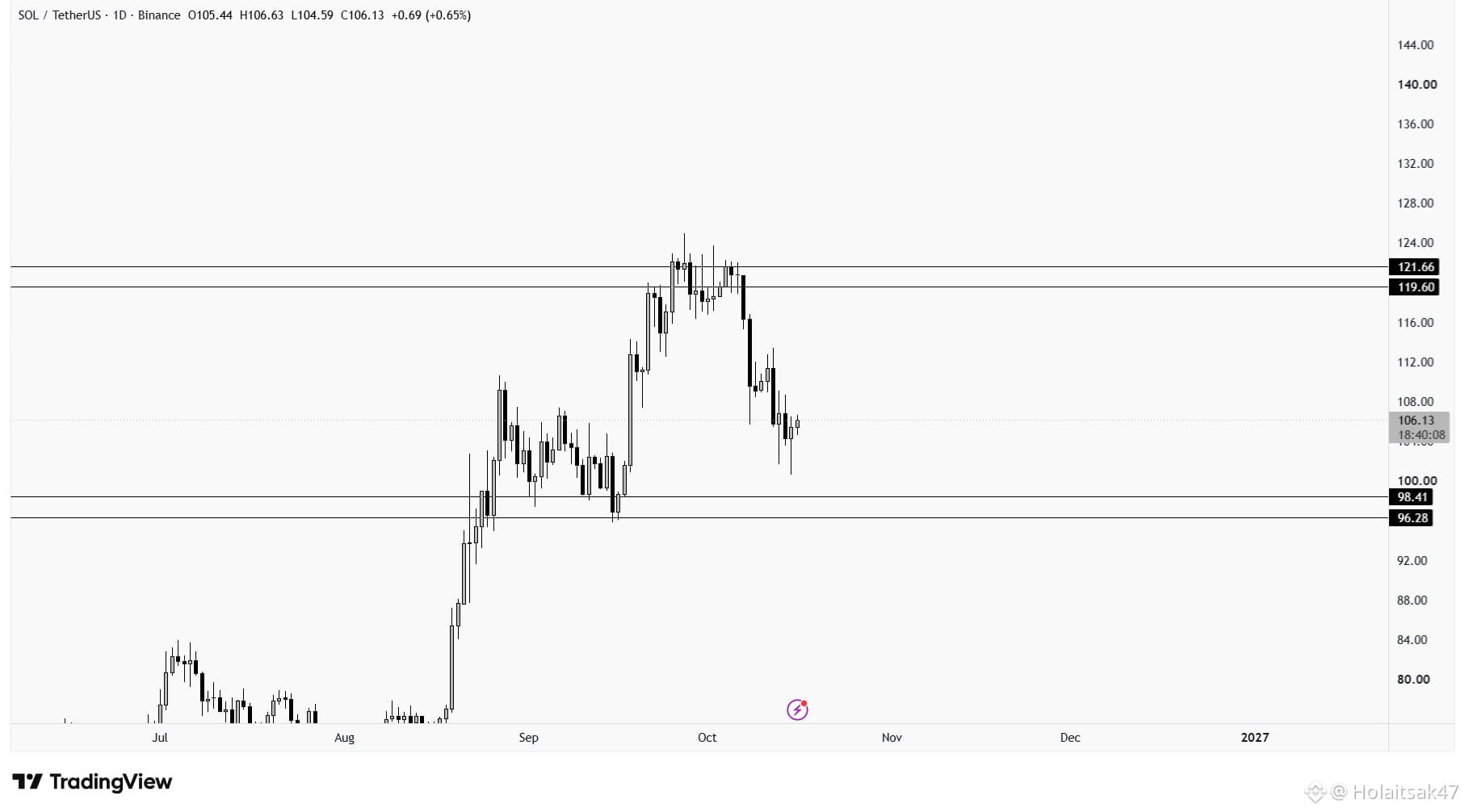
$SOL is approaching the key support zone at $96.28–$98.41.
A strong rejection could trigger a bounce, while a breakdown may bring further downside. Waiting for HTF candle confirmation before taking a position.
$SOL is approaching the key support zone at $96.28–$98.41.
A strong rejection could trigger a bounce, while a breakdown may bring further downside. Waiting for HTF candle confirmation before taking a position.
A strong rejection could trigger a bounce, while a breakdown may bring further downside. Waiting for HTF candle confirmation before taking a position.
5
831
·
--
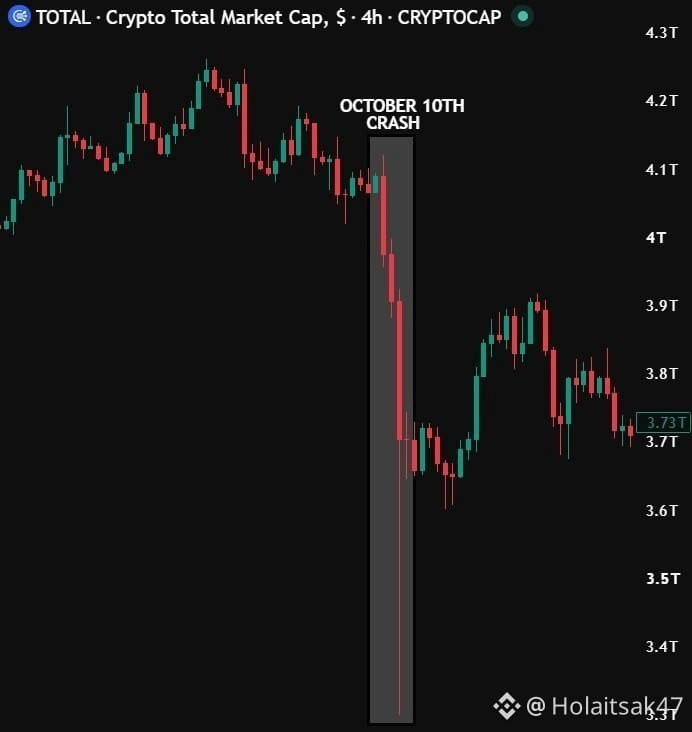
One year later, and I still think crypto hasn't fully recovered from what happened on October 10.
Not talking about BTC's price or where the market is trading rn.
I'm talking about the people.
So many traders who were active every single day just disappeared. Some lost their entire capital, others simply gave up after watching their portfolios get destroyed in hours.
And what's crazy is that the market moved on like it was just another red candle.
New narratives, new pumps, new ATHs… but the damage was already done.
You can recover from a bad trade. You can rebuild a portfolio.
But how do you convince someone to trust a market again after something like that?
That's the part nobody talks about enough.
One year later, and I still think crypto hasn't fully recovered from what happened on October 10.
Not talking about BTC's price or where the market is trading rn.
I'm talking about the people.
So many traders who were active every single day just disappeared. Some lost their entire capital, others simply gave up after watching their portfolios get destroyed in hours.
And what's crazy is that the market moved on like it was just another red candle.
New narratives, new pumps, new ATHs… but the damage was already done.
You can recover from a bad trade. You can rebuild a portfolio.
But how do you convince someone to trust a market again after something like that?
That's the part nobody talks about enough.
Not talking about BTC's price or where the market is trading rn.
I'm talking about the people.
So many traders who were active every single day just disappeared. Some lost their entire capital, others simply gave up after watching their portfolios get destroyed in hours.
And what's crazy is that the market moved on like it was just another red candle.
New narratives, new pumps, new ATHs… but the damage was already done.
You can recover from a bad trade. You can rebuild a portfolio.
But how do you convince someone to trust a market again after something like that?
That's the part nobody talks about enough.
4
346
·
--
Happy 1-year anniversary to the market crash that wiped out billions, sent my favorite alts to 0, and turned millions of investors into full-time philosophical thinkers overnight. 🫡😭
Happy 1-year anniversary to the market crash that wiped out billions, sent my favorite alts to 0, and turned millions of investors into full-time philosophical thinkers overnight. 🫡😭
6
665
·
--
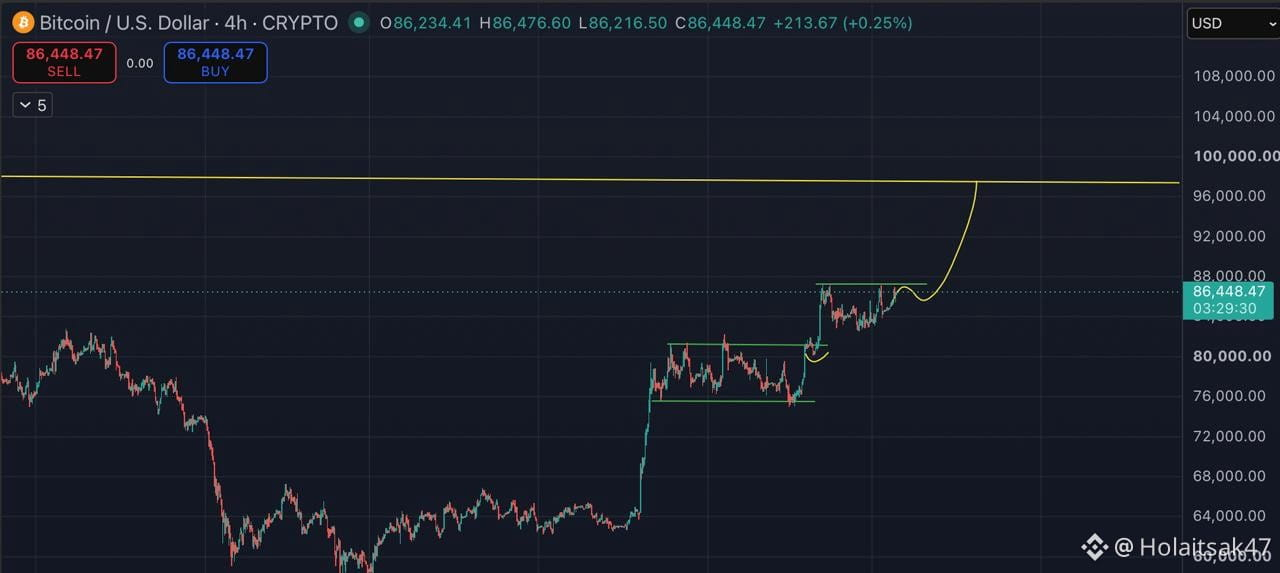
$BTC around $87K… $90K feels a lot closer now 👀🔥
Do we get there today?
$BTC around $87K… $90K feels a lot closer now 👀🔥
Do we get there today?
Do we get there today?
5
671
·
--
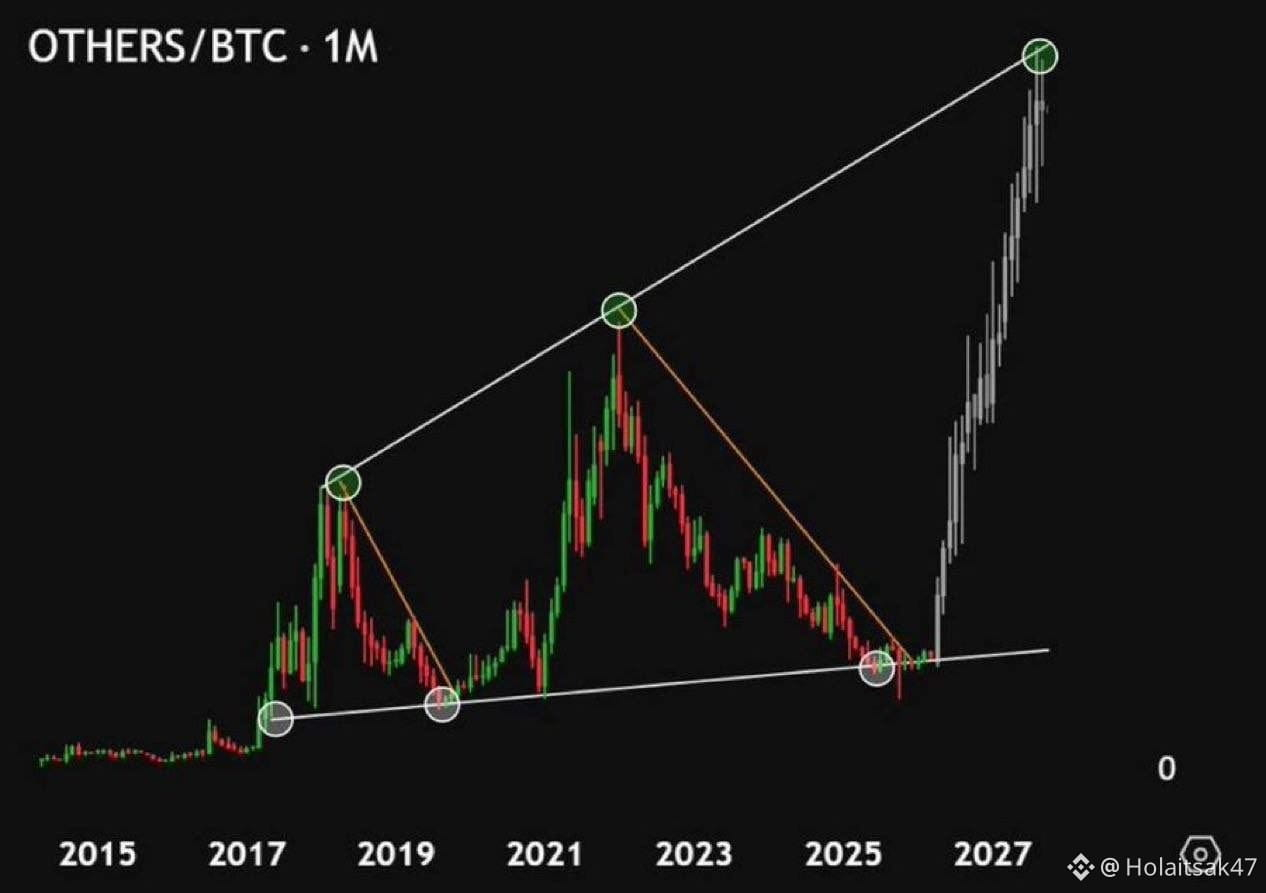
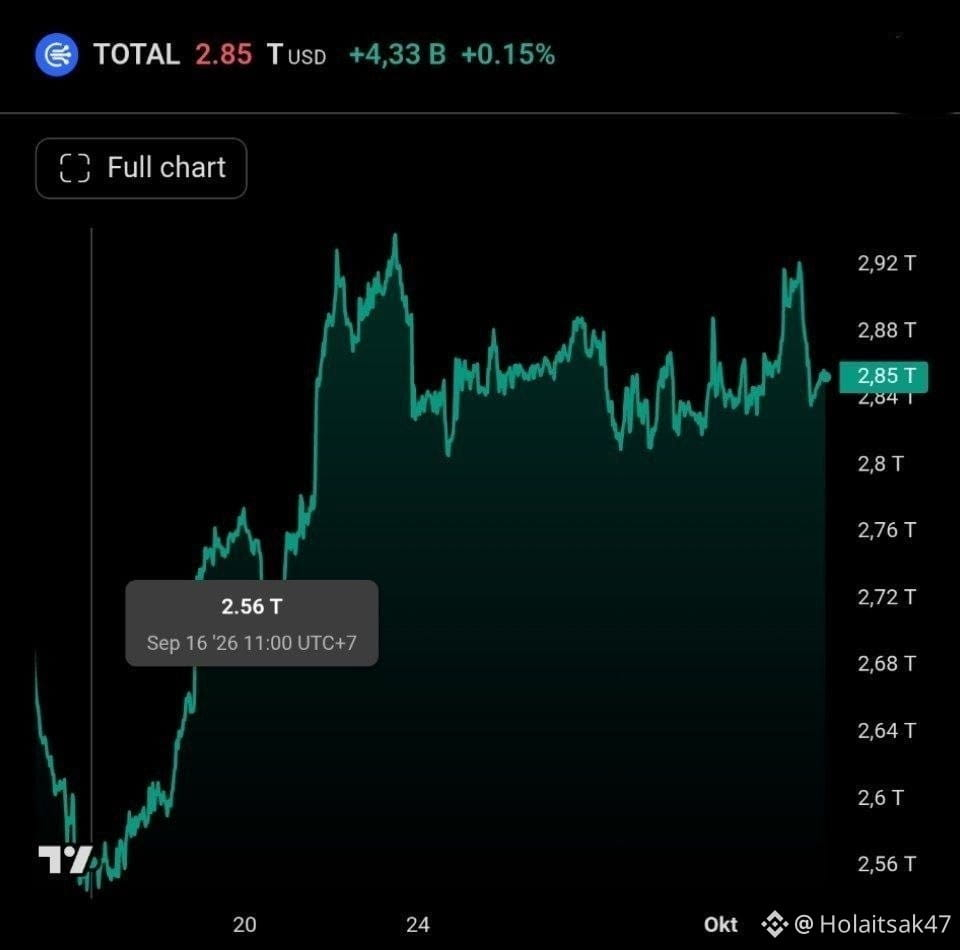
The crypto market added over $280B in less than a month.
The crypto market added over $280B in less than a month.
6
496
·
--
Patience gets easier when you realize the hard days are only a chapter, not the whole story.
Keep going. Better days have their place in the journey too.
Have a great weekend. 🤍
Patience gets easier when you realize the hard days are only a chapter, not the whole story.
Keep going. Better days have their place in the journey too.
Have a great weekend. 🤍
Keep going. Better days have their place in the journey too.
Have a great weekend. 🤍
5
245
Log in to explore more content
Join global crypto users on Binance Square
⚡️ Get latest and useful information about crypto.
💬 Trusted by the world’s largest crypto exchange.
👍 Discover real insights from verified creators.
Email / Phone number