
让卖飞成为习惯
650 Posts

让卖飞成为习惯
Report
Block User
幸好卖飞了,差点就让我赚钱了
High-Frequency Trader
1.6 Years
79 Following
206 Followers
582 Liked
Posts
All
Quotes
·
--
These days the Zuojiang leaning pagoda in Guangxi has been pushed up again; the foundation of the tower—over four hundred years old—has been soaked in water, and you can’t even see one of its layers anymore. Some people shout that it’s about to collapse, while others dig up old records: the tower was intentionally built askew back then, so that it could offload the force of floodwaters. I stared at that photo and suddenly felt that my own “Dusk” from the past few months—#dusk —was pretty much the same as those people who, at first glance, disliked it for not looking straight. It leaned toward privacy in form, so I tucked it into the anonymous-transfer drawer. Later I realized the evaluation criteria were for a straight tower’s standards, but what it had to withstand was a different kind of water.
Admitting this is a bit embarrassing.@Dusk_Foundation $DUSK
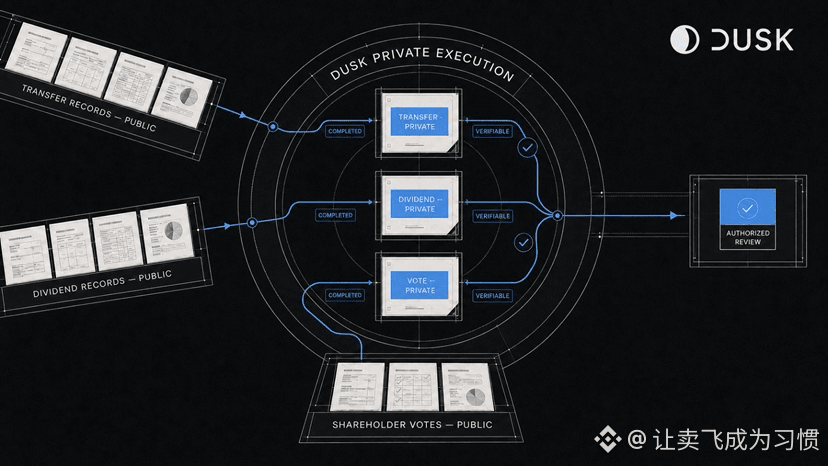
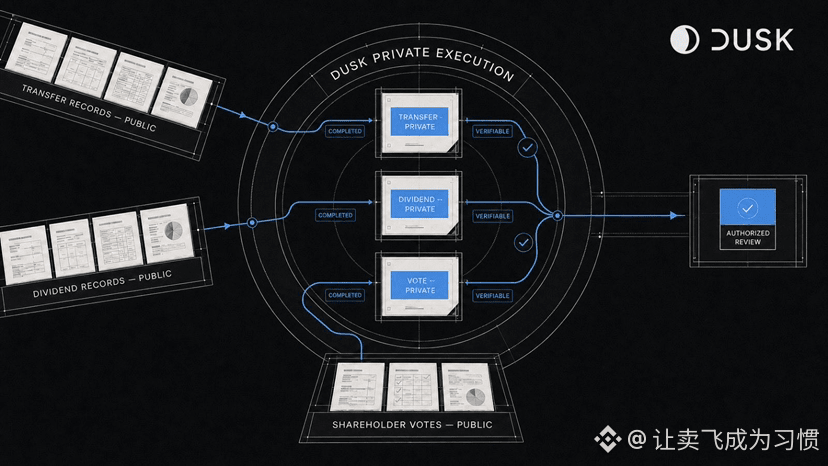
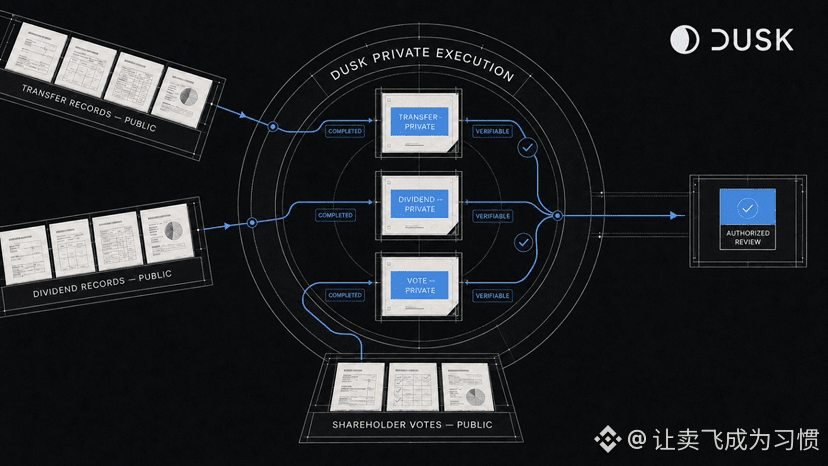
Those old projects were trying to solve how to move money from here to there without being watched. In the Dusk documents, XSC—where S stands for securities—was thinking about how stocks, bonds, and shares get issued on-chain, how they’re verified (liquidly confirmed), transferred, and settled. The people who should be able to see things can see them, and data that shouldn’t spread doesn’t leak out. The compliance is meticulous in the closed networks the institutions build themselves, but between courtyards the connections are almost impossible: assets can be sent out, yet it’s hard to turn them over; settlement is stuck in a next-day waiting room. Dusk wants to use a public blockchain not owned by any single party, layering encryption and verifiability on the same set of rules, so that confirmations finish according to market timing. What it wants to seize isn’t a seat for anonymous payments—it’s the public settlement layer sitting on top of alliance networks that lock real assets in their own server rooms.
The need exists. Just digitize the credential numbers, and the market is still fragmented; if there were truly a public rail that’s both confidential and verifiable, and settlement fast enough, then those walls would look expensive. Whether it can wait until enough institutions put assets up on it—I can’t make that promise. Getting the “force offloading” direction right matters more than standing perfectly upright. Whether settlement is stable, whether the windows open, and whether liquidity is willing to leave the courtyard—these things matter more than slogans, and they’re more valuable than slogans.$BTC
{spot}(DUSKUSDT)
These days the Zuojiang leaning pagoda in Guangxi has been pushed up again; the foundation of the tower—over four hundred years old—has been soaked in water, and you can’t even see one of its layers anymore. Some people shout that it’s about to collapse, while others dig up old records: the tower was intentionally built askew back then, so that it could offload the force of floodwaters. I stared at that photo and suddenly felt that my own “Dusk” from the past few months—#dusk —was pretty much the same as those people who, at first glance, disliked it for not looking straight. It leaned toward privacy in form, so I tucked it into the anonymous-transfer drawer. Later I realized the evaluation criteria were for a straight tower’s standards, but what it had to withstand was a different kind of water.
Admitting this is a bit embarrassing.@Dusk $DUSK
Those old projects were trying to solve how to move money from here to there without being watched. In the Dusk documents, XSC—where S stands for securities—was thinking about how stocks, bonds, and shares get issued on-chain, how they’re verified (liquidly confirmed), transferred, and settled. The people who should be able to see things can see them, and data that shouldn’t spread doesn’t leak out. The compliance is meticulous in the closed networks the institutions build themselves, but between courtyards the connections are almost impossible: assets can be sent out, yet it’s hard to turn them over; settlement is stuck in a next-day waiting room. Dusk wants to use a public blockchain not owned by any single party, layering encryption and verifiability on the same set of rules, so that confirmations finish according to market timing. What it wants to seize isn’t a seat for anonymous payments—it’s the public settlement layer sitting on top of alliance networks that lock real assets in their own server rooms.
The need exists. Just digitize the credential numbers, and the market is still fragmented; if there were truly a public rail that’s both confidential and verifiable, and settlement fast enough, then those walls would look expensive. Whether it can wait until enough institutions put assets up on it—I can’t make that promise. Getting the “force offloading” direction right matters more than standing perfectly upright. Whether settlement is stable, whether the windows open, and whether liquidity is willing to leave the courtyard—these things matter more than slogans, and they’re more valuable than slogans.$BTC
Admitting this is a bit embarrassing.@Dusk $DUSK
Those old projects were trying to solve how to move money from here to there without being watched. In the Dusk documents, XSC—where S stands for securities—was thinking about how stocks, bonds, and shares get issued on-chain, how they’re verified (liquidly confirmed), transferred, and settled. The people who should be able to see things can see them, and data that shouldn’t spread doesn’t leak out. The compliance is meticulous in the closed networks the institutions build themselves, but between courtyards the connections are almost impossible: assets can be sent out, yet it’s hard to turn them over; settlement is stuck in a next-day waiting room. Dusk wants to use a public blockchain not owned by any single party, layering encryption and verifiability on the same set of rules, so that confirmations finish according to market timing. What it wants to seize isn’t a seat for anonymous payments—it’s the public settlement layer sitting on top of alliance networks that lock real assets in their own server rooms.
The need exists. Just digitize the credential numbers, and the market is still fragmented; if there were truly a public rail that’s both confidential and verifiable, and settlement fast enough, then those walls would look expensive. Whether it can wait until enough institutions put assets up on it—I can’t make that promise. Getting the “force offloading” direction right matters more than standing perfectly upright. Whether settlement is stable, whether the windows open, and whether liquidity is willing to leave the courtyard—these things matter more than slogans, and they’re more valuable than slogans.$BTC
226
·
--
I happened to be scrolling through Twitter and saw that the Dutch data protection authority fined Uber nearly a billion euros. The reason was that an automated system suspended drivers’ accounts without providing adequate notice. Many drivers opened the app and found their status was still there, but they couldn’t do anything. That reminded me of my friend’s experience a couple of days ago. He panicked in the middle of the night saying his assets were gone. When I looked, the numbers were clearly there—but the moment he tried to do anything, it returned an error. @Dusk_Foundation After messing around for a long time, he finally realized the money hadn’t evaporated; it had just been allocated into the two existence modes that Dusk’s native support uses.
From the ground up, Dusk provides two different transaction models at the same time. $DUSK Moonlight is the public account mode: balances and flows are written directly on the ledger, requiring sequential processing—well suited for scenarios that need auditing. Phoenix is the encrypted note mode: the amount and source are hidden using zero-knowledge proofs. The system only verifies that you’re authorized to move it and that it hasn’t been reused, and it also supports selective disclosure by checking the keys. Both ultimately settle on the same settlement layer. Switching from one mode to the other isn’t automatic. Many wallets, for the sake of a simple interface, simply add the two balance types into one number. As a result, you think you’re holding cash you can move anytime—but when you actually try, you find that part of it is still locked inside private channels that require additional proof. It’s like you think you have all cash in your pocket, but at checkout you pull out vouchers that need to be exchanged first. #dusk
Dusk makes privacy a native dual-model design rather than an after-the-fact toggle. The original intent is to provide more precise choices for different scenarios. The real problem is why this kind of basic conversion still requires users to trip over the pitfalls themselves. The best technology should be invisible—you shouldn’t feel its presence, yet it keeps the rules aligned behind the scenes. Hopefully one day, no one will have to stare at a screen in frustration because the rules aren’t aligned. $BTC
{spot}(DUSKUSDT)
I happened to be scrolling through Twitter and saw that the Dutch data protection authority fined Uber nearly a billion euros. The reason was that an automated system suspended drivers’ accounts without providing adequate notice. Many drivers opened the app and found their status was still there, but they couldn’t do anything. That reminded me of my friend’s experience a couple of days ago. He panicked in the middle of the night saying his assets were gone. When I looked, the numbers were clearly there—but the moment he tried to do anything, it returned an error. @Dusk After messing around for a long time, he finally realized the money hadn’t evaporated; it had just been allocated into the two existence modes that Dusk’s native support uses.
From the ground up, Dusk provides two different transaction models at the same time. $DUSK Moonlight is the public account mode: balances and flows are written directly on the ledger, requiring sequential processing—well suited for scenarios that need auditing. Phoenix is the encrypted note mode: the amount and source are hidden using zero-knowledge proofs. The system only verifies that you’re authorized to move it and that it hasn’t been reused, and it also supports selective disclosure by checking the keys. Both ultimately settle on the same settlement layer. Switching from one mode to the other isn’t automatic. Many wallets, for the sake of a simple interface, simply add the two balance types into one number. As a result, you think you’re holding cash you can move anytime—but when you actually try, you find that part of it is still locked inside private channels that require additional proof. It’s like you think you have all cash in your pocket, but at checkout you pull out vouchers that need to be exchanged first. #dusk
Dusk makes privacy a native dual-model design rather than an after-the-fact toggle. The original intent is to provide more precise choices for different scenarios. The real problem is why this kind of basic conversion still requires users to trip over the pitfalls themselves. The best technology should be invisible—you shouldn’t feel its presence, yet it keeps the rules aligned behind the scenes. Hopefully one day, no one will have to stare at a screen in frustration because the rules aren’t aligned. $BTC
From the ground up, Dusk provides two different transaction models at the same time. $DUSK Moonlight is the public account mode: balances and flows are written directly on the ledger, requiring sequential processing—well suited for scenarios that need auditing. Phoenix is the encrypted note mode: the amount and source are hidden using zero-knowledge proofs. The system only verifies that you’re authorized to move it and that it hasn’t been reused, and it also supports selective disclosure by checking the keys. Both ultimately settle on the same settlement layer. Switching from one mode to the other isn’t automatic. Many wallets, for the sake of a simple interface, simply add the two balance types into one number. As a result, you think you’re holding cash you can move anytime—but when you actually try, you find that part of it is still locked inside private channels that require additional proof. It’s like you think you have all cash in your pocket, but at checkout you pull out vouchers that need to be exchanged first. #dusk
Dusk makes privacy a native dual-model design rather than an after-the-fact toggle. The original intent is to provide more precise choices for different scenarios. The real problem is why this kind of basic conversion still requires users to trip over the pitfalls themselves. The best technology should be invisible—you shouldn’t feel its presence, yet it keeps the rules aligned behind the scenes. Hopefully one day, no one will have to stare at a screen in frustration because the rules aren’t aligned. $BTC
157
·
--
These nearly eight-hour interruption on GitHub in recent days once again shows that if the control plane fails due to configuration deviations and a retry storm, the entire collaboration chain that depends on it will be forced to halt. The real test of critical infrastructure is never whether it runs smoothly day to day, but whether, when consensus can’t make progress for a long time, the protocol itself has verifiable fallbacks prepared to keep it operating.
Dusk writes these fallbacks directly into the consensus layer. When sixteen consecutive iteration rounds fail to produce valid blocks, the network enters emergency mode: timeout mechanisms are suspended, multiple rounds can proceed in parallel, and the system then prioritizes the earliest result that achieves a majority agreement. The threshold of sixteen itself is worth questioning—too low risks accidental triggering due to transient network jitter, while too high is unacceptable for settlement and delivery in financial scenarios. The @Dusk_Foundation whitepaper provides this number, but does not publish parameter sensitivity analysis in sync; it feels more like an engineering compromise than a fully argued boundary. $DUSK #dusk
During the downgrade process, the toughest constraint is that once a block with iteration number zero has been accepted, it cannot be replaced. This rule directly cuts off the ability to retroactively revisit already confirmed transactions, effectively making a clear commitment to institutions that rely on this chain for settlement: transactions will not be quietly overturned due to network disorder. Dusk chooses to prioritize determinism—practical for regulated financial asset scenarios—but this also means there is no post-facto correction channel for erroneous data. Triggering the emergency block requires that the holders of stake broadcast a verifiable request; once the accumulated support exceeds half of the network, designated nodes generate an empty block that contains no transactions, along with an aggregated signature as proof. The design resolves the trust issue around trigger rights, but discussions about governance risks that large stakeholders might pose are still insufficient. Moving exception handling into the protocol layer is a clear, deliberate step in the right direction, but the assumptions behind the parameters, the governance boundaries, and expected behavior under extreme conditions still need more real-world operational data to be validated. $BTC
{spot}(DUSKUSDT)
These nearly eight-hour interruption on GitHub in recent days once again shows that if the control plane fails due to configuration deviations and a retry storm, the entire collaboration chain that depends on it will be forced to halt. The real test of critical infrastructure is never whether it runs smoothly day to day, but whether, when consensus can’t make progress for a long time, the protocol itself has verifiable fallbacks prepared to keep it operating.
Dusk writes these fallbacks directly into the consensus layer. When sixteen consecutive iteration rounds fail to produce valid blocks, the network enters emergency mode: timeout mechanisms are suspended, multiple rounds can proceed in parallel, and the system then prioritizes the earliest result that achieves a majority agreement. The threshold of sixteen itself is worth questioning—too low risks accidental triggering due to transient network jitter, while too high is unacceptable for settlement and delivery in financial scenarios. The @Dusk whitepaper provides this number, but does not publish parameter sensitivity analysis in sync; it feels more like an engineering compromise than a fully argued boundary. $DUSK #dusk
During the downgrade process, the toughest constraint is that once a block with iteration number zero has been accepted, it cannot be replaced. This rule directly cuts off the ability to retroactively revisit already confirmed transactions, effectively making a clear commitment to institutions that rely on this chain for settlement: transactions will not be quietly overturned due to network disorder. Dusk chooses to prioritize determinism—practical for regulated financial asset scenarios—but this also means there is no post-facto correction channel for erroneous data. Triggering the emergency block requires that the holders of stake broadcast a verifiable request; once the accumulated support exceeds half of the network, designated nodes generate an empty block that contains no transactions, along with an aggregated signature as proof. The design resolves the trust issue around trigger rights, but discussions about governance risks that large stakeholders might pose are still insufficient. Moving exception handling into the protocol layer is a clear, deliberate step in the right direction, but the assumptions behind the parameters, the governance boundaries, and expected behavior under extreme conditions still need more real-world operational data to be validated. $BTC
Dusk writes these fallbacks directly into the consensus layer. When sixteen consecutive iteration rounds fail to produce valid blocks, the network enters emergency mode: timeout mechanisms are suspended, multiple rounds can proceed in parallel, and the system then prioritizes the earliest result that achieves a majority agreement. The threshold of sixteen itself is worth questioning—too low risks accidental triggering due to transient network jitter, while too high is unacceptable for settlement and delivery in financial scenarios. The @Dusk whitepaper provides this number, but does not publish parameter sensitivity analysis in sync; it feels more like an engineering compromise than a fully argued boundary. $DUSK #dusk
During the downgrade process, the toughest constraint is that once a block with iteration number zero has been accepted, it cannot be replaced. This rule directly cuts off the ability to retroactively revisit already confirmed transactions, effectively making a clear commitment to institutions that rely on this chain for settlement: transactions will not be quietly overturned due to network disorder. Dusk chooses to prioritize determinism—practical for regulated financial asset scenarios—but this also means there is no post-facto correction channel for erroneous data. Triggering the emergency block requires that the holders of stake broadcast a verifiable request; once the accumulated support exceeds half of the network, designated nodes generate an empty block that contains no transactions, along with an aggregated signature as proof. The design resolves the trust issue around trigger rights, but discussions about governance risks that large stakeholders might pose are still insufficient. Moving exception handling into the protocol layer is a clear, deliberate step in the right direction, but the assumptions behind the parameters, the governance boundaries, and expected behavior under extreme conditions still need more real-world operational data to be validated. $BTC
332
·
--
In the past two days, the Beijing humanoid robot sports meet saw TianGong run over 100 meters in 9.39 seconds, directly crushing the human record. No matter how fast robots run, whether the intermediate data can be seen—or can’t—has never been as simple as “fully on” or “fully off.” The same logic, when applied to the blockchain privacy debate, makes clear a long-argued false proposition. And Dusk’s selective disclosure design just punctures this layer of paper. $DUSK
In the industry, people always pit privacy and transparency against each other as if it’s only an either-or choice. The public chain fundamentalists believe everything must be public; not being visible means insincerity. Privacy advocates, on the other hand, elevate financial data to absolute sovereignty. Both sides assume that visibility is either completely black or completely white, but real finance is never that way. Public companies disclose annual reports, while internal details are locked behind permissions and only opened for specific credentials when audits require them. Dusk brings this logic onto the chain: by default, transaction details are not visible to the outside, yet it allows parties to actively generate specific proofs for auditors—without having to hand over all your cards. @Dusk_Foundation
Transparency doesn’t disappear; it just becomes permission-based and on-demand. With this approach, Dusk turns privacy into the prerequisite for organizations to confidently move business on-chain, rather than an obstacle. #dusk $BTC
Of course, for Dusk’s mechanism to truly take hold, the level of disclosure granularity and flexibility still need to stand up to tests in real audit scenarios. It also takes time for compliance teams within institutions to adapt their habits. I recognize the direction itself. Going forward, I’ll keep an eye on how $DUSK selective disclosure performs in real compliance cases. Which side are you on—full transparency, or viewing according to permissions?
{spot}(DUSKUSDT)
In the past two days, the Beijing humanoid robot sports meet saw TianGong run over 100 meters in 9.39 seconds, directly crushing the human record. No matter how fast robots run, whether the intermediate data can be seen—or can’t—has never been as simple as “fully on” or “fully off.” The same logic, when applied to the blockchain privacy debate, makes clear a long-argued false proposition. And Dusk’s selective disclosure design just punctures this layer of paper. $DUSK
In the industry, people always pit privacy and transparency against each other as if it’s only an either-or choice. The public chain fundamentalists believe everything must be public; not being visible means insincerity. Privacy advocates, on the other hand, elevate financial data to absolute sovereignty. Both sides assume that visibility is either completely black or completely white, but real finance is never that way. Public companies disclose annual reports, while internal details are locked behind permissions and only opened for specific credentials when audits require them. Dusk brings this logic onto the chain: by default, transaction details are not visible to the outside, yet it allows parties to actively generate specific proofs for auditors—without having to hand over all your cards. @Dusk
Transparency doesn’t disappear; it just becomes permission-based and on-demand. With this approach, Dusk turns privacy into the prerequisite for organizations to confidently move business on-chain, rather than an obstacle. #dusk $BTC
Of course, for Dusk’s mechanism to truly take hold, the level of disclosure granularity and flexibility still need to stand up to tests in real audit scenarios. It also takes time for compliance teams within institutions to adapt their habits. I recognize the direction itself. Going forward, I’ll keep an eye on how $DUSK selective disclosure performs in real compliance cases. Which side are you on—full transparency, or viewing according to permissions?
In the industry, people always pit privacy and transparency against each other as if it’s only an either-or choice. The public chain fundamentalists believe everything must be public; not being visible means insincerity. Privacy advocates, on the other hand, elevate financial data to absolute sovereignty. Both sides assume that visibility is either completely black or completely white, but real finance is never that way. Public companies disclose annual reports, while internal details are locked behind permissions and only opened for specific credentials when audits require them. Dusk brings this logic onto the chain: by default, transaction details are not visible to the outside, yet it allows parties to actively generate specific proofs for auditors—without having to hand over all your cards. @Dusk
Transparency doesn’t disappear; it just becomes permission-based and on-demand. With this approach, Dusk turns privacy into the prerequisite for organizations to confidently move business on-chain, rather than an obstacle. #dusk $BTC
Of course, for Dusk’s mechanism to truly take hold, the level of disclosure granularity and flexibility still need to stand up to tests in real audit scenarios. It also takes time for compliance teams within institutions to adapt their habits. I recognize the direction itself. Going forward, I’ll keep an eye on how $DUSK selective disclosure performs in real compliance cases. Which side are you on—full transparency, or viewing according to permissions?
107
·
--
A couple of days ago I saw people still trying to figure out how Ethereum can hide transaction intent from bots that front-run. Banks have also publicly said that after tokenized assets are put on-chain, the hardest part is that the data is almost impossible to hide. I went back and reviewed Dusk again. #dusk What’s truly interesting about it is Phoenix. Normally, when we open a wallet, the balance is a glaring number that anyone can follow to trace where it came from and where it’s going. Dusk, instead, splits the money into encrypted credentials that only you can decrypt—i.e., Notes. Outsiders can verify that these Notes exist, but they can’t see what’s written inside. @Dusk_Foundation $DUSK $BTC
At the base layer, DuskDS runs two different logics at the same time. Moonlight follows a public-account model, where both the amount and the counterparty are clearly visible—suitable for scenarios that require transparent reconciliation. Phoenix uses the Note structure, relying on zero-knowledge proofs to confirm that the funds belong to you, the amount is sufficient, and there’s no double-spending during transfers—sensitive details always stay in the cryptographic layer. It also specifically includes a viewing key, so you can proactively grant viewing permission to whoever should be allowed to see it, and open information within a limited scope. Both modes ultimately land on the same DuskDS, with transfers settled through a single Transfer Contract—so it’s not two separate paths. So what Dusk is really trying to solve is: who can see it, when they can see it, and how much they can see. At this moment when both regulation and commercial needs are tightening, a design that defaults to confidentiality and reveals information on demand is at least far more level-headed than just loudly calling for privacy. I’m also continuing to observe whether it will feel clunky in real-world use.
{spot}(DUSKUSDT)
A couple of days ago I saw people still trying to figure out how Ethereum can hide transaction intent from bots that front-run. Banks have also publicly said that after tokenized assets are put on-chain, the hardest part is that the data is almost impossible to hide. I went back and reviewed Dusk again. #dusk What’s truly interesting about it is Phoenix. Normally, when we open a wallet, the balance is a glaring number that anyone can follow to trace where it came from and where it’s going. Dusk, instead, splits the money into encrypted credentials that only you can decrypt—i.e., Notes. Outsiders can verify that these Notes exist, but they can’t see what’s written inside. @Dusk $DUSK $BTC
At the base layer, DuskDS runs two different logics at the same time. Moonlight follows a public-account model, where both the amount and the counterparty are clearly visible—suitable for scenarios that require transparent reconciliation. Phoenix uses the Note structure, relying on zero-knowledge proofs to confirm that the funds belong to you, the amount is sufficient, and there’s no double-spending during transfers—sensitive details always stay in the cryptographic layer. It also specifically includes a viewing key, so you can proactively grant viewing permission to whoever should be allowed to see it, and open information within a limited scope. Both modes ultimately land on the same DuskDS, with transfers settled through a single Transfer Contract—so it’s not two separate paths. So what Dusk is really trying to solve is: who can see it, when they can see it, and how much they can see. At this moment when both regulation and commercial needs are tightening, a design that defaults to confidentiality and reveals information on demand is at least far more level-headed than just loudly calling for privacy. I’m also continuing to observe whether it will feel clunky in real-world use.
At the base layer, DuskDS runs two different logics at the same time. Moonlight follows a public-account model, where both the amount and the counterparty are clearly visible—suitable for scenarios that require transparent reconciliation. Phoenix uses the Note structure, relying on zero-knowledge proofs to confirm that the funds belong to you, the amount is sufficient, and there’s no double-spending during transfers—sensitive details always stay in the cryptographic layer. It also specifically includes a viewing key, so you can proactively grant viewing permission to whoever should be allowed to see it, and open information within a limited scope. Both modes ultimately land on the same DuskDS, with transfers settled through a single Transfer Contract—so it’s not two separate paths. So what Dusk is really trying to solve is: who can see it, when they can see it, and how much they can see. At this moment when both regulation and commercial needs are tightening, a design that defaults to confidentiality and reveals information on demand is at least far more level-headed than just loudly calling for privacy. I’m also continuing to observe whether it will feel clunky in real-world use.
185
·
--
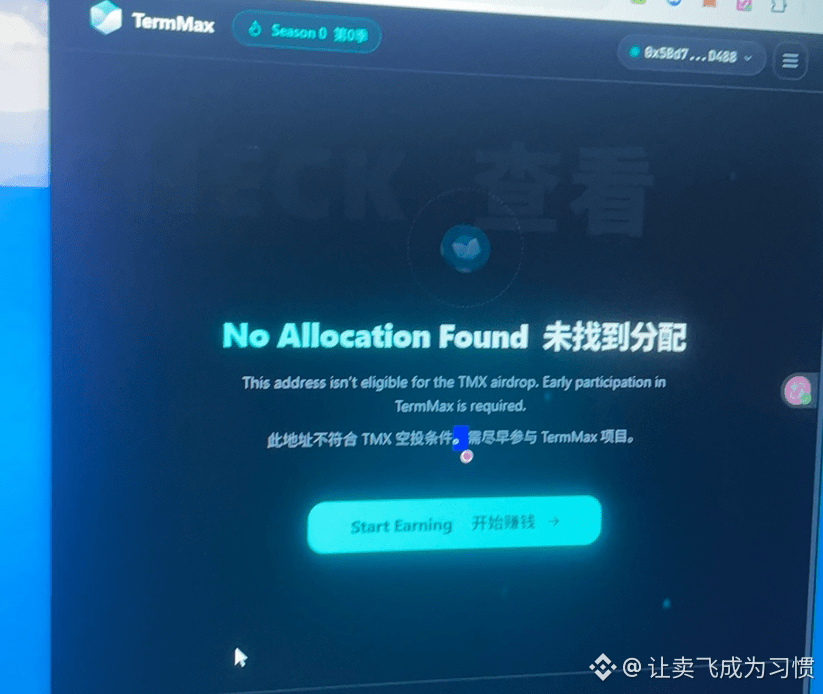
Last night, I only intended to quickly skim through TermMax’s pre-mining rules, but my attention kept getting stuck on these two paths: the FT balance-weighted side and the matched-trade volume side. The token generation node on August 25 is right around the corner, and everyone’s focus is almost entirely on the opening price—but the more I look, the more I feel that what’s really worth thinking about isn’t where the order book might go. It’s how this mechanism actually filters people.
In many protocols, points eventually turn into an accounting tool for activity. TermMax’s pre-mining, though, feels more like it’s directly recording real behavior within a fixed-rate market. @termmax holders of FT are weighted continuously based on their daily balances; those who post and complete trades receive weights based on the actual matched volume. The protocol’s priority is to keep the ones who genuinely park their capital in the pool and are willing to keep providing depth.
Fixed-rate markets fear capital that comes in quickly and leaves quickly—once liquidity thins, pricing becomes distorted. So it concentrates the weighting on balance retention and real matched trades, effectively pricing the token allocation to the capital that’s willing to stay. #TermMax
The whitepaper lists a total supply of one billion tokens: the community gets 15%, and the initial circulating amount is about 20%. Early pre-mining of 40 million tokens comes to exactly 4%. The community has been calculating how many points can be exchanged for how many tokens these days, but I think numbers are just an outcome. What matters is the behavioral characteristics recorded behind them. Keeping FT capital parked long-term and continuing to participate in matching trades is completely different from temporarily entering just to hit an activity target. I won’t pre-judge based on the opening price, and I won’t evaluate allocation by the air-drop amount. I’d rather see whether the people who receive tokens will keep staying in the market—continuing to post orders and provide depth. August 25 is only one distribution node; whether users stay or leave in the following months is what will tell you if this logic for filtering people can actually stand up to scrutiny. $BTC
Last night, I only intended to quickly skim through TermMax’s pre-mining rules, but my attention kept getting stuck on these two paths: the FT balance-weighted side and the matched-trade volume side. The token generation node on August 25 is right around the corner, and everyone’s focus is almost entirely on the opening price—but the more I look, the more I feel that what’s really worth thinking about isn’t where the order book might go. It’s how this mechanism actually filters people.
In many protocols, points eventually turn into an accounting tool for activity. TermMax’s pre-mining, though, feels more like it’s directly recording real behavior within a fixed-rate market. @TermMax holders of FT are weighted continuously based on their daily balances; those who post and complete trades receive weights based on the actual matched volume. The protocol’s priority is to keep the ones who genuinely park their capital in the pool and are willing to keep providing depth.
Fixed-rate markets fear capital that comes in quickly and leaves quickly—once liquidity thins, pricing becomes distorted. So it concentrates the weighting on balance retention and real matched trades, effectively pricing the token allocation to the capital that’s willing to stay. #TermMax
The whitepaper lists a total supply of one billion tokens: the community gets 15%, and the initial circulating amount is about 20%. Early pre-mining of 40 million tokens comes to exactly 4%. The community has been calculating how many points can be exchanged for how many tokens these days, but I think numbers are just an outcome. What matters is the behavioral characteristics recorded behind them. Keeping FT capital parked long-term and continuing to participate in matching trades is completely different from temporarily entering just to hit an activity target. I won’t pre-judge based on the opening price, and I won’t evaluate allocation by the air-drop amount. I’d rather see whether the people who receive tokens will keep staying in the market—continuing to post orders and provide depth. August 25 is only one distribution node; whether users stay or leave in the following months is what will tell you if this logic for filtering people can actually stand up to scrutiny. $BTC
In many protocols, points eventually turn into an accounting tool for activity. TermMax’s pre-mining, though, feels more like it’s directly recording real behavior within a fixed-rate market. @TermMax holders of FT are weighted continuously based on their daily balances; those who post and complete trades receive weights based on the actual matched volume. The protocol’s priority is to keep the ones who genuinely park their capital in the pool and are willing to keep providing depth.
Fixed-rate markets fear capital that comes in quickly and leaves quickly—once liquidity thins, pricing becomes distorted. So it concentrates the weighting on balance retention and real matched trades, effectively pricing the token allocation to the capital that’s willing to stay. #TermMax
The whitepaper lists a total supply of one billion tokens: the community gets 15%, and the initial circulating amount is about 20%. Early pre-mining of 40 million tokens comes to exactly 4%. The community has been calculating how many points can be exchanged for how many tokens these days, but I think numbers are just an outcome. What matters is the behavioral characteristics recorded behind them. Keeping FT capital parked long-term and continuing to participate in matching trades is completely different from temporarily entering just to hit an activity target. I won’t pre-judge based on the opening price, and I won’t evaluate allocation by the air-drop amount. I’d rather see whether the people who receive tokens will keep staying in the market—continuing to post orders and provide depth. August 25 is only one distribution node; whether users stay or leave in the following months is what will tell you if this logic for filtering people can actually stand up to scrutiny. $BTC
1
206
·
--
Privacy funds enter a decentralized platform—what’s most awkward isn’t that the address looks ugly or that confirmations take longer; it’s whether the platform’s ledger should directly recognize those Phoenix-blocked deposits. The production方案 (production plan) provided by Dusk’s latest integrated documentation is very restrained: withdrawal/deposit operations go through Moonlight’s public accounts, while Phoenix’s blocked addresses must be set up separately for custody and scanning. If users only have a privacy balance, they usually need to transfer it to the public account first, then deposit.
On the deposit side, it’s equivalent to the platform bearing the burden of Archive nodes—a scanner that can be rescanned repeatedly. Shared addresses also have to match internal customer ledgers using standardized memos. Between what can be transferred on the mainnet and what the platform can account for, there’s an engineering layer.
@Dusk_Foundation
What the documentation is most strict about is the accounting boundary. Balance changes can’t be posted directly to the ledger. A node returning 202 Accepted doesn’t count as success—each entry must wait for the final block. The transaction hash is the only key to prevent duplicate deposit accounting. Any anomalous or duplicate memo must be quarantined first. Withdrawals are only signed once, and the original transaction bytes must be saved. If it times out, replay the same transaction; do not create a new one just to touch a nonce. Duplicate accounting is suppressed—its cost is that before privacy funds can enter the platform, they must first be made public. Dusk’s on-chain screened privacy and the compliant ledger have been hard-split into two parts.
Worse is the decimal precision: native DUSK has nine decimals; early wrapped versions had eighteen. Mixing amount formats in metadata will cause the backend to drift.
#dusk $DUSK
After that, it comes down to whether the platform runs its own nodes, whether it separates native DUSK from old wrapped assets in its handling, and whether the instructions for Phoenix-to-Moonlight transfers are clear enough for first-time users to understand. The difficulty in this Dusk rollout isn’t whether the deposit/withdrawal buttons light up; it’s whether privacy, finality, and internal accounting can all stand on the same pipeline. Before depositing, proactively making funds public—will you accept it?
$BTC
{spot}(DUSKUSDT)
Privacy funds enter a decentralized platform—what’s most awkward isn’t that the address looks ugly or that confirmations take longer; it’s whether the platform’s ledger should directly recognize those Phoenix-blocked deposits. The production方案 (production plan) provided by Dusk’s latest integrated documentation is very restrained: withdrawal/deposit operations go through Moonlight’s public accounts, while Phoenix’s blocked addresses must be set up separately for custody and scanning. If users only have a privacy balance, they usually need to transfer it to the public account first, then deposit.
On the deposit side, it’s equivalent to the platform bearing the burden of Archive nodes—a scanner that can be rescanned repeatedly. Shared addresses also have to match internal customer ledgers using standardized memos. Between what can be transferred on the mainnet and what the platform can account for, there’s an engineering layer.
@Dusk
What the documentation is most strict about is the accounting boundary. Balance changes can’t be posted directly to the ledger. A node returning 202 Accepted doesn’t count as success—each entry must wait for the final block. The transaction hash is the only key to prevent duplicate deposit accounting. Any anomalous or duplicate memo must be quarantined first. Withdrawals are only signed once, and the original transaction bytes must be saved. If it times out, replay the same transaction; do not create a new one just to touch a nonce. Duplicate accounting is suppressed—its cost is that before privacy funds can enter the platform, they must first be made public. Dusk’s on-chain screened privacy and the compliant ledger have been hard-split into two parts.
Worse is the decimal precision: native DUSK has nine decimals; early wrapped versions had eighteen. Mixing amount formats in metadata will cause the backend to drift.
#dusk $DUSK
After that, it comes down to whether the platform runs its own nodes, whether it separates native DUSK from old wrapped assets in its handling, and whether the instructions for Phoenix-to-Moonlight transfers are clear enough for first-time users to understand. The difficulty in this Dusk rollout isn’t whether the deposit/withdrawal buttons light up; it’s whether privacy, finality, and internal accounting can all stand on the same pipeline. Before depositing, proactively making funds public—will you accept it?
$BTC
On the deposit side, it’s equivalent to the platform bearing the burden of Archive nodes—a scanner that can be rescanned repeatedly. Shared addresses also have to match internal customer ledgers using standardized memos. Between what can be transferred on the mainnet and what the platform can account for, there’s an engineering layer.
@Dusk
What the documentation is most strict about is the accounting boundary. Balance changes can’t be posted directly to the ledger. A node returning 202 Accepted doesn’t count as success—each entry must wait for the final block. The transaction hash is the only key to prevent duplicate deposit accounting. Any anomalous or duplicate memo must be quarantined first. Withdrawals are only signed once, and the original transaction bytes must be saved. If it times out, replay the same transaction; do not create a new one just to touch a nonce. Duplicate accounting is suppressed—its cost is that before privacy funds can enter the platform, they must first be made public. Dusk’s on-chain screened privacy and the compliant ledger have been hard-split into two parts.
Worse is the decimal precision: native DUSK has nine decimals; early wrapped versions had eighteen. Mixing amount formats in metadata will cause the backend to drift.
#dusk $DUSK
After that, it comes down to whether the platform runs its own nodes, whether it separates native DUSK from old wrapped assets in its handling, and whether the instructions for Phoenix-to-Moonlight transfers are clear enough for first-time users to understand. The difficulty in this Dusk rollout isn’t whether the deposit/withdrawal buttons light up; it’s whether privacy, finality, and internal accounting can all stand on the same pipeline. Before depositing, proactively making funds public—will you accept it?
$BTC
218
·
--
I used to think fixed-rate lending in a very straightforward way: it was nothing more than both sides agreeing on the interest rate in advance, money moving from one side to the other, and the rate being just a result calculated along the way. It wasn’t until I really broke down the FT and XT mechanisms in TermMax’s whitepaper that I realized @termmax it was actually doing something more precise: pulling out the time cost of capital on its own and turning it into something that can be quoted and matched ahead of time. FT is more like a voucher that settles automatically at maturity, while XT fills in the debt value. As long as the borrower sells the corresponding asset, they can lock in their future financing cost right now. Once you view it this way, the interest rate itself changes from a post-trade settlement number into a pre-trade condition that can be traded. $ETH $牛来
What really changed my mind was V2. Limit Order now covers the whole market: lenders can directly post the minimum rate they are willing to accept, while borrowers can post their maximum cap; Range Order goes a step further and lets participants draw their own interest-rate curve. The interest rate is no longer something revealed only after execution; it has become a prerequisite that must be made explicit at order time. Order Aggregator then combines quotes from different sources and executes them together. The whole system looks like it is moving toward an "interest-rate quotation market," although it is still clearly far from a true interest-rate trading venue. #TermMax
I’m the kind of person who takes time to warm up to new ideas, so more quotes do not automatically mean effective price discovery. If order depth is not thick enough, if different maturities are persistently mismatched, and if Curator pricing develops systematic bias, then the interest-rate curve we see on the surface may be distorted. So what I’m mainly watching now are two things: whether a relatively stable interest-rate curve can gradually form across different maturities, and whether active orders can keep generating real execution competition. If these two things can slowly start working, fixed-rate lending may no longer be just a funding intermediary, but begin to look a bit like trading the price of time itself.
I used to think fixed-rate lending in a very straightforward way: it was nothing more than both sides agreeing on the interest rate in advance, money moving from one side to the other, and the rate being just a result calculated along the way. It wasn’t until I really broke down the FT and XT mechanisms in TermMax’s whitepaper that I realized @TermMax it was actually doing something more precise: pulling out the time cost of capital on its own and turning it into something that can be quoted and matched ahead of time. FT is more like a voucher that settles automatically at maturity, while XT fills in the debt value. As long as the borrower sells the corresponding asset, they can lock in their future financing cost right now. Once you view it this way, the interest rate itself changes from a post-trade settlement number into a pre-trade condition that can be traded. $ETH $牛来
What really changed my mind was V2. Limit Order now covers the whole market: lenders can directly post the minimum rate they are willing to accept, while borrowers can post their maximum cap; Range Order goes a step further and lets participants draw their own interest-rate curve. The interest rate is no longer something revealed only after execution; it has become a prerequisite that must be made explicit at order time. Order Aggregator then combines quotes from different sources and executes them together. The whole system looks like it is moving toward an "interest-rate quotation market," although it is still clearly far from a true interest-rate trading venue. #TermMax
I’m the kind of person who takes time to warm up to new ideas, so more quotes do not automatically mean effective price discovery. If order depth is not thick enough, if different maturities are persistently mismatched, and if Curator pricing develops systematic bias, then the interest-rate curve we see on the surface may be distorted. So what I’m mainly watching now are two things: whether a relatively stable interest-rate curve can gradually form across different maturities, and whether active orders can keep generating real execution competition. If these two things can slowly start working, fixed-rate lending may no longer be just a funding intermediary, but begin to look a bit like trading the price of time itself.
What really changed my mind was V2. Limit Order now covers the whole market: lenders can directly post the minimum rate they are willing to accept, while borrowers can post their maximum cap; Range Order goes a step further and lets participants draw their own interest-rate curve. The interest rate is no longer something revealed only after execution; it has become a prerequisite that must be made explicit at order time. Order Aggregator then combines quotes from different sources and executes them together. The whole system looks like it is moving toward an "interest-rate quotation market," although it is still clearly far from a true interest-rate trading venue. #TermMax
I’m the kind of person who takes time to warm up to new ideas, so more quotes do not automatically mean effective price discovery. If order depth is not thick enough, if different maturities are persistently mismatched, and if Curator pricing develops systematic bias, then the interest-rate curve we see on the surface may be distorted. So what I’m mainly watching now are two things: whether a relatively stable interest-rate curve can gradually form across different maturities, and whether active orders can keep generating real execution competition. If these two things can slowly start working, fixed-rate lending may no longer be just a funding intermediary, but begin to look a bit like trading the price of time itself.
71
·
--
As you follow Dusk’s architectural building blocks, it becomes increasingly clear that execution and settlement are explicitly separated. The execution layer only cares how transaction logic is correctly run. The rule differences carried by different financial assets are vast—some require strict pre-validation, some rely on complex state progression, and some must complete matching under privacy protection. Dusk therefore preserves both a virtual machine that stays closer to native protocol semantics, as well as a compatibility environment that can take on existing contracts and toolchains. Upper-layer applications can choose the most suitable path according to their own rules, without being forced into a single unified approach.@Dusk_Foundation
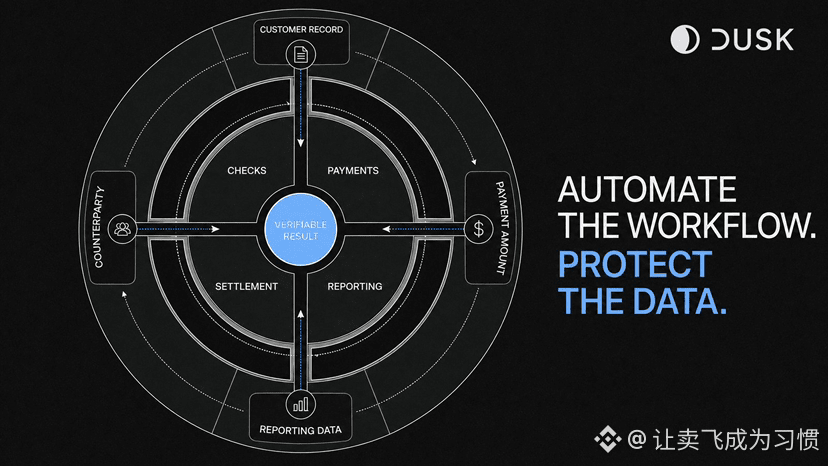
The settlement layer, on the other hand, completely changes the perspective.#dusk It no longer questions how the process is derived; it only checks whether the final result has already been irreversibly written into the ledger. At this moment, who truly holds the assets, whether ownership transfer has completed, and whether the state has reached final confirmation—these pieces of information must be unique and verifiable. By pushing finality, data availability, and settlement confirmation down to a deeper layer, Dusk ensures that regardless of which execution path the upper layers take, the financial state that lands on the ledger is deterministically consistent.$DUSK $BTC
This layering is not meant to create extra complexity; it is to make room for the necessary heterogeneity of instruments like securities and real-world assets. Each comes with its own issuance rules, disclosure obligations, and privacy requirements. Forcing a single execution environment would only sacrifice fit. Every path ultimately converges on the same unavoidable question: after a transaction completes on-chain, is the ownership recorded by the ledger clear and verifiable enough to correspond to real-world legal and regulatory requirements? Execution can be flexible, but settlement must be certain—that is the logic behind financial title/ownership confirmation itself.
{spot}(DUSKUSDT)
As you follow Dusk’s architectural building blocks, it becomes increasingly clear that execution and settlement are explicitly separated. The execution layer only cares how transaction logic is correctly run. The rule differences carried by different financial assets are vast—some require strict pre-validation, some rely on complex state progression, and some must complete matching under privacy protection. Dusk therefore preserves both a virtual machine that stays closer to native protocol semantics, as well as a compatibility environment that can take on existing contracts and toolchains. Upper-layer applications can choose the most suitable path according to their own rules, without being forced into a single unified approach.@Dusk
The settlement layer, on the other hand, completely changes the perspective.#dusk It no longer questions how the process is derived; it only checks whether the final result has already been irreversibly written into the ledger. At this moment, who truly holds the assets, whether ownership transfer has completed, and whether the state has reached final confirmation—these pieces of information must be unique and verifiable. By pushing finality, data availability, and settlement confirmation down to a deeper layer, Dusk ensures that regardless of which execution path the upper layers take, the financial state that lands on the ledger is deterministically consistent.$DUSK $BTC
This layering is not meant to create extra complexity; it is to make room for the necessary heterogeneity of instruments like securities and real-world assets. Each comes with its own issuance rules, disclosure obligations, and privacy requirements. Forcing a single execution environment would only sacrifice fit. Every path ultimately converges on the same unavoidable question: after a transaction completes on-chain, is the ownership recorded by the ledger clear and verifiable enough to correspond to real-world legal and regulatory requirements? Execution can be flexible, but settlement must be certain—that is the logic behind financial title/ownership confirmation itself.
The settlement layer, on the other hand, completely changes the perspective.#dusk It no longer questions how the process is derived; it only checks whether the final result has already been irreversibly written into the ledger. At this moment, who truly holds the assets, whether ownership transfer has completed, and whether the state has reached final confirmation—these pieces of information must be unique and verifiable. By pushing finality, data availability, and settlement confirmation down to a deeper layer, Dusk ensures that regardless of which execution path the upper layers take, the financial state that lands on the ledger is deterministically consistent.$DUSK $BTC
This layering is not meant to create extra complexity; it is to make room for the necessary heterogeneity of instruments like securities and real-world assets. Each comes with its own issuance rules, disclosure obligations, and privacy requirements. Forcing a single execution environment would only sacrifice fit. Every path ultimately converges on the same unavoidable question: after a transaction completes on-chain, is the ownership recorded by the ledger clear and verifiable enough to correspond to real-world legal and regulatory requirements? Execution can be flexible, but settlement must be certain—that is the logic behind financial title/ownership confirmation itself.
148
·
--
Recently I went through the TermMax-related materials carefully, and cross-referenced several sets of historical data on interest rates and liquidity across different periods. I found that there’s a step that most people simply skip. On the surface, everyone is most easily drawn in by the Range Order—@termmax it turns orders into atomic execution. Compared with traditional AMMs, its flexibility is indeed higher by a clear margin. Idle capital is also automatically reallocated to external lending protocols to keep earning interest, and the on-paper utilization rate looks quite impressive. #TermMax
The further I think about it, the more it feels like there’s an additional, not-so-obvious layer of risk transmission here. Your principal risk is no longer confined to TermMax’s own contract boundaries—it also extends to inherit downstream protocols’ smart contract vulnerabilities and oracle dependencies. The page only shows you the aggregated overall yield, and rarely explains this newly added external exposure on its own. When I do my own research, I’m used to going straight to the market curators and asking exactly where idle funds are directed. If they can’t answer or speak vaguely, I only place a very small exploratory position. $BTC
The overall architecture itself is undeniably quite ingenious. The debt is split into GT, FT, and XT, each representing different equity in principal and interest. Then pricing is handled via the interest rate curve. Even if something goes wrong in the liquidation stage, there’s Physical Delivery as the final real-world settlement fallback. But no matter how beautiful the mechanism is, it can’t escape real-market behavioral inertia. When the market swings violently, most traders’ first thought is whether they can exit flexibly. Those who are truly willing to sacrifice liquidity to buy certainty in the debt are usually institutions and dedicated arbitrage strategy teams. So even though the design looks outstanding, my main capital is still staying put for now. I’d rather first see real pressure events occur, and then observe what practical actions the project team takes in response.
Recently I went through the TermMax-related materials carefully, and cross-referenced several sets of historical data on interest rates and liquidity across different periods. I found that there’s a step that most people simply skip. On the surface, everyone is most easily drawn in by the Range Order—@TermMax it turns orders into atomic execution. Compared with traditional AMMs, its flexibility is indeed higher by a clear margin. Idle capital is also automatically reallocated to external lending protocols to keep earning interest, and the on-paper utilization rate looks quite impressive. #TermMax
The further I think about it, the more it feels like there’s an additional, not-so-obvious layer of risk transmission here. Your principal risk is no longer confined to TermMax’s own contract boundaries—it also extends to inherit downstream protocols’ smart contract vulnerabilities and oracle dependencies. The page only shows you the aggregated overall yield, and rarely explains this newly added external exposure on its own. When I do my own research, I’m used to going straight to the market curators and asking exactly where idle funds are directed. If they can’t answer or speak vaguely, I only place a very small exploratory position. $BTC
The overall architecture itself is undeniably quite ingenious. The debt is split into GT, FT, and XT, each representing different equity in principal and interest. Then pricing is handled via the interest rate curve. Even if something goes wrong in the liquidation stage, there’s Physical Delivery as the final real-world settlement fallback. But no matter how beautiful the mechanism is, it can’t escape real-market behavioral inertia. When the market swings violently, most traders’ first thought is whether they can exit flexibly. Those who are truly willing to sacrifice liquidity to buy certainty in the debt are usually institutions and dedicated arbitrage strategy teams. So even though the design looks outstanding, my main capital is still staying put for now. I’d rather first see real pressure events occur, and then observe what practical actions the project team takes in response.
The further I think about it, the more it feels like there’s an additional, not-so-obvious layer of risk transmission here. Your principal risk is no longer confined to TermMax’s own contract boundaries—it also extends to inherit downstream protocols’ smart contract vulnerabilities and oracle dependencies. The page only shows you the aggregated overall yield, and rarely explains this newly added external exposure on its own. When I do my own research, I’m used to going straight to the market curators and asking exactly where idle funds are directed. If they can’t answer or speak vaguely, I only place a very small exploratory position. $BTC
The overall architecture itself is undeniably quite ingenious. The debt is split into GT, FT, and XT, each representing different equity in principal and interest. Then pricing is handled via the interest rate curve. Even if something goes wrong in the liquidation stage, there’s Physical Delivery as the final real-world settlement fallback. But no matter how beautiful the mechanism is, it can’t escape real-market behavioral inertia. When the market swings violently, most traders’ first thought is whether they can exit flexibly. Those who are truly willing to sacrifice liquidity to buy certainty in the debt are usually institutions and dedicated arbitrage strategy teams. So even though the design looks outstanding, my main capital is still staying put for now. I’d rather first see real pressure events occur, and then observe what practical actions the project team takes in response.
61
·
--
When I first heard that Dusk would launch a trading application, most people’s minds immediately conjured up the familiar decentralized trading scenarios—automated matching, open listings, and liquidity freely flowing in and out. The predefined setup you get by plugging this “@Dusk_Foundation ” into Dusk Trade was off from the start. Dusk’s official positioning is very clear: it is an application-layer product built for tokenized financial assets. The entire design is centered on real market processes, covering everything from investor eligibility confirmation, wallet linking, controlled transfers, and payment coordination to final compliant settlement—#dusk . Dusk Trade is not the underlying protocol, but a product form built on top of the Dusk technical stack. For regulated assets, the real difficulty Dusk aims to solve is not whether a standalone token contract works, but whether the entire market workflow can truly run end to end. From the design stage onward, this system operates within the framework of EU regulations. Data protection and identity verification are ready in sync, and it is still in the standby phase—$DUSK $BTC
In my view, in the Dusk context, the meaning of “permissionless” has been redefined. Traditionally, it means anyone can list assets. But in Dusk Trade, it places greater emphasis on equal access for all eligible participants—after eligibility verification—so that ownership confirmation and instant settlement are equally open to all qualified participants, without personal connections or special approvals. These are two completely different openness logics. Judged by the former standard, people might think Dusk is full of hurdles. But with a different perspective, you can see that within its own rule system it is already quite open. This also leaves a question that hasn’t been fully resolved yet: once composability is constrained by regulation, is a design like Dusk still truly composable for purists? Since participation requires passing eligibility checks first, will Dusk’s integrations and pathways for institutions versus individual users eventually grow into two separate systems?
{spot}(DUSKUSDT)
When I first heard that Dusk would launch a trading application, most people’s minds immediately conjured up the familiar decentralized trading scenarios—automated matching, open listings, and liquidity freely flowing in and out. The predefined setup you get by plugging this “@Dusk ” into Dusk Trade was off from the start. Dusk’s official positioning is very clear: it is an application-layer product built for tokenized financial assets. The entire design is centered on real market processes, covering everything from investor eligibility confirmation, wallet linking, controlled transfers, and payment coordination to final compliant settlement—#dusk . Dusk Trade is not the underlying protocol, but a product form built on top of the Dusk technical stack. For regulated assets, the real difficulty Dusk aims to solve is not whether a standalone token contract works, but whether the entire market workflow can truly run end to end. From the design stage onward, this system operates within the framework of EU regulations. Data protection and identity verification are ready in sync, and it is still in the standby phase—$DUSK $BTC
In my view, in the Dusk context, the meaning of “permissionless” has been redefined. Traditionally, it means anyone can list assets. But in Dusk Trade, it places greater emphasis on equal access for all eligible participants—after eligibility verification—so that ownership confirmation and instant settlement are equally open to all qualified participants, without personal connections or special approvals. These are two completely different openness logics. Judged by the former standard, people might think Dusk is full of hurdles. But with a different perspective, you can see that within its own rule system it is already quite open. This also leaves a question that hasn’t been fully resolved yet: once composability is constrained by regulation, is a design like Dusk still truly composable for purists? Since participation requires passing eligibility checks first, will Dusk’s integrations and pathways for institutions versus individual users eventually grow into two separate systems?
In my view, in the Dusk context, the meaning of “permissionless” has been redefined. Traditionally, it means anyone can list assets. But in Dusk Trade, it places greater emphasis on equal access for all eligible participants—after eligibility verification—so that ownership confirmation and instant settlement are equally open to all qualified participants, without personal connections or special approvals. These are two completely different openness logics. Judged by the former standard, people might think Dusk is full of hurdles. But with a different perspective, you can see that within its own rule system it is already quite open. This also leaves a question that hasn’t been fully resolved yet: once composability is constrained by regulation, is a design like Dusk still truly composable for purists? Since participation requires passing eligibility checks first, will Dusk’s integrations and pathways for institutions versus individual users eventually grow into two separate systems?
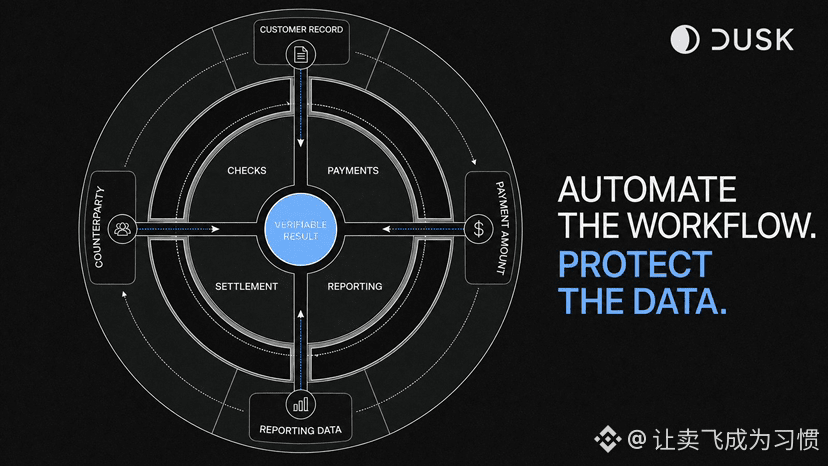
68
·
--
About fixed interest rates—I used to just jot it down casually in the corner of a notes app. Only recently, when I actually got my hands on running TermMax myself, did I realize its locked-in amount had quietly crossed $50 million. The number @termmax made me stay on TermMax a bit longer. What TermMax does is very straightforward: it prevents borrowers and lenders from being exposed to interest-rate fluctuations for long periods. Instead, when the positions are established, it fixes the interest rate and the term upfront, so the financing cost and the expected returns are determined in advance.
In my hands-on testing of TermMax, the most direct feeling is that sense of certainty. Once the interest rate and maturity time are locked within TermMax, after #TermMax the subsequent fund planning has far less back-and-forth burden with trial calculations. This is especially suitable for scenarios where you need to predefine your costs. TermMax also further connects the fixed-term market to Vault and leverage structures, trying to introduce a more predictable framework into an environment that’s used to floating. Of course, the size of its locked-in positions can only indicate that capital is willing to enter TermMax; it cannot prove that users truly need this kind of certainty long-term, nor can it guarantee that liquidity will remain sufficient once the market shifts. This is what I’m genuinely observing about TermMax right now. If on-chain finance is to accommodate larger and more complex capital, predictability may become just as important as flexibility.
Whether TermMax will ultimately become an indispensable piece of the infrastructure, or whether users will continue to value the space to adjust at any time more, still isn’t settled. But based on my experience testing TermMax, at least for now it has brought to the forefront a demand that’s long been overlooked, in a relatively restrained way. I’ll keep paying attention to TermMax’s liquidity depth and real-world usage. But at least up to now, it hasn’t made me feel like it’s just another simple layer of functionality. $BTC
About fixed interest rates—I used to just jot it down casually in the corner of a notes app. Only recently, when I actually got my hands on running TermMax myself, did I realize its locked-in amount had quietly crossed $50 million. The number @TermMax made me stay on TermMax a bit longer. What TermMax does is very straightforward: it prevents borrowers and lenders from being exposed to interest-rate fluctuations for long periods. Instead, when the positions are established, it fixes the interest rate and the term upfront, so the financing cost and the expected returns are determined in advance.
In my hands-on testing of TermMax, the most direct feeling is that sense of certainty. Once the interest rate and maturity time are locked within TermMax, after #TermMax the subsequent fund planning has far less back-and-forth burden with trial calculations. This is especially suitable for scenarios where you need to predefine your costs. TermMax also further connects the fixed-term market to Vault and leverage structures, trying to introduce a more predictable framework into an environment that’s used to floating. Of course, the size of its locked-in positions can only indicate that capital is willing to enter TermMax; it cannot prove that users truly need this kind of certainty long-term, nor can it guarantee that liquidity will remain sufficient once the market shifts. This is what I’m genuinely observing about TermMax right now. If on-chain finance is to accommodate larger and more complex capital, predictability may become just as important as flexibility.
Whether TermMax will ultimately become an indispensable piece of the infrastructure, or whether users will continue to value the space to adjust at any time more, still isn’t settled. But based on my experience testing TermMax, at least for now it has brought to the forefront a demand that’s long been overlooked, in a relatively restrained way. I’ll keep paying attention to TermMax’s liquidity depth and real-world usage. But at least up to now, it hasn’t made me feel like it’s just another simple layer of functionality. $BTC
In my hands-on testing of TermMax, the most direct feeling is that sense of certainty. Once the interest rate and maturity time are locked within TermMax, after #TermMax the subsequent fund planning has far less back-and-forth burden with trial calculations. This is especially suitable for scenarios where you need to predefine your costs. TermMax also further connects the fixed-term market to Vault and leverage structures, trying to introduce a more predictable framework into an environment that’s used to floating. Of course, the size of its locked-in positions can only indicate that capital is willing to enter TermMax; it cannot prove that users truly need this kind of certainty long-term, nor can it guarantee that liquidity will remain sufficient once the market shifts. This is what I’m genuinely observing about TermMax right now. If on-chain finance is to accommodate larger and more complex capital, predictability may become just as important as flexibility.
Whether TermMax will ultimately become an indispensable piece of the infrastructure, or whether users will continue to value the space to adjust at any time more, still isn’t settled. But based on my experience testing TermMax, at least for now it has brought to the forefront a demand that’s long been overlooked, in a relatively restrained way. I’ll keep paying attention to TermMax’s liquidity depth and real-world usage. But at least up to now, it hasn’t made me feel like it’s just another simple layer of functionality. $BTC
66
·
--
Just finished scrolling the Dusk node browser top to bottom. Blocks are continuous, consensus hasn’t stopped, and settlement is still running. Both Moonlight and Phoenix are already attached to this native L1. When I close the page, I’m actually more clear-headed: the chain is running, but between it and the real, usable business there’s still a distance that many people today are too lazy to measure. Dusk EVM is still rotating on the testnet, Hedger is still filling it in, and Dusk Trade is still too early to pull out for acceptance testing. The toolchain moving forward by a step is real—but even if the document numbered @Dusk_Foundation is arranged neatly, it can’t conjure the depth in the order book. It’s more like an instrument prepared for regulated funds: it’s powered on and has completed a no-load self-test, but real samples haven’t been put in yet; continuous batch runs and reconciliation haven’t been proven in external conditions. The indicator light is green, so you can’t estimate how much it could take in based on mass-production standards. #dusk $BTC
When the market is good, it’s easiest to mistake yet another module just gone live for something already mature. On Dusk, there still isn’t decent real成交 visible on-chain, and stable fees are out of the question. $DUSK Its foundation has been laid more solidly than most chains, and the line for compliant privacy hasn’t gone off track—but digging the canal and letting the water rise on its own are never the same thing. Dusk EVM needs to be cut over to the mainnet, and it has to be external projects that truly deploy the contracts and run them; Hedger needs to produce real market-making activity that others can verify; slippage and the risk-control line must stand up to being flipped through and examined; Dusk Trade must at least complete one full cycle of asset dispatch, then settlement, and finally exit. No matter how beautiful the drawings are, in the end you have to see whether there’s a bottleneck in the middle—from dispatching the transaction to getting the money back. No-load records shouldn’t be counted toward the already-delivered portion.
{spot}(DUSKUSDT)
Just finished scrolling the Dusk node browser top to bottom. Blocks are continuous, consensus hasn’t stopped, and settlement is still running. Both Moonlight and Phoenix are already attached to this native L1. When I close the page, I’m actually more clear-headed: the chain is running, but between it and the real, usable business there’s still a distance that many people today are too lazy to measure. Dusk EVM is still rotating on the testnet, Hedger is still filling it in, and Dusk Trade is still too early to pull out for acceptance testing. The toolchain moving forward by a step is real—but even if the document numbered @Dusk is arranged neatly, it can’t conjure the depth in the order book. It’s more like an instrument prepared for regulated funds: it’s powered on and has completed a no-load self-test, but real samples haven’t been put in yet; continuous batch runs and reconciliation haven’t been proven in external conditions. The indicator light is green, so you can’t estimate how much it could take in based on mass-production standards. #dusk $BTC
When the market is good, it’s easiest to mistake yet another module just gone live for something already mature. On Dusk, there still isn’t decent real成交 visible on-chain, and stable fees are out of the question. $DUSK Its foundation has been laid more solidly than most chains, and the line for compliant privacy hasn’t gone off track—but digging the canal and letting the water rise on its own are never the same thing. Dusk EVM needs to be cut over to the mainnet, and it has to be external projects that truly deploy the contracts and run them; Hedger needs to produce real market-making activity that others can verify; slippage and the risk-control line must stand up to being flipped through and examined; Dusk Trade must at least complete one full cycle of asset dispatch, then settlement, and finally exit. No matter how beautiful the drawings are, in the end you have to see whether there’s a bottleneck in the middle—from dispatching the transaction to getting the money back. No-load records shouldn’t be counted toward the already-delivered portion.
When the market is good, it’s easiest to mistake yet another module just gone live for something already mature. On Dusk, there still isn’t decent real成交 visible on-chain, and stable fees are out of the question. $DUSK Its foundation has been laid more solidly than most chains, and the line for compliant privacy hasn’t gone off track—but digging the canal and letting the water rise on its own are never the same thing. Dusk EVM needs to be cut over to the mainnet, and it has to be external projects that truly deploy the contracts and run them; Hedger needs to produce real market-making activity that others can verify; slippage and the risk-control line must stand up to being flipped through and examined; Dusk Trade must at least complete one full cycle of asset dispatch, then settlement, and finally exit. No matter how beautiful the drawings are, in the end you have to see whether there’s a bottleneck in the middle—from dispatching the transaction to getting the money back. No-load records shouldn’t be counted toward the already-delivered portion.
2
1
156
·
--
I stared at the figures from the TermMax group for quite a while, and suddenly it felt like I’d finally found a job—if not with top-tier pay, at least one that lets you sleep at night. Stability was never as glamorous as it sounds. It’s knowing clearly where next month’s money will come from. That’s what TermMax is doing—fixed interest rate, fixed term. Once the money goes in, you know exactly how much you’ll get at maturity. No fluctuations, no surprises. I reviewed the terms again and again, and in a market where things constantly change, this kind of certainty really is reassuring. @termmax
But if you lay out TermMax’s accounts and calculate them in detail, you get stuck on a problem that very few people directly face. Right now, TermMax has locked up roughly $34.07 million. Over the past thirty days, the agreement fees were about $11,559. The资金规模 is roughly three thousand times the monthly income. Money goes into TermMax, but the returns you can actually squeeze out are pitifully small. The fixed rate depends on the lending spread. When the spread narrows, the contribution per unit of capital drops. TermMax hands the certainty to users, and the trade-off is that its own profit margins are squeezed very tight. After integrating tokenized securities, the capital scale rose by about 12.7%, but the income didn’t keep up—money kept flowing into TermMax, yet revenue lagged behind. If stability truly is going to last, in the end it still depends on whether income can support it. Without governance tokens, what does TermMax rely on to retain liquidity long-term? That has always been an open question. #TermMax $BTC
Right now, I’m watching just one signal: whether TermMax’s monthly income is moving up along with the capital scale. If it does, it means the fixed-rate path can work. If it doesn’t, then even a large capital scale might just be vanity metrics. Some people say the spread is naturally narrow, and that growing the capital first is the right way. Others think this income ratio is hard to sustain. For now, I’m standing in the middle: I both acknowledge the real certainty TermMax brings, and I admit that its current income efficiency is still somewhat low. The above is only my personal thoughts after poring over TermMax data. It does not constitute investment advice. There are risks in the market—before making a decision, you should research and think more for yourself.
I stared at the figures from the TermMax group for quite a while, and suddenly it felt like I’d finally found a job—if not with top-tier pay, at least one that lets you sleep at night. Stability was never as glamorous as it sounds. It’s knowing clearly where next month’s money will come from. That’s what TermMax is doing—fixed interest rate, fixed term. Once the money goes in, you know exactly how much you’ll get at maturity. No fluctuations, no surprises. I reviewed the terms again and again, and in a market where things constantly change, this kind of certainty really is reassuring. @TermMax
But if you lay out TermMax’s accounts and calculate them in detail, you get stuck on a problem that very few people directly face. Right now, TermMax has locked up roughly $34.07 million. Over the past thirty days, the agreement fees were about $11,559. The资金规模 is roughly three thousand times the monthly income. Money goes into TermMax, but the returns you can actually squeeze out are pitifully small. The fixed rate depends on the lending spread. When the spread narrows, the contribution per unit of capital drops. TermMax hands the certainty to users, and the trade-off is that its own profit margins are squeezed very tight. After integrating tokenized securities, the capital scale rose by about 12.7%, but the income didn’t keep up—money kept flowing into TermMax, yet revenue lagged behind. If stability truly is going to last, in the end it still depends on whether income can support it. Without governance tokens, what does TermMax rely on to retain liquidity long-term? That has always been an open question. #TermMax $BTC
Right now, I’m watching just one signal: whether TermMax’s monthly income is moving up along with the capital scale. If it does, it means the fixed-rate path can work. If it doesn’t, then even a large capital scale might just be vanity metrics. Some people say the spread is naturally narrow, and that growing the capital first is the right way. Others think this income ratio is hard to sustain. For now, I’m standing in the middle: I both acknowledge the real certainty TermMax brings, and I admit that its current income efficiency is still somewhat low. The above is only my personal thoughts after poring over TermMax data. It does not constitute investment advice. There are risks in the market—before making a decision, you should research and think more for yourself.
But if you lay out TermMax’s accounts and calculate them in detail, you get stuck on a problem that very few people directly face. Right now, TermMax has locked up roughly $34.07 million. Over the past thirty days, the agreement fees were about $11,559. The资金规模 is roughly three thousand times the monthly income. Money goes into TermMax, but the returns you can actually squeeze out are pitifully small. The fixed rate depends on the lending spread. When the spread narrows, the contribution per unit of capital drops. TermMax hands the certainty to users, and the trade-off is that its own profit margins are squeezed very tight. After integrating tokenized securities, the capital scale rose by about 12.7%, but the income didn’t keep up—money kept flowing into TermMax, yet revenue lagged behind. If stability truly is going to last, in the end it still depends on whether income can support it. Without governance tokens, what does TermMax rely on to retain liquidity long-term? That has always been an open question. #TermMax $BTC
Right now, I’m watching just one signal: whether TermMax’s monthly income is moving up along with the capital scale. If it does, it means the fixed-rate path can work. If it doesn’t, then even a large capital scale might just be vanity metrics. Some people say the spread is naturally narrow, and that growing the capital first is the right way. Others think this income ratio is hard to sustain. For now, I’m standing in the middle: I both acknowledge the real certainty TermMax brings, and I admit that its current income efficiency is still somewhat low. The above is only my personal thoughts after poring over TermMax data. It does not constitute investment advice. There are risks in the market—before making a decision, you should research and think more for yourself.
140
·
--
Last Saturday night, an old friend of mine who works on EVM infrastructure suddenly called me for a voice chat. The moment he started, he asked: “You’ve written Solidity for so many years—why not stay on the familiar chain you’re used to, and instead move to Dusk?” I couldn’t answer him right then. Later, I went back through the documentation and the testnet again, and only then did it slowly click for me. @Dusk_Foundation
What truly makes people take a second look at Dusk is its whole secret workflow. With auditable privacy plus authorization-based selective disclosure, there’s almost no equivalent option in a typical compatible environment. From issuance to settlement, assets can live directly on-chain, and the room for construction is a bit broader too. I deployed a few contracts on the testnet over the weekend—some of the compatibility and “feel” is pretty similar to what I’m already familiar with. But the moment you run into the privacy logic, the extra cost and learning curve become obvious. Why should developers pay for the future right now? In the end, it all comes down to whether these capabilities can be quickly translated into use cases that can run and work today. #dusk $DUSK
Risks are there as well. Not many people are writing code yet, and the tooling isn’t fully mature. Compliance-focused financial projects have long cycles and slow payback—definitely not the kind of place teams who like fast iteration would rush into. What’s most needed now is to make confidential capabilities as “box-ready” as possible, so people don’t waste an entire week trying to wrestle with the underlying mechanisms. I’m currently staying cautiously optimistic. The advantages are visible, and the test experience isn’t bad either. The risks are clear. Whether it’s worth continuing to invest in depends on whether more real use cases grow out of it over time—only then can we draw a final conclusion. $BTC
{spot}(DUSKUSDT)
Last Saturday night, an old friend of mine who works on EVM infrastructure suddenly called me for a voice chat. The moment he started, he asked: “You’ve written Solidity for so many years—why not stay on the familiar chain you’re used to, and instead move to Dusk?” I couldn’t answer him right then. Later, I went back through the documentation and the testnet again, and only then did it slowly click for me. @Dusk
What truly makes people take a second look at Dusk is its whole secret workflow. With auditable privacy plus authorization-based selective disclosure, there’s almost no equivalent option in a typical compatible environment. From issuance to settlement, assets can live directly on-chain, and the room for construction is a bit broader too. I deployed a few contracts on the testnet over the weekend—some of the compatibility and “feel” is pretty similar to what I’m already familiar with. But the moment you run into the privacy logic, the extra cost and learning curve become obvious. Why should developers pay for the future right now? In the end, it all comes down to whether these capabilities can be quickly translated into use cases that can run and work today. #dusk $DUSK
Risks are there as well. Not many people are writing code yet, and the tooling isn’t fully mature. Compliance-focused financial projects have long cycles and slow payback—definitely not the kind of place teams who like fast iteration would rush into. What’s most needed now is to make confidential capabilities as “box-ready” as possible, so people don’t waste an entire week trying to wrestle with the underlying mechanisms. I’m currently staying cautiously optimistic. The advantages are visible, and the test experience isn’t bad either. The risks are clear. Whether it’s worth continuing to invest in depends on whether more real use cases grow out of it over time—only then can we draw a final conclusion. $BTC
What truly makes people take a second look at Dusk is its whole secret workflow. With auditable privacy plus authorization-based selective disclosure, there’s almost no equivalent option in a typical compatible environment. From issuance to settlement, assets can live directly on-chain, and the room for construction is a bit broader too. I deployed a few contracts on the testnet over the weekend—some of the compatibility and “feel” is pretty similar to what I’m already familiar with. But the moment you run into the privacy logic, the extra cost and learning curve become obvious. Why should developers pay for the future right now? In the end, it all comes down to whether these capabilities can be quickly translated into use cases that can run and work today. #dusk $DUSK
Risks are there as well. Not many people are writing code yet, and the tooling isn’t fully mature. Compliance-focused financial projects have long cycles and slow payback—definitely not the kind of place teams who like fast iteration would rush into. What’s most needed now is to make confidential capabilities as “box-ready” as possible, so people don’t waste an entire week trying to wrestle with the underlying mechanisms. I’m currently staying cautiously optimistic. The advantages are visible, and the test experience isn’t bad either. The risks are clear. Whether it’s worth continuing to invest in depends on whether more real use cases grow out of it over time—only then can we draw a final conclusion. $BTC
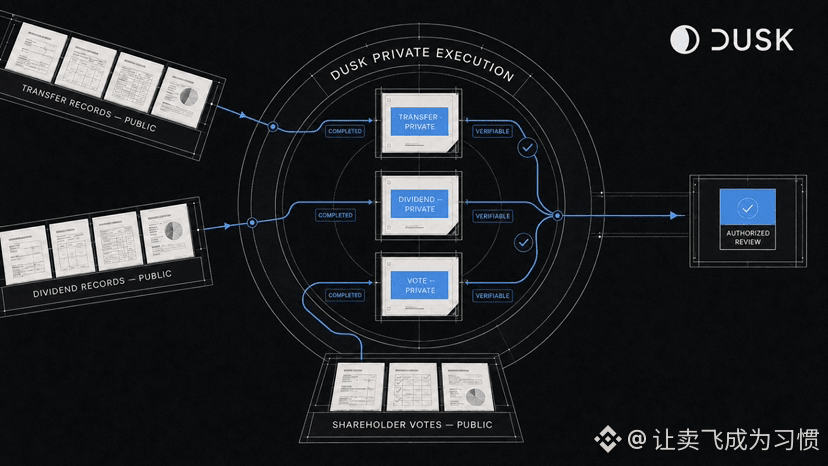
133
·
--
In recent years, new chains have been launching frequently, and what developers find most troublesome is that every time they have to start from scratch to familiarize themselves with new syntax and tools, making nearly all accumulated experience effectively obsolete. But after DuskEVM made its debut, everything changed. @Dusk_Foundation It brings Ethereum’s entire Solidity authoring and execution environment over directly—contracts only need slight tuning of deployment parameters to run on Dusk, and transactions naturally come with privacy attributes. It feels like the compiler and runtime environment you’ve been using for years suddenly gain an extra layer of confidential-computation encapsulation that’s enabled by default at the underlying level: you hardly need to rewrite code, yet the execution process automatically isolates sensitive data. $DUSK
#dusk This step is far more pragmatic than forcing yourself to build a brand-new ecosystem from zero. The number of developers who have already invested in Ethereum has become substantial. Dusk chooses to extend a direct compatibility invitation to them, lowering much of the steep barrier of deeply grappling with zero-knowledge proofs. Once the technical integration is done, the key is how to truly attract people to move over. If the Foundation can keep organizing co-creation events aimed at Ethereum developers, and provide appropriate subsidies in $DUSK for network costs incurred by early deployments—reducing the cost of trial and error—then momentum is more likely to build gradually. Ecosystems are never simply waited for; they are created by continuously giving people the motivation and opportunities to get their hands dirty and explore. $BTC
From a developer’s perspective, if you already have contract logic you know well, and now there’s an almost frictionless switch that lets it run with built-in privacy execution and compliant output, would you try flipping it first to see the effect—or would you keep running the contract in a fully transparent environment? Share your honest thoughts in the comments.
{spot}(DUSKUSDT)
In recent years, new chains have been launching frequently, and what developers find most troublesome is that every time they have to start from scratch to familiarize themselves with new syntax and tools, making nearly all accumulated experience effectively obsolete. But after DuskEVM made its debut, everything changed. @Dusk It brings Ethereum’s entire Solidity authoring and execution environment over directly—contracts only need slight tuning of deployment parameters to run on Dusk, and transactions naturally come with privacy attributes. It feels like the compiler and runtime environment you’ve been using for years suddenly gain an extra layer of confidential-computation encapsulation that’s enabled by default at the underlying level: you hardly need to rewrite code, yet the execution process automatically isolates sensitive data. $DUSK
#dusk This step is far more pragmatic than forcing yourself to build a brand-new ecosystem from zero. The number of developers who have already invested in Ethereum has become substantial. Dusk chooses to extend a direct compatibility invitation to them, lowering much of the steep barrier of deeply grappling with zero-knowledge proofs. Once the technical integration is done, the key is how to truly attract people to move over. If the Foundation can keep organizing co-creation events aimed at Ethereum developers, and provide appropriate subsidies in $DUSK for network costs incurred by early deployments—reducing the cost of trial and error—then momentum is more likely to build gradually. Ecosystems are never simply waited for; they are created by continuously giving people the motivation and opportunities to get their hands dirty and explore. $BTC
From a developer’s perspective, if you already have contract logic you know well, and now there’s an almost frictionless switch that lets it run with built-in privacy execution and compliant output, would you try flipping it first to see the effect—or would you keep running the contract in a fully transparent environment? Share your honest thoughts in the comments.
#dusk This step is far more pragmatic than forcing yourself to build a brand-new ecosystem from zero. The number of developers who have already invested in Ethereum has become substantial. Dusk chooses to extend a direct compatibility invitation to them, lowering much of the steep barrier of deeply grappling with zero-knowledge proofs. Once the technical integration is done, the key is how to truly attract people to move over. If the Foundation can keep organizing co-creation events aimed at Ethereum developers, and provide appropriate subsidies in $DUSK for network costs incurred by early deployments—reducing the cost of trial and error—then momentum is more likely to build gradually. Ecosystems are never simply waited for; they are created by continuously giving people the motivation and opportunities to get their hands dirty and explore. $BTC
From a developer’s perspective, if you already have contract logic you know well, and now there’s an almost frictionless switch that lets it run with built-in privacy execution and compliant output, would you try flipping it first to see the effect—or would you keep running the contract in a fully transparent environment? Share your honest thoughts in the comments.
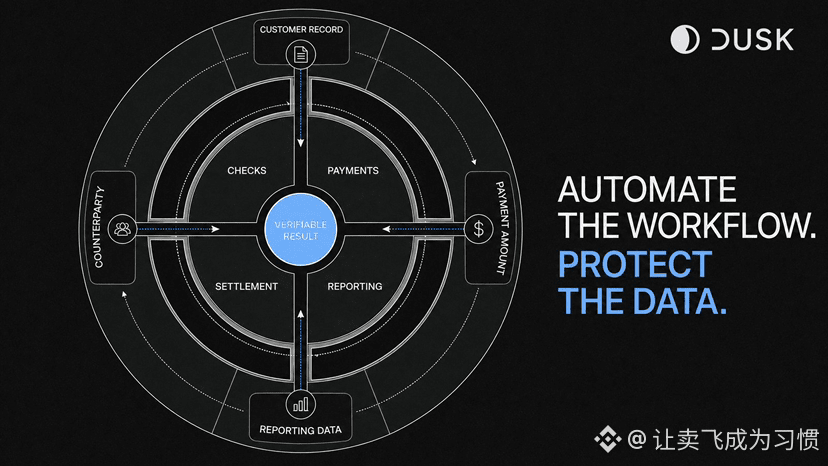
128
·
--
When I first encountered the Dusk staking mechanism, my immediate reaction was cautious—I assumed it was just the old playbook of locking assets into cycles for passive returns. But after reading the official documentation carefully, I found that it requires participants to manually bring up nodes, stay continuously online, and complete parameter configuration. Activation also needs to wait six to twelve hours. The @Dusk_Foundation rewards are no longer fixed either; they fluctuate along with real consensus participation and the ratio of effective staking. This reminds me of my earlier experience maintaining a distributed computing environment: once a machine goes offline or latency gets too high, contribution statistics are immediately reduced. Dusk has made these constraints even more thorough—there’s both a soft weight decay and a hard staking burn. It dares to design responsibilities so directly, which shows it isn’t treating participants as mere spectators chasing numbers. #dusk $BTC
Of course, a well-designed mechanism doesn’t automatically mean decentralization has already taken root. Things like the actual node distribution, the operating cost threshold, and the degree of network dispersion still need time to verify. In the future, what will truly widen the gap between public chains likely won’t be who offers higher short-term returns, but who can make the responsibility system clear enough and executable. I’m still in the observation stage myself, and my position is far from fully committed. Real growth, I think, is going from acting immediately once you see rewards, to gradually considering responsibilities seriously once you see them clearly. Dusk is one of the few projects this year that I’m willing to spend time reading through the documentation and mechanism details. Rather than listening to others summarize it, it’s better to open the document and go through it yourself. $DUSK
{spot}(DUSKUSDT)
When I first encountered the Dusk staking mechanism, my immediate reaction was cautious—I assumed it was just the old playbook of locking assets into cycles for passive returns. But after reading the official documentation carefully, I found that it requires participants to manually bring up nodes, stay continuously online, and complete parameter configuration. Activation also needs to wait six to twelve hours. The @Dusk rewards are no longer fixed either; they fluctuate along with real consensus participation and the ratio of effective staking. This reminds me of my earlier experience maintaining a distributed computing environment: once a machine goes offline or latency gets too high, contribution statistics are immediately reduced. Dusk has made these constraints even more thorough—there’s both a soft weight decay and a hard staking burn. It dares to design responsibilities so directly, which shows it isn’t treating participants as mere spectators chasing numbers. #dusk $BTC
Of course, a well-designed mechanism doesn’t automatically mean decentralization has already taken root. Things like the actual node distribution, the operating cost threshold, and the degree of network dispersion still need time to verify. In the future, what will truly widen the gap between public chains likely won’t be who offers higher short-term returns, but who can make the responsibility system clear enough and executable. I’m still in the observation stage myself, and my position is far from fully committed. Real growth, I think, is going from acting immediately once you see rewards, to gradually considering responsibilities seriously once you see them clearly. Dusk is one of the few projects this year that I’m willing to spend time reading through the documentation and mechanism details. Rather than listening to others summarize it, it’s better to open the document and go through it yourself. $DUSK
Of course, a well-designed mechanism doesn’t automatically mean decentralization has already taken root. Things like the actual node distribution, the operating cost threshold, and the degree of network dispersion still need time to verify. In the future, what will truly widen the gap between public chains likely won’t be who offers higher short-term returns, but who can make the responsibility system clear enough and executable. I’m still in the observation stage myself, and my position is far from fully committed. Real growth, I think, is going from acting immediately once you see rewards, to gradually considering responsibilities seriously once you see them clearly. Dusk is one of the few projects this year that I’m willing to spend time reading through the documentation and mechanism details. Rather than listening to others summarize it, it’s better to open the document and go through it yourself. $DUSK
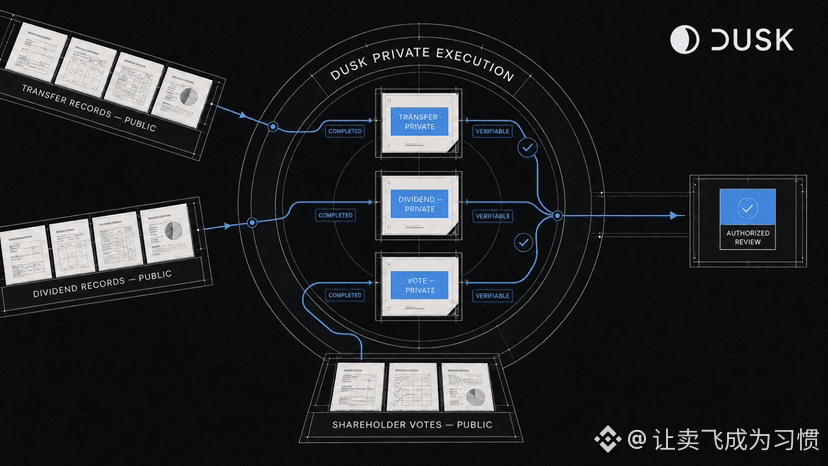
109
·
--
The recent discussions about putting real-world assets on-chain have come in waves, all centered around optimistic claims about Dusk. If you compare them against the official pages, the discrepancies become obvious right away.$DUSK Many people say that the security assets related to Dusk have already reached three hundred million euros and have been fully onboarded to the chain. But Dusk’s official data shows that there have been 102 funding rounds in total, about 1.96 billion euros, and roughly 17,500 active investors. That three-hundred-million figure simply doesn’t add up. Honestly, I’d rather trust Dusk’s official numbers.#dusk They’re at least restrained and don’t present the test environment as an already-mature system.@Dusk_Foundation $BTC
Following DuskTrade’s phased roadmap, Dusk’s current pace is particularly steady. The focus is still on using medium and small business bond tokens to explore tokenization on the DuskEVM testnet. The modules for compliant management, balance recording, and private identity each do their part independently. Only after the Boreas upgrade is completed will it move to native listings. Cross-chain functionality relies on Chainlink’s CCIP, while Data Streams feeds interest rate and coupon data—throughout the process, all under the shadow of AFM regulatory oversight. Dusk’s unhurried approach may be slower, but it’s quite solid. The industry is used to drawing big visions, yet Dusk is willing to first refine the compliance details properly in a controlled environment. How much underestimated room it still holds is worth pondering. Put simply, the thing that can truly drive large-scale real-world asset applications may be a model like Dusk’s: get the access controls right first, then deploy calmly and effectively. It doesn’t make noise or rush, but it’s more likely to go the distance.
{spot}(DUSKUSDT)
The recent discussions about putting real-world assets on-chain have come in waves, all centered around optimistic claims about Dusk. If you compare them against the official pages, the discrepancies become obvious right away.$DUSK Many people say that the security assets related to Dusk have already reached three hundred million euros and have been fully onboarded to the chain. But Dusk’s official data shows that there have been 102 funding rounds in total, about 1.96 billion euros, and roughly 17,500 active investors. That three-hundred-million figure simply doesn’t add up. Honestly, I’d rather trust Dusk’s official numbers.#dusk They’re at least restrained and don’t present the test environment as an already-mature system.@Dusk $BTC
Following DuskTrade’s phased roadmap, Dusk’s current pace is particularly steady. The focus is still on using medium and small business bond tokens to explore tokenization on the DuskEVM testnet. The modules for compliant management, balance recording, and private identity each do their part independently. Only after the Boreas upgrade is completed will it move to native listings. Cross-chain functionality relies on Chainlink’s CCIP, while Data Streams feeds interest rate and coupon data—throughout the process, all under the shadow of AFM regulatory oversight. Dusk’s unhurried approach may be slower, but it’s quite solid. The industry is used to drawing big visions, yet Dusk is willing to first refine the compliance details properly in a controlled environment. How much underestimated room it still holds is worth pondering. Put simply, the thing that can truly drive large-scale real-world asset applications may be a model like Dusk’s: get the access controls right first, then deploy calmly and effectively. It doesn’t make noise or rush, but it’s more likely to go the distance.
Following DuskTrade’s phased roadmap, Dusk’s current pace is particularly steady. The focus is still on using medium and small business bond tokens to explore tokenization on the DuskEVM testnet. The modules for compliant management, balance recording, and private identity each do their part independently. Only after the Boreas upgrade is completed will it move to native listings. Cross-chain functionality relies on Chainlink’s CCIP, while Data Streams feeds interest rate and coupon data—throughout the process, all under the shadow of AFM regulatory oversight. Dusk’s unhurried approach may be slower, but it’s quite solid. The industry is used to drawing big visions, yet Dusk is willing to first refine the compliance details properly in a controlled environment. How much underestimated room it still holds is worth pondering. Put simply, the thing that can truly drive large-scale real-world asset applications may be a model like Dusk’s: get the access controls right first, then deploy calmly and effectively. It doesn’t make noise or rush, but it’s more likely to go the distance.
125
·
--
During this period when market sentiment keeps tugging back and forth, I gradually shifted my attention away from those assets driven purely by emotion, and started to reassess the real-world asset track. After all the noise for so long, there actually aren’t many projects that are truly willing to settle down and align with the rules of traditional finance—most are still stuck at the level of concept packaging. Dusk, however, seems a bit different. @Dusk_Foundation From the very design stage, it clearly set compliance-oriented financial markets as its core goal, rather than swaying with short-term hype. On the technical side, it uses zero-knowledge proofs to conceal trade details. Ordinary participants default to not seeing the other party’s complete information, but if regulators need to penetrate and verify, the reserved interfaces can still retrieve the necessary content. This way of balancing privacy with auditability ensures that both sides’ demands are taken care of. The settlement process also pursues the certainty of finality with a single confirmation, eliminating repeated waiting and the uncertainties of back-and-forth stalemates. #dusk $DUSK
What truly makes me think it’s worth paying close attention to is the path it chooses when going live. On-chain real-world assets is something many people talk about, but very few can actually match the complex regulatory framework in Europe. Dusk hasn’t spent its effort on empty narratives; instead, it focuses on the concrete steps of bringing tokenized securities into secondary circulation, and the direction is written very plainly. The current push is to support the mainnet execution environment compatible with Ethereum. Developers can migrate existing applications over directly, while preserving the privacy and compliance features—meaning the threshold for getting traditional assets truly on-chain is largely lowered. Tokens on the network simultaneously handle fees and staking duties. The mainnet itself has been running stably for some time, and surrounding applications and tools are gradually accumulating as well. $BTC
Stay in this space long enough, and you’ll grow increasingly impatient with things that merely rely on stories to put on a show. What can really last is usually the project backed by genuine, practical business needs. Whether Dusk can move another step forward next still depends on whether institutions are willing to actually bring their business in—and whether the rollout pace can keep up with the roadmap it has drawn.
{spot}(DUSKUSDT)
During this period when market sentiment keeps tugging back and forth, I gradually shifted my attention away from those assets driven purely by emotion, and started to reassess the real-world asset track. After all the noise for so long, there actually aren’t many projects that are truly willing to settle down and align with the rules of traditional finance—most are still stuck at the level of concept packaging. Dusk, however, seems a bit different. @Dusk From the very design stage, it clearly set compliance-oriented financial markets as its core goal, rather than swaying with short-term hype. On the technical side, it uses zero-knowledge proofs to conceal trade details. Ordinary participants default to not seeing the other party’s complete information, but if regulators need to penetrate and verify, the reserved interfaces can still retrieve the necessary content. This way of balancing privacy with auditability ensures that both sides’ demands are taken care of. The settlement process also pursues the certainty of finality with a single confirmation, eliminating repeated waiting and the uncertainties of back-and-forth stalemates. #dusk $DUSK
What truly makes me think it’s worth paying close attention to is the path it chooses when going live. On-chain real-world assets is something many people talk about, but very few can actually match the complex regulatory framework in Europe. Dusk hasn’t spent its effort on empty narratives; instead, it focuses on the concrete steps of bringing tokenized securities into secondary circulation, and the direction is written very plainly. The current push is to support the mainnet execution environment compatible with Ethereum. Developers can migrate existing applications over directly, while preserving the privacy and compliance features—meaning the threshold for getting traditional assets truly on-chain is largely lowered. Tokens on the network simultaneously handle fees and staking duties. The mainnet itself has been running stably for some time, and surrounding applications and tools are gradually accumulating as well. $BTC
Stay in this space long enough, and you’ll grow increasingly impatient with things that merely rely on stories to put on a show. What can really last is usually the project backed by genuine, practical business needs. Whether Dusk can move another step forward next still depends on whether institutions are willing to actually bring their business in—and whether the rollout pace can keep up with the roadmap it has drawn.
What truly makes me think it’s worth paying close attention to is the path it chooses when going live. On-chain real-world assets is something many people talk about, but very few can actually match the complex regulatory framework in Europe. Dusk hasn’t spent its effort on empty narratives; instead, it focuses on the concrete steps of bringing tokenized securities into secondary circulation, and the direction is written very plainly. The current push is to support the mainnet execution environment compatible with Ethereum. Developers can migrate existing applications over directly, while preserving the privacy and compliance features—meaning the threshold for getting traditional assets truly on-chain is largely lowered. Tokens on the network simultaneously handle fees and staking duties. The mainnet itself has been running stably for some time, and surrounding applications and tools are gradually accumulating as well. $BTC
Stay in this space long enough, and you’ll grow increasingly impatient with things that merely rely on stories to put on a show. What can really last is usually the project backed by genuine, practical business needs. Whether Dusk can move another step forward next still depends on whether institutions are willing to actually bring their business in—and whether the rollout pace can keep up with the roadmap it has drawn.
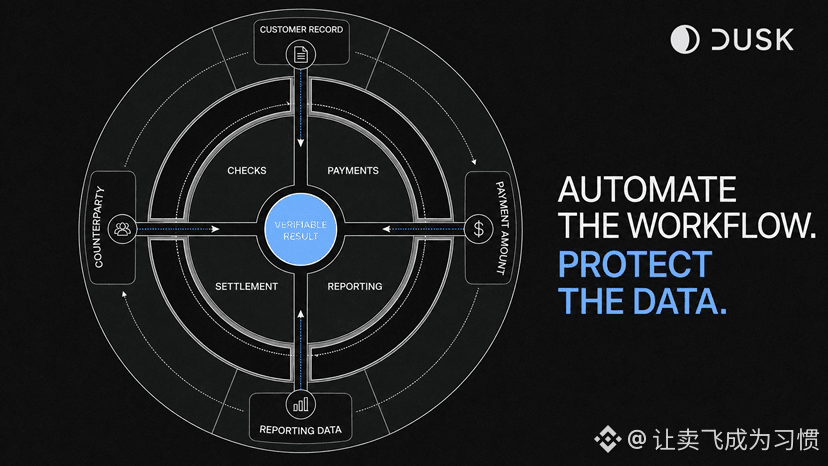
95
·
--
u has fallen so hard already; everyone’s assets are shrinking.
u has fallen so hard already; everyone’s assets are shrinking.

500
Log in to explore more content
Join global crypto users on Binance Square
⚡️ Get latest and useful information about crypto.
💬 Trusted by the world’s largest crypto exchange.
👍 Discover real insights from verified creators.
Email / Phone number
Trending Topics
AppleDebutsFoldablePhone
3,206 views
106 Discussing
#appledebutsfoldablephone I Got My Hands on the iPhone Duo, Apple’s First Foldable Phone. Here’s What Stands Out
The palm-size phone is Apple's boldest handset in years, with a 5.4-inch cover screen and a 7.6-inch main display. I spent some time with the Duo before its October launch.It’s finally here: Apple on Wednesday unveiled its first foldable iPhone, called the iPhone Duo.
iPhone Duo design and build
The iPhone Duo is compact, with a passport-size design. It has a 7.6-inch display on the inside and a 5.4-inch outer display. It fits squarely in my palm, with dimensions similar to Samsung’s Galaxy Z Fold 8, which has a 7.6-inch inner display and a 5.5-inch cover display.
Apple says the Duo is the thinnest iPhone ever when open, measuring 5.2mm. It’s 11.3mm thick when closed. A titanium frame keeps it lightweight at 254 grams.
One of the key differences in feel between Apple’s and Samsung’s phones is that the iPhone Duo has a matte, nano-textured finish on the inner display, which reduces the phone’s crease while also curbing reflections. It has a satisfying feel and really makes the crease virtually disappear when the screen is on. I find it even harder to notice than the Z Fold 8’s, which also has an anti-reflective display.$ONG $IMX $TAC
Isabella-I
·2 Likes
·467 views
US10YTreasuryYieldHitsHighestSinceNov2023
7,165 views
155 Discussing
USTreasuryToBuyBackUpTo$6BLongDatedDebt
9,336 views
129 Discussing