

Hareem00
189 Posts

Hareem00
Report
Block User
Open Trade
Occasional Trader
1.4 Years
37 Following
7.0K+ Followers
183 Liked
Posts
Portfolio
All
Live
·
--
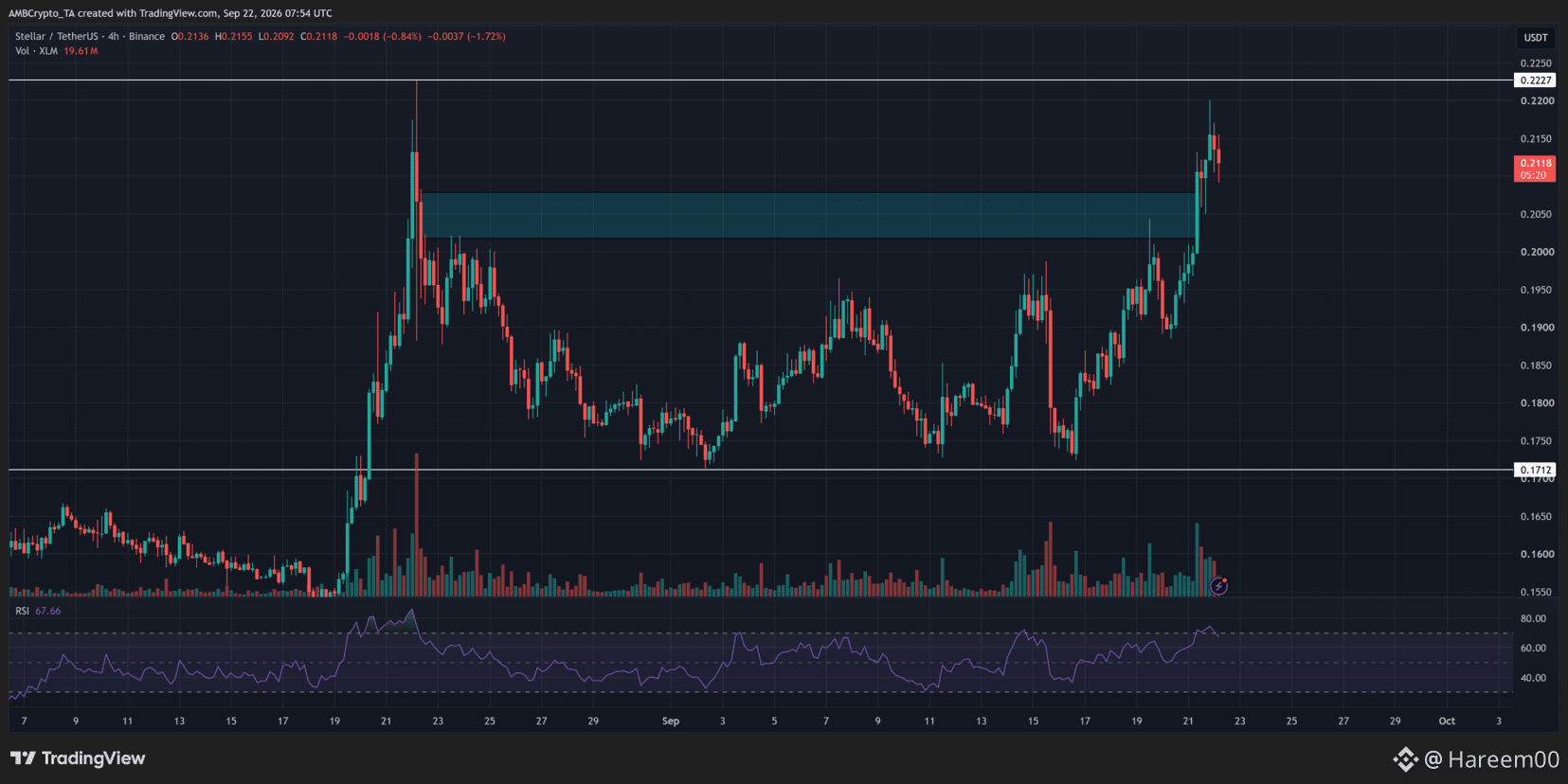
$XLM is showing signs of life after weeks of muted price action.
Stellar jumped 6.84% after reclaiming $0.20 and pushing through the $0.202–$0.2075 demand zone, reaching near $0.22.
Now at ~$0.2118, the key level is $0.208.
Hold it → $0.2227 could come back into focus.
Lose it → $0.180–$0.185 becomes the key downside zone.
The retest is where $XLM next move could be decided.
$ENA
$XLM is showing signs of life after weeks of muted price action.
Stellar jumped 6.84% after reclaiming $0.20 and pushing through the $0.202–$0.2075 demand zone, reaching near $0.22.
Now at ~$0.2118, the key level is $0.208.
Hold it → $0.2227 could come back into focus.
Lose it → $0.180–$0.185 becomes the key downside zone.
The retest is where $XLM next move could be decided.
$ENA
Stellar jumped 6.84% after reclaiming $0.20 and pushing through the $0.202–$0.2075 demand zone, reaching near $0.22.
Now at ~$0.2118, the key level is $0.208.
Hold it → $0.2227 could come back into focus.
Lose it → $0.180–$0.185 becomes the key downside zone.
The retest is where $XLM next move could be decided.
$ENA
119
·
--
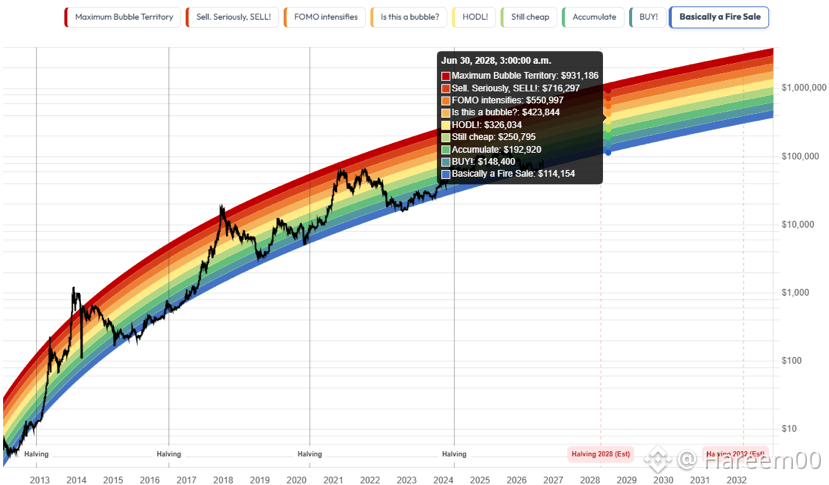
Bitcoin’s next big move could be much bigger than expected.
The Rainbow Chart points to a potential $423K peak in the “Bubble” zone — almost matching the $430K bullish target.
What makes this interesting?
$BTC has already moved beyond $85K, while several on-chain and technical signals suggest the market structure has shifted.
Profit-taking also appears less aggressive than during the August breakout, with aSOPR around 1% versus 4% at that time.
If the cycle continues to mature, is $423K really out of reach?
Bitcoin’s next big move could be much bigger than expected.
The Rainbow Chart points to a potential $423K peak in the “Bubble” zone — almost matching the $430K bullish target.
What makes this interesting?
$BTC has already moved beyond $85K, while several on-chain and technical signals suggest the market structure has shifted.
Profit-taking also appears less aggressive than during the August breakout, with aSOPR around 1% versus 4% at that time.
If the cycle continues to mature, is $423K really out of reach?
The Rainbow Chart points to a potential $423K peak in the “Bubble” zone — almost matching the $430K bullish target.
What makes this interesting?
$BTC has already moved beyond $85K, while several on-chain and technical signals suggest the market structure has shifted.
Profit-taking also appears less aggressive than during the August breakout, with aSOPR around 1% versus 4% at that time.
If the cycle continues to mature, is $423K really out of reach?
86
·
--
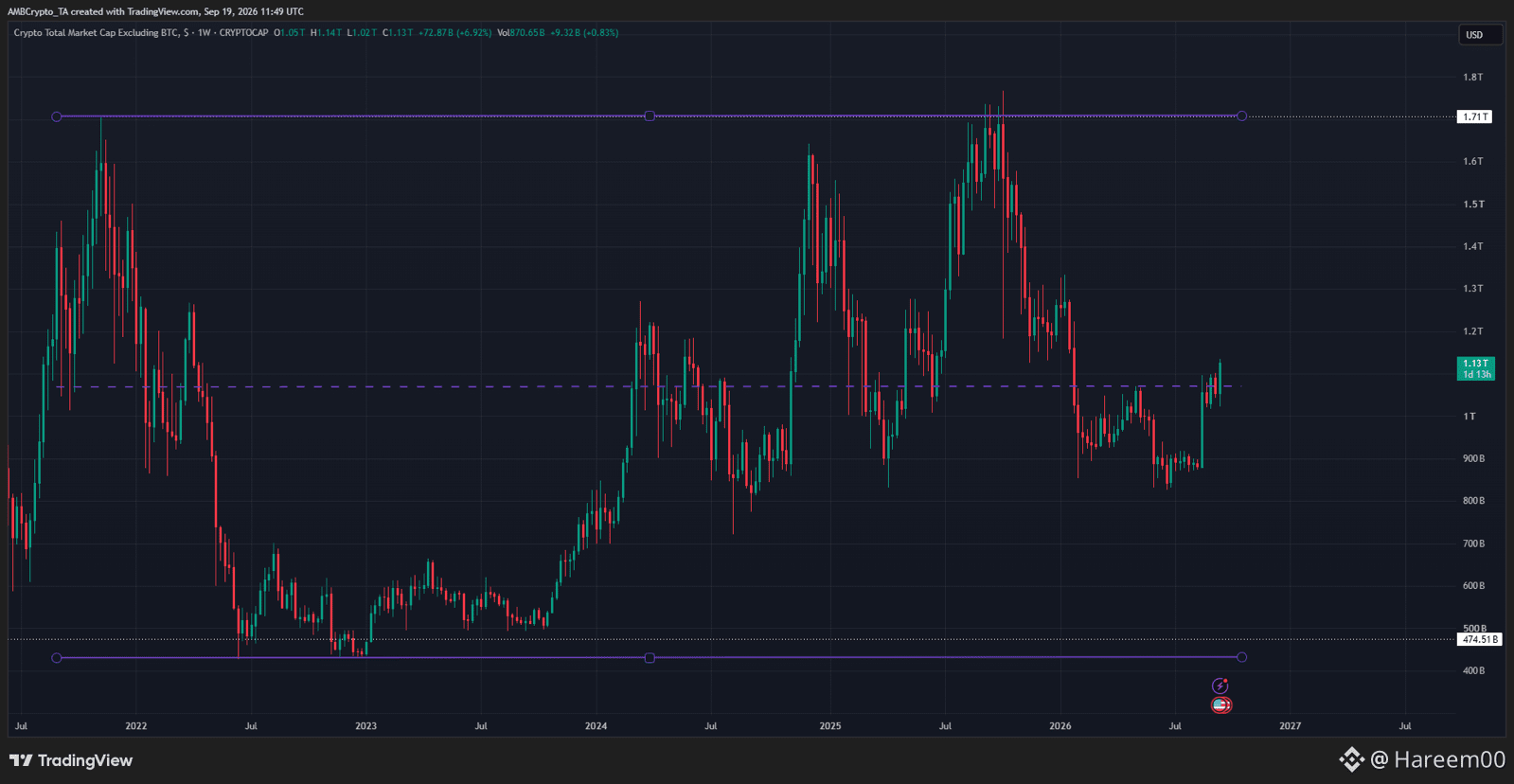
$BTC reclaimed $80K.
Altcoins followed.
TOTAL3 cleared $1.07T, 70% of Binance altcoins are above their 200D MA, and $ETH is showing renewed strength.
Still, calling it altseason would be premature.
Altcoin Season Index: 54.
The next signals to watch: BTC dominance falling and altcoin market cap continuing higher.
$BTC reclaimed $80K.
Altcoins followed.
TOTAL3 cleared $1.07T, 70% of Binance altcoins are above their 200D MA, and $ETH is showing renewed strength.
Still, calling it altseason would be premature.
Altcoin Season Index: 54.
The next signals to watch: BTC dominance falling and altcoin market cap continuing higher.
Altcoins followed.
TOTAL3 cleared $1.07T, 70% of Binance altcoins are above their 200D MA, and $ETH is showing renewed strength.
Still, calling it altseason would be premature.
Altcoin Season Index: 54.
The next signals to watch: BTC dominance falling and altcoin market cap continuing higher.
103
·
--
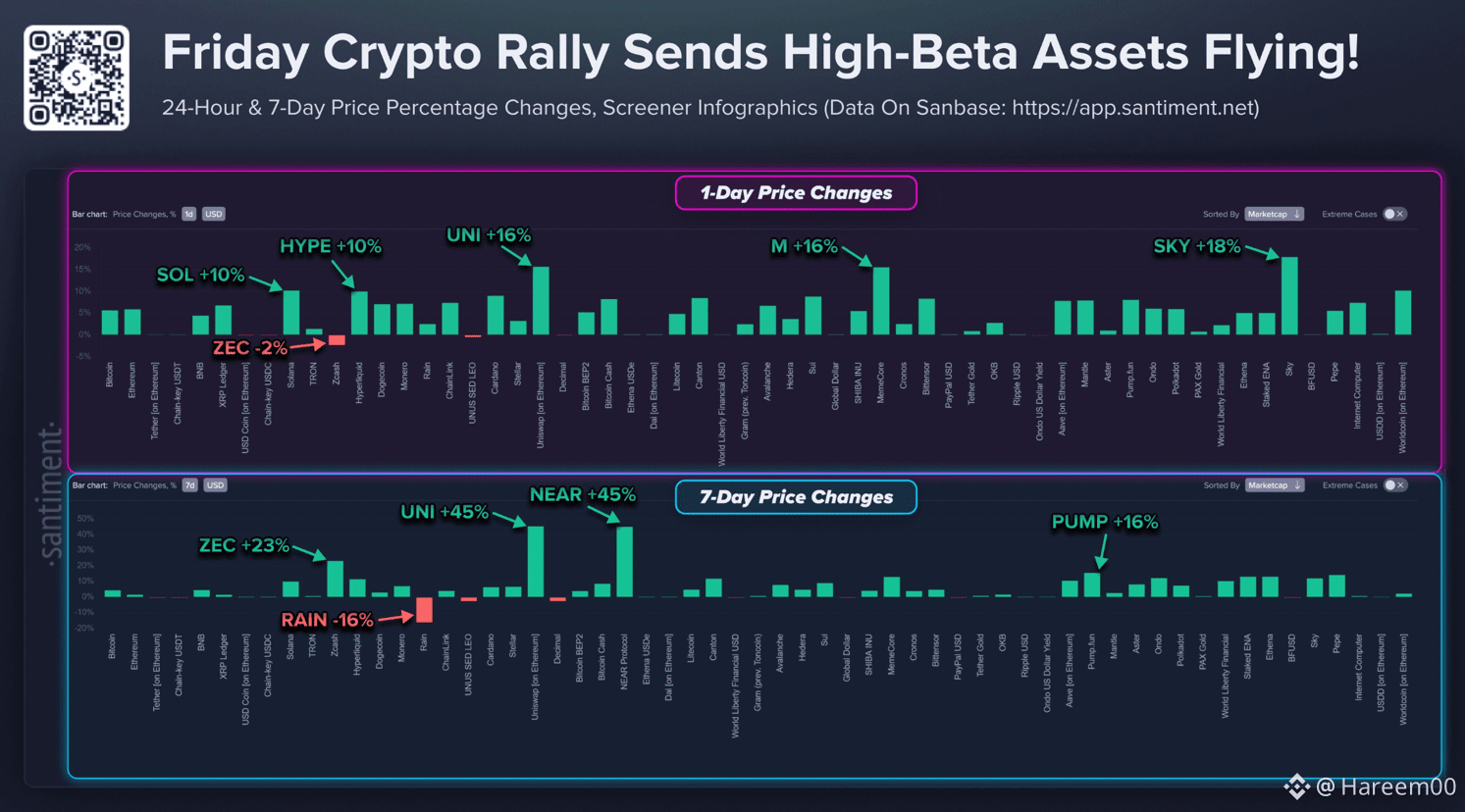
Something is changing across the altcoin market.
$ETH just surged 6.5%, $BTC reclaimed $80K, and high-beta assets started moving aggressively.
The latest numbers tell the story:
$SOL +10%
$HYPER +10%
$UNI +16%
$ZEC +23% weekly
UNI +45% weekly
$NEAR +45% weekly
This is important because the strength isn’t isolated to one asset.
ETH is gaining momentum while whale activity rises, holders reach record levels, staking removes supply from circulation, and ETF flows turn positive.
But there’s still a risk to watch.
The Ethereum Foundation recently moved around $2.45M worth of ETH to an unlabeled Gnosis Safe. That transfer alone does not prove selling, but it adds another variable to the picture.
For now, the bigger signal is clear:
Crypto momentum is broadening — and ETH is sitting right at the center of it.
#BTCBreaks80K #BitcoinMarketCapTopsTesla
Something is changing across the altcoin market.
$ETH just surged 6.5%, $BTC reclaimed $80K, and high-beta assets started moving aggressively.
The latest numbers tell the story:
$SOL +10%
$HYPER +10%
$UNI +16%
$ZEC +23% weekly
UNI +45% weekly
$NEAR +45% weekly
This is important because the strength isn’t isolated to one asset.
ETH is gaining momentum while whale activity rises, holders reach record levels, staking removes supply from circulation, and ETF flows turn positive.
But there’s still a risk to watch.
The Ethereum Foundation recently moved around $2.45M worth of ETH to an unlabeled Gnosis Safe. That transfer alone does not prove selling, but it adds another variable to the picture.
For now, the bigger signal is clear:
Crypto momentum is broadening — and ETH is sitting right at the center of it.
#BTCBreaks80K #BitcoinMarketCapTopsTesla
$ETH just surged 6.5%, $BTC reclaimed $80K, and high-beta assets started moving aggressively.
The latest numbers tell the story:
$SOL +10%
$HYPER +10%
$UNI +16%
$ZEC +23% weekly
UNI +45% weekly
$NEAR +45% weekly
This is important because the strength isn’t isolated to one asset.
ETH is gaining momentum while whale activity rises, holders reach record levels, staking removes supply from circulation, and ETF flows turn positive.
But there’s still a risk to watch.
The Ethereum Foundation recently moved around $2.45M worth of ETH to an unlabeled Gnosis Safe. That transfer alone does not prove selling, but it adds another variable to the picture.
For now, the bigger signal is clear:
Crypto momentum is broadening — and ETH is sitting right at the center of it.
#BTCBreaks80K #BitcoinMarketCapTopsTesla
122
·
--
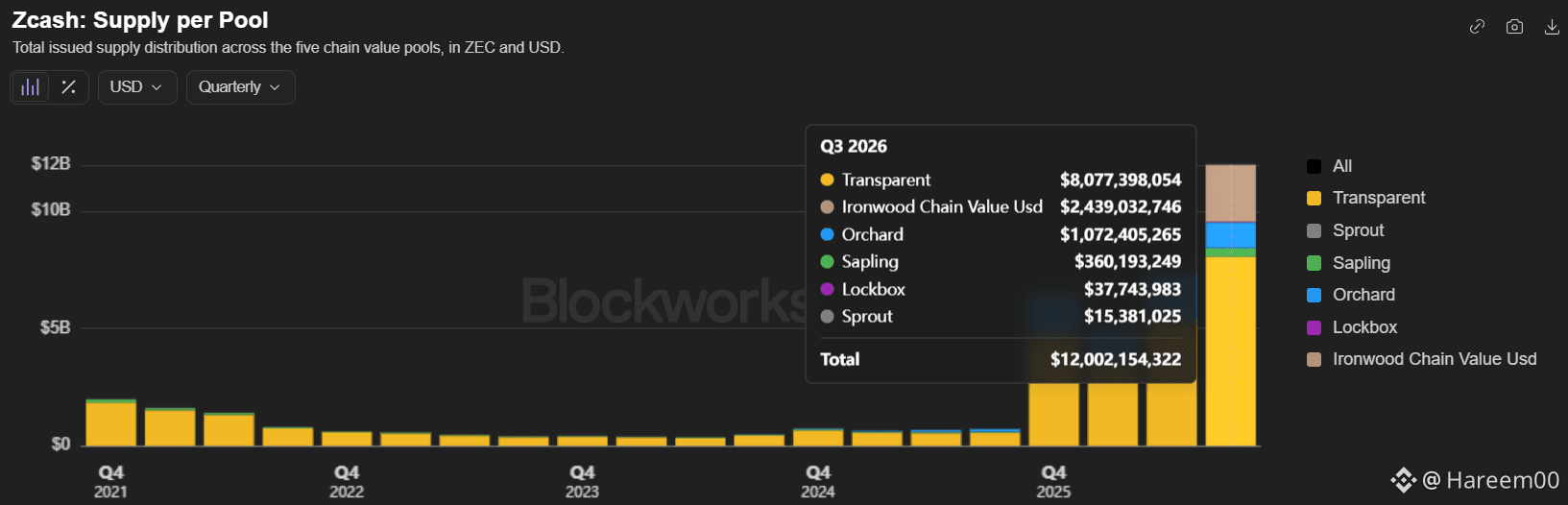
Zcash is facing a governance battle, but $ZEC isn’t slowing down.
A debate over the Dev Fund, voting structure, and control of network resources has raised concerns about long-term governance.
Paradigm founder Matt Huang warned that poor governance could put pressure on ZEC’s value, while others argue that off-chain governance could create even more politics.
Yet the market is telling a different story.
$ZEC surged around 30% to a new ATH near $1,400, fueled by whale accumulation and short liquidations.
Governance is becoming the next major story to watch for Zcash.
#Zcash #ZEC #Crypto
Zcash is facing a governance battle, but $ZEC isn’t slowing down.
A debate over the Dev Fund, voting structure, and control of network resources has raised concerns about long-term governance.
Paradigm founder Matt Huang warned that poor governance could put pressure on ZEC’s value, while others argue that off-chain governance could create even more politics.
Yet the market is telling a different story.
$ZEC surged around 30% to a new ATH near $1,400, fueled by whale accumulation and short liquidations.
Governance is becoming the next major story to watch for Zcash.
#Zcash #ZEC #Crypto
A debate over the Dev Fund, voting structure, and control of network resources has raised concerns about long-term governance.
Paradigm founder Matt Huang warned that poor governance could put pressure on ZEC’s value, while others argue that off-chain governance could create even more politics.
Yet the market is telling a different story.
$ZEC surged around 30% to a new ATH near $1,400, fueled by whale accumulation and short liquidations.
Governance is becoming the next major story to watch for Zcash.
#Zcash #ZEC #Crypto
2
388
·
--
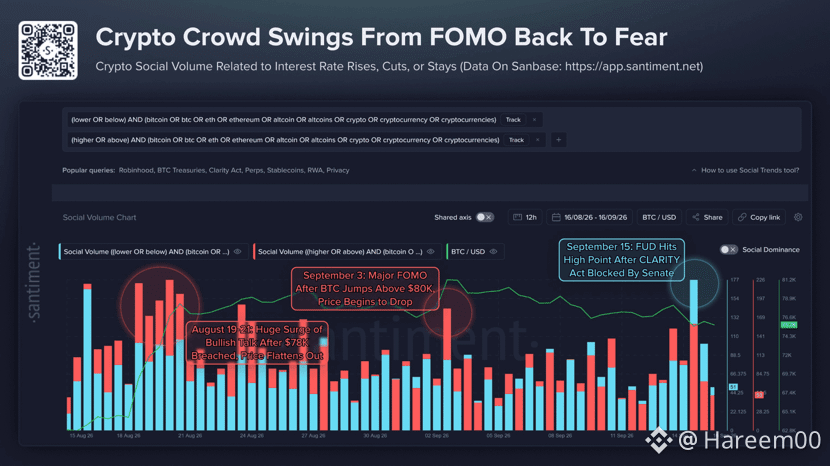
$BTC looks caught between FUD and FOMO.
Sentiment has cooled sharply, but on-chain data still shows no broad capitulation.
$BTC is holding near $76K, while a reported $50M short sits around the $77K liquidation zone.
A break above $77K could trigger forced short liquidations and bring FOMO back into the market.
Sometimes the biggest setups appear when sentiment looks the weakest.
#Bitcoin #BTC #Crypto #Binance
$BTC looks caught between FUD and FOMO.
Sentiment has cooled sharply, but on-chain data still shows no broad capitulation.
$BTC is holding near $76K, while a reported $50M short sits around the $77K liquidation zone.
A break above $77K could trigger forced short liquidations and bring FOMO back into the market.
Sometimes the biggest setups appear when sentiment looks the weakest.
#Bitcoin #BTC #Crypto #Binance
Sentiment has cooled sharply, but on-chain data still shows no broad capitulation.
$BTC is holding near $76K, while a reported $50M short sits around the $77K liquidation zone.
A break above $77K could trigger forced short liquidations and bring FOMO back into the market.
Sometimes the biggest setups appear when sentiment looks the weakest.
#Bitcoin #BTC #Crypto #Binance
1
75
·
--
#termmax @termmax
One thing DeFi still handles surprisingly poorly:
the future cost of money.
You can know your entry.
You can know your collateral.
You can even know your exit.
But with floating-rate borrowing, you may not know what financing will cost you along the way.
That’s where @termmax gets interesting.
Its fixed-rate, fixed-term model lets borrowers and lenders agree on financing terms upfront rather than leaving the rate entirely exposed to changing market conditions.
The interesting part isn’t simply “fixed interest.”
It’s the shift in mindset:
borrowing becomes something you can plan around, not just react to.
As DeFi moves toward more sophisticated financial markets, predictable financing could matter just as much as liquidity itself.
#termmax @TermMax
One thing DeFi still handles surprisingly poorly:
the future cost of money.
You can know your entry.
You can know your collateral.
You can even know your exit.
But with floating-rate borrowing, you may not know what financing will cost you along the way.
That’s where @TermMax gets interesting.
Its fixed-rate, fixed-term model lets borrowers and lenders agree on financing terms upfront rather than leaving the rate entirely exposed to changing market conditions.
The interesting part isn’t simply “fixed interest.”
It’s the shift in mindset:
borrowing becomes something you can plan around, not just react to.
As DeFi moves toward more sophisticated financial markets, predictable financing could matter just as much as liquidity itself.
One thing DeFi still handles surprisingly poorly:
the future cost of money.
You can know your entry.
You can know your collateral.
You can even know your exit.
But with floating-rate borrowing, you may not know what financing will cost you along the way.
That’s where @TermMax gets interesting.
Its fixed-rate, fixed-term model lets borrowers and lenders agree on financing terms upfront rather than leaving the rate entirely exposed to changing market conditions.
The interesting part isn’t simply “fixed interest.”
It’s the shift in mindset:
borrowing becomes something you can plan around, not just react to.
As DeFi moves toward more sophisticated financial markets, predictable financing could matter just as much as liquidity itself.
99
·
--
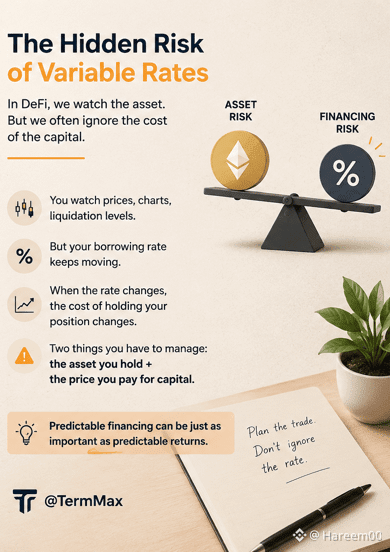
There’s a risk in DeFi that doesn’t show up on the token chart.
You can be right about the asset and still get the financing wrong.
Say you borrow against ETH expecting to hold the position for a few months.
You’re watching $ETH
You’re watching liquidation levels.
You’re watching volatility.
But your borrowing rate is moving underneath all of that.
If the rate changes, the cost of keeping the position changes too.
So now you’re managing two variables:
the asset you’re exposed to
and the price you’re paying for capital.
That’s what makes fixed-rate markets interesting to me.
@termmax is building around the idea that borrowing costs don’t always have to remain a moving target.
In DeFi, predictable financing can be just as important as predictable returns.
#termmax @termmax $LIT $AAVE #termmax
There’s a risk in DeFi that doesn’t show up on the token chart.
You can be right about the asset and still get the financing wrong.
Say you borrow against ETH expecting to hold the position for a few months.
You’re watching $ETH
You’re watching liquidation levels.
You’re watching volatility.
But your borrowing rate is moving underneath all of that.
If the rate changes, the cost of keeping the position changes too.
So now you’re managing two variables:
the asset you’re exposed to
and the price you’re paying for capital.
That’s what makes fixed-rate markets interesting to me.
@TermMax is building around the idea that borrowing costs don’t always have to remain a moving target.
In DeFi, predictable financing can be just as important as predictable returns.
#termmax @TermMax $LIT $AAVE #termmax
You can be right about the asset and still get the financing wrong.
Say you borrow against ETH expecting to hold the position for a few months.
You’re watching $ETH
You’re watching liquidation levels.
You’re watching volatility.
But your borrowing rate is moving underneath all of that.
If the rate changes, the cost of keeping the position changes too.
So now you’re managing two variables:
the asset you’re exposed to
and the price you’re paying for capital.
That’s what makes fixed-rate markets interesting to me.
@TermMax is building around the idea that borrowing costs don’t always have to remain a moving target.
In DeFi, predictable financing can be just as important as predictable returns.
#termmax @TermMax $LIT $AAVE #termmax
1
170
·
--
What DeFi Looks Like When You Can Actually Plan Your Capital
One thing DeFi has done incredibly well is make financial markets more accessible.
But accessibility alone isn’t enough.
If you are borrowing or lending in DeFi, one of the biggest challenges is still uncertainty. Rates can move quickly, which makes it harder to know what your capital will actually cost or earn over a specific period.
This is where fixed-rate markets become interesting.
Imagine borrowing with a rate you already know.
You don’t have to constantly worry about whether the cost of capital will change next week. You can plan around it.
For lenders, the idea is equally important: knowing the terms of a position upfront can make yield less dependent on constantly changing market conditions.
And then there is another layer.
With options, users can think beyond simply lending or borrowing. They can build positions around different market outcomes and manage exposure in more structured ways.
That is what makes protocols like TermMax interesting to me.
It isn’t just about another lending market.
The bigger idea is bringing more familiar financial primitives—fixed rates, predictable financing, and options—into an on-chain environment.
Because if DeFi wants to attract more serious and sophisticated capital, APY alone probably isn’t enough.
Capital also needs certainty, flexibility, and better ways to manage risk.
That could be an important step in DeFi’s evolution:
from simply accessing financial markets → to actually being able to plan around them.
#termmax @termmax
What DeFi Looks Like When You Can Actually Plan Your Capital
One thing DeFi has done incredibly well is make financial markets more accessible.
But accessibility alone isn’t enough.
If you are borrowing or lending in DeFi, one of the biggest challenges is still uncertainty. Rates can move quickly, which makes it harder to know what your capital will actually cost or earn over a specific period.
This is where fixed-rate markets become interesting.
Imagine borrowing with a rate you already know.
You don’t have to constantly worry about whether the cost of capital will change next week. You can plan around it.
For lenders, the idea is equally important: knowing the terms of a position upfront can make yield less dependent on constantly changing market conditions.
And then there is another layer.
With options, users can think beyond simply lending or borrowing. They can build positions around different market outcomes and manage exposure in more structured ways.
That is what makes protocols like TermMax interesting to me.
It isn’t just about another lending market.
The bigger idea is bringing more familiar financial primitives—fixed rates, predictable financing, and options—into an on-chain environment.
Because if DeFi wants to attract more serious and sophisticated capital, APY alone probably isn’t enough.
Capital also needs certainty, flexibility, and better ways to manage risk.
That could be an important step in DeFi’s evolution:
from simply accessing financial markets → to actually being able to plan around them.
#termmax @TermMax
One thing DeFi has done incredibly well is make financial markets more accessible.
But accessibility alone isn’t enough.
If you are borrowing or lending in DeFi, one of the biggest challenges is still uncertainty. Rates can move quickly, which makes it harder to know what your capital will actually cost or earn over a specific period.
This is where fixed-rate markets become interesting.
Imagine borrowing with a rate you already know.
You don’t have to constantly worry about whether the cost of capital will change next week. You can plan around it.
For lenders, the idea is equally important: knowing the terms of a position upfront can make yield less dependent on constantly changing market conditions.
And then there is another layer.
With options, users can think beyond simply lending or borrowing. They can build positions around different market outcomes and manage exposure in more structured ways.
That is what makes protocols like TermMax interesting to me.
It isn’t just about another lending market.
The bigger idea is bringing more familiar financial primitives—fixed rates, predictable financing, and options—into an on-chain environment.
Because if DeFi wants to attract more serious and sophisticated capital, APY alone probably isn’t enough.
Capital also needs certainty, flexibility, and better ways to manage risk.
That could be an important step in DeFi’s evolution:
from simply accessing financial markets → to actually being able to plan around them.
#termmax @TermMax

89
·
--
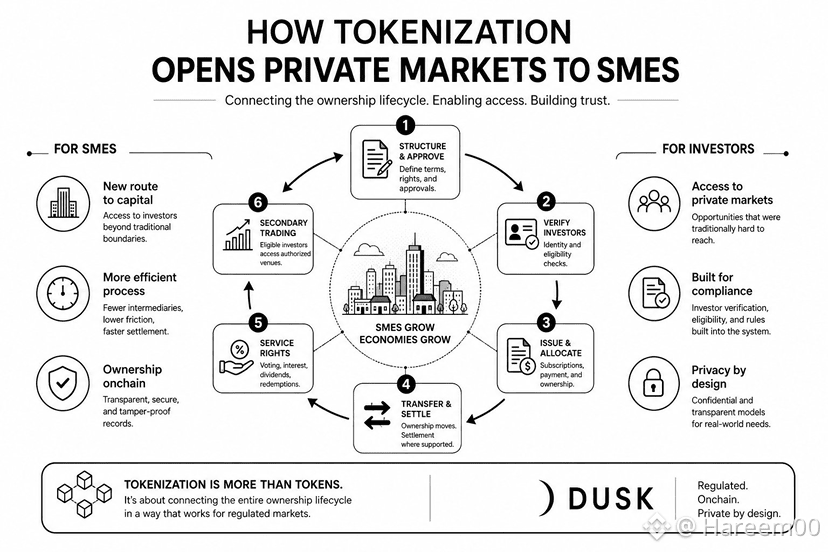
Tokenization isn’t only about big institutions. SMEs could benefit too.
For smaller businesses, raising private capital can still mean paperwork, intermediaries, investor checks and messy ownership records.
Tokenization could connect these steps onchain.
What caught my attention about @Dusk_Foundation is that it goes beyond simply putting an asset onchain.
It’s about connecting ownership, compliance, settlement, investor rights and transfers across the asset’s lifecycle.
And for regulated markets, privacy matters too.
The bigger question isn’t “Can we tokenize this?”
It’s “Can the whole ownership process actually work onchain?”
That’s where I find $DUSK interesting.
$DUSK #Dusk #dusk @Dusk_Foundation
Tokenization isn’t only about big institutions. SMEs could benefit too.
For smaller businesses, raising private capital can still mean paperwork, intermediaries, investor checks and messy ownership records.
Tokenization could connect these steps onchain.
What caught my attention about @Dusk is that it goes beyond simply putting an asset onchain.
It’s about connecting ownership, compliance, settlement, investor rights and transfers across the asset’s lifecycle.
And for regulated markets, privacy matters too.
The bigger question isn’t “Can we tokenize this?”
It’s “Can the whole ownership process actually work onchain?”
That’s where I find $DUSK interesting.
$DUSK #Dusk #dusk @Dusk
For smaller businesses, raising private capital can still mean paperwork, intermediaries, investor checks and messy ownership records.
Tokenization could connect these steps onchain.
What caught my attention about @Dusk is that it goes beyond simply putting an asset onchain.
It’s about connecting ownership, compliance, settlement, investor rights and transfers across the asset’s lifecycle.
And for regulated markets, privacy matters too.
The bigger question isn’t “Can we tokenize this?”
It’s “Can the whole ownership process actually work onchain?”
That’s where I find $DUSK interesting.
$DUSK #Dusk #dusk @Dusk
108
·
--
The interesting part of Dusk isn’t just “privacy.” It’s how that privacy is designed to work for financial applications.
I’ve been looking deeper into @Dusk_Foundation , and one thing stands out: Dusk is trying to solve a problem that goes beyond simply putting transactions on a blockchain.
Financial applications often need two things at the same time:
→ Transparency for verification
→ Confidentiality for sensitive information
That balance is difficult.
Dusk approaches it through its privacy-focused Layer-1 and the Confidential Security Contract (XSC) standard, which is designed to support confidential smart contracts.
And this is where I think the project gets more interesting.
Instead of treating privacy as an extra feature added on top, Dusk is building it into the infrastructure itself.
That matters for areas like regulated financial markets, tokenized assets and other applications where exposing every piece of transaction data publicly may not be practical.
The bigger question for me isn’t:
“Can blockchain be private?”
We already know privacy technologies exist.
The more important question is:
Can privacy, compliance, smart contracts and financial infrastructure work together on the same network?
That’s the direction I’m watching with Dusk.
Still early, still plenty to prove, but the architecture is worth understanding beyond the usual “privacy blockchain” label.
$DUSK #dusk
If you were building a financial app on-chain, what would you prioritize first?
The interesting part of Dusk isn’t just “privacy.” It’s how that privacy is designed to work for financial applications.
I’ve been looking deeper into @Dusk , and one thing stands out: Dusk is trying to solve a problem that goes beyond simply putting transactions on a blockchain.
Financial applications often need two things at the same time:
→ Transparency for verification
→ Confidentiality for sensitive information
That balance is difficult.
Dusk approaches it through its privacy-focused Layer-1 and the Confidential Security Contract (XSC) standard, which is designed to support confidential smart contracts.
And this is where I think the project gets more interesting.
Instead of treating privacy as an extra feature added on top, Dusk is building it into the infrastructure itself.
That matters for areas like regulated financial markets, tokenized assets and other applications where exposing every piece of transaction data publicly may not be practical.
The bigger question for me isn’t:
“Can blockchain be private?”
We already know privacy technologies exist.
The more important question is:
Can privacy, compliance, smart contracts and financial infrastructure work together on the same network?
That’s the direction I’m watching with Dusk.
Still early, still plenty to prove, but the architecture is worth understanding beyond the usual “privacy blockchain” label.
$DUSK #dusk
If you were building a financial app on-chain, what would you prioritize first?
I’ve been looking deeper into @Dusk , and one thing stands out: Dusk is trying to solve a problem that goes beyond simply putting transactions on a blockchain.
Financial applications often need two things at the same time:
→ Transparency for verification
→ Confidentiality for sensitive information
That balance is difficult.
Dusk approaches it through its privacy-focused Layer-1 and the Confidential Security Contract (XSC) standard, which is designed to support confidential smart contracts.
And this is where I think the project gets more interesting.
Instead of treating privacy as an extra feature added on top, Dusk is building it into the infrastructure itself.
That matters for areas like regulated financial markets, tokenized assets and other applications where exposing every piece of transaction data publicly may not be practical.
The bigger question for me isn’t:
“Can blockchain be private?”
We already know privacy technologies exist.
The more important question is:
Can privacy, compliance, smart contracts and financial infrastructure work together on the same network?
That’s the direction I’m watching with Dusk.
Still early, still plenty to prove, but the architecture is worth understanding beyond the usual “privacy blockchain” label.
$DUSK #dusk
If you were building a financial app on-chain, what would you prioritize first?
Private transactions
0%
Regulatory compliance
0%
Fast settlement
0%
EVM compatibility
0%
0 votes • Voting closed
92
·
--
#dusk $DUSK @Dusk_Foundation
DuskEVM Mainnet feels like an important step for @Dusk_Foundation because it brings privacy-focused infrastructure closer to the EVM world developers already know.
What caught my attention is the combination of:
• EVM compatibility for familiar Solidity workflows
• Hedger for confidential EVM applications
• Homomorphic encryption + ZK proofs
• A stronger focus on regulated financial use cases
The interesting part isn’t just making transactions private.
It’s trying to make privacy usable and verifiable at the same time.
That could be especially important for RWAs, where institutions may want blockchain benefits without putting sensitive financial data fully in public.
Easier EVM development + confidential execution could give builders a practical reason to explore what Dusk is building.
Definitely a milestone worth watching.
$DUSK #Dusk #SpaceXShortInterestFallsTo11% #USJulyCPI&PPIDueThisWeek #USJulyPPIFlat
#dusk $DUSK @Dusk
DuskEVM Mainnet feels like an important step for @Dusk because it brings privacy-focused infrastructure closer to the EVM world developers already know.
What caught my attention is the combination of:
• EVM compatibility for familiar Solidity workflows
• Hedger for confidential EVM applications
• Homomorphic encryption + ZK proofs
• A stronger focus on regulated financial use cases
The interesting part isn’t just making transactions private.
It’s trying to make privacy usable and verifiable at the same time.
That could be especially important for RWAs, where institutions may want blockchain benefits without putting sensitive financial data fully in public.
Easier EVM development + confidential execution could give builders a practical reason to explore what Dusk is building.
Definitely a milestone worth watching.
$DUSK #Dusk #SpaceXShortInterestFallsTo11% #USJulyCPI&PPIDueThisWeek #USJulyPPIFlat
DuskEVM Mainnet feels like an important step for @Dusk because it brings privacy-focused infrastructure closer to the EVM world developers already know.
What caught my attention is the combination of:
• EVM compatibility for familiar Solidity workflows
• Hedger for confidential EVM applications
• Homomorphic encryption + ZK proofs
• A stronger focus on regulated financial use cases
The interesting part isn’t just making transactions private.
It’s trying to make privacy usable and verifiable at the same time.
That could be especially important for RWAs, where institutions may want blockchain benefits without putting sensitive financial data fully in public.
Easier EVM development + confidential execution could give builders a practical reason to explore what Dusk is building.
Definitely a milestone worth watching.
$DUSK #Dusk #SpaceXShortInterestFallsTo11% #USJulyCPI&PPIDueThisWeek #USJulyPPIFlat
1
134
·
--
#baby $BABY @babylonlabs_io
When I first heard people say Bitcoin could help secure other blockchains, I assumed they meant wrapping BTC or moving it onto another network.
It turns out that’s not what projects like Babylon are trying to do.
The interesting idea is using Bitcoin’s security as a foundation for Proof-of-Stake chains while allowing BTC holders to keep custody of their coins. Instead of asking Bitcoin to become a smart contract platform, the goal is to let its security strengthen newer blockchain ecosystems.
If this model continues to gain adoption, Bitcoin’s role could expand beyond being a store of value. It could become part of the security infrastructure that helps protect the next generation of decentralized networks.
It’s still early, and there are technical and adoption challenges ahead, but I think it’s an interesting direction that’s worth paying attention to.
#baby $BABY @BabylonLabs_io
When I first heard people say Bitcoin could help secure other blockchains, I assumed they meant wrapping BTC or moving it onto another network.
It turns out that’s not what projects like Babylon are trying to do.
The interesting idea is using Bitcoin’s security as a foundation for Proof-of-Stake chains while allowing BTC holders to keep custody of their coins. Instead of asking Bitcoin to become a smart contract platform, the goal is to let its security strengthen newer blockchain ecosystems.
If this model continues to gain adoption, Bitcoin’s role could expand beyond being a store of value. It could become part of the security infrastructure that helps protect the next generation of decentralized networks.
It’s still early, and there are technical and adoption challenges ahead, but I think it’s an interesting direction that’s worth paying attention to.
When I first heard people say Bitcoin could help secure other blockchains, I assumed they meant wrapping BTC or moving it onto another network.
It turns out that’s not what projects like Babylon are trying to do.
The interesting idea is using Bitcoin’s security as a foundation for Proof-of-Stake chains while allowing BTC holders to keep custody of their coins. Instead of asking Bitcoin to become a smart contract platform, the goal is to let its security strengthen newer blockchain ecosystems.
If this model continues to gain adoption, Bitcoin’s role could expand beyond being a store of value. It could become part of the security infrastructure that helps protect the next generation of decentralized networks.
It’s still early, and there are technical and adoption challenges ahead, but I think it’s an interesting direction that’s worth paying attention to.
1
145
·
--
#baby $BABY @babylonlabs_io
One thing about $BABY caught my attention.
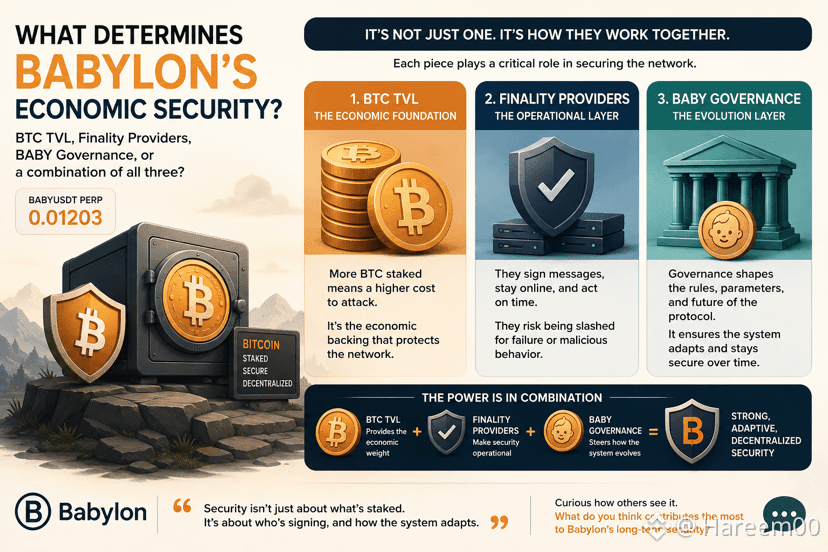
I expected the token price to move more directly with Babylon’s TVL.
More BTC secured by the protocol should mean more confidence, right?
But the market doesn’t always work that simply.
Babylon’s TVL can grow or decline, while $BABY doesn’t necessarily follow the same direction. That made me think about what investors are actually valuing.
Maybe the market isn’t looking at Babylon as just “how much BTC is locked.”
Maybe it’s looking at the bigger picture:
• How important Bitcoin-backed security becomes for other chains
• How much adoption the ecosystem gets
• Whether Babylon can create sustainable value around its infrastructure
• How the BABY token captures that value over time
TVL is an important metric, but it’s only one part of the story.
A protocol can secure billions in assets, but the token’s value depends on whether the market believes that security layer will become essential.
That’s why the gap between Babylon’s TVL and $BABY’s price is interesting.
It shows the market is still deciding how to value Bitcoin security infrastructure.
#baby $BABY @BabylonLabs_io
One thing about $BABY caught my attention.
I expected the token price to move more directly with Babylon’s TVL.
More BTC secured by the protocol should mean more confidence, right?
But the market doesn’t always work that simply.
Babylon’s TVL can grow or decline, while $BABY doesn’t necessarily follow the same direction. That made me think about what investors are actually valuing.
Maybe the market isn’t looking at Babylon as just “how much BTC is locked.”
Maybe it’s looking at the bigger picture:
• How important Bitcoin-backed security becomes for other chains
• How much adoption the ecosystem gets
• Whether Babylon can create sustainable value around its infrastructure
• How the BABY token captures that value over time
TVL is an important metric, but it’s only one part of the story.
A protocol can secure billions in assets, but the token’s value depends on whether the market believes that security layer will become essential.
That’s why the gap between Babylon’s TVL and $BABY ’s price is interesting.
It shows the market is still deciding how to value Bitcoin security infrastructure.
One thing about $BABY caught my attention.
I expected the token price to move more directly with Babylon’s TVL.
More BTC secured by the protocol should mean more confidence, right?
But the market doesn’t always work that simply.
Babylon’s TVL can grow or decline, while $BABY doesn’t necessarily follow the same direction. That made me think about what investors are actually valuing.
Maybe the market isn’t looking at Babylon as just “how much BTC is locked.”
Maybe it’s looking at the bigger picture:
• How important Bitcoin-backed security becomes for other chains
• How much adoption the ecosystem gets
• Whether Babylon can create sustainable value around its infrastructure
• How the BABY token captures that value over time
TVL is an important metric, but it’s only one part of the story.
A protocol can secure billions in assets, but the token’s value depends on whether the market believes that security layer will become essential.
That’s why the gap between Babylon’s TVL and $BABY ’s price is interesting.
It shows the market is still deciding how to value Bitcoin security infrastructure.
137
·
--
The biggest thing I misunderstood about Babylon at first was the idea that “Bitcoin secures Babylon” meant Bitcoin was somehow running the chain.
After going through the documentation, I realized the model is more nuanced.
Babylon Genesis still has its own consensus layer. BABY stakers delegate to validators who produce blocks and maintain the network.
Bitcoin plays a different role.
BTC holders stake their Bitcoin and delegate to Finality Providers, creating an additional security layer that helps provide Bitcoin-backed finality.
That distinction changed how I viewed the protocol.
It’s not about replacing one consensus system with another. It’s about combining Babylon’s own execution layer with Bitcoin’s economic security to create stronger guarantees for connected networks.
Sometimes the most interesting part of a project is not the headline — it’s the detail that changes your understanding after you look deeper.
@babylonlabs_io io $BABY #BABY $AAPL.US $B
The biggest thing I misunderstood about Babylon at first was the idea that “Bitcoin secures Babylon” meant Bitcoin was somehow running the chain.
After going through the documentation, I realized the model is more nuanced.
Babylon Genesis still has its own consensus layer. BABY stakers delegate to validators who produce blocks and maintain the network.
Bitcoin plays a different role.
BTC holders stake their Bitcoin and delegate to Finality Providers, creating an additional security layer that helps provide Bitcoin-backed finality.
That distinction changed how I viewed the protocol.
It’s not about replacing one consensus system with another. It’s about combining Babylon’s own execution layer with Bitcoin’s economic security to create stronger guarantees for connected networks.
Sometimes the most interesting part of a project is not the headline — it’s the detail that changes your understanding after you look deeper.
@BabylonLabs_io io $BABY #BABY $AAPL.US $B
After going through the documentation, I realized the model is more nuanced.
Babylon Genesis still has its own consensus layer. BABY stakers delegate to validators who produce blocks and maintain the network.
Bitcoin plays a different role.
BTC holders stake their Bitcoin and delegate to Finality Providers, creating an additional security layer that helps provide Bitcoin-backed finality.
That distinction changed how I viewed the protocol.
It’s not about replacing one consensus system with another. It’s about combining Babylon’s own execution layer with Bitcoin’s economic security to create stronger guarantees for connected networks.
Sometimes the most interesting part of a project is not the headline — it’s the detail that changes your understanding after you look deeper.
@BabylonLabs_io io $BABY #BABY $AAPL.US $B
1
128
·
--
I used to see my BTC as something I could only hold and wait for.
But then I started thinking — what if Bitcoin could do more without losing what makes it valuable?
I explored different ways to put BTC to work, but many solutions came with compromises: wrapped assets, bridges, or trusting extra layers. After seeing how many risks exist in crypto, keeping control over my Bitcoin remained the priority.
That’s what made @babylonlabs_io interesting to me.
Instead of changing Bitcoin, Babylon is building around Bitcoin’s strongest feature: its security.
The idea of using native BTC to help secure other networks opens a new perspective. Bitcoin doesn’t need to become something else — its existing strength can become the foundation for new possibilities.
And that’s where $BABY fits into the ecosystem, supporting network activity, staking mechanisms, and governance.
The future of Bitcoin may not only be about holding it.
It could also be about how its security helps power the next generation of decentralized systems.
What’s your view?
Should BTC stay purely a store of value, or can it become a bigger part of blockchain infrastructure?
👇 Let’s discuss
@babylonlabs_io $BABY #Bitcoin #baby
I used to see my BTC as something I could only hold and wait for.
But then I started thinking — what if Bitcoin could do more without losing what makes it valuable?
I explored different ways to put BTC to work, but many solutions came with compromises: wrapped assets, bridges, or trusting extra layers. After seeing how many risks exist in crypto, keeping control over my Bitcoin remained the priority.
That’s what made @BabylonLabs_io interesting to me.
Instead of changing Bitcoin, Babylon is building around Bitcoin’s strongest feature: its security.
The idea of using native BTC to help secure other networks opens a new perspective. Bitcoin doesn’t need to become something else — its existing strength can become the foundation for new possibilities.
And that’s where $BABY fits into the ecosystem, supporting network activity, staking mechanisms, and governance.
The future of Bitcoin may not only be about holding it.
It could also be about how its security helps power the next generation of decentralized systems.
What’s your view?
Should BTC stay purely a store of value, or can it become a bigger part of blockchain infrastructure?
👇 Let’s discuss
@BabylonLabs_io $BABY #Bitcoin #baby
But then I started thinking — what if Bitcoin could do more without losing what makes it valuable?
I explored different ways to put BTC to work, but many solutions came with compromises: wrapped assets, bridges, or trusting extra layers. After seeing how many risks exist in crypto, keeping control over my Bitcoin remained the priority.
That’s what made @BabylonLabs_io interesting to me.
Instead of changing Bitcoin, Babylon is building around Bitcoin’s strongest feature: its security.
The idea of using native BTC to help secure other networks opens a new perspective. Bitcoin doesn’t need to become something else — its existing strength can become the foundation for new possibilities.
And that’s where $BABY fits into the ecosystem, supporting network activity, staking mechanisms, and governance.
The future of Bitcoin may not only be about holding it.
It could also be about how its security helps power the next generation of decentralized systems.
What’s your view?
Should BTC stay purely a store of value, or can it become a bigger part of blockchain infrastructure?
👇 Let’s discuss
@BabylonLabs_io $BABY #Bitcoin #baby
More BTC staked
0%
Token unlocks
0%
New partnerships
0%
Overall crypto market
0%
0 votes • Voting closed
139
·
--
When I first looked into Babylon, I had the same question many people probably have:
“Can Bitcoin really become productive without losing what makes it special?”
Because we’ve seen this story before. Many projects tried to bring BTC into DeFi through wrapped assets and bridges, but every extra layer also introduced new risks.
What makes Babylon interesting is the different approach.
The goal isn’t to change Bitcoin or move BTC somewhere else. Instead, it focuses on using Bitcoin’s native security to support other networks while keeping BTC at the center.
That idea is what caught my attention.
Bitcoin has always been trusted because of its security and decentralization. If that same security can help power other ecosystems without relying on traditional bridges or custodians, it could open a completely new chapter for BTC.
Of course, the journey won’t be simple. Real adoption depends on security, network growth, and how well the ecosystem develops over time.
But sometimes the biggest changes in crypto don’t come from the loudest trends.
They come from solving the difficult infrastructure problems nobody wants to talk about.
Babylon is one of those projects I’ll be watching closely.
What do you think — should Bitcoin remain only a store of value, or can it become a security layer for the wider crypto ecosystem?
#baby $BABY $DEXE $RIF @babylonlabs_io
What role do you think Bitcoin will play in the future?
When I first looked into Babylon, I had the same question many people probably have:
“Can Bitcoin really become productive without losing what makes it special?”
Because we’ve seen this story before. Many projects tried to bring BTC into DeFi through wrapped assets and bridges, but every extra layer also introduced new risks.
What makes Babylon interesting is the different approach.
The goal isn’t to change Bitcoin or move BTC somewhere else. Instead, it focuses on using Bitcoin’s native security to support other networks while keeping BTC at the center.
That idea is what caught my attention.
Bitcoin has always been trusted because of its security and decentralization. If that same security can help power other ecosystems without relying on traditional bridges or custodians, it could open a completely new chapter for BTC.
Of course, the journey won’t be simple. Real adoption depends on security, network growth, and how well the ecosystem develops over time.
But sometimes the biggest changes in crypto don’t come from the loudest trends.
They come from solving the difficult infrastructure problems nobody wants to talk about.
Babylon is one of those projects I’ll be watching closely.
What do you think — should Bitcoin remain only a store of value, or can it become a security layer for the wider crypto ecosystem?
#baby $BABY $DEXE $RIF @BabylonLabs_io
What role do you think Bitcoin will play in the future?
“Can Bitcoin really become productive without losing what makes it special?”
Because we’ve seen this story before. Many projects tried to bring BTC into DeFi through wrapped assets and bridges, but every extra layer also introduced new risks.
What makes Babylon interesting is the different approach.
The goal isn’t to change Bitcoin or move BTC somewhere else. Instead, it focuses on using Bitcoin’s native security to support other networks while keeping BTC at the center.
That idea is what caught my attention.
Bitcoin has always been trusted because of its security and decentralization. If that same security can help power other ecosystems without relying on traditional bridges or custodians, it could open a completely new chapter for BTC.
Of course, the journey won’t be simple. Real adoption depends on security, network growth, and how well the ecosystem develops over time.
But sometimes the biggest changes in crypto don’t come from the loudest trends.
They come from solving the difficult infrastructure problems nobody wants to talk about.
Babylon is one of those projects I’ll be watching closely.
What do you think — should Bitcoin remain only a store of value, or can it become a security layer for the wider crypto ecosystem?
#baby $BABY $DEXE $RIF @BabylonLabs_io
What role do you think Bitcoin will play in the future?
Just a store of value
100%
Security layer for other netwr
0%
Major part of DeFi infrastruct
0%
Still too early to tell
0%
1 votes • Voting closed
1
1
119
·
--
One thing I’ve always found strange about Bitcoin is this:
It’s considered one of the strongest forms of collateral in the world, yet for years the only way to unlock its value in DeFi usually meant moving it somewhere else.
Wrap it.
Bridge it.
Or hand it over to a custodian.
Every option introduced another layer of risk.
That’s why @babylonlabs_io caught my attention.
Instead of asking Bitcoin holders to leave Bitcoin behind, Babylon is building infrastructure that lets native BTC become productive while preserving the properties that made it valuable in the first place.
Between Bitcoin staking, Bitcoin Secured Networks (BSNs), and Trustless Bitcoin Vaults (TBV), the vision is bigger than simply earning yield.
It’s about turning Bitcoin into an active security asset for decentralized networks without relying on wrapped versions or centralized custody.
TBV is an interesting step in that direction.
With native Bitcoin-backed borrowing now being explored through the Aave v4 Public Testnet, the idea is simple: use BTC as collateral while keeping it native, instead of converting it into another token first.
Of course, the technology is only half the story.
The real challenge is earning trust over time.
Can the system remain secure under real market conditions?
Can the user experience stay simple enough for everyday Bitcoin holders?
Can people access liquidity without feeling like they’re sacrificing the security that brought them to Bitcoin in the first place?
Those are the questions worth watching.
If Babylon delivers on that vision, it won’t just create another yield opportunity.
It could reshape how Bitcoin participates in the broader crypto economy—not by changing Bitcoin itself, but by building better infrastructure around it.
That’s a much more interesting narrative than price alone.
@babylonlabs_io $BABY #baby $BEE $ALLO
The future of BTC is…
One thing I’ve always found strange about Bitcoin is this:
It’s considered one of the strongest forms of collateral in the world, yet for years the only way to unlock its value in DeFi usually meant moving it somewhere else.
Wrap it.
Bridge it.
Or hand it over to a custodian.
Every option introduced another layer of risk.
That’s why @BabylonLabs_io caught my attention.
Instead of asking Bitcoin holders to leave Bitcoin behind, Babylon is building infrastructure that lets native BTC become productive while preserving the properties that made it valuable in the first place.
Between Bitcoin staking, Bitcoin Secured Networks (BSNs), and Trustless Bitcoin Vaults (TBV), the vision is bigger than simply earning yield.
It’s about turning Bitcoin into an active security asset for decentralized networks without relying on wrapped versions or centralized custody.
TBV is an interesting step in that direction.
With native Bitcoin-backed borrowing now being explored through the Aave v4 Public Testnet, the idea is simple: use BTC as collateral while keeping it native, instead of converting it into another token first.
Of course, the technology is only half the story.
The real challenge is earning trust over time.
Can the system remain secure under real market conditions?
Can the user experience stay simple enough for everyday Bitcoin holders?
Can people access liquidity without feeling like they’re sacrificing the security that brought them to Bitcoin in the first place?
Those are the questions worth watching.
If Babylon delivers on that vision, it won’t just create another yield opportunity.
It could reshape how Bitcoin participates in the broader crypto economy—not by changing Bitcoin itself, but by building better infrastructure around it.
That’s a much more interesting narrative than price alone.
@BabylonLabs_io $BABY #baby $BEE $ALLO
The future of BTC is…
It’s considered one of the strongest forms of collateral in the world, yet for years the only way to unlock its value in DeFi usually meant moving it somewhere else.
Wrap it.
Bridge it.
Or hand it over to a custodian.
Every option introduced another layer of risk.
That’s why @BabylonLabs_io caught my attention.
Instead of asking Bitcoin holders to leave Bitcoin behind, Babylon is building infrastructure that lets native BTC become productive while preserving the properties that made it valuable in the first place.
Between Bitcoin staking, Bitcoin Secured Networks (BSNs), and Trustless Bitcoin Vaults (TBV), the vision is bigger than simply earning yield.
It’s about turning Bitcoin into an active security asset for decentralized networks without relying on wrapped versions or centralized custody.
TBV is an interesting step in that direction.
With native Bitcoin-backed borrowing now being explored through the Aave v4 Public Testnet, the idea is simple: use BTC as collateral while keeping it native, instead of converting it into another token first.
Of course, the technology is only half the story.
The real challenge is earning trust over time.
Can the system remain secure under real market conditions?
Can the user experience stay simple enough for everyday Bitcoin holders?
Can people access liquidity without feeling like they’re sacrificing the security that brought them to Bitcoin in the first place?
Those are the questions worth watching.
If Babylon delivers on that vision, it won’t just create another yield opportunity.
It could reshape how Bitcoin participates in the broader crypto economy—not by changing Bitcoin itself, but by building better infrastructure around it.
That’s a much more interesting narrative than price alone.
@BabylonLabs_io $BABY #baby $BEE $ALLO
The future of BTC is…
Digital gold only
0%
Collateral for DeFi
0%
Security layer for Web3
0%
Too early to tell
0%
0 votes • Voting closed
1
114
·
--
Verified
One thing I’ve always found strange about Bitcoin is this:
It’s considered one of the strongest forms of collateral in the world, yet for years the only way to unlock its value in DeFi usually meant moving it somewhere else.
Wrap it.
Bridge it.
Or hand it over to a custodian.
Every option introduced another layer of risk.
That’s why @babylonlabs_io caught my attention.
Instead of asking Bitcoin holders to leave Bitcoin behind, Babylon is building infrastructure that lets native BTC become productive while preserving the properties that made it valuable in the first place.
Between Bitcoin staking, Bitcoin Secured Networks (BSNs), and Trustless Bitcoin Vaults (TBV), the vision is bigger than simply earning yield.
It’s about turning Bitcoin into an active security asset for decentralized networks without relying on wrapped versions or centralized custody.
TBV is an interesting step in that direction.
With native Bitcoin-backed borrowing now being explored through the Aave v4 Public Testnet, the idea is simple: use BTC as collateral while keeping it native, instead of converting it into another token first.
Of course, the technology is only half the story.
The real challenge is earning trust over time.
Can the system remain secure under real market conditions?
Can the user experience stay simple enough for everyday Bitcoin holders?
Can people access liquidity without feeling like they’re sacrificing the security that brought them to Bitcoin in the first place?
Those are the questions worth watching.
If Babylon delivers on that vision, it won’t just create another yield opportunity.
It could reshape how Bitcoin participates in the broader crypto economy—not by changing Bitcoin itself, but by building better infrastructure around it.
That’s a much more interesting narrative than price alone.
@babylonlabs_io $BABY #baby $BEE $ALLO
The future of BTC is…
One thing I’ve always found strange about Bitcoin is this:
It’s considered one of the strongest forms of collateral in the world, yet for years the only way to unlock its value in DeFi usually meant moving it somewhere else.
Wrap it.
Bridge it.
Or hand it over to a custodian.
Every option introduced another layer of risk.
That’s why @BabylonLabs_io caught my attention.
Instead of asking Bitcoin holders to leave Bitcoin behind, Babylon is building infrastructure that lets native BTC become productive while preserving the properties that made it valuable in the first place.
Between Bitcoin staking, Bitcoin Secured Networks (BSNs), and Trustless Bitcoin Vaults (TBV), the vision is bigger than simply earning yield.
It’s about turning Bitcoin into an active security asset for decentralized networks without relying on wrapped versions or centralized custody.
TBV is an interesting step in that direction.
With native Bitcoin-backed borrowing now being explored through the Aave v4 Public Testnet, the idea is simple: use BTC as collateral while keeping it native, instead of converting it into another token first.
Of course, the technology is only half the story.
The real challenge is earning trust over time.
Can the system remain secure under real market conditions?
Can the user experience stay simple enough for everyday Bitcoin holders?
Can people access liquidity without feeling like they’re sacrificing the security that brought them to Bitcoin in the first place?
Those are the questions worth watching.
If Babylon delivers on that vision, it won’t just create another yield opportunity.
It could reshape how Bitcoin participates in the broader crypto economy—not by changing Bitcoin itself, but by building better infrastructure around it.
That’s a much more interesting narrative than price alone.
@BabylonLabs_io $BABY #baby $BEE $ALLO
The future of BTC is…
It’s considered one of the strongest forms of collateral in the world, yet for years the only way to unlock its value in DeFi usually meant moving it somewhere else.
Wrap it.
Bridge it.
Or hand it over to a custodian.
Every option introduced another layer of risk.
That’s why @BabylonLabs_io caught my attention.
Instead of asking Bitcoin holders to leave Bitcoin behind, Babylon is building infrastructure that lets native BTC become productive while preserving the properties that made it valuable in the first place.
Between Bitcoin staking, Bitcoin Secured Networks (BSNs), and Trustless Bitcoin Vaults (TBV), the vision is bigger than simply earning yield.
It’s about turning Bitcoin into an active security asset for decentralized networks without relying on wrapped versions or centralized custody.
TBV is an interesting step in that direction.
With native Bitcoin-backed borrowing now being explored through the Aave v4 Public Testnet, the idea is simple: use BTC as collateral while keeping it native, instead of converting it into another token first.
Of course, the technology is only half the story.
The real challenge is earning trust over time.
Can the system remain secure under real market conditions?
Can the user experience stay simple enough for everyday Bitcoin holders?
Can people access liquidity without feeling like they’re sacrificing the security that brought them to Bitcoin in the first place?
Those are the questions worth watching.
If Babylon delivers on that vision, it won’t just create another yield opportunity.
It could reshape how Bitcoin participates in the broader crypto economy—not by changing Bitcoin itself, but by building better infrastructure around it.
That’s a much more interesting narrative than price alone.
@BabylonLabs_io $BABY #baby $BEE $ALLO
The future of BTC is…
Digital gold only
25%
Collateral for DeFi
25%
Security layer for Web3
0%
Too early to tell
50%
4 votes • Voting closed
2
2
2.3k
·
--
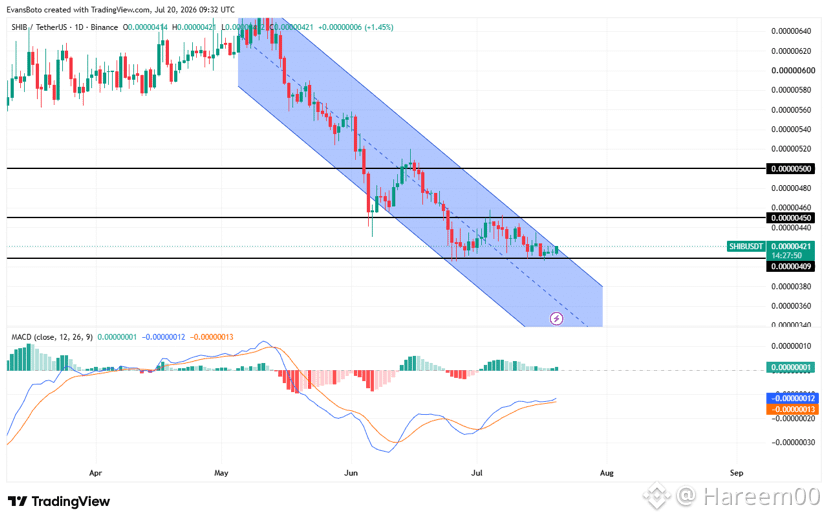
Sometimes the chart doesn’t tell the whole story.
While $SHIB continues to trade in a downtrend, on-chain activity is shifting:
• 350%+ increase in daily burns
• Exchange outflows remain negative
• Whales are quietly accumulating
A breakout still needs confirmation, but these metrics are worth keeping on the watchlist.
Sometimes the chart doesn’t tell the whole story.
While $SHIB continues to trade in a downtrend, on-chain activity is shifting:
• 350%+ increase in daily burns
• Exchange outflows remain negative
• Whales are quietly accumulating
A breakout still needs confirmation, but these metrics are worth keeping on the watchlist.
While $SHIB continues to trade in a downtrend, on-chain activity is shifting:
• 350%+ increase in daily burns
• Exchange outflows remain negative
• Whales are quietly accumulating
A breakout still needs confirmation, but these metrics are worth keeping on the watchlist.
80
Log in to explore more content
Join global crypto users on Binance Square
⚡️ Get latest and useful information about crypto.
💬 Trusted by the world’s largest crypto exchange.
👍 Discover real insights from verified creators.
Email / Phone number
Trending Topics
FedMinutesFocusOnOctoberPause
202,274 views
1,396 Discussing
🚨 HIGH ALERT ‼️ PLEASE DON’T TRADE BLINDLY FOR THE NEXT HOUR 🚨
Guys, we have FOMC Minutes coming in less than 1 hour.
And after the kind of volatility we already saw today, I really don’t want anyone opening random high-leverage positions just before this release.
The biggest reaction I’m watching will be in Gold (XAU), Silver (XAG), BTC and ETH. Then coins like SOL and other highly leveraged mid/low-cap alts can exaggerate whatever move BTC makes.
Gold and Silver are especially sensitive tonight because the market is already reacting to the US dollar + Treasury yields, and both metals have been under heavy pressure ahead of the Fed minutes.
Briefly speaking
📉Hawkish Fed Minutes → Dollar/yields can push higher → pressure on BTC, crypto, Gold & silver
📈Dovish Fed Minutes → Dollar/yields can cool → BTC, Gold, Silver and risk assets can bounce hard.
And please remember the first candle can be a trap. We can get a pump, immediate dump, liquidations on both sides, and then the real direction.
So for now, protect your positions, reduce unnecessary leverage and don’t FOMO into the first move.
Tonight I’m watching $XAU , $XAG and $BTC first. These will tell us very quickly how the market is reading the Fed.
I will Update you guys on time
Follow @Panda Traders and Turn on Your notifications right now
#FedMinutesFocusOnOctoberPause
Panda Traders
·19 Likes
·4.2k views
BinanceLaunchesBinanceIntelligence
1.1M views
6,586 Discussing
EvernorthDelaysNasdaqDebutToOct12
17,637 views
324 Discussing